Recent from talks
Nothing was collected or created yet.
M.O.P.
View on WikipediaThis article needs additional citations for verification. (October 2020) |
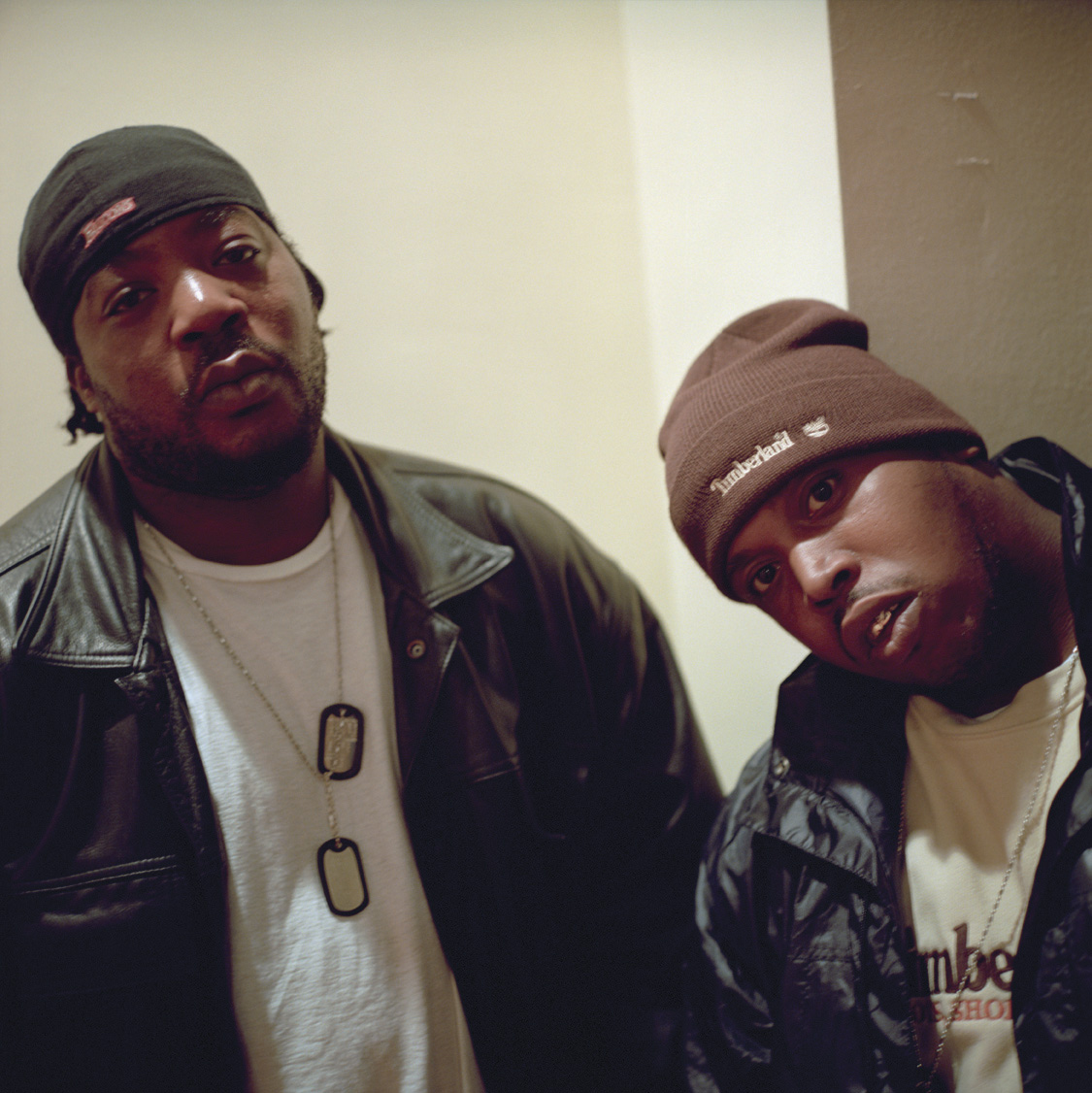
M.O.P. (short for Mash Out Posse) is an American hip-hop duo composed of rappers Billy Danze and Lil' Fame, best known for their song "Ante Up."[1][2] The group has frequently collaborated with DJ Premier. The group is part of the Gang Starr Foundation. Fame occasionally produces under the moniker Fizzy Womack and has produced tracks on every M.O.P. release since 1996's Firing Squad. He has also worked for other artists, including Kool G Rap and Wu-Tang Clan.[3]
Key Information
Origin
[edit]Lil' Fame (Jamal Grinnage; born April 9, 1976)[4] and Billy Danze (Eric Murray; born November 15, 1974)[4] grew up together in the neighborhood of Brownsville, Brooklyn. They formed a street gang called Mash Out Posse.[2] They later formed a hip-hop duo under the same name. Danze reported that they kept "losing people in between albums;" their music often reflects emotional themes with a driving beat.[5]

History
[edit]Rise to Fame (1992–2005)
[edit]After contributing to the 1992 compilation The Hill That's Real, M.O.P. debuted in 1993 with the single "How About Some Hardcore?", which appeared on the soundtrack for the film House Party 3.[6] The underground success of their single, promoted by a low-budget video from then-unknown director Hype Williams, led to their debut album To the Death.[5] It was released in 1994 through the label Select Records, almost fully produced by DR Period.
In 1996, M.O.P. released their second album, Firing Squad,[7] under the label Relativity Records. Production duties now involved Gang Starr's DJ Premier and Lil' Fame himself, and the group continued to grow their following.[citation needed] In 1998, M.O.P. released the Handle Ur Bizness EP, soon followed by the album First Family 4 Life. Once again, much of the record was produced by DJ Premier and Lil' Fame. The album also featured guest appearances by Guru of Gang Starr, Treach of Naughty by Nature, OC of Diggin' in the Crates Crew, and Jay-Z. The album was the most stolen album from New York City's HMV stores in 1998.[6]
In 2000, they released their fourth album, Warriorz, this time through Loud Records. Mainstream radio began playing the first single, "Ante Up", produced by DR Period, whom they had not worked with since their debut. The single was a hit and propelled the album to No. 25 on the Billboard 200 chart.[8] The follow-up single, "Cold As Ice", a self-produced track (which featured a sample of "Cold As Ice" by Foreigner), also received radio airplay,[5] although partially censored for radio play. It was used in the UK in a TV advert for Maclean's Ice Whitening toothpaste. Both "Ante Up" and "Cold as Ice" reached the top ten on the UK Singles Chart, peaking at No. 7 and No. 4 respectively.[9] In 2001, M.O.P. collaborated with Krumbsnatcha to make the song "W.O.L.V.E.S.", which appeared on the soundtrack for the film Training Day.[10]
In 2001, a successful remix of "Ante Up" was released featuring Busta Rhymes, Remy Ma, and Teflon.[5] That same year, they collaborated on a song titled "Life is Good" with the pop group LFO. The song reached No. 40 on Billboard's Hot Singles Sales chart.[11] Both singles continued the Posse's mainstream success.
In 2002, Loud Records folded, leaving the group stranded. In 2003, Loud's parent label Sony/Columbia issued an album titled 10 Years and Gunnin'. M.O.P. later joined Jay-Z and Damon Dash's Roc-A-Fella Records.[5] Their first recording for the label was a guest appearance on Jay-Z's album The Blueprint 2: The Gift & the Curse; they were set to release their album titled Ghetto Warfare, but the anticipated album was shelved. Two other albums were recorded: one titled The Last Generation, and the other titled Kill Nigga Die Slo Bluckka Bluckka Bloaoow Blood Sweat Tears and We Out.[12] A Dash-produced track "It's That Simple" with Spice Girl Victoria Beckham was created and received a premiere on radio stations in July 2003. This generated mixed reviews and further criticism, specifically that Beckham was unconvincing as an urban act.
During this period, the group released a slew of mixtapes and appeared on soundtracks to films such as Bad Boys II. They contributed two songs ("Ground Zero" and "Put it in the Air") to the video game NFL Street 2, and ("Fire") to Fight Night 2004. They also contributed Ante Up to the third installment of the popular Midnight Club racing video game series. In 2004, M.O.P. joined the American rap rock band Linkin Park on the second stage of the Projekt Revolution Tour.[3]
The group also released a mixtape called Marxmen Cinema (under the name The Marxmen), as well as a self-titled rap rock album (under the name Mash Out Posse), recorded as a collaboration with heavy metal group Shiner Massive.[6] In 2004, Damon Dash sold his share of Roc-A-Fella to new Def Jam president, Jay-Z, and kept M.O.P. on his new label, Dame Dash Music Group. Following this, the group announced their departure from Roc-A-Fella and Dame Dash in May 2005.[12]
Modern Success (2005–present)
[edit]In 2005, M.O.P. began affiliating with 50 Cent's G-Unit Records, around the same time as the Queens rap duo Mobb Deep.[13] In July of the same year, they were signed to the label.[14] The duo completed the song "When Death Becomes You" with 50 Cent, which was featured on the Get Rich or Die Tryin' soundtrack,[15] and also contributed their rap vocals in a remix of "I'll Whip Ya Head Boy".[16] At the end of the year, M.O.P. released a compilation album entitled M.O.P. Salutes the St. Marxmen, consisting of both new and old tracks.[17] In July 2006, M.O.P. released the long-shelved Ghetto Warfare.[18]
In February 2008, M.O.P. separated from G-Unit Records, due to creative differences.[19] Billy and Fame released their next album, The Foundation, in 2009 on E1 Music. The album featured production from DJ Premier, Statik Selektah, The Alchemist, and Jake One, and guest appearances from Heltah Skeltah, Busta Rhymes, Jadakiss, Beanie Sigel, Styles P and Redman.[20] The first single from the album "Blow the Horns" featuring Busta Rhymes, and "Street Life," a collaboration with dancehall artist Demarco, were both released on the internet.
On October 14, 2008, M.O.P. filed suit in a New York Federal Court against World Wrestling Entertainment (WWE) and John Cena. The group argued that Cena and the WWE stole parts of their song "Ante Up" for Cena's theme song "The Time is Now". The theme song is also featured as the first track on Cena's album You Can't See Me. The lawsuit has since been dropped, and it is unknown if a settlement was reached outside of court.[4]
In June 2009, a Wu-Tang Chamber Music compilation album was released, the majority of which was produced by Lil' Fame (as Fizzy Womack).[21] M.O.P. themselves appeared on the track "Ill Figures" alongside Raekwon and Kool G Rap.[22] Lil' Fame also produced the 2011 Wu-Tang Clan compilation Legendary Weapons alongside Noah Rubin and Andrew Kelley.[23]
On October 24, 2011, M.O.P. released "Get Yours",[24] their first single from their collaborative album Sparta with the German production team Snowgoons, on Babygrand Records.[25]
Lil Fame and Termanology teamed up on a collaborative album, Fizzyology. It was released on November 6, 2012, via Brick Records.[26]
On November 18, 2014, M.O.P. released a new EP, Street Certified, on Nature Sounds. It is executive produced by DJ Premier and features guest appearances from Maino, Mobb Deep, and Busta Rhymes.[27] In 2019, M.O.P. released the single "Never Give Up" with DJ Tomekk.[28]
Danze and Fame each contributed a verse to DJ Kay Slay's 2020 track "Rolling 50 Deep" alongside 48 other MCs.[29]

Discography
[edit]Studio albums
- To the Death (1994)
- Firing Squad (1996)
- First Family 4 Life (1998)
- Warriorz (2000)
- Mash Out Posse (2004)
- Marxmen Cinema (as The Marxmen) (2004)
- St. Marxmen (2005)
- Ghetto Warfare (2006)
- Foundation (2009)
- Sparta (2011) (with Snowgoons)
- Street Certified (2014)
References
[edit]- ^ Ryan, Chris (2004). "M.O.P.: Biography". Rolling Stone. Archived from the original on December 1, 2007. Retrieved November 15, 2008.
- ^ a b Charles, Pat (December 14, 2000). "M.O.P. Prove Hip-Hop's Fiercest Warriorz". Rolling Stone. Archived from the original on May 8, 2006. Retrieved November 15, 2008.
- ^ a b Meyer, Frank (June 3, 2008). "Freestyle 101: Lil' Fame (M.O.P.)". G4tv.com. Retrieved November 18, 2008.
- ^ a b c "Cena Rumbles with Rappers Over Theme Music". TMZ.com. October 28, 2008. Retrieved November 18, 2008.
- ^ a b c d e "All about Mash Out Posse..." themashoutposse.com. 2004. Archived from the original on February 8, 2005. Retrieved November 15, 2008.
- ^ a b c Shapiro, Peter (2005) "M.O.P." in The Rough Guide to Hip-Hop, 2nd edn., Rough Guides, ISBN 1-84353-263-8, p.259-261
- ^ Larkin, Colin, ed. (1998). The Virgin Encyclopedia of Dance Music (1st ed.). Virgin Books. p. 208. ISBN 0-7535-0252-6.
- ^ "Warriorz > Charts & Awards > Billboard Albums". allmusic.
- ^ "M.O.P. - full Official Chart History - Official Charts Company". Officialcharts.com. Retrieved April 5, 2018.
- ^ "Krumb Snatcha – W.O.L.V.E.S. Lyrics | Genius Lyrics". Genius.com. Retrieved March 13, 2020.
- ^ "Hot Singles Sales: Life Is Good". Billboard.com. Archived from the original on July 2, 2014. Retrieved November 15, 2008.
- ^ a b Crosley, Hillary (May 9, 2005). "M.O.P. Split From Roc-A-Fella And Dame Dash". MTV.com. Archived from the original on November 13, 2023. Retrieved November 13, 2023.
- ^ Reid, Shaheem (May 23, 2005). "50 Cent Wants To Sign Mobb Deep, M.O.P. To G-Unit Records". MTV. Archived from the original on December 4, 2022. Retrieved February 22, 2024.
- ^ Watkins, Grouchy Greg (July 29, 2005). "M.O.P. Signs With G-Unit, Billy Danze Speaks". AllHipHop. Retrieved February 22, 2024.
- ^ Breihan, Tom (November 7, 2005). "Various Artists: Get Rich or Die Tryin' OST". Pitchfork. Retrieved February 22, 2024.
- ^ Roberson, Justin (May 8, 2013). "25 Rap Songs That Make Us Want To Punch Someone In the Face". Complex. Retrieved February 22, 2024.
- ^ Watkins, Grouchy Greg (October 23, 2005). "M.O.P. Salutes the St. Marxmen". AllHipHop. Retrieved February 22, 2024.
- ^ J-23 (July 29, 2011). "Lost & Found: 10 Great Hip Hop Albums From The Vault". HipHopDX. Retrieved February 22, 2024.
- ^ "M.O.P. Leave G-Unit Records". Starpulse.com. World Entertainment News Network. February 7, 2008. Archived from the original on June 7, 2011. Retrieved November 15, 2008.
- ^ "M.O.P. Will Release New Album Foundation on 06/30/09". Wiseguyz Entertainment LLC. May 12, 2009. Archived from the original on August 8, 2009. Retrieved July 21, 2017.
- ^ Breihan, Tom (July 6, 2009). "Wu-Tang Clan: Wu-Tang Chamber Music". Pitchfork. Retrieved February 22, 2024.
- ^ "Wu-Tang Clan - Chamber Music". HipHopDX. July 2, 2009. Retrieved February 22, 2024.
- ^ "Wu-Tang Clan Compilation "Legendary Weapons" Tracklisting Revealed". HipHopDX. June 7, 2011. Retrieved February 22, 2024.
- ^ "M.O.P. - Get Yours [Prod. Snowgoons]". HipHopDX. October 24, 2011. Retrieved February 22, 2024.
- ^ Lelinwalla, Mark (November 21, 2011). "M.O.P., Sparta". XXL. Retrieved February 22, 2024.
- ^ "Lil Fame & Termanology = Fizzyology by Fizzyology". iTunes. November 6, 2012. Archived from the original on November 11, 2013.
- ^ Dowling, Marcus (November 25, 2014). "M.O.P. - Street Certified". HipHopDX. Retrieved February 22, 2024.
- ^ Jones, Grant (February 19, 2024). "An ode to the Mash Out Posse – Part 5". RapReviews. Retrieved February 22, 2024.
- ^ "Kay Slay's Insane "Rolling 50 Deep" Features Raekwon, Ghostface, & 48 More Lyricists". HNHH. November 13, 2020.
External links
[edit]M.O.P.
View on GrokipediaOrigins and Formation
Roots in Brownsville
Brownsville, Brooklyn, emerged as one of New York City's most challenging neighborhoods during the 1980s and 1990s, marked by pervasive poverty, high unemployment, and rampant violent crime that shaped the unyielding, confrontational ethos of its hip-hop artists. The area, densely packed with public housing projects, grappled with drug epidemics and frequent shootings, fostering a survivalist mindset amid limited opportunities and daily dangers like risky block crossings or routine encounters with arrests. This gritty environment directly influenced the raw aggression in local rap, turning personal hardships into a blueprint for hardcore expression.[5][6][7] In the late 1980s, young residents in Brownsville gained early exposure to hip-hop through the neighborhood's vibrant street culture, including block parties where DJs spun records, graffiti artists tagged walls, and breakdancing crews battled for respect. These informal gatherings served as creative escapes from the surrounding turmoil, blending music, dance, and visual art into a cohesive scene that amplified the era's emerging hardcore sounds. Brooklyn's broader hip-hop landscape, rooted in such community-driven activities, provided the foundational elements that would define the area's contributions to the genre.[8][9] The intense local hip-hop environment drew inspiration from nearby pioneering acts like Boogie Down Productions and Public Enemy, whose hardcore, message-laden tracks emphasized raw energy and social defiance—qualities that echoed Brownsville's realities and honed the aggressive delivery of emerging talents. Specific street life experiences, such as navigating violence and economic deprivation, instilled a "mash out" mentality, a term denoting fierce resistance just short of lethal confrontation, as in beating back threats before they escalate. This combative spirit, born from surviving daily perils like shootings and turf disputes, became central to the neighborhood's hip-hop identity.[7][10][11] These shared neighborhood trials directly paved the way for collaborative bonds among local artists.Group Assembly and Early Influences
Billy Danze and Lil' Fame, lifelong friends who grew up on the same block in Brownsville, Brooklyn, bonded in the early 1990s through their mutual passion for hardcore rap within the local scene.[7][12] Amid the neighborhood's intense hardships, which provided a raw motivational backdrop for their creativity, Danze—already an established local rapper—teamed up with Fame, who was developing his production skills after gaining access to basic studio equipment through neighborhood connections.[13] Their close partnership, described by Fame as that of "road dogs" exchanging ideas, solidified their dynamic as a duo, laying the foundation for M.O.P.'s aggressive, unified delivery.[13][12] The duo adopted the name "Mash Out Posse," shortening it to M.O.P., which stemmed directly from their street gang affiliation and symbolized an intense, aggressive takeover of any space—rooted in slang for delivering an "ass whooping."[13] This moniker captured their intent to dominate with unyielding force, reflecting both their personal histories and the combative essence they aimed to infuse into their music.[13] Non-local influences played a key role in shaping their pre-recording sound, with the high-energy, tag-team rhyming of Run-D.M.C. inspiring their rhythmic synergy and the raw gangsta themes of Ice-T informing their street narratives.[12] As a budding producer, Lil' Fame drew from jazz and soul samples, influenced by innovators like Pete Rock & CL Smooth, to craft beats that added depth and grit to their tracks.[14] Between 1991 and 1992, they recorded early demos in informal home setups, such as at D.R. Period's residence, producing unreleased songs like "Dope Adolescent" and "I Can Feel It" that refined their signature shout-along chorus style—energetic, anthemic hooks designed for crowd participation.[14][13]Career Trajectory
Debut and Underground Buildup (1992–1999)
M.O.P., drawing from their aggressive roots in Brownsville, Brooklyn, entered the hip-hop scene with their debut single "How About Some Hardcore," released in 1993 on Select Records after an initial appearance on the 1992 compilation The Hill That's Real.[15][16] The track, produced by DR Period, captured the duo's raw energy and bombastic delivery, generating buzz in New York's underground circuit through a low-budget video and word-of-mouth promotion among hardcore rap enthusiasts.[17] This release marked their signing with the independent label Select Records in 1993, positioning them as emerging voices in the gritty East Coast rap landscape.[18] Their first full-length project, the album To the Death, arrived on April 5, 1994, also via Select Records, and was primarily produced by DR Period with contributions from DJ Premier on remixes and Silver D on select tracks. Featuring standout cuts like "Rugged Neva Smoove" and "How About Some Hardcore," the LP established M.O.P.'s signature style of intense, shout-along choruses and unrelenting beats, resonating deeply within Brooklyn's street-oriented hip-hop community despite minimal mainstream exposure.[19] The album's dark, grimy production and themes of urban survival solidified their cult status, though sales remained modest due to the label's limited distribution capabilities.[17] Transitioning to Relativity Records, M.O.P. released their sophomore effort Firing Squad on October 22, 1996, with production handled by Lil' Fame, DJ Premier, Big Jaz, and Ali Dee, resulting in a denser, more polished sound while retaining their hardcore edge. Tracks such as "World Famous" and "Stick to Ya Gunz" earned rotation on New York radio stations like Stretch Armstrong and Bobbito Garcia's show, expanding their reach in the tri-state area and attracting a broader underground audience.[20] The album's emphasis on militaristic themes and high-energy flows further cemented their reputation for live performances that energized crowds.[21] In 1998, M.O.P. followed with their third studio album First Family 4 Life on Relativity Records, largely produced by DJ Premier, which peaked at number 80 on the Billboard 200 and number 14 on the Top R&B/Hip-Hop Albums chart, eventually certified gold by the RIAA.[22] The release featured singles like "4 Alarm Blaze" and continued to build their underground following with aggressive lyricism and booming production. Throughout the late 1990s, M.O.P. navigated significant hurdles, including instability at small labels like Select, which offered scant promotional support, and Relativity's focus on niche markets that hindered wider breakthroughs.[16] These constraints forced reliance on grassroots efforts, such as relentless touring through New York City clubs and venues in Brooklyn, where they cultivated unwavering loyalty from hardcore rap fans drawn to their authentic aggression and stage presence.[17] Early collaborations, notably DJ Premier's remix of "Rugged Neva Smoove" in 1994 and production on Firing Squad tracks, connected them to influential networks in the hip-hop production scene, amplifying their visibility without yielding immediate commercial gains.[23]Breakthrough and Peak Recognition (2000–2005)
Following their underground foundation in the 1990s, M.O.P. signed with Loud Records, a prominent hip-hop label, which facilitated their entry into broader commercial channels.[24] Their fourth studio album, Warriorz, released on October 10, 2000, marked this pivotal shift, debuting at number 25 on the Billboard 200 chart and reaching number 5 on the Top R&B/Hip-Hop Albums chart.[25][26] The album's raw, aggressive sound resonated during the early 2000s hip-hop boom, blending hardcore lyricism with booming production that amplified their street credibility. The lead single "Ante Up (Robbin-Hoodz Theory)" propelled their breakthrough, peaking at number 19 on Billboard's Hot Rap Songs chart and becoming a staple in clubs and mixtapes for its high-energy hook and confrontational verses.[4] Remixes further extended its reach, including a DJ Premier-mixed version and a high-profile iteration featuring Busta Rhymes, Teflon, and Remy Martin, which integrated M.O.P. into wider rap networks.[27] These variants, with Premier's signature scratches and Busta's explosive delivery, drove radio play and sales, solidifying "Ante Up" as an anthem of the era. M.O.P.'s association with Busta Rhymes and the Flipmode Squad collective enhanced their visibility, beginning with features on the 1998 Flipmode compilation The Imperial and culminating in joint performances and recordings that exposed them to Busta's larger fanbase. This partnership, rooted in shared New York hardcore influences, bridged M.O.P.'s gritty style with Flipmode's mainstream momentum, leading to increased touring and media buzz in the early 2000s. In 2003, M.O.P. released the compilation 10 Years and Gunnin' on Columbia Records, a retrospective that recapped their hits like "Ante Up" while introducing new material, including the track "Get Yours," to reaffirm their enduring appeal.[28] The project, blending archival cuts with fresh content, underscored their decade-long trajectory and contributed to their peak recognition, as Warriorz emerged as their highest-charting release, peaking higher than prior efforts and cementing their status in hip-hop's aggressive vanguard.[29]Independent Phase and Ongoing Projects (2006–present)
Following the dissolution of their major label association with Roc-A-Fella Records amid the 2004 merger with Def Jam, M.O.P. faced shelved material from sessions recorded between 2001 and 2003, which was independently released as the compilation album Ghetto Warfare on July 25, 2006, via CopperTop Entertainment.[30] This project marked their shift to indie distribution, featuring raw, unreleased tracks that captured their signature aggressive style without commercial constraints.[31] In 2009, M.O.P. signed with E1 Music for their fifth studio album, Foundation, released on September 15, emphasizing their Brownsville roots and veteran resilience through self-produced beats by Lil' Fame and collaborations with artists like Busta Rhymes. The album addressed themes of longevity in hip-hop, solidifying their pivot to independent outlets for creative control. Two years later, they partnered with German production team Snowgoons for Sparta, a collaborative LP dropped on November 22, 2011, via BabyGrande Records, which blended their hardcore energy with orchestral production to appeal to underground audiences.[32] By 2014, M.O.P. aligned with Nature Sounds for the EP Street Certified, executive produced by DJ Premier and released on November 18, highlighting their enduring bonds in the rap community through features from Mobb Deep and Sean Price, while tracks reflected on their status as hip-hop pioneers navigating industry changes.[33] The project underscored their adaptability, with Premier's involvement bringing polished boom-bap production to affirm their veteran influence. Since then, group output has been sporadic but consistent in niche releases, maintaining a focus on authentic lyricism over mainstream trends. In recent years, M.O.P. has sustained visibility through high-profile appearances, including a November 3, 2023, episode of the Drink Champs podcast, where Billy Danze and Lil' Fame discussed their career trajectory, collaborations, and lasting impact on hardcore rap.[34] Their classic track "Ante Up" continues to anchor bookings, powering live sets at festivals and club events that draw on its enduring hype in the genre. Solo endeavors have also gained momentum; Lil' Fame released the single "Bout That Life" on September 19, 2025, produced by DJ Skizz, with an accompanying video showcasing gritty street narratives and sampling classic soul elements.[35] Meanwhile, Billy Danze announced his solo album The Answer in late 2023, described as a double-disc project exploring his artistry and personal growth, with a planned early 2026 release to further his individual contributions amid group commitments.[36] Ongoing tours and guest features keep M.O.P. relevant in hardcore rap circles, where they navigate streaming-era challenges by prioritizing live performances and selective collaborations that honor their aggressive, unfiltered sound. Despite reduced album frequency, their resilience post-major labels demonstrates a commitment to authentic output, influencing newer artists through mentorship and sporadic verses on projects from affiliates like Havoc.[37]Group Members
Billy Danze
Eric Murray, better known by his stage name Billy Danze, was born on November 15, 1974, in Brownsville, Brooklyn, New York.[38] He grew up in the tough Brownsville neighborhood, a area marked by poverty, crime, and family hardships common to many residents during that era.[39] Danze began rapping during his high school years, initially as part of a local crew with childhood friend Jamal Grinnage (Lil' Fame), transitioning from street life to music as an outlet.[7] Within M.O.P. (Mash Out Posse), Danze serves as the primary lyricist, crafting streetwise narratives that capture the raw energy and realities of Brownsville life, often emphasizing resilience and confrontation.[40] His contributions include co-writing the duo's breakthrough hit "Ante Up (Robbin' Hoodz Theory)," which exemplifies his aggressive, narrative-driven style.[41] Danze's partnership with Lil' Fame forms the dynamic core of M.O.P., blending his lyrical focus with Fame's production prowess. While his production credits are limited, Danze excels in vocal delivery and infusing live performances with unrelenting energy that has become a hallmark of the group's shows.[42] Danze has pursued solo endeavors alongside his M.O.P. work, releasing projects that explore personal growth and introspection. Notable releases include the 2020 album The Listening Session, produced by TooBusy, and the forthcoming full-length The Answer.[43] [44] Fatherhood has notably shaped his later themes, as seen in tracks reflecting on parental duties and providing stability amid past chaos. In the 2000s, Danze navigated personal challenges, including legal hurdles tied to his early street involvement, which were resolved by 2010, allowing him to refocus on music and community ties in Brooklyn.[45] He has also engaged in advocacy efforts supporting youth programs in Brooklyn, drawing from his own experiences to mentor emerging artists from similar backgrounds.[12]Lil' Fame
Jamal Grinnage, professionally known as Lil' Fame, was born on April 9, 1976, in Brownsville, Brooklyn, New York.[46] Growing up in the tough neighborhood, he connected early with future M.O.P. partner Billy Danze, forming the foundation of their shared creative synergy in defining the group's raw, aggressive sound.[47] As M.O.P.'s primary producer under the alias Fizzy Womack, Lil' Fame has crafted the backbone of the duo's music since the mid-1990s, contributing beats to albums like Firing Squad (1998) and beyond, characterized by pounding drums and gritty samples that amplify their hardcore style.[42] His production work extends outside the group, including tracks for Queensbridge affiliates like Big Noyd.[48] Lil' Fame's solo endeavors highlight his versatility, with releases such as the 2019 beat tape Fame showcasing his instrumental prowess and mixtapes under DJ Fame blending DJing roots with hip-hop curation.[49] In September 2025, he dropped the single "Bout That Life," produced by DJ Skizz, which confronts the realities of modern street life and authenticity over a sampled funk beat.[50] Beyond music, Lil' Fame ventured into acting, appearing in films like State Property 2 (2005) as Fame.[51] Personally, he has navigated health setbacks, including significant weight loss and a car accident that cost him teeth, while maintaining a presence in Brooklyn's creative scene to support emerging talent through studio collaborations.[52]Musical Style and Impact
Core Characteristics and Themes
M.O.P.'s music is defined by an aggressive delivery style characterized by shout-rapping, call-and-response hooks, and high-energy flows that evoke battle cries, creating a visceral, confrontational energy often described as mosh-pit ready hip-hop.[7][53] This approach amplifies the intensity of their performances, drawing from East Coast hardcore traditions to project raw power and immediacy.[54] Lyrically, M.O.P. emphasizes themes of street survival, unwavering loyalty to their Brownsville roots, and anti-commercialism, often depicting vivid scenes of violence and resilience that underscore personal and communal endurance in urban hardship.[7] Their refusal to produce sanitized radio edits exemplifies this resistance to mainstream dilution, prioritizing authenticity over broader appeal.[7] The group's sonic palette features heavy, militaristic beats with booming bass lines, gunshot samples, and minimal melodic elements, largely crafted through in-house production by Lil' Fame, who employs sample-driven boom-bap to construct tough, unrelenting backdrops.[55] These elements, including explosive sound effects like simulated gunfire, contribute to a sound that feels combative and immersive, rooted in East Coast production aesthetics.[55][7] Over time, M.O.P.'s sound evolved from the raw, unpolished aggression of their 1990s output to slightly more refined tracks in the 2000s, incorporating subtle commercial experiments while steadfastly maintaining underground authenticity and hardcore edge.[7] As pioneers of East Coast hardcore rap, M.O.P. helped define the subgenre's intensity—referring to the hard-hitting, urban grit of their Brooklyn style—distinguishing it from gangsta rap's more narrative-driven focus by prioritizing explosive energy and direct confrontation over storytelling.[7] Their militancy echoes influences from 1980s acts like Public Enemy, adapting that era's revolutionary fervor to Brooklyn's street contexts.[17]Key Collaborations and Production Elements
M.O.P. gained significant exposure through their collaboration with DJ Premier on the remix of "Ante Up" in 2000, which featured Busta Rhymes, Teflon, and Remy Ma, blending Premier's signature dusty drum breaks and sharp scratches with the duo's explosive energy to create a street anthem that crossed into mainstream radio play.[56][57] This partnership, produced and mixed by Premier and Eddie Sancho, amplified M.O.P.'s raw aggression while introducing cleaner production layers that retained their underground edge.[58] The duo's ties to Busta Rhymes extended beyond the remix, including features on Flipmode Squad-related tracks that highlighted their shared Brooklyn roots and high-octane delivery, such as joint appearances that fused M.O.P.'s militaristic style with Busta's rapid-fire flows. Similarly, M.O.P. linked with Jadakiss on "For the City" from Statik Selektah's 2008 album Stick 2 the Script, where their verses traded gritty narratives of urban survival over Selektah's soul-infused boom-bap, showcasing a Yonkers-Brownsville alliance in East Coast rap. Lil' Fame's production contributions often incorporated chopped soul samples and layered ad-libs to build a chaotic, live-wire intensity, as heard on tracks like those from Warriorz (2000), where his beats drew from Premier's influence with heavy percussion and vocal overlays that mirrored the group's hype-man ethos.[59] These elements created a sense of immediacy, evoking live performances through ad-lib shouts and dynamic sample flips that kept the sound aggressive yet accessible.[42] Guest spots further expanded M.O.P.'s network, including their appearance on Onyx's Bacdafucup Part II (2002), where they injected Brownsville fury into the album's chaotic hardcore vibe alongside guests like Fat Joe and Snoop Dogg.[60] Collaborations with Havoc extended to tracks like "Do It 2 Death" on Statik Selektah's 100 Proof: The Hoodie (2010), featuring Kool G Rap, and Havoc's production on Lil' Fame's "The Coalition (Murder Boyz)" in 2021, blending Mobb Deep's moody atmospheres with M.O.P.'s bombastic hooks.[61] In recent years, M.O.P. maintained momentum with underground features, such as reuniting with DJ Premier and Teflon on "The Thoro Side" in 2023, a gritty nod to their classic sound amid mixtape circuits.[62] Lil' Fame featured on "Lift Up" with Big Shug and M-Dot in 2025 (produced by DJ Mirage), supporting emerging acts through his Fizzy Womack alias while preserving hardcore rap's foundational aggression.[63] In June 2025, Lil' Fame released the solo single "Go To War (Prelude)" produced by JR Swiftz, continuing his production and solo endeavors.[64]Discography
Studio Albums
M.O.P.'s debut studio album, To the Death, released in 1994 by Select Records, features 15 tracks that capture the duo's raw, aggressive sound, establishing their signature posse-cut format with high-energy group verses and street-hardened lyrics over beats produced largely by DR Period. The album's intense delivery and themes of urban survival set the tone for their hardcore hip-hop identity, earning a 3.5 out of 5 star rating from AllMusic for its unrelenting fury and authenticity.[65][66] Their follow-up, Firing Squad, issued in 1996 via Relativity Records, comprises 18 tracks and reflects a label transition while introducing more structured production elements, blending booming drums and gritty samples to complement Billy Danze and Lil' Fame's bombastic flows. AllMusic gave it 3.8 out of 5 stars, highlighting its improvement in cohesion and the duo's commanding presence on tracks like "New Jack City."[67][68] First Family 4 Life, the third studio album released in 1998 on Relativity Records, expands to 17 tracks with notable guest appearances from artists like Jay-Z and Freddie Foxxx, emphasizing family loyalty and perseverance amid industry challenges. The project received 3.5 out of 5 stars from AllMusic, which commended its underground New York flavor and reliance on skillful lyricism without gimmicks.[22][69] The 2000 release Warriorz on Loud Records marks a breakthrough, boasting 19 tracks including the breakout single "Ante Up (Robbin-Hoodz Theory)," and peaked at No. 5 on the Billboard Top R&B/Hip-Hop Albums chart. Produced heavily by DJ Premier, it pivots toward broader appeal while retaining their warrior ethos; AllMusic rated it 3.8 out of 5 stars for its explosive energy and replay value.[70][71] After label instability, Foundation arrived in 2009 through E1 Music with 14 tracks, offering a reflective take on their career longevity through veteran storytelling and collaborations, solidifying their status as hip-hop stalwarts. AllMusic assigned it 3.5 out of 5 stars, appreciating the consistency in their battle-tested style despite lower commercial visibility.[72] In their independent phase, Sparta (2011), a collaboration with German producers Snowgoons on Goon Musick, delivers 10 tracks centered on battle rap motifs and relentless aggression, praised for its raw production and the duo's undiminished intensity. The album earned 3 out of 5 stars from AllMusic, noting its appeal to longtime fans through thematic focus on combat-ready anthems.[73] Street Certified, released in 2015 via Nature Sounds, features 9 tracks that reaffirm M.O.P.'s hardcore roots with gritty narratives and high-energy performances, maintaining their underground legacy. AllMusic rated it 3 out of 5 stars for its solid, no-frills execution.[74]Singles and Other Releases
M.O.P.'s singles have been instrumental in establishing their aggressive, high-energy style in hardcore hip-hop, with several achieving notable chart success and cultural impact. Their debut single, "How About Some Hardcore," released in 1993, introduced their raw Brownsville sound and gained underground traction through its gritty video and relentless delivery.[75] The track's underground success helped secure their first major label deal.[76] The duo's breakthrough came with "Ante Up (Robbin-Hoodz Theory)" in 2000, produced by DR Period, which peaked at No. 19 on the US Billboard Hot Rap Songs chart.[4] A remix featuring Busta Rhymes, Teflon, and Remy Ma, released in 2001, extended its chart longevity and broadened its appeal, becoming a staple in hip-hop playlists for its explosive energy.[37] Later singles like "Get Yours," a collaboration with Snowgoons released in 2011, maintained their signature intensity while incorporating modern production elements.[77] Beyond singles, M.O.P. issued various EPs, compilations, and mixtapes that supplemented their catalog. The 2003 compilation 10 Years and Gunnin' served as a greatest hits collection, featuring remastered tracks and rarities to celebrate their decade in the game.[78] In 2006, they released Ghetto Warfare, a project blending their hardcore ethos with contributions from affiliates like Harlem's Finest, originally recorded for Roc-A-Fella but independently distributed. Mixtapes such as The Legends Underground, Vol. 5 in 2008, hosted by Lil' Fame (aka DJ Fame), showcased unreleased material and kept their presence strong during label transitions.[79] M.O.P. members have also contributed to non-album releases tied to the group. Lil' Fame's 2025 single "Bout That Life," produced by DJ Skizz, reflects ongoing group-affiliated output with its booming beats and street-focused lyrics.[50] Guest appearances, including on Busta Rhymes' 2020 track "Czar" from Extinction Level Event 2: The Wrath of God, highlight their enduring collaborative role in hip-hop.[80] These releases underscore M.O.P.'s commitment to supplementary projects that extend beyond full-length albums.| Release Type | Title | Year | Notes |
|---|---|---|---|
| Single | How About Some Hardcore | 1993 | Debut single, underground hit |
| Single | Ante Up (Robbin-Hoodz Theory) | 2000 | Peaked at #19 on US Hot Rap Songs; remix in 2001 |
| Single | Get Yours (with Snowgoons) | 2011 | High-energy collaboration |
| Compilation | 10 Years and Gunnin' | 2003 | Greatest hits collection |
| Album/Compilation | Ghetto Warfare | 2006 | Features affiliates like Harlem's Finest |
| Mixtape | The Legends Underground, Vol. 5 | 2008 | Hosted by DJ Fame (Lil' Fame) |
| Single (affiliated) | Bout That Life (Lil' Fame) | 2025 | Group-tied non-album release |
