


Community hub
Recent from talks
Contribute something
Nothing was collected or created yet.
Manual scavenging
View on Wikipedia
Manual scavenging is a term used mainly in India for "manually cleaning, carrying, disposing of, or otherwise handling, human excreta in an insanitary latrine or in an open drain or sewer or in a septic tank or a pit".[1][2] Manual scavengers usually use hand tools such as buckets, brooms and shovels. The workers have to move the excreta, using brooms and tin plates, into baskets, which they carry to disposal locations sometimes several kilometers away.[3] The practice of employing human labour for cleaning of sewers and septic tanks is also prevalent in Bangladesh and Pakistan.[4][5] These sanitation workers, called "manual scavengers", rarely have any personal protective equipment. The work is regarded as a dehumanizing practice.[6]
The occupation of sanitation work is intrinsically linked with caste in India. All kinds of cleaning are considered lowly and are assigned to people from the lowest rung of the social hierarchy. In the caste-based society, it is mainly the Dalits who work as sanitation workers - as manual scavengers, cleaners of drains, as garbage collectors and sweepers of roads.[7]: 4 It was estimated in 2019 that between 40 and 60 percent of the six million households of Dalit sub-castes are engaged in sanitation work.[7]: 5 The most common Dalit caste performing sanitation work is the Valmiki (also Balmiki) caste.[7]: 3
The construction of dry toilets and employment of manual scavengers to clean such dry toilets was prohibited in India in 1993. The law was extended and clarified to include ban on use of human labour for direct cleaning of sewers, ditches, pits and septic tanks in 2013.[8] However, despite the laws, manual scavenging was reported in many states including Maharashtra, Gujarat, Madhya Pradesh, Uttar Pradesh, and Rajasthan in 2014.[8] In 2021, the NHRC observed that eradication of manual scavenging as claimed by state and local governments is far from over.[9] Government data shows that in the period 1993–2021, 971 people died due to cleaning of sewers and septic tanks.[10]
The term "manual scavenging" differs from the stand-alone term "scavenging", which is one of the oldest economic activities and refers to the act of sorting though and picking from discarded waste.[11] Sometimes called waste pickers or ragpickers, scavengers usually collect from the streets, dumpsites, or landfills. They collect reusable and recyclable material to sell, reintegrating it into the economy's production process.[12] The practice exists in cities and towns across the Global South.[13][14]
Definition
[edit]Manual scavenging refers to the unsafe and manual removal of raw (fresh and untreated) human excreta from buckets or other containers that are used as toilets or from the pits of simple pit latrines. The safe and controlled emptying of pit latrines, on the other hand, is one component of fecal sludge management.
The official definition of a manual scavenger in Indian law from 1993 is as follows:[15]
"manual scavenger" means a person engaged in or employed for manually carrying human excreta and the expression "manual scavenging" shall be construed accordingly
In 2013, the definition of manual scavenger was expanded to include persons employed in cleaning of septic tanks, open drains and railway tracks. It reads:[16]
"Manual scavenger" means a person engaged or employed, at the commencement of this Act or at any time thereafter, by an individual or a local authority or an agency or a contractor, for manually cleaning, carrying, disposing of, or otherwise handling in any manner, human excreta in an insanitary latrine or in an open drain or pit into which the human excreta from the insanitary latrines is disposed of, or railway track or in such other spaces or premises, as the Central Government or a State Government may notify, before the excreta fully decomposes in such manner as may be prescribed, and the expression “manual scavenging” shall be construed accordingly.
The definition ignores many other sanitation workers like fecal sludge handlers, community and public toilet cleaners, workers cleaning storm water drains, waste segregators, etc. Such workers are not required to handle excreta directly, but get in contact due to poor working conditions, lack of segregation, and the interconnectedness of excreta management with solid waste management and storm water management, states notable sanitation crusader and investigative journalist Pragya Akhilesh.[17] The 2013 Act adds that a person engaged or employed to clean excreta with the help of equipment and using the protective gear as notified by the Union government shall not be deemed to be a manual scavenger.[16] Bhasha Singh argues that this clause gives the government an escape clause as all forms of manual scavenging can be kept outside the purview of the law by arguing that the individual is using protective gear.[18]
In 2021, the National Human Rights Commission (NHRC) of India advocated for the term to include other types of hazardous cleaning.[9]
There is a very clear gender division of various types of work that is called manual scavenging in India. The cleaning of dry toilets and carrying of waste to points of disposal is generally done by women, while men are involved in the cleaning of septic tanks and sewers. There is an economic reason for this distribution - the municipality employs workers to clean sewers and septic tanks and hence the salary is better. Cleaning private toilets, on the other hand, pays little and is therefore handed over to the women.[18] The women involved are referred to differently - 'dabbu-wali' in Bengal, 'balti-wali' in Kanpur, 'tina-wali in Bihar, tokri-wali in Punjab and Haryana, 'thottikar' in Andhra Pradesh and Karnataka, 'paaki' or 'peeti' in Odisha, 'vaatal' in Kashmir.[18] These names directly refer to the tools (dabbu, balti, tokri) used by the women to carry waste or dustbin (thottikar) or excreta (paaki, peeti).[18]
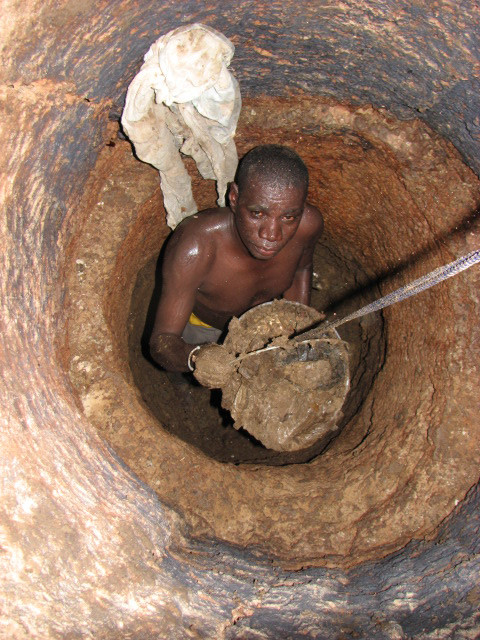
Manual scavenging is done with basic tools like thin boards and either buckets or baskets lined with sacking and carried on the head. Due to the hazardous nature of the job, many of the workers have related health problems.[8] Scavengers risk suffering from respiratory disorders, typhoid, and cholera. Scavengers may also contract skin and blood infections, eye and respiratory infections due to exposure to pollutants, skeletal disorder caused by the lifting of heavy storage containers, and burns due to coming into contact with hazardous chemicals combined with waste.[19] The data obtained by Safai Karmachari Andolan for 2017-2018 found the average age of deceased sewer workers to be around 32 years — they do not reach the age of retirement and the family often loses their breadwinner early.[17][20]
Not all forms of dry toilets involve "manual scavenging" to empty them, but only those that require unsafe handling of raw excreta. If on the other hand the excreta is already treated or pre-treated in the dry toilet itself, as is the case for composting toilets, and urine-diverting dry toilets for example, then emptying these types of toilets is not classified as "manual scavenging". Container-based sanitation is another system that does not require manual scavenging to function even though it does involve the emptying of excreta from containers.
Also, emptying the pits of twin-pit toilets is not classified as manual scavenging in India, as if used and emptied appropriately, the excreta is already treated.
The International Labour Organization describes three forms of manual scavenging in India:[8]
- Removal of human excrement from public streets and "dry latrines" (meaning simple pit latrines without a water seal, but not dry toilets in general)
- Cleaning septic tanks
- Cleaning gutters and sewers
Manual cleaning of railway lines of excreta dropped from toilets of trains is another form of manual scavenging in India.[21]
The Hindi phrase safai karamchari defines not only "manual scavengers" but also other sanitation workers.[22]
History
[edit]The practice of manual scavenging in India dates back to ancient times. According to the contents of sacred scriptures and other literature, scavenging by some specific castes of India has existed since the beginning of civilization.[23] One of the fifteen duties of slaves enumerated in Naradiya Samhita was of manual scavenging. This continues during the Buddhist and Maurya period also.[24]
Scholars have suggested that the Mughal women with purdah required enclosed toilets that needed to be scavenged.[25] It is pointed out that the Bhangis (Chuhra) share some of the clan names with Rajputs, and propose that the Bhangis are descendants of those captured in wars. There are many legends about the origin of Bhangis, who have traditionally served as manual scavengers. One of them, associated with Lal Begi Bhangis, describes the origin of Bhangis from Mehtar.[26]
Manual scavenging is historically linked to the caste system in India.[27] Not only cleaning of toilets, but all types of cleaning jobs are considered lowly in India.[28] The elites assigned the most lowly and polluting jobs for members of the Dalit community.[17][better source needed] The caste-based assignment of cleaning jobs can be traced back to the revival of the Brahmanical order during the Gupta period, considered the golden era in the history of the Indian sub-continent.[29] The workers usually belonged to the Balmiki (or Valmiki) or Hela (or Mehtar) subcastes; considered at the bottom of the hierarchy within the Dalit community itself.[8]
Before the passage of the 1993 Act that prohibit employment for manual scavengers, local governments employed 'scavengers' to clean dry latrines in private houses and community or public facilities.[28] These jobs were institutionalised by the British.[28] In London, cesspits containing human waste were called 'gongs' or 'jakes' and men employed to clean them 'Gongfermours' or 'Gongfarmers'.[29] They emptied such pits only in the night and dumped it outside the city. They had designated areas to live and were allowed to use only certain roads and by lanes to carry the waste.[29] The British organized systems for removing the excreta and employed Bhangis as manual scavengers.[28][30] They also brought Dalits working as agricultural labourers in the rural areas for the job in urban areas.[28] This formal employment of Bhangis and Chamars for waste management by the British reinforced the caste based assignment.[29] Even today, sanitation department jobs are almost unofficially 100% reserved for people from the Scheduled caste groups.[27]
Current prevalence
[edit]Despite the passage of two pieces of legislation, the prevalence of manual scavenging is an open secret.[20] According to the Socio Economic Caste Census 2011, 180,657 households within India are engaged in manual scavenging for a livelihood.[31] The 2011 Census of India found 794,000 cases of manual scavenging across India.[32] The state of Maharashtra, with 63,713, tops the list with the largest number of households working as manual scavengers, followed by the states of Madhya Pradesh, Uttar Pradesh, Tripura and Karnataka.[33] Manual scavenging still survives in parts of India without proper sewage systems or safe fecal sludge management practices.[34] It is thought to be prevalent in Maharashtra, Gujarat, Madhya Pradesh, Uttar Pradesh, and Rajasthan.[8]
In March 2014, the Supreme Court of India declared that there were 96 lakh (9.6 million) dry latrines being manually emptied but the exact number of manual scavengers is disputed – official figures put it at less than 700,000.[35] An estimate in 2018 put the number of "sanitation workers" in India at 5 million with 50% of them being women.[36] However, not all sanitation workers are manual scavengers. Another estimate from 2018 put the figure at one million manual scavengers, stating that the number is "unknown and declining" and that 90% of them are women.[37]: 4
The biggest violator of this law in India is the Indian Railways where many train carriages have toilets dropping the excreta from trains on the tracks and who employ scavengers to clean the tracks manually.[21] The situation is being improved in 2018 by the addition of on-train treatment systems for the toilet waste.[citation needed]
Bezwada Wilson, an activist, at the forefront in the battle to eradicate manual scavenging, argues that the practice continues due to its casteist nature.[18] He also argues that the failure of implementation of the 1993 Act is a collective failure of the leadership, judiciary, the administration, and the Dalit movements to address the concerns of the most marginalized community.[18] Unlike infrastructure projects like metros, the issue receives little or no priority from the Government and hence the deadline to comply with the 1993 Act has been continuously postponed.[18] An example that demonstrates the apathy of the government is the fact that none of the Rupees 100 Crore (1,000 million) allocated in the budgets for financial years 2011-12 and 2012-13 was spent.[18] Such is the stigma attached to manual scavengers that even professionals who work for their emancipation get labelled. For example, prolific investigative journalists like Pragya Akhilesh, who is one of the most notable sanitation crusaders in India, was labelled 'Toiletwoman of India'.[38] Bhasha Singh also was labelled a 'manual scavenging journalist'.[18]
Threats and harassment
[edit]In India, women who practice manual scavenging face pressure from their respective communities if they miss a day since toilets are cleaned every day. Many women have no choice but to turn up to clean the toilets. The practical requirement that they do not miss a day prevents them from pursuing alternate occupations like agricultural labor. And in the event that they are able to find the means and support to stop manual scavenging, women still face extreme pressure from the community.[39]
Initiatives for eradication
[edit]Legislation
[edit]In the late 1950s, freedom fighter G. S. Lakshman Iyer banned manual scavenging when he was the chairman of Gobichettipalayam Municipality, which became the first local body to ban it officially.[40][41] Sanitation is a State subject as per entry 6 of the Constitution. Under this, in February 2013 Delhi announced that they were banning manual scavenging, making them the first state in India to do so. District magistrates are responsible for ensuring that there are no manual scavengers working in their district. Within three years of the ruling municipalities, railways and cantonments were required to make sufficient sanitary latrines available.[42]
But by using Article 252 of the constitution which empowers Parliament to legislate for two or more States by consent and adoption of such legislation by any other State, the Government of India has enacted various laws.[43] The continuance of such discriminatory practice is violation of ILO's Convention 111 (Discrimination in Employment and Occupation).[44] The United Nations human rights chief welcomed in 2013 the movement in India to eradicate manual scavenging.[45]
In 2007 the Self Employment Scheme for Rehabilitation of Manual Scavengers was passed to help in transition to other occupations.[46]
Employment of Manual Scavengers and Construction of Dry Latrines (Prohibition) Act, 1993
[edit]After six states passed resolutions requesting the Central Government to frame a law, "The Employment of Manual Scavengers and Construction of Dry Latrines (Prohibition) Act, 1993", drafted by the Ministry of Urban Development under the Narasimha Rao government,[47] was passed by Parliament in 1993. The act punishes the employment of scavengers or the construction of dry (non-flush) latrines with imprisonment for up to one year and/or a fine of Rs 2,000.[2] No convictions were obtained under the law during the 20 years it was in force.[48]
Prohibition of Employment as Manual Scavengers and their Rehabilitation Act, 2013
[edit]Government has passed the new legislation in September 2013 and issued Government notification for the same. In December, 2013 Government also formulated Rules-2013 called as "The Prohibition of Employment as Manual Scavengers and their Rehabilitation Rules 2013" or "M.S. Rules 2013". The hearing on 27 March 2014 was held on manual scavenging of writ petition number 583 of 2003, and Supreme Court has issued final orders and case is disposed of with various directions to the Government. The broad objectives of the act are to eliminate unsanitary latrines, prohibit the employment of manual scavengers and the hazardous manual cleaning of sewer and septic tanks, and to maintain a survey of manual scavengers and their rehabilitation.[49]
Prohibition of Employment as Manual Scavengers and their Rehabilitation (Amendment) Bill, 2020
[edit]The Bill calls for a complete mechanization of cleaning sewers and septic tanks.[50]
Activism
[edit]In India in the 1970s, Bindeshwar Pathak introduced his "Sulabh" concept for building and managing public toilets in India, which has introduced hygienic and well-managed public toilet systems. Activist Bezwada Wilson founded a group in 1994, Safai Karmachari Andolan, to campaign for the demolition of then newly illegal 'dry latrines' (pit latrines) and the abolition of manual scavenging. Despite the efforts of Wilson and other activists, the practice persists two decades later.[51] In July 2008 "Mission Sanitation" was a fashion show held by the United Nations as part of its International Year of Sanitation. On the runway were 36 previous workers, called scavengers, and top models to help bring awareness of the issue of manual scavenging.
The Movement for Scavenger Community (MSC) is an NGO founded in 2009 by Vimal Kumar with young people, social activists, and like-minded people from the scavenger community. MSC is committed to working towards the social and economic empowerment of the scavenger community through the medium of education.[52]
The "Campaign for Dignity" (Garima Abhiyan) in Madhya Pradesh in India has assisted more than 20,000 women to stop doing manual scavenging as an occupation.[53]
Pragya Akhilesh is an investigative journalist who is called as the 'sanitation woman of India'[54][55][56] for her prolific contribution highlighting SBM's irregularities focusing on merely infrastructure building rather than protecting the rights of thousands of sanitation workers in India. Since 2010 she has highlighted the government's failure to recognise the labour movement of sanitation workers and the failure to eradicate and rehabilitate manual scavengers in India.[57]
Other countries
[edit]Historically, manual emptying of toilets also took place in Europe. The excreta was known as night soil and in Tudor England the workers were called gong farmers.[citation needed]
In Pakistan, municipalities mostly rely on Christian sweepers. In the city of Karachi, sweepers keep the sewer system flowing, using their bare hands to unclog crumbling drainpipes of feces, plastic bags and hazardous hospital refuse, part of the 1,750 million litres of waste the city's 20 million residents produce daily. Christians make up a small percentage of Pakistan's population, and they fill majority of the sweeper jobs. When Karachi's municipality tried to recruit Muslims to unclog gutters, they refused to get down into the sewers, instead sweeping the streets. The job was left to Christians and lower-caste Hindus.[58]
In Sierra Leone, waste storage practices in homes are poor, adding to collection difficulties. Unsorted waste is often stored in old plastic bags and leaky buckets instead of plastic bag-lined bins. Like most African countries, waste collection in Sierra Leone is a problem. Garbage collected by collection workers, who are not provided with personal protective equipment like gloves, from communal skips is moved straight for the city's two disposal sites. Scavengers try to earn a living from scouring through rotting rubbish, plastic bags and raw sewage for discarded things they can sell.[59]
See also
[edit]- Sanitation worker
- Swachh Bharat Abhiyan (Clean India Mission)
- Waste collector
- Water supply and sanitation in India
References
[edit]- ^ "Prohibition of Employment as Manual Scavengers and their Rehabilitation Act, 2013" (PDF). India Code. Retrieved 26 August 2023.
- ^ a b The Employment Of Manual Scavengers and Construction of Dry Latrines (Prohibition) Act, 1993. Ministry of Housing and Urban Poverty Alleviation, Govt. of India.
- ^ "Human rights and manual scavenging" (PDF). Know Your Rights Series. National Human Rights Commission. Retrieved 16 September 2013.
- ^ Lalwani, Vijayta (23 September 2018). "How do other countries clean their sewers and is there something India can learn from them?". Scroll.in. Retrieved 31 January 2021.
- ^ "Manual scavenging: A caste-based discrimination that persists in Pakistan". The New Indian Express. 5 May 2020. Retrieved 31 January 2021.
- ^ "Manual scavengers: Shit hits our head in manholes, our co-workers have died". The Probe. 29 November 2021. Retrieved 30 November 2021.
- ^ a b c PRIA (2019): Lived Realities of Women Sanitation Workers in India: Insights from a Participatory Research Conducted in Three Cities of India. Participatory Research in Asia, New Delhi, India
- ^ a b c d e f "Cleaning Human Waste: "manual scavenging", Caste and Discrimination in India" (PDF). Human Rights Watch. 2014. Retrieved 23 June 2015.
- ^ a b "NHRC recommends special Act against manual scavenging". Hindustan Times. 5 January 2021. Retrieved 31 January 2021.
- ^ "Murder in the sewer: on deaths during manual cleaning of sewage". The Hindu. 27 August 2022. Retrieved 7 September 2022.
- ^ "SCAVENGER | meaning in the Cambridge English Dictionary". dictionary.cambridge.org. Retrieved 30 September 2020.
- ^ DEL PILAR MORENO-SÁNCHEZ, ROCÍO; MALDONADO, JORGE HIGINIO (2006). "Surviving from garbage: the role of informal waste-pickers in a dynamic model of solid-waste management in developing countries". Environment and Development Economics. 11 (3): 371–391. Bibcode:2006EDevE..11..371M. doi:10.1017/S1355770X06002853. ISSN 1355-770X. JSTOR 44379108. S2CID 154848705.
- ^ Medina, Martin (2000). "Scavenger cooperatives in Asia and Latin America". Resources, Conservation and Recycling. 31 (1): 51–69. Bibcode:2000RCR....31...51M. doi:10.1016/S0921-3449(00)00071-9. Retrieved 26 August 2023.
- ^ Rankokwane, Batsumi; Gwebu, Thando D. (2006). "Characteristics, threats and opportunities of landfill scavenging: The case of Gaborone-Botswana". GeoJournal. 65 (3): 151–163. Bibcode:2006GeoJo..65..151R. doi:10.1007/s10708-005-3122-3. ISSN 0343-2521. JSTOR 41148032. S2CID 153618319.
- ^ "The Employment Of Manual Scavengers And Construction of Dry Latrines (Prohibition) Act, 1993". Legislative Department, Ministry of Law and Justice, Government of India. Retrieved 21 October 2020.
- ^ a b "The Prohibition of Employment As Manual Scavengers And Their Rehabilitation Act, 2013". Legislative Department, Ministry of Law and Justice, Government of India. Retrieved 21 October 2020.
- ^ a b c "Failing the sanitation worker again". The Indian Express. 21 September 2020. Retrieved 16 November 2020.
- ^ a b c d e f g h i Siṃha, Bhāshā (2014). Unseen : the truth about India's manual scavengers. New Delhi: Penguin Books. ISBN 978-0-14-342038-5. OCLC 879642608.
- ^ Magaji, J. K.; Dakyes, S. P. (30 September 2020). "An assessment of socio-economic impact of waste scavenging as a means of poverty alleviation in Gwagwalada, Abuja. Selected works of confluence". Journal Environmental Studies. 6.
- ^ a b "India's manual scavengers: Ugly truths of unsanitary sanitation work an open secret, law needs better enforcement". Firstpost. 11 June 2019. Retrieved 16 November 2020.
- ^ a b "Manual Scavengers: Indian Railways in denial". OneWorld South Asia. 25 February 2013.
- ^ Walters, Vicky (2 January 2019). "Parenting from the 'Polluted' Margins: Stigma, Education and Social (Im)Mobility for the Children of India's Out-Casted Sanitation Workers". South Asia: Journal of South Asian Studies. 42 (1): 51–68. doi:10.1080/00856401.2019.1556377. ISSN 0085-6401. S2CID 150965777.
- ^ Road to Freedom: A Sociological Study on the Abolition of Scavenging in India, Bindeshwar Pathak, Motilal Banarsidass Publisher, 1999. p. 37
- ^ Road to Freedom: A Sociological Study on the Abolition of Scavenging in India, Bindeshwar Pathak, Motilal Banarsidass Publisher, 1999. p. 38
- ^ Road to Freedom: A Sociological Study on the Abolition of Scavenging in India, Bindeshwar Pathak, Motilal Banarsidass Publishers, 1999. p. 38
- ^ The Bhangi: A Sweeper Caste, Its Socio-economic Portraits : with Special Reference to Jodhpur City, Shyamlal, Popular Prakashan, 1992 p. 21
- ^ a b Majumdar, Shruti I. & Madhurima (29 January 2021). "How caste oppression is institutionalised in India's sanitation jobs". Scroll.in. Retrieved 30 January 2021.
- ^ a b c d e Muhammad, Raees (22 October 2020). "The manacles of caste in sanitation work". The Hindu. ISSN 0971-751X. Retrieved 30 January 2021.
- ^ a b c d Bisen, Ankur (2019). Wasted : the messy story of sanitation in India, a manifesto for change. New Delhi, India: Pan Macmillan India. p. 37. ISBN 978-93-89109-03-0. OCLC 1136915894.
- ^ Scavenging, Volume 17, Bombay (India : State), Government Central Press, 1884, pp. 676-679.
- ^ "Swachh Bharat Abhiyan should aim to stamp out manual scavenging". Hindustan Times. 12 July 2015.
- ^ Umesh IsalkarUmesh Isalkar, TNN (30 April 2013). "Census raises stink over manual scavenging". The Times of India. Retrieved 6 September 2015.
- ^ Venkat, Vidya (9 July 2015). "Manual scavenging still a reality". The Hindu. Retrieved 9 September 2015.
- ^ "India's manual scavengers Clean-up - How to abolish a dirty, low-status job". The Economist. 10 July 2008. Retrieved 18 October 2018.
- ^ "Safai Karamchari Andolan And Ors vs Union Of India And Ors". Supreme Court of India. 2014. Retrieved 23 June 2015.
- ^ "Sanitation Worker Project Animation (video)". Dalberg Global Development Advisors. 3 September 2018. Retrieved 18 October 2018.
- ^ Ray, I., Prasad, CS S. (2018). Where there are no Sewers - Photoessays on Sanitation Work in Urban India. Sustainable Sanitation Alliance (SuSanA) secretariat at GIZ, Eschborn, Germany
- ^ "'They Call Me 'Toilet Woman' to Limit My Work to a Critique of Swachh Bharat Abhiyan'".
- ^ "Cleaning Human Waste". Human Rights Watch. 25 August 2014. Retrieved 30 September 2020.
- ^ Kannadasan, Akila (25 January 2012). "Remembering a great man". Features - Cinema. The Hindu. Retrieved 9 September 2015.
- ^ "Crusader against caste oppression and untouchability". The Hindu. 5 February 2007. Retrieved 9 September 2015.
- ^ "Delhi first state to ban manual scavenging." Hindustan Times. 27 February 2013.
- ^ Bhasin, Agrima (5 October 2012). "Washing off this stain will need more". The Hindu. Chennai, India. Retrieved 16 September 2013.
- ^ "National workshop on decent work for sanitation workers and workers in manual scavenging". 31 October 2012. Retrieved 16 September 2013.
- ^ "UN News Global perspective, Human stories". 31 January 2013. Retrieved 18 October 2018.
- ^ Paliath, Shreehari (12 March 2021). "Long Wait For Rehabilitation May Push Thousands Back Into Manual Scavenging". www.indiaspend.com. Retrieved 3 April 2021.
- ^ Bhasin, Agrima (3 October 2012). "Washing off this stain will need more". The Hindu. Chennai, India.
- ^ "Get serious". The Hindu. Chennai, India. 13 September 2013. Retrieved 16 September 2013.
- ^ "Legislature on Eradication of Manual Scavenging". Press Information Bureau. 26 July 2014. Retrieved 26 July 2014.
- ^ Dasgupta, Sravasti (23 March 2021). "No plan to amend manual scavenging law, govt says 6 months after announcing new bill". ThePrint. Retrieved 3 April 2021.
- ^ "The 'untouchable' Indians with an unenviable job". The Independent. London. 15 October 2010.
- ^ "Learn More". Movement for Scavenger Community – MSC. Retrieved 18 September 2018.
- ^ "Ashif Shaikh". socialworkinindia.in. Retrieved 16 October 2019.
- ^ "Unmaintained Toilets 'hotbeds' of Corona spread in India: Pragya Akhilesh". 29 June 2021.
- ^ "Ambedkar Awards 2023". AMBEDKAR AWARDS 2023. Retrieved 10 March 2023.
- ^ "11.03 cr Toilets and 3.59 Lakh Solar Pumps Built in India: Centre". NewsClick. April 2022.
- ^ "They Call Me 'Toilet Woman' to Limit My Work to a Critique of Swachh Bharat Abhiyan". thewire.in. Retrieved 25 February 2021.
- ^ "Manual scavenging: A caste-based discrimination that persists in Pakistan". The New Indian Express. 5 May 2020. Retrieved 30 September 2020.
- ^ "A Situational Analysis of Waste Management in Freetown, Sierra Leone" (PDF). Journal of American Science. 2010, 6(5). 1 October 2020.
Manual scavenging
View on GrokipediaDefinition and Conceptual Framework
Core Definition and Practices
Manual scavenging is defined under Indian law as the practice wherein a person is engaged or employed by an individual, local authority, agency, or contractor to manually clean, carry, dispose of, or otherwise handle human excreta from insanitary latrines, open drains, or septic tanks without protective gear or mechanized assistance.[1][2] This definition, enshrined in the Prohibition of Employment as Manual Scavengers and their Rehabilitation Act of 2013, excludes mechanized cleaning methods and focuses on direct human contact with untreated fecal matter in substandard sanitation infrastructure.[3] Core practices involve workers entering confined spaces such as dry latrines, sewer lines, or pit latrines to remove solidified waste, often using bare hands, brooms, or metal scrapers to dislodge and collect sludge.[11] In urban settings, scavengers descend into manholes—sometimes as narrow as 2 feet in diameter—without breathing apparatus or harnesses, scooping out blockages caused by excreta mixed with solid waste like plastics and mud.[12] The collected material is typically transported in head-loaded baskets, buckets, or pushed via carts to disposal sites, exposing workers to toxic gases, infectious pathogens, and physical hazards throughout the process.[13] These methods persist despite legal prohibitions due to the inadequacy of alternatives in areas lacking modern sewerage systems, where manual intervention is invoked for emergency unclogging or maintenance of outdated facilities.[11] Workers often receive minimal training or safety equipment, relying on informal techniques passed down through generations, which heighten risks of asphyxiation, musculoskeletal injuries, and disease transmission from direct handling of untreated sewage.[12]Distinctions from Mechanized Sanitation Work
Manual scavenging entails the direct handling of human excreta using minimal tools such as brooms, buckets, or bare hands, often without adequate protective equipment, in confined spaces like dry latrines, septic tanks, or open drains.[14] In contrast, mechanized sanitation work utilizes specialized machinery, including vacuum suction trucks, high-pressure jetting systems, and robotic cleaners, to extract and transport waste remotely, minimizing physical contact.[15] This fundamental methodological difference positions manual practices as inherently labor-intensive and proximate to hazards, while mechanized approaches prioritize operational distance and automation.[16] Health risks diverge sharply between the two. Manual scavengers face acute dangers from toxic gases like hydrogen sulfide and methane, leading to asphyxiation, drowning in sludge, and chronic exposure to pathogens causing respiratory diseases, skin infections, and gastrointestinal disorders; over 1,000 deaths from such incidents were reported in India between 1993 and 2017, predominantly among manual workers.[12] Mechanized operations, by employing enclosed equipment and ventilation protocols, substantially reduce these perils, with risks confined mainly to equipment malfunctions or secondary exposures when properly maintained, as evidenced by lower fatality rates in mechanized urban sewer maintenance programs.[15] The absence of personal protective gear in manual work exacerbates vulnerabilities, whereas mechanized protocols often mandate gear and training, aligning with occupational safety standards.[16] Efficiency and scalability further differentiate the practices. Manual methods are slow and limited to small-scale, accessible areas, often requiring multiple workers for incomplete cleaning, whereas mechanized techniques enable rapid, thorough desilting of extensive sewer networks—hydro-jetting, for instance, clears pipe diameters fully without residue buildup.[15] Economically, mechanization demands upfront investment in equipment but yields long-term cost savings through reduced labor needs and downtime, as promoted by Indian government incentives under the Prohibition of Employment as Manual Scavengers and their Rehabilitation Act of 2013.[17] Socially, manual scavenging perpetuates caste-based assignment to Dalit communities, entrenching stigma and exploitation, while mechanized roles attract diverse, skilled operators with better wages and dignity, though transitions remain uneven due to infrastructural gaps.[18]Historical Origins and Evolution
Roots in Traditional Caste Structures
Manual scavenging originated within the rigid hereditary occupations of India's traditional caste system, where the varna hierarchy—codified in Brahmanical texts—assigned tasks deemed ritually impure, such as handling human excreta, to the lowest groups, including Shudras and avarnas (untouchables) positioned below the four main varnas.[19] This division stemmed from purity-pollution doctrines, wherein contact with bodily waste was believed to contaminate higher castes, necessitating the delegation of sanitation duties to communities considered inherently polluted, thereby preserving the ritual status of Brahmins, Kshatriyas, and Vaishyas.[11] B.R. Ambedkar identified the practice's emergence around 600 BC, coinciding with the solidification of untouchability as a mechanism to enforce social exclusion and labor coercion within the evolving jati (sub-caste) framework.[20] Ancient legal texts reinforced these caste-based roles; for instance, the Naradasamhita, dating to the early centuries CE, enumerated manual cleaning of dry latrines among the 15 compulsory duties for slaves or bonded servants, illustrating how sanitation labor was institutionalized as a servile obligation tied to birth-based subjugation.[20] Similarly, the Manusmriti outlined polluting occupations for outcastes like Chandalas, extending to waste handling by implication, as these groups were barred from purer livelihoods and confined to tasks involving death, decay, and excreta to uphold the hierarchical order.[20] Such assignments were not merely practical but ideologically justified, with upper castes avoiding direct involvement to maintain dharma-aligned purity, thus perpetuating economic dependence and stigma for lower groups.[19] In pre-colonial rural and urban settings, specific Dalit sub-castes—such as Valmikis (also termed Bhangis or Mehtars), Chuharas, and Hela among Muslims—were hereditarily bound to scavenging under the jajmani system, a reciprocal patron-client arrangement where they received minimal sustenance (e.g., grain or cast-off food) in exchange for services like excreta removal from pit latrines, street cleaning, and drain unclogging.[11] These "rights" to sanitation labor were treated as inheritable family assets, often passed to women upon marriage, embedding the practice deeply in kinship and community structures while excluding practitioners from education, land ownership, or alternative trades due to caste endogamy and taboos.[11] This system, prevalent across regions with dry sanitation prevalent before widespread waterborne sewers, ensured manual scavenging's persistence as a marker of caste inferiority, with no evidence of upper-caste participation in such roles.[21]Developments Under Colonial Rule and Early Independence
Under British colonial rule, manual scavenging was entrenched as a caste-based occupation primarily performed by Dalits from subcastes such as Valmikis and Methars, who handled human waste door-to-door or from dry latrines, often selling it as manure.[22] Following the 1857 Sepoy Mutiny, the British implemented modern sanitation infrastructure like drains and sewage lines selectively in European quarters and cantonments, while native urban areas continued to rely on manual methods due to cost considerations and the availability of cheap Dalit labor.[22] By the 1880s, colonial authorities formalized the hiring of manual scavengers in Indian municipalities, often through upper-caste contractors, binding workers to hereditary roles via restrictive laws such as the Bombay Municipal Servants Act of 1890, which imposed imprisonment or fines for leaving employment without notice, and the Municipal Act of 1900, which penalized neglect of duties.[22][21] These measures perpetuated social discrimination, as scavengers faced occupational hazards without protective gear and were prohibited from unionizing or seeking alternative work.[21] In the early years of independence after 1947, the Indian government initiated inquiries into scavenging conditions but maintained reliance on manual labor amid inadequate urban infrastructure, with a 1954 national survey revealing that only 3% of households had access to sewage-connected toilets.[22] The Barve Committee in 1949 examined wages and welfare in Bombay, followed by the Backward Classes Commission's 1953 recommendation for mechanized alternatives, yet implementation lagged due to fiscal priorities favoring industrial development over sanitation upgrades.[21] The Protection of Civil Rights Act of 1955 prohibited forced scavenging as part of abolishing untouchability, but enforcement was negligible, as caste norms and economic incentives—low wages and lack of alternatives—sustained the practice among Dalit communities.[11] In 1957, the central government allocated ₹984,000 for handcarts to replace head-loading of waste, though only 600 of India's 1,260 municipalities participated, highlighting policy shortcomings and regional disparities.[22] Subsequent reports, such as the 1961 Malkani Committee findings, advocated underground drainage and skill training for scavengers to restore dignity, but these efforts yielded minimal change, with manual methods persisting in rural and peri-urban areas due to persistent dry latrines and water scarcity.[21] By the late 1960s, the National Commission on Labour under Prime Minister Indira Gandhi urged comprehensive legislation, yet the absence of strict enforcement allowed caste-driven labor allocation to override modernization attempts, entrenching the occupation for generations.[21]Post-1990s Shifts and Modern Persistence
The Employment of Manual Scavengers and Construction of Dry Latrines (Prohibition) Act of 1993 marked the first national legislation explicitly banning the employment of manual scavengers and the construction or maintenance of dry latrines, with penalties including fines up to 2,000 rupees and imprisonment up to three months for violations.[23] This act aimed to phase out the practice through conversion of dry latrines to flush systems and rehabilitation of affected workers, but implementation proved inadequate due to weak enforcement mechanisms and lack of comprehensive surveys.[24] In response to ongoing violations, the Prohibition of Employment as Manual Scavengers and their Rehabilitation Act of 2013 strengthened prohibitions by criminalizing all forms of manual cleaning of human excreta without protective gear, expanding definitions to include sewer and septic tank work, and mandating one-time cash assistance of 40,000 rupees plus skill training for rehabilitation.[25] The Supreme Court, in its 2014 ruling on Safai Karamchari Andolan v. Union of India, declared manual scavenging a violation of Article 17 of the Constitution (prohibiting untouchability) and Article 21 (right to life), issuing 15 directives for nationwide eradication, including identification of scavengers, mechanized cleaning, and punitive action against employers.[26] Subsequent court interventions, such as in 2023, criticized government inaction and ordered technological adoption to eliminate hazardous manual entry.[27] Post-2014, initiatives like the Swachh Bharat Mission (launched October 2, 2014) emphasized sanitation infrastructure and fecal sludge management, allocating funds for mechanized equipment such as desilting machines and promoting robotic solutions under its 2021-2026 phase.[28] Complementary schemes, including the National Action for Mechanised Sanitation Ecosystem (NAMASTE) and Safaimitra Suraksha, targeted zero fatalities through worker training, protective gear, and database tracking of sanitation workers, with 371 crore rupees approved for state releases by 2023.[29][30] By 2023, 732 districts self-reported as manual scavenging-free, reflecting partial progress in rural toilet construction and urban sewer upgrades.[30] Despite these measures, manual scavenging persists, evidenced by 971 documented deaths from sewer and septic tank cleaning since 1993, including 377 between 2019 and 2023, often from toxic gas inhalation or drowning without safety equipment.[31][32] Official data indicate an average of one death every five days since 2017, with underreporting common as activists estimate higher figures due to misclassification as "accidents" and reluctance to acknowledge caste-linked coercion.[33] Surveys under the 2013 Act identified over 50,000 manual scavengers by 2018, predominantly from Dalit communities, underscoring incomplete rehabilitation and reliance on cheap manual labor amid infrastructure gaps.[11] Recent state-level incidents, such as five deaths in Gujarat in early 2023, highlight ongoing employer impunity and failure to deploy mechanized alternatives universally.[34]Underlying Causal Factors
Caste Dynamics and Social Stigma
Manual scavenging in India is inextricably linked to the caste system, where the practice is hereditary and assigned to individuals from Scheduled Castes (SCs), particularly Dalit sub-castes such as Valmiki, Bhangi, and other sanitation-specific communities traditionally deemed "untouchable" due to concepts of ritual pollution associated with handling human waste. These groups, positioned at the bottom of the varna hierarchy, have been compelled into this occupation for generations through social norms enforcing endogamy and occupational segregation, limiting access to alternative livelihoods.[35] Empirical surveys indicate that over 77% of identified manual scavengers belong to Dalit communities, with recent government data showing 92% of urban sewer and septic tank cleaners from SC, Scheduled Tribe (ST), or Other Backward Classes (OBC) backgrounds, underscoring the disproportionate burden on marginalized castes despite official denials of a caste-exclusive link.[4][36] The social stigma attached to manual scavenging reinforces caste-based discrimination, perpetuating untouchability by framing the work—and by extension, the workers—as inherently impure, which justifies exclusion from education, inter-caste marriage, and public spaces.[37] Families often coerce children into the trade from a young age, viewing it as a caste-bound duty, while community enforcement through ostracism or violence deters deviation, as evidenced by reports of physical assaults on Dalits attempting to leave the occupation.[38] This stigma extends to women, who comprise a significant portion of rural dry latrine cleaners and face compounded intersectional discrimination, including sexual violence and denial of reproductive health access, rooted in gendered caste norms that devalue their labor as disposable.[39] Causal persistence arises from the interplay of cultural inheritance and economic coercion within caste structures, where higher castes avoid such "polluting" tasks, offloading them onto Dalits amid weak enforcement of anti-discrimination laws, leading to involuntary participation despite constitutional prohibitions on untouchability since 1950.[21] Scholarly analyses highlight how this dynamic sustains a cycle of dehumanization, with workers internalizing inferiority, further entrenching social hierarchies that prioritize ritual purity over human dignity.[40] Despite rehabilitation efforts, the failure to dismantle caste endogamy and provide viable alternatives ensures the practice's endurance, as upper-caste resistance to mechanization or shared sanitation responsibilities preserves the status quo.[41]Economic Realities and Labor Market Incentives
Manual scavenging represents a bottom-tier occupation in India's informal labor market, sustained by acute poverty and restricted access to higher-paying unskilled jobs for workers lacking education and skills, predominantly from Dalit communities. These individuals often migrate from rural areas where agricultural employment is seasonal and low-yield, entering urban sanitation work as a survival mechanism amid broader underemployment rates exceeding 40% for Scheduled Castes in low-skill sectors.[11][42] Caste discrimination further narrows opportunities, as evidenced by cases where even college-educated Dalits default to scavenging due to employer biases against hiring from these groups for non-menial roles.[11] Compensation remains dismal, trapping workers in a poverty cycle where earnings—typically Rs. 25-100 daily or equivalent in food rations like rotis—fall below state minimum wages for unskilled labor, which average Rs. 300-500 per day across regions as of 2023.[11][13][43] Payments are frequently delayed, withheld, or non-monetary, supplemented by begging or informal aid, rendering the work economically viable only relative to destitution or zero-income alternatives like begging. Contractors exploit this desperation by hiring on daily-wage contracts without benefits, prioritizing cost over safety amid infrastructure deficits that favor manual over mechanized cleaning.[11][44] Government rehabilitation incentives, such as the Self Employment Scheme for Manual Scavengers offering Rs. 40,000 one-time cash aid, skill training with Rs. 3,000 monthly stipends, and subsidized loans up to Rs. 3.25 lakh for alternative ventures, have reached over 2,300 beneficiaries by 2023 but fail to disrupt the cycle due to inadequate local job absorption and skill mismatches.[45][46] Audits reveal up to 40% of trainees revert to scavenging, as programs overlook market realities like urban-rural wage gaps and persistent discrimination, perpetuating reliance on the hazardous trade for steady, albeit minimal, income.[11][47]Infrastructure and Policy Shortcomings
![Manual passing of faecal sludge in a pit latrine]float-right India's sanitation infrastructure remains inadequate, with widespread reliance on dry latrines and septic pits that necessitate manual emptying, perpetuating manual scavenging despite legal prohibitions. As of 2014, the Supreme Court estimated over 9.6 million dry latrines in use across the country, primarily in rural areas and smaller towns, where underground drainage systems are absent or incomplete.[11] [48] Urban areas fare marginally better but still suffer from fragmented sewerage networks; only about 28% of urban households are connected to centralized sewer systems, forcing manual interventions for overflowing manholes and septic tanks.[49] Wastewater treatment capacity lags far behind generation, exacerbating the need for hazardous manual cleaning. India generates approximately 72 billion liters of sewage daily from urban sources, yet operational sewage treatment plants handle only 26.9 billion liters per day as of 2024, with many facilities underutilized or non-functional.[50] In rural settings, pit latrines—promoted under programs like Swachh Bharat Mission—often require periodic manual desludging due to the absence of mechanized vacuum trucks or community-level treatment facilities, with emptying frequencies as often as every 1-2 years in high-water-table areas.[51] Policy frameworks have failed to address these gaps through effective enforcement and investment. The Prohibition of Employment as Manual Scavengers and Their Rehabilitation Act of 2013 mandates conversion of insanitary latrines and provision of protective equipment, yet implementation surveys reveal persistent non-compliance, with states underreporting the number of dry toilets and manual cleaners.[52] Government rehabilitation schemes, including skill training and one-time cash payments, reach only a fraction of affected workers—estimated at under 20% based on independent audits—due to flawed identification processes and bureaucratic delays.[53] Enforcement mechanisms are weak, with minimal prosecutions under anti-scavenging laws; between 2013 and 2022, fewer than 100 convictions were recorded nationwide, reflecting inadequate monitoring and incentives for local bodies to adopt mechanized alternatives like pipeline sewers or bio-digesters.[54] Judicial directives, such as the 2014 Supreme Court order for nationwide surveys and eradication timelines, have been repeatedly extended without full compliance, underscoring systemic policy inertia and underfunding—sanitation budgets allocate less than 1% of GDP, insufficient for scaling infrastructure to eliminate manual practices.[55] These shortcomings stem from a disconnect between national mandates and local capacity, where cost considerations favor cheap manual labor over capital-intensive mechanization.[56]Prevalence and Empirical Data
Statistics in India
According to official surveys conducted under the Prohibition of Employment as Manual Scavengers and their Rehabilitation Act, 2013, India identified 58,098 manual scavengers as of 2021, with women accounting for 75% of this population.[57] Under the National Action for Mechanised Sanitation Ecosystem (NAMASTE) initiative launched in 2022, approximately 38,000 sewer and septic tank workers (SSWs) had been profiled by September 2024, with 31,999 validated across 12 states and union territories as of fiscal year 2023-24; as of January 2026, the scheme profiled approximately 1.52 lakh waste-pickers, with a caste composition of 60.3% Scheduled Caste (SC), 13.7% Other Backward Classes (OBC), 10.5% Scheduled Tribe (ST), and 10.7% General category (84.5% from SC/ST/OBC categories). These figures are specific to the profiled waste-pickers and do not represent India's overall population demographics, where the 2011 Census reports SC at 16.6% and ST at 8.6%, with OBC estimates ranging from 41-52% based on various surveys.[58] This scheme aims to map and train workers to reduce manual exposure.[59] Earlier identifications under rehabilitation programs tallied around 58,000 sewer workers eligible for one-time cash assistance by 2018, though comprehensive national censuses remain incomplete due to underreporting and definitional disputes distinguishing "manual scavenging" from broader hazardous cleaning.[60] Mortality data highlights ongoing risks: government records report 377 deaths from hazardous sewer and septic tank cleaning across states and union territories between 2019 and 2023, averaging about 75 annually.[32] A 2025 government audit of these incidents found that over 90% of deceased workers lacked any safety gear or personal protective equipment, underscoring enforcement gaps.[9] Activist groups, however, contend official figures undercount fatalities by excluding unreported cases and reclassifying them outside the narrow legal definition of manual scavenging; for instance, Safai Karmachari Andolan documented roughly 45 deaths per year in recent periods, while independent tallies reported 43 deaths in the first half of 2024 alone.[61][62] Demographic breakdowns reveal caste correlations, with estimates indicating 77% to 97% of manual scavengers belong to Dalit communities, despite government assertions that the practice lacks a caste basis and has been eradicated nationwide, with no formal reports received from states or union territories as of July 2025.[4][63][64] Prevalence is concentrated in states like Uttar Pradesh, Maharashtra, and Gujarat, where surveys have identified thousands of workers, though nationwide totals are disputed and likely exceed official counts due to informal employment and rural dry latrines.[34]Occurrences in Other Regions
Manual scavenging, defined as the manual handling of human excreta without protective equipment, persists in neighboring South Asian countries beyond India, often tied to caste-like discrimination against marginalized groups such as Dalits or religious minorities. In Nepal, structural discrimination compels Dalit communities into dehumanizing sanitation roles, including manual cleaning of excreta from dry latrines and sewers, despite legal prohibitions under the Caste-Based Discrimination and Untouchability (Offence and Punishment) Act of 2011.[65] Reports indicate no comprehensive national data on prevalence, but the practice remains hereditary and entrenched in rural and urban areas, with affected workers facing social exclusion and health risks from toxic exposure.[66] In Bangladesh, manual scavenging continues as a primary method for fecal sludge management in peri-urban and rural settings, particularly where mechanized alternatives like fecal sludge treatment plants (FSTPs) are underutilized or bypassed due to cost barriers. For instance, in Lalmonirhat district near the Indian border, workers manually empty pit latrines and septic tanks using bare hands or rudimentary tools, undermining the sustainability of local FSTPs operational since 2016.[67] An estimated 156 deaths from septic tank accidents have occurred since 2014, highlighting the lethal hazards of unprotected entry into confined spaces filled with methane and hydrogen sulfide gases.[68] The practice disproportionately affects Dalit-descended communities like the Harijans, who face hereditary assignment to these roles amid weak enforcement of labor protections.[69] Pakistan exhibits similar patterns, where manual sewer cleaning—often without safety gear—claims lives regularly, as seen in a October 2024 incident in Karachi where three Christian sanitation workers suffocated in toxic manholes.[70] Predominantly non-Muslim minorities, including Christians and Hindus comprising about 80% of the sector's workforce, are coerced into these jobs through socioeconomic exclusion and discriminatory hiring by municipal bodies that reserve them for "non-Muslims."[71] Official denial of caste-based practices persists, yet human rights observers document ongoing abuse, with workers entering narrow, gas-laden drains using only ropes or buckets, resulting in hundreds of unreported deaths annually across urban centers like Lahore and Faisalabad.[72][73] Analogous hazardous manual practices occur in sub-Saharan Africa, though not always termed "scavenging" or linked to caste. In informal settlements of Kenya, such as Mukuru and Kibera in Nairobi, informal pit emptiers manually remove fecal sludge from overflowing latrines using shovels and buckets, serving over 50% of households due to the inaccessibility of vacuum trucks for narrow alleys.[74] This exposes workers—often low-income migrants—to drowning, infections, and chemical burns, with studies reporting high injury rates but limited mechanization owing to economic constraints and poor infrastructure.[75] Similar manual emptying prevails in other low-income urban areas across the region, driven by rapid urbanization outpacing sanitation investments, though organized efforts for safer group-based services are emerging in places like Kenya to reduce health risks.[76] No widespread evidence exists for such practices in Latin America, where sanitation challenges more commonly involve solid waste scavenging rather than fecal handling.Health, Safety, and Human Costs
Occupational Hazards and Toxic Exposures
![Passing faecal sludge to the top of a pit latrine][float-right] Manual scavengers face acute risks from toxic gases accumulated in sewers, septic tanks, and pit latrines, including hydrogen sulfide (H2S), methane, ammonia (NH3), and carbon monoxide (CO).[77] Hydrogen sulfide, produced by anaerobic decomposition of organic matter, acts as a potent respiratory irritant at low concentrations—causing coughing, wheezing, and eye irritation—and becomes lethally asphyxiating at higher levels by paralyzing the olfactory nerve and inhibiting cellular respiration.[78] Ammonia similarly irritates mucous membranes and the respiratory tract, exacerbating pulmonary damage in poorly ventilated confined spaces.[78] These gases often displace oxygen, leading to rapid unconsciousness without adequate ventilation or protective equipment, which scavengers typically lack.[77] Biological hazards stem from direct handling of untreated human excreta, exposing workers to a spectrum of pathogens including bacteria (e.g., Vibrio cholerae, Salmonella typhi), viruses (e.g., hepatitis A and E), parasites, and fungi.[79] This contact facilitates transmission of waterborne diseases such as cholera, typhoid, dysentery, and leptospirosis, alongside chronic respiratory infections like tuberculosis due to aerosolized contaminants.[24] Skin penetration by helminths and bacterial entry through abrasions heightens infection risks, compounded by the absence of gloves, boots, or masks.[80] Additional exposures include chemical irritants from decomposing waste, such as sulfur dioxide and nitrogen dioxide, which inflame airways and contribute to long-term pulmonary fibrosis.[81] Physical hazards intertwined with toxic environments—such as slips into sludge, crush injuries from collapses, or drowning in viscous waste—amplify vulnerability, particularly in unmechanized, unregulated settings.[82] Workers' prolonged immersion without barriers fosters dermatological conditions like dermatitis and fungal infections from fecal matter's corrosive properties.[77]Mortality and Morbidity Patterns
Manual scavenging deaths predominantly occur due to asphyxiation from toxic gases such as hydrogen sulfide and methane, which accumulate in sewers and septic tanks, leading to rapid unconsciousness and suffocation in confined spaces without adequate ventilation or protective equipment.[12] [21] Drowning in sludge and falls also contribute, though gas exposure accounts for the majority of fatalities, often involving multiple workers entering tanks sequentially without rescue protocols.[83] Indian government records indicate 377 deaths from hazardous cleaning of sewers and septic tanks between 2019 and 2023, with classifications distinguishing these from "manual scavenging" per se, potentially underreporting by excluding informal dry latrine work or unnotified incidents.[32] Independent audits and reports, including a 2022–23 social audit by the Ministry of Social Justice and Empowerment, document 150 deaths in that period, of which over 90% involved no safety gear and 54 were verified across eight states, highlighting enforcement failures in providing personal protective equipment (PPE).[84] Activist and media compilations report higher tolls, such as 294 deaths from 2020 to 2024 and an additional 116 in 2024 alone, attributing discrepancies to inconsistent FIR filing—only 462 out of 1,013 total scavenging-related deaths led to police cases, mostly under negligence provisions rather than specific scavenging offenses.[85] [86] The International Labour Organization estimated 347 such deaths in the five years preceding 2024, underscoring persistent risks despite mechanization mandates.[6] Morbidity patterns among manual scavengers reflect acute and chronic exposures to fecal pathogens, chemical toxins, and ergonomic strains, resulting in elevated rates of respiratory infections, dermatological conditions, and gastrointestinal disorders.[35] Peer-reviewed analyses document prevalent issues including anemia, tuberculosis, jaundice, diarrhea, vomiting, skin infections, and musculoskeletal injuries from repetitive heavy lifting and prolonged crouching, with workers facing 2–3 times higher infection risks than the general population due to unshielded contact with untreated waste.[21] [83] Longitudinal studies in urban India reveal that lack of PPE exacerbates these, causing immediate symptoms like nausea and headaches from gas inhalation, alongside long-term debilitation such as chronic obstructive pulmonary disease from bioaerosol inhalation and parasitic infestations from helminths in sludge.[87] Women scavengers, comprising a significant portion in dry latrine cleaning, exhibit compounded vulnerabilities, including higher infertility and reproductive health complications from endocrine-disrupting chemicals in effluents, though data gaps persist due to informal employment and underdiagnosis in low-access healthcare settings.[88] Overall, these patterns demonstrate causal links between unmechanized waste handling and preventable disease burdens, with forensic reviews confirming that 70–80% of autopsied cases show multi-organ failure from hypoxia and toxemia.[89]Legal and Policy Responses
Major Indian Legislation
The Employment of Manual Scavengers and Construction of Dry Latrines (Prohibition) Act, 1993, enacted on June 5, 1993, marked India's initial statutory effort to eliminate manual scavenging by prohibiting the employment of individuals for manually cleaning human excreta from dry latrines or pits without protective equipment and banning the construction, maintenance, or use of dry latrines.[23] The Act mandated state governments to convert existing dry latrines into low-cost flush pour latrines within specified timelines, with financial assistance provided for such conversions, and imposed penalties including imprisonment up to one year, fines up to 2,000 rupees, or both for violations by employers or local authorities.[23] However, the 1993 legislation was limited in scope, focusing primarily on dry latrines and lacking provisions for comprehensive rehabilitation or addressing sewer and septic tank cleaning, which contributed to its ineffective enforcement.[90] In response to persistent violations and Supreme Court directives, Parliament passed the Prohibition of Employment as Manual Scavengers and their Rehabilitation Act, 2013, which came into force on December 6, 2013, expanding the definition of manual scavenging to include manual cleaning of sewers, septic tanks, or drains without protective gear, irrespective of latrine type.[91] The 2013 Act prohibits all forms of manual scavenging, requires local authorities to conduct surveys for identifying manual scavengers and insanitary latrines, and mandates rehabilitation measures such as one-time cash assistance of 40,000 rupees, monthly stipends during training, and priority in government schemes for housing, education, and skill development.[92] Penalties were strengthened, with employers facing up to two years imprisonment and fines up to 2,000 rupees per offense, and local authorities liable for up to five years imprisonment and fines up to 50,000 rupees for failing to demolish insanitary latrines or prevent scavenging.[93] The legislation also establishes district-level monitoring committees and national commissions to oversee implementation, though it initially excluded Jammu and Kashmir.[92]Rehabilitation and Eradication Programs
The Prohibition of Employment as Manual Scavengers and their Rehabilitation Act, 2013, mandates the identification of manual scavengers through surveys conducted by district authorities and provides for their rehabilitation, including a one-time cash assistance of ₹40,000 per identified individual, priority access to loans for alternative livelihoods, subsidized housing, and educational scholarships for children.[94] The Act also requires local bodies to demolish insanitary latrines within specified timelines and construct sanitary alternatives, aiming to eradicate the practice by addressing infrastructural causes.[94] Implementation involves state-level committees to oversee surveys and rehabilitation, with central funding support, though official surveys in 2013 and 2018 across 194 districts identified only 58,098 manual scavengers, all of whom received the initial cash payment by February 2021.[95] The Self Employment Scheme for Rehabilitation of Manual Scavengers (SRMS), launched in 2017 by the Ministry of Social Justice and Empowerment and implemented through the National Safai Karamcharis Finance and Development Corporation (NSKFDC), extends these efforts by offering concessional loans up to ₹15 lakh for individuals or ₹50 lakh for groups of up to five, with interest rates of 5-6% and upfront capital subsidies up to ₹5 lakh (revised in 2021) for viable self-employment projects such as small businesses or trades.[95] Eligible beneficiaries, verified through state-conducted surveys, also receive skill development training for up to two years, including a monthly stipend of ₹3,000, behavioral training, and health camps to facilitate transition to non-hazardous occupations.[95] State governments and urban local bodies handle project appraisals and monitoring, with NSKFDC providing national-level financing, though comprehensive data on loans disbursed remains limited in public reports.[95] To promote eradication through mechanization, the National Action for Mechanised Sanitation Ecosystem (NAMASTE) scheme, launched in July 2023, targets sewer and septic tank workers by profiling them digitally (86,806 validated by August 2025), providing occupational safety training, personal protective equipment kits, and health insurance under Ayushman Bharat-PMJAY.[29][96] The scheme offers upfront capital subsidies for sanitation vehicles and equipment to reduce manual intervention, expanded in 2024 to include waste pickers with similar training and support, aiming for zero fatalities in sanitation work.[29] By September 2025, 707 workers and dependents had received subsidies totaling ₹20.36 crore for alternate self-employment ventures.[97] As of August 2025, 696 districts had declared themselves manual scavenging-free following these initiatives, though government reports emphasize ongoing surveys to identify residual cases.[98]Activism, NGOs, and Civil Society Roles
Safai Karmachari Andolan (SKA), founded by activist Bezwada Wilson in the 1990s, has led nationwide campaigns to eradicate manual scavenging by raising awareness among affected communities, primarily from the Valmiki caste, and pressuring governments for enforcement of bans established since 1993.[99][100] Wilson, born into a family engaged in the practice, initiated efforts as a teenager to liberate workers through education and direct intervention, liberating thousands by 2016 when he received the Ramon Magsaysay Award for his work.[101] SKA has conducted surveys identifying over 770,000 manual scavengers as of 2023 and filed public interest litigations, including a 2023 Supreme Court petition resulting in directives for nationwide identification, rehabilitation, and compensation for victims' families.[12][102] Other NGOs, such as Rashtriya Garima Abhiyan under Jan Sahas, focus on empowering women manual scavengers through skill training and alternative livelihoods, collaborating with SKA to map deaths and secure pensions under schemes like the National Safai Karamcharis Finance and Development Corporation.[13] The Association for Rural and Urban Needy (ARUN) partners with SKA to invoke the 2013 Prohibition of Employment as Manual Scavengers and their Rehabilitation Act for worker liberation, rehabilitating over 1,000 individuals in targeted districts by 2012.[103] International organizations like the International Dalit Solidarity Network support advocacy by linking Indian efforts to global ILO standards, emphasizing mechanization and caste-based discrimination as root causes.[13] Civil society roles extend to grassroots protests and community mobilization, with SKA-led marches in states like Uttar Pradesh and Kerala highlighting ongoing deaths—over 400 reported between 2019 and 2023—and demanding strict liability on employers.[102] These efforts have influenced policy through sustained litigation, though activists note persistent governmental underreporting and implementation gaps, attributing persistence to economic coercion rather than voluntariness.[104] PHIA Foundation-backed coalitions assist families of deceased workers in claiming ex gratia payments, processing over 1,000 cases annually via local civil society organizations.[105] Overall, these initiatives underscore a reliance on judicial and public pressure to address enforcement failures in eradication programs.[106]Challenges, Criticisms, and Controversies
Enforcement Gaps and Governmental Inefficiencies
Despite repeated legislative bans, including the Employment of Manual Scavengers and Construction of Dry Latrines (Prohibition) Act of 1993 and its stronger successor, the Prohibition of Employment as Manual Scavengers and Their Rehabilitation Act of 2013, enforcement remains severely deficient, with prosecutions rare and penalties seldom imposed. Between 1993 and 2020, out of 1,013 documented deaths linked to manual scavenging, first information reports were filed in only 465 cases, indicating systemic reluctance or inability by local authorities to pursue legal action against violators such as municipal corporations and private employers.[107] The Supreme Court of India has repeatedly criticized this laxity, as in its 2014 judgment directing compensation for victims' families and mandating nationwide surveys, yet subsequent compliance has been inconsistent, allowing the practice to persist in urban sewers and rural dry latrines.[11] Government surveys intended to identify and eradicate manual scavenging have proven unreliable, often manipulated by states to declare themselves "scavenging-free" despite ongoing incidents. A 2023 central government survey, for instance, relied on self-reported data from local bodies, enabling undercounting of affected workers and latrines, as states with political incentives to show progress omitted underground sewers and septic tanks where much of the work occurs.[108] This echoes earlier failures, such as the ineffective 2013 national survey critiqued by the Supreme Court for overlooking hidden practices, leading to distorted rehabilitation allocations and unaddressed hotspots in states like Uttar Pradesh and Maharashtra.[11] Persistent fatalities underscore enforcement breakdowns, with 150 deaths reported from hazardous sewer cleaning across India in 2022–2023 alone, over 90% involving workers without any protective gear due to absent mandatory provisions under the 2013 Act.[9] In 2025, at least 72 such deaths occurred by July, including clusters in Delhi where municipal oversight failed despite a February Supreme Court directive banning the practice in metro cities.[109] [110] Audits reveal that of 54 audited deaths in eight states and union territories during 2022–2023, none resulted from enforced mechanized cleaning, pointing to inadequate training, equipment procurement, and supervisory mechanisms at local levels.[84] Rehabilitation programs, such as the National Scheme for Liberation and Rehabilitation of Scavengers, suffer from inefficiencies including delayed disbursements, incomplete skill training, and poor monitoring, leaving many identified scavengers without alternative livelihoods. For example, under the Swachh Bharat Mission (Gramin), funds allocated for latrine construction and scavenger rehabilitation have been misdirected or underutilized, with surveys post-2017 showing over 3.2 lakh beneficiaries unaware of toilets built in their names, perpetuating reliance on manual methods.[111] These gaps stem from fragmented implementation across ministries, insufficient budgetary enforcement—such as unspent allocations for safety gear—and a lack of accountability for district-level officials, as highlighted in peer-reviewed analyses of policy paternalism failing to transition workers to mechanized alternatives.[52] Overall, administrative apathy and entrenched socio-economic barriers, rather than resource scarcity, drive these inefficiencies, as evidenced by the continuation of the practice in violation of court orders despite available technologies for sewer cleaning.[112]Debates on Voluntariness and Economic Choice
Human rights organizations, such as Human Rights Watch, argue that manual scavenging is inherently coercive, rooted in caste-based discrimination that confines individuals from designated communities—predominantly Dalits—to this occupation without meaningful alternatives, rendering participation involuntary despite legal bans.[11] This perspective emphasizes social stigma and hereditary assignment, where workers face exclusion from other livelihoods, leading to claims of structural compulsion rather than free choice.[11] Empirical accounts from affected communities often highlight a lack of viable options, with day labor providing unreliable income compared to the steady, albeit hazardous, access to work in sanitation.[11] In contrast, analyses focused on economic realities contend that participation reflects constrained but rational choices driven by poverty and limited opportunities, where manual scavenging offers comparatively better remuneration or stability for unskilled workers in marginalized groups. For instance, minimum wages in urban areas like Delhi stood at approximately 10,000 Indian rupees per month (around $150 USD) as of 2016, yet alternative informal sector jobs frequently yield inconsistent earnings, making scavenging a preferred option despite risks.[113] Government rehabilitation schemes, providing one-time cash assistance of 40,000 rupees to quit, have seen limited uptake, as many workers prioritize immediate economic survival over uncertain long-term alternatives without skill training or infrastructure shifts like mechanized sewage systems.[113] This view posits that bans alone fail to eradicate the practice because they ignore causal economic incentives, with persistence—estimated at over 250,000 workers nationwide—indicating voluntary engagement under duress of circumstance rather than outright force.[113] The debate underscores tensions between dignity-based prohibitions and pragmatic development needs; while caste discrimination exacerbates vulnerability, first-hand reports from workers reveal economic necessity as a primary driver, with many stating they continue due to family sustenance requirements amid scarce employment.[114] Rehabilitation data from schemes like the Self Employment Scheme for Rehabilitation of Manual Scavengers indicate low transition rates, with only a fraction achieving sustainable alternatives, suggesting that voluntariness is intertwined with broader failures in education, mechanization, and job creation rather than isolated coercion. Critics of the coercion narrative, including policy analysts, argue that overemphasizing social factors neglects how poverty hierarchies—independent of but amplified by caste—dictate occupational selection, advocating for market-oriented solutions over punitive laws.[113]Discrepancies in Reporting and Data Reliability
Official government surveys in India have reported stark declines in the number of manual scavengers, from 770,338 identified in a 2008 national survey to just 42,303 in a 2018 enumeration, a reduction attributed to rehabilitation efforts and mechanization drives.[115] [116] However, independent analyses and NGO surveys contest these figures, estimating 4 to 5 million individuals engaged in the practice as of 2019, highlighting methodological flaws in official counts such as narrow definitions excluding sewer cleaning or urban sanitation work beyond "dry latrines."[41] [117] These discrepancies arise partly from inconsistent criteria for identification, with government processes relying on self-reporting or local surveys prone to undercounting due to social stigma and fear of reprisal among Dalit communities predominantly affected.[21]| Source Type | Year | Estimated Number of Manual Scavengers |
|---|---|---|
| Government Survey | 2008 | 770,338[115] |
| Government Survey | 2018 | 42,303[116] |
| Independent/NGO Estimate | 2019 | 4–5 million[41] |