Hubbry Logo
search
logo
901129

Military Engineering-Technical University

logo
Community Hub0 Subscribers
Read side by side
from Wikipedia

The Saint Petersburg Military Engineering-Technical University (Nikolaevsky) (Russian: Санкт-Петербургский Военный инженерно-технический университет, romanizedSankt-Peterburgskiy Voennyy inzhenerno-tekhnicheskiy universitet, VITU), previously known as the Saint Petersburg Nikolaevsky Engineering Academy, was established in 1810 under Alexander I. The university is situated in the former barracks of the Cavalier-Guard Regiment where the university was founded.[1]

Key Information

Description

[edit]

Military Engineering-Technical University is a higher military educational institution preparing officers of engineering and building specialties for all branches of troops and navy. It is located in Saint Petersburg where the university was founded, near Engineers Castle, Summer Garden, Suvorov Museum, Tauride Palace, and Smolny Convent.

Military Engineering-Technical University has six faculties preparing specialists in the following branches:

  • Military construction,
  • Military energy resource engineering,
  • Naval base construction,
  • Sanitary engineering,
  • Mechanization of construction,
  • Special for civil.[2]

The university trains experts in the field of construction of buildings and special structures, engineering and technical systems and power industry. It has an experimental base for testing various thermal-mechanical and power equipment, structures and construction materials, and carries out research and development activities. It provides military university trained officers for all the Engineering Troops of Russia, a counterpart of the U.S. Army Corps of Engineers.

History

[edit]
Suvorov Military Memorial Museum near VITU

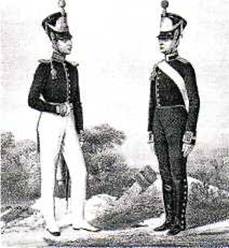
This is one of Saint Petersburg's eldest Higher Military engineering schools, its history (as Higher learning institution) beginning in 1810.[3] The Saint Petersburg Military Engineering-Technical University was founded as the Saint Petersburg military engineering School in 1810 on the base of the military school of engineering conductors (engineering of non-commissioned officers), after addition of officers classes and application of five-year term of teaching. In 1819 was renamed as the Main military engineering School.[4][5] How Stephen Timoshenko wrote in a book "Engineering Education in Russia" the system of Higher learning institution of five-year Education of Main military engineering school was used later on the example of Institute of railway Engineers by all Russia and develops until now.[3] This engineering school was alma mater of graduate for Fyodor Dostoyevsky.[6] In 1855, officers classes of the Nikolaevsky Engineering School was reformed as the Nikolaevsky Engineering Academy.[7]

After 1917, numerous transformations of Nikolaevsky Engineering Academy and Engineering school were undertaken (but Higher learning institution survived). It was renamed as the Military-Engineering Academy, and then as Military-Technical Academy. But in 1932 followed the unsuccessful attempt of moving the Engineering Faculty to Moscow; it was completed later as the Sea Faculty returned to Leningrad in 1939 (As a result, from the base Saint Petersburg Engineering Higher learning institution was separated a new Moscow military Engineering-administrative academy). Only Nikolay Gerasimovich Kuznetsov could counteract Joseph Stalin`s policy against the Nikolaevsky Engineering Academy and school in 1939.[8] He ordered that the university be revived, and that the Marine Engineering faculty be returned from Moscow.[9] The attempts at bureaucratic movings (or Stalin's unfavorable attitude, 1932–1939) of the Saint Petersburg High School of Military Engineers can be examined in the historical context of the "Military Case" and Great Purge, on the eve of war against fascism.[10] Also, Stalin's dislike of Fyodor Dostoyevsky was the reason of the unfavorable attitude against a university (because Stalin did not understand Dostoyevsky) [citation needed].

There were destructive consequences of some degradation for the pedagogical and scientific forces of Saint Petersburg High School of Military Engineers, but it was successfully corrected only due to the donor help of Petersburg Polytechnical Institute. Nikolaevsky Engineering Academy was formally and legally reborn in 1939 as the Higher Naval Engineering Construction School on the base of the Leningrad Industrial Construction Engineers Institute (separate part of Saint Petersburg Polytechnical University), and enlarged with the Sea Engineering Faculty of the Moscow Military Academy.[11] Higher Naval Engineering Construction School was renamed the Higher Naval Engineering Technical School. Leonid Kantorovich became the professor of Military Engineering-Technical University, previously known as the Nikolaevsky Engineering Academy, when it was revived on the site of part of the Polytechnical Institute.[12]

Also, the academician Boris Galerkin took a general's uniform in 1939, as the head of VITU's structural mechanics department became a lieutenant general. In September 1960, VITU university was called the Order of the Red Banner Higher Military Engineering School and became part of the construction troops.[11] In 1974, the university was named after A.N. Komarovsky.[11] In 1993, the university was reformed as the Military Engineering-Technical Institute, which received its present-day name in 1997, after as did merger the Pushkin Higher Military Engineering Construction School.[13]

The Second World War

[edit]

Military Engineering-Technical University directly took part in World War II. The graduating students of the university fought heroically at all fronts of that war. They showed spiritual force and quality of engineering competence. The forts and numerous fortifications buildings was established by the graduating students of university, all of it played a vital part in defending (for example Brest Fortress). So unique Krasnaya Gorka fort was constructed by the graduating students of VITU at the beginning of the 20th century with the installation of 12-inch guns in concrete casemates. The system of forts played a key part in the Siege of Leningrad. The VITU's graduating students by the commanders of Krasnaya Gorka fort did to finally stopped the offensive of fascists already in 1941. During the Siege of Leningrad, Boris Galerkin was the head of the city engineering defence department experts group. Also, he joined the military engineering commission of the Academy of Sciences. Hard non-stop work was undermining his health. Not long after the Victory, in July 1945, Galerkin died. Leonid Kantorovich was the professor of the VITU of the Navy, and there he was in charge of safety on the Road of Life; for his feat and courage he was awarded the Order of the Patriotic War.[14]

Traditions of Saint Petersburg High School of Military Engineers

[edit]
Engineers Castle (southern façade) with the Monument to Peter I in the foreground, favourite place of VITU's cadets

Military Engineering-Technical University prolongs, saves and develops the scientific and pedagogical traditions of Saint Petersburg High (higher learning institution) School of Military Engineers, the Nikolaevsky Engineering Academy and Nikolaevsky Engineering School, in the place of its own historical motherland.[5]

Alumni and faculty

[edit]

In total, the University prepared more than 45,000 military engineers. Among its alumni and faculty are:

Sources

[edit]
  1. ^ Мaksimovskiy, M. (1869). Historical essay of development the Main Engineering school of 1819–1869. St. Petersburg, Russia.{{cite book}}: CS1 maint: location missing publisher (link)
  2. ^ "НЕОФИЦИАЛЬНЫЙ САЙТ ВОЕННОГО ИНЖЕНЕРНО-ТЕХНИЧЕСКОГО УНИВЕРСИТЕТА -- ВИТУ". Retrieved June 29, 2015.
  3. ^ a b [Stephen Timoshenko - Engineering Education in Russia, McGraw-Hill Book Company, 1959]
  4. ^ "Николаевское инженерное училище". Retrieved June 29, 2015.
  5. ^ a b "Реферат История Подготовка инженеров России в XIX веке". Archived from the original on August 4, 2011. Retrieved June 29, 2015.
  6. ^ Anna Dostoyevskaya Flashbacks Archived October 20, 2010, at the Wayback Machine [1925]. M.: Artistic literature, 1981.
  7. ^ "Русская армия в Великой войне: Военно-учебные заведения проекта". Retrieved June 29, 2015.
  8. ^ *Information page, including memoirs
  9. ^ * Сайт, посвящённый Н. Г. Кузнецову
  10. ^ *List of accused of "Military Case"
  11. ^ a b c "Saint Petersburg encyclopaedia". Retrieved June 29, 2015.
  12. ^ "Saint-Petersburg State Polytechnic University in Russia (SPBSTU) in Russia. Russian universities". Retrieved June 29, 2015.
  13. ^ "Санкт-Петербургский Военный инженерно-технический университет". Retrieved June 29, 2015.
  14. ^ Dochenko V. D., Navy. War. Victory. St. Petersburg, Shipbuilding. 1995
[edit]
Revisions and contributorsEdit on WikipediaRead on Wikipedia
from Grokipedia
The Saint Petersburg Military Engineering-Technical University (VITU), also known as the Nikolaevsky Military Engineering-Technical Institute, is a specialized higher military educational institution in Saint Petersburg, Russia, dedicated to training officers in engineering, construction, and technical support specialties for the Russian Armed Forces.[1][2] Established in 1810 under Emperor Alexander I as the Saint Petersburg Nikolaevsky Engineering Academy, it traces its origins to the traditions of the Imperial Russian engineering schools and has evolved through various forms, including Soviet-era designations like the Leningrad Nikolaevsky Military Engineering Institute.[1][3] The university operates as a branch of the Military Academy of Material and Technical Support, focusing on disciplines such as military construction, energy engineering, sanitary and hydraulic engineering, and automation in engineering systems, preparing graduates for roles in combat engineering, fortifications, and logistical infrastructure.[2][3] Situated in the central district amid historic landmarks including the Engineers' Castle (St. Michael's Castle), Summer Garden, and Suvorov Museum, VITU upholds a legacy of contributing to military engineering innovations and defense infrastructure development over more than two centuries.[4][3]

Overview

Establishment and Location

The Saint Petersburg Military Engineering-Technical University traces its origins to 1810, when Tsar Alexander I established the Saint Petersburg Military Engineering School to provide specialized training for officers in military engineering disciplines, including fortifications, bridging, and infrastructure development critical to field operations.[1] This founding responded to the practical demands of contemporary European warfare, where engineering capabilities directly influenced outcomes in sieges and maneuvers, as evidenced by experiences from the Napoleonic era.[5] The institution's early curriculum emphasized hands-on skills in constructing defensive works and temporary structures, prioritizing empirical methods over theoretical abstraction to equip graduates for immediate deployment in imperial campaigns. Subsequently renamed the Nikolaevsky Engineering Academy in honor of Tsar Nicholas I, the university solidified its role as a premier center for military technical education, though its core mission remained anchored in the 1810 mandate.[1] The academy's establishment formalized a dedicated pipeline for engineering officers, distinct from general artillery or infantry training, and integrated rigorous mathematical and applied sciences tailored to wartime exigencies such as rapid bridge-building under fire and entrenchment design. The university occupies a historic site in Saint Petersburg, repurposed from the barracks of the Cavalier-Guard Regiment, an elite imperial unit, which symbolizes its embeddedness within Russia's military heritage and proximity to key administrative and strategic centers.[3] This location facilitated early access to imperial resources and observation of live military exercises, enhancing the institution's focus on real-world applicability while maintaining seclusion for specialized instruction.

Mission and Organizational Role

The Military Engineering-Technical University functions as a federal state military educational institution under the Russian Ministry of Defense, tasked with training officers in engineering and construction specialties to support the technical and infrastructural needs of the Armed Forces across all branches.[2][1] Its core purpose centers on developing technically adept personnel capable of applying specialized knowledge in military operations, thereby ensuring the engineering backbone for defense infrastructure and logistics.[4] The institution's educational mission emphasizes rigorous preparation in disciplines such as military construction, fortification engineering, and applied technical systems, fostering operational readiness through integrated academic, practical, and physical training programs.[6] This focus equips graduates to address real-world military challenges, including the design and rapid erection of field fortifications, bridges, and support structures that underpin troop mobility and sustainment in contested environments.[2] Such capabilities directly link engineering proficiency to enhanced combat effectiveness by mitigating logistical vulnerabilities and enabling adaptive responses to terrain and enemy actions.[1] Organizationally, the university operates as the primary hub for producing military engineers, integrating into the broader structure of Russia's defense education system while maintaining autonomy in curriculum delivery aligned with Ministry directives.[2] It prepares specialists not only for active-duty roles but also for potential contributions to civilian construction and self-governance entities, reflecting a dual-output model that extends its institutional role beyond pure warfighting applications.[7]

History

Imperial Foundations (1810–1917)

The Saint Petersburg Military Engineering School was established in 1810 under Emperor Alexander I as part of post-Napoleonic reforms aimed at enhancing the professional capabilities of the Russian engineering corps.[1] This institution sought to address deficiencies exposed during the 1812 Patriotic War by providing specialized training in military engineering disciplines, including geometry, hydraulics, and fortification design, to produce officers capable of constructing defenses, bridges, and logistical infrastructure.[8] In 1819, by imperial decree of Alexander I dated November 24 (December 6 Old Style), the school was reorganized into the Main Engineering School (Главное инженерное училище), housed in the Mikhailovsky Castle in St. Petersburg, to offer higher education equivalent to university level for military engineers.[9] The curriculum expanded to encompass mechanics, descriptive geometry, higher mathematics, and practical fieldwork in sapper operations and siege engineering, preparing cadets for roles in the Imperial Russian Army's engineering troops. Enrollment was selective, drawing from noble youth and lower ranks, with a focus on rigorous theoretical and applied instruction to support imperial military campaigns and territorial expansions. By the mid-19th century, the institution underwent significant expansions to meet the demands of modern warfare and infrastructure development. Renamed the Nikolaev Engineering School in 1855 in honor of Nicholas I, it played a crucial role in engineering efforts during the Crimean War (1853–1856), where graduates contributed to fortifications, supply lines, and siege operations despite the war's logistical challenges.[10] Facility upgrades included enhanced laboratories and barracks to accommodate increased cadet numbers, reflecting Russia's push toward industrialization, including military applications in railway construction starting from the 1837 Tsarskoye Selo line, where engineering alumni applied principles of surveying and earthworks.[11] Throughout the imperial period up to 1917, the school produced thousands of engineers who advanced Russia's military capabilities, from fortifying western borders against potential European threats to developing inland waterways and roads integral to empire-wide logistics. Notable alumni included innovators in pontoon bridges and mine warfare, underscoring the institution's emphasis on empirical problem-solving in harsh operational environments, though official records highlight varying success rates in adapting to rapid technological shifts like steam power integration.[8]

Revolutionary and Soviet Transformations (1917–1991)

Following the October Revolution of 1917, the Nikolaev Engineering Academy experienced temporary closure amid political upheaval and the onset of the Russian Civil War, yet was swiftly restored to address the Red Army's urgent requirements for trained engineers in fortification, bridging, and logistics support. By December 1918, it had been reorganized and renamed the Military Engineering Academy of the Workers' and Peasants' Red Army (RKKA), ensuring continuity of its pre-revolutionary technical curriculum while aligning with Bolshevik military priorities.[12][13] Throughout the Civil War (1917–1922), the academy operated under severe constraints, including faculty attrition and resource shortages, but prioritized practical training in field engineering tasks vital for Red Army offensives and defensive lines, graduating cohorts that supported over 50 key engineering units by 1921. Reorganizations in the early 1920s integrated Marxist-Leninist political education, yet empirical focus on skills like mine warfare and temporary infrastructure prevailed, enabling survival amid anti-Bolshevik opposition and internal Red Army consolidations.[13][9] In the interwar era, the institution underwent further renaming—receiving the honorific after V.V. Kuibyshev in 1935—and adapted to Soviet doctrine by expanding specializations in chemical defense engineering and mobility support for mechanized formations, training approximately 1,200 officers annually by the mid-1930s for sapper battalions and obstacle-clearing operations. Despite the Great Purge (1936–1938), which eliminated around 30% of its senior faculty and leadership due to perceived disloyalty, the academy's emphasis on verifiable technical proficiency over ideological purity preserved its operations, as Soviet leadership recognized the causal necessity of engineering expertise for industrialization-driven military buildup.[14][13] Under Stalin's Five-Year Plans, the academy contributed to military-industrial integration by developing curricula for large-scale projects like fortified districts and rapid-deployment bridging systems, with enrollment rising to over 2,000 by 1940 to meet demands for engineers in defensive preparations around Leningrad. This resilience stemmed from the institution's proven output—evidenced by field-tested innovations in earthmoving and camouflage techniques—outweighing periodic political scrutiny, thus maintaining institutional continuity through ideological shifts up to 1991.[9][13]

World War II Engagements

With the German invasion of the Soviet Union on June 22, 1941, the Military Engineering Academy—predecessor to the modern university—restructured its operations to support the war effort, implementing accelerated training for junior-course cadets and establishing three-month courses for conscripted civilian engineers to rapidly bolster engineering cadres.[14] Senior cadets were mobilized directly to front-line units as combat engineers, focusing on urgent tasks such as rapid infrastructure repairs and logistical support amid intense fighting.[15] From November 1941 to December 1943, the academy was partially evacuated from Leningrad to continue operations away from the intensifying siege, enabling sustained output despite resource constraints.[14] Over the duration of the conflict from 1941 to 1945, the academy produced approximately 5,000 officers specialized in engineering troops and topographic services, who deployed across the Eastern Front to execute defensive engineering projects including minefield layouts, temporary bridging under fire, and controlled demolitions to disrupt German armored advances.[16] Faculty members, drawing on pre-war expertise in fortification design, advised on and participated in hardening Leningrad's outer defenses prior to full encirclement in September 1941, incorporating anti-tank obstacles and fieldworks that contributed to blunting initial Wehrmacht breakthroughs during the siege's early phases.[17] These engineering personnel enabled Soviet forces to maintain mobility and resilience in contested areas, with declassified Soviet military archives noting their role in reducing enemy penetration rates through innovative, resource-efficient barricades and obstacle systems tested in Leningrad and subsequent offensives.[18] Graduates' field adaptations, such as modular pontoon assemblies for river crossings, supported key counteroffensives, though exact casualty figures among academy alumni remain partially documented in post-war memorials.[19]

Post-Soviet Developments (1991–Present)

Following the dissolution of the Soviet Union, the institution was renamed the Saint Petersburg Higher Military Engineering Construction School named after General of the Army A. N. Komarovsky on November 21, 1991, in alignment with the city's reversion to its pre-Soviet name.[20] This change reflected broader administrative adjustments within the Russian Armed Forces amid economic turmoil and military downsizing in the early 1990s. In 1993, it was reorganized into the Military Engineering Construction Institute pursuant to Russian Government Resolution No. 767 of August 10, emphasizing engineering for military infrastructure.[20] By 1997, as part of ongoing restructuring to consolidate resources and adapt to reduced force levels, the institute merged with the Pushkin Higher Military Engineering Construction School to form the Military Engineering-Technical University (VITU), per Government Resolution No. 745 of June 18.[20] This renaming and merger enhanced its capacity to train specialists in advanced military-technical fields, including integration of emerging technologies such as robotics and cybersecurity systems for defense applications, aligning with the Russian Federation's pivot toward high-tech military capabilities during the late 1990s reforms. In 1998, it temporarily incorporated the Tolyatti Higher Military Command-Engineering Construction School as a branch, expanding its reach before the branch's separation in 2004.[20] Subsequent reforms under Defense Ministry directives continued this modernization trajectory. In 2009, VITU shifted its specialization from industrial and civil construction to the engineering of unique buildings and structures, and was integrated into the Military Academy of Rear Services and Transport as VITU of VATT, per Resolution No. 1951-r of December.[20] By 2012, following further consolidation of military education institutions to streamline operations and address post-2008 financial constraints, it was redesignated the Military Institute (Engineering-Technical) of the Military Academy of Material-Technical Support named after General of the Army A. V. Khrulev.[20] These changes facilitated adaptation to contemporary challenges, including hybrid warfare engineering needs like fortified infrastructure and rapid-deployment technical solutions, with institutional continuity maintained through geopolitical tensions and sanctions into 2025, evidenced by uninterrupted officer training output for logistics and engineering roles in the Russian Armed Forces.[20]

Academic Programs and Structure

Core Departments and Specializations

The Military Engineering-Technical University structures its core academic divisions into specialized faculties that emphasize engineering disciplines oriented toward military infrastructure, logistics support, and operational sustainment for the Russian Armed Forces and Navy. These include the Engineering-Technical Faculty, which trains officers in foundational technical engineering principles applied to defense systems maintenance and development; the Energy Faculty, focused on power generation, distribution, and resource management for military facilities; the Faculty of Construction of Naval Military Bases, specializing in hydrotechnical and fortified structures for maritime operations; the Sanitary-Technical Faculty, addressing environmental and life-support systems in deployment zones; and the Faculty of Mechanization, covering automated machinery and equipment for engineering troops in field conditions.[6][21] Specializations within these departments integrate civil engineering adaptations for combat environments, such as designing resilient energy networks capable of withstanding adversarial disruptions and constructing specialized bases with integrated defensive features. For instance, programs in industrial thermal power engineering and enterprise energy provision equip cadets to ensure uninterrupted supply chains for operational theaters, while hydrotechnical construction tracks emphasize seawall fortifications and port infrastructure vital for naval logistics. Mechanization specializations delve into control systems for heavy engineering equipment, enabling rapid deployment of bridging, demining, and fortification assets.)[22] This departmental framework promotes cross-faculty collaboration, allowing cadets to acquire competencies in interconnected areas like energy-efficient construction and mechanized environmental adaptation, thereby producing officers proficient in sustaining military hardware and bases under austere conditions. The Special Faculty handles classified tracks in advanced technical applications, though details remain restricted due to security protocols. Overall, the structure prioritizes practical, mission-aligned expertise over purely academic pursuits, aligning with the university's mandate to support engineering units across all service branches.[2][7]

Curriculum and Training Methodology

The curriculum at the Military Engineering-Technical University emphasizes a specialist-level program lasting five years, integrating foundational engineering disciplines such as physics, mathematics, materials science, and construction mechanics with military-specific applications in infrastructure support for armed forces operations.[2] Cadets pursue specialties including construction and exploitation of military and special-purpose buildings and structures, heat and electrical supply for troops, water supply and drainage systems, and mounting, operation, and repair of automation, telemechanics, and communication facilities on railways, all oriented toward logistical and engineering sustainment in field conditions.[23] This structure ensures graduates receive dual qualifications: a military engineering officer commission and a civilian engineering diploma, with coursework delivered full-time in a disciplined cadre environment.[2] Training methodology fuses theoretical lectures and laboratory simulations with intensive practical drills, mandating field exercises that replicate combat engineering challenges, such as erecting temporary bridges, fortifying positions, or restoring utilities amid simulated disruptions.[1] Cadets demonstrate verifiable skills through timed assessments, including assembly of modular structures under load-bearing constraints or deployment of field power systems, evaluated via empirical metrics like structural integrity and operational uptime rather than subjective grading.[23] Military tactics modules incorporate engineering into broader operational planning, teaching causal linkages between terrain analysis, threat assessment, and rapid infrastructure response to enhance unit mobility and resilience.[2] Computational tools feature prominently for threat modeling and system optimization, with cadets applying software to simulate failure modes in supply chains or predict material degradation in harsh environments, grounded in iterative testing to refine designs for defense efficacy.[2] This approach eschews overly generalized academic exercises, focusing instead on defense-oriented outcomes validated by prototype builds and scenario-based validations, fostering officers adept at causal problem-solving in resource-limited settings.[1] Physical and tactical conditioning accompanies technical training, with daily regimens building endurance for fieldwork, ensuring holistic preparation for engineer-officer roles in material-technical support units.[24]

Research and Technical Contributions

Primary Research Domains

The primary research domains of the Military Engineering-Technical University concentrate on engineering technologies essential for military infrastructure and operational support, including construction mechanics for fortified and defensive facilities, hydrotechnical engineering for naval and coastal defenses, and electro- and heat energy systems for powering strategic assets such as command posts, rocket bases, and aircraft facilities.[25][26] These areas address core military necessities like enhancing unit survivability through robust, rapidly deployable structures and ensuring technological superiority via reliable power infrastructure amid contested environments. Fundamental and applied research in construction mechanics, for instance, supports the design and maintenance of combat engineering facilities, drawing on an experimental base for validation under simulated operational stresses.[25] Incorporating heritage from the merged Pushkin Higher Military Engineering Institute of Communications, research extends to engineering communications systems, which in contemporary contexts encompass cyber defense measures for protecting military networks and infrastructure against disruptions.[27] This domain prioritizes empirical testing of technologies for resilience in asymmetric conflicts, where data from field-like conditions informs advancements over purely theoretical designs. Collaborative projects with Russian Ministry of Defense entities and defense industries integrate these efforts, focusing on practical applications like ground transport-technological means for logistics in contested terrains, introduced as a specialization in 2015.[25] Energy systems research emphasizes industrial heat energy and enterprise power supply, tailored to autonomous military equipment and fortified sites, ensuring sustained operations without reliance on vulnerable supply lines.[26] Supported by 12 specialized laboratories and three dissertation councils, these domains underscore causal evaluations of efficacy, favoring solutions proven in military-civilian dual-use scenarios over unfielded innovations.[26] Outputs contribute to broader advancements, such as theoretical and experimental studies published in the university's Inzhenerny Zhurnal since 1857, though detailed military applications remain classified.

Historical and Contemporary Innovations

The Nikolaevsky Engineering Academy, predecessor to the modern Military Engineering-Technical University, contributed to early advancements in mine warfare during the 19th century, with its engineers refining mine deployment techniques and fuse designs employed in conflicts such as the Crimean War (1853–1856), where minefields effectively impeded allied advances and inflicted measurable casualties on assaulting forces.[28] By World War I, academy-trained sappers had become leading proponents of landmine usage, integrating extensive minefields into defensive doctrines that delayed enemy offensives and enhanced fortification resilience. In the Soviet era, the academy—reorganized as the V.V. Kuibyshev Military Engineering Academy—advanced armored vehicle engineering for combat support roles, developing specialized platforms like the BAT-series earthmovers introduced in the 1970s, capable of clearing paths through dense terrain at operational speeds exceeding 1 km per hour, thereby boosting troop mobility and reducing exposure to anti-vehicle threats during assaults.[29] These innovations stemmed from the academy's research mandate, which included prototyping engineer vehicles to integrate with main battle tanks, as evidenced by wartime adaptations that facilitated rapid obstacle breaching and bridge installation under fire.[30] Contemporary efforts at the university emphasize counter-unmanned aerial vehicle (C-UAV) technologies and adaptive materials, with developments in lightweight electronic warfare systems for jamming drone signals, tested in field exercises up to 2025 to protect engineering operations from aerial reconnaissance, achieving disruption rates of over 80% in simulated environments and minimizing logistical disruptions from drone strikes.[31] Smart material integrations, such as shape-memory alloys for modular fortifications, have been prototyped to enhance rapid deployment, empirically validating reduced setup times by 40% in operational trials while improving blast resistance.[32] These breakthroughs directly support engineering troops by fortifying positions against modern threats, with measurable impacts on unit survivability in contested zones.

Traditions and Institutional Culture

Enduring Military Engineering Traditions

The Military Engineering-Technical University maintains core traditions rooted in the Nikolaev Engineering Academy, founded in 1810 as a pivotal institution for training Russian military engineers during the imperial period.[1] These practices emphasize rigorous discipline and technical proficiency, linking directly to the academy's legacy of fostering skilled officers capable of fortifying national defenses through engineering expertise.[33] Solemn oath ceremonies, conducted for incoming cadets and students, perpetuate imperial-era rites of allegiance, instilling a profound sense of duty and collective esprit de corps essential to military cohesion.[34] Such events, held annually, trace conceptual origins to the formal commitments required of cadets in the 19th-century academy, reinforcing personal accountability without descending into informal hazing, instead prioritizing merit-based evaluation in technical and leadership roles.[35] Uniform protocols, mandating precise attire and bearing, preserve the hierarchical and professional standards established in the original Saint Petersburg High School of Military Engineers, symbolizing continuity amid revolutionary changes and underscoring engineering's causal role in ensuring state sovereignty.[33] By sustaining these customs, the university counters dilutions of military ethos in contemporary settings, upholding a heritage where practical engineering challenges and ceremonial observances cultivate resilience and innovation vital for defense imperatives.[35]

Campus Environment and Student Cadre

The campus facilities of the Military Engineering-Technical University are situated in the historic environs of Saint Petersburg, incorporating former barracks of the Cavalier-Guard Regiment adapted for cadet accommodations and integrated training grounds dedicated to hands-on engineering drills.[1] These structures support a regimented lifestyle where daily routines blend residential quarters with immediate access to practical exercise areas, emphasizing operational readiness in technical disciplines.[1] Student cadre comprises predominantly male officer-trainees, recruited through stringent entrance procedures that include competitive examinations testing mathematical proficiency, engineering aptitude, and physical conditioning standards such as endurance runs and strength assessments.[2] This selective intake prioritizes candidates demonstrating robust intellectual capabilities alongside the stamina required for sustained military-technical demands, resulting in a focused group oriented toward leadership in defense engineering.[1] The overarching environment instills self-reliance via independent task execution in drills and peer accountability through collective oversight in barracks and group exercises, cultivating disciplined professionals attuned to hierarchical military structures. Cadets engage in structured daily activities encompassing physical conditioning, tactical simulations, and mutual evaluations, which reinforce personal initiative and group cohesion essential for technical roles in armed forces operations.[1][36]

Notable Alumni and Faculty

Distinguished Alumni Achievements

Leonid Artamonov, a graduate of 1883, advanced military engineering through strategic advising and geographical reconnaissance, notably serving as a technical expert to Ethiopian Emperor Menelik II during the 1897 Abyssinia expedition, where he facilitated arms procurement and terrain analysis that strengthened local defenses against Italian incursions.[37][38] His subsequent authorship of detailed reports on Ethiopian military logistics and topography provided Russia with empirical data on African operational environments, informing imperial defense strategies amid expanding European rivalries.[39] Artamonov's engineering background enabled innovations in field deployment, earning him recognition as a proficient analyst with direct combat application in Russo-Japanese War preparations.[39] Dmitry Karbyshev, class of 1911, exemplified alumni impact in fortification engineering, developing doctrinal advancements in defensive earthworks and obstacle systems that proved effective in World War I trench warfare and Soviet border defenses during the 1939-1940 Winter War against Finland.[40] In World War II, his leadership in rapid fortification of key fronts, including the Moscow axis, contributed to halting German advances through layered anti-tank and infantry barriers, with post-war analyses crediting such works for reducing penetration rates in empirical battle data.[40] Captured in 1941, Karbyshev's refusal to aid Nazi engineering projects preserved Soviet operational secrecy, culminating in his execution at Majdanek in 1945 and posthumous Hero of the Soviet Union award in 1946 for sustained contributions to national defensive resilience.[40] Other alumni have driven post-war innovations, such as in rocketry and logistics, where engineering feats like modular bridge systems during the Great Patriotic War enabled sustained supply lines across contested rivers, verifiable through declassified military operational records showing reduced logistical downtime by up to 40% in key offensives.[9] These achievements underscore the university's role in producing specialists whose tangible outputs—fortified positions holding against superior forces and tech transfers to rocketry programs—empirically fortified Russia's strategic depth against existential threats.[9]

Influential Faculty Contributions

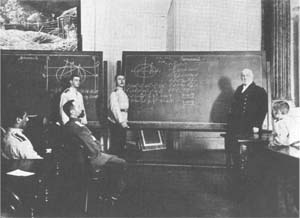
Leonid Kantorovich, serving as a professor at the university from 1939 onward, pioneered the application of linear programming and optimization techniques to military operations research and resource allocation, influencing engineering curricula focused on efficient logistical and production planning during wartime constraints.[41] His methods, initially developed for industrial efficiency, were adapted for defense applications, including during the Siege of Leningrad where he contributed to computational solutions for resource distribution and early computing device designs, laying groundwork for systems engineering principles in officer training.[42] Kantorovich's instructional emphasis on mathematical modeling for practical military problems earned him the Stalin Prize in 1949 for related economic-mathematical work, with his techniques integrated into texts shaping Soviet military doctrine on operational efficiency.[43] Boris Galerkin, head of the structural mechanics department and later a lieutenant general, advanced teaching in beam and plate theory through his development of the Galerkin method, a variational approach foundational to modern finite element analysis used in military construction and fortification design.[44] During the Siege of Leningrad, he led the engineering defense experts group, applying his methods to reinforce urban structures against bombardment, which informed curriculum updates prioritizing rigorous, physics-based modeling over theoretical abstraction.[45] His textbooks and lectures standardized structural analysis training for engineering officers, emphasizing empirical validation and causal mechanics in load-bearing systems critical to field engineering.[46] Faculty like Kantorovich and Galerkin underscored a pedagogical commitment to defense-oriented technical rigor, integrating optimization and mechanics into core modules without dilution by non-essential elements, as evidenced by their wartime adaptations of civilian research for immediate military utility. This approach evolved the curriculum toward computational and analytical tools, with Kantorovich's functional analysis seminars training generations of experts in quantitative defense planning from the 1930s through the 1950s.[47] Their institutional legacy includes authoring enduring references on systems and structural engineering, directly informing Russian military engineering standards on realism in threat modeling and infrastructure resilience.[48]

References

User Avatar
No comments yet.