Hubbry Logo
Roman currencyRoman currencyMain
Open search
Roman currency
Community hub
Roman currency
logo
8 pages, 0 posts
0 subscribers
Be the first to start a discussion here.
Roman currency
Roman currency
from Wikipedia

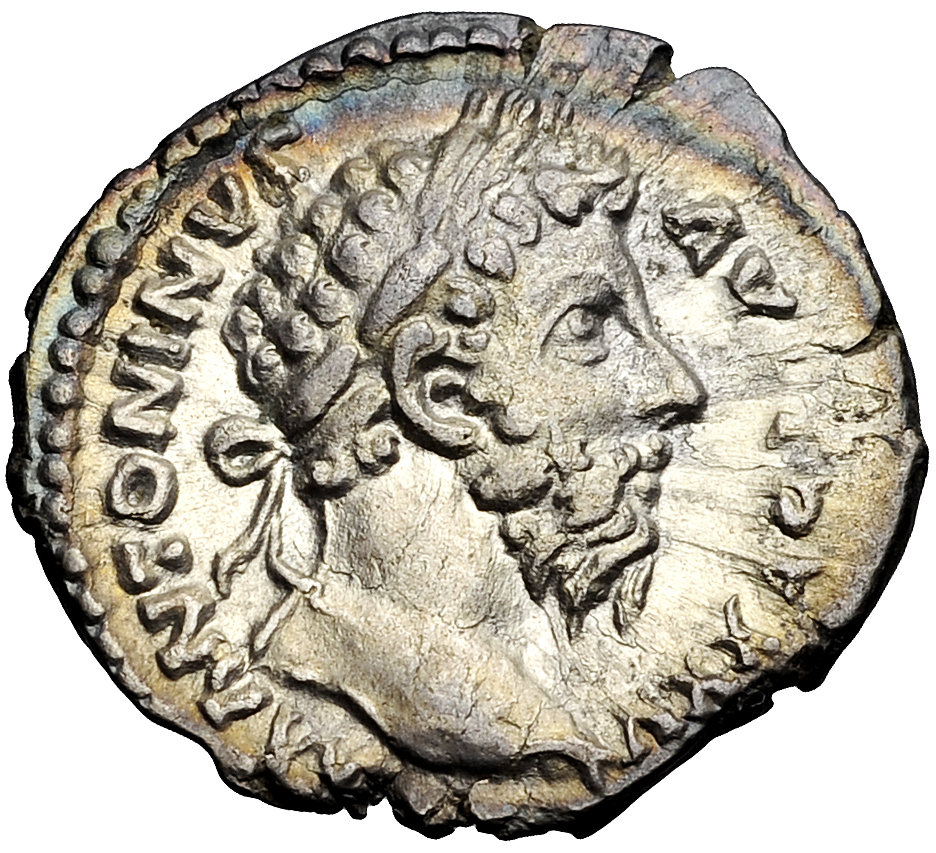
Denarius of Marcus Aurelius. Legend: IMP. M. ANTONINVS AVG. TR. P. XXV.

Roman currency for most of Roman history consisted of gold, silver, bronze, orichalcum (brass), and copper coinage.[1] From its introduction during the Republic, in the third century BC, through Imperial times, Roman currency saw many changes in form, denomination, and composition. A feature was the inflationary debasement and replacement of coins over the centuries. Notable examples of this followed the reforms of Diocletian. This trend continued with Byzantine currency.

Due to the economic power and longevity of the Roman state, Roman currency was widely used throughout western Eurasia and northern Africa from classical times into the Middle Ages. It served as a model for the currencies of the Muslim caliphates and the European states during the Middle Ages and the Modern Era. Roman currency names survive today in many countries via the Carolingian monetary system, such as the dinar (from the denarius coin), the British pound (a translation of the Roman libra, a unit of weight), the peso (also a translation of libra), and the words for the general concept of money in the Iberian Romance languages (e.g. Spanish dinero and Portuguese dinheiro).

Authority to mint coins

[edit]

The manufacture of coins in the Roman culture, dating from about the 4th century BC, significantly influenced later development of coin minting in Europe. The origin of the word "mint" is ascribed to the manufacture of silver coin at Rome in 269 BC near the temple of Juno Moneta. This goddess became the personification of money, and her name was applied both to money and to its place of manufacture. Roman mints were spread widely across the Empire, and were sometimes used for propaganda purposes. The populace often learned of a new Roman Emperor when coins appeared with the new emperor's portrait. Some of the emperors and usurpers who ruled only for a short time made sure that a coin bore their image;[2] the usurper Quietus, for example, ruled only part of the Roman Empire from 260 to 261 AD, and yet he issued thirteen coins bearing his image from three mints.[3] The Romans cast their larger copper coins in clay moulds carrying distinctive markings, not because they did not know about striking, but because it was not suitable for such large masses of metal.

Roman Republic: c. 500 – 27 BC

[edit]

Roman adoption of metallic commodity money was a late development in monetary history. Bullion bars and ingots were used as money in Mesopotamia since the 7th millennium BC; and Greeks in Asia Minor had pioneered the use of coinage (which they employed in addition to other more primitive, monetary mediums of exchange) as early as the 7th century BC.[4]

Bronze aes signatum produced by the Roman Republic after 450 BC

Coinage proper was only introduced by the republican government c. 300 BC. The greatest city of the Magna Graecia region in southern Italy, and several other Italian cities, already had a long tradition of using coinage by this time and produced them in large quantities during the 4th century BC to pay for their wars against the inland Italian groups encroaching on their territory. For these reasons, the Romans would have certainly known about coinage systems long before their government actually introduced them. Eventually, the economic conditions of the Second Punic War forced the Romans to fully adopt a coinage system.[5]

The type of money introduced by Rome was unlike that found elsewhere in the ancient Mediterranean. It combined a number of uncommon elements. One example is the large bronze bullion, the aes signatum (Latin for signed bronze). It measured about 16 by 9 centimetres (6.3 by 3.5 in) and weighed around 1.5 to 1.6 kilograms (3.3 to 3.5 lb), being made out of a highly leaded tin bronze. Although similar metal currency bars had been produced in Italy and northern Etruscan areas, these had been made of aes grave, an unrefined metal with a high iron content.[6]

Along with the aes signatum, the Roman state also issued a series of bronze and silver coins that emulated the styles of those produced in Greek cities.[7] Produced using the manner of manufacture then utilised in Greek Naples, the designs of these early coins were also heavily influenced by Greek designs.[8]

The designs on the coinage of the Republican period displayed a "solid conservatism", usually illustrating mythical scenes or personifications of various gods and goddesses.[9]

Imperial period: 27 BC – AD 476

[edit]

Iconography

[edit]
The most common denominations used during Early Roman times, their relative sizes, and relative values

A significant advancement in coin imagery occurred when Julius Caesar issued coins bearing his own portrait. While previous moneyers had issued coins featuring portraits of their ancestors, Caesar's coinage marked the third instance in Roman history where a living individual was depicted. This innovative approach to coin design further amplified the use of propaganda and personal representation in currency during that time.[10] Although living Romans had appeared on coinage before,[11] in the words of Clare Rowan (2019) "The appearance of Caesar's portrait on Roman denarii in 44 BC is often seen as a revolutionary moment in Roman history..."[12] The appearance of Julius Caesar implemented a new standard, and the tradition continued following Caesar's assassination, although the Roman emperors from time to time also produced coins featuring the traditional deities and personifications found on earlier coins. The image of the emperor took on a special importance in the centuries that followed, because during the Empire the emperor embodied the state and its policies. The names of moneyers continued to appear on the coins until the middle of Augustus' reign. Although the duty of moneyers during the Empire is not known, since the position was not abolished, it is believed that they still had some influence over the imagery of the coins.

The main focus of the imagery during the Empire was on the portrait of the emperor. Coins were an important means of disseminating this image throughout the Empire.[13] Coins often attempted to make the emperor appear god-like through associating the emperor with attributes normally seen in divinities, or emphasizing the special relationship between the emperor and a particular deity by producing a preponderance of coins depicting that deity. During his campaign against Pompey, Caesar issued a variety of types that featured images of either Venus or Aeneas, attempting to associate himself with his divine ancestors. An example of an emperor who went to an extreme in proclaiming divine status was Commodus. In AD 192, he issued a series of coins depicting his bust clad in a lion-skin (the usual depiction of Hercules) on the obverse, and an inscription proclaiming that he was the Roman incarnation of Hercules on the reverse. Although Commodus was excessive in his depiction of his image, this extreme case is indicative of the objective of many emperors in the exploitation of their portraits. While the emperor is by far the most frequent portrait on the obverse of coins, heirs apparent, predecessors, and other family members, such as empresses, were also featured. To aid in succession, the legitimacy of an heir was affirmed by producing coins for that successor. This was done from the time of Augustus till the end of the Empire.

Coins of the Roman Republic and Empire from Cassell's History of England, Vol. I

Featuring the portrait of an individual on a coin, which became legal in 44 BC, caused the coin to be viewed as embodying the attributes of the individual portrayed. Cassius Dio wrote that following the death of Caligula the Senate demonetized his coinage and ordered that they be melted. Regardless of whether or not this actually occurred, it demonstrates the importance and meaning that was attached to the imagery on a coin. The philosopher Epictetus jokingly wrote: "Whose image does this sestertius carry? Trajan's? Give it to me. Nero's? Throw it away, it is unacceptable, it is rotten." Although the writer did not seriously expect people to get rid of their coins, this quotation demonstrates that the Romans attached a moral value to the images on their coins. Unlike the obverse, which during the Imperial period almost always featured a portrait, the reverse was far more varied in its depiction. During the late Republic there were often political messages to the imagery, especially during the periods of civil war. However, by the middle of the Empire, although there were types that made important statements, and some that were overtly political or propagandistic in nature, the majority of the types were stock images of personifications or deities. While some images can be related to the policy or actions of a particular emperor, many of the choices seem arbitrary and the personifications and deities were so prosaic that their names were often omitted, as they were readily recognizable by their appearance and attributes alone.

It can be argued that within this backdrop of mostly indistinguishable types, exceptions would be far more pronounced. Atypical reverses are usually seen during and after periods of war, at which time emperors make various claims of liberation, subjugation, and pacification. Some of these reverse images can clearly be classified as propaganda. An example struck by emperor Philip the Arab in 244 features a legend proclaiming the establishment of peace with Persia; in truth, Rome had been forced to pay large sums in tribute to the Persians.

Although it is difficult to make accurate generalizations about reverse imagery, as this was something that varied by emperor, some trends do exist. An example is reverse types of the military emperors during the second half of the third century, where virtually all of the types were the common and standard personifications and deities. A possible explanation for the lack of originality is that these emperors were attempting to present conservative images to establish their legitimacy, something that many of these emperors lacked. Although these emperors relied on traditional reverse types, their portraits often emphasized their authority through stern gazes,[14][citation needed] and even featured the bust of the emperor clad in armor.[15]

Value and composition

[edit]

Unlike most modern coins, Roman coins had (at least in the early centuries) significant intrinsic value. However, while the gold and silver issues contained precious metals, the value of a coin could be slightly higher than its precious metal content, so they were not, strictly speaking, equivalent to bullion. Also, over the course of time the purity and weight of the silver coins were reduced.[16] Estimates of the value of the denarius range from 1.6 to 2.85 times its metal content,[citation needed] thought to equal the purchasing power of 10 modern British pound sterling at the beginning of the Roman Empire to around 18 pound sterling by its end (comparing bread, wine, and meat prices) and, over the same period, around one to three days' pay for a legionary.[17]

The coinage system that existed in Egypt until the time of Diocletian's monetary reform was a closed system based upon the heavily debased tetradrachm. Although the value of these tetradrachms can be reckoned as being equivalent to that of the denarius, their precious metal content was always much lower. Elsewhere also, not all coins that circulated contained precious metals, as the value of these coins was too great to be convenient for everyday purchases. A dichotomy existed between the coins with an intrinsic value and those with only a token value. This is reflected in the infrequent and inadequate production of bronze coinage during the Republic, where from the time of Sulla till the time of Augustus no bronze coins were minted at all; even during the periods when bronze coins were produced, their workmanship was sometimes very crude and of low quality.

Debasement

[edit]
The rapid decline in silver purity of the antoninianus

The type of coins issued changed under the coinage reform of Diocletian, the heavily debased antoninianus (double denarius) was replaced with a variety of new denominations,[18] and a new range of imagery was introduced that attempted to convey different ideas. The new government set up by Diocletian was a Tetrarchy, or rule by four, with each emperor receiving a separate territory to rule.

The new imagery includes a large, stern portrait that is representative of the emperor. This image was not meant to show the actual portrait of a particular emperor, but was instead a character that embodied the power that the emperor possessed. The reverse type was equally universal, featuring the spirit (or genius) of the Romans. The introduction of a new type of government and a new system of coinage represents an attempt by Diocletian to return peace and security to Rome, after the previous century of constant warfare and uncertainty. Diocletian characterizes the emperor as an interchangeable authority figure by depicting him with a generalized image. He tries to emphasize unity amongst the Romans by featuring the spirit of Romans (Sutherland 254). The reverse types of coins of the late Empire emphasized general themes, and discontinued the more specific personifications depicted previously. The reverse types featured legends that proclaimed the glory of Rome, the glory of the Roman army, victory against the "barbarians", the restoration of happy times, and the greatness of the emperor.

These general types persisted even after the adoption of Christianity as the state religion of the Roman Empire. Muted Christian imagery, such as standards that featured Christograms (the Chi Rho monogram for Jesus Christ's name in Greek) were introduced, but with a few rare exceptions, there were no explicitly Christian themes. From the time of Constantine the Great until the "end" of the Roman Empire, coins featured almost indistinguishable idealized portraits and general proclamations of greatness.

Although the denarius remained the backbone of the Roman economy from its introduction a few years before 211 BC until it ceased to be normally minted in the middle of the third century, the purity and weight of the coin slowly, but inexorably, decreased. The problem of debasement in the Roman economy appears to be pervasive, although the severity of the debasement often paralleled the strength or weakness of the Empire. While it is not clear why debasement became such a common occurrence for the Romans, it's believed that it was caused by several factors, including a lack of precious metals and inadequacies in state finances. When introduced, the denarius contained nearly pure silver at a theoretical weight of approximately 4.5 grams, but from the time of Nero onwards the tendency was nearly always for its purity to be decreased.

The theoretical standard, although not usually met in practice, remained fairly stable throughout the Republic, with the notable exception of times of war. The large number of coins required to raise an army and pay for supplies often necessitated the debasement of the coinage. An example of this is the denarii that were struck by Mark Antony to pay his army during his battles against Octavian. These coins, slightly smaller in diameter than a normal denarius, were made of noticeably debased silver. The obverse features a galley and the name Antony, while the reverse features the name of the particular legion that each issue was intended for (hoard evidence shows that these coins remained in circulation over 200 years after they were minted, due to their lower silver content). The coinage of the Julio-Claudians remained stable at 4 grams of silver, until the debasement of Nero in 64, when the silver content was reduced to 3.8 grams, perhaps due to the cost of rebuilding the city after fire consumed a considerable portion of Rome.

The denarius continued to decline slowly in purity, with a notable reduction instituted by Septimius Severus. This was followed by the introduction of a double denarius piece, differentiated from the denarius by the radiate crown worn by the emperor. The coin is commonly called the antoninianus by numismatists after the emperor Caracalla, who introduced the coin in early 215. Although nominally valued at two denarii, the antoninianus never contained more than 1.6 times the amount of silver of the denarius. The profit of minting a coin valued at two denarii, but weighing only about one and a half times as much is obvious; the reaction to these coins by the public is unknown. As the number of antoniniani minted increased, the number of denarii minted decreased, until the denarius ceased to be minted in significant quantities by the middle of the third century. Again, coinage saw its greatest debasement during times of war and uncertainty. The second half of the third century was rife with this war and uncertainty, and the silver content of the antonianus fell to only 2%, losing almost any appearance of being silver. During this time the aureus remained slightly more stable, before it too became smaller and more base (lower gold content and higher base metal content) before Diocletian's reform.

The decline in the silver content to the point where coins contained virtually no silver at all was countered by the monetary reform of Aurelian in 274. Some researchers think that the number 21 on the coins from those years (XXI in Latin or KA in Greek) means a standard for the antonianus set at twenty parts copper to one part silver.[19] Despite the reform of Aurelian, silver content continued to decline, until the monetary reform of Diocletian. In addition to establishing the Tetrarchy, Diocletian devised the following system of denominations: an aureus struck at the standard of 60 to the pound, a new silver coin struck at the old Neronian standard known as the argenteus, and a new large bronze coin that contained two percent silver.

Diocletian issued an Edict on Maximum Prices in 301, which attempted to establish the legal maximum prices that could be charged for goods and services. The attempt to establish maximum prices was an exercise in futility as maximum prices were impossible to enforce. The Edict was reckoned in terms of denarii, although no such coin had been struck for over 50 years (it is believed that the bronze follis was valued at 12+12 denarii). Like earlier reforms, this too eroded and was replaced by an uncertain coinage consisting mostly of gold and bronze. The exact relationship and denomination of the bronze issues of a variety of sizes is not known, and is believed to have fluctuated heavily on the market.

The exact reason that Roman coinage sustained continuous debasement is not known, but the most common theories involve inflation, trade with India (which drained silver from the Mediterranean world) and inadequacies in state finances. It is clear from papyri that the pay of the Roman soldier increased from 900 sestertii a year under Augustus to 2,000 sestertii a year under Septimius Severus, while the price of grain more than tripled, indicating a fall in real wages and moderate inflation during this time.[20]

Equivalences

[edit]

The first rows show the values of each boldface coin in the first column in relation to the coins in the following columns:

Early Republic values[21][22] (after 211 BC)
Denarius Sestertius Dupondius As Semis Quincunx Triens Quadrans Uncia
Denarius 1 4 5 10 20 24 30 40 120
Sestertius 14 1 1+14 2+12 5 6 7+12 10 30
Dupondius 15 45 1 2 4 4+45 6 8 24
As 110 25 12 1 2 2+25 3 4 12
Semis 120 15 14 12 1 1+15 1+12 2 6
Quincunx 124 16 524 512 56 1 1+14 1+23 5
Triens 130 215 16 13 23 45 1 1+13 4
Quadrans 140 110 18 14 12 35 34 1 3
Uncia 1120 130 124 112 16 15 14 13 1
Augustan values (27 BC – AD 301)
Aureus Quinarius Aureus Denarius Quinarius Sestertius Dupondius As Semis Quadrans
Aureus 1 2 25 50 100 200 400 800 1600
Quinarius Aureus 12 1 12+12 25 50 100 200 400 800
Denarius 125 225 1 2 4 8 16 32 64
Quinarius Argenteus 150 125 12 1 2 4 8 16 32
Sestertius 1100 150 14 12 1 2 4 8 16
Dupondius 1200 1100 18 14 12 1 2 4 8
As 1400 1200 116 18 14 12 1 2 4
Semis 1800 1400 132 116 18 14 12 1 2
Quadrans 11600 1800 164 132 116 18 14 12 1
Diocletian values (301–305)
Aureus Argenteus Nummus Radiate Laureate Denarius
Aureus 1 25 40 200 500 1000
Argenteus 125 1 4 20 50 100
Nummus 140 14 1 5 12+12 25
Radiate 1200 120 15 1 2+12 5
Laureate 1500 150 225 25 1 2
Denarius 11000 1100 125 15 12 1
Late Empire coin values (337–476)
Solidus Miliarense Siliqua Nummus
Solidus 1 12 24 180
Miliarense 112 1 2 15
Siliqua 124 12 1 7+12
Nummus 1180 115 215 1

See also

[edit]

References

[edit]
[edit]
Revisions and contributorsEdit on WikipediaRead on Wikipedia
from Grokipedia

Roman currency comprised the uncoined and coined monetary media utilized in from the early Republic through the late Empire, evolving from irregular bronze lumps (aes rude) and stamped bars (aes signatum) to a standardized system of struck silver, , and base-metal coins that supported commerce, state finance, and imperial across the Mediterranean world. The core denominations included the as, the orichalcum sestertius (valued at four asses), the silver denarius (16 asses), and the aureus (25 denarii), with the denarius maintaining dominance as the primary silver unit from its introduction circa 211 BC until the 3rd century AD.
This coinage system originated in the amid Rome's growing economic needs, initially relying on cast bronze for local transactions before adopting silver coinage influenced by Greek and Carthaginian models during the , which enabled systematic taxation and military on an imperial scale. Coins bore inscriptions and —such as magistrates' names in the and emperors' portraits in the —serving not only as exchange media but also as vehicles for political messaging and legitimacy assertion. A defining characteristic was progressive , where emperors reduced content to fund expenditures, culminating in severe during the 3rd-century as silver denarii and later antoniniani lost up to 99% of their original , undermining and contributing to fiscal strains without corresponding gains. Reforms under and Constantine attempted stabilization through new denominations and gold solidi, but the system's vulnerabilities highlighted the limits of fiat-like manipulations in a metallically anchored .

Historical Development

Archaic Period and Early Republic (c. 750–300 BC)

During the Archaic Period and Early Republic, Roman economic exchanges primarily relied on systems, with serving as a primary unit of value, as reflected in the Latin term pecunia derived from pecus (). Larger transactions gradually incorporated as a medium, initially in unstandardized forms, due to its abundance in and utility as a durable, divisible material for assessing worth by weight. This shift predated formal coinage, reflecting a practical evolution from direct goods exchange to metal-based valuation without reliance on precious metals like silver or , which were scarce or imported. Aes rude, or "rough bronze," emerged as irregular lumps or nuggets of unrefined bronze, used from at least the , though some examples trace to the in Italic contexts. These proto-currencies were valued by their weight, typically measured against the Roman libra (approximately 327 grams), and served for payments such as fines, dowries, or state tributes, often found in hoards near sacred sites indicating ritual or votive use alongside economic function. Their irregular shapes and variable purity necessitated on-site assaying, limiting efficiency but enabling broader adoption over pure . By the , aes rude evolved into aes signatum, cast bars of more uniform rectangular or brick-like shapes, weighing several hundred grams to over a , marked with incuse stamps or symbols to certify weight and quality. These markings, often banker guarantees or proto-official emblems like animals or geometric motifs, facilitated trust without striking, representing an Italic distinct from Greek electrum or silver coinage influences. Aes signatum circulated widely in until around 300 BC, supporting expanding Republican trade and payments, though still weighed rather than face-valued, bridging to later struck aes grave coins. This system emphasized 's intrinsic utility over or scarcity, aligning with Rome's agrarian economy.

Mid-Republican Innovations (c. 300–211 BC)

During the early third century BC, transitioned from irregular bronze bars (aes signatum) to the aes grave, the first standardized cast coins, introduced around . These heavy coins established the as as the basic unit, initially weighing approximately 270 grams, equivalent to one Roman libra (pound) of . Denominations formed a system, including the semis (1/2 as), triens (1/3), (1/4), (1/6), uncia (1/12), and semuncia (1/24), facilitating everyday transactions. Obverses typically featured the two-faced head of , evoking gateways and duality, while reverses showed a prow (rostrum), symbolizing naval power amid expanding Roman influence in . To engage in trade with Greek colonies in , minted limited silver didrachms from circa 280 BC, copying Campanian and Syracusan styles with clubbing the on the obverse and crowning a on the reverse. These weighed about 6.5–7.2 grams each, valued at three asses, but remained supplementary to the bronze standard and circulated primarily in rather than domestically. The Second Punic War (218–201 BC) strained finances, leading to expedients like struck bronze uncial asses around 217 BC, lighter than cast predecessors at one-twelfth of the libra. The pivotal innovation came in 211 BC, after silver influx from captured Syracuse and other Hellenistic cities, with the reform introducing the silver denarius (c. 4.5 grams fine silver, valued at 10 asses) alongside the reduced-weight bronze as (one-sixth libra, c. 54 grams). This bimetallic framework, including the victoriatus (a half-denarius equivalent), boosted Rome's monetary capacity for military pay and logistics, marking the shift to a silver-dominated system.

Late Republic and Civil Wars (211–27 BC)

Following the financial strains of the Second Punic War, Rome introduced the silver denarius around 211 BC as its primary silver coin, weighing approximately 4.5 grams (1/72 of a Roman pound) and valued at 10 bronze asses. This innovation addressed the need to pay mercenaries accustomed to silver coinage, supplementing the existing bronze-based system. Concurrently, the victoriatus, a lighter silver coin of about 3.4 grams modeled on Greek didrachms, was minted for circulation in southern Italy and among Hellenistic allies, featuring Jupiter on the obverse and Victory on the reverse; it circulated until roughly 170 BC before being discontinued. Bronze coinage underwent the sextantal reform around 212–211 BC, reducing the as to one-sixth of a Roman pound (approximately 54 grams initially), aligning it with the 's value and facilitating wartime economics. By 187 BC, the was retariffed to 16 asses amid further weight reductions, stabilizing the bimetallic system while maintaining the 's with minimal debasement during the . Quinarii (half-denarii) and sestertii (quarter-denarii) supplemented the denominations, with serrated edges appearing on many late denarii from the late to combat clipping. Magistrates increasingly inscribed their names and symbols on coins from circa 150 BC, marking a shift toward personalized issuance under senatorial oversight. The Social War (91–88 BC) and subsequent civil conflicts intensified coin production for military financing, ushering in the imperatorial period from 49 BC. Leaders like Sulla issued portrait coins post-82 BC, breaking from anonymous traditions to assert authority. Julius Caesar's denarii of 44 BC featured his portrait—the first for a living Roman—alongside Venus Victrix, emphasizing divine ancestry and dictatorship. Mark Antony's legionary denarii (32–31 BC), struck in the East, bore galley reverses and legion numbers (e.g., LEG XX), serving as troop payments and propaganda during the conflict with Octavian. Octavian's issues similarly propagated victories and legitimacy, with denarius weights averaging around 3.9–4.0 grams by 27 BC, setting the stage for imperial standardization.

Augustan Reforms and Early Empire (27 BC–AD 68)

Augustus established a standardized trimetallic coinage system following his consolidation of power in 27 BC, introducing regular production of gold aurei, silver denarii, and base-metal denominations to restore economic stability after the inflationary pressures of the late Republic's civil wars. The aureus served as the principal gold coin, valued at 25 denarii, while the denarius became the standard silver unit equivalent to 16 copper asses. Base-metal coins included the orichalcum sestertius (valued at 4 asses), dupondius (2 asses), and the copper as, with smaller fractions like the semis and quadrans for everyday transactions; this hierarchy provided a coherent monetary framework absent in the Republic's more varied aes issues. Precious-metal minting was centralized at (modern ) starting under , separating it from Rome's base-metal production to enhance control and quality, though senatorial authority persisted over bronze coinage until later imperial assertions. This reform marked gold's transition from sporadic wartime use to a staple of imperial currency, reflecting Augustus's emphasis on fiscal discipline amid post-Actium reconstruction. The system's intrinsic value— at roughly 8 grams of near-pure gold and at about 3.9 grams of high-fineness silver—supported trade expansion and provincial integration without immediate debasement. Under (AD 14–37), the coinage maintained stability, with conservative output primarily from yielding denarii of consistent weight and fineness, though provincial counterfeits emerged due to demand. (AD 37–41) and (AD 41–54) issued similar denominations, introducing occasional commemorative types—such as Claudius's dupondii celebrating British conquests—but without altering metallic standards, preserving the Augustan ratios amid growing imperial expenditures. Nero's early reign (AD 54–68) initially adhered to this framework, but in AD 64, following the , he implemented the period's first major debasement: the was recalibrated to 45 pieces per Roman pound (from approximately 40–42 under ), and the reduced in silver fineness from near 94% to about 90%, with weight adjustments yielding roughly 96 per pound, to fund reconstruction and military costs. This shift, while not immediately inflationary, initiated a pattern of fiscal manipulation that contrasted with the era's prior metallic integrity.

High Empire Stability and Variations (AD 69–235)

Following the instability of the Year of the Four Emperors in AD 69, Vespasian's Flavian dynasty prioritized economic recovery, including measures to stabilize coinage after Nero's earlier debasements that had reduced the denarius's silver content to approximately 90% fineness and weight to around 3.4 grams. Vespasian introduced new taxes to replenish the treasury without immediate further debasement, maintaining the denarius at roughly 3.3-3.5 grams and silver purity near 92-93%. Domitian enacted a significant reform in AD 82, increasing the denarius's fineness to about 93-95% silver by refining production techniques and cupellation processes, which improved overall coin quality despite a minor debasement in AD 85 that still left it superior to pre-Flavian issues. The aureus, valued at 25 denarii and weighing approximately 7.8-8.1 grams of nearly pure gold, remained stable throughout the Flavian period, reflecting fiscal prudence amid military campaigns and infrastructure projects. The Nerva-Antonine dynasty (AD 96-192) sustained this stability, with emperors like Trajan, Hadrian, Antoninus Pius, and Marcus Aurelius issuing denarii showing annual fineness fluctuations typically between 86% and 95% silver but averaging around 92%, alongside consistent weights of 3.2-3.4 grams, supported by provincial silver supplies and controlled minting at Rome. No major weight reductions occurred, though bronze denominations like the sestertius and as were produced in large volumes to facilitate everyday transactions without altering core metallic standards. The aureus continued at 1/40th of a Roman pound (circa 8 grams), underscoring monetary reliability during territorial expansions and the Pax Romana. Under the Severan dynasty (AD 193-235), stability waned due to escalated military expenditures; Septimius Severus doubled legionary pay in AD 197, necessitating gradual debasement, with denarius fineness dropping to around 50-60% by the reign of Caracalla (AD 198-217). Caracalla introduced the antoninianus in AD 215 as a purported double denarius (valued at 2 denarii but weighing about 5 grams), featuring a radiate crown to denote doubled value, yet its silver content was only marginally higher than the standard denarius, effectively halving intrinsic value and accelerating inflationary pressures. Elagabalus (AD 218-222) and Severus Alexander (AD 222-235) continued this trend with further reductions in fineness to below 50% in some issues, alongside stable but strained aureus production, as provincial mints like those in Emesa supplemented Rome's output amid fiscal strain from civil wars and donatives.

Crisis of the Third Century and Reforms (AD 235–284)

The Crisis of the Third Century (235–284 AD) profoundly destabilized Roman currency amid political fragmentation, with numerous short-lived emperors contending for power following the assassination of Severus Alexander in 235 AD. External invasions by Germanic tribes and Persians, coupled with internal civil wars, imposed enormous fiscal burdens, prompting emperors to fund armies through accelerated debasement of existing denominations rather than taxation or conquest spoils. The primary victim was the , a billon coin introduced by circa 215 AD as a higher-value silver piece nominally equivalent to two denarii. Its silver , already reduced to around 50% by the Severan era, underwent rapid decline: under Valerian (253–260 AD), it hovered at approximately 20%, but by 270 AD, content fell below 5% (often 2.5% or less), transforming the coin into a core with a thin silver wash, while weight dropped from over 5 grams to under 3 grams. This , intensified by (253–268 AD) through excessive minting to pay legions, fueled ; prices for goods like surged hundreds of percent, eroding purchasing power, encouraging hoarding of purer earlier coins via , and disrupting trade as merchants preferred or foreign currencies. The , while retaining near-pure gold composition, saw its weight diminish to about 3 grams by the 260s, reflecting broader metallurgical strain. Aurelian (270–275 AD) attempted stabilization in 274 AD, after militarily reuniting the empire by suppressing the Palmyrene and Gallic empires. He recalled debased antoniniani, exchanging them at a 2:1 rate for the new aurelianus—a reformed antoninianus weighing 4.03 grams with 5% silver alloy, bearing the mint mark XXI (denoting a 20:1 bronze-to-silver ratio) and often KA for the Rome mint. Concurrently, Aurelian stabilized the aureus at 6.45 grams (1/50th of a Roman pound), reintroduced the denarius at 2.6 grams of silver (1/124th pound), and revived base-metal coins such as sestertii, dupondii, and asses to support everyday transactions. These reforms, however, yielded limited enduring success. Initially confined to the Rome mint, the aurelianus encountered provincial resistance, with older debased coins persisting in circulation and exacerbating distrust. Hoarding of the new issues increased, and inflationary dynamics continued under Probus (276–282 ) and Carus (282–283 ), as underlying military expenditures and minting irregularities undermined public confidence, deferring comprehensive resolution until after 284 .

Late Empire and Transition (AD 284–476)

, who became emperor in November 284 AD, implemented coinage reforms around 294 AD to counteract the severe and inherited from the third-century crisis. These included the introduction of the argenteus, a weighing approximately 3 grams with about 95% purity, struck in large quantities to restore in silver as a . Gold coinage standards were also elevated, with the raised from a nominal 70-72 grains to a heavier, more consistent weight to anchor the monetary system. Bronze denominations, such as the nummus, were reformed alongside, though their intrinsic value remained low and prone to further manipulation. In 301 AD, promulgated the , which fixed ceilings on over 1,200 goods, services, and wages in an attempt to curb attributed to . The edict explicitly tied valuations to reformed coin standards, such as pricing in argentei or equivalent bronze units, but enforcement proved ineffective due to underlying fiscal pressures like military expenditures and persistent , fostering evasion, shortages, and unofficial markets rather than stabilization. Constantine I advanced these efforts after 312 AD by launching the solidus, a of 4.5 grams at nearly 99% purity, minted initially in the West and designed for durability as a high-value, stable unit that resisted for centuries. Complementing it, the siliqua emerged around 315 AD as a lighter silver denomination, initially mirroring the argenteus in purity but struck on thinner of about 3 grams, serving as a fractional link to . Bronze production expanded under centralized imperial mints, yet numismatic output increasingly prioritized quantity over quality, with alloys diluted to meet demand. Later fourth-century rulers, facing renewed strains from civil wars and barbarian incursions, incrementally reduced silver standards; by 355 AD under , the dropped to roughly 1.9 grams without altering types, signaling ongoing erosion of fiduciary trust. Base metals hyperinflated, as emperors like (r. 364–375 AD) issued vast quantities of low-value with minimal metal content to fund armies, compounding price spirals and tax burdens. Gold solidi retained stability, circulating widely for elite and state transactions, but their scarcity in the West amplified reliance on and local imitations amid economic fragmentation. By the fifth century, Western monetary circulation reflected imperial decline: silver siliquae became sporadic and clipped, while debased flooded markets, eroding and incentivizing of sound . In 476 AD, with the deposition of , the unified Western minting apparatus dissolved, though solidus-based systems endured in Ostrogothic and Vandal realms, marking a transition from centralized Roman control to decentralized, hybrid coinages influenced by imperial precedents. This shift underscored how fiscal overextension and metallurgical shortcuts, rather than isolated reforms, precipitated the empire's monetary unraveling.

Coin Types and Denominations

Base Metal Coins (Aes and Orichalcum)

Early Roman base metal coinage began with aes rude, irregular lumps of bronze used as a form of currency from approximately the 6th to 4th centuries BC, preceding formalized coins and valued by weight. These evolved into aes signatum around the 5th century BC, consisting of cast bronze bars or ingots stamped with official markings such as proto-denominational symbols or authority emblems to guarantee value and prevent counterfeiting. Aes signatum pieces typically weighed between 100 and 500 grams and circulated alongside aes rude in central Italy, facilitating trade in the pre-Republican economy. The transition to true coinage occurred with the aes grave series circa during the early , featuring heavy cast coins denominated in as (plural asses), initially weighing about 270-320 grams per as, equivalent to one Roman pound (libra). These coins depicted designs like the laureate head of on the obverse and the prow of a ship (rostrum) on the reverse, with subdivisions including the semis (1/2 as), triens (1/3 as), (1/4 as), (1/6 as), and uncia (1/12 as), all cast in and marked with dots or symbols indicating fractions. By around 211 BC, following the Second Punic War, the as was drastically reduced in weight to about 37 grams and shifted to struck production, maintaining composition while introducing more refined imagery under magisterially appointed moneyers. Under ' monetary reforms circa 23-18 BC, denominations were standardized with the introduction of , a of approximately 80% and 20% , for higher-value coins to provide a golden hue distinguishing them from darker or pieces. The , valued at 4 asses, and , at 2 asses, were struck in , while the as and remained in or billon . This system persisted through the early Empire, with coins under emperors from to (31 BC-AD 96) showing consistent ratios via alpha-beta microstructures, though later debasement introduced more lead and reduced content. coins facilitated everyday transactions, with production centralized in and provincial mints, reflecting imperial authority through portraiture and motifs.

Silver Denominations (Denarius and Successors)

The , introduced in 211 BC amid the Second Punic War, served as the principal silver coinage of the and early , weighing approximately 4.5 grams of nearly pure silver and valued at 10 bronze asses. Its adoption marked Rome's shift from reliance on captured Carthaginian silver to domestic minting, standardizing payments for military stipends and state expenditures. The coin's obverse typically featured the deity Roma or later republican magistrates, while reverses depicted victories or symbolic motifs, ensuring widespread circulation across the Mediterranean economy. Under the , the maintained relative stability until Nero's reign (AD 54–68), when its silver content was reduced from near 100% purity to about 90–93%, with weight adjusted to around 3.4–3.9 grams, ostensibly to fund military campaigns and infrastructure. Subsequent emperors sporadically debased it further, but the coin remained the until the third century, equating to 1/25 of the gold aureus and underpinning trade, taxation, and daily transactions. By the , cumulative reductions had lowered fineness, contributing to inflationary pressures as silver supply strained from mining exhaustion and overproduction. The , introduced by around AD 215 as a heavier (approximately 5 grams initially) intended to represent two despite its 1.5-times weight, gradually supplanted the denarius during the third-century crisis. Rapid debasement ensued, with silver content plummeting to under 5% by the mid-third century under emperors like , transforming it into a billon (silver-washed ) piece that exacerbated and eroded public trust in . Aurelian's 274 reform briefly restored some silver (around 2–5%) and stabilized output, but the denomination's instability persisted, leading to hoarding of earlier pure denarii and reliance on base-metal alternatives. In the late Empire, Diocletian's argenteus (c. AD 294) reintroduced a purer silver coin of about 3 grams at 95% , minted in limited quantities to combat , though production waned after AD 305. Constantine's , emerging around AD 310–324, became the prevailing small silver denomination, weighing 1.5–2 grams with high purity (near 95%), valued at 1/24 or 1/48 of the gold solidus and facilitating finer transactions in a reformed monetary system. These successors reflected adaptive responses to fiscal crises, prioritizing short-term revenue over long-term stability, as evidenced by their episodic minting and eventual overshadowing by and in everyday use.

Gold Coins (Aureus and Solidus Precursors)

The (plural: aurei) was the principal gold coin of the , initially minted sporadically during the late Republic from around 82 BC but standardized under in as a high-value denomination equivalent to 25 silver denarii. Weighing approximately 8 grams with a purity of about 99% fine , the aureus facilitated large-scale transactions, imperial payments, and , its intrinsic value derived from consistent metallurgical standards that preserved stability for centuries. Emperors like introduced minor weight reductions, lowering it to roughly 7.3 grams by AD 64, yet purity remained near 24 karats, reflecting deliberate efforts to balance fiscal needs with monetary trust. Throughout the High Empire (AD 69–235), the maintained its role as a prestige currency, often bearing imperial portraits and propaganda motifs, with production centralized in and select provincial mints to ensure uniformity. Debasement accelerated during the Crisis of the Third Century (AD 235–284), as emperors like alloyed with silver or to fund wars, reducing effective and eroding confidence, though gold issues remained rarer and more valuable than debased silver. Diocletian's reforms around AD 294 attempted stabilization by restoring heavier aurei weighing about 5.5 grams, but persistent inflation and fragmentation limited success, setting the stage for Constantine's innovations. The functioned as the direct precursor to the solidus, with late imperial gold coins evolving toward lighter, more portable standards amid economic pressures; by AD 310, experimental issues bridged the gap, but Constantine I's solidus of AD 312 marked the transition, weighing 4.5 grams at 99% purity and struck at 72 per Roman pound (c. 327 grams) for enhanced divisibility and export viability. This shift, enabled by Constantine's control of eastern gold mines post-Nicaea, prioritized unalloyed purity over the aureus' heavier but occasionally adulterated form, sustaining Roman gold currency into the Byzantine era with minimal debasement for over 700 years. Unlike the aureus, which saw weight variability from 8 grams down to 5 grams in crises, the solidus enforced rigid standards, reflecting causal links between metallurgical discipline and long-term monetary resilience.

Minting Processes and Authority

Republican Decentralized Production

During the , coin production was directed by the on behalf of the sovereign people, with day-to-day operations managed by tresviri monetales, a board of three junior magistrates selected annually by lot to oversee minting. These officials, often from senatorial families, supervised the striking of , silver, and occasional coins primarily at the central mint adjacent to the on Rome's , a location chosen for its proximity to the state treasury in the . The tresviri ensured adherence to senatorial standards for weight and fineness, but their short terms fostered variability, as each board introduced distinct designs, often incorporating personal or ancestral symbols to advertise family prestige and political ambitions—a practice that intensified from the mid-2nd century BC onward, when individual names appeared on issues. This rotation of authority contrasted with later imperial centralization, allowing for localized influences in iconography while maintaining overall senatorial oversight of metallic purity and denominations like the introduced in 211 BC. Decentralization extended beyond Rome through provincial and military minting, where magistrates such as quaestors, praetors, and proconsuls received senatorial authorization to produce coins for local needs, taxation, or troop payments, often marked with phrases like ex senatus consulto (by senatorial decree) or ex auctoritate populi Romani (by authority of the Roman people). In southern Italy, the Romano-Campanian series (c. 275–211 BC) exemplified early regional production, with bronze didrachms and silver litrae struck in allied Campanian towns under Roman hegemony rather than directly from the capital, featuring town-specific motifs alongside ROMANO or RO MA legends to signify integration into the republican monetary sphere. Such issues addressed trade and demands in expanding territories, bypassing full central control and reflecting the Republic's federated structure with (allies). In the late (c. 100–27 BC), civil strife amplified as ambitious generals established itinerant or field mints to finance armies independently of approval, producing vast quantities of denarii and aurei for legions. For instance, minted silver in the eastern provinces during his 83–82 BC campaign, issued coins in Asia Minor around 62 BC, and authorized portrait denarii from mobile workshops in 49–48 BC, often with innovative designs like his own likeness in to legitimize power. These emergency productions, sometimes in allied cities like Narbo in (c. 118 BC), prioritized volume—evidenced by serrated-edge flans for authentication—over uniformity, contributing to inflationary pressures from overstriking but enabling the Republic's military dominance until Augustan reforms recentralized authority. Overall, this system balanced senatorial fiat with magisterial initiative, yielding diverse coinages that propagated republican values amid territorial growth.

Imperial Centralization and Mints

Following Augustus' establishment of the principate in 27 BC, coin minting authority centralized under the emperor, shifting from senatorial control in the Republic to direct imperial oversight, enabling standardized production and propagandistic use of imperial portraits on coin obverses. This reform concentrated precious metal coinage—gold aurei and silver denarii—in imperial facilities to ensure metallurgical consistency and fiscal monopoly, while subordinating local bronze issues to central directives. The principal mint operated in , initially emphasizing coins from around 15 BC and resuming production between AD 14 and 69 under imperial procurators, with operations staffed by slaves and freedmen for efficiency and loyalty. founded a key secondary mint at (modern ) by 15 BC, which quickly became the primary source for gold and silver coinage, serving Gallic provinces and often outproducing to support frontier economies and military payments. Throughout the early imperial period, this dual-mint system maintained central control, with occasional temporary facilities for campaigns, but Lugdunum's dominance waned after , leaving Rome as the core hub until mid-third century expansions amid crises. Imperial management introduced mint marks by the late third century to track production and enforce accountability, reflecting bureaucratic refinements in oversight rather than decentralization.

Techniques and Technological Advances

Early Roman coin production relied on techniques for currency, beginning with irregular aes rude fragments in the 6th–5th centuries BC, followed by the more standardized aes signatum bars and proto-coins cast in two-piece molds around 350–300 BC. These molds, often made of stone or clay, were incised with simple designs or guarantees, into which molten was poured, then trimmed and possibly stamped post-casting for authentication. Casting enabled efficient production of heavy denominations like the aes grave (circa 270 BC, weighing up to 1,000 grams), but resulted in lower relief and vulnerability to counterfeiting due to the ease of mold replication. The adoption of striking technology marked a pivotal advance, influenced by Greek methods and implemented for silver coinage by the late , with the first Roman silver didrachms around 269–266 BC and the denarius circa 211 BC during the Second Punic . In this process, metal ingots were melted, hammered into sheets, cut or cast into blank , annealed for malleability, and then placed between a fixed lower die on an and a handheld upper die, struck repeatedly with a to imprint designs. Hot striking, involving reheated , facilitated deeper impressions and finer details compared to cold methods, reducing metal flow resistance and die stress, though it required skilled coordination among mint workers. This shift allowed for higher security through intricate, hard-to-reproduce die engravings and supported the empire's expanding monetary needs. Technological refinements in the Imperial period included improved die metallurgy, using hardened iron or early for greater durability and output—evidenced by die linkage studies showing thousands of coins per die in centralized mints—and enhanced flan preparation via truing in swages for uniform edges. Engraving techniques advanced to produce lifelike imperial portraits, first introduced on Julius Caesar's denarii in , employing pantograph-like methods or skilled chiseling for realistic features, which propagated imperial imagery across the . By the 3rd–4th centuries AD, mint reforms under emperors like and incorporated systematic officina numbering and control marks on coins, facilitating traceability and quality assurance in multi-site production, though core hammering persisted without until post-Roman eras. Experimental recreations confirm that these manual processes yielded consistent strikes with pressures estimated at 5–10 tons per blow, underscoring the empirical efficiency of Roman minting despite its labor intensity.

Composition, Standards, and Debasement

Metallurgical Composition and Initial Purity

Early Roman currency relied on coins cast from , a term denoting or -dominant alloys. The initial rude consisted of irregular fragments, primarily with trace tin, used as proto-currency before standardized casting. signatum and grave, introduced in the 4th to 3rd centuries BC, were cast pieces weighing up to one Roman pound (libra) for the as, featuring a -tin where tin content varied but typically comprised 5-10% to enhance castability and . These compositions reflected available local ores, with no enforced purity standards beyond weight, prioritizing bulk value over . Silver coinage began with the , minted circa 211 BC during the Second Punic War, initially comprising over 95% fine silver by weight, averaging 4.5 grams per coin. This high purity derived from refined silver sources, maintaining consistency through the Republican era and into the early Empire, with Julio-Claudian often exceeding 98% silver before Nero's reforms. The included minor traces for hardness, but the standard emphasized near-pure silver to ensure trust in intrinsic value. Gold aurei, first issued sporadically in the late around 82 BC and standardized under , achieved approximately 99% purity, weighing about 8 grams of nearly pure . This exceptional fineness, sustained through the early Empire, resulted from advanced refining techniques separating from silver and base metals, preserving 24-karat quality unlike contemporaneous silver debasements. Under , —a of and produced via cementation—replaced traditional for denominations like the and , featuring 5-28% content, typically around 20%, yielding a golden hue. This innovation, post-23 BC , marked the first widespread use of intentional alloying in Roman coinage, balancing aesthetics, corrosion resistance, and cost from calamine-derived . Initial standards prioritized uniformity over absolute purity, reflecting empirical adjustments to resource availability and minting feasibility.
DenominationPrimary MetalInitial Alloy CompositionApproximate Purity/Fineness
Denarius (silver)SilverAg with minor Cu>95% Ag
(gold)Au with trace Ag/Cu~99% Au
(orichalcum)Copper-ZincCu 72-95%, Zn 5-28%N/A (alloy standard)
As (aes grave)Copper-TinCu dominant, Sn 5-10%N/A (weight-based)

Weight and Value Equivalences

In the Roman , values were fixed by nominal equivalences that initially aligned with relative metal weights, establishing a hierarchical structure from base units to higher-value coins. The foundational unit was the as, originally a weighing one Roman libra of approximately 327 grams, serving as the standard for early value equivalences. Silver coins, such as the didrachm introduced around the mid-3rd century BC, were valued at 10 asses, with their silver content reflecting this weight parity. The denarius, first minted circa 211 BC during the Second Punic War, was valued at 10 heavy asses and weighed about 4.5 grams of near-pure silver, equating its intrinsic value to the bronze standard. Around 141 BC, following reductions in the as weight to one-sixth of the libra (roughly 54 grams initially, later further reduced), the denarius was revalued to 16 asses while its silver weight stabilized near 3.9 grams, decoupling nominal value from exact bronze equivalence but maintaining utility in transactions. The sestertius, a larger brass (orichalcum) coin, was set at one-quarter denarius (4 asses), with a standard weight of 24-27 grams. Under the , entered systematic circulation with the , standardized by at 1/40 libra (about 8 grams of ) and fixed at 25 denarii, establishing a gold-to-silver weight ratio of approximately 12:1 following Julius Caesar's reform around 46 BC which set it at about 11.5:1. As 25 denarii contained approximately 97.5 grams of silver, this equivalence held nominally through the AD, with the 's content supporting its premium over silver despite fluctuations in market ratios. Subsidiary denominations included the quinarius (half-denarius, 1.95 grams silver) and (double as, similar weight to as but in higher ).
DenominationMetalApprox. Weight (g)Nominal Value (denarii)
8.025
Silver3.91
250.25
As11 (post-reform)0.0625
These standards provided a consistent framework for and exchange, though practical weights varied slightly due to minting tolerances and later reforms.

Debasement Mechanisms and Historical Episodes

![Decline of the antoninianus showing debasement]float-right Debasement of Roman primarily occurred through reductions in the intrinsic content of coins, achieved by lowering the (purity) via alloying with base metals such as , or by decreasing the coin's weight while maintaining nominal value. Another mechanism involved introducing new denominations overvalued relative to their metal content, such as the , which was rated at two denarii but minted with less silver equivalent. In response to fiscal pressures like military expenditures, emperors increased coin production, sometimes applying surface treatments like silver washing on cores to simulate higher value, exacerbating erosion of trust in the . The first significant episode began under around AD 64, when the denarius's silver dropped from approximately 98% to 93%, accompanied by a 12.5% weight reduction from about 3.9 grams to 3.4 grams. This initiated a pattern of gradual decline, with further reducing purity to 89% by AD 79, and to 89-90% in AD 107. By the , under (AD 193-211), fell to 57%, reflecting heightened military spending needs. Debasement accelerated during the third-century crisis (AD 235-284), as emperors like Caracalla introduced the antoninianus in AD 215, initially at around 50% silver but overvalued as two denarii. Under Gordian III (AD 238-244), its silver content hovered at 37-43.5%, dropping to 20% by Valerian (AD 253-260) and to 2.5-5% under Gallienus (AD 253-268), often rendering it a silver-plated copper coin. The denarius itself, once containing 3.65 grams of silver in the late Republic, retained only about 1.5 grams by Caracalla's era, effectively vanishing by AD 240 amid hyperinflation driven by these manipulations.
Emperor/PeriodApproximate Denarius/Antoninianus Silver Fineness (%)Key Change
(AD 64)93Initial major reduction from 98%
(AD 193-211)57Military pay increases
(AD 215)~50 (antoninianus intro)Overvalued new type
(AD 268)2.5-5Near-base metal with plating
Gold aurei underwent parallel debasement, though less severely until the crisis, when purity fell from near 95% under to as low as 38% mid-third century, stretching limited supplies. These episodes stemmed from revenue shortfalls and expenditure demands, leading to systemic monetary instability without corresponding productivity gains.

Reforms and Stabilization Efforts

Aurelian, ruling from 270 to 275 AD, initiated a reform of the severely debased antoninianus around 271–274 AD by increasing its average weight to approximately 3–4 grams and restoring a nominal silver wash over a billon core, with some issues marked "XXI" to denote a intended alloy ratio of roughly 20 parts base metal to one part silver, aiming to rebuild public trust eroded by prior mint fraud. This effort included the execution of corrupt mint workers in Rome following a "war against the moneyers" in 271 AD, which temporarily curbed counterfeiting but failed to halt ongoing debasement as fiscal pressures from military campaigns persisted. Despite these measures, the reform's impact was short-lived, with silver content averaging under 5% by the end of his reign, underscoring the limits of adjusting base-metal coins amid unchecked state expenditure. Diocletian's monetary edict of 301 AD sought to address by introducing the argenteus, a weighing about 3.4 grams with high purity (around 94–96% silver), alongside the larger nummus (or follis) valued at 1/96 of the argenteus, and doubling the face value of existing small s to reanchor the system. http://www.numisbel.be/2017_6.pdf These coins were minted in controlled quantities across reformed imperial mints, with the gold-to-silver ratio fixed near 1:12 to stabilize exchange, but acceptance was limited due to persistent skepticism from prior s, leading to of old coins and the edict's accompanying exacerbating shortages rather than resolving inflationary causes rooted in overproduction. The silver reforms collapsed within a , as emperors resorted to further billon to fund the tetrarchy's administrative and military expansions. Constantine's introduction of the solidus in 312 AD marked a enduring stabilization, establishing a of 4.5 grams at nearly pure (over 99% or 24 karats), struck at 72 to the Roman pound and valued at 25 silver siliquae, which maintained its weight and purity standard for over 150 years without significant due to enforced mint monopolies and reliance on captured eastern reserves. This reform effectively bifurcated the system, relegating silver and bronze to low-value transactions while handled high-value trade and taxation, fostering long-term confidence as the solidus resisted inflationary dilution from imperial over-issuance, in contrast to the failure of base-metal reforms. Subsequent emperors like in 364 AD reinforced bronze standards with marked folles, but the solidus remained the anchor, demonstrating that high-purity coins succeeded where diluted alloys faltered against fiscal imbalances.

Economic Role and Consequences

Functions in Trade, Taxation, and Military Pay

Roman coinage served as a standardized that underpinned across the Mediterranean world, enabling merchants to conduct transactions without reliance on or local commodities. The silver , introduced around 211 BCE during the Second Punic War, became the principal unit for commercial dealings, its consistent weight and purity (initially near-pure silver at 4.5 grams) facilitating valuation of goods from Italian grain to eastern spices. Archaeological evidence from ports like Ostia and routes reveals hoards of denarii alongside imported wares, indicating coins' role in bulk exchanges and credit extensions, where they bridged diverse regional economies under imperial uniformity. This system supported annual volumes estimated in the millions of sesterces, with customs duties (portoria) at 2-5% levied in coin to regulate cross-provincial flows. In taxation, coins streamlined collection and redistribution, converting provincial tribute into portable wealth for 's fiscal needs. Provincial governors exacted the stipendium—an annual tax approximating one-quarter of agricultural produce value—predominantly in denarii or sesterces, as seen in Egypt's grain quotas occasionally monetized post-30 BCE. While early Republican tributum on citizens was levied or assessed wealth, post-167 BCE reforms shifted emphasis to coin-based provincial imposts, funding legions and infrastructure; for instance, Asia Minor's 10% after 126 BCE was remitted in silver. This enhanced state liquidity but strained peripheral economies, evidenced by coin outflows in tax remittances to , where emperors like amassed reserves exceeding 17,000 talents of gold and silver. Exceptions persisted, such as Sicily's , underscoring coins' preference for efficiency over perishables. Military remuneration in coin professionalized the legions, binding soldiers' loyalty to monetary incentives rather than land grants alone. From the of 107 BCE, legionaries received a stipendium in denarii—initially around 112.5 denarii annually, rising under to 225 denarii (equivalent to 900 sesterces) by 27 BCE, disbursed in three installments on January 1, May 1, and September 1. Deductions covered rations (about 60 denarii yearly) and equipment, netting roughly 0.45 denarii daily; centurions earned 3,750-15,000 denarii annually, while emperors issued donativa in aurei for accessions or victories, as Vespasian's 197 CE raise to 300 denarii per legionary. This cash pay, drawn from tax revenues, sustained campaigns by provisioning via coin for local purchases, though debasement later eroded real value, prompting ' 211 CE doubling to 450 denarii amid inflation. Gold aurei supplemented for officers and emergencies, totaling imperial military outlays at over 300 million denarii yearly by the 2nd century CE.

Inflation Dynamics and Causal Factors

![Decline of the antoninianus][float-right] Inflation in the manifested primarily through episodic surges tied to , with prices remaining relatively stable at an annual rate of 1-2% until the late second century CE, after which acceleration occurred amid the third-century . involved systematically reducing the precious metal content in silver coins like the and later , increasing the money supply without corresponding economic growth and eroding purchasing power. This process began under around 64 CE, who reduced the denarius's silver fineness from near 100% to approximately 90%, and intensified over time, dropping to 71% by Commodus's reign (180-192 CE) and below 5% under in 268 CE. The primary causal factor was fiscal strain from military expenditures, as emperors raised soldier pay—such as doubling it circa 197 CE—to secure loyalty amid and border threats, necessitating rapid coin issuance funded by alloying silver with base metals like copper. Disruptions in , exacerbated by the (165-180 CE) which halted production in key provinces, compounded supply shortages and prompted further to meet demands. Excessive state spending on , distributions, and outpaced from taxation and spoils, leading emperors to exploit monetary manipulation as a short-term expedient rather than structural reforms. These dynamics fueled a vicious cycle: as coin purity declined, public awareness of clipping and wear reduced effective value, prompting hoarding of sound , velocity increases in circulation of debased coins, and resultant price hikes in goods like and labor. By the mid-third century, hyperinflation emerged, with prices multiplying dozens-fold in some regions, eroding trust in imperial coinage and spurring reliance on , provincial issues, or foreign currencies, though not solely causing the empire's fragmentation. Attempts at price edicts, such as Diocletian's in 301 CE, ignored monetary roots and exacerbated shortages via enforcement failures, underscoring how inflationary pressures stemmed from supply-driven rather than mere demand fluctuations.

Societal Impacts and Monetary Policy Debates

The debasement of Roman silver coinage, particularly the and later , triggered widespread that eroded societal trust in the and exacerbated economic disparities. By the third century CE, progressive reductions in precious metal content—from near-pure silver under (c. 27 BCE–14 CE) to alloys comprising as little as 5% silver by the mid-260s CE—multiplied the money supply without corresponding productivity gains, driving price surges estimated at over 1,000% in some regions like between 200 and 270 CE. This diminished the real value of fixed payments, such as military stipends and urban wages, prompting soldiers to demand higher pay or resort to plunder, which fueled civil unrest and weakened imperial authority. Societally, these dynamics accelerated urban decay and a shift toward self-sufficient rural estates, as trade networks collapsed under unreliable currency and soaring transaction costs. In the Crisis of the Third Century (235–284 CE), intertwined with invasions and civil wars to paralyze commerce, leading to hoarding of goods over coins and a breakdown in tax collection efficiency, which in turn intensified fiscal pressures on the peasantry through coercive levies. The resulting social fragmentation is evidenced by papyri from showing wage-price spirals that outpaced nominal increases, fostering resentment toward the state and contributing to provincial secessions like the Gallic and Palmyrene Empires. Ultimately, chronic undermined , with contemporary accounts and later historians noting that citizens in the western provinces viewed barbarian incursions as relief from kleptocratic governance rather than existential threats. Monetary policy debates among historians center on whether was a primary driver of Rome's decline or a symptom of deeper structural failures. Proponents of a monetarist interpretation, drawing on quantity theory parallels, argue that emperors' fiscal expedients—such as Nero's 64 CE clipping and alloying of denarii to fund deficits—initiated inflationary spirals that causally eroded economic vitality, independent of external shocks. Critics, including those analyzing numismatic and epigraphic data, contend that primarily stemmed from supply disruptions (e.g., exhaustion and plagues) and overextension, with debasement serving as a reactive measure rather than an autonomous cause; for instance, persisted through the second century CE despite earlier reductions, suggesting velocity and real output factors predominated until political disintegration amplified monetary woes. Reforms like Aurelian's 270s CE aurelianus recoinage temporarily stabilized values but failed long-term, highlighting ongoing scholarly contention over the feasibility of metallic standards amid empire-scale demands.

Iconography, Propaganda, and Cultural Significance

Republican Symbolic Designs

Roman Republican coin designs emphasized symbolic representations of deities, personifications, and emblems reflecting state power, military prowess, and divine patronage, overseen by the tresviri monetales who managed minting from the late . These motifs avoided portraits of living individuals, focusing instead on abstract ideals and mythological figures to reinforce Roman identity. Early bronze issues, such as the aes grave series around 225 BC, featured the obverse head of —the two-faced god symbolizing beginnings, endings, and duality—paired with a reverse ship's prow denoting maritime commerce and expansion. The introduction of silver coinage during the Second Punic War, circa 211 BC, brought the helmeted bust of Roma on the obverse of the , marked with an "X" for its value equivalent to ten asses, embodying the city's martial authority. Reverses initially depicted the Dioscuri——galloping on horseback, signifying cavalry triumphs and protective brotherhood, as seen in issues from 211–208 BC. By the mid-2nd century BC, reverse designs evolved to include dynamic scenes like Victory or Luna (Diana) driving a biga chariot, as in denarii from 157–156 BC, highlighting conquests and celestial favor. The tresviri monetales, often aspiring senators, began incorporating monograms, letters, or symbols from around 208 BC to identify their issues, frequently drawing from ancestral gentes. Examples include the eagle for the gens Aquillia, representing augury and imperial omen, or agricultural tools like sickles for families claiming Sabine origins, serving as subtle propaganda for the moneyers' heritage and eligibility for higher office. Additional motifs encompassed deities such as Apollo on Romano-Campanian bronzes from the 230s BC or Saturn on semis, alongside personifications like or abstract symbols like caducei for and , and occasional astronomical elements such as stars and crescents evoking divine or lunar protection. These designs collectively propagated Rome's republican virtues—, , and —while facilitating the currency's role in , taxation, and remuneration across expanding territories.

Imperial Portraiture and Messaging

Beginning with the reign of (27 BC–14 AD), Roman imperial coinage consistently featured the emperor's portrait on the obverse side of denominations such as the and , marking a shift from Republican anonymity to personalized imagery that propagated the ruler's authority and divine sanction across the empire. This practice leveraged the coin's circulatory nature to disseminate standardized depictions, fostering loyalty and recognition among soldiers, provincials, and traders who handled millions of specimens annually. Portraits were rendered in profile, a convention derived from Greek influences but adapted for Roman verism—realistic portrayals emphasizing age lines and stern features to convey and experience, as evident in issues of (14–37 AD) and the Flavians (69–96 AD). Laurel wreaths encircling the head symbolized military victory and , while later additions like the under emperors such as (270–275 AD) invoked solar divinity and invincibility, signaling the ruler's role as protector against economic and barbarian threats. The messaging intertwined personal legitimacy with state stability, portraying the emperor as or to link fiscal trust in the coinage to imperial and conquests, though stylistic evolution toward idealism under (54–68 AD)—with smoothed features and youthful vigor—revealed manipulations to mask physical decline or bolster flagging support amid monetary reforms. Engravers at imperial mints, such as those in and , produced dies that prioritized ideological consistency over photographic accuracy, ensuring the portrait reinforced narratives of continuity and power even as silver content fluctuated. In the , amid crisis, portraits on antoniniani and reformed aurei increasingly incorporated heroic or deified attributes, such as the eagle or , to project resilience during , with examples from (253–268 AD) blending martial symbolism to assure troops of pay reliability. This iconographic strategy, while effective for short-term , ultimately highlighted the disconnect between idealized imagery and debased metal, contributing to perceptions of imperial overreach.

Provincial and Non-Standard Variations

Provincial coinage in the encompassed issues minted by local civic authorities rather than imperial mints, primarily to facilitate regional trade, taxation, and daily transactions while acknowledging Roman overlordship. These coins, often termed Greek imperial or civic bronzes in the eastern provinces, typically featured imperial portraits on the obverse—such as laureate heads of emperors like or —but incorporated local , Greek inscriptions, and ethnic names on the reverses, depicting deities, civic symbols, or personifications tied to the issuing city's identity. denominations predominated, with values calibrated to local economic needs rather than strict adherence to central Roman standards, though silver issues like tetradrachmae persisted in regions such as and to bridge Hellenistic traditions with Roman currency. In the , variations arose from the retention of pre-Roman monetary systems; for instance, cities in Asia Minor and produced billon tetradrachmae weighing approximately 13-15 grams, debased from earlier standards, alongside smaller s valued at fractions of the Roman as. Cappadocian and Cilician issues under ( 98-117) often bore dates in the Pompeian era (starting 63 BC), facilitating chronological attribution, while Lycian federal coins emphasized league symbols over individual imperial motifs. Western provinces showed greater conformity to Roman types like the , but North African cities such as and Utica minted hybrids blending Punic motifs—like the horse or elephant—with Roman imperial busts during the Julio-Claudian period (27 BC- 68), reflecting cultural persistence amid . Die-sharing practices, where obverse dies circulated among multiple cities (e.g., in and under , 117-138), suggest coordinated production possibly under provincial governors to standardize imperial imagery while allowing reverse diversity. Non-standard variations included pseudo-autonomous issues omitting imperial portraits in favor of local gods or founders, as seen in some Alexandrian bronzes or Cretan silvers from the , which evoked Hellenistic autonomy without challenging Roman authority. Emergency or irregular minting occurred during crises, such as the Jewish revolts (AD 66-73 and 132-135), yielding overstruck or debased coins imitating Roman denarii but inscribed in Hebrew with motifs like branches or stars, deviating sharply from official designs. Frontier and peripheral regions produced imitations, like "barbarous radiates" in 3rd-century and Britain, crudely copying antoniniani with irregular weights (often under 2 grams) and motifs to supplement scarce official supply amid . These non-standard pieces, lacking consistent or , highlight local adaptations driven by economic necessity rather than imperial decree, with production ceasing for most civic types by AD 268-274 under , except in until AD 297-298.

Numismatic Evidence and Modern Scholarship

Key Archaeological Hoards and Finds

The , discovered in April 2010 by metal detectorist Dave Crisp near in , , consists of 52,503 Roman coins buried in a ceramic pot, marking it as the second-largest Roman coin hoard found in Britain and one of the largest ever excavated in Roman provincial contexts. The coins, primarily small bronze and debased silver denominations like radiates, span the mid-to-late AD (c. AD 253–293), with the latest issued under emperors such as , reflecting intensified hoarding during the amid political instability, inflation, and barbarian invasions. Analysis reveals a high proportion of low-value coins, indicating efforts to accumulate small change for potential economic utility rather than value, and the hoard's composition aligns with patterns of widespread monetary distrust in Britain at the time. The Hoxne Hoard, uncovered in November 1992 near Hoxne in Suffolk, England, by metal detectorist Eric Lawes, represents the largest collection of late Roman precious metal artifacts from Britain, comprising 14,234 gold solidi and silver siliquae coins, alongside over 200 gold jewelry pieces, silver tableware, and ingots, with a total precious metal weight exceeding 78 pounds. Dated to c. AD 407–411 based on the latest coins from emperors Honorius and Arcadius, the hoard was likely buried amid the Roman withdrawal from Britain following the usurpation of Constantine III and Saxon raids, offering direct evidence of elite wealth concentration and the abrupt end of Roman fiscal systems in the province. Its mint marks and die links confirm production at imperial centers like Trier and Milan, while the inclusion of Christian symbols on some items underscores religious shifts in late Roman society. In 2021, a diver off Sardinia's northeastern coast recovered approximately 30,000 bronze coins from a sunken Roman vessel, dated to the late 3rd or early 4th century AD, providing rare maritime evidence of bulk coin transport possibly linked to military payments or trade in the western Mediterranean. The hoard, consisting mostly of folles from Diocletian's reforms, shows uniform low-grade bronze alloying consistent with post-debasement stabilization efforts, and its watery preservation highlights circulation networks extending to provincial frontiers. Further inland, the 2010 Littleton hoard in the West Midlands, England, yielded 392 silver denarii from the early 3rd century, buried around AD 210–220, illustrating pre-crisis savings patterns in rural Britain with coins from multiple mints including Rome and Antioch. These collectively inform numismatic scholarship by quantifying coin supply, trajectories, and regional hoarding behaviors, with statistical from projects like the Coin Hoards of the revealing peaks in 3rd-century deposits tied to systemic monetary failures rather than isolated events.

Methodological Approaches in

Traditional numismatic of Roman coins relies on typological classification, examining iconographic elements, inscriptions, and stylistic features to identify denominations, issuers, and chronological sequences. Coins are dated primarily through mint marks, emperor portraits, and historical correlations, with site-specific "coin profiles" compared against aggregated datasets such as the British Mean from 140 sites or the Portable Antiquities Scheme Mean to assess deposition patterns and circulation. This approach, refined since the 1970s, treats coins as primary artifacts for sequencing archaeological contexts, though it requires to enable inter-site comparisons for economic insights. Die studies represent a quantitative extension of typology, involving the systematic cataloging and linking of dies to estimate production volumes and minting sequences. By counting unique die combinations and accounting for die wear, scholars model output rates; for instance, Kaplan-Meier has been applied to Greek and Roman coinage data to infer production lifespans and totals, revealing patterns in monetary supply under empires like . Such methods, combined with compositions, help quantify economic scale, though assumptions about die usage duration introduce variability. Modern scientific methods employ non-destructive and micro-analytical techniques to probe material properties. Energy-dispersive (XRF) and (PIXE) determine elemental compositions, distinguishing alloys like (copper-zinc) in Augustan reforms, with silver content tracked via fineness ratios to detect trends from the through the third century AD. Scanning electron microscopy with energy-dispersive spectroscopy (SEM-EDS) and electron microprobe analysis (EMPA) reveal microstructures, such as α-grains in cores indicating cementation processes and single-strike minting, with quantitative data showing average compositions of 77% and 20-30% in post-23 BC issues. Experimental supplements these by replicating ancient techniques under controlled conditions. Procedures involve forging test blanks from period-appropriate alloys at temperatures from ambient to 900°C, followed by metallographic examination to classify striking as "," "warm," or "hot" based on recrystallization evidence; late Roman AE coins, for example, exhibit microstructures consistent with hot striking above 500°C. Statistical methodologies, including multivariate analysis of , further integrate these findings to trace metal sources and fiscal policies, prioritizing empirical validation over interpretive assumptions.

Ongoing Debates on Economic Interpretations

Scholars debate the extent to which currency precipitated the economic turmoil of the third century AD, with traditional interpretations emphasizing it as a primary driver of and monetary collapse, while recent analyses highlight fiscal imperatives as the root cause. Under emperors from onward, the silver content of the progressively declined, reaching severe debasement by the , where the —intended as a double —contained less than 5% silver by the mid-third century, correlating with price increases of up to 1,000% in some regions by AD 270. This debasement stemmed from escalating military expenditures, which consumed over half the imperial , and shortfalls from territorial losses and administrative inefficiencies, prompting emperors to inflate the money supply rather than raise taxes amid political . Critics of the inflationary causation model, drawing on papyrological evidence from , argue that significant price surges did not materialize until after AD 250, suggesting debasement amplified but did not solely initiate the crisis, as supply disruptions from invasions and plagues played comparable roles. A key contention revolves around public trust in the coinage and the applicability of , whereby debased coins drove sound ones from circulation, fostering and regional monetary fragmentation. Proponents of a trust-collapse narrative posit that widespread awareness of —evident in hoards showing clipped and counterfeited —undermined , leading to demonetization in parts of the by the 260s AD. Counterarguments, informed by metallurgical analyses of provincial mints, contend that acceptance persisted due to state coercion via taxation and military pay, with reflecting velocity increases from hoarding rather than outright rejection; for instance, Aurelian's AD 271 reform, reintroducing argentus coins with 5% silver, temporarily stabilized values without fully restoring pre-crisis purity, indicating adaptive rather than catastrophic responses. Economic historians like Peter Temin integrate price data and wage records to challenge overemphasis on , proposing a market-oriented where aligned more with shocks from warfare than monetary mismanagement alone. Methodological disputes persist over integrating numismatic hoards with textual sources, as disparities in silver fineness across eastern and western mints suggest regional fiscal autonomy exacerbated the crisis, yet uniform price edicts like Diocletian's AD 301 attempt failed due to ignoring local variances. Recent scholarship questions the "monetary apocalypse" paradigm, arguing that post-reform continuity in volumes—evidenced by amphorae distributions—implies resilience, with serving as a pragmatic tool in a pre-modern fiscal system lacking central banking alternatives. These interpretations underscore causal realism, prioritizing empirical coin assays and fiscal records over anachronistic analogies to modern , though consensus eludes on whether could have averted the empire's fragmentation without structural military reforms.

References

Add your contribution
Related Hubs
User Avatar
No comments yet.