Hubbry Logo
AutumnAutumnMain
Open search
Autumn
Community hub
Autumn
logo
8 pages, 0 posts
0 subscribers
Be the first to start a discussion here.
Autumn
Autumn
from Wikipedia

Autumn (fall)
Temperate season
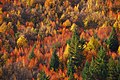
Leaves often turn orange and fall from trees in autumn.
Northern temperate zone
Astronomical season22 September – 21 December
Meteorological season1 September – 30 November
Solar (Celtic) season1 August – 31 October
Southern temperate zone
Astronomical season20 March – 21 June
Meteorological season1 March – 31 May
Solar (Celtic) season1 February – 30 April
Summer
Spring Autumn
Winter

Autumn, also known as fall (in North American English),[1] is one of the four temperate seasons on Earth. Outside the tropics, autumn marks the transition from summer to winter, beginning in September (Northern Hemisphere) or March (Southern Hemisphere). Autumn is the season when the duration of daytime becomes noticeably shorter and the temperature cools considerably. Day length decreases and night length increases as the season progresses until the winter solstice in December (Northern Hemisphere) and June (Southern Hemisphere). One of its main features in temperate climates is the striking change in colour of the leaves of deciduous trees as they prepare to shed.

Date definitions

[edit]

Some cultures regard the autumnal equinox as "mid-autumn", while others with a longer temperature lag treat the equinox as the start of autumn.[2] In the English-speaking world of high latitude countries, autumn traditionally began with Lammas Day and ended around Halloween, the approximate mid-points between midsummer, the autumnal equinox, and midwinter. Meteorologists (and Australia[3][4] and most of the temperate countries in the southern hemisphere)[5][6] use a definition based on Gregorian calendar months, with autumn being September, October, and November in the northern hemisphere,[7] and March, April, and May in the southern hemisphere.

In the higher latitude countries in the Northern Hemisphere, autumn traditionally starts with the September equinox (21 to 24 September)[8] and ends with the winter solstice (21 or 22 December).[9] In the United States, Labor Day (the first Monday in September) is often informally treated as the end of summer and start of autumn; certain summer traditions, such as wearing white, may be frowned upon after that date.[10] As daytime and nighttime temperatures decrease, trees change colour and then shed their leaves.[11]

Under the traditional East Asian solar term system, autumn starts on or around 8 August and ends on or about 7 November. In Ireland, the autumn months according to the national meteorological service Met Éireann are September, October, and November.[12] However, according to the Irish Calendar, which is based on ancient Gaelic traditions, autumn lasts throughout the months of August, September, and October, or possibly a few days later, depending on tradition. In the Irish language, September is known as Meán Fómhair ('middle of autumn') and October as Deireadh Fómhair ('end of autumn').[13][14] Late Roman Republic scholar Marcus Terentius Varro defined autumn as lasting from the third day before the Ides of Sextilis (11 August) to the fifth day before the Ides of November (9 November).[15]

Etymology

[edit]
Bright orange leaves against a mostly clear blue sky
Autumnal scene with yellow, orange, and red leaves

The word autumn (/ˈɔːtəm/ ) is derived from Latin autumnus, archaic auctumnus, possibly from the ancient Etruscan root autu-, which had connotations of the passing of the year.[16] Alternative etymologies include Proto-Indo-European: *h₃ewǵ- ('cold') or *h₂sows- ('dry').[17]

After the Greek era,[clarification needed] the word continued to be used as the Old French word autompne (automne in modern French) or autumpne in Middle English,[18] and was later normalised to the original Latin. In the Medieval period, there are rare examples of its use as early as the 12th century, but by the 16th century, it was in common use.

Before the 16th century, harvest was the term usually used to refer to the season, as it is common in other West Germanic languages to this day (cf. Dutch herfst, German Herbst, and Scots hairst). However, as more people gradually moved from working the land to living in towns, the word harvest lost its reference to the time of year and came to refer only to the actual activity of reaping, and autumn, as well as fall, began to replace it as a reference to the season.[19][20]

The alternative word fall for the season traces its origins to old Germanic languages. The exact derivation is unclear, with the Old English fiæll or feallan and the Old Norse fall all being possible candidates. However, these words all have the meaning 'to fall from a height' and are clearly derived either from a common root or from each other. The term came to denote the season in 16th-century England, a contraction of Middle English expressions like "fall of the leaf" and "fall of the year". Compare the origin of spring from "spring of the leaf" and "spring of the year".[21]

During the 17th century, English settlers began emigrating to the new North American colonies, and took the English language with them. While the term fall gradually became nearly obsolete in Britain, it became the more common term in North America.[22]

The name backend, a once common name for the season in Northern England, has today been largely replaced by the name autumn.[23]

Associations

[edit]

Harvest

[edit]

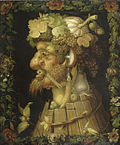
Association with the transition from warm to cold weather, and its related status as the season of the primary harvest, has dominated its themes and popular images. In Western cultures, personifications of autumn are usually pretty, well-fed females adorned with fruits, vegetables and grains that ripen at this time. Many cultures feature autumnal harvest festivals, often the most important on their calendars.

Still-extant echoes of these celebrations are found in the autumn Thanksgiving holiday of the United States and Canada, and the Jewish Sukkot holiday with its roots as a full-moon harvest festival of "tabernacles" (living in outdoor huts around the time of harvest). There are also the many festivals celebrated by Indigenous peoples of the Americas tied to the harvest of ripe foods gathered in the wild, the Chinese Mid-Autumn Festival, also known as the Moon Festival, and many others. The predominant mood of these autumnal celebrations is a gladness for the fruits of the earth mixed with a certain melancholy linked to the imminent arrival of harsh weather.

This view is presented in English poet John Keats's poem To Autumn, where he describes the season as a time of bounteous fecundity, a time of "mellow fruitfulness".

In North America, while most foods are harvested during the autumn, foods usually associated with the season include pumpkins (which are integral parts of both Thanksgiving and Halloween) and apples, which are used to make the seasonal beverage apple cider.

Melancholia

[edit]
Jesień ('Autumn') – An oil painting by Józef Chełmoński (1875) presenting a typical view of autumn in the 19th-century Polish countryside

Autumn, especially in poetry, has often been associated with melancholia. The possibilities and opportunities of summer are gone, and the chill of winter is on the horizon. Skies turn grey, the amount of usable daylight drops rapidly, and many people turn inward, both physically and mentally.[24] It has been referred to as an unhealthy season.[25]

Similar examples may be found in Irish poet W. B. Yeats's poem The Wild Swans at Coole where the maturing season that the poet observes symbolically represents his own ageing self. Like the natural world that he observes, he too has reached his prime and now must look forward to the inevitability of old age and death. French poet Paul Verlaine's "Chanson d'automne" ('Autumn Song') is likewise characterised by strong, painful feelings of sorrow. Keats's To Autumn, written in September 1819, echoes this sense of melancholic reflection but also emphasises the lush abundance of the season. The song "Autumn Leaves", based on the French song "Les Feuilles mortes" (lit.'Dead Leaves'), uses the melancholic atmosphere of the season and the end of summer as a metaphor for the mood of being separated from a loved one.[26]

Halloween

[edit]
People dressed as various undead creatures dance in unison at night on a cordoned-off street
The annual Greenwich Village Halloween Parade in Lower Manhattan is the world's largest Halloween parade, with millions of spectators annually, and has its roots in New York City's queer community.

Autumn is associated with Halloween (influenced by Samhain, a Celtic autumn festival),[27] and with it a widespread marketing campaign that promotes it. The Celtic people also used this time to celebrate the harvest with a time of feasting. At the same time though, it was a celebration of death as well. Crops were harvested, livestock were butchered, and winter was coming.[28]

Halloween, 31 October, is in autumn in the northern hemisphere. Television, film, book, costume, home decoration, and confectionery businesses use this time of year to promote products closely associated with such a holiday, with promotions going from late August or early September to 31 October, since their themes rapidly lose strength once the holiday ends, and advertising starts concentrating on Christmas.

In the southern hemisphere Halloween takes place in Spring.

Other associations

[edit]
A bright autumn day with a vanishing point along a sidewalk
Autumn colouration at the Kalevanpuisto park in Pori, Finland.

In some parts of the northern hemisphere, autumn has a strong association with the end of summer holiday and the start of a new school year, particularly for children in primary and secondary education. "Back to School" advertising and preparations usually occurs in the weeks leading to the beginning of autumn.

Thanksgiving Day is a national holiday celebrated in Canada, in the United States, in some of the Caribbean islands, and in Liberia. Thanksgiving is celebrated on the second Monday of October in Canada, on the fourth Thursday of November in the United States (where it is commonly regarded as the start of the Christmas and holiday season), and around the same part of the year in other places. Similarly named festival holidays occur in Germany and Japan.[citation needed]

Television stations and networks, particularly in North America, traditionally begin their regular seasons in their autumn, with new series and new episodes of existing series debuting mostly during late September or early October (series that debut outside the autumn season are usually known as mid-season replacements). A sweeps period takes place in November to measure Nielsen Ratings.

American football is played almost exclusively in the autumn months; at the high school level, seasons run from late August through early November, with some playoff games and holiday rivalry contests being played as late as Thanksgiving. In many American states, the championship games take place in early December. College football's regular season runs from September through November, while the main professional circuit, the National Football League, plays from September through to early January.

Summer sports, such as association football (in Northern America, East Asia and South Africa), Canadian football, stock car racing, tennis, golf, cricket, and professional baseball, wrap up their seasons in early to late autumn; Major League Baseball's championship World Series is popularly known as the "Fall Classic".[29] (Amateur baseball is usually finished by August.) Likewise, professional winter sports, such as ice hockey and basketball, and most leagues of association football in Europe, are in the early stages of their seasons during autumn; American college basketball and college ice hockey play teams outside their athletic conferences during the late autumn before their in-conference schedules begin in winter.

The Christian religious holidays of All Saints' Day and All Souls' Day are observed in autumn in the Northern hemisphere. Easter falls in autumn in the southern hemisphere.

The secular celebration of International Workers' Day also falls in autumn in the southern hemisphere.

Since 1997, Autumn has been one of the top 100 names for girls in the United States.[30]

Iranians celebrate the beginning of the autumn during the festival of Mehregan (Persian: مهرگان). Indians celebrate the beginning of autumn during the festivals of Vijayadashami and Diwali.

In Indian mythology, autumn is considered to be the preferred season for the goddess of learning Saraswati, who is also known by the name of "goddess of autumn" (Sharada).

In Asian mysticism, Autumn is associated with the element of metal, and subsequently with the colour white, the White Tiger of the West, and death and mourning.

Tourism

[edit]
A lakeside view of an autumnal forest; the lake is so still the clouds and forest can be seen reflected in it
Reflection of autumnal colors on Eden Lake, Vermont, U.S.

Although colour change in leaves occurs wherever deciduous trees are found, coloured autumn foliage is noted in various regions of the world: most of North America, Eastern Asia (including China, Korea, and Japan), Europe, southeast, south, and part of the midwest of Brazil,[31][32] the forest of Patagonia, eastern Australia and New Zealand's South Island.

Eastern Canada and New England are famous for their autumnal foliage,[33][34] and this attracts major tourism (worth billions of US dollars) for the regions.[35][36]

Views of autumn

[edit]

Allegories of autumn in art

[edit]

See also

[edit]

References

[edit]
[edit]
Revisions and contributorsEdit on WikipediaRead on Wikipedia
from Grokipedia
Autumn, also known as fall (particularly in ), is one of the four temperate seasons, marking the transitional period from summer to winter due to Earth's 23.5° , which causes varying sunlight distribution across hemispheres. In the , astronomical autumn begins at the autumnal around September 22–23, when the sun is directly above the , resulting in nearly equal day and night lengths, and ends at the around December 21. In the , it occurs oppositely, starting at the and concluding at the . Meteorologically, for climate tracking purposes, autumn in the is fixed as September 1 to , emphasizing consistent three-month periods aligned with temperature cycles. The season is defined by progressively cooler temperatures, shorter daylight hours, and increased precipitation in many regions, as the sun's angle lowers and polar nights begin approaching higher latitudes. These changes drive ecological adaptations, including the senescence of deciduous trees, where declining chlorophyll production reveals underlying pigments like carotenoids (yellows and oranges) and anthocyanins (reds and purples), leading to the characteristic vibrant foliage displays before leaves abscise to conserve resources for winter. Animals respond similarly, with many species, such as birds, initiating southward migrations to exploit more favorable resources like food and milder climates, often triggered by cold fronts and shortening days. Autumn holds significant cultural and agricultural importance as the primary harvest period in temperate zones, when crops like grains, fruits, and vegetables are gathered before winter frosts. This abundance has inspired global festivals, including in the United States and , rooted in gratitude for bountiful yields, as well as ancient traditions like the Gaelic or East Asian , which blend feasting, rituals, and community celebrations of seasonal renewal. is altering these patterns, with observations of delayed fall and shifted migration timings in the , underscoring autumn's sensitivity to global warming.

Definition and Timing

Astronomical Autumn

Astronomical autumn in the is defined as the period beginning with the autumnal , when the Sun's apparent position crosses the moving southward, resulting in the Sun's decreasing from 0° to approximately -23.44°. This seasonal transition occurs due to Earth's of about 23.44° relative to its orbital plane around the Sun, causing varying amounts of sunlight to reach different hemispheres throughout the year. The autumnal equinox typically falls around September 22 or 23 in the under the , though it can vary to September 21 or 24 due to the calendar's alignment with the and adjustments. In the , astronomical autumn begins with the , around March 20 or 21, with similar potential one-day variations. These dates mark the instants when the Sun is directly above the , leading to nearly equal lengths of day and night worldwide, approximately 12 hours each, though slight differences arise from . The is calculated based on Earth's 23.44° and its elliptical orbit, pinpointing the exact moment the geocentric longitude of the Sun reaches 180° from the vernal point. During astronomical autumn, the Sun's progressively declines from 0° at the to its minimum of -23.44° at the around December 21 in the , after which it begins increasing northward. This solstice concludes astronomical autumn, shifting the toward longer nights.

Meteorological Autumn

Meteorological autumn refers to the season defined by fixed calendar dates rather than astronomical events, spanning September 1 to November 30 in the and March 1 to May 31 in the . This convention aligns the seasons with the annual temperature cycle, dividing the year into consistent three-month periods to support uniform weather and climate data collection across global meteorological networks, including those coordinated by the . The primary criteria for meteorological autumn emphasize cooling trends following summer, with progressively cooling temperatures and increasing variability across regions as daylight shortens and cooler air masses dominate. This period captures the transition toward winter, often featuring increased , occurrences, and the first signs of in , all tracked through standardized observations for and climatological analysis. In contrast to astronomical autumn, which starts around the in the (or in the Southern), the meteorological approach ignores solar positioning to prioritize data consistency, avoiding variations from or orbital irregularities.

Regional Variations

Autumn exhibits significant regional variations influenced by hemispheric position, , and cultural calendars, diverging from the standard temperate-zone definitions of the season. In the , autumn generally occurs from to , marked by cooling temperatures and falling leaves, whereas in the , it aligns with to May due to the reversal of seasons driven by Earth's . This hemispheric opposition means that autumn coincides with spring, creating complementary cycles in global where harvests in one region support markets during planting seasons in the other, as seen in cross-hemispheric correlations for crops like corn and soybeans. Ecologically, this reversal affects phenomena such as bird migrations and blooms, with ecosystems gearing up for growth while Northern ones prepare for . In tropical and subtropical zones, autumn is often subdued or indistinct due to minimal seasonal fluctuations, with variations primarily driven by rainfall patterns rather than solar angles. For instance, in , the post-monsoon period from to serves as a transitional autumn, characterized by retreating southwest monsoons, reduced , and occasional cyclones, but without pronounced leaf color changes or sharp drops typical of higher latitudes. These regions experience more consistent warmth year-round, with autumn-like conditions manifesting as a brief easing of summer and the onset of drier , influencing local through timing rather than dramatic ecological shifts. Cultural calendars further diversify autumn's timing and significance. In the Jewish , the month of (typically September-October) encompasses key harvest festivals, including , which celebrates the autumn ingathering of crops with temporary dwellings and the , emphasizing themes of gratitude and impermanence. Similarly, the Chinese designates the seventh and eighth lunar months (roughly August to October) as autumnal harvest periods, culminating in the on the 15th day of the eighth month, where families gather under the to honor bountiful yields with mooncakes and lanterns. These observances highlight autumn's role in agricultural cycles and communal reflection, independent of meteorological markers. Polar regions present yet another variation, where autumn is defined more by shifting than by foliage or temperature extremes. In the and , the season features extended twilight periods as the sun remains below the horizon for increasing durations, transitioning toward , with subdued ecological changes due to limited vegetation—such as brief tundra color shifts in the but minimal in the barren interior. This twilight-dominated autumn influences behaviors like accumulation in preparation for winter, rather than the vibrant leaf fall seen elsewhere.

Etymology and Historical Context

Origin of the Term

The word "autumn" traces its origins to the Latin term autumnus, which denoted the season following summer and was used both as a noun and an adjective meaning "autumnal." This Latin word, first attested in ancient Roman literature, such as in the works of (3rd–2nd century BCE), likely derives from the verb augere ("to increase" or "to grow"), reflecting the season's association with the abundance of the , as the perfect form of augere is auctum and its present participle auctumnus. An alternative hypothesis posits an Etruscan origin from autu or auta, possibly linked to avil ("year"), suggesting connotations of the year's passing or the end of summer, though this remains speculative due to the limited surviving Etruscan texts. In English, "autumn" entered the language in the late 14th century via Old French automne (earlier autumpne), borrowed directly from Latin autumnus. Its earliest recorded use appears in Geoffrey Chaucer's translation Boece (c. 1378–1386), where it appears as autumpne, gradually replacing older English terms like hærfest ("harvest") or the descriptive "fall of the leaf." This adoption occurred during a period of Norman French influence on Middle English vocabulary, particularly for abstract and seasonal concepts. Related terms in other Romance languages stem from the same Latin root, including modern French automne, Spanish and otoño, and Italian autunno, all preserving the phonetic evolution from autumnus. In contrast, often use words tied to harvest imagery, such as German Herbst, from Proto-Germanic harbistaz (""), cognate with English "" and emphasizing the season's agricultural yield rather than its temporal position. Pre-Roman cultures employed distinct nomenclature; in ancient Greek, the season was known as phthinopōron (φθινόπωρον), a compound of phthino ("to diminish" or "wither") and opōra ("fruit" or "late summer produce"), capturing the idea of declining fruits and fading warmth. This term, used by writers like Hesiod in the 8th century BCE, highlights early perceptions of autumn as a time of withering and transition.

Evolution in Usage

During the medieval period in , references to the season shifted from a primary focus on harvest activities—tied to agricultural calendars and terms like Old English hærfest—to recognition as a distinct temporal phase, influenced by the adoption of Latin-derived words through Old French automne in the 12th to 14th centuries. This evolution reflected broader cultural changes, as monastic and scholarly traditions integrated Roman seasonal concepts into vernacular languages, distinguishing the post- period more clearly from summer and winter in texts across , , and . In the , Romantic literature in further transformed perceptions of autumn, romanticizing it as a embodying both decay and aesthetic beauty, capturing themes of transience and abundance. Poets like exemplified this in works such as "," which celebrated the season's ripe maturity and gentle decline rather than mere loss, influencing a broader cultural view of autumn as a poignant interlude. This literary shift elevated the term beyond practical agrarian connotations, embedding it in artistic expressions of nature's cyclical elegance. In modern global usage, particularly in , "fall" emerged as a parallel term to "autumn" starting in the , originating from phrases like "fall of the " to describe the shedding of foliage, and it became dominant in by the while "autumn" persisted in . This duality highlights regional linguistic divergences, with "fall" emphasizing visible natural changes and "autumn" retaining its classical formality. Outside Western traditions, the Japanese term aki evolved to denote the season's cool clarity and introspective quality, closely linked to poetry where it functions as a —a seasonal word—evoking transience and serene in classical forms dating back to the .

Natural and Ecological Changes

Foliage and Plant Life

In temperate regions, autumn marks the onset of in many trees and shrubs, a programmed aging where leaves gradually deteriorate and detach from the . This is primarily triggered by shortening photoperiods and declining temperatures, which signal the to reallocate nutrients like from the leaves to woody tissues for storage ahead of winter. As progresses, —the dominant green pigment responsible for —begins to break down and is transported out of the , revealing underlying pigments that were present throughout the . The chemistry of autumn foliage colors stems from the unmasking of and the synthesis of new anthocyanins during this degradation. , including yellow xanthophylls such as and , become visible first, producing shades of yellow and orange as they absorb excess light energy and protect photosynthetic structures. Red and purple hues arise from anthocyanins, water-soluble newly produced in the leaves in response to accumulated sugars trapped by the layer at the leaf base; these pigments act as antioxidants, shielding cells from caused by bright autumn sunlight and cold nights. Deciduous plants shed their leaves as an evolutionary to survive and freezing conditions, minimizing water loss through and conserving energy by entering . Without leaves, the avoids the risk of formation in vascular tissues, which could damage cells, and instead relies on stored carbohydrates to endure winter. In contrast, species retain needle-like or leathery leaves year-round, with adaptations like thick cuticles to reduce water loss, though they may experience some needle turnover. Representative examples include sugar maples (), which display brilliant reds and oranges from high levels, and oaks (Quercus spp.), which often turn brown due to overpowering other pigments before shedding. Globally, the spectacle of autumn foliage is most pronounced in temperate zones but varies significantly by climate. In tropical regions, where seasonal changes in day length are minimal, deciduous trees shed leaves irregularly without dramatic color shifts, often simply turning brown or dropping green to cope with dry periods rather than cold. Boreal forests, dominated by , show enhanced displays from scattered species like birches (Betula spp.) and aspens (Populus spp.), which turn vibrant yellows and golds against a backdrop of persistent evergreens, amplified by the stark contrast with early . Climate change is influencing autumn foliage patterns, with warming temperatures delaying leaf senescence and coloration in many Northern Hemisphere regions. A 2025 study found that enhanced greening from extended growing seasons has increased net carbon uptake, as trees retain leaves later into autumn due to milder conditions. However, extreme weather events like droughts have caused premature leaf drop in some areas; for instance, in 2024, drought-stressed trees in the U.S. Midwest and Northeast exhibited earlier color changes or browning, potentially impacting the traditional fall foliage displays.

Weather and Climate Patterns

Autumn in the is marked by a gradual decline in temperatures as solar heating diminishes following the summer peak. In mid-latitude regions, such as much of and , average daily highs typically drop from the 70s°F (20s°C) in early September to the 50s°F (10s°C) by late , reflecting the seasonal shift in solar angle and reduced daylight. This cooling trend often culminates in the first widespread frosts around , particularly in continental interiors like the , where temperatures can dip to freezing overnight after clear days. Precipitation patterns during autumn vary by location but generally increase compared to summer in many mid-latitude areas, leading to more frequent rain events that contribute to cooler, damper conditions. In the northeastern and , for instance, rainfall accumulates steadily through and , often interspersed with early in higher elevations or northern latitudes, enhancing the transition to winter. A notable exception is the "Indian summer," a phenomenon of unseasonably warm, dry, and hazy weather occurring in late or after an initial , driven by high-pressure systems that temporarily reverse the cooling trend and allow southerly winds to bring mild air masses. Wind patterns intensify in autumn, particularly over the Atlantic Ocean, where the hurricane season reaches its climatological peak around , with heightened activity extending through . During this period, warm sea surface temperatures and reduced foster the development of tropical cyclones, resulting in stronger storms that can impact coastal regions with high winds, heavy rain, and storm surges. In an average season, over half of the total occurs between mid-August and mid-October, underscoring autumn's role as a high-risk period for such events. Climate change is altering these traditional autumn patterns, with global warming leading to delayed seasonal onsets, higher average temperatures, and shifting frost dates. According to the (IPCC), observed increases in autumn temperatures—particularly in the —have extended warm periods, delaying the first fall frosts by several days to weeks in many mid-latitude areas since the mid-20th century. These shifts, driven by anthropogenic , result in warmer-than-average conditions that disrupt historical climate norms, with projections indicating further delays in frost onset under continued warming scenarios.

Wildlife Adaptations

As autumn arrives, many wildlife species undertake long-distance migrations to escape impending cold and seek favorable conditions elsewhere. Waterfowl such as Canada geese form large flocks and fly southward, often traveling thousands of miles to warmer wintering grounds in response to shortening days and cooling temperatures. Similarly, monarch butterflies (Danaus plexippus) embark on an epic journey, with eastern populations migrating up to 3,000 miles (4,800 km) from North America to overwintering sites in the oyamel fir forests of central Mexico, navigating using the sun's position and Earth's magnetic field; however, as of December 2024, the species was proposed for listing as threatened under the U.S. Endangered Species Act due to ongoing population declines from habitat loss, pesticides, and climate change, which warmer autumns (observed in 2025 studies) disrupt by interfering with reproductive diapause and increasing mortality risks during migration. These movements are triggered by environmental cues such as shortening photoperiods and cooling temperatures, with changes in foliage color correlating with timing for some bird species by signaling declining food availability. In preparation for winter, numerous animals engage in behaviors to build energy reserves for hibernation or torpor. Squirrels and other rodents actively hoard nuts, seeds, and acorns in caches scattered across their territories, amassing thousands of food items to sustain them through periods of scarcity. Bears increase their foraging on berries, fish, and vegetation during autumn, rapidly gaining up to 30% of their body weight in fat to fuel months of dormancy without eating, drinking, or excreting. Smaller mammals, such as chipmunks and ground squirrels, prepare for torpor—a state of reduced metabolic activity—by selecting insulated burrows and lowering their body temperatures periodically to conserve energy, sometimes entering multi-day bouts that can last through the season. Autumn also marks peak mating seasons for several species, aligning reproduction with optimal spring birthing conditions. White-tailed deer enter the rut, where males exhibit aggressive behaviors, vocalizations, and scent marking to compete for females, with breeding typically occurring from October to December depending on latitude and climate. This timing ensures fawns are born in late spring when food is abundant and weather is mild, maximizing survival rates. Insect populations undergo significant physiological shifts in autumn, reducing overall activity and preparing for survival. rates decline as many bees and cease due to fewer blooming flowers and dropping temperatures, shifting focus to overwintering strategies. Larvae of various species, including moths and beetles, enter —a hormonally induced that halts development and conserves energy—often triggered by photoperiod changes, allowing them to endure cold without feeding.

Cultural and Symbolic Associations

Harvest and Agriculture

Autumn plays a pivotal role in agricultural cycles in the , marking the period when many crops reach maturity after summer growth and are harvested before winter sets in. Key autumn crops include corn, which is typically harvested from to across the , depending on regional climates and varieties. , particularly spring and durum varieties in northern and western regions, sees harvest extending into and in states like . Fruits such as apples, gathered mainly in and to capture peak ripeness, and grapes, picked from through late , also define this season's bounty, supporting both fresh markets and processing. Traditional harvest techniques emphasized manual labor and simple tools, such as for grains like and corn, where bundles of stalks were beaten or run over to separate seeds from , a labor-intensive process often completed communally in the field. For apples, pressing involved grinding fruit in wooden mills and squeezing juice through cloth bags or racks, a method dating back centuries and still used in small-scale operations today. Modern has shifted toward , with combines performing integrated cutting, , and cleaning of grains in a single pass, dramatically increasing efficiency and reducing labor needs since the mid-20th century. Advances in , including GPS-guided harvesters and precision equipment, further optimize autumn operations for crops like corn, minimizing losses and adapting to varying field conditions. The economic significance of autumn harvests underscores their contribution to global , as these crops form staples in diets worldwide and support feed supplies. In the U.S. Midwest , encompassing states like and , corn and soybeans together occupy about 75% of the over 127 million acres of , generating over $76 billion in value from crops and as of 2007, with autumn yields directly influencing national and international markets. This region's output, for instance, exceeds that of entire countries like in corn production, stabilizing and export volumes. Historically, pre-industrial agriculture depended heavily on unpredictable weather for autumn yields, where insufficient rainfall or untimely frosts could devastate crops like wheat and corn, threatening community survival. Studies from the early 20th century, reflecting earlier practices, highlight how autumn precipitation in August-September critically determined wheat outcomes in areas like Australia and England, with dry spells reducing yields by up to 20-30% in vulnerable years. Such reliance shaped farming calendars and social structures, often culminating in communal harvest festivals to give thanks for successful gatherings.

Festivals and Holidays

Autumn is marked by a variety of festivals and holidays across cultures, often celebrating the , the transition to shorter days, and communal gatherings that reflect the season's themes of abundance and reflection. These celebrations, observed primarily in the during through , blend ancient traditions with contemporary customs, fostering a sense of continuity amid changing natural cycles. Halloween, observed on , traces its origins to the ancient Celtic festival of , a celebration held around November 1 that marked the end of summer and the beginning of winter, when it was believed the boundary between the living and the dead blurred, allowing spirits to roam. During , lit bonfires and wore costumes to ward off ghosts, practices that evolved into modern Halloween traditions like dressing in disguises and , where children go door-to-door soliciting treats, a custom popularized in the United States and in the early . Today, Halloween emphasizes playful festivities with carved pumpkins, haunted attractions, and community events, drawing millions to participate annually. Thanksgiving in the United States is celebrated on the fourth of as a national holiday expressing for the autumn and familial bonds, with roots in a 1621 communal feast between Pilgrims and people in , though earlier European harvest thanksgivings occurred in as far back as 1578. The modern observance, formalized by President in 1863, involves elaborate meals featuring , stuffing, and pies, alongside parades and football games, underscoring themes of plenty and reflection on the season's yields. In , Thanksgiving falls on the second of and similarly honors the , with traditions brought by early settlers and influenced by Indigenous practices, focusing on family dinners and community for agricultural abundance. Diwali, known as the Festival of Lights, is a major Hindu holiday typically falling in or , coinciding with the end of the season and the arrival of cooler autumn weather in , where it symbolizes the victory of light over darkness and good over evil through the lighting of oil lamps (diyas) and displays. Celebrated over five days, it honors deities like , goddess of prosperity, with families cleaning homes, exchanging sweets, and performing rituals to invite wealth and harmony, often marking the Hindu New Year in some regions. The festival's timing aligns with the post-harvest period, promoting renewal and joy amid the transitional season. The , also called the Moon Festival, occurs on the 15th day of the eighth lunar month (usually or ), a time when the signifies and harvest gratitude in , with mooncakes—dense pastries filled with , egg yolks, or nuts—served as symbolic offerings representing completeness and the moon's roundness. Families gather outdoors to admire the , light lanterns, and share stories, emphasizing themes of unity and appreciation for the autumn bounty, a dating back over 3,000 years to lunar worship and agricultural cycles. This holiday underscores the season's clarity and abundance, fostering intergenerational bonds through communal feasting. Day of the Dead (Día de los Muertos), held on November 1 and 2 in , is a vibrant commemoration blending Indigenous Aztec rituals with Catholic All Saints' and All Souls' Days, where families honor deceased ancestors by creating ofrendas (altars) adorned with marigold flowers, candles, photos, and favorite foods of the departed to guide their spirits home during the autumnal thinning of the veil between worlds. Celebrations include parades, music, and grave visits with picnics, transforming mourning into joyful remembrance and emphasizing life's cyclical nature tied to the season's themes of death and rebirth. This tradition, recognized by as , promotes communal healing and cultural continuity.

Melancholy and Symbolism

Autumn evokes profound themes of decline, with falling leaves serving as enduring symbols of aging, loss, and transience across philosophical traditions. In , these natural processes illustrate the impermanence of all things, encouraging acceptance of change as an essential aspect of existence. , in his , reflects on the seasons' cycles—drawing parallels between autumn's decay and the dissolution of life—to emphasize resilience amid inevitable flux, stating that "the seasons of thy life bring, such also is dissolution." The Romantic era further enriched autumn's melancholic symbolism by finding sublime beauty in its decay, portraying the season as a catalyst for emotional depth and . Poets like infused their works with autumnal imagery to explore nature's transient splendor, viewing the fading foliage not merely as loss but as a poignant reminder of life's interconnected rhythms and the soul's renewal through contemplation. This perspective aligns with Romanticism's broader reverence for nature's sublime, where decay inspires awe and philosophical reflection rather than mere sorrow. Cross-culturally, autumn's symbolism resonates with concepts of impermanence and the spiritual threshold. In , mono no aware—translated as the " of things"—encapsulates the tender sadness elicited by autumn leaves' brief, vivid display before they fall, fostering an acute awareness of ephemerality and the poignant beauty therein. This idea, rooted in classical literature like , underscores a to seasonal change as a mirror for human transience. Similarly, Celtic mythology associates autumn with , the festival when the veil between the mortal realm and the grows thinnest, symbolizing a liminal passage that honors ancestors and contemplates death's proximity to life. In contemporary , autumn's shortening days contribute to melancholy through (SAD), a depressive condition triggered by diminished that disrupts circadian rhythms and serotonin levels. Symptoms often emerge in late fall, linking the season's environmental shifts to heightened emotional vulnerability and reinforcing its archetypal association with introspection and decline.

Human Experiences and Activities

Tourism and Travel

Autumn tourism draws millions of visitors to destinations celebrated for their seasonal transformations, including the brilliant foliage displays that signal the season's arrival. In the United States, leaf-peeping in stands out as a major attraction, with popular routes such as the Kancamagus Highway in and the in offering scenic drives through forests ablaze in reds, oranges, and yellows. Peak foliage typically occurs from late September in northern areas like and to mid-October in southern regions, guided by interactive maps that track color progression based on weather and elevation. These trips often include stops at historic covered bridges, apple orchards, and quaint towns, enhancing the immersive experience of autumn's visual splendor. Internationally, Japan's momiji viewing, or koyo, mirrors this fascination with autumn leaves, where temples, gardens, and mountains become focal points for hanami-style outings adapted to fall. Peak viewing times vary regionally, starting in early in northern and reaching mid-to-late November in central areas like and , with forecasts helping visitors time their visits to iconic sites such as the Bamboo Grove or Nikko's shrines. Harvest-themed travel provides another pillar of autumn tourism, emphasizing agricultural rhythms. In , , wine tours during the vendange (grape harvest) from late to early allow participants to join in picking grapes, touring chateaux, and sampling fresh vintages in the and appellations. In the U.S. Midwest, patches transform farms into festive destinations, with attractions like Siegel's Cottonwood Farm near featuring u-pick fields, corn mazes, hayrides, and seasonal markets from mid- through Halloween. These activities not only celebrate the harvest but also support local economies. The economic footprint of autumn tourism is substantial, with U.S. foliage viewing alone generating over $30 billion annually across 24 eastern states through spending on lodging, dining, and transportation. In specifically, fall visitors contribute more than $8 billion yearly, bolstering rural communities during the shoulder season. To address overcrowding in national parks, which intensifies during autumn peaks, the U.S. implements sustainable management strategies, including timed-entry reservation systems and expanded shuttle services to limit vehicle traffic and preserve natural resources. For example, Acadia National Park's vehicle reservation system has successfully reduced gridlock on key roads, while educational campaigns like #PlanLikeARanger encourage off-peak visits and alternative routes. These measures balance visitor access with , ensuring long-term viability for popular fall destinations.

Recreation and Sports

Autumn provides favorable conditions for various outdoor recreational activities, particularly and , as cooler temperatures and changing patterns encourage participation. Deer hunting seasons in the United States generally align with the fall months, often beginning in or and extending through or , depending on the state. For instance, in , the deer season opens in mid-, while the firearms portion starts in mid-, with regulations requiring hunters to wear hunter orange during firearms seasons and limiting bag totals to specific antlered or antlerless deer per hunter. Similarly, in , early antlerless firearm hunting occurs in late , followed by and seasons into the fall, with a statewide limit of one antlered deer before certain dates. These regulations, enforced by state departments, vary widely to manage populations and ensure , often influenced briefly by seasonal migrations and breeding behaviors that make fall a peak time for deer activity. Fishing also thrives in autumn, as become more active in cooling waters; for example, are targeted aggressively in fall streams across the U.S., though in states like New York the season for ends October 15, while many other species can be fished through . Hiking and cycling gain popularity in autumn due to milder weather that reduces heat-related fatigue and enhances enjoyment of scenic trails. The cooler temperatures, typically ranging from 50°F to 70°F in many regions, make long-distance hikes more comfortable, allowing participants to appreciate vibrant foliage without summer crowds. On the Appalachian Trail, fall offers brisk conditions ideal for section hiking, with fewer hikers and vivid leaf colors providing stunning vistas, though shorter daylight hours require planning. Cycling benefits similarly, as crisp air and empty paths promote endurance rides; autumn's lower humidity and moderate winds facilitate longer tours on trails, boosting cardiovascular health and mood through endorphin release amid colorful landscapes. These activities emphasize the season's transitional climate, drawing enthusiasts to explore forested paths and rural routes before winter sets in. Fall marks the start of several organized sports, blending competition with the season's outdoor appeal. seasons, including the , commence in early , with the 2025 kickoff weekend scheduled for September 4-8, featuring games under crisp autumn skies that enhance the spectator experience. High school and college levels follow suit, starting practices in August and games in , capitalizing on cooler for player safety and performance. Cross-country running, a staple autumn sport, runs from through November in the U.S., with events on varied terrains that showcase fall's natural beauty; governed by , it attracts participants of all ages, emphasizing endurance in conditions ranging from mild to chilly. Recreational outings like hayrides and corn mazes offer lighthearted, family-oriented fun tied to autumn's agrarian heritage. Hayrides, often wagon tours through farms or fields, provide relaxed excursions amid scenery, commonly available on weekends from to at sites across the Midwest and Northeast. Corn mazes, intricate paths cut into harvested cornfields, challenge navigation skills while immersing visitors in seasonal themes, with designs spanning several acres and typically operating through ; these activities promote and in a playful setting.

Representations in Art and Culture

Visual Arts and Allegories

In the visual arts, autumn has been depicted through allegorical personifications and symbolic motifs that emphasize themes of harvest, abundance, and seasonal transition. Renaissance artists frequently portrayed autumn as a divine or mythological figure, drawing from classical sources to symbolize fertility and the fruits of the earth. For instance, Sandro Botticelli's drawing Allegory of Abundance (c. 1470–1475) features a female figure holding a cornucopia overflowing with fruits, accompanied by putti bearing grapes, representing the season's bounty and moderated by temperance to avoid excess. Similarly, the Roman goddess Pomona, protector of orchards and fruit trees and a personification of autumn, influenced Renaissance depictions; for example, some interpretations suggest that the figure of Flora in Botticelli's Primavera (c. 1482) may have been modeled after a statue of Pomona, linking her attributes to themes of abundance in classical mythology. Impressionist painters captured autumn's ephemeral qualities, particularly the shifting light and colors of the landscape, to convey the season's transient beauty. Claude Monet's Haystacks series (1890–1891), including Stacks of Wheat (End of Day, Autumn), depicts golden sheaves under the warm, fading sunlight of late afternoon, highlighting how autumnal hues transform ordinary rural scenes into studies of atmospheric change and optical effects. These works exemplify Impressionism's focus on plein air observation, where the season's decaying foliage and mellow tones underscore the interplay of light and impermanence. In , abstract expressions of autumn often evoke the season's undertones of decay and introspection through non-representational forms. This approach shifts from literal depiction to psychological resonance, allowing the season's themes of abundance yielding to to manifest in the viewer's contemplative experience. A enduring iconographic element in autumnal visual representations is the , or horn of plenty, symbolizing inexhaustible abundance and the harvest's generosity. Originating in and Roman , it appears as a spiraling horn brimming with fruits, grains, and produce, as in medieval and artworks that associate it with seasonal prosperity and divine provision. This motif persists in later visual allegories, reinforcing autumn as a time of fruitful culmination before winter's onset.

Literature, Music, and Media

In literature, autumn has inspired numerous poetic works that evoke its themes of abundance and transition. John Keats's "," published in , personifies the as a figure of ripeness and fulfillment, celebrating the harvest's bounty through vivid imagery of maturing fruits and gentle mists, portraying autumn not as decline but as a season of mature plenitude. This , part of Keats's series of great odes, underscores autumn's role in the cycle of growth and repose, influencing later Romantic interpretations of nature's rhythms. In music, composers have captured autumn's essence through evocative and songs that blend celebration with introspection. Antonio Vivaldi's "Autumn" from The Four Seasons (1725), the third in the set, depicts the season's festivities in its lively first movement with rustic dances and horns evoking hunters, while the slow second movement suggests the serene crispness of fall air, drawing from accompanying sonnets to musically illustrate seasonal change. Similarly, the song "Autumn Leaves," originally composed as the French "Les Feuilles Mortes" by in 1945 with lyrics by , evolved into a global by the , its melancholic melody reflecting falling leaves as a for lost and fleeting time, recorded over 1,400 times by artists. Autumn settings in film and television often symbolize emotional transitions and introspection, enhancing narrative depth. In Dead Poets Society (1989), directed by Peter Weir, the film's autumnal New England boarding school backdrop mirrors the characters' personal growth and turmoil, with falling leaves and shortening days underscoring themes of change from youthful idealism to confronting loss, as the season's progression parallels the students' evolving perspectives under their teacher's influence. Likewise, Nora Ephron's When Harry Met Sally... (1989) features iconic fall scenes in New York City's Central Park, where the characters' walks amid vibrant foliage mark pivotal shifts in their relationship, using the season's warm hues and crisp air to evoke nostalgia and budding romance amid urban transience. In contemporary media, video games incorporate autumnal elements to create immersive worlds that blend exploration with seasonal beauty. The Legend of Zelda: Breath of the Wild (2017), developed by , features the Akkala region with its perpetual autumn-like biomes of orange and red foliage, ancient ruins, and cool highlands, providing a visually striking area for quests that evokes a sense of timeless and discovery in Hyrule's vast landscape. These portrayals often reference autumn's symbolic melancholy, using the season's fading light to heighten emotional stakes in interactive narratives.

References

Add your contribution
Related Hubs
User Avatar
No comments yet.