Hubbry Logo
Muscle atrophyMuscle atrophyMain
Open search
Muscle atrophy
Community hub
Muscle atrophy
logo
8 pages, 0 posts
0 subscribers
Be the first to start a discussion here.
Muscle atrophy
Muscle atrophy
from Wikipedia
Muscle atrophy
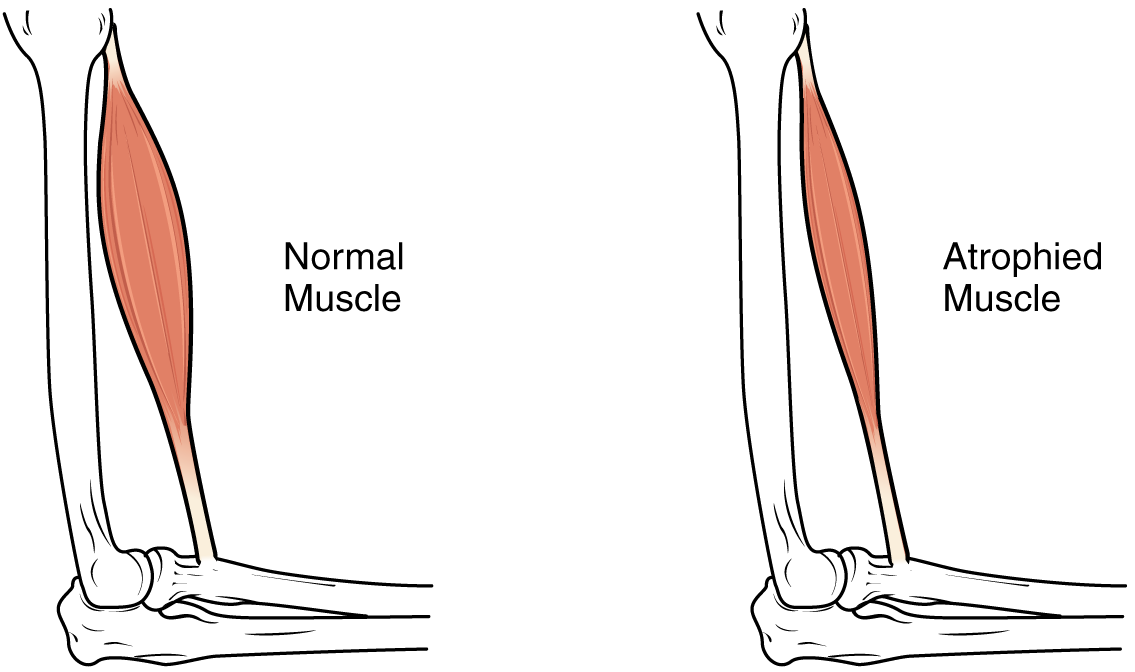
The size of the muscle is reduced, as a consequence there is a loss of strength and mobility.
SpecialtyPhysical medicine and rehabilitation

Muscle atrophy is the loss of skeletal muscle mass. It can be caused by immobility, aging, malnutrition, medications, or a wide range of injuries or diseases that impact the musculoskeletal or nervous system. Muscle atrophy leads to muscle weakness and causes disability.

Disuse causes rapid muscle atrophy and often occurs during injury or illness that requires immobilization of a limb or bed rest. Depending on the duration of disuse and the health of the individual, this may be fully reversed with activity. Malnutrition first causes fat loss but may progress to muscle atrophy in prolonged starvation and can be reversed with nutritional therapy. In contrast, cachexia is a wasting syndrome caused by an underlying disease such as cancer that causes dramatic muscle atrophy and cannot be completely reversed with nutritional therapy. Sarcopenia is age-related muscle atrophy and can be slowed by exercise. Finally, diseases of the muscles such as muscular dystrophy or myopathies can cause atrophy, as well as damage to the nervous system such as in spinal cord injury or stroke. Thus, muscle atrophy is usually a finding (sign or symptom) in a disease rather than being a disease by itself. However, some syndromes of muscular atrophy are classified as disease spectrums or disease entities rather than as clinical syndromes alone, such as the various spinal muscular atrophies.

Muscle atrophy results from an imbalance between protein synthesis and protein degradation, although the mechanisms are incompletely understood and are variable depending on the cause. Muscle loss can be quantified with advanced imaging studies but this is not frequently pursued. Treatment depends on the underlying cause but will often include exercise and adequate nutrition. Anabolic agents may have some efficacy but are not often used due to side effects. There are multiple treatments and supplements under investigation but there are currently limited treatment options in clinical practice. Given the implications of muscle atrophy and limited treatment options, minimizing immobility is critical in injury or illness.

Signs and symptoms

[edit]

The hallmark sign of muscle atrophy is loss of lean muscle mass. This change may be difficult to detect due to obesity, changes in fat mass or edema. Changes in weight, limb or waist circumference are not reliable indicators of muscle mass changes.[1]

The predominant symptom is increased weakness which may result in difficulty or inability in performing physical tasks depending on what muscles are affected. Atrophy of the core or leg muscles may cause difficulty standing from a seated position, walking or climbing stairs and can cause increased falls. Atrophy of the throat muscles may cause difficulty swallowing and diaphragm atrophy can cause difficulty breathing. Muscle atrophy can be asymptomatic and may go undetected until a significant amount of muscle is lost.[2]

Causes

[edit]
Muscle atrophy from "nondevelopment"

Skeletal muscle serves as a storage site for amino acids, creatine, myoglobin, and adenosine triphosphate, which can be used for energy production when demands are high or supplies are low. If metabolic demands remain greater than protein synthesis, muscle mass is lost.[3] Many diseases and conditions can lead to this imbalance, either through the disease itself or disease associated appetite-changes, such as loss of taste due to Covid-19. Causes of muscle atrophy, include immobility, aging, malnutrition, certain systemic diseases (cancer, congestive heart failure; chronic obstructive pulmonary disease; AIDS, liver disease, etc.), deinnervation, intrinsic muscle disease or medications (such as glucocorticoids).[4]

Immobility

[edit]

Disuse is a common cause of muscle atrophy and can be local (due to injury or casting) or general (bed-rest). The rate of muscle atrophy from disuse (10–42 days) is approximately 0.5–0.6% of total muscle mass per day although there is considerable variation between people.[5] The elderly are the most vulnerable to dramatic muscle loss with immobility. Much of the established research has investigated prolonged disuse (>10 days), in which the muscle is compromised primarily by declines in muscle protein synthesis rates rather than changes in muscle protein breakdown. There is evidence to suggest that there may be more active protein breakdown during short term immobility (<10 days).[5]

Cachexia

[edit]

Certain diseases can cause a complex muscle wasting syndrome known as cachexia. It is commonly seen in cancer, congestive heart failure, chronic obstructive pulmonary disease, chronic kidney disease and AIDS although it is associated with many disease processes, usually with a significant inflammatory component. Cachexia causes ongoing muscle loss that is not entirely reversed with nutritional therapy.[6] The pathophysiology is incompletely understood but inflammatory cytokines are considered to play a central role. In contrast to weight loss from inadequate caloric intake, cachexia causes predominantly muscle loss instead of fat loss and it is not as responsive to nutritional intervention. Cachexia can significantly compromise quality of life and functional status and is associated with poor outcomes.[7][8]

Sarcopenia

[edit]

Sarcopenia is the degenerative loss of skeletal muscle mass, quality, and strength associated with aging. This involves muscle atrophy, reduction in number of muscle fibers and a shift towards "slow twitch" or type I skeletal muscle fibers over "fast twitch" or type II fibers.[3] The rate of muscle loss is dependent on exercise level, co-morbidities, nutrition and other factors. There are many proposed mechanisms of sarcopenia, such as a decreased capacity for oxidative phosphorylation, cellular senescence or an altered signaling of pathways regulating protein synthesis,[9] and is considered to be the result of changes in muscle synthesis signalling pathways and gradual failure in the satellite cells which help to regenerate skeletal muscle fibers, specifically in "fast twitch" myofibers.[10]

Sarcopenia can lead to reduction in functional status and cause significant disability but is a distinct condition from cachexia although they may co-exist.[8][11] In 2016 an ICD code for sarcopenia was released, contributing to its acceptance as a disease entity.[12]

Intrinsic muscle diseases

[edit]
Muscle atrophy from intristic disease in an 18-year-old woman, weight 27 pounds (12.2 kg)
Photograph of patient
Muscle atrophy from intristic disease in a 17-year-old girl with chronic rheumatism

Muscle diseases, such as muscular dystrophy, amyotrophic lateral sclerosis (ALS), or myositis such as inclusion body myositis can cause muscle atrophy.[13]

Central nervous system damage

[edit]

Damage to neurons in the brain or spinal cord can cause prominent muscle atrophy. This can be localized muscle atrophy and weakness or paralysis such as in stroke or spinal cord injury.[14] More widespread damage such as in traumatic brain injury or cerebral palsy can cause generalized muscle atrophy.[15]

Peripheral nervous system damage

[edit]

Injuries or diseases of peripheral nerves supplying specific muscles can also cause muscle atrophy. This is seen in nerve injury due to trauma or surgical complication, nerve entrapment, or inherited diseases such as Charcot-Marie-Tooth disease.[16]

Medications

[edit]

Some medications are known to cause muscle atrophy, usually due to direct effect on muscles. This includes glucocorticoids causing glucocorticoid myopathy[4] or medications toxic to muscle such as doxorubicin.[17]

Endocrinopathies

[edit]

Disorders of the endocrine system such as Cushing's disease or hypothyroidism are known to cause muscle atrophy.[18]

Pathophysiology

[edit]

Muscle atrophy occurs due to an imbalance between the normal balance between protein synthesis and protein degradation. This involves complex cell signalling that is incompletely understood and muscle atrophy is likely the result of multiple contributing mechanisms.[19]

Mitochondrial function is crucial to skeletal muscle health and detrimental changes at the level of the mitochondria may contribute to muscle atrophy.[20] A decline in mitochondrial density as well as quality is consistently seen in muscle atrophy due to disuse.[20]

The ATP-dependent ubiquitin/proteasome pathway is one mechanism by which proteins are degraded in muscle. This involves specific proteins being tagged for destruction by a small peptide called ubiquitin which allows recognition by the proteasome to degrade the protein.[21]

Diagnosis

[edit]

Screening for muscle atrophy is limited by a lack of established diagnostic criteria, although many have been proposed. Diagnostic criteria for other conditions such as sarcopenia or cachexia can be used.[3] These syndromes can also be identified with screening questionnaires.[citation needed]

Muscle mass and changes can be quantified on imaging studies such as CT scans or Magnetic resonance imaging (MRI). Biomarkers such as urine urea can be used to roughly estimate muscle loss during circumstances of rapid muscle loss.[22] Other biomarkers are currently under investigation but are not used in clinical practice.[3]

Treatment

[edit]

Muscle atrophy can be delayed, prevented and sometimes reversed with treatment. Treatment approaches include impacting the signaling pathways that induce muscle hypertrophy or slow muscle breakdown as well as optimizing nutritional status.[citation needed]

Physical activity provides a significant anabolic muscle stimulus and is a crucial component to slowing or reversing muscle atrophy.[3] It is still unknown regarding the ideal exercise "dosing." Resistance exercise has been shown to be beneficial in reducing muscle atrophy in older adults.[23][24] In patients who cannot exercise due to physical limitations such as paraplegia, functional electrical stimulation can be used to externally stimulate the muscles.[25]

Adequate calories and protein is crucial to prevent muscle atrophy. Protein needs may vary dramatically depending on metabolic factors and disease state, so high-protein supplementation may be beneficial.[3] Supplementation of protein or branched-chain amino acids, especially leucine, can provide a stimulus for muscle synthesis and inhibit protein breakdown and has been studied for muscle atrophy for sarcopenia and cachexia.[3][26] β-Hydroxy β-methylbutyrate (HMB), a metabolite of leucine which is sold as a dietary supplement, has demonstrated efficacy in preventing the loss of muscle mass in several muscle wasting conditions in humans, particularly sarcopenia.[26][27][28] Based upon a meta-analysis of seven randomized controlled trials that was published in 2015, HMB supplementation has efficacy as a treatment for preserving lean muscle mass in older adults.[29] More research is needed to determine the precise effects of HMB on muscle strength and function in various populations.[29]

In severe cases of muscular atrophy, the use of an anabolic steroid such as methandrostenolone may be administered to patients as a potential treatment although use is limited by side effects. A novel class of drugs, called selective androgen receptor modulators, is being investigated with promising results. They would have fewer side effects, while still promoting muscle and bone tissue growth and regeneration. These effects have yet to be confirmed in larger clinical trials.[30]

Outcomes

[edit]

Outcomes of muscle atrophy depend on the underlying cause and the health of the patient. Immobility or bed rest in populations predisposed to muscle atrophy, such as the elderly or those with disease states that commonly cause cachexia, can cause dramatic muscle atrophy and impact on functional outcomes. In the elderly, this often leads to decreased biological reserve and increased vulnerability to stressors known as the "frailty syndrome."[3] Loss of lean body mass is also associated with increased risk of infection, decreased immunity, and poor wound healing. The weakness that accompanies muscle atrophy leads to higher risk of falls, fractures, physical disability, need for institutional care, reduced quality of life, increased mortality, and increased healthcare costs.[3]

Other animals

[edit]

Inactivity and starvation in mammals lead to atrophy of skeletal muscle, accompanied by a smaller number and size of the muscle cells as well as lower protein content.[31] In humans, prolonged periods of immobilization, as in the cases of bed rest or astronauts flying in space, are known to result in muscle weakening and atrophy. Such consequences are also noted in small hibernating mammals like the golden-mantled ground squirrels and brown bats.[32] A striking example of human-induced atrophy is seen in Amar Bharati, an Indian sadhu who held his arm raised for decades as a spiritual devotion, resulting in severe muscle atrophy and loss of function in the limb.

Bears are an exception to this rule; species in the family Ursidae are famous for their ability to survive unfavorable environmental conditions of low temperatures and limited nutrition availability during winter by means of hibernation. During that time, bears go through a series of physiological, morphological, and behavioral changes.[33] Their ability to maintain skeletal muscle number and size during disuse is of significant importance.[citation needed]

During hibernation, bears spend 4–7 months of inactivity and anorexia without undergoing muscle atrophy and protein loss.[32] A few known factors contribute to the sustaining of muscle tissue. During the summer, bears take advantage of the nutrition availability and accumulate muscle protein. The protein balance at time of dormancy is also maintained by lower levels of protein breakdown during the winter.[32] At times of immobility, muscle wasting in bears is also suppressed by a proteolytic inhibitor that is released in circulation.[31] Another factor that contributes to the sustaining of muscle strength in hibernating bears is the occurrence of periodic voluntary contractions and involuntary contractions from shivering during torpor.[34] The three to four daily episodes of muscle activity are responsible for the maintenance of muscle strength and responsiveness in bears during hibernation.[34]

Pre-clinical models

[edit]

Muscle-atrophy can be induced in pre-clinical models (e.g. mice) to study the effects of therapeutic interventions against muscle-atrophy. Restriction of the diet, i.e. caloric restriction, leads to a significant loss of muscle mass within two weeks, and loss of muscle-mass can be rescued by a nutritional intervention.[35] Immobilization of one of the hindlegs of mice leads to muscle-atrophy as well, and is hallmarked by loss of both muscle mass and strength. Food restriction and immobilization may be used in mouse models and have been shown to overlap with mechanisms associated to sarcopenia in humans.[36]

See also

[edit]

References

[edit]
[edit]
Revisions and contributorsEdit on WikipediaRead on Wikipedia
from Grokipedia
Muscle atrophy is the wasting or decrease in size of muscle tissue, characterized by a reduction in muscle mass and cross-sectional area due to an imbalance where protein degradation exceeds protein synthesis. This condition leads to progressive weakening and loss of muscle function, impacting mobility and overall physical performance. It arises from various triggers, including disuse, aging, , and underlying diseases, and can be reversed in some cases through targeted interventions. Muscle atrophy manifests in three primary forms: physiologic atrophy, resulting from prolonged inactivity such as or immobilization, which is often reversible with exercise and improved nutrition; pathologic atrophy, associated with systemic conditions like chronic diseases (e.g., cancer , , or ), , or hormonal imbalances; and neurogenic atrophy, the most severe type caused by damage to motor neurons from , , or neurodegenerative disorders, leading to rapid and often irreversible muscle loss. At the cellular level, key mechanisms involve activation of the ubiquitin-proteasome system (e.g., via E3 ligases like MAFbx/atrogin-1 and MuRF1), enhanced autophagy-lysosomal degradation, and reduced anabolic signaling through pathways like IGF-1/PI3K/Akt/, often exacerbated by , , and factors such as TNF-α or . Symptoms typically include visible muscle shrinkage (e.g., one limb appearing smaller than the other), decreased strength, , and impaired movement, with relying on physical exams, imaging, and to assess nerve and muscle function. The consequences of muscle atrophy extend beyond physical decline, contributing to reduced , increased risk of falls and fractures, metabolic dysfunction, and higher morbidity and mortality in affected individuals, particularly in aging populations where it manifests as . Prevention and treatment emphasize lifestyle measures like resistance training and adequate protein intake (e.g., branched-chain ) to promote muscle protein synthesis, alongside and nutritional support for those with disuse-related atrophy. Emerging therapeutic strategies include pharmacological agents targeting proteolytic pathways (e.g., inhibitors or HDAC modulators), gene therapies, interventions, and anti-inflammatory compounds like or metformin, showing promise in preclinical models for countering disease-induced atrophy.

Overview

Definition

Muscle atrophy refers to the progressive loss of mass, strength, and function, primarily resulting from an imbalance where protein degradation exceeds protein synthesis. This process involves the activation of proteolytic pathways, such as the ubiquitin-proteasome system, leading to the breakdown of contractile proteins and organelles within muscle fibers. At the cellular level, it manifests as a reduction in muscle fiber cross-sectional area and overall tissue volume, impairing contractile capacity and mobility. Muscle atrophy is broadly classified into physiologic and pathologic types. Physiologic atrophy is typically reversible and arises from temporary disuse, such as prolonged , where muscle mass decreases due to reduced mechanical loading but can recover with resumed activity. In contrast, pathologic atrophy is often chronic or irreversible, stemming from underlying diseases like cancer or chronic infections, involving sustained dysregulation of anabolic and catabolic signaling pathways. A third distinct category, neurogenic atrophy, results from damage to motor neurons or nerves and is considered one of the most severe types due to its progressive nature. This condition is distinct from , which involves an increase in muscle mass through enhanced protein synthesis and fiber enlargement, often induced by resistance training. represents an age-related subtype of muscle atrophy, characterized by gradual loss of muscle mass and function primarily in older adults, though it shares mechanistic overlaps with other atrophic processes. The term "" originates from the Greek words "a-" meaning "without" and "trophē" meaning "nourishment," reflecting the concept of tissue wasting due to inadequate sustenance or use. It was first systematically described in medical literature in the , notably by François-Amilcar Aran in 1850, who detailed as a distinct clinical entity.

Epidemiology

Muscle atrophy, particularly in its sarcopenic form, exhibits significant among older adults globally, with estimates indicating that 10-16% of individuals over 60 years are affected, though rates can reach up to 50% in those over 80. In hospitalized elderly patients, the condition is even more common, with ranging from 14% to 55% depending on diagnostic criteria and patient population, and new cases developing in approximately 15-18% during acute stays. Regional variations are notable, with higher rates observed in —such as 18-21% in community-dwelling older adults in and —potentially linked to dietary shifts toward nutrient-poor, high-calorie foods and lower protein intake in aging populations. Incidence rates of muscle loss accelerate with age, typically at 1-2% per year after age 50, accelerating to over 1% per year after age 70 and contributing to a cumulative 30% decline between ages 50 and 70 in the absence of intervention. Disuse atrophy, a common non-sarcopenic form, affects 20-30% of immobilized patients within 2-4 weeks of bed rest, while pathologic atrophy prevalence varies by condition (e.g., 50-80% in advanced cancer cachexia). As of 2025, global estimates for all muscle atrophy types remain unstandardized but are significant contributors to disability worldwide. The COVID-19 pandemic has exacerbated these trends, with prolonged immobility and deconditioning leading to heightened muscle atrophy; sarcopenia prevalence reached substantial levels in acute cases and persisted in 20-30% of long COVID patients, driven by factors like bedrest and reduced physical activity. Key risk factors for muscle atrophy include advanced age, postmenopausal female sex, low body mass index (BMI), sedentary lifestyle, and chronic conditions such as chronic obstructive pulmonary disease (COPD) and heart failure, which promote systemic inflammation, disuse, and nutritional deficits. Women face elevated risks due to hormonal changes and higher baseline fat-to-muscle ratios, while low BMI correlates with malnutrition and accelerated wasting. Sedentary behavior further compounds vulnerability by reducing muscle protein synthesis, and chronic diseases like COPD contribute through hypoxemia and oxidative stress. Socioeconomic disparities amplify these risks, as lower income and education levels limit access to adequate nutrition and exercise opportunities, increasing the likelihood of poor muscle health outcomes. Muscle atrophy is strongly associated with elevated mortality in the elderly, with linked to a 41-114% higher all-cause mortality risk across community and hospitalized populations, independent of diagnostic criteria. This association underscores the condition's role as a prognostic indicator, with affected individuals facing up to twofold greater odds of compared to those with preserved muscle mass.

Clinical Features

Signs

Muscle atrophy manifests through several observable physical signs during clinical examination, primarily characterized by visible reductions in muscle volume and alterations in body posture and tissue texture. Visible muscle wasting is a hallmark , presenting as a noticeable decrease in muscle size and girth, often measured by limb circumference reductions compared to the unaffected side. This wasting can appear symmetric in disuse or systemic cases but is frequently asymmetric in neurogenic atrophy, such as focal in one limb or muscle group due to involvement. Postural changes arise from selective muscle weakness and imbalance, including shoulder protraction from atrophy of the muscles, which pulls the scapulae forward. Paraspinal muscle atrophy contributes to , an exaggerated forward curvature of the thoracic spine, while lower limb involvement may result in , leading to a steppage . On , atrophied muscles feel soft and flabby, reflecting a loss of firmness due to reduced muscle density. Loss of muscle , or , is evident as decreased resistance to passive movement, with muscles appearing limp and offering minimal opposition during . In chronic cases, associated signs include joint contractures, where shortened muscle fibers and connective tissues limit , often requiring intervention. laxity over atrophied areas may occur as overlying tissues lose underlying support, resulting in a loose appearance. These signs can vary by atrophy type; for example, neurogenic may also show fasciculations or tremors in affected muscles.

Symptoms

Muscle atrophy manifests primarily through subjective experiences of reduced physical capability and discomfort, impacting daily functioning. Individuals often report progressive , characterized by difficulty performing routine tasks such as rising from a seated position without using arm support or carrying light objects, which stems from the diminished contractile force in affected muscles. This weakness is particularly evident in lower limbs, leading to challenges in walking or stairs, and correlates with visible muscle wasting observed clinically. Fatigue and reduced endurance are common complaints, with patients experiencing rapid exhaustion even during light activities like household chores or short walks, resulting in overall decreased mobility and avoidance of exertion to prevent discomfort. This heightened fatigability arises from the lower muscle reserve and impaired energy metabolism in atrophied tissues, often exacerbating feelings of tiredness throughout the day. Pain or discomfort is not typically a direct symptom of muscle atrophy itself but may occur due to underlying causes, issues, or attempts to use weakened muscles. In some cases, such as disease-associated atrophy, muscle cramping or soreness can contribute to reluctance in , further promoting . Functional impacts extend to impaired balance and increased risk of falls, with sarcopenic individuals facing more than twofold higher odds of recurrent falls compared to those without muscle loss, often due to during movement. This can lead to greater dependency in activities, such as or dressing, fostering a sense of reduced independence and .

Etiology

Disuse Atrophy

Disuse atrophy refers to the progressive loss of mass and strength resulting from prolonged immobility or reduced mechanical loading on the muscles, primarily due to the absence of normal activities. This form of atrophy is triggered by conditions such as extended , limb immobilization via casting, or exposure to microgravity environments, where gravitational forces are minimized. In healthy individuals, muscle protein synthesis decreases while degradation increases, leading to net muscle wasting as an adaptive response to disuse. The rate of muscle loss in disuse atrophy varies by duration and context but is notably rapid in the initial phases. In the context of resistance training cessation, known as detraining, noticeable reductions in muscle size, strength, or fitness typically begin after 2-3 weeks of complete inactivity rather than within one week; any short-term changes in muscle appearance are primarily due to lower glycogen stores rather than actual tissue loss and reverse quickly upon resuming training. During exceeding one week, lower limb muscles can lose approximately 0.3-0.5% of their volume per day, with studies showing up to 9-11% total loss in antigravity muscles like the and triceps surae after 28 days. In microgravity, such as during , astronauts experience approximately 20-25% loss in lower limb muscle mass after 6 months of despite countermeasures, with rates averaging around 1% per month and varying by mission duration and muscle group. Common examples include post-surgical limb , where immobilization for weeks leads to localized atrophy, and prolonged hospitalization, where in older adults can induce detectable within 10 days. Antigravity muscles, which normally counteract body weight during posture and locomotion, are particularly vulnerable to disuse . The soleus and exhibit the most pronounced losses due to their high proportion of slow-twitch fibers adapted for sustained loading, with rates up to 29% in the triceps surae after 60 days of . Onset is swift, with significant declines in muscle size and strength peaking within 2-4 weeks of immobility, though the process can continue if disuse persists. Unlike other forms of , disuse-induced is largely reversible upon remobilization; recovery of muscle mass and function typically occurs within 3-6 months through targeted exercise, though full restoration may require longer in cases of extended disuse.

Neurogenic Atrophy

Neurogenic atrophy refers to the progressive loss of mass and function resulting from disruption of the neural pathways that innervate muscles, primarily due to lesions in the or . This form of is distinct from other types because it stems directly from or impaired neural signaling, leading to muscle fiber degeneration without primary muscle pathology. Central neurogenic arises from damage in the or , often causing spastic , while peripheral neurogenic involves or , resulting in and more pronounced changes. Central causes of neurogenic atrophy include conditions such as , (TBI), and (MS). In survivors, hemiplegic atrophy affects the paretic side, with approximately 50% experiencing persistent that contributes to muscle wasting, often reducing muscle cross-sectional area by 20-24% in the affected limb compared to the unaffected side. TBI can lead to similar disruptions, resulting in asymmetric muscle loss due to cortical or subcortical damage. In MS, demyelinating lesions in the impair motor pathways, promoting gradual atrophy in affected muscle groups through chronic disuse superimposed on neural deficits. Peripheral causes encompass , (SCI), and like (ALS). , often from or trauma, damages nerve fibers supplying specific muscles, causing localized and atrophy. SCI leads to lower motor neuron involvement below the injury level, with muscle cross-sectional area decreasing by 18-46% in paralyzed limbs due to complete loss of innervation. In ALS, progressive degeneration of motor neurons results in , manifesting as widespread muscle wasting that advances over months to years, severely impairing strength and function. Characteristics of neurogenic atrophy include focal or asymmetric distribution corresponding to the affected neural segments, often with visible muscle wasting, weakness, and signs of denervation such as fibrillations (fine, spontaneous contractions of individual muscle fibers) and fasciculations (visible twitches of muscle groups). Unlike other atrophies, it shows poor reversibility if reinnervation does not occur, as denervated fibers undergo irreversible changes including fiber type grouping and target fiber atrophy on biopsy. Electromyography (EMG) typically reveals fibrillation potentials and reduced motor unit recruitment, aiding differentiation from non-neurogenic causes. Progression features a rapid initial phase, with detectable muscle mass loss evident as early as 7 days post-denervation due to heightened protein degradation, followed by a chronic stabilization phase where remaining fibers adapt but overall function remains compromised. Age-related atrophy, commonly known as , is characterized by the progressive and generalized loss of mass, strength, and function that occurs with advancing age. This process typically begins around age 30, with an annual muscle mass decline of 1-2%, accelerating to higher rates after age 60, leading to increased risks of falls, frailty, and mortality. The European Working Group on Sarcopenia in Older People (EWGSOP2) defines based on three key criteria: low muscle strength (e.g., handgrip strength <27 kg in men and <16 kg in women), low muscle quantity or quality (e.g., appendicular mass <20 kg in men), and poor physical performance (e.g., speed ≤0.8 m/s). The prevalence of varies by setting and diagnostic criteria but affects approximately 5-13% of community-dwelling older adults aged 60 and above, rising to 30-50% or higher in residents due to compounded factors like reduced mobility. Hormonal changes play a significant role in driving , with age-related declines in anabolic hormones such as testosterone, , and insulin-like growth factor-1 (IGF-1). For instance, serum testosterone levels in men decrease by about 1% annually after age 40, contributing to reduced protein synthesis and muscle maintenance. Similarly, reductions in and IGF-1 impair muscle regeneration and , exacerbating the loss of muscle mass and strength. Lifestyle factors, particularly physical inactivity and inadequate , amplify the progression of , especially in frail elderly individuals who face a substantially elevated —up to 20% higher in those with frailty markers compared to robust peers. Inactivity accelerates muscle disuse and mitochondrial dysfunction, while poor protein and nutrient intake hinders muscle repair, creating a vicious cycle that worsens age-related atrophy.

Disease-Associated Atrophy

Disease-associated atrophy refers to muscle wasting that occurs as a secondary consequence of various systemic diseases, distinct from disuse or age-related changes alone. This form of atrophy is often driven by underlying pathological processes such as , metabolic dysregulation, or direct muscle damage, leading to progressive loss of muscle mass and function. Common examples include in chronic illnesses and atrophy stemming from primary muscle disorders or endocrine imbalances. Cachexia, a severe characterized by involuntary and muscle wasting, frequently accompanies systemic diseases like cancer, (CKD), and . In cancer patients, cachexia affects 30-80% of cases, particularly in advanced stages, and is mediated by proinflammatory cytokines such as tumor necrosis factor-alpha (TNF-α) and interleukin-6 (IL-6), which promote muscle protein breakdown and inhibit synthesis. This results in significant loss, contributing to 5-10% overall body weight reduction that includes substantial muscle atrophy. Similarly, in CKD, cachexia prevalence rises to 11-54% in advanced stages (3-5), driven by elevated TNF-α and IL-6 levels that exacerbate uremic and muscle . In heart failure, cachexia occurs in 10-39% of patients, with TNF-α and IL-6 contributing to cardiac cachexia through chronic and reduced appetite, leading to progressive wasting. Intrinsic muscle diseases, such as muscular dystrophies and , directly cause through genetic or autoimmune mechanisms. (DMD), an X-linked , leads to progressive muscle degeneration starting in , with affected individuals typically requiring a wheelchair by age 12 due to severe proximal muscle . , encompassing conditions like and , involves autoimmune-mediated muscle that, if untreated, results in irreversible and fatty replacement of muscle tissue, impairing strength and mobility. Endocrinopathies also induce specific patterns of muscle atrophy via hormonal excess. Hyperthyroidism accelerates protein turnover and basal metabolism, causing proximal muscle weakness and atrophy, often affecting the pelvic girdle and shoulder muscles. In Cushing's syndrome, chronic cortisol excess preferentially targets type II (fast-twitch) muscle fibers, leading to selective atrophy and reduced muscle cross-sectional area. Other conditions, including diabetes and HIV/AIDS, contribute to atrophy through metabolic disruptions. In type 2 diabetes, insulin resistance impairs muscle protein synthesis by blunting anabolic signaling pathways, resulting in sarcopenia-like muscle loss. Untreated HIV/AIDS is associated with wasting syndrome, defined as more than 10% body weight loss including muscle mass, often due to chronic inflammation and opportunistic infections. In frail patients, disease-associated atrophy may overlap with age-related changes, compounding vulnerability.

Iatrogenic Causes

Iatrogenic causes of muscle atrophy arise from medical treatments and interventions that inadvertently lead to muscle wasting, distinct from non-medical disuse. These include pharmacological agents, prolonged immobilization during care, and oncologic therapies, which disrupt muscle homeostasis through direct toxicity, inflammation, or reduced physical activity. Medications such as glucocorticoids are a leading cause of iatrogenic myopathy, particularly with chronic use. High doses of prednisone exceeding 20 mg/day for over one month induce proximal muscle weakness and atrophy in approximately 50% of users, primarily affecting type II fast-twitch fibers due to enhanced protein degradation and impaired regeneration. Statins, used for lipid management, rarely cause myopathy with an incidence of 0.1-1%, manifesting as muscle pain, weakness, or atrophy through mechanisms involving mitochondrial dysfunction and reduced coenzyme Q10 levels, though symptoms are often reversible upon discontinuation. Immobilization imposed by therapeutic procedures also contributes significantly to iatrogenic atrophy. Following joint replacement surgeries like total knee arthroplasty, muscle volume can decrease by 10-20% within four weeks due to postoperative and limited mobility, overlapping with disuse mechanisms but exacerbated by surgical . In intensive care settings, ICU-acquired weakness affects 25-50% of mechanically ventilated patients, resulting from , neuromuscular , and immobility, leading to rapid muscle fiber atrophy and prolonged recovery. Radiation and chemotherapy therapies induce localized or systemic muscle atrophy as side effects. for head and neck cancers can induce atrophy in irradiated neck muscles through and direct cellular damage, with moderate to severe volume loss (40-70%) observed in approximately 9% of sternocleidomastoid muscles 3 years post-treatment in some studies. agents, such as platinum-based drugs, accelerate muscle wasting independently of , with studies showing mean index reductions of approximately 3-5% during chemotherapy, independent of cancer cachexia, via mechanisms including increased and mitochondrial impairment. Reversibility of iatrogenic atrophy varies by cause and duration; glucocorticoid-induced myopathy often improves partially upon dose reduction or cessation, though chronic exposure may lead to persistent fiber loss despite rehabilitation. Similarly, statin-related effects resolve in most cases after withdrawal, while post-surgical and ICU atrophy recovers with early , but radiation-induced changes can be permanent due to .

Pathophysiology

Molecular Mechanisms

Muscle atrophy involves a dysregulation of protein , characterized by enhanced degradation and suppressed synthesis of muscle proteins. Central to this process is the upregulation of the -proteasome system (UPS), which targets myofibrillar proteins for degradation. Key muscle-specific E3 ligases, such as muscle RING-finger protein-1 (MuRF1) and muscle atrophy F-box (MAFbx, also known as atrogin-1), are transcriptionally induced during atrophy, leading to polyubiquitination and proteasomal breakdown of contractile proteins like heavy chain and . In various atrophy models, including and , MuRF1 and MAFbx expression increases 2- to 5-fold, driving a net loss of muscle mass. The autophagy-lysosome pathway also contributes significantly to protein and organelle degradation in atrophying muscle. This pathway is activated by forkhead box O (FOXO) transcription factors, particularly , which translocate to the nucleus upon inhibition of the IGF-1/PI3K/Akt pathway, inducing expression of autophagy-related genes such as LC3, Gabarap, and BNIP3. -mediated activation promotes formation and lysosomal fusion, resulting in the breakdown of damaged mitochondria and other organelles, thereby exacerbating muscle wasting. Studies in mouse models demonstrate that is both necessary and sufficient for induction in during atrophy.00339-7) In parallel, muscle protein synthesis is inhibited through downregulation of the pathway. The IGF-1/Akt signaling axis normally activates , promoting translation initiation via of 4E-BP1 and S6K1; however, in disuse , IGF-1 levels and Akt decrease by approximately 50%, suppressing mTOR activity and reducing ribosomal biogenesis and protein synthesis. This imbalance favors net protein loss, with reloading or IGF-1 administration restoring Akt/mTOR signaling and attenuating atrophy. Inflammatory signals further amplify catabolic processes via nuclear factor-kappa B (NF-κB) activation. Proinflammatory cytokines, such as tumor necrosis factor-alpha (TNF-α), bind to receptors on muscle cells, triggering IκB kinase (IKK) activation, which phosphorylates and degrades IκB, allowing NF-κB translocation to the nucleus. NF-κB then upregulates E3 ligases like MuRF1 and promotes expression of catabolic genes, contributing to muscle loss; for instance, TNF-α administration in animal models induces muscle loss through this pathway. Muscle-specific NF-κB activation mimics cachexia-like wasting, highlighting its role in inflammation-driven atrophy.00900-6)

Cellular Processes

Muscle atrophy involves distinct histological and structural alterations at the cellular level within tissue, primarily characterized by reductions in muscle fiber size and disruptions in supporting cellular components. These changes manifest as a decrease in myofiber cross-sectional area, with preferential involvement of specific fiber types, alongside impairments in regenerative capacity and metabolic organelles. Such transformations contribute to overall and impaired function, driven by imbalances in protein and tissue remodeling. A key feature of muscle atrophy is the selective atrophy of fast-twitch fibers compared to slow-twitch fibers. In various atrophy models, including disuse and , fibers exhibit greater cross-sectional area loss, typically ranging from 20-40%, while fibers show minimal reduction of around 10%. For instance, in transgenic models of muscle wasting, fast-twitch fibers demonstrate up to 36% area reduction versus only 7% in slow-twitch fibers, highlighting the fiber-type specificity influenced by upstream molecular pathways like the ubiquitin-proteasome system. This preferential atrophy of fibers, which are more glycolytic and fatigue-prone, leads to a shift toward a slower, more oxidative muscle , exacerbating functional deficits in affected individuals. Satellite cells, the resident stem cells essential for muscle repair and maintenance, exhibit dysfunction during atrophy, marked by reduced proliferation and impaired fusion with existing myofibers. In aged muscle, the population of Pax7-positive satellite cells declines significantly, often by approximately 50%, limiting their ability to contribute to myofiber or regeneration. This reduction stems from increased quiescence or , compounded by altered niche signaling, resulting in fewer myogenic progenitors available to counteract fiber loss. Consequently, satellite cell impairment perpetuates the atrophic state, as seen in conditions like where regenerative potential is compromised despite persistent low-level muscle turnover. Mitochondrial alterations further underlie the cellular of muscle , with impaired biogenesis contributing to an deficit that accelerates degradation. Downregulation of peroxisome proliferator-activated receptor gamma coactivator 1-alpha (PGC-1α), a master regulator of mitochondrial function, disrupts oxidative capacity and increases reliance on inefficient . In disuse models, PGC-1α expression decreases, leading to reduced mitochondrial density and ATP production, which in turn promotes catabolic processes and fiber shrinkage. Overexpression of PGC-1α has been shown to mitigate these effects by preserving mitochondrial integrity and attenuating progression. Extracellular matrix (ECM) remodeling during chronic muscle atrophy involves excessive , characterized by increased deposition that stiffens the tissue and hinders recovery. In prolonged atrophy states, such as those associated with aging or chronic disease, levels increase, driven by activation and transforming growth factor-beta signaling. This fibrotic expansion replaces functional myofiber space, impairs satellite , and restricts , thereby sustaining the atrophic environment and complicating therapeutic interventions.

Diagnosis

History and Physical Examination

The clinical evaluation of muscle atrophy commences with a detailed to characterize the condition's onset, progression, and potential precipitants. Patients are asked about the timing of symptom initiation, distinguishing acute onset—often linked to recent immobility, trauma, or immobilization—from insidious, chronic progression suggestive of underlying neurogenic, endocrine, or age-related factors. Associated events, such as prolonged bed rest, injury, surgery, or exposure to medications like corticosteroids, are explored to identify disuse or iatrogenic contributions. Inquiry into functional decline evaluates impacts on daily activities, with standardized tools like the Barthel Index quantifying independence in self-care tasks such as dressing, toileting, and transfers to gauge overall impairment severity. Symptom details, including the distribution of weakness (proximal versus distal), presence of pain, fatigue, or sensory changes, further refine the differential during history taking. For instance, reports of gradual bilateral proximal may point to myopathic processes, while distal involvement with paresthesias suggests neuropathy. The physical examination focuses on objective assessment of muscle integrity and function. Muscle strength is systematically graded using the Medical Research Council (MRC) scale, which ranges from 0 (no visible contraction) to 5 (normal power against full resistance), applied to key muscle groups in the upper and lower limbs to identify patterns of involvement. Circumferential measurements of affected limbs, such as mid-upper arm or mid-thigh girth, provide a quantifiable estimate of atrophy by comparing sides or tracking changes over time, though they may be influenced by variations. is performed to observe for compensatory patterns, such as waddling due to proximal or foot drop from distal involvement, highlighting functional deficits. Red flags during examination include asymmetric muscle wasting or weakness, which raises concern for neurogenic causes like disease or rather than symmetric disuse . Systemic indicators, such as significant unintentional exceeding 5% of body weight alongside muscle depletion, signal associated with chronic illness like or . Differential considerations in the history and examination emphasize pattern recognition: symmetric proximal predominance with preserved sensation favors , whereas distal, asymmetric changes with sensory loss or point to neuropathy, guiding subsequent targeted evaluation.

Diagnostic Tests

Diagnostic tests for muscle atrophy encompass a range of laboratory, imaging, electrophysiological, and histopathological methods to confirm the presence, extent, and underlying of muscle loss, often guided by clinical history to select appropriate modalities. Imaging techniques provide non-invasive quantification of muscle mass and quality. (MRI) is highly effective for assessing muscle volume through cross-sectional area measurements and detecting associated changes such as via T2-weighted sequences or fat infiltration (myosteatosis) using Dixon methods, offering detailed tissue characterization in conditions like and dystrophies. It demonstrates high sensitivity for identifying muscle abnormalities, including in early disease stages where precedes fatty replacement. (DEXA) serves as the gold standard for diagnosing by measuring appendicular lean mass (ALM) and calculating the appendicular lean mass index (ALMI = ALM/height²), with diagnostic thresholds of <5.5 kg/m² for women and <7.0 kg/m² for men according to EWGSOP2 criteria. DEXA excels in whole-body lean mass evaluation but cannot distinguish or assess muscle quality directly. Electrophysiological studies, including (EMG) and nerve conduction studies (NCS), help differentiate neurogenic from myopathic . EMG reveals potentials, such as fibrillation potentials and positive sharp waves, which are hallmarks of neurogenic due to loss, appearing in affected muscles as spontaneous activity indicating fiber separation from end-plates. These fibrillations are observed in inflammatory or necrotizing myopathies that lead to , though they are more consistently present in chronic neurogenic processes. NCS are typically normal in pure myopathic but show reduced compound muscle action potentials (CMAPs) in severe distal or when neuropathy coexists, aiding in excluding alternative diagnoses like treatable neuropathies. Laboratory evaluations support diagnosis by identifying biochemical markers of muscle damage, inflammation, or endocrine contributions. Creatine kinase (CK) levels are markedly elevated in muscular dystrophies, serving as a key initial test for myopathic processes, though elevations do not always correlate with clinical weakness severity. Inflammatory markers like C-reactive protein (CRP), often paired with erythrocyte sedimentation rate, are useful in cachexia-associated atrophy to detect systemic inflammation driving muscle loss. Hormone panels assessing testosterone and cortisol levels are indicated for suspected endocrine myopathies; low testosterone or elevated cortisol (as in Cushing's syndrome) can contribute to atrophy, with higher cortisol linked to sarcopenia risk. Genetic testing is crucial for diagnosing hereditary forms of muscle atrophy, such as muscular dystrophies or , by identifying mutations in relevant genes (e.g., DMD for or SMN1 for ). It is particularly indicated when family history or specific clinical patterns suggest a genetic . Muscle provides definitive histopathological confirmation, particularly when and suggest specific etiologies. Histological analysis using hematoxylin and eosin (H&E) and Gomori trichrome stains reveals fiber size variation, , and split fibers characteristic of dystrophic changes, while Verhoeff van Gieson staining quantifies increased endomysial or perimysial in chronic atrophy. histochemistry at varying levels (e.g., 9.4 for type I vs. type II distinction) enables fiber typing, identifying selective type II atrophy in disuse or neurogenic conditions and grouped atrophic fibers indicating reinnervation in chronic denervation. further confirms protein deficiencies, such as reduced in , distinguishing dystrophic from other atrophic patterns.

Management

Prevention Strategies

Prevention of muscle atrophy relies on proactive measures that target modifiable risk factors, such as physical inactivity and nutritional deficiencies, to maintain mass and function across various populations. Regular exercise, particularly resistance training, forms the foundation of these strategies, as it stimulates muscle protein synthesis and counters the degenerative processes associated with aging, disuse, and other contributors. Disuse, a common and preventable cause of , can be effectively mitigated through timely interventions like early postoperative activity. Exercise protocols emphasize structured resistance performed three times per week at an intensity of 70-80% of (1RM), which has been demonstrated to enhance muscle strength and in older adults. For instance, regimens involving multi-joint exercises, such as squats and leg presses, promote neuromuscular adaptations that offset sarcopenic decline. In clinical settings, early following —initiating within 24-48 hours—helps preserve muscle fiber integrity and minimize immobilization-related . These protocols are adaptable for high-risk environments, such as , where NASA's Advanced Resistive Exercise Device (ARED) enables astronauts to perform flywheel-based resistance exercises that help mitigate microgravity-induced muscle atrophy through simulated gravitational loading. Nutritional interventions complement exercise by ensuring adequate substrate for muscle maintenance. A daily protein intake of 1.2-1.6 g/kg body weight, distributed across meals, supports anti-atrophic effects in older adults, with leucine-rich sources (e.g., or proteins) particularly effective due to their role in activating the mechanistic target of rapamycin () pathway, which regulates muscle protein synthesis. Similarly, supplementation at 800-2000 IU/day addresses deficiencies common in the elderly, reducing risk by improving muscle strength and function, as evidenced by enhanced and lower limb performance in randomized trials. On a level, fall prevention programs integrate low-impact activities like , which have been shown in meta-analyses of randomized controlled trials to lower fall risk by 20-30% among community-dwelling older adults by improving balance, , and lower extremity strength. Routine screening using the SARC-F questionnaire—a simple, self-reported five-item tool assessing strength, assistance with walking, rising from a , stairs, and falls—enables early identification of risk in the elderly, facilitating targeted interventions before atrophy progresses. These multifaceted approaches, when implemented consistently, significantly attenuate the onset and severity of muscle atrophy across diverse contexts.

Treatment Approaches

Treatment of muscle atrophy primarily involves strategies to reverse or halt muscle loss, with approaches tailored to the underlying etiology such as disuse, aging, or disease-related . remains a , emphasizing progressive resistance training and to stimulate and function. Resistance exercise programs have been shown to increase in older adults with , with studies reporting gains of approximately 1-2 kg over 12 weeks of supervised training. complements this by improving cardiovascular health and overall endurance, further supporting muscle maintenance in atrophic conditions. Nutritional support is essential, particularly in or malnutrition-associated atrophy, where high-protein diets enriched with omega-3 fatty acids can mitigate muscle wasting. In cancer , oral nutritional supplements providing high protein and n-3 fatty acids have preserved during therapy, leading to improvements in weight and . Enteral feeding in severe cases of can help preserve or improve muscle mass through adequate caloric and protein delivery, countering the hypercatabolic state. Leucine-rich protein supplementation, often combined with exercise, further augments muscle protein synthesis in sarcopenic patients. Management of underlying causes is critical for etiology-specific atrophy. For iatrogenic cases, discontinuing offending drugs such as statins or corticosteroids can prevent further muscle loss and allow recovery. Endocrinopathies contributing to atrophy, like or hypercortisolism, are addressed through targeted , which reverses muscle dysfunction and improves strength. Treating primary conditions, such as optimizing glycemic control in or addressing inflammatory diseases, similarly halts progression. Supportive measures include to manage contractures and neuromuscular electrical stimulation (NMES) for immobilized patients. Orthotic devices, such as braces or splints, help maintain joint and prevent secondary complications from muscle shortening. NMES induces muscle contractions to preserve strength, with protocols yielding 10-20% gains in immobilized limbs by countering disuse . These interventions are particularly useful when active exercise is not feasible.

Emerging Therapies

Emerging therapies for muscle atrophy encompass investigational pharmacological agents, biologics, regenerative approaches, and cutting-edge genetic and mitochondrial interventions, primarily evaluated in preclinical models and early-phase clinical trials during the 2020s. These strategies target key pathways such as signaling, ubiquitin-proteasome system (UPS) activation, , and mitochondrial dysfunction to counteract muscle loss in conditions like , , and disuse atrophy. Pharmacological interventions include inhibitors, which block negative regulators of muscle growth. Bimagrumab, a targeting activin type II receptors, demonstrated a 7% increase in (95% CI, 6% to 8%) compared to 1% with in a randomized phase 2 trial of older adults with , alongside improvements in mobility despite no significant change in overall physical performance scores. Selective androgen receptor modulators (SARMs), such as , promote anabolic effects with reduced androgenic side effects. In a phase 2b trial combining with semaglutide for in older adults, reduced lean mass loss to -1.2% (versus -4.1% with ), preserving 71% more muscle while maintaining fat loss efficacy. As of September 2025, a successful FDA meeting provided regulatory clarity for 's development for muscle preservation in combination with GLP-1 receptor agonists for treatment, advancing toward potential phase 3 trials. Biologic therapies focus on modulating catabolic and inflammatory pathways. Gene therapy approaches targeting the UPS, such as (AAV)-mediated inhibition of , have shown preclinical promise; dominant-negative FOXO constructs abolished a 22% decrease in muscle fiber cross-sectional area during cancer and attenuated a 52% loss by 68% in models by suppressing atrophy-related genes like atrogin-1 and MuRF1. biologics, including interleukin-6 (IL-6) receptor blockers like , mitigate -driven wasting; in colon-26 mouse models, anti-IL-6 receptor antibodies prevented muscle atrophy by modulating lysosomal and ATP-ubiquitin-dependent , reducing expression and protein breakdown. Regenerative strategies leverage cellular and vesicular delivery to restore muscle integrity. Mesenchymal stem cell (MSC) therapy, particularly adipose-derived MSCs, improves function in atrophy models; in dexamethasone-induced muscle wasting in mice, MSCs increased hindlimb grip strength by approximately 37%, peak tetanic force by 57%, and type I fiber proportion by 77%, enhancing fatigue resistance via ERK1/2 signaling modulation. Exosome-based delivery systems target mitochondrial repair; aptamer-conjugated MSC-derived exosomes ameliorated diabetes-induced atrophy in db/db mice by activating SIRT1/FoxO1/3a pathways, increasing grip strength, tibialis anterior and soleus mass, and muscle fiber cross-sectional area while reducing atrogenes like atrogin-1 and MuRF1, thereby boosting oxidative phosphorylation and mitochondrial complex expression. Advances from 2024-2025 highlight precision genetic and interventions. CRISPR-Cas9 editing of dysferlin mutations in limb-girdle achieved over 60% 44 reframing efficiency in patient-derived muscle stem cells, restoring dysferlin function and enabling muscle regeneration in models without immune responses, paving the way for early clinical trials. Mitochondrial-targeted , such as the SS-31 (elamipretide), protect against ; in aged mice, SS-31 preserved gastrocnemius mass and doubled treadmill endurance by improving ATP production and , with preclinical evidence of protection against disuse and ongoing phase 2 trials for mitochondrial myopathies associated with .

Prognosis

Outcomes

The reversibility of muscle atrophy varies significantly depending on its . Disuse atrophy, often resulting from immobilization or prolonged , is generally highly reversible in young, healthy individuals through targeted rehabilitation programs. For instance, following 70 days of , an 11-day intensive rehabilitation protocol led to full recovery of muscle cross-sectional area in several lower limb muscles, such as the rectus femoris and vastus lateralis, although partial deficits persisted in others like the soleus. In contrast, neurogenic atrophy, caused by nerve damage or diseases like , typically allows only partial functional regain, with recovery limited by the extent of reinnervation and often ranging from modest improvements in muscle strength to incomplete restoration of motor function. , the age-related loss of muscle mass and function, shows limited reversibility, with lifestyle interventions such as resistance training and nutritional supplementation yielding modest gains in muscle mass and strength, typically on the order of small but significant enhancements in older adults. Functional recovery from muscle atrophy is measurable through improvements in strength and quality of life. Rehabilitation therapies, including resistance exercise, can produce notable strength gains; for example, programs using low-load resistance with blood flow restriction have demonstrated hypertrophy and strength increases comparable to high-load training, often restoring 20-40% of lost function in disuse cases over several weeks. Quality of life metrics, such as those from the SF-36 health survey, also improve post-treatment, with physical component scores rising significantly in patients undergoing strength training for conditions like sarcopenia, reflecting better mobility and reduced fatigue. Several factors influence the potential for recovery. Early intervention, ideally within the first two weeks of onset, is critical to mitigate permanent muscle loss, as can progress rapidly—up to 20% or more reduction in strength—during short periods of inactivity, making timely rehabilitation essential for optimal outcomes. Comorbidities further complicate recovery; , for instance, impairs regeneration by promoting fibrosis and delaying myofiber repair, leading to poorer responses to exercise interventions compared to non-diabetic individuals. In the long term, cachexia-associated muscle atrophy, common in advanced cancer or chronic illnesses, often stabilizes with multimodal management but rarely achieves full , affecting up to 80% of cases and contributing to persistent functional decline despite nutritional and pharmacological efforts.

Complications

Muscle atrophy significantly elevates the risk of mobility-related complications, particularly falls and fractures, due to diminished strength and balance in affected individuals. In older adults with —a form of age-related muscle atrophy—the odds of experiencing falls are approximately 1.6 to 1.9 times higher compared to those without sarcopenia, with prospective studies confirming this increased vulnerability. Similarly, the risk of fractures, including hip fractures, is heightened by 1.7 to 1.8 times, as muscle loss impairs postural stability and protective responses during falls; for instance, sarcopenic elderly exhibit a notably higher prevalence of hip fractures, contributing to substantial morbidity. Prolonged immobility from muscle atrophy further exacerbates these issues by promoting pressure ulcers, as reduced muscle bulk over bony prominences concentrates pressure on the skin, leading to tissue ischemia and ; this risk is particularly pronounced in hospitalized or patients, where prevalence can reach 3.5% to 69%. Metabolically, muscle atrophy contributes to by disrupting glucose uptake and protein synthesis in , a primary site for insulin action. This resistance forms a vicious cycle with type 2 mellitus, where atrophy accelerates muscle degradation via pathways like ubiquitin-proteasome activation, increasing diabetes risk by 1.5 to 2 times through elevated inflammatory cytokines such as TNF-α and IL-6. Additionally, reduced mechanical loading from muscle loss diminishes bone formation and heightens resorption, fostering ; for example, disuse models show muscle atrophy preceding bone loss by days to weeks, with apoptosis and upregulated promoting activity, resulting in 1% weekly bone density decline in severe cases like . Respiratory and cardiac complications arise as muscle atrophy affects vital organs, prolonging recovery in advanced cases. Diaphragm atrophy, often induced by in ICU settings, leads to ventilator dependence in 10-20% of patients by causing rapid fiber atrophy and contractile dysfunction, with up to 53% developing ventilator-induced diaphragm dysfunction within 24 hours of . In cardiac contexts, exacerbates through systemic inflammation, , and ubiquitin-proteasome activation, reducing muscle strength and exercise tolerance; prevalence reaches 32% in chronic patients, worsening outcomes like rehospitalization. Psychologically, muscle atrophy is linked to depression and , with affected patients facing heightened emotional burdens from functional decline. The prevalence of depression among those with is approximately 28%, with an of 1.57 indicating a strong bidirectional association driven by reduced mobility and . compounds this, as sarcopenic individuals with show significantly higher atrophy rates, further isolating them from support networks.

Research Directions

Animal Models

Animal models play a crucial role in investigating the mechanisms and potential interventions for muscle atrophy, providing controlled environments to simulate various atrophy-inducing conditions. models, particularly in mice and rats, are widely utilized due to their genetic tractability, cost-effectiveness, and physiological similarities to humans. These models enable precise manipulation and of muscle mass, fiber size, and molecular changes associated with atrophy. Among rodent models, hindlimb suspension (HLS) is a prominent technique to induce disuse atrophy, mimicking conditions like bed rest or microgravity exposure. In this method, the hindlimbs of rodents are elevated via a tail harness, preventing weight-bearing while allowing the forelimbs to remain functional, which results in significant muscle mass loss primarily in antigravity muscles such as the soleus. Studies report approximately 40-50% reduction in soleus muscle mass after 14 days of HLS in rats, alongside decreased fiber cross-sectional area and impaired contractile function. Denervation models in further replicate neurogenic by transecting the , which innervates lower limb muscles, leading to rapid muscle wasting due to loss of neural input. This approach induces progressive in muscles like the gastrocnemius and tibialis anterior, with up to 50% mass loss observed within 7-14 days post-, accompanied by increased expression of atrophy-related genes. The transection model is standardized and validated for studying -induced in both rats and mice. Larger animal models, such as dogs, offer insights into translational applications, particularly for surgical and rehabilitation studies. Unilateral immobilization in dogs, achieved through for periods like 25 days, induces disuse in muscles such as the gastrocnemius, providing a model closer to limb immobilization scenarios in orthopedic contexts. Additionally, models in tumor-bearing mice, such as those implanted with C-26 colon cells, simulate cancer-associated muscle wasting, resulting in systemic loss of mass independent of reduced food intake, with significant evident within 10-14 days post-tumor . Genetic models enhance understanding of specific molecular pathways in muscle atrophy. Knockout mice lacking MuRF1, an E3 and key atrogene, exhibit resistance to atrophy induction; for instance, MuRF1-/- mice show approximately 30% less muscle mass loss in response to compared to wild-type controls, highlighting MuRF1's role in myofibrillar protein degradation. Aging-related models, like senescence-accelerated prone 8 (SAMP8) mice, accelerate sarcopenia-like atrophy, displaying reduced muscle mass and fiber size by 40 weeks of age, serving as a rapid platform for studying age-induced muscle decline. Recent advancements include CRISPR-based editing to modulate atrophy pathways in these models. These animal models demonstrate substantial relevance to muscle atrophy, with about 70% conservation of key signaling pathways such as those involving ubiquitin-proteasome and autophagy-lysosome systems between and humans. However, limitations persist, including shorter lifespans in that may not fully capture chronic human conditions and metabolic differences, such as higher basal rates in mice, which can accelerate progression relative to humans.

Pre-clinical Studies

Pre-clinical studies on have primarily utilized models to elucidate cellular mechanisms and test potential interventions. A widely employed approach involves myotube cultures, derived from mouse , treated with dexamethasone to mimic glucocorticoid-induced . This treatment simulates steroid-related muscle wasting, resulting in significant reduction in myotube size and upregulation of atrogenes such as atrogin-1 and MuRF1. Similarly, serum starvation of myotubes serves as an model for cachexia-associated , inducing protein degradation through of the ubiquitin-proteasome system (UPS) and autophagic pathways, with observable decreases in myotube size and fusion index. Ex vivo and models provide a bridge between cellular and whole-tissue studies, enabling drug screening while preserving native . In models of disuse , inhibitors, which block the signaling pathway to prevent protein breakdown, have demonstrated partial protection against , such as up to 25% preservation of muscle mass by maintaining myofiber integrity and reducing fibrotic markers. These models facilitate high-fidelity evaluation of compound efficacy prior to translation, highlighting 's role in progression across contexts like disuse and aging. Translational research has identified key gaps in bridging pre-clinical findings to clinical applications, particularly in biomarker development and therapeutic screening. Circulating microRNAs, such as miR-21, have emerged as potential early detection for muscle , with elevated levels observed in conditions like cancer , correlating with UPS activation and muscle mass loss. platforms targeting UPS inhibitors, including modulators like MuRF1 antagonists, have been developed using assays to identify compounds that attenuate proteasomal degradation without off-target toxicity. Emerging techniques include AI-assisted screening for drug candidates. These efforts underscore the need for standardized to monitor progression and refine drug candidates for human trials. Recent advances have focused on mitochondrial dysfunction in atrophy using (iPSC)-derived myocytes, offering patient-specific insights. Studies have utilized iPSC-derived models to investigate mitophagy defects in mitochondrial diseases, revealing impaired clearance of damaged mitochondria that exacerbates and myofiber degeneration. This work highlights mitophagy enhancers as promising targets, demonstrating partial restoration of mitochondrial function and reduced atrophy markers in relevant conditions.

References

Add your contribution
Related Hubs
User Avatar
No comments yet.