Hubbry Logo
PyomyositisPyomyositisMain
Open search
Pyomyositis
Community hub
Pyomyositis
logo
8 pages, 0 posts
0 subscribers
Be the first to start a discussion here.
Contribute something
Pyomyositis
Pyomyositis
from Wikipedia
Pyomyositis
Other namesTropical pyomyositis or Myositis tropicans
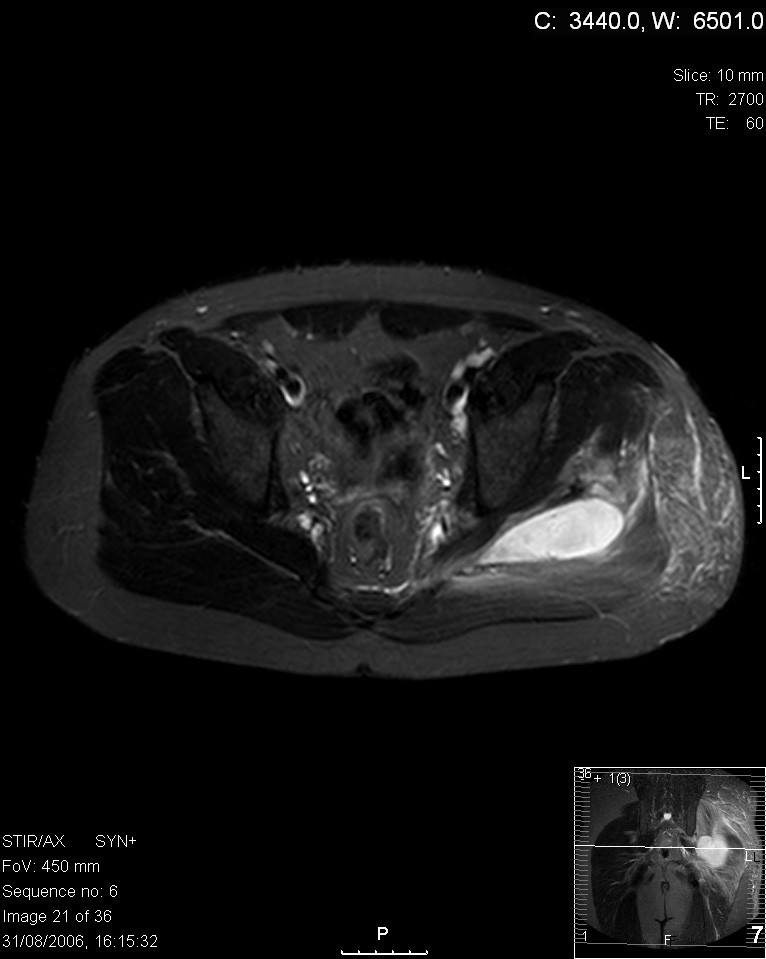
Transverse T2 magnetic resonance imaging section through the hip region showing abscess collection in a patient with pyomyositis.
SpecialtyRheumatology Edit this on Wikidata
Diagnostic methodDiagnostic method used for PM includes ultrasound, CT scan and MRI. Ultrasound can be helpful in showing muscular heterogeneity or a purulent collection but it is not useful during the first stage of the disease. CT scan can confirm the diagnosis before abscesses occur with enlargement of the involved muscles and hypodensity when abscess is present, terogenous attenuation and fluid collection with rim enhancement can be found. MRI is useful to assess PM and determine its localization and extension

Pyomyositis (Myositis tropicans) is a bacterial infection of the skeletal muscles which results in an abscess. Pyomyositis is most common in tropical areas but can also occur in temperate zones.

Pyomyositis can be classified as primary or secondary. Primary pyomyositis is a skeletal muscle infection arising from hematogenous infection, whereas secondary pyomyositis arises from localized penetrating trauma or contiguous spread to the muscle.[1]

Diagnosis

[edit]

Diagnosis is done via the following manner:[2]

  • Pus discharge culture and sensitivity
  • X ray of the part to rule out osteomyelitis
  • Creatinine phosphokinase (more than 50,000 units)
  • MRI is useful
  • Ultrasound guided aspiration

Bioptates of affected muscle tissues show acute and chronic inflammatory cells, and in one case caused by influenza A infection muscle cells show lack of nuclei.[3]

Symptoms

[edit]

Pyogenic symptoms usually are present in the following muscles:[4]

  • serratus anterior
  • pectoralis major
  • biceps
  • abdominal muscles
  • spinal muscles
  • glutei
  • iliopsoas
  • quadriceps
  • gastrocnemicus

The course of this disease is divided into three distinct phases. The invasive stage manifests as general muscle soreness and swelling without erythema and low-grade fever and lasts about ten days. The purulent-suppurative stage occurs after about 2–3 weeks and is associated with increased body temperature and muscle tenderness. In the third stage, sepsis occurs that can lead to serious complications, including death.[4]

Treatment

[edit]

The abscesses within the muscle must be drained surgically (not all patients require surgery if there is no abscess). Antibiotics, such as vancomycin, teicoplanin, tigecycline, daptomycin or linezolid are given for a minimum of three weeks to clear the infection.[5][4] In some cases, co-trimoxazole is sufficient.[4]

Epidemiology

[edit]

Pyomyositis is most often caused by the bacterium Staphylococcus aureus.[6] The infection can affect any skeletal muscle, but most often infects the large muscle groups such as the quadriceps or gluteal muscles.[5][7][8]

Pyomyositis is mainly a disease of children and was first described by Scriba in 1885. Most patients are aged 2 to 5 years, but infection may occur in any age group.[9][10] Infection often follows minor trauma and is more common in the tropics, where it accounts for 4% of all hospital admissions. In temperate countries such as the US, pyomyositis was a rare condition (accounting for 1 in 3000 pediatric admissions), but has become more common since the appearance of the USA300 strain of MRSA.[5][7][8]

Pyomyositis is inherently related to residency in tropical areas, especially in northern Uganda, where yearly about 400-900 cases are reported.[4] In these regions, the general population affected by this disease is not affected by other concommitant diseases. However, in temperate regions pyomyositis is usually present in immunocompromised indiviiduals or people affected by chronic renal failure or rheumatoid arthritis.[4]

Gonococcal pyomyositis is a rare infection caused by Neisseria gonorrhoeae.[11]

Pathogens invlovled in infectious pyomyositis[12]
Bacteria Fungi Parasites Viruses
Gram-positive Gram-negative Anaerobes Atypical bacteria
  • Staphylococcus aureus ★★★
  • Streptococcus spp. ★★/★
  • Aeromonas hydrophila
  • Burkolderia spp. ★
  • Citrobacter freundii ★★
  • Enterobacter spp. ★★
  • Escherichia coli ★★
  • Haemophilus influenzae
  • Klebsiella spp. ★
  • Morganella morganni
  • Neisseria gonorhhoeae
  • Pasteurella spp. ★
  • Proteus spp. ★
  • Pseudomonas spp. ★★
  • Salmonella spp. ★★
  • Serratia marcescnens
  • Vibrio vulnificus
  • Yersinia enterocolitica
  • Bacterioides spp. ★★
  • Clostridium spp. ★★
  • Fusobacterium spp. ★
  • Peptostreptococcus spp. ★★
  • Veillonella spp. ★
  • Mycobacterium spp. ★
  • Actinomyces spp. ★
  • Bacillus spp. ★
  • Bartonella spp. ★
  • Borrelia burdorferi
  • Brucella spp. ★★
  • Coxiella burnetii
  • Francisella tularensis
  • Legionella pneumophila
  • Leptospira spp. ★
  • Mycoplasma pneumoniae ★★
  • Nocardia spp. ★
  • Rickettsia spp. ★
  • Treponema pallidum
  • Aspergillus spp. ★
  • Blastomyces dermatitidis
  • Candida spp. ★★★
  • Coccidioides spp. ★
  • Cryptococcus neoformans
  • Fusarium spp. ★
  • Histoplasma capsulatum
  • Pneumocystis jiroveci
  • Entamoeba histolytica
  • Echinococcus spp. ★
  • Microsporida spp. ★
  • Onchocerca volvulus
  • Plasmodium spp. ★★
  • Sarcocystis spp. ★
  • Schitosoma spp. ★
  • Spirometra mansonoides
  • Taenia solium ★★
  • Toxocara canis
  • Toxoplasma gondii
  • Trichinella spp. ★★★
  • Trypanosoma cruzi
  • Adenovirus
  • Cytomegalovirus
  • Dengue virus ★
  • Enteroviridae ★★
  • Epstein-Barr virus ★
  • Hepatitis B and C virus ★
  • HIV ★★
  • HTLV-1 ★★
  • Influenza virus A and B ★★★
  • Mumps virus ★
  • Parainfluenza virus ★
  • Parvovirus B19 ★
  • Varicella-zoster virus ★
  • West Nile virus ★
Note: ★★★ – most common pathogens, ★★ – occasionally cause pyomyositis, ★ – rare pathogens

Additional images

[edit]

References

[edit]
[edit]
Revisions and contributorsEdit on WikipediaRead on Wikipedia
from Grokipedia
Pyomyositis is an acute bacterial infection of skeletal muscle that typically progresses to localized abscess formation through hematogenous spread, without originating from contiguous soft tissue, bone, or penetrating trauma. Primarily caused by Staphylococcus aureus, it is characterized by three clinical stages: an initial invasive phase with muscle pain, swelling, and low-grade fever; a suppurative phase marked by abscess development, increased tenderness, and systemic symptoms; and a late septic phase if untreated, potentially leading to bacteremia or multiorgan failure. While historically known as "tropical pyomyositis" due to its high prevalence in tropical and subtropical regions—such as Africa, where it accounts for up to 4% of hospital admissions—it has seen a rising incidence in temperate climates like the United States, with a threefold increase reported between 2002 and 2014. The condition disproportionately affects children and young adults, with a male predominance, and commonly involves large muscle groups in the lower extremities, such as the or gluteals, though pelvic and trunk muscles are also frequent sites. Risk factors include trauma (e.g., muscle from sports or accidents), immunocompromising states like diabetes mellitus (present in about 33% of cases), infection, , or intravenous drug use, though up to 50% of patients in some series are otherwise healthy. Other pathogens, including , Kingella kingae in children, and occasionally gram-negative bacilli or fungi in immunocompromised hosts, account for the remaining cases, with S. aureus implicated in 50-90% depending on the region. Diagnosis relies on clinical suspicion supported by imaging—MRI being the most sensitive for detecting early involvement—and microbiological confirmation via blood cultures (positive in 28-50% of cases) or drainage. Treatment involves prompt empirical antibiotics targeting S. aureus (e.g., for suspected MRSA), often for 2-6 weeks, combined with surgical or drainage of abscesses larger than 3 cm, achieving success rates over 80% with early intervention. Complications such as , , or can occur in 10-20% of cases, underscoring the need for multidisciplinary . Recent studies highlight the of community-acquired MRSA in non-tropical settings and emphasize the importance of awareness in pediatric populations, where fever, localized , and are hallmark presentations.

Background

Definition

Pyomyositis is a primary bacterial infection of skeletal muscle characterized by subacute onset and progression to localized abscess formation within the muscle tissue, typically arising via hematogenous seeding rather than contiguous spread from adjacent structures. This condition leads to pus accumulation in the affected striated muscles, distinguishing it as a suppurative process confined to the skeletal musculature. Unlike infectious , which encompasses diffuse muscle inflammation caused by various infectious agents without obligatory abscess development, pyomyositis specifically involves discrete, pus-filled collections that evolve over days to weeks. It also differs from secondary pyomyositis, where muscle involvement occurs as an extension from nearby sites of infection, such as or soft tissue . The term pyomyositis, also known as tropical pyomyositis or myositis tropicans, reflects its historical association with endemic occurrence in tropical climates, though it is now increasingly documented in temperate regions globally.

History

Pyomyositis was first mentioned in the mid-19th century in temperate climates, with early cases described in by pathologists such as , who noted spontaneous acute myositis in 1852. However, the condition received its detailed clinical characterization as a distinct entity in by German surgeon Justus Scriba, who reported cases in and emphasized its prevalence as an endemic disease in tropical regions, leading to its alternative name, myositis tropicans. Scriba's work highlighted the suppurative nature of intramuscular abscesses, distinguishing it from other soft-tissue infections. In the early , as European colonial expansion brought more medical observations from tropical areas, pyomyositis was increasingly documented in , the Pacific islands, and , solidifying its association with humid, high-temperature environments. This period marked the recognition of pyomyositis as a primarily tropical , with bacteriological studies beginning to identify Staphylococcus aureus as a key , though isolation techniques were rudimentary. By the mid-20th century, isolated non-tropical cases began to emerge, challenging the disease's exclusive tropical linkage, though they remained rare and often overlooked. The first well-documented report in appeared in 1971, involving a child in without travel history to endemic areas. The HIV/AIDS epidemic further propelled recognition of pyomyositis in temperate zones, as emerged as a critical ; multiple cases were reported in HIV-positive individuals starting in 1986, with S. aureus infections complicating advanced disease stages. This era saw a surge in literature linking the condition to underlying immunocompromise, expanding diagnostic awareness beyond geographic confines. In recent decades, pyomyositis incidence has risen in temperate regions, attributed to factors such as intravenous drug use, diabetes mellitus, and other immunocompromising conditions, with U.S. hospitalizations increasing threefold from 2002 to 2014. Cases linked to injection drug use, often involving multifocal abscesses from contaminated needles, have been highlighted in reviews since the . Similarly, diabetes has been associated with higher susceptibility, particularly in adults, reflecting broader epidemiological shifts toward chronic comorbidities in non-tropical settings. While direct ties to or migration remain underexplored in primary literature, increased global travel and population movements from endemic areas may contribute to sporadic reports in urban centers.

Epidemiology

Distribution and incidence

Pyomyositis is endemic in tropical and subtropical regions, including tropical , , , and the Pacific Islands, where it represents a significant cause of morbidity among otherwise healthy individuals. In these areas, the disease accounts for 1-4% of hospital admissions related to fever or surgical interventions, with higher rates observed in resource-limited settings such as parts of and Asia. In temperate climates, such as and , pyomyositis remains rare, with an estimated incidence of approximately 0.5 cases per 100,000 person-years. Historical data indicate only about 98 cases reported in between 1971 and 1992, though recent studies show a threefold increase in hospitalizations in the United States from 2002 to 2014, attributed to rising immigration from endemic areas, increasing comorbidities like and , and improved diagnostic awareness. Seasonal patterns are prominent in tropical regions, with cases peaking during rainy and hot seasons, often linked to increased minor trauma, insect bites, and humidity facilitating bacterial entry through skin breaches; for instance, in northern , most occurrences cluster from to October. In contrast, no distinct has been observed in temperate zones. As of 2025, global trends reflect persistent underreporting in low-resource tropical settings, where limited hampers accurate estimation, though the disease's recognition continues to grow in temperate regions due to and vulnerable populations.

Affected populations

Pyomyositis predominantly affects children and young adults, exhibiting a bimodal age distribution with peaks among children aged 2 to 5 years and young adults aged 20 to 45 years. In tropical regions, the majority of cases occur in individuals under 20 years of age, particularly children, reflecting the disease's endemic nature in these settings. The condition is uncommon in the elderly, occurring rarely unless underlying is present. Males experience pyomyositis at a higher rate than females, with a male-to-female ranging from 2:1 to 3:1, potentially attributable to increased exposure to trauma and outdoor activities among men. Socioeconomic factors play a substantial role, as the disease shows elevated incidence in low-income, rural communities within tropical areas, where limited access to healthcare exacerbates its impact on affected populations. Indigenous populations in and the Pacific region face a disproportionate burden, consistent with higher rates of infections in these groups. Among special populations, pyomyositis is increasingly observed in HIV-positive individuals, with a meta-analyzed of 4.82 (95% CI: 1.67–13.92) indicating strong association, particularly in endemic tropical areas where immune compromise heightens vulnerability. Cases are also rising among diabetics and intravenous drug users in urban temperate settings, driven by comorbidities and injection-related bacteremia that facilitate muscle infections.

Etiology

Pathogens

The primary causative agent of pyomyositis is , which accounts for 75-90% of cases worldwide, with higher rates observed in tropical regions (up to 90%) compared to temperate climates (around 75%). Methicillin-resistant (MRSA), particularly community-acquired strains, has emerged as a significant contributor in temperate areas, comprising 20-50% of cases in some series, often associated with more severe presentations. Other bacterial pathogens are less common, with Streptococcus species (including group A Streptococcus) responsible for approximately 5-10% of infections, typically in cases with contiguous spread from skin or soft tissue sources. Kingella kingae is an occasional cause in children, particularly in temperate regions. Gram-negative rods, such as Escherichia coli, account for about 5% of cases and are more frequently encountered in patients with diabetes mellitus, where they may exploit impaired host defenses. Anaerobic bacteria, including Clostridium species, occasionally contribute to polymicrobial infections, particularly in immunocompromised individuals or those with penetrating trauma. Rare etiologic agents include , which predominates in endemic regions and immunocompromised hosts, often presenting as chronic or multifocal disease. Fungal pathogens, such as Candida species, are exceptional causes, almost exclusively in patients with severe immunosuppression, such as those with advanced or undergoing . Key virulence factors of S. aureus in pyomyositis include toxins like Panton-Valentine leukocidin (PVL), a pore-forming leukotoxin that lyses neutrophils and macrophages, thereby promoting muscle , formation, and dissemination; PVL-positive strains increase the odds of pyomyositis by over 100-fold compared to PVL-negative isolates.

Risk factors

Pyomyositis susceptibility is heightened by various immunosuppressive conditions that impair the host's ability to combat bacterial invasion of . infection significantly increases risk, with a reporting an of 4.82 (95% CI: 1.67–13.92), and advanced AIDS showing an even stronger association at an of 6.08 (95% CI: 2.79–13.25). Diabetes mellitus, both type 1 and type 2, is linked to elevated odds of pyomyositis through mechanisms involving impaired immune response and vascular complications. for malignancies, such as hematologic cancers, further compromises immunity, leading to cases of pyomyositis during neutropenic phases. Similarly, predisposes individuals due to chronic immune dysregulation and recurrent vaso-occlusive events that damage muscle tissue. Trauma and breaches in or muscle integrity facilitate direct bacterial inoculation, particularly in temperate climates where these factors predominate. Muscle from accidents or strenuous activity occurs in 25–50% of cases, providing a portal for pathogens like , the most common causative agent. Insect bites have been implicated as entry points, especially in tropical settings where they contribute to bacteremia leading to muscle abscesses. Intravenous drug use is a key modifiable risk in non-tropical regions, often resulting in hematogenous spread or direct injection-site contamination, and is associated with up to 30% of cases in such areas through repeated skin punctures. Environmental factors, prevalent in tropical and subtropical regions, exacerbate vulnerability by weakening overall health and immunity. , particularly protein-calorie deficiency, is the most common globally, frequently observed in endemic tropical areas where it underlies many cases among otherwise healthy children and young adults. Poor hygiene and overcrowding promote bacterial colonization and transmission, amplifying exposure in resource-limited settings. Additional risks include concurrent infections that transiently suppress immunity, such as viral or parasitic diseases, with strenuous in hot climates further predisposing athletes or laborers by causing microtrauma in already stressed muscles.

Pathogenesis

Mechanisms of

Pyomyositis primarily establishes through hematogenous seeding of bacteria into skeletal muscle during transient episodes of bacteremia, which accounts for the majority of cases. This route is often preceded by minor muscle trauma, reported in 25 to 50 percent of patients, creating a vulnerable site for bacterial lodgment. Less commonly, direct inoculation occurs via penetrating injuries or extension from contiguous skin and soft tissue infections. Skeletal muscle's rich vascularity and robust immune surveillance typically confer resistance to infection, but trauma disrupts this barrier, establishing a locus minoris resistentiae that facilitates bacterial adhesion. Pathogens like Staphylococcus aureus employ surface adhesins to bind damaged muscle fibers, while ischemia induced by injury generates a low-oxygen niche ideal for anaerobic proliferation and early abscess initiation. Once established, S. aureus evades innate immunity by forming protective biofilms and secreting proteases that degrade and muscle tissue. The subsequent influx exacerbates tissue damage through release of , leading to . Local hypoxia and further promote bacterial growth and suppuration, amplifying the infectious process.

Stages of pyomyositis

Pyomyositis progresses through three distinct stages if left untreated, characterized by escalating pathological changes in the infected . The invasive stage, also known as stage 1 or the subacute phase, typically lasts 1 to 3 weeks and involves initial bacterial invasion leading to localized muscle without abscess formation. During this phase, the affected muscle becomes indurated with a "woody" texture, tender to , and exhibits and inflammatory infiltrates, but no collection is present; mild systemic symptoms such as low-grade fever and may accompany these changes. The suppurative stage, or stage 2, follows and generally spans 10 to 21 days, marked by the development of a focal intramuscular with accumulation of purulent material. Pathologically, this involves neutrophil-rich infiltrates, muscle fiber , and surrounding , resulting in pronounced muscle swelling, increased tenderness, and fluctuance upon examination; aspiration at this stage yields , confirming the . If untreated, progression to the late or disseminated stage (stage 3) occurs, characterized by abscess rupture, systemic toxemia, and potential metastatic infections such as or septicemia. This phase features intense pain, high fever, shock, and widespread muscle damage with multi-organ involvement due to bacteremia; delayed and inadequate intervention are key factors prolonging the transition through earlier stages, with the total untreated course averaging 2 to 4 weeks.

Clinical features

Symptoms and signs

Pyomyositis typically presents with severe localized muscle pain that intensifies with movement or , often accompanied by swelling, warmth, and over the affected area. In children, patients may exhibit a or refusal to bear weight on the involved limb. These local manifestations arise due to and suppuration within the . Systemic signs are common and include fever in 70-90% of cases, often accompanied by and . Laboratory findings frequently reveal with , as well as elevated levels of (CRP) and (ESR). These indicators reflect the ongoing bacterial infection and inflammatory response. The condition progresses through distinct stages, beginning with an early invasive phase characterized by cramping or dull muscle pain that evolves into a more intense throbbing ache, along with low-grade fever and localized but minimal tenderness. In the suppurative stage, symptoms worsen with high fever, marked tenderness, and swelling, potentially forming a fluctuant palpable as a mass. If untreated, it may advance to late-stage with severe systemic toxicity. Atypical presentations can include minimal local signs when deep muscles such as the are involved, and polyfocal involvement occurs in 10-20% of cases, particularly among immunocompromised patients. Pyomyositis commonly affects the lower limbs.

Common sites of involvement

Pyomyositis most commonly involves muscles of the lower extremities and , with , gluteal, and frequently affected, though the relative frequencies vary by geographic region and population. For instance, in some North Indian cohorts, iliopsoas involvement reaches 46%, gluteal 36%, and muscles 28%. The hamstrings contribute to lower limb cases, often presenting with localized pain and swelling that limits mobility. Involvement of the trunk and pelvic muscles is common, occurring in 20-50% of cases depending on the study, encompassing deep and often occult sites such as the , abdominal wall muscles, and paraspinal groups, which can complicate early detection due to nonspecific symptoms like back or abdominal discomfort. These axial structures are particularly prevalent in pediatric cases, where pelvic girdle muscles like the and obturator internus predominate. Upper extremity involvement is less common, comprising approximately 10-15% of cases, typically affecting the deltoid or brachii muscles, though this pattern increases among intravenous drug users due to hematogenous seeding from injection sites. In adults, limb girdle and proximal lower limb muscles are more routinely implicated compared to the axial predominance seen in infants. Most infections are unifocal, affecting a single muscle group in about 80% of patients, but multifocal disease—spanning multiple sites—arises more frequently in immunocompromised individuals, such as those with , where up to 40% may exhibit disseminated involvement.

Diagnosis

Clinical evaluation

Clinical evaluation of pyomyositis begins with a detailed patient history to identify potential risk factors and symptom progression that raise suspicion for this condition. Key historical elements include recent trauma or strenuous ; in case series, 20 to 60 percent of individuals with primary pyomyositis report prior vigorous exercise or trauma, particularly in otherwise healthy individuals. Patients often report a subacute onset of localized muscle pain initially resembling a strain or contusion, progressing over 1 to 3 weeks to more intense discomfort accompanied by low-grade fever and malaise. Inquiry should also cover duration of fever, which is typically present but intermittent in early stages, as well as recent travel to tropical regions where pyomyositis is more prevalent, though cases occur worldwide. from conditions like , , or is a critical to elicit, as it predisposes to hematogenous spread of bacteria to . On , focal tenderness over the affected muscle is a hallmark finding, often with localized swelling and induration that limits due to pain. Commonly involved sites such as the , gluteus, or may exhibit warmth and , though skin changes can be subtle or absent, distinguishing it from superficial infections. Systemic signs, including and low-grade fever, may indicate early bacteremia, while vital sign instability such as signals potential . In children or immunocompromised patients, examination may reveal more diffuse involvement or nonspecific limb pain without obvious swelling. Red flags warranting urgent evaluation include rapid symptom worsening over days, multifocal muscle involvement suggesting disseminated infection, or indicators of sepsis such as , altered mental status, or severe . These features heighten suspicion in patients with relevant travel or history, prompting consideration of pyomyositis over benign musculoskeletal complaints. Differential diagnosis during initial assessment often includes conditions that mimic pyomyositis's early presentation, such as with overlying skin involvement or muscle strain without systemic features. may present similarly with deep bone-adjacent pain and limited motion, while can cause migratory arthralgias and fever in pediatric cases, necessitating careful history to differentiate based on progression and risk factors. Typical symptoms like localized pain and swelling, along with risk factors such as trauma, further guide suspicion toward pyomyositis in the appropriate clinical context.

Laboratory investigations

Laboratory investigations play a crucial role in supporting the of pyomyositis and assessing disease severity, though findings are often nonspecific and overlap with other infectious processes. Patients typically present with , with (WBC) counts ranging from 10,000 to 20,000/μL and a predominance of neutrophils reflecting the acute response. (CRP) levels are markedly elevated, often exceeding 100 mg/L, while (ESR) is commonly greater than 50 mm/hr, both serving as sensitive indicators of ongoing . These markers tend to rise progressively through the disease stages and correlate with clinical severity, aiding in monitoring response to therapy. Blood cultures are recommended in all suspected cases to identify the and guide selection, though positivity rates are low at 5-35%, attributed to transient bacteremia in early stages. Yield is higher in stage 3 pyomyositis, where dissemination increases the likelihood of detecting organisms such as in up to 46% of staphylococcal cases. Negative results do not rule out the but underscore the need for tissue sampling. Additional laboratory findings may include mild , often normocytic and related to chronic or , as well as elevated (CK) levels in instances of associated myonecrosis. In patients with risk factors such as or residence in endemic areas, testing for human virus () is advisable due to its association with increased susceptibility to pyomyositis. The definitive microbiologic confirmation comes from aspiration of the affected muscle, where and culture of the purulent material establish the , most frequently identifying S. aureus as the causative agent. This procedure not only confirms the but also provides susceptibility data essential for , with pus cultures yielding positive results in the majority of cases when performed prior to antibiotics.

Imaging studies

Imaging studies play a crucial role in confirming the of pyomyositis by visualizing muscle , formation, and associated complications, particularly in the suppurative stage where localized collections predominate. These modalities help differentiate pyomyositis from mimics such as or , guiding therapeutic decisions like drainage. Ultrasound serves as the first-line tool, especially for superficial muscle involvement, due to its accessibility, lack of , and ability to guide aspiration. It detects hypoechoic fluid collections within enlarged muscles, with surrounding hyperemia indicating active infection, and demonstrates high sensitivity (up to 96.7%) for soft-tissue abscesses compared to CT (76.7%). However, its efficacy is limited for deep-seated lesions owing to operator dependence and acoustic shadowing from overlying structures. Magnetic resonance imaging (MRI) is considered the gold standard for diagnosing pyomyositis, particularly in deep or axial muscles, offering superior soft-tissue contrast without ionizing radiation. In the phlegmonous stage, MRI reveals muscle enlargement with T2 hyperintensity and loss of normal fascial planes due to edema; in the suppurative stage, it shows well-defined abscesses as T1 isointense/hypointense central collections with hyperintense T2 rims and peripheral gadolinium enhancement. Sensitivity reaches 97% for detecting soft-tissue abscesses, aiding in assessing extent and complications like bone involvement. Limitations include potential overestimation of disease from reactive edema and contraindications in patients with non-MRI-compatible implants. Computed tomography (CT) provides a valuable alternative, especially for or pelvic pyomyositis, where it identifies muscle enlargement, heterogeneous low-attenuation areas, central fluid collections with rim enhancement, and complications like gas or . It is particularly useful in emergency settings for rapid evaluation but is less sensitive in early stages and involves , raising concerns in pediatric patients. Plain radiographs (X-rays) are nonspecific and rarely diagnostic, typically showing only soft-tissue swelling, muscle enlargement, or obliteration of fat planes, without delineating abscesses. scans, such as gallium-67 , can localize multifocal but are infrequently used due to their nonspecificity, high cost, and longer acquisition times compared to MRI or CT.

Treatment

Antibiotic therapy

Antibiotic therapy is the cornerstone of pyomyositis management, targeting the predominant pathogen Staphylococcus aureus, which accounts for the majority of cases. Empiric treatment typically begins with intravenous anti-staphylococcal agents to cover both methicillin-sensitive S. aureus (MSSA) and methicillin-resistant S. aureus (MRSA), especially in regions with high MRSA prevalence. For MSSA-suspected cases, an anti-staphylococcal beta-lactam such as nafcillin or oxacillin is recommended at 150-200 mg/kg/day divided every 4-6 hours in pediatric patients or 2 g every 4-6 hours in adults. If MRSA is suspected, vancomycin is the first-line option at 15-20 mg/kg every 8-12 hours, adjusted to achieve trough levels of 15-20 mcg/mL. Therapy is de-escalated based on and sensitivity results from or aspirates, narrowing to pathogen-specific agents such as (50-100 mg/kg/day IV divided every 8 hours for MSSA) or alternatives like (4-6 mg/kg IV daily) for MRSA if vancomycin-intolerant. In immunocompromised patients or those with recent trauma, empiric coverage may include an agent active against gram-negative bacilli, such as piperacillin-tazobactam. The total duration is generally 3-4 weeks, starting with 1-2 weeks of until clinical improvement (e.g., defervescence and reduced inflammatory markers), followed by 2-4 weeks of oral step-down such as clindamycin (30-40 mg/kg/day divided every 6-8 hours in children or 300-450 mg every 6-8 hours in adults) or trimethoprim-sulfamethoxazole (TMP-SMX; 8-10 mg/kg/day of trimethoprim component divided every 12 hours) for susceptible strains. In severe S. aureus cases, particularly those with systemic toxicity, adjunctive clindamycin is often added to suppress production by inhibiting protein synthesis, even if the isolate is sensitive to beta-lactams. This combination enhances outcomes in toxin-mediated infections, though its routine use remains under evaluation in ongoing trials. Response to therapy is monitored through serial laboratory assessments, including count, , and , with or extension guided by clinical progress and repeat cultures if bacteremia persists.

Surgical management

Surgical management plays a critical role in treating pyomyositis during the suppurative phase, when intramuscular es form and fail to resolve with s alone. Indications for intervention include the presence of drainable abscess collections, particularly those associated with lack of clinical improvement after 48-72 hours of appropriate antibiotic therapy or accompanied by systemic . Percutaneous drainage, guided by or computed , is the preferred initial approach for smaller or deeply located abscesses, allowing minimally invasive aspiration and potential placement for ongoing drainage. For larger, multiloculated, or superficial abscesses, open provides more comprehensive access to ensure complete evacuation. Key techniques involve careful incision along the muscle axis to avoid neurovascular structures, followed by finger exploration to disrupt loculations, thorough of necrotic material, and copious of the cavity with 0.9% saline solution. A drain is typically placed and secured, to be removed after several days once output diminishes. In approximately 28% of cases, multiple procedures are necessary to achieve source control. Following surgery, intravenous antibiotics are continued, guided by culture sensitivities, for a median duration of about 18 days or until clinical resolution, with serial imaging to monitor for residual infection or recurrence.

Prognosis and complications

Prognosis

With prompt diagnosis and appropriate treatment, the overall mortality rate for pyomyositis is low, ranging from 1% to 4% in non-endemic settings with access to advanced care. However, delayed intervention or progression to late-stage disease (stage 3 with systemic involvement) can elevate mortality to up to 23%. In a single-center retrospective analysis of 61 cases, the mortality rate was 5%, with all deaths occurring in treatment failures involving disseminated infections. Recovery rates are high with early intervention, achieving 84-95% full resolution without recurrent or need for prolonged . Average hospitalization duration is 7-14 days, followed by 3-6 weeks of antibiotics for complete recovery. A literature review of over 200 cases emphasized that pre-suppurative stage treatment often leads to rapid resolution without . Key factors influencing outcomes include timing of diagnosis and underlying conditions; early detection significantly improves survival and reduces complications. Comorbidities such as infection or diabetes mellitus worsen prognosis due to increased risk of dissemination and treatment resistance. In contrast, outcomes are excellent in children, who often achieve full recovery without long-term sequelae when treated promptly. Long-term effects are uncommon, with rare instances of or reported in fewer than 5% of cases post-resolution. Recent trends as of 2023 indicate rising community-acquired MRSA cases in temperate regions, potentially impacting through increased treatment challenges.

Complications

Local complications of pyomyositis primarily arise from inadequate or delayed management of intramuscular and may include abscess rupture leading to extension into adjacent tissues, formation of chronic sinus tracts, and muscle or causing functional impairment. Systemic complications are more severe and often stem from in late-stage disease. Bacteremia and occur frequently if the infection progresses untreated, with blood cultures positive in 10-50% of cases. Metastatic infections, including (reported in 5% to 73% across studies) and (2% to 16%), complicate approximately 10% of cases through hematogenous spread. Rare but life-threatening complications include multiorgan failure, (documented in isolated cases with ), and renal impairment due to dehydration or sepsis-induced . These risks are elevated in multifocal pyomyositis or infections involving , which are less common but associated with and poorer outcomes. Early surgical drainage substantially mitigates the likelihood of both local and systemic complications.

References

  1. https://wikimsk.org/wiki/Pyomyositis
Add your contribution
Related Hubs
Contribute something
User Avatar
No comments yet.