


Community hub
Recent from talks
Contribute something
Nothing was collected or created yet.
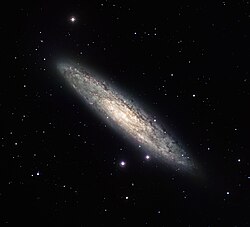
Sculptor Galaxy
View on Wikipedia| Sculptor Galaxy | |
|---|---|
 The Sculptor Galaxy is particularly known for its exceptionally high rate of star formation | |
| Observation data (J2000 epoch) | |
| Constellation | Sculptor |
| Right ascension | 00h 47m 33.13s[1] |
| Declination | −25° 17′ 17.1″[1] |
| Redshift | 0.000807[1] |
| Heliocentric radial velocity | 242 ± 1 km/s [1] |
| Distance | 11.4 ± 0.7 Mly (3.5 ± 0.2 Mpc)[2] |
| Apparent magnitude (V) | 8.0[1] |
| Characteristics | |
| Type | SAB(s)c[1] |
| Size | 36.96 kiloparsecs (120,500 light-years) (diameter; D27 isophote) |
| Apparent size (V) | 27′.5 × 6′.8[1] |
| Other designations | |
| Silver Coin Galaxy,[1] Silver Dollar Galaxy,[3] NGC 253,[1] UGCA 13,[1] PGC 2789[1] Caldwell 65 | |
The Sculptor Galaxy (also known as the Silver Coin Galaxy, Silver Dollar Galaxy, NGC 253, or Caldwell 65) is an intermediate spiral galaxy in the constellation Sculptor. The Sculptor Galaxy is a starburst galaxy, which means that it is currently undergoing a period of intense star formation.
Observation
[edit]Observational history
[edit]The galaxy was discovered by Caroline Herschel in 1783 during one of her systematic comet searches.[4][5] Many years later, John Herschel observed it using his 18-inch metallic mirror reflector at the Cape of Good Hope.[5] He wrote: "very bright and large (24′ in length); a superb object.... Its light is somewhat streaky, but I see no stars in it except 4 large and one very small one, and these seem not to belong to it, there being many near..."[5]
In 1961, Allan Sandage wrote in the Hubble Atlas of Galaxies that the Sculptor Galaxy is "the prototype example of a special subgroup of Sc systems....photographic images of galaxies of the group are dominated by the dust pattern. Dust lanes and patches of great complexity are scattered throughout the surface. Spiral arms are often difficult to trace.... The arms are defined as much by the dust as by the spiral pattern."[6] Bernard Y. Mills, working out of Sydney, discovered that the Sculptor Galaxy is also a fairly strong radio source.[5]
In 1998, the Hubble Space Telescope took a detailed image of NGC 253.[7]
Amateur
[edit]As one of the brightest galaxies in the sky, the Sculptor Galaxy can be seen through binoculars and is near the star Beta Ceti. It is considered one of the most easily viewed spiral galaxies in the sky after the Andromeda Galaxy.[5][8]
The Sculptor Galaxy is a good target for observation with a telescope with a 300 mm diameter or larger.[8] In such telescopes, it appears as a galaxy with a long, oval bulge and a mottled galactic disc.[8] Although the bulge appears only slightly brighter than the rest of the galaxy, it is fairly extended compared to the disk.[8] In 400 mm scopes and larger, a dark dust lane northwest of the nucleus is visible, and over a dozen faint stars can be seen superimposed on the bulge.[8] Some people claim to have observed the galaxy with the unaided eye under exceptional viewing conditions.
Features
[edit].jpg)


The Sculptor Galaxy is located at the center of the Sculptor Group, one of the nearest groups of galaxies to the Milky Way.[10] The Sculptor Galaxy (the brightest galaxy in the group and one of the intrinsically brightest galaxies in the vicinity of ours, only surpassed by the Andromeda Galaxy and the Sombrero Galaxy[11]) and the companion galaxies NGC 247, PGC 2881, PGC 2933, Sculptor-dE1, and UGCA 15 form a gravitationally-bound core near the center of the group. Most other galaxies associated with the Sculptor Group are only weakly gravitationally bound to this core.[10][12]
Starburst
[edit]NGC 253's starburst has created several super star clusters on NGC 253's center (discovered with the aid of the Hubble Space Telescope): one with a mass of 1.5×10⁶ solar masses, and absolute magnitude of at least −15, and two others with 5×10⁴ solar masses and absolute magnitudes around −11;[13] later studies have discovered an even more massive cluster heavily obscured by NGC 253's interstellar dust with a mass of 1.4×10⁷ solar masses, an age of around 5.7×10⁶ years, and rich in Wolf–Rayet stars.[14] The super star clusters are arranged in an ellipse around the center of NGC 253, which from the Earth's perspective appears as a flat line.[15]
Star formation is also high in the northeast of NGC 253's disk, where a number of red supergiant stars can be found, and in its halo there are young stars as well as some amounts of neutral hydrogen. This, along with other peculiarities found in NGC 253, suggest that a gas-rich dwarf galaxy collided with it 200 million years ago, disturbing its disk and starting the present starburst.[16]
As happens in other galaxies suffering strong star formation such as Messier 82, NGC 4631, or NGC 4666, the stellar winds of the massive stars produced in the starburst as well as their deaths as supernovae have blown out material to NGC 253's halo in the form of a superwind that seems to be inhibiting star formation in the galaxy.[17]
Novae and Supernovae
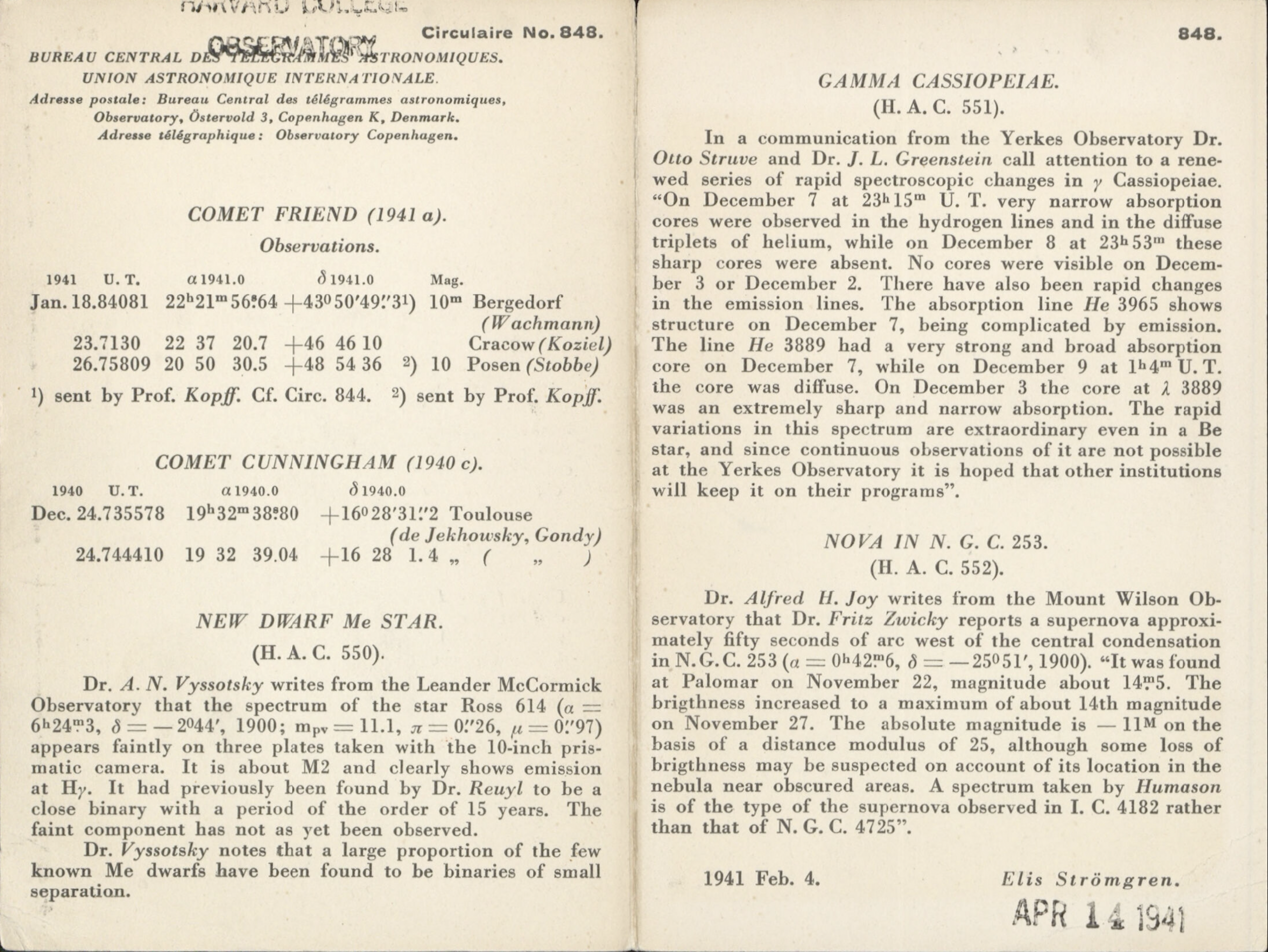
[edit]Although supernovae are generally associated with starburst galaxies, only one has been detected within the Sculptor Galaxy. SN 1940E (type unknown, mag. 14.5) was discovered by Fritz Zwicky on 22 November 1940, located approximately 54″ southwest of the galaxy's nucleus.[18][19][20]
NGC 253 is close enough that classical novae can also be detected. The first confirmed nova in this galaxy was discovered by BlackGEM at magnitude 19.6 on 12 July 2024, and designated AT 2024pid.[21]
Central black hole
[edit]Research suggests the presence of a supermassive black hole in the center of this galaxy with a mass estimated to be 5 million times that of the Sun, which is slightly heavier than Sagittarius A*.[22]
Distance estimates
[edit]At least two techniques have been used to measure distances to Sculptor in the past ten years.
Using the planetary nebula luminosity function (PNLF) method, an estimate of 10.89 +0.85
−1.24 million light years (or Mly; 3.34 +0.26
−0.38 Megaparsecs, or Mpc) was achieved in 2005.[2]
A recent study analyzing MUSE observations of the galaxy have identified over 500 planetary nebulae (PNe) in the galaxy, enabling a revision of the distance via the PNLF. This work derived a distance of 4.1 +0.07
−0.09 Mpc, about 0.76 Mpc larger than what obtained previously with the same technique. The discrepancy was attributed to the misclassification of the brighter object in the first study sample. In addition, the distance is also 0.6 Mpc larger than the typically accepted distance coming mostly from tip of the red-giant branch (TRGB) measurements. In this case, the discrepancy is attributed to the extinction produced by the dusty interstellar medium of the galaxy. Modelling suggests that this dust, likely distributed vertically due to starburst-driven outflows, dims the PNe enough to bias the PNLF-based distance estimates. This analysis highlights the limitations of PNLF as a distance indicator in dusty, inclined galaxies like NGC 253.[23]
The Sculptor Galaxy is close enough that the TRGB method may also be used to estimate its distance. The estimated distance to Sculptor using this technique in 2004 yielded 12.8±1.2 Mly (3.94±0.37 Mpc).[24][25]
A weighted average of the most reliable distance estimates gives a distance of 11.4±0.7 Mly (3.5±0.2 Mpc).[2]
Satellite
[edit]An international team of researchers has used the Subaru Telescope to identify a faint dwarf galaxy disrupted by NGC 253. The satellite galaxy is called NGC 253-dw2 and may not survive its next passage by its much larger host. The host galaxy may suffer some damage too if the dwarf is massive enough.[26] The interplay between the two galaxies is responsible for the disturbance in NGC 253's structure.[27]
See also
[edit]- Globular cluster NGC 288, located 1.8° south-southeast of the Sculptor Galaxy.
- 2MASX J00482185-2507365 occulting pair, discovered while photographing NGC 253
References
[edit]- ^ a b c d e f g h i j k "NASA/IPAC Extragalactic Database". Results for NGC 253. Retrieved 2006-11-25.
- ^ a b c Rekola, R.; Richer, M. G.; McCall, Marshall L.; Valtonen, M. J.; Kotilainen, J. K.; Flynn, Chris (2005). "Distance to NGC 253 based on the planetary nebula luminosity function". Monthly Notices of the Royal Astronomical Society. 361 (1): 330–336. Bibcode:2005MNRAS.361..330R. doi:10.1111/j.1365-2966.2005.09166.x.
- ^ Nemiroff, R.; Bonnell, J., eds. (2006-04-21). "NGC 253: Dusty Island Universe". Astronomy Picture of the Day. NASA. Retrieved 2010-12-04.
- ^ Dreyer, J. L. E. (1888). "A New General Catalogue of Nebulae and Clusters of Stars, being the Catalogue of the late Sir John F.W. Herschel, Bart., revised, corrected, and enlarged". Memoirs of the Royal Astronomical Society. 49: 1–237. Bibcode:1888MmRAS..49....1D.
- ^ a b c d e Burnham, Robert (1978). Burnham's Celestial Handbook: An Observer's Guide to the Universe Beyond the Solar System. Vol. Three, Pavo Through Vulpecula. Dover Publications, Inc. p. 1736. ISBN 978-0-486-24065-7.
- ^ Sandage, Allan (1961). The Hubble Atlas of Galaxies. Washington: Carnegie Institution. Bibcode:1961hag..book.....S. ISBN 978-0-87279-629-4.
{{cite book}}: ISBN / Date incompatibility (help)CS1 maint: publisher location (link) - ^ "HubbleSite NewsCenter". Results for NGC 253. Retrieved 2007-04-05.
- ^ a b c d e Kepple, George Robert; Sanner, Glen W. (1998). The Night Sky Observer's Guide. Vol. 2. Willmann-Bell, Inc. pp. 365, 371. ISBN 978-0-943396-60-6.
- ^ "Starburst to Star Bust". European Southern Observatory. 24 July 2013. Retrieved 15 August 2013.
- ^ a b Karachentsev, I. D. (2005). "The Local Group and Other Neighboring Galaxy Groups". The Astronomical Journal. 129 (1): 178–188. arXiv:astro-ph/0410065. Bibcode:2005AJ....129..178K. doi:10.1086/426368. S2CID 119385141.
- ^ Karachentsev, Igor D.; Karachentseva, Valentina E.; Huchtmeier, Walter K.; Makarov, Dmitry I. (2003). "A Catalog of Neighboring Galaxies". The Astronomical Journal. 127 (4): 2031–2068. Bibcode:2004AJ....127.2031K. doi:10.1086/382905.
- ^ Karachentsev, I. D.; Grebel, E. K.; Sharina, M. E.; Dolphin, A. E.; et al. (2003). "Distances to nearby galaxies in Sculptor". Astronomy and Astrophysics. 404 (1): 93–111. arXiv:astro-ph/0302045. Bibcode:2003A&A...404...93K. doi:10.1051/0004-6361:20030170. S2CID 54977869.
- ^ Watson, A. M.; Gallagher, J. S. III; Holtzman, J. A.; Hester, J. J.; et al. (1996). "The Discovery of Young, Luminous, Compact Stellar Clusters in the Starburst Galaxy NGC 253" (PDF). The Astronomical Journal. 112 (2): 534. Bibcode:1996AJ....112..534W. doi:10.1086/118032.
- ^ Kornei, Katherine A.; McCrady, Nate (2009). "A Young Super Star Cluster in the Nuclear Region of NGC 253". The Astrophysical Journal. 697 (2): 1180–1186. arXiv:0902.4027. Bibcode:2009ApJ...697.1180K. doi:10.1088/0004-637X/697/2/1180. S2CID 18960325.
- ^ Levy, Rebecca C.; Bolatto, Alberto D.; Leroy, Adam K.; Sormani, Mattia C.; Emig, Kimberly L.; Gorski, Mark; Lenkić, Laura; Mills, Elisabeth A. C.; Tarantino, Elizabeth; Teuben, Peter; Veilleux, Sylvain; Walter, Fabian (2022). "The Morpho-kinematic Architecture of Super Star Clusters in the Center of NGC 253". The Astrophysical Journal. 935 (1): 19. arXiv:2206.04700. Bibcode:2022ApJ...935...19L. doi:10.3847/1538-4357/ac7b7a. S2CID 249605852.
- ^ Davidge, T. J. (2010). "Shaken, Not Stirred: The Disrupted Disk of the Starburst Galaxy NGC 253". The Astrophysical Journal. 725 (1): 1342–1365. arXiv:1011.3006. Bibcode:2010ApJ...725.1342D. doi:10.1088/0004-637X/725/1/1342. S2CID 118649411.
- ^ Bolatto, Alberto D.; Warren, Steven R.; Leroy, Adam K.; Walter, Fabian; et al. (2013). "Suppression of star formation in the galaxy NGC 253 by a starburst-driven molecular wind". Nature. 499 (7459): 450–453. arXiv:1307.6259. Bibcode:2013Natur.499..450B. doi:10.1038/nature12351. PMID 23887428. S2CID 4366091.
- ^ Strömgren, Elis (4 February 1941). "Circular No. 848 : Nova in N. G. C. 253". Central Bureau for Astronomical Telegrams. 848. Observatory Copenhagen, IAU: 1. Retrieved 18 June 2025.
- ^ "SN 1940E". Transient Name Server. IAU. Retrieved 27 November 2024.
- ^ Barbon, R.; Cappellaro, E.; Ciatti, F.; Turatto, M.; Kowal, C. T. (1984). "A revised supernova catalogue". Astronomy & Astrophysics Supplement Series. 58: 735–750. Bibcode:1984A&AS...58..735B.
- ^ "AT 2024pid". Transient Name Server. IAU. Retrieved 27 November 2024.
- ^ "Black Hole Naps Amidst Stellar Chaos". Jet Propulsion Laboratory. NASA. June 11, 2013.
- ^ "The MUSE view of the Sculptor galaxy: survey overview and the planetary nebulae luminosity function". Retrieved 2025-06-22.
- ^ Karachentsev, Igor D.; Karachentseva, Valentina E.; Hutchmeier, Walter K.; Makarov, Dmitry I. (2004). "A Catalog of Neighboring Galaxies". The Astronomical Journal. 127 (4): 2031–2068. Bibcode:2004AJ....127.2031K. doi:10.1086/382905.
- ^ Karachentsev, I. D.; Kashibadze, O. G. (2006). "Masses of the local group and of the M81 group estimated from distortions in the local velocity field". Astrophysics. 49 (1): 3–18. Bibcode:2006Ap.....49....3K. doi:10.1007/s10511-006-0002-6. S2CID 120973010.
- ^ "Galactic Space Oddity Discovered". Subaru Telescope. National Astronomical Observatory of Japan. February 8, 2016. Retrieved February 9, 2016.
- ^ Romanowsky, Aaron J.; Martínez-Delgado, David; Martin, Nicolas F.; Morales, Gustavo; et al. (2016). "Satellite accretion in action: a tidally disrupting dwarf spheroidal around the nearby spiral galaxy NGC 253". Monthly Notices of the Royal Astronomical Society. 456 (1): 103–107. arXiv:1512.03815. Bibcode:2016MNRAS.457L.103R. doi:10.1093/mnrasl/slv207.
External links
[edit]
- STScI news release: Hubble Probes the Violent Birth of Stars in Galaxy NGC 253
- STScI news release: Behind a Dusty Veil Lies a Cradle of Star Birth
- Sculptor Galaxy on WikiSky: DSS2, SDSS, GALEX, IRAS, Hydrogen α, X-Ray, Astrophoto, Sky Map, Articles and images
- SEDS – NGC 253
| List |
|
|---|---|
| See also | |


Sculptor Galaxy
View on GrokipediaDiscovery and Observation
Historical Discovery
The Sculptor Galaxy, cataloged as NGC 253, was discovered on September 23, 1783, by British astronomer Caroline Herschel during one of her systematic sweeps for comets using a small Newtonian reflector telescope with a 4.2-inch aperture and 27-inch focal length.[7] This observation marked it as one of her notable contributions to deep-sky astronomy, though initially recorded simply as a bright nebula without detailed classification.[8] Shortly after, on October 30, 1783, Caroline's brother, William Herschel, independently observed the object during one of his systematic "sweeps" with his 20-foot reflector telescope, confirming its position and providing the first detailed description: a very bright, large, mottled nebula approximately 20 to 25 arcminutes long, appearing nearly edge-on with branches extending from a bright central nucleus.[9] This vivid account highlighted its elongated, hazy structure, which suggested an irregular or branching form but remained unresolved into stars with the instruments of the time.[10] In the early 19th century, the galaxy drew further attention from observers noting its exceptional brightness and apparent spiral features. John Herschel, son of William and Caroline, cataloged it during his observations from the Cape of Good Hope in South Africa, using an 18.5-inch reflector telescope; he described it as "very bright and large (24'), much brighter middle, mottled, 2nd of 3," emphasizing its prominent, elongated glow and hazy extensions that evoked a spiral nebula.[3] These accounts contributed to its inclusion in John Herschel's General Catalogue of Nebulae and Clusters (1864) as GC 138, where it was portrayed as a striking southern object visible under good conditions.[11] By the late 19th century, the object was formally entered into John Louis Emil Dreyer's New General Catalogue of Nebulae and Clusters of Stars (1888) as NGC 253, with a concise description: "extremely bright, extremely large, edge on, bright middle and hazy branches, 1st of 3."[12] At this stage, it was classified as a spiral nebula, consistent with contemporary views of bright, structured deep-sky objects as gaseous formations within the Milky Way. Historical records from 19th-century telescopes, including textual "sketches" in observer logs like those of the Herschels, captured its silver-dollar-like sheen and edge-on orientation, influencing early artistic representations and hand-drawn diagrams in astronomical almanacs.[13] The extragalactic nature of NGC 253 was not confirmed until the 1920s, amid Edwin Hubble's pioneering investigations into "nebulae" using Cepheid variable stars for distance measurements. In his 1926 study, Hubble classified NGC 253 as an Sc-type spiral galaxy, placing it firmly outside the Milky Way at an estimated distance that aligned with other confirmed extragalactic systems like M31.[14] This work shifted its status from a local nebula to a distant island universe, establishing its role in the emerging understanding of the universe's large-scale structure.Modern Telescopic Observations
Modern telescopic observations of the Sculptor Galaxy (NGC 253) have been revolutionized by space-based and ground-based instruments, providing unprecedented resolution of its intricate structures since the mid-20th century. The Hubble Space Telescope (HST) has captured detailed images revealing prominent dust lanes that weave through the galaxy's disk, obscuring parts of its spiral arms while highlighting regions of active star formation. These observations also expose young, luminous star clusters in the central regions, where violent stellar births are evident in clumpy gas clouds and ionized outflows, offering insights into the galaxy's edge-on orientation and its dusty veil.[15][16] Radio and submillimeter observations, particularly with the Atacama Large Millimeter/submillimeter Array (ALMA), have mapped the distribution of molecular gas fueling the galaxy's intense star formation. ALMA data at 99 GHz have detected free-free continuum emission and hydrogen recombination lines (H40α) from the central starburst, enabling precise measurements of star formation rates estimated at around 2 solar masses per year. These studies identify dense giant molecular clouds and trace the chemical composition, including enhanced species like H3O+ and HOC+, which indicate ongoing feedback from young stars and supernovae. Infrared follow-ups complement these findings by revealing embedded star-forming regions obscured at optical wavelengths.[17][18][19] A landmark advancement came in June 2025 with the European Southern Observatory's Very Large Telescope (ESO/VLT) using the Multi-Unit Spectroscopic Explorer (MUSE) instrument to produce a thousand-color image spanning approximately 65,000 light-years across the galaxy. This integral field spectroscopic mosaic, compiled from over 100 pointings, captures data across nearly 4,000 wavelengths, unveiling fine details of ionized gas clouds, intricate dust distributions, and clusters of young stars in unprecedented clarity. The image highlights velocity gradients and emission lines that trace the galaxy's dynamic environment, including outflows linked to its starburst activity.[1][20][21] Recent spectroscopic surveys, including the 2025 MUSE mosaic, have provided detailed data on the galaxy's rotation curves and internal kinematics, confirming a flat rotation profile indicative of a massive dark matter halo. These observations measure radial velocities of emission lines like Hβ, revealing velocities up to several hundred km/s and complex gas motions driven by the central bar and spiral arms. Kinematic maps from such surveys also delineate the extent of molecular outflows, enhancing models of the galaxy's mass distribution and dynamical stability.[22][23]Amateur Visibility
The Sculptor Galaxy, also known as NGC 253, has an apparent magnitude of 8.0, making it one of the brighter galaxies accessible to amateur astronomers.[3] Located at right ascension 00h 47m 33s and declination -25° 17' 18", it resides in the constellation Sculptor, which is best positioned for observation from the southern hemisphere between September and December, when it culminates higher in the evening sky.[3][24] Under dark skies (Bortle class 4 or better), NGC 253 appears as a faint, elongated fuzzy patch even in 50mm binoculars, revealing its bright core and hints of the edge-on spiral disk.[25] In 4- to 6-inch telescopes, it resolves more clearly as a mottled, cigar-shaped glow with subtle brightness variations along the disk, though fine details like dust lanes require 12-inch or larger apertures and excellent seeing conditions.[3][26] Observers in urban environments (Bortle class 6 or higher) may struggle due to light pollution, often needing averted vision and a dark-sky site to detect the galaxy's core, while those in the northern hemisphere face additional challenges from its low southern elevation, limiting views to under 30 degrees altitude even at culmination.[25] Amateurs frequently capture striking images of NGC 253 using DSLR cameras on small telescopes or wide-field setups, showcasing its silvery, inclined profile against the southern Milky Way backdrop.[27]Physical Characteristics
Morphology and Structure
The Sculptor Galaxy, NGC 253, is classified as an SAB(s)c galaxy, featuring a barred spiral structure viewed nearly edge-on, with a prominent bulge and an extended disk. This classification highlights its intermediate spiral form, where the bar is weak and the spiral arms are moderately tightly wound.[4] The galaxy's disk exhibits a subtle warp, particularly in its outer regions, along with prominent dust lanes that bisect the galactic plane, creating dark, filamentary features against the brighter stellar background. These dust lanes trace the interstellar medium and contribute to the galaxy's obscured appearance in optical wavelengths. The central bulge displays a boxy inner profile transitioning to a peanut-shaped outer structure, characteristic of barred galaxies where the bulge is influenced by the underlying bar dynamics.[28][29][6] As a barred spiral, NGC 253 shows evidence of past interactions through tidal features, including asymmetries in the disk that suggest a disruption by a companion galaxy. Recent imaging from the Very Large Telescope (VLT) in 2025 has revealed intricate details of its well-defined spiral arms spanning the disk and a dense central clustering of stars and planetary nebulae, underscoring the galaxy's complex architecture.[30][1]Size, Mass, and Distance
The Sculptor Galaxy, NGC 253, is located at a current estimated distance of 11 million light-years (3.5 Mpc) from Earth as of 2025, determined through refinements using the tip of the red giant branch (TRGB) method and Cepheid variable stars observed with the Hubble Space Telescope (HST).[1] This value aligns with a weighted average of reliable measurements, including TRGB calibrations that yield 3.47 ± 0.17 Mpc, and has been corroborated by Gaia mission data improving the Cepheid period-luminosity relation for extragalactic distances.[31] A 2025 study using the planetary nebula luminosity function suggests potential upward revisions in the central regions due to dust extinction effects.[32] Historical estimates, such as those from the 1920s based on early spectroscopic observations and Hubble's initial galaxy classifications, placed the distance at approximately 1 Mpc, significantly underestimating the scale due to limited calibration of distance indicators at the time. Modern HST and Gaia observations have consistently refined this to around 3.5 Mpc, confirming NGC 253's membership in the nearby Sculptor Group.[31] The physical diameter of the Sculptor Galaxy spans approximately 90,000 light-years (28 kpc) for the optical extent, based on the D25 isophote, with HI observations mapping the extended gas disk at low surface brightness levels to about 34 kpc.[4] This size reflects the galaxy's optical and radio extents, with the disk appearing edge-on and showing a major axis of about 27.5 arcminutes in apparent angular size, converted using the current distance modulus. The vertical thickness of the disk is estimated at around 10,000 light-years (3 kpc), derived from radio continuum measurements indicating a half-power scale height of 1.4 kpc and extending to 4.5 kpc at the 1% intensity level, consistent with a warped and thickened structure in the interstellar medium. The total dynamical mass of NGC 253 is approximately 2.5 × 10^{11} solar masses (M_⊙), inferred from modeling of its rotation curve, which reaches a maximum velocity (V_max) of about 220 km/s at a radius of 8.5 kpc. This estimate accounts for the galaxy's flat rotation profile in the inner regions, using HI and optical data to derive the mass distribution under gravitational equilibrium, with contributions from stars, gas, and dark matter. Recent analyses incorporating orbital dynamics within the NGC 253 subgroup yield a comparable total mass of (8.1 ± 2.6) × 10^{11} M_⊙ for the dominant components, underscoring the galaxy's substantial gravitational influence.Star Formation Activity
Starburst Phenomena
The Sculptor Galaxy, NGC 253, qualifies as a starburst galaxy owing to its elevated star formation rate surface density of approximately 10 M yr kpc in the nuclear region, roughly 10 times the average for the Milky Way.[18] This intense activity is concentrated within the central kiloparsec, where the star formation rate reaches about 2–5 M yr (Leroy et al. 2015; Wik et al. 2014), contributing significantly to the galaxy's overall rate of ~3–7 M yr (as of 2022 estimates).[18][4][33] Observations from the Infrared Astronomical Satellite (IRAS) and Spitzer Space Telescope reveal a high total infrared luminosity of , indicative of prolific dust-enshrouded star formation comparable to that in the prototype starburst M82.[33] The starburst is likely triggered by bar-driven gas inflows that funnel molecular material toward the nucleus, possibly combined with past minor mergers or interactions within the Sculptor Group.[18] The galaxy's prominent bar, extending to an inner Lindblad resonance at ~240 pc, compresses gas into dense clouds with surface densities exceeding 2500 M pc, fostering rapid collapse and star formation on timescales of ~1 Myr.[18] This dynamical configuration disrupts the disk, as evidenced by asymmetric distributions of intermediate-age stars and extraplanar material.[30] The consequences of this starburst include accelerated chemical enrichment, with extraplanar populations showing metallicities around [M/H] -0.7, reflecting rapid metal ejection from core-collapse supernovae.[30] Supernova feedback drives a powerful superwind, outflowing at rates of ~3 M yr (as of 2023 estimates), which heats and pressurizes the interstellar medium, potentially regulating further star formation while dispersing enriched material across the halo.[30][34] These processes shorten the molecular gas depletion time to ~10 yr in the nucleus, hastening the galaxy's evolutionary path compared to quiescent spirals.[18]Active Star-Forming Regions
The Sculptor Galaxy, NGC 253, features a central molecular zone (CMZ) spanning approximately 300 pc, where intense star formation occurs amid multiple giant molecular clouds (GMCs) with masses ~10^6–10^7 M. These GMCs serve as the primary reservoirs for ongoing star birth and account for a significant portion of the galaxy's total star formation activity. Observations indicate that these GMCs are dynamically complex, influenced by bar-driven gas inflows that fuel the starburst environment. Recent Atacama Large Millimeter/submillimeter Array (ALMA) mappings of CO emission (as of 2025) have resolved structures down to scales of tens of parsecs, revealing coherent filaments and clouds with high densities that correlate directly with super star cluster (SSC) locations and sustain the elevated star formation efficiency.[35][36][37] Super star clusters (SSCs) within the CMZ represent key sites of clustered star formation, identified through high-resolution imaging from the Hubble Space Telescope (HST) and more recent Very Large Telescope (VLT) observations in 2025. These SSCs are young, with estimated ages less than 10 Myr—typically around 6 Myr—and stellar masses reaching up to 10^6 M, indicating rapid assembly in dense gas environments. The VLT's multiwavelength imaging has enhanced the detection of these compact clusters, revealing their role in powering the nuclear starburst through massive star feedback.[38][39][1] Feedback from these active regions manifests in off-plane superbubbles, expansive structures driven by stellar winds and radiation that extend on kiloparsec scales perpendicular to the galactic disk. One such molecular superbubble, spanning approximately 1 kpc and exhibiting expansion velocities of about 50 km s, protrudes below the disk, evidencing the ejection of material from the star-forming core. These features highlight the disruptive impact of star formation on the surrounding interstellar medium.[40][41]Central Components
Supermassive Black Hole
The Sculptor Galaxy, NGC 253, harbors a supermassive black hole at its center with an estimated mass of approximately , derived from the empirical - relation using the central stellar velocity dispersion km s. This dispersion was measured via infrared spectroscopy of absorption lines in the nuclear region, indicating dynamical influence consistent with a central massive object. Dynamical modeling of the enclosed mass within the innermost ~10 pc yields ~, supporting the black hole's contribution amid the dense stellar population.[42] The black hole resides in the galaxy's nuclear starburst region, a compact area of intense star formation spanning ~100 pc. X-ray observations from Chandra and NuSTAR detect faint, hard emission (3–40 keV) from this nucleus, attributed to low-level accretion onto the black hole rather than dominating the spectrum, which is primarily powered by X-ray binaries and ultraluminous X-ray sources amid the starburst. This subdued activity suggests the black hole is accreting at a low rate, possibly obscured or suppressed by the surrounding interstellar medium.[43] Very long baseline interferometry (VLBI) observations of water masers in the nuclear region reveal a distribution of emission spots on milliarcsecond scales, confirming the black hole's location within the star-forming core without evidence of an orbiting maser disk. These masers trace molecular gas associated with star formation, providing high-resolution constraints on the nuclear dynamics and supporting the black hole's presence through the overall gravitational potential. Unlike in active quasars, the black hole in NGC 253 does not drive prominent nuclear activity, remaining a relatively quiescent component in a starburst-dominated environment.Nuclear Activity
The nuclear region of the Sculptor Galaxy (NGC 253) exhibits a composite nature, characterized by a combination of intense starburst activity and a low-luminosity active galactic nucleus (AGN). Chandra X-ray observations reveal a heavily obscured hard X-ray source at the core, with an unabsorbed luminosity of approximately erg s in the 2–10 keV band, embedded within a dusty torus with column density cm. This source is interpreted as potentially arising from a low-luminosity AGN, possibly involving a weakly accreting supermassive black hole or an intermediate-mass black hole, alongside contributions from X-ray binaries and supernova remnants in the surrounding starburst environment. Mid-infrared spectroscopy of the central region shows suppressed polycyclic aromatic hydrocarbon (PAH) emission features relative to the continuum, with a feature-to-continuum ratio as low as 0.70 in the innermost 0.4 arcsecond aperture. This suppression is attributed to enhanced dust heating and possible photodissociation or mechanical disruption of PAH molecules by the intense ultraviolet radiation and shocks from the ongoing starburst, rather than dilution by non-thermal AGN emission.[44] The PAH emission peaks in the starburst zone but extends into the superwind, indicating entrainment of interstellar medium material, though the efficiency remains reduced in the nucleus due to the harsh local conditions.[44] The overall nuclear activity suggests an evolutionary phase where the galaxy may be transitioning from dominance by starburst processes to increasing AGN influence, as evidenced by the emerging hard X-ray component amid the declining but still vigorous star formation. This intermediate state highlights NGC 253 as a prototypical example of feedback interplay between stellar and nuclear processes in nearby starbursts.Explosive Events
Supernovae Observations
The Sculptor Galaxy (NGC 253) has yielded only one confirmed optical supernova observation to date: SN 1940E, discovered by Fritz Zwicky on November 22, 1940, approximately 51 arcseconds west and 21 arcseconds south of the galactic nucleus. This event, likely a core-collapse supernova of uncertain type based on limited light curve and obscured spectra, reached a peak visual magnitude of about 14.5 and was heavily obscured by interstellar dust, limiting detailed follow-up. No additional optical supernovae have been definitively confirmed in the galaxy, despite extensive monitoring, likely due to the edge-on orientation and thick dust lanes obscuring events in the starburst nucleus.[45] Radio observations, however, have revealed a population of compact sources consistent with young supernova remnants (SNRs), providing indirect evidence for frequent explosive events. High-resolution Very Large Array (VLA) imaging at 1-20 cm wavelengths has identified over 50 such sources within the central 200 pc starburst region, with morphologies including shell-like structures and luminosities indicating core-collapse supernovae.[46] Notable examples include the compact remnant 5.0-0.3 near the nucleus and the more extended "southern" SNR (designated 14.48+0.2), which exhibits bilateral radio lobes and shell features suggestive of interaction with the surrounding medium; dynamical ages for these remnants, derived from size and spectral indices, range from approximately 100 to 1000 years.[47] These radio SNRs are studied through multi-epoch light curves and free-free emission models to distinguish them from H II regions.[46] The inferred supernova rate in NGC 253 is approximately 0.2 events per year, primarily in the nuclear starburst, based on the density of radio-detected remnants and calibration against star formation tracers; this rate exceeds that of typical spirals by a factor of 10, driven by the intense star formation.[47] Observations of remnant spectra at centimeter wavelengths confirm this through fading flux densities and non-thermal emission components.[47] Supernovae in NGC 253 play a key role in nucleosynthesis and interstellar medium (ISM) enrichment, ejecting heavy elements such as carbon, oxygen, and iron into the hot, outflowing gas. Isotopic studies of molecular lines (e.g., ¹²C/¹³C and ¹⁶O/¹⁸O ratios) toward the nucleus indicate enhanced production from core-collapse events, contributing to the galaxy's metal abundance gradients and fueling the superwind. This enrichment is amplified by the starburst, with supernova kinetic energy driving ISM turbulence and dispersal.Novae and Other Transients
The Sculptor Galaxy (NGC 253), with its proximity at approximately 3.5 megaparsecs, enables the detection of classical novae, which are recurrent luminous outbursts resulting from thermonuclear runaways on the surfaces of accreting white dwarfs in binary systems. These events typically exhibit outburst amplitudes of around 10 magnitudes in optical bands, making them brighter than most other variable stars but fainter than supernovae. The first confirmed extragalactic nova in NGC 253, designated AT 2024pid (also known as BGEM J004734.42–251926.3), was discovered by the BlackGEM wide-field telescope array on July 12, 2024, at an unfiltered magnitude of 19.6. This nova, located in the galaxy's disk, represents a milestone in transient studies of nearby starburst galaxies, highlighting the potential for recurrent events amid the high density of binary systems formed in the intense star formation environment.[48] Prior to AT 2024pid, no confirmed classical novae had been identified in NGC 253 despite extensive monitoring efforts, though the galaxy's elevated population of intermediate-mass stars suggests an underlying rate comparable to that in the Milky Way, potentially yielding several events per decade. Optical surveys such as the All-Sky Automated Survey for Supernovae (ASAS-SN) have detected variable sources in nearby spirals, including candidates linked to symbiotic binary systems—where a white dwarf accretes from a red giant companion—or dust-obscured binaries that mimic nova-like flares. In NGC 253, such transients remain elusive in optical data, likely due to the galaxy's edge-on orientation and heavy obscuration, but infrared follow-up could reveal obscured counterparts in the star-forming disk. For context, the galaxy's supernova rate of approximately 0.1–0.3 per year underscores the abundance of massive stars, which may also seed the progenitors of these lower-energy recurrent events. Gamma-ray transients in NGC 253 provide evidence of extreme phenomena tied to its starburst activity, particularly giant flares from magnetars—highly magnetized neutron stars formed from core-collapse supernovae of massive stars. The bright gamma-ray burst GRB 200415A, detected on April 15, 2020, was precisely localized to a 20-arcminute region encompassing NGC 253 and interpreted as a giant magnetar flare, with a total isotropic energy release of about 10^{47} erg and rapid spectral variability on timescales of milliseconds. This event, the brightest of its kind since 2004, originated likely from a young magnetar in the galaxy's central starburst, where supernova rates are enhanced by a factor of 10–100 relative to quiescent spirals. A second candidate, GRB 180128A detected on January 28, 2018, was also triangulated to NGC 253 by the InterPlanetary Network, exhibiting similar short-duration, high-energy characteristics consistent with magnetar activity. These rare transients, occurring roughly once per decade in starbursts like NGC 253, probe the endpoints of massive star evolution and cosmic ray acceleration in dense environments.[49][50] Detecting and characterizing novae and other transients in NGC 253 is complicated by substantial dust extinction, with visual extinctions reaching A_V > 20 mag in the nuclear regions and along the line of sight through the edge-on disk. This obscuration, arising from the galaxy's prodigious dust production in the starburst (total dust mass ~10^7 solar masses), attenuates optical and ultraviolet emission, favoring detections in X-ray, infrared, or gamma-ray bands. Ongoing multiwavelength surveys, including those with the James Webb Space Telescope and Chandra X-ray Observatory, mitigate these challenges by penetrating the dust, but the irregular distribution of obscuring material continues to limit comprehensive monitoring of disk-wide recurrent events.[51][43]Interstellar Medium
Gas and Dust Distributions
The interstellar medium in the Sculptor Galaxy (NGC 253) is characterized by substantial reservoirs of atomic hydrogen (HI) and molecular hydrogen (H₂), alongside prominent dust features, primarily aligned along the galactic disk and concentrated toward the nucleus. Very Large Array (VLA) surveys have mapped an extended HI envelope extending to projected distances of ~9-10 kpc from the plane, indicative of a warped and flared atomic gas distribution influenced by the galaxy's starburst activity. The total HI mass is estimated at 2.1 × 10⁹ M_⊙, contributing to an overall gas content that approaches ~10¹⁰ M_⊙ when including molecular components.[52] Molecular gas, primarily traced through carbon monoxide (CO) emissions, forms giant cloud complexes distributed across the disk, with a significant concentration in the central ~300 pc region known as the central molecular zone (CMZ). These complexes exhibit high ¹²CO peak brightness temperatures of around 50 K, reflecting dense, warm conditions with molecular gas column densities exceeding 10²³ cm⁻², which support vigorous star formation. The total molecular gas mass in the central regions alone is ~3 × 10⁹ M_⊙, with the bulk of H₂ residing in these dense structures rather than diffusely across the galaxy.[53] Dust distributions are most evident in prominent lanes threading the mid-plane of the disk, creating dark silhouettes against the stellar background and obscuring underlying structures. The 2025 Very Large Telescope (VLT) imaging has provided unprecedented detail on these lanes, revealing their intricate, filamentary nature as tracers of cold, dense material essential for gravitational collapse. In the central regions, dust extinction reaches A_V ≈ 30 mag along certain lines of sight, severely attenuating optical and near-infrared light and highlighting the galaxy's high obscuration compared to typical spirals.[54] The dust-to-gas mass ratio in NGC 253 is elevated relative to the Milky Way, estimated at roughly 1:30 to 1:85, owing to rapid enrichment from the ongoing starburst that injects metals and dust into the interstellar medium more efficiently than in quiescent galaxies. This enhanced ratio underscores the dynamical interplay between dust production, gas recycling, and feedback processes in starburst environments. The spatial alignment of gas and dust distributions directly influences star formation efficiency by providing the raw material and shielding for collapsing clouds in active regions.[55][56]Planetary Nebulae Population
Planetary nebulae (PNe) in the Sculptor Galaxy serve as valuable tracers of the intermediate-age stellar population, providing insights into the galaxy's evolutionary history through their luminosities, distributions, and kinematics. A comprehensive survey conducted using the Multi-Unit Spectroscopic Explorer (MUSE) on the Very Large Telescope identified approximately 500 PNe across the galaxy's disk. This survey, comprising 103 pointings and covering an area of about 20 × 5 arcmin², relied on emission-line moment maps in [O III] λ5007, Hα, and [S II] λλ6717,6731 for candidate detection, followed by visual confirmation to yield 571 reliable PNe.[22] The planetary nebula luminosity function (PNLF) derived from this sample peaks at M_[O III] ≈ -1 mag, reflecting the typical luminosities of the progenitors and allowing for distance estimates consistent with the galaxy's placement at around 4 Mpc. This peak, observed in the binned distribution of absolute magnitudes, highlights the dominance of moderately luminous PNe and shows variations between the central regions and outer disk, potentially influenced by differential extinction. The PNLF's shape also aligns with expectations for a population dominated by stars of intermediate mass, without significant deviations due to the galaxy's near-solar metallicity of 12 + log(O/H) ≈ 8.69.[22] Spatially, the PNe are primarily concentrated in the bulge and disk components, with peak densities within approximately 4 kpc of the center, and notably fewer in the halo, indicating a stronger association with the denser stellar structures. Kinematically, the line-of-sight velocities of these PNe, measured via the [O III] emission, enable mapping of the galaxy's rotation curve, revealing a flat rotation profile in the disk and contributing to estimates of the dynamical mass-to-light ratio, which underscores the role of dark matter in the outer regions.[22] These observations position PNe as probes of stars aged 1–8 Gyr, the final post-asymptotic giant branch phase of intermediate-mass (1–8 M_⊙) progenitors, thereby illuminating the chemical evolution of the Sculptor Galaxy through abundance patterns in their nebular spectra. The enrichment history inferred from PNe complements the overall gas content, suggesting episodes of metal enrichment tied to past star formation bursts.[22]Group Membership and Satellites
Sculptor Group Context
The Sculptor Group is the nearest galaxy group to the Local Group, situated at an average distance of approximately 3.5 Mpc from the Milky Way.[57] It comprises around 12 confirmed member galaxies, including several late-type spirals and numerous dwarf galaxies, with a total mass estimated at about for the NGC 253 subgroup.[58] This loose aggregation spans a region of several degrees in the southern sky, primarily within the constellation Sculptor, and serves as a key laboratory for studying group-scale dynamics in the local universe. NGC 253, known as the Sculptor Galaxy, is the brightest and most massive member of the group, with an absolute magnitude that outshines other components by at least 1 magnitude, thereby exerting a dominant gravitational influence on the overall structure and evolution of the group.[59] Its central position and high star formation rate contribute to the group's cohesive dynamics, where the radial velocity dispersion of members, measured from recent redshift surveys, is approximately 43 km/s.[58] Observations reveal evidence of ongoing interactions within the group, including the infall of dwarf galaxies toward NGC 253 and possible tidal disruptions affecting neutral hydrogen (HI) distributions in neighboring spirals like NGC 247.[58][60] These features, such as extended HI envelopes and potential bridges between members, suggest that dynamical processes are actively shaping the group's morphology and gas content.Known Satellite Galaxies
The Sculptor Galaxy, NGC 253, hosts a population of faint dwarf satellite galaxies, primarily low-surface-brightness systems uncovered through deep wide-field imaging surveys such as the Magellanic M dwarf search (Scl-MM) using the Hubble Space Telescope and visual inspections of Dark Energy Survey (DES) and DESI Legacy Imaging Survey data. These satellites are gas-poor dwarfs, often classified as dwarf spheroidals (dSph) or ultra-faint dwarfs (UFDs), with absolute V-band magnitudes typically ranging from -7 to -12 and central surface brightnesses of 25–29 mag arcsec⁻², making them challenging to detect without resolved stellar imaging.[61][62] Their distances, measured via tip-of-the-red-giant-branch methods, place them at 3.5–4 Mpc, consistent with membership in the NGC 253 subgroup of the broader Sculptor Group.[61] Confirmed satellites include five UFDs and classical dwarfs identified in HST imaging: Scl-MM-dw1 (M_V = -8.75 mag, projected separation 66 kpc), Scl-MM-dw2 (M_V = -12.10 mag, 50 kpc), Scl-MM-dw3 (M_V = -7.24 mag, 81 kpc), Scl-MM-dw4 (M_V = -7.26 mag, 86 kpc), and Scl-MM-dw5 (M_V = -7.50 mag, 96 kpc).[61] These exhibit very low HI content, with upper limits on neutral hydrogen masses of log(M_HI / M_⊙) ≤ 6.4 for most, varying slightly among individuals but generally indicating gas depletion.[61] Additional confirmed satellites from DES include Donatiello III (Do III; M_V ≈ -8.9 mag, central surface brightness ~28 mag arcsec⁻², projected separation 346 kpc) and Donatiello IV (Do IV; M_V ≈ -8.6 mag, ~28 mag arcsec⁻², 220 kpc), both dSphs with similarly low HI upper limits, as well as the confirmed Donatiello II (Do II; M_V ≈ -6.5 mag, projected separation ~110 kpc).[62][61][63]| Satellite Name | Type | M_V (mag) | Central Surface Brightness (mag arcsec⁻²) | Projected Separation (kpc) | log(M_HI / M_⊙) Upper Limit |
|---|---|---|---|---|---|
| Scl-MM-dw1 | UFD | -8.75 | ~28 | 66 | ≤6.4 |
| Scl-MM-dw2 | Classical dSph | -12.10 | ~26 | 50 | ≤6.4 |
| Scl-MM-dw3 | UFD | -7.24 | ~29 | 81 | ≤6.4 |
| Scl-MM-dw4 | UFD | -7.26 | ~29 | 86 | ≤6.4 |
| Scl-MM-dw5 | UFD | -7.50 | ~29 | 96 | ≤6.4 |
| Do II | UFD | -6.5 | ~28.5 | 110 | ≤6.4 |
| Do III | dSph | -8.91 | ~28 | 346 | ≤6.4 |
| Do IV | dSph | -8.61 | ~28 | 220 | ≤6.4 |