Hubbry Logo
Carrion's diseaseCarrion's diseaseMain
Open search
Carrion's disease
Community hub
Carrion's disease
logo
8 pages, 0 posts
0 subscribers
Be the first to start a discussion here.
Carrion's disease
Carrion's disease
from Wikipedia
Carrion's disease
Other namesOroya fever
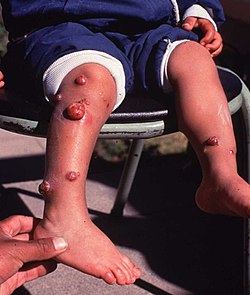
Carrion's disease chronic phase—verruga peruana (Peruvian warts)
SpecialtyInfectious diseases Edit this on Wikidata

Carrion's disease is an infectious disease produced by Bartonella bacilliformis infection. It is named after Daniel Alcides Carrión.[1] Bacteriologist Hideyo Noguchi alongside fellow researcher Evelyn Tilden continuing his research after his death proved Carrion's disease and verruca peruana were the same species[2].

Signs and symptoms

[edit]

The clinical symptoms of bartonellosis are pleomorphic and some patients from endemic areas may be asymptomatic. The two classical clinical presentations are the acute phase and the chronic phase, corresponding to the two different host cell types invaded by the bacterium (red blood cells and endothelial cells). An individual can be affected by either or both phases.[3][4]

Acute phase

[edit]

The acute phase is also called the hematic phase or Oroya fever.[3] The most common findings are fever (usually sustained, but with temperature no greater than 102 °F or 39 °C), pale appearance, malaise, painless liver enlargement, jaundice, enlarged lymph nodes, and enlarged spleen. This phase is characterized by severe hemolytic anemia and transient immunosuppression. The case fatality ratios of untreated patients exceeded 40% but reach around 90% when opportunistic infection with Salmonella spp. occurs. In a recent study, the attack rate was 13.8% (123 cases) and the case-fatality rate was 0.7%.[citation needed]

Other symptoms include a headache, muscle aches, and general abdominal pain.[5] Some studies have suggested a link between Carrion's disease and heart murmurs due to the disease's impact on the circulatory system. In children, symptoms of anorexia, nausea, and vomiting have been investigated as possible symptoms of the disease.[3]

Most of the mortality of Carrion's disease occurs during the acute phase. Studies vary in their estimates of mortality. In one study, mortality has been estimated as low as just 1% in studies of hospitalized patients, to as high as 88% in untreated, unhospitalized patients.[3] In developed countries, where the disease rarely occurs, it is recommended to seek the advice of a specialist in infectious disease when diagnosed.[6] Mortality is often thought to be due to subsequent infections due to the weakened immune system and opportunistic pathogen invasion, or consequences of malnutrition due to weight loss in children.[3][7] In a study focusing on pediatric and gestational effects of the disease, mortality rates for pregnant women with the acute phase were estimated at 40% and rates of spontaneous abortion in another 40%.[3]

Chronic phase

[edit]

The chronic phase is also called the eruptive phase or tissue phase, in which the patients develop a cutaneous rash produced by a proliferation of endothelial cells, known as "Peruvian warts" or "verruga peruana". Depending on the size and characteristics of the lesions, there are three types: miliary (1–4 mm), nodular or subdermic, and mular (>5mm). Miliary lesions are the most common. The lesions often ulcerate and bleed.[5]

The most common findings are bleeding of verrugas, fever, malaise, arthralgias (joint pain), anorexia, myalgias, pallor, lymphadenopathy, and liver and spleen enlargement.[citation needed]

On microscopic examination, the chronic phase and its rash are produced by angioblastic hyperplasia, or the increased rates and volume of cell growth in the tissues that form blood vessels. This results in a loss of contact between cells and a loss of normal functioning.[3][8]

The chronic phase is the more common phase. Mortality during the chronic phase is very low.[3][5]

Cause

[edit]

Carrion's disease is caused by Bartonella bacilliformis.[5][8] Recent investigations show that Bartonella ancashensis may cause verruga peruana,[9][10][11] although it may not meet all of Koch's postulates.[12] There has been no experimental reproduction of the Peruvian wart in animals apart from Macaca mulatta, and there is little research on the disease's natural spread or impact in native animals.[13]

Diagnosis

[edit]
Thin blood film

Diagnosis during the acute phase can be made by obtaining a peripheral blood smear with Giemsa stain, Columbia blood agar cultures, immunoblot, indirect immunofluorescence, and PCR. Diagnosis during the chronic phase can be made using a Warthin–Starry stain of wart biopsy, PCR, and immunoblot.

Treatment

[edit]

Because Carrion's disease is often comorbid with Salmonella infections, chloramphenicol has historically been the treatment of choice.[6]

Fluoroquinolones (such as ciprofloxacin) or chloramphenicol in adults and chloramphenicol plus beta-lactams in children are the antibiotic regimens of choice during the acute phase of Carrion's disease.[6] Chloramphenicol-resistant B. bacilliformis has been observed.[3][6]

During the eruptive phase, in which chloramphenicol is not useful, azithromycin, erythromycin, and ciprofloxacin have been used successfully for treatment. Rifampin or macrolides are also used to treat both adults and children.[3][6]

Because of the high rates of comorbid infections and conditions, multiple treatments are often required. These have included the use of corticosteroids for respiratory distress, red blood cell transfusions for anemia, pericardiectomies for pericardial tamponades, and other standard treatments.[3][14]

Society and culture

[edit]

The disease was featured in an episode of The WB supernatural drama Charmed that aired on February 3, 2000. In the episode Piper Halliwell becomes infected when a sandfly bites her while she is importing a crate of Kiwano for her club, P3. Piper slowly begins to die of the condition as her sisters Prue and Phoebe rush to find a magical way to save her.

References

[edit]
Revisions and contributorsEdit on WikipediaRead on Wikipedia
from Grokipedia
Carrion's disease, also known as bartonellosis or Oroya fever and verruga peruana, is a biphasic vector-borne infectious disease caused by the gram-negative bacterium bacilliformis, primarily transmitted to humans through bites from infected female phlebotomine sand flies of the genus (such as L. verrucarum and L. peruensis). The acute phase, known as Oroya fever, manifests as a severe febrile illness with affecting over 90% of cases, high parasitemia, and potential complications like , , and multiorgan failure, historically carrying a of 40% to 88% without antibiotics. The chronic phase, verruga peruana, features eruptive nodular skin lesions that are generally benign but can cause cosmetic disfigurement or secondary infections, occurring weeks to years after the acute phase in previously exposed individuals. Endemic to the inter-Andean valleys of , , southern , and parts of at altitudes between 400 and 3,200 meters, the disease affects primarily children under 14 years and pregnant women, with carriers common (up to 45% seroprevalence in endemic areas) and ongoing expansion linked to and human encroachment into vector habitats. Transmission can also occur rarely via blood transfusions, vertical transmission from mother to child, or accidental laboratory , though sand fly vectors remain the primary mode. typically involves microscopic identification of intraerythrocytic in peripheral blood smears during the acute phase or PCR and for confirmation. Named after Peruvian medical student Daniel Alcides Carrión, who self-inoculated in 1885 to study the disease and died from Oroya fever, thereby proving its , Carrion's disease has a storied history including a devastating 1871 outbreak during railway construction in that killed over 4,000 workers and highlighted its impact. Treatment relies on antibiotics such as or for the acute phase, often combined with blood transfusions for severe , reducing case fatality to 0.5%–1% in peripheral settings and 8%–10% in reference centers; verruga lesions may require excision or antibiotics like rifampin. No exists, so prevention focuses on bite avoidance using repellents, protective clothing, and bed nets in endemic areas, along with screening blood donations.

Signs and symptoms

Oroya fever

Oroya fever is the acute, life-threatening phase of Carrion's disease, characterized by a sudden onset of symptoms typically approximately 60 days (range, 10–210 days) following exposure to the . Initial manifestations include high fever reaching up to 39°C, often intermittent and accompanied by chills in nearly all cases, along with severe , , and profound or . These systemic symptoms reflect the rapid dissemination of the infection, leading to significant morbidity if untreated. A defining feature of Oroya fever is severe , caused by extensive invasion and destruction of erythrocytes, affecting up to 90% of red blood cells and resulting in reductions exceeding 80%. This manifests clinically as , , and , contributing to the profound weakness and cardiovascular strain observed in patients. , particularly involving the inguinal and axillary regions, is also common during this phase, further indicating the widespread inflammatory response. Complications of Oroya fever are frequent and can be devastating, occurring in up to 70% of cases and often involving secondary superinfections due to , such as or bacteremia, which historically elevate mortality rates to near 90% in untreated individuals. Other serious issues include and multi-organ failure, encompassing renal insufficiency, acute , and . Without intervention, Oroya fever carries a historical case-fatality rate of 40% to 88%, though modern treatment has dramatically lowered this to approximately 0.7% in milder cases or 8% to 10% in reference centers. While spontaneous resolutions have been documented, 40–90% of untreated cases are fatal, underscoring the phase's inherent severity.

Verruga peruana

Verruga peruana represents the chronic, eruptive phase of Carrion's disease, characterized by the development of angiomatous nodules known as Peruvian warts. These lesions typically appear 2-8 weeks following resolution of the acute Oroya fever phase or may manifest as the initial presentation in endemic areas. The nodules arise due to vascular proliferation induced by bacterial , resulting in blood-filled hemangioma-like growths on the skin. The lesions exhibit distinct morphological types based on size and distribution. Miliary lesions are small, red papules measuring 1-5 mm in diameter, often widespread across the body. Nodular lesions form localized clusters of raised, subdermal nodules, while mular lesions are larger (>5 mm), pedunculated, and mulberry-like in appearance, with a highly vascular, bulbous structure prone to easy . These eruptions commonly affect the head, extremities, trunk, and occasionally mucous membranes, presenting as erythematous to purple angiomatous nodules. Patients with verruga peruana generally experience mild systemic symptoms, including low-grade fever, malaise, and occasional bone or joint pain. and may also occur, but severe complications are uncommon. Rare hemorrhage from the lesions can lead to cosmetic concerns or discomfort, though the phase remains largely benign. The condition follows a self-limiting course, with lesions progressing through eruption, potential ulceration, and eventual healing over several months to a year. Mortality is low, typically less than 1%, though scarring or secondary bacterial infections can complicate recovery. Histopathologically, the lesions show proliferation within dilated vascular channels, accompanied by bacterial invasion of the vascular , often visualized as Rocha-Lima inclusions—clusters of Bartonella bacilliformis in endothelial cells—upon staining with Warthin-Starry or Giemsa methods. Verruga peruana can occur sequentially after Oroya fever or independently as the sole manifestation of infection, reflecting persistent bacteremia. It is more prevalent among children under 14 years and shows increased incidence during or immediately following the rainy season (December to May) in endemic regions, correlating with heightened vector activity. In some chronic cases, may play a role alongside .

Etiology

Causative agent

Carrion's disease is caused by the bacterium bacilliformis, a , aerobic, pleomorphic measuring 1–3 μm in length and 0.2–0.5 μm in width. This flagellated, motile pathogen belongs to the family Bartonellaceae within the class and is characterized by its ability to form coccoid, rod, or filamentous shapes depending on environmental conditions. It stains poorly with but is readily visualized using Giemsa or Warthin-Starry silver stains. As a facultative intracellular bacterium, B. bacilliformis exhibits a biphasic life cycle adapted to hosts. In the acute phase, it invades and colonizes erythrocytes, leading to persistent intracellular replication without immediate lysis to evade immune detection. During the chronic phase, the bacterium shifts to infecting endothelial cells, where it promotes cellular proliferation and . Key virulence factors facilitate these interactions, including trimeric autotransporter adhesins (TAAs) such as IalB, which mediate attachment to host erythrocytes, and a contact-dependent that contributes to damage. A related species, Bartonella ancashensis, was identified in 2013 from blood samples of patients with verruga peruana in 's Ancash region, potentially causing atypical chronic presentations of the disease. Another species, Bartonella rochalimae, first isolated in 2007 and further studied in 2025, has been confirmed as a causative agent of Carrion's disease, with strains identified from patients in exhibiting disease-like symptoms. Humans serve as the primary and only known for B. bacilliformis, with no documented animal reservoirs, distinguishing it from other species that rely on zoonotic cycles. In laboratory settings, B. bacilliformis is slow-growing and fastidious, requiring enriched media such as blood agar or supplemented with 5–10% sheep or rabbit blood for optimal cultivation, with colonies appearing after 2–4 weeks of incubation at 25–30°C in 5% CO₂. It is oxidase-negative and catalase-variable across strains, further complicating routine isolation.

Transmission

Carrion's disease is primarily transmitted through the bites of infected female phlebotomine sand flies of the genus , particularly L. verrucarum and L. peruensis, which serve as the principal vectors in the Andean regions of , , and . These small, nocturnal acquire the causative agent, bacilliformis, during a from an infected host, after which the bacteria replicate in the sand fly's . The transmission is biological, involving the development of motile, flagellated forms (approximately 0.5–1 μm wide and 1–3 μm long) that persist in the vector's gut for up to 14 days or more in competent species like L. verrucarum, before being regurgitated into the skin during a subsequent bite on a new host; mechanical transmission via contaminated mouthparts does not occur. The incubation period following a sand fly bite typically ranges from 19 to 100 days, with an average of around 60 days, during which the invade erythrocytes leading to bacteremia in the acute phase. Humans remain infectious to vectors primarily during this bacteremic acute phase (Oroya fever), when high levels of B. bacilliformis circulate in the blood, facilitating uptake by feeding sand flies. Although vector-borne transmission is the dominant mode, rare non-vector cases have been documented, including via from infected donors and from mother to child during or delivery. There is no evidence of direct person-to-person spread outside these exceptional circumstances. Lutzomyia sand flies breed in moist, organic-rich environments such as humid valleys, cracks in walls, leaf litter, and rodent burrows, predominantly at altitudes between 500 and 3,000 meters above , where conditions support their larval development. Their activity peaks during the rainy season ( to May), when increased humidity and temperature enhance reproduction and biting rates, contributing to seasonal outbreaks of the disease. No zoonotic reservoirs have been confirmed for B. bacilliformis, with humans serving as the sole known reservoir and incidental dead-end hosts in the transmission cycle; the bacteria do not establish persistent infections in animal populations.

Epidemiology

Geographic distribution

Carrion's disease is endemic to the inter-Andean valleys of Peru, Ecuador, and Colombia, with Peru being the most affected country. In Peru, the disease is particularly prevalent in the departments of Ancash and Cajamarca, where it has been documented in warm, humid valleys supporting the Lutzomyia sandfly vectors. Cases have also been confirmed in Ecuador's southern provinces, including Loja, and in Colombia's Andean regions such as Cauca, though at lower frequencies than in Peru. Sporadic cases have been reported in neighboring countries like Chile and Bolivia, but these are not considered endemic foci. The disease is confined to altitudes ranging from 500 to 3,200 meters above , typically in arid to semi-arid environments with specific that favors the proliferation of phlebotomine sand flies. These ecological niches are characterized by river canyons and valleys with moderate temperatures and , limiting the pathogen's distribution to these specific highland areas. Historical records indicate that the disease was initially recognized primarily in during the , with confirmation of endemicity in and occurring in the 1930s following major outbreaks. As of , there has been no significant geographic expansion of Carrion's disease beyond its traditional Andean range, maintaining a stable distribution pattern, with remaining the only country reporting cases in the last decade. However, environmental disruptions such as , activities, and have been linked to localized outbreaks by altering habitats and increasing human-vector contact in endemic zones. Climate change poses a potential for shifting vector habitats, potentially extending the disease's altitudinal range, though current shows no widespread alteration.

Incidence and risk factors

Carrion's disease primarily affects populations in the Andean valleys of , , and , with an estimated at-risk population exceeding 1.6 million people in Peru alone across 145,000 km² of endemic areas. Annual reported cases in Peru peaked at 11,130 in 2004, with a cumulative total of 60,686 cases and 247 deaths recorded from 1997 to 2016, averaging approximately 3,000 cases per year; however, the disease remains underreported due to limited healthcare access in rural regions. Recent trends indicate a significant decline in incidence, with reported cases in Peru dropping to around 70-80 annually by the mid-2010s and continuing to decrease; global cases, accounting for underdiagnosis, are now estimated in the hundreds as of 2025. In endemic outbreaks, attack rates can reach up to 13.8%, as observed in a in a Peruvian where 123 cases of Oroya fever were documented. Children under 15 years account for 60–80% of cases, reflecting higher vulnerability in this demographic. The disease exhibits seasonality, with incidence peaking during the rainy season due to increased vector activity, and seroprevalence in endemic areas typically ranging from 8% to 51% among children. Key risk factors include , low levels, and occupations involving rural agrarian or activities that increase exposure to vector habitats. and , such as in individuals with , further elevate susceptibility, while living in proximity to river valleys heightens transmission risk due to favorable conditions for proliferation. Overall trends indicate a decline in incidence since the early 2000s, attributed to wider availability and efforts, though sporadic outbreaks persist, such as the 428 cases reported in 's region during 2013–2014. No major pandemics have occurred, with the disease remaining confined to endemic foci despite potential risks from and migration.

Diagnosis

Clinical evaluation

Clinical evaluation of Carrion's disease begins with a detailed patient to identify risk factors and suggestive symptoms that raise suspicion for the infection. Key elements include recent travel to endemic regions such as the Andean valleys of , , , and , where the disease is transmitted by sandflies of the genus . Exposure to bites, typically occurring 3 weeks to 3 months (but ranging from 2 weeks to 7 months) prior to symptom onset, should be inquired about, along with reports of recent fever, , , , and progressive manifesting as or dyspnea. In community settings, a of similar illnesses among family members or during local outbreaks can further support suspicion, particularly in rural Andean valley areas at altitudes between 400 and 3,200 meters. Physical examination focuses on signs of the acute phase, known as Oroya fever, which typically presents without rash. Findings often include and indicative of , along with sustained fever, tender , and or in severe cases. Patients may exhibit , icteric sclerae, or signs of hemodynamic instability such as due to profound . In the chronic phase, verruga peruana, eruptive angiomatous nodules may be visible on the skin, but the initial evaluation prioritizes acute systemic features like these to differentiate from other tropical illnesses. Severity is assessed using general criteria for febrile illnesses in endemic settings, emphasizing rapid progression and complications such as severe with levels below 7 g/dL, which signals high risk of mortality without intervention. Monitoring , including exceeding 100 beats per minute and , alongside estimation via bedside methods, helps gauge urgency; untreated cases can have fatality rates up to 40%. Initial involves supportive measures pending diagnostic confirmation, including intravenous hydration to address from fever and insensible losses, and blood transfusions for below 7 g/dL to stabilize and prevent organ failure. Diagnostic challenges arise from the disease's mimicry of common tropical infections like or , particularly in travelers returning from endemic areas, necessitating a high index of suspicion based on epidemiological clues. The absence of a characteristic in the acute phase and overlapping symptoms such as fever and can delay recognition, especially outside endemic zones where clinicians may not consider bartonellosis. Thus, integrating history with physical findings is crucial for early suspicion in at-risk populations.

Laboratory confirmation

Laboratory confirmation of Carrion's disease relies on direct detection of in the acute phase, histopathological examination in the chronic phase, and molecular or serological assays for definitive diagnosis, particularly when parasitemia is low. In the acute phase (Oroya fever), the primary method is microscopic examination of Giemsa-stained peripheral blood smears, which reveals intraerythrocytic appearing as small, pleomorphic rods within red blood cells. This technique has a reported sensitivity of 24-80%, depending on the level of parasitemia (which can reach up to 90% of erythrocytes in severe cases) and examiner expertise, with higher detection rates in severe cases. For the chronic phase (verruga peruana), diagnosis involves of skin lesions, where Warthin-Starry silver stain highlights clusters of bacteria within endothelial cells of vascular proliferations; may also be used but is less specific. Culture of lesion material or blood on blood-enriched media, such as Columbia blood agar or under 5% CO₂ at 37°C, can confirm the but is slow, requiring 4-21 days for colony growth due to the organism's fastidious nature. Molecular methods, particularly (PCR) targeting the 16S rRNA or gltA genes, offer high sensitivity (>90% in clinical samples with low parasitemia) and specificity, serving as the gold standard for confirmation, especially in smear-negative cases; real-time PCR on dried blood spots further enhances accessibility in endemic areas. Serological testing via indirect immunofluorescence assay (IFA) detects IgG antibodies, with titers ≥1:128 considered positive, though cross-reactivity with other species limits specificity. Supportive laboratory findings include complete blood count (CBC) revealing severe hemolytic anemia (hemoglobin 3-10 g/dL) and occasional thrombocytopenia, alongside elevated lactate dehydrogenase (LDH) and indirect bilirubin indicating intravascular hemolysis. Emerging techniques, such as whole-genome sequencing, enable differentiation of B. bacilliformis from related species like Bartonella ancashensis, isolated from verruga peruana cases, aiding in epidemiological tracking as of recent analyses.

Treatment

Acute phase management

The management of the acute phase of Carrion's disease, known as Oroya fever, centers on prompt initiation of antibiotic therapy combined with supportive measures to address the severe , fever, and risk of secondary infections, which can lead to mortality rates exceeding 40% if untreated. Hospitalization is typically required for close monitoring of complications such as , multiorgan failure, and co-infections, particularly with species, which occur in up to 25% of cases and necessitate empiric coverage. Early treatment is critical, as delays can result in rapid deterioration. First-line antibiotic therapy consists of intravenous at 50-100 mg/kg/day divided into four doses, combined with penicillin G to enhance efficacy against bacteremia. This regimen is administered for 14-21 days, with clinical response often evident within 48-72 hours through defervescence and stabilization of levels. For patients with allergies to these agents, alternatives include (500 mg orally or intravenously twice daily for adults). Supportive care includes blood transfusions for severe when falls below 7 g/dL, aiming to maintain adequate oxygen delivery and prevent cardiac complications. In pediatric patients, dosing adjustments are essential; chloramphenicol is given at 50-75 mg/kg/day, but alternatives like amoxicillin-clavulanic acid are preferred in young children to avoid toxicity risks associated with . For pregnant individuals, and quinolones such as are generally avoided due to potential fetal harm, including or ; instead, beta-lactam antibiotics like amoxicillin-clavulanic acid are recommended, with close fetal monitoring. Overall, appropriate antibiotic therapy has dramatically reduced mortality to less than 1% in treated, hospitalized patients, compared to historical rates of 40-88% in untreated cases.

Chronic phase management

The chronic phase of Carrion's disease, known as verruga peruana, is managed primarily with antibiotics to target the persistent bacilliformis infection and promote resolution of the characteristic angiomatous skin lesions. Rifampin is a first-line option, administered at 10-15 mg/kg/day orally (maximum 600 mg/day) for 14-21 days, achieving cure rates of 80-93% in treated cases. serves as an alternative, typically dosed at 10 mg/kg/day orally for 14-21 days, with efficacy comparable to rifampin in resolving bacteremia and lesions within 3-4 weeks. For adults, ciprofloxacin may be used at 500 mg orally twice daily for 7-14 days, though quinolone resistance has been reported in up to 26% of isolates. Symptomatic relief focuses on alleviating discomfort from the lesions, which can be painful or pruritic. Analgesics such as acetaminophen or ibuprofen are recommended for . For large, ulcerated, or mular lesions that cause functional impairment or cosmetic concerns, surgical excision is indicated to remove affected tissue, with laser therapy as an emerging option for precise in select cases. Monitoring involves clinical assessment of lesion regression, typically occurring within 4-8 weeks post-treatment initiation, confirmed by negative blood cultures or PCR if needed. Antibiotics shorten the disease duration by approximately 50% compared to untreated cases, where mild lesions may self-resolve over months; however, untreated severe cases can persist longer. Recurrence is rare, affecting fewer than 5% of patients with adequate therapy. Secondary bacterial infections of ulcerated lesions are managed with topical antibiotics, such as , to prevent or further complications.

Prevention

Vector control strategies

Vector control strategies for Carrion's disease primarily target the phlebotomine vectors of the genus , particularly L. verrucarum and L. peruensis, through population-level interventions in endemic Andean regions of , , and . These approaches emphasize integrated vector management (IVM), which combines chemical, environmental, and surveillance methods to reduce sandfly density and interrupt Bartonella bacilliformis transmission. IVM programs in , adapted from control frameworks due to shared vectors, promote sustainable, evidence-based interventions tailored to local ecologies. Indoor residual spraying (IRS) with insecticides, such as lambda-cyhalothrin, is a cornerstone of chemical control in endemic villages. Applied to interior walls and ceilings, IRS targets endophilic sandflies resting indoors after blood meals, reducing spp. density by at least 70% for up to six months in the Peruvian . This method has been implemented in high-risk areas during outbreak responses, contributing to localized declines in bartonellosis incidence when combined with . Environmental management complements chemical measures by modifying sandfly habitats and breeding sites. Strategies include clearing and debris around homes to eliminate resting and oviposition sites, and to reduce organic matter that supports larval development, and housing improvements such as installing floors, fine-mesh screens on windows, and sealing cracks in walls. In Peru's IVM programs, these interventions target peri-domestic areas near rivers and valleys, where sandfly abundance peaks, and have been shown to lower vector-human contact when integrated with IRS. Surveillance through trapping and monitoring is essential for early detection and response to outbreaks. Methods include CDC light traps, Shannon traps, and manual collections from resting sites, often deployed in endemic foci to assess vector density, infection rates with B. bacilliformis, and seasonal patterns. The recommends these techniques for vector-borne diseases like bartonellosis, enabling targeted interventions in where active surveillance has identified high-risk clusters during El Niño events. Community-based programs distribute insecticide-treated bed nets (ITNs) impregnated with , providing a physical and chemical barrier against nocturnal bites. In Andean settings, ITNs have demonstrated entomological efficacy by reducing Lutzomyia landing rates on humans by 66.5% to 78% and cutting disease transmission by 50% to 80% in analogous vector systems. Distribution efforts in focus on households with prior cases, enhancing coverage through local health campaigns. Emerging challenges include insecticide resistance in Lutzomyia species, with kdr mutations (L1014F/S) detected at high frequencies in Peruvian populations as of 2025, compromising efficacy. Additionally, high costs and logistical barriers in remote Andean valleys limit program scalability, necessitating rotation of insecticides and strengthened IVM to sustain control gains.

Personal protection measures

Personal protection measures are essential for individuals in endemic areas of the , particularly , , and , to minimize exposure to sand flies that transmit Bartonella bacilliformis, the causative agent of Carrion's disease. These strategies focus on reducing bite risk through behavioral adjustments and the use of protective agents, as no is available. Insect repellents play a central role in prevention. EPA-registered repellents containing 20-30% should be applied to exposed skin, providing protection for 4-6 hours against sand flies, with reapplication as needed based on sweating or water exposure. (0.5% concentration) can be applied to clothing, gear, and nets for longer-lasting repellent effects, lasting through several washes. These measures are recommended for travelers and residents in high-risk valleys at elevations of 3,000-10,000 feet. Physical barriers further enhance protection. Wearing long-sleeved shirts, long pants tucked into socks, and closed-toe shoes covers vulnerable areas, especially during outdoor activities. Insecticide-treated bed nets should be used for sleeping, particularly in rural settings without , to prevent bites indoors where sand flies can enter. Avoiding outdoor activities at dawn and dusk, when sand flies are most active, significantly reduces exposure risk. For housing in endemic rural areas, installing fine-mesh screens on windows and doors helps keep sand flies out of living spaces. Staying in well-screened or air-conditioned accommodations is advised for travelers. Travelers to affected regions should not use prophylactic antibiotics, as they are not recommended for preventing Carrion's disease; instead, monitor for symptoms like fever or after return and seek prompt medical evaluation if they occur. programs promoting bite prevention awareness are crucial, as low education levels contribute to disease persistence in impoverished Andean populations, and targeted campaigns can improve adherence to these measures. To prevent non-vector transmission, blood donations in endemic areas should be screened for B. bacilliformis using peripheral blood smears, as required by Peruvian national legislation for blood banks. Pregnant women in endemic regions should be aware of the rare risk of and consult healthcare providers for monitoring.

History

Early observations

Ancient records indicate that Carrion's disease was recognized in pre-Inca and Inca societies, with archaeological evidence suggesting awareness of its manifestations as early as 2,000 years ago. Pre-Inca ceramics from cultures such as the Mochica, Chimú, and Huaylas depict skin lesions resembling the eruptive phase of the disease, characterized by wart-like eruptions. Additionally, Bartonella-like bacteria have been identified in granulomatous lesions from a 10th-century mummy of the Huari in southern , associated with ritual , providing direct paleopathological confirmation of the infection's presence in pre-colonial times. During the Inca era (), the disease was known by local Andean terms reflecting descriptions of fever and hemorrhagic skin eruptions in Andean valleys. In the colonial era, Spanish chroniclers documented outbreaks among conquistadors and settlers, marking the first written European accounts of the illness. By the , Spanish reports frequently noted "verrugas" () as a recurring affliction in the Andean valleys. The earliest formal medical description appeared in 1630, when Spanish physician Gago de Vadillo published a on an outbreak of Oroya fever in , which claimed thousands of lives and was characterized by severe and fever, devastating urban and rural populations. The 19th century saw intensified epidemics in , particularly during infrastructure development in endemic Andean regions. Between 1870 and 1880, outbreaks of Oroya fever struck workers building the Lima-La Oroya railway, killing over 7,000 laborers—many Chinese and Chilean migrants—with mortality rates approaching 40-88% in untreated cases, though overall affected areas experienced around 10% fatality, especially among children. These events highlighted the disease's toll on transient workforces, briefly referencing later efforts like Daniel Alcides Carrión's 1885 self-experiment to link Oroya fever and verruga peruana as phases of the same illness. Among indigenous populations, the disease was known locally as "verrugas" for the chronic eruptive form or "fiebre de la Carrión" (later formalized). The recurrent outbreaks profoundly disrupted Andean economies and societies, stalling operations and agricultural production in highland valleys critical for silver extraction and cultivation. Labor shortages from high mortality hindered colonial and republican development projects, exacerbating in rural communities. Local often attributed to environmental or spiritual factors, such as punishment from mountain deities for human encroachment on sacred valleys, influencing avoidance of affected areas during peak transmission seasons.

Key discoveries

In 1885, Peruvian medical student Daniel Alcides Carrión, aged 28, conducted a self-inoculation experiment by injecting himself with from a verruga peruana lesion to investigate the prodromal symptoms of the disease, which led to him developing Oroya fever and ultimately dying from the infection, thereby demonstrating that Oroya fever and verruga peruana were phases of the same illness. In 1905, Peruvian microbiologist Alberto Leonardo Barton identified the causative bacillus, later named Bartonella bacilliformis, in blood smears from patients during an outbreak among railway workers in La Oroya, ; the genus was formally established in his honor in 1909 upon publication of his findings. During the 1920s and 1930s, Japanese-American bacteriologist advanced the understanding of the disease's through experiments on rhesus monkeys, successfully reproducing both the acute Oroya fever phase and the chronic verruga phase, confirming B. bacilliformis as the pathogen responsible for both manifestations. Concurrently, the role of sandflies ( species, particularly L. verrucarum) as vectors was established through transmission studies conducted by Peruvian researchers and international collaborators, including Noguchi's team, which demonstrated mechanical and biological transmission in controlled settings. In the , initial clinical trials evaluated antibiotics for treatment, with penicillin showing efficacy in halting disease progression and reducing mortality in human cases of acute bartonellosis, marking a shift from supportive care; concurrent experiments further validated transmission mechanisms in laboratory models. Genomic analysis in identified a novel species, Bartonella ancashensis, isolated from patients with verruga peruana in Peru's Ancash region, expanding the known beyond B. bacilliformis and highlighting genetic diversity among causative agents. In the 1970s, further studies confirmed the specificity of phlebotomine sand flies as vectors through field and lab experiments. Carrion's disease is considered a neglected by the and other health bodies due to its endemicity in impoverished Andean communities and high burden despite effective interventions; as of 2025, no exists, with ongoing research focused on multi-epitope candidates to address and vector challenges.

Society and culture

Naming and recognition

Carrion's disease derives its name from Daniel Alcides Carrión, a Peruvian medical student who, in 1885, self-inoculated himself with material from a verruga peruana lesion to demonstrate the connection between Oroya fever and verruga peruana, succumbing to the infection shortly thereafter. The eponym honors his sacrifice in advancing medical understanding, with the term "Carrion's disease" adopted in Peruvian medicine soon after his death and persisting in global literature. An alternative nomenclature, bartonellosis, recognizes Alberto Barton, who in 1905 identified the causative bacterium Bartonella bacilliformis in blood smears from affected patients. The disease's biphasic nature is reflected in its historical phase-specific names. The acute phase, characterized by severe hemolytic anemia and fever, is termed Oroya fever after a devastating 1871 outbreak in La Oroya, , during railroad construction, which claimed thousands of lives among workers. The chronic phase, marked by eruptive skin lesions, is known as verruga peruana, Spanish for "Peruvian wart," alluding to the hemangioma-like nodules prevalent in Andean regions. Prior to Carrión's experiment, medical debate centered on whether Oroya fever and verruga peruana represented two separate illnesses or sequential manifestations of one; his self-infection proved the latter, resolving and establishing the disease's unified identity. Today, it is recognized internationally as a vector-borne neglected , transmitted primarily by phlebotomine sandflies in the Andean valleys of , , and . In , Carrión's legacy is commemorated annually on as Día de la Medicina Peruana, a national observance honoring his martyrdom and contributions to . Carrión's recognition extends to cultural and institutional honors, including his eponymous appearance in medical textbooks worldwide and various tributes in . These include postage stamps issued in 1957 for his birth centenary and in 1985 for the centennial of his death, as well as monuments such as a 1934 congressional-approved statue in , a bronze bust in the courtyard of the San Fernando Faculty of Medicine, and the central Plaza Daniel Alcides Carrión in featuring his statue.

Cultural impact

Carrion's disease has been portrayed in popular media, notably in the 2000 episode "Awakened" of the television series , where the character contracts Oroya fever, highlighting the disease's acute phase as a dramatic plot element. The story of Daniel Alcides Carrión continues to inspire healthcare efforts in . The Peruvian government issued a in 1957 commemorating the centenary of Carrión's birth, symbolizing national recognition of his contribution to understanding the illness. The disease was historically known for its high mortality rates before effective treatments. It is treatable with antibiotics such as or rifampin. Workers and visitors in inter-Andean valleys face exposure risks from vectors, leading to occasional imported cases among travelers. Annual commemorations on October 5, Peru's National Day of honoring Carrión's , serve as a national observance. Globally, Carrion's disease is classified as a neglected due to its restriction to impoverished Andean communities and underfunding for research and control. It receives limited attention in international travel advisories, though the CDC notes the risk for U.S. travelers to Peru's endemic regions, recommending repellents and awareness of symptoms.

References

Add your contribution
Related Hubs
User Avatar
No comments yet.