



Community hub
Recent from talks
Contribute something
Nothing was collected or created yet.
Market power
View on Wikipedia
In economics, market power refers to the ability of a firm to influence the price at which it sells a product or service by manipulating either the supply or demand of the product or service to increase economic profit.[1] In other words, market power occurs if a firm does not face a perfectly elastic demand curve and can set its price (P) above marginal cost (MC) without losing revenue.[2] This indicates that the magnitude of market power is associated with the gap between P and MC at a firm's profit maximising level of output. The size of the gap, which encapsulates the firm's level of market dominance, is determined by the residual demand curve's form. A steeper reverse demand indicates higher earnings and more dominance in the market.[2] Such propensities contradict perfectly competitive markets, where market participants have no market power, P = MC and firms earn zero economic profit.[3] Market participants in perfectly competitive markets are consequently referred to as 'price takers', whereas market participants that exhibit market power are referred to as 'price makers' or 'price setters'.
The market power of any individual firm is controlled by multiple factors, including but not limited to, their size, the structure of the market they are involved in, and the barriers to entry for the particular market. A firm with market power has the ability to individually affect either the total quantity or price in the market. This said, market power has been seen to exert more upward pressure on prices due to effects relating to Nash equilibria and profitable deviations that can be made by raising prices.[4] Price makers face a downward-sloping demand curve and as a result, price increases lead to a lower quantity demanded. The decrease in supply creates an economic deadweight loss (DWL) and a decline in consumer surplus.[5] This is viewed as socially undesirable and has implications for welfare and resource allocation as larger firms with high markups negatively effect labour markets by providing lower wages.[5] Perfectly competitive markets do not exhibit such issues as firms set prices that reflect costs, which is to the benefit of the customer. As a result, many countries have antitrust or other legislation intended to limit the ability of firms to accrue market power. Such legislation often regulates mergers and sometimes introduces a judicial power to compel divestiture.
Market power provides firms with the ability to engage in unilateral anti-competitive behavior.[6] As a result, legislation recognises that firms with market power can, in some circumstances, damage the competitive process. In particular, firms with market power are accused of limit pricing, predatory pricing, holding excess capacity and strategic bundling.[7] A firm usually has market power by having a high market share although this alone is not sufficient to establish the possession of significant market power. This is because highly concentrated markets may be contestable if there are no barriers to entry or exit. Invariably, this limits the incumbent firm's ability to raise its price above competitive levels.
If no individual participant in the market has significant market power, anti-competitive conduct can only take place through collusion, or the exercise of a group of participants' collective market power.[4] An example of which was seen in 2007, when British Airways was found to have colluded with Virgin Atlantic between 2004 and 2006, increasing their surcharges per ticket from £5 to £60.[8]
Regulators are able to assess the level of market power and dominance a firm has and measure competition through the use of several tools and indicators. Although market power is extremely difficult to measure, through the use of widely used analytical techniques such as concentration ratios, the Herfindahl-Hirschman index and the Lerner index, regulators are able to oversee and attempt to restore market competitiveness.[9]
Market structure
[edit]
In economics, market structure can profoundly affect the behavior and financial performance of firms.[10] Market structure depicts how different industries are characterized and differentiated based upon the types of goods the firms sell (homogenous/heterogenous) and the nature of competition within the industry.[11] The degree of market power firms assert in different markets depend on the market structure that the firms operate in. There are four main forms of market structures that are observed: perfect competition, monopolistic competition, oligopoly, and monopoly.[11] Perfect competition and monopoly represent the two extremes of market structure, respectively. Monopolistic competition and oligopoly exist in between these two extremes.[10]
Perfect competition power
[edit]"Perfect Competition" refers to a market structure that is devoid of any barriers or interference and describes those marketplaces where neither corporations nor consumers are powerful enough to affect pricing. In terms of economics, it is one of the many conventional market forms and the optimal condition of market competition.[12] The concept of perfect competition represents a theoretical market structure where the market reaches an equilibrium that is Pareto optimal. This occurs when the quantity supplied by sellers in the market equals the quantity demanded by buyers in the market at the current price.[13] Firms competing in a perfectly competitive market faces a market price that is equal to their marginal cost, therefore, no economic profits are present. The following criteria need to be satisfied in a perfectly competitive market:
- Producers sell homogenous goods
- All firms are price takers
- Perfect information
- No barriers to enter and exit
- All firms have relatively small market share and cannot influence price
As all firms in the market are price takers, they essentially hold zero market power and must accept the price given by the market. A perfectly competitive market is logically impossible to achieve in a real world scenario as it embodies contradiction in itself and therefore is considered an idealised framework by economists.[14]
Monopolistic competition power
[edit]Monopolistic competition can be described as the "middle ground" between perfect competition and a monopoly as it shares elements present in both market structures that are on different ends of the market structure spectrum.[15] Monopolistic competition is a type of market structure defined by many producers that are competing against each other by selling similar goods which are differentiated, thus are not perfect substitutes.[16] In the short term, firms are able to obtain economic profits as a result of differentiated goods providing sellers with some degree of market power; however, profits approaches zero as more competitive toughness increases in the industry.[17] The main characteristics of monopolistic competition include:
- Differentiated products
- Many sellers and buyers
- Free entry and exit
Firms within this market structure are not price takers and compete based on product price, quality and through marketing efforts, setting individual prices for the unique differentiated products.[18] Examples of industries with monopolistic competition include restaurants, hairdressers and clothing.
Monopoly power
[edit]The word monopoly is used in various instances referring to a single seller of a product, a producer with an overwhelming level of market share, or refer to a large firm.[19] All of these treatments have one unifying factor which is the ability to influence the market price by altering the supply of the good or service through its own production decisions. The most discussed form of market power is that of a monopoly, but other forms such as monopsony and more moderate versions of these extremes exist. A monopoly is considered a 'market failure' and consists of one firm that produces a unique product or service without close substitutes. Whilst pure monopolies are rare, monopoly power is far more common and can be seen in many industries even with more than one supplier in the market.[20] Firms with monopoly power can charge a higher price for products (higher markup) as demand is relatively inelastic.[21] They also see a falling rate of labour share as firms divest from expensive inputs such as labour.[22] Often, firms with monopoly power exist in industries with high barriers to entry, which include, but are not limited to:
- Economies of scale
- Predatory pricing[20]
- Control of key resources (required in production of the good)
- Legal regulations[21]
A well-known example of monopolistic market power is Microsoft's market share in PC operating systems. The United States v. Microsoft case dealt with an allegation that Microsoft illegally exercised its market power by bundling its web browser with its operating system. In this respect, the notion of dominance and dominant position in EU Antitrust Law is a strictly related aspect.[23]
Oligopoly power
[edit]Another form of market power is that of an oligopoly or oligopsony. Within this market structure, the market is highly concentrated and several firms control a significant share of market sales.[24] The emergence of oligopoly market forms is mainly attributed to the monopoly of market competition, i.e., the market monopoly acquired by enterprises through their competitive advantages, and the administrative monopoly due to government regulations, such as when the government grants monopoly power to an enterprise in the industry through laws and regulations and at the same time imposes certain controls on it to improve efficiency.[25] The main characteristics of an oligopoly are:
- A few sellers and many buyers.
- Homogenous or differentiated products.
- High barriers to entry. This includes, but is not limited to, 'technology challenges, government regulations, patents, start-up costs, or education and licensing requirements'.[26]
- Interaction/strategic behaviour.
It is salient to note that only a few firms make up the market share. Hence, their market power is large as a collective and each firm has little or no market power independently.[27] For firms trying to enter these industries, unless they can start with a large production scale and capture a significant market share, the high average costs will make it impossible for them to compete with the existing firms.[28] Generally, when a firm operating in an oligopolistic market adjusts prices, other firms in the industry will be directly impacted.
The graph below depicts the kinked demand curve hypothesis which was proposed by Paul Sweezy who was an American economist.[29] It is important to note that this graph is a simplistic example of a kinked demand curve.

Oligopolistic firms are believed to operate within the confines of the kinked demand function. This means that when firms set prices above the prevailing price level (P*), prices are relatively elastic because individuals are likely to switch to a competitor's product as a substitute. Prices below P* are believed to be relatively inelastic as competitive firms are likely to mimic the change in prices, meaning less gains are experienced by the firm.[30]
An oligopoly may engage in collusion, either tacit or overt to exercise market power and manipulate prices to control demand and revenue for a collection of firms. A group of firms that explicitly agree to affect market price or output is called a cartel, with the organization of petroleum-exporting countries (OPEC) being one of the most well known example of an international cartel.
Sources of market power
[edit]By remaining consistent with the strict definition of market power as any firm with a positive Lerner index, the sources of market power is derived from distinctiveness of the good and or seller.[31] For a monopolist, distinctiveness is a necessary condition that needs to be satisfied but this is just the starting point. Without barriers to entries, above normal profits experienced by monopolists would not persist as other sellers of homogenous or similar goods would continue to enter the industry until above normal profits are diminished until the industry experiences perfect competition[31]
There are several sources of market power including:
- High barriers to entry. These barriers include the control of scarce resources, increasing returns to scale, technological superiority and government created barriers to entry.[32] OPEC is an example of an organization that has market power due to control over scarce resources – oil.
- Increasing returns to scale. Firms that experience increasing returns to scale also experience decreasing average total costs and therefore become more profitable with size and higher demand levels.[32]
- High start-up costs. This barrier makes it difficult for new entrants to succeed as the initial creation costs are ingrained within the industry. Firms like power, cable television and telecommunication companies fall within this category. A firm seeking to enter such industries require the ability to spend millions of dollars before starting operations and generating revenue.
- Brand loyalty of consumers and value placed by consumers on reputation. Incumbent firms often have a competitive advantage over new entrants as customers are familiar with the product and service. An incumbent firm can engage in several entry-deterring strategies such as limit pricing, predatory pricing and strategic bundling. Microsoft has substantial pricing or market power due to technological superiority in its design and production processes.[32]
- Government policies/regulations. One significant technique of governmental action to create monopolies is the granting of franchises and operating licenses. This is due to the fact that no other businesses are permitted by law to operate without a franchise.[33] A prime example are patents granted to pharmaceutical companies which prevent competitors from creating and selling their specific goods. These patents give the drug companies a virtual monopoly in the protected product for the term of the patent.
- Factors of Production Barriers. An important influencing factor of market power is the control of the supply of factors of production to produce the good. Factors of production can be divided into tangible land, capital, and intangible human resources, intelligence, etc. As the industrial economy changes to a knowledge-based economy, the control of the supply of intangible factors of production such as talent, intelligence, information, etc. will become more and more of a barrier to entry for companies with unlimited market power.[34]
Measurement of market power
[edit]Measuring market power is inherently complex because the most widely used measures are sensitive to the definition of a market and the range of analysis.
Magnitude of a firm's market power is shown by a firm's ability to deviate from an elastic demand curve and charge a higher price (P) above its marginal cost (C), commonly referred to as a firm's markup.[35] The higher a firm's markup, the larger the magnitude of power. This said, markups are complicated to measure as they are reliant on a firm's marginal costs and as a result, concentration ratios are the more common measures as they require only publicly accessible revenue data.
Concentration ratios
[edit]Market concentration, also referred to as industry concentration, refers to the extent of which market shares of the largest firms in the market account for a significant portion of the economic activities quantifiable by various metrics such as sales, employment, active users.[36] Recent macroeconomic market power literature indicates that concentration ratios are the most frequently used measure of market power.[2] Measures of concentration summarise the share of market or industry activity accounted for by large firms. An advantage of using concentration as an empirical tool to quantify market power is the requirement of only needing revenue data of firms which results in the corresponding disadvantage of the inconsideration of costs or profits.[35]
N-firm concentration ratio
[edit]The N-firm concentration ratio gives the combined market share of the largest N firms in the market. For example, a 4-firm concentration ratio measures the total market share of the four largest firms in an industry. In order to calculate the N-firm concentration ratio, one usually uses sales revenue to calculate market share, however, concentration ratios based on other measures such as production capacity may also be used. For a monopoly, the 4-firm concentration ratio is 100 per cent whilst for perfect competition, the ratio is zero.[37] Moreover, studies indicate that a concentration ratio of between 40 and 70 percent suggests that the firm operates as an oligopoly.[38] These figures are viable but should be used as a 'rule of thumb' as it is important to consider other market factors when analysing concentration ratios.
An advantage of concentration ratios as an empirical tool for studying market power is that it requires only data on revenues and is thus easy to compute. The corresponding disadvantage is that concentration is about relative revenue and includes no information about costs or profits.
Herfindahl-Hirschman index
[edit]The Herfindahl-Hirschman index (HHI) is another measure of concentration and is the sum of the squared market shares of all firms in a market.[39] The HHI is a more widely used indicator in economics and government regulation. The index reflects not only the market share of large firms within the market, but also the market structure outside of large firms, and therefore, more accurately reflects the degree of influence of large firms on the market.[40] For example, in a market with two firms, each with 50% market share, the HHI is = 0.502 + 0.502 = 0.50. The HHI for a monopoly is 1 whilst for perfect competition, the HHI is zero. Unlike the N-firm concentration ratio, large firms are given more weight in the HHI and as a result, the HHI conveys more information. However the HHI has its own limitations as it is sensitive to the definition of a market, therefore meaning you cannot use it to cross-examine different industries, or do analysis over time as the industry changes.[22]


Lerner index
[edit]The Lerner index is a widely accepted and applied method of estimating market power in a monopoly. It compares a firm's price of output with its associated marginal cost where marginal cost pricing is the "socially optimal level" achieved in market with perfect competition.[41] Lerner (1934) believes that market power is the monopoly manufacturers' ability to raise prices above their marginal cost.[42] This notion can be expressed by using the formula:

Where P represents the price of the good set by the firm and MC representing the firm's marginal cost. The formula focuses on the nature of monopoly and emphasising welfare economic implications of the Pareto optimal principle.[43] Although Lerner is usually credited for the price/cost margin index, the generalized version was fully derived prior to WWII by Italian neoclassical economist, Luigi Amaroso.[44]
Connection with competition law
[edit]Market power within competition law can be used to determine whether or not a firm has unfairly manipulated the market in their favour, or to the detriment of entrants. The Sherman Antitrust Act of 1890 under section 2 restricts firms from engaging in anticompetitive conduct by utilising an individual firm's power to manipulate the market or partake in anticompetitive acts.[45] A firm can be found in breach of the act if they have leveraged their market power to unfairly gain further market power in a manner that is detrimental to the market and consumers. The measurement of market power is key in determining a breach of the act and can be determined from multiple measurements as discussed in measurements of market power above.
In Australia, consumer law allows for firms to have significant market power and utilise it, as long as it is determined to not have "the purpose, effect or likely effect of substantially lessening competition" [46]
Elasticity of demand
[edit]The degree to which a firm can raise its price above marginal cost depends on the shape of the demand curve at a firm's profit maximising level of output.[47] Consequently, the relationship between market power and the price elasticity of demand (PED) can be summarised by the equation:
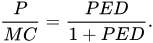
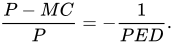
The ratio is always greater than 1 and the higher the ratio, the more market power the firm possesses. As PED increases in magnitude, the ratio approaches 1 and market power approaches zero. The equation is derived from the monopolist pricing rule:

Nobel Memorial Prize
[edit]Jean Tirole was awarded the 2014 Nobel Memorial Prize in Economic Sciences for his analysis of market power and economic regulation.[48]
See also
[edit]References
[edit]- ^ Landes, William M.; Posner, Richard A. (1981). "Market Power in Antitrust Cases". Harvard Law Review. 94 (5): 937–996. doi:10.2307/1340687. JSTOR 1340687.
- ^ a b c Syverson, Chad (2019). "Macroeconomics and Market Power: Context, Implications, and Open Questions". Journal of Economic Perspectives. 33 (3): 23–43. doi:10.1257/jep.33.3.23. S2CID 201326865.
- ^ Pleatsikas, Christopher (2018). "Perfect Competition". The Palgrave Encyclopedia of Strategic Management. pp. 1272–1275. doi:10.1057/978-1-137-00772-8_558. ISBN 978-0-230-53721-7.
- ^ a b Davis, Douglas D. (2018). "Market Power and Collusion in Laboratory Markets". The New Palgrave Dictionary of Economics. pp. 8260–8263. doi:10.1057/978-1-349-95189-5_2836. ISBN 978-1-349-95188-8.
- ^ a b Unger, Gabriel; Eeckhout, Jan; De Loecker, Jan (2020). "The Rise of Market Power and the Macroeconomic Implications". The Quarterly Journal of Economics. 135 (2): 561–644. doi:10.1093/qje/qjz041.
- ^ Vatiero, Massimiliano (2010). "The Ordoliberal Notion of Market Power: An Institutionalist Reassessment". European Competition Journal. 6 (3): 689–707. doi:10.5235/ecj.v6n3.689. S2CID 154973650.
- ^ Leslie, C. (2013). "Predatory Pricing and Recoupment". Columbia Law Review, 113(7), 1695–1771.
- ^ Lin, Jing; Ma, Xin; Talluri, Srinivas; Yang, Cheng-Hu (2021-02-09). "Retail channel management decisions under collusion". European Journal of Operational Research. 294 (2): 700–710. doi:10.1016/j.ejor.2021.01.046. ISSN 0377-2217.
- ^ Borenstein, Severin; Bushnell, James; Knittel, Christopher R. (1999). "Market Power in Electricity Markets: Beyond Concentration Measures". The Energy Journal. 20 (4): 65–88. doi:10.5547/ISSN0195-6574-EJ-Vol20-No4-3. ISSN 0195-6574. JSTOR 41326187.
- ^ a b Besanko, David (2013). Economics of Strategy (6th ed.). United States. pp. 171–172. ISBN 978-1-118-27363-0.
{{cite book}}: CS1 maint: location missing publisher (link) - ^ a b Lábaj, Martin; Morvay, Karol; Silanič, Peter; Weiss, Christoph; Yontcheva, Biliana (2018-03-28). "Market structure and competition in transition: results from a spatial analysis". Applied Economics. 50 (15): 1694–1715. doi:10.1080/00036846.2017.1374535. ISSN 0003-6846.
- ^ Robinson, Joan (1934). "What is Perfect Competition?". The Quarterly Journal of Economics. 49 (1): 104–120. doi:10.2307/1883878. JSTOR 1883878.
- ^ Debreu, Gerard (1959). Theory of value; an axiomatic analysis of economic equilibrium. New Haven: Yale University Press. ISBN 0-300-01558-5. OCLC 420976.
{{cite book}}: ISBN / Date incompatibility (help) - ^ McDermott, John F. M. (2015-05-19). "Perfect competition, methodologically contemplated". Journal of Post Keynesian Economics. 37 (4): 687–703. doi:10.1080/01603477.2015.1050335. ISSN 0160-3477. S2CID 154042857.
- ^ Barkley, Andrew (2016). The Economics of Food and Agricultural Markets. Minneapolis. ISBN 978-1-944548-22-3. OCLC 1151088067.
{{cite book}}: CS1 maint: location missing publisher (link) - ^ Krugman, Paul R.; Maurice Obstfeld (2009). International economics: theory and policy (8th ed.). Boston: Pearson Addison-Wesley. ISBN 978-0-321-49304-0. OCLC 174112719.
- ^ d'Aspremont, Claude; Dos Santos Ferreira, Rodolphe (June 2016). "Oligopolistic vs. monopolistic competition: Do intersectoral effects matter?". Economic Theory. 62 (1–2): 299–324. doi:10.1007/s00199-015-0905-8. ISSN 0938-2259. S2CID 155013659.
- ^ "Monopolistic Competition – Overview, How It Works, Limitations". Corporate Finance Institute. Retrieved 2021-04-27.
- ^ McKenzie, Richard B.; Lee, Dwight R. (2008), "Deadweight-Loss Monopoly", In Defense of Monopoly, How Market Power Fosters Creative Production, University of Michigan Press, pp. 25–53, ISBN 978-0-472-11615-7, JSTOR j.ctvnjbdsg.5
- ^ a b "Monopoly power as a market failure | Economics Online | Economics Online". 2020-01-29. Retrieved 2021-04-20.
- ^ a b "Monopoly Power". xplaind.com. 23 February 2019. Retrieved 2021-04-20.
- ^ a b De Loecker, Jan; Eeckhout, Jan; Unger, Gabriel (2020-05-01). "The Rise of Market Power and the Macroeconomic Implications*". The Quarterly Journal of Economics. 135 (2): 561–644. doi:10.1093/qje/qjz041. ISSN 0033-5533.
- ^ Vatiero, M. (2009). "An Institutionalist Explanation of Market Dominances. World Competition". Law and Economics Review, 32(2):221–226.
- ^ "Oligopoly – characteristics | Economics Online". 2020-01-20. Retrieved 2021-04-18.
- ^ Carr, Christopher (2020). Global Oligopoly: a Key Idea for Business and Society (1st ed.). Routledge. ISBN 978-0-429-31605-0.
- ^ "Barriers to Entry – Types of Barriers to Markets & How They Work". Corporate Finance Institute. Retrieved 2021-04-18.
- ^ "Section 3: Characteristics of an Oligopoly Industry | Inflate Your Mind". Retrieved 2021-04-18.
- ^ Stigler, George J (May 1950). "Monopoly and Oligopoly by Merger". The American Economic Review. 40 (2): 23–34. JSTOR 1818020.
- ^ "Kinked Demand Curve". Toppr. 17 October 2018. Retrieved 18 April 2021.
- ^ "Interdependence in Oligopolies". revisionworld.com. Retrieved 2021-04-18.
- ^ a b White, Lawrence J. (2013-07-01), Thomas, Christopher R.; Shughart, William F. (eds.), "Market Power: How Does it Arise? How is it Measured?", The Oxford Handbook of Managerial Economics, Oxford University Press, pp. 30–65, doi:10.1093/oxfordhb/9780199782956.013.0003, ISBN 978-0-19-978295-6, retrieved 2021-04-25
- ^ a b c Krugman & Wells, Microeconomics 2d ed. (Worth 2009)
- ^ Kaplow, Louis (2017). "On the Relevance of Market Power". Harvard Law Review. 130 (5): 1303–1407. JSTOR 44865537.
- ^ Lutz, Clemens H. M. (July 2010). "Perceptions regarding strategic and structural entry barriers". Small Business Economics. 35 (1): 19–33. doi:10.1007/s11187-008-9159-1. JSTOR 40802429. S2CID 67784475.
- ^ a b Syverson, Chad (2019-08-01). "Macroeconomics and Market Power: Context, Implications, and Open Questions". Journal of Economic Perspectives. 33 (3): 23–43. doi:10.1257/jep.33.3.23. ISSN 0895-3309.
- ^ Kvålseth, Tarald O. (2018-10-11). "Relationship between concentration ratio and Herfindahl-Hirschman index: A re-examination based on majorization theory". Heliyon. 4 (10) e00846. Bibcode:2018Heliy...400846K. doi:10.1016/j.heliyon.2018.e00846. ISSN 2405-8440. PMC 6190613. PMID 30338305.
- ^ Samuelson & Nordhaus, Microeconomics, 17th ed. (McGraw-Hill 2001) at 183. [ISBN missing]
- ^ "Glossary: Learn more about IBISWorld's key terms". 2018-12-08. Archived from the original on 2018-12-08. Retrieved 2021-04-18.
- ^ Samuelson & Nordhaus, Microeconomics, 17th ed. (McGraw-Hill 2001) at p. 184.
- ^ Calkins, Stephen (Mar 1983). "The New Merger Guidelines and the Herfindahl-Hirschman Index". California Law Review. 71 (2): 402–429. doi:10.2307/3480160. JSTOR 3480160.
- ^ Spierdijk, Laura; Zaouras, Michalis (2017-09-02). "The Lerner index and revenue maximization". Applied Economics Letters. 24 (15): 1075–1079. doi:10.1080/13504851.2016.1254333. ISSN 1350-4851.
- ^ Sun, Baowen; Jing, Wenjun; Zhao, Xuankai; He, Yi (2017). "Research on market power and market structure". International Journal of Crowd Science. 1 (3): 210–222. doi:10.1108/IJCS-08-2017-0009.
- ^ Elzinga, Kenneth G.; Mills, David E. (2011). "The Lerner Index of Monopoly Power: Origins and Uses". American Economic Review. 101 (3): 558–564. doi:10.1257/aer.101.3.558. S2CID 154743000.
- ^ Giocoli, Nicola (2012). "Who Invented the Lerner Index? Luigi Amoroso, the Dominant Firm Model, and the Measurement of Market Power". Review of Industrial Organization. 41 (3): 181–191. doi:10.1007/s11151-012-9355-7. ISSN 0889-938X. JSTOR 43550398. S2CID 153832234.
- ^ See 15 U.S.C. § 2.
- ^ See Competition and Consumer Act 2010.
- ^ Perloff, J: Microeconomics Theory & Applications with Calculus, p. 369. Pearson 2008. [ISBN missing]
- ^ "The Sveriges Riksbank Prize in Economic Sciences in Memory of Alfred Nobel 2014". NobelPrize.org. Retrieved 2021-04-25.
Further references
[edit]- Syverson, Chad. 2019. "Macroeconomics and Market Power: Context, Implications, and Open Questions." Journal of Economic Perspectives 33(3): 23–43.
- Brickley, Smith and Zimmerman (2008). "7". Managerial Economics and Organizational Architecture (3rd ed.). McGraw-Hill. ISBN 978-0-07-337582-3.
- The Theory of Industrial Organization, Tirole, MIT Press 1988
- Thomas Philippon. 2019. The Great Reversal: How America Gave Up on Free Markets. Harvard University Press.
| International | |
|---|---|
| National | |

Market power
View on GrokipediaDefinition and Foundations
Core Definition and First-Principles
Market power denotes a firm's capacity to elevate and sustain prices above marginal cost, diverging from competitive equilibrium where price equals marginal cost due to infinite elastic demand at the market price.[1] [11] This ability stems fundamentally from the firm confronting a downward-sloping residual demand curve, enabling profitable output restriction and price markup without immediate customer exodus to rivals.[12] From first principles, market power emerges when consumer switching costs, product specificity, or entry frictions render demand less elastic, allowing the firm to capture rents by exploiting inelastic segments of demand.[2] In causal terms, absent perfect contestability—where potential entrants erode any supra-competitive pricing—incumbent firms can maintain deviations from marginal cost pricing, as validated by empirical studies linking sustained markups to structural barriers rather than transient factors.[13] The Lerner index formalizes this concept as , ranging from zero in perfect competition to one in absolute monopoly, directly measuring the markup percentage.[14] This metric equals , where is the price elasticity of demand, underscoring that market power inversely correlates with consumers' responsiveness to price changes; lower elasticity permits higher markups as buyers have fewer viable alternatives.[5] Empirical applications, such as in banking sectors, confirm elevated Lerner indices signal exploitable market positions, with values above 0.2 often indicating significant power in concentrated industries as of recent analyses.[15][16]Historical Development of the Concept
The recognition of market power traces back to classical economists who identified monopolies as distorting competitive outcomes by limiting supply and inflating prices. Adam Smith, in An Inquiry into the Nature and Causes of the Wealth of Nations (1776), argued that monopolists withhold output to maintain high prices, reducing societal welfare compared to free markets. This intuitive understanding persisted through the 19th century, but lacked formal modeling until Antoine-Augustin Cournot's Recherches sur les Principes Mathématiques de la Théorie des Richesses (1838), which introduced a duopoly framework where firms independently select quantities, yielding an equilibrium price above marginal cost and demonstrating interdependent strategic behavior conferring pricing influence.[17] The modern theoretical foundation emerged in the 1930s amid critiques of neoclassical perfect competition assumptions, marking the "imperfect competition revolution." Joan Robinson's The Economics of Imperfect Competition (1933) systematically analyzed how firms derive monopoly-like power from differentiated products, entry barriers, or buyer-seller imbalances, enabling sustained pricing above costs and output restriction. Independently, Edward Chamberlin's The Theory of Monopolistic Competition (1933) modeled markets with many sellers offering close substitutes, where each firm faces a downward-sloping demand curve, allowing limited but non-zero market power through branding and variety. These works shifted focus from idealized competition to realistic structures where power arises causally from market frictions.[12] Formal measurement advanced with Abba Lerner's 1934 article "The Concept of Monopoly and the Measurement of Monopoly Power" in Review of Economic Studies, introducing the Lerner Index—(P - MC)/P—as a direct gauge of market power, equivalent to minus one over demand elasticity, linking pricing discretion to consumer responsiveness. This index provided an empirical tool for assessing deviations from competitive pricing (where P = MC), influencing subsequent industrial organization economics. Post-1930s developments, including oligopoly models and antitrust applications, built on these insights, though early theories emphasized theoretical causation over widespread empirical quantification until later data availability.[18]Market Structures and Power Gradations
Perfect Competition: Zero Market Power
Perfect competition constitutes a theoretical benchmark in economic analysis where market power is absent, meaning no single firm or buyer can influence the prevailing market price. Firms operate as price takers, accepting the equilibrium price determined by aggregate supply and demand, due to their infinitesimal market share relative to the total industry output. This structure emerges under stringent conditions, including an unlimited number of buyers and sellers, each contributing negligibly to market aggregates.[19][20] The model's foundational assumptions preclude any capacity for price manipulation. Products are perfectly homogeneous, eliminating differentiation that could confer influence; perfect information ensures all participants know prices, costs, and technologies; and barriers to entry and exit are nonexistent, allowing instantaneous adjustment via resource mobility. Consequently, the firm's demand curve is perfectly elastic at the market price, equating marginal revenue to price, and optimal output occurs where price equals marginal cost, yielding marginal cost pricing without markup.[21][22][23] In equilibrium, perfect competition achieves allocative efficiency, as resources allocate to their highest-valued uses with price reflecting marginal cost, and productive efficiency, as firms minimize costs at minimum average total cost. Short-run supernormal profits, if any, attract entry that erodes them to zero in the long run, preventing sustained rents and reinforcing the absence of power. This outcome contrasts with imperfect structures, where deviations from these conditions enable pricing above marginal cost, but empirical approximations, such as certain agricultural commodities, illustrate near-zero power dynamics before external interventions.[24][25][26]Monopolistic Competition: Limited Power
Monopolistic competition features a large number of firms producing similar yet differentiated products, with low barriers to entry and exit enabling relatively free movement of resources.[27] This structure arises when products are close but imperfect substitutes, such as through branding, quality variations, or location-specific appeals, allowing individual firms a degree of control over pricing.[28] Unlike perfect competition, where firms are price takers, each firm in monopolistic competition faces a downward-sloping demand curve, reflecting some consumer loyalty tied to perceived differentiation.[29] The market power in this setting is inherently limited by the presence of numerous rivals offering viable alternatives, resulting in highly elastic demand curves for each firm's output.[30] Firms can thus raise prices above marginal cost in the short run to earn positive economic profits, akin to a monopolist exploiting its niche, but the elasticity constrains the extent of such markups, as measured by the Lerner index , where denotes the price elasticity of demand; greater elasticity yields smaller . In practice, this manifests as modest pricing discretion, often offset by non-price competition like advertising or innovation to enhance differentiation. Over the long run, the absence of significant entry barriers attracts new firms whenever incumbents earn supernormal profits, shifting demand curves leftward until economic profits dissipate to zero.[27] However, equilibrium persists with prices exceeding marginal cost and output below the efficient scale, leading to excess capacity and allocative inefficiency, as resources are not fully utilized at minimum average cost.[30] This limited power contrasts with stronger structures like oligopoly, where fewer firms enable greater interdependence and sustained markups; empirical observations in differentiated goods sectors confirm that while short-run profits occur, competitive pressures from entry typically erode them within 2-5 years.[32] Real-world instances abound in consumer-facing industries, such as restaurants, where firms differentiate via cuisine, ambiance, and service but contend with dense local competition; a 2019 analysis of U.S. eateries showed average markups of 20-30% above costs, constrained by high entry rates exceeding 10% annually in urban areas.[32] Similarly, apparel and household goods like detergents exhibit this dynamic, with brands like Procter & Gamble facing rivals through variant formulations, yet global data from 2020-2023 indicate Lerner indices rarely surpassing 0.15 due to import competition and private labels.[28] These examples underscore how differentiation confers tactical advantages but fails to insulate firms from broader market discipline.Oligopoly: Interdependent Power
An oligopoly consists of a market dominated by a small number of large firms, where each firm's strategic decisions on pricing, output, and investment are interdependent due to the significant market shares held by rivals.[33] This interdependence arises because the actions of one firm directly impact the demand and profitability of others, necessitating anticipation of competitors' responses in decision-making processes.[34] Unlike structures with many firms, oligopolistic interdependence fosters strategic behavior modeled through game theory, where outcomes depend on mutual conjectures rather than independent profit maximization.[35] In oligopolies, firms often face high barriers to entry, such as substantial capital requirements or economies of scale, which sustain the concentrated structure and amplify interdependence.[36] Products may be homogeneous, as in steel production, or differentiated, as in automobiles, influencing the nature of rivalry but not eliminating mutual dependence.[37] For instance, in the U.S. airline industry, four carriers controlled approximately 80% of domestic passenger traffic as of 2023, leading firms to monitor rivals' capacity adjustments closely to avoid mutually destructive price wars.[38] Theoretical models highlight this interdependence: the Cournot model assumes firms compete on quantity, with each adjusting output based on expected rival production, resulting in equilibrium outputs higher than monopoly but lower than perfect competition.[39] In contrast, the Bertrand model posits price competition under homogeneous goods, where firms undercut each other until prices approach marginal cost, though real-world frictions like capacity constraints mitigate this outcome.[40] These models demonstrate how oligopolistic power enables supra-competitive pricing when firms coordinate tacitly, yet rivalry prevents full monopoly exploitation.[41] A prominent explanation for observed price rigidity in non-collusive oligopolies is the kinked demand curve theory, where the demand facing a firm is elastic above the prevailing price—rivals do not match increases, causing market share loss—and inelastic below it, as competitors match cuts to protect shares, yielding minimal gain.[42] This discontinuity in marginal revenue discourages unilateral price changes, stabilizing prices even amid cost fluctuations and reflecting the deterrent effect of interdependent retaliation.[43] Empirical evidence from industries like telecommunications, where major providers like AT&T and Verizon held over 60% U.S. market share in 2024, shows infrequent price adjustments despite varying input costs, consistent with this framework.[44] Oligopolistic interdependence can lead to non-price competition, such as advertising or product innovation, to expand demand without triggering rival responses, thereby exercising market power indirectly.[45] However, it also risks collusion, either explicit—prohibited under antitrust laws like the U.S. Sherman Act—or tacit, where parallel behaviors mimic coordination without communication, as seen in historical cases like the lysine cartel fined $500 million by the DOJ in 1996 for price-fixing.[46] Regulators assess such markets using metrics like the Herfindahl-Hirschman Index, where scores above 2,500 indicate high concentration and potential for interdependent abuse.[47] Overall, oligopoly grants firms collective power to influence prices above competitive levels, tempered by the strategic constraints of rivalry.[30]Monopoly: Absolute Power
A monopoly represents the purest form of market power, characterized by a single firm as the sole supplier of a product or service with no close substitutes, enabling it to act as a price maker rather than a price taker.[48] The monopolist faces the entire market demand curve, which is downward-sloping, allowing it to restrict output and elevate prices above marginal cost to maximize profits where marginal revenue equals marginal cost.[49] High barriers to entry—such as patents, control of essential resources, government licenses, or significant economies of scale—sustain this dominance, preventing rivals from entering and eroding the monopolist's control.[50] In theory, this absolute power permits the extraction of maximum consumer surplus, leading to allocative inefficiency as price exceeds marginal cost, though the firm may achieve productive efficiency through scale.[51] The degree of monopoly power is quantified by the Lerner Index, , which measures the markup over marginal cost as a proportion of price and equals the inverse of the absolute value of price elasticity of demand in equilibrium.[52] Under absolute monopoly, this index approaches its maximum, reflecting the firm's unconstrained ability to set prices without competitive pressure, often resulting in supernormal profits persisting indefinitely absent regulation or technological disruption.[53] Unlike competitive markets, where power dissipates to zero, the monopolist strategically limits supply to exploit inelastic demand segments, potentially stifling innovation if rents reduce incentives for rivals but enabling large-scale investments otherwise infeasible.[54] Historically, John D. Rockefeller's Standard Oil exemplified near-absolute monopoly power, controlling over 90% of U.S. oil refining by the 1890s through vertical integration, railroad rebates, and predatory pricing, which suppressed competition until its dissolution by the U.S. Supreme Court in 1911 under the Sherman Antitrust Act.[55] In modern economies, pure monopolies are rare due to antitrust enforcement and innovation, but natural monopolies persist in utilities like local electricity distribution, where subadditive costs make duplication inefficient, granting firms like regulated providers de facto absolute control subject to price caps.[56] Government-granted monopolies, such as patents for pharmaceuticals, temporarily confer absolute power to incentivize R&D, though extensions via evergreening have drawn scrutiny for prolonging high prices without commensurate benefits.[57] Empirical studies indicate that such structures can yield higher prices—up to 20-30% markups in unregulated cases—but also risks of underinvestment in alternatives if power entrenches complacency.[58]Origins of Market Power
Barriers to Entry and Exit
Barriers to entry refer to factors that increase the costs or risks for potential competitors attempting to enter a market, thereby allowing incumbent firms to sustain supracompetitive profits and exercise market power. These barriers prevent the erosion of economic profits that would otherwise occur under free entry conditions, as theorized in industrial organization economics. High barriers enable incumbents to maintain prices above marginal costs without immediate threat of new rivals capturing market share. Empirical studies in antitrust contexts, such as merger reviews, emphasize that barriers must be evaluated for their durability and magnitude to assess their role in preserving market power.[59][60] Common types of barriers to entry include legal and regulatory restrictions, which encompass patents, copyrights, licenses, and government-imposed quotas or tariffs that limit access to markets or resources. For instance, pharmaceutical firms benefit from patent protections granting exclusive rights for up to 20 years under U.S. law, deterring generic entrants until expiration. Capital requirements represent another structural barrier, particularly in industries like utilities or airlines, where substantial upfront investments in infrastructure—often exceeding billions of dollars—are necessary to achieve viable scale, raising the risk of failure for newcomers. Incumbent advantages, such as established brand loyalty or control over essential inputs, further impede entry by forcing entrants to incur higher marketing or supply costs to compete effectively.[61][62][63]- Legal barriers: Government-granted monopolies via patents or exclusive licenses, as seen in telecommunications spectrum auctions where regulators allocate limited frequencies.[64]
- Economic barriers: High fixed costs or access to superior technology that incumbents exploit, though not solely reliant on scale economies.[65]
- Strategic barriers: Actions by incumbents, like predatory pricing or capacity expansion, to signal deterrence, though antitrust scrutiny limits their legality.[66]
Economies of Scale and Scope
Economies of scale occur when a firm's average costs decline as output expands, primarily due to the spreading of fixed costs over more units and potential efficiencies in production processes. This cost advantage allows larger incumbents to price below the levels feasible for smaller entrants, erecting a barrier to entry that sustains market power.[69] For instance, in industries with high fixed infrastructure costs, such as electricity transmission, a single large-scale provider can achieve lower per-unit costs than multiple smaller competitors, leading to natural monopoly conditions where duplicative networks would raise total societal costs. Empirical studies confirm scale economies as a source of market concentration in specific sectors. In U.S. local telecommunications during the late 20th century, firm-specific scale effects correlated with subadditive costs, implying that a single firm could supply the market more efficiently than rivals, thus justifying regulated monopoly structures.[70] Similarly, in natural gas supply, econometric analysis revealed economies of scale in transmission and distribution, where expanding output reduced marginal costs, enabling dominant firms to maintain power despite potential entry.[71] However, critics like George Stigler contended that scale economies do not inherently bar entry if incumbents face symmetric expansion constraints, though real-world sunk costs often tip the balance toward persistent dominance. Economies of scope arise when joint production of multiple products or services lowers total costs compared to separate production, often through shared inputs like management expertise or R&D.[72] This enables diversified firms to extend market power across related markets, as entrants must replicate the entire scope to compete effectively, deterring fragmented competition. In manufacturing, microdata from large U.S. firms show that shared labor and materials across product lines yield scope economies averaging 10-20% cost reductions, fostering concentration by rewarding multi-product strategies.[72] In digital markets, scope economies amplify power through synergies in data and algorithms; for example, foundation model developers benefit from producing varied AI applications from common training infrastructure, raising barriers as rivals struggle with the scale of data aggregation required.[73] Empirical evidence from firm-level data indicates that such scope expansion correlates with higher concentration, particularly when scarce resources like innovation talent are shared, though it does not always preclude competition if modular technologies allow niche entry.[74] Overall, both scale and scope economies promote efficiency but can entrench market power when combined with irreversible investments, necessitating scrutiny of whether resulting dominance reflects superior productivity or anticompetitive foreclosure.[75]Product Differentiation and Branding
Product differentiation refers to strategies firms employ to make their offerings appear distinct from competitors', thereby reducing perceived substitutability and enabling higher pricing relative to marginal costs.[76] This differentiation can be horizontal, based on stylistic or branding variations without altering core functionality, or vertical, involving quality improvements.[77] In economic theory, such differentiation shifts demand curves inward and makes them less elastic, granting firms localized monopoly power even in competitive markets.[78] For instance, profit-maximizing firms pursue differentiation to elevate profits by insulating themselves from price competition, as rivals' products become imperfect substitutes.[77] Branding amplifies product differentiation by fostering consumer perceptions of superior value, reliability, or status, which erects barriers to entry for new competitors.[79] Strong brands cultivate loyalty, increasing switching costs and allowing incumbents to sustain markups; empirical analysis in industries like pharmaceuticals shows trademarks enabling market power through exclusive associations that deter entrants lacking comparable reputation.[80] Advertising expenditures, integral to branding, can signal commitment and raise rivals' minimum viable scale, further entrenching power—Federal Trade Commission research indicates advertising may constitute a strategic barrier by committing resources that newcomers must match or exceed.[81] In consumer goods markets, brand identity naturally forms as incumbents accumulate loyalty, forcing entrants to incur high costs to overcome entrenched preferences.[82] Empirical studies confirm differentiation's role in pricing power: in online retail, greater differentiation correlates with reduced price sensitivity and higher markups, as firms leverage unique attributes to avoid commoditization.[83] Grocery retailing data reveal that product differentiation influences cost pass-through, with differentiated goods exhibiting incomplete pass-through of input cost reductions, preserving firm margins amid competition.[84] However, differentiation's effectiveness varies; in sectors with low search costs, such as digital markets, it may erode if consumers easily compare alternatives, underscoring that sustained power requires ongoing investment in perceived uniqueness.[85] Overall, while differentiation promotes variety and innovation incentives, it can distort allocative efficiency by enabling supra-competitive pricing without corresponding cost advantages.[86]Network Effects and Switching Costs
Network effects occur when the utility derived from a good or service increases with the number of users, fostering positive feedback loops that can entrench dominant firms by making it difficult for rivals to gain traction.[87] In direct network effects, as seen in telecommunications, the value of a telephone network rises with additional subscribers due to expanded connectivity; indirect effects arise when complementary goods, such as software applications, become more abundant for widely adopted platforms.[87] These dynamics can generate market power by creating barriers to entry, as potential entrants face a "critical mass" hurdle where initial adoption is insufficient to compete with incumbents' established user bases, leading to path dependence and potential excess inertia where superior technologies fail to displace inferior but entrenched ones.[87] Empirical studies of digital platforms, including social networks, indicate that while network effects contribute to rapid scaling and market concentration, they do not invariably produce winner-take-all outcomes, as multi-homing—users employing multiple platforms—can mitigate dominance, with evidence from mergers showing varied competitive impacts rather than automatic monopolization.[88] Switching costs, encompassing financial penalties, retraining expenses, data migration efforts, or psychological reluctance to change, lock consumers into incumbent providers, thereby enhancing market power even without formal barriers to entry.[89] These costs distort competition by allowing incumbents to charge supra-competitive prices to locked-in customers while offering discounts to attract new ones, a pattern observed in models where uniform pricing across customer segments amplifies price elevation.[89] In antitrust contexts, high switching costs narrow relevant markets and facilitate exclusionary conduct; for instance, analyses of online platforms reveal that combined with network effects, they sustain dominance in social networking, where users' reluctance to migrate due to lost connections and setup efforts preserves incumbents' pricing authority.[90] Empirical evidence from industries like consumer electronics and software supports that switching costs correlate with reduced price sensitivity and higher markups, as consumers weigh sunk investments against alternatives, though their magnitude varies by product specificity—e.g., proprietary formats in printers or operating systems amplify lock-in compared to commoditized goods.[90][91] The interplay between network effects and switching costs often compounds market power, particularly in platform markets where incompatibility reinforces lock-in; early market leadership can cascade into enduring dominance as users' connections and data become non-transferable, deterring entry and innovation diffusion.[89] Antitrust scrutiny, as in cases involving digital ecosystems, evaluates these factors empirically rather than presuming inevitable monopoly, with research emphasizing that while they enable pricing above marginal costs, countervailing forces like multi-homing or regulatory interventions can preserve contestability.[92][93] For example, in flash memory markets, network effects around standards have empirically strengthened incumbents but allowed niche competition where compatibility is feasible.[94] Overall, these mechanisms underscore causal pathways from user interdependence to reduced rivalry, though their welfare effects hinge on whether they spur or stifle long-term efficiencies like platform improvements.[95]Quantifying Market Power
Structural Indicators
Structural indicators assess market power indirectly through measures of market concentration, which reflect the distribution of firm sizes within an industry.[96] These metrics, rooted in the structure-conduct-performance paradigm, posit that concentrated structures facilitate coordinated or unilateral exercise of market power, though they do not directly observe pricing behavior or barriers.[97] Common indicators include n-firm concentration ratios (CRn) and the Herfindahl-Hirschman Index (HHI). The n-firm concentration ratio (CRn) sums the market shares of the largest n firms in the market, typically n=4 or 8, expressed as percentages.[96] For instance, a CR4 of 60% indicates the top four firms control 60% of sales or output.[97] While simple to compute, CRn overlooks shares of smaller firms and the inequality among top firms; equal shares among the top n yield different competitive implications than dominance by one firm.[98] The Herfindahl-Hirschman Index provides a more nuanced measure by summing the squares of all firms' market shares (in percentage terms), ranging from near 0 in atomistic markets to 10,000 in pure monopoly.[6] It accounts for the number of firms and their relative sizes, penalizing uneven distributions more heavily; for example, four equal 25% shares yield HHI=2,500, while one 100% share yields 10,000.[99] U.S. antitrust agencies apply HHI in merger reviews: under 2023 DOJ-FTC Merger Guidelines, markets with post-merger HHI exceeding 1,800 (highly concentrated) and a merger-induced increase over 100 trigger a presumption of anticompetitive effects, alongside a structural presumption for firm shares above 30%.[100][101] Despite utility, structural indicators have limitations in inferring market power. They ignore entry barriers, potential competition, and geographic or product substitutability, potentially overstating power in contestable markets with low sunk costs.[102] Concentration alone does not guarantee exercised power, as evidenced by industries with high HHI but competitive pricing due to import threats or innovation pressures.[103] Empirical critiques highlight that post-1980s globalized markets show rising concentration without corresponding markup increases in some sectors, underscoring the need for behavioral complements.[99]Behavioral and Pricing Metrics
Pricing metrics quantify market power by examining the relationship between prices and costs, with the Lerner index serving as the foundational measure. Defined as , where is price and is marginal cost, the index captures the proportional markup above marginal cost, ranging from 0 in perfect competition to approaching 1 under monopoly conditions.[104] This metric equals the inverse of the absolute value of the firm's perceived demand elasticity, , linking pricing power directly to market responsiveness.[105] Empirical estimation typically involves econometric models that recover marginal costs from production data or demand systems, as direct observation of is rare.[104] The price-cost margin (PCM), often computed as where approximates variable costs, extends the Lerner index for practical applications using accounting data, though it requires adjustments for fixed costs and capital to avoid bias.[106] Higher PCMs correlate with greater market power, as firms sustain prices above costs without competitive erosion; for instance, studies in deregulated industries like airlines have yielded Lerner estimates around 0.1 to 0.3, indicating moderate power post-regulation.[104] These metrics reveal distortions from competitive benchmarks, where , enabling assessments of welfare losses via deadweight loss calculations proportional to .[105] Behavioral metrics infer market power from firms' strategic actions and responses, often through new empirical industrial organization (NEIO) frameworks that model conduct parameters in oligopolistic settings. The conduct parameter , embedded in supply equations like —where is the number of firms—ranges from 0 (perfect competition) to 1 (collusion), capturing interdependent pricing behavior.[107] Estimation draws on observed price-quantity reactions to demand or cost shocks, distinguishing competitive from strategic conduct; for example, low cost pass-through or price rigidity signals power, as firms avoid undercutting rivals.[105] Additional indicators include asymmetric pricing responses, where increases propagate faster than decreases, and parallel pricing patterns suggestive of tacit coordination, though causality requires controlling for common shocks.[108] These metrics complement structural approaches by focusing on outcomes rather than shares alone, but estimation challenges persist, including endogeneity of costs and demand misspecification, necessitating robust instrumental variables or structural estimation.[107] In practice, antitrust analyses integrate them to evaluate unilateral or coordinated effects, with elevated Lerner values or signaling potential harm absent efficiencies.[106]Advanced Econometric Approaches
Advanced econometric approaches to quantifying market power rely on structural models from the New Empirical Industrial Organization (NEIO), which estimate firm primitives such as demand elasticities and marginal costs to infer deviations from competitive pricing.[109] Unlike reduced-form methods like the Structure-Conduct-Performance paradigm, NEIO specifies oligopoly games where firms set prices strategically, using observed market data to recover parameters via generalized method of moments (GMM) or maximum likelihood estimation.[110] Identification often hinges on supply-demand rotations or instrumental variables, such as cost shifters uncorrelated with demand errors, to separate cost and demand shocks.[111] A cornerstone method for differentiated-product markets is the Berry-Levinsohn-Pakes (BLP) random-coefficients logit model, introduced in 1995, which addresses endogeneity in prices by incorporating consumer heterogeneity in preferences.[112] The model estimates demand as the solution to a contraction mapping, yielding own- and cross-price elasticities; under assumptions of Nash-Bertrand equilibrium, markups follow from the pricing equation where price equals marginal cost divided by (1 + 1/elasticity).[113] Applications, such as in automobile or pharmaceutical industries, require product characteristics data and compute the Lerner index as a direct measure of market power, though results depend on functional form choices and equilibrium assumptions.[114] Extensions handle dynamics or multiple equilibria using mixed logit variants and simulation-based estimation.[115] On the supply side, production-function-based methods, as in De Loecker and Warzynski (2012), estimate markups without direct demand data by leveraging cost-minimization conditions.[116] Firms are assumed to maximize profits with flexible inputs, yielding markup , where is the estimated output elasticity of a variable input (e.g., materials) and its revenue share; this derives from the first-order condition equating marginal revenue product to factor price times markup.[117] Production functions are typically estimated via control functions or proxy variables to address simultaneity between inputs and productivity shocks, using firm-level panel data from sources like censuses.[118] Empirical studies across manufacturing sectors report markups averaging 10-50% above unity, but critiques highlight biases from mismeasured elasticities or violations of flexible-input assumptions, such as in industries with rigid capital.[119][120] Integrated approaches combine demand and supply estimates to test market structures, simulating counterfactuals like merger effects on prices and welfare.[121] These methods demand high-dimensional data and computational intensity, with ongoing refinements addressing unobserved heterogeneity and dynamic linkages, yet they remain sensitive to model misspecification, underscoring the need for robustness checks across specifications.[122][123]Economic Effects and Trade-Offs
Incentives for Innovation and Investment
Market power enables firms to price above marginal cost, generating supernormal profits that can fund the substantial fixed costs associated with research and development (R&D) and capital investments, which might otherwise be unrecoverable in highly competitive environments where prices approximate marginal costs.[124] This aligns with the Schumpeterian view that temporary monopoly rents incentivize innovation by allowing innovators to appropriate the benefits of their discoveries rather than facing immediate imitation or erosion by rivals.[125] Empirical analyses support this mechanism; for instance, industries with higher market concentration exhibit greater R&D spending intensity, as firms leverage their dominance to internalize returns from process and product improvements.[126] In sectors like pharmaceuticals, where patents confer legal market power, firms invest heavily in R&D—evidenced by U.S. pharmaceutical companies spending approximately 15-20% of revenues on R&D in the early 2020s—because exclusivity periods allow recoupment of upfront costs averaging hundreds of millions per drug.[127] Similarly, econometric studies find that product market power correlates positively with patenting activity and technological innovation, as leading firms hedge risks through scale advantages that amplify the expected value of successful innovations.[128] For capital investments, concentrated markets facilitate larger-scale projects, such as infrastructure or automation, by providing stable cash flows insulated from price wars, with evidence from manufacturing showing higher fixed asset accumulation in oligopolistic structures.[129] However, the relationship is not unidirectional; excessive or entrenched market power can diminish incentives if firms become complacent, reducing the urgency to innovate absent competitive threats—a dynamic captured in models where "creative destruction" requires some rivalry to propel ongoing investment.[130] Cross-industry data reveal that while concentration boosts R&D inputs, outputs like breakthrough patents may not scale proportionally, suggesting potential inefficiencies in rent dissipation rather than pure incentive enhancement.[131] Thus, optimal market power for innovation balances reward appropriation with sufficient contestability to prevent stagnation.Static Inefficiencies: Pricing and Output Distortions
In competitive markets, firms equate price to marginal cost, ensuring resources are allocated to their highest-valued uses. When market power enables pricing above marginal cost, however, output contracts below the efficient level, as the marginal benefit to consumers exceeds the marginal production cost for unserved units. This allocative distortion, a core static inefficiency, generates deadweight loss—the forgone surplus from transactions that fail to occur due to elevated prices.[132] The extent of pricing distortion is quantified by the Lerner index, , which under profit maximization equals , where is the price elasticity of demand; higher market power correlates with larger and lower elasticity. Firms with monopoly power restrict output where marginal revenue equals marginal cost, yielding and a markup ratio . This framework, rooted in standard microeconomic models, implies systematic underproduction relative to the competitive benchmark where . Deadweight loss approximates a triangular area under the demand curve and above the marginal cost curve between competitive and restricted output quantities, though exact measurement requires estimating elasticities and cost structures.[132][133] Empirical assessments of these distortions reveal modest aggregate magnitudes historically, though recent markup trends suggest growing welfare costs. Arnold Harberger's seminal 1954 analysis of U.S. manufacturing estimated monopoly-induced deadweight loss at roughly 0.1% of national income, a figure that spurred debate on the limited static harm from market power amid entry threats and contestability. Contemporary studies document average U.S. markups rising from about 21% above marginal cost in 1980 to 61% by the 2010s, driven by factors like reduced competition in sectors with high fixed costs. Yet deadweight loss remains small in proportional terms—often under 1% of GDP—because elasticities in many markets are high, muting the output reduction for given markups, and because sustained power is rare without barriers. Global analyses indicate markup distortions now erode over 7% of real consumption via misallocation, though this incorporates broader inefficiencies beyond pure pricing-output gaps and assumes uniform elasticities.[134][135][136] These static effects hinge on assuming fixed technology and preferences, isolating allocative from productive inefficiencies like X-inefficiency, where market power may also inflate costs via reduced incentives for cost minimization. While theory unambiguously predicts distortionary pricing and output contraction, empirical welfare losses appear contained by countervailing forces such as potential entry or import competition, underscoring that observed markups do not always translate to large deadweight burdens.[10][137]Dynamic Efficiency Considerations
Market power influences dynamic efficiency—the capacity of an economy to achieve sustained technological progress and innovation—primarily through its effects on firms' incentives and ability to invest in research and development (R&D). Theoretical frameworks, such as Joseph Schumpeter's concept of creative destruction, posit that temporary monopoly profits enable firms to recoup the high fixed costs of innovation, fostering breakthroughs that displace incumbents and drive long-term growth.[124][138] Large firms with market power possess the scale to fund risky, capital-intensive R&D projects that smaller competitors cannot, as evidenced by meta-regressions of 95 studies showing a positive correlation between firm size and innovative output, including patents and productivity gains.[138] Empirical analyses of early 20th-century U.S. industrial firms confirm Schumpeterian effects, where market power accelerated innovation through processes of creative destruction, with dominant firms reinvesting profits into new technologies that outpaced rivals.[124] More recent evidence from U.S. data indicates that industries with moderate concentration exhibit higher R&D intensity and patenting rates, as concentrated markets provide both the incentive to innovate (to maintain leadership) and the resources to do so, with large technology firms alone accounting for R&D expenditures exceeding those of entire nations.[139][138] However, excessive market power can undermine dynamic efficiency by entrenching incumbents and reducing competitive pressures that spur innovation, leading to an inverted U-shaped relationship: innovation rises with increasing concentration up to an optimal point in oligopolistic structures, then declines as firms face minimal threat of displacement.[140][139] Aghion et al. (2005) documented this pattern in firm-level patent data, where "neck-and-neck" competition in moderately concentrated sectors drives more incremental and radical innovations than either perfect competition or unchallenged dominance.[140] Reviews of neo-Schumpeterian literature over five decades similarly find robust support for positive effects of moderate market power on innovation, though outcomes vary by sector, with technology industries showing sustained dynamism despite high concentration due to rapid obsolescence risks.[141] These considerations highlight trade-offs in antitrust policy: curbing market power to address static inefficiencies (e.g., higher prices) risks diminishing dynamic gains, as deconcentration may erode firms' capacity and motivation for bold investments, potentially slowing overall productivity growth.[139] Empirical models suggest that policies prioritizing innovation-friendly enforcement—targeting abusive conduct rather than structural thresholds—better balance these effects, with evidence from merger analyses indicating that efficiency gains from scale often outweigh power-induced harms in innovative sectors.[138][142]Macroeconomic Impacts: Growth, Inequality, and Productivity
Rising market power, as evidenced by increasing markups and concentration since the 1980s, has been associated with a slowdown in aggregate economic growth. Empirical analysis of U.S. firm-level data from 1980 onward shows that higher markups correlate with reduced labor shares of income, elevated capital shares, and diminished real wages for low-skilled workers, contributing to weaker overall output growth. [143] This dynamic arises because firms with greater pricing power allocate more resources to rents rather than productive expansion, dampening investment in new capacity and innovation diffusion across the economy. Conversely, stronger competition policies, such as antitrust enforcement, have been linked to higher GDP growth rates in cross-country panel data, suggesting that curbing excessive market power can enhance dynamic efficiency and resource reallocation. [144] Market power exacerbates income inequality by redistributing rents from labor to capital owners and top earners. Studies using markup estimates from 1975 to 2011 indicate a positive causal link between rising markups and widening income disparities, particularly benefiting the top 1% through higher profit shares, while eroding wage growth for the bottom 90%. [145] [146] In the U.S., this has manifested as a decline in the income share of the bottom 60% and an increase for the top 20%, driven by firms charging higher prices to consumers and suppressing labor bargaining power. [147] Aggregate markup data across 34 countries from 1991 to 2016 further confirm that elevated markups amplify Gini coefficients, as concentrated profits accrue disproportionately to firm owners and executives rather than being broadly distributed via wages or lower prices. [148] The relationship between market power and productivity is more nuanced, with evidence pointing to net negative effects on total factor productivity (TFP) growth amid rising concentration. U.S. sector-level data reveal that increased concentration hinders TFP by reducing the innovativeness of smaller firms, limiting their ability to challenge incumbents and impeding creative destruction. [149] [150] However, at the firm level, higher markups have shown positive correlations with output and labor productivity growth in certain sectors, potentially due to scale economies enabling efficiency gains for dominant players. [151] UK firm data from 1998 to 2017 suggest a negative average effect on firm productivity but a positive one at the worker level, reflecting reallocation toward high-productivity "superstar" firms. [152] Overall, the preponderance of macroeconomic evidence links sustained market power to productivity stagnation, as reduced competitive pressures weaken incentives for cost-cutting and technological adoption beyond leading firms. [153]Empirical Trends and Evidence
Historical Patterns Pre-1980
In the early 20th century, U.S. corporate concentration rose steadily, particularly in manufacturing and mining sectors, as firms capitalized on economies of scale from mass production technologies like assembly lines and electrification. Aggregate top 1% asset shares among corporations climbed from around 70% in the early 1930s to 85% by the 1970s, with manufacturing exhibiting even stronger consolidation, where top 1% asset shares increased from 67% to 85% over the same period.[154] This trend reflected structural shifts, including mergers during the 1920s boom and post-World War II industrial expansion, leading to oligopolistic structures in key industries such as automobiles—where General Motors, Ford, and Chrysler controlled over 90% of U.S. production by the 1950s—and steel, dominated by a handful of integrated producers.[155][143] Despite rising concentration, direct measures of market power, such as price-cost markups, showed stability or modest decline from 1950 to 1980. Firm-level data indicate average markups hovered around 1.27 in 1960 before easing to 1.18 by 1980, implying prices approximately 18% above marginal costs at the decade's end, with no broad upward trend across sectors.[143] Profitability similarly fluctuated with macroeconomic cycles—dipping during the Great Depression and recovering in the 1940s—but lacked a persistent secular increase, suggesting that concentration did not uniformly translate to enhanced pricing power amid countervailing factors like regulated competition and union influence.[154] Sectoral patterns underscored this disconnect: high concentration in durable goods manufacturing (e.g., 4-firm ratios often exceeding 50% in metals and machinery by mid-century) coexisted with competitive pressures from imports and technological diffusion, limiting markup elevation.[143] In contrast, less concentrated sectors like services saw slower consolidation pre-1970s. Antitrust enforcement under laws like the Sherman Act (1890) and Clayton Act (1914) periodically curbed extremes, as in the 1911 Standard Oil dissolution, but enforcement waned post-1940s, allowing entrenched oligopolies without corresponding profitability surges.[155] Overall, pre-1980 patterns reveal concentration as a byproduct of industrial maturation rather than a driver of escalating market power, with empirical stability in markups challenging narratives of unchecked dominance.[143][154]Post-1980 Rise in Markups and Concentration
Empirical studies using firm-level data indicate that average markups in the US economy, measured as the ratio of price to marginal cost, remained stable or slightly declined from 1955 to 1980 before rising steadily thereafter.[143] For publicly traded firms, the aggregate markup increased from approximately 1.1 in 1980 to 1.6 by 2016, reflecting a markup over marginal cost of 10% to 60%.[156] Sales-weighted average markups across a broader set of manufacturing and traded goods firms rose from 1.21 in 1980 to 1.61 in 2016, an increase of over 30%.[157] This trend is attributed in part to production function estimation methods that account for unobserved productivity and variable inputs, revealing higher markups than traditional accounting approaches.[143] Market concentration, often proxied by the share of sales or employment held by top firms within industries, has similarly increased since the 1980s across much of the US economy.[158] In a sample of 722 time-consistent industries, the employment share of the top 10% of firms rose from 34% in 1981 to 42% by 2012, while sales concentration followed a parallel upward trajectory.[159] Four-firm concentration ratios (CR4) and Herfindahl-Hirschman Index (HHI) values have elevated in over 75% of US industries over the last two decades, with particularly pronounced shifts in sectors like technology and retail.[160] These patterns hold after adjusting for industry reclassification and globalization effects, suggesting within-industry consolidation rather than mere aggregation artifacts.[154] The rise in both markups and concentration is linked to the emergence of "superstar firms" with scalable technologies and winner-take-all dynamics, which reallocate activity toward high-productivity leaders without necessarily implying collusive anticompetitive behavior.[161] However, aggregate data mask heterogeneity: markups grew fastest in information and communication sectors, while concentration increases were more uniform but driven by entry barriers and scale economies in tradable goods.[162] Critics note that alternative measures, such as revenue-based profitability, show less dramatic rises when excluding intangible assets or off-balance-sheet factors, questioning the extent of true market power expansion.[163] Nonetheless, the documented trends correlate with declining business dynamism, including reduced firm entry and labor reallocation.[164]Sector-Specific Examples: Tech and Manufacturing
In the technology sector, market concentration has intensified markedly since the 2000s, driven by network effects, scale economies, and data advantages that create barriers to entry. For instance, Alphabet's Google commanded approximately 85% of the U.S. search engine market share in 2024, enabling sustained high advertising markups through control over user queries and ad auctions.[165] Similarly, Apple's iOS ecosystem supports gross margins of 46.2% as of fiscal year 2024, reflecting pricing power in hardware and app store fees amid limited interoperability with competitors.[166] The sector's adjusted Herfindahl-Hirschman Index reached 9.6 in 2023, a level in the 99th percentile historically, indicating oligopolistic structures where a few "superstar" firms capture disproportionate value.[167] These dynamics have contributed to average markups rising from 21% in 1980 to 61% by recent estimates, disproportionately in the upper tail of tech firms.[156] Empirical evidence attributes much of this power to winner-take-most outcomes, where platforms like Amazon and Meta leverage user lock-in to deter entrants, as seen in e-commerce where Amazon held over 37% of U.S. online retail sales in 2023.[168] However, debates persist on whether such concentration stems from superior efficiency or anticompetitive practices; studies show common institutional ownership amplifies markups in high-tech areas without clear offsets in innovation.[169] In contrast, the U.S. manufacturing sector exhibits rising concentration since 1980—evident in over 75% of industries—but with more muted evidence of escalating market power. Aggregate sales-weighted markups increased modestly, yet adjustments for output elasticities and technological shifts largely eliminate apparent rises, suggesting efficiency gains from larger-scale production rather than pricing distortions.[170] For example, in automobiles, the top four firms accounted for about 45% of U.S. light vehicle sales in 2023, but global imports and supply chain contestability have kept markups stable around 10-15%, below tech levels.[168] Semiconductor manufacturing shows global concentration, with foundry production dominated by TSMC (over 50% share), yet U.S. firms like Nvidia derive power more from design IP than fabrication, where domestic capacity fell to 12% of global output by 2020 amid offshore efficiencies.[171] Studies confirm flat product markups in manufacturing from 1958 to 2018, even as firm sizes grew, implying competitive pressures from trade and automation offset consolidation effects.[172] This differs from tech, where intangible assets sustain higher Lerner indices; in manufacturing, tangible capital and import competition enforce discipline, as seen in steel where post-1980 mergers raised HHI but prices aligned closer to marginal costs due to international rivals.[173] Overall, manufacturing's power manifests in oligopolies tempered by globalization, yielding lower profitability wedges than tech's platform-driven dominance.[174]Policy Debates and Antitrust
Theoretical Justifications for Intervention
In neoclassical welfare economics, firms with market power restrict output to where marginal revenue equals marginal cost, resulting in price exceeding marginal cost (P > MC), which causes allocative inefficiency relative to the competitive benchmark where P = MC.[175] This deviation leads to a deadweight loss (DWL), representing the surplus lost from unproduced units where consumer valuation exceeds production cost.[175] The magnitude of DWL can be approximated geometrically as a triangle with base equal to the reduction in quantity and height equal to the markup (P - MC).[176] The Lerner index, defined as L = (P - MC)/P, quantifies this markup and equals the inverse of the absolute value of price elasticity of demand faced by the firm, L = -1/ε, linking market power directly to reduced output and welfare loss.[177] Under public interest theory, antitrust intervention corrects such market failures by promoting competition, thereby minimizing DWL and approximating the efficient allocation of resources.[178] Proponents argue this restores consumer surplus transferred to producers via higher prices while preventing barriers to entry that sustain power.[179] Theoretical models also justify intervention against collusive oligopolies, where firms mimic monopoly outcomes through tacit coordination, amplifying DWL beyond single-firm cases.[176] However, justifications emphasize that intervention targets only power not arising from superior efficiency, as natural monopolies may require regulation rather than breakup to avoid dynamic costs.[176] Empirical calibration of DWL, such as Arnold Harberger's 1950s estimates for U.S. manufacturing at 0.1% of GDP, underscores the rationale's focus on static losses, though critics note underestimation due to dynamic effects.[175]Chicago School Critiques of Overregulation
The Chicago School economists, including George Stigler, Robert Bork, and Milton Friedman, advanced critiques of antitrust enforcement as a form of overregulation that frequently distorted market outcomes and reduced consumer welfare. They contended that pre-1970s U.S. antitrust practices, exemplified by structural presumptions against high market concentration, often penalized efficient firm behaviors such as aggressive innovation or scale economies without evidence of harm to competition.[180] This approach, rooted in cases like the 1945 Alcoa decision—which condemned aluminum producer Alcoa's dominance partly for its success in expanding capacity—reflected a bias toward deconcentration over welfare analysis, leading to interventions that raised costs and deterred investment.[180] A core argument was that antitrust agencies acted as ineffective regulators, prone to Type I errors by blocking pro-competitive mergers and vertical integrations under per se rules, as detailed in Bork's 1978 The Antitrust Paradox. Bork argued that such overreach, including the Federal Trade Commission's 1960s merger challenges against firms like Brown Shoe, ignored efficiency gains and paradoxically entrenched less efficient rivals by raising entry barriers through legal uncertainty.[181] Similarly, Stigler's 1971 "The Theory of Economic Regulation" applied public choice theory to antitrust, positing that enforcement agencies, facing resource constraints and political pressures, allocate efforts to visible structural targets rather than costly conduct investigations, often yielding regulations captured by incumbents to stifle entrants.[182] Empirical tests of Stigler's model, such as analyses of Interstate Commerce Commission entry controls from 1929 to 1977, confirmed that regulatory outputs aligned more with industry lobbying than public interest, a dynamic Chicago scholars extended to antitrust's regulatory-like scrutiny.[183] Friedman, initially supportive of antitrust as a competitive tool, later viewed it as devolving into overregulation that invited government micromanagement, stating in 1999 that "antitrust very quickly becomes regulation" and does "far more harm than good" by protecting inefficient firms under the guise of enforcement.[184] Chicago critiques emphasized dynamic market corrections—where temporary market power from superior efficiency invites entry and innovation—over static interventions; for instance, Harold Demsetz's 1973 analysis showed that 19th-century railroad rate regulations failed to lower prices, instead sustaining oligopolies via fixed franchise barriers.[185] Overregulation, they argued, compounded this by increasing compliance costs: a 1980s study of FTC rules estimated annual burdens exceeding $1 billion (in 1980 dollars) on small firms, disproportionately hindering new competition in concentrated sectors.[186] These views shifted policy, influencing the Reagan-era antitrust guidelines in 1982, which prioritized consumer welfare and effects-based analysis, reducing merger challenges from 25 in 1979 to 12 by 1983.[186] Chicago scholars maintained that such restraint avoided the unintended consequences of overregulation, like the 1960s' proliferation of consent decrees that locked in market shares, while acknowledging antitrust's limited role in addressing true collusion, as rare cartel convictions (e.g., only 20 major cases annually in the 1970s) underscored self-policing markets.[187]Empirical Critiques: Unintended Consequences of Enforcement
Empirical analyses of antitrust enforcement reveal several unintended consequences that can undermine consumer welfare, innovation, and market efficiency. For instance, aggressive application of statutes like the Robinson-Patman Act between 1961 and 1974 disproportionately targeted small firms, with 60% of the 564 FTC-challenged companies having annual sales under $5 million, leading to reduced competitive advantages for these entities through restrictions on volume discounts that benefit large-scale buyers.[188] Similarly, the FTC's 2023 lawsuit against Amazon elicited concerns from 79% of small businesses dependent on the platform, anticipating disruptions to their sales channels and higher operational costs.[188] Enforcement actions blocking mergers have also produced adverse outcomes for startups and innovation pipelines. The 2024 federal court injunction against the JetBlue-Spirit merger resulted in a 50% decline in Spirit Airlines' stock value and thousands of layoffs, curtailing a transaction that could have enhanced route efficiencies and consumer options in low-cost air travel.[188] In biotechnology, the 2023 unwinding of the Illumina-GRAIL acquisition delayed the commercialization of multi-cancer early detection tests, potentially forgoing life-saving advancements by impeding the integration of sequencing technology with diagnostic applications.[188] Such interventions heighten uncertainty, as 58-60% of U.S. tech and healthcare startups in 2019 anticipated acquisition as their exit strategy, far outpacing IPO ambitions at 17%, thereby deterring investment in nascent ventures.[188] Antitrust remedies can spur patent filings without corresponding gains in marketable products, eroding profitability among innovative incumbents. Following the early 2000s Microsoft settlement, regulated firms experienced heightened invention activity, particularly among lower-market-share competitors, yet these outputs rarely achieved commercial viability or displaced dominant technologies, as evidenced by stalled Java alternatives that failed to generate sustained profits.[189] This dynamic benefits secondary players in efficiency metrics but undermines the overall incentive structure for breakthrough commercialization, with no new market entrants emerging and incumbent-driven innovations facing profitability constraints.[189] Proposed reforms exacerbate risks through vague standards and presumptive burdens, potentially prompting platforms to curtail value-adding features. Under bills like the American Innovation and Choice Online Act, non-discrimination mandates could incentivize entities such as Amazon to eliminate third-party seller programs—comprising 60% of its sales—to mitigate compliance hazards, resulting in reduced consumer access, seller opportunities, and employment without addressing core competitive concerns.[190] Historical parallels, including 1990s cable TV price controls that preserved nominal rates but diminished service quality and infrastructure investment, underscore how regulatory overreach distorts behavioral responses away from intended pro-competitive goals.[190] Static antitrust frameworks prioritizing market concentration over dynamic factors like R&D reinvestment further compound inefficiencies, as concentrated sectors often exhibit heightened innovation up to monopoly thresholds per inverted-U models, with enforcement presumptions against scale overlooking these drivers.[191] In tech sectors, firms like Amazon and Nvidia demonstrate that high markups fund expansive R&D, yet populist interventions risk curtailing such cycles without empirical validation of net welfare gains.[191]Global Perspectives and Recent Reforms
In the European Union, the Digital Markets Act (DMA), enforced from March 7, 2024, designates "gatekeeper" firms with significant market power—such as Alphabet, Amazon, and Meta—and imposes ex-ante obligations to prevent self-preferencing, data interoperability restrictions, and bundling practices that entrench dominance in digital markets.[192] The regulation targets platforms where network effects amplify market power, requiring gatekeepers to allow third-party access to core services, but early assessments indicate mixed efficacy, with some analyses documenting reduced innovation incentives and consumer welfare losses due to compliance burdens on dominant firms.[193] In the United States, antitrust enforcement intensified under the Biden administration from 2021, with revised 2023 Merger Guidelines presuming illegality for transactions increasing market concentration above certain Herfindahl-Hirschman Index thresholds, aiming to counteract rising markups in tech and other sectors.[194] This shift emphasized structural presumptions over case-by-case consumer harm analysis, leading to blocked mergers like Microsoft-Activision Blizzard (initially challenged in 2023) and heightened scrutiny of vertical integrations, though empirical reviews post-2024 reveal limited success in reversing concentration trends and potential overreach deterring efficient combinations.[195] Following the 2024 election, President Trump's January 2025 revocation of Biden's 2021 Executive Order on competition policy signaled a partial retreat from holistic government intervention, prioritizing deregulation while maintaining merger reviews focused on verifiable anticompetitive effects.[196] China's 2022 Anti-Monopoly Law amendments and the 2025 revisions to the Anti-Unfair Competition Law expanded oversight of platform economies, prohibiting abuses of superior bargaining power—such as payment delays to small suppliers—and mandating data separation to curb ecosystem lock-in by firms like Alibaba and Tencent, effective October 15, 2025.[197] These reforms, driven by state priorities to balance innovation with control, have dismantled exclusive dealings and algorithmic favoritism, reducing tech sector market power as measured by profit margins, yet they reflect centralized regulatory goals over pure competition enhancement.[198] India's Competition Commission (CCI) has pursued ex-post enforcement against digital dominance, fining Google ₹1,337.76 crore in 2022 for anti-competitive practices in Android licensing and app stores, while advancing toward an ex-ante digital competition framework via a withdrawn 2024 draft bill that proposed regulating systemic risk from large platforms' data and network advantages.[199] Recent CCI actions, including 2025 probes into ad tech intermediaries for bid-rigging, underscore efforts to address concentration in advertising and ecommerce, where top firms control over 70% of digital ad spend, though capacity constraints and reliance on penalties limit structural remedies.[200] Globally, these reforms highlight a convergence toward proactive measures against digital market power, contrasted by debates over enforcement costs: EU and US interventions correlate with slowed tech investment in affected sectors, per 2024-2025 data, while China's model prioritizes national objectives, potentially at efficiency's expense.[201]Interconnections with Demand Elasticity
Theoretical Linkages
The Lerner Index provides the core theoretical linkage between a firm's market power and the price elasticity of demand it faces, expressed as , where is price, is marginal cost, and is the price elasticity of demand.[5] This formula, derived from the monopolist's profit-maximizing condition where marginal revenue equals marginal cost, demonstrates that markups over marginal cost are inversely related to the absolute value of demand elasticity.[202] Firms confronting relatively inelastic demand—where consumers are less responsive to price changes—can exercise greater pricing power, sustaining higher markups without substantial sales loss.[203] Introduced by economist Abba Lerner in his 1934 article "The Concept of Monopoly and the Measurement of Monopoly Power," the index originally framed monopoly power as varying directly with the inverse of the firm's own-price elasticity of demand, serving as a benchmark for assessing deviations from competitive pricing.[204] In competitive markets, where approaches infinity, approaches zero, implying ; conversely, lower elasticity values elevate , enabling supra-competitive prices.[51] This relationship underscores demand elasticity as a constraint on market power, independent of supply-side factors like entry barriers.[205]
The inverse elasticity rule extends beyond pure monopoly to oligopolistic settings, where each firm's perceived demand elasticity—incorporating anticipated rival responses—influences markups via conjectural variations or conduct parameters.[205] In Cournot models, for instance, a firm's perceived elasticity equals the market elasticity divided by its output share, amplifying individual markups when concentration rises, though ultimately bounded by aggregate demand responsiveness.[206] Product differentiation further modifies effective elasticity, as perceived substitutes reduce it, enhancing firm-specific power even amid elastic industry demand.[203] These linkages highlight elasticity's role in calibrating theoretical predictions of pricing behavior across market structures.[202]
Empirical Applications in Measurement
Empirical measurement of market power frequently relies on estimating the elasticity of residual demand facing individual firms, which indicates the extent to which rivals constrain pricing behavior. This approach derives from oligopoly models where a firm's perceived demand elasticity incorporates both market-wide demand responsiveness and competitive interactions, allowing inference of markups via the Lerner index relation , with as the perceived elasticity.[105][207] Researchers typically employ structural econometric models, using instrumental variables like input cost shifters or historical shares to address endogeneity in price and quantity data.[208] In homogeneous goods markets, residual demand estimation involves regressing firm output on its price, controlling for aggregate demand and rivals' supplies, often via time-series data to capture supply shocks. For instance, in the U.S. aluminum industry from 1954 to 1984, analysis of residual demand elasticities revealed varying degrees of market power, with estimates showing reduced elasticity during periods of high concentration, enabling quantification of oligopolistic pricing.[209] Similarly, in long-distance telecommunications during the 1990s, the Federal Trade Commission computed unconditional demand elasticities averaging around -1 to -2 in the short run, indicating moderate market power as firms could raise prices above marginal costs without fully losing customers.[206] For differentiated products, advanced demand systems such as random coefficients logit models estimate heterogeneous consumer preferences, yielding product-specific elasticities that feed into markup calculations through inversion of oligopoly pricing equations. These methods, applied in industries like automobiles, have shown markups correlating inversely with estimated elasticities; for example, Bresnahan's 1989 studies of U.S. auto markets in the 1950s-1970s found perceived elasticities implying Lerner indices of 0.2-0.4, reflecting significant but fluctuating market power amid entry and demand shifts.[208] In electricity wholesale markets, simulations incorporating demand elasticity variations demonstrate that higher elasticities—such as from time-varying prices—can lower equilibrium markups by 10-20% under Cournot assumptions, highlighting sensitivity to consumer responsiveness.[210] Challenges in these applications include identifying credible instruments and distinguishing perceived from actual elasticities, as unobserved heterogeneity can bias estimates toward overstating power if rivals' strategic responses are misspecified.[105] Nonetheless, such techniques provide causal insights into market power, informing antitrust assessments by linking elasticity estimates directly to welfare losses from reduced competition.[207]References
- https://www.[investopedia](/page/Investopedia).com/terms/m/monopolisticmarket.asp