Hubbry Logo
ProleneProleneMain
Open search
Prolene
Community hub
Prolene
logo
8 pages, 0 posts
0 subscribers
Be the first to start a discussion here.
Prolene
Prolene
from Wikipedia
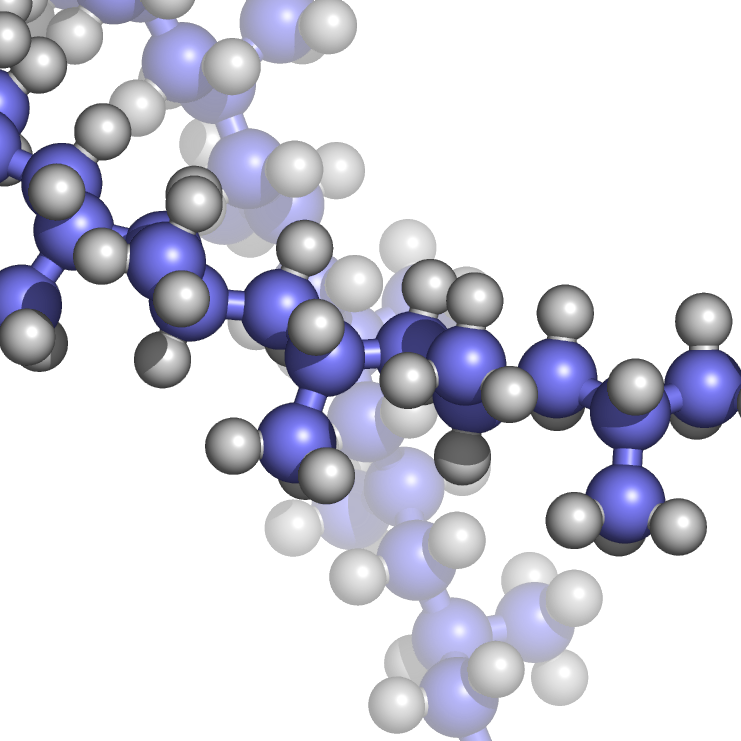
A ball-and-stick model of polypropylene.

Prolene is a brand of synthetic polypropylene used in monofilament nonabsorbable sutures and meshes. The suture is indicated for skin closure and general soft tissue approximation and ligation. Its advantages include minimal tissue reactivity and durability. Disadvantages include fragility, high plasticity, high expense, and difficulty of use compared to standard nylon sutures.

Composed of an isotactic crystalline stereoisomer of polypropylene, Prolene sutures are intended to be durable and long lasting. They are dyed blue, allowing for easy visibility against skin and when operating. It is composed of a single filament.

A polypropylene mesh Prolene product is used for repairing hernias and other injuries to the fascia.

Prolene commonly is used in both human and veterinary medicine for skin closure. In human medicine it is used in cardiovascular, ophthalmic and neurological procedures. It is often used in conjunction with the absorbable suture Monocryl. Prolene is manufactured by Ethicon Inc., a subsidiary of Johnson & Johnson. It is produced in Cornelia, Georgia, USA.

Prolene has become the mainstay of vascular anastomoses [citation needed] and facilitated significant advances in cardiac and vascular surgery [citation needed]. It is used on both small vessels such as coronary artery bypasses and large vessels including the aorta. It is used in obstetrical practice, during cesarean sections to suture the rectus sheath of the abdominal wall because it is non-absorbable in nature and provides the sheath the due strength it deserves (rectus sheath is composed of various tendon extensions and muscle fibres and maintains the strength of the abdominal wall; if it becomes weak the abdominal contents start herniating out) it stays there forever and is also often seen during repeat cesarean section as that of the previous section.

Use in paintbrushes

[edit]

Prolene is also used in the manufacture of artist's watercolour paint brushes. When carefully blended with the traditional material Siberian weasel hair, it produces a brush of comparable quality at a more economical price. See kolinsky sable-hair brush.[citation needed]

See also

[edit]
[edit]
Revisions and contributorsEdit on WikipediaRead on Wikipedia
from Grokipedia
Prolene is a synthetic, nonabsorbable monofilament suture material composed of isotactic crystalline , a derived from the of monomers. Developed by , a subsidiary of , in 1969, it has become a standard in surgical practice due to its exceptional tensile strength and . The material's key properties include high resistance to degradation, with retention of nearly 100% of its tensile strength indefinitely , and extremely low tissue reactivity, which minimizes inflammation and foreign body responses. Its smooth, uniform surface reduces friction during passage through tissue and bacterial adhesion, contributing to lower risks in surgical sites. Prolene is typically available in blue coloration for enhanced visibility during procedures, and it is sterilized using or gamma irradiation to ensure safety. Prolene is indicated for general and ligation, particularly in procedures requiring long-term mechanical support, such as cardiovascular surgeries for vascular anastomoses, ophthalmic operations for delicate ocular tissues, and neurosurgical interventions involving neural structures. It is also employed in plastic and for skin closure where minimal scarring is desired, as well as in repairs and reconstructions due to its durability and inert nature. Available in a range of sizes from 10-0 (ultrafine for microsurgery) to 2 (for heavier tissues), Prolene sutures are packaged in various needle configurations to suit specific clinical needs.

Composition and Properties

Chemical Composition

Prolene is a non-absorbable material composed of an isotactic crystalline stereoisomer of , a synthetic linear derived from the of monomers. This stereospecific structure features methyl groups aligned on the same side of the backbone, which imparts a high degree of crystallinity essential for its mechanical integrity in medical applications. The of Prolene is (C3H6)n(C_3H_6)_n, representing the repeating units in a long-chain . The isotactic arrangement enables tight packing of chains, resulting in crystallinity levels typically ranging from 30% to 60% in medical-grade formulations, which contributes to its durability and resistance to degradation. As a medical-grade material, Prolene is manufactured to stringent purity standards, with minimal impurities such as residual monomers or catalysts to ensure and low tissue reactivity. These specifications distinguish it from industrial , prioritizing inertness and safety for implantation, as evidenced by its compliance with standards like for biological evaluation of medical devices. Prolene sutures are commonly dyed blue with phthalocyanine blue (Color Index No. 74160), an FDA-approved that enhances visibility during without compromising the material's inert properties. Undyed, clear variants are also produced for applications where coloration is unnecessary.

Physical and Mechanical Properties

Prolene sutures are constructed as monofilaments, featuring a smooth surface and uniform diameter ranging from 0.02 mm for USP size 10-0 to approximately 0.50 mm for USP size 2, with availability spanning USP sizes 11-0 to 2. This design ensures consistent performance across a wide range of surgical needs, from microsurgery to general closure. The mechanical properties of Prolene include high tensile strength relative to its diameter, enabling reliable load-bearing in tissues, with elongation typically reaching 36-62% before breaking under stress. Its low coefficient of facilitates smooth passage through tissue with minimal drag, while the material exhibits notable , causing the suture to resist and tend to straighten after removal. This isotactic crystalline structure underpins its robust strength and limited stretch. As a nonabsorbable suture, Prolene demonstrates excellent durability, retaining its tensile strength indefinitely through gradual fibrous encapsulation by host tissue, providing long-term support without degradation. Handling Prolene requires attention to its characteristics; it becomes more pliable when warmed but can feel stiff and springy at due to its , potentially complicating manipulation during procedures. Additionally, its smooth surface may lead to slippage if not secured with at least four to five throws, necessitating careful tying techniques for reliable security.

Biocompatibility and Tissue Interaction

Prolene, a non-absorbable suture material, demonstrates high characterized by its chemical inertness, which elicits a minimal acute inflammatory response in surrounding tissues upon implantation. This low reactivity stems from the material's resistance to and enzymatic degradation, preventing the release of breakdown products that could exacerbate inflammation. Over time, rather than degrading, Prolene induces the formation of a thin fibrous capsule that encapsulates the suture, effectively isolating it from host tissues and promoting long-term stability without ongoing irritation. In vivo studies and clinical observations confirm that Prolene generally provokes no significant adverse reactions in the majority of patients, with the material maintaining structural integrity and tissue integration for extended periods. Rare instances of , manifesting as localized , , or formation, have been reported, often attributed to allergic responses to the used for visibility rather than the itself. These cases are infrequent and typically managed by suture removal, underscoring Prolene's overall safety profile in human applications. Compared to absorbable sutures, such as those made from polyglycolic acid, Prolene's permanent nature results in less initial tissue reactivity, as it avoids the inflammatory cascade associated with enzymatic digestion and of degrading materials. However, this permanence necessitates surgical removal in superficial wounds to prevent chronic or , unlike self-dissolving alternatives that eliminate the need for secondary procedures. Veterinary applications mirror these biocompatibility traits, with Prolene exhibiting similarly low reactivity in animal models, including dogs and other species, where it supports wound closure without excessive inflammation or adhesion formation. This consistent performance across species validates its cross-use in both human and veterinary medicine, often in procedures requiring durable, long-term tensile support.

History and Development

Invention and Early Research

The foundation for Prolene sutures was laid with the discovery of in 1951 by chemists J. Paul Hogan and Robert L. Banks at , who accidentally ized gas into a crystalline solid while experimenting with catalysts for gasoline production. This breakthrough provided a versatile synthetic , but initial forms were often brittle and unsuitable for demanding applications like medical sutures. In the early , , a subsidiary of , initiated research to adapt into a biocompatible monofilament suture , culminating in the of Prolene in 1969. 's research team focused on producing an isotactic crystalline stereoisomer of through stereospecific , a that enhanced the polymer's flexibility, tensile strength, and knot security while minimizing tissue reactivity. This addressed key early challenges, such as the 's inherent brittleness in non-medical grades, enabling the creation of smooth, non-absorbable filaments ideal for surgical use. Early research in the included that validated Prolene's long-term mechanical integrity and low inflammatory response, particularly for vascular procedures where sustained strength was essential. These tests established its potential as a non-reactive alternative to earlier suture materials, paving the way for its adoption in high-stress applications like .

Commercialization and Regulatory Approval

Prolene was introduced by , a subsidiary of , in 1969 as a synthetic, non-absorbable monofilament suture line made from , marking a significant advancement in sterile surgical materials. Prolene, introduced prior to the 1976 Medical Device Amendments, was approved under preamendments regulations as a Class II device via (NDA) 16-374. Subsequent 510(k) clearances for similar sutures reference Prolene as a predicate device. The product was initially manufactured at 's facility in , USA, which had been established as a plant since 1946 and continues to produce today. Prolene sutures comply with biocompatibility standards outlined in , the international framework for evaluating biological interactions of medical devices, ensuring its safety for prolonged tissue contact. Within Ethicon's broader portfolio of wound closure products, Prolene has evolved through targeted innovations, including the introduction of PROLENE with HEMO-SEAL technology in 2013, which narrows the suture diameter at the needle attachment to minimize needle-hole and enhance surgical visualization. This variant was cleared by the FDA under 510(k) as a modification to the standard Prolene suture, building on its established non-absorbable properties. By the 1980s, Prolene had become a standard material in cardiovascular surgery, prized for its high tensile strength, minimal tissue reactivity, and ease of handling in vascular anastomoses, which facilitated its widespread global distribution via Johnson & Johnson's international network. This adoption underscored its role in enabling precise, durable closures in high-stakes procedures like cardiac bypass.

Manufacturing Process

Polymer Synthesis

The synthesis of the polypropylene base material for Prolene involves the stereospecific of using Ziegler-Natta catalysts to yield isotactic , a highly ordered crystalline structure critical for the suture's strength and . These catalysts typically consist of (TiCl₄) supported on magnesium dichloride (MgCl₂), activated by aluminum alkyl co-catalysts such as triethylaluminum (AlEt₃) or triisobutylaluminum, which facilitate the insertion of units in a head-to-tail, isotactic manner at the active catalytic sites. The reaction is commonly performed in a process, where gaseous is introduced into a or similar aliphatic at temperatures between 50°C and 80°C, with 60°C often identified as optimal for balancing productivity and polymer chain growth. Under these conditions, high molecular weight chains are formed, typically in the range of 500,000 to g/mol, contributing to the material's tensile strength and flexibility required for surgical applications. The process operates under moderate pressure (around 10-30 bar) to maintain , allowing for efficient dissipation and uniform particle growth. For medical-grade Prolene production, rigorous quality controls ensure stereoregularity exceeding 95% isotactic units, achieved through precise selection and reaction monitoring to minimize atactic or syndiotactic defects that could compromise crystallinity and performance. Impurity levels, including residual metals, unreacted , and traces, are maintained below 0.1% via post-polymerization purification steps such as washing and drying, aligning with requirements for implantable devices. Industrial-scale synthesis employs both batch and continuous reactors, generating tons of annually tailored as feedstock for suture manufacturing, within broader production capacities exceeding millions of tons globally.

Fiber Formation and Processing

The production of Prolene fibers begins with the of isotactic resin into monofilaments through a melt-spinning . The is melted in an extruder with barrel temperatures ranging from 140°C to 225°C across zones (feed zone 140–200°C, transition zone 170–220°C, die 170–225°C), and extruded through spinneret orifices to form continuous filaments of the desired . Following , the filaments pass through a short air gap of 0.1–20 cm before entering a quench bath below 50°C (preferably around 20°C) to solidify the structure rapidly and control . This step ensures uniform filament formation suitable for surgical applications. Subsequent processing involves in two stages to enhance mechanical properties, achieving a total draw ratio of 4–8.5 times the original length (preferably 7–8 times). The first stage stretches the filaments 4–7.5 times at 30–170°C, followed by a second stage of 1–2.5 times at 180–280°C, which aligns the molecular chains and increases tensile strength while reducing elongation. The drawn filaments then undergo aging for 2–40 hours to stabilize the structure, followed by annealing at 135–152°C for 5–40 minutes, inducing shrinkage of 16–35% to relieve internal stresses and ensure consistent performance under surgical tension. Optional finishing steps include pigmentation and lubrication to improve visibility and handling. is incorporated into the during for enhanced visibility in tissue, as Prolene sutures are commonly pigmented while clear variants are available. A silicone-based may be applied post-processing to reduce during passage through tissue and needle attachment, though many Prolene products are supplied uncoated due to the inherent smoothness of the monofilament. The processed fibers are then cut to standard lengths of 45–150 cm, depending on the intended surgical procedure, and attached to needles as required. Final sterilization renders the sutures suitable for implantation by eliminating microbial contamination to a (SAL) of 10^{-6}, meaning a probability of one non-sterile unit per million. Prolene sutures are typically sterilized using gas, which penetrates packaging without degrading the polymer, or gamma irradiation for certain formats, both achieving the required SAL through validated cycles. Post-sterilization, the sutures are packaged in sterile barriers to maintain integrity until use.

Medical Applications

General Surgical Uses

Prolene suture, a nonabsorbable monofilament made from , is widely used in for approximation, particularly in skin closure, where its smooth surface and low tissue reactivity contribute to minimal scarring and reduced risk. Its biologically inert nature minimizes acute inflammatory responses, leading to gradual encapsulation by fibrous and favorable cosmetic outcomes, making it a preferred choice for procedures requiring precise edge alignment in non-contaminated or contaminated fields. The suture's high tensile strength supports long-term support without degradation by tissue enzymes. In ligation applications, Prolene provides permanent strength for tying vessels or tissues where sustained integrity is essential, such as in general abdominal closures. Due to its inherent "memory" and slippery texture, achieving secure knots requires meticulous technique, typically involving a square or with 4-5 throws to ensure optimal security across various suture sizes. This configuration balances tensile retention and resistance to slippage, enhancing reliability in routine ligations. A key advantage of Prolene in general surgical practice is its reduced tissue drag compared to multifilament sutures, facilitated by the monofilament structure and low coefficient of friction, which allows smooth passage through tissues without adherence or trauma. This property lowers the risk of bacterial harboring in interstices, further contributing to its low profile even in potentially contaminated wounds. For skin closures, Prolene sutures are typically removed 7-14 days postoperatively using a sterile technique to minimize risk and prevent complications like "railroad track" scarring from prolonged presence. Removal timing varies by anatomic location and healing progress, with earlier intervention (around day 7) promoting better aesthetic results in areas prone to visible scarring.

Specialized Procedures

In cardiovascular surgery, Prolene sutures are widely employed for vascular anastomoses due to their high tensile strength and minimal tissue reactivity, which are essential for long-term vessel patency. Specifically, in coronary artery bypass grafting (CABG), 5-0 to 7-0 Prolene sutures facilitate precise connections between grafts and , reducing the risk of and ensuring durability under hemodynamic stress. Similarly, during aortic repairs, these fine monofilament sutures are used for end-to-end or end-to-side anastomoses in procedures like resection, where their non-absorbable nature supports permanent reinforcement without promoting calcification or suture degradation. The biologically inert properties of Prolene further minimize inflammatory responses in these high-flow environments, as noted in its indications for cardiovascular applications. In ophthalmic and neurological procedures, Prolene's low reactivity and fine diameters make it ideal for microsuturing in delicate tissues. For eye muscle repairs, such as surgery, 6-0 to 10-0 Prolene sutures provide secure fixation of to the with minimal , allowing for adjustability and reduced scarring. In neurological contexts, including nerve grafts, 8-0 to 10-0 Prolene is utilized for epineural repairs or duraplasty, leveraging its smooth monofilament structure to approximate neural sheaths without causing or compression, which could impair regeneration. These applications benefit from Prolene's high visibility (in blue-dyed variants) and resistance to tissue adherence, facilitating precise handling under . Prolene mesh plays a critical role in , particularly for inguinal hernias, where its lightweight, macroporous structure promotes tissue ingrowth and tensile strength for durable reinforcement. The Prolene Hernia System, a bilayer design, is integrated during open or laparoscopic tension-free repairs to cover the inguinal floor, achieving low recurrence rates (under 2% in long-term studies) by encapsulating the within host tissue without excessive inflammation. In , Prolene sutures are applied for rectus sheath closure in cesarean sections to prevent , with 0 or 1-0 sizes providing robust, non-absorbable support that maintains integrity during postpartum recovery. Comparative studies show Prolene reduces surgical site infections compared to absorbable alternatives, attributed to its inert profile and ease of placement in continuous or interrupted patterns. In , Prolene sutures and mesh are adapted for orthopedic and procedures analogous to human applications, capitalizing on their for implantation in animals. For instance, in canine cranial repairs, extracapsular stabilization typically employs synthetic monofilament sutures such as 2-0 to 5-0 leader line, with polypropylene equivalents like Prolene used in some cases to mimic function via lateral fabellotibial sutures, offering stability in mid-sized dogs while minimizing postoperative complications like implant migration. Additionally, Prolene mesh is used in reconstructions, such as hernias in dogs and horses, where it facilitates defect bridging with strong fibrotic integration and low risk. These uses extend to general approximation in veterinary orthopedics, supported by the material's proven low reactivity across .

Other Applications

Potential Industrial Uses

While Prolene itself is primarily used in medical contexts, polypropylene monofilament fibers akin to those in Prolene sutures find application in reinforcements due to their high tensile strength and resistance to environmental degradation. These fibers are commonly incorporated into fishing lines and ropes, where their durability in marine environments—resisting water absorption, UV exposure, and chemical corrosion—enhances performance in demanding conditions. For instance, polypropylene monofilament ropes are selected for their lightweight yet robust properties in industrial marine settings, providing reliable load-bearing capacity without significant elongation under stress. Additionally, polypropylene-based filters are employed for liquid filtration, such as in pharmaceutical processing and filters, where their chemical resistance and microporous structure effectively remove contaminants from liquids without leaching additives. As of 2025, research into for advanced applications remains limited, with explorations primarily focused on established uses rather than novel frontiers like 3D-printed scaffolds, due to challenges in and processability for . The mechanical durability of polypropylene, characterized by high tensile strength, supports these potential extensions but has not yet led to commercial Prolene-branded innovations in such areas. The adoption of medical-grade polypropylene, such as Prolene, in broader industrial contexts is constrained by its elevated production costs compared to standard industrial grades, which undergo less stringent purification and sterilization processes. This cost differential limits scalability for non-medical uses, favoring cheaper polypropylene variants for high-volume textile and filtration applications.

References

Add your contribution
Related Hubs
User Avatar
No comments yet.