Hubbry Logo
David SatcherDavid SatcherMain
Open search
David Satcher
Community hub
David Satcher
logo
8 pages, 0 posts
0 subscribers
Be the first to start a discussion here.
David Satcher
David Satcher
from Wikipedia

David Satcher (born March 2, 1941) is an American physician, and public health administrator. He was a four-star admiral in the United States Public Health Service Commissioned Corps and served as the 11th Assistant Secretary for Health, and the 16th Surgeon General of the United States.

Key Information

Biography

[edit]

Early years

[edit]

Satcher was born in Anniston, Alabama. At the age of two, he contracted whooping cough. A Black doctor, Dr. Jackson, came to his parents' farm, and told his parents he didn't expect David to live, but nonetheless spent the day with him and told his parents how to give him the best chance he could.[1] Satcher said that he grew up hearing that story, and that inspired him to be a doctor.[2] While in college, Satcher was active in the Civil Rights Movement and was arrested on multiple occasions.[3]

Satcher graduated from Morehouse College in Atlanta in 1963 and was elected to Phi Beta Kappa. He received his MD and a PhD in cell biology from Case Western Reserve University in 1970 with election to the Alpha Omega Alpha honor society.[4] He completed his residency and fellowship training at the Strong Memorial Hospital, University of Rochester, the UCLA School of Medicine, and Martin Luther King Jr.-Harbor Hospital. He is a fellow of the American Academy of Family Physicians, the American College of Preventive Medicine, and the American College of Physicians, and is board certified in preventive medicine.[4] Satcher pledged Omega Psi Phi fraternity and is an initiate of the Psi chapter of Morehouse College.[5]

Career

[edit]

From December 1977 to August 1979, Satcher served as the Acting Dean of the Charles R. Drew Postgraduate Medical School (now the Charles R. Drew University of Medicine and Science, also known as "Drew"). He had previously served as the Chairman of the Drew's Department of Family Medicine.[6] In May 1978, during his deanship term, a Memorandum of Understanding (MOU) was approved by the University of California Board of Regents to adopt a joint medical education program between the UCLA School of Medicine and Drew; the Drew/UCLA M.D. program welcomed its first class of students in 1981.[6]

Satcher served as professor and Chairman of the Department of Community Medicine and Family Practice at Morehouse School of Medicine from 1979 to 1982. He is a former faculty member of the UCLA School of Medicine, the UCLA School of Public Health, and the King-Drew Medical Center in Los Angeles (known as the Martin Luther King Jr. Outpatient Center at the time of its closure in 2007), where he developed and chaired the King-Drew Department of Family Medicine.[7] He also directed the King-Drew Sickle Cell Research Center for six years. Satcher served as President of Meharry Medical College in Nashville, Tennessee, from 1982 to 1993.[4] He held the posts of Director of the Centers for Disease Control and Prevention and Administrator of the Agency for Toxic Substances and Disease Registry from 1993 to 1998. Satcher was the first Black American to hold the CDC Director position.[8]

Chronic Fatigue Syndrome scandal

[edit]

Under Satcher's leadership, the CDC took millions of dollars Congress set aside for Chronic Fatigue Syndrome (CFS) research and secretly spent the funds in other areas.[9] The misappropriation of funds continued for three years (from 1995–1998) and the CDC attempted to cover up their actions. The issue only came to light after a CDC employee filed a whistleblower report and a special Inspector General was appointed to investigate the matter.[10] In the words of Martha Katz, Deputy Director for Policy and Legislation at CDC: "Resources intended for CFS were actually used for measles, polio and other disease areas. This was a breach of CDC's solemn trust and is in direct conflict with its core values."[9]

Surgeon General

[edit]
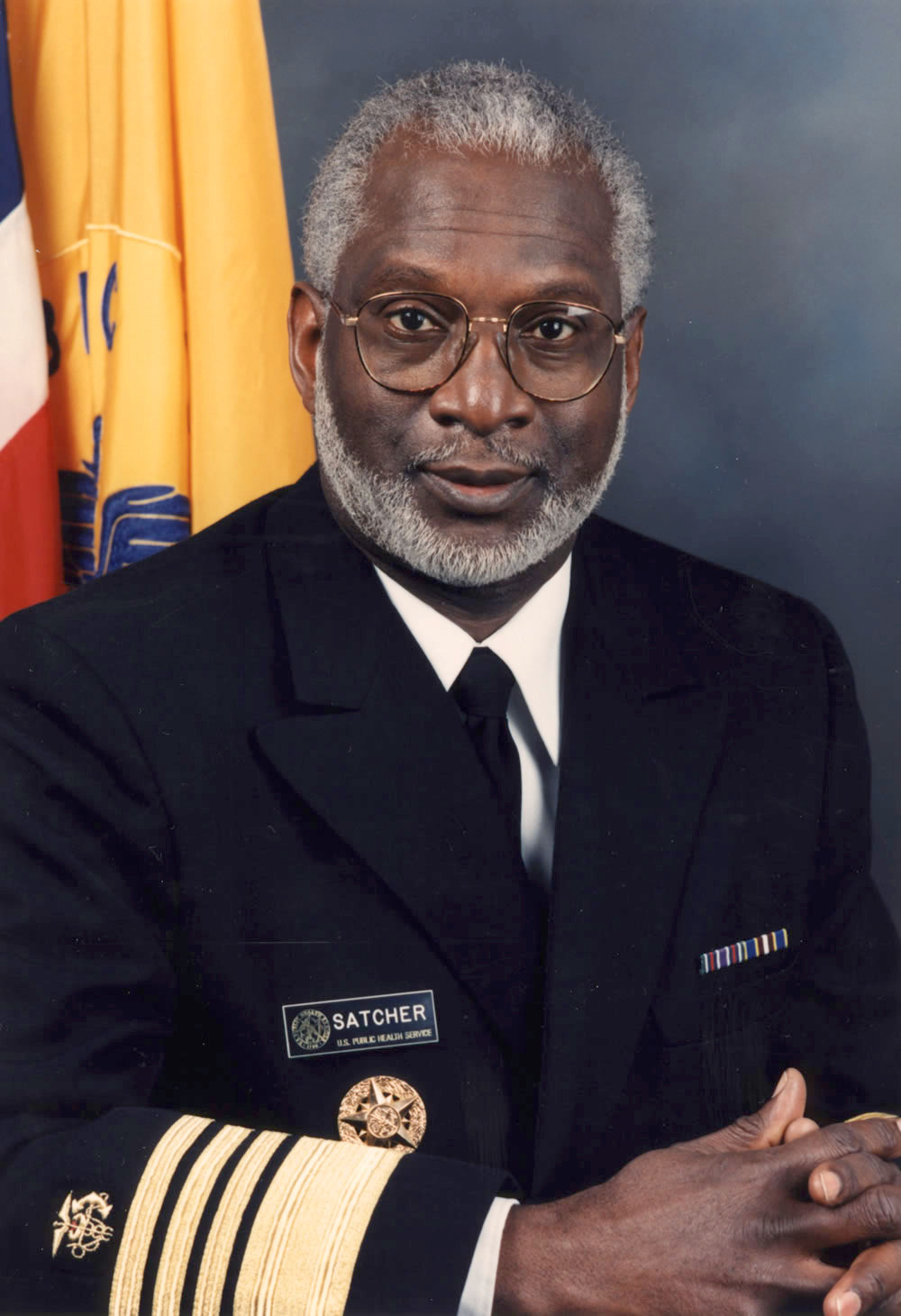
Vice Admiral David Satcher, USPHS

Satcher served simultaneously in the positions of Surgeon General and Assistant Secretary for Health from February 1998 through January 2001 at the US Department of Health and Human Services.[11] As such, he is the first Surgeon General to be appointed as a four-star admiral in the PHSCC, a departure from the Surgeon General's normal appointment to three-star vice general, to reflect his dual offices.[12]

In his first year as Surgeon General, Satcher released the 1998 Surgeon General's report "Tobacco Use Among U.S. Racial/Ethnic Minority Groups." In it, he reported that tobacco use was on the rise among youth in each of the country's major racial and ethnic groups, threatening their long-term health prospects.[13]

Satcher was appointed by Bill Clinton, and remained Surgeon General until 2002, contemporaneously with the first half of the first term of George W. Bush's presidential administration. Eve Slater would later replace him as Assistant Secretary for Health in 2001. Because he no longer held his dual office, Satcher was reverted and downgraded to the grade of vice admiral in the regular corps for the remainder of his term as Surgeon General. In 2001, his office released the report, The Surgeon General's Call to Action to Promote Sexual Health and Responsible Sexual Behavior. The report was hailed by the chairman of the American Academy of Family Physicians as an overdue paradigm shift—"The only way we're going to change approaches to sexual behavior and sexual activity is through school. In school, not only at the doctor's office."[14] However, conservative political groups denounced the report as being too permissive towards homosexuality and condom distribution in schools. When Satcher left office, he retired with the rank of vice admiral.

Post–Surgeon General

[edit]

Upon his departure from the post, Satcher became a fellow at the Kaiser Family Foundation. In the fall of 2002, he assumed the post of Director of the National Center for Primary Care at the Morehouse School of Medicine.

On December 20, 2004, Satcher was named interim president at Morehouse School of Medicine until John E. Maupin, Jr., former president of Meharry Medical College assumed the current position on February 26, 2006.[citation needed] In June 2006, Satcher established the Satcher Health Leadership Institute (SHLI) at Morehouse School of Medicine as a natural extension of his experiences improving public health policy for all Americans and his commitment to eliminating health disparities for minorities, the poor, and other disadvantaged groups.[15]

In 2013, he co-founded the advocacy group African American Network Against Alzheimer's.[16]

Satcher sat on the boards of directors of Johnson & Johnson from 2002 to 2012, and MetLife from 2007 to 2012.[17][18][19][20]

Criticisms of health inequality

[edit]

While acknowledging progress, Satcher has criticized health disparities. In a 2005 article published in the journal Health Affairs, Satcher and his oc-authors asked the question, "What if we had eliminated disparities in health in the last century?" and estimated, based on 2002 data, that "83,570 excess deaths could be prevented each year in the United States if [the] black-white mortality gap could be eliminated."[21]

In a 2006 essay for PLOS Medicine discussing the Health Affairs article, Satcher stated that the study's estimates included 24,000 fewer Black deaths from cardiovascular disease and, if infant mortality had been equal across racial and ethnic groups in 2000, 4,700 fewer Black infants would have died in their first year of life.[22] Without disparities, there would have been 22,000 fewer Black deaths from diabetes and almost 2,000 fewer Black women would have died from breast cancer; 250,000 fewer Black patients would have been infected with HIV/AIDS and 7,000 fewer Black patients would have died from complications due to AIDS in 2000. As many as 2.5 million additional Black individuals, including 650,000 children, would have had health insurance in that year. He called on people to work for solutions at the individual, community, and policy level.[22]

Satcher supports a Medicare-for-all style single payer health plan, in which insurance companies would be eliminated and the government would pay health care costs directly to doctors, hospitals and other providers through the tax system.[23]

In 1990, while President of Meharry Medical College, Satcher founded a quarterly academic journal entitled the Journal of Health Care for the Poor and Underserved.

Awards and honors

[edit]

Satcher is the recipient of many honorary degrees and numerous distinguished honors, including:

He has also won top awards from the American Medical Association, the American College of Physicians, the American Academy of Family Physicians, and Ebony magazine.[30] An academic society at the Case Western Reserve School of Medicine is named in Satcher's honor, and, in 2009, he delivered the university's Commencement Address.[31][32] The Case Western Reserve School of Medicine also created the David Satcher Clerkship for Underrepresented Minority Students in 1991. The clerkships hosts four to eight minority fourth-year medical students from outside of northeast Ohio at University Hospitals, where they receive exposure to career opportunities in an academic medical center as a part of the residency recruitment process.[33]

References

[edit]
[edit]
Revisions and contributorsEdit on WikipediaRead on Wikipedia
from Grokipedia
David Satcher (born March 2, 1941) is an American physician and administrator who served as the 16th of the from 1998 to 2002, during which he also held the position of , making him only the second individual to concurrently occupy both roles. Prior to this, Satcher directed the Centers for Disease Control and Prevention from 1993 to 1998, becoming the first African American to lead the agency, where he prioritized disease prevention, injury control, and addressing violence as a issue. Earlier in his career, he presided over from 1982 to 1993, expanding its focus on serving underserved communities. As Surgeon General, Satcher issued seminal reports on topics including tobacco use disparities among racial and ethnic minorities, , oral health, and responsible sexual behavior, emphasizing evidence-based strategies to mitigate health inequities, though his advocacy for comprehensive sexual drew criticism from conservative groups for insufficient emphasis on abstinence. Post-tenure, he founded the Satcher Health Leadership Institute at to train leaders in eliminating health disparities.

Early Life and Education

Childhood in Alabama

David Satcher was born on March 2, 1941, in Anniston, , to Wilmer and Anne Satcher. He grew up as one of nine children on the family's small farm in rural , where his parents worked as poor, self-educated sharecroppers amid the hardships of the Great Depression's aftermath and pre-civil rights era segregation. At the age of two, Satcher contracted (pertussis) and was given little chance of survival by local medical standards, but a Black physician, Dr. Jackson, made a rare house call to the isolated farm, diagnosed the condition, and provided treatment that the family credited with saving his life.

Overcoming Illness and Family Influence

At the age of two, in 1943, Satcher contracted (pertussis) in rural , where vaccines were unavailable and medical access for Black families was severely limited by segregationist policies that barred admission to local hospitals. His survival was secured through the intervention of Dr. Benjamin L. Jackson, the sole Black physician in the area, who made repeated house calls to the family farm despite the risks and provided critical care that local white facilities refused. This near-fatal episode, compounded by the era's healthcare disparities, profoundly shaped Satcher's resolve, leading him by age six to aspire to a medical career aimed at addressing such inequities. Satcher's parents, Wilmer and Anna Satcher, were poor small farmers who neither completed elementary school yet prioritized education and diligence amid raising nine children on modest land with scant resources. Their emphasis on self-reliance and learning—despite systemic barriers like underfunded segregated schools—fostered Satcher's early academic drive, enabling him to excel locally and pursue higher education as a pathway out of . This familial foundation, rooted in resilience against economic hardship and , reinforced his recovery from illness and commitment to overcoming adversity through personal effort and knowledge acquisition.

Academic and Medical Training

David Satcher earned a degree from in 1963, graduating magna cum laude as a member of ; during his senior year, he served as president of the student body. Satcher then pursued combined medical and graduate training at , where he received both an and a PhD in in 1970, becoming the first African American student to complete such a dual-degree program there; he was also elected to the Honor Medical Society.

Early Career and Academic Leadership

Medical Practice and Research

Satcher completed his internship at in 1970 and a residency in shortly thereafter, establishing a foundation in practice focused on underserved communities. In , he directed the Sickle Cell Research Center at /Drew Medical Center (formerly Postgraduate Medical School) from the early 1970s, conducting clinical studies on sickle cell anemia, a disproportionately affecting , while integrating research with patient care. This role combined empirical investigation into disease mechanisms—building on his PhD in —with practical interventions, including community outreach to improve screening and management. To address barriers in access to care, Satcher founded a in the basement of a Watts church, providing direct medical services to low-income residents amid the area's post-1965 riot socioeconomic challenges, emphasizing preventive medicine and family-centered treatment. As a Robert Wood Johnson Clinical Scholar (1971–1973) and Macy Faculty Fellow, he advanced community-oriented research, prioritizing causal factors in health disparities such as environmental and genetic influences over socioeconomic narratives alone. His work yielded publications on sickle cell pathology and delivery, though specific trial data from this period highlight modest advancements in management without transformative therapies. By the late 1970s, Satcher's practice evolved toward academic integration, chairing at King-Drew and contributing to cytogenetic studies linking inheritance patterns to chronic disease outcomes, informed by first-hand clinical observations rather than modeled projections. These efforts underscored a commitment to evidence-based interventions, with research outputs cited in subsequent frameworks, though limited by era-specific funding constraints for minority-focused studies.

Roles at Meharry and Morehouse

In 1979, David Satcher joined as professor and chairman of the Department of Community Medicine and Family Practice, a position he held until 1982. In this role, he focused on community-oriented medical training and practice, particularly addressing health needs in underserved populations through preventive and family-based care approaches. His leadership helped establish foundational programs in and at the institution, aligning with Morehouse's mission to serve minority and low-income communities in . Satcher transitioned in 1982 to the presidency of in , where he served until 1993. As the leader of this historically Black medical school, he prioritized strengthening research programs, enhancing faculty development, and expanding clinical training opportunities to produce physicians committed to eliminating health disparities. Under his tenure, Meharry advanced its emphasis on minority health education and community outreach, including initiatives to improve access to care in rural and urban underserved areas, while navigating financial challenges common to smaller HBCU medical institutions. These efforts contributed to Meharry's reputation for training a significant portion of the nation's Black physicians, with Satcher's administration fostering interdisciplinary collaborations and evidence-based curricula focused on .

Development of Family Medicine Programs

Following his completion of a family practice residency at the in 1975, Satcher developed a family practice residency program at King-Drew Medical Center in , establishing structured training for physicians in comprehensive . He subsequently founded and chaired the King-Drew Department of , the institution's inaugural such department, which integrated with services to address underserved populations in South Central . This initiative emphasized preventive care, chronic disease management, and interdisciplinary training, aligning with Satcher's focus on equitable access to amid urban health disparities. In 1979, Satcher transitioned to in , where he served as professor and chair of the Department of Community Medicine and Family Practice until 1982, advancing curriculum development that merged family practice with principles to train physicians for rural and minority communities. Under his leadership, the department prioritized residency programs fostering holistic patient care, cultural competency, and community-oriented practice, contributing to Morehouse's mission of producing providers for medically underserved areas. These efforts built on his King-Drew model, incorporating research into and interprofessional education to enhance family medicine's role in preventive services. Satcher's programs at both institutions laid groundwork for later national emphases on workforce development, influencing training models that prioritized longitudinal patient relationships over specialization. By 2002, upon returning to Morehouse as director of the National Center for , he expanded these foundations through initiatives training providers in early disease detection and , though his foundational developments occurred in the late 1970s and early 1980s.

Public Health Administration

Directorship of the CDC

David Satcher served as Director of the Centers for Disease Control and Prevention (CDC) from 1993 to 1998, becoming the first African American to hold the position. Appointed by President , he oversaw the agency during a period of expanding challenges, including and the rise of emerging infectious diseases. Under his leadership, the CDC emphasized preventive strategies, integrating programs for , sexually transmitted diseases, and to enhance coordinated responses. Satcher prioritized childhood immunization, leading the implementation of the Vaccines for Children program in 1994, a federally funded initiative that provided free vaccines to uninsured and underinsured children, contributing to national increases in immunization coverage rates. He also expanded the CDC's breast and cervical cancer screening efforts, extending comprehensive programs to all 50 states, five territories, and 15 American Indian and Alaska Native tribes by the end of his tenure. Additionally, Satcher elevated the focus on violence prevention as a public health priority and upgraded outbreak detection capabilities. In addressing emerging threats, Satcher launched the Emerging Infectious Diseases journal in 1995 to facilitate information sharing on incipient trends, amid responses to outbreaks such as the 1995 Ebola epidemic in the Democratic Republic of Congo and in the . These efforts built on a CDC for addressing emerging infections, emphasizing and rapid intervention. His administration faced scrutiny over the allocation of congressionally appropriated funds for chronic fatigue syndrome research, which drew publicity for being redirected toward other priorities like hantavirus, though CDC officials reaffirmed commitments to affected areas. Satcher departed the CDC in 1998 to assume roles as U.S. and .

Response to Emerging Health Threats

During his tenure as CDC Director from October 1993 to February 1998, David Satcher prioritized enhancing surveillance and rapid response capabilities for , recognizing their potential for rapid spread due to factors like and microbial evolution. In April 1994, under his leadership, the CDC issued Addressing Emerging Infectious Disease Threats: A Prevention Strategy for the , which outlined a framework for detecting, controlling, and preventing such threats through improved domestic and international surveillance, laboratory capacity, and partnerships with health agencies. This strategy emphasized proactive measures, including the establishment of the Emerging Infections Program to monitor pathogens like hantavirus and drug-resistant bacteria, marking a shift from reactive to anticipatory public health responses. A key early test was the (HPS) outbreak in the , which began in May 1993 with over 40 cases and a 50% fatality rate by year's end, linked to the novel Sin Nombre virus transmitted via deer mouse droppings. Satcher's administration coordinated multidisciplinary teams for field investigations, virus isolation by June 1993, and public education on rodent control, contributing to containment without widespread epidemic spread; subsequent cases dropped to fewer than 20 annually by 1995. In response to the 1995 Ebola hemorrhagic fever outbreak in Kikwit, (now Democratic Republic of Congo), which resulted in 316 confirmed cases and a 77% case-fatality ratio from May to July, the CDC under Satcher deployed virologists and epidemiologists within days to assist local authorities in , protocols, and virus identification, preventing international transmission while highlighting needs for global outbreak preparedness. Satcher also oversaw efforts against (MDR-TB), implementing directly observed therapy and infection control guidelines; national TB cases declined 5.8% in 1996 to 19,539, with MDR-TB strains targeted through expanded and a national action plan updated during his term. These initiatives underscored Satcher's focus on integrating research, policy, and fieldwork to mitigate threats from evolving pathogens.

Chronic Fatigue Syndrome Funding Mismanagement

During David Satcher's directorship of the Centers for Disease Control and Prevention (CDC) from 1993 to 1998, the agency reallocated congressional appropriations specifically earmarked for chronic fatigue syndrome (CFS) research to other programs, prompting accusations of mismanagement and neglect of a condition affecting an estimated 800,000 to 2.5 million Americans. Congress had begun directing funds toward CFS studies in fiscal year 1995, allocating approximately $3 million initially, with subsequent years seeing increases to address diagnostic and etiologic gaps in the illness characterized by profound fatigue, post-exertional malaise, and cognitive impairments. However, CDC accounting practices failed to track these earmarks distinctly, leading to their expenditure on unrelated infectious disease initiatives deemed higher priority by agency leadership. A 1999 audit by the Department of Health and Human Services revealed that of the funds appropriated for CFS between fiscal years 1995 and 1998, the CDC had diverted $8.8 million to non-CFS activities—such as for emerging pathogens—and an additional $4.1 million to unidentified purposes, totaling over $12.9 million in unallocated or misused resources. This reallocation occurred without congressional notification, contravening federal earmark protocols that require funds to be used as specified by lawmakers. The practice came to light in 1998 during hearings, where groups highlighted the CDC's minimal CFS research output despite the allocations, including no dedicated system until years later. Agency officials, including Satcher's successor Jeffrey Koplan, later defended the diversions as necessary responses to acute threats like outbreaks but acknowledged the accounting errors and failure to restore the funds promptly, issuing a public apology in October 1999. Critics, including CFS researchers and advocates, argued that the episode reflected systemic underprioritization of non-infectious, multifactorial conditions, potentially delaying progress on CFS amid evidence of immune, neurological, and metabolic abnormalities. A subsequent 2000 Government Accountability Office review confirmed the lapses and recommended enhanced earmark tracking, which the CDC implemented, though CFS funding remained stagnant relative to other chronic diseases for years afterward. Satcher's administration emphasized infectious disease preparedness during his tenure, but the CFS incident underscored tensions between fiscal flexibility and legislative intent in public health .

Assistant Secretary for Health

David Satcher was nominated by President on September 12, 1997, to serve as in the Department of Health and Human Services (HHS), concurrently with the position of . The U.S. confirmed his nomination on February 10, 1998, and he was sworn in later that month as a in the U.S. Service Commissioned Corps. In this capacity, Satcher served from February 1998 until January 2001, overlapping with his tenure, during which he functioned as the chief advisor to the HHS , oversaw the Office of and Science, and directed the 6,000-member Service Commissioned Corps. As , Satcher provided leadership for federal policy coordination and prevention efforts. A key initiative under his direction was the development and release of Healthy People 2010 in 2000, a framework establishing national objectives for and prevention through 2010. This document outlined 467 specific objectives across 28 focus areas, supported by two overarching goals: increasing the span of healthy life for Americans and eliminating health disparities among population segments, marking the first explicit federal commitment to addressing such inequities through targeted interventions. The process involved collaboration with former Assistant Secretaries for Health and was coordinated by the HHS Office of Prevention and Health Promotion. Satcher's role also encompassed managing responses to public health emergencies and advancing scientific priorities within HHS, building on his prior experience as CDC Director. In October 1999, he issued an order establishing the Surgeon General's Honor Guard within the Commissioned Corps to support ceremonial and operational functions. His tenure emphasized integrating public health science into policy, though specific outcomes attributable solely to the Assistant Secretary position are often intertwined with his Surgeon General duties.

Surgeon General Tenure (1998–2002)

Appointment and Initial Priorities

David Satcher was nominated by President Bill Clinton to serve as the 16th Surgeon General of the United States, following his role as Assistant Secretary for Health and prior directorship of the Centers for Disease Control and Prevention. The Senate confirmed his nomination on February 10, 1998, by a vote of 63-35, after delays stemming from Republican concerns over his opposition to bans on late-term abortions. He was sworn into office on February 13, 1998, in an Oval Office ceremony administered by Vice President Al Gore, assuming the concurrent positions of Surgeon General and Assistant Secretary for Health—a rare dual role held by only one other individual. At the ceremony, Clinton emphasized Satcher's mandate to address key public health challenges, including disease prevention and reducing tobacco use among youth. Satcher framed his approach optimistically, describing America's health issues as "golden opportunities" rather than insurmountable problems. In testimony shortly after assuming office, he articulated initial priorities centered on foundational improvements. The foremost was ensuring every child receives a healthy start in life, encompassing maternal and parental health, expanded access, reductions in rates, and mitigation of risks such as and substance use during . A second priority involved fostering personal responsibility for health across populations, through promotion of , , and avoidance of harmful behaviors like tobacco consumption and premature sexual activity among adolescents. Satcher also highlighted as a core focus, advocating for enhanced prevention and treatment programs to diminish stigma and address interconnected issues including and . Underpinning these efforts was the Racial and Ethnic Health Disparities Initiative, aimed at eliminating disparities by 2010 in six priority areas: , and management, , , , and childhood immunizations. Satcher stressed communication as a duty, committing to dialogue with communities, tribal governments, and the public to enhance understanding and access. These priorities reflected a preventive, equity-oriented framework, building on his prior leadership.

Key Public Health Reports and Campaigns

During his tenure as Surgeon General from 1998 to 2002, David Satcher issued several landmark reports and initiatives aimed at addressing major challenges, emphasizing evidence-based prevention, stigma reduction, and behavioral interventions. These efforts built on federal data showing high affecting one in five Americans annually, tobacco use contributing to over 400,000 deaths yearly, and sexually transmitted diseases (STDs) infecting about 12 million people each year. A pivotal contribution was the December 1999 report : A Report of the , the first of its kind, which synthesized epidemiological data indicating that mental illnesses are biologically based, treatable conditions comparable to physical diseases, with effective treatments available for most cases. The report highlighted barriers like underfunding and stigma, advocating for integrated mental health services in and parity in insurance coverage. Complementing this, Satcher's (1999) outlined 15 strategies, including improved surveillance, community education, and , responding to data showing as the eighth leading in the U.S., with over 30,000 annual fatalities. In tobacco control, Satcher's August 2000 report Reducing Tobacco Use reviewed cessation methods and projected that comprehensive interventions—such as higher taxes, media campaigns, and smoke-free policies—could halve U.S. rates within a decade, drawing on longitudinal studies of youth initiation patterns where 90% of smokers began before age 18. This built on his 1998 report Tobacco Use Among U.S. Racial/Ethnic Minority Groups, which documented disproportionate impacts, like higher rates among despite lower consumption, urging targeted cessation programs. Satcher's June 2001 Call to Action to Promote Sexual Health and Responsible Sexual Behavior addressed rising STD rates, including cases exceeding 774,000 by then, by promoting age-appropriate education on abstinence, contraception, and mutual monogamy, while rejecting abstinence-only mandates unsupported by efficacy data from randomized trials. The initiative called for reducing shame around sexuality to encourage responsible behaviors, citing evidence that comprehensive programs delayed sexual debut and increased use among . These reports influenced policy by prioritizing data-driven strategies over ideological approaches, though implementation faced congressional resistance, as seen in delayed funding for recommended programs.

Mental Health and Suicide Prevention

In December 1999, David Satcher released Mental Health: A Report of the Surgeon General, the first comprehensive federal assessment of mental health in the United States, developed in collaboration with the Center for Mental Health Services and the National Institute of Mental Health. The report established mental disorders as affecting approximately one in five Americans annually, with effective evidence-based treatments available for most conditions, yet noted that nearly half of individuals with severe mental illnesses received no care due to barriers including stigma, inadequate insurance coverage, and fragmented service delivery. It advocated integrating mental health into primary care, expanding research on disparities, and launching public education to equate mental health parity with physical health, influencing subsequent policies like the 2008 Mental Health Parity and Addiction Equity Act. Satcher's initiatives extended to suicide prevention, framing it as a preventable crisis responsible for over 30,000 U.S. deaths annually at the time. In July 1999, he issued a Call to Action to Prevent , urging federal agencies, states, and communities to prioritize , risk factor reduction, and intervention programs, while highlighting the role of untreated depression and disorders in 90% of cases. This was followed in May 2001 by the National Strategy for , a detailed blueprint co-authored with the and others, comprising 15 time-phased objectives across four goals: promoting awareness, establishing interventions, supporting treatment access, and achieving improvements. The strategy emphasized evidence-based approaches, such as gatekeeper training for community leaders and enhanced psychiatric care, reporting potential to reduce rates by addressing modifiable risk factors like firearm access and . These efforts marked a shift toward viewing mental health and suicide as systemic issues requiring multisectoral response, with Satcher's reports citing epidemiological data from sources like the National Comorbidity Survey to underscore causal links between untreated disorders and outcomes, though implementation challenges persisted due to funding shortfalls and varying state adoption.

Tobacco Control and Youth Smoking

During his tenure as Surgeon General, David Satcher prioritized tobacco control through evidence-based strategies aimed at preventing initiation among youth, recognizing that nearly 90% of adult smokers begin during adolescence due to nicotine's addictive properties and targeted industry marketing. In his August 9, 2000, report Reducing Tobacco Use, Satcher outlined a comprehensive framework evaluating educational, clinical, regulatory, economic, and multifaceted interventions, emphasizing that youth smoking rates—then affecting approximately one in three teenagers—could be reduced by 20-40% via school-based programs combined with community and media support. The report highlighted that fewer than 5% of U.S. schools fully implemented CDC guidelines for tobacco prevention curricula, underscoring gaps in enforcement of access restrictions for minors and advertising limits to curb appeal. Satcher advocated economic measures, such as a 10% increase in cigarette taxes, to deter uptake by raising s, citing that price elasticity disproportionately affects adolescents with limited disposable income and heightens sensitivity to cost barriers. In a May 25, 1999, Washington Post , he argued that higher prices represented the most effective single tool against smoking, drawing on data showing that past tax hikes had previously lowered initiation rates without fully offsetting revenue losses through volume declines. Complementing this, the report stressed regulatory actions like restricting -targeted promotions by companies, which empirical studies linked to increased experimentation, while comprehensive state-level programs integrating these elements showed potential to halve overall prevalence by 2010 in alignment with y People objectives. Earlier, in the April 27, 1998, report Tobacco Use Among U.S. Racial/Ethnic Minority Groups, Satcher documented sharp rises in smoking among minority adolescents, with rates climbing 7-10% annually in some groups, attributing this to socioeconomic factors, targeted advertising, and insufficient culturally tailored prevention efforts rather than inherent group differences. He called for intensified federal funding for youth-focused cessation and prevention, noting over 1 million annual new youth smokers nationwide, many progressing to lifelong dependence. These initiatives built on causal evidence that early intervention disrupts addiction trajectories, though Satcher acknowledged barriers like tobacco industry opposition and inconsistent state implementation limited immediate impacts.

Sexual Health and STD Reduction

In July 2001, during his tenure as , David Satcher issued The Surgeon General's Call to Action to Promote Sexual Health and Responsible Sexual Behavior, a report aimed at fostering a national dialogue on sexuality to reduce sexually transmitted diseases (STDs), unintended pregnancies, and related health risks. The document highlighted the scale of the STD , noting that approximately 12 million new infections occurred annually in the United States, encompassing conditions like , , , and human papillomavirus, with nearly two-thirds of the 774,467 reported AIDS cases since 1981 being sexually transmitted. Satcher emphasized that sexual health extends beyond reproduction to encompass emotional, physical, and social well-being, advocating for evidence-based strategies over ideological prescriptions to address these issues. The report recommended comprehensive, lifelong sexual education that promotes abstinence—particularly among youth—while equipping individuals with knowledge of contraception, condom use, and STD prevention methods, arguing that such approaches were supported by showing reduced risky behaviors. It critiqued abstinence-only programs, stating there was insufficient demonstrating their in delaying sexual debut or lowering STD rates, and called for increased access to confidential testing, treatment, and partner notification services to curb transmission. Satcher urged among families, schools, healthcare providers, faith-based organizations, and media to normalize responsible sexual decision-making, with specific calls for into behavioral interventions that could empirically demonstrate STD incidence reductions. This initiative faced immediate backlash from the incoming Bush administration, which favored abstinence-only funding and reportedly pressured Satcher against release, viewing the report's support for broader as undermining federal policy priorities. Despite the controversy, the Call to Action aligned with causal mechanisms identified in epidemiological data, such as the role of delayed testing and inconsistent barrier use in perpetuating STD cycles, and sought to prioritize measurable outcomes like lowered infection rates through targeted campaigns. No direct attribution of STD reductions to Satcher's efforts during 1998–2002 is documented in contemporaneous sources, though the report laid groundwork for subsequent federal guidelines emphasizing multifaceted prevention.

Controversies and Policy Challenges

During his tenure as Surgeon General, David Satcher faced criticism primarily from social conservatives over his 2001 report, "The Surgeon General's to Promote Sexual Health and Responsible Sexual ," released on June 28, 2001. The report advocated for comprehensive approaches to sexual education, emphasizing for youth while also recommending instruction on contraceptive methods, use, and to reduce sexually transmitted diseases (STDs) and unintended pregnancies, citing evidence that such multifaceted strategies were more effective than abstinence-only programs in altering . Critics, including the Traditional Values Coalition, argued that the document undermined parental authority and promotion by sending mixed messages and downplaying evidence for behavioral change in , positioning Satcher's stance as aligned with liberal ideologies rather than strictly evidence-based . The Bush administration, which had assumed office in January 2001, publicly distanced itself from the report, refusing endorsement amid conservative backlash. Satcher also encountered policy hurdles in addressing for injection drug users. In April 2000, he issued a review affirming the efficacy of syringe exchange programs (SEPs) in curbing transmission among injectors without increasing drug initiation or use, drawing on meta-analyses of over 20 studies showing risk reductions of up to 30% in incidence. However, the report's release was delayed by the due to political sensitivities over perceived endorsement of drug use, reflecting broader tensions between and federal funding bans on SEPs enacted since 1988. This interference exemplified challenges to the Surgeon General's independence, as congressional testimony later highlighted how such delays compromised timely guidance. More generally, Satcher's tenure grappled with resource constraints and politicization of , including difficulties securing for report preparation—such as the sexual document—and navigating inter-branch pressures that muted outspokenness on evidence-supported interventions. In his 2002 farewell address, he urged increased budgetary support to fulfill the role's mandate without undue external influence, underscoring systemic barriers to apolitical science dissemination amid debates over issues like and disparities. These episodes highlighted causal frictions between empirical imperatives and ideological or partisan priorities, though Satcher's measured approach avoided the overt clashes seen in prior Surgeon Generals' tenures.

Post-Surgeon General Career

Return to Academia and Institute Leadership

Following his tenure as Surgeon General, which concluded on February 13, 2002, David Satcher returned to in , Georgia, where he assumed the role of director of the from 2002 to 2004. In this capacity, he oversaw initiatives aimed at advancing research, training, and policy development, building on his prior experience at the institution during the and . In 2006, Satcher founded the Satcher Health Leadership Institute (SHLI) at , establishing it as a center dedicated to in . As founding director and senior advisor, he has guided the institute's programs, which emphasize training diverse professionals, conducting research on health leadership, and influencing policy through evidence-based approaches. The SHLI, under his direction, has prioritized areas such as pipeline programs for underrepresented students in health professions and summits addressing equity, with events like the annual Dr. David Satcher Global Health Equity Summit held as recently as September 2025. Satcher concurrently serves as a professor of and preventive medicine at Morehouse, contributing to academic curricula and faculty mentorship focused on preventive strategies and . His leadership roles have sustained his involvement in addressing chronic disease prevention and workforce diversity, leveraging institutional resources to support grants and partnerships with entities like the Centers for Disease Control and Prevention. Through these positions, Satcher has maintained a platform for advocacy while transitioning from federal service to academic and institutional influence.

Advocacy and Publications

Following his tenure as Surgeon General, Satcher founded the Satcher Health Leadership Institute (SHLI) at in 2006, serving as its founding director and emphasizing leadership development, research, and policy advocacy to address health inequities. The institute's mission centers on cultivating diverse leaders and driving systemic changes through equity-focused initiatives, including training programs and collaborations with organizations like the . In 2021, SHLI partnered with the to launch the Medical Justice in Advocacy Fellowship, aimed at equipping physicians to tackle structural inequities via policy and advocacy training. Satcher's post-government advocacy extended to and influence, where he outlined strategies for reducing health disparities, identifying as a key barrier alongside socioeconomic factors. He advocated for integrating with equity goals, urging institutions to prioritize training in disparity reduction during events like the meetings. Additionally, Satcher promoted awareness and funding for Alzheimer's research, drawing on both professional expertise and personal family experiences with the disease. In publications, Satcher authored My Quest for Health Equity: Notes on Learning While Leading (2019), a reflecting on his career-long efforts to eliminate disparities through and evidence-based interventions, part of the in America series. He contributed to peer-reviewed works, such as articles in Public Health Reports on strategies, and supported SHLI reports addressing intersections of , , and equity, including a 2022 analysis of gaps. These efforts underscore his focus on empirical approaches to equity, though critics note that disparity persistence despite such advocacy highlights challenges in causal attribution beyond alone.

Recent Activities and Influence

Following his tenure as president of Morehouse School of Medicine from 2004 to 2009, David Satcher established the Satcher Health Leadership Institute at the institution in 2010, where he serves as founding director and senior advisor. The institute focuses on training leaders, conducting research on health disparities, and influencing policy to address inequities in access and outcomes. In 2020, Satcher published My Quest for Health Equity: Notes on Learning While Leading, a reflecting on his and strategies for reducing disparities through and evidence-based interventions. He has continued through events such as the annual Dr. David Satcher Equity Summit at Morehouse, with the third edition occurring on October 2, 2025, featuring panels on challenges and equity strategies. Satcher's influence persists in recognition programs, including the Dr. David Satcher Community Health Improvement Awards, whose 15th annual ceremony was held on May 31, 2023, honoring efforts in local disparities reduction. In May 2023, he appeared at the to commend faculty and staff contributions to equity. These activities underscore his ongoing role in promoting data-driven approaches to health leadership amid persistent challenges like access barriers and outcome gaps.

Views on Health Disparities

Core Advocacy Positions

David Satcher has consistently advocated for the complete elimination of health disparities, defining them as preventable differences in health outcomes between racial, ethnic, and socioeconomic groups, with a particular emphasis on and other underrepresented minorities. As the 16th of the from 1998 to 2002, he prioritized this issue as a core national health objective, arguing that compelling evidence links race and ethnicity to variations in disease incidence, prevalence, and mortality rates, such as higher rates of , , and among . In a 1998 congressional testimony, Satcher endorsed the Department of Health and Human Services' goal to eradicate these disparities by 2010 through targeted strategies, including improved access to preventive care and culturally competent services. Central to Satcher's positions is the belief that health disparities are not inevitable but result from complex, modifiable causes rooted in historical beliefs, systemic behaviors, and structural inequities in the healthcare system, rather than solely biological factors. He has highlighted how past and unequal resource distribution contribute to excess deaths—estimating up to 84,000 preventable deaths annually from racial disparities alone—and called for addressing social determinants like , , and interventions to achieve . Satcher promotes a framework involving rigorous surveillance, evidence-based research, and community-led initiatives, insisting that elimination requires persistent that "cares enough, knows enough, [and] does enough." Through the Satcher Health Leadership Institute, which he directs at , Satcher emphasizes cultivating diverse leaders from minority communities to drive disparity reduction, prioritizing training in policy advocacy, cultural competency, and equity-focused interventions over purely clinical fixes. He has critiqued incomplete progress toward equity goals, attributing setbacks to insufficient investment in minority leadership and systemic reforms, while advocating for expanded on disparities to inform targeted policies. Despite these ambitions, Satcher's framework has faced scrutiny for underemphasizing behavioral and lifestyle factors—such as diet, , and —that empirical studies show independently influence outcomes even after controlling for , though he maintains that upstream social reforms are foundational.

Empirical Evidence and Causal Factors

Empirical data confirm persistent racial and ethnic health disparities in the United States, particularly between Black and White populations. For instance, as of 2021, for non-Hispanic Black men stood at approximately 68 years, compared to 75 years for non-Hispanic White men, reflecting a 7-year gap exacerbated by from conditions like , , and . Black Americans also experience higher age-adjusted s from , with rates 8-10 times those of Whites in recent CDC surveillance data, alongside elevated incidences of and . These disparities extend to maternal and infant health, where Black infants face a mortality rate more than twice that of White infants, at 10.9 versus 4.5 per 1,000 births in 2022. Causal factors underlying these disparities are multifaceted, encompassing (SES), health behaviors, environmental exposures, and biological differences, rather than reducible to any single influence like . David Satcher has described these causes as "complex," emphasizing that disparities arise from intertwined social, behavioral, and systemic elements, including historical beliefs shaping health practices. Socioeconomic conditions account for a substantial portion of variance; studies adjusting for , , and occupation explain up to 80% of premature mortality gaps between racial groups, as lower SES correlates with reduced access to preventive care and higher exposure to stressors like . Health behaviors further contribute independently of SES in some analyses. For example, higher rates of , physical inactivity, and dietary patterns associated with processed foods explain persistent disparities, with exhibiting prevalence rates of 57% versus 40% for White women, linked to cultural norms and urban food environments rather than SES alone. Family structure and factors, such as elevated single-parent households (correlating with poorer child health outcomes), amplify these through reduced supervision of health habits and economic instability. Biological and genetic elements play a role in specific disparities, independent of social factors. Conditions like sickle cell anemia, with higher prevalence among those of African descent due to evolutionary adaptations to , demonstrate genetic ancestry's influence on disease susceptibility. Even after SES controls, residual racial differences in outcomes like suggest polygenic contributions interacting with environmental triggers, underscoring that health inequities cannot be fully attributed to external social forces without considering inherent physiological variations. This causal realism highlights the need for targeted interventions addressing modifiable behaviors and alongside broader inequities, as Satcher advocates in frameworks.

Criticisms of Disparity Narratives

Critics of health disparity narratives, including those advanced by figures like David Satcher during his tenure as , argue that such frameworks often prioritize systemic and as primary causes while downplaying modifiable behavioral and cultural factors. , in his analysis of socioeconomic disparities, contends that assuming statistical differences in outcomes necessarily imply bias overlooks evidence from history and cross-group comparisons, where cultural practices and individual choices more reliably predict variations in health metrics like and prevalence. This perspective challenges narratives that frame disparities as predominantly external impositions, suggesting instead that internal community norms around diet, exercise, and healthcare adherence play outsized roles, as evidenced by persistent gaps even after controlling for access to services. Empirical studies support this critique by demonstrating that racial gaps in mortality and morbidity are largely mediated by differences in health behaviors and rather than direct racial effects. A 2021 analysis of U.S. data found that Black-White disparities in all-cause mortality were fully accounted for by lower levels and poorer behaviors such as , , and physical inactivity, with no residual "direct race effect" once these mediators were included in causal models. Similarly, on older adults identifies lower , , and lifestyle factors—like higher rates of sedentary behavior and non-compliance with preventive care—as key drivers of inequalities between Black and White populations, rather than isolated instances of . These findings indicate that behavioral patterns, which can stem from cultural or familial transmission rather than systemic barriers alone, explain up to 70-80% of variance in outcomes like and prevalence. Such criticisms highlight potential policy pitfalls in disparity-focused initiatives, including those Satcher championed, where an overreliance on structural explanations may divert resources from interventions targeting personal agency and community-level behavioral change. For instance, despite decades of federal efforts to address access disparities since Satcher's 2000 call to eliminate them, Black-White gaps in (11.4 vs. 4.6 per 1,000 births in 2021) and (70.8 vs. 76.4 years) persist, correlating more strongly with differences in maternal smoking rates (9.1% vs. 6.5%) and (40% vs. 30% among adults) than with reported alone. Critics, drawing on causal realism, argue this stasis underscores the limitations of narratives that undervalue empirical scrutiny of contributors, potentially fostering dependency over in affected communities. Academic sources advancing racism-centric views, often from institutions with documented ideological skews, have been faulted for underreporting these behavioral mediators to sustain agendas.

Awards, Honors, and Legacy

Major Recognitions

David Satcher has received over 40 honorary degrees from universities and institutions, recognizing his contributions to and . Among his major awards, Satcher earned the Breslow Award in from the in 1995 for advancing preventive health strategies. In 1997, the New York Academy of Medicine presented him with its Lifetime Achievement Award for sustained leadership in health policy and disparities research. The honored him with the Nathan Davis Award in 2000, acknowledging his ethical and professional impact on national health initiatives. Satcher has been the recipient of top awards from the National Medical Association and the , highlighting his service to underserved communities and medical excellence. In 2013, awarded him the Award for Public Service, citing his role in shaping federal health policy during his tenure as . He was inducted into the Alabama Healthcare Hall of Fame for his pioneering work in addressing health inequities.

Assessment of Impact and Limitations

Satcher's tenure as Surgeon General produced several influential reports that elevated public discourse on underaddressed health issues, including the 2001 Mental Health: A Report of the Surgeon General, which synthesized data and treatment efficacy to reduce stigma and inform policy, and the inaugural Oral Health in America report in 2000, which linked oral health to systemic conditions like and heart disease. These efforts, alongside advocacy for and youth violence prevention, contributed to targeted interventions such as increased rates among , Indigenous, and Latinx populations. His post-office establishment of the Satcher Health Leadership Institute at in 2006 has trained over 1,000 leaders in , perpetuating his focus on disparities. Numerous honors underscore this legacy, including awards and programs bearing his name, such as the Dr. David Satcher Community Health Improvement Awards at the , which recognize efforts in since 2010, and the David Satcher Public Health Scholars Program at , aimed at underrepresented students in . These recognitions, primarily from academic and institutions, affirm his role in advancing awareness of , though they cluster in equity-focused circles that may amplify narrative-driven acclaim over outcome metrics. Limitations in impact are evident in the persistence of racial health disparities despite Satcher's initiatives; for instance, black-white gaps widened in 8 of 17 key health status indicators across the U.S. from 1990 to 2010, including and heart disease rates, with no attributable narrowing directly tied to his reports or . Political constraints further hampered execution, as Satcher navigated administration sensitivities—eschewing direct engagement on divisive topics like needle exchange while facing backlash for promoting comprehensive sexual over abstinence-only approaches in 2001. Empirical trends indicate that while awareness efforts yielded short-term visibility, causal reductions in disparities required broader structural reforms beyond the Surgeon General's advisory scope, leaving long-term outcomes modest relative to stated goals of elimination.

References

Add your contribution
Related Hubs
User Avatar
No comments yet.