Hubbry Logo
Radio-controlled modelRadio-controlled modelMain
Open search
Radio-controlled model
Community hub
Radio-controlled model
logo
8 pages, 0 posts
0 subscribers
Be the first to start a discussion here.
Radio-controlled model
from Wikipedia
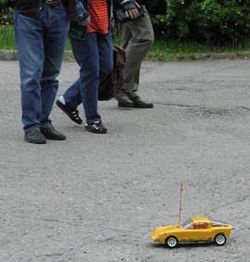
1:10 scale radio-controlled car
(Saab Sonett II)

A radio-controlled model (or RC model) is a model that is steerable with the use of radio control (RC). All types of model vehicles have had RC systems installed in them, including ground vehicles, boats, planes, helicopters and even submarines and scale railway locomotives.

History

[edit]

World War II saw increased development in radio control technology. The Luftwaffe used controllable winged bombs for targeting Allied ships. During the 1930s the Good brothers Bill and Walt pioneered vacuum tube based control units for RC hobby use. Their "Guff" radio controlled plane is on display at the National Aerospace museum. Ed Lorenze published a design in Model Airplane News that was built by many hobbyists. Later, after WW2, in the late 1940s to mid 1950 many other RC designs emerged and some were sold commercially, Berkeley's Super Aerotrol, was one such example.

Originally simple 'on-off' systems, these evolved to use complex systems of relays to control a rubber powered escapement's speed and direction. In another more sophisticated version developed by the Good brothers called TTPW, information was encoded by varying the signal's mark/space ratio (pulse proportional). Commercial versions of these systems quickly became available. The tuned reed system brought new sophistication, using metal reeds to resonate with the transmitted signal and operate one of a number of different relays. In the 1960s the availability of transistor-based equipment led to the rapid development of fully proportional servo-based "digital proportional" systems, achieved initially with discrete components, again driven largely by amateurs but resulting in commercial products. In the 1970s, integrated circuits made the electronics small, light and cheap enough for the 1960s-established multi-channel digital proportional systems to become much more widely available.

In the 1990s miniaturised equipment became widely available, allowing radio control of the smallest models, and by the 2000s radio control was commonplace even for the control of inexpensive toys. At the same time the ingenuity of modellers has been sustained and the achievements of amateur modelers using new technologies has extended to such applications as gas-turbine powered aircraft, aerobatic helicopters and submarines.

Before radio control, many models would use simple burning fuses or clockwork mechanisms to control flight or sailing times. Sometimes clockwork controllers would also control and vary direction or behaviour. Other methods included tethering to a central point (popular for model cars and hydroplanes), round the pole control for electric model aircraft and control lines (called u-control in the US) for internal combustion powered aircraft.

The first general use of radio control systems in models started in the late 1940s with single-channel self-built equipment; commercial equipment came soon thereafter. Initially remote control systems used escapement, (often rubber driven) mechanical actuation in the model. Commercial sets often used ground standing transmitters, long whip antennas with separate ground poles and single vacuum tube receivers. The first kits had dual tubes for more selectivity. Such early systems were invariably super regenerative circuits, which meant that two controllers used in close proximity would interfere with one another. The requirement for heavy batteries to drive tubes also meant that model boat systems were more successful than model aircraft.

The advent of transistors greatly reduced the battery requirements, since the current requirements at low voltage were greatly reduced and the high voltage battery was eliminated. Low cost systems employed a superregenerative transistor receiver sensitive to a specific audio tone modulation, the latter greatly reducing interference from 27 MHz Citizens' band radio communications on nearby frequencies. Use of an output transistor further increased reliability by eliminating the sensitive output relay, a device subject to both motor-induced vibration and stray dust contamination.

Click image for explanation of radio escapement operation

In both tube and early transistor sets the model's control surfaces were usually operated by an electromagnetic escapement controlling the stored energy in a rubber-band loop, allowing simple rudder control (right, left, and neutral) and sometimes other functions such as motor speed, and kick-up elevator.[1]

In the late 1950s, RC hobbyists had mastered tricks to manage proportional control of the flight control surfaces, for example by rapidly switching on and off reed systems, a technique called "skillful blipping" or more humorously "nervous proportional".[2]

By the early 1960s transistors had replaced the tube and electric motors driving control surfaces were more common. The first low cost "proportional" systems did not use servos, but rather employed a bidirectional motor with a proportional pulse train that consisted of two tones, pulse-width modulated (TTPW). This system, and another commonly known as "Kicking Duck/Galloping Ghost", was driven with a pulse train that caused the rudder and elevator to "wag" though a small angle (not affecting flight owing to small excursions and high speed), with the average position determined by the proportions of the pulse train. A more sophisticated and unique proportional system was developed by Hershel Toomin of Electrosolids corporation called the Space Control. This benchmark system used two tones, pulse width and rate modulated to drive 4 fully proportional servos, and was manufactured and refined by Zel Ritchie, who ultimately gave the technology to the Dunhams of Orbit in 1964. The system was widely imitated, and others (Sampey, ACL, DeeBee) tried their hand at developing what was then known as analog proportional. But these early analog proportional radios were very expensive, putting them out of the reach for most modelers. Eventually, single-channel gave way to multi channel devices (at significantly higher cost) with various audio tones driving electromagnets affecting tuned resonant reeds for channel selection.

Crystal oscillator superheterodyne receivers with better selectivity and stability made control equipment more capable and at lower cost. The constantly diminishing equipment weight was crucial to ever increasing modelling applications. Superheterodyne circuits became more common, enabling several transmitters to operate closely together and enabling further rejection of interference from adjacent Citizen's Band voice radio bands.

Multi-channel developments were of particular use to aircraft which really needed a minimum of three control dimensions (yaw, pitch and motor speed), as opposed to boats which can be controlled with two or one. Radio control 'channels' were originally outputs from a reed array, in other words, a simple on-off switch. To provide a usable control signal a control surface needs to be moved in two directions, so at least two 'channels' would be needed unless a complex mechanical link could be made to provide two-directional movement from a single switch. Several of these complex links were marketed during the 1960s, including the Graupner Kinematic Orbit, Bramco, and Kraft simultaneous reed sets.

Doug Spreng is credited with developing the first "digital" pulse-width feedback servo and along with Don Mathis developed and sold the first digital proportional radio called the "Digicon" followed by Bonner's Digimite, and Hoovers F&M Digital 5.

With the electronics revolution, single-signal channel circuit design became redundant and instead, radios provided coded signal streams which a servomechanism could interpret. Each of these streams replaced two of the original 'channels', and, confusingly, the signal streams began to be called 'channels'. So an old on/off 6-channel transmitter which could drive the rudder, elevator and throttle of an aircraft was replaced with a new proportional 3-channel transmitter doing the same job. Controlling all the primary controls of a powered aircraft (rudder, elevator, ailerons and throttle) was known as 'full-house' control. A glider could be 'full-house' with only three channels.

Soon a competitive marketplace emerged, bringing rapid development. By the 1970s the trend for 'full-house' proportional radio control was fully established. Typical radio control systems for radio-controlled models employ pulse-width modulation (PWM), pulse-position modulation (PPM) and more recently spread-spectrum technology, and actuate the various control surfaces using servomechanisms. These systems made 'proportional control' possible, where the position of the control surface in the model is proportional to the position of the control stick on the transmitter.

PWM is most commonly used in radio control equipment today, where transmitter controls change the width (duration) of the pulse for that channel between 920 μs and 2120 μs, 1520 μs being the center (neutral) position. The pulse is repeated in a frame of between 10 and 30 milliseconds in length. Off-the-shelf servos respond directly to servo control pulse trains of this type using integrated decoder circuits, and in response they actuate a rotating arm or lever on the top of the servo. An electric motor and reduction gearbox is used to drive the output arm and a variable component such as a resistor "potentiometer" or tuning capacitor. The variable capacitor or resistor produces an error signal voltage proportional to the output position which is then compared with the position commanded by the input pulse and the motor is driven until a match is obtained. The pulse trains representing the whole set of channels is easily decoded into separate channels at the receiver using very simple circuits such as a Johnson counter. The relative simplicity of this system allows receivers to be small and light, and has been widely used since the early 1970s. Usually a single-chip 4017 decade counter is used inside the receiver to decode the transmitted multiplexed PPM signal to the individual "RC PWM" signals sent to each RC servo.[3][4][5] Often a Signetics NE544 IC or a functionally equivalent chip is used inside the housing of low-cost RC servos as the motor controller—it decodes that servo control pulse train to a position, and drives the motor to that position.[6]

More recently, high-end hobby systems using Pulse-Code Modulation (PCM) features have come on the market that provide a digital bit-stream signal to the receiving device instead of analog type pulse modulation. Advantages include bit error checking capabilities of the data stream (good for signal integrity checking) and fail-safe options including motor (if the model has a motor) throttle down and similar automatic actions based on signal loss. However, those systems that use pulse code modulation generally induce more lag due to lesser frames sent per second as bandwidth is needed for error checking bits. PCM devices can only detect errors and thus hold the last verified position or go into failsafe mode. They cannot correct transmission errors.

In the early 21st century, 2.4 gigahertz (GHz) transmissions have become increasingly utilised in high-end control of model vehicles and aircraft. This range of frequencies has many advantages. Because the 2.4 GHz wavelengths are so small (around 10 centimetres), the antennas on the receivers do not need to exceed 3 to 5 cm. Electromagnetic noise, for example from electric motors, is not 'seen' by 2.4 GHz receivers due to the noise's frequency (which tends to be around 10 to 150 MHz). The transmitter antenna only needs to be 10 to 20 cm long, and receiver power usage is much lower; batteries can therefore last longer. In addition, no crystals or frequency selection is required as the latter is performed automatically by the transmitter. However, the short wavelengths do not diffract as easily as the longer wavelengths of PCM/PPM, so 'line of sight' is required between the transmitting antenna and the receiver. Also, should the receiver lose power, even for a few milliseconds, or get 'swamped' by 2.4 GHz interference, it can take a few seconds for the receiver - which, in the case of 2.4 GHz, is almost invariably a digital device - to re-sync.

Design

[edit]

RC electronics have three essential elements. The transmitter is the controller. Transmitters have control sticks, triggers, switches, and dials at the user's finger tips. The receiver is mounted in the model. It receives and processes the signal from the transmitter, translating it into signals that are sent to the servos and speed controllers. The number of servos in a model determines the number of channels the radio must provide.

Typically the transmitter multiplexes and modulates the signal into pulse-position modulation. The receiver demodulates and demultiplexes the signal and translates it into the special kind of pulse-width modulation used by standard RC servos and controllers.

In the 1980s, a Japanese electronics company, Futaba, copied wheeled steering for RC cars. It was originally developed by Orbit for a transmitter specially designed for Associated cars It has been widely accepted along with a trigger control for throttle. Often configured for right hand users, the transmitter looks like a pistol with a wheel attached on its right side. Pulling the trigger would accelerate the car forward, while pushing it would either stop the car or cause it to go into reverse. Some models are available in left-handed versions.

Mass production

[edit]

There are thousands of RC vehicles available. Most are toys suitable for children. What separates toy grade RC from hobby grade RC is the modular characteristic of the standard RC equipment. RC toys generally have simplified circuits, often with the receiver and servos incorporated into one circuit. It's almost impossible to take that particular toy circuit and transplant it into other RCs.

Hobby grade RC

[edit]
The 'Shumacher S.S.T.2000' RC Car. Shown here without the body kit or battery pack installed to allow for a clearer view of a hobby grade car.

Hobby grade RC systems have modular designs. Many cars, boats, and aircraft can accept equipment from different manufacturers, so it is possible to take RC equipment from a car and install it into a boat, for example.

However, moving the receiver component between aircraft and surface vehicles is illegal in most countries as radio frequency laws allocate separate bands for air and surface models. This is done for safety reasons.

Most manufacturers now offer "frequency modules" (known as crystals) that simply plug into the back of their transmitters, allowing one to change frequencies, and even bands, at will. Some of these modules are capable of "synthesizing" many different channels within their assigned band.

Hobby grade models can be fine tuned, unlike most toy grade models. For example, cars often allow toe-in, camber and caster angle adjustments, just like their real-life counterparts. All modern "computer" radios allow each function to be adjusted over several parameters for ease in setup and adjustment of the model. Many of these transmitters are capable of "mixing" several functions at once, which is required for some models.

Many of the most popular hobby grade radios were first developed, and mass-produced in Southern California by Orbit, Bonner, Kraft, Babcock, Deans, Larson, RS, S&O, and Milcott. Later, Japanese companies like Futaba, Sanwa and JR took over the market.

Types

[edit]

Aircraft

[edit]

Radio-controlled aircraft (also called RC aircraft) are small aircraft that can be controlled remotely. There are many different types, ranging from small park flyers to large jets and mid-sized aerobatic models. The aircraft use many different methods of propulsion, ranging from brushed or brushless electric motors, to internal combustion engines, to the most expensive gas turbines. The fastest aircraft, dynamic slope soarers, can reach speeds of over 450 mph (720 km/h) by dynamic soaring, repeatedly circling through the gradient of wind speeds over a ridge or slope.[7] Newer jets can achieve above 300 mph (480 km/h) in a short distance.

Tanks

[edit]

Radio-controlled tanks are replicas of armored fighting vehicles that can move, rotate the turret and some even shoot all by using the hand-held transmitter. Radio-controlled tanks are produced in numerous scale size for commercial offerings like:

1/35th scale. Probably the best known make in this scale is by Tamiya.

1/24 scale. This scale often includes a mounted Airsoftgun, the possibly the best offering is by Tokyo-Marui, but there are imitations by Heng Long, who offer cheap remakes of the tanks. The downsides to the Heng Long imitations are that they were standardized to their Type 90 tank which has 6 road wheels, then they produced a Leopard 2 and M1A2 Abrams on the same chassis but both of the tanks have 7 road wheels.

1/16 scale is the more intimidating vehicle design scale. Tamiya produce some of the best of this scale, these usually include realistic features like flashing lights, engine sounds, main gun recoil and - on their Leopard 2A6 - an optional gyro-stabilization system for the gun. Chinese manufacturers such as (Heng Long and Matorro) also produce a variety of high-quality 1/16 tanks and other AFVs.[8]

Both the Tamiya and the Heng Long vehicles can make use of an Infra Red battle system, which attaches a small IR "gun" and target to the tanks, allowing them to engage in direct battle.

As with cars, tanks can come from ready to run to a full assembly kit.

In more private offerings there are 1/6 and 1/4 scale vehicles available. The largest RC tank available anywhere in the world is the King tiger in 1/4 scale, over 8 feet (2.4 m) long. These GRP fiberglass tanks were originally created and produced by Alex Shlakhter.

Cars

[edit]

A radio-controlled car is a powered model car driven from a distance. Gasoline, nitro-methanol and electric cars exist, designed to be run both on and off-road. "Gas" cars traditionally use petrol (gasoline), though many hobbyists run 'nitro' cars, using a mixture of methanol and nitromethane, to get their power.

Logistic

[edit]

Logistic RC model include the following, Tractor unit, Semi-trailer truck, Semi-trailer, Terminal tractor, Refrigerator truck, Forklift truck, Empty Container handlers, and Reach stacker. Most of them are in 1:14 and run on electric motors.

Helicopters

[edit]

Radio-controlled helicopters, although often grouped with RC aircraft, are unique because of the differences in construction, aerodynamics and flight training. Several designs of RC helicopters exist, some with limited maneuverability (and thus easier to learn to fly), and those with more maneuverability (and thus harder to learn to fly).

Boats

[edit]

Radio-controlled boats are model boats controlled remotely with radio control equipment. The main types of RC boat are: scale models (12 inches (30 cm) – 144" (365 cm) in size), the sailing boat and the power boat. The latter is the more popular amongst toy grade models. Radio controlled models were used for the children's television program Theodore Tugboat.

Out of radio-controlled model boats sprang up a new hobby—gas-powered model boating.

Radio-controlled, gasoline-powered model boats first appeared in 1962 designed by engineer Tom Perzinka of Octura Models.[citation needed] The gas model boats were powered with O&R (Ohlsson and Rice) small 20 cc ignition gasoline utility engines. This was a completely new concept in the early years of available radio-control systems. The boat was called the "White Heat" and was a hydro design, meaning it had more than one wetted surface.

Towards the late 1960s and early 1970s another gasoline-powered model was created and powered with a similar chainsaw engine. This boat was named "The Moppie" after its full-size counterpart. Again like the White Heat, between the costs of production, engine, and radio equipment, the project failed at market and perished.

By 1970, nitro (glow ignition) power became the norm for model boating.

In 1982 Tony Castronovo, a hobbyist in Fort Lauderdale, Florida, marketed the first production gasoline string trimmer engine powered (22 cc gasoline ignition engine) radio-controlled model boat in a 44-inch vee-bottom boat. It achieved a top speed of 30 miles per hour. The boat was marketed under the trade name "Enforcer" and sold by his company Warehouse Hobbies, Inc. The following years of marketing and distribution aided the spread of gasoline-powered model boating throughout the US, Europe, Australia, and many countries around the world.

As of 2010, gasoline radio-controlled model boating has grown worldwide. The industry has spawned many manufacturers and thousands of model boaters. Today the average gasoline-powered boat can easily run at speeds over 45 mph, with the more exotic gas boats running at speeds exceeding 90 mph. This year also saw ML Boatworks develop laser cut wood scale hydroplane racing kits that rejuvenated a sector of the hobby that was turning to composite boats, instead of the classic art of building wood models. These kits also gave fast electric modelers a platform much needed in the hobby.

Many of Tony Castronovo's designs and innovations in gasoline model boating are the foundation upon which the industry has been built.[citation needed] He was first to introduce surface drive on a Vee hull (propeller hub above the water line) to model boating which he named "SPD" (surface planing drive) as well as numerous products and developments relative to gasoline-powered model boating. He and his company continue to produce gasoline-powered model boats and components.

Submarines

[edit]

Radio-controlled submarines can range from inexpensive toys to complex projects involving sophisticated electronics. Oceanographers and the Military also operate radio control submarines.

Combat robotics

[edit]

The majority of robots used in shows such as Battlebots and Robot Wars are remotely controlled, relying on most of the same electronics as other radio-controlled vehicles. They are frequently equipped with weapons for the purpose of damaging opponents, including but not limited to hammering axes, "flippers" and spinners.

Power

[edit]

Internal combustion

[edit]

Internal combustion engines for remote control models have typically been two stroke engines that run on specially blended fuel. Engine sizes are typically given in cm3 or cubic inches, ranging from small engines 0.32 cubic centimetres (0.020 cu in) to big 26 cubic centimetres (1.6 cu in) or larger. For even larger sizes, many modelers turn to four stroke or gasoline engines (see below.) Glow plug engines have an ignition device that possesses a platinum wire coil in the glow plug, that catalytically glows in the presence of the methanol in glow engine fuel, providing the combustion source.

Since 1976, practical "glow" ignition four stroke model engines have been available on the market, ranging in size from 3.5 cubic centimetres (0.21 cu in) upwards to 35 cubic centimetres (2.1 cu in) in single cylinder designs. Various twin and multi-cylinder glow ignition four stroke model engines are also available, echoing the appearance of full sized radial, inline and opposed cylinder aircraft powerplants. The multi-cylinder models can become enormous, such as the Saito five cylinder radial. They tend to be quieter in operation than two stroke engines, using smaller mufflers, and also use less fuel.

Glow engines tend to produce large amounts of oily mess due to the oil in the fuel. They are also much louder than electric motors.

Another alternative is the gasoline engine. While glow engines run on special and expensive hobby fuel, gasoline runs on the same fuel that powers cars, lawnmowers, weed whackers etc. These typically run on a two-stroke cycle, but are radically different from glow two-stroke engines. They are typically much, much larger, like the 80 cm3 Zenoah. These engines can develop several horsepower, incredible for something that can be held in the palm of the hand.

Electrical

[edit]

Electric power is often the chosen form of power for aircraft, cars and boats. Electric power in aircraft in particular has become popular recently, mainly due to the popularity of park flyers and the development of technologies like brushless motors and lithium polymer batteries. These allow electric motors to produce much more power rivaling that of fuel-powered engines. It is also relatively simple to increase the torque of an electric motor at the expense of speed, while it is much less common to do so with a fuel engine, perhaps due to its roughness. This permits a more efficient larger-diameter propeller to be used which provides more thrust at lower airspeeds. (e.g. an electric glider climbing steeply to a good thermalling altitude.)

In aircraft, cars, trucks and boats, glow and gas engines are still used even though electric power has been the most common form of power for a while. The following picture shows a typical brushless motor and speed controller used with radio controlled cars. As you can see, due to the integrated heat sink, the speed controller is almost as large as the motor itself. Due to size and weight limitations, heat sinks are not common in RC aircraft electronic speed controller (ESCs), therefore the ESC is almost always smaller than the motor.

Controlling methods

[edit]

Remote Control

[edit]

Most RC models make use of a handheld remote device with an antenna that sends signals to the vehicle's IR receiver. There are 2 different sticks. On the left is the stick to change the altitude of a flying vehicle or move a ground vehicle in forward or reverse . Sometimes the stick in flying model controllers can stay wherever the finger places it or it has to be held since underneath is a spring causing it to move back to its neutral position once released by the finger. Generally, in remotes used for ground moving RC vehicles the left stick's neutral position is in the centre. The right stick is for moving the flying vehicle around in the air in different directions and with grounds vehicles it is for steering. On the controller is also a trimmer setting which helps in keeping the vehicle focused in one direction. Mostly low grade RC vehicles will include a charging cable inside the remote with a green light indicating that the battery is in charge.

Phone and tablet control

[edit]

With the influence of touch screen devices mostly phones and tablets many RC vehicles can be controlled from any Apple or Android devices. On the operating system store is an app specifically for that particular RC model. The controls are almost identical to those on a physically used remote control when using virtual remote control but sometimes can vary from an actual controller depending on the type of vehicle. The device is not included with the vehicle set but the box does come with a radio chip to insert into the headset slot of any smartphone or tablet.

See also

[edit]

References

[edit]
Revisions and contributorsEdit on WikipediaRead on Wikipedia
from Grokipedia
A radio-controlled model, commonly abbreviated as an RC model, is a scale replica of a or machine that is operated remotely by radio waves transmitted from a handheld controller to a receiver onboard the model, enabling control of functions such as , , and other movements. These models encompass a wide range of types, including (such as fixed-wing planes, gliders, and helicopters), surface vehicles (like cars, trucks, and boats), and even more specialized forms like or combat robots, each designed to simulate real-world counterparts in hobbyist, educational, or competitive settings. Key components of an RC model typically include a transmitter held by the operator to send control signals, a receiver in the model that interprets those signals, servos or actuators to move control surfaces or mechanisms, a power source like batteries or fuel for , and often a propulsion system such as electric motors, nitro engines, or propellers. The development of radio control technology dates back to the 1930s, with early experiments by enthusiasts like Walt and Bill Good in 1937, who achieved the first successful RC flights using basic single-channel systems for rudder control on model airplanes; advancements continued through World War II with military applications like target drones, leading to multichannel proportional control by the 1960s and modern spread-spectrum 2.4 GHz systems in the 2000s for reliable, interference-free operation. Today, RC modeling is a popular hobby governed by organizations like the Academy of Model Aeronautics (AMA) in the US, which emphasizes safety codes, frequency regulations (such as 2.4 GHz or 72 MHz bands), and community events, while regulatory bodies like the FCC oversee radio spectrum usage to prevent interference.

History

Early inventions

The origins of radio-controlled models trace back to the late , with Nikola Tesla's pioneering demonstration marking a foundational milestone. In 1898, Tesla showcased a radio-controlled at the Electrical Exhibition in , New York, where the 4-foot-long steel vessel, powered by onboard batteries, navigated a pool via remote commands transmitted over electromagnetic waves. The system employed a —a radio-activated switch using metal powder that became conductive upon receiving signals—to control actions such as steering the and adjusting the , all detailed in U.S. Patent No. 613,809 for "Method of and Apparatus for Controlling Mechanism of Moving Vessels or Vehicles." This exhibition represented the first public display of wireless technology, shifting rudimentary control from mechanical or wired methods to radio-based operation. Early 20th-century experiments further advanced unmanned and radio-guided vehicles, laying groundwork for model applications. In 1917, Charles Kettering developed the , known as the "Bug," an unmanned designed for preset flight paths using onboard gyroscopic and barometric controls, achieving speeds up to 75 mph over distances of 75 miles, though it lacked radio guidance and saw limited testing without use. Concurrently, British inventor created the "Aerial Target," a radio-controlled tested in March 1917 at the Flying Corps' experimental works in , , where radio signals directed its flight as a potential anti-Zeppelin drone, earning Low recognition as the "father of radio guidance systems" despite operational challenges like crashes during demonstrations. These efforts highlighted the transition from autonomous presets to rudimentary wireless steering in aerial prototypes. By the 1930s, hobbyists began adapting radio technology for civilian model boats and planes, often using single-channel pulse systems for basic functions like rudder control. Inventors such as the Good brothers, Walt and Bill, pioneered vacuum-tube-based receivers in their "Big Guff" model aircraft, which achieved its first successful radio-controlled flight in 1937 and won national competitions from 1938 to 1940, demonstrating reliable single-channel operation over short ranges. These systems relied on early spark-gap transmitters, which generated radio waves through electrical discharges to send pulsed signals decoded by onboard escapements or reeds, enabling intermittent steering in model yachts and gliders before the advent of multi-channel setups. This era's innovations, built on pre-1920s wired electrolytic timers, solidified wireless control as a practical hobby pursuit.

World War II developments

During , technology saw rapid advancements driven by military demands for precision-guided weapons and training targets. The German deployed the glide bomb in 1943 as one of the first operational radio-guided munitions, using a Kehl-Straßburg radio link to transmit commands from an aircraft operator to control the bomb's spoilers for trajectory adjustments against naval vessels. This system enabled hits on high-value targets, such as the Italian battleship Roma, demonstrating early precision strike capabilities. On the Allied side, the produced the , the first mass-produced , with over 15,000 units built for antiaircraft gunnery practice; it featured for simulating enemy aircraft maneuvers. Wartime necessities spurred the development of multi-channel radio systems, moving beyond single-function controls to enable simultaneous operation of multiple surfaces. The employed a two-channel setup—one for horizontal (yaw) and one for vertical (pitch) adjustments—allowing operators to guide the weapon in real-time via inputs translated to radio signals. Similarly, U.S. target drones like the OQ-2 incorporated multi-channel receivers to manage , , and servos, improving maneuverability and reliability over pre-war single-channel prototypes that limited operations to basic on-off or directional shifts. These advancements laid the groundwork for more complex control, though full proportional response—varying signal strength for nuanced adjustments—emerged more prominently in post-war adaptations. Key innovations in receiver technology enhanced signal reliability amid interference. receivers, standard in RC systems, provided superior amplification and for weak signals, enabling stable control at ranges up to several kilometers; these were integral to both German and U.S. designs for processing modulated commands without . These improvements ensured robust performance in contested environments. The war's end in released vast quantities of surplus radio equipment, facilitating the transition to civilian applications. By 1946, hobbyists repurposed receivers, transmitters, and servos from drones and guidance systems for , enabling affordable multi-channel setups that spurred the growth of organized RC clubs and competitions. This demilitarization democratized the technology, with early conversions often involving modifications to OQ-2 components for proportional-like control in free-flight models.

Post-war expansion

Following , the radio-controlled (RC) model experienced rapid growth as surplus military became available to civilians, fueling a boom in the late 1940s and 1950s. The Academy of Model Aeronautics (AMA), founded in 1936, saw its membership surge from approximately 10,000 in 1950 to over 22,000 by 1958, driven by increased interest in aeromodeling competitions and the establishment of standardized safety rules. In 1949, the AMA introduced dedicated RC contest rules through member questionnaires and committee input, while the () approved the license-free 27 MHz frequency band in 1952, enabling broader accessibility and reducing barriers for hobbyists. This era marked the commercialization of RC kits and components, with manufacturers like Carl Goldberg producing popular designs and corporate sponsors such as Plymouth supporting national events, transforming RC from a niche pursuit into a structured with organized clubs across the U.S. The 1960s and 1970s brought technological refinements, including the adoption of nickel-cadmium (NiCd) batteries for electric-powered models, which offered rechargeable convenience over earlier dry cells despite their weight, supporting the shift toward electric propulsion that began with experimental flights in the early , including the first successful electric RC flight in 1963. Proportional radio systems, allowing smoother control than single-channel setups, gained prominence; Kraft Systems introduced the KP-4 in 1964, the first reliable multi-channel proportional transmitter, which underwent over 5,000 test flights and set industry standards for precision. These advancements, combined with transistor-based electronics, expanded RC applications in and vehicles, fostering innovation in servos and receivers while AMA membership stabilized around 18,000 by 1966 amid growing youth programs. From the 1980s to the , the digital revolution enhanced RC reliability through spread-spectrum technology, culminating in the adoption of 2.4 GHz systems that minimized interference from traditional crystal-based frequencies. Spektrum pioneered this shift with the DSMX protocol in , a wideband frequency-agile system introduced with the DX8 transmitter, enabling secure, low-latency control for diverse models without frequency pinning. This era saw RC evolve from hobbyist tinkering to professional-grade applications, with digital protocols improving range and reducing crashes in competitive settings. In the 2010s to 2025, RC models, particularly drones, integrated GPS for autonomous features like return-to-home and position hold, alongside first-person view (FPV) cameras for immersive piloting, expanding the hobby into competitive sports. The (DRL), founded in 2015, popularized high-speed FPV drone racing with professional pilots navigating 3D courses at over 80 mph, attracting global audiences and sponsorships while highlighting RC's cultural shift toward esports-like events. These trends, supported by affordable GPS modules and Betaflight firmware, have democratized advanced RC, with a growing number of enthusiasts participating worldwide as of 2025. As of 2025, trends include AI-assisted autonomy and enhanced connectivity via sensors, further expanding RC applications.

Design and Components

Structural materials and construction

Radio-controlled models rely on a variety of structural materials selected for their balance of weight, strength, durability, and ease of fabrication, tailored to the specific demands of aerial, ground, or aquatic applications. For lightweight aerial models, balsa wood remains a staple due to its exceptional strength-to-weight ratio and machinability, allowing builders to create intricate frames that minimize mass while providing rigidity. materials, such as expanded (EPP) or extruded (XPS), are also prevalent in construction for their impact resistance and simplicity in shaping, often used in wing cores or fuselages to enhance crash durability without significantly increasing weight. In contrast, ground vehicles like RC cars frequently employ ABS plastic for and body components, valued for its toughness, low cost, and ability to withstand vibrations and impacts, while aluminum alloys are used for high-performance parts like suspension arms to offer superior strength and heat dissipation. For aquatic models, reinforced with or resins forms the hulls, providing water resistance, structural integrity, and a smooth hydrodynamic surface that reduces drag. Scale modeling principles guide the proportional reduction of full-sized vehicles to maintain realistic appearance and functional performance, with common ratios ranging from 1:10 to 1:24 depending on the model type and intended use. For instance, 1:10 scale is typical for on-road RC cars to achieve a balance between detail and drivability, while 1:24 suits smaller, more portable aircraft or boats where finer proportions enhance visual fidelity without compromising structural feasibility. These scales influence aerodynamic considerations, particularly in aerial models, where wing loading—defined as the aircraft's weight divided by wing area—must be optimized to ensure sufficient lift generation; RC models typically operate at lower wing loadings of 1-3 pounds per square foot compared to full-scale aircraft exceeding 10 pounds per square foot, allowing for slower speeds and easier control. The fundamental lift equation for wings, L=12ρv2SCLL = \frac{1}{2} \rho v^2 S C_L, where LL is lift, ρ\rho is air density, vv is velocity, SS is wing area, and CLC_L is the lift coefficient, underscores how scaled dimensions affect performance, as reduced size demands adjustments in velocity or area to achieve proportional lift. Construction methods for RC models vary between kit assembly, which provides pre-cut components for straightforward building, and scratch-building, where custom designs are fabricated from raw materials to meet specific performance needs. Another common approach is , which allows for the and production of complex parts using materials like PLA or ABS, enabling hobbyists to create lightweight, customized components such as fuselages or propellers with minimal tooling. Kit assembly involves gluing or mechanically joining parts like balsa spars or foam panels according to manufacturer instructions, often resulting in quicker completion and consistent quality suitable for beginners. Scratch-building, however, allows greater customization, such as employing techniques—where the outer skin bears primary loads—to achieve an optimal strength-to-weight ratio, as seen in composite fuselages or carbon-reinforced that distribute stresses efficiently without internal bracing. These methods prioritize lightweight frameworks that integrate seamlessly with power systems, ensuring the overall structure supports without excess mass. Before finalizing assembly, balancing the center of gravity (CG) is essential for stability, typically positioned at 25% of the mean aerodynamic chord for aerial models to align with the center of lift and prevent pitch instability. This placement, often forward of the neutral point, ensures the model recovers from disturbances, with adjustments made using weights or during the bare-airframe stage prior to electronics installation. Proper CG verification through hand-launch tests or calculations confirms the structure's inherent stability across scales and configurations.

Electronics and actuators

Servos serve as the primary actuators in radio-controlled (RC) models, converting electrical signals into precise mechanical motion for control surfaces such as ailerons, elevators, and rudders in aerial models or steering mechanisms in ground vehicles. These devices typically employ (PWM) for control, where a repetitive signal at 50 Hz (20 ms period) is used, with pulse widths ranging from 1 ms to 2 ms corresponding to rotational positions from approximately 0° to 180°—specifically, 1 ms for one extreme, 1.5 ms for neutral, and 2 ms for the opposite extreme. servos, standard in RC applications since the early , feature a three-wire interface: signal, power (typically 4.8–6 V), and ground, with the signal line receiving the PWM input through a 10 kΩ to ensure compatibility across manufacturers. RC servos are categorized into analog and digital types, differing in their internal processing and performance characteristics. Analog servos use a straightforward pulse-processing circuit, offering lower cost and reduced power consumption, but they exhibit slower response times, weaker holding torque, and lower resolution (256–512 steps), making them suitable for basic sport and scale models. In contrast, digital servos incorporate microcontrollers for enhanced at higher frequencies, providing faster response, superior holding power (up to 3–5 times ), tighter (1 µs vs. 8 µs), and greater resolution (2048–4096 steps), which are essential for high-performance applications like 3D or competition . Digital models, such as those from Hitec's HSR series, also support advanced features like bidirectional communication for position feedback, improving precision in dynamic environments. Sensors, particularly gyroscopes and accelerometers integrated into inertial measurement units (IMUs), enable stabilization and attitude control in modern RC models by detecting orientation and motion changes. Gyroscopes measure across three axes, while accelerometers capture linear acceleration, allowing the system to counteract disturbances like wind gusts in aerial models or uneven terrain in ground vehicles. techniques, such as extended Kalman filters (EKF), combine IMU outputs with complementary sensor data to estimate attitude (pitch, roll, yaw) robustly, even under aggressive maneuvers, as demonstrated in small quadrotor platforms where visual-IMU integration achieves high robustness for real-time stabilization. These sensors are compact and low-power, often mounted on flight controllers to provide feedback loops that maintain model stability without constant manual input. Microcontrollers form the core of onboard in RC electronics, orchestrating responses and integration for autonomous features like self-leveling. In flight controllers, platforms like -based systems process PWM inputs to generate custom logic for stabilization, such as PID (proportional-integral-derivative) algorithms that adjust servo positions based on IMU readings. For example, open-source implementations enable orientation lock and altitude hold by fusing data and outputting refined signals to servos and motors, suitable for hobbyist fixed-wing or multirotor builds. Electronic speed controllers (ESCs), often microcontroller-driven, regulate motor speed by modulating power delivery via pulse-width signals, using field-effect transistors (FETs) to switch battery voltage based on commands, ensuring smooth propulsion in electric RC models. ESCs handle current up to hundreds of amps in high-performance setups, incorporating rotor position feedback for efficient brushless motor commutation. To ensure reliability across environments, RC electronics incorporate and electromagnetic interference (EMI) shielding techniques. commonly involves conformal coatings, such as or acrylic sprays applied to circuit boards, which form a thin, flexible barrier against ingress without compromising electrical —essential for aquatic or off-road models exposed to and debris. These coatings prevent on components like microcontrollers and sensors, with application methods including aerosol sprays for even coverage on receivers and ESCs. For EMI shielding, conductive enclosures or gaskets made from materials like nickel-plated fabric or metal foil enclosures around sensitive circuits attenuate electromagnetic noise from motors or external sources, maintaining in high-vibration RC operations. Such measures, including ferrite beads on signal lines, reduce interference susceptibility, particularly in models with high-power .

Power Systems

Internal combustion engines

Internal combustion engines power larger radio-controlled models, particularly aircraft and vehicles requiring high thrust and extended run times. These engines primarily fall into two categories: two-stroke glow engines fueled by nitromethane mixtures and four-stroke gasoline engines designed for scale realism and efficiency. Two-stroke glow engines, common in models from 0.25 to 0.40 cubic inches displacement, deliver 2-5 horsepower depending on size. Four-stroke gasoline engines, often in displacements of 20-30 cc, provide comparable power with better torque across a wider RPM range, making them suitable for giant-scale models. Glow engines operate on a methanol-based fuel mixed with 10-30% nitromethane and 18-20% lubricant oil, ignited by a glow plug heated via a 1.5V battery filament that sustains combustion through catalytic reaction without ongoing electrical power. In the two-stroke cycle, intake, compression, power, and exhaust occur over one crankshaft revolution, enabling high RPM, typically 10,000-15,000 with propellers, for rapid acceleration. Gasoline four-stroke engines use a spark ignition system with a battery-powered coil and Hall effect sensor to time sparks, completing the cycle over two revolutions with separate intake and exhaust valves for smoother operation and lower peak RPM around 8,000-10,000. Fuel for these consists of a 50:1 gasoline-to-oil premix, burning cleaner than nitro fuels and offering run times up to four times longer per tank. Tuning involves adjusting the carburetor's high- and low-speed to optimize air-fuel ratios, starting rich for break-in and leaning out over 10-15 runs to achieve maximum RPM while avoiding overheating. requires draining after each use to prevent corrosion from , applying after-run oil to internal components, and periodic cleaning of the and , with four-strokes needing additional adjustments. These s offer high for their weight and generate significant , emissions, and vibration, necessitating tuned mufflers and mounts in model frames. variants reduce from oily residue but require careful storage to avoid gummed carbs. Safety protocols include handling nitro fuels in well-ventilated areas due to and flammability, using fire-resistant containers, and employing electric starters or chicken sticks to avoid hand-proximity to spinning propellers. from high-RPM operation demands secure mounting with rubber isolators to protect and integrity, while gasoline engines require spark-safe battery isolation to prevent accidental ignition.

Electric propulsion

Electric propulsion systems in radio-controlled (RC) models utilize rechargeable batteries to power electric motors, offering advantages in efficiency, quiet operation, and ease of use compared to other methods. These systems typically consist of a , an electronic speed controller (ESC), and a motor, with the ESC serving as the intermediary to regulate power delivery based on throttle input from the transmitter. This setup enables precise speed control and is widely adopted in aerial, ground, and aquatic models due to its scalability and low maintenance requirements. Motors in RC electric propulsion are primarily direct current (DC) types, divided into brushed and brushless variants. Brushed motors employ physical brushes and a commutator to transfer current, providing simple, cost-effective operation suitable for beginners and low-speed applications like crawling vehicles; however, they suffer from brush wear, reduced efficiency (around 75-80%), and higher heat generation over time. In contrast, brushless DC (BLDC) motors, particularly outrunner configurations, eliminate brushes by using electronic commutation, achieving efficiencies up to 90% with longer lifespans and greater power output, making them ideal for high-performance racing and aerobatic models. BLDC motors are rated by KV value, which denotes revolutions per minute (RPM) per volt under no-load conditions; for instance, a 2200 KV motor connected to an 11.1 V (3S) battery pack would theoretically achieve approximately 24,400 RPM, balancing speed and torque for various propellers or drivetrains. Higher KV ratings (e.g., 4000-6000 KV) favor speed-oriented setups, while lower ones (e.g., 1800-2500 KV) prioritize torque. Batteries form the core of electric , with lithium-polymer (LiPo) packs dominating due to their high and discharge rates. Each LiPo cell provides a nominal 3.7 , with common configurations like 2S (7.4 ) or 3S (11.1 ) packs supporting C ratings from 20 to 100, indicating the maximum safe discharge current as a multiple of capacity (e.g., a 1000 mAh battery at 20C can deliver up to 20 A). Nickel-metal hydride (NiMH) batteries, with 1.2 per cell and lower , offer safer handling and lower cost but shorter runtime and reduced performance under high loads, making them less common in modern high-power RC applications. Flight or run time estimation relies on battery capacity and average current draw, approximated by the : time (minutes) ≈ (capacity in Ah × 0.8 usable factor / average amps) × 60, where the 80% factor preserves battery health by avoiding deep discharge; for example, a 5000 mAh (5 Ah) LiPo drawing 20 A yields about 12 minutes of operation. The ESC converts direct current from the battery into the three-phase alternating current required by BLDC motors, using pulse-width modulation (PWM) signals from the receiver (typically 1000-2000 μs pulse width at 50 Hz) to modulate output frequency and thus motor speed. It employs MOSFET switches to sequence power across the motor's phases, enabling smooth acceleration and braking. Many ESCs include a (BEC) that steps down battery voltage to 5 V at 1-3 A to power onboard electronics, such as servos and receivers, simplifying wiring. In the 2020s, advancements have enhanced electric propulsion efficiency, including high-voltage (LiHV) batteries that charge to 4.35 V per cell (versus 4.2 V for standard LiPo), providing up to 10-15% more capacity and runtime without added weight, popular in competitive RC racing for sustained high-speed performance. As of 2025, higher voltage configurations like 8S packs are increasingly used in large-scale vehicles for greater power. Additionally, some advanced ESCs in ground vehicles incorporate , where deceleration converts motor back into electrical current to partially recharge the battery, recovering 5-10% of in stop-start scenarios and extending run times in RC cars.

Control Systems

Radio transmission and protocols

Radio transmission in radio-controlled (RC) models involves the wireless communication of control signals from a handheld transmitter to the model's onboard receiver, typically operating in unlicensed frequency bands to enable hobbyist use without requiring individual licenses. Early systems relied on analog modulation techniques in lower frequency bands, while modern setups employ digital spread spectrum methods for improved reliability and channel capacity. These transmissions encode commands such as throttle, steering, and auxiliary functions into modulated signals that propagate through the air, with the choice of frequency and protocol influencing susceptibility to interference, range, and multi-user operation at flying fields. Traditional RC frequencies centered on the 27 MHz and 49 MHz bands, which used (AM) or (FM) with crystal-based oscillators to select specific channels, limiting simultaneous users to avoid collisions. The 27 MHz band includes channels like 26.995 MHz to 27.255 MHz, suitable for both aircraft and surface models but prone to interference from citizen's band radios. In contrast, the 49 MHz band was commonly allocated for toy-grade RC devices, offering six channels but with shorter ranges due to lower power allowances. Contemporary systems have shifted to the 2.4 GHz ISM band (2400-2483.5 MHz), utilizing (DSSS) or (FHSS) to support over 100 channels and enable multiple models to operate without dedicated frequency management. DSSS maintains a fixed bandwidth within the spectrum for consistent signaling, while FHSS rapidly switches frequencies—often around 80 times per second—to mitigate interference from or other 2.4 GHz sources. Control protocols define how these signals encode and transmit channel data, evolving from analog to digital formats for efficiency. (PPM) remains a foundational protocol in older and some hybrid systems, where multiple channels are serialized into a single frame typically lasting 20 ms, with each pulse's position indicating the control value (e.g., 1-2 ms widths for servo positions). This method multiplexes up to 8-12 channels over one wire but requires precise timing to avoid . Modern digital protocols like , developed by Futaba, use at 100 kbps to transmit up to 16 channels in a compact 25-byte frame, drastically reducing wiring by daisy-chaining servos via a single line and enabling bidirectional in variants like S.BUS2. Transmission range in 2.4 GHz systems typically reaches 1-2 km under line-of-sight conditions, depending on terrain, antenna orientation, and environmental factors, with many receivers incorporating diversity antennas (dual receivers selecting the stronger signal) to combat multipath fading and interference. Regulatory bodies like the FCC in the United States and ISED in impose power limits under Part 15 rules to prevent harmful interference, allowing up to 1 W peak conducted output power for compliant systems in the 2.4 GHz band, though many hobby RC transmitters operate at around 100 mW. To enhance against signal hijacking, digital 2.4 GHz systems incorporate a binding process during initial setup, where the transmitter and receiver exchange unique identifiers (e.g., a GUID) to pair exclusively, often initiated by pressing bind buttons and confirming via LED indicators. This prevents unauthorized transmitters from controlling the model, a critical feature in crowded environments.

Onboard receivers and controls

Onboard receivers in radio-controlled models are compact, single-board electronic units designed to capture and decode incoming radio signals from the transmitter, converting them into control signals for servos, electronic speed controllers (ESCs), and other actuators. These receivers typically support protocols such as (pulse-width modulation), where each channel requires a dedicated signal wire outputting pulses between 1000µs and 2000µs to directly drive individual servos or ESCs; PPM (pulse-position modulation), which serializes up to 8 channels onto a single signal wire for reduced wiring complexity; and , a digital serial protocol capable of handling up to 16 channels over one wire, often requiring a UART interface and potential signal inversion for compatibility with flight controllers. Common models, such as those from Futaba or FrSky, integrate antennas and power regulation on a small PCB, operating on 5V supplies and supporting channel counts from 6 to 16 depending on the protocol and model type. Flight controllers serve as the central processing units for onboard control, incorporating microprocessors, inertial measurement units () with gyros and accelerometers, and stabilization algorithms to interpret receiver signals and maintain model stability. A key component is the PID (proportional-integral-derivative) loop, which enables auto-leveling by continuously correcting orientation errors; the control output is calculated as u=Kpe+Kiedt+Kddedtu = K_p \cdot e + K_i \cdot \int e \, dt + K_d \cdot \frac{de}{dt}, where ee is the error between desired and actual attitude (e.g., roll or pitch ), KpK_p provides proportional response to the current error, KiK_i accumulates past errors for steady-state correction, and KdK_d anticipates changes by damping the error rate. In practice, inner rate loops (controlling angular velocities) feed into outer attitude loops for auto-leveling, with typical gains tuned empirically—such as KdK_d from 0.01 to 0.04 for rate control—to prevent oscillations while ensuring responsive flight in modes like stabilized or horizon. These controllers, often running like PX4 or Betaflight, process data at rates up to 8kHz for precise real-time adjustments. Failsafe mechanisms in onboard receivers and controllers protect against signal loss by activating predefined behaviors, ensuring safe recovery or shutdown. Upon detecting radio signal interruption—via timeouts, corrupted frames, or receiver-specific flags like failsafe bits—the system may initiate a short-term response, such as entering a holding pattern (e.g., circle mode) for 10-30 seconds to allow signal reacquisition, followed by a long-term action like cut to (reducing power to near zero) or return-to-home (RTH) using integrated GPS for autonomous back to the launch point. failsafe specifically monitors for drops below a threshold (e.g., 950µs ) and cuts to prevent uncontrolled , while RTH relies on GPS lock and parameters like position to execute waypoint-following paths at reduced speeds. These features are configurable via firmware parameters and are standard in systems like for fixed-wing models. Integration of receivers and flight controllers involves straightforward wiring to ESCs and , often following standardized pinouts for reliability. The receiver's signal output (e.g., on a UART TX pin) connects to the flight controller's input port, providing decoded channel data; for example, channel routes to an ESC via the controller's PWM or DShot motor output pins, while auxiliary channels drive servos for control surfaces. , typically embedded in the flight controller's IMU (e.g., via SPI bus at up to 32kHz sampling), receive power and ground from the board's 5V rail, with no additional wiring needed beyond ensuring proper orientation. A basic setup uses a () from the ESC to power the receiver and controller, avoiding direct battery connections; common diagrams show receiver signal to FC UART, FC motor pins (M1-M4) to ESC inputs, and shared ground/power buses to prevent noise interference.

Types of Models

Aerial models

Aerial models in radio-controlled (RC) aviation encompass fixed-wing aircraft, multirotors, and gliders, each leveraging distinct aerodynamic principles to achieve sustained flight through lift generation and control in . These models rely on the interaction of airfoils with to produce lift, countering gravity while enabling maneuvers that exploit atmospheric dynamics such as updrafts or . Fixed-wing designs emphasize forward motion for lift, multirotors use rotor-induced stability for hover and agility, and gliders capitalize on passive energy sources for extended flight durations. Aerodynamic efficiency is paramount, with governed by factors like , induced drag, and effects at model scales, where lower airspeeds amplify sensitivity to and control inputs. Fixed-wing RC planes generate lift primarily through their wings during forward flight, with design choices tailored to performance goals. Symmetrical airfoils, featuring identical curvature on upper and lower surfaces, are preferred for aerobatic models as they maintain consistent lift characteristics in both upright and inverted orientations, facilitating loops, rolls, and other maneuvers without significant pitch trim adjustments. Control is achieved via movable surfaces: ailerons on the trailing edges of the wings induce roll by creating differential lift between sides, while elevators on the horizontal stabilizer adjust pitch by varying tail lift. Trainer fixed-wing models typically exhibit stall speeds between 5 and 8 m/s (11-18 mph), marking the minimum airspeed for sustained level flight before the wing's angle of attack exceeds the critical value, leading to airflow separation and loss of lift; this range ensures forgiving handling for beginners during low-speed operations like takeoffs and landings. Multirotor RC models, particularly quadcopters, achieve stability and maneuverability through four rotors providing vertical thrust and attitude control without reliance on forward airspeed. Stability in hover is maintained by balancing total thrust against weight, with differential thrust—varying rotor speeds—enabling precise adjustments: increasing speed on one side pitches or rolls the craft by tilting the thrust vector, while opposing pairs induce yaw. This configuration allows agile 3D flight paths, including rapid direction changes and stationary positioning, ideal for applications like . First-person view (FPV) systems enhance immersion; for instance, the O3 Air Unit transmits 1080p video at 100 fps with low latency (under 40 ms), supporting real-time piloting over distances up to 10 km, with 2023 firmware updates adding 4K/120fps recording capabilities for smoother, higher-resolution footage. RC gliders prioritize unpowered flight, harnessing atmospheric —rising columns of warm air—for prolonged soaring. Thermal soaring techniques involve detecting lift cues such as circling birds or dust devils, then entering the by circling tightly to stay within its core, where climb rates can exceed sink rates by 1-2 m/s; pilots adjust bank angle (typically 30-45 degrees) and to center the glider, maximizing net altitude gain while minimizing energy loss to induced drag. To enhance penetration in windy conditions, pilots add —dense weights like lead shot inserted into the —which increases and stall speed, allowing higher cruise speeds (up to 20-30% faster) for better control and reduced effects, though at the cost of higher sink rates outside lift. In the United States, regulations for hobbyist aerial RC models, including drones under 55 pounds (25 kg), require registration with the (FAA) if exceeding 0.55 pounds (250 g), along with completion of the Recreational UAS Safety Test (TRUST) for basic safety knowledge. Operations must maintain visual line-of-sight (VLOS) at all times, with the model kept below 400 feet altitude and away from airports or , ensuring safe integration with manned aviation.

Ground vehicles

Radio-controlled ground vehicles include a diverse array of wheeled and tracked models designed for terrestrial operation, with engineering focused on rigidity, suspension adaptability, and efficiency to manage traction, stability, and across paved, dirt, or rocky terrains. These models range from high-speed racers to slow, torque-heavy crawlers, typically powered by electric motors or, in larger scales, internal combustion engines for sustained performance. RC cars dominate the ground vehicle category, commonly built at 1:10 scale and categorized by terrain suitability. On-road cars, optimized for paved tracks, utilize low-slung like the composite or carbon fiber frames in platforms, combined with systems for sharp cornering and minimal body roll during high-speed runs. Off-road buggies, conversely, feature robust bathtub such as the DF-03 design, equipped with fully independent using extra-long arms and CVA oil dampers for greater articulation over bumps and jumps. These buggies incorporate 4WD shaft drivetrains with ball differential gearboxes to distribute power evenly, enhancing grip on loose or uneven surfaces. Trucks and crawlers emphasize low-speed for tackling steep rock climbs and obstacles, often employing high overall gear ratios around 30:1 to maximize pulling power from electric motors while minimizing speed. Locking axles, such as those with servo mechanisms, allow selective engagement to prevent wheel spin and enable tighter turns on inclines, paired with 4-link rear suspensions that reduce twist and improve anti-squat characteristics. Tanks rely on tracked systems for superior low-friction traversal over soft or irregular land, using continuous tracks driven by independent motors for forward, reverse, and pivoting maneuvers. Turret rotation is handled by dedicated continuous rotation servos, providing 360-degree traversal independent of hull movement, while scale realism is augmented by units that generate visible exhaust effects during operation. Key performance attributes include ground clearance of 50-100 mm in off-road setups, achieved via portal axles and elevated to clear rocks and ruts without hang-ups. Racing ground vehicles attain top speeds of 50-100 km/h, with on-road models reaching the upper end on 3S LiPo power and optimized gearing, while off-road variants prioritize and control over outright .

Aquatic models

Aquatic radio-controlled models include surface boats and submerged submarines, designed to navigate water environments through specialized hydrodynamics and waterproofing techniques. These models prioritize buoyancy, wave resistance, and submersion capabilities, distinguishing them from aerial or ground-based counterparts by focusing on fluid dynamics rather than lift or traction. Surface boats commonly feature two primary hull designs: monohulls, which offer superior handling in choppy conditions due to their V-shaped profile that cuts through waves, and catamarans, which use twin hulls connected by a deck to enhance stability and achieve higher speeds on calm waters. Catamaran designs reduce hydrodynamic drag, enabling top speeds of up to 50 knots in high-performance electric or gas-powered setups. To manage heat from propulsion during extended runs, these boats employ water-cooled motors, where seawater circulates through jackets around the motor and speed controller to prevent overheating and extend component life. Submarines rely on tanks to control and achieve dives, typically using either systems to expel water for surfacing or electric pumps to tanks for submerging, allowing precise depth management without manual intervention. is provided by shafts, often sealed with boxes to maintain watertightness while transmitting power from onboard motors to rear propellers for forward thrust and maneuvering. Electric setups are particularly suited for submersion due to their quiet operation and lack of exhaust, enabling stealthy underwater navigation. Control systems for aquatic models incorporate rudders for directional steering, which pivot to deflect water flow and alter course, and trim tabs—adjustable flaps on the hull or strut—that fine-tune pitch and roll for enhanced stability during turns or in varying wave conditions. At high speeds, operators must avoid cavitation, where propeller bubbles form and reduce efficiency, by optimizing tab angles and shaft positioning to maintain solid water contact and consistent thrust. Key challenges in aquatic modeling include resistance to seawater corrosion, which can degrade metal components like propeller shafts and rudders unless protected with coatings, sacrificial anodes, or materials to prevent electrolytic damage. Additionally, radio signal range over open is limited to approximately 500 meters for standard 2.4 GHz systems due to line-of-sight constraints and water surface reflections, necessitating elevated transmitter antennas for reliable control at .

Specialized vehicles

Specialized vehicles in radio-controlled modeling encompass niche applications that prioritize destructive capabilities, utility functions, or rapid reconfiguration over standard locomotion. Combat represents a prominent category, where models are engineered for direct confrontation in controlled arenas, featuring robust armor and offensive mechanisms to simulate gladiatorial battles. These vehicles diverge from conventional RC types by integrating high-impact kinetics, often powered by brushless adapted for systems. In combat robotics, designs akin to those in emphasize weight classes that balance power and portability, with examples including division limited to 30 pounds for experienced competitors. Weapons such as vertical or drum spinners deliver concentrated force, with operational speeds reaching up to 1,500 RPM in some configurations to maximize kinetic energy transfer upon impact. Armor typically employs AR500 steel, a hardened abrasion-resistant valued for its toughness in withstanding repeated strikes while maintaining structural integrity in heavyweight builds. Logistics-oriented specialized models replicate heavy machinery for simulation and training, focusing on precise manipulation rather than speed. RC excavators, for instance, incorporate hydraulic simulants—often electric or pneumatic actuators mimicking —to enable realistic arm and bucket movements in 1/8-scale replicas weighing up to 150 kg. Scale haulers, designed for , support capacities around 10 kg, allowing operators to load and tow miniature in off-road scenarios that test traction and stability. Event-specific rules govern these vehicles to ensure safety and fairness, with organizations like RoboGames specifying arena dimensions and combat protocols. Matches in RoboGames events typically last 3 minutes, concluding by , immobilization, or judge's decision in enclosed arenas reinforced against debris. These guidelines mandate active weapons in certain classes while prohibiting hazardous elements like flames or adhesives. Innovations in the 2020s have advanced modular designs, enabling swift repairs during tournaments with interchangeable components such as front attachments or weapon modules. This approach, seen in hobbyweight builds, facilitates sub-20-minute turnaround times between bouts, enhancing competitiveness by minimizing downtime from battle damage. Such modularity draws from self-reconfigurable principles, prioritizing ease of assembly for iterative improvements.

Manufacturing and Applications

Mass production

Mass production of radio-controlled (RC) models emphasizes ready-to-run (RTR) kits designed for accessibility, particularly targeting beginners and casual users through standardized manufacturing techniques that prioritize affordability and simplicity over high-performance customization. Leading manufacturers such as and specialize in producing these RTR models, often in compact scales like 1:16 and 1:18, which allow for smaller, more portable vehicles suitable for indoor or entry-level outdoor use. For instance, offers models like the TRX-4M series in 1:18 scale, fully assembled with integrated electronics, while provides similar 1:18-scale cars and trucks that require minimal setup. These brands leverage to produce thousands of units efficiently, reducing per-unit costs and enabling widespread distribution. The manufacturing processes for these mass-produced RC models typically involve injection molding for plastic components, which forms durable chassis, bodies, and wheels in high volumes with precise replication. This method uses molten plastic injected into molds under high pressure, allowing for complex shapes and tight tolerances essential for lightweight yet robust models. Assembly lines then integrate electronics, such as receivers and servos, using automated stations for soldering, wiring, and testing to ensure reliability across batches. These processes enable rapid production cycles, often completing full assembly in minutes per unit, which supports the output of budget-oriented models without compromising basic functionality. Cost factors play a central role in mass production, with entry-level RC models typically priced between $50 and $200 to appeal to novice users and families. This range is achieved by incorporating basic electric components, including brushed motors for simpler, lower-power propulsion and NiMH batteries for cost-effective, rechargeable energy storage that aligns with the demands of short play sessions. Such choices trade off advanced performance for affordability, making these models ideal for introductory experiences while referencing the foundational electric propulsion systems outlined in broader RC design. In the market, mass-produced RC models are distributed through toy stores for impulse buys of low-end toy-grade options and hobby shops for slightly more durable beginner kits, reflecting a segmentation that caters to varying user commitments. By 2025, trends highlight a surge in affordable FPV mini-drones within this segment, with compact models under $100 gaining popularity for their immersive first-person view capabilities and ease of indoor flight, driven by market growth in accessible drone technology.

Hobby and professional uses

Radio-controlled models are popular among hobbyists who often customize stock vehicles with aftermarket upgrades to enhance performance and durability, such as carbon fiber chassis for reduced weight and increased rigidity, or lithium-polymer (LiPo) battery conversions for higher power output and longer flight or run times. Enthusiast clubs play a central role in the hobby, with the Academy of Model Aeronautics (AMA) serving as the largest organization for model aviation, boasting over 165,000 members who organize events, provide insurance, and promote safe flying practices. Competitions highlight the skill and engineering in radio-controlled modeling, with organizations like ROAR (Remotely Operated Auto Racers) sanctioning national events such as the Off-Road Nationals for electric and nitro-powered cars, drawing hundreds of competitors annually. For aerial models, the (FAI) oversees world championships in categories like F3A , where pilots perform precise maneuvers with in international events held biennially. In professional applications, radio-controlled technology extends to military unmanned aerial systems (UAS), such as the RQ-11 Raven, a hand-launched drone used for , , and by U.S. forces, which builds on foundational RC principles for portable, operator-controlled flight. The film industry employs RC models as realistic props for action sequences, enabling safe, repeatable shots of vehicles or aircraft in high-risk scenarios like chases or crashes. Search-and-rescue operations utilize RC-based prototypes, including camera-equipped planes and ground vehicles for scouting disaster areas or locating individuals in hazardous environments. The RC community thrives through online forums like RCGroups for discussions on builds, troubleshooting, and events. Safety training is emphasized via simulators like RealFlight, which allow beginners to practice controls and maneuvers in a , reducing real-world crash risks before transitioning to physical models.

References

Add your contribution
Related Hubs
User Avatar
No comments yet.