Hubbry Logo
Rust (fungus)Rust (fungus)Main
Open search
Rust (fungus)
Community hub
Rust (fungus)
logo
8 pages, 0 posts
0 subscribers
Be the first to start a discussion here.
Rust (fungus)
Rust (fungus)
from Wikipedia

Rusts
Example of wheat leaf from a disease differential of Puccinia recondita f.sp. tritici
Scientific classification Edit this classification
Kingdom: Fungi
Division: Basidiomycota
Class: Pucciniomycetes
Order: Pucciniales
Families

Rusts are fungal plant pathogens of the order Pucciniales (previously known as Uredinales) causing plant fungal diseases.

An estimated 168 rust genera and approximately 7,000 species, more than half of which belong to the genus Puccinia, are currently accepted.[3] Rust fungi are highly specialized plant pathogens with several unique features. Taken as a group, rust fungi are diverse and affect many kinds of plants. However, each species has a range of hosts and cannot be transmitted to non-host plants. In addition, most rust fungi cannot be grown easily in pure culture.

Most species of rust fungi are able to infect two different plant hosts in different stages of their life cycle, and may produce up to five morphologically and cytologically distinct spore-producing structures viz., spermogonia, aecia, uredinia, telia, and basidia in successive stages of reproduction.[4] Each spore type is very host-specific, and can typically infect only one kind of plant.

Rust fungi are obligate plant pathogens that only infect living plants. Infections begin when a spore lands on the plant surface, germinates, and invades its host. Infection is limited to plant parts such as leaves, petioles, tender shoots, stem, fruits, etc.[3] Plants with severe rust infection may appear stunted, chlorotic (yellowed), or may display signs of infection such as rust fruiting bodies. Rust fungi grow intracellularly, and make spore-producing fruiting bodies within or, more often, on the surfaces of affected plant parts.[3] Some rust species form perennial systemic infections that may cause plant deformities such as growth retardation, witch's broom, stem canker, galls, or hypertrophy of affected plant parts.

Rusts get their name because they are most commonly observed as deposits of powdery rust-coloured or brown spores on plant surfaces. The Roman agricultural festival Robigalia (April 25) has ancient origins in combating wheat rust.[5]

Impacts

[edit]

Rusts are among the most harmful pathogens to agriculture, horticulture and forestry. Rust fungi are major concerns and limiting factors for successful cultivation of agricultural and forest crops.[citation needed] White pine blister rust, wheat stem rust, soybean rust, and coffee rust are examples of notoriously damaging threats to economically important crops.[3] Climate change may increase the prevalence of some rust species while causing others to decline through increased CO2 and O3, changes to temperature and humidity, and enhanced spore dispersal due to more frequent extreme weather events.[6]

Life cycle

[edit]

All rusts are obligate or biotrophic parasites, meaning that they require a living host to complete their life cycle. They generally do not kill the host plant but can severely reduce growth and yield.[7] Cereal crops can be devastated in one season; oak trees infected in the main stem within their first five years by the rust Cronartium quercuum often die.[8]

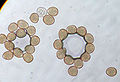
Germinating urediniospore of Puccinia graminis, model from the late 19th century, Botanical Museum Greifswald

Rust fungi can produce up to five spore types from corresponding fruiting body types during their life cycle, depending on the species. Roman numerals have traditionally been used to refer to these morphological types.

  • 0-Pycniospores (Spermatia) from Pycnidia. These serve mainly as haploid gametes in heterothallic rusts.
  • I-Aeciospores from Aecia. These serve mainly as non-repeating, dikaryotic, asexual spores, and go on to infect the primary host.
  • II-Urediniospores from Uredia (Uredinia). These serve as repeating dikaryotic vegetative spores. These spores are referred to as the repeating stage because they can cause auto-infection on the primary host, re-infecting the same host on which the spores were produced. They are often profuse, red/orange, and a prominent sign of rust disease.
  • III-Teliospores from Telia. These dikaryotic spores are often the survival/overwintering stage of the life cycle. They usually do not infect a plant directly; instead they germinate to produce basidia and basidiospores.
  • IV-Basidiospores from Teliospores. These windborne haploid spores often infect the alternate host in Spring.[9][10] They are rarely observed outside of the laboratory.

Rust fungi are often categorized by their life cycle. Three basic types of life cycles are recognized based on the number of spore types as macrocyclic, demicyclic, and microcyclic.[3] The macrocyclic life cycle has all spore states, the demicyclic lacks the uredinial state, and the microcyclic cycle lacks the basidial, pycnial, and the aecial states, thus possess only uredinia and telia. Spermagonia may be absent from each type but especially the microcyclic life cycle. In macrocyclic and demicyclic life cycles, the rust may be either host alternating (heteroecious) (i.e., the aecial stage is on one kind of plant but the telial stage on a different and unrelated plant), or single-host (autoecious) (i.e., the aecial and telial states on the same plant host).[3] Heteroecious rust fungi require two unrelated hosts to complete their life cycle, with the primary host being infected by aeciospores and the alternate host being infected by basidiospores. This can be contrasted with an autoecious fungus, such as Puccinia porri, which can complete all parts of its life cycle on a single host species.[9] Understanding the life cycles of rust fungi allows for proper disease management.[11]

Host plant–rust fungus relationship

[edit]

There are definite patterns of relationship with host plant groups and the rust fungi that parasitize them. Some genera of rust fungi, especially Puccinia and Uromyces, comprise species that are capable of parasitizing plants of many families.[citation needed] Other rust genera appear to be restricted to certain plant groups.[citation needed] Host restriction may, in heteroecious species, apply to both phases of life cycle or to only one phase.[3] As with many pathogen/host pairs, rusts are often in gene-for-gene relationships with their plants. This rust-plant gene-for-gene interaction differs somewhat from other gene-for-gene situations and has its own quirks and agronomic significance. Rust fungi decrease photosynthesis and elicit the emissions of different stress volatiles with increasing severity of infection.[12]

Infection process

[edit]

The spores of rust fungi may be dispersed by wind, water or insect vectors.[13] When a spore encounters a susceptible plant, it can germinate and infect plant tissues. A rust spore typically germinates on a plant surface, growing a short hypha called a germ tube. This germ tube may locate a stoma by a touch responsive process known as thigmotropism. This involves orienting to ridges created by epidermal cells on the leaf surface, and growing directionally until it encounters a stoma.[14]

Rust hypha attacking stoma (1600x magnification)

Over the stoma, a hyphal tip produces an infection structure called an appressorium. From the underside of an appressorium, a slender hypha grows downward to infect plant cells.[15] It is thought that the whole process is mediated by stretch-sensitive calcium ion channels located in the tip of the hypha, which produce electric currents and alter gene expression, inducing appressorium formation.[16]

Once the fungus has invaded the plant, it grows into plant mesophyll cells, producing specialized hyphae known as haustoria. The haustoria penetrate cell walls but not cell membranes: plant cell membranes invaginate around the main haustorial body forming a space known as the extra-haustorial matrix. An iron- and phosphorus-rich neck band bridges the plant and fungal membranes in the space between the cells for water flow, known as the apoplast, thus preventing the nutrients reaching the plant's cells. The haustorium contains amino acid- and hexose sugar- transporters and H+-ATPases which are used for active transport of nutrients from the plant, nourishing the fungus.[17] The fungus continues growing, penetrating more and more plant cells, until spore growth occurs. The process repeats every 10–14 days, producing numerous spores that can be spread to other parts of the same plant, or to new hosts.

Common rust fungi in agriculture

[edit]

[9][11][18]

Management

[edit]

Research

[edit]

Efforts to control rusts began to be scientifically based in the 20th century.[21] Elvin C. Stakman initiated the scientific study of host resistance, which had heretofore been poorly understood and handled by individual growers as part of the breeding process.[21] Stakman was followed by H. H. Flor's extensive discoveries of rust genetics.[21] In order to study rust metabolics, Tervet et al., 1951 developed the Cyclone Separator.[21] The cyclone separator uses the cyclonic separation mechanism to allow the mechanised collection of spores for study – Cherry & Peet 1966's improved version gathers even more efficiently.[21] This device was first put to work testing the composition of the spores themselves, especially substances coating the outside of the spores which signal population density.[21] When detected they help prevent crowding.[21]

Gene cloning and other methods of genetic engineering can provide a much wider range of R genes and other sources of rust resistance – with reduced delay before deployment – if regulation of genetic engineering permits.[22]

Control

[edit]

The control methods of rust fungus diseases depend largely on the life cycle of the particular pathogen. The following are examples of disease management plans used to control macrocyclic and demicyclic diseases:

Macrocyclic disease: Developing a management plan for this type of disease depends largely on whether the urediniospores (rarely termed the "repeating stage") occur on the economically important host plant or the alternate host.[citation needed] For example, the repeating stage in white pine blister rust disease does not occur on white pines but on the alternate host, Ribes spp. During August and September Ribes spp. give rise to teliospores which infect white pines. Removal of the alternate host disrupts the life cycle of the rust fungi Cronartium ribicola, preventing the formation of basidiospores which infect the primary host. Although spores from white pines cannot infect other white pines, survival spores may overwinter on infected pines and reinfect Ribes spp. the following season. Infected tissue is removed from white pines and strict quarantines of Ribes spp. are maintained in high risk areas.[citation needed]

Puccinia graminis is a macrocyclic heteroecious fungus that causes wheat stem rust disease.[citation needed] The sexual stage in this fungus occurs on the alternate host – barberry – and not wheat. The durable spore type produced on the alternate host allows the disease to persist in wheat even in more inhospitable environments. Planting resistant crops will prevent disease, however, virulence mutations will give rise to new strains of fungi that overcome plant resistance.[citation needed] Although the disease cannot be stopped by removal of the alternate host, the life cycle is disrupted and the rate of evolution is decreased because of reduced genetic recombination. This allows resistance bred crops to remain effective for a longer period of time.[9][23]

Demicyclic disease: Because there is no repeating stage in the life cycle of demicyclic fungi, removal of the primary or the alternate host will disrupt the disease cycle.[citation needed] This method, however, is not highly effective in managing all demicyclic diseases. Cedar-apple rust disease, for example, can persist despite removal of one of the hosts since spores can be disseminated from long distances. The severity of cedar-apple rust disease can be managed by removal of basidiospore producing galls from junipers or the application of protective fungicides to junipers.[24]

Home control

[edit]

Rust diseases are very hard to treat. Fungicides, such as Mancozeb, may help but may never eradicate the disease.[citation needed] Some organic preventative solutions are available and sulphur powder is known to stop spore germination. High standards of hygiene, good soil drainage, and careful watering may minimize problems. Any appearance of rust must be immediately dealt with by removing and burning all affected leaves.[citation needed] Composting, or leaving infected vegetation on the ground, will spread the disease.[citation needed]

Commercial control

[edit]

In some large acreage crops, fungicides are applied by air. The process is expensive and fungicide application is best reserved for seasons when foliar diseases are severe. Research indicates, the higher the foliar disease severity, the greater the return from the use of fungicides.[25] Southern corn rust disease, can be confused with common rust. Southern rust's distinguishing characteristic is that pustules form mostly on the upper leaf surface and spores are more orange in color. Southern rust spreads more quickly and has a higher economic impact when hot, humid weather conditions persist. Timely fungicide applications to control southern rust are more crucial than with common rust.[26]

A variety of preventative methods can be employed for rust diseases:

  • High moisture levels may exacerbate rust disease symptoms. The avoidance of overhead watering at night, using drip irrigation, reducing crop density, and using fans to circulate air flow may decrease disease severity.
  • The use of rust-resistant plant varieties
  • Crop rotation can break the disease cycle because many rusts are host-specific and do not persist long without their host.
  • Inspection of imported plants and cuttings for symptoms. It is important to continually inspect the plants because rust diseases have a latent period (plant has the disease but shows no symptoms).
  • Use of disease-free seed can reduce incidence for some rusts[23]

Host plants affected

[edit]

It is probable that most plant species are affected by some species of rust.[citation needed] Rusts are often named after a host species that they infect. For example; Puccinia xanthii infects the flowering plant cocklebur (Xanthium). Recently, a total of 95 rust fungi belonging to 25 genera associated with 117 forest plant species belonging to 80 host genera under 43 host families were reported from the Western Ghats, Kerala, India.[3] Rust fungi include:

Rust infected host genera include:[3]

Some of the better known hosts include:

Hyperparasites of rusts

[edit]

In the family Sphaeropsidaceae of Sphaeropsidales fungi, species of the genus Darluca are hyperparasites on rusts.[27]

[edit]

See also

[edit]

References

[edit]
[edit]
Revisions and contributorsEdit on WikipediaRead on Wikipedia
from Grokipedia
Rust fungi, formally classified in the order Pucciniales within the phylum , are obligate parasitic organisms that infect a wide array of , causing characteristic rust-colored diseases through the production of reddish-brown spores. These fungi, numbering approximately 7,000 to 8,000 described across approximately 18 families, are biotrophic, meaning they derive nutrients solely from living host tissues via specialized structures called haustoria, and cannot be cultured on artificial media under standard conditions. The biology of rust fungi is distinguished by their highly complex life cycles, which can involve up to five distinct spore stages—teliospores, basidiospores, pycniospores (spermatia), aeciospores, and urediniospores—and often require alternation between two unrelated host plants (heteroecious cycle), though some complete their cycle on a single host (autoecious). This multiplicity of stages allows for both sexual and asexual reproduction, with urediniospores serving as the primary means of rapid dissemination and repeated infection within a growing season. Host specificity is a hallmark, driven by long-term co-evolution, resulting in most species targeting particular plant genera or families, from primitive ferns to advanced monocots and dicots like cereals and legumes. Economically, rust fungi pose major threats to global , inflicting billions in annual losses through epidemics on staple crops such as (Puccinia graminis), soybeans, and (Hemileia vastatrix), as well as forestry species like white pine (Cronartium ribicola). Management relies on breeding resistant varieties, applications, and eradication of alternate hosts, but their genetic variability and ability to evolve new pathotypes challenge ongoing control efforts. Recent genomic studies have revealed insights into their large, repeat-rich genomes and effector proteins that manipulate host immunity, aiding in the development of durable resistance strategies.

Taxonomy and Characteristics

Definition and Morphology

Rust fungi, belonging to the order Pucciniales within the phylum , are obligate biotrophic parasites that depend entirely on living host plants for nutrient acquisition and completion of their life cycle. These fungi encompass approximately 7,800 described , making them one of the largest groups of plant-pathogenic fungi. They are highly specialized, forming intimate associations with vascular plants, including ferns, gymnosperms, and angiosperms, and are found worldwide wherever suitable hosts occur. Morphologically, rust fungi are characterized by dikaryotic hyphae, which consist of cells containing two genetically distinct nuclei resulting from plasmogamy during their sexual phase. These hyphae penetrate host tissues and produce haustoria—specialized, bulbous structures that invaginate host cell walls to absorb nutrients without directly lysing the cells, thereby sustaining the biotrophic lifestyle. On infected plants, they form visible pustules or sori, which are colorful aggregations of spores; for example, orange uredinia release urediniospores for repeated infections, while black telia contain teliospores that overwinter and initiate sexual reproduction. These spore masses often rupture the host epidermis, creating raised, powdery eruptions that vary in hue from yellow to reddish-brown. Infection by rust fungi induces characteristic symptoms on host plants, including (yellowing of leaves due to degradation), (localized tissue death), and reduced as fungal structures interfere with function. The distinct rust-colored spores coating affected surfaces further highlight the damage, often leading to stunted growth and weakened vigor in severe cases. The term "" originates from the resemblance of these spore masses to the reddish-brown oxidation product on corroded metal, a descriptive name noted since ancient agricultural observations.

Classification and Diversity

Rust fungi are classified in the phylum , subphylum Pucciniomycotina, class Pucciniomycetes, and order Pucciniales, representing one of the largest and earliest diverging lineages within the . The order Pucciniales includes approximately 7,000 to 8,000 described species, accounting for about 25% of all known species, and is organized into 18 families, such as Pucciniaceae, Melampsoraceae, and Pucciniastraceae. Within these families, has historically relied on morphological characteristics of spore stages, though modern classifications incorporate phylogenetic analyses to resolve relationships among genera. The diversity of rust fungi is dominated by a few large genera, with encompassing over 4,000 species, Uromyces around 800 species, and Phragmidium more than 60 species; these genera together represent a significant portion of the order's total across approximately 130 to 168 accepted genera. For instance, graminis, a prominent species in the genus , exemplifies the group's importance as pathogens. Overall, at least 334 generic names have been proposed, reflecting ongoing taxonomic refinements based on molecular data. Rust fungi exhibit a , occurring on all continents except , with the highest species diversity concentrated in tropical regions where host plant variety is greatest. Their evolutionary origins trace back to the period, approximately 113 to 115 million years ago, as estimated through analyses, with evidence including aecia on ancient leaves from the Eocene providing the earliest direct records around 52 million years ago. Subdivisions within rust fungi are primarily based on life cycle complexity, distinguishing macrocyclic forms that complete all five spore stages from demicyclic and microcyclic types with reduced stages adapted to specific hosts. These categories highlight the order's , though detailed life cycle mechanics vary across taxa.

Life Cycle and Reproduction

Spore Types and Stages

Rust fungi in the order Pucciniales exhibit a complex life cycle characterized by up to five spore types that alternate between haploid and dikaryotic phases, facilitating sexual and asexual reproduction. The progression begins with the telial stage, where diploid teliospores serve as resting structures, followed by basidial germination producing meiotic basidiospores, pycnial formation with sexual pycniospores, aecial dikaryotization yielding aeciospores, and uredinial multiplication via urediniospores. This sequence enables the fungus to overwinter, initiate infection, mate, and proliferate, often involving two host species in heteroecious cycles. Teliospores are thick-walled, diploid resting spores produced in the on the primary host, typically appearing as dark brown or black pustules that overwinter or oversummer on dead tissue. They are bicelled, with sizes varying by but often 30-50 μm in length, and their germination requires high humidity and a narrow range, such as 10-20°C, to form basidia. These spores are resistant to and , ensuring survival during adverse conditions. Upon germination in the basidial stage, teliospores undergo to produce four to eight haploid basidiospores, which are fragile, , and measure 10-20 μm in diameter. These spores are forcibly ejected and initiate on the alternate host via stomata, germinating best under high and temperatures around 15-20°C, with limited dispersal distance due to their delicacy. In the pycnial stage on the aecial host, haploid forms flask-shaped pycnia that release pycniospores (spermatia), small (5-10 μm), or brightly colored spores dispersed by to facilitate and dikaryotization. Pycniospores are vulnerable to UV and , requiring moist conditions for viability, and their nectar-like attracts vectors. Following mating, the aecial stage produces dikaryotic aeciospores in cup- or blister-like structures, which are light orange, 20-30 μm in size, with thick walls and ornamented surfaces for dispersal to the telial host. occurs with leaf wetness and humidity, often at 15-25°C, enabling long-distance wind transport up to hundreds of meters. The uredinial stage features repeating asexual urediniospores, rust-colored (15-30 μm), spiny, and wind-dispersed from pustules on the telial host, driving spread through multiple infection cycles. Optimal requires free water and temperatures of 15-25°C, with high humidity promoting rapid proliferation.

Cyclic Variations and Reproduction Modes

Rust fungi exhibit diverse life cycle variations that reflect adaptations to different ecological niches and host availabilities. These cycles are classified based on the number of spore stages produced, ranging from complete to abbreviated forms. Macrocyclic cycles include all five spore stages—pycniospores, aeciospores, urediniospores, teliospores, and basidiospores—allowing for both sexual and multiple asexual phases. A representative example is Puccinia graminis, the causal agent of wheat stem rust, which completes its full cycle across two hosts. In contrast, demicyclic cycles omit the uredinial stage, featuring only four spore types and relying more heavily on sexual reproduction for propagation. Cedar-apple rust, caused by Gymnosporangium juniperi-virginianae, exemplifies this pattern, where infection alternates between junipers and rosaceous hosts like apples without an intermediate proliferative phase. Microcyclic cycles are the most simplified, producing solely teliospores and basidiospores, thus forgoing asexual multiplication stages entirely. Puccinia malvacearum, responsible for hollyhock rust, follows this abbreviated cycle on a single host, emphasizing survival through dormant teliospores. Host alternation further diversifies rust life cycles, with heteroecious requiring two unrelated host to complete development, while autoecious confine their entire cycle to one host or . Heteroecious rusts, such as P. graminis, utilize a primary host (e.g., ) for uredinial and telial stages and an alternate host (e.g., barberry) for pycnial and aecial stages, synchronizing with seasonal host phenologies. This dual-host strategy contrasts with autoecious forms, like many Uromyces , which reproduce fully on a single host type, reducing dependency on host proximity and environmental cues for alternation. Microcyclic rusts are invariably autoecious, as their simplified cycles do not necessitate host switching. Reproductive modes in rust fungi balance and rapid proliferation through distinct sexual and asexual mechanisms. Sexual reproduction occurs via pycnia, where haploid pycniospores facilitate and , followed by in teliospores to produce recombinant basidiospores. This process enhances adaptability by introducing variability, particularly in heteroecious . Asexual reproduction, conversely, relies on urediniospores in macrocyclic and some demicyclic cycles, enabling exponential clonal spread during favorable conditions without host alternation. Overwintering primarily occurs through thick-walled teliospores, which remain dormant in plant debris or soil, germinating in spring to initiate the next cycle via basidiospores. These cyclic variations confer evolutionary advantages tailored to environmental pressures. Heteroecy promotes long-distance dispersal by leveraging phenological differences between unrelated hosts, reducing competition and exposure to localized defenses, as seen in P. graminis where barberry serves as a genetic bridge across fields. Autoecy, prevalent in stable or isolated habitats, simplifies the life cycle by eliminating the need for alternate hosts, conserving energy and enhancing survival in uniform environments, as in microcyclic P. malvacearum. Such flexibility underscores the rust fungi's success as persistent pathogens, with shortened cycles like demicyclic forms representing evolutionary reductions that prioritize efficiency over complexity.

Host Interactions

Host Specificity and Relationships

Rust fungi exhibit a high degree of host specificity, typically restricted to a narrow range of plant species, often at the genus level, due to co-evolutionary adaptations that limit successful infection to closely related hosts. For instance, Puccinia striiformis f. sp. tritici, the causal agent of wheat stripe rust, primarily infects wheat (Triticum spp.) and related cereals like barley and rye, with rare exceptions demonstrating limited compatibility on more distant grasses. This specificity arises from genetic and biochemical barriers that prevent colonization of non-host plants, ensuring the fungus exploits compatible hosts for nutrient acquisition. In heteroecious rust species, such as Puccinia graminis f. sp. tritici (wheat stem rust), the life cycle alternates between a graminaceous primary host like wheat and a non-grass alternate host, typically barberry (Berberis spp.), where sexual reproduction occurs, further constraining the host range to these distinct taxa. The interactions between rust fungi and their hosts are governed by the gene-for-gene hypothesis, first elucidated through studies on the flax-Melampsora lini pathosystem, where specific avirulence (Avr) genes in the fungus correspond to resistance (R) genes in the plant. When an Avr gene product is recognized by the matching R gene product, it triggers a (HR) in the host, characterized by localized cell death that restricts fungal spread and confers resistance. In rusts like Puccinia graminis, Avr effectors such as AvrSr22 directly interact with the plant's Sr22 R protein, initiating HR and preventing infection; mismatches between Avr and R genes allow virulence, enabling pathogen proliferation. This recognition model underscores the molecular basis of compatibility, where host specificity is determined by the presence or absence of these matching gene pairs. Biochemical signals play a central in mediating rust-host compatibility, with fungal elicitors—such as peptide-based effectors—inducing defense responses in incompatible interactions. For example, effectors like AvrL567 from Melampsora lini act as both virulence factors in susceptible hosts and elicitors in resistant ones, where they are detected by R proteins to activate immunity pathways including HR. Conversely, in compatible hosts, effectors suppress immunity by inhibiting key defense components; wheat effectors such as those from Puccinia striiformis f. sp. tritici (e.g., Pst_12806) interfere with production and , allowing haustorial formation and nutrient uptake. These secreted proteins, often cysteine-rich and translocated via haustoria, exemplify the dual of effectors in promoting infection while risking recognition as danger signals. The narrow host specificity and gene-for-gene dynamics reflect an ongoing co-evolutionary between rust fungi and their plant hosts, where selection pressures drive rapid adaptation. Plants evolve new R genes to detect rust effectors, prompting fungal of virulence alleles that evade recognition, as seen in the diversification of Avr loci in Puccinia species under host-associated selection. This Red Queen-like dynamic results in boom-and-bust cycles of resistance and , with rust populations like Puccinia striiformis f. sp. tritici exhibiting high genetic variability through and recombination to overcome deployed host resistances. Such co-evolution maintains the specificity of rust-host relationships, balancing fitness with host defense efficacy over evolutionary timescales.

Infection Mechanism

Rust fungi initiate infection primarily through urediniospores, which land on the host surface and in response to free water or high , typically requiring a period of darkness for optimal development. involves the extension of a germ tube that orients toward stomatal openings, often guided by topographic cues on the surface, culminating in the formation of a specialized directly over the . This structure generates to facilitate entry without mechanical damage to the . Upon attachment, the produces an infection peg that penetrates the stomatal pore, allowing the to enter the substomatal cavity without breaching host cell walls directly. Inside the leaf, infection hyphae extend intercellularly through the mesophyll, minimizing host detection by avoiding intracellular initially. These hyphae then differentiate haustoria, specialized feeding structures that invaginate host mesophyll cell walls and form an intimate interface within living host cells via a narrow penetration peg, enabling the to establish biotrophy. Haustoria serve as the primary site for nutrient acquisition, actively transporting host-derived sugars such as , glucose, and across the extrahaustorial matrix using specialized transporters like HXT1. This uptake is coupled with the secretion of effector proteins that manipulate host and suppress defense responses, such as production, thereby sustaining the host cell's viability for prolonged nutrient extraction. In compatible interactions, this interface allows the fungus to redirect a significant portion of the host's photosynthates toward fungal growth. As the infection progresses, fungal biomass accumulates, leading to the formation of uredinia—raised pustules on the host surface that rupture to release new urediniospores. This sporulation marks the onset of visible symptoms, including around infection sites, and can cycle repeatedly under favorable conditions, exacerbating tissue damage and culminating in premature defoliation in severe cases. The latency period, from initial to the appearance of mature uredinia, typically spans 7-14 days, depending on and host species.

Ecological and Economic Impacts

Agricultural and Economic Significance

Rust fungi represent one of the most devastating groups of plant pathogens in , primarily affecting staple crops and leading to widespread yield reductions and increased production costs. Major rust diseases impact cereals such as and , legumes including , beverage crops like and , and various ornamentals. Prominent examples include stem rust caused by Puccinia graminis f. sp. tritici, particularly the aggressive Ug99 race first identified in in 1999, which threatens production across , the , and due to its ability to overcome resistance in many cultivars. leaf rust, incited by , severely affects plantations in tropical regions, while Asian soybean rust, driven by Phakopsora pachyrhizi, poses a significant risk to yields in the and following its introduction from native ranges in . In 2024, diseases including rusts caused an estimated 8.3% reduction in U.S. harvested yields. The economic toll of these rust diseases is profound, with global annual losses from rusts alone estimated at $4.3 to $5.0 billion, encompassing direct yield reductions and expenditures. In coffee-producing regions, H. vastatrix epidemics have caused over $1 billion in losses and displaced around 250,000 workers in since 2012, exacerbating rural poverty and reducing export revenues. rust similarly drives substantial costs, with potential U.S. losses ranging from $640 million to $1.3 billion in the event of widespread outbreaks, including heightened use that can increase production expenses by up to 15%. These impacts extend to , as rusts necessitate stringent quarantines; for instance, Asian soybean rust's long-distance dispersal via wind currents, including trade winds from to in 2004, prompted domestic U.S. quarantines and disrupted protocols. Historical epidemics highlight the catastrophic potential of rust outbreaks, often amplified by favorable weather and susceptible varieties. The 1916 wheat stem rust epidemic in the United States and destroyed approximately 300 million bushels of , equivalent to over 30% of the U.S. harvest that year, leading to severe food shortages and economic distress in the Midwest. Such events have spurred international efforts, including surveillance networks like the Global Rust Reference Center, to mitigate future threats from evolving rust races like Ug99.

Environmental and Ecological Role

Rust fungi play a crucial role in natural ecosystems as biotrophic pathogens, regulating populations by infecting and reducing the vigor of host , thereby preventing any single from dominating the community. This density-dependent control helps maintain a balance in structure, particularly in forests and grasslands where infections can limit the spread of aggressive or invasive plants. For instance, in wild ecosystems, rusts contribute to by causing defoliation and mortality in overabundant tree , allowing plants and younger cohorts to establish. These fungi also promote through host shifts and co-evolutionary dynamics, where specialized rust species adapt to particular lineages, fostering diversification among both and hosts over evolutionary time. By exerting selective pressure on host , rusts encourage within populations, enhancing overall resilience to environmental stresses. Additionally, hyperparasitic fungi that infect rusts themselves help regulate densities, preventing unchecked epidemics and contributing to trophic stability in fungal- interactions. These hyperparasites, such as certain species, reduce rust spore viability and sporulation, thereby mitigating their impacts on native . Climate change is altering the distribution and intensity of rust fungi in wild ecosystems, with warmer temperatures enabling range expansions into previously unsuitable habitats. Altered rainfall patterns, particularly increased humidity and irregular wet periods, can exacerbate rust epidemics by prolonging favorable conditions for and dispersal, leading to heightened pressure on native . Global distribution changes include poleward migrations at an rate of 2.7 km per year for many fungal pathogens, including , as observed since 1960. Invasive spreads further amplify these effects; for instance, poplar rust (Melampsora larici-populina) has expanded across , causing defoliation in native stands and altering riparian forest composition. In North American forests, white pine blister rust (), an introduced pathogen, induces widespread defoliation and tree mortality in high-elevation five-needle pines, facilitating shifts in species succession toward more rust-tolerant . These dynamics underscore rust fungi's evolving role in reshaping hotspots amid ongoing environmental pressures.

Management Strategies

Cultural and Chemical Controls

Cultural controls for rust fungi emphasize practices that disrupt the pathogen's life cycle and reduce inoculum sources without relying on chemical interventions. Crop rotation is a foundational strategy, involving the alternation of susceptible host crops with non-hosts to prevent the buildup of rust spores in soil and debris, thereby limiting disease carryover to subsequent seasons. For wheat stem rust caused by Puccinia graminis, eradication of common barberry (Berberis vulgaris), the alternate host essential for sexual reproduction, has proven highly effective; the U.S. Barberry Eradication Program, initiated in 1918 by the USDA and state partners, removed over 500 million bushes across wheat-growing regions, significantly curbing epidemics that previously caused up to 60% yield losses. Residue removal through sanitation—such as destroying infected plant debris and volunteer crops—further minimizes overwintering spores, while adjusting planting dates to avoid peak spore release periods, like early sowing for leaf rust in wheat, reduces initial infection risks. These methods promote plant vigor via balanced fertilization and irrigation to enhance resistance without excess nitrogen, which can exacerbate susceptibility. Chemical controls primarily involve fungicides applied to protect crops from rust infection, with triazoles and strobilurins being widely used classes due to their systemic action and efficacy against urediniospores. Triazoles, such as and , inhibit in fungal membranes, providing both preventive and curative effects when applied at early disease stages; for instance, at 4–10 fl oz per 100 gallons of water effectively suppresses rust in ornamentals. Strobilurins, like at 0.2–0.4 oz per 1,000 sq ft, block mitochondrial respiration in fungi, offering prolonged protection (up to 28 days) and are often tank-mixed with triazoles for broader spectrum control in crops like and turfgrass. Application timing is critical: preventive sprays before spore are preferred over curative ones post-, with resistance achieved by rotating fungicide classes to avoid selection for resistant strains, such as limiting consecutive strobilurin uses. In home gardens, rust management focuses on simple, accessible techniques to maintain plant health and limit spread. Pruning and removing infected leaves or stems promptly reduces spore dispersal, while thorough sanitation—cleaning tools and disposing of debris—prevents reinfection; these steps are particularly effective for ornamental rusts when combined with improved air circulation through spacing. Sulfur-based sprays, an organic option used for over 2,000 years, suppress spore germination when applied as a dust or wettable powder every 7–14 days before symptoms appear, though applications should avoid temperatures above 80°F to prevent phytotoxicity. Commercial strategies integrate cultural and chemical controls within broader (IPM) frameworks, monitoring rust incidence to apply interventions only when populations exceed economic thresholds, such as an average of one pustule per leaf for to avoid yield impacts. For large-scale fields, fungicides may be delivered via to ensure uniform coverage, especially in wheat belts, while combining these with resistant varieties enhances overall efficacy.

Breeding, Genetic, and Research Advances

Breeding programs for rust resistance in crops like have historically emphasized two main strategies: vertical resistance, which is race-specific and governed by major genes such as the Sr genes that confer hypersensitive responses to particular races, and horizontal resistance, which provides broad-spectrum, quantitative protection through partial resistance mechanisms that slow disease progression across multiple races. Vertical resistance, exemplified by Sr genes like Sr31 and Sr24 in , offers strong but often short-lived protection due to rapid evolution, whereas horizontal resistance, involving multiple minor genes, promotes durable control by reducing epidemic rates without complete immunity. A landmark historical effort was Norman Borlaug's work during the in the 1950s and 1960s, where shuttle breeding in developed semi-dwarf varieties with rust resistance, enabling yield increases of 20-40% while combating epidemics across and . These programs integrated vertical resistance genes from wild relatives into elite cultivars, laying the foundation for global improvement. Advances in genetic tools have enhanced breeding efficiency for rust management. Marker-assisted selection (MAS) enables precise tracking of resistance loci, such as Sr genes, accelerating the introgression of favorable alleles into breeding lines without relying solely on phenotypic screening, as demonstrated in wheat programs combining stem and stripe rust resistance. Since 2020, genome editing technologies like CRISPR-Cas9 have facilitated R gene stacking, allowing simultaneous insertion of multiple resistance genes (e.g., Yr26 for stripe rust and Pm21 for powdery mildew) into wheat to achieve enhanced broad-spectrum resistance while minimizing linkage drag. This approach has produced edited lines with stacked NLR-type R genes, improving durability against evolving rust races by mimicking natural polygenic resistance. Key research milestones have shaped rust genetics and surveillance. In the 1940s, Harold Flor's gene-for-gene hypothesis, derived from rust studies, established that specific avirulence genes in the interact with corresponding host resistance genes, providing a framework for understanding race-specific interactions in wheat rusts. The emergence of Ug99 in the 2000s prompted global surveillance efforts, including the Borlaug Global Rust Initiative, which tracked this virulent race across and the , leading to the identification of over 13 variants and the rapid deployment of resistant cultivars to avert yield losses exceeding 50% in susceptible regions. Post-2015 genomic advances in rust effectoromics have identified hundreds of candidate effectors—secreted proteins that suppress host immunity—through pipelines analyzing genomes of species like graminis, enabling targeted breeding to disrupt . These efforts, building on full genome assemblies, have revealed effector repertoires conserved across rust fungi, informing strategies to engineer recognition by host R proteins. Future directions in rust research emphasize innovative technologies for . approaches, such as designing synthetic promoters to drive expression of stacked R genes or engineering against rust effectors, hold promise for creating durable resistance in crops by integrating non-native immune pathways. Meanwhile, AI-driven modeling of rust epidemics uses to predict outbreak dynamics based on , host distribution, and genomic , improving accuracy for proactive interventions in fields. These tools synergize with breeding to adapt to climate-driven shifts in rust ranges.

Biological Interactions

Hyperparasites and Natural Enemies

Rust fungi are subject to hyperparasitism by various fungal species that directly attack their reproductive structures, particularly the uredinia and urediniospores. Darluca filum, a coelomycetous fungus, is a well-documented mycoparasite that colonizes uredinial pustules of fungi, deriving nutrients from uredospores and infected host tissue to support its growth and sporulation. This employs mycoparasitic mechanisms, including enzymatic degradation of fungal cell walls via cellulases and other hydrolases, which facilitate penetration and of rust hyphae. Similarly, (formerly Verticillium lecanii) acts as a on pathogens such as (coffee leaf rust), where it germinates on urediniospores, penetrates them through appressoria formation, and proliferates internally, often reducing spore viability by over 50% in laboratory conditions. These interactions highlight the role of mycoparasitism in limiting proliferation, with L. lecanii producing lytic enzymes like chitinases to degrade the chitin-rich walls of spores. Bacterial antagonists, particularly species of , serve as natural enemies by producing secondary metabolites that inhibit rust development. and strains secrete antibiotics such as phenazines and 2,4-diacetylphloroglucinol, which disrupt urediniospore germination and germ tube elongation, achieving up to 70-90% inhibition against pathogens like Uromyces appendiculatus (bean rust). These bacteria colonize leaf surfaces or act endophytically, competing for nutrients and inducing localized antimicrobial zones around rust infection sites. In field applications, such antagonists have reduced rust severity by 40-60% when applied as seed treatments or foliar sprays on crops like common bean. Other natural enemies include invertebrate predators and intracellular viruses that target rust fungi. Predatory mites, such as Ricoseius loxocheles, feed directly on urediniospores of H. vastatrix in coffee agroecosystems, consuming spores and thereby reducing inoculum potential by dispersing or destroying them during foraging. Certain nematodes, including aphelenchoid species like Aphelenchus avenae, act as fungal feeders that ingest rust spores and mycelia, limiting their spread in soil or on plant debris, though their impact is more pronounced in moist environments. Mycoviruses, double-stranded RNA viruses prevalent in many phytopathogenic fungi including rusts like Uromyces fabae, induce hypovirulence by impairing spore production and pathogenicity, often reducing disease severity on host plants. Recent 2023 studies have identified novel mycoviruses in U. fabae, confirming their potential role in natural regulation. These antagonists have been explored for biocontrol, particularly in for high-value crops. Experimental field trials in the have demonstrated the efficacy of Lecanicillium species against coffee rust, with foliar applications of native isolates reducing disease incidence by 50-70% in Ethiopian coffee plantations, complementing cultural practices without disrupting beneficial . Field trials of L. lecanii have shown suppression of H. vastatrix in coffee regions including and , highlighting its potential as a sustainable alternative to fungicides in tropical regions. Such applications underscore the ecological role of these enemies in regulating rust populations naturally.

Evolutionary and Molecular Aspects

Rust fungi exhibit notably large genomes, typically ranging from 70 to 200 Mb in size, with high repeat content often comprising 30-50% or more of the assembly due to prolific transposable elements. For instance, the genome of Puccinia graminis f. sp. tritici, the causal agent of wheat stem rust, spans 88.6 Mb, with approximately 45% repeats dominated by long terminal repeat retrotransposons. These genomes encode expansive secretomes, including over 1,000 candidate effector genes—small secreted proteins (SSPs) that manipulate host physiology to promote infection. In P. graminis, 1,106 SSPs have been identified, with about 84% being lineage-specific and enriched in haustoria, the specialized structures for nutrient uptake and effector delivery. The evolutionary history of rust fungi traces back to an ancient origin approximately 175-230 million years ago, during the to periods, coinciding with the diversification of early seed plants. Speciation in the Pucciniales has been predominantly driven by host jumps rather than strict , enabling shifts across plant families and genera, which has contributed to their vast diversity of over 7,000 species. across rust species reveals conserved elements in the haustorial secretome, including core effector families that facilitate biotrophy, despite high overall genomic divergence due to repeat expansions and gene family turnovers. These conserved secretomes underscore a shared evolutionary strategy for host manipulation, with effectors often under positive selection to evade plant immunity. Molecular studies have illuminated key aspects of rust through techniques like , which has profiled during infection stages, identifying upregulated pathogenesis-related genes such as those encoding cell wall-degrading enzymes and effectors in haustoria. For example, transcriptomic analyses of Puccinia striiformis f. sp. tritici reveal dynamic expression of hundreds of effectors during infection, highlighting regulatory networks that coordinate biotrophy. Functional validation of effectors has advanced post-2018 with approaches like virus-induced (VIGS) and host-induced (HIGS), demonstrating roles in suppressing immunity; meanwhile, emerging CRISPR-based tools target host genes interacting with effectors, indirectly informing fungal molecular mechanisms. changes also contribute to climate adaptation, as elevated temperatures alter effector transcript levels in P. striiformis, potentially enhancing under warming conditions. Recent advances from 2021 to 2025 include pan-genome assemblies for Puccinia species, such as P. striiformis f. sp. tritici, which integrate multiple isolates to capture structural variants and accessory genes driving virulence evolution. These pan-genomes reveal high inter-haplotype diversity and admixture events that facilitate rapid adaptation, with effector loci showing polymorphisms linked to new races overcoming host resistances. Post-2023 studies have further expanded pan-genome analyses, incorporating 2024-2025 data on structural variations to improve predictive models for emerging pathotypes. Population genomic studies of P. graminis f. sp. tritici further demonstrate how structural variations and gene flow contribute to virulence shifts, informing predictive models for emerging threats.

References

Add your contribution
Related Hubs
User Avatar
No comments yet.