Hubbry Logo
Primula verisPrimula verisMain
Open search
Primula veris
Community hub
Primula veris
logo
8 pages, 0 posts
0 subscribers
Be the first to start a discussion here.
Primula veris
Primula veris
from Wikipedia

Primula veris
Scientific classification Edit this classification
Kingdom: Plantae
Clade: Tracheophytes
Clade: Angiosperms
Clade: Eudicots
Clade: Asterids
Order: Ericales
Family: Primulaceae
Genus: Primula
Species:
P. veris
Binomial name
Primula veris
Subspecies

Primula veris subsp. macrocalyx

Primula veris, the cowslip, common cowslip, or cowslip primrose (syn. Primula officinalis Hill), is a herbaceous perennial flowering plant in the primrose family Primulaceae. The species is native throughout most of temperate Europe and western Asia,[1] and although absent from more northerly areas including much of northwest Scotland, it reappears in northernmost Sutherland and Orkney and in Scandinavia.[2] This species frequently hybridizes with other Primulas such as the common primrose Primula vulgaris to form false oxlip (Primula × polyantha) which is often confused with true oxlip (Primula elatior), a much rarer plant.

Names

[edit]

The common name cowslip may derive from the old English for cow dung, probably because the plant was often found growing amongst the manure in cow pastures.[3] An alternative derivation simply refers to slippery or boggy ground; again, a typical habitat for this plant.[4] The name "cowslop" derived from Old English still exists in some dialects, but the politer-sounding cowslip became standard in the 16th century.[5]

The species name veris ('of spring', referring to the season) is the genitive case form of Latin ver ('spring').[6] However, primrose P. vulgaris, flowers earlier, from December to May in the British Isles.[7]: 240 

Other historical common names include cuy lippe, herb peter, paigle or pagil,[8] peggle, key flower, key of heaven, fairy cups, petty mulleins, crewel, buckles, palsywort, and plumrocks.[9]

Description

[edit]
Flowers
Primula verisMHNT
Image of a trust of cowslips, gouache on vellum
Albrecht Dürer, Tuft of Cowslips, 1526, National Gallery of Art, Washington, D.C., NGA 74162

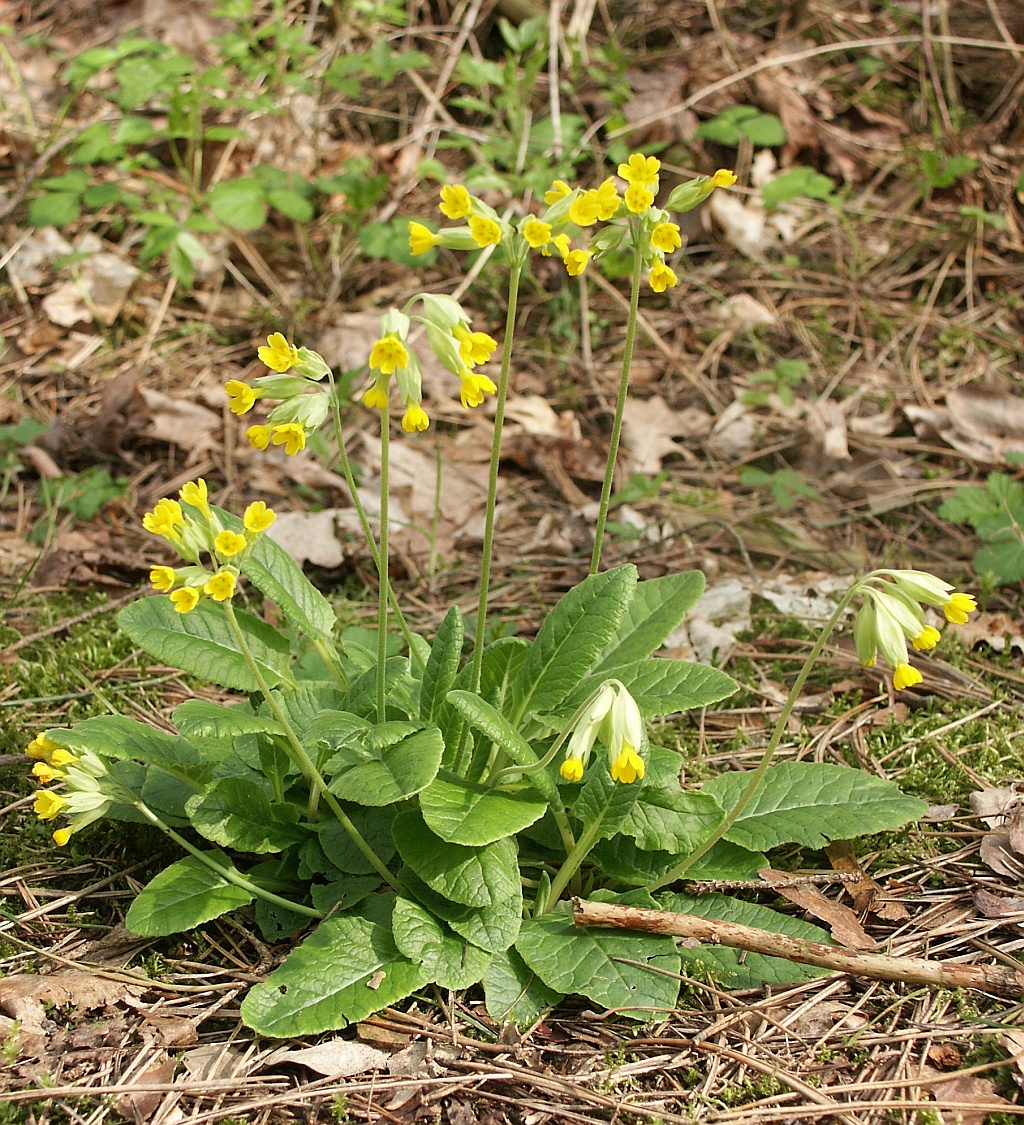
Primula veris is a variable evergreen or semi-evergreen perennial plant growing to 25 cm (10 in) tall and broad, with a rosette of leaves 5–15 cm long and 2–6 cm broad. The deep yellow flowers are produced in spring, in clusters of 10–30 blooms together on a single stem.[10] Each flower is 9–15 mm broad. Red- and orange-flowered plants occur rarely but can be locally widespread in areas where coloured primula hybrids bloom at the same time as the native cowslip, enabling cross-pollination.

Distribution and habitat

[edit]
Primula veris in a meadow.

The cowslip is frequently found on more open ground than the primrose, including open fields, meadows, coastal dunes, and clifftops.

Conservation

[edit]

The plant suffered a decline due to changing agricultural practices throughout the 1970s and 1980s in Britain. It may therefore be rare locally, though where found it may be abundant. Additionally the seeds are now often included in wildflower seed mixes used to landscape motorway banks and similar civil engineering earthworks where the plants may be seen in dense stands. This practice has led to a revival in its fortunes.[11][12][13]

Cultivation

[edit]

In cultivation this plant has gained the Royal Horticultural Society's Award of Garden Merit.[14][15]

Similar species

[edit]
Red-flowered Primula veris plants

The cowslip may be confused with the closely related Primula elatior (oxlip) which has a similar general appearance and habitat, although the oxlip has larger, pale yellow flowers more like a primrose, and a corolla tube without folds.

Chemical constituents

[edit]

The roots of Primula veris contain several glycosides of 5-methoxysalicylic methyl ester, such as primeverin[16] and primulaverin.[17] In the crude dried root, their phenolic aglycones are responsible for the typical odour reminiscent of methyl salicylate or anethole. The dried roots contain significant amounts of triterpene saponins, such as primula acid I/II, while in the flower these constituents are located in the sepals, and the dominating constituents are flavonoids.[18] Rare side effects of the saponins can be nausea or diarrhoea while some of the phenolic constituents are possibly responsible for allergic reactions.[19][20]

The subspecies macrocalyx, growing in Siberia, contains the phenolic compound riccardin C.[21]

Cuisine

[edit]

Cowslip leaves have been traditionally used in Spanish cooking as a salad green. Uses in English cookery include using the flowers to flavor country wine[22] and vinegars; sugaring to be a sweet or eaten as part of a composed salad while the juice of the cowslip is used to prepare tansy for frying.[citation needed] The close cousin of the cowslip, the primrose P. vulgaris has often been confused with the cowslip and its uses in cuisine are similar with the addition of its flowers being used as a colouring agent in desserts.

English children's writer Alison Uttley in her story "The Country Child" (1931) of family life on an English farm from the perspective of a 9-year-old farmer's daughter Susan describes cowslips among the favourite flowers of her heroine and mentions her participation in preparing them for making cowslip wine, a locally important process. After its initial preparation, cowslip wine "would change to sparkling yellow wine" offered in "little fluted glasses" with a biscuit to important "morning visitors" of the farm: such as the curate coming for subscriptions, the local squire (landowner) and an occasional dealer (of their produce). This wine "was more precious than elderberry wine, which was the drink for cold weather, for snow and sleet".[22]

In the midland and southern counties of England, a sweet and pleasant wine resembling the muscadel is made from the cowslip flower, and it is one of the most wholesome and pleasant of home-made wines, and slightly narcotic in its effects. In times when English wines were more used, every housewife in Warwickshire could produce her clear cowslip wine…the cowslip is still sold in many markets for this purpose, and little cottage girls still ramble the meadows during April and May in search of it…country people use it as a salad or boil it for the table.[23]

Anne Pratt

Myth and folklore

[edit]

This herb was already mentioned by Pliny the Elder for its early blooming attributes. Species from the genus Primula along with other ritual plants played a significant role in the pharmacy and mythology of the Celtic druids, likely as an ingredient of magical potions to increase the absorption of other herbal constituents. In the Middle-Ages it was also known as St. Peter's herb or Petrella and was sought after by Florentine apothecaries. Hildegard von Bingen recommended the medicinal parts only for topical use but the leaves were also consumed as food. Other common names at the time were 'Herba paralysis', 'Verbascum', primrose, or mullein leaves. It was frequently misidentified as or confused with similar species from the genus Primula.[24]

References

[edit]
[edit]
Revisions and contributorsEdit on WikipediaRead on Wikipedia
from Grokipedia
Primula veris, commonly known as cowslip, is a clump-forming, herbaceous plant in the family Primulaceae, characterized by a basal rosette of crinkled, to lance-shaped leaves up to 20 cm long and upright stems bearing nodding, fragrant, bright yellow flowers in umbels of 1–30 blooms, typically measuring 0.5–0.75 inches long, that appear from April to May. Native to temperate regions of Europe and western , it features a short stout , fibrous roots, and distylous flowers that promote , with the species name veris deriving from Latin for "of spring," reflecting its early blooming habit. This hemicryptophyte thrives in well-drained, base-rich soils such as loams, clays, or with a range of 5.0–8.0, favoring herb-rich meadows, grasslands, scrub, woodland edges, and cliffs, while preferring full sun to partial shade but being intolerant of deep shade and waterlogged conditions. It tolerates deeper shade with consistent moisture in deep, humusy, organically rich soils, and it can naturalize in eastern where introduced. In the , it occurs in 1632 10-km squares in and 369 in Ireland, with a broader European range extending to and an altitudinal limit up to 2300 m in the . Across the , it is commonly found in grasslands, ancient woodlands, hedgerows, and verges on dry, substrates. Ecologically, P. veris is an obligate outbreeder primarily pollinated by such as bumblebees (Bombus spp.), with limited averaging 0.11–0.12 m, and it forms a short-term persistent , contributing to its ability to self-seed and form colonies that attract and other pollinators. The plant supports , including providing nectar for bees, beetles, and , and serving as a larval source for the Duke of Burgundy butterfly. Although widespread, populations have declined by 13.7% in the UK since due to agricultural intensification and habitat loss, though numbers have stabilized or increased since the 1980s through reintroduction via wildflower seed mixtures. Historically, P. veris has been used in for ailments like and coughs, with its citrus-flavored leaves employed in and flowers in English country wine production, underscoring its cultural significance alongside its ornamental value in gardens where it grows in USDA zones 3–8, reaching heights of 6–8 inches with a spread of 4–6 inches.

Taxonomy and nomenclature

Classification and synonyms

Primula veris belongs to the family Primulaceae within the order , class Magnoliopsida, phylum Tracheophyta, and kingdom Plantae. The species was first described by in in 1753. The genus Primula is characterized by , a dimorphic floral polymorphism involving long-styled (pin) and short-styled (thrum) forms that promotes , serving as a key diagnostic trait in its . Several historical synonyms reflect morphological variations observed in European populations, such as differences in flower structure and leaf pubescence, leading to misinterpretations as distinct species. Notable synonyms include Primula officinalis Hill (1765), based on perceived medicinal uses and slight floral differences; Primula pannonica A.Kern. (1886), described from Hungarian variants; and Primula pyrenaica Miégev. (1863), from Pyrenean forms with larger calyces. These names have been reduced to synonymy under P. veris due to overlapping variation and genetic continuity. The species encompasses several distinguished primarily by calyx size, indumentum, and geographic isolation. Primula veris subsp. veris L. (1753) is the nominotypical , widespread across temperate . Primula veris subsp. canescens (Opiz) Hayek ex Lüdi (1927) occurs in central and south-central , notable for its hoary leaves. Primula veris subsp. columnae (Ten.) Maire & Petitm. (1908) is distributed in southern to , often in montane habitats. Primula veris subsp. macrocalyx (Bunge) Lüdi (1927) extends into , , and , characterized by enlarged calyces.

Common names and etymology

Primula veris is known by various common names across , reflecting its cultural and regional significance. In English, it is primarily called cowslip, with historical variants including paigle, peggle, herb Peter, key of heaven, bunch of keys, and lady's keys. In German, it is commonly referred to as Schlüsselblume or Frühlings-Schlüsselblume, meaning "key flower" or "spring key flower," due to the of flowers resembling a cluster of keys. In French, names include , primevère officinale, and regional dialects such as paigle jaune, evoking the plant's early spring appearance. The genus name Primula derives from the Latin primulus, a diminutive of primus meaning "first," alluding to the plant's status as one of the earliest spring bloomers. The specific epithet veris is the genitive form of Latin ver, meaning "spring," emphasizing its seasonal timing. The English name "cowslip" originates from Old English cūslyppe, combining ("cow") with slyppe ("slime" or "slop"), referring to cow dung or slobber, as the plant often grows in damp, manure-enriched meadows. "Paigle," an archaic English term, has uncertain origins but may relate to dialectal words for yellow flowers or keys. The "key" names in English and German stem from the flower cluster's keyring-like shape, symbolizing St. Peter's keys in some folklore. In French, "coucou" likely derives from the cuckoo bird (coucou), whose call coincides with the plant's flowering in spring. Historically, Primula veris appeared in medieval herbals under names like herba or wort, reflecting its reputed use against and tremors, as documented in early botanical texts. These names evolved from ancient observations of the plant's habitat, appearance, and blooming period, with references traceable to 16th-century works by herbalists like John Gerard.

Description

Morphology

Primula veris is a rosette hemicryptophyte that forms clumps via short, thick rhizomes, growing to a height of 8–30 cm. It exhibits a basal rosette of leaves with naked flowering scapes arising directly from the rhizomatous base, and it is sometimes semi-evergreen in milder climates. The roots are numerous and fibrous, extending up to 15 cm in length and storing grains measuring 4–10 µm. The leaves are basal, simple, and arranged in a rosette, measuring 5–15(–20) cm long and 2–6 cm wide, with shapes ranging from ovate to ovate-oblong or lanceolate. They feature a rugose (crinkled) surface, finely toothed margins, and are pubescent or glabrescent above with greyish or whitish-tomentose (farinose or mealy) undersides; petioles are shorter than the lamina and membranously winged at the base. Flowers are borne in umbellate inflorescences of 1–30 nodding blooms per scape, with scapes reaching (5–)10–20(–30) cm tall, pilose, and farinose when young. Each flower is bright yellow (rarely white or cream), 8–17 mm in diameter, and funnel- or bell-shaped, featuring a corolla with obcordate, emarginate lobes 5–6 mm wide and a tube equal in length to the calyx. The species displays heterostyly with two morphs: long-styled 'pin' flowers where stamens are inserted midway in the corolla tube, and short-styled 'thrum' flowers where stamens are near the tube apex, promoting outcrossing. The fruit is an ovoid capsule, 5–8 mm long, shorter than or equal to the calyx length, dehiscing by 5–10 apical teeth or valves. Seeds are dark brown to blackish, 1–1.5 mm in diameter, and weigh 0.69–1.24 mg.

Reproduction and life cycle

Primula veris is a hemicryptophyte that forms overwintering rosettes of leaves, remaining dormant during winter before resuming growth in spring. The plant typically flowers from early to mid-May in the , with peak blooming in late , producing umbels of pendulous, heterostylous flowers that facilitate its reproductive strategy. Sexual reproduction in P. veris is predominantly amphimictic, relying on production, with rare instances of vegetative propagation through lateral rosettes or limited branching. The exhibits distyly, a form of characterized by two floral morphs: long-styled "pin" flowers with exserted stigmas and mid-tube anthers, and short-styled "thrum" flowers with exserted anthers and a stigma positioned near the corolla base. This dimorphism promotes by ensuring effective pollen transfer between compatible morphs, as the is self-incompatible and acts as an obligate outbreeder dependent on pollinators. success varies by morph, with intermorph rates typically low at 2–16% for pins and 1–6% for thrums, underscoring the importance of pollinator visitation for set. Following , each capsule produces an average of 27.9 , which are dispersed primarily by over short distances of 0.11–0.12 m from the parent plant. The exhibit physiological and require cold stratification to break , along with exposure to and an optimal temperature of 16.1°C for , achieving up to 85% viability after 16 months of storage. In natural populations, viability is often low at 2–4%, contributing to slow rates. As a long-lived , P. veris has an estimated average lifespan of 52.3 years in optimal conditions, with individuals forming limited clonal patches through occasional extension and rosette production, though remains the primary mode of population persistence.

Distribution and ecology

Geographic range

Primula veris is native to the temperate zones of and western . Its range spans from the and Ireland in the west to the and the Russian border in the east, encompassing countries such as , , , Sweden, Finland, and extending southward to the , , and parts of the Mediterranean fringe, though it is absent from much of the hotter, drier southern regions. In , the species occurs in temperate areas including , the , the , , , , , and in . It was historically present in , specifically , but is now considered extinct there. The species has been introduced outside its native range, primarily to , where it has naturalized in northeastern regions. Naturalized populations are found in , including , , , , and Newfoundland, as well as in the United States in states such as , , , , New York, , and , often in meadows and open areas. Introductions to other regions, such as and parts of , are mainly limited to cultivation in gardens and are not widely naturalized. It occupies elevations from to over 2000 meters, reaching up to 2300 meters in the and approximately 2000 meters in alpine regions such as the Albanian Alps. While still widespread across its range, populations in , including the , have declined in recent decades, with a reported 13.7% reduction in the between pre-1969 and 1987 surveys, attributed to changes in .

Habitat and environmental preferences

Primula veris thrives in a variety of open, well-lit habitats, including unimproved grasslands, edges, margins, and churchyards, where it is often associated with other calcicole such as Briza media and . These sites typically feature base-rich, mesic to soils, such as loams, clays, and rendzinas derived from , with a range of 5.0–8.0, though it avoids very acidic conditions below 5.0. The plant requires well-drained substrates to prevent waterlogging, as it is absent from sites with high water tables or poor drainage. In terms of and , P. veris is shade-intolerant and prefers full sun to partial shade, with an Ellenberg indicator value of 7 indicating a need for bright, open conditions for optimal growth and flowering. It is adapted to temperate Eurosiberian characterized by mean temperatures around 3.7°C and July temperatures of 15.2°C, with annual rainfall around 900 mm. The species exhibits frost hardiness down to approximately -20°C, enabling survival in regions with long, cold winters followed by late spring warming. Regarding tolerance limits, P. veris shows reduced growth and performance under drought stress or excessive from surrounding , though it possesses greater relative to closely related species like P. vulgaris.

Ecological interactions

Primula veris engages in a range of biotic interactions that shape its role within and ecosystems. As an outcrosser, it relies heavily on insect for successful reproduction, with its heterostylous floral morphology—featuring pin and thrum morphs—promoting disassortative to prevent self-fertilization. Primary pollinators include bumblebees (Bombus spp.), solitary bees such as Andrena gwynana and Anthophora spp., as well as hoverflies (Syrphidae) and other Diptera, , and Coleoptera. These visitors are attracted to the plant's fragrant, nectar-rich flowers, which bloom from to May, providing an early-season resource that supports emerging pollinator populations when few other floral options are available. The plant faces antagonism from herbivores and pathogens that can limit its growth and reproduction. Molluscs, particularly slugs, graze on flowers and foliage, causing up to 10% damage in some populations, while insect herbivores such as (Thysanoptera) and geometrid larvae feed on leaves and buds. Seed predation by plume (Amblyptilia punctidactyla) larvae and leaf herbivory by (Hamaeris lucina) larvae further impacts recruitment. Fungal pathogens, including Ramularia primulae causing leaf spots, Urocystis primulae inducing ovary smut, and oerteliana leading to , pose additional threats, especially in damp conditions. Although generally resistant to larger grazers, P. veris can experience minor browsing by rabbits in open grasslands, where their grazing maintains short sward heights favorable to the plant. Symbiotic relationships enhance P. veris' nutrient acquisition and integration into food webs. The plant forms arbuscular mycorrhizal associations, primarily with Glomeromycota fungi, which improve phosphorus uptake in nutrient-poor soils typical of its habitats. As an early bloomer, P. veris serves as a foundational and source in spring food webs, sustaining pollinators and indirectly supporting higher trophic levels like predatory and birds. Its seeds and foliage also contribute to herbivore diets, embedding the species within broader trophic dynamics. Interspecific competition influences P. veris distribution, particularly with co-occurring grasses. The plant exhibits reduced performance and flowering under competitive pressure from species like Brachypodium sylvaticum or Festuca rubra, especially when grassland management ceases and swards become dense. However, by occupying open, early-successional niches, P. veris can facilitate subsequent colonization by later-blooming meadow species through soil stabilization and microhabitat modification.

Conservation

Status and threats

Primula veris is classified as Least Concern on the global , indicating that it does not qualify as threatened or near threatened across its wide native range in and western . However, regional assessments reveal more concerning trends, particularly in where habitat alterations have impacted populations. In the , the species experienced a 13.7% decline in its distribution between pre-1969 records and the 1987–1999 period, with a change index of -0.32 comparing 1930–1969 to 1987–1999, reflecting significant losses in traditional habitats. It is protected in under the () Order 1985 due to these declines. In , P. veris is considered critically endangered in northern regions, attributed to habitat loss and . In the United States, where the is introduced and naturalized in the northeast, it holds rare status in New York and is similarly uncommon in , prompting monitoring under state conservation lists. The primary threats to Primula veris stem from human-induced changes in , including agricultural intensification that has led to the widespread loss of hay meadows and grasslands, its preferred habitats. and nutrient enrichment from fertilizers further exacerbate declines by increasing and reducing suitable sites for establishment. Cessation of traditional and mowing practices allows succession to scrub or , while in remaining areas can trample plants. , such as aggressive grasses, compete with P. veris in fragmented landscapes, limiting its regeneration. Small populations and low seed viability heighten extinction threats in eastern European countries like . contributes through altered precipitation patterns in moisture-dependent habitats. Historical population declines have occurred in due to habitat loss, but trends have stabilized or improved in some areas since the late 20th century, while eastern ranges remain relatively stable due to less intensive land use.

Protection and restoration

Primula veris receives legal protection in several regions to safeguard its populations from collection and habitat disturbance. In Northern Ireland, it is listed as a protected species under Schedule 8 of the Wildlife (Northern Ireland) Order 1985, prohibiting intentional picking, uprooting, or sale without a license. In the United States, the species is classified as rare in New York State and protected under Section 9-1503 of the Environmental Conservation Law, which bans unauthorized taking or sale of rare plants. In Switzerland, partial protection is afforded under the Bern Convention in select cantons, such as Thurgau, where total protection applies since 2023 to prevent decline in calcareous grasslands. Restoration efforts for Primula veris emphasize recreating suitable habitats through targeted management practices. In the , initiatives like the Cumbria Wildlife Trust's hay meadow restoration project promote traditional hay-cutting and after-math grazing to revive species-rich meadows where cowslips thrive as an indicator . In 2025, the Authority and Cumbria Wildlife Trust restored 16 hectares of hay meadows, benefiting indicator like cowslips. (as of November 2025) Seed sowing in nature reserves has proven effective; for instance, in Swedish experiments, sowing regional seed mixtures into former arable fields accelerated the establishment of including P. veris, enhancing local . Agri-environment schemes under the EU (CAP) support these activities by incentivizing low-intensity farming, such as delayed mowing, which benefits cowslip populations in semi-natural grasslands across member states. Ex situ conservation plays a crucial role in preserving for potential reintroduction. The Millennium Seed Bank at stores seeds of Primula veris to back up wild populations and supply restoration projects, contributing to the conservation of this meadow specialist and associated pollinators. Botanical gardens, including , propagate the species through controlled cultivation, ensuring viable stock for habitat enhancement without depleting natural stands. Success stories highlight the efficacy of integrated management. In , reintroducing in abandoned grasslands has led to recovery for Primula veris, with experimental demographics showing increased growth rates and fecundity under moderate grazing regimes that mimic historical . Monitoring protocols, such as line transects for and cover assessments, enable ongoing evaluation; these methods have documented positive responses in restored sites, with adult plants exhibiting higher leaf numbers and survival within one year of habitat clearance and reseeding.

Cultivation and uses

Horticultural practices

Primula veris can be propagated by or division of established clumps. For propagation, sow in late summer or autumn in a seed tray filled with a moist, well-drained ; cold stratification at for 4-6 weeks is often necessary to break and improve rates, which occur in spring at 10-15°C. Due to its heterostylous flowers (long-styled 'pin' and short-styled 'thrum' forms), mixing pin and thrum plants is recommended to avoid and ensure viable production. Division of rhizomes is best performed in autumn, carefully separating offsets with attached and replanting immediately to minimize disturbance. This perennial thrives in sites mimicking its native and habitats, preferring partial shade with protection from harsh afternoon sun, though it tolerates full sun in cool climates. It requires moist, well-drained s that are humus-rich and organically enriched, with a neutral to slightly alkaline (6.0-8.0); heavy clay or very acidic conditions should be amended with lime or for optimal growth. crowns slightly above level to prevent rot, spacing individuals 15-25 cm apart in borders, rock gardens, or naturalistic s to allow for colony formation through self-seeding. Ongoing maintenance is low, focusing on consistent moisture—especially during dry spells—to keep soil evenly moist without waterlogging, supplemented by a 5-10 cm layer of organic mulch in spring or autumn to retain humidity and protect roots in winter. Deadheading spent flower stems encourages prolonged blooming and prevents excessive self-seeding in formal settings, while a light application of slow-release, balanced fertilizer in early spring supports vigorous growth. Common pests such as aphids and slugs can be managed organically using insecticidal soap sprays, neem oil, or hand removal, applied in the evening to avoid leaf scorch; good airflow from thinning crowded clumps reduces risks of fungal issues like powdery mildew. Several cultivars enhance ornamental appeal in gardens, such as 'Gold Lace', which features double, rich maroon flowers edged in gold for a striking contrast, ideal for borders or containers. The 'Sunset Shades' mix offers vibrant variations in , russet, and tones, suitable for naturalistic drifts in meadows where P. veris naturalizes readily through self-sowing. These selections maintain the ' early-spring fragrance and attraction while providing color diversity.

Medicinal applications

Primula veris, commonly known as cowslip, has been utilized in traditional European medicine for centuries, primarily for its expectorant and properties. In the 17th century, herbalist described the flowers and roots as remedies for nervous disorders, including vertigo, phrensy, , convulsions, and pains in the nerves, back, and bladder, attributing their efficacy to cooling and moistening effects on the and nerves. Roots, referred to as radix arthritica, were employed to alleviate muscular and , while infusions from flowers and leaves treated coughs, , and by promoting mucus expulsion. During the , preparations were used for bronchial issues and as a mild for and restlessness, with documented applications in pharmacopeias for catarrhal conditions and febrile illnesses. These uses were supported by empirical observations, often in the form of herbal teas or syrups to soothe respiratory ailments and rheumatic pains. Handling the plant may cause in sensitive individuals due to primin. In modern herbal medicine, P. veris is applied for respiratory relief, leveraging its saponin content to act as a mucolytic and expectorant, reducing mucus viscosity and enhancing bronchial secretion in conditions like chronic bronchitis and colds. Flavonoids such as rutoside and hyperoside contribute anti-inflammatory effects, making tinctures and extracts suitable for alleviating inflammation in coughs and mild neuralgia. Preparations are also used for sedative purposes to manage insomnia and anxiety, with roots providing diaphoretic benefits for flu-like symptoms. Typical dosage guidelines recommend 0.5–1.5 g of dried root daily for adults, divided into 2–3 doses, often as infusions or extracts. Pharmacological evidence supports these applications, though controlled clinical studies on P. veris alone are limited. Animal models demonstrate significant expectorant activity, with rhizome extracts increasing sputum secretion by up to 126.6% at 200 mg/kg, comparable to standard treatments like Hedelix drops, attributed to triterpene saponins stimulating ciliary motility and glandular secretion. Combination therapies with thyme have shown safety in pediatric trials for bronchitis, reducing cough frequency without attributing specific efficacy to P. veris. Anti-inflammatory flavonoids exhibit antioxidant and histamine-inhibiting properties in vitro, bolstering their role in tinctures for respiratory inflammation. Contraindications include hypersensitivity to the constituents of Primula veris or to other plants of the Primula genus, and caution is advised during pregnancy due to insufficient safety data and potential emetic effects in overdose, which may cause nausea or vomiting. Individuals with gastric ulcers should avoid use, as it may exacerbate irritation. Common forms include herbal teas (infusions of 1–2 g dried flowers or roots in 150 ml water), syrups for cough suppression, and for effects, all prepared to preserve bioactive compounds like for optimal therapeutic benefit.

Culinary and other uses

The young leaves of Primula veris, known as cowslip, possess a mild flavor and are traditionally incorporated into salads or cooked in soups as a potherb. The flowers, with their subtle notes, are utilized in teas, jellies, and conserves, often added fresh to salads or candied for desserts. In historical English cookery, the flowers were fermented with and rind to create cowslip wine, a traditional spring beverage valued for its refreshing qualities. Modern applications include flower syrups, prepared by infusing the blossoms in boiling water and simmering with sugar to yield a golden cordial-like liquid suitable for diluting in beverages. Due to imparting bitterness and potential for gastrointestinal irritation or with excessive intake, consumption should be moderate, particularly avoiding roots which contain higher concentrations. The flowers also serve non-culinary purposes, such as yielding a pale yellow dye for fabrics when extracted historically.

Cultural significance

Folklore and mythology

In , Primula veris, commonly known as cowslip, has long been associated with fairies, often referred to as "fairy cups" due to the shape of its drooping flowers, which were believed to serve as dwellings or gathering places for these beings. This connection is vividly illustrated in Shakespeare's A Midsummer Night's Dream, where the fairy character describes cowslips as the tall pensioners of Queen Titania, adorned with ruby-like spots that represent fairy favors, emphasizing their role in the ethereal realm of Puck and the fairy court. The plant featured prominently in mythical uses as a love charm and protective against . In traditional practices, young women created "tisty-tosties"—balls fashioned from cowslip flower heads tied with string—for rituals; they would recite the names of potential suitors while tossing the ball into the air, interpreting the name on which it landed as their destined partner. Additionally, cowslips were strewn before doorways or woven into garlands on to ward off malevolent spirits and fairies, a custom rooted in Celtic traditions that symbolized the transition to spring and offered safeguarding for households and livestock. In Irish folklore, the flowers were among the first gathered for decorating May bushes or altars, further tying them to rituals of renewal and protection. Regionally, Primula veris held varied beliefs across . In , known as Schlüsselblume or "key flower," it was linked to a where dropped the keys to upon discovering a duplicate, causing the plant to spring up from the earth; this imbued it with symbolic power as a "key to heaven" or unlocker of spiritual realms. Such superstitions extended to using the plant in charms for good fortune and warding off harm, though many of these historical rituals, including garland-making and , have declined with the loss of suitable habitats and shifts in cultural practices.

Symbolism in literature and traditions

In , Primula veris, commonly known as the cowslip, often symbolizes the arrival of spring and renewal. referenced cowslip-gathering in his poem "The Female Vagrant" from (1798), evoking nostalgic scenes of rural youth and seasonal joy during May's dewy prime. Similarly, alluded to cowslips in his early works, such as in a 1817 letter describing them alongside primroses on the and in verses like "And where the bee with cowslip bells was wrestling" from "To , Esquire," portraying their delicate beauty amid natural vitality. During the , cowslips held specific meanings in floriography, the , representing pensiveness, winning grace, and early youth. These associations stemmed from the flower's nodding blooms, evoking thoughtful reflection and the fleeting innocence of springtime. Such symbolism appeared in guides and botanical texts, where cowslips were recommended for bouquets conveying subtle melancholy or youthful charm. Artistically, cowslips have been depicted since the late medieval period, symbolizing spring's emergence in illuminated manuscripts and botanical illustrations. In the fifteenth-century Très Riches Heures du Duc de Berry, cowslips carpet garden scenes, highlighting their role in seasonal cycles. In seventeenth-century Dutch still lifes, artists like Pieter Holsteyn the Younger portrayed Primula veris in detailed watercolors, emphasizing its textured leaves and clustered flowers as emblems of fleeting beauty and vanitas themes. Cultural traditions link cowslips to spring celebrations, evolving from ancient rites to contemporary events. In pagan-inspired customs, they were gathered for garlands, symbolizing fertility and the earth's awakening. This transitioned to Christian associations, with cowslips dubbed "St. Peter's keys" in , their flower clusters resembling heavenly keys dropped by the , tying them to themes of resurrection and renewal. The revived Cowslip Sunday festival in Lambley, , honors this heritage through processions, performances, and communal gatherings on the first in May, promoting awareness of the plant's cultural and ecological value. In and county emblems, cowslips represent regional identity, serving as the floral symbol for , , and since a Plantlife survey.

Chemical constituents

Primary compounds

Primula veris contains a variety of primary chemical compounds, predominantly , , phenolic acids, volatile oils, and vitamins, distributed across different plant parts such as , leaves, and flowers. These constituents contribute to the plant's biochemical profile, with serving as the richest source of and leaves containing notable levels of ascorbic acid. Recent studies have isolated additional , including primulasaponin III–V from (as of 2024), and explored factors enhancing saponin yields. The primary saponins in Primula veris are triterpenoid types, including primulic acids I and II (also known as primula acids), which exhibit foaming properties characteristic of due to their amphiphilic structure. These compounds are concentrated in , where they constitute up to 5-10% of the dry weight, though maximum levels can reach 14.9% in some samples; lower amounts are present in flowers and aerial parts. Flavonoids, primarily glycosides of and , are abundant in the leaves and flowers, providing potential through their polyphenolic nature. Key examples include quercetin-3-O- (), kaempferol-3,7-O-trihexoside, and quercetin derivatives such as , with total content reaching up to 3% in flowers. These glycosides vary in patterns between plant parts, with kaempferol derivatives predominating in leaves and quercetin forms in flowers. Other notable compounds include phenolic acids such as , found throughout the plant, and volatile oils primarily in the flowers. Flower volatiles feature methyl 4-methoxysalicylate as the dominant component (up to 37.1% in subsp. columnae), alongside minor terpenoids contributing to the plant's scent. Leaves are a significant source of (ascorbic acid), with concentrations ranging from 1.19% to 2.39% on a dry weight basis, peaking in mid-spring. Extraction and analysis of these compounds have evolved from historical solvent-based methods, such as water or infusions used in traditional preparations, to modern (HPLC) techniques coupled with photodiode array (PDA) or (MS) detection for precise quantification and identification. HPLC methods enable separation of , , and phenolics with high resolution, revealing structural variations like . Chemical profiles show variation by ; for instance, Primula veris subsp. veris roots emphasize primulic acids, while subsp. columnae flowers have distinct volatile compositions dominated by methoxysalicylates.

Pharmacological relevance

The saponins in Primula veris, such as primula acid and primulic acid derivatives, exert expectorant effects by irritating the , which stimulates reflex secretion of bronchial fluids via vagal nerve activation, and effects through enhanced renal excretion possibly involving selective vascular membrane permeabilization. These also demonstrate activity against respiratory pathogens, including like Pseudomonas aeruginosa and fungi such as Candida albicans, primarily by disrupting microbial cell membranes and inhibiting formation. Flavonoids in P. veris, including and glycosides, contribute actions through inhibition of cyclooxygenase-1 (COX-1) and COX-2 enzymes, with extracts showing up to 66% COX-2 suppression at 50 μg/ml , and effects via free radical scavenging of ABTS, , and anions. studies further indicate these reduce pro-inflammatory production, such as interleukin-8 (IL-8), thereby mitigating inflammatory responses in respiratory tissues. Whole-plant extracts of P. veris exhibit synergistic effects for cough relief, combining saponin-induced expectoration with flavonoid-mediated anti-inflammatory and mucolytic actions, as evidenced by enhanced IL-8 inhibition when paired with thyme extracts in preclinical models. However, toxicity concerns arise from saponins, with acute LD50 values reported at 24.5 mg/kg (intraperitoneal in mice) and 70 mg/kg (parenteral in rats), though oral bioavailability is low, limiting systemic risks at therapeutic doses. Despite promising preclinical data, research gaps persist, including limited human clinical trials since 2000—none using P. veris extracts alone for respiratory conditions—and unexplored potential in modern phytotherapy for allergic disorders like , where flavonoids may offer adjunctive benefits.

Similar species

Key distinguishing features

Primula veris, commonly known as cowslip, is distinguished from its close relative Primula vulgaris (primrose) primarily by its inflorescence structure, with upright stems bearing umbels of 10–30 nodding, bell-shaped yellow flowers clustered on one side, in contrast to the solitary or small umbels of 2–12 more open, pale yellow flowers arising directly from the basal rosette in P. vulgaris. The leaves of P. veris are crinkled, oblong-lanceolate, and taper to a narrow tip with softly hairy undersides, differing from the broader, less tapered, and more prominently wrinkled leaves of P. vulgaris, which also emerge earlier in the season. Additionally, P. veris blooms later, from April to May, compared to the earlier March–April peak of P. vulgaris, aiding in temporal separation. In comparison to (oxlip), P. veris features deeper, brighter yellow flowers that are more distinctly bell-shaped and nod in various directions within the , whereas P. elatior has paler yellow, slightly larger and more open flowers all facing the same direction in a strictly one-sided cluster. The leaves of P. veris taper noticeably and are softly farinose (mealy-powdered) on the undersides when young, unlike the flatter, non-tapering, and less mealy leaves of P. elatior; ecologically, P. veris prefers open meadows, while P. elatior occurs in damp woodlands. Hybrids between P. veris and P. elatior are possible and can blur distinctions, but true P. elatior lacks the strong honey-like or apricot scent characteristic of P. veris flowers. Primula veris differs from the alpine in its lowland habitat preference and softer foliage texture, with crinkled, herbaceous leaves versus the thick, leathery, evergreen leaves of P. auricula that often bear a prominent farinose coating. While both species produce umbellate inflorescences of yellow flowers, P. veris flowers are smaller (9–15 mm) and uniformly deep yellow with orange spots, blooming in open grassy areas, in contrast to the variable-colored, larger flowers of P. auricula adapted to rocky, high-altitude sites. For reliable field identification of P. veris, note the 10–30 flowers per with a pleasant honey-like scent, the farinose indumentum (powdery mealy covering) on young stems and leaf undersides, and the overall upright habit in settings. Primula veris is a member of the , which encompasses approximately 400-500 herbaceous species primarily distributed in the , belonging to the family Primulaceae in the order . The is characterized by its rosette-forming habit, heterostylous flowers (with pin and thrum morphs promoting ), and capsules that dehisce via a calyptra in many sections. Within Primula, P. veris is placed in section Primula, a phylogenetically isolated clade comprising seven diploid species (2n = 22) with revolute leaf vernation and umbellate inflorescences. This section includes Primula elatior (oxlip), Primula vulgaris (common primrose), Primula juliae, Primula megaseifolia, Primula renifolia, and Primula grandis, all native to temperate Eurasia. Phylogenetic studies based on chloroplast DNA and nuclear ITS sequences reveal rampant non-monophyly in the section due to hybridization and incomplete lineage sorting, with P. veris and P. elatior consistently resolved as sister taxa. P. veris exhibits several across its range from to and , including the nominate P. veris subsp. veris (widespread in ), P. veris subsp. macrocalyx (eastern to ), P. veris subsp. columnae (southern European mountains), and P. veris subsp. canescens (central ). These differ primarily in calyx size, indumentum, and floral morphology, reflecting to local environments. Hybrids involving P. veris are common where ranges overlap, notably with P. vulgaris to form Primula × polyantha (false oxlip), a sterile intermediate with intermediate flower clusters and calyx shape. Less frequently, it hybridizes with P. elatior to produce Primula × media, which features longer pedicels and broader leaves than either parent. Such reticulate evolution contributes to the morphological variability observed in section Primula.

References

Add your contribution
Related Hubs
User Avatar
No comments yet.