Hubbry Logo
Scientific Outlook on DevelopmentScientific Outlook on DevelopmentMain
Open search
Scientific Outlook on Development
Community hub
Scientific Outlook on Development
logo
8 pages, 0 posts
0 subscribers
Be the first to start a discussion here.
Contribute something
Scientific Outlook on Development
from Wikipedia
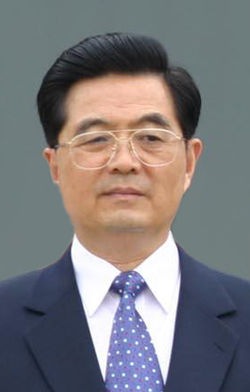
Former General Secretary Hu Jintao is credited with developing the Scientific Outlook on Development
Scientific Outlook on Development
Simplified Chinese科学发展观
Traditional Chinese科學發展觀
Transcriptions
Standard Mandarin
Hanyu PinyinKēxué Fāzhǎn Guān

The Scientific Outlook on Development[a] is a political doctrine of the Chinese Communist Party (CCP), credited to former Chinese leader Hu Jintao and his administration, who was in power from 2002 to 2012. The Scientific Outlook on Development incorporates scientific socialism, sustainable development, social welfare, a humanistic society, increased democracy, and, ultimately, the creation of a Socialist Harmonious Society. According to official statements by the CCP, the concept integrates "Marxism with the reality of contemporary China and with the underlying features of our times, and it fully embodies the Marxist worldview on and methodology for development."

The ideology was first introduced by Hu Jintao on 15 April 2003 while he was on the inspection tour in Guangdong. It is a component of the theoretical system of socialism with Chinese characteristics and is officially lauded as the development of Marxism–Leninism, Mao Zedong Thought, Deng Xiaoping Theory and the Three Represents. It was ratified into the CCP constitution at the 17th Party Congress in October 2007, and to the preamble of the Chinese Constitution at the first session of the 13th National People's Congress in March 2018.

Development

[edit]

Political theorist Wang Huning is considered to be influential in the developing of the term.[1] On April 15, 2003, Hu Jintao put forward for the first time during his inspection in Guangdong : "We must adhere to a comprehensive outlook on development." On July 28 of the same year, Hu Jintao put forward in a more complete way at the National SARS Prevention and Control Work Conference: "We must better adhere to the development concept of coordinated development, all-round development, and sustainable development." This is considered Scientific Outlook on Development. The first appearance of the term.[2]

On October 14, 2003, at the Third Plenary Session of the Sixteenth Central Committee of the Chinese Communist Party, Hu Jintao clearly put forward "Adhere to people-oriented, establish a comprehensive, coordinated and sustainable development concept, and promote the all-round economic, social and human development."[citation needed] The meeting put the spirit of Hu Jintao's speech into the final resolution, and the concept of the scientific development concept was perfected and formally established as one of the ruling ideas of the Chinese Communist Party.[3]

After that, the Central Committee of the Chinese Communist Party quickly organized the "Special Research Class on the Establishment and Implementation of the Scientific Outlook on Development by Provincial and Ministerial Leading Cadres". On February 29, 2004, at the completion ceremony of the seminar, Wen Jiabao asked the whole party to "unify thinking and strengthen Establish and conscientiously implement the scientific outlook on development" and raise the scientific outlook on development to the height of the "unified thinking" of the whole party.

On March 10, 2004, Hu Jintao delivered a speech on the scientific outlook on development at the Central Forum on Population, Resources and Environment, "To achieve the goal of building a well-off society in an all-round way and create a new situation in the cause of socialism with Chinese characteristics, we must adhere to the implementation of the " Three Representing the "important thinking and the spirit of the 16th National Congress ", firmly establish and conscientiously implement the people-oriented, comprehensive, coordinated, and sustainable development concept, and earnestly grasp development, the party's first priority in governing and rejuvenating the country.", referring to the scientific development concept Parallel to the "Three Represents", it is considered to be the most complete and comprehensive exposition of the scientific outlook on development so far.

On November 21, 2007, the Scientific Outlook on Development was written into the Party Constitution at the 17th National Congress of the Chinese Communist Party.[4] Beginning in September 2008, the Politburo of the CCP Central Committee held a meeting on September 5, 2008, and decided to start in September 2008, in about one and a half years, to carry out in-depth study and practice of the scientific concept of development activities throughout the party in batches.

The first batch started in September 2008 and was basically completed in February 2009. Including: central and state organs, provincial (autonomous region, municipality) party and government organs; national, provincial (autonomous region, municipality) people's congresses, CPPCC organs, people's courts, people's procuratorates, and people's organizations organs; Xinjiang Production and Construction Corps organs; centrally managed financial institutions And its branches; public institutions directly under the Party Central Committee and the State Council, public institutions directly under the Central Committee, public institutions managed by various departments of the central government, and public institutions directly under the provincial (autonomous region, municipality).

The second batch: started in March 2009 and was basically completed in August 2009. Including: city (prefecture, state, league), county (city, district, banner) party and government organs; city (prefecture, state, league), county (city, district, banner) people's congress, CPPCC organs, people's courts, and people's procuratorates And people's organizations and organizations; divisions and regiments of Xinjiang Production and Construction Corps; central enterprises; enterprises directly under provinces (autonomous regions, municipalities), enterprises and institutions directly under cities (prefectures, states, and leagues); colleges and universities, secondary professional schools.

The third batch: started in September 2009 and was basically completed in February 2010. Including: townships (towns), neighborhoods; villages, communities; Xinjiang Production and Construction Corps grassroots units; primary and secondary schools; enterprises, social organizations, and social intermediary organizations that did not participate in the second batch of activities.[5]

In March 2018, at the first session of the 13th National People's Congress, the Chinese condition was amended to include the Scientific Outlook on Development into the preamble.[6]

Ideology

[edit]

The Scientific Outlook on Development reflected a departure from Jiang Zemin's Three Represents in that it laid emphasis on correcting the unbalanced growth that had been much more favorable to wealthier, coastal provinces, neglecting the Chinese inland. It also put more emphasis on the masses rather than the elites, according to David Shambaugh.[7] According to official statements by the CCP, the concept integrates "Marxism with the reality of contemporary China and with the underlying features of our times, and it fully embodies the Marxist worldview on and methodology for development."[8]

Humanism is at the center of the scientific development concept.[9] The people-oriented concept is "to take the interests of the people as the starting point and end point of all work, to continuously meet people's multifaceted needs and promote the overall development of people."[10]: 50  It includes 4 specific aspects:[11]

  • On the basis of economic development, continuously improve the people's material and cultural living standards and health standards
  • Respect and protect human rights, including the political, economic and cultural rights of citizens
  • Continuously improve people's ideological and moral quality, scientific and cultural quality and health quality
  • Create a social environment where people develop equally and give full play to their intelligence.

The Scientific Outlook on Development aims to address income inequality, environmental degradation,[10]: 50  reducing regional inequalities, supporting farmers and migrants, increasing budget resources for pensions, healthcare, and education.[12]: 52 

Legacy

[edit]

Some observers attribute the political origins of China's low-carbon development strategy to this concept, although some industrial support in low-carbon technology had already begun before Hu's formulation of the Scientific Outlook on Development.[13]: 23 

By around 2005 Hu Jintao was using the Scientific Outlook on Development concept as a catch-all for a wide variety of policies that had no other unifying theme. These included: improving rural areas, speeding up economic growth, using resources efficiently, and more.[7]

Consistent with the Scientific Outlook on Development, China's Tenth Five-Year Plan and Eleventh Five-Year Plan clarified specific targets for reducing water pollution.[14]: 22  Water quality significantly improved after the 11th Five Year Plan.[14]: 22 

See also

[edit]

Notes

[edit]

References

[edit]
[edit]
Revisions and contributorsEdit on WikipediaRead on Wikipedia
from Grokipedia
The Scientific Outlook on Development is a theoretical framework and guiding principle of the Communist Party of China (CPC), proposed by in 2003, that prioritizes "putting people first" while pursuing comprehensive, coordinated, and sustainable national development to address imbalances arising from prior rapid economic expansion. Formally adopted at the Third Plenum of the 16th CPC Central Committee, it represents an evolution of Marxist-Leninist ideology adapted to China's conditions, emphasizing shifts from resource-intensive growth to innovation-driven progress amid challenges like and regional disparities. Central to the outlook are principles of people-oriented development, holistic balance across urban-rural divides, economic and social spheres, and relations, and domestic with international affairs—often summarized as promoting "five balances" to foster harmony and equity. It advocates emancipating minds, seeking truth from facts, and practical effectiveness as core methods, aiming to integrate economic growth with social welfare and ecological protection rather than unchecked GDP prioritization. Incorporated into the CPC Constitution at the 17th National Congress in 2007, it guided policy during Hu's tenure, contributing to sustained high growth rates but facing critiques for insufficiently curbing , inequality, and in practice, as evidenced by persistent urban-rural gaps and environmental incidents despite rhetorical commitments. The framework's legacy includes influencing subsequent CPC doctrines, such as , while highlighting tensions between ideological directives and empirical outcomes in a one-party system where portrayals emphasize successes like , yet independent analyses note uneven implementation amid centralized control.

Origins and Historical Context

Initial Formulation by Hu Jintao

Hu Jintao first articulated the foundational ideas of the Scientific Outlook on Development shortly after assuming leadership as General Secretary of the Communist Party of China in November 2002, amid concerns over imbalanced growth and the 2003 SARS outbreak. During an inspection tour in Guangdong Province from April 10 to 15, 2003—a region severely affected by SARS—he called for harmonious socioeconomic development, stressing the need for sustainable, all-round progress that integrates economic expansion with social and environmental considerations. This formulation addressed emerging issues like resource strain, environmental degradation, and urban-rural disparities resulting from prior high-GDP-focused policies. The precise phrase "scientific development concept" emerged during Hu's September 2003 inspection in Province, where he advocated for coordinated, comprehensive, and to rectify overemphasis on quantitative growth targets at the expense of rural welfare and ecological balance. He reiterated these principles in early 2003 during a visit to Province, underscoring urgency in addressing underdeveloped central regions' needs. These early expressions centered on "putting first" (yiren weiben) as the core, with development as the fundamental task, marking a shift toward holistic over unidirectional economic metrics. The Third Plenary Session of the 16th CPC Central Committee, held October 11–14, 2003, endorsed related tenets such as "comprehensive, coordinated, ," providing institutional backing to Hu's initial ideas and paving the way for broader party adoption. Hu further elaborated in a June 2003 Beijing meeting reviewing prevention, linking scientific development to crisis response and long-term stability. This period's formulations reflected pragmatic adjustments to China's post-reform trajectory, prioritizing causal linkages between growth, equity, and without negating prior market-oriented reforms.

Formal Adoption at the 17th CPC Congress

The 17th National Congress of the Communist Party of China (CPC) convened in from October 15 to 21, 2007, and marked the formal incorporation of the Scientific Outlook on Development into the CPC as a guiding principle for the Party's work. This amendment positioned the Outlook alongside Marxism-Leninism, Thought, , and the as essential ideological guidance, emphasizing its role in promoting balanced, amid China's rapid economic expansion. In his keynote report delivered on October 15, 2007, CPC General Secretary Hu Jintao outlined the Scientific Outlook on Development as a continuation and development of prior Party theories on progress, with development as its essence, putting people first as its core, and comprehensive, balanced, sustainable development as its fundamental requirement. Hu stressed that the Outlook aimed to address contradictions arising from uneven growth, such as regional disparities and resource strains, by prioritizing human-centered policies and scientific decision-making. The congress delegates unanimously endorsed these principles, amending the Party Constitution to mandate adherence to the Outlook in governance and policy formulation. This adoption reflected the CPC's response to internal assessments of development challenges post-2003, when the concept was initially proposed by the 16th , but elevated its status to constitutional level to ensure systematic implementation across Party organs and state institutions. Official records indicate that the move was intended to guide toward "socialist modernization" by integrating with and , though empirical outcomes in subsequent years showed mixed results in mitigating inequalities.

Theoretical Foundations

Roots in Marxism-Leninism and Deng Theory

The Scientific Outlook on Development represents a theoretical continuation of Marxism-Leninism, which provides its foundational worldview and methodology for analyzing social and economic contradictions through . This inheritance emphasizes a scientific approach to development, viewing it as a of resolving primary contradictions in socialist via empirical and planned intervention, rather than dogmatic adherence to prior models. Party documents describe it as embodying Marxism's insistence on applying theory to concrete conditions, thereby advancing the localization of Marxist principles in . Building directly on , the Outlook inherits the core tenet that "development is the hard truth," established during China's reform era starting in 1978, which prioritized liberating through market-oriented reforms and opening up to achieve modernization. Deng's framework answered fundamental questions on socialism's nature—what it is and how to build it—by integrating Marxist principles with pragmatic experimentation, such as " by feeling the stones." The Scientific Outlook extends this by addressing subsequent challenges, including uneven regional growth and resource strains evident by the early , through prescriptions for coordinated, people-centered, and sustainable progress that refine Deng's growth-first model without abandoning its emphasis on economic centrality. This synthesis positions the Outlook as an innovative application of Deng's "" methodology to new developmental imperatives, such as balancing urban-rural divides and , which arose from the rapid industrialization spurred by Deng-era policies. Official CPC assessments frame it as a "crystallization of " that evolves prior theories to fit contemporary realities, ensuring the continuity of amid global integration and domestic imbalances.

Distinctions from Prior CCP Ideologies

The Scientific Outlook on Development, formalized in 2007, represents an ideological innovation by prioritizing balanced, coordinated, and sustainable growth over the prior emphasis on rapid economic expansion alone, addressing emergent challenges such as , , and widening social inequalities that arose during the reform era. Unlike Theory's core tenet that "development is the absolute principle" driving reforms from onward, which spurred average annual GDP growth exceeding 9% but exacerbated urban-rural divides and , the Scientific Outlook advocates "people-first" development integrating economic, social, and ecological dimensions to mitigate these imbalances. In contrast to Jiang Zemin's , introduced in 2000 and enshrined in 2002, which focused on adapting the CCP to represent advanced , culture, and broad interests by incorporating entrepreneurs into the party, the Scientific Outlook shifts attention from party composition to a holistic development strategy emphasizing comprehensive coordination across domestic-international, urban-rural, and human-nature relations. This marked a departure from the market-oriented of the Jiang era, which prioritized integration into global , toward greater stress on social and long-term , responding to issues like the rising to 0.47 by 2007 amid uneven wealth distribution. Relative to Mao Zedong Thought, which centered on continuous class struggle and ideological mobilization leading to campaigns like the (1958-1962) that caused widespread famine, the Scientific Outlook de-emphasizes antagonism in favor of dialectical harmony and empirical planning, drawing on pragmatic adaptation rather than revolutionary upheaval to pursue modernization. Official CCP narratives frame this as seamless continuity with Marxism-Leninism, yet the pivot reflects causal recognition of post-Mao economic pragmatism's limits, evidenced by policy shifts toward rural revitalization and ecological civilization absent in Mao-era priorities.

Core Principles and Ideology

People-Centered and Humanistic Approach

The people-centered approach, or yi ren wei ben ("taking people as the root" or "putting people first"), constitutes the core value of the Scientific Outlook on Development, as articulated by in early 2004 during internal Communist Party of China (CPC) discussions and formalized later that year. This principle posits that development must serve the fundamental interests of the people, positioning them not merely as beneficiaries but as the active drivers and ultimate evaluators of progress, drawing from Marxist tenets that view as history's creators while adapting to China's reform-era realities of uneven growth. Unlike prior emphases on rapid industrialization regardless of social costs, it mandates subordinating economic metrics like GDP growth to human well-being, requiring policies to address immediate livelihood needs such as , , and alongside long-term . This humanistic orientation extends beyond material provision to foster comprehensive human development, integrating moral, cultural, and ecological dimensions to cultivate well-rounded individuals capable of contributing to societal harmony. Hu emphasized that true progress hinges on relying on the people, believing in their capacity for , and ensuring development outcomes enhance their , as outlined in his addresses promoting the concept as a counter to "growth without distribution" pitfalls observed in some global models. In practice, this translated ideologically into directives for Party cadres to prioritize public satisfaction over abstract targets, with metrics like reduced urban-rural disparities and improved access to public services as proxies for success, though official interpretations stress and collective effort over individualistic entitlements. Critics within and outside have questioned the depth of this , arguing it remains constrained by CPC political monopoly, yet proponents cite its role in reorienting national strategy toward inclusive metrics, such as the 2006 Five-Year Plan's focus on indicators. Empirical alignment is evident in policy shifts, like the 2004-2005 rural tax reforms aimed at alleviating burdens, which aligned with the principle's call to address the "most arduous" masses first, though outcomes depended on local fidelity. Overall, the approach reframes development as a dialectical where human flourishing validates systemic efficacy, subordinating technocratic goals to anthropological ends.

Emphasis on Coordination, Comprehensiveness, and Sustainability

The Scientific Outlook on Development posits comprehensive, coordinated, and as its basic requirements, aiming to rectify imbalances from prior rapid-growth models by integrating economic expansion with and ecological limits. This framework, articulated by , emphasizes holistic planning to ensure development benefits all sectors without exacerbating disparities. Coordination focuses on harmonizing key relationships, including urban-rural divides, regional economic gaps, with social progress, human activities with natural ecosystems, and domestic priorities with international engagement. Official expositions stress that uncoordinated development, evident in China's pre-2000s skews where rural areas lagged with incomes 40% below urban levels by 2002, risked social instability; thus, policies under this outlook promoted integrated like networks spanning 42,000 km by 2020 to link regions. Comprehensiveness advocates all-round advancement across economic, political, cultural, social, and environmental domains, rejecting narrow GDP-centric metrics in favor of multifaceted progress. For instance, it guided the 11th Five-Year Plan (2006-2010), which targeted not only 7.5% annual GDP growth but also metrics like raising urban enrollment in senior high school to 87% and reducing by 20%, reflecting a shift from output volume to quality and equity. Sustainability underscores resource-efficient growth that preserves ecological capacity for future generations, countering environmental costs of industrialization such as the 2005 estimate of 3% GDP loss from . Implementation included binding targets like cutting by 10% in the 11th Plan, alongside efforts adding 21.7 million hectares of forest from 2003-2012, aligning development with limits derived from resource audits showing at 120 million hectares supporting 1.4 billion people.

Policy Implementation

Economic and Structural Reforms

The Scientific Outlook on Development guided 's economic reforms toward transforming the growth model from resource-intensive, export-driven expansion to innovation-led, during Hu Jintao's leadership from 2002 to 2012. This shift emphasized enhancing independent innovation capacity and building into an innovative nation by prioritizing in high-tech industries. Policies under the 11th Five-Year Plan (2006-2010), explicitly aligned with the outlook, targeted a move to high-efficiency growth through industrial upgrading and structural adjustments, including reducing reliance on and promoting service sector expansion. Structural reforms focused on deepening enterprise and changes to support coordinated urban-rural and . State-owned enterprise (SOE) reforms continued the "grasping the large and releasing the small" strategy, consolidating control over strategic sectors like and while encouraging mixed-ownership models to improve efficiency and competitiveness. Financial reforms included liberalizing interest rates and expanding banking services to rural areas, aiming to balance capital allocation and mitigate imbalances from prior investment-heavy growth. Administrative restructuring sought to streamline government functions, reduce bureaucratic layers, and enhance market-oriented mechanisms, though progress was uneven due to entrenched state oversight. These reforms were embedded in the outlook's emphasis on comprehensive coordination, with the 11th Five-Year Plan mandating optimizations in industry structure to curb —achieving a 19.1% reduction in per unit of GDP by —and foster balanced sectoral shifts. However, often reinforced state dominance in key areas, limiting full market and contributing to persistent overcapacity in certain industries. Tax and fiscal adjustments, such as refining systems, supported rural initiatives but faced challenges in equalizing regional disparities. Overall, the reforms advanced technological upgrading but were critiqued for insufficient , as evidenced by slowed dynamism compared to the preceding decade.

Social Welfare and Rural Development Initiatives

The Scientific Outlook on Development prioritized addressing rural-urban imbalances through targeted policies, emphasizing coordinated growth and improved livelihoods in rural areas. A key initiative was the New Socialist Countryside construction program, outlined in the 2006 No. 1 Central Document and integrated into the 11th Five-Year Plan (2006-2010), which focused on enhancing agricultural production, rural infrastructure such as roads and , environmental , and farmers' incomes to foster sustainable village modernization. This program aligned with the Outlook's call for balanced urban-rural development, as articulated in Hu Jintao's emphasis on promoting "five balances" including urban-rural coordination. Complementing these efforts, the abolished the agricultural tax effective January 1, 2006, ending a 2,600-year-old levy that had burdened farmers since imperial times, following a decision in December 2005 to accelerate the phase-out ahead of the original 2009 schedule. This reform, enacted under the Hu-Wen administration, reduced fiscal pressures on rural households and supported the Outlook's humanistic approach by redirecting resources toward and agricultural modernization. In social welfare, the New Rural Cooperative Medical Scheme (NRCMS) was expanded nationwide with substantial government subsidies, achieving coverage in over 90% of rural villages and encompassing the vast majority of the rural population by the late 2000s, focusing on catastrophic illness protection to mitigate health-related impoverishment. This built on 2003 pilots and reflected the Outlook's people-centered core by rebuilding rural health insurance dismantled during earlier market reforms. Similarly, tuition and miscellaneous fees for compulsory education were eliminated for approximately 150 million rural students starting in 2007, with full implementation targeted over 2006-2008, to ensure equitable access and reduce dropout rates amid urban-rural divides. These measures, while advancing coverage, faced challenges in funding adequacy and service quality, as voluntary participation and limited benefits under NRCMS often left gaps in comprehensive care.

Empirical Evaluations

Achievements in Growth and Poverty Reduction

During the period of the Scientific Outlook on Development's prominence from 2003 to 2012, China's grew at an average annual rate of approximately 10.5%, with yearly rates including 10.0% in 2003, 10.1% in 2004, 11.4% in 2005, 12.7% in 2006, 14.2% in 2007, 9.7% in 2008, 9.4% in 2009, 10.6% in 2010, 9.6% in 2011, and 7.9% in 2012. This sustained expansion, driven by export-led , infrastructure , and , elevated China's total GDP from about $1.7 trillion in 2003 to over $8.5 trillion by 2012 in nominal U.S. dollars. The framework's emphasis on balanced and sustainable growth facilitated policies such as initiatives in western and , which channeled investments into underdeveloped areas and supported industrial upgrading. This economic momentum significantly advanced poverty alleviation, particularly in rural areas. Using China's official rural poverty line prior to its 2011 adjustment (approximately 1,196 yuan per capita annually in 2008 terms), the rural poor population declined from 29.06 million in to around 36.01 million by , reflecting a reduction rate of over 10% annually in the early phase before line revisions captured more nuanced needs. Internationally comparable metrics, such as the World Bank's $1.90 per day (2011 PPP) extreme poverty line, show China's national rate dropping from 28.8% in to 10.2% by , lifting an estimated 150-200 million people out of during the decade. Complementary measures under the outlook, including the "Building a New Socialist Countryside" program launched in , invested in rural , agricultural subsidies, and , which boosted rural incomes by 7-8% annually and reduced regional disparities. These outcomes were bolstered by pro-poor policies aligned with the outlook's people-centered approach, such as expanded minimum living standards guarantees (dibao) coverage, which reached over 22 million rural households by 2010, and health insurance reforms that lowered out-of-pocket expenses for low-income groups. Empirical analyses attribute much of the decline to growth-induced effects, with rural economic expansion contributing 60-70% of reductions, supplemented by direct transfers and skill-building programs that enhanced in non-farm sectors. While overall progress was uneven— with faster gains in coastal versus inland regions—the era marked a pivotal phase in scaling up targeted interventions, setting the stage for later absolute eradication.

Shortcomings in Inequality and Environmental Degradation

Despite the Scientific Outlook on Development's emphasis on coordinated and balanced growth to foster a , income inequality in China worsened during its core implementation phase from 2003 to 2012. The national , which quantifies income distribution disparity on a scale from 0 (perfect equality) to 1 (perfect inequality), climbed from about 0.45 in 2003 to a peak of 0.491 in 2008, before easing marginally to 0.474 by 2012—a level still exceeding the ' 0.4 alert threshold for potentially destabilizing inequality. This trend persisted despite policy rhetoric on equitable , as market-driven reforms favored urban and coastal regions, widening the urban-rural gap from roughly 2.5:1 in 2003 to over 3:1 by 2010 and amplifying inter-provincial disparities. Urbanization and state-led investments in export-oriented industries concentrated wealth among a growing urban and elites, while rural areas lagged in and job opportunities, undermining the concept's goal of comprehensive human development. Empirical analyses indicate that household survey data understated true disparities due to underreporting of high incomes, with alternative estimates placing the Gini closer to 0.55 by 2012 when accounting for unreported wealth and regional variations. These shortcomings fueled social tensions, including migrant worker exploitation and protests over land expropriation, highlighting causal gaps between policy intent and local enforcement amid prioritized GDP targets. Environmental degradation similarly intensified under the Scientific Outlook, as rapid industrialization outpaced regulatory efforts for . During the 2000s, experienced escalating , with particulate matter (PM2.5) levels in northern cities like frequently exceeding guidelines by factors of 5-10, contributing to an estimated 1.2 million premature deaths annually by 2010 from respiratory and cardiovascular diseases linked to . Water contamination affected over 70% of rivers and lakes by the mid-2000s, driven by untreated industrial effluents and agricultural runoff, while soil heavy metal pollution from mining rendered millions of hectares unusable for farming. The economic toll of this degradation, valued using assessment models, equated to 3.5-5.6% of GDP yearly from 2004 to 2010, reflecting unmitigated externalities from coal-dependent expansion and lax enforcement of emission standards despite the concept's pillar. Causal factors included short-term growth imperatives overriding ecological coordination, with local officials incentivized by GDP metrics over environmental compliance, resulting in phenomena like affecting 27% of land by 2010 and widespread dumping exacerbating toxic releases. These outcomes contradicted the policy's holistic vision, as empirical data showed surging 150% from 2000 to 2010, underscoring implementation deficits in transitioning to low-carbon development.

Criticisms and Controversies

Internal CCP Debates and Limitations

Within the (CCP), the Scientific Outlook on Development, introduced by in 2003, sparked ideological debates between reformist and conservative factions over its interpretation and application. Reformers emphasized a "human-centered" approach, linking it to equality and within a market-oriented framework, while conservatives advocated a "people-centered" variant aligned with socialist class struggle, viewing it as a tool to critique excessive market reforms under Jiang Zemin's doctrine. This tension manifested in disputes over reforms and public ownership, with left-leaning voices amplifying anti-reform sentiments during 2004–2006, politicizing the concept into broader "reflection on reform" arguments. Local CCP cadres exhibited significant resistance to the Outlook's push for balanced development over pure GDP growth, as promotion incentives remained tied to economic targets, perpetuating "GDP heroism" despite central directives. Figures like , a Jiang Zemin ally, defended GDP metrics in 2004 speeches, questioning the concept's de-emphasis on rapid expansion, while coastal leaders showed inconsistent support for accompanying institutional changes. Alternative models, such as Bo Xilai's Chongqing experiment (2008–2011), challenged the Outlook by promoting Maoist-style mobilization for "," highlighting factional pushback against Hu's perceived insufficient socialist rigor. Implementation limitations arose from the Outlook's top-down structure, which struggled to reconcile complex social contradictions and pluralist demands, failing to restore legitimacy amid rising inequalities. Despite integration into the 11th Five-Year Plan (2006–2010) and party constitution (2007), it did not effectively curb income disparities, with China's rising from 0.45 in 2002 to approximately 0.49 by 2008, nor prevent , as pollution levels continued escalating due to entrenched growth priorities. Internal ideological resistance, including fears of eroding proletarian identity from prior shifts like , further hampered acceptance, contributing to conceptual ambiguities in prioritizing social over economic development. These shortcomings underscored the concept's vulnerability to cadre and factional divides, limiting its transformative impact within the CCP.

External Critiques on Economic Efficiency and Political Control

External observers, including economists and political analysts, have critiqued the Scientific Outlook on Development for reinforcing state intervention in the , which perpetuated inefficiencies associated with state-owned enterprises (SOEs). During the Hu Jintao (2002–2012), SOEs maintained dominance in key sectors despite the policy's emphasis on coordinated and sustainable growth, yet empirical studies indicate SOEs exhibited lower (TFP) and operational efficiency compared to private firms, with inefficiencies stemming from soft budget constraints, political appointments over merit, and diversion of resources toward non-market objectives like employment stability. For instance, analyses of firm-level data from the period show SOEs underperformed in , contributing to overcapacity in industries like and contributing to a drag on overall GDP growth potential by 1–2 percentage points annually due to misallocation. Critics argue that the policy's implementation favored incremental reforms over structural , allowing SOEs to crowd out private investment through preferential access to and subsidies, which distorted market signals and reduced incentives for . Political Minxin Pei, in his analysis of China's "trapped transition," contends that this state-centric approach under illiberal fostered and elite predation, where party control prioritized loyalty and stability over efficiency, leading to systemic that undermined the policy's goals of balanced development. Pei notes that without checks like independent or property rights enforcement, such political structures inherently generate economic distortions, as evidenced by rising non-performing loans in state banks reaching peaks of over 20% in the mid-2000s. On political control, external assessments highlight how the Scientific Outlook embedded CCP oversight into , ostensibly for harmony but effectively centralizing and suppressing market-driven adjustments. This manifested in regulatory crackdowns on private sectors perceived as threats to stability, such as and tech, which critics like Pei link to reduced entrepreneurial dynamism and , as political vetting of leaders deterred risk-taking. Reports from think tanks document how such controls correlated with slower credit growth—averaging 15% annually versus 25% for SOEs—exacerbating inequality and the policy aimed to mitigate, as local officials prioritized GDP targets under party directives over efficient resource use. While proponents within viewed this as necessary coordination, Western analysts, drawing on comparative studies, argue it entrenched a vicious cycle where political monopoly stifled the very reforms needed for long-term efficiency, contrasting with more liberalizing models in .

Legacy and Contemporary Relevance

Integration into Xi Jinping Thought

The Scientific Outlook on Development, formulated during Hu Jintao's leadership and adopted at the 17th National Congress of the Communist Party of China (CPC) in 2007, emphasizes people-centered, comprehensive, coordinated, and sustainable development as a core component of socialism with Chinese characteristics. This outlook was incorporated into the CPC's guiding ideological framework alongside Deng Xiaoping Theory and the Theory of Three Represents, serving as a theoretical basis for addressing imbalances in economic growth, social equity, and environmental protection. Under , the Scientific Outlook has been subsumed and advanced within on for a New Era, enshrined in the CPC Constitution at the 19th National Congress in 2017. Official CPC documents describe as the "inheritance and development" of prior theories, including the Scientific Outlook, by integrating its principles of coordinated progress with new emphases on national , high-quality development, and . For instance, the people-oriented approach from the Scientific Outlook aligns with Xi's focus on shared development outcomes, as reiterated in resolutions from the 20th , which mandate upholding the Scientific Outlook while fully implementing . This integration reflects a continuity in the CPC's theoretical evolution, where the Scientific Outlook's sustainable development tenets underpin Xi-era policies like ecological civilization and poverty alleviation, though reoriented toward management and party leadership strengthening. Party plenums, such as the Third of the 20th in July 2024, affirm this by directing adherence to both frameworks to advance Chinese modernization. Critics within and outside the CPC have noted that while the Scientific Outlook prioritized balanced growth amid rapid —evidenced by metrics like the stabilizing around 0.47 by 2012—the Xi framework elevates political security and , potentially subordinating some of its technocratic elements to centralized control. Nonetheless, the CPC maintains that this synthesis ensures theoretical coherence, with the Scientific Outlook functioning as a historical layer rather than an independent doctrine post-2017.

Recent Developments and Shifts in Emphasis

In official (CCP) documents post-2012, the Scientific Outlook on Development continues to be cited as a foundational guiding , integrated into the broader framework of on Socialism with Chinese Characteristics for a New Era. For example, the Party Constitution, amended at the 20th National Congress in October 2022, lists it alongside and the Theory of as essential theoretical underpinnings for Party work. Similarly, the Communiqué of the Fourth of the 20th , issued on October 23, 2025, reaffirms adherence to the Outlook in conjunction with Xi's thought, emphasizing its role in pursuing coordinated and sustainable progress. This rhetorical continuity underscores its status as an enduring element of CCP , though practical application has evolved amid economic and geopolitical pressures. Shifts in emphasis since the early 2020s have redirected focus from the Outlook's original priorities of people-centered development and regional balance toward Xi-era imperatives like technological self-reliance and supply-side structural reform. The 14th Five-Year Plan (2021–2025), approved in March 2021, invokes the Scientific Development Concept while prioritizing "new development philosophy"—innovation, coordination, green growth, openness, and sharing—as a mechanism to address structural imbalances, such as overcapacity in traditional industries and external dependencies exposed by U.S.-China trade frictions starting in 2018. Policies like the 2021 common prosperity campaign and dual circulation strategy (domestic and international markets) adapt the Outlook's sustainable growth tenets but impose greater state intervention, including regulatory crackdowns on private tech firms that reduced their market capitalization by over $1 trillion between 2020 and 2022, aiming to curb inequality while enhancing strategic sectors. By 2023–2025, amid slowing GDP growth averaging 4.5–5% annually and heightened U.S. export controls on semiconductors, emphasis has intensified on building a "modern industrial system" through state-led investments exceeding 10% of GDP in strategic technologies like AI and quantum computing, as outlined in the October 2025 economic work conference directives. This pivot reflects causal realism in responding to external constraints, subordinating the Outlook's humanistic and ecological elements to national security objectives, such as the Military-Civil Fusion strategy, which integrates civilian R&D into defense capabilities with annual funding rises of 7% since 2020. External analyses, including from the U.S. Air University, note this as a departure from Hu Jintao's decentralized, consensus-driven approach, prioritizing centralized control to mitigate risks from debt-laden local governments and demographic decline projected to shrink China's workforce by 5 million annually through 2030. Such adaptations maintain empirical continuity in poverty reduction metrics—lifting 98 million rural poor since 2012—but reveal tensions in reconciling market efficiencies with political imperatives.

References

  1. https://en.prolewiki.org/wiki/Scientific_Outlook_on_Development
Add your contribution
Related Hubs
Contribute something
User Avatar
No comments yet.