



Community hub
Setophaga
View on Wikipedia
| Setophaga | |
|---|---|

| |
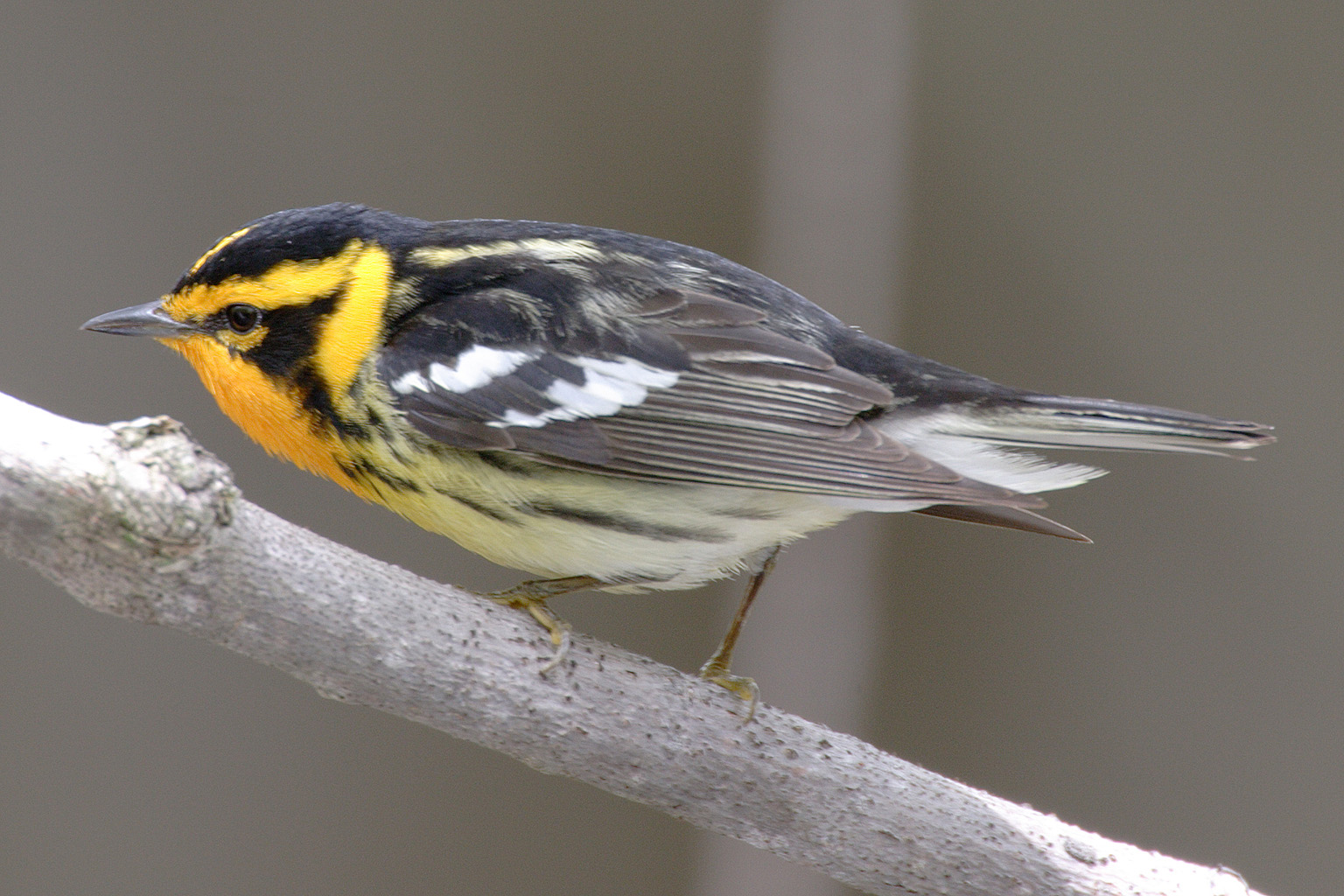
| Blackburnian warbler, Setophaga fusca | |
Scientific classification 
| |
| Kingdom: | Animalia |
| Phylum: | Chordata |
| Class: | Aves |
| Order: | Passeriformes |
| Family: | Parulidae |
| Genus: | Setophaga Swainson, 1827 |
| Type species | |
| Motacilla ruticilla[1] Linnaeus, 1758
| |
| Synonyms | |
|
Parula Bonaparte, 1838 | |

Setophaga is a genus of birds of the New World warbler family Parulidae. It contains at least 34 species. The Setophaga warblers are an example of adaptive radiation with the various species using different feeding techniques and often feeding in different parts of the same tree.
Most Setophaga species are long-range migrants, wintering in or near the New World tropics and seasonally migrating to breed in North America. In contrast, two Setophaga species, the palm warbler and yellow-rumped warbler, have winter ranges that extend along the Atlantic coast of North America as far north as Nova Scotia.[2] The males in breeding plumage are often highly colorful.
Taxonomy
[edit]The genus Setophaga was introduced by the English naturalist William Swainson in 1827.[3] The type species was subsequently designated by Swainson in the same year as the American redstart Setophaga ruticilla.[4][5] The genus name Setophaga means moth eater in Ancient Greek; from σής : sēs (genitive σητός : sētós), "moth", and φάγος : phágos, "eating".[6]
Traditionally, most members (29 species) of Setophaga were recognized as belonging to the genus Dendroica. The only member of Setophaga was the American redstart. More recent genetic research suggested that Dendroica and Setophaga be merged.[7] This change was accepted by both the North American and South American Classification Committees of the American Ornithological Society[8][9] and the IOC World Bird List.[10] As the name Setophaga (published in 1827) takes priority over Dendroica (published in 1842), those who accept the merger transferred all Dendroica species to Setophaga.[7]
History
[edit]A burst of speciation in Setophaga occurred between 4.5 and 7 million years ago.[11] This time frame roughly corresponds to the transition from the Miocene to the Pliocene period, when an abrupt rise in temperature and the fragmentation of forest habitats in North America[12] may have caused allopatric speciation in the genus. It is widely agreed that this speciation constitutes an adaptive radiation,[11][13][14] though recent evidence is mixed, noting that evidence of both adaptive and non-adaptive radiations exists.[15]
Up to several Setophaga species coexist in regions such as northeastern North America. Since these species are strikingly similar in both diet and morphology, this was once thought to be a violation of the laws of evolution. Further study concluded that species coexist through subtle feeding differences due to niche partitioning[16] and diffuse exploitative interspecific competition:[17] rather than compete directly for the same food resources, species utilize slightly different feeding strategies to capture a slightly different set of prey species.
List of species
[edit]The genus contains 37 species. They are:[10]
| Image | Common name | Scientific name | Distribution |
|---|---|---|---|
 |
Adelaide's warbler | Setophaga adelaidae | Puerto Rico |
 |
American redstart | Setophaga ruticilla | southern Canada and the eastern United States |
 |
Yellow warbler | Setophaga petechia | North America, the Caribbean, and down to northern South America |
 |
Arrowhead warbler | Setophaga pharetra | Jamaica |
 |
Bahama warbler | Setophaga flavescens | The Bahamas |
 |
Barbuda warbler | Setophaga subita | Barbuda in Antigua and Barbuda |
_Anahuac_NWR_-_Woodlot_TX_2018-04-25_12-28-22_(40261478240).jpg) |
Bay-breasted warbler | Setophaga castanea | eastern and central Canada, as well as the extreme northern United States., northeastern South America, the Caribbean, and southern Central America |
_(15412645342).jpg) |
Blackburnian warbler | Setophaga fusca | southern Canada, westwards to the southern Canadian Prairies, the Great Lakes region and New England, to North Carolina. southern Central America and South America |
 |
Blackpoll warbler | Setophaga striata | northern North America, from Alaska throughout most of Canada, to the Adirondack Mountains of New York as well as New England in the northeastern United States. the Greater Antilles and the northeastern coasts of South America |
 |
Black-throated blue warbler | Setophaga caerulescens | eastern North America, the Caribbean, and Central America |
.jpg) |
Black-throated green warbler | Setophaga virens | eastern North America and western Canada and cypress swamps on the southern Atlantic coast. Mexico, Central America, the West Indies and southern Florida |
 |
Black-throated grey warbler | Setophaga nigrescens | from British Columbia to New Mexico, and winters in Mexico and the southwestern United States |
.jpg) |
Cape May warbler | Setophaga tigrina | southern Canada, the Great Lakes region, and New England |
 |
Cerulean warbler | Setophaga cerulea | eastern North America, eastern slope of the Andes in South America |
 |
Chestnut-sided warbler | Setophaga pensylvanica | eastern North America and in southern Canada, Central America south to northern Colombia |
 |
Elfin woods warbler | Setophaga angelae | Puerto Rico |
-Kerr_WMA-TX_-_2015-05-24at13-39-5312_(21618131341).jpg) |
Golden-cheeked warbler | Setophaga chrysoparia | Central Texas |
 |
Grace's warbler | Setophaga graciae | southwestern United States, Mexico, northern Central America |
 |
Hermit warbler | Setophaga occidentalis | west coast of the United States, Mexico and Central America as well as parts of the southern California coast. |
 |
Hooded warbler | Setophaga citrina | eastern United States and into southernmost Canada (Ontario) |
 |
Kirtland's warbler | Setophaga kirtlandii | Great Lakes region of Ontario, Canada and the United States from Wisconsin and Michigan |
 |
Magnolia warbler | Setophaga magnolia | northeastern parts of the US, with states such as Minnesota and Wisconsin, northern parts of Canada, such as in Saskatchewan, Manitoba, Ontario, and Quebec |
.jpg) |
Northern parula | Setophaga americana | eastern North America from southern Canada to Florida |
 |
Olive-capped warbler | Setophaga pityophila | Cuba as well as Grand Bahama |
.jpg) |
Palm warbler | Setophaga palmarum | Canada and the northeastern United States |
.jpg) |
Pine warbler | Setophaga pinus | eastern North America |
.jpg) |
Plumbeous warbler | Setophaga plumbea | Dominica and Guadeloupe |
.jpg) |
Prairie warbler | Setophaga discolor | northeastern Mexico and islands in the Caribbean |
 |
Saint Lucia warbler | Setophaga delicata | Saint Lucia |
_(cropped).jpg) |
Townsend's warbler | Setophaga townsendi | northwestern coast of North America |
 |
Tropical parula | Setophaga pitiayumi | southernmost Texas and northwest Mexico (Sonora) |
 |
Vitelline warbler | Setophaga vitellina | Cayman Islands and on the Swan Islands in Honduras |
 |
Myrtle warbler | Setophaga coronata | Canada and the northeastern United States |
_-_Washington_State.jpg) |
Audubon's warbler | Setophaga auduboni | western Canada, the western United States ; winters to Mesoamerica |
 |
Goldman's warbler | Setophaga goldmani | Mexico and Guatemala |
.jpg) |
Yellow-throated warbler | Setophaga dominica | southern Pennsylvania and northern Missouri, to the Gulf of Mexico |
References
[edit]- ^ "Parulidae". aviansystematics.org. The Trust for Avian Systematics. Retrieved 2023-07-16.
- ^ "Explore BNA". Cornell Lab of Ornithology. Retrieved 2017-03-01.
- ^ Swainson, William (1827). "A synopsis of the birds discovered in Mexico by W. Bullock, F.L.S. and Mr. William Bullock jun". Philosophical Magazine. New Series. 1: 364–369 [368]. doi:10.1080/14786442708674330.
- ^ Swainson, William (1827). "On several groups and forms in ornithology, not hitherto defined". Zoological Journal. 3: 343–363 [360].
- ^ Paynter, Raymond A. Jr, ed. (1968). Check-list of Birds of the World. Vol. 14. Cambridge, Massachusetts: Museum of Comparative Zoology. p. 33.
- ^ Jobling, James A. (2010). The Helm Dictionary of Scientific Bird Names. London, United Kingdom: Christopher Helm. p. 355. ISBN 978-1-4081-2501-4.
- ^ a b Lovette, Irby J.; et al. (2010). "A comprehensive multilocus phylogeny for the wood-warblers and a revised classification of the Parulidae (Aves)". Molecular Phylogenetics and Evolution. 57 (2): 753–70. Bibcode:2010MolPE..57..753L. doi:10.1016/j.ympev.2010.07.018. PMID 20696258.
- ^ Chesser R. T.; et al. (2011). "Fifty-Second Supplement to the American Ornithologists' Union Check-list of North American Birds" (PDF). Auk. 128 (3): 600–613. Bibcode:2011Auk...128..600C. doi:10.1525/auk.2011.128.3.600. S2CID 13691956.
- ^ A Classification of the Bird Species of South America, accessed 17 August 2016
- ^ a b Gill, Frank; Donsker, David; Rasmussen, Pamela, eds. (July 2023). "New World warblers, mitrospingid tanagers". IOC World Bird List Version 13.2. International Ornithologists' Union. Retrieved 22 November 2023.
- ^ a b Lovette, I. J.; Bermingham, E. (1999-08-22). "Explosive speciation in the New World Dendroica warblers". Proceedings of the Royal Society of London. Series B: Biological Sciences. 266 (1429): 1629–1636. doi:10.1098/rspb.1999.0825. ISSN 0962-8452. PMC 1690178.
- ^ Paleoclimate and evolution, with emphasis on human origins. New Haven London: Yale university press. 1995. ISBN 978-0-300-06348-6.
- ^ Price, Trevor; Lovette, Irby J.; Bermingham, Eldredge; Gibbs, H. Lisle; Richman, Adam D. (October 2000). "The Imprint of History on Communities of North American and Asian Warblers". The American Naturalist. 156 (4): 354–367. Bibcode:2000ANat..156..354P. doi:10.1086/303397. ISSN 0003-0147. PMID 29592136.
- ^ Sherry, Thomas W; Kent, Cody M (2022-03-25). "Extensions and limitations of MacArthur (1958): A review of ecological and evolutionary approaches to competition and diet in the New World wood warblers (Parulidae)". Ornithology. 139 (2) ukac010. doi:10.1093/ornithology/ukac010. ISSN 0004-8038.
- ^ Leroy, Hélène; Bowie, Rauri C K; Rubáčová, Lucia; Matysioková, Beata; Remeš, Vladimír (2024-02-19). "A late burst of colour evolution in a radiation of songbirds (Passeriformes: Parulidae) suggests secondary contact drives signal divergence". Journal of Evolutionary Biology. 37 (4): 401–413. doi:10.1093/jeb/voae023. ISSN 1420-9101. PMID 38373243.
- ^ MacArthur, Robert H. (October 1958). "Population Ecology of Some Warblers of Northeastern Coniferous Forests". Ecology. 39 (4): 599–619. Bibcode:1958Ecol...39..599M. doi:10.2307/1931600. ISSN 0012-9658. JSTOR 1931600.
- ^ Sherry, Thomas W; Kent, Cody M (2022-03-15). "Extensions and limitations of MacArthur (1958): A review of ecological and evolutionary approaches to competition and diet in the New World wood warblers (Parulidae)". Ornithology. 139 (2) ukac010. doi:10.1093/ornithology/ukac010. ISSN 0004-8038.
| National | |
|---|---|
| Other | |

Setophaga
View on GrokipediaTaxonomy and systematics
Etymology
The genus name Setophaga is derived from Ancient Greek, combining sēs or sētos (σῆς or σητός), meaning "moth," with -phagos (from phagein, φαγεῖν, "to eat"), translating to "moth-eater."[9] This etymology reflects the insectivorous feeding habits of warblers in the genus, which frequently consume small flying insects such as moths during foraging in foliage or by hawking.[9] William Swainson introduced the genus Setophaga in 1827 in a synopsis of birds collected in Mexico by the Bullocks, initially describing it as a group within the flycatcher-like birds based on shared morphological traits and behaviors.[10] The type species was later designated as the American redstart (Setophaga ruticilla), a species noted for its active pursuit of insects in a manner reminiscent of Old World flycatchers, underscoring early 19th-century observations of these birds' agile, insect-capturing techniques.[9]Taxonomic history
The genus Setophaga was introduced by the English naturalist William Swainson in 1827, with the type species Setophaga ruticilla (American redstart). This initial description established the genus for a small group of New World warblers characterized by their insectivorous habits, derived from Greek roots meaning "moth-eater." Throughout the 19th century, taxonomic classifications of warblers were fluid, with many species now assigned to Setophaga placed instead in the genus Dendroica (erected by Carl Jakob Sundevall in 1834 for the black-throated green warbler) or other contemporaneous genera such as Parula and Wilsonia. These groupings reflected morphological similarities in plumage and habitat preferences rather than phylogenetic relationships, leading to a fragmented understanding of warbler diversity.[11] A pivotal revision came in 2011, when the American Ornithologists' Union merged the genus Dendroica—which encompassed 31 species at the time—into Setophaga, along with species from Parula and Wilsonia citrina, based on comprehensive molecular evidence from a multilocus DNA study. This merger, justified by Lovette et al. (2010), demonstrated that Dendroica species formed a monophyletic clade with the original Setophaga taxa, expanding the genus to 34 species and resolving long-standing non-monophyly in traditional warbler genera.[12] Subsequent taxonomic refinements have included proposals to recognize Setophaga graysoni (Socorro parula) as a distinct species from S. pitiayumi (tropical parula), though it is currently treated as a subspecies. In 2025, the yellow warbler complex (S. petechia) was split into Northern Yellow Warbler (S. aestiva) and Mangrove Yellow Warbler (S. petechia), increasing the genus to 35 species.[13]Phylogenetic relationships
Setophaga belongs to the subfamily Parulinae within the family Parulidae and is closely related to genera such as Cardellina (including the former Wilsonia species) and Myioborus (whitestarts), forming part of the core nine-primaried oscine radiation.[14] This positioning is supported by multilocus analyses that resolve Parulinae as monophyletic, with Setophaga branching near the base of the subfamily alongside these allies.[15] The genus Setophaga is monophyletic, a finding bolstered by the 2011 taxonomic revision that merged species from Dendroica, Parula, and Wilsonia into it, based on strong molecular evidence from mitochondrial DNA (approximately 5,840 base pairs across multiple genes) and six nuclear loci (approximately 4,602 base pairs).[14] These markers, analyzed via parsimony, maximum likelihood, and Bayesian methods, demonstrate robust support for the expanded Setophaga, with high posterior probabilities and bootstrap values at key nodes.[14] Recent phylogenomic studies using ultraconserved elements have reaffirmed this monophyly across nearly all Parulidae species.[15] Within Setophaga, molecular phylogenies reveal distinct clades, such as the "petechia group" encompassing yellow warblers and allies, and the "coronata group" including yellow-rumped warblers, reflecting adaptive radiations in plumage and ecology.[14] Intraspecific relationships highlight close pairings, for example, the Cerulean Warbler (S. cerulea) as sister to the Black-throated Gray Warbler (S. nigrescens), supported by shared mtDNA and nuclear sequences.[14] Fossil-calibrated trees indicate that basal divergences in Parulidae, including the early split from other warbler lineages leading to Setophaga, occurred around 10–15 million years ago in the mid-to-late Miocene, coinciding with climatic shifts that facilitated the family's diversification.[16]Physical characteristics
Plumage variation
The genus Setophaga encompasses a diverse array of New World warblers characterized by striking plumage variation, particularly in coloration and patterning, which aids in species recognition and behavioral signaling. Males often exhibit bright, contrasting hues such as yellows, blues, and blacks, accented by bold streaks, patches, or bands that enhance visibility during breeding displays and are thought to function under sexual selection pressures.[17][18] These vibrant traits are most pronounced in the alternate (breeding) plumage, acquired through a prealternate molt typically occurring on wintering grounds before northward migration.[19] In contrast, females display duller, more subdued plumage dominated by olive-greens, browns, or grays, which provide effective camouflage in forested habitats during nesting and incubation, reducing predation risk.[18] This sexual dimorphism is more extreme in migratory species within the genus, where females have evolutionarily lost ornamentation compared to males, possibly due to heightened predation costs during migration and relaxed selection for signaling.[18] The basic (non-breeding) plumage, obtained via a complete prebasic molt post-breeding, is generally muted across both sexes, with reduced saturation and finer streaking to facilitate overwinter survival.[19] Notable examples illustrate this variation. In the Cerulean Warbler (S. cerulea), breeding males feature a brilliant cerulean blue crown and back with black streaking, contrasting sharply against white underparts and a black breast band, while females show greenish upperparts and yellowish underparts with diffuse streaking.[20] Similarly, male Cape May Warblers (S. tigrina) in alternate plumage possess a distinctive tiger-striped olive back with black streaks, chestnut ear patches, and yellow underparts boldly streaked in black, whereas females have fainter streaking and paler yellow tones.[21] Such patterns are crucial for species identification in the field, as the unique combinations of color blocks, streaks, and wing patches distinguish closely related taxa amid their shared canopy foraging niches.[17]Morphology and size
Setophaga species are small passerines typically measuring 10–15 cm in total length, with body weights ranging from 7–18 g and wingspans of 16–22 cm.[22][23][24] These birds possess thin, pointed bills adapted for gleaning insects from foliage, often surrounded by bristle-like rictal setae that aid in prey detection.[25] Their legs and feet are slender and adapted for agile perching and movement in arboreal environments, with relatively long tarsi compared to other warblers facilitating foraging among branches.[26] The tails are short and square-to-rounded, frequently fanned or flicked during territorial displays or foraging to startle hidden insects.[27][28] Sexual size dimorphism is minimal across the genus, though males tend to be slightly larger than females in several species, such as the American redstart where males exhibit marginally greater body mass.[29] Size varies among species, with the yellow warbler (S. petechia) among the smallest at approximately 10 cm in length, while the blackpoll warbler (S. striata) reaches up to 14 cm, representing one of the larger forms in the genus.[30][23]Distribution and habitat
Geographic range
The genus Setophaga is native to the New World and distributed exclusively across the Americas, with no species occurring naturally outside this region. Its collective breeding range spans from the far north in Alaska and across boreal Canada to the southern extent in northern Argentina, reflecting the genus's wide latitudinal coverage. This broad distribution encompasses diverse ecosystems from high-latitude coniferous forests to subtropical and tropical lowlands.[31][32] Species diversity within Setophaga is highest in Central and South America, where a significant proportion of the genus's approximately 36 species occur as permanent residents or short-distance migrants, contributing to the region's rich avian assemblages.[33] In northern latitudes, many species are Nearctic breeders that undertake long-distance migrations to wintering grounds in the Neotropics. For instance, the yellow-rumped warbler (S. coronata) breeds extensively across North America, from Alaska eastward to Newfoundland and southward to the central and eastern United States, before migrating to winter in the southern United States, Mexico, Central America, and northern South America. Neotropical resident species, such as the northern yellow warbler (S. aestiva), occupy year-round ranges primarily in lowland areas extending from southern Mexico through Central America, much of South America, and various Caribbean islands, with some populations also breeding northward into temperate zones; note that the yellow warbler complex has been recently split (as of 2025 eBird taxonomy), distinguishing the migratory northern form (S. aestiva) from the resident mangrove form (S. petechia).[34] These resident forms underscore the genus's adaptability to stable tropical environments, contrasting with the migratory strategies of their northern counterparts. Overall, the genus's range highlights a pattern of ecological specialization across the Americas, with most species confined to this hemisphere.Habitat preferences
Species of the genus Setophaga are primarily forest-dwellers, favoring a variety of woodland ecosystems including deciduous, coniferous, and mixed forests across their breeding and nonbreeding ranges.[35] Many species, such as the Cerulean Warbler (S. cerulea), prefer mature deciduous forests with tall canopies, while others like the Pine Warbler (S. pinus) are associated with coniferous stands.[36] Certain tropical and subtropical taxa, including the Mangrove Yellow Warbler (S. petechia), utilize mangrove forests and adjacent coastal wetlands as key habitats.[37] Within these forests, Setophaga species exhibit preferences for specific vertical strata, often foraging in the canopy and midstory while nesting in the understory or dense shrub layers. For instance, the Black-throated Blue Warbler (S. caerulescens) selects dense understory vegetation in mixed coniferous-deciduous forests for nesting, providing concealment and support.[38] Altitudinally, the genus occupies a broad range from sea level to approximately 3,000 m, with tropical species like the Golden-cheeked Warbler (S. chrysoparia) typically in humid lowlands and foothills (180–520 m), and temperate breeders such as the Magnolia Warbler (S. magnolia) extending to higher elevations near treeline.[39][40] Microhabitat requirements emphasize dense foliage for nesting and proximity to water sources for many species, enhancing foraging opportunities and nest protection; the northern yellow warbler (S. aestiva), for example, favors riparian thickets with willows and other deciduous shrubs near wetlands.[35] Setophaga species demonstrate adaptability to disturbed environments, tolerating second-growth forests and edge habitats created by logging or fires, as seen in the Chestnut-sided Warbler (S. pensylvanica), which thrives in shrubby clearings and early successional areas.[41] This flexibility allows some to persist in fragmented landscapes, though optimal breeding often occurs in less disturbed, mature woodlands.[42]Behavior and ecology
Foraging and diet
Species of the genus Setophaga are predominantly insectivorous, with arthropods comprising approximately 80–90% of their diet during the breeding season, including lepidopteran larvae (caterpillars), dipterans (flies), hymenopterans, coleopterans (beetles), and arachnids such as spiders.[43][44] For example, in the Cerulean Warbler (S. cerulea), lepidopteran larvae make up 53–83% of nestling provisions, reflecting a reliance on seasonally abundant soft-bodied insects.[44] The Yellow-rumped Warbler (S. coronata) shows regional variation, with eastern populations consuming 78% arthropods and western ones 85%, supplemented by vegetable matter like berries.[43] Foraging techniques are active and versatile, centered on foliage and branches in forest canopies or understories. Most species employ gleaning, picking prey directly from leaves and twigs while hopping along limbs, as observed in the Black-throated Blue Warbler (S. caerulescens), which targets the shrub layer and lower canopy.[45] Hover-gleaning, where birds briefly suspend in air to inspect undersides of leaves, and hawking or sallying—short flights to capture flying insects mid-air—are common, particularly in species like the Yellow Warbler (S. petechia) and Hooded Warbler (S. citrina).[46][28] These methods allow efficient exploitation of concealed or mobile prey in dense vegetation. During the non-breeding season, Setophaga warblers often join mixed-species flocks in tropical and subtropical habitats, enhancing foraging efficiency through collective vigilance and resource partitioning.[47] For instance, migrant species such as the Blackburnian Warbler (S. fusca) and Tennessee Warbler (S. peregrina) integrate into shade-coffee flocks in Venezuela, adjusting behaviors to floristic and environmental cues.[48] Seasonal dietary shifts occur in some species, with increased fruit consumption in winter; the Yellow-rumped Warbler supplements insects with berries and nectar when arthropods are scarce, while the Yellow Warbler (S. petechia) incorporates nectar and small fruits year-round in certain populations.[43][46]Breeding and reproduction
Setophaga warblers typically form monogamous pairs during the breeding season, with males using songs and displays to attract females and establish territories.[49] In northern populations, breeding occurs primarily from May to July, while some tropical or southern populations may breed year-round or during extended wet seasons.[2] Males defend territories ranging from 0.6 to 4 acres through persistent singing and aggressive chases of intruders.[49] Nests are open, cup-shaped structures woven by the female alone from grasses, bark strips, plant fibers, and lined with feathers, hair, or moss.[49] They are typically placed 1–5 m above the ground in trees, shrubs, or ferns, often concealed in dense foliage.[50] Clutch sizes generally range from 3 to 5 eggs, laid daily beginning shortly after nest completion.[51] The female alone incubates the eggs for 11–13 days, with attentiveness varying by species and conditions but typically involving bouts of 9–28 minutes on the nest.[49] Young hatch asynchronously and are brooded by the female, while both parents provide biparental care by feeding insects to the nestlings; fledging occurs 9–12 days after hatching.[52] Several Setophaga species, such as the cerulean warbler (S. cerulea), experience brood parasitism by brown-headed cowbirds (Molothrus ater), which can reduce clutch size and nest success in parasitized nests.[53] Hosts may respond by nest desertion or building new nests over parasitized ones, though rejection rates vary by species.[54]Migration patterns
Most species in the genus Setophaga are long-distance Neotropical migrants, with most of the 35 recognized species undertaking obligate annual migrations between breeding grounds in North America and wintering areas in Central and South America.[55][13] These movements are driven by seasonal changes in resource availability, with breeding occurring in temperate forests during summer and non-breeding in tropical habitats during winter.[56] Migratory routes vary by population and species, often following broad fronts across the continent but with distinct corridors. Eastern-breeding species, such as the Yellow-rumped Warbler (S. coronata), typically migrate southward along the Atlantic Coast and through Florida before crossing to the Caribbean or Central America, while western populations like the Townsend's Warbler (S. townsendi) follow routes through Mexico and the Pacific slope.[57][58] Some species employ trans-Gulf of Mexico flights, and notably, the Blackpoll Warbler (S. striata) completes a remarkable non-stop transatlantic journey of 2,270–2,770 km from northeastern North America to northeastern South America, lasting up to three days.[59] Spring migration generally peaks from April to May as birds return to breeding territories, while fall migration occurs from August to October, allowing time for post-breeding molt and fat accumulation.[60] To support these extended flights, individuals amass substantial fat reserves—often increasing body mass by 50–100%—which provide the energy needed for non-stop segments exceeding 1,000 km.[59] During stopovers, warblers select forested habitats to replenish energy, though urban and fragmented landscapes are increasingly used.[61] A few resident or partial migrant species exhibit altitudinal migration, descending from high-elevation breeding sites to lower valleys in winter.[62] Orientation during migration relies on celestial navigation, including star patterns, supplemented by geomagnetic and landscape cues, enabling precise route-following across vast distances.[63] Vagrancy is documented in several species, such as rare European records of the Kirtland's Warbler (S. kirtlandii), likely resulting from navigational errors during transoceanic legs.Conservation status
Overall threats
The genus Setophaga faces several overarching conservation challenges that affect multiple species across their breeding, wintering, and migratory ranges. Primary among these is habitat loss due to deforestation, particularly in tropical wintering grounds where many species spend the non-breeding season. In regions like Mesoamerica, forest cover has declined steadily since 1970, correlating with long-term population reductions in forest-dependent neotropical migrants, including Setophaga warblers, with some areas experiencing up to 50% loss of suitable habitat.[64] This degradation fragments breeding and foraging areas, reducing nesting success and insect availability essential for these insectivorous birds. Climate change exacerbates these pressures by altering environmental cues and habitats. Warblers in the genus are experiencing range shifts northward on breeding grounds and phenological mismatches, where advancing spring green-up outpaces migration timing, leading to reduced food resources upon arrival.[65] Such disruptions, documented in North American wood warblers (Parulidae), contribute to population declines by desynchronizing breeding with peak insect abundance.[66] Anthropogenic hazards during migration pose acute risks, notably collisions with windows and buildings in the United States, which kill an estimated more than 1 billion birds annually (as of 2024), including many Setophaga species during peak fall and spring passages.[67] Additionally, widespread pesticide use diminishes insect prey populations, indirectly threatening foraging efficiency across the genus.[68] Hybridization in contact zones between closely related species, observed in approximately 72% of North American parulid warblers, further complicates genetic integrity and may reduce fitness in altered landscapes.[16] Despite these threats, approximately 70% of Setophaga species are categorized as Least Concern on the IUCN Red List, reflecting relatively stable populations for many widespread taxa, though ongoing monitoring is essential. Citizen science platforms like eBird provide critical data for tracking abundance trends and informing conservation strategies across the genus.Species-specific conservation
The Kirtland's Warbler (Setophaga kirtlandii) exemplifies successful species-specific conservation through targeted habitat restoration in its breeding grounds. Efforts in Michigan have focused on jack pine (Pinus banksiana) plantations to mimic natural fire-disturbed habitats, with millions of trees planted since the 1970s by the U.S. Fish and Wildlife Service and partners. This has driven a population increase from fewer than 200 singing males in 1974 to a peak of approximately 4,500 adults in 2019, leading to its removal from the U.S. Endangered Species List.[69][70][71] However, the population has since declined by about 30% from 2021 levels to 1,489 pairs (roughly 3,000 adults) in 2025, primarily due to a shortage of suitable young jack pine habitat.[8] The St. Lucia Warbler (Setophaga delicata), endemic to St. Lucia, receives protection through island-wide forest conservation initiatives that address habitat degradation from agriculture and development. The National Forest Demarcation and Bio-Physical Resource Inventory project has mapped and prioritized remaining woodlands, supporting this species' persistence in middle- and upper-canopy layers across diverse forest types. Although currently assessed as Least Concern globally, these efforts mitigate localized threats to its restricted range.[72][73] In the Cayman Islands, the Vitelline Warbler (Setophaga vitellina) benefits from legal safeguards under the National Conservation Law of 2013, which establishes reserves to protect its dry woodland and scrub habitats. Annual population surveys on Grand Cayman and Cayman Brac track trends for this Near Threatened species, whose range spans less than 135 km² and faces pressures from habitat fragmentation and invasive predators. The Cayman Islands National Biodiversity Action Plan includes a dedicated species action plan emphasizing habitat restoration and monitoring to prevent further declines.[74][75][76] Partners in Flight coordinates continent-wide monitoring for multiple Setophaga species, using data from the North American Breeding Bird Survey and other protocols to estimate populations and detect trends. This framework has guided recovery actions for warblers like the Canada Warbler (S. canadensis), informing habitat management across breeding, migration, and wintering areas.[77][78] The Canada Warbler (Setophaga canadensis) has experienced a partial population rebound since 2003, with steady increases observed in Canadian breeding populations, attributed in part to cyclical spruce budworm (Choristoneura fumiferana) outbreaks that boost insect availability during nesting. Long-term declines of about 63% since 1970 persist, but these natural fluctuations underscore the role of prey dynamics in recovery potential, supporting targeted monitoring and habitat enhancement.[79][80][77] Genetic management considerations are emerging for island-restricted Setophaga endemics, such as the Kirtland's Warbler, where genomic analyses reveal signatures of inbreeding from historical bottlenecks during low-population phases. These insights from whole-genome sequencing help prioritize diverse source populations for habitat translocations and long-term viability assessments in recovery programs.[81]List of species
The genus Setophaga comprises 35 species. The following is a list of species recognized in the genus, following the taxonomy used by the Cornell Lab of Ornithology's Birds of the World (as of 2020).[1]| Common name | Scientific name |
|---|---|
| Plumbeous warbler | Setophaga plumbea |
| Elfin-woods warbler | Setophaga angelae |
| Arrowhead warbler | Setophaga pharetra |
| Adelaide's warbler | Setophaga adelaidae |
| Barbuda warbler | Setophaga subita |
| St. Lucia warbler | Setophaga delicata |
| Olive-capped warbler | Setophaga pityophila |
| Vitelline warbler | Setophaga vitellina |
| Bahama warbler | Setophaga flavescens |
| Hooded warbler | Setophaga citrina |
| American redstart | Setophaga ruticilla |
| Kirtland's warbler | Setophaga kirtlandii |
| Cape May warbler | Setophaga tigrina |
| Cerulean warbler | Setophaga cerulea |
| Northern parula | Setophaga americana |
| Tropical parula | Setophaga pitiayumi |
| Magnolia warbler | Setophaga magnolia |
| Bay-breasted warbler | Setophaga castanea |
| Blackburnian warbler | Setophaga fusca |
| Yellow warbler | Setophaga aestiva |
| Mangrove warbler | Setophaga petechia |
| Chestnut-sided warbler | Setophaga pensylvanica |
| Blackpoll warbler | Setophaga striata |
| Black-throated blue warbler | Setophaga caerulescens |
| Yellow-rumped warbler | Setophaga coronata |
| Black-throated green warbler | Setophaga virens |
| Golden-cheeked warbler | Setophaga chrysoparia |
| Black-throated gray warbler | Setophaga nigrescens |
| Townsend's warbler | Setophaga townsendi |
| Hermit warbler | Setophaga occidentalis |
| Grace's warbler | Setophaga graciae |
| Yellow-throated warbler | Setophaga dominica |
| Prairie warbler | Setophaga discolor |
| Pine warbler | Setophaga pinus |
| Palm warbler | Setophaga palmarum |