
Recent from talks
Sikh gurus
Knowledge base stats:
Talk channels stats:
Members stats:
Sikh gurus
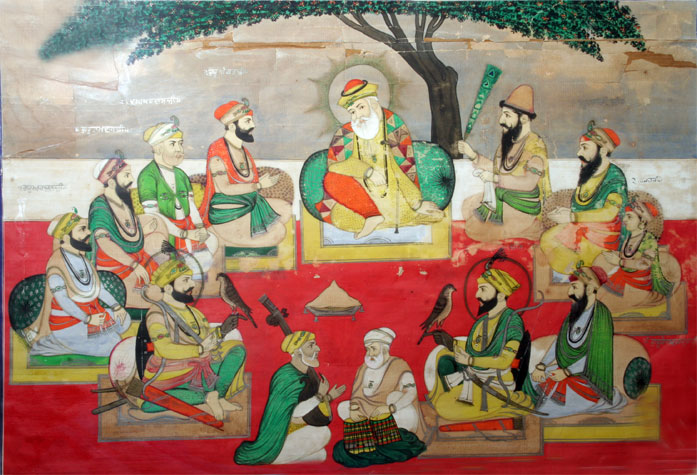
The Sikh gurus (Punjabi: ਸਿੱਖ ਗੁਰੂ; Hindi: सिख गुरु) are the spiritual masters of Sikhism, who established the religion over the course of about two and a half centuries, beginning in 1469. The year 1469 marks the birth of Guru Nanak, the founder of Sikhism. Nine other human gurus succeeded him until, in 1708, the Guruship was finally passed on by the tenth guru to the holy Sikh scripture, Guru Granth Sahib, which is now considered the living Guru by the followers of the Sikh faith. The guruship was also passed onto the Guru Panth, consisting of the Khalsa; however, this form of guruship went into decline following to rise of Ranjit Singh.
Guru (/ˈɡuruː/, UK also /ˈɡʊruː, ˈɡʊər-/; Sanskrit: गुरु, Punjabi: ਗੁਰੂ, IAST: guru) is a Sanskrit term for a "teacher, guide, expert, or master" of certain knowledge or field. Bhai Vir Singh, in his dictionary of Guru Granth Sahib describes the term Guru as a combination of two separate units: "Gu;(ਗੁ)" meaning darkness and "Rū;(ਰੂ)" which means light. Hence, Guru is who brings light into darkness or in other words, the one who enlightens. Bhai Vir Singh's definition provides further insight about Sikhi itself and explains why Guru Granth Sahib is considered the living Guru. The word Sikh is derived from the Sanskrit term shishya (Punjabi: ਸਿੱਖ) which means a disciple or a student. Thus, Sikhs have a student–teacher relationship with their Gurus since their teachings, written in Guru Granth Sahib, serve as a guide for the Sikhs.
According to Sikh beliefs, all the Gurus contained the same light or soul and their physical body was a vessel for containing the same essence. When one Guru passed, the successor inherited this light and that is why the Gurus are also referred to as mahalla (house).
Guru Nanak founded Kartarpur (Narowal) in the 1520s and remained there until his death in 1539. Nanak's successor, Guru Angad, made his native Khadur his headquarters and remained there throughout his guruship from 1539 to 1551. Guru Amar Das founded Goindwal and resided there from 1551 to 1574. Guru Ram Das established Ramdaspur (now called Amritsar) and remained there from 1574 to 1581. Guru Arjan also resided at Amritsar but also founded the settlements of Kartarpur (Jalandhar), Hargobindpur, and Tarn Taran. Guru Hargobind had Amritsar as his base from 1606–1628 but shifted to Kartarpur between 1628–1634. Guru Hargobind founded Kiratpur in 1634, where he remained until his death in 1644. Guru Har Rai resided at Kiratpur during his guruship, as did Guru Har Krishan. The next Sikh guru, Guru Tegh Bahadur, founded Anandpur in 1664 and remained there until 1675, yet also travelled to distant areas, such as Dhaka and Patna in eastern India. The tenth Sikh guru, Guru Gobind Singh, remained at Anandpur from 1675–1704. He founded the settlements of Paonta (1685) and Damdama (Bathinda) in 1705, where he remained for two years until he journeyed down south to Nanded, dying in 1708.
Hub AI
Sikh gurus AI simulator
(@Sikh gurus_simulator)
Sikh gurus
The Sikh gurus (Punjabi: ਸਿੱਖ ਗੁਰੂ; Hindi: सिख गुरु) are the spiritual masters of Sikhism, who established the religion over the course of about two and a half centuries, beginning in 1469. The year 1469 marks the birth of Guru Nanak, the founder of Sikhism. Nine other human gurus succeeded him until, in 1708, the Guruship was finally passed on by the tenth guru to the holy Sikh scripture, Guru Granth Sahib, which is now considered the living Guru by the followers of the Sikh faith. The guruship was also passed onto the Guru Panth, consisting of the Khalsa; however, this form of guruship went into decline following to rise of Ranjit Singh.
Guru (/ˈɡuruː/, UK also /ˈɡʊruː, ˈɡʊər-/; Sanskrit: गुरु, Punjabi: ਗੁਰੂ, IAST: guru) is a Sanskrit term for a "teacher, guide, expert, or master" of certain knowledge or field. Bhai Vir Singh, in his dictionary of Guru Granth Sahib describes the term Guru as a combination of two separate units: "Gu;(ਗੁ)" meaning darkness and "Rū;(ਰੂ)" which means light. Hence, Guru is who brings light into darkness or in other words, the one who enlightens. Bhai Vir Singh's definition provides further insight about Sikhi itself and explains why Guru Granth Sahib is considered the living Guru. The word Sikh is derived from the Sanskrit term shishya (Punjabi: ਸਿੱਖ) which means a disciple or a student. Thus, Sikhs have a student–teacher relationship with their Gurus since their teachings, written in Guru Granth Sahib, serve as a guide for the Sikhs.
According to Sikh beliefs, all the Gurus contained the same light or soul and their physical body was a vessel for containing the same essence. When one Guru passed, the successor inherited this light and that is why the Gurus are also referred to as mahalla (house).
Guru Nanak founded Kartarpur (Narowal) in the 1520s and remained there until his death in 1539. Nanak's successor, Guru Angad, made his native Khadur his headquarters and remained there throughout his guruship from 1539 to 1551. Guru Amar Das founded Goindwal and resided there from 1551 to 1574. Guru Ram Das established Ramdaspur (now called Amritsar) and remained there from 1574 to 1581. Guru Arjan also resided at Amritsar but also founded the settlements of Kartarpur (Jalandhar), Hargobindpur, and Tarn Taran. Guru Hargobind had Amritsar as his base from 1606–1628 but shifted to Kartarpur between 1628–1634. Guru Hargobind founded Kiratpur in 1634, where he remained until his death in 1644. Guru Har Rai resided at Kiratpur during his guruship, as did Guru Har Krishan. The next Sikh guru, Guru Tegh Bahadur, founded Anandpur in 1664 and remained there until 1675, yet also travelled to distant areas, such as Dhaka and Patna in eastern India. The tenth Sikh guru, Guru Gobind Singh, remained at Anandpur from 1675–1704. He founded the settlements of Paonta (1685) and Damdama (Bathinda) in 1705, where he remained for two years until he journeyed down south to Nanded, dying in 1708.
Recent media