


Community hub
Recent from talks
Contribute something
Nothing was collected or created yet.
Siwa Oasis
View on Wikipedia
 | You can help expand this article with text translated from the corresponding article in Arabic. (January 2022) Click [show] for important translation instructions.
|
The Siwa Oasis (Arabic: واحة سيوة Wāḥat Sīwah [ˈwæːħet ˈsiːwæ]) is an urban oasis in Egypt. It is situated between the Qattara Depression and the Great Sand Sea in the Western Desert, 50 kilometres (31 mi) east of the Egypt–Libya border and 560 kilometres (350 mi) from the Egyptian capital city of Cairo.[1][2][3] It is famed from its role in ancient Egypt as the home to an oracle of Amun, the ruins of which are a popular tourist attraction, giving it the ancient name Oasis of Amun-Ra, after the major Egyptian deity.[4]
Key Information


Geography
[edit]The oasis is in a deep depression that reaches −19 metres (−62 ft) below sea level.[5] To the west, the al Jaghbub Oasis rests in a similar depression and to the east, the large Qattara Depression is also below sea level. The depression is fertile due to both natural flowing artesian wells and irrigation. It is the site of about 200 natural springs.[6] Siwa is directly adjacent to the Libyan Desert plateau. The geology is characterised by horizontal layers of porous limestones alternated with marls and clays dating back to the Miocene.[7] The limestone plateau and inselbergs resulting from the oasis' erosion along the dunes create reliefs that the Isiwan describe as mountains (adrar in Tamizight).[8] Two large salt lakes are fed by drainage water of agricultural origin. The oasis supports the cultivation of thousands of date palms and olives.[6] Siwa has a temperate desert climate.[9]
Name
[edit]
| ||||||
| sḫt jꜣmw[10][11] in hieroglyphs | ||||||
|---|---|---|---|---|---|---|


The Ancient Egyptian name of the oasis was sḫt jꜣmw, meaning "Field of Trees". The native Libyan toponym may be preserved in the Egyptian t̠ꜣ(j) n d̠rw "tꜣj on the fringe" where t̠ꜣ transcribed the local Palaeo-Berber name *Se or *Sa.[12] This name survived in the works of Muslim geographers as سنترية Santariyyah.
Siwah is the Arabic name of the oasis called Sali in Berber.[13] The oasis is also called Isiwan in modern Berber.
The etymology of the word سيوة Siwah is unclear. Champollion derives it from Coptic ⲥⲟⲟⲩϩ (soouh) – a corruption of Egyptian word for "oasis", ⲟⲩⲁϩ (ouoh).[14] The additional evidence of the Egyptian source of Siwa's name is another place name in Kharga Oasis that may share the same etymology – S.t-wȝḥ, modern Deir el-Hagar).[15] Basset links it to a Berber tribal name swh attested further west in the early Islamic period,[16] while Ilahiane,[17] following Chafik, links it to the Shilha Berber word asiwan, a type of bird of prey, and hence to Amun-Ra, one of whose symbols was the falcon.[18] Some classical authors referred to the site as "Ammonium".[19]
History
[edit]


.jpg)
.jpg)

Although the site is known to have been settled since at least the 10th millennium BCE, the earliest evidence of any connection with Ancient Egypt is the 26th Dynasty, when a necropolis was established. Ancient Greek settlers at Cyrene made contact with the oasis around the same time (7th century BCE), and the oracle temple of Amun (Greek: Zeus Ammon), who, Herodotus was told, took the image here of a ram. Herodotus knew of a "fountain of the Sun" that ran coldest in the noontime heat.[20] During his campaign to conquer the Persian Empire, Alexander the Great reached the oasis, supposedly by following birds across the desert. The oracle, Alexander's court historians alleged, confirmed him as both a divine personage and the legitimate Pharaoh of Egypt, though Alexander's motives in making the excursion, following his founding of Alexandria, remain to some extent inscrutable and contested.[21] During the Ptolemaic Kingdom, its Ancient Egyptian name was sḫ.t-ỉm3w, meaning "Field of Trees".[22]
In the 12th century, Al-Idrisi mentions it as being inhabited mainly by Berbers, with an Arab minority; a century before Al-Bakri stated that only Berbers lived there. The Egyptian historian Al-Maqrizi traveled to Siwa in the 15th century and described how the language spoken there 'is similar to the language of the Zenata'.[23]
The first European to document a visit since Roman times was the English traveler William George Browne, who came in 1792 to see the ancient temple of the Oracle of Amun.[1] Bompiani, in her description of the 19th-century explorer Luigi Robecchi Bricchetti, called this site the Oasis of Jupiter Ammon.[24]
Siwa was annexed by Muhammad Ali of Egypt in 1820, but the Egyptian representative in Siwa was assassinated in 1838.[25] At some point, Muhammad al-Sanusi stayed at Siwa for a few months and gathered some followers there.[25] Later, Siwa was a base of the Sanusiyya in their fight against the British from 1915 to 1917.[25] Meanwhile, in the spring of 1893, German explorer and photographer Hermann Burchardt took photographs of the architecture of the town of Siwa, now stored at the Ethnological Museum of Berlin.[26]
Egyptian rule from distant Cairo was at first tenuous and marked by several revolts. Egypt began to assert firmer control after a 1928 visit to the oasis by King Fuad I, who berated the locals for homosexual practices and specified punishments to bring Siwan behaviour in line with Egyptian morals.
Siwa was also the site of some fighting during World War I and World War II. The British Army's Long Range Desert Group (LRDG) was based here, but Rommel's Afrika Korps also took possession three times. German soldiers went skinny dipping in the lake of the oracle, contrary to local customs which prohibit public nudity.[27] In 1942, while the Italian 136th Infantry Division Giovani Fascisti occupied the oasis, a tiny Egyptian puppet government-in-exile was set up at Siwa. The oasis makes a brief appearance as a base of the LRDG in the 1958 war film Ice Cold in Alex.
The ancient fortress of Siwa, known as the Shali Ghadi (Shali being the name of the town, and Ghadi meaning "remote"), was built on natural rock (an inselberg) and made of kershif (salt and mud-brick)[1] and palm logs. After it was damaged by three days of heavy rains in 1926[28] it was abandoned for similar unreinforced construction housing on the plain surrounding it, and in some cases those, in turn, have been replaced by more modern cinder block and sheet metal roof buildings. Only one building in the Shali complex has been repaired and is in use, a mosque. Gradually eroded by infrequent rains and slowly collapsing, the Shali remains a prominent feature, towering five stories above the modern town and lit at night by floodlights. It is most easily approached from its southwest side, south of the end of the paved road which curves around from the north side of the Shali. Several uneven pedestrian streets lead from the southwest end of the Shali into it, and the ground is rent in places by deep cracks. Many of the unreinforced kershif buildings bordering the streets of the Shali are also split by large cracks, or they are partially collapsed.
Other local historic sites of interest include the remains of the oracle temple; the Gebel al Mawta (the Mountain of the Dead), a Roman-era necropolis featuring dozens of rock-cut tombs;[1] and "Cleopatra's Bath", an antique natural spring. The fragmentary remains of the oracle temple, with some inscriptions dating from the 4th century BCE, lie within the ruins of Aghurmi. The revelations of the oracle fell into disrepute under the Roman occupation of Egypt.[1]
Climate
[edit]Köppen-Geiger climate classification system classifies its climate as hot desert (BWh),[29] as the rest of Egypt.
| Climate data for Siwa (1961–1990) | |||||||||||||
|---|---|---|---|---|---|---|---|---|---|---|---|---|---|
| Month | Jan | Feb | Mar | Apr | May | Jun | Jul | Aug | Sep | Oct | Nov | Dec | Year |
| Record high °C (°F) | 29.3 (84.7) |
34.6 (94.3) |
41.6 (106.9) |
44.8 (112.6) |
48.0 (118.4) |
48.2 (118.8) |
45.2 (113.4) |
46.2 (115.2) |
42.8 (109.0) |
41.9 (107.4) |
37.5 (99.5) |
29.0 (84.2) |
48.2 (118.8) |
| Mean daily maximum °C (°F) | 19.3 (66.7) |
21.5 (70.7) |
24.5 (76.1) |
29.9 (85.8) |
34.0 (93.2) |
37.5 (99.5) |
37.5 (99.5) |
37.0 (98.6) |
34.6 (94.3) |
30.5 (86.9) |
25.0 (77.0) |
20.5 (68.9) |
29.3 (84.7) |
| Daily mean °C (°F) | 12.1 (53.8) |
14.0 (57.2) |
17.3 (63.1) |
21.9 (71.4) |
25.8 (78.4) |
29.2 (84.6) |
29.9 (85.8) |
29.4 (84.9) |
27.1 (80.8) |
22.8 (73.0) |
17.3 (63.1) |
13.2 (55.8) |
21.7 (71.1) |
| Mean daily minimum °C (°F) | 5.6 (42.1) |
7.1 (44.8) |
10.1 (50.2) |
13.7 (56.7) |
17.8 (64.0) |
20.4 (68.7) |
21.7 (71.1) |
21.4 (70.5) |
19.5 (67.1) |
15.5 (59.9) |
10.2 (50.4) |
6.5 (43.7) |
14.1 (57.4) |
| Record low °C (°F) | −2.2 (28.0) |
−1.3 (29.7) |
0.3 (32.5) |
5.7 (42.3) |
7.5 (45.5) |
14.0 (57.2) |
17.5 (63.5) |
15.9 (60.6) |
11.7 (53.1) |
7.8 (46.0) |
2.9 (37.2) |
−0.7 (30.7) |
−2.2 (28.0) |
| Average precipitation mm (inches) | 2 (0.1) |
1 (0.0) |
2 (0.1) |
1 (0.0) |
1 (0.0) |
0 (0) |
0 (0) |
0 (0) |
0 (0) |
0 (0) |
2 (0.1) |
1 (0.0) |
9 (0.4) |
| Average precipitation days (≥ 1.0 mm) | 0.3 | 0.1 | 0.1 | 0.2 | 0 | 0 | 0 | 0 | 0 | 0 | 0.1 | 0.2 | 1.0 |
| Average relative humidity (%) | 56 | 50 | 46 | 38 | 34 | 33 | 37 | 41 | 44 | 50 | 56 | 59 | 45.3 |
| Average dew point °C (°F) | 2.8 (37.0) |
2.7 (36.9) |
4.7 (40.5) |
5.5 (41.9) |
7.5 (45.5) |
9.8 (49.6) |
12.5 (54.5) |
13.5 (56.3) |
13.2 (55.8) |
11.5 (52.7) |
7.7 (45.9) |
4.4 (39.9) |
8.0 (46.4) |
| Mean monthly sunshine hours | 230.7 | 248.4 | 270.3 | 289.2 | 318.8 | 338.4 | 353.5 | 363.0 | 315.6 | 294.0 | 265.5 | 252.8 | 3,540.2 |
| Source: NOAA[30] | |||||||||||||
Culture
[edit]
The traditional culture of Siwa shows many unique elements, some reflecting its longstanding links with the isolated oasis life and the fact that the inhabitants are Siwi Berbers. There are 10 tribes in Siwa that speak an eastern Berber language (Siwi). These tribes have their own cultures and ideals.[31] Until a tarmac road was built to the Mediterranean coast in the 1980s Siwa's only links with the outside world were by arduous camel tracks through the desert. These were used to export dates and olives, bring trade goods, or carry pilgrims on the route which linked the Maghreb to Cairo and hence to Mecca.[32]

As a result of this isolation, Siwis developed a unique natural culture manifested in its crafts of basketry, pottery, silverwork and embroidery and in its style of dress. The most visible and celebrated examples of this were the bridal silver and the ensemble of silver ornaments and beads that women wore in abundance to weddings and other ceremonies.[33] These pieces were decorated with symbols which related to Siwa's history and beliefs and attitudes.[34]
The best known of these pieces is a huge silver disc called 'adrim' and a round necklace, called 'aghraw', from which it hung over the breast. A girl would give up the disc at a special ceremony in the spring the day she was married. The jewelry, which was made by local silversmiths, consisted of silver necklaces, earrings, bangles, hair ornaments, pendants, and many rings.[35] For a wealthy woman, the full ensemble could weigh as much as five or six kilos. These pieces are decorated with symbols common to Berber people across North Africa designed to promote good health, fertility and to protect the wearer from misfortune. Some of the same signs and patterns are found on the embroidery which embellishes women's dresses, trousers, and shawls.[36]
- Siwi Berber jewelry
-
 Silver pendant with engraved Quran-box
 -
 Silver ring
 -
 Silver ear ornament
 -
 Silver disk and round necklace (torc)


Art and local customs
[edit]The arrival of the road and of television exposed the oasis to the styles and fashions of the outside world and the traditional silver ornaments were gradually replaced by jewelry made of gold. Evidence of the old styles and traditions are however still in evidence in the women's embroidery and costume.[37] The material for the "tarfutet", the distinctive all-enveloping shawl worn by women, are brought from outside the oasis, specifically from the town of Kirdasa, in the Giza Governorate.[38]
Festivals
[edit]Siwi people are very religious so on Ramadan, they tend to close all the shops and stay at home for the whole month.[citation needed] Like other Muslim Egyptians, Siwis celebrate Eid al-Fitr (lʕid ahakkik,"the Little Eid") and Eid al-Adha (lʕid azuwwar,"the Big Eid"). Unlike other Egyptians, however, on Eid al-Adha Siwis cook the skin of the sheep (along with its innards) as a festival delicacy, after removing the hair.[39] They also eat heart of palm (agroz).[40]
The Siyaha Festival (Eid El Solh–Eid El Hasad), in honour of the town's traditional patron saint Sidi Sulayman, is unique to Siwa (the name is often misunderstood as a reference to "tourism", but in fact predates tourism). It is known that on this occasion Siwi men meet on a mountain near the town, Gabal Al–Dakrour, to eat together, sing chants while thanking God, and reconcile with one another; all Siwi houses co-operate in preparing and cooking food, in this day Siwian people eat fattah (rice, toasted bread and meat), after Dohr prayer (12:00 PM) all Siwian youth gather to set the banquet, nobody is allowed to eat before the caller announces to start eating so they can all eat together, the women stay behind in the village, and celebrate with dancing, singing, and drums. The food for the festival is bought collectively, with funds gathered by the oasis' mosques,[41] celebrations last for 3 Qamari days, and in the early morning of the fourth day, siwian men form a big march, while holding flags and singing spiritual songs. The march starts from Gabal El – Dakrour and ends in Sidi Solayman square – in the center of Siwa – declaring ending of festivals, and beginning of a new year without hatred or grudge, and with love, respect and reconciliation.
Siwi children traditionally also celebrated Ashura by lighting torches, singing, and exchanging sweets.[42] Adults' celebration was limited to the preparation of a large meal.[43]
Relations with the Bedouins
[edit]Siwans are preferentially endogamous, only rarely marrying non-Siwans.[44] Nonetheless, Bedouin brides command a higher brideprice in Siwa than Siwan ones.[45]
According to older members of the Awlad Ali Bedouins, the Bedouin relations with Siwans were traditionally mediated through a system of "friendship", whereby a specific Siwan (and his descendants) would be the friend of a specific Bedouin (and his descendants). The Bedouin would stay at the Siwan's house when he came to Siwa, and would exchange his animal products and grain for the Siwan's dates and olive oil.[46]
Siwa's Berbers are close to 30,000 in number.[47][48]
The hot springs are an attraction to visitors.[49]
Role of women
[edit]Women have traditionally played a prominent role in Siwan households, often being in charge of a household's financial decisions.[25] They have also been responsible for raising children; the town's deputy mayor said in 1985, "If our children speak Siwi, it to our womenfolk that they owe it."[25]
Siwan pederastic tradition
[edit]Siwa is of special interest to anthropologists and sociologists because of its historical acceptance of intergenerational male homosexuality and rituals celebrating same-sex marriage – traditions that the Egyptian authorities have sought to repress, with increasing success, since the early 20th century.
The German Egyptologist Georg Steindorff explored the oasis in 1900 and reported that pederastic relations were common and often extended to a form of marriage: "The feast of marrying a boy was celebrated with great pomp, and the money paid for a boy sometimes amounted to fifteen pounds, while the money paid for a woman was a little over one pound."[50] Mahmud Mohammad Abd Allah, writing of Siwan customs for the Harvard Peabody Museum in 1917, commented that although Siwan men could take up to four wives, "Siwan customs allow a man but one boy to whom he is bound by a stringent code of obligations."[51]
In 1937, the anthropologist Walter Cline wrote the first detailed ethnography of the Siwans in which he noted: "All normal Siwan men and boys practice sodomy...among themselves the natives are not ashamed of this; they talk about it as openly as they talk about love of women, and many if not most of their fights arise from homosexual competition....Prominent men lend their sons to each other. All Siwans know the matings which have taken place among their sheiks and their sheiks' sons....Most of the boys used in sodomy are between 12 and 18 years of age."[52] After an expedition to Siwa, the archaeologist Count Byron de Prorok reported in 1937 "an enthusiasm [that] could not have been approached even in Sodom... Homosexuality was not merely rampant, it was raging...Every dancer had his boyfriend...[and] chiefs had harems of boys".[53]
In the late 1940s, a Siwan merchant told the visiting British novelist Robin Maugham that the Siwan women were "badly neglected", but that Siwan men "will kill each other for boy. Never for a woman", although as Maugham noted, marriage to a boy had become illegal by then.[54] The Egyptian archaeologist Ahmed Fakhry, who studied Siwa for three decades, observed in 1973 that "While the Siwans were still living inside their walled town, none of these bachelors was allowed to spend the night in the town and had to sleep outside the gates...Under such circumstances it is not surprising that homosexuality was common among them....Up to the year 1928, it was not unusual that some kind of written agreement, which was sometimes called a marriage contract, was made between two males; but since the visit of King Fu'ad to this oasis it has been completely forbidden...However, such agreements continued, but in great secrecy, and without the actual writing, until the end of World War II. Now the practice is not followed."[55]
Despite the multiplicity of sources for these practices, the Egyptian authorities and even the Siwan tribal elders have attempted to repress the historical and anthropological record. When the Siwa-born anthropologist Fathi Malim included reference to Siwan homosexuality (especially a love poem from a man to a youth) in his book Oasis Siwa (2001),[56] the tribal council demanded that he blank out the material in the current edition of the book and remove it from future editions, or be expelled from the community. Malim reluctantly agreed and physically deleted the passages in the first edition of his book, and excluded them from the second.[57] A newer book, Siwa Past and Present (2005) by A. Dumairy, the Director of Siwa Antiquities, omits all mention of the famous historical practices of the inhabitants.[58]
People
[edit]About 80 km (50 mi) in length and 20 km (12 mi) wide,[1] Siwa Oasis is one of Egypt's most isolated settlements, with about 25,000 people,[59][60] mostly Siwi Berbers (Siwi: Isiwan.[1] The municipality hosts the easternmost Berber-speaking community, whose language, called Siwi (Jlan n Isiwan), shares many linguistic features with the languages of Sokna and El Foqaha in Libya, partially also with the Zenati group, and which has been heavily influenced by Arabic.
While the majority of the population of Siwa is Berber, the oasis is also home to a Bedouin community related to the Awlad Ali, the Shahibaat, as well as to a growing number of other Egyptian settlers. Currently, the entire population of the oasis speaks Arabic as either a first or a second language.[61] The Siwi Berber population is also fluent in Egyptian Arabic, which is called Masri "Egyptian".[62]
Economy
[edit].jpg)
Siwa has been noted for its dates since ancient times, and today date palm cultivation is by far the largest component of its economy.[25] In a distant second place, with about one-fifth of the scale as dates, is olive cultivation.[25] Handicrafts like basketry are also of regional importance.[1]
Tourism has in recent decades become a vital source of income. Much attention has been given to creating hotels that use local materials and display local styles.[63]
Archaeology
[edit]In the mid-20th century, Egyptian archaeologist Ahmed Fakhry worked at Siwa (and elsewhere in the Western Desert).
In 1995, Greek archaeologist Liana Souvaltzi announced that she had identified the tomb of Alexander the Great in the oasis of Siwa. She made the following statement to the Greek media:
But I am speaking to every Greek all over the world. I want every one of you to feel proud because Greek hands have found this very important monument.
This statement was an answer to the, at the time, Greek prime minister Costas Simitis who urged the archaeologists to stop their research in Egypt and sent a Greek Embassy advisor to ask the Egyptian government to withdraw Mrs Souvaltzi’s permission to excavate in the area. The case is still active in the Greek courts of law.[64]
An extremely old hominid footprint was discovered in 2007 at Siwa Oasis. Egyptian scientists claimed it could be 2–3 million years old, which would make it the oldest fossilized hominid footprint ever found. However, no proof of this conjecture was ever presented.[65][66][67]
In late 2013, an announcement was made regarding the apparent archaeoastronomy discovery of precise spring and fall equinox sunrise alignments over the Aghurmi mound/Amun Oracle when viewed from Timasirayn temple in the Western Desert, 12 km away across Lake Siwa. The first known recent public viewing of this event occurred on March 21, 2014, during the spring equinox.[68]
In popular culture
[edit]Siwa Oasis is an official map for Wolfenstein: Enemy Territory which belongs to North Africa Campaign.[69] The fifth mission from the game Sniper Elite III takes place on the Siwa Oasis.[70] Siwa is prominently featured in the videogame Assassin's Creed: Origins and is the birthplace and home of the protagonist Bayek of Siwa.[71] In British author Anthony Horowitz's Alex Rider series, the ninth and eleventh instalments Scorpia Rising and Never Say Die feature Siwa. In Australian author Matthew Reilly's Jack West series of seven novels starting with Seven Ancient Wonders feature prominently the Oracle of Siwa.
Gallery
[edit]-
 Siwa Oasis, Qesm Siwah, Matrouh Governorate, Egypt
 -
 Panoramic view of Siwa Oasis
 -
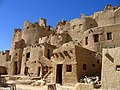 Mud-brick houses in the old town of Shali
 -
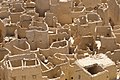 Clay houses of old Shali town
 -
 Old walls near the temple
 -
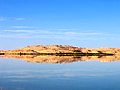 Siwa salt lake
 -
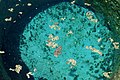 Cleopatra's bath (Cleopatra's pool)
 -
 Mosque at Aghurmi
 -
 Desert rock formations on the outskirts
 -
 View through the Temple of the Oracle of Amun to Gebel el-Dakrour
 -
 Sand dunes in the desert near Siwa Oasis
 -
 Corridor to the secret chamber above the sanctuary, Temple of Amun, Aghurmi, Siwa, Egypt
 -
 Temple of Amun, view to the north, Aghurmi, Siwa, Egypt
 -
 Stone block with visitors' inscriptions at the site of the Temple of Amun, Umm Ubeida, Siwa depression, Egypt
 -
 Oracle temple in Siwa
.jpg)
_(868688341).jpg)

_(866409866).jpg)


.jpg)
_(869634463).jpg)

_(869648897).jpg)


See also
[edit]
References
[edit]- ^ a b c d e f g h Siwa, Encyclopædia Britannica, 2007
- ^ Bard, Kathryn A.; Shubert, Steven Blake, eds. (1999), Encyclopedia of the Archaeology of Ancient Egypt, Routledge (UK), ISBN 978-0-415-18589-9
- ^ Arnold, Dieter; Strudwick, Helen; Strudwick, Nigel, eds. (2003), The Encyclopaedia of Ancient Egyptian Architecture, I B Tauris, ISBN 978-1-86064-465-8
- ^ Deities in Ancient Egypt – Amun
- ^ Farr, Tom G.; Rosen, Paul A.; Caro, Edward; Crippen, Robert; Duren, Riley; Hensley, Scott; Kobrick, Michael; Paller, Mimi; Rodriguez, Ernesto; Roth, Ladislav; Seal, David; Shaffer, Scott; Shimada, Joanne; Umland, Jeffrey; Werner, Marian; Oskin, Michael; Burbank, Douglas; Alsdorf, Douglas (19 May 2007). "The le Radar Topography Mission". Reviews of Geophysics. 45 (2): RG2004. Bibcode:2007RvGeo..45.2004F. doi:10.1029/2005RG000183.
- ^ a b "Siwa Oasis | Desert Oasis, Ancient Ruins, Salt Lakes | Britannica". www.britannica.com. 3 October 2023. Retrieved 18 November 2023.
- ^ Rovero, L.; Tonietti, U.; Fratini, F.; Rescic, S. (1 July 2009). "The salt architecture in Siwa oasis – Egypt (XII–XX centuries)". Construction and Building Materials. 23 (7): 2492–2503. doi:10.1016/j.conbuildmat.2009.02.003. ISSN 0950-0618.
- ^ "Siwa Oasis - Goparoo". www.goparoo.com. 20 May 2021. Retrieved 18 November 2023.
- ^ "Siwa Oasis climate info | what's the weather like in Siwa Oasis, Egypt". www.whatstheweatherlike.org. Retrieved 18 November 2023.
- ^ Gauthier, Henri (1928). Dictionnaire des Noms Géographiques Contenus dans les Textes Hiéroglyphiques Vol. 5. p. 49–50.
- ^ Budge, E. A. Wallis (1920). An Egyptian hieroglyphic dictionary : with an index of English words, king list and geological list with indexes, list of hieroglyphic characters, coptic and semitic alphabets, etc. Vol. II. p. 1035.
- ^ Kaper, Olaf (January 1998). "Life on the Fringe: Living in the Southern Egyptian Deserts During the Roman and Early-Byzantine Periods": 160.
{{cite journal}}: Cite journal requires|journal=(help) - ^ Miller, Catherine (1996). "Nubien, berbère et beja : Notes sur trois langues vernaculaires non arabes de l'Égypte contemporaine". Égypte/Monde Arabe (27–28): 411–431. doi:10.4000/ema.1960.
- ^ Champollion, Jean-François (1814). L'Égypte sous les pharaons, ou recherches sur la géographie, la religion, la langue, les écritures et l'histoire de l'Égypte avant l'invasion de Cambyse. Bure Frères. p. 294.
- ^ "TM Places". www.trismegistos.org. Retrieved 9 January 2020.
- ^ Basset, René (1890), Le dialecte de Syouah, Paris: Ernest Leroux, p. 3
- ^ Ilahiane, Hsain (2006), "Siwa Oasis", Historical dictionary of the Berbers (Imazighen), Historical dictionaries of peoples and cultures, vol. 5, Lanham, MD: Scarecrow Press, Inc, p. 111, ISBN 978-0-8108-5452-9
- ^ "Siwa Oasis | oasis, Egypt". Encyclopedia Britannica. Retrieved 19 May 2017.
- ^ Howatson, M.C. Oxford companion to classical literature. 3rd ed. Oxford: Oxford UP, 2013, 626.
- ^ Herodotus, Histories, iv (on-line text).
- ^ Alexander the Great, Robin Lane Fox, Allen Lane 1973/ Penguin 1986–2004, pp. 200–18
- ^ Wörterbuch der ägyptischen Sprache, ed. Adolf Erman, Hermann Grapow. Vol. IV, p. 230; Vol. VI, p. 141
- ^ Souag, Lameen. "Grammatical Contact In The Sahara". Retrieved 30 June 2012.
- ^ Italian Explorers in Africa, by Sofia Bompiani, London (1891); page 169.
- ^ a b c d e f g Leguil, A. (1997). "SĪWA". In Bosworth, C.E.; van Donzel, E.; Heinrichs, W.P.; Lecomte, G. (eds.). The Encyclopaedia of Islam, Vol. IX (SAN-SZE) (PDF). Leiden: Brill. pp. 686–9. ISBN 90-04-10422-4. Retrieved 18 May 2022.
- ^ Siwa, viewed from the east, by Hermann Burchardt; Siwa, eastern part; Siwa, western part; Siwa, viewed from the south; Siwa, main street.
- ^ "Siwa Oasis". Byebyenet.com. Archived from the original on 22 February 2012. Retrieved 30 June 2012.
- ^ "Shali". lonelyplanet.com. Retrieved 16 March 2015.
- ^ "Climate Siwa – Climate graph, Temperature graph, Climate table (altitude: −15m)". Climate-Data.org. Retrieved 19 October 2013.
- ^ "Siwa Climate Normals 1961–1990". National Oceanic and Atmospheric Administration. Archived from the original on 3 October 2023. Retrieved 3 October 2023.
- ^ Serreli, Valentina (2023), Bayoumi, Hala; Bennafla, Karine (eds.), "Siwa, the Berber oasis where cultures cross", An Atlas of Contemporary Egypt, Hors collection, Paris: CNRS Éditions, pp. 92–93, ISBN 978-2-271-14953-4, retrieved 29 September 2025
- ^ Otterman, Sharon (18 March 2007). "Chilled Out in the Sahara (Published 2007)". The New York Times. ISSN 0362-4331. Retrieved 23 December 2020.
- ^ Margaret Mary Vale, 2011, Sand and Silver, 71, 79–83.
- ^ Margaret Mary Vale, 2011, Sand and Silver: Jewellery, Costume and Life in Siwa Oasis, London:Kelim
- ^ Margaret Mary Vale, 2011, Sand and Silver, xiv, 32, 79–81, 87–99, 101–7.
- ^ Margaret Mary Vale, 2011, Sand and Silver, 61–70.
- ^ Margaret Mary Vale, 2011, Sand and Silver
- ^ Margaret Mary Vale, 2011, Sand and Silver, p. 44
- ^ Ahmed Fakhry. 1973. Siwa Oasis, Cairo: AUC, p. 64
- ^ Fathi Malim. 2001. Oasis Siwa: from the Inside. Traditions, customs, and magic. Al Katan / Dar al Kutub. p. 34
- ^ Malim 2001:29
- ^ Fakhry 1973:67
- ^ "Festivals". Retrieved 23 December 2020.
- ^ Fathi Malim. 2001. Oasis Siwa: from the Inside. Traditions, customs, and magic. Al Katan / Dar al Kutub. pp. 38, 54
- ^ ibid, p. 54
- ^ Donald Powell Cole, Soraya Altorki. 1998. Bedouin, settlers, and holiday-makers: Egypt's changing northwest coast. Cairo: AUC. p. 143
- ^ Smith, Sylvia (31 August 2011). "Flying the flag for North Africa's 'Berber spring'". BBC News. Morocco.
- ^ al-Naghy, Omar (29 September 2015). "Who are Egypt's Amazighs?". Al-Monitor. CAIRO. Archived from the original on 19 September 2016.
- ^ al-Naghy, Omar (24 September 2015). "Tourists drawn to hot springs, natural beauty of Egypt's remote Siwa Oasis". Al-Monitor. CAIROaccess-date=. Archived from the original on 4 February 2017.
- ^ Steindorff, George (1904). Durch die Libysche Wuste Zur Amonoase. Leipsig: Velohgen and Klasing. p. 111.
- ^ Allah, Abd (1917). "Siwan Customs". Harvard African Studies. 7.
- ^ Cline, Walter (1936). Notes on the People of Siwa. Menasha, Wisconsin: George Banta Publishing Co. p. 43.
- ^ De Prorok, Count Byron (1936). In Quest of Lost Worlds. New York: Dutton. p. 64.
- ^ Maugham, Robin (1950). Journey to Siwa. London: Chapman and Hall. p. 80.
- ^ Fakhry, Ahmed (1973). Siwa Oasis. Cairo: The American University in Cairo Press. pp. 41–43.
- ^ Malim, Fathi (2001). Oasis Siwa from the Inside. Siwa.
{{cite book}}: CS1 maint: location missing publisher (link) - ^ "Siwan anthropologist sparks controversy". Cultural Survival. 14 November 2002. Retrieved 14 November 2002.
- ^ Dumairy, A. (2005). Siwa Past and Present. Alexandria.
{{cite book}}: CS1 maint: location missing publisher (link) - ^ Project, Joshua. "Siwa Oasis in Egypt". joshuaproject.net. Retrieved 1 June 2022.
- ^ According to 2016 CAPAMS census: http://www.capmas.gov.eg/Pages/StaticPages.aspx?page_id=7188
- ^ "Siwa Oasis". obo. Retrieved 11 July 2023.
- ^ Planet, Lonely. "Siwa Oasis, Egypt – Lonely Planet". Lonely Planet. Retrieved 19 May 2017.
- ^ Can a Desert Oasis Lead the Way to Sustainable Eco-Tourism in Egypt? Wharton School of the University of Pennsylvania, 1 March 2010.
- ^ Greek News (30 March 2020). "How a historian claims to have unearthed Alexander the Great's tomb". greekcitytimes.com. Online. Retrieved 23 April 2022.
- ^ Reuters: Human footprint may be oldest ever found 20 August 2007.
- ^ "Egypt footprint 'could be oldest'". BBC News. 21 August 2007.
- ^ "Oldest Human Footprints With Modern Anatomy Found". News.nationalgeographic.com. 28 October 2010. Archived from the original on 28 February 2009. Retrieved 30 June 2012.
- ^ "The Source In The Sahara – Accumulating Evidence for the Saharan Origins of Ancient Egypt – Home / News". thesourceinthesahara.com. Retrieved 2 April 2018.
- ^ "Wolfenstein Enemy Territory". Splash Damage. Activision. 29 May 2003. Retrieved 29 May 2003.
- ^ Lavoy, Bill (2015). "Sniper Elite 3 Walkthrough Mission 5: Siwa Oasis – Kill the Officer". Prima Games. Retrieved 3 June 2018.
- ^ "The Oasis". IGN. Ziff Davis, LLC. 28 October 2017. Retrieved 4 June 2018.
Bibliography
[edit]- Battesti, Vincent (2006). Benfoughal, T.; Boulay, S. (eds.). "De l'habitation aux pieds d'argile, Les vicissitudes des matériaux (et des techniques) de construction à Siwa (Égypte)". Journal des Africanistes (in French). 76 (1). Paris: Sociétés des Africanistes: 165–85. doi:10.4000/africanistes.197.
- Bliss, Frank (1998). Siwa – Die Oase des Sonnengottes. Leben in einer ägyptischen Oase vom Mittelalter bis in die Gegenwart (in German). Bonn.
{{cite book}}: CS1 maint: location missing publisher (link) - Bliss, Frank (1998). Artisanat et artisanat d'art dans les oasis du désert occidental égyptien (in French). Köln: Veröffentlichungen des Frobenius-Instituts.
- Battesti, Vincent. Battesti, V.; Puig, N. (eds.). ""Pourquoi j'irais voir d'en haut ce que je connais déjà d'en bas?" Centralités et circulations : comprendre l'usage des espaces dans l'oasis de Siwa". Égypte/Monde Arabe, Terrains d'Égypte, anthropologies contemporaines. 3e série (in French). Le Caire: Cedej. pp. 139–79.
- Blottière, Alain (1992). L'Oasis (in French). Paris: éditions Quai Voltaire. Pocket edition : éditions Payot, "Petite Bibliothèque Voyageurs", Paris, 1994. (see link below).
- Cana, Frank Richardson (1911). . Encyclopædia Britannica. Vol. 25 (11th ed.). p. 163.
- Vale, Margaret Mary (2011). Sand and Silver: Jewellery, Costume and Life in the Oasis of Siwa. London.
{{cite book}}: CS1 maint: location missing publisher (link) - "Western Desert Maps".
External links
[edit]- Ministry of Environment Egyptian Environmental Affairs Agency – Natural Protectorates Description Archived 29 August 2019 at the Wayback Machine
- The Locally Run Website of Siwa Oasis.
- Siwawi.com The guide for visiting Siwa Oasis.
- Siwa Oasis – Extraordinary. Archived on Archive.is
- Alain Blottière's Travel book on Siwa Archived 14 May 2010 at the Wayback Machine.
- Siwa Oasis Photo Gallery.
- Olive and Palm Groves in Siwa Oasis


Egyptian oases | ||
|---|---|---|
 | ||
| International | |
|---|---|
| Geographic | |
| Other | |

Siwa Oasis
View on GrokipediaThe Siwa Oasis is a remote urban oasis in the Western Desert of Egypt, situated in a large depression approximately 800 square kilometers in area, about 560 kilometers west-southwest of Cairo and 50 kilometers east of the Libyan border.[1][2] It features numerous freshwater springs emerging from the Nubian sandstone aquifer, which sustain a fertile environment amid surrounding dunes and escarpments, supporting human settlement since prehistoric times around 4000 BCE.[1] Home to over 30,000 inhabitants primarily of Berber descent who speak the Siwi language, the oasis maintains a distinct cultural identity shaped by centuries of isolation.[2] Historically, Siwa gained prominence in antiquity as the seat of the Oracle of Amun, whose temple—built during Egypt's Twenty-Sixth Dynasty—was visited by Alexander the Great in 331 BCE, where priests reportedly hailed him as the son of the god, bolstering his claims to divine kingship.[3][2] Today, the local economy centers on agriculture, particularly the cultivation of date palms yielding around 25,000 tons annually and olives, irrigated by traditional systems, alongside growing ecotourism attracted to its salt lakes, hot springs, and archaeological ruins like the Shali fortress.[1]
Geography and Environment
Location and Topography
Siwa Oasis lies in Egypt's Matruh Governorate within the Western Desert, positioned approximately 50 kilometers east of the Libyan border and between the Qattara Depression to the east and the Great Sand Sea to the south. Its central geographic coordinates are 29°12′11″N 25°31′10″E.[4][5] The oasis spans a roughly elliptical area measuring about 10 kilometers in length by 6 to 8 kilometers in width, forming a distinct habitable pocket amid hyper-arid surroundings.[6] Topographically, Siwa occupies a large depression exceeding 800 square kilometers, with surface elevations predominantly below sea level, reaching lows of around -18 meters. This basin is bounded by northern rocky escarpments and southern expanses of mobile sand dunes, while internally it features saline lakes, salt flats, and shallow groundwater-fed springs that support vegetation clusters. The depression's formation stems from deflation and dissolution processes eroding soluble Miocene carbonates and evaporites, creating a karst-like terrain dotted with sinkholes and fossil hillocks.[7][8][9] Four principal salt lakes punctuate the central lowland, with Birket Siwa being the largest, contributing to the area's characteristic hypersaline hydrology.[8]Climate and Natural Resources
Siwa Oasis exhibits a hot desert climate (Köppen BWh), marked by extreme aridity and pronounced seasonal temperature contrasts. Annual precipitation totals approximately 9 mm, with monthly averages rarely exceeding 2 mm and occurring primarily in winter months.[10] Daily temperatures fluctuate significantly, with summer highs reaching 38°C and winter lows dipping to 7°C; the yearly average stands at 21.7°C.[11][12] These conditions result from the region's position in the rain shadow of the Qattara Depression within Egypt's Western Desert, where subsidence and continental air masses suppress moisture.[13] The oasis's natural resources center on groundwater extracted from fossil aquifers, which enable agriculture in an otherwise barren landscape. This subterranean water, pumped via wells and springs, irrigates over 95% of cultivated land, supporting crops such as date palms (Phoenix dactylifera), olives, and vegetables adapted to saline-tolerant farming systems.[8][14] Date production predominates, leveraging the oasis's microclimate for high yields, though excessive extraction has caused groundwater levels to rise at rates of 1.33 to 4.6 cm per year, exacerbating soil salinization and drainage issues.[15] Limited surface resources include shallow salt flats and mineral-rich springs, but no significant mineral deposits or renewable surface water exist, rendering the ecosystem vulnerable to over-irrigation and climate variability.[16][17]History
Ancient Period and Oracle of Amun
The Siwa Oasis shows evidence of ancient Egyptian military presence from the 19th Dynasty (c. 1292–1189 BCE), marked by the construction of a fortification amid sparse archaeological finds indicating early settlement and resource exploitation in the remote Western Desert.[3] Limited inscriptions and artifacts suggest intermittent pharaonic oversight, primarily for securing trade routes and oases against Libyan incursions, though Siwa remained culturally distinct with Berber influences.[18] The Oracle of Amun, centered on the god Amun-Ra (syncretized with Libyan deities), emerged as a significant religious site during the Late Period, particularly under the 26th Dynasty (664–525 BCE), when temple complexes were expanded using local limestone and mudbrick.[19] Herodotus describes the oracle's pronouncements delivered through priestly interpreters amid sacred rituals, drawing pilgrims despite the arduous desert journey of over 500 kilometers from the Nile Valley.[18] Persian ruler Cambyses II reportedly dispatched an army of approximately 50,000 in 524 BCE to suppress the oracle but suffered total loss to sandstorms, as recounted in Herodotus' Histories (Book 3), an account supported by the absence of Persian control over Siwa and corroborated by later Greek familiarity with the site.[18] Greek colonists from Cyrene (modern Libya) interacted with the oracle from the 6th century BCE, equating Amun with Zeus and incorporating it into Delphic networks, as evidenced by dedicatory inscriptions and Pindar's odes referencing Siwan consultations.[20] The site's prestige peaked with Alexander the Great's pilgrimage in February 331 BCE, following his Egyptian conquest; departing from Paraetonium with elite troops, he traversed waterless sands guided by ravens and local knowledge, arriving after ten days to consult the oracle privately.[21] Arrian reports the high priest addressed Alexander as pai Dios ("son of Zeus," interpreted as Amun), affirming divine paternity—a revelation Alexander propagated to bolster his claim to Egyptian kingship and Hellenistic legitimacy, though scholars debate whether this reflected premeditated propaganda or genuine oracle response.[21] [22] Post-Alexander, the oracle continued under Ptolemaic patronage, with ruins of the Amun Temple (including hypostyle halls and processional ways) yielding Greek and demotic texts attesting to oracular activity until Roman times, when oracle consultations waned amid imperial centralization.[23] Excavations reveal structural phases from the 4th century BCE, underscoring Siwa's role as a peripheral yet pivotal cult center bridging Egyptian, Libyan, and Mediterranean spheres.[24]Medieval to Ottoman Eras
Following the decline of the Oracle of Amun in late antiquity, Siwa Oasis experienced social and economic instability amid the collapse of Roman authority and the spread of Christianity in the 6th century AD, leading to the abandonment of pagan temples.[25] The Arab conquest of Egypt in 640 AD introduced Islam to the region, though Siwa's remote Berber inhabitants resisted early incursions, repelling forces led by Musa ibn Nusayr and Tariq ibn Ziyad around 708 AD; full Islamization occurred later, likely by 1150 AD.[20] The population, predominantly Berber-speaking Amazigh tribes, preserved their language and customs despite conversion, as noted in medieval accounts like those of al-Maqrizi.[20] By the early 12th century, Siwa served as a caravan stop and slave trade hub, but recurrent Bedouin raids devastated the settlement.[24] In 1203 AD, the population had dwindled to approximately 40 able-bodied men from seven families due to these assaults, prompting relocation from lowland sites like Aghurmi to the fortified hilltop citadel of Shali around 1103 AD, constructed with karez (qanat) systems and three gates for defense.[20] [25] Internal divisions emerged between eastern and western clans, known as "The Thirty," amid gradual recovery; by the 13th century, numbers reached about 600 residents, enabling expanded date palm cultivation and trade.[20] [26] Under nominal Ottoman suzerainty after Egypt's conquest in 1517, Siwa maintained de facto independence due to its isolation, with little direct administration until the early 19th century.[26] In 1819–1820, Muhammad Ali Pasha, the Ottoman viceroy of Egypt, dispatched 1,300–2,000 troops to subjugate the oasis, followed by a 1829 expedition of 600–800 under Hasan Bey, who executed 18 sheikhs and exiled 20 others while imposing tributes.[20] A decisive 1840 campaign destroyed Shali using rockets, killed 72 chieftains, and enforced Egyptian oversight, including taxes of one piastre per palm tree, ending Siwa's autonomy while the Berber population, then around 3,000, continued traditional practices.[25]Modern Isolation and Integration
Siwa Oasis came under nominal Egyptian control in 1820 following Muhammad Ali Pasha's campaigns, but practical governance remained limited due to its remote desert location, with stronger ties to Benghazi persisting into the 19th century.[26] Effective Egyptian administration accelerated gradually after this period, though the oasis retained significant autonomy and self-sufficiency, accessible primarily via arduous camel tracks across hundreds of kilometers of desert.[27] [28] Throughout the early 20th century, Siwa's isolation shielded its Berber culture and Siwi language, even as it became entangled in external conflicts, including occupations during World War I and II, such as German forces under Rommel reaching the oasis in 1942 before retreating.[29] [30] The first visit by an Egyptian ruler, Khedive Abbas II, occurred in the early 1900s, highlighting the oasis's peripheral status within the state.[20] Prior to infrastructural changes, Siwa functioned as a largely independent community, producing its own food and limiting external interactions, which preserved unique social practices like endogamy.[31] [32] The construction of a paved road linking Siwa to Marsa Matruh on the Mediterranean coast in the early 1980s marked a pivotal shift, ending centuries of transport isolation and facilitating integration into Egypt's national economy and administration.[32] [33] This development enabled reliable access to markets, services, and modern amenities like electricity and television, while spurring tourism growth from the mid-1980s onward, which introduced economic opportunities but also challenged traditional isolation.[30] [34] In the 21st century, further infrastructure projects, including extensions toward Libya and renovations like the Shali Fortress in 2020, have enhanced connectivity and promoted ecotourism, balancing development with cultural preservation amid ongoing debates over tourism's socioeconomic impacts on local livelihoods and gender dynamics.[35] [34] [36] Despite these advances, Siwa's relative remoteness—over 300 kilometers from the nearest coastal town—continues to shape its semi-autonomous character within Egypt.[5]Demographics
Population and Ethnic Composition
The population of Siwa Oasis is estimated at approximately 30,000 inhabitants, with figures ranging from 25,000 to 33,000 in recent assessments.[37] This includes a breakdown of roughly 53% male and 47% female, reflecting gradual growth from earlier decades due to limited migration and agricultural stability. The oasis remains one of Egypt's more isolated settlements, with population density concentrated around cultivated areas amid the expansive desert terrain. The ethnic composition is dominated by Siwi Berbers, the indigenous Berber group native to the oasis, who form the majority and maintain distinct tribal structures divided into eastern and western clans, totaling around nine to twelve tribes.[38][39] These Siwi speak Siwi, an eastern Berber language, and trace their heritage to ancient North African Berber populations, preserving cultural isolation until modern road connections.[40] Minority groups include settled Arab Bedouins affiliated with the Awlad Ali tribe, the Shahibaat community, and a smaller contingent of ethnic Egyptians, mainly transient government officials, military personnel, and laborers drawn by administrative or tourism roles.[41] This mix reflects historical migrations and recent integration, though Berber identity predominates in local social and economic life.[27]Language, Religion, and Social Structure
The primary language of Siwa Oasis is Siwi, an Eastern Berber language within the Afro-Asiatic family, spoken by approximately 20,000 individuals mainly in Siwa and the adjacent Gara Oasis.[42] Siwi speakers are typically bilingual, proficient in Egyptian Arabic for communication with non-locals and regional trade.[5] Residents predominantly adhere to Sunni Islam, adopted after the Arab conquests reached the region in the 7th century CE, though pre-Islamic Berber practices continue to influence customs, such as reverence for local saints and oases linked to ancient Ammonite worship.[40] These syncretic elements manifest in rituals honoring natural sites and ancestral figures alongside orthodox Islamic observances.[38] Social organization centers on tribal lineages, with extended patrilineal families forming the core unit; endogamy within tribes reinforces group solidarity and resource allocation.[43] Marriage customs emphasize communal rituals, including specialized embroidered tunics for brides and ceremonies at sites like the Tamusa spring to signify transitions to adulthood.[44] Conservative norms prevail, mandating modest attire—women don traditional silver-adorned garments and head coverings—while patriarchal authority governs household decisions and inheritance.[45]Culture and Traditions
Festivals and Communal Practices
The Siyaha Festival, also known as Eid El Solh or the Peace Festival, occurs annually around the full moon in October and serves as a central communal event for the Siwi Berber population, emphasizing reconciliation, solidarity, and the resolution of disputes among families and clans.[46][47] Participants, primarily men and boys, camp for several days at sites like Gebel Dakrur mountain, engaging in ritual gatherings, traditional music, and feasting tied to the date harvest, which reinforces social bonds and patron saint veneration within a Sunni Islamic framework blended with pre-Islamic Berber customs.[48][49] This festival underscores the oasis's isolation-forged communalism, where collective oaths and forgiveness rituals historically prevented feuds from escalating in the resource-scarce desert environment.[5] Other notable observances include the Moulid at-Tagmigra, a saint's day festival featuring zikr chants and communal prayers, which integrates Sufi elements with local Berber spirituality.[49] Siwi communities also mark Islamic holidays like Eid al-Fitr with amplified local traditions, such as group processions and shared meals of dates and olives, reflecting agricultural cycles rather than urban Egyptian norms.[38] These events maintain endogamous practices, limiting intermarriage to within the oasis to preserve cultural continuity amid external influences.[50] Communal practices revolve around tight-knit family and clan structures, with daily life centered on cooperative agriculture and home-based social interactions. Weddings, lasting up to three days, exemplify this through rituals like Lelet el-Hena (henna night) for both bride and groom, followed by adorned altars with red fabrics prepared by kin and well-wishers, culminating in feasts that mobilize entire villages.[51][52] Women don embroidered tunics like the asherah nuhuwak for ceremonies, symbolizing marital roles tied to household production of crafts and food preservation.[44] Collective singing and storytelling during harvests or evenings foster oral transmission of Siwi lore, while dispute mediation by elders ensures harmony without formal legal recourse, a pragmatic adaptation to the oasis's historical autonomy.[53] Such practices persist despite modernization, prioritizing empirical kinship ties over individualistic norms prevalent in mainland Egypt.[54]Art, Crafts, and Daily Customs
The traditional crafts of Siwa Oasis, practiced by its Berber inhabitants, encompass embroidery, silversmithing, basket weaving from palm leaves, and pottery making.[55][56] These handicrafts reflect the oasis's isolation and resource availability, utilizing local materials like date palm fronds for weaving and clay for pottery.[57] Embroidery, predominantly executed by women, adorns clothing, amulets, baskets, and kohl containers with intricate motifs in five primary colors: red, green, orange, yellow, and black.[58][57] Silversmithing produces jewelry such as pendants, rings, and ear ornaments, often incorporated into daily and ceremonial attire to signify social status and provide symbolic protection.[59] Basketry involves traditional techniques to create functional items like mats and storage vessels, while pottery features hand-formed vessels suited to the arid environment.[55][60] These crafts serve both utilitarian and artistic purposes, with embroidery motifs drawing on symbolic themes of fertility and warding off the evil eye, particularly in bridal garments.[44] Daily customs integrate these crafts into Siwan life, where women wear embroidered T-shaped tunics with long sleeves and hems below the knee, paired with head and body coverings for modesty and cultural expression.[61][59] Such attire, enhanced by silver ornaments, is used in both routine activities and rituals, preserving Berber traditions amid modern influences.[62] Household practices include the application of embroidered items for protection, underscoring the crafts' role in maintaining cultural continuity.[58]Gender Roles and Family Dynamics
In traditional Siwan society, gender roles are distinctly divided, with men primarily responsible for agricultural labor, such as farming dates and olives, and public interactions, while women focus on domestic tasks, child-rearing, and crafts like embroidery and weaving.[40] Married women observe strict seclusion, rarely leaving their homes except to visit relatives and never unaccompanied, often fully veiled in black robes during outings.[63] This conservatism reflects the oasis's isolation and Berber-Islamic cultural norms, though women maintain influence through household management and artisanal production, such as creating intricate shawls and wedding attire for sale.[64] Family dynamics center on patriarchal, patrilocal structures where newlyweds reside with the groom's parents, and inheritance favors males under Islamic law, granting sons full shares compared to daughters' half shares.[40] Extended tribal families predominate, with marriages typically endogamous within tribes or clans to preserve community integrity, often involving first cousins.[43][40] Polygamy is permitted but monogamy prevails, and unions are arranged at young ages, sometimes as early as 16, contributing to historically high divorce rates facilitated by women's right to khula, or self-initiated divorce through male elders.[65] Marriage customs emphasize female chastity and elaborate rituals; unmarried girls wear the adrim, a disc-shaped pendant signifying virginity, removed in a ceremonial bath at Tamusa spring on the eve of the wedding.[66] Brides receive 35 to 75 dresses as trousseau, with seven worn on the wedding day, and garments adorned to promote fertility and ward off the evil eye.[40][67] Despite veiling and seclusion suggesting marginalization, Siwan women exercise communal agency, including participation in wedding rituals and divorce negotiations, rights predating those of many urban Egyptian women.[65]Intergroup Relations and Unique Social Practices
The Siwan Berber population adheres to a tribal social structure divided into two primary moieties—the eastern and western tribes—encompassing approximately ten to twelve subtribes, such as Al-Zanain, Al-Haddadin, and Aghurmi, which govern internal affiliations and resource allocation.[39][43] These divisions enforce strict endogamy, prohibiting intermarriage between eastern and western moieties or between Berber lineages and those of sub-Saharan African descent to preserve lineage purity and social cohesion.[68] Cousin marriages remain prevalent, reinforcing intratribal bonds, while polygamy is permitted but monogamy predominates as the norm.[69] Intertribal relations within Siwa emphasize mutual respect and cooperation for communal defense and agriculture, yet maintain boundaries through customary laws that limit exogamy and social mixing.[70] The oasis also hosts minority Bedouin groups, including Awlad Ali affiliates and the Shahibaat, who practice their own endogamous kinship systems and occasionally intermarry among themselves but rarely with Siwi Berbers, reflecting parallel ethnic identities amid shared Islamic adherence.[41] Relations with mainland Egyptians have historically been distant due to Siwa's geographic isolation, fostering a distinct cultural autonomy, though recent infrastructure links have facilitated limited migration and trade without dissolving core social separations.[71] Unique social practices include arranged marriages where the groom's family selects the date, subject to brief deferral by the bride's kin, often culminating in rituals that integrate the couple into extended patrilineal households.[72] Women observe stringent veiling and gender segregation in public spaces, a custom tied to tribal honor codes that curtail interactions with unrelated males, including tourists, thereby insulating community norms from external influences.[70] Rising tourism since the early 2000s has heightened intergroup contacts with foreigners and Egyptian laborers, yielding economic gains like handicraft sales but prompting local resistance to modernization to safeguard traditions, as evidenced by community-led ecotourism initiatives that prioritize cultural preservation over mass integration.[73][74] Early 20th-century ethnographic accounts, such as those from 1900 onward, documented institutionalized pederasty among adolescent males as a rite of passage, potentially extending to quasi-marital bonds, though such practices appear diminished in contemporary conservative Islamic Siwa, possibly due to external scrutiny or internal shifts rather than inherent taboo.[75]Economy and Development
Agriculture and Local Production
Agriculture forms the backbone of Siwa Oasis's economy, with date palms and olive trees as the dominant crops, supplemented by alfalfa and various herbs in a tiered intercropping system adapted to the arid environment.[76][77] The oasis's date production system, recognized by the FAO as a Globally Important Agricultural Heritage System (GIAHS), exemplifies traditional ingenuity in harsh conditions, yielding varieties such as Siwi, Frehi, and Azzawi for both fresh and dried markets.[78][79] Olives constitute approximately 67% of agricultural output, though yields have declined by 55% in recent years due to water stress and other factors.[80] Irrigation relies on groundwater from the Nubian Sandstone Aquifer System and natural springs, historically supporting around 3,366 acres of farmland with 69 million cubic meters of water annually, though unmanaged extraction via solar-powered pumps threatens depletion of fossil aquifers.[80][81][82] Traditional methods, including date palm-based agroforestry, promote sustainability by integrating understory crops, but modern expansions have intensified pressure on limited resources.[76][83] Local production extends beyond farming to salt harvesting from saline lakes, a craft yielding slabs for carving into lamps, ornaments, and household items, sustaining artisanal industries alongside agriculture.[84][85] This activity, performed manually by locals, complements date and olive processing, with salt products gaining commercial value for their purity and traditional appeal.[84][86]Tourism and Modern Challenges
Tourism in Siwa Oasis centers on its natural springs, salt lakes, desert landscapes, and historical sites such as the Oracle of Amun, drawing visitors for ecotourism, desert safaris, and cultural experiences.[87] Local surveys indicate that 35% of tourists prioritize desert safaris, while 26% favor ecotourism activities.[88] Visitor numbers exceeded 10,000 annually by 1999, with recent growth attributed to improved access and marketing efforts, though precise current figures remain limited due to the oasis's remoteness.[89] This sector supports local employment through guesthouses, guides, and craft sales, contributing to economic diversification beyond agriculture.[73] Infrastructure development has lagged, with inadequate roads and limited investment hindering broader tourism expansion.[90] Political unrest following the 2011 Egyptian revolution reduced visitor arrivals, though renovations like the Shali Fortress restoration in 2020 aim to revive interest in heritage tourism.[34] Community-led initiatives promote sustainable practices, but low publicity and weak demand persist despite the oasis's potential for nature-based and therapeutic tourism.[91] Modern challenges include severe water scarcity, as Siwa relies entirely on non-renewable groundwater for tourism-related needs like hotels and pools, exacerbating depletion rates.[92] Environmental degradation from tourism, including soil salinization, desertification, and pollution, threatens ecosystems and long-term viability.[90] Unplanned urban growth risks eroding Berber cultural identity, while climate change intensifies these pressures through reduced precipitation and higher evaporation.[93] Limited government funding further constrains infrastructure upgrades and conservation efforts.[90]