Hubbry Logo
Slope stability analysisSlope stability analysisMain
Open search
Slope stability analysis
Community hub
Slope stability analysis
logo
8 pages, 0 posts
0 subscribers
Be the first to start a discussion here.
Slope stability analysis
from Wikipedia
Method of slices

Slope stability analysis is a static or dynamic, analytical or empirical method to evaluate the stability of slopes of soil- and rock-fill dams, embankments, excavated slopes, and natural slopes in soil and rock. It is performed to assess the safe design of a human-made or natural slopes (e.g. embankments, road cuts, open-pit mining, excavations, landfills etc.) and the equilibrium conditions.[1][2] Slope stability is the resistance of inclined surface to failure by sliding or collapsing.[3] The main objectives of slope stability analysis are finding endangered areas, investigation of potential failure mechanisms, determination of the slope sensitivity to different triggering mechanisms, designing of optimal slopes with regard to safety, reliability and economics, and designing possible remedial measures, e.g. barriers and stabilization.[1][2]

Successful design of the slope requires geological information and site characteristics, e.g. properties of soil/rock mass, slope geometry, groundwater conditions, alternation of materials by faulting, joint or discontinuity systems, movements and tension in joints, earthquake activity etc.[4][5] The presence of water has a detrimental effect on slope stability. Water pressure acting in the pore spaces, fractures or other discontinuities in the materials that make up the pit slope will reduce the strength of those materials.[6] Choice of correct analysis technique depends on both site conditions and the potential mode of failure, with careful consideration being given to the varying strengths, weaknesses and limitations inherent in each methodology.[7]

Before the computer age stability analysis was performed graphically or by using a hand-held calculator. Today engineers have a lot of possibilities to use analysis software, ranges from simple limit equilibrium techniques through to computational limit analysis approaches (e.g. Finite element limit analysis, Discontinuity layout optimization) to complex and sophisticated numerical solutions (finite-/distinct-element codes).[1] The engineer must fully understand limitations of each technique. For example, limit equilibrium is most commonly used and simple solution method, but it can become inadequate if the slope fails by complex mechanisms (e.g. internal deformation and brittle fracture, progressive creep, liquefaction of weaker soil layers, etc.). In these cases more sophisticated numerical modelling techniques should be utilised. Also, even for very simple slopes, the results obtained with typical limit equilibrium methods currently in use (Bishop, Spencer, etc.) may differ considerably. In addition, the use of the risk assessment concept is increasing today. Risk assessment is concerned with both the consequence of slope failure and the probability of failure (both require an understanding of the failure mechanism).[8][9]

Limit equilibrium analysis

[edit]
A typical cross-section of a slope used in two-dimensional analyses.

Conventional methods of slope stability analysis can be divided into three groups: kinematic analysis, limit equilibrium analysis, and rock fall simulators.[10] Most slope stability analysis computer programs are based on the limit equilibrium concept for a two- or three-dimensional model.[11][12] Two-dimensional sections are analyzed assuming plane strain conditions. Stability analyses of two-dimensional slope geometries using simple analytical approaches can provide important insights into the initial design and risk assessment of slopes.

Limit equilibrium methods investigate the equilibrium of a soil mass tending to slide down under the influence of gravity. Translational or rotational movement is considered on an assumed or known potential slip surface below the soil or rock mass.[13] In rock slope engineering, methods may be highly significant to simple block failure along distinct discontinuities.[10] All these methods are based on the comparison of forces, moments, or stresses resisting movement of the mass with those that can cause unstable motion (disturbing forces). The output of the analysis is a factor of safety, defined as the ratio of the shear strength (or, alternatively, an equivalent measure of shear resistance or capacity) to the shear stress (or other equivalent measure) required for equilibrium. If the value of factor of safety is less than 1.0, the slope is unstable.

All limit equilibrium methods assume that the shear strengths of the materials along the potential failure surface are governed by linear (Mohr-Coulomb) or non-linear relationships between shear strength and the normal stress on the failure surface.[13] The most commonly used variation is Terzaghi's theory of shear strength which states that

where is the shear strength of the interface, is the effective stress ( is the total stress normal to the interface and is the pore water pressure on the interface), is the effective friction angle, and is the effective cohesion.

The methods of slices is the most popular limit equilibrium technique. In this approach, the soil mass is discretized into vertical slices.[12][14] Several versions of the method are in use. These variations can produce different results (factor of safety) because of different assumptions and inter-slice boundary conditions.[13][15]

The location of the interface is typically unknown but can be found using numerical optimization methods.[16] For example, functional slope design considers the critical slip surface to be the location where that has the lowest value of factor of safety from a range of possible surfaces. A wide variety of slope stability software use the limit equilibrium concept with automatic critical slip surface determination.

Typical slope stability software can analyze the stability of generally layered soil slopes, embankments, earth cuts, and anchored sheeting structures. Earthquake effects, external loading, groundwater conditions, stabilization forces (i.e., anchors, geo-reinforcements etc.) can also be included.

Analytical techniques: Method of slices

[edit]
Schematic of the method of slices showing rotation center.

Many slope stability analysis tools use various versions of the methods of slices such as Bishop simplified, Ordinary method of slices (Swedish circle method/Petterson/Fellenius), Spencer, Sarma etc. Sarma and Spencer are called rigorous methods because they satisfy all three conditions of equilibrium: force equilibrium in horizontal and vertical direction and moment equilibrium condition. Rigorous methods can provide more accurate results than non-rigorous methods. Bishop simplified or Fellenius are non-rigorous methods satisfying only some of the equilibrium conditions and making some simplifying assumptions.[14][15] Some of these approaches are discussed below.

Swedish Slip Circle Method of Analysis

[edit]

The Swedish Slip Circle method assumes that the friction angle of the soil or rock is equal to zero, i.e., . In other words, when friction angle is considered to be zero, the effective stress term goes to zero, thus equating the shear strength to the cohesion parameter of the given soil. The Swedish slip circle method assumes a circular failure interface, and analyzes stress and strength parameters using circular geometry and statics. The moment caused by the internal driving forces of a slope is compared to the moment caused by forces resisting slope failure. If resisting forces are greater than driving forces, the slope is assumed stable.

Ordinary Method of Slices

[edit]
Division of the slope mass in the method of slices.

In the method of slices, also called OMS or the Fellenius method, the sliding mass above the failure surface is divided into a number of slices. The forces acting on each slice are obtained by considering the mechanical (force and moment) equilibrium for the slices. Each slice is considered on its own and interactions between slices are neglected because the resultant forces are parallel to the base of each slice. However, Newton's third law is not satisfied by this method because, in general, the resultants on the left and right of a slice do not have the same magnitude and are not collinear.[17]

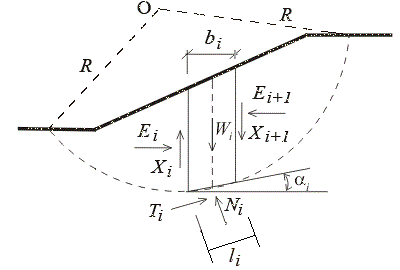
This allows for a simple static equilibrium calculation, considering only soil weight, along with shear and normal stresses along the failure plane. Both the friction angle and cohesion can be considered for each slice. In the general case of the method of slices, the forces acting on a slice are shown in the figure below. The normal () and shear () forces between adjacent slices constrain each slice and make the problem statically indeterminate when they are included in the computation.

Force equilibrium for a slice in the method of slices. The block is assumed to have thickness . The slices on the left and right exert normal forces and shear forces , the weight of the slice causes the force . These forces are balanced by the pore pressure and reactions of the base .

For the ordinary method of slices, the resultant vertical and horizontal forces are

where represents a linear factor that determines the increase in horizontal force with the depth of the slice. Solving for gives

Next, the method assumes that each slice can rotate about a center of rotation and that moment balance about this point is also needed for equilibrium. A balance of moments for all the slices taken together gives

where is the slice index, are the moment arms, and loads on the surface have been ignored. The moment equation can be used to solve for the shear forces at the interface after substituting the expression for the normal force:

Using Terzaghi's strength theory and converting the stresses into moments, we have

where is the pore pressure. The factor of safety is the ratio of the maximum moment from Terzaghi's theory to the estimated moment,

Modified Bishop's Method of Analysis

[edit]

The Modified Bishop's method[18] is slightly different from the ordinary method of slices in that normal interaction forces between adjacent slices are assumed to be collinear and the resultant interslice shear force is zero. The approach was proposed by Alan W. Bishop of Imperial College. The constraint introduced by the normal forces between slices makes the problem statically indeterminate. As a result, iterative methods have to be used to solve for the factor of safety. The method has been shown to produce factor of safety values within a few percent of the "correct" values.

The factor of safety for moment equilibrium in Bishop's method can be expressed as

where

where, as before, is the slice index, is the effective cohesion, is the effective internal angle of internal friction, is the width of each slice, is the weight of each slice, and is the water pressure at the base of each slice. An iterative method has to be used to solve for because the factor of safety appears both on the left and right hand sides of the equation.

Lorimer's method

[edit]

Lorimer's Method is a technique for evaluating slope stability in cohesive soils. It differs from Bishop's Method in that it uses a clothoid slip surface in place of a circle. This mode of failure was determined experimentally to account for effects of particle cementation. The method was developed in the 1930s by Gerhardt Lorimer (Dec 20, 1894-Oct 19, 1961), a student of geotechnical pioneer Karl von Terzaghi.

Spencer's Method

[edit]

Spencer's Method of analysis[19] requires a computer program capable of cyclic algorithms, but makes slope stability analysis easier. Spencer's algorithm satisfies all equilibria (horizontal, vertical and driving moment) on each slice. The method allows for unconstrained slip plains and can therefore determine the factor of safety along any slip surface. The rigid equilibrium and unconstrained slip surface result in more precise safety factors than, for example, Bishop's Method or the Ordinary Method of Slices.[19]

Sarma method

[edit]

The Sarma method,[20] proposed by Sarada K. Sarma of Imperial College is a Limit equilibrium technique used to assess the stability of slopes under seismic conditions. It may also be used for static conditions if the value of the horizontal load is taken as zero. The method can analyse a wide range of slope failures as it may accommodate a multi-wedge failure mechanism and therefore it is not restricted to planar or circular failure surfaces. It may provide information about the factor of safety or about the critical acceleration required to cause collapse.

Comparisons

[edit]

The assumptions made by a number of limit equilibrium methods are listed in the table below.[21]

Method Assumption
Ordinary method of slices Interslice forces are neglected
Bishop's simplified/modified[18] Resultant interslice forces are horizontal. There are no interslice shear forces.
Janbu's simplified[22] Resultant interslice forces are horizontal. An empirical correction factor is used to account for interslice shear forces.
Janbu's generalized[22] An assumed line of thrust is used to define the location of the interslice normal force.
Spencer[19] The resultant interslice forces have constant slope throughout the sliding mass. The line of thrust is a degree of freedom.
Chugh[23] Same as Spencer's method but with a constant acceleration force on each slice.
Morgenstern-Price[24] The direction of the resultant interslice forces is defined using an arbitrary function. The fractions of the function value needed for force and moment balance is computed.
Fredlund-Krahn (GLE)[17] Similar to Morgenstern-Price.
Corps of Engineers[25] The resultant interslice force is either parallel to the ground surface or equal to the average slope from the beginning to the end of the slip surface..
Lowe and Karafiath[26] The direction of the resultant interslice force is equal to the average of the ground surface and the slope of the base of each slice.
Sarma[20] The shear strength criterion is applied to the shears on the sides and bottom of each slice. The inclinations of the slice interfaces are varied until a critical criterion is met.

The table below shows the statical equilibrium conditions satisfied by some of the popular limit equilibrium methods.[21]

Method Force balance (vertical) Force balance (horizontal) Moment balance
Ordinary MS Yes No Yes
Bishop's simplified Yes No Yes
Janbu's simplified Yes Yes No
Janbu's generalized Yes Yes Used to compute interslice shear forces
Spencer Yes Yes Yes
Chugh Yes Yes Yes
Morgenstern-Price Yes Yes Yes
Fredlund-Krahn Yes Yes Yes
Corps of Engineers Yes Yes No
Lowe and Karafiath Yes Yes No
Sarma Yes Yes Yes

Rock slope stability analysis

[edit]

Rock slope stability analysis based on limit equilibrium techniques may consider following modes of failures:

  • Planar failure -> case of rock mass sliding on a single surface (special case of general wedge type of failure); two-dimensional analysis may be used according to the concept of a block resisting on an inclined plane at limit equilibrium[27][28]
  • Polygonal failure -> sliding of a nature rock usually takes place on polygonally-shaped surfaces; calculation is based on a certain assumptions (e.g. sliding on a polygonal surface which is composed from N parts is kinematically possible only in case of development at least (N - 1) internal shear surfaces; rock mass is divided into blocks by internal shear surfaces; blocks are considered to be rigid; no tensile strength is permitted etc.)[28]
  • Wedge failure -> three-dimensional analysis enables modelling of the wedge sliding on two planes in a direction along the line of intersection[28][29]
  • Toppling failure -> long thin rock columns formed by the steeply dipping discontinuities may rotate about a pivot point located at the lowest corner of the block; the sum of the moments causing toppling of a block (i.e. horizontal weight component of the block and the sum of the driving forces from adjacent blocks behind the block under consideration) is compared to the sum of the moments resisting toppling (i.e. vertical weight component of the block and the sum of the resisting forces from adjacent blocks in front of the block under consideration); toppling occur if driving moments exceed resisting moments[30][31]

Limit analysis

[edit]

A more rigorous approach to slope stability analysis is limit analysis. Unlike limit equilibrium analysis which makes ad hoc though often reasonable assumptions, limit analysis is based on rigorous plasticity theory. This enables, among other things, the computation of upper and lower bounds on the true factor of safety.

Programs based on limit analysis include:

  • OptumG2 (2014-) General purpose software for geotechnical applications (also includes elastoplasticity, seepage, consolidation, staged construction, tunneling, and other relevant geotechnical analysis types).
  • LimitState:GEO (2008-) General purpose geotechnical software application based on Discontinuity layout optimization for plane strain problems including slope stability.

Stereographic and kinematic analysis

[edit]

Kinematic analysis examines which modes of failure can possibly occur in the rock mass. Analysis requires the detailed evaluation of rock mass structure and the geometry of existing discontinuities contributing to block instability.[32][33] Stereographic representation (stereonets) of the planes and lines is used.[34] Stereonets are useful for analyzing discontinuous rock blocks.[35] Program DIPS allows for visualization structural data using stereonets, determination of the kinematic feasibility of rock mass and statistical analysis of the discontinuity properties.[32]

Rockfall simulators

[edit]

Rock slope stability analysis may design protective measures near or around structures endangered by the falling blocks. Rockfall simulators determine travel paths and trajectories of unstable blocks separated from a rock slope face.[36] Analytical solution method described by Hungr & Evans[37] assumes rock block as a point with mass and velocity moving on a ballistic trajectory with regard to potential contact with slope surface. Calculation requires two restitution coefficients that depend on fragment shape, slope surface roughness, momentum and deformational properties and on the chance of certain conditions in a given impact.[38]

Numerical methods of analysis

[edit]

Numerical modelling techniques provide an approximate solution to problems which otherwise cannot be solved by conventional methods, e.g. complex geometry, material anisotropy, non-linear behavior, in situ stresses. Numerical analysis allows for material deformation and failure, modelling of pore pressures, creep deformation, dynamic loading, assessing effects of parameter variations etc. However, numerical modelling is restricted by some limitations. For example, input parameters are not usually measured and availability of these data is generally poor. User also should be aware of boundary effects, meshing errors, hardware memory and time restrictions. Numerical methods used for slope stability analysis can be divided into three main groups: continuum, discontinuum and hybrid modelling.[39]

Continuum modelling

[edit]
Figure 3: Finite element mesh

Modelling of the continuum is suitable for the analysis of soil slopes, massive intact rock or heavily jointed rock masses. This approach includes the finite-difference and finite element methods that discretize the whole mass to finite number of elements with the help of generated mesh (Fig. 3). In finite-difference method (FDM) differential equilibrium equations (i.e. strain-displacement and stress-strain relations) are solved. finite element method (FEM) uses the approximations to the connectivity of elements, continuity of displacements and stresses between elements.[40] Most of numerical codes allows modelling of discrete fractures, e.g. bedding planes, faults. Several constitutive models are usually available, e.g. elasticity, elasto-plasticity, strain-softening, elasto-viscoplasticity etc.[39]

Discontinuum modelling

[edit]

Discontinuum approach is useful for rock slopes controlled by discontinuity behaviour. Rock mass is considered as an aggregation of distinct, interacting blocks subjected to external loads and assumed to undergo motion with time. This methodology is collectively called the discrete-element method (DEM). Discontinuum modelling allows for sliding between the blocks or particles. The DEM is based on solution of dynamic equation of equilibrium for each block repeatedly until the boundary conditions and laws of contact and motion are satisfied. Discontinuum modelling belongs to the most commonly applied numerical approach to rock slope analysis and following variations of the DEM exist:[39]

The distinct-element approach describes mechanical behaviour of both, the discontinuities and the solid material. This methodology is based on a force-displacement law (specifying the interaction between the deformable rock blocks) and a law of motion (determining displacements caused in the blocks by out-of-balance forces). Joints are treated as [boundary conditions. Deformable blocks are discretized into internal constant-strain elements.[39]

Discontinuum program UDEC[41] (Universal distinct element code) is suitable for high jointed rock slopes subjected to static or dynamic loading. Two-dimensional analysis of translational failure mechanism allows for simulating large displacements, modelling deformation or material yielding.[41] Three-dimensional discontinuum code 3DEC[42] contains modelling of multiple intersecting discontinuities and therefore it is suitable for analysis of wedge instabilities or influence of rock support (e.g. rockbolts, cables).[39]

In Discontinuous Deformation Analysis (DDA) displacements are unknowns and equilibrium equations are then solved analogous to finite element method. Each unit of finite element type mesh represents an isolated block bounded by discontinuities. Advantage of this methodology is possibility to model large deformations, rigid body movements, coupling or failure states between rock blocks.[39]

Discontinuous rock mass can be modelled with the help of distinct-element methodology in the form of particle flow code, e.g. program PFC2D/3D.[43][44] Spherical particles interact through frictional sliding contacts. Simulation of joint bounded blocks may be realized through specified bond strengths. Law of motion is repeatedly applied to each particle and force-displacement law to each contact. Particle flow methodology enables modelling of granular flow, fracture of intact rock, transitional block movements, dynamic response to blasting or seismicity, deformation between particles caused by shear or tensile forces. These codes also allow to model subsequent failure processes of rock slope, e.g. simulation of rock[39]

Hybrid/coupled modelling

[edit]

Hybrid codes involve the coupling of various methodologies to maximize their key advantages, e.g. limit equilibrium analysis combined with finite element groundwater flow and stress analysis; coupled particle flow and finite-difference analyses; hydro-mechanically coupled finite element and material point methods for simulating the entire process of rainfall-induced landslides.[45] Hybrid techniques allows investigation of piping slope failures and the influence of high groundwater pressures on the failure of weak rock slope. Coupled finite-distinct-element codes provide for the modelling of both intact rock behavior and the development and behavior of fractures.

See also

[edit]

References

[edit]

Further reading

[edit]
[edit]
Revisions and contributorsEdit on WikipediaRead on Wikipedia
from Grokipedia
Slope stability analysis is a critical process used to evaluate the equilibrium conditions and potential failure mechanisms of natural or human-made slopes, such as embankments, road cuts, excavations, and hillsides, by calculating the —the ratio of resisting forces to driving forces along potential slip surfaces—to ensure they meet required safety criteria under various loading and environmental conditions. This analysis addresses the risk of slope failures, including landslides, which can result from factors like heavy rainfall, seismic activity, , or poor properties, and is essential for designing safe in projects such as highways, , and operations. Developed over more than a century, the field originated with assumptions of circular slip surfaces in the early and has evolved to incorporate advanced computational techniques for handling complex geometries and material behaviors. Key methods in slope stability analysis include limit equilibrium approaches, which divide the potential sliding mass into slices and balance forces or moments (e.g., Bishop's simplified method or Janbu's method), assuming a predefined failure surface; these remain widely used due to their simplicity and computational efficiency. More sophisticated numerical methods, such as finite element analysis (FEA) and finite difference methods (FDM), simulate stress-strain behavior throughout the slope without presupposing the failure plane, allowing for the assessment of deformation and progressive failure in heterogeneous soils or under dynamic loads. Probabilistic analyses account for uncertainties in material properties and parameters, while kinematic analyses assess geometric conditions for potential instabilities in rock slopes, often using specialized software. In practice, minimum factors of safety vary by jurisdiction and standard; for example, TxDOT requires 1.3 for global in both short-term undrained and long-term drained conditions, though higher values such as 1.5 may be mandated for critical structures; this ensures resilience against triggers like changes or earthquakes. Applications extend to environmental , where informs remediation strategies like drainage systems, retaining walls, or reinforcement to mitigate hazards in urban development and natural landscapes.

Fundamentals

Definition and Importance

Slope stability analysis is the systematic evaluation of a slope's resistance to failure induced by gravitational forces and external loads, typically involving the computation of the (FoS) to assess whether stabilizing forces exceed those driving instability. This process is fundamental in , as it determines if a slope meets safety and performance criteria under various conditions. The analysis plays a critical role in applications, including the design of earth and rock-fill , embankments, and other , where unstable slopes can compromise structural integrity and public safety. In , it ensures the stability of open-pit excavations and waste dumps, preventing operational disruptions and hazards to personnel. Additionally, it supports natural hazard mitigation by identifying risks in areas prone to landslides, thereby informing and emergency preparedness. Catastrophic failures illustrate the stakes involved, such as the 1963 Vajont Dam in , where approximately 270 million cubic meters of rock slid into the , generating a that overtopped the dam and resulted in over 2,000 deaths in downstream villages. Globally, slope failures contribute to substantial economic and societal burdens, with annual losses from landslides averaging $34.2 billion from 2000 to 2023, encompassing damage to , lost productivity, and human casualties. Preventive slope stability analysis mitigates these impacts by enabling targeted reinforcements and monitoring, ultimately reducing the scale of potential disasters and associated costs.

Basic Concepts and Factor of Safety

Slope stability analysis begins with distinguishing between infinite and finite slopes, which represent idealized influencing the potential failure modes. An infinite slope is characterized by a long, uniform profile where the failure plane is parallel to the ground surface and extends indefinitely laterally, typically applicable to shallow slides in cohesionless soils or residual materials over a firm base. In contrast, a finite slope has defined boundaries, , and , allowing for deeper, rotational, or translational failures along curved or planar surfaces, as commonly seen in embankments, excavations, or natural hillsides. This distinction guides the selection of appropriate analytical assumptions, with infinite slopes simplifying to two-dimensional plane strain conditions without end effects. The of or rock in is fundamentally described by the Mohr-Coulomb failure criterion, which posits that failure occurs when the along a potential slip surface exceeds the material's resistance. This criterion expresses τ\tau as a of cohesion cc and the product of normal stress σ\sigma and the tangent of the friction angle ϕ\phi: τ=c+σtanϕ\tau = c + \sigma \tan \phi Here, cohesion cc represents the inherent shear resistance independent of normal stress, while the friction angle ϕ\phi quantifies the frictional component arising from particle interlock and . These parameters are determined through laboratory tests such as triaxial compression or direct shear, and they form the basis for evaluating resisting forces in stability calculations. The (FoS) serves as the primary metric for assessing , defined as the ratio of the available resisting (or moments) to the driving (or moments) along the critical surface. A FoS greater than 1 indicates that the slope is under the analyzed conditions, as resisting forces exceed those promoting . For purposes, geotechnical standards recommend minimum FoS values to account for uncertainties in properties and loading; for instance, a FoS of 1.5 is typically required for long-term stability under steady seepage in permanent structures, while 1.3 suffices for end-of-construction phases. These thresholds ensure a margin against , with higher values applied in cases of greater variability or consequence. Stability analyses rely on key assumptions regarding drainage conditions and stress states, which dictate the choice of shear strength parameters. Undrained conditions apply to short-term scenarios in low-permeability clays (permeability < 10710^{-7} cm/s), where excess pore pressures develop rapidly, precluding dissipation; total stress parameters (cc, ϕ\phi) are used, often assuming ϕ=0\phi = 0 for simplicity. Drained conditions, relevant for long-term or high-permeability soils (> 10410^{-4} cm/s), allow pore water pressures to equilibrate, employing effective stress parameters (cc', ϕ\phi'). Central to this is the effective stress principle, which states that the stress carried by the soil skeleton—and thus controlling strength and deformation—is the total stress minus pore water pressure: σ=σu\sigma' = \sigma - u. This principle, originally formulated by Terzaghi, underpins effective stress analyses to accurately incorporate seepage effects on stability.

Influencing Factors

Soil and Rock Properties

Slope stability analysis relies heavily on the geotechnical properties of soil and rock, which determine the shear strength and deformability of the slope materials. For soils, key parameters include cohesion (c), the internal friction angle (φ), unit weight (γ), and permeability (k). Cohesion represents the shear strength component independent of normal stress, typically ranging from 0 kPa for granular soils to 20-50 kPa or more for cohesive clays, as measured in standard laboratory tests. The internal friction angle quantifies the frictional resistance to shearing, with values often between 25°-35° for sands and 0°-30° for clays, influencing the slope's resistance to sliding along potential failure planes. Unit weight, encompassing both total (γ) and saturated (γ_sat) values, affects the driving forces due to gravity, typically 16-20 kN/m³ for dry soils and 18-22 kN/m³ when saturated. Permeability governs water flow through the soil, with values from 10^{-6} m/s for clays to 10^{-2} m/s for gravels, impacting long-term drainage and stability. The influence of water on properties is critical, particularly through saturation and (u), which reduces (σ' = σ - u) according to Terzaghi's principle of . In unsaturated soils, partial saturation increases apparent cohesion due to capillary forces, but full saturation elevates pore pressures, potentially decreasing and by up to 50% or more in low-permeability clays during rapid loading. This framework underpins the Mohr-Coulomb failure criterion, where τ = c + σ' tan φ. These properties are site-specific and can vary with composition, such as higher cohesion in overconsolidated clays versus loose sands with dominant frictional strength. For rocks, essential properties include uniaxial (UCS), tensile strength, and joint characteristics like spacing and orientation. UCS measures the peak axial stress a rock core can withstand, typically 50-250 MPa for intact sedimentary rocks, providing a baseline for overall rock mass strength. Tensile strength, often 5-15% of UCS (e.g., 1-10 MPa), is crucial for crack propagation and is determined via Brazilian splitting tests. Joint spacing influences discontinuity density, with values from <0.1 m in highly fractured rock masses to >1 m in massive formations, while orientation relative to the slope face controls potential kinematic failure modes, such as or planar sliding when joints dip parallel to the slope. Rock masses are rarely intact, so classification systems integrate these properties: the Rock Mass Rating (RMR) by Bieniawski assesses , joint quality, , and orientation on a 0-100 scale, with ratings below 40 indicating poor stability; the Q-system by Barton classifies based on joint sets, roughness, and stress conditions, yielding a Q-value from 0.001 (very poor) to 1000 (excellent). Laboratory and in-situ testing methods are vital for quantifying these properties accurately. For soils, the triaxial compression test applies confining pressures to simulate field stresses, yielding c and φ under consolidated-undrained (CU) or drained (CD) conditions, with results validated against in-situ vane shear tests for soft clays. Direct shear tests measure peak and residual along predefined planes, ideal for interface in layered soils. For rocks, the provides a non-destructive rebound index correlating to UCS (e.g., via empirical curves for field estimates), while the point load test (PLT) applies diametral compression to irregular samples, offering an index strength (I_s(50)) of 2-20 MPa for weak to strong rocks, calibrated to full-scale UCS. These tests ensure parameters reflect both intact and disturbed conditions, with in-situ methods like plate loading preferred for large-scale rock mass behavior.

Geometry and External Loads

In slope stability analysis, geometric factors such as slope angle (β), height (H), and length play a pivotal role in determining the potential for instability by influencing the balance between driving and resisting forces along potential failure planes. The slope angle β directly affects the shear stress component parallel to the slope surface, with steeper angles increasing the driving force and thus reducing stability for a given soil or rock mass. Slope height H contributes to higher normal stresses at depth, which can enhance stability through increased frictional resistance, but excessive height may lead to deeper failure surfaces and overall reduced factors of safety in finite slopes. Slope length, particularly in longer slopes approximating infinite conditions, assumes uniform stress distribution parallel to the surface, simplifying analysis but highlighting the importance of lateral extent in preventing end effects that could alter stress paths. These geometric parameters interact with material properties, such as unit weight (γ), to modulate effective stresses across the slope profile. For infinite slopes, where the failure plane is parallel to the ground surface and extends indefinitely, a critical height (H_cr) can be derived at which the equals unity under dry conditions, given by the formula: Hcr=cγcos2β(tanβtanϕ)H_{cr} = \frac{c}{\gamma \cos^2 \beta (\tan \beta - \tan \phi)} where c is cohesion, γ is the unit weight of the , β is the , and φ is the angle of internal friction. This expression arises from equilibrium of forces on a slice parallel to the slope, equating to at the point of impending , and underscores how steeper β or lower φ rapidly diminishes stable height. The formula assumes no pore water effects and a planar at depth H_cr, providing a foundational benchmark for preliminary assessments of long, uniform slopes like those in residual soils or . External loads introduce additional destabilizing forces that must be incorporated into stability evaluations, often modifying the regime and calculations. Seismic is typically analyzed using a pseudo-static approach, applying a horizontal seismic (k_h) to represent inertial forces as an equivalent acting on the mass; k_h values are commonly selected based on , with 0.1 to 0.5g representing moderate to strong shaking, reducing the by adding a horizontal driving component parallel to the . Water loading from reservoir impoundment exerts hydrostatic on the face, increasing total normal forces while potentially elevating pore pressures if seepage occurs, which can decrease and ; rapid filling exacerbates this by limiting drainage time. Human-induced loads, such as those from excavation or blasting, alter and introduce dynamic or static surcharges—excavation at the toe removes supporting material and increases higher up the , while blasting vibrations propagate as seismic-like waves, potentially fracturing rock masses and lowering cohesion. Hydrogeological effects further compound external influences by altering pore water pressures and seepage forces within the slope. Rainfall infiltration raises pore pressures through partial saturation and transient flow, reducing and matric suction in unsaturated soils, with intense storms causing rapid destabilization by advancing the wetting front downslope. Seepage forces, directed along hydraulic gradients, can be quantified using flow nets to delineate lines and flow paths, adding a body force component (i · γ_w, where i is the hydraulic gradient and γ_w is water unit weight) that acts parallel or perpendicular to potential failure surfaces, often critically in upward seepage scenarios beneath the slope toe. These effects are analyzed by coupling hydrological models with limit equilibrium methods to predict changes in during wetting events.

Failure Mechanisms

Soil Slope Failures

Soil slope failures represent critical instability modes in geotechnical engineering, occurring when gravitational forces overcome the shear resistance of soil masses, leading to downslope movement. These failures are prevalent in both cohesive (e.g., clays) and cohesionless (e.g., sands) soils, influenced by factors such as soil type, slope geometry, and hydrological conditions. Translational and rotational mechanisms dominate, with each characterized by distinct slip surface geometries and triggering conditions. Translational failures typically manifest as planar slides parallel to the slope surface, particularly in long, gentle slopes where the failure depth is shallow relative to the slope length. In such cases, base failure occurs along a discrete plane at the slope's toe or mid-section, often in layered soils with weak interfaces. The infinite slope model approximates these shallow slides by assuming uniform stress distribution and a failure plane parallel to the ground surface, simplifying analysis for cohesionless or variably saturated soils. This model highlights how shear stress increases with depth while resistance depends on soil friction and cohesion, making it suitable for predicting shallow landslides triggered by erosion or seepage. Rotational failures, in contrast, involve curvilinear slip surfaces, most commonly circular arcs in homogeneous cohesive , resulting in rotational slumps or topples. These deep-seated failures are typical in steeper with high plasticity clays, where the rotating soil mass forms a spoon-shaped depression at the crown and a bulging . The circular arises from the isotropic nature of cohesive materials, allowing moment equilibrium about a center of , and such failures often extend to depths exceeding the slope height. Specialized examples include flow failures in sensitive clays, where rapid remolding upon shearing causes dramatic strength loss, transforming the soil into a fluid-like state akin to . These occur in post-glacial or marine deposits with sensitivity ratios exceeding 16, leading to retrogressive spreads that propagate upslope after initial triggering. Compound failures combine elements of translational and rotational modes, featuring multiple slip surfaces with curved ends and a planar central portion, common in heterogeneous slopes where sequential failures merge. Increased pore pressure from rainfall infiltration can exacerbate these mechanisms by reducing , particularly in shallow translational slides.

Rock Slope Failures

Rock slope failures occur in discontinuous rock masses where structural discontinuities, such as and , control the mode of instability, leading to distinct kinematic patterns unlike the more homogeneous deformations in slopes. These failures are governed by the orientation, persistence, and of the discontinuities relative to the slope geometry. Joint properties, including orientation and spacing, play a critical role in determining the potential for such failures. Planar failures involve the sliding of a coherent rock block along a single, continuous discontinuity that dips out of the slope face, typically a joint or bedding plane striking parallel or nearly parallel to the slope crest (within ±20°). For failure to occur, the discontinuity must daylight on the slope face, meaning its dip angle must be less than that of the slope but greater than the friction angle of the plane, allowing gravity to drive shear displacement along the surface. Stability is influenced by factors such as cohesion, water pressure reducing effective normal stress, and external loads, with tension cracks often developing behind the slope crest to further destabilize the block. This mode is common in rock types like limestone or sandstone where a dominant planar feature exists. Wedge failures result from the of two non-parallel discontinuities forming a tetrahedral block that slides along their line of , which plunges out of the face. The geometric conditions require both planes to daylight on the , with the intersection line's plunge steeper than the but shallower than the face , and the dip directions positioned such that the is kinematically released. This failure mode is prevalent in jointed rock masses with intersecting sets, such as in granitic or sedimentary formations, and can be exacerbated by inflow along the planes, reducing shear resistance. The resulting motion follows a linear path down the , often leading to rapid mobilization of the block. Toppling failures involve the forward rotation and overturning of rock columns or blocks about their , driven by tensile stresses when the center of falls outside the base of support, typically in steeply dipping, layered, or columnar structures. These are classified into block toppling, where discrete, rigid blocks rotate as units separated by near-vertical joints, and flexural toppling, where more continuous, slab-like layers deform and buckle under bending moments, often accompanied by interlayer shear. Failure initiates when the center of of individual blocks or columns falls outside their base of support, typically occurring in steeply dipping (often >70°) layered structures where the height-to-base width exceeds 1, and it progresses sequentially from the slope face inward, potentially leading to complex secondary sliding. This mode is characteristic of foliated rocks like or , with such as anchoring often required to restore stability by countering rotational moments.

Limit Equilibrium Methods

Method of Slices

The method of slices is a foundational limit equilibrium technique in slope stability analysis, primarily used to evaluate the stability of slopes assuming a circular surface. It involves dividing the potential sliding mass above the assumed slip surface into a series of vertical slices, allowing for the calculation of resisting and driving forces or moments on each slice to determine the overall (FS). Developed initially in the early and refined through subsequent contributions, this approach simplifies complex slope geometries by breaking them into manageable elements while satisfying partial or full equilibrium conditions. The procedure begins with selecting a circular slip surface based on geometry and properties. The above this surface is then subdivided into vertical slices of equal or variable width, typically 10 to 20 slices for accuracy, with each slice defined by its base bb, base inclination α\alpha, area AA, and weight W=γAW = \gamma A, where γ\gamma is the unit weight of the . For each slice, the normal force NN on the base is computed from vertical force equilibrium, accounting for the slice weight and any uu acting on the base (where u=γwhpu = \gamma_w h_p, with γw\gamma_w as the unit weight of water and hph_p as the ). The along the base is given by the Mohr-Coulomb criterion as S=cb+(Nub)tanϕS = c b + (N - u b) \tan \phi, where cc is cohesion and ϕ\phi is the friction . The is then obtained by summing the resisting shear forces across all slices and dividing by the total driving shear forces, or equivalently by balancing moments about the center of the slip . This process is iterated over multiple slip surfaces to identify the critical one yielding the minimum FS. Several variants of the method address different equilibrium assumptions to improve accuracy. The Ordinary Method of Slices, also known as the Fellenius or Swedish circle method, assumes zero interslice forces (both normal and shear) between adjacent slices, satisfying only vertical force and moment equilibrium while neglecting horizontal forces; this leads to the FS equation FS=[cb+(Wcosαub)tanϕ]Wsinα\text{FS} = \frac{\sum [c b + (W \cos \alpha - u b) \tan \phi]}{\sum W \sin \alpha}, where summation is over all slices. Introduced by Fellenius in 1936 for earth dam stability, it provides a conservative estimate but can underestimate FS by up to 20% due to ignored interslice interactions. Bishop's simplified method, proposed in 1955, enhances the Ordinary method by incorporating vertical interslice normal forces while still assuming zero interslice shear forces, thus satisfying vertical force and moment equilibrium but not horizontal force equilibrium. The normal force on each slice base is adjusted iteratively as N=W+ΔVΔUmαN = \frac{W + \Delta V - \Delta U}{m_\alpha}, where ΔV\Delta V and ΔU\Delta U are vertical interslice forces and pore pressure effects, and mα=cosα1+tanαtanϕFSm_\alpha = \frac{\cos \alpha}{1 + \frac{\tan \alpha \tan \phi}{\text{FS}}}; the FS is then FS=[cb+(Nub)tanϕ]mαWsinα\text{FS} = \frac{\sum \frac{[c b + (N - u b) \tan \phi]}{m_\alpha}}{\sum W \sin \alpha}, requiring an iterative solution starting with a trial FS value. This variant, widely adopted for its balance of simplicity and accuracy, reduces errors compared to the Ordinary method, particularly for slopes with cohesion. For non-circular slip surfaces, Janbu's correction extends the simplified method by introducing a correction factor to account for interslice force inclinations and overall horizontal equilibrium, allowing application to general polygonal failure surfaces. Developed in 1954, it modifies the FS calculation with a factor Δ\Delta that adjusts for the geometry of side forces, improving applicability to complex slopes without full moment equilibrium. The Swedish circle variant, originating from Petterson's 1916 application to quay wall failures and formalized in , uses graphical force polygons for total stress analysis under hydrostatic pore pressures, assuming interslice forces parallel to the average slope and providing a precursor to numerical slice methods. Key assumptions underlying the method of slices include a predefined circular (or corrected non-circular) failure surface, homogeneous or layered properties within slices, static loading conditions without seismic effects, and no tension cracks or progressive failure mechanisms. Limitations arise from the partial satisfaction of equilibrium equations—typically only two of three static conditions—potentially leading to inaccuracies in steeply inclined or heterogeneous slopes, and the method requires parameters for accurate pore pressure handling. These constraints make it most suitable for preliminary design and earth embankments under drained conditions.

Other Analytical Limit Equilibrium Techniques

Beyond the basic method of slices, several advanced limit equilibrium techniques address limitations in handling non-circular slip surfaces and complex force distributions by incorporating more realistic assumptions about interslice forces. These methods maintain the core principle of balancing resisting and driving forces along a potential surface but enhance accuracy for irregular geometries and loading conditions. Spencer's method assumes parallel interslice forces inclined at a constant angle to the horizontal, satisfying both force and moment equilibrium for the entire sliding . Developed for cylindrical slip surfaces, it extends effectively to non-circular paths through iterative solutions that adjust the force inclination until equilibrium is achieved. This approach provides a rigorous framework, often requiring computational tools for convergence. The Morgenstern-Price method generalizes this further by allowing arbitrary functions to describe the distribution of interslice normal and shear , enabling of general slip surfaces without restricting force orientations to parallelism. It ensures complete static equilibrium by solving a that incorporate a user-defined force function, making it versatile for heterogeneous slopes or those with varying pore pressures. This flexibility comes at the cost of increased , typically solved iteratively. For seismic conditions, the Sarma method adapts limit equilibrium principles to account for variable interslice forces under pseudostatic loading, incorporating horizontal and vertical acceleration components that act on each slice. It satisfies force equilibrium while permitting non-parallel interslice forces, providing a robust tool for evaluating earthquake-induced instabilities in embankments and natural slopes. The method's strength lies in its ability to handle complex kinematic constraints during dynamic events. In cases of steep slopes prone to rotational failures, limit equilibrium analyses may assume a slip surface, which better approximates the curved path of soil mass rotation under . This non-circular assumes a spiral path where the failure plane expands radially with a constant angle related to the 's friction angle, offering improved realism over circular assumptions for deep-seated rotations in cohesive-frictional materials. Such surfaces are particularly relevant for homogeneous or layered s where circular arcs underestimate the critical failure mode. Comparisons among these methods reveal convergence in (FoS) values as assumptions become more rigorous; for instance, Spencer's FoS typically aligns closely with Morgenstern-Price results, differing by less than 5% in most cases, while both exceed Bishop's simplified method by 2-10% due to better equilibrium satisfaction. The Ordinary method of slices, by neglecting interslice forces, underestimates FoS by 10-20% relative to these advanced techniques, particularly for steep or long slopes, rendering it conservative but less precise for design. These differences highlight the trade-off between simplicity and accuracy in limit equilibrium applications.

Limit Analysis Methods

Theoretical Foundations

Limit analysis in slope stability draws from the principles of classical plasticity theory, providing bounds on the collapse load or without requiring a complete solution of the stress or deformation fields. This approach assumes the or rock behaves as a perfectly plastic material, meaning it deforms indefinitely at a constant yield stress once the failure criterion is reached, with no strain hardening or softening. A key assumption is the complete mobilization of along the failure surface at the limit state, governed by an associated flow rule where plastic strain increments are normal to the . The yield criteria define the onset of plasticity. For soils, the Mohr-Coulomb criterion is commonly used, expressed as τ=c+σtanϕ\tau = c + \sigma \tan \phi where τ\tau is the , cc is cohesion, σ\sigma is normal stress, and ϕ\phi is the friction angle; this linear envelope captures frictional resistance in granular and cohesive materials. For rocks, the Hoek-Brown criterion provides a nonlinear envelope suitable for jointed rock masses, σ1=σ3+σci(mbσ3σci+s)a\sigma_1 = \sigma_3 + \sigma_{ci} \left( m_b \frac{\sigma_3}{\sigma_{ci}} + s \right)^a where σ1\sigma_1 and σ3\sigma_3 are major and minor principal stresses, σci\sigma_{ci} is uniaxial compressive strength of intact rock, and mbm_b, ss, aa are parameters accounting for rock mass quality. These criteria ensure that the stress state at failure satisfies equilibrium while not exceeding the material's strength. The theoretical foundation rests on the upper and lower bound theorems of plasticity. The lower bound theorem states that any stress field in equilibrium throughout the body, satisfying boundary conditions and not violating the yield criterion anywhere, provides a load factor (no occurs), yielding a lower bound on the true collapse load. Conversely, the upper bound theorem asserts that for any kinematically admissible velocity field (compatible with boundary conditions and forming a collapse mechanism), the load factor is given by the ratio of the internal work dissipated in deformation to the external work done by body forces (such as ), providing an upper bound on the collapse load; the true value lies between these bounds. In slope analysis, the relates to this load multiplier, where values greater than unity indicate stability.

Practical Applications

Limit analysis finds practical application in evaluating the stability of slopes through slip line field solutions, particularly for plane strain conditions in homogeneous soils with simple geometries. Slip line fields represent the trajectories along which plastic flow occurs, allowing for the construction of exact collapse mechanisms under the assumptions of perfect plasticity and the Mohr-Coulomb yield criterion. For more complex or irregular slope geometries, numerical limit analysis employs finite element or finite difference discretizations to compute rigorous upper and lower bounds on the collapse load or factor of safety, bypassing the need for kinematic assumptions inherent in other methods. These approaches divide the slope into discrete elements and optimize stress or velocity fields to satisfy equilibrium and yield conditions, yielding bounds that bracket the true stability value. Software such as OptumG2 facilitates this by integrating adaptive meshing and optimization algorithms, enabling efficient analysis of layered soils, non-uniform loading, and irregular boundaries in both 2D and 3D settings. A key advantage of limit over traditional limit equilibrium methods lies in its avoidance of a predefined surface, instead deriving the critical mechanism directly from plasticity theorems, which ensures mathematical rigor and applicability to three-dimensional effects like end restraints in finite-length slopes. This provides tighter bounds on stability—referencing the upper and lower bound theorems—particularly beneficial for preliminary design and validation of complex cases where equilibrium assumptions may introduce errors.

Kinematic Analysis

Stereographic Projections

Stereographic projections, commonly referred to as stereonets, provide a graphical method to represent the three-dimensional orientations of geological discontinuities—such as joints, faults, and planes—in rock masses on a two-dimensional plane, facilitating the analysis of potential failure mechanisms in rock slopes. These projections project data from a reference onto a horizontal plane, preserving angular relationships essential for assessing how discontinuity orientations interact with slope geometry. In slope stability analysis, stereonets enable engineers to visualize clusters of discontinuities and evaluate kinematic feasibility without requiring complex computations. The two main types of stereographic projections are the equal-area (Schmidt or Lambert) net and the equal-angle (Wulff) net. The equal-area projection distributes points such that equal areas on the sphere correspond to equal areas on the net, minimizing in data density and making it ideal for orientation distributions to identify dominant joint sets in rock slopes. In contrast, the equal-angle projection accurately represents angles between lines and planes, which is useful for precise geometric intersections, though it can crowd points near the center. For rock slope applications, the equal-area net is preferred due to its effectiveness in handling large datasets of discontinuity orientations measured in dip and dip direction. Discontinuities are plotted on stereonets using poles, which are points representing the normal (perpendicular) to the plane. A plane's orientation, defined by its dip angle (inclination from horizontal) and dip direction ( from north), determines the pole's position: the pole's dip is 90° minus the plane's dip, and its direction is the dip direction plus or minus 180°. Poles to planes with similar orientations cluster together, allowing visual identification of discontinuity families that could control slope behavior. Lower hemisphere projections are standard, where only the downward-facing hemisphere is considered to avoid ambiguity in field measurements. Planes themselves are represented by great circles on the stereonet, which are the traces of the plane's with the reference sphere. A arc spans 180° and indicates all possible lineations lying on that plane; for instance, a horizontal plane plots as the outer , while a vertical plane passes through the center. The of two s defines the line of intersection between two planes, plotted as the pole to that line, aiding in the visualization of potential formations in slopes. Pole plotting complements this by simplifying kinematic assessments, as the position of a pole relative to the of the slope face reveals possible sliding directions. Modern software tools have automated stereonet construction and analysis, enhancing efficiency for large datasets. DIPS, developed by Rocscience, allows interactive plotting of poles and great circles, density contouring, and visualization of slope faces to assess discontinuity interactions. Similarly, Stereonet by R. W. Allmendinger provides robust capabilities for plotting orientation data, including arcs and small circles, and is widely used in geological and applications for its cross-platform compatibility. These programs support manual tracing overlays while offering computational features like statistical clustering, making stereographic projections accessible for both field and office-based evaluations.

Kinematic Indicators for Instability

Kinematic indicators for in rock s are determined through stereographic projections, which graphically assess the orientations of discontinuities relative to the slope face to identify potential modes such as planar sliding, wedge sliding, and toppling. These indicators rely on geometric criteria involving the , discontinuity orientations, and the rock mass angle (φ), typically ranging from 25° to 40° depending on the rock type and conditions. By plotting poles to discontinuity planes and s representing lines of intersection on a stereonet, engineers can evaluate whether the configurations satisfy the necessary conditions for kinematic feasibility of , without considering strength or external forces beyond . This approach, often using Markland's , highlights regions where poles or intersection points fall into instability zones defined by the slope and a friction cone adjusted for φ. For planar sliding, instability occurs when a single discontinuity plane satisfies specific geometric conditions: the plane must daylight on the face (its dip ψ_p less than the face dip ψ_f), the dip must exceed the (ψ_p > φ) to allow sliding under , and the strike of the plane must be approximately parallel to the face strike (within ±20° of the dip direction). On the stereonet, the pole to this discontinuity must plot within a narrow band (±20°) adjacent to the , positioned between the and the cone (a small circle at φ from the horizontal ), indicating the plane dips out of the but not too steeply to prevent daylighting. Lateral release surfaces, such as or free edges, are also required to bound the failure extent. These criteria ensure the plane can mobilize parallel to itself while intersecting the face, as demonstrated in analyses of sheet failures in granitic rock . Wedge sliding is indicated when the line of intersection of two discontinuities forms a tetrahedral block that can slide along both planes, requiring the intersection line to plunge toward the slope face (daylighting condition) with a plunge angle ψ_i less than the slope dip ψ_f but greater than the friction angle φ (ψ_f > ψ_i > φ), and its trend within approximately ±30° to ±90° of the slope dip direction depending on the analysis. In stereographic terms, the pole to this intersection line must lie within a critical cone around the slope normal (pole to the slope face), typically a 55° cone for φ ≈ 35° (friction-adjusted as 90° - φ), placing it in the instability region beyond the slope great circle but within the bounds allowing mobilization on both planes. This configuration is assessed using the overlap of great circles from each plane, with the failure zone defined by the friction cone to confirm the block's tendency to slide downslope; examples include intersections in jointed basalt slopes where such poles indicate high kinematic risk. Toppling failure is kinematically feasible when steeply dipping discontinuities (typically >70°) are oriented nearly parallel to the face (strike within ±20°), with their poles plotting outside the of the face on the stereonet, indicating the planes dip into the and allow forward of blocks or slabs around their . The zone for the pole is further defined by the friction cone, where positions outside a small circle of radius (90° - ψ_f + φ) from the pole confirm the center of lies beyond the pivot line, promoting overturning rather than sliding. Block height-to-width ratios exceeding cot(plane dip) exacerbate this, as seen in layered sedimentary slopes with near-vertical ; tension cracks behind the crest often develop to facilitate the mechanism.

Numerical Methods

Continuum Modeling

Continuum modeling in slope stability analysis employs numerical methods such as the finite element method (FEM) and finite difference method (FDM) to simulate the behavior of slopes as continuous, homogeneous or heterogeneous media, capturing full stress and deformation fields under various loading conditions. These approaches discretize the slope into a mesh of elements or zones, solving the governing equations of equilibrium, compatibility, and constitutive relations to predict failure mechanisms without presupposing a slip surface. Unlike analytical techniques, they accommodate complex geometries, material nonlinearity, and boundary effects, providing insights into progressive deformation leading to instability. A primary technique within continuum modeling is the strength reduction method (SRM), which determines the factor of safety (FoS) by iteratively reducing the shear strength parameters—cohesion cc and friction angle ϕ\phi (or tanϕ\tan \phi)—until the slope reaches a state of limit equilibrium or collapse, defined by non-convergence in the numerical solution or excessive displacements. The FoS is then the ratio of original to reduced parameters at failure. This method, originally proposed for FEM in slope contexts by Griffiths and Lane (1999), automatically identifies the critical failure surface through the localization of plastic strains. It has been implemented in software like PLAXIS, which uses FEM for 2D and 3D simulations, and FLAC, which applies FDM to model dynamic and static slope responses. Material properties such as cc and ϕ\phi serve as key inputs, derived from laboratory or in-situ tests on soil and rock. Stress-strain analysis in continuum models typically relies on elastoplastic constitutive relations, such as the Mohr-Coulomb criterion, to represent or rock behavior under loading, where elastic deformation precedes plastic yielding and potential failure. To capture progressive failure, advanced formulations incorporate shear strain softening, wherein post-peak strength decreases with increasing shear strain, simulating strain localization and brittle response in cohesive materials. This allows modeling of the transition from stable to unstable states, including the development of shear bands, as seen in analyses of overconsolidated clays or weak rock slopes. Traditional continuum analyses often assume 2D plane conditions to simplify computations, treating the as infinitely long in the out-of-plane direction and neglecting end effects, which is suitable for long, uniform slopes but may overestimate in shorter or irregular ones. Recent advances in 3D SRM, particularly post-2020, have addressed heterogeneous slopes by integrating spatially varying properties and microstructure tensors into elastoplastic FEM frameworks, enabling more accurate FoS predictions for complex terrains like anisotropic clays or layered embankments. For instance, these developments incorporate strength via tensor-enhanced models, revealing significant differences in FoS compared to isotropic 2D assumptions in heterogeneous cases.

Discontinuum and Hybrid Modeling

Discontinuum modeling approaches, such as the discrete element method (DEM), simulate in rock masses with prominent discontinuities by representing the material as an assembly of discrete blocks or particles that interact through contacts, allowing for large displacements and rotations without assuming continuity. The DEM was originally proposed by Cundall in 1971 to model progressive failure in blocky rock systems, enabling the analysis of mechanisms like sliding, toppling, and falling along joints. In slope engineering, the Universal Distinct Element Code (UDEC), developed by Cundall, applies this method in two dimensions to assess block movements in jointed rock slopes, capturing dynamic responses to loading such as excavation or seismic events. For instance, UDEC has been used to evaluate the stability of mining slopes by modeling joint and block kinematics, providing factor-of-safety estimates based on simulated failure initiation. For granular or fragmented materials in rockfalls, particle flow codes like PFC (Particle Flow Code) extend DEM principles to three-dimensional simulations of assemblies of spherical or polyhedral particles bonded to represent intact rock that can fracture into debris. PFC, developed by Itasca Consulting Group, models the micromechanical behavior of granular flows down slopes, accounting for particle collisions, rolling, and energy dissipation to predict distances and impact velocities. This approach is particularly effective for assessing rockfall hazards in steep, unconsolidated slopes, where traditional continuum methods fail to capture discrete particle interactions. Hybrid modeling combines discontinuum techniques with continuum representations to handle transitions from intact rock deformation to discrete fracturing in slopes. Coupled FEM-DEM approaches, available in Itasca software suites like FLAC coupled with UDEC, allow finite element meshes for continuum zones to interface with discrete blocks, simulating progressive failure where cracks propagate through intact material before block detachment. The finite-discrete element method (FDEM), pioneered by Munjiza in 1992, integrates finite element formulations for deformable bodies with discrete contact detection for crack initiation and propagation, enabling detailed modeling of brittle fracture in rock slopes under static or dynamic loads. FDEM has been applied to simulate the full sequence of slope instability, from tensile cracking to large-scale detachment, in cases like jointed granitic slopes. Rockfall simulators often employ discontinuum or hybrid principles for trajectory prediction, using lumped mass models to approximate block paths as point masses bouncing and rolling along slope profiles. RocFall software by Rocscience implements this in two or three dimensions, incorporating probabilistic analysis of multiple to delineate hazard zones based on endpoint distributions and . These tools extend basic kinematic checks by including energy-based restitution coefficients for impacts, providing practical outputs like designs for .

Advanced Approaches

Probabilistic and Reliability Analysis

Probabilistic and reliability analysis in slope stability extends deterministic approaches by incorporating uncertainties in geotechnical parameters, such as strength and , to quantify the probability of rather than relying solely on a single factor of (FoS). This emerged in the early 1970s as a response to the limitations of deterministic methods, which assume fixed values and overlook natural variability in properties. Seminal work by Yucemen, Tang, and Ang introduced probabilistic frameworks for earth slope design, emphasizing the need to account for statistical distributions of input variables to achieve more rational . Subsequent developments integrated to evaluate slope under uncertainty, enabling engineers to design with targeted levels of against . A key probabilistic method is Monte Carlo simulation (MCS), which addresses parameter variability by generating thousands of random samples from probability distributions of inputs like cohesion, friction angle, and pore pressure, then computing the FoS for each realization to derive the (PDF) and (CDF) of FoS. This approach reveals the likelihood of FoS falling below 1, providing a direct estimate of failure probability (P_f), often requiring over 10,000 simulations for accurate results when P_f is low (e.g., <0.001). MCS is particularly valuable for complex limit equilibrium models, as it handles nonlinear relationships without analytical approximations, though computational demands can be high for large-scale analyses. Reliability indices offer a standardized measure of slope safety, with the first-order second-moment (FOSM) method being a widely adopted technique that approximates the reliability index β using the mean (μ_FoS) and standard deviation (σ_FoS) of the FoS distribution. In FOSM, β is calculated as: β=μFoS1σFoS\beta = \frac{\mu_{\text{FoS}} - 1}{\sigma_{\text{FoS}}} This index represents the number of standard deviations separating the mean FoS from the failure threshold (FoS = 1), assuming a normal distribution; a target β of 3 corresponds to low risk, equating to P_f ≈ 0.00135 under Gaussian assumptions. FOSM is efficient for preliminary assessments but linearizes the limit state function at the mean point, potentially underestimating nonlinearity in highly variable systems. Spatial variability in heterogeneous soils further complicates probabilistic analysis, modeled using random fields to represent correlated fluctuations in properties like across the domain. Geostatistical techniques, such as , interpolate soil properties from sparse measurements to generate these fields, accounting for lengths (typically 0.5H to 1.0H, where H is height) that influence overall reliability. Incorporating random fields via methods like the random finite element approach reduces overestimation of failure probability compared to independent assumptions, highlighting how short correlation lengths increase P_f by amplifying local weak zones.

Machine Learning and AI Techniques

Machine learning and AI techniques have revolutionized slope stability analysis by providing data-driven predictions that capture nonlinear interactions among geotechnical variables, often surpassing the computational demands of physics-based simulations. These methods train models on empirical datasets to estimate the (FoS) or classify instability modes, enabling rapid assessments in engineering practice. As of 2025, applications span algorithms like neural networks and ensemble methods, with growing integration of for spatial data processing. Artificial neural networks (ANNs), including back-propagation variants (BPNN), are prominently applied for FoS prediction using inputs such as slope height (H), (β), cohesion (c), and (φ), alongside factors like and ratio. A PCA-BPNN hybrid model, trained on 132 mining samples from , , yielded an of 0.879 and RMSE of 0.071 on test data, validating FoS values above the 1.25 safety threshold. Similarly, ANN ensembles have demonstrated robustness across soil types. These networks excel in handling noisy geotechnical data, offering interpretable mappings from input parameters to stability outcomes. Random forests (RF) are effective for failure , aggregating decision trees to discern instability patterns from variables like and . In unsaturated contexts, an RF regression model for shallow slopes in achieved RMSE below 0.20 and MAE below 0.15, highlighting surface volumetric water content as a dominant predictor for FoS in high-risk zones (FoS ≤ 1.25). RF-based ensembles have reported up to 98% accuracy in FoS estimation across diverse datasets, outperforming single classifiers by reducing in complex failure scenarios. Deep learning advances facilitate image-based monitoring, processing drone-acquired LiDAR and high-resolution photos to identify precursors like cracks and deformations. A U-Net convolutional neural network segmented fractures on open-pit highwalls using UAV imagery, attaining 97% accuracy and an Intersection over Union (IoU) of 0.77—superior to conventional edge detection (IoU 0.75). UAV-LiDAR fusions penetrate dense vegetation for 3D slope mapping, enabling real-time instability detection with sub-centimeter precision in challenging terrains. Hybrid AI-FEM models merge surrogates with finite element simulations to refine FoS predictions and parameter optimization, particularly in heterogeneous rock masses. Stacking ensembles incorporating FEM outputs and field data have improved stability assessments, with case studies showing accuracies exceeding 95% in landslide-prone areas. These integrations, as reviewed in 2024-2025 literature, enhance computational efficiency while preserving physical fidelity. Training data for these techniques draws from historical failure databases, aggregating geotechnical parameters (e.g., c, φ) and past event records for pattern recognition, alongside real-time sensors like InSAR for dynamic inputs. Such sources support predictive analytics, occasionally incorporating probabilistic reliability metrics to refine model uncertainty.

References

Add your contribution
Related Hubs
User Avatar
No comments yet.