Hubbry Logo
Sieve analysisSieve analysisMain
Open search
Sieve analysis
Community hub
Sieve analysis
logo
8 pages, 0 posts
0 subscribers
Be the first to start a discussion here.
Sieve analysis
Sieve analysis
from Wikipedia
Granulometry
Basic concepts
Particle size, Grain size, Size distribution, Morphology
Methods and techniques
Mesh scale, Optical granulometry, Sieve analysis, Soil gradation

Related concepts
Granulation, Granular material, Mineral dust, Pattern recognition, Dynamic light scattering

A sieve analysis (or gradation test) is a practice or procedure used in geology, civil engineering,[1] and chemical engineering[2] to assess the particle size distribution (also called gradation) of a granular material by allowing the material to pass through a series of sieves of progressively smaller mesh size and weighing the amount of material that is stopped by each sieve as a fraction of the whole mass.

The size distribution is often of critical importance to the way the material performs in use. A sieve analysis can be performed on any type of non-organic or organic granular materials including sand, crushed rock, clay, granite, feldspar, coal, soil, a wide range of manufactured powder, grain and seeds, down to a minimum size depending on the exact method. Being such a simple technique of particle sizing, it is probably the most common.[3]

Procedure

[edit]

A gradation test is performed on a sample of aggregate in a laboratory. A typical sieve analysis uses a column of sieves with wire mesh screens of graded mesh size.

A representative weighed sample is poured into the top sieve which has the largest screen openings. Each lower sieve in the column has smaller openings than the one above. At the base is a pan, called the receiver.

The column is typically placed in a mechanical shaker, which shakes the column, usually for a set period, to facilitate exposing all of the material to the screen openings so that particles small enough to fit through the holes can fall through to the next layer. After the shaking is complete the material on each sieve is weighed. The mass of the sample of each sieve is then divided by the total mass to give a percentage retained on each sieve. The size of the average particle on each sieve is then analysed to get a cut-off point or specific size range, which is then captured on a screen.

The results of this test are used to describe the properties of the aggregate and to see if it is appropriate for various civil engineering purposes such as selecting the appropriate aggregate for concrete mixes and asphalt mixes as well as sizing of water production well screens.

The results of this test are provided in graphical form to identify the type of gradation of the aggregate. The complete procedure for this test is outlined in the American Society for Testing and Materials (ASTM) C 136[4] and the American Association of State Highway and Transportation Officials (AASHTO) T 27[5]

A suitable sieve size for the aggregate underneath the nest of sieves to collect the aggregate that passes through the smallest. The entire nest is then agitated, and the material whose diameter is smaller than the mesh opening pass through the sieves. After the aggregate reaches the pan, the amount of material retained in each sieve is then weighed.[6]

Preparation

[edit]

In order to perform the test, a sufficient sample of the aggregate must be obtained from the source. To prepare the sample, the aggregate should be mixed thoroughly and be reduced to a suitable size for testing. The total mass of the sample is also required.[6]

Results

[edit]
Graphs of cumulative percent passing versus the logarithmic sieve size.

The results are presented in a graph of percent passing versus the sieve size. On the graph the sieve size scale is logarithmic. To find the percent of aggregate passing through each sieve, first find the percent retained in each sieve. To do so, the following equation is used,

%Retained = ×100%

where WSieve is the mass of aggregate in the sieve and WTotal is the total mass of the aggregate. The next step is to find the cumulative percent of aggregate retained in each sieve. To do so, add up the total amount of aggregate that is retained in each sieve and the amount in the previous sieves. The cumulative percent passing of the aggregate is found by subtracting the percent retained from 100%.

%Cumulative Passing = 100% - %Cumulative Retained.

The values are then plotted on a graph with cumulative percent passing on the y axis and logarithmic sieve size on the x axis.[6]

There are two versions of the %Passing equations. the .45 power formula is presented on .45 power gradation chart, whereas the more simple %Passing is presented on a semi-log gradation chart. version of the percent passing graph is shown on .45 power chart and by using the .45 passing formula.

.45 power percent passing formula

% Passing = Pi = x100%
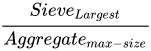
Where:

SieveLargest - Largest diameter sieve used in (mm).
Aggregatemax_size - Largest piece of aggregate in the sample in (mm).

Percent passing formula

%Passing = x100%

Where:

WBelow - The total mass of the aggregate within the sieves below the current sieve, not including the current sieve's aggregate.

WTotal - The total mass of all of the aggregate in the sample.

Methods

[edit]

There are different methods for carrying out sieve analyses, depending on the material to be measured.

Throw-action

[edit]

Here a throwing motion acts on the sample. The vertical throwing motion is overlaid with a slight circular motion which results in distribution of the sample amount over the whole sieving surface. The particles are accelerated in the vertical direction (are thrown upwards). In the air they carry out free rotations and interact with the openings in the mesh of the sieve when they fall back. If the particles are smaller than the openings, they pass through the sieve. If they are larger, they are thrown. The rotating motion while suspended increases the probability that the particles present a different orientation to the mesh when they fall back again, and thus might eventually pass through the mesh. Modern sieve shakers work with an electro-magnetic drive which moves a spring-mass system and transfers the resulting oscillation to the sieve stack. Amplitude and sieving time are set digitally and are continuously observed by an integrated control-unit. Therefore, sieving results are reproducible and precise (an important precondition for a significant analysis). Adjustment of parameters like amplitude and sieving time serves to optimize the sieving for different types of material. This method is the most common in the laboratory sector.[7]

Horizontal

[edit]

In horizontal sieve shaker the sieve stack moves in horizontal circles in a plane. Horizontal sieve shakers are preferably used for needle-shaped, flat, long or fibrous samples, as their horizontal orientation means that only a few disoriented particles enter the mesh and the sieve is not blocked so quickly. The large sieving area enables the sieving of large amounts of sample, for example as encountered in the particle-size analysis of construction materials and aggregates.

Tapping

[edit]
Tapping sieving

A horizontal circular motion overlies a vertical motion which is created by a tapping impulse. These motional processes are characteristic of hand sieving and produce a higher degree of sieving for denser particles (e.g. abrasives) than throw-action sieve shakers.

Wet

[edit]

Most sieve analyses are carried out dry. But there are some applications which can only be carried out by wet sieving. This is the case when the sample which has to be analysed is e.g. a suspension which must not be dried; or when the sample is a very fine powder which tends to agglomerate (mostly < 45 μm) – in a dry sieving process this tendency would lead to a clogging of the sieve meshes and this would make a further sieving process impossible. A wet sieving process is set up like a dry process: the sieve stack is clamped onto the sieve shaker and the sample is placed on the top sieve. Above the top sieve a water-spray nozzle is placed which supports the sieving process additionally to the sieving motion. The rinsing is carried out until the liquid which is discharged through the receiver is clear. Sample residues on the sieves have to be dried and weighed. When it comes to wet sieving it is very important not to change the sample in its volume (no swelling, dissolving or reaction with the liquid).

Air Circular Jet

[edit]

Air jet sieving machines are ideally suited for very fine powders which tend to agglomerate and cannot be separated by vibrational sieving. The reason for the effectiveness of this sieving method is based on two components: A rotating slotted nozzle inside the sieving chamber and a powerful industrial vacuum cleaner which is connected to the chamber. The vacuum cleaner generates a vacuum inside the sieving chamber and sucks in fresh air through the slotted nozzle. When passing the narrow slit of the nozzle the air stream is accelerated and blown against the sieve mesh, dispersing the particles. Above the mesh, the air jet is distributed over the complete sieve surface and is sucked in with low speed through the sieve mesh. Thus the finer particles are transported through the mesh openings into the vacuum cleaner.

Types of gradation

[edit]
Dense gradation
A dense gradation refers to a sample that is approximately of equal amounts of various sizes of aggregate. By having a dense gradation, most of the air voids between the material are filled with particles. A dense gradation will result in an even curve on the gradation graph.[8]
Narrow gradation
Also known as uniform gradation, a narrow gradation is a sample that has aggregate of approximately the same size. The curve on the gradation graph is very steep, and occupies a small range of the aggregate.[6]
Gap gradation
A gap gradation refers to a sample with very little aggregate in the medium size range. This results in only coarse and fine aggregate. The curve is horizontal in the medium size range on the gradation graph.[6]
Open gradation
An open gradation refers an aggregate sample with very little fine aggregate particles. This results in many air voids, because there are no fine particles to fill them. On the gradation graph, it appears as a curve that is horizontal in the small size range.[6]
Rich gradation
A rich gradation refers to a sample of aggregate with a high proportion of particles of small sizes.[8]

Types of sieves

[edit]
Woven wire mesh sieves

Woven wire mesh sieves are according to technical requirements of ISO 3310-1.[9] These sieves usually have nominal aperture ranging from 20 micrometers to 3.55 millimeters, with diameters ranging from 100 to 450 millimeters.

Perforated plate sieves

Perforated plate sieves conform to ISO 3310-2 and can have round or square nominal apertures ranging from 1 millimeter to 125 millimeters.[10] The diameters of the sieves range from 200 to 450 millimeters.

American standard sieves

American standard sieves also known as ASTM sieves conform to ASTM E11 standard.[11] The nominal aperture of these sieves range from 20 micrometers to 200 millimeters, however these sieves have only 8 inches (203 mm) and 12 inches (305 mm) diameter sizes.

Limitations of sieve analysis

[edit]

Sieve analysis has, in general, been used for decades to monitor material quality based on particle size. For coarse material, sizes that range down to #100 mesh (150 μm), a sieve analysis and particle size distribution is accurate and consistent.

However, for material that is finer than 100 mesh, dry sieving can be significantly less accurate. This is because the mechanical energy required to make particles pass through an opening and the surface attraction effects between the particles themselves and between particles and the screen increase as the particle size decreases. Wet sieve analysis can be utilized where the material analyzed is not affected by the liquid - except to disperse it. Suspending the particles in a suitable liquid transports fine material through the sieve much more efficiently than shaking the dry material.

Sieve analysis assumes that all particle will be round (spherical) or nearly so and will pass through the square openings when the particle diameter is less than the size of the square opening in the screen. For elongated and flat particles a sieve analysis will not yield reliable mass-based results, as the particle size reported will assume that the particles are spherical, where in fact an elongated particle might pass through the screen end-on, but would be prevented from doing so if it presented itself side-on.

Properties

[edit]

Gradation affects many properties of an aggregate, including bulk density, physical stability and permeability. With careful selection of the gradation, it is possible to achieve high bulk density, high physical stability, and low permeability. This is important because in pavement design, a workable, stable mix with resistance to water is important. With an open gradation, the bulk density is relatively low, due to the lack of fine particles, the physical stability is moderate, and the permeability is quite high. With a rich gradation, the bulk density will also be low, the physical stability is low, and the permeability is also low. The gradation can be affected to achieve the desired properties for the particular engineering application.[8]

Engineering applications

[edit]

Gradation is usually specified for each engineering application it is used for. For example, foundations might only call for coarse aggregates, and therefore an open gradation is needed. Sieve analysis determines the particle size distribution of a given soil sample and hence helps in easy identification of a soil's mechanical properties. These mechanical properties determine whether a given soil can support the proposed engineering structure. It also helps determine what modifications can be applied to the soil and the best way to achieve maximum soil strength.

See also

[edit]

References

[edit]
[edit]
Revisions and contributorsEdit on WikipediaRead on Wikipedia
from Grokipedia
Sieve analysis, also known as a gradation test, is a standard procedure used to assess the of granular materials such as soils, aggregates, sands, and powders by passing a representative sample through a nested series of with progressively decreasing openings. The method separates particles into size fractions based on the square openings of the sieves, typically ranging from large apertures (e.g., 125 mm) down to fine (e.g., 20 μm), allowing for the of cumulative percentages passing or retained on each sieve. This technique is particularly effective for materials coarser than 75 μm, providing essential data on gradation that influences material behavior in various applications. The procedure begins with drying and weighing the sample to ensure accuracy, followed by manual or mechanical sieving—often using a shaker for uniform agitation—over a specified duration to achieve complete separation without degradation of particles. Retained material on each sieve is then weighed, and results are plotted as a grain size distribution curve to evaluate uniformity, uniformity coefficient, and coefficient of curvature. Key standards governing the method include ASTM C136 for fine and coarse aggregates in construction, which specifies sieve sizes increasing in a 2:1 ratio (e.g., starting from No. 100 sieve), and AASHTO T27, which aligns closely for highway materials testing. These protocols ensure reproducibility and compliance in testing, with sample sizes adjusted based on maximum particle diameter—typically 500 g for fine aggregates and up to 25 kg for coarse ones. In civil engineering, sieve analysis is critical for classifying soils according to systems like the Unified Soil Classification System (USCS), determining aggregate suitability for concrete, asphalt, and base courses, and ensuring material performance in pavement design and erosion control. Beyond construction, it finds applications in chemical engineering for powder processing, geology for sediment analysis, and pharmaceuticals for quality assurance of excipients, where particle size directly affects flowability, compressibility, and dissolution rates. The test's simplicity and cost-effectiveness make it a cornerstone for quality control, though limitations such as potential clogging of fine sieves or inaccuracies with irregular particle shapes may necessitate complementary methods like laser diffraction for finer fractions.

Fundamentals

Definition and Principles

Sieve analysis is a fundamental technique for determining the of granular materials by mechanically separating particles using a stack of sieves featuring progressively smaller openings, typically under agitation to facilitate passage based on . This method is particularly effective for particles ranging from approximately 0.075 mm to coarser sizes, where the sieves act as barriers that retain larger particles while allowing smaller ones to pass through. The underlying principles of sieve analysis rely on mechanical forces such as and to drive particle movement, ensuring that particles align and pass through apertures corresponding to their dimensions during shaking or tapping. In wet sieving variants, aid dispersion and prevent clogging of the meshes. in sieve analysis is approximated using the , defined as the diameter of a hypothetical with the same or passage behavior as the actual particle, providing a standardized metric despite irregular shapes. The sieve , standardized in series like the U.S. Standard or ISO, serves as the primary sizing reference, representing the nominal opening width through which particles must pass. Key assumptions include that particles are rigid and non-cohesive to avoid agglomeration or deformation, and that they are processed in a dry state unless wet conditions are explicitly applied to handle fines or cohesive materials.

Historical Development

The origins of sieve analysis trace back to ancient civilizations, where rudimentary sieves were employed for particle separation in and . In , woven reed sieves were used to grade harvested s by size, facilitating efficient storage and processing. Similarly, Roman bakers utilized sieves to refine from milled , removing coarser particles to produce finer textures for bread-making. In operations, sieving techniques for separating ores were documented as early as the in Georgius Agricola's seminal work (1556), which described manual sifting methods to isolate valuable minerals from debris. The marked the formalization of sieve analysis as a , particularly in testing and materials . The term "mechanical analysis" emerged around 1800, with early combinations of sieving and techniques developed by to quantify particle distributions in soils and sediments. By the late 1800s, advancements in led to the widespread adoption of woven wire cloth sieves, offering greater precision and over traditional woven fabrics; these became standard for industrial particle in applications. Key progress in the early included the introduction of the Ro-Tap mechanical sieve shaker in 1914 by W.S. Tyler, which automated the shaking process to improve reproducibility and efficiency in laboratory settings. Standardization efforts accelerated in the mid-20th century, with the American Society for Testing and Materials (ASTM) approving E11 in 1925 to specify requirements for woven wire test sieve cloth and , ensuring consistent aperture sizes from 125 mm down to 20 μm. Post-World War II innovations shifted from manual hand-shaking to fully motorized devices, enhancing throughput for large-scale testing in and . The (ISO) contributed to global harmonization with ISO/R 565 in 1967, defining nominal aperture sizes for test sieves and promoting uniformity across international practices. In the 2000s, sieve analysis evolved further through the integration of and automated systems, allowing for real-time particle tracking and reduced in distribution analysis.

Procedure

Sample Preparation

Sample preparation is a critical initial step in sieve analysis to ensure that the test sample accurately represents the bulk material and is in a condition suitable for effective particle separation. Proper preparation minimizes biases introduced by uneven distribution, moisture, or agglomeration, which could otherwise skew the results. This involves obtaining a representative subsample from the larger field or stockpile sample, followed by conditioning to remove impurities and achieve a uniform state. Standards such as ASTM C136 for aggregates and ASTM D6913 for soils provide detailed guidelines to standardize these processes across applications in , geotechnical testing, and . Sampling techniques focus on reducing the bulk to a manageable test portion while preserving the original . Representative subsamples are typically obtained using mechanical splitters, which divide the into equal portions by channeling it through alternating chutes, or by quartering, where the sample is spread into a cone, flattened, and divided into four equal parts with two opposite quarters selected and the process repeated. These methods ensure statistical homogeneity, particularly for heterogeneous like soils or aggregates. For aggregates, ASTM C702 specifies reduction methods including splitting for particles up to 37.5 mm, while quartering is suitable for larger or moist samples. Minimum sample masses are prescribed based on the maximum to achieve reliable results; for example, ASTM D6913 specifies minimum dry specimen masses ranging from 100 g to 10 kg depending on the maximum (99% or more passes the ), as detailed in Table 2 of the standard (e.g., 500 g for maximum sizes up to 19 mm, 10 kg for up to 75 mm), to ensure sufficient on each level without overloading. Cleaning and drying prepare the sample by eliminating contaminants and moisture that could cause particles to clump or alter during sieving. Organic matter, such as roots or humus in soil samples, is manually removed or dispersed chemically if necessary, while adherent fines are washed off using water for aggregates per ASTM C136, followed by thorough drying. The sample is then oven-dried to constant mass to prevent agglomeration; for aggregates, this is typically at 110 ± 5°C, whereas sensitive soils may require lower temperatures not exceeding 60°C to avoid altering clay mineral structures or organic components. Overheating is avoided to preserve particle integrity, with drying times varying from hours to days based on sample size and initial moisture content. For cohesive soils, dispersion methods like mechanical pulverization with a mortar and pestle or ultrasonic baths are employed to break down aggregates without fracturing primary particles, ensuring individual grains are analyzed. Ultrasonic dispersion, applied for 5-10 minutes at frequencies around 20-50 kHz, effectively disaggregates clayey materials by sonic vibration, as demonstrated in studies on soil particle separation. Particle size range considerations involve pre-screening to adapt the sample to the sieve stack's capabilities. Coarse materials exceeding 75 mm, such as large aggregates, are pre-screened using larger sieves or manual separation to fit within the standard stack, preventing damage to finer sieves and ensuring even distribution. For fine or cohesive fractions, wet dispersion techniques may be integrated if dry methods fail to separate particles adequately, though the primary focus remains on dry preparation for most sieve analyses. This step aligns the sample with the equipment's limits, typically covering sizes from 125 mm down to 75 μm. Safety and quality controls are integral to reliable preparation, emphasizing operator protection and result reproducibility. Protective gear, including gloves, safety goggles, and dust masks, must be worn to handle potentially hazardous dusts from drying or dispersion, particularly with siliceous soils that pose silica exposure risks. Quality is maintained by preparing at least three replicate samples for statistical , allowing assessment of variability and compliance with precision statements in standards like ASTM D6913, which require coefficients of variation below 5% for key fractions. Documentation of all steps, including mass measurements to 0.1 g accuracy, ensures and validates the representativeness of the prepared sample.

Sieving Execution

The sieving execution begins with the assembly of the stack. Sieves are nested in order of decreasing aperture size, with the largest opening at the top to receive the prepared sample, progressing to finer meshes, and a bottom pan to collect the finest particles passing the smallest . For example, in the of fine aggregates such as sand, the top typically has a 4.75 mm opening, followed by progressively smaller sizes down to 75 μm or finer. The stack is secured using clamps or a mechanical shaker frame to ensure stability during agitation. Agitation of the assembled stack follows to separate particles by size. This can be performed manually by inclining the stack and applying approximately 150 strokes per minute with a 1/6 revolution every 25 strokes, or mechanically using a shaker that provides uniform motion, such as vertical tapping combined with horizontal circular movement. Mechanical agitation is recommended for samples exceeding 20 kg to ensure particles tumble and orient in various directions for effective separation. The process continues for a typical duration of 10-15 minutes in mechanical sieving, or until an endpoint is reached where no more than 1% of the material by mass passes through any sieve during an additional 1 minute of agitation. Once agitation is complete, fractions are collected by carefully removing material retained on each . Each is weighed individually with its retained particles to the nearest 0.1% of the original sample mass, ensuring all residues are accounted for. To dislodge any adhering particles without damaging the , a soft or tapping with a is used gently on the sieve surface. The bottom pan's contents represent the fines passing the smallest . Quality checks are essential to validate the sieving execution. A of each confirms complete separation, with no significant clumping or overload evident. The total recovered mass must balance the initial sample mass within 0.3%; discrepancies exceeding this threshold invalidate the results and necessitate re-sieving.

Particle Size Distribution

Particle size distribution (PSD) in sieve analysis refers to the proportion of particles within specified size ranges, typically expressed as mass percentages of material retained on or passing through each sieve relative to the total sample . This distribution quantifies the range and relative amounts of particle sizes in a granular material, such as , aggregates, or powders, providing essential data for material characterization in fields like and . Data from sieve analysis is commonly presented in tabular form, listing sieve sizes, mass retained on each sieve, percentage retained, and cumulative percentage passing, with totals summing to 100% of the initial sample mass. For instance, using U.S. Standard sieve designations, a typical table might include sizes such as #4 (4.75 mm), #8 (2.36 mm), #16 (1.18 mm), #30 (0.60 mm), #50 (0.30 mm), #100 (0.15 mm), and #200 (0.075 mm), along with the pan for material finer than the smallest sieve. An example for a 500 g sample could show:
Sieve SizeOpening (mm)Mass Retained (g)% Retained% Passing
#44.75501090
#82.361002070
#161.181503040
#300.601002020
#500.30501010
#1000.152555
#2000.0751532
Pan<0.0751020
Total-500100-
This format allows quick assessment of the material's composition, ensuring the summation verifies complete recovery of the sample. Graphically, PSD is often represented by a semi-logarithmic gradation curve, plotting cumulative percentage passing (arithmetic scale) against particle size (logarithmic scale), which highlights the distribution's spread and highlights finer particles more clearly. Additionally, a differential curve, or frequency distribution, plots the percentage of particles in each size interval (e.g., % retained per sieve range) against the midpoint size of that interval, emphasizing the relative frequency of specific sizes within the sample. These visualizations facilitate qualitative evaluation of the material's grading. Key descriptors derived from the PSD include the effective size (D10), defined as the particle diameter at which 10% of the sample is finer, and D60, the diameter at which 60% is finer. The uniformity coefficient (Cu) is calculated as Cu = D60/D10, indicating the range of particle sizes present. In , a well-graded soil exhibits a wide range of sizes with good intermixing, typically having Cu greater than 4 for gravels or 6 for sands, promoting stability through particle ; in contrast, a poorly graded soil has a narrow size range with low Cu, resulting in uniform particles that offer less structural integrity.

Quantitative Calculations

The primary quantitative calculations in sieve analysis involve determining the percentages of material retained on each sieve and the cumulative percentages passing through them, based on the masses recorded after sieving. The percentage retained on an individual sieve is calculated using the formula: % retained=(mass retained on sievetotal initial dry mass)×100\% \text{ retained} = \left( \frac{\text{mass retained on sieve}}{\text{total initial dry mass}} \right) \times 100 This is applied to each sieve fraction separately. The cumulative percentage retained is then obtained by summing the individual percentages retained from the coarsest sieve downward, while the cumulative percentage passing a given sieve is computed as 100 minus the cumulative percentage retained up to that point. These percentages form the basis for constructing the particle size distribution curve, though the graphical aspects are addressed elsewhere. From the raw percentage data, key statistical parameters are derived to characterize the or aggregate gradation. The effective size, denoted as D10D_{10}, represents the particle at which 10% of the passes (90% is retained). Similarly, D30D_{30} and D60D_{60} correspond to the diameters where 30% and 60% of the passes, respectively. The uniformity (CuC_u) quantifies the range of particle sizes and is given by: Cu=D60D10C_u = \frac{D_{60}}{D_{10}} A value of Cu>4C_u > 4 for gravels or >6> 6 for sands indicates well-graded . The of (CcC_c) assesses the distribution's shape and is calculated as: Cc=(D30)2D10×D60C_c = \frac{(D_{30})^2}{D_{10} \times D_{60}} Well-graded soils typically have 1Cc31 \leq C_c \leq 3. The median particle size (D50D_{50}) is the diameter at which 50% of the material passes, providing a central tendency measure. These parameters are interpolated from the cumulative passing percentages plotted against sieve sizes on a semi-log scale. Error checking is essential to validate the data integrity, particularly through mass balance verification. The total mass recovered after sieving (sum of all retained masses plus pan) should agree with the initial dry sample mass within 0.3%, as specified in standards such as ASTM C136 and D6913; deviations beyond this may indicate losses due to adhesion, fines washout, or operational errors, or excesses from incomplete sieving or weighing inaccuracies, requiring the test to be repeated. Manual computations using these formulas can be performed with basic tools like spreadsheets, where masses are entered to automate percentage and coefficient calculations; specialized software such as GradLab or GeoStudio further streamlines the process for complex datasets but relies on the same underlying equations.

Sieving Methods

Mechanical Sieving

Mechanical sieving encompasses traditional dry techniques that employ mechanical agitation to separate non-cohesive particles by size, primarily through controlled motions that promote particle movement across sieve apertures without the use of fluids or air assistance. These methods are widely applied to granular materials such as aggregates and sands, where the agitation provides sufficient energy to dislodge particles from mesh openings while minimizing excessive wear or breakage. The core principle relies on gravitational and inertial forces to stratify particles, ensuring reproducible separation for particle sizes typically ranging from fine sands to coarse aggregates. Throw-action sieving involves vertical oscillation combined with rotational motion, which lifts and throws particles upward before they fall back onto the , facilitating uniform distribution and passage through apertures. A prominent example is the Ro-Tap shaker, which integrates horizontal circular motion at approximately 278 oscillations per minute with vertical tapping at 150 impulses per minute, making it suitable for particles in the 0.075 to 4.75 mm range. This method is particularly effective for standard dry sieving of non-cohesive materials, with typical durations of 10 to 15 minutes to achieve stable results. Horizontal sieving employs a linear or circular back-and-forth motion parallel to the plane, avoiding vertical impacts that could damage sensitive particles. This approach is ideal for fragile, elongated, or fibrous materials, as the gentle agitation reduces the risk of breakage while still allowing particles to migrate across the . It is often used for bulk samples up to 15 kg, with speeds ranging from 50 to 300 rpm, ensuring effective separation without altering particle orientation. Tapping sieving combines vertical tapping impulses with horizontal rotation, mimicking manual sieving to break up minor agglomerations and encourage passage of difficult particles. This technique excels with sticky or elongated particles that might otherwise clog meshes, providing targeted energy to dislodge them without excessive force. Common parameters include 150 taps per minute alongside rotational speeds of around 280 rpm, supporting up to seven sieves in a stack for efficient processing. The advantages of mechanical sieving lie in its ability to deliver consistent energy input for particle dislodgement, yielding reliable distributions for aggregates and sands in and geotechnical applications. Key parameters such as (0.2–3.0 mm), sieving time, and motion type are standardized under ISO 2591-1, which outlines procedures for apparatus and execution to ensure comparability across tests. These methods prioritize simplicity and cost-effectiveness for routine , though optimal results depend on material properties and calibration.

Specialized Sieving

Specialized sieving techniques extend the capabilities of standard mechanical methods by incorporating fluids, air, or additional energies to handle challenging materials such as cohesive, fine, or soluble particles that tend to or clog sieves. These approaches are particularly useful for analyzing particle sizes below 100 μm, where dry sieving alone often fails due to poor dispersion. Wet sieving involves suspending the sample in or a to facilitate the separation of fines, especially in soils containing particles smaller than 0.075 mm (No. 200 sieve). The process follows protocols like ASTM D1140, where the specimen is soaked to disperse aggregates before washing over sieves, often with a gentle spray to aid particle passage and prevent blinding. This method is more efficient than dry sieving for removing fine material, as the liquid medium helps break down cohesive bonds in clays or organic-rich samples. After sieving, the retained fractions are typically dried at controlled temperatures (e.g., 105–110°C) to remove moisture before weighing for accurate mass determination. Air circular jet sieving employs pneumatic dispersion combined with suction to analyze dry powders, particularly those finer than 100 μm in pharmaceuticals, pigments, or chemicals that are prone to electrostatic charging or agglomeration. The technique uses a rotating air jet to fluidize the sample on the surface, creating turbulent that reduces clogging and promotes uniform particle movement without liquid. Devices like the Retsch AS 200 jet or Hosokawa Mikro Air Jet operate under (typically 50–80 mbar) to draw fine particles through the while retaining coarser ones, enabling precise size distribution for low-density materials down to 10–20 μm. Hybrid methods further enhance sieving for specialized cases, such as electro-sieving, which applies an to manipulate charged particles in non-conductive media like , allowing separation of sub-micrometer atmospheric or aerosols that standard sieves cannot resolve. Ultrasonic assistance, meanwhile, integrates high-frequency vibrations (20–40 kHz) into wet or dry sieving setups to disintegrate agglomerates and clear meshes in real-time, improving throughput for fine powders like ceramics or polymers. These enhancements make specialized sieving suitable for particles as small as sub-10 μm in certain configurations, offering an alternative to laser for samples where optical methods are impractical due to opacity or cost. In wet operations, flow rates are typically maintained at 1–2 L/min to ensure adequate dispersion without excessive dilution, balancing efficiency and residue recovery.

Sieving Equipment

Standard Sieves

Standard sieves are constructed using woven wire , typically made from or , to form the sieving medium. The features square apertures created by interlacing wires of uniform , ensuring consistent opening sizes for accurate particle . Frames supporting the are commonly cylindrical, with standard diameters of 8 inches (203 mm) for U.S. applications or 200 mm for international use, and heights of either full (approximately 2 inches or 50 mm) or half (1 inch or 25 mm) to accommodate sample volumes. is preferred for its durability and resistance to , while frames offer a cost-effective option for less demanding environments. The aperture series for standard sieves follows established specifications to cover a wide range of particle sizes from 125 mm down to 20 μm. , the ASTM E11 standard defines the US Sieve Series, which includes designated sieve numbers corresponding to nominal opening sizes, such as No. 4 (4.75 mm) for coarse aggregates or No. 200 (75 μm) for fine soils, with wire diameters scaled to maintain structural integrity. Internationally, the ISO 3310-1 standard provides metric equivalents, aligning closely with ASTM sizes but emphasizing SI units for openings like 125 mm, 63 mm, and down to 20 μm, facilitating global comparability in particle sizing. These series ensure sieves are interchangeable across laboratories while adhering to precise manufacturing tolerances. Calibration of standard sieves involves verification using precision calibration spheres of known diameters, which are passed through the mesh to assess actual sizes against nominal values, often following procedures outlined in ASTM E11 or ISO 3310-1. Maintenance routines include cleaning after each use with soft brushes or ultrasonic baths to remove residues without damaging the wire cloth, avoiding harsh chemicals or sharp tools that could deform apertures. Proper storage in protective covers prevents contamination and physical damage, helping to extend the sieve's operational life. Selection of sieve materials depends on the sample's abrasiveness; for instance, meshes are recommended for hard aggregates to withstand wear, while tolerance limits for sizes—such as ±1% to ±5% depending on the opening size—must be met to ensure measurement accuracy.

Accessories and Standards

In sieve analysis, various accessories support the process by ensuring efficient separation, accurate , and of equipment. Sieve shakers are essential for agitating the sample to promote particle passage through the mesh; electromagnetic shakers, such as the FILTRA IRIS FTS-0200 model, provide precise, low- suitable for sieves up to 203 mm in diameter, while motor-driven shakers like the RX-94 Ro-Tap deliver robust mechanical action for coarser materials and larger stacks. Receivers and pans collect the undersized particles at the bottom of the sieve stack, typically made of or to prevent , with options like 8-inch pans available for standard setups. Brushes and cleaners maintain sieve integrity; or bristle brushes remove residues from meshes, and ultrasonic cleaners effectively dislodge fine particles from apertures smaller than 45 μm without damaging the wire cloth. Digital balances, such as those from designed for sieve analysis, enable precise weighing of fractions to 0.1 g resolution, integrating with software for automated transfer to minimize errors in . Electroformed sieves offer enhanced precision for analyzing micro-particles, particularly those below 20 μm, where traditional woven wire sieves may lack uniformity. These sieves are produced by precision-etching sheets, resulting in flat, smooth apertures with tolerances as tight as ±2 μm, providing higher accuracy and reduced clogging compared to woven alternatives. They are ideal for fine powders in pharmaceuticals and chemicals, with opening sizes ranging from 2 μm to 2000 μm, and are often framed in for durability. International and national standards govern sieve analysis to ensure reproducibility and . The ASTM C136 standard outlines the for sieve analysis of fine and coarse aggregates, specifying procedures for and asphalt materials, including sizes, sample preparation, and reporting requirements. For geotechnical applications, ISO 17892-4 details the determination of in soils through sieving for particles up to 125 mm, incorporating both dry sieving and for fines. Compliance testing, such as annual certification of sieves, verifies dimensions against ASTM E11 or ISO 3310-1 using optical comparators or to maintain accuracy within specified tolerances. Emerging standards address challenges in analyzing , including updates for post-2020, where ISO/TS 80004 series provides vocabulary and guidance for particle , though sieve methods are supplemented by techniques like for sub-100 nm scales. Automated verification tools, such as the SIEVECAL calibrator, use to inspect sieve apertures in compliance with ISO 13322-1, facilitating faster recertification and integration with software like RETSCH EasySieve for .

Gradation Analysis

Types of Gradation Curves

In sieve analysis, the cumulative gradation is a semi-logarithmic plot where the of particles finer than a given size is graphed against the logarithm of particle , typically resulting in a sigmoid-shaped . For uniformly sized particles, the appears steep, indicating a narrow size range, while well-graded materials produce a more gradual, S-shaped reflecting a broad distribution of sizes. The differential gradation curve, also known as the frequency curve, plots the percentage of particles within specific size intervals against the logarithm of particle size, often forming a bell-shaped distribution. Peaks in this curve highlight dominant particle sizes, providing insight into the modal classes within the (PSD). Well-graded soils exhibit a continuous, smooth cumulative curve due to a wide range of particle sizes, quantified by the uniformity coefficient Cu=D60/D104C_u = D_{60}/D_{10} \geq 4 for gravels and 6\geq 6 for sands, along with the coefficient of curvature Cc=(D30)2/(D60×D10)C_c = (D_{30})^2 / (D_{60} \times D_{10}) between 1 and 3, where DxD_x is the at which x% of the material is finer. Poorly graded materials show a step-like or near-vertical cumulative curve, with most particles concentrated in a narrow size range, resulting in Cu<4C_u < 4 for gravels or <6< 6 for sands. Gap-graded soils feature discontinuous cumulative curves with missing size bands, resembling a combination of two or more poorly graded fractions, which can lead to abrupt changes in the slope of the curve. Logarithmic scaling is commonly applied in gradation plots to handle the wide range of particle sizes, with the phi scale (ϕ=log2d\phi = -\log_2 d, where dd is diameter in mm) transforming sizes into a linear arithmetic progression for easier analysis, as introduced by Krumbein in sedimentology and applied in soil classification systems like the (USCS). In USCS, such plots help distinguish gradation types for coarse-grained soils, where well-graded sands (SW) or gravels (GW) are identified based on curve continuity and coefficients.

Interpretation and Classification

In the Unified Soil Classification System (USCS), sieve analysis results are used to classify coarse-grained soils based on the percentage of fines (material passing the No. 200 sieve), coefficient of uniformity (Cu = D60/D10), and coefficient of curvature (Cc = (D30)^2 / (D10 * D60)). Soils with less than 50% fines are classified as clean gravels or sands if fines are under 5%, with well-graded sands (SW) requiring Cu ≥ 6 and 1 ≤ Cc ≤ 3, while poorly graded sands (SP) fail these criteria. For gravels, well-graded (GW) follows similar thresholds with Cu ≥ 4 and 1 ≤ Cc ≤ 3, enabling engineers to assess soil suitability for drainage or foundation support. Aggregate specifications, such as those from AASHTO M 147 for base courses in pavement construction, impose limits on sieve analysis outcomes to ensure durability and performance, including 0-3% material passing the No. 200 sieve for certain gradings to minimize plasticity and frost susceptibility. Conformity is evaluated by plotting the gradation curve against specification envelopes, where the cumulative percentage passing must lie between upper and lower bounds across key sieve sizes (e.g., 30-65% passing No. 4 sieve for Grading A); curves outside these envelopes indicate rejection for use in structural layers. Gradation curves from sieve analysis inform behavioral predictions, such as permeability, where hydraulic conductivity () is approximately proportional to the square of the effective grain size (D10) according to the Hazen empirical formula, aiding in designs for filters or drains in well-graded sands with D10 > 0.1 mm yielding higher values. Compaction potential is enhanced in well-graded materials due to their continuous , which promotes denser packing and higher maximum dry density compared to gap-graded or uniform soils, influencing earthwork efficiency. Software tools like GradLab facilitate interpretation by inputting sieve data to generate gradation plots, perform fitting against standards such as AASHTO limits, and apply acceptance criteria—rejecting blends if more than a specified (e.g., 5%) of the curve deviates from the target —to streamline in aggregate production.

Limitations

Sources of Error

Sieve analysis can be subject to various sources of error that affect the accuracy of results. Procedural errors often arise from inadequate and handling. For instance, poor sample division can lead to non-representative subsamples, particularly for materials with wide size distributions, resulting in reduced reproducibility. Inadequate agitation during sieving may result in incomplete particle separation, skewing the gradation toward coarser fractions. Mitigation involves using mechanical sample dividers and ensuring sufficient sieving time until weight changes are minimal, such as less than 0.1% per minute. Material-related issues further contribute to inaccuracies. Particle shape significantly influences results, as non-spherical or flaky particles can pass through sieve openings diagonally, overestimating their passage and thus underestimating actual size; for platy particles, effective sieve openings may increase by up to 1.4 times. Agglomeration is common in fine particles, especially cohesive or sticky materials, leading to incomplete separation and biased fine fractions. Additionally, particle degradation during handling, such as fracture in brittle materials, can alter the size distribution. These effects are addressed by employing sieving aids like antistatic sprays or rubber cubes to reduce adhesion. Equipment limitations introduce systematic biases. Mesh blinding or clogging occurs when particles adhere to sieve apertures, impeding flow and causing incomplete , particularly for near-size fractions. Aperture variability, governed by standards like ASTM E11 or ISO 3310, allows tolerances of ±5% for many s, with finer es (e.g., No. 200) permitting up to ±7%, potentially leading to a 5% error in total sample mass. in dry powders exacerbates fines retention on sieves, while overloaded sieves (exceeding recommended volumes based on ) promote blocking. Regular with spherical standards like beads and proper maintenance minimize these issues. Typical error ranges in sieve analysis vary by particle size, with coefficients of variation around 5% for larger apertures (coarse particles) and up to 10% for smaller apertures (fines), though fines content estimation can reach 20% error in certain dry-separation scenarios. Performing replicate analyses and adhering to standards like DIN 66165, which flags sieving losses over 1% as indicative of issues, helps quantify and reduce overall uncertainty to below 1% in optimized conditions.

Complementary Methods

Laser diffraction serves as a primary complementary technique to sieve analysis, particularly for addressing limitations in measuring fine particles below 50 μm or those with irregular shapes that hinder sieving. This method measures by analyzing the pattern of scattered by particles dispersed in a medium, typically covering a broad range from 0.01 μm to 3500 μm. It offers faster analysis times—often minutes per sample—compared to sieving, enabling high-throughput applications, but it assumes particle for accurate interpretation of scattering data, which can introduce errors for non-spherical materials. The technique is standardized under ISO 13320, which provides guidelines for instrument calibration, validation, and reporting of results using Mie or Fraunhofer scattering models. Sedimentation analysis complements sieving by focusing on finer particles, typically those under 50 μm, where sieves become ineffective due to clogging or resolution limits. In , particles settle in a liquid under , with size determined from settling velocities based on , which relates velocity to particle diameter, density difference, and fluid : v=29(ρpρf)gr2ηv = \frac{2}{9} \frac{(\rho_p - \rho_f) g r^2}{\eta}, where vv is , ρp\rho_p and ρf\rho_f are particle and fluid densities, gg is , rr is particle , and η\eta is . Centrifugal sedimentation extends this to even smaller sizes (down to 0.1 μm) by applying rotational forces to accelerate settling. This method fully accounts for particle shape and density in applications, providing measurements, and is particularly useful for cohesive soils or powders; it is outlined in standards like ASTM D6913 and D7928 for combined sieve-sedimentation workflows. Microscopy-based techniques, such as scanning electron microscopy (SEM) and dynamic image analysis, address sieve analysis shortcomings in characterizing particle and morphology, which sieving ignores. SEM provides high-resolution imaging (down to nanometers) for detailed analysis, quantifying parameters like and circularity through automated on thousands of particles, ideal for validating sieve results on irregular or fractured materials. Dynamic image analysis captures real-time videos of flowing particles, enabling 3D reconstruction and size measurements from 1 μm to 34 mm by analyzing projected areas and velocities, offering superior discrimination over methods. These methods are selected based on range and required attributes: sieving remains preferred for coarse validation above 50 μm due to its mechanical robustness, while laser diffraction handles mid-range distributions efficiently. Hybrid approaches, such as combining sieving with laser diffraction, provide comprehensive distributions across full scales by using sieves for oversize detection and diffraction for fines, improving accuracy in polydisperse samples like soils or powders. In the 2020s, AI-enhanced imaging has emerged to automate shape and size classification, using on SEM or dynamic images to detect subtle morphologies with over 95% accuracy in ore or pharmaceutical particles, reducing manual bias.

Applications

Civil and Geotechnical Engineering

In civil and geotechnical engineering, sieve analysis plays a pivotal role in characterizing soil particle size distribution (PSD) to support soil classification, which directly influences foundation design and bearing capacity assessments. The Unified Soil Classification System (USCS), established through sieve and hydrometer tests, categorizes soils into groups such as sands, gravels, silts, and clays based on percentages passing specific sieve sizes like No. 4 (4.75 mm) and No. 200 (0.075 mm). This classification provides inputs for bearing capacity calculations, including Terzaghi's equation, where cohesionless soils (e.g., clean sands) yield higher bearing capacity factors (N_q and N_γ) compared to cohesive clays, ensuring stable foundations for structures like bridges and buildings. For instance, well-graded sands identified via sieve analysis exhibit superior load-bearing performance due to interlocking particles, reducing settlement risks in shallow foundations. Sieve analysis also informs filter design criteria for drainage systems to prevent piping and erosion in geotechnical applications. Terzaghi's filter rules, derived from particle size ratios obtained through sieve testing, stipulate that the filter material's D_15 (size at which 15% is finer) divided by the base soil's D_85 should not exceed 4 to 5, ensuring adequate retention of fines while maintaining permeability. This 4:1 to 5:1 ratio, applied in embankment dams and retaining structures, relies on PSD curves from sieves to select granular filters that balance seepage control and soil stability, as validated in federal guidelines for dam safety. For aggregate quality control in , sieve analysis verifies compliance with standards like AASHTO M43, which specifies gradation limits for coarse aggregates in highway base courses to achieve uniform compaction and durability. Samples are sieved through stacked meshes (e.g., 1.5-inch to No. 4), with cumulative percentages passing ensuring minimal voids and resistance to rutting under traffic loads. In mix design, the (FM)—calculated as the sum of cumulative percentages retained on standard sieves (3/8-inch to No. 100) divided by 100—guides proportioning of fine aggregates for workability and strength, targeting FM values of 2.3 to 3.1 for optimal paste volume. Sieve analysis extends to erosion and sedimentation studies, where PSD of riverbed sediments informs flood control strategies by predicting transport thresholds. In gravel-bed rivers, sieve-derived median grain sizes (D_50) help model scour depths and sediment mobility during high flows, guiding riprap sizing for bank stabilization projects. For environmental applications, such as landfill liner assessment, sieve analysis evaluates soil gradation to estimate hydraulic conductivity; low-permeability clays (high fines content below No. 200 sieve) are selected for liners to achieve coefficients below 10^{-7} cm/s, preventing leachate migration as per EPA regulations.

Materials Science and Industry

In and industry, sieve analysis plays a pivotal role in characterizing (PSD) to ensure and optimize manufacturing processes across sectors like pharmaceuticals, , food, and ceramics. By separating powders into size fractions using standardized sieves, it enables precise control over material properties such as flowability, packing density, and uniformity, which directly influence product performance and production efficiency. In , sieve analysis is essential for evaluating PSD in powders used for tablet , where it informs flowability assessments critical to uniform die filling and compression. The (USP) <811> standard classifies powder fineness based on the smallest sieve through which a specified passes, categorizing materials as coarse (>180 μm), moderately coarse (180–355 μm), fine (90–180 μm), or very fine (<90 μm) to guide design. Particle size distributions obtained via sieving impact the Hausner ratio—a measure of flowability calculated as the ratio of tapped to bulk density—such that narrower PSDs or larger average particle sizes (e.g., >100 μm) typically reduce interparticle cohesion, yielding ratios below 1.25 for excellent flow and minimizing defects like capping or . For metal powders in , sieve analysis per ASTM B214 standardizes dry sieving to determine PSD across 45–850 μm ranges, supporting control by ensuring optimal particle sizes that promote uniform densification and minimize in compacted parts. Finer distributions (e.g., 50–150 μm) enhance strength and final mechanical properties, while oversize fractions are rejected to prevent incomplete . In , this technique sizes feedstock powders, typically targeting 15–45 μm for laser powder bed fusion to achieve consistent layer spreading and fusion without defects like balling or . In , sieve analysis monitors milling efficiency by quantifying PSD to achieve target fineness, such as in production where it separates and fractions for consistent texture and nutritional profiles. Similarly, in ceramics manufacturing, it ensures particle uniformity in glaze formulations; for applications, sieving to <10 μm yields smooth, defect-free surfaces by facilitating even melting and adhesion during firing. Advancements in industrial automation have integrated inline sieving into 2020s smart factories, enabling real-time PSD monitoring via vibratory or ultrasonic systems linked to control software for adaptive process adjustments. This enhances in continuous handling, reducing defects through immediate detection and contributing to economic gains by improving yield and minimizing in high-volume production.

References

Add your contribution
Related Hubs
User Avatar
No comments yet.