


Community hub
Recent from talks
Contribute something
Nothing was collected or created yet.
Walt Disney Studios Motion Pictures
View on Wikipedia
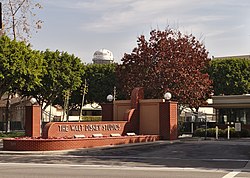
Walt Disney Studios Motion Pictures is an American film distributor within the Disney Entertainment division of the Walt Disney Company.[5] It handles theatrical and occasional digital distribution, marketing, and promotion for films produced and released by the Walt Disney Studios, including Walt Disney Pictures, Walt Disney Animation Studios, Pixar, Marvel Studios, Lucasfilm, 20th Century Studios, and Searchlight Pictures, though it operates its own autonomous theatrical distribution and marketing unit in the United States.[6]
Key Information


The company was originally established by Walt Disney in 1953 as Buena Vista Film Distribution Company Inc. (later renamed Buena Vista Distribution Inc. and Buena Vista Pictures Distribution Inc.). It took on its current name in late 2007.[7][8]
History
[edit]Before 1953, Disney's productions were previously distributed by:
- M.J. Winkler Pictures (1924–1926),
- Film Booking Offices of America (1926–1927),
- Universal Pictures (1927–1928),
- Celebrity Productions (1928–1930),
- Columbia Pictures (1930–1932),
- United Artists (1932–1937, and 1943),
- RKO Radio Pictures (1937–1954 [films]; 1937–1956 [shorts]).[9]
Buena Vista
[edit]A dispute with RKO Pictures in 1953 over the distribution of The Living Desert, Disney's first full-length film in the True-Life Adventures series,[9] led Walt and his older brother Roy O. Disney to form its wholly owned subsidiary, the Buena Vista Film Distribution Company, Inc. (BVDC), to handle North American distribution of their own products.[7] RKO refused to distribute the film.[9] The name "Buena Vista" came from the eponymous street in Burbank, California, where the Walt Disney Studios was located (and remains to this day). Buena Vista's first release was the Academy Award-winning live-action feature The Living Desert on November 10, 1953, along with Toot, Whistle, Plunk and Boom, Buena Vista's first animated release.[10] Notable subsequent releases included the Austrian film Victoria in Dover, the Japanese Daiei film Princess Yang Kwei Fei (Most Noble Lady), released in US theaters in September 1956,[11][12][13] The Missouri Traveler in March 1958,[10] and The Big Fisherman in July 1959 (the first third-party production financed by Disney).[10]
By July 5, 1957, RKO Japan, Ltd. was sold to Disney Productions and British Commonwealth Film Corporation. In allocating the foreign film licenses to the company, Disney would use 5 and Commonwealth 8.[14]
In April 1960, the company dropped "Film" from its name.[8] In 1961, Disney incorporated Buena Vista International (BVI),[15] distributing its first PG-rated film, Take Down, in January 1979.[10] The low-budget movie was not produced by the Disney studios and was acquired from an independent studio, making The Black Hole the first PG-rated Disney film.[16] In late July 1990, Buena Vista changed its name to Buena Vista Pictures Distribution, Inc. (BVPD).[8]
In the 1980s, Disney purchased a controlling stake in one of Pacific Theatres' chains[17] leading to Disney's Buena Vista Theaters and Pacific to renovate the El Capitan Theatre and the Crest by 1989.[18] The Crest was finished first while El Capitan opened with the premiere of The Rocketeer film on June 19, 1991.[19]
In 1992, Buena Vista made production loans totaling $5.6 million to Cinergi Pictures for its film Medicine Man and its 1994 films Renaissance Man and Color of Night and were distributing Cinergi's films. The corporation purchased a 12.8% share in Cinergi with its initial public offering in 1994.[20] Soon, BVPD signed a 25 picture distribution deal with Cinergi.[21][22]
Gaumont and Disney formed Gaumont Buena Vista International, a joint venture in French distribution, in 1993.[23] In August 1996, Disney and Tokuma Shoten Publishing agreed that Disney would distribute Studio Ghibli animated films and provide 10% of the production cost of the studio's current in-production film, Spirited Away.[24][25][26] Disney would go on to produce the English dubs and distribute 15 of Ghibli's films, through the Walt Disney Pictures, Buena Vista Home Video, Miramax and Touchstone Pictures banners.[27]
In September 1996, following Disney's acquisition of Capital Cities/ABC, Buena Vista Pictures Distribution, Inc. was merged[8] into ABC, Inc.,[28] the parent company of that group.
For the November 1995 premiere of Toy Story, Disney rented the Hollywood Masonic Temple—adjacent to the El Capitan Theatre—for Totally Toy Story, a multimedia funhouse and a promotional event for the movie.[29] On July 17, 1998, Buena Vista Pictures Distribution purchased the Hollywood Masonic Temple building to continue using it as a promotional venue.[30]
By 1997, BVPD's share in Cinergi dropped to 5%. After nine films were delivered under the agreement, Cinergi sold on November 22, 1997 all of its 12-film library with the exception of Die Hard with a Vengeance to Disney, plus $20 million in exchange for Disney's Cinergi share holdings, production advances of $35.4 million and other loans.[22] In 2002, Disney signed a four animated film deal with Vanguard Animation;[31] however, only one film was released under that negotiation.[32]
In 2004, BVI and Gaumont dissolved their French distribution joint venture, Gaumont Buena Vista International.[23] Buena Vista International agreed to a distribution deal with MegaStar Joint Venture Company Limited in April 2006 for the Vietnam market.[33]
Walt Disney Studios Motion Pictures
[edit]On April 25, 2007, Disney discontinued the usage of the Buena Vista brand in its distribution branding.[7]
In early 2009, Disney entered a distribution agreement with a reorganized DreamWorks; the deal called for an estimated 30 films over a five-year period from DreamWorks and they would be released through the Touchstone banner.[34] In 2011, GKIDS acquired the North American theatrical distribution rights of the Ghibli films, with Walt Disney Studios Home Entertainment retaining the home video rights until July 2017 when Shout! Factory took over the home video rights. However, Disney only handles home video distribution of the company's films in Japan and formerly Taiwan and China.[35][36]
Disney's distribution deal with DreamWorks expired in August 2016, after the two studios decided to not renew their agreement on December 16, 2015, with Universal Pictures replacing Disney as DreamWorks' distributor.[37][38] By the end of the deal, Disney had distributed 14 of DreamWorks's original 30-picture agreement; thirteen through Touchstone and one through Walt Disney Pictures.[39][40] Disney took complete ownership rights of those 14 DreamWorks films from Amblin Partners in exchange for loans made to that company.[41] The Light Between Oceans, the final film in that distribution deal, was also the last film released under Touchstone.
On December 14, 2017, the Walt Disney Company announced plans to purchase 21st Century Fox, which included 20th Century Fox and Fox Searchlight Pictures. On March 20, 2019, the acquisition of 21st Century Fox was completed.[42] Following the reorganization and renaming of the acquired film units, Walt Disney Studios Motion Pictures began distributing 20th Century Studios films in the United States, while Searchlight continued to operate their autonomous distribution unit.[43][6]
In late 2020 and early 2021, Disney reorganized the studio, placing it under the Disney Media and Entertainment Distribution unit which also oversees distribution to Disney+.[44] Under this structure, the Theatrical Distribution unit oversaw the domestic and international films produced by all the studios within the Walt Disney Studios umbrella.[45] In February 2023, returning CEO Bob Iger reversed this decision and reorganized the studio again, returning it as a division under the purview of The Walt Disney Studios.
Distribution
[edit]Walt Disney Studios has produced or distributed 36 films that have received nominations for the Academy Award for Best Picture: fifteen from its former Miramax division,[46] six from both Touchstone Pictures and Searchlight Pictures,[a] four from Walt Disney Pictures, three from 20th Century Studios,[b] two from Hollywood Pictures, and one from Marvel Studios.[46][48][49][50] Of those nominated films, five films—Miramax's The English Patient, Shakespeare in Love, Chicago, No Country for Old Men, and Searchlight's Nomadland—have won Best Picture.[46][51][52]
Walt Disney Studios Motion Pictures currently distributes films from across all units of Walt Disney Studios with the exception of Searchlight Pictures which maintains its own autonomous distribution and marketing operations for releases in the United States and select markets.[43][6] In addition, 20th Century Studios’ distribution unit was folded into Walt Disney Studios Motion Pictures in 2020. Other Disney film units and some third-party studios including:
International distribution
[edit]_logo.svg) Logo used 1993–present in the international territories and 1993–2022 in Latin America and Brazil. | |
| Walt Disney Studios Motion Pictures International (for Disney branded films only) Buena Vista International (non-US, non-Disney, and non-Star Studios theatrical movies in countries outside the United States only) | |
| Company type | Division |
| Industry | Film |
| Founded | 1961 |
| Founder | Walt Disney |
| Defunct | February 11, 2022 (Latin American branch) November 3, 2022 (Brazilian branch) |
| Successor | Walt Disney Studios Motion Pictures International (original) Star Distribution (Latin American and Brazilian branch) |
| Headquarters | |
Area served | Worldwide |
| Parent | Walt Disney Studios Motion Pictures |
 | |
| Star Distribution | |
| Formerly |
|
| Company type | Division |
| Industry | Film |
| Predecessor | |
| Founded | 1961 |
| Founder | Walt Disney |
| Headquarters | Malaver 550
Vicente López, Buenos Aires , Argentina[85] |
Area served | Latin America |
| Parent |
|
| Divisions | Patagonik Film Group (33.3%) |
Walt Disney Studios Motion Pictures International was formed in 1961 as Buena Vista International.[10] On May 4, 1987, despite being industry rivals, Disney signed a theatrical distribution agreement with Warner Bros. International for the release of Disney and Touchstone films in many overseas markets except in Australia and New Zealand, where distribution went through Roadshow Distributors instead (due to Roadshow also theatrically distributing Warner Bros. films as well during this period), with Disney retaining full control of all distribution and marketing decisions on their product (one notable practice in this policy is obscuring Warner Bros. references in posters and it is credited only in very small text with the exception of some UK posters where sometimes the full logo is shown).[86] Warner Bros. previously had an overseas distribution partnership with Columbia Pictures, but it was dissolved in 1988.
In 1992, Disney opted to end their joint venture with Warner Bros. to start autonomously distributing their films in these aforementioned overseas markets beginning with Aladdin, inspiring Warner Bros. to establish the Family Entertainment label to self-distribute family-friendly films under the Warner umbrella at the same period. In those territories from 1993 to 2007, Disney reactivated the Buena Vista International name, and also sent distribution under it in countries that did not have any current arrangements with other companies.[citation needed]
Italia Film, a Lebanese film distribution and production company, is Disney's exclusive theatrical film distribution partner for various Middle East and North Africa (MENA) markets since 1993, after making a deal directly with Buena Vista International at the time. Prior to this, Warner Bros. originally handled said MENA markets except in Israel where Buena Vista handled theatrical distribution by themselves.[87]
In Taiwan, MGM first handled Disney's distribution, with 20th Century Fox and Warner Bros. later taking over. A local distributor called Era Communications took over distribution from 1992 to 1995. At that time, Buena Vista began its Taiwanese operations. Columbia ended its joint distribution unit with Fox and switched to Buena Vista in 1999.[88]
Rights to Disney's films in West Germany were originally released by MGM (from 1973 - 1975 under their partnership with 20th Century Fox of Germany as Fox-MGM) and from 1976 to 20th Century Fox (when German MGM distribution was taken over by CIC) and then for a short time from Summer 1986 to United International Pictures[89] before the Warner Bros. joint venture. In September 2004, Buena Vista International announced they would begin to start theatrically distributing certain films from Universum Film in Germany and Austria beginning in February 2005, replacing a previous deal with United International Pictures.[82] The deal ended in late 2019 after Universum was sold by the RTL Group to Tele München Group, who began to self-distribute releases afterwards under the Leonine Distribution name.
In Spain, Filmayer S.A. originally released Disney's movies, with Warner Española S.A. later taking over while Lauren Films handled theatrical distribution of Disney's movies in the Catalan language.
In the United Kingdom, Disney's movies were released through a collaboration of Disney and 20th Century Fox known as UK Film Distributors Ltd. before the Warner Bros. joint venture.
In Italy and Brazil, Disney's movies were distributed by Cinema International Corporation and United International Pictures before the Warner Bros. joint venture. Prior to that, Universal Pictures handled theatrical distribution of Disney's movies in Italy before going through CIC.
In Australia and New Zealand, Disney's movies were distributed initially by Metro-Goldwyn-Mayer, before distribution switched to British Empire Films (later Greater Union Film Distributors) following the merger of the Australian MGM cinema chains until the latter merged with Village Roadshow in 1987 and Roadshow Films took over distribution.[90] The company begin distributing films in Australia and New Zealand in 1999 after its own distribution deal with Roadshow expired in 1998.[91]
In some other countries in Europe, such as Poland, Hungary and the Czech Republic, Disney's movies were instead released through local distributors, such as Filmoteka Narodowa in Poland, InterCom Zrt. in Hungary and Guild Film Distribution in the Czech Republic respectively.
Disney and Sony Pictures formed in 1997 a film distribution joint venture in Southeast Asia.[92] By December 2006, 14 joint distribution ventures with Sony Pictures Releasing International were formed and exist in countries including Brazil, Mexico, Singapore, Thailand and the Philippines. In January 2007, their fifteenth such partnership began operations in Russia and CIS.[93] In February 2017, Sony starting leaving the Southeast Asia venture with the Philippines. On August 14, 2017, Sony terminated the joint venture agreement for their own operations.[92] On January 31, 2019, in anticipation of the then-pending acquisition of the most 21st Century Fox assets (which includes 20th Century Fox), Disney agreed to sell its stake in the Mexican joint venture named Walt Disney Studios Sony Pictures Releasing de México to Sony Pictures Releasing.[94]
In Greece and Cyprus, Disney's movies are distributed through local distributor Feelgood Entertainment, which also distributes Sony Pictures films in those territories.
In Japan, to adapt Japan's theatrical and home media distribution model, Walt Disney Studios Motion Pictures Japan and Walt Disney Studios Home Entertainment Japan were merged as Walt Disney Studios Japan on March 1, 2010, the distribution unit was renamed Walt Disney Japan on November 22, 2016.[95]
In China, due to its regulated policies on international film distribution, all of Disney's films in China are distributed by China Film Co., Ltd. and/or Huaxia Film Distribution, but Disney still hold all promotional rights of their films unless it's sold to third-party companies.
On February 11, 2022, the Latin American branch of Buena Vista International was renamed Star Distribution, as the Star branding replaced the Buena Vista brand company-wide in the Latin American region by Disney Latin America.[96]
On November 3, 2022, the Brazilian branch of Buena Vista International was also renamed Star Distribution following the dropping of the Buena Vista brand in the Latin American region on February 11, 2022. However, the Buena Vista International name is still used on Latin American and Brazilian prints of 20th Century/Searchlight titles.[84][97]
Film library
[edit]Highest-grossing films
[edit]Walt Disney Studios Motion Pictures has released 33[q] films that have crossed the $1 billion mark in worldwide grosses—the most of any major Hollywood studios—with thirteen of the twenty highest-grossing films of all time being distributed by Disney; including the highest-grossing films in North America (Star Wars: The Force Awakens) and worldwide (Avatar).[99] Of those thirteen films, six of them have crossed the $2 billion mark in worldwide grosses, the most for any studio. Disney has directly released three of the top five highest-grossing films in history (Avengers: Endgame, Avatar: The Way of Water, and Star Wars: The Force Awakens) and has owned the rights to the other two films (Avatar and the international rights to Titanic) since their release.[100]
In addition, Disney is the first of only three studios that have released at least two billion-dollar films in the same year (the others being Warner Bros. and Universal Pictures).[101] Furthermore, Disney is the only studio that has achieved this eight times, in 2010, 2013, 2015, 2016, 2017, 2018, 2019, and 2024. 2016 included four $1 billion releases, and 2019 included seven $1 billion releases, both records for any studio. Disney has released seven of the top ten highest-grossing animated films, the highest-grossing G, PG, PG-13, and R-rated films of all time, and sixteen of the twenty highest-grossing G-rated films.[102] In addition, four of the top five opening weekends were Disney releases.[103] In 2015, Disney achieved its largest yearly box-office gross worldwide and in North America.[104][105] In 2016, Disney surpassed $7 billion in worldwide yearly box-office gross—the first of any major studio—surpassing the previous 2015 record.[106] In 2019, Disney became the first studio ever to have seven releases cross $1 billion each in a single year. In the same year, Disney broke the previous records by making an unprecedented $13.2 billion at the global box office.[107]
- † Indicates films playing in theaters in the week commencing 24 October 2025.
|
|
‡—Includes theatrical reissue(s)
Notes
[edit]- ^ In its history, Searchlight has produced or distributed 23 films that have received nominations for the Academy Award for Best Picture. Of these, however, only six (Jojo Rabbit, Nomadland, Nightmare Alley, The Banshees of Inisherin, Poor Things, and A Complete Unknown) have been released under Disney's ownership of the studio.
- ^ In its history, 20th Century has produced or distributed 64 films that have received nominations for the Academy Award for Best Picture.[47] Of these, however, only three (Ford v Ferrari, West Side Story, and Avatar: The Way of Water) have been released under Disney's ownership of the studio.
- ^ a b c d Films produced by these studios are distributed through the Walt Disney Pictures banner.
- ^ a b c d e Films produced by these studios are distributed through the 20th Century Studios banner.
- ^ International distribution only.
- ^ Latin America distribution only
- ^ New Regency began a first-look deal with 20th Century Fox in 1997. This deal was absorbed by Disney, when it acquired Fox in 2019 and was subsequently renewed by Disney and New Regency in 2021.[54]
- ^ Dharma Productions began a ninth-look deal with Fox Star Studios in 2015.[55]
- ^ Gloria Sanchez Productions began a first-look deal with 20th Century Studios in 2021.[56]
- ^ Lightstorm Entertainment began a first-look deal with 20th Century Fox in 1995. This deal was absorbed by Disney, when it acquired Fox in 2019.[58]
- ^ Films produced by DreamWorks were distributed through the Touchstone Pictures banner.
- ^ Chernin Entertainment began a first-look deal with 20th Century Fox in 2009. This deal was absorbed by Disney, when it acquired Fox in 2019 and was subsequently ended the following year.[65]
- ^ After Disney acquired worldwide distribution rights to the Studio Ghibli library in 1996; excluding the UK which were handled by StudioCanal in the region until 2024; Disney produced the English dubs and released 15 of Ghibli's films through the Walt Disney Pictures, Buena Vista Home Video, Miramax and Touchstone Pictures banners. The North American theatrical rights to Studio Ghibli's film library were acquired by GKIDS from Disney in 2011. Disney continued to distribute the existing films they owned on home media (as well as The Wind Rises) until 2017, when GKIDS acquired home media rights to Ghibli's library, excluding The Wind Rises. The rights to that film reverted from Disney to GKIDS in 2020. Disney continues to distribute Studio Ghibli's film library in Taiwan (through Deltamac), China (through Excel Video) and Japan (through Happinet).
- ^ Starting on February 11, 2022, Buena Vista International Latin America has been rebranded to Star Distribution along with Buena Vista International Brazil which has also been rebranded to Star Distribution on November 3, 2022.
- ^ On November 3, 2022, Buena Vista International Brazil was renamed Star Distribution as Disney Latin America retired the Buena Vista brand on February 11, 2022.[84]
- ^ Star Distribution still uses the Buena Vista International name as legal name seen in the trailer of Un viaje al corazón: The Wingwalker.
- ^ This cumulative total includes three 20th Century Fox films that Disney has acquired the rights to since their original theatrical releases (Star Wars: Episode I – The Phantom Menace, Avatar, and the international rights to Titanic); Disney has directly distributed the other 30 films.[98]
References
[edit]- ^ Rubin, Rebecca (March 3, 2025). "Disney Hires Former Warner Bros. Executive Andrew Cripps as Head of Theatrical Distribution". Variety. Retrieved March 25, 2025.
- ^ "Disney Launches 'Wish Together' Campaign To Celebrate Wish and Long-Standing Relationship with Make-A-Wish®". The Walt Disney Company. October 4, 2023. Archived from the original on October 6, 2023. Retrieved April 24, 2024.
- ^ "FIRST and Star Wars: Force for Change Launch 'Build My Droid' Contest". StarWars.com. October 22, 2019. Archived from the original on October 23, 2019. Retrieved April 24, 2024.
- ^ "AMC Rebellion Prize Pack Sweepstakes". AMC Theatres. Archived from the original on May 14, 2023. Retrieved April 24, 2024.
- ^ "Company Overview of Walt Disney Studios Motion Pictures, Inc". Bloomberg Businessweek. Archived from the original on April 7, 2013. Retrieved February 10, 2013.
- ^ a b c D'Alessandro, Anthony (January 4, 2022). "Disney Claims $1.17B, While Sony Says $1B+: The Conundrum Of The 2021 Domestic Box Office Marketshare". Deadline. Archived from the original on January 4, 2022. Retrieved January 4, 2022.
- ^ a b c Fixmer, Andy (April 25, 2007). "Disney to Drop Buena Vista Brand Name, People Say (Update1)". bloomberg.com. Archived from the original on January 4, 2014. Retrieved November 28, 2012.
- ^ a b c d "Buena Vista Pictures Distribution, INC". Entity Information. New York State Department of State. Archived from the original on August 11, 2014. Retrieved April 16, 2013.
- ^ a b c Collins, Keith (October 26, 2003). "Disney timeline". Variety. Archived from the original on August 24, 2017. Retrieved June 29, 2017.
- ^ a b c d e The Disney Studio Story, by Richard Holliss and Brian Sibley, 1988.
- ^ Screen World 1957 Archived August 9, 2017, at the Wayback Machine, Volume 8, by Daniel Blum, 1957. Page 218.
- ^ International Motion Picture Almanac 1977, by Richard Gertner, 1977. Page 411.
- ^ Crowther, Bosley (September 11, 1956). "Screen: Chinese Legend; 'Yang Kwei Fei,' Movie From Japan, Opens". The New York Times. Archived from the original on February 28, 2018. Retrieved February 24, 2018.
YANG KWEI FEI... released by Buena Vista Films.
- ^ "Disney, British Firm Co-Own RKO Japan, Ltd". Motion Picture Daily. Vol. 86, no. 3. July 6, 1957. pp. 1, 6. Archived from the original on April 20, 2018. Retrieved April 12, 2018.
- ^ Disney A to Z – The Official Encyclopedia Archived January 27, 2013, at the Wayback Machine, by Dave Smith, 1996. Page 71.
- ^ "Disney plans show for 'older' viewers". July 28, 1980. Archived from the original on March 12, 2016. Retrieved February 21, 2016.
- ^ Aberdeen, J. A. (2005). Hollywood Renegades: The Movie Theater Chains of the Media Giants. Cobblestone Entertainment. Archived from the original on September 23, 2015. Retrieved September 4, 2015.
- ^ Ridenour, Al (May 2, 2002). "A Chamber of Secrets". Los Angelest Times. Archived from the original on September 22, 2015. Retrieved September 4, 2015.
- ^ Fox, David J. (June 19, 1991). "At Age 65, the El Capitan Gets a Major Face Lift". Los Angeles Times. Archived from the original on December 11, 2015. Retrieved September 7, 2015.
- ^ Bates, James (May 3, 1994). "Company Town : Cinergi Hopes To Raise $35 Million in Stock Offering". Los Angeles Times. Archived from the original on September 13, 2015. Retrieved September 11, 2015.
- ^ Peers, Martin; Busch, Anita M.; Fleming, Michael; Weiner, Rex (March 20, 1997). "Mouse House will absorb Cinergi". Variety. Archived from the original on September 29, 2015. Retrieved September 10, 2015.
- ^ a b c "Beleaguered Cinergi Pictures OKs Management Buyout". Los Angeles Times. AP. September 5, 1997. Archived from the original on September 21, 2015. Retrieved September 10, 2015.
- ^ a b "Columbia TriStar forges Gaumont deal for France". Hollywood Reporter. February 3, 2004.
- ^ Pollack, Andrew (July 24, 1996). "Disney in Pact for Films of the Top Animator in Japan". The New York Times. Archived from the original on June 3, 2020. Retrieved May 28, 2020.
- ^ Hill, Jim (April 14, 2020). "The Making of Hayao Miyazaki's "Spirited Away" – Part 1". jimhillmedia.com. Archived from the original on March 30, 2017. Retrieved October 11, 2020.
- ^ "August Issue News Section:Disney Will Distribute Japanese Animation". Animation World Magazine. August 1996. Archived from the original on September 29, 2013. Retrieved July 19, 2011.
- ^ Spiegel, Josh (May 27, 2020). "The long, ugly history between Disney and Studio Ghibli". polygon.com. Archived from the original on June 3, 2020. Retrieved May 28, 2020.
- ^ "ABC, INC. Burbank, CA Wysk Company Profile". Archived from the original on February 1, 2014. Retrieved February 1, 2014.
- ^ Kronke, David (November 21, 1995). "After 'Toy Story' Credits Roll, the Fun Comes Alive". Los Angeles Times. Archived from the original on October 6, 2015. Retrieved September 7, 2015.
- ^ Fulmer, Melinda (July 17, 1998). "Disney Unit Buys Historic Masonic Temple". Los Angeles Times. Archived from the original on October 6, 2015. Retrieved September 7, 2015.
- ^ a b Verrier, Richard; Eller, Claudia (September 29, 2003). "Disney Pushed Toward Digital". Los Angeles Times. Archived from the original on October 23, 2013. Retrieved March 23, 2013.
- ^ Kay, Jeremy (July 23, 2003). "DPS buys into Vanguard Animation, forms co-production giant". Screen Daily. Archived from the original on December 13, 2013. Retrieved May 3, 2013.
- ^ "Disney's BVITV-AP brings 'Toon Disney' block to Vietnam". Indiantelevision.com. February 1, 2007. Archived from the original on April 13, 2019. Retrieved March 10, 2014.
- ^ a b Graser, Marc (February 9, 2009). "Disney signs deal with DreamWorks". Variety. Archived from the original on September 21, 2013. Retrieved September 20, 2013.
- ^ Marechal, AJ (September 7, 2011). "GKids to release Miyazaki toons in U.S." Variety. Archived from the original on December 22, 2015. Retrieved May 28, 2020.
- ^ D'Anastasio, Cecilia (August 10, 2017). "GKIDS Takes Over U.S. Studio Ghibli Distribution From Disney". kotaku.com. Archived from the original on August 7, 2020. Retrieved May 28, 2020.
- ^ Lang, Brent (December 16, 2015). "Steven Spielberg, Jeff Skoll Bring Amblin Partners to Universal". Variety. Archived from the original on December 22, 2015. Retrieved December 23, 2015.
- ^ Busch, Anita (December 16, 2015). "It's Official: Spielberg, DreamWorks, Participant, eOne, Others Pact For Amblin Partners". Deadline. Archived from the original on December 23, 2015. Retrieved December 23, 2015.
- ^ McClintock, Pamela; Kilday, Gregg (December 16, 2015). "Steven Spielberg, Jeff Skoll Team to Form Amblin Partners, Strike Distribution Deal With Universal". The Hollywood Reporter. Archived from the original on December 23, 2015. Retrieved December 22, 2015.
- ^ "DreamWorks Studios, Participant Media, Reliance Entertainment and Entertainment One Form Amblin Partners, a New Film, Television and Digital Content Creation Company" (Press release). Business Wire. Universal City, California. December 16, 2015. Archived from the original on December 23, 2015. Retrieved December 23, 2015.
Film projects in various stages of production include: 'The BFG', and 'The Light Between Oceans', scheduled for release by Disney in 2016.
- ^ Rainey, James (December 30, 2015). "Steven Spielberg Puts His Own Big Bucks Into the New Amblin Partners (Exclusive)". Variety. Archived from the original on January 1, 2016. Retrieved January 1, 2016.
- ^ Hipes, Patrick (March 21, 2019). "After Trying Day, Disney Sets Film Leadership Lineup". Deadline. Archived from the original on March 27, 2019. Retrieved March 27, 2019.
Fox Animation (including Blue Sky Studios) will continue to be led by Co-Presidents Andrea Miloro and Robert Baird.
- ^ a b D'Alessandro, Anthony (January 30, 2020). "Emma Watts Leaves Disney's 20th Century Studios". Deadline. Archived from the original on January 31, 2020. Retrieved February 3, 2020.
Post-merger, Fox Searchlight, now re-branded Searchlight Pictures, enjoys a lot of autonomy in the Disney empire, greenlighting pics they know and operating their own distribution, publicity and marketing teams. 20th Century Studios (which recently dropped the Fox) was melded into the bigger Disney fold, fusing all its operations.
- ^ Hayes, Dade (October 12, 2020). "Disney Streamlines As Coronavirus Woes Continue, Creating Single Media and Entertainment Distribution Unit Led By Kareem Daniel". Deadline. Retrieved November 18, 2020.
- ^ D'Allessandro, Anthony (January 8, 2021). "Tony Chambers Now Leading Disney Theatrical Distribution, Taking Over For Cathleen Taff". Deadline Hollywood. Archived from the original on January 8, 2021. Retrieved January 8, 2021.
- ^ a b c Mendelson, Scott (January 22, 2019). "'Black Panther' Best Picture Nod Has Given Disney A Huge Oscar Season Win". Forbes. Archived from the original on February 22, 2019. Retrieved February 21, 2019.
- ^ Hammond, Pete (March 20, 2019). "20th Century Fox And The Oscars: A Storied Studio And Its Legacy At The Academy Awards". Deadline.com. Retrieved September 23, 2024.
- ^ Chmielewski, Dawn (February 7, 2020). "Disney's Top 2020 Oscar Prospects Come Through Its $71 Billion Fox Acquisition. Investors Prefer Its Box Office Dominance". Forbes. Archived from the original on April 27, 2021. Retrieved April 27, 2021.
- ^ Faughnder, Ryan (January 13, 2020). "Netflix leads 2020 Oscar nominations with 'The Irishman' and 'Marriage Story'". The New York Times. Archived from the original on January 13, 2020. Retrieved January 19, 2019.
- ^ Hammond, Pete (July 1, 2015). "Oscars Halftime Report: Can Animated 'Inside Out' Turn Best Picture Race Upside Down?". Deadline. Archived from the original on July 29, 2015. Retrieved July 19, 2015.
- ^ Palmeri, Christopher; Gilblom, Kelly (March 16, 2021). "'Nomadland' Is Disney's First Best-Picture Front-Runner in Years". Bloomberg.com. Archived from the original on April 27, 2021. Retrieved April 27, 2021.
- ^ Davis, Clayton (January 6, 2022). "Will Disney Ever Win Best Picture? 'West Side Story' Is Another Loophole Chance". Variety. Retrieved April 11, 2024.
- ^ "About The Walt Disney Studios". The Walt Disney Company. The Walt Disney Studios. Archived from the original on January 9, 2014. Retrieved February 17, 2014.
- ^ Vlessing, Etan (December 13, 2021). "New Regency Extends Film Distribution Deal With Disney". The Hollywood Reporter. Archived from the original on January 5, 2022. Retrieved January 5, 2022.
- ^ Bhushan, Nyay (June 3, 2015). "Fox's Star India and Bollywood Studio Dharma Productions Announce 9 Film Deal". The Hollywood Reporter. Retrieved March 7, 2022.
- ^ D'Alessandro, Anthony (June 16, 2021). "Will Ferrell & Jessica Elbaum's Gloria Sanchez Productions Inks First-Look Feature Deal With 20th Century Studios". Deadline. Archived from the original on October 17, 2022. Retrieved June 17, 2021.
- ^ Fleming Jr., Mike (October 7, 2025). "Disney Bets Big On Impossible Creatures & Its Oxford Prof Author Katherine Rundell". Deadline Hollywood. Penske Media Corporation. Retrieved October 7, 2025.
- ^ "Cameron's Lightstorm Docks At Fox". Variety. December 18, 1995. Archived from the original on July 22, 2022. Retrieved July 25, 2021.
- ^ Kit, Borys (August 16, 2012). "'The Muppets' Producer Mandeville Re-Ups With Disney (Exclusive)". The Hollywood Reporter. Archived from the original on September 21, 2013. Retrieved September 20, 2013.
- ^ Graser, Marc (November 6, 2011). "Disney reups Mayhem Pictures deal". Variety. Archived from the original on September 21, 2013. Retrieved September 20, 2013.
- ^ Fernandez, Jay A.; Kit, Boris; McClintock, Pamela (October 27, 2011). "The State of the Studio Deals: Who's Doing What Where". Hollywood Reporter. Archived from the original on November 9, 2012. Retrieved July 16, 2012.
- ^ Masters, Kim (September 2, 2015). "Steven Spielberg's DreamWorks to Split From Disney, in Talks With Universal (Exclusive)". The Hollywood Reporter. Archived from the original on September 3, 2015. Retrieved September 3, 2015.
- ^ Miller, Daniel (September 19, 2013). "Disney and Jerry Bruckheimer to end longtime partnership". Los Angeles Times. Archived from the original on September 20, 2013. Retrieved September 20, 2013.
- ^ "Yash Raj Films teams up with The Walt Disney Studios". Yash Raj Films. June 11, 2007. Retrieved April 25, 2025.
- ^ a b c Vary, Adam B. (January 17, 2020). "Disney and Chernin Entertainment Parting Ways". Variety. Archived from the original on January 18, 2020. Retrieved January 21, 2020.
- ^ Kay, Jeremy (December 13, 2002). "Beacon's back: Bernstein signs five-year deal at Disney | News | Screen". M.screendaily.com. Archived from the original on February 2, 2017. Retrieved June 29, 2018.
- ^ Carl DiOrio,Cathy Dunkley (October 29, 2003). "$250 million will light Beacon's prod'n slate – Variety". Variety. Archived from the original on June 29, 2018. Retrieved June 29, 2018.
- ^ "Disney, Stan Lee sign production deal". Hollywood Reporter. Reuters. June 6, 2007. Archived from the original on April 13, 2014. Retrieved June 28, 2011.
- ^ "Disney Expands Ties With Stan Lee". ICV2.com. January 3, 2010. Archived from the original on February 22, 2014. Retrieved April 10, 2014.
- ^ "Form 10-Q Quarterly Report 6/30/2014". OTC Markets. POW! ENTERTAINMENT, INC. August 14, 2014. Archived from the original on September 24, 2015. Retrieved August 19, 2015.
- ^ Eller, Clauida (August 21, 1998). Spyglass Offers Disney Lower-Risk Deals Archived April 16, 2017, at the Wayback Machine. Los Angeles Times. Accessed on March 18, 2015.
- ^ Eller, Claudia (May 23, 2000). "Spyglass Hopes for More Good 'Sense' in Future Projects". Los Angeles Times. p. C1. Archived from the original on September 14, 2011. Retrieved May 12, 2010. (Alternate link Archived November 2, 2012, at the Wayback Machine.)
- ^ Eller, Claudia (December 10, 2002). "Spyglass Signs Deal With DreamWorks". Los Angeles Times. Archived from the original on February 4, 2016. Retrieved October 13, 2015.
- ^ "Deal makes 'Sense' – Variety". Variety. December 14, 1999. Archived from the original on October 21, 2014. Retrieved June 29, 2018.
- ^ Clarke, Stewart (October 31, 2019). "Warner Signs Multi-Picture Deal With Elisabeth Murdoch's Locksmith Animation". Variety. Archived from the original on November 25, 2020. Retrieved August 25, 2021.
- ^ "Interscope Disney's First Indie Supplier". Variety. November 14, 1984. p. 3.
- ^ Kleisen, Paula (December 1998). "Buena Vista International (Netherlands) B.V.: NOG STEEDS EEN SISTERS' ACT". Holland Film Nieuws, nr. 25 (in Dutch). p. 15. Archived from the original on July 15, 2025. Retrieved July 15, 2025.
- ^ "Distributieovereenkomst Buena Vista & Shooting Star". Holland Film Nieuws, nr. 36 (in Dutch). October 2000. p. 34. Archived from the original on June 3, 2025. Retrieved June 3, 2025.
- ^ "Teutonic synergy". Variety. June 29, 1999. Retrieved May 27, 2025.
- ^ Blaney, Martin (January 15, 2002). "Helkon severs ties with Buena Vista International". Screen International. Retrieved May 27, 2025.
- ^ "NL Film en Disney werken aan twee nieuwe Nederlandse films". Entertainment Business (in Dutch). December 12, 2008. Archived from the original on March 31, 2019. Retrieved October 11, 2024.
- ^ a b "Blickpunkt:Film | News | Vertriebskooperation mit Buena Vista: Universum Film wechselt Pferde". Archived from the original on September 14, 2021. Retrieved September 14, 2021.
- ^ Yossman, K. J. (June 7, 2021). "Warner Bros, Pathé Strike U.K. Distribution Deal". Archived from the original on June 21, 2021. Retrieved July 25, 2021.
- ^ a b "Star Distribution Brasil". Facebook. Archived from the original on December 3, 2022. Retrieved December 3, 2022.
- ^ Oficinas centrales de The Walt Disney Company Latin America Archived February 5, 2011, at the Wayback Machine (in Spanish)
- ^ "Warner Bros. and Disney have a distribution pact". Los Angeles Times. May 4, 1987. Archived from the original on January 29, 2018. Retrieved January 17, 2018.
- ^ "DreamWorks Studios Announces Initial Strategic Partnerships with Entertainment One, Constantin Film, Nordisk Film and Italia Film". Business Wire. September 17, 2012. Archived from the original on April 7, 2020. Retrieved March 30, 2020.
- ^ Wang, Shujen (2003). Framing Piracy: Globalization and Film Distribution in Greater China. Rowman & Littlefield. p. 112,115. ISBN 9780742519800. Archived from the original on January 14, 2023. Retrieved January 17, 2018.
- ^ "UIP To Distribute Disney In Germany". Variety. July 23, 1986. p. 5.
- ^ Groves, Don (2010). AHL: 100 Years of Entertainment. Amalgamated Holdings Ltd. ISBN 9780958946612.
- ^ Groves, Don (February 17, 1998). "BVI ponders Finney for Aussie post". Variety. Retrieved June 8, 2023.
- ^ a b Frater, Patrick (August 14, 2017). "Sony Launches Its Own Theatrical Distributors in Southeast Asia". Variety. Archived from the original on June 14, 2018. Retrieved June 13, 2018.
- ^ Holdsworth, Nick (December 27, 2006). "Disney, Sony team up for Russian content". The Hollywood Reporter. AP. Archived from the original on June 14, 2018. Retrieved July 27, 2018.
- ^ "Clarification on Disney/Fox transaction" (PDF). Cofece. February 6, 2019. Archived (PDF) from the original on February 9, 2019. Retrieved February 8, 2019.
- ^ "ディズニー、映画配給とホームビデオ配給部門を統合 - 新組織ウォルト・ディズニー・スタジオ・ジャパン設立". PhileWeb. March 3, 2010. Retrieved March 12, 2023.
- ^ "Star Distribution Latinoamérica". Facebook. Archived from the original on December 3, 2022. Retrieved December 3, 2022.
- ^ "Buena Vista International". February 7, 2023.
- ^ McClintock, Pamela (August 16, 2024). "Box Office Milestone: 'Deadpool & Wolverine' Becomes Top-Grossing R-Rated Pic of All Time". The Hollywood Reporter. Retrieved August 21, 2024.
- ^ "All Time Box Office Records". Box Office Mojo. July 21, 2019. Archived from the original on July 20, 2019. Retrieved July 21, 2019.
- ^ "'Avatar: The Way of Water' Is the 4th Highest-Grossing Film of All-Time". waltdisneystudios.com. January 30, 2023. Retrieved March 3, 2023.
- ^ "All Time Worldwide Box Office Grosses". Box Office Mojo. July 21, 2019. Archived from the original on July 22, 2019. Retrieved July 21, 2019.
- ^ "DOMESTIC GROSSES BY MPAA RATING". Archived from the original on January 2, 2010. Retrieved November 11, 2009.
- ^ Mendelson, Scott (December 21, 2015). "'Star Wars: The Force Awakens' Box Office: $248M Opening Weekend, $529M Worldwide". Forbes. Archived from the original on December 22, 2015. Retrieved December 22, 2015.
- ^ Lang, Brent (December 21, 2015). "'Star Wars,' 'Avengers: Age of Ultron' Push Disney Past $5 Billion Mark for First Time". Variety. Archived from the original on December 25, 2015. Retrieved December 26, 2015.
- ^ McNary, Dave (December 26, 2015). "'Star Wars' Lifts Disney to $2 Billion at 2015 U.S. Box Office". Variety. Archived from the original on December 27, 2015. Retrieved December 26, 2015.
- ^ D'Alessandro, Anthony (January 3, 2017). "Disney Crosses $3 Billion At Domestic B.O., First Time Ever For Major Studio; Global Now At Industry Record Of $7.6B". Deadline. Archived from the original on January 16, 2017. Retrieved January 22, 2017.
- ^ Tartaglione, Nancy (January 2, 2020). "Disney's Global Box Office Year: Mouse Roars To $13.2B; A Record Not Likely To Be Seen Again Soon". Deadline Hollywood. Archived from the original on January 3, 2020. Retrieved January 2, 2020.
- ^ "All Time Worldwide Box Office for Walt Disney Movies". The Numbers. Archived from the original on May 27, 2022. Retrieved May 26, 2022.
- ^ "All Time Worldwide Box Office for 20th Century Studios Movies". The Numbers. Archived from the original on January 5, 2023. Retrieved January 5, 2023.
External links
[edit]
| International | |
|---|---|
| National | |
| Other | |

Walt Disney Studios Motion Pictures
View on GrokipediaCompany Overview
Formation and Purpose
Walt Disney established the Buena Vista Film Distribution Company, Inc. on June 23, 1953, amid escalating disputes with RKO Pictures, their longtime distributor, over unfavorable terms, inadequate promotion of Disney's True-Life Adventures series, and RKO's veto power on creative decisions.[4] These conflicts, particularly RKO's reluctance to distribute the successful documentary short Seal Island (1948) despite its Academy Award win, convinced Disney that self-distribution would better protect his studio's interests and financial returns.[4][5] The company's core purpose was to act as an in-house arm for the theatrical distribution of Disney's animated and live-action films, minimizing dependence on external partners and enabling direct oversight of marketing, booking, and revenue collection for both domestic and international markets.[2] Initially focused on North American releases, this structure allowed Disney to retain greater control and profits from their growing slate of productions.[5] Headquartered in Burbank, California—named after the nearby Buena Vista Street where the Walt Disney Studios lot is located—the early operations launched with the release of the live-action nature documentary The Living Desert on November 10, 1953, marking Buena Vista's debut as distributor.[2][4] Following its inception, Buena Vista's role expanded in the late 1950s to fully integrate distribution of Disney's burgeoning live-action features, such as 20,000 Leagues Under the Sea (1954), alongside continued animated output, solidifying its position as the studio's primary release mechanism.[4] This shift reflected Disney's diversification beyond animation, with Buena Vista handling an increasingly balanced portfolio of content.[2] The entity was rebranded as Walt Disney Studios Motion Pictures in 2007 to align with the studio's evolving identity.[2]Corporate Structure and Leadership
Walt Disney Studios Motion Pictures operates as the theatrical distribution arm within the Disney Entertainment segment of The Walt Disney Company, a structure established following the 2023 reorganization under CEO Bob Iger that consolidated film, television, and streaming operations into three core business units: Disney Entertainment, ESPN, and Disney Parks, Experiences and Products.[6] This shift reverted from the 2020 Disney Media and Entertainment Distribution (DMED) framework, which had centralized media operations but was restructured to enhance creative accountability and streamline decision-making across content production and distribution.[7] The division reports ultimately to Disney Entertainment co-chairs Alan Bergman and Dana Walden, overseeing the release of films from various studios while integrating with broader entertainment strategies.[8] Headquartered at 500 South Buena Vista Street in Burbank, California, the division manages global theatrical releases and coordinates with production teams to align distribution timelines.[9] Key leadership includes Andrew Cripps, appointed head of theatrical distribution in March 2025, who succeeded Tony Chambers and reports directly to Cathleen Taff, president of production, franchise management, and theatrical distribution at Disney Entertainment Studios.[10][11] Cripps's role emphasizes strategic oversight of release strategies, drawing from his prior experience at Warner Bros. to optimize global market penetration for Disney's slate. The division provides distribution oversight for major imprints under The Walt Disney Studios, including Walt Disney Pictures, Pixar Animation Studios, Marvel Studios, Lucasfilm, 20th Century Studios, and Searchlight Pictures, ensuring coordinated marketing and promotional efforts across theatrical, home entertainment, and digital platforms.[12] Operational teams focus on marketing campaigns tailored to franchise ecosystems, theatrical release scheduling to maximize box office performance, and integration with digital distribution channels like Disney+ for hybrid release models. These functions support the seamless rollout of high-profile titles, such as Marvel Cinematic Universe films and Pixar animations, while adapting to evolving consumer viewing habits.[13]Historical Development
Origins as Buena Vista Distribution
In 1953, Walt Disney established the Buena Vista Film Distribution Company as an independent arm of Walt Disney Productions to handle the theatrical distribution of its films, primarily targeting the True-Life Adventures documentary series and emerging live-action productions, after severing ties with long-time distributor RKO Radio Pictures. The division's inaugural release was the Academy Award-winning nature documentary The Living Desert on November 10, 1953, which marked Disney's first self-distributed feature and set the stage for greater control over marketing and revenue. This move allowed Disney to retain a larger share of profits from its growing slate of family-oriented content, including animated shorts and features previously handled by external partners.[2][14][15] Early successes bolstered Buena Vista's reputation, with the 1954 release of the live-action adventure 20,000 Leagues Under the Sea becoming a box-office hit that grossed over $8 million domestically and earned two Academy Awards, demonstrating the division's capability in promoting high-profile spectacles. By 1956, the expiration of preexisting contracts with RKO enabled Buena Vista to assume full domestic and initial international distribution responsibilities for all Disney titles, expanding its operational footprint through regional offices in major U.S. cities like New York and Chicago. This period of consolidation positioned Buena Vista as a key driver of Disney's growth in family entertainment, handling releases that blended animation, live-action, and educational content to appeal to post-war audiences.[16][17][18] The 1960s and 1970s brought challenges for Buena Vista amid internal transitions, particularly following Walt Disney's death in 1966, as the company navigated leadership changes under Roy O. Disney while expanding its portfolio of family films to maintain momentum. A standout example was the 1964 distribution of Mary Poppins, a musical fantasy that became Disney's most successful live-action film to date, earning $102 million worldwide and winning five Academy Awards, which underscored Buena Vista's role in amplifying the studio's creative output during a period of uncertainty. Throughout the decade, Buena Vista managed a diverse lineup including adventure films and re-releases of classics, helping to stabilize finances and broaden appeal to global family markets despite economic pressures and the rise of competition from other studios.[19][20] By the early 1980s, Buena Vista diversified into home entertainment with the launch of Buena Vista Home Video in 1980, initially releasing titles like Pinocchio and Dumbo on VHS to capitalize on the burgeoning consumer video market and extend the lifecycle of theatrical releases beyond cinemas. This shift marked a strategic evolution, allowing the division to generate new revenue streams from its film library amid slowing theatrical growth, while preparing for broader corporate integrations later in the decade.[21]Rebranding and Key Milestones
In the mid-1990s, The Walt Disney Company underwent a transformative expansion through its $19 billion acquisition of Capital Cities/ABC, announced on July 31, 1995, and completed on February 9, 1996, as part of a larger media conglomerate.[22][23] This merger, the second-largest acquisition in U.S. history at the time, enhanced Disney's distribution capabilities by combining its film operations with ABC's broadcast and syndication assets, fostering synergies in content monetization and global reach.[24] A significant rebranding occurred in 2007, when Disney retired the longstanding Buena Vista name across its divisions to emphasize its core Disney identity. On April 25, 2007, Buena Vista Pictures Distribution was renamed Walt Disney Studios Motion Pictures, aligning it more closely with the Walt Disney Studios branding and reflecting a strategic shift toward unified corporate nomenclature.[25] This change, part of a broader 2006 restructuring of studio business units, aimed to consolidate output under Disney-branded entities while maintaining operational independence for distribution.[26] The division's scope expanded dramatically in 2019 with Disney's acquisition of key 21st Century Fox assets. Completed on March 20, 2019, for $71.3 billion, the deal incorporated distribution responsibilities for 20th Century Studios (formerly 20th Century Fox) and Searchlight Pictures, significantly broadening Walt Disney Studios Motion Pictures' portfolio to include legacy franchises and independent films.[27][28] This integration positioned Disney as a dominant force in global film distribution, adding thousands of titles to its library and enhancing theatrical and streaming strategies. Organizational shifts continued into the 2020s amid evolving media landscapes. On October 12, 2020, Disney restructured its media and entertainment operations into the Disney Media and Entertainment Distribution (DMED) segment, which absorbed Walt Disney Studios Motion Pictures and focused on unified content monetization across theatrical, home entertainment, and digital platforms.[29] This arrangement, led by co-chairs Alan Bergman and Dana Walden, emphasized streaming growth but faced challenges, leading to its dissolution in February 2023. Disney then reverted to a pre-2020 structure, separating creative studios from distribution under the Disney Entertainment segment to restore creative accountability and streamline decision-making.[6] In 2025, leadership at Walt Disney Studios Motion Pictures saw a key update with the appointment of Andrew Cripps as Head of Global Theatrical Distribution on March 3, succeeding Tony Chambers. Cripps, formerly president of international distribution at Warner Bros., was tasked with overseeing the global rollout of Disney's slate, including major releases like The Fantastic Four: First Steps and Avatar: Fire and Ash.[10][11] This move underscored Disney's focus on experienced executives to navigate post-pandemic theatrical recovery and hybrid release models.Distribution Operations
Domestic Distribution
Walt Disney Studios Motion Pictures manages nationwide theatrical distribution in the United States through established partnerships with major exhibitors, including AMC Theatres, Regal Cinemas, and Cinemark Theatres, ensuring access to over 44,000 screens across the country.[30] These collaborations facilitate seamless print and advertising coordination, allowing Disney films to reach broad audiences in key markets from urban centers to suburban multiplexes. For blockbuster releases, the studio typically employs wide release strategies, opening films in thousands of theaters simultaneously to capitalize on opening weekend momentum, often synchronized with multimillion-dollar marketing campaigns featuring trailers, merchandise tie-ins, and cross-promotions across Disney's media ecosystem.[31] In contrast, Searchlight Pictures, Disney's specialty film division, utilizes platform release approaches for arthouse titles, beginning with limited engagements in major cities like New York and Los Angeles to cultivate reviews and word-of-mouth before gradual expansion, as exemplified by the rollout of Nomadland in 2020.[32] Ancillary distribution rights for domestic markets are overseen by Disney Platform Distribution, which handles home video sales through physical media and digital platforms, negotiates pay-TV licensing with cable and broadcast networks, and integrates new releases into Disney+ following its 2019 launch as the company's flagship streaming service.[33] Following the COVID-19 pandemic, Disney implemented hybrid release models starting in 2020, providing day-and-date availability for select theatrical titles on Disney+ to accommodate theater closures and shifting consumer habits. This strategy evolved, with a pivot to exclusive theatrical windows for remaining 2021 releases, and by 2023, further scaling back hybrids in favor of extended 45- to 90-day theatrical exclusivity to bolster cinema revenue, as of 2025.[34][35][36]International Distribution
Walt Disney Studios Motion Pictures International functions as the core subsidiary responsible for theatrical and home entertainment distribution of Disney films outside North America, overseeing operations across more than 100 international territories. This network coordinates the release of content from Disney's various studios, including Pixar, Marvel, and Lucasfilm, ensuring coordinated global rollouts while adapting to regional regulatory and market conditions. Distribution is segmented by major regions, with dedicated subsidiaries managing Europe, the Middle East, and Africa (EMEA) through Disney EMEA, which spans over 130 countries and emphasizes localized dubbing in multiple languages alongside culturally tailored marketing to enhance audience engagement. In the Asia-Pacific (APAC) region, Disney APAC handles releases with similar localization strategies, including dubbing into local languages like Hindi, Mandarin, and Korean, and region-specific promotional campaigns to align with diverse cultural preferences. Latin America (LAC) operations fall under Disney LAC, which covers over 20 countries and territories and prioritizes Spanish and Portuguese dubs, with marketing adapted to local festivals and media habits for optimal reception.[37][38][39] Key partnerships bolster this framework, including collaborations with local distributors such as Nordisk Film in the Nordic countries for theatrical releases and TelevisaUnivision in Mexico for cross-border content handling. Following the 2019 acquisition of 21st Century Fox assets, Disney integrated additional joint ventures that strengthened ties with regional players, enhancing access to international markets and co-distribution opportunities. For instance, in Japan, Walt Disney Studios Japan works with established firms to release anime-influenced titles, ensuring seamless integration into local cinema circuits.[40][41][42] International expansion traces back to the formation of Buena Vista International in 1961 as Disney's dedicated overseas arm, marking the shift from third-party reliance to in-house global management. By 2025, the network had grown to serve over 150 countries, driven by strategic investments in emerging markets like India and China, where increased local production and distribution partnerships have fueled box-office growth and streaming penetration.[43][44][45]Production and Creative Involvement
Role in Film Production
Walt Disney Studios Motion Pictures, as the distribution arm, provides strategic input on marketing and release planning for films produced by Disney-affiliated studios, which can influence creative decisions in pre- and post-production phases. This includes evaluating market potential and audience appeal to guide budgeting and release strategies, often integrating feedback from divisions like theme parks and consumer products.[46] High-budget films exceeding $200 million typically require approval from The Walt Disney Company CEO.[46] Release planning is coordinated early to align production timelines with theatrical windows and ancillary revenue streams.[47] In post-production, the distribution team offers marketing-oriented feedback to refine films for broad appeal and marketability, helping ensure suitable ratings such as PG or PG-13 from the Motion Picture Association while balancing creative vision with commercial goals. This collaboration supports adjustments for global distribution.[47] As of 2024, following the departure of longtime live-action production head Sean Bailey, David Greenbaum was appointed to oversee live-action film production, continuing to coordinate with distribution for release strategies.[47] The 2019 acquisition of 21st Century Fox marked a transition to a more integrated model, expanding the studio's oversight to include hybrid content optimized for both theatrical releases and streaming platforms like Disney+.[27] This shift incorporated former Fox units such as 20th Century Studios, enabling unified pipelines that address dual-release strategies amid evolving consumer habits as of 2025.[27] As a result, distribution decisions now prioritize versatility across mediums, with enhanced resources for promoting content that performs in multiplexes and on-demand services.[27]Notable Collaborations and Acquisitions
The Walt Disney Company, parent of Walt Disney Studios Motion Pictures, expanded its film portfolio through strategic acquisitions and partnerships beginning in the early 1990s, starting with the purchase of Miramax Films, thereby broadening the distribution slate for its motion pictures division. In June 1993, The Walt Disney Company acquired Miramax, an independent film studio founded by the Weinstein brothers, for approximately $60 million plus assumption of its debt, enabling distribution of more mature, arthouse, and independent content that complemented its family-oriented slate.[48] This move allowed Buena Vista Distribution—Disney's then-primary distribution arm—to handle Miramax's output, including acclaimed films like Pulp Fiction (1994) and The English Patient (1996), broadening Disney's reach into adult-oriented cinema without diluting its core brand. However, tensions over creative control led to the divestiture of Miramax in 2010, when Disney sold it to an investor group led by Filmyard Holdings for $660 million.[49] A pivotal collaboration came with Pixar Animation Studios, which Disney acquired in 2006 for $7.4 billion in an all-stock transaction, integrating Pixar's innovative computer-generated animation expertise with Disney's global distribution network. This acquisition, announced on January 24, 2006, preserved Pixar's creative autonomy under the leadership of John Lasseter while ensuring joint theatrical releases for films like Toy Story 3 (2010) and beyond, revitalizing Disney's animation division and establishing a benchmark for synergistic partnerships in feature films.[50] The late 2000s and early 2010s saw Disney aggressively pursue acquisitions to dominate franchise-driven genres. In August 2009, Disney acquired Marvel Entertainment for $4 billion, gaining control of over 5,000 characters including Iron Man, Spider-Man, and the Avengers, which were integrated into Walt Disney Studios Motion Pictures for distribution of the Marvel Cinematic Universe starting with Iron Man 2 (2010).[51] This deal not only expanded Disney's superhero portfolio but also leveraged Marvel Studios' production capabilities for interconnected storytelling across films. Complementing this, Disney purchased Lucasfilm Ltd. in October 2012 for $4.05 billion, securing the Star Wars and Indiana Jones franchises and enabling the revival of Star Wars sequels under Disney's distribution banner beginning with The Force Awakens (2015).[52] The most transformative acquisition occurred in 2019, when Disney completed its $71.3 billion purchase of key assets from 21st Century Fox, including 20th Century Fox's film library and studios, now rebranded as 20th Century Studios. Announced in December 2017 and finalized on March 20, 2019, this deal granted Disney distribution rights to blockbuster franchises such as Avatar, the X-Men series, and Deadpool, significantly diversifying its content with adult-oriented and sci-fi properties while bolstering its position in the streaming era through integration with Disney+.[27] Ongoing collaborations emphasize international co-productions to tailor content for global markets. For instance, in 2007, Disney partnered with India's Yash Raj Films to co-produce the animated feature Roadside Romeo (2008), marking Disney's major entry into Bollywood-style animation and handling its international distribution to appeal to South Asian audiences. Similarly, for Iron Man 3 (2013), Disney collaborated with China's DMG Entertainment on production elements, including exclusive scenes for the Chinese market, to enhance cultural resonance and box-office performance in Asia. These ventures reflect Disney's strategy of partnering with regional studios for region-specific narratives, such as adaptations and localized stories, to expand its footprint without full ownership.[53][54]Film Library and Achievements
Overview of Released Films
Walt Disney Studios Motion Pictures, formerly known as Buena Vista Distribution, has distributed hundreds of feature films since its establishment in 1953, encompassing a wide array of animation, live-action, family-oriented, and franchise-based productions across its various labels and subsidiaries.[55] The division's output includes iconic family animations from Walt Disney Animation Studios, such as Cinderella (1950, distributed post-1953 re-releases) and Peter Pan (1953), alongside live-action adventures like 20,000 Leagues Under the Sea (1954), establishing a foundation in wholesome, imaginative storytelling targeted at broad audiences.[56] Over time, this catalog has grown to include contributions from acquired entities like Pixar Animation Studios (2006), Marvel Studios (2009), Lucasfilm (2012), and 20th Century Studios (2019), resulting in a diverse library exceeding 600 theatrical releases from 1953 to the present.[55] The company's film genres reflect a strong dominance in family-friendly animation, with classics emphasizing musical fantasies, moral tales, and anthropomorphic characters that defined the "Silver Age" of the 1950s to 1960s, followed by more adventurous narratives in the 1970s.[56] Post-2009 expansions introduced sci-fi and superhero genres through Marvel's cinematic universe, beginning with films like Iron Man 2 (2010), while the 2012 acquisition of Lucasfilm added epic space operas via the Star Wars saga.[57] Additionally, adult-oriented dramas have been handled through Searchlight Pictures (formerly Fox Searchlight, integrated in 2019), offering prestige content such as character-driven indies distinct from the core family slate.[58] From the 1950s to the 1970s, output centered on original Disney creations, blending hand-drawn animation with live-action family films to build a legacy of accessible entertainment.[56] The 1980s and 2000s marked diversification, incorporating experimental animations, broader comedies under Touchstone Pictures, and early franchise elements amid industry shifts toward blockbusters.[56] Since the 2010s, the focus has intensified on interconnected franchises, leveraging synergies across Marvel, Star Wars, and Pixar to produce high-concept, event-driven releases that dominate global markets.[59] Following the 2010 divestiture of Miramax Films, which had previously amplified Disney's independent film slate with titles like Pulp Fiction (1994), the division shifted emphasis toward content within the Disney ecosystem, reducing involvement in non-affiliated arthouse acquisitions.[60] This evolution underscores a strategic pivot from eclectic independents to proprietary, brand-extended narratives, maintaining a robust yet curated output aligned with the company's multimedia empire.[61]Highest-Grossing Films
Walt Disney Studios Motion Pictures has achieved remarkable commercial success, with its distributed films collectively surpassing numerous box office milestones. As of November 2025, the studio boasts 28 films that have grossed over $1 billion worldwide, a testament to its prowess in franchise-driven blockbusters.[62] The following table lists the top 10 highest-grossing films distributed by Walt Disney Studios Motion Pictures, ranked by worldwide box office earnings:| Rank | Title | Release Year | Worldwide Gross (USD) |
|---|---|---|---|
| 1 | Avengers: Endgame | 2019 | $2,717,503,922 |
| 2 | Star Wars: The Force Awakens | 2015 | $2,056,046,835 |
| 3 | Avengers: Infinity War | 2018 | $2,048,158,241 |
| 4 | Inside Out 2 | 2024 | $1,698,831,782 |
| 5 | The Lion King | 2019 | $1,661,454,403 |
| 6 | The Avengers | 2012 | $1,515,100,211 |
| 7 | Frozen II | 2019 | $1,451,653,316 |
| 8 | Avengers: Age of Ultron | 2015 | $1,395,316,979 |
| 9 | Deadpool & Wolverine | 2024 | $1,338,071,348 |
| 10 | Black Panther | 2018 | $1,334,157,082 |