Hubbry Logo
Step-growth polymerizationStep-growth polymerizationMain
Open search
Step-growth polymerization
Community hub
Step-growth polymerization
logo
8 pages, 0 posts
0 subscribers
Be the first to start a discussion here.
Contribute something
Step-growth polymerization
from Wikipedia
A generic representation of a step-growth polymerization. (Single white dots represent monomers and black chains represent oligomers and polymers)[1]
Comparison of molecular weight vs conversion plot between step-growth and living chain-growth polymerization

In polymer chemistry, step-growth polymerization refers to a type of polymerization mechanism in which bi-functional or multifunctional monomers react to form first dimers, then trimers, longer oligomers and eventually long chain polymers. Many naturally occurring and some synthetic polymers are produced by step-growth polymerization, e.g. polyesters, polyamides, polyurethanes, etc. Due to the nature of the polymerization mechanism, a high extent of reaction is required to achieve high molecular weight. The easiest way to visualize the mechanism of a step-growth polymerization is a group of people reaching out to hold their hands to form a human chain—each person has two hands (= reactive sites). There also is the possibility to have more than two reactive sites on a monomer: In this case branched polymers production take place.

IUPAC has deprecated the term step-growth polymerization, and recommends use of the terms polyaddition (when the propagation steps are addition reactions and molecules are not evolved during these steps) and polycondensation (when the propagation steps are condensation reactions and molecules are evolved during these steps).

Historical aspects

[edit]

Most natural polymers being employed at early stage of human society are of condensation type. The synthesis of first truly synthetic polymeric material, bakelite, was announced by Leo Baekeland in 1907, through a typical step-growth polymerization fashion of phenol and formaldehyde. The pioneer of synthetic polymer science, Wallace Carothers, developed a new means of making polyesters through step-growth polymerization in 1930s as a research group leader at DuPont. It was the first reaction designed and carried out with the specific purpose of creating high molecular weight polymer molecules, as well as the first polymerization reaction whose results had been predicted by scientific theory. Carothers developed a series of mathematic equations to describe the behavior of step-growth polymerization systems which are still known as the Carothers equations today. Collaborating with Paul Flory, a physical chemist, they developed theories that describe more mathematical aspects of step-growth polymerization including kinetics, stoichiometry, and molecular weight distribution etc. Carothers is also well known for his invention of Nylon.

Condensation polymerization

[edit]

"Step growth polymerization" and condensation polymerization are two different concepts, not always identical. In fact polyurethane polymerizes with addition polymerization (because its polymerization produces no small molecules), but its reaction mechanism corresponds to a step-growth polymerization.

The distinction between "addition polymerization" and "condensation polymerization" was introduced by Wallace Carothers in 1929, and refers to the type of products, respectively:[2][3]

  • a polymer only (addition)
  • a polymer and a molecule with a low molecular weight (condensation)

The distinction between "step-growth polymerization" and "chain-growth polymerization" was introduced by Paul Flory in 1953, and refers to the reaction mechanisms, respectively:[4]

  • by functional groups (step-growth polymerization)
  • by free-radical or ion (chain-growth polymerization)

Differences from chain-growth polymerization

[edit]

This technique is usually compared with chain-growth polymerization to show its characteristics.

Step-growth polymerization Chain-growth polymerization
Chain growth profile Growth throughout matrix Growth by addition of monomer only at one end or both ends of chain
Usage of monomer in the reaction Rapid loss of monomer early in the reaction Some monomer remains even at long reaction times
Reaction steps Similar steps repeated throughout reaction process Different steps operate at different stages of mechanism (i.e. initiation, propagation, termination, and chain transfer)
Average molecular weight Average molecular weight increases slowly at low conversion and high extents of reaction are required to obtain high chain length Molar mass of backbone chain increases rapidly at early stage and remains approximately the same throughout the polymerization
Active chain remains after reaction? Ends remain active (no termination) Chains not active after termination
Initiators required? No initiator necessary Initiator required

Classes of step-growth polymers

[edit]
Examples of monomer systems that undergo step-growth polymerisation.[5] The reactive functional groups are highlighted.

Classes of step-growth polymers are:[6][7]

  • Polyester has high glass transition temperature Tg and high melting point Tm, good mechanical properties to about 175 °C, good resistance to solvent and chemicals. It can exist as fibers and films. The former is used in garments, felts, tire cords, etc. The latter appears in magnetic recording tape and high grade films.
  • Polyamide (nylon) has good balance of properties: high strength, good elasticity and abrasion resistance, good toughness, favorable solvent resistance. The applications of polyamide include: rope, belting, fiber cloths, thread, substitute for metal in bearings, jackets on electrical wire.
  • Polyurethane can exist as elastomers with good abrasion resistance, hardness, good resistance to grease and good elasticity, as fibers with excellent rebound, as coatings with good resistance to solvent attack and abrasion and as foams with good strength, good rebound and high impact strength.
  • Polyurea shows high Tg, fair resistance to greases, oils, and solvents. It can be used in truck bed liners, bridge coating, caulk and decorative designs.
  • Polysiloxane, siloxane-based polymers available in a wide range of physical states—from liquids to greases, waxes, resins, and rubbers. Due to perfect thermal stability (thanks to silicon, Si) uses of this material include antifoam and release agents, gaskets, seals, cable and wire insulation, hot liquids and gas conduits, etc.
  • Polycarbonates are transparent, self-extinguishing materials. They possess properties like crystalline thermoplasticity, high impact strength, good thermal and oxidative stability. They can be used in machinery, auto-industry, and medical applications. For example, the cockpit canopy of F-22 Raptor is made of high optical quality polycarbonate.
  • Polysulfides have outstanding oil and solvent resistance, good gas impermeability, good resistance to aging and ozone. However, it smells bad, and it shows low tensile strength as well as poor heat resistance. It can be used in gasoline hoses, gaskets and places that require solvent resistance and gas resistance.
  • Polyether shows good thermoplastic behavior, water solubility, generally good mechanical properties, moderate strength and stiffness. It is applied in sizing for cotton and synthetic fibers, stabilizers for adhesives, binders, and film formers in pharmaceuticals.
  • Phenol formaldehyde resin (bakelite) have good heat resistance, dimensional stability as well as good resistance to most solvents. It also shows good dielectric properties. This material is typically used in molding applications, electrical, radio, televisions and automotive parts where their good dielectric properties are of use. Some other uses include: impregnating paper, varnishes, decorative laminates for wall coverings.
  • Polytriazole polymers are produced from monomers which bear both an alkyne and azide functional group. The monomer units are linked to each other by the a 1,2,3-triazole group; which is produced by the 1,3-dipolar cycloaddition, also called the azide-alkyne Huisgen cycloaddition. These polymers can take on the form of a strong resin,[8] or a gel.[9] With oligopeptide monomers containing a terminal alkyne and terminal azide the resulting clicked peptide polymer will be biodegradable due to action of endopeptidases on the oligopeptide unit.[10]

Branched polymers

[edit]

A monomer with functionality of 3 or more will introduce branching in a polymer and will ultimately form a cross-linked macrostructure or network even at low fractional conversion. The point at which a tree-like topology transits to a network is known as the gel point because it is signalled by an abrupt change in viscosity. One of the earliest so-called thermosets is known as bakelite. It is not always water that is released in step-growth polymerization: in acyclic diene metathesis or ADMET dienes polymerize with loss of ethene.

Kinetics

[edit]

The kinetics and rates of step-growth polymerization can be described using a polyesterification mechanism. The simple esterification is an acid-catalyzed process in which protonation of the acid is followed by interaction with the alcohol to produce an ester and water. However, there are a few assumptions needed with this kinetic model. The first assumption is water (or any other condensation product) is efficiently removed. Secondly, the functional group reactivities are independent of chain length. Finally, it is assumed that each step only involves one alcohol and one acid.

This is a general rate law degree of polymerization for polyesterification where n= reaction order.

Self-catalyzed polyesterification

[edit]

If no acid catalyst is added, the reaction will still proceed because the acid can act as its own catalyst. The rate of condensation at any time t can then be derived from the rate of disappearance of -COOH groups and

The second-order term arises from its use as a catalyst, and k is the rate constant. For a system with equivalent quantities of acid and glycol, the functional group concentration can be written simply as

After integration and substitution from Carothers equation, the final form is the following

For a self-catalyzed system, the number average degree of polymerization (Xn) grows proportionally with .[11]

External catalyzed polyesterification

[edit]

The uncatalyzed reaction is rather slow, and a high Xn is not readily attained. In the presence of a catalyst, there is an acceleration of the rate, and the kinetic expression is altered to[1]

which is kinetically first order in each functional group. Hence,

and integration gives finally

For an externally catalyzed system, the number average degree of polymerization grows proportionally with .

Molecular weight distribution in linear polymerization

[edit]

The product of a polymerization is a mixture of polymer molecules of different molecular weights. For theoretical and practical reasons it is of interest to discuss the distribution of molecular weights in a polymerization. The molecular weight distribution (MWD) had been derived by Flory by a statistical approach based on the concept of equal reactivity of functional groups.[12][13]

Probability

[edit]

Step-growth polymerization is a random process so we can use statistics to calculate the probability of finding a chain with x-structural units ("x-mer") as a function of time or conversion.

Probability that an 'A' functional group has reacted

Probability of finding an 'A' unreacted

Combining the above two equations leads to.

Where Px is the probability of finding a chain that is x-units long and has an unreacted 'A'. As x increases the probability decreases.

Number fraction distribution

[edit]
Number-fraction distribution curve for linear polymerization. Plot 1, p=0.9600; plot 2, p=0.9875; plot 3, p=0.9950.

The number fraction distribution is the fraction of x-mers in any system and equals the probability of finding it in solution.
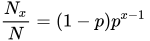
Where N is the total number of polymer molecules present in the reaction.[14]

Weight fraction distribution

[edit]
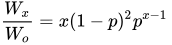
Weight fraction distribution plot for linear polymerization. Plot 1, p=0.9600; plot 2, p=0.9875; plot 3, p=0.9950.

The weight fraction distribution is the fraction of x-mers in a system and the probability of finding them in terms of mass fraction.[1]

Notes:

  • Mo is the molar mass of the repeat unit,
  • No is the initial number of monomer molecules,
  • and N is the number of unreacted functional groups

Substituting from the Carothers equation
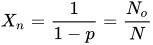
We can now obtain:
PDI

[edit]

The polydispersity index (PDI), is a measure of the distribution of molecular mass in a given polymer sample.
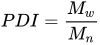
However, for step-growth polymerization the Carothers equation can be used to substitute and rearrange this formula into the following.

Therefore, in step-growth when p=1, then the PDI=2.

Molecular weight control in linear polymerization

[edit]

Need for stoichiometric control

[edit]

There are two important aspects with regard to the control of molecular weight in polymerization. In the synthesis of polymers, one is usually interested in obtaining a product of very specific molecular weight, since the properties of the polymer will usually be highly dependent on molecular weight. Molecular weights higher or lower than the desired weight are equally undesirable. Since the degree of polymerization is a function of reaction time, the desired molecular weight can be obtained by quenching the reaction at the appropriate time. However, the polymer obtained in this manner is unstable in that it leads to changes in molecular weight because the ends of the polymer molecule contain functional groups that can react further with each other.

This situation is avoided by adjusting the concentrations of the two monomers so that they are slightly nonstoichiometric. One of the reactants is present in slight excess. The polymerization then proceeds to a point at which one reactant is completely used up and all the chain ends possess the same functional group of the group that is in excess. Further polymerization is not possible, and the polymer is stable to subsequent molecular weight changes.

Another method of achieving the desired molecular weight is by addition of a small amount of monofunctional monomer, a monomer with only one functional group. The monofunctional monomer, often referred to as a chain stopper, controls and limits the polymerization of bifunctional monomers because the growing polymer yields chain ends devoid of functional groups and therefore incapable of further reaction.[13]

Quantitative aspects

[edit]

To properly control the polymer molecular weight, the stoichiometric imbalance of the bifunctional monomer or the monofunctional monomer must be precisely adjusted. If the nonstoichiometric imbalance is too large, the polymer molecular weight will be too low. It is important to understand the quantitative effect of the stoichiometric imbalance of reactants on the molecular weight. Also, this is necessary in order to know the quantitative effect of any reactive impurities that may be present in the reaction mixture either initially or that are formed by undesirable side reactions. Impurities with A or B functional groups may drastically lower the polymer molecular weight unless their presence is quantitatively taken into account.[13]

More usefully, a precisely controlled stoichiometric imbalance of the reactants in the mixture can provide the desired result. For example, an excess of diamine over an acid chloride would eventually produce a polyamide with two amine end groups incapable of further growth when the acid chloride was totally consumed. This can be expressed in an extension of the Carothers equation as,

where r is the ratio of the number of molecules of the reactants.

were NBB is the molecule in excess.

The equation above can also be used for a monofunctional additive which is the following,
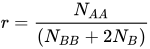
where NB is the number of monofunction molecules added. The coefficient of 2 in front of NB is require since one B molecule has the same quantitative effect as one excess B-B molecule.[15]

Multi-chain polymerization

[edit]

A monomer with functionality 3 has 3 functional groups which participate in the polymerization. This will introduce branching in a polymer and may ultimately form a cross-linked macrostructure. The point at which this three-dimensional 3D network is formed is known as the gel point, signaled by an abrupt change in viscosity.

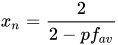
A more general functionality factor fav is defined for multi-chain polymerization, as the average number of functional groups present per monomer unit. For a system containing N0 molecules initially and equivalent numbers of two function groups A and B, the total number of functional groups is N0fav.
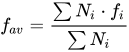
And the modified Carothers equation is[16]

, where p equals to

Advances in step-growth polymers

[edit]

The driving force in designing new polymers is the prospect of replacing other materials of construction, especially metals, by using lightweight and heat-resistant polymers. The advantages of lightweight polymers include: high strength, solvent and chemical resistance, contributing to a variety of potential uses, such as electrical and engine parts on automotive and aircraft components, coatings on cookware, coating and circuit boards for electronic and microelectronic devices, etc. Polymer chains based on aromatic rings are desirable due to high bond strengths and rigid polymer chains. High molecular weight and crosslinking are desirable for the same reason. Strong dipole-dipole, hydrogen bond interactions and crystallinity also improve heat resistance. To obtain desired mechanical strength, sufficiently high molecular weights are necessary, however, decreased solubility is a problem. One approach to solve this problem is to introduce of some flexibilizing linkages, such as isopropylidene, C=O, and SO
2
into the rigid polymer chain by using an appropriate monomer or comonomer. Another approach involves the synthesis of reactive telechelic oligomers containing functional end groups capable of reacting with each other, polymerization of the oligomer gives higher molecular weight, referred to as chain extension.[17]

Aromatic polyether

[edit]

The oxidative coupling polymerization of many 2,6-disubstituted phenols using a catalytic complex of a cuprous salt and amine form aromatic polyethers, commercially referred to as poly(p-phenylene oxide) or PPO. Neat PPO has little commercial uses due to its high melt viscosity. Its available products are blends of PPO with high-impact polystyrene (HIPS).

Polyethersulfone

[edit]

Polyethersulfone (PES) is also referred to as polyetherketone, polysulfone. It is synthesized by nucleophilic aromatic substitution between aromatic dihalides and bisphenolate salts. Polyethersulfones are partially crystalline, highly resistant to a wide range of aqueous and organic environment. They are rated for continuous service at temperatures of 240–280 °C. The polyketones are finding applications in areas like automotive, aerospace, electrical-electronic cable insulation.

Aromatic polysulfides

[edit]

Poly(p-phenylene sulfide) (PPS) is synthesized by the reaction of sodium sulfide with p-dichlorobenzene in a polar solvent such as 1-methyl-2-pyrrolidinone (NMP). It is inherently flame-resistant and stable toward organic and aqueous conditions; however, it is somewhat susceptible to oxidants. Applications of PPS include automotive, microwave oven component, coating for cookware when blend with fluorocarbon polymers and protective coatings for valves, pipes, electromotive cells, etc.[18]

Aromatic polyimide

[edit]

Aromatic polyimides are synthesized by the reaction of dianhydrides with diamines, for example, pyromellitic anhydride with p-phenylenediamine. It can also be accomplished using diisocyanates in place of diamines. Solubility considerations sometimes suggest use of the half acid-half ester of the dianhydride, instead of the dianhydride itself. Polymerization is accomplished by a two-stage process due to the insolubility of polyimides. The first stage forms a soluble and fusible high-molecular-weight poly(amic acid) in a polar aprotic solvent such as NMP or N,N-dimethylacetamide. The poly(amic aicd) can then be processed into the desired physical form of the final polymer product (e.g., film, fiber, laminate, coating) which is insoluble and infusible.

Telechelic oligomer approach

[edit]

Telechelic oligomer approach applies the usual polymerization manner except that one includes a monofunctional reactant to stop reaction at the oligomer stage, generally in the 50-3000 molecular weight. The monofunctional reactant not only limits polymerization but end-caps the oligomer with functional groups capable of subsequent reaction to achieve curing of the oligomer. Functional groups like alkyne, norbornene, maleimide, nitrite, and cyanate have been used for this purpose. Maleimide and norbornene end-capped oligomers can be cured by heating. Alkyne, nitrile, and cyanate end-capped oligomers can undergo cyclotrimerization yielding aromatic structures.

See also

[edit]

References

[edit]
[edit]
Revisions and contributorsEdit on WikipediaRead on Wikipedia
from Grokipedia
Step-growth polymerization is a fundamental method of synthesizing polymers in which bifunctional or multifunctional monomers react stepwise with one another through their reactive functional groups to form dimers, trimers, and progressively longer chains, ultimately yielding high-molecular-weight polymers, often but not always with the elimination of small byproduct molecules such as . This process typically involves the formation of carbon-heteroatom bonds (e.g., or linkages) via reactions between groups like carboxylic acids and alcohols or amines. Unlike chain-growth polymerization, which proceeds rapidly through sequential addition of monomers to an active chain end initiated by a reactive species and forms carbon-carbon bonds, step-growth polymerization builds polymers slowly through reactions between any two molecules bearing complementary functional groups, regardless of chain length, resulting in a broader distribution of chain lengths and typically lower initial molecular weights. The kinetics of step-growth reactions generally follow a second-order rate law, with the rate depending on the concentrations of the reacting functional groups, and the process may be catalyzed by the reacting functional groups (e.g., carboxylic acids in esterifications). Prominent examples of step-growth polymers include polyesters such as (PET) formed from diols like and dicarboxylic acids like , and polyamides such as produced from and . The (DP) is described by the , DP = 1 / (1 - p), where p is the ; achieving high molecular weights requires p to approach 1 (typically >0.99), often facilitated by removing byproducts or using stoichiometric control of monomer ratios. These polymers exhibit strong intermolecular forces, such as hydrogen bonding, leading to desirable properties like high tensile strength and crystallinity, making them essential in applications ranging from textiles and fibers to engineering plastics.

Overview and History

Definition and Basic Principles

Step-growth polymerization is a polymerization mechanism in which monomers possessing two or more reactive functional groups undergo successive intermolecular reactions to form dimers, trimers, and larger oligomers, which continue to couple until high-molecular-weight polymers are obtained. This process relies on the reactivity between complementary functional groups, such as hydroxyl (-OH) and carboxyl (-COOH), without requiring a separate initiator or involving distinct phases of chain initiation and propagation. Instead, chain growth occurs gradually through step-wise coupling of any two species—monomers, oligomers, or polymers—that bear appropriate functional groups. The fundamental principle of step-growth polymerization emphasizes the progressive nature of bond formation, where the molecular weight increases incrementally with each reaction step. For bifunctional monomers, which carry exactly two reactive sites (often denoted as A and B groups in an AB-type monomer), the initial reaction forms a dimer that can further react to yield linear polymer chains. This can be illustrated by the general reaction scheme: \ceAB+AB>[catalyst]ABAB+byproduct\ce{A-B + A-B ->[catalyst] A-B-A-B + by-product} Subsequent steps extend the chain similarly, as the terminal functional groups on oligomers remain reactive throughout the process. When monomers with more than two functional groups are employed, the potential for branching arises, as additional reactions can occur at non-terminal sites, leading to more complex architectures. Representative examples of step-growth polymerization include the synthesis of polyesters via esterification between a diol and a diacid, where the hydroxyl groups of the diol react with the carboxyl groups of the diacid to form ester linkages, typically eliminating water as a byproduct. Another common case is polyamidation, as seen in the production of polyamides like Nylon 6,6, where a diamine reacts with a diacid to create amide bonds through similar condensation. These reactions highlight the versatility of step-growth mechanisms in forming covalent linkages central to many engineering polymers.

Historical Development

The study of natural polymers such as and in the laid the groundwork for synthetic analogs by highlighting their repetitive molecular structures and potential for chemical modification. Chemists like Anselme Payen analyzed as a distinct polymeric substance in , while 's protein was investigated for its linkages, inspiring efforts to replicate these properties synthetically through reactions. These observations, though empirical, demonstrated how natural macromolecules could serve as models for durable materials, prompting early experiments with derivatives like in the 1840s by Christian Schönbein. The first fully synthetic step-growth polymer emerged in 1907 with Leo Baekeland's invention of Bakelite, a phenol-formaldehyde resin produced via condensation polymerization, marking the transition from modified natural materials to true synthetics. Baekeland's controlled reaction between phenol and formaldehyde under heat and pressure yielded a thermosetting material, commercialized by 1910 and widely used in electrical insulators and consumer goods. This breakthrough validated step-growth mechanisms for creating high-molecular-weight substances, influencing subsequent research. Meanwhile, Hermann Staudinger's work in the 1920s established the macromolecular hypothesis, proposing that polymers like rubber and cellulose consist of long covalent chains rather than aggregates, a theory initially met with skepticism but pivotal for rational synthesis. Staudinger's 1920 paper on rubber and his 1922 lectures formalized this view, earning him the 1953 Nobel Prize in Chemistry. In the late 1920s, Wallace Carothers at DuPont conducted the first systematic studies of step-growth polymerization, synthesizing polyesters from diols and dicarboxylic acids in 1930 and demonstrating their linear chain growth. Carothers derived the foundational Carothers equation relating monomer conversion to degree of polymerization, providing a quantitative framework for the process. His team produced the first nylon polyamide, nylon 6,6, on February 28, 1935, from hexamethylenediamine and adipic acid, leading to commercial production at DuPont's Seaford plant on December 15, 1939, and public availability in 1940 for stockings and parachutes. Concurrently, Paul Flory, joining DuPont in 1934, advanced the theoretical foundations during the 1930s and World War II era, developing statistical models for molecular weight distributions and gelation in step-growth systems through papers in the early 1940s, as detailed in his 1953 book Principles of Polymer Chemistry. Flory's work on polycondensation kinetics, including the 1946 review in Chemical Reviews, shifted understanding from empirical trial-and-error to mechanistic predictions. The 1940s saw further milestones with the development of polyurethanes by Otto Bayer at IG Farben in 1937, using diisocyanates and polyols in a step-growth process; initial commercialization as coatings and foams occurred in Germany by 1942, expanding post-war for foams and elastomers. These innovations built on Carothers' and Flory's frameworks, enabling diverse applications. Post-1950, advances in spectroscopic techniques and computational modeling facilitated a deeper mechanistic understanding, moving beyond kinetic models to elucidate reaction pathways and side reactions in step-growth systems, as evidenced by Flory's ongoing contributions and the field's maturation into a cornerstone of materials science.

Mechanisms and Types

Condensation Polymerization

Condensation polymerization involves the stepwise reaction between monomers bearing complementary functional groups, resulting in the formation of covalent bonds and the simultaneous elimination of small byproduct molecules, typically water or other low-molecular-weight species. This process forms the backbone of many step-growth polymers, where each reaction step links oligomers or monomers of varying sizes, progressively building chain length. The mechanism relies on nucleophilic attack by one functional group on another, such as the hydroxyl group of an alcohol attacking the carbonyl carbon of a carboxylic acid to form an ester linkage, with proton transfers facilitating the departure of the byproduct. A key in these reactions is the removal of the eliminated byproduct, which shifts the toward formation according to . For instance, in polyesterification, is distilled off under reduced or high to prevent reversal of the reaction and promote higher conversions. Without such removal, the equilibrium often favors monomers or low-molecular-weight oligomers, limiting yield and chain length. Common reactions include polyesterification, where diols react with diacids to produce polyesters; polyamidation, involving diamines and diacids to form polyamides; and polyanhydride formation from diacids activated by anhydrides. In polyesterification, the balanced equation is: n\ceHOROH+n\ceHOOCRCOOH\ce[OROC(O)RC(O)]n+2n\ceH2On \ce{HO-R-OH} + n \ce{HOOC-R'-COOH} \rightarrow \ce{[-O-R-OC(O)-R'-C(O)-]_n} + 2n \ce{H2O} This reaction, exemplified by the synthesis of polyethylene terephthalate from ethylene glycol and terephthalic acid, was foundational in Wallace Carothers' work at DuPont in the 1930s. For polyamidation, as in nylon 6,6 production, the equation is: n\ceH2N(CH2)6NH2+n\ceHOOC(CH2)4COOH\ce[HN(CH2)6NHC(O)(CH2)4C(O)]n+2n\ceH2On \ce{H2N-(CH2)6-NH2} + n \ce{HOOC-(CH2)4-COOH} \rightarrow \ce{[-HN-(CH2)6-NHC(O)-(CH2)4-C(O)-]_n} + 2n \ce{H2O} This yields durable materials like textiles and fibers. Polyanhydrides, used in biomedical applications for their biodegradability, form via melt condensation with acetic anhydride: n\ceHOOCRCOOH+n\ce(CH3CO)2O\ce[OC(O)RC(O)O]n+2n\ceCH3COOHn \ce{HOOC-R-COOH} + n \ce{(CH3CO)2O} \rightarrow \ce{[-OC(O)-R-C(O)-O-]_n} + 2n \ce{CH3COOH} Here, acetic acid is removed under vacuum to drive the process. Successful requires monomers with at least two complementary functional groups per molecule to enable linear or branched chain extension, such as bifunctional diols pairing with bifunctional diacids. These groups must be reactive toward each other without excessive side reactivity, and stoichiometric balance is critical to achieve high molecular weights. Monomers lacking such compatibility, like those with only one reactive site, cannot propagate the chain. Despite these principles, condensation polymerization has limitations, particularly its sensitivity to side reactions at low conversions. Cyclization, where reactive end groups on the same or intramolecularly react to form rings, competes with intermolecular chain growth, reducing the yield of high-molecular-weight linear polymers and favoring cyclic s. This issue is pronounced in dilute solutions or early reaction stages, often necessitating high concentrations and precise control to minimize it.

Non-Condensation Step-Growth Processes

Non-condensation step-growth polymerization encompasses mechanisms where bifunctional monomers react through direct displacements or couplings without the loss of small molecules like water or alcohol, distinguishing it from classical condensation processes. These reactions typically involve nucleophilic substitutions or oxidative processes that form covalent bonds while incorporating all atoms from the monomers into the polymer chain, often with ionic or trapped byproducts that do not require extensive removal. This approach enables the synthesis of polymers such as polyethers, polysulfones, polyurethanes, and conjugated systems with high purity and controlled architectures. A prominent example is the formation of polyethers via the Williamson synthesis, where an alkyl halide reacts with an alkoxide ion in a stepwise nucleophilic substitution. The general reaction is represented as: R-X+R’-OR-O-R’+X\text{R-X} + \text{R'-O}^- \rightarrow \text{R-O-R'} + \text{X}^- This process proceeds under basic conditions, such as with sodium alkoxides in polar aprotic solvents, yielding linear polyethers like poly(alkylene oxides) without volatile byproducts beyond the halide salt. Model compounds, such as H[(CH₂)ₓO]ᵧ(CH₂)ₓH where x=4–10 and y=2–4, have been synthesized to demonstrate the step-growth nature, achieving high conversions through iterative dimerization and chain extension. Arylene/alkylene polyethers with pendant groups, formed from dihydric phenols and dihalides like 1,4-dichlorobutane, further illustrate the versatility, producing polymers with intrinsic viscosities up to 0.094 dL/g. Another important class is polyurethanes, formed by the step-growth reaction between diisocyanates and diols or polyols without elimination of small molecules. The general reaction is: n\ceOCNRNCO+n\ceHOROH\ce[OCNHRNHC(O)ORO]nn \ce{OCN-R-NCO} + n \ce{HO-R'-OH} \rightarrow \ce{[-OCN H-R-NHC(O)O-R'-O-]_n} This proceeds via nucleophilic attack of the alcohol on the carbon, forming urethane linkages. Polyurethanes are widely used in foams, coatings, adhesives, and elastomers due to their versatility and properties like elasticity and toughness. Polysulfones are synthesized through nucleophilic aromatic substitution (SNAr), where an activated aryl fluoride or chloride reacts with a phenoxide. A typical mechanism involves the displacement at an electron-deficient aromatic ring, as in: Ar-F+HO-Ar’Ar-O-Ar’+HF\text{Ar-F} + \text{HO-Ar'} \rightarrow \text{Ar-O-Ar'} + \text{HF} The HF byproduct is often trapped by base, minimizing elimination issues and enabling high molecular weights. This step-growth method uses dialkali salts of dihydric phenols with dihalodiphenyl sulfones in dipolar aprotic solvents like dimethyl sulfoxide, yielding poly(aryl ether sulfones) with excellent thermal stability. Self-polycondensation of AB-type monomers, such as hydroxyphenyl sulfone halides, further exemplifies this, proceeding via iterative SNAr to form ether linkages without additional catalysts in some cases. Oxidative polymerization of dithiols provides another non-condensation route, forming poly(disulfide)s through the coupling of thiol groups. The mechanism involves oxidation to thiyl radicals or direct disulfide formation, as in 2 RS⁻ → RS-SR, often catalyzed by air, hydrogen peroxide, or bases like triethylamine under ambient conditions. This living polymerization of dithiols like 2-[2-(2-sulfanylethoxy)ethoxy]ethanethiol achieves number-average molecular weights up to 250,000 g/mol with polydispersity indices as low as 1.15, producing water as the only byproduct in oxygen-mediated reactions. Metal-catalyzed couplings, such as the Sonogashira reaction, enable the step-growth synthesis of polyynes and conjugated polymers. In this process, a terminal alkyne couples with an aryl or vinyl halide using Pd/Cu catalysis: Ar-X+HC≡C-Ar’Ar-C≡C-Ar’+HX\text{Ar-X} + \text{HC≡C-Ar'} \rightarrow \text{Ar-C≡C-Ar'} + \text{HX} The HX is neutralized by base, avoiding small-molecule loss, and the reaction proceeds via oxidative addition and transmetalation cycles to form carbon-carbon triple bonds. This method constructs poly(aryleneethynylene)s from dihalides and diynes, yielding materials for optoelectronics with tunable conjugation lengths. These non-condensation processes offer advantages including cleaner reaction profiles and reduced need for byproduct distillation, facilitating scalable production and end-group control. However, challenges arise from the requirement for functional group orthogonality, as competing reactions can lead to branching or gelation if halide or thiol reactivities are not balanced.

Comparison with Chain-Growth Polymerization

Fundamental Differences

Step-growth polymerization builds polymer chains through the random reaction of functional groups on any two species present in the system, including monomers, oligomers, and longer chains, leading to stepwise elongation without a dedicated propagating site. In contrast, chain-growth polymerization proceeds via the sequential addition of monomers exclusively to active centers at chain ends, such as radicals, carbanions, or cations, forming a chain reaction mechanism. A fundamental distinction lies in initiation: step-growth reactions do not require an external initiator, as they rely solely on the inherent reactivity of complementary functional groups on bifunctional (or higher) monomers to commence oligomer formation. Chain-growth polymerization, however, demands an initiator or catalyst to generate the initial active species, which then propagates by adding monomers until termination or transfer occurs. The growth patterns differ markedly in terms of chain length development and molecular weight distribution. In step-growth, polymerization yields a broad distribution of chain lengths from the outset, as any reactive species can couple with another, resulting in exponential increases in average chain length only at high conversions. Chain-growth, especially in without termination, features simultaneous and uniform growth of all chains from active centers, producing polymers with a narrow molecular weight distribution early in the process. Key kinetic contrasts highlight these differences in monomer consumption. Step-growth follows second-order kinetics with respect to functional group concentration, causing a rapid initial drop in monomer levels that decelerates later; the integrated rate law is 1[M]=kt+1[M]0\frac{1}{[M]} = kt + \frac{1}{[M]_0} where [M] is the functional group concentration, k is the rate constant, t is time, and [M]_0 is the initial concentration, with the extent of reaction given exactly by p=111+kt[M]0p = 1 - \frac{1}{1 + k t [M]_0} and for early stages pkt[M]0p \approx k t [M]_0. In chain-growth, propagation is typically first-order in monomer, resulting in rapid exponential decay of monomer concentration: [M]=[M]0ekt[M] = [M]_0 e^{-k t} with high molecular weights achieved even at low monomer conversions. Structurally, step-growth is particularly susceptible to branching when multifunctional monomers (functionality f > 2) are employed, as additional reactive groups enable random intermolecular linkages that can culminate in crosslinked networks, as quantified by Flory-Stockmayer theory. Chain-growth tends to favor linear architectures unless branching agents are deliberately introduced.

Practical Implications

In step-growth polymerization, achieving high molecular weights necessitates conversions exceeding 99%, as the scales inversely with the extent of unreacted functional groups, contrasting with chain-growth methods where high molecular weights are attainable at much lower conversions of around 10-20%. This requirement stems from the random coupling of oligomers, demanding precise stoichiometric control to minimize low-molecular-weight species. Consequently, synthesis strategies for step-growth polymers emphasize equilibrium shifts through byproduct removal, such as in formation, whereas chain-growth relies on rapid propagation from active centers. Step-growth polymers typically retain reactive functional end-groups, like carboxylic acids or amines, enabling post-polymerization modifications such as cross-linking or , which enhances versatility in tailoring properties for specific applications. However, these systems are highly sensitive to impurities, including trace or monofunctional contaminants, which disrupt and cap chain growth prematurely, leading to brittle materials with inferior mechanical strength. In comparison, chain-growth polymers often feature inert or less reactive ends, reducing such vulnerabilities but limiting derivatization options. Industrially, step-growth processes are well-suited for melt-phase reactions, facilitating the production of polyesters like (PET) for bottles and films, where high-temperature avoids solvents. Nylon-6,6, a step-growth , exemplifies durability through hydrogen bonding, offering superior tensile strength (up to 80 MPa) and abrasion resistance for textiles and gears, though its recyclability is complicated by sensitivity. Conversely, chain-growth is processed via solution or , yielding highly recyclable films and containers with excellent chemical inertness but lower thermal stability (melting at 110-130°C). These differences influence scalability: step-growth demands slower rates and energy-intensive purification to achieve purity levels above 99.9%, increasing operational costs compared to the faster, solvent-based chain-growth routes.

Polymer Architectures

Linear Step-Growth Polymers

Linear step-growth polymers are synthesized exclusively using difunctional monomers, each containing precisely two reactive functional groups, ensuring the formation of unbranched, linear chain architectures. These monomers typically react in an A-A + B-B fashion, where one monomer bears two identical A functional groups (e.g., carboxylic acids) and the complementary monomer has two B groups (e.g., hydroxyls), or in an A-B configuration where each monomer carries one A and one B group. The stepwise reaction between these functional groups progressively builds linear chains denoted as -[A-B]-_n, with each step involving the coupling of any two reactive species—monomers, oligomers, or polymers—without the need for initiators or chain carriers. The structure of these polymers features sequences of repeating units that alternate in A-A + B-B systems, promoting regular arrangements, or appear more randomly in A-B systems due to self-condensation possibilities. ends terminate with unreacted functional groups, such as -COOH or -OH, which retain reactivity and influence further extension or end-capping reactions. This linear contrasts with more complex architectures and supports like processability in the melt state. Key characteristics of linear step-growth polymers include their potential for high crystallinity, driven by intermolecular interactions like hydrogen bonding, as seen in polyamides such as nylons, which enables superior mechanical performance. The average degree of polymerization, DPˉn\bar{DP}_n, is described by the Carothers equation for stoichiometric systems: DPˉn=11p\bar{DP}_n = \frac{1}{1 - p} where pp represents the extent of reaction; high molecular weights require p>0.99p > 0.99, emphasizing the need for precise stoichiometry. Representative examples include polyethylene terephthalate (PET), formed via condensation of terephthalic acid and ethylene glycol, which exhibits a tensile strength of approximately 55–75 MPa and is widely used in fibers and bottles due to its clarity and strength. Similarly, nylon 6,6, produced from hexamethylenediamine and adipic acid, demonstrates high crystallinity from amide hydrogen bonding, yielding a tensile strength around 80 MPa and exceptional toughness for applications in textiles and engineering plastics. A significant advantage of linear step-growth polymerization lies in the facile control of chain-end functionality, enabling the production of telechelic polymers with predefined reactive groups at both termini for subsequent or modification, which enhances versatility in block synthesis and .

Branched and Network Polymers

In step-growth polymerization, the introduction of monomers with functionality greater than two leads to branched architectures, diverging from the linear chains formed by strictly bifunctional monomers. Trifunctional or higher monomers, such as alcohols or acids with three or more reactive groups, enable chain extension in multiple directions, resulting in dendritic or randomly branched structures. This multifunctionality promotes the formation of branch points during the stepwise reaction of functional groups, increasing the complexity of the polymer topology. A critical aspect of branching is the onset of gelation, where the polymer system transitions from soluble, finite molecules to an insoluble, infinite network. According to the Flory-Stockmayer theory, the gel point occurs when the branching coefficient α\alpha, defined as the probability that a on a branch unit has reacted to form another branch, reaches αc=1favg1\alpha_c = \frac{1}{f_{\text{avg}} - 1}, with favgf_{\text{avg}} being the average functionality of the monomers. For trifunctional monomers (f=3f = 3), this critical value is αc=0.5\alpha_c = 0.5, meaning gelation happens at 50% conversion of the branching units under ideal conditions. This theory assumes random reaction statistics and no cyclization, providing a foundational model for predicting gelation in systems like polyesters formed from trifunctional and difunctional diacids, where glycerol acts as the branching agent to yield hyperbranched or dendritic poly(glycerol adipate). Branched structures can evolve into crosslinked networks when higher-functionality monomers (e.g., tetrafunctional) are incorporated or through post-polymerization crosslinking reactions, leading to an infinite three-dimensional network at or beyond the critical conversion. In such networks, all chains interconnect, forming a gel that dominates the system's properties above the gel point. Representative examples include epoxy resins, where difunctional epoxy monomers undergo step-growth polyaddition with multifunctional amines to form highly crosslinked thermoset networks with exceptional mechanical integrity, and urea-formaldehyde resins, synthesized via stepwise condensation of urea (difunctional) and formaldehyde (multifunctional under reaction conditions) to produce rigid thermosets used in adhesives and composites. These networks exhibit enhanced mechanical strength and thermal stability due to the extensive interconnections, but at the cost of increased melt viscosity and complete loss of solubility, rendering them insoluble in solvents. To control branching and prevent premature gelation, the fraction of multifunctional monomers is often limited to below the critical threshold, allowing for branched polymers with manageable molecular weights without forming networks. For instance, in polyester synthesis, using less than 50 mol% trifunctional glycerol relative to diols keeps the system below the gel point, producing branched but soluble materials with tailored rheology. This approach balances the benefits of branching, such as improved processability in melts compared to linear analogs, against the risks of uncontrolled network formation.

Kinetics

General Kinetic Models

Step-growth polymerization follows second-order kinetics under the assumption of bimolecular reactions between functional groups. For an A-B type monomer, where each molecule contains one A and one B functional group that react to form a link, the rate law is expressed as d[A]dt=k[A]2,-\frac{d[A]}{dt} = k [A]^2, where [A] represents the concentration of unreacted functional groups (equivalent to [B] due to stoichiometry), and kk is the second-order rate constant. Integrating this differential equation yields 1[A]=1[A]0+kt,\frac{1}{[A]} = \frac{1}{[A]_0} + kt, with [A]0[A]_0 as the initial concentration, providing a direct relationship between time tt and the extent of reaction. The extent of reaction pp, defined as the fraction of functional groups that have reacted, is given by p=1[A][A]0=111+[A]0kt.p = 1 - \frac{[A]}{[A]_0} = 1 - \frac{1}{1 + [A]_0 kt}. This parameter quantifies polymerization progress, linking kinetics to molecular structure. The number-average degree of polymerization DPn\overline{DP}_n, which indicates the average number of monomer units per chain, is related to pp by the Carothers equation: DPn=11p.\overline{DP}_n = \frac{1}{1 - p}. Thus, high molecular weight polymers require pp approaching 1, such as p>0.99p > 0.99 for DPn>100\overline{DP}_n > 100. For systems involving A-A and B-B difunctional monomers with equal initial concentrations of A and B groups, the kinetics simplify similarly to the A-B case, as [A]=[B][A] = [B] throughout the reaction, yielding the same second-order form and integrated rate law. The Carothers equation applies identically, assuming stoichiometric balance. These models rest on key assumptions: all functional groups exhibit equal reactivity regardless of the chain to which they belong, and no side reactions or intramolecular cyclizations occur, ensuring purely intermolecular growth. In reality, deviations from ideal kinetics arise, particularly from intramolecular cyclization, where functional groups on the same react to form rings, reducing the concentration of reactive ends available for and thus lowering the effective rate compared to predictions. This effect becomes more pronounced at higher conversions or in dilute solutions, where chain flexibility favors loop formation over intermolecular links.

Catalyzed vs. Uncatalyzed Reactions

In step-growth polymerization, particularly for condensation reactions like polyesterification and polyamidation, the kinetics differ significantly between uncatalyzed (self-catalyzed) processes and those employing external catalysts. In uncatalyzed reactions, the functional groups on the monomers, such as carboxyl groups in dicarboxylic acids, serve as intrinsic acid catalysts, leading to a rate dependence on the carboxyl concentration. The reaction rate is expressed as k=k[\ceCOOH]k = k' [\ce{COOH}], where kk' is the specific rate constant, resulting in autoacceleration as the concentration of carboxyl groups evolves during the reaction. This self-catalysis arises because the carboxyl groups protonate the hydroxyl or amine groups, facilitating nucleophilic attack, and the process exhibits third-order kinetics overall: d[\ceCOOH]dt=k[\ceCOOH]2[\ceOH]-\frac{d[\ce{COOH}]}{dt} = k [\ce{COOH}]^2 [\ce{OH}] (or equivalently k[\ceCOOH]3k [\ce{COOH}]^3 under stoichiometric conditions). In terms of the extent of reaction pp (fraction of functional groups reacted), the differential rate equation is dpdt=k(1p)3\frac{dp}{dt} = k' (1-p)^3, based on the concentrations of the reacting functional groups./03%3A_Kinetics_and_Thermodynamics_of_Polymerization/3.02%3A_Kinetics_of_Step-Growth_Polymerization) A classic example of self-catalyzed step-growth is the polycondensation of adipic acid and hexamethylenediamine to form nylon 6,6, where the carboxyl groups of adipic acid catalyze the amidation without added agents. Here, the reaction proceeds at elevated temperatures (around 250–280°C), with autoacceleration becoming pronounced after initial monomer consumption, as the local concentration of catalytic carboxyl ends increases relative to the diluting effect of water byproduct. The integrated form of the rate equation shows that the number-average degree of polymerization Xn\overline{X}_n grows approximately as the square root of time, Xn(1+2k[\ceM]02t)1/2\overline{X}_n \approx (1 + 2 k' [\ce{M}]_0^2 t)^{1/2}, making high molecular weights achievable only at near-complete conversion (p>0.99p > 0.99). This self-driven mechanism is common in polyamide and polyester syntheses but is inherently slower at lower temperatures due to the limited intrinsic catalysis./03%3A_Kinetics_and_Thermodynamics_of_Polymerization/3.02%3A_Kinetics_of_Step-Growth_Polymerization) In contrast, externally catalyzed reactions introduce added species to enhance the rate, typically following pseudo-second-order kinetics independent of chain length. Common catalysts include strong acids (e.g., p-toluenesulfonic acid), bases, or metal compounds like titanium(IV) alkoxides, Ti(OR)4_4, which coordinate to carbonyl groups to activate them toward nucleophilic attack. The rate is first-order in catalyst concentration: dpdt=k[\cecat](1p)2\frac{dp}{dt} = k [\ce{cat}] (1-p)^2, where kk incorporates the catalyst's efficiency, allowing linear growth in Xn\overline{X}_n with time, Xn=1+k[\cecat][\ceM]0t\overline{X}_n = 1 + k [\ce{cat}] [\ce{M}]_0 t. For instance, in the industrial synthesis of poly(ethylene terephthalate) (PET), Ti(OR)4_4 (e.g., titanium tetraisopropoxide) is employed at concentrations of 10–50 ppm, accelerating esterification and transesterification steps at 250–290°C while maintaining equilibrium by distilling ethylene glycol. This catalysis boosts the rate constant by factors of 10–100 compared to uncatalyzed conditions, enabling shorter reaction times. The use of external catalysis offers practical advantages over self-catalyzed processes, particularly in controlling reaction conditions and product quality. By increasing the effective rate, catalysts permit operation at lower temperatures (e.g., 200–250°C for Ti-catalyzed PET versus 280°C for uncatalyzed analogs), which reduces energy costs and minimizes side reactions such as thermal decarboxylation, ether formation from diols, or hydrolytic degradation. In PET production, Ti(OR)4_4 specifically lowers the onset of side reactions like acetaldehyde formation or cyclization, yielding polymers with higher intrinsic viscosity and fewer defects. Overall, while self-catalysis suffices for laboratory-scale polyamide syntheses like nylon 6,6, external catalysis is essential for scalable polyester processes, balancing kinetics with polymer integrity.

Molecular Weight Distribution and Control

Distribution Functions

In linear step-growth polymerization, the Flory-Schulz model provides a statistical framework for the molecular weight distribution, assuming random reaction between functional groups of equal reactivity and neglecting cyclization or side reactions. This model treats the growth of polymer chains as a probabilistic process where the extent of reaction pp represents the fraction of functional groups that have reacted, determining the probability of chain propagation versus termination. Specifically, the probability of propagation qq equals pp, while the probability of termination (or non-reaction at an end group) is 1p1 - p. The extent of reaction pp arises from the underlying kinetics of the polymerization, as discussed in prior sections on kinetic models. The number-average molecular weight distribution, or number fraction xnx_n (the probability that a randomly selected molecule contains nn monomer units), follows a geometric distribution derived from binomial probabilities. Consider a chain starting from a monomer; for it to have exactly nn units, there must be n1n-1 successful propagations (each with probability pp) followed by a termination (with probability 1p1-p). This yields the expression: xn=(1p)pn1x_n = (1 - p) p^{n-1} for n=1,2,3,n = 1, 2, 3, \dots. This distribution is normalized such that n=1xn=1\sum_{n=1}^{\infty} x_n = 1, confirming its probabilistic validity. The weight-average molecular weight distribution, or weight fraction wnw_n (the fraction of total mass contributed by chains of nn units), accounts for the fact that longer chains contribute more mass proportionally to nn. It is obtained by weighting the number fraction by nn and renormalizing: wn=n(1p)2pn1w_n = n (1 - p)^2 p^{n-1} for n=1,2,3,n = 1, 2, 3, \dots, with n=1wn=1\sum_{n=1}^{\infty} w_n = 1. These distributions highlight the most probable chain length, which peaks at lower nn for the number fraction and shifts to higher nn for the weight fraction, reflecting the skew toward longer chains in mass terms. The polydispersity index (PDI), defined as the ratio of weight-average molecular weight Mw\overline{M}_w to number-average molecular weight Mn\overline{M}_n (PDI = Mw/Mn\overline{M}_w / \overline{M}_n), quantifies the breadth of the distribution. Using the moments of the distribution—where the first moment relates to Mn\overline{M}_n and the second to Mw\overline{M}_w—the PDI simplifies to 1+p1 + p. For high conversions (p1p \approx 1), typical in polymer synthesis to achieve substantial molecular weights, PDI approaches 2, indicating a relatively broad distribution compared to many chain-growth processes. Plots of these distributions versus nn (or molecular weight, scaled by monomer mass) illustrate their behavior: the number fraction xnx_n decays exponentially from n=1n=1, while the weight fraction wnw_n rises to a maximum near n1/(1p)n \approx 1/(1-p) before decaying, becoming broader and shifting rightward as pp increases toward 1. These visualizations underscore the model's prediction of a most probable distribution, where no single chain length dominates overwhelmingly, but the ensemble averages grow with pp.

Stoichiometric and Impurity Effects

In step-growth polymerization involving bifunctional A-A and B-B monomers, the stoichiometric ratio rr is defined as the initial concentration ratio of the limiting functional group to the excess one, typically r=[B]0[A]01r = \frac{[B]_0}{[A]_0} \leq 1. This ratio critically influences the achievable molecular weight, as deviations from r=1r = 1 limit chain growth by leaving excess unreactive end groups on one type of chain. The number-average degree of polymerization DPn\overline{DP}_n is approximated by the modified Carothers-Flory equation: DPn=1+r1+r2rp,\overline{DP}_n = \frac{1 + r}{1 + r - 2 r p}, where pp is the extent of reaction of the limiting functional group; the maximum DPn\overline{DP}_n occurs at r=1r = 1, reducing to the stoichiometric case DPn=11p\overline{DP}_n = \frac{1}{1 - p}. Monofunctional impurities, such as acetic acid in polyester syntheses or monocarboxylic acids in polyamide production, introduce chain-terminating end groups that cap growing chains and disrupt stoichiometry. These impurities effectively reduce the maximum attainable extent of reaction to pmax=1[imp][func]0p_{\max} = 1 - \frac{[imp]}{[func]_0}, where [imp][imp] is the impurity concentration and [func]0[func]_0 is the initial concentration of functional groups. Consequently, the number-average degree of polymerization is limited to approximately DPn=1[imp][func]0\overline{DP}_n = \frac{1}{\frac{[imp]}{[func]_0}}, preventing high molecular weights even at near-complete conversion of reactive groups. Achieving DPn>1000\overline{DP}_n > 1000 (corresponding to molecular weights suitable for many applications) requires stringent control: a stoichiometric ratio r>0.99r > 0.99 and impurity levels below 0.1% relative to functional groups. For instance, at r=0.99r = 0.99 and p=0.9988p = 0.9988, DPn\overline{DP}_n drops to around 100-200, yielding molecular weights of approximately 17,000-20,000 g/mol for typical monomers, compared to over 80,000 g/mol under ideal stoichiometric conditions. Stoichiometric imbalances and impurities shift the molecular weight distribution away from the ideal Flory-Schulz form (most probable distribution with PDI = 2), resulting in a broader low-molecular-weight tail and an increase in polydispersity index (PDI) to values greater than 2 due to the presence of excess low-molecular-weight species.

Advanced Applications and Developments

High-Performance Step-Growth Polymers

High-performance step-growth polymers, such as aromatic polyethers, polyethersulfones, aromatic polysulfides, and aromatic polyimides, are engineered through rigid monomer designs that incorporate aromatic rings and heteroatoms to achieve exceptional thermal, mechanical, and chemical stability for demanding engineering applications. These materials are typically synthesized via nucleophilic aromatic substitution or condensation reactions, where the incorporation of stiff, conjugated backbones restricts chain mobility, elevating glass transition temperatures (Tg) and enabling operation at elevated temperatures. For instance, the use of activated aryl halides or dianhydrides with bisphenols or diamines promotes high molecular weights while maintaining processability, distinguishing them from commodity polymers. Aromatic polyethers, exemplified by polyetheretherketone (PEEK), are produced through step-growth nucleophilic aromatic substitution of hydroquinone with 4,4'-difluorobenzophenone in diphenyl sulfone solvent at temperatures ranging from 150°C to 340°C. The ether and ketone linkages, derived from rigid aromatic monomers, confer high thermal stability with a Tg of approximately 143°C and melting temperature (Tm) between 334°C and 350°C, allowing PEEK to withstand prolonged exposure to heat without degradation. This rigidity enhances mechanical strength and chemical resistance, making PEEK suitable for aerospace components and medical implants. Polyethersulfones (PES) are synthesized similarly via nucleophilic aromatic substitution between dihalogenated diphenyl sulfones and bisphenol A, yielding polymers where sulfonyl groups interrupt the aromatic backbone to improve toughness and flexibility. These groups contribute to outstanding thermal and oxidative stability, with PES exhibiting a high Tg around 225°C and resistance to hydrolysis, which is critical for long-term durability. PES is widely employed in membrane applications, such as ultrafiltration and gas separation, due to its mechanical robustness and ability to form porous structures via phase inversion. Aromatic polysulfides, particularly polyphenylene sulfide (PPS), are formed by the step-growth polycondensation of p-dichlorobenzene with sodium sulfide in a polar aprotic solvent like N-methylpyrrolidone at elevated temperatures and pressures, as developed in the Edmonds-Hill process. The all-aromatic structure provides semicrystalline character, enabling melt processability while offering superior chemical resistance to acids, bases, and solvents, alongside a continuous use temperature up to 240°C. PPS's rigidity from para-linked phenylene units ensures dimensional stability, positioning it for use in automotive and electronic components exposed to harsh environments. Aromatic polyimides, such as Kapton-type variants, are prepared through a two-step step-growth process involving the reaction of pyromellitic dianhydride (PMDA) with 4,4'-oxydianiline (ODA) to form a poly(amic acid) precursor, followed by thermal imidization at 240–330°C. The fully aromatic, heterocyclic imide rings impart extreme heat resistance, with materials sustaining short-term exposure up to 400°C and continuous use up to 240°C, and decomposition onset above 500°C in inert atmospheres. Monomer selection emphasizes rigid, planar structures to minimize free volume and enhance chain packing, resulting in high tensile strength and low dielectric constants for applications in flexible electronics and aerospace insulation.

Modern Synthetic Strategies

Modern synthetic strategies in step-growth polymerization emphasize precision, efficiency, and environmental sustainability, enabling the creation of tailored polymers with enhanced functionalities such as recyclability and self-healing. These approaches build on traditional condensation mechanisms but integrate orthogonal reactions and bio-derived components to overcome limitations in molecular weight control and byproduct formation. Innovations since the 2000s have focused on modular assembly techniques that allow for high yields under mild conditions, reducing energy demands and waste. Telechelic oligomers, which are short chains with functional end-groups, serve as versatile building blocks for constructing block copolymers through step-growth coupling. For instance, α,ω-dihydroxy-terminated oligomers can be coupled via condensation reactions to form well-defined multiblock architectures, enabling precise control over segment lengths and interfaces in materials like compatibilizers for polymer blends. Recent developments include the synthesis of telechelic dithiol copolymers with tunable molecular weights and compositions, achieved through controlled radical polymerization followed by step-growth thiol-ene linking, yielding networks with low polydispersity indices (PDI) approaching 1.2-1.5. Chain-stoppers, such as monofunctional thiols, are employed to regulate chain extension and PDI in these systems, preventing excessive branching and ensuring uniform distributions essential for advanced applications. Click chemistry has revolutionized step-growth polymerization by providing orthogonal, high-efficiency linkages that proceed without catalysts or byproducts in many cases. Copper-catalyzed azide-alkyne cycloaddition (CuAAC) and thiol-ene reactions exemplify this, allowing rapid coupling of telechelic precursors under ambient conditions with yields exceeding 95%. Thiol-ene click step-growth, in particular, leverages nucleophilic Michael additions to form E/Z stereocontrolled polymers, offering atom-economic routes to sustainable biomaterials with minimal purification needs. These methods enable the assembly of complex architectures, such as graft copolymers, where azide- or thiol-terminated chains are linked to alkyne- or ene-functionalized backbones, achieving PDIs below 1.5 and molecular weights up to 50 kDa. Sustainable advances prioritize bio-based monomers and enzymatic catalysis to align step-growth processes with green chemistry principles. Itaconic acid, derived from renewable fermentation of sugars, serves as a key diacid monomer for polyesters, where its vinyl functionality is preserved during polycondensation to yield copolymers with pendant reactivity for further modification. Lipase-catalyzed ring-opening addition condensation of itaconic anhydride with diols produces bio-based polyesters at temperatures below 100°C, achieving molecular weights over 10 kDa with PDIs around 2.0 and eliminating harsh metal catalysts. Enzymatic strategies extend to co-polymerization of succinate, itaconate, and butanediol, enabling tunable biodegradability and thermal properties in aliphatic polyesters. These bio-derived systems reduce reliance on petroleum feedstocks, with recent integrations of thiolactone-functionalized itaconic acid enabling dual step-growth and radical polymerizations for versatile networks. Developments in the 2020s have centered on recyclable networks incorporating dynamic covalent bonds, such as in vitrimers, which combine the permanence of cross-linked thermosets with reprocessability via bond exchange. Vitrimers formed by step-growth polycondensation of telechelic diols with boric acid exhibit associative dynamic networks, allowing reshaping at elevated temperatures without depolymerization, with topology freeze demonstrated up to 1.0 W/(m·K) thermal conductivity in crystalline variants. Self-healing step-growth polymers leverage dynamic bonds like disulfides for autonomous repair; for example, polyurethanes with exchangeable urea or disulfide linkages recover over 90% tensile strength after damage through thermal activation. These materials address end-of-life challenges, with biobased vitrimers from polyhydroxyalkanoates showing elastomeric recovery and closed-loop recyclability. Representative examples illustrate these strategies' impact. Poly(arylene ether sulfone)-poly(disulfide) multiblock copolymers, synthesized via step-growth coupling of telechelic segments with dynamic disulfide links, exhibit self-healing energies as low as 50 J/m² due to rapid bond exchange, enabling repair at 150°C. PDI control via chain-stoppers in thiol-ene systems, such as adding monothiol terminators during coupling, limits molecular weight distributions to PDI < 1.3, facilitating precise engineering of mechanical properties in recyclable networks. These innovations underscore step-growth's adaptability for high-performance, circular economy materials.

References

Add your contribution
Related Hubs
Contribute something
User Avatar
No comments yet.