Hubbry Logo
StethoscopeStethoscopeMain
Open search
Stethoscope
Community hub
Stethoscope
logo
8 pages, 0 posts
0 subscribers
Be the first to start a discussion here.
Stethoscope
Stethoscope
from Wikipedia
Stethoscope
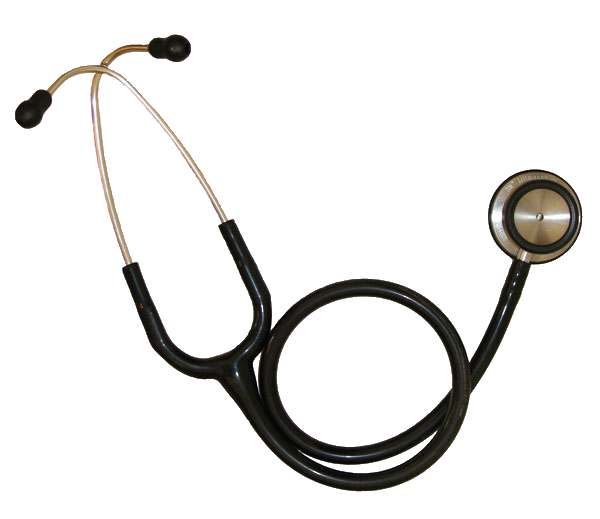
Modern stethoscope
ClassificationMedical device
IndustryMedicine
ApplicationAuscultation
InventorRené Laennec in 1816; binaural version by Arthur Leared in 1851
Invented1816 (209 years ago) (1816)

The stethoscope, from Ancient Greek στῆθος (stêthos), meaning "breast", and σκοπέω (skopéō), meaning "to look", is a medical device for auscultation, or listening to internal sounds of an animal or human body. It typically has a small disc-shaped resonator that is placed against the naked skin, with either one or two tubes connected to two earpieces. A stethoscope can be used to listen to the sounds made by the heart, lungs or intestines, as well as blood flow in arteries and veins. In combination with a manual sphygmomanometer, it is commonly used when measuring blood pressure. It was invented in 1816 by René Laennec and the binaural version by Arthur Leared in 1851.

A stethoscope that intensifies auscultatory sounds is called a phonendoscope.

History

[edit]

This early stethoscope belonged to Laennec. (Science Museum, London)
Early stethoscopes
A Traube-type stethoscope in ivory

The stethoscope was invented in France in 1816 by René Laennec at the Necker-Enfants Malades Hospital in Paris.[1][2][3] It consisted of a wooden tube and was monaural. Laennec invented the stethoscope because he was not comfortable placing his ear directly onto a woman's chest in order to listen to her heart.[4][5]: 186  He observed that a rolled piece of paper, placed between the individual's chest and his ear, could amplify heart sounds without requiring physical contact.[6] Laennec's device was similar to the common ear trumpet, a historical form of hearing aid; indeed, his invention was almost indistinguishable in structure and function from the trumpet, which was commonly called a "microphone". Laennec called his device the "stethoscope"[7] (stetho- + -scope, "chest scope"), and he called its use "mediate auscultation", because it was auscultation with a tool intermediate between the individual's body and the physician's ear. (Today the word auscultation denotes all such listening, mediate or not.) The first flexible stethoscope of any sort may have been a binaural instrument with articulated joints not very clearly described in 1829.[8] In 1840, Golding Bird described a stethoscope he had been using with a flexible tube. Bird was the first to publish a description of such a stethoscope, but he noted in his paper the prior existence of an earlier design (which he thought was of little utility) which he described as the snake ear trumpet. Bird's stethoscope had a single earpiece.[9]

Binaural devices

[edit]

In 1851, Irish physician Arthur Leared invented a binaural stethoscope. The following year, George Philip Cammann, a physician practicing in New York City, perfected for commercial production the design of a stethoscope that featured a plug for each ear.[10] Although improvements have been made, his design has remained essentially unchanged ever since. Cammann also wrote a major treatise on diagnosis by auscultation, which the refined binaural stethoscope made possible. By 1873, there were descriptions of a differential stethoscope that could connect to slightly different locations to create a slight stereo effect, though this did not become a standard tool in clinical practice.

Somerville Scott Alison described his invention of the stethophone at the Royal Society in 1858; the stethophone had two separate bells, allowing the user to hear and compare sounds derived from two discrete locations. This was used to do definitive studies on binaural hearing and auditory processing that advanced knowledge of sound localization and eventually led to an understanding of binaural fusion.[1]

The medical historian Jacalyn Duffin has argued that the invention of the stethoscope marked a major step in the redefinition of disease from being a bundle of symptoms, to the current sense of a disease as a problem with an anatomical system even if there are no observable symptoms. This re-conceptualization occurred in part, Duffin argues, because prior to stethoscopes, there were no non-lethal instruments for exploring internal anatomy.[11]

Rappaport and Sprague designed a new stethoscope in the 1940s, which became the standard by which other stethoscopes are measured, consisting of two sides, one of which is used for the respiratory system, the other for the cardiovascular system. The Rappaport-Sprague model stethoscope was heavy and short (18–24 in (46–61 cm)) with an antiquated appearance recognizable by their two large independent latex rubber tubes connecting an exposed leaf-spring-joined pair of opposing F-shaped chrome-plated brass binaural ear tubes with a dual-head chest piece.

Early flexible tube stethoscopes. Golding Bird's instrument is on the left. The instrument on the right is the stethophone.[1]

Several other minor refinements were made to stethoscopes until, in the early 1960s, David Littmann, a Harvard Medical School professor, created a new stethoscope that was lighter than previous models and had improved acoustics.[12][13] In the late 1970s, 3M-Littmann introduced the tunable diaphragm: a very hard (G-10) glass-epoxy resin diaphragm member with an overmolded silicone flexible acoustic surround which permitted increased excursion of the diaphragm member in a Z-axis with respect to the plane of the sound collecting area.[14] The left shift to a lower resonant frequency increases the volume of some low frequency sounds due to the longer waves propagated by the increased excursion of the hard diaphragm member suspended in the concentric accountic surround. Conversely, restricting excursion of the diaphragm by pressing the stethoscope diaphragm surface firmly against the anatomical area overlying the physiological sounds of interest, the acoustic surround could also be used to dampen excursion of the diaphragm in response to "z"-axis pressure against a concentric fret. This raises the frequency bias by shortening the wavelength to auscultate a higher range of physiological sounds.

In 1999, Richard Deslauriers patented the first external noise reducing stethoscope, the DRG Puretone. It featured two parallel lumens containing two steel coils which dissipated infiltrating noise as inaudible heat energy. The steel coil "insulation" added .30 lb to each stethoscope.

Current practice

[edit]
A doctor using a stethoscope on a patient's abdomen to listen to bowel sounds

Stethoscopes are a symbol of healthcare professionals. Healthcare providers are often seen or depicted wearing a stethoscope around the neck. A 2012 research paper claimed that the stethoscope, when compared to other medical equipment, had the highest positive impact on the perceived trustworthiness of the practitioner seen with it.[15][16]

Prevailing opinions on the utility of the stethoscope in current clinical practice vary depending on the medical specialty. Studies have shown that auscultation skill (i.e., the ability to make a diagnosis based on what is heard through a stethoscope) has been in decline for some time, such that some medical educators are working to re-establish it.[17][18][19]

In general practice, traditional blood pressure measurement using a mechanical sphygmomanometer with inflatable cuff and stethoscope is gradually being replaced with automated blood pressure monitors.[20]

Types

[edit]

Acoustic

[edit]
Parts of a binaural stethoscope
Acoustic stethoscope, with the bell upwards

Acoustic stethoscopes operate on the transmission of sound from the chest piece, via air-filled hollow tubes, to the listener's ears. The chestpiece usually consists of two sides that can be placed against the patient for sensing sound: a diaphragm (plastic disc) or bell (hollow cup). If the diaphragm is placed on the patient, body sounds vibrate the diaphragm, creating acoustic pressure waves which travel up the tubing to the listener's ears. If the bell is placed on the patient, the vibrations of the skin directly produce acoustic pressure waves traveling up to the listener's ears. The bell transmits low frequency sounds, while the diaphragm transmits higher frequency sounds. To deliver the acoustic energy primarily to either the bell or diaphragm, the tube connecting into the chamber between bell and diaphragm is open on only one side and can rotate. The opening is visible when connected into the bell. Rotating the tube 180 degrees in the head connects it to the diaphragm. This two-sided stethoscope was invented by Rappaport and Sprague in the early part of the 20th century.[citation needed]

Electronic

[edit]
Electronic stethoscope

An electronic stethoscope (or stethophone) overcomes the low sound levels by electronically amplifying body sounds. However, amplification of stethoscope contact artifacts, and component cutoffs (frequency response thresholds of electronic stethoscope microphones, pre-amps, amps, and speakers) limit electronically amplified stethoscopes' overall utility by amplifying mid-range sounds, while simultaneously attenuating high- and low- frequency range sounds. Currently, a number of companies offer electronic stethoscopes. Electronic stethoscopes require conversion of acoustic sound waves to electrical signals which can then be amplified and processed for optimal listening. Unlike acoustic stethoscopes, which are all based on the same physics, transducers in electronic stethoscopes vary widely. The simplest and least effective method of sound detection is achieved by placing a microphone in the chestpiece. This method suffers from ambient noise interference and has fallen out of favor. Another method, used in Welch-Allyn's Meditron stethoscope, comprises placement of a piezoelectric crystal at the head of a metal shaft, the bottom of the shaft making contact with a diaphragm. 3M also uses a piezo-electric crystal placed within foam behind a thick rubber-like diaphragm. The Thinklabs' Rhythm 32 uses an electromagnetic diaphragm with a conductive inner surface to form a capacitive sensor. This diaphragm responds to sound waves, with changes in an electric field replacing changes in air pressure. The Eko Core enables wireless transmission of heart sounds to a smartphone or tablet. The Eko Duo can take electrocardiograms as well as echocardiograms. This enables clinicians to screen for conditions such as heart failure, which would not be possible with a traditional stethoscope.[21][22]

Because the sounds are transmitted electronically, an electronic stethoscope can be a wireless device, can be a recording device, and can provide noise reduction, signal enhancement, and both visual and audio output. Around 2001, Stethographics introduced PC-based software which enabled a phonocardiograph, graphic representation of cardiologic and pulmonologic sounds to be generated, and interpreted according to related algorithms. All of these features are helpful for purposes of telemedicine (remote diagnosis) and teaching.[citation needed]

Electronic stethoscopes are also used with computer-aided auscultation programs to analyze the recorded heart sounds pathological or innocent heart murmurs.

Recording

[edit]

Some electronic stethoscopes feature direct audio output that can be used with an external recording device, such as a laptop or MP3 recorder. The same connection can be used to listen to the previously recorded auscultation through the stethoscope headphones, allowing for more detailed study for general research as well as evaluation and consultation regarding a particular patient's condition and telemedicine, or remote diagnosis.[23]

There are some smartphone apps that can use the phone as a stethoscope.[24] At least one uses the phone's own microphone to amplify sound, produce a visualization, and e-mail the results. These apps may be used for training purposes or as novelties, but have not yet gained acceptance for professional medical use.[25]

The first stethoscope that could work with a smartphone application was introduced in 2015 [26]

Fetal

[edit]
A Pinard horn used by a U.S. Army Reserve nurse in Uganda

A fetal stethoscope or fetoscope is an acoustic stethoscope shaped like a listening trumpet. It is placed against the abdomen of a pregnant woman to listen to the heart sounds of the fetus.[27] The fetal stethoscope is also known as a Pinard horn after French obstetrician Adolphe Pinard (1844–1934).

Doppler

[edit]

A Doppler stethoscope is an electronic device that measures the Doppler effect of ultrasound waves reflected from organs within the body. Motion is detected by the change in frequency, due to the Doppler effect, of the reflected waves. Hence the Doppler stethoscope is particularly suited to deal with moving objects such as a beating heart.[28] It was recently demonstrated that continuous Doppler enables the auscultation of valvular movements and blood flow sounds that are undetected during cardiac examination with a stethoscope in adults. The Doppler auscultation presented a sensitivity of 84% for the detection of aortic regurgitations while classic stethoscope auscultation presented a sensitivity of 58%. Moreover, Doppler auscultation was superior in the detection of impaired ventricular relaxation. Since the physics of Doppler auscultation and classic auscultation are different, it has been suggested that both methods could complement each other.[29][30] A military noise-immune Doppler based stethoscope has recently been developed for auscultation of patients in loud sound environments (up to 110 dB).

3D-printed

[edit]
A 3D-printed stethoscope

A 3D-printed stethoscope is an open-source medical device meant for auscultation and manufactured via means of 3D printing.[31] The 3D stethoscope was developed by Dr. Tarek Loubani and a team of medical and technology specialists. The 3D-stethoscope was developed as part of the Glia project, and its design is open source from the outset. The stethoscope gained widespread media coverage in Summer 2015.

The need for a 3D-stethoscope was borne out of a lack of stethoscopes and other vital medical equipment because of the blockade of the Gaza Strip, where Loubani, a Palestinian-Canadian, worked as an emergency physician during the 2012 conflict in Gaza. The 1960s-era Littmann Cardiology 3 stethoscope became the basis for the 3D-printed stethoscope developed by Loubani.[32]

Esophageal

[edit]

Prior to the 1960s, the esophageal stethoscope was a part of the routine intraoperative monitoring.[33]

Earpieces

[edit]

Stethoscopes usually have rubber earpieces, which aid comfort and create a seal with the ear, improving the acoustic function of the device. Stethoscopes can be modified by replacing the standard earpieces with moulded versions, which improve comfort and transmission of sound. Moulded earpieces can be cast by an audiologist or made by the stethoscope user from a kit.

See also

[edit]

References

[edit]
[edit]
Revisions and contributorsEdit on WikipediaRead on Wikipedia
from Grokipedia
The stethoscope is a handheld medical acoustic device used to auscultate internal body sounds, primarily those produced by the heart, lungs, blood vessels, and intestines, by amplifying and transmitting them through tubing to the clinician's ears. Invented in 1816 by French physician René Théophile-Hyacinthe Laennec, it addressed the limitations of direct auscultation, particularly for examining patients where physical contact was deemed inappropriate, such as a young female with suspected heart disease; Laennec fashioned the prototype from a wooden tube after observing sound amplification via a rolled paper. This innovation enabled more precise, non-invasive diagnosis of thoracic conditions, correlating auscultated sounds with postmortem findings and laying the foundation for modern physical examination techniques in cardiology and pulmonology. Over time, the device evolved from Laennec's rigid monaural wooden model to flexible binaural versions in the 1850s, incorporating rubber tubing for improved comfort and sound transmission, and later to electronic stethoscopes that amplify and filter signals for enhanced clarity. Today, acoustic stethoscopes remain standard for routine assessments due to their simplicity and reliability, while digital variants aid in detecting subtle abnormalities amid ambient noise, though both rely on the fundamental acoustic principle of transmitting vibrations from the chest piece via air columns to the listener.

History

Invention and Early Adoption

The stethoscope was invented in 1816 by French physician René Théophile-Hyacinthe Laennec while examining a 40-year-old female patient at Hôpital Necker in . Laennec, faced with the patient's and his reluctance to apply direct by placing his ear to her chest, improvised by rolling a sheet of into a tube, which amplified heart sounds more clearly than immediate contact. This mediate auscultation method addressed limitations of direct listening, such as poor acoustics and social impropriety in certain cases. Laennec refined the prototype through experimentation, producing a monaural wooden instrument from boxwood: a hollow approximately 25 cm long and 3.5 cm in , with one end flared into a funnel-shaped wooden plug for chest application and the other for the ear.00374-4/fulltext) He named it the "stéthoscope," deriving from Greek roots stēthos (chest) and skopein (to examine), emphasizing its diagnostic purpose for internal thoracic sounds. Over two years, Laennec conducted thousands of examinations, correlating auscultatory findings with postmortem dissections to classify normal and pathological sounds, particularly in pulmonary and cardiac conditions.01285-5/fulltext) In 1819, Laennec published De l'Auscultation Médiate ou Traité du Diagnostic des Maladies des Poumons et du Coeur (On Mediate , or Treatise on the of and Diseases), detailing the stethoscope's construction, usage, and clinical correlations, which established mediate as a systematic diagnostic tool. Initial adoption was gradual amid skepticism from peers accustomed to percussion and direct , but the treatise's empirical correlations—linking sounds like râles to —gained traction among European physicians by the 1820s. Wooden monaural stethoscopes proliferated in clinical practice through the mid-19th century, supplanting less reliable methods and enabling earlier detection of diseases before overt symptoms or death.

Key Technological Milestones

In 1840, British physician Golding Bird published the first design for a stethoscope incorporating a flexible tube, allowing greater maneuverability compared to rigid wooden models, though it remained monaural. This innovation addressed limitations in patient positioning and examiner comfort, stemming from Bird's own mobility constraints due to chronic illness. The development of binaural stethoscopes marked a significant advancement in auditory fidelity. In 1843, an early binaural model using lead pipes for earpieces was introduced by Williams, enabling simultaneous listening with both ears to enhance . Irish physician Arthur Leared patented the first practical binaural stethoscope in 1851, featuring connected ear tubes for bilateral input, which improved detection of subtle cardiac and pulmonary sounds. The following year, American physician George Philip Cammann refined and commercialized a similar rubber-tubed binaural design, facilitating widespread adoption by reducing acoustic distortion and increasing comfort. Further refinements focused on sound transmission and chest piece efficiency. By 1855, binaural stethoscopes with flexible tubing supplanted rigid connections, minimizing external interference and allowing coiled designs for portability. In 1851, N.B. integrated a flexible into the chest piece, an early precursor to diaphragms that augmented high-frequency sound capture for clearer of vascular and respiratory details. These acoustic enhancements, grounded in empirical testing of material properties, elevated diagnostic precision beyond Laennec's original monaural tube. Late 19th-century innovations included the 1894 introduction of a true diaphragm by Italian physician Luigi Bianchi, which vibrated to amplify higher-pitched sounds like those from heart valves, contrasting with the bell's low-frequency focus. Concurrently, advancements in rubber compounding yielded insulated tubing by the 1870s, as refined by Gerhardt, reducing artifacts from clothing friction and . These milestones, validated through clinical trials correlating improved sound clarity with diagnostic accuracy, established the foundational architecture of acoustic stethoscopes persisting into the 20th century.

Evolution into Modern Forms

The introduction of flexible rubber tubing in the mid-19th century marked a significant advancement, replacing rigid wooden or metal components and improving portability and comfort for clinicians. In 1852, George Phillip Cammann developed the first commercially viable binaural stethoscope with rubber tubing, allowing both ears to receive transmitted sounds while enhancing sound quality through better isolation from ambient noise. This design laid the groundwork for subsequent refinements, transitioning the instrument from cumbersome early models to more practical tools suitable for widespread clinical use. In the , acoustic stethoscopes underwent further optimization for versatility and acoustic fidelity. The Sprague-Rappaport stethoscope, designed in the by and Norman Rappaport, featured interchangeable chest pieces—a bell for low-frequency sounds and a diaphragm for high-frequency ones—enabling of diverse cardiac and respiratory conditions, though later critiqued for potential noise artifacts. By the 1960s, cardiologist patented a lighter-weight model with a single-lumen tube, rotatable chest piece, and improved diaphragm, reducing bulk while amplifying sound transmission efficiency; this innovation, later commercialized by , became foundational for contemporary acoustic designs. Late 1970s developments included tunable diaphragms using epoxy resin and silicone, allowing seamless switching between bell and diaphragm functions without reconfiguration. The late saw the emergence of electronic stethoscopes, which convert acoustic signals into electrical impulses for amplification, noise filtering, and frequency-specific enhancement, addressing limitations in faint sound detection. Introduced in the , these devices offered up to 18-fold amplification and visual displays, with early models focusing on cardiac monitoring. By 1999, innovations like Richard Deslauriers' recording stethoscope enabled digital capture and playback of auscultatory sounds, incorporating insulated tubing to minimize interference. Modern iterations integrate , AI-driven for abnormality detection, and multimodal features such as simultaneous ECG recording, achieving high diagnostic accuracy in trials for conditions like . These evolutions prioritize empirical enhancements in sensitivity and usability, validated through clinical studies, while acoustic variants persist for their simplicity and reliability in resource-limited settings.

Principles of Operation

Acoustic Physics and Sound Capture

The stethoscope captures internal body sounds through mechanical coupling of vibrations from tissues and fluids to an acoustic pathway. Physiological sounds, such as cardiac valve closures or turbulent airflow in lungs, generate low-amplitude pressure waves propagating through soft tissues with characteristic acoustic impedances around 1.5 to 2 × 10^6 , far higher than air's 415 at standard conditions. When the chest piece contacts the skin, these vibrations excite the diaphragm or bell, converting tissue-borne energy into airborne pressure waves within the device via direct mechanical transduction. The diaphragm, typically a thin, tensioned of metal or approximately 0.1 to 0.2 mm thick, responds to incident by oscillating at frequencies above 100-200 Hz, efficiently capturing higher-pitched components like breath sounds or due to its and low mass, which aligns its with auscultatory bands up to 1-2 kHz. In contrast, the bell-shaped component, lacking tension or using a flexible interface, permits greater displacement of the skin-contact surface, favoring low-frequency transmission below 200 Hz, such as heart tones, by reducing on slower . This frequency selectivity arises from the chest piece's and material properties, which filter based on mechanical rather than electronic processing. Effective sound capture hinges on impedance matching to minimize reflection losses at interfaces. The diaphragm's effective impedance is engineered close to skin's via material selection and thickness, transmitting up to 10-20 dB more energy into the air column than mismatched designs, as reflections at the tissue-air boundary would otherwise attenuate signals by over 99% due to the impedance discontinuity. The enclosed tubing then confines these waves, preventing dissipation into ambient air and directing them toward the earpieces, where the smaller aperture concentrates pressure for perceptual enhancement equivalent to 5-10 times the direct airborne sound level from the body surface. This process relies on passive acoustics without true amplification, instead leveraging waveguiding and coupling efficiency to overcome the weak coupling of body vibrations to open air.

Transmission and Amplification Mechanisms

In acoustic stethoscopes, sound transmission initiates when physiological —such as those from cardiac closures or pulmonary —propagate through body tissues and couple to the chest piece via direct contact. The chest surface acts as a vibrating diaphragm, displacing air within the enclosed cavity of the bell or behind the tense diaphragm, generating acoustic waves according to the cavity stiffness ka=ρc02Ac2/Vk_a = \rho c_0^2 A_c^2 / V, where ρ\rho is air , c0c_0 is the in air, AcA_c is the contact area, and VV is the cavity volume. These pressure waves, primarily in the 20–500 Hz range relevant to , then enter the tubing as longitudinal waves guided by the tube walls, minimizing radiation losses. Propagation through the tubing occurs as plane waves in the air column, with influenced by tube length, diameter, and material; shorter tubes (typically 30–35 cm) and larger internal diameters reduce viscous and thermal losses, while flexible rubber or PVC walls dampen external noise but introduce minor -dependent absorption. Standing waves can form when the tubing length approximates quarter-wavelength multiples of the sound , altering the distribution at the earpieces. The waves bifurcate near the headset into binaural paths, where variations drive the clinician's eardrums, effectively concentrating tissue-originated vibrations into a low-noise auditory pathway. Amplification in acoustic stethoscopes is passive and frequency-selective, arising from resonant peaks rather than net , as limits overall enhancement. The system's reveals a low-frequency around 40 Hz due to chest-stethoscope coupling, with subsequent roll-off and an anti- near 400 Hz, while tubing standing waves produce amplification peaks at approximately 90 Hz, 300 Hz, and 500 Hz—bands aligning with heart and breath sounds—via constructive interference when tube length matches resonant modes. Diaphragm tension further selectively boosts higher frequencies by inertial response, contrasting the bell's low-frequency sensitivity through lower mass and compliance. These effects yield perceived increases of up to 10–20 dB in resonant bands compared to direct ear-to-chest listening, though dominates above 800 Hz.

Components and Design Features

Chest Piece Variations

The chest piece, also known as the head, is the distal component of the stethoscope placed against the patient's skin to capture body sounds via acoustic transmission. In acoustic stethoscopes, it conventionally features two functional surfaces: a flat, rigid diaphragm for amplifying high-frequency sounds such as normal heart valves, breath sounds, and bowel noises, and a hollow, cup-shaped bell for low-frequency sounds including certain cardiac murmurs and vascular bruits. The diaphragm operates by vibrating in response to sound waves, transmitting them through the instrument, while the bell relies on an open or non-diaphragm-covered design to avoid damping lower pitches. Traditional dual-sided chest pieces require manual rotation to switch between the diaphragm and bell, with the bell typically smaller in (around 1-1.5 inches in adult models) to enhance sensitivity to subtle low-frequency vibrations without skin tension artifacts. Variations emerged to address usability limitations, including single-sided designs that omit the separate bell, relying instead on a diaphragm alone for versatility in routine where low-frequency detection is less critical. These are lighter and more compact, often used in or teaching models. A significant advancement is the tunable diaphragm, pioneered by Littmann in the early 2000s and featured in models like the Classic III (introduced circa 2013), which employs a flexible, patented single-layer diaphragm that switches acoustic modes via applied : light contact mimics bell function for low frequencies (e.g., S3/S4 gallops), while firm engages full diaphragm mode for high frequencies. This eliminates flipping, reduces contamination risk, and improves efficiency, with the technology validated for equivalent or superior sound transmission in clinical trials compared to traditional bells. Dual-frequency chest pieces extend this to both sides, such as in models with an adult-sized tunable diaphragm (1.7-inch diameter) and a smaller pediatric side (1.3-inch), optimizing for age-specific anatomy. Specialized variations include pediatric and neonatal chest pieces with reduced diameters (e.g., 1-inch or smaller) to conform to torsos without excessive pressure, often paired with softer, non-chilling rims for comfort. Materials like or construction enhance durability and acoustics, but designs prioritize minimal weight (typically 20-50 grams for the chest piece alone) to avoid user . All variations must maintain airtight seals to prevent sound leakage, with routine cleaning recommended to preserve performance.

Tubing, Binaurals, and Earpieces

The tubing of a stethoscope, often referred to as the acoustic tube, serves as the conduit for transmitting body sounds from the chest piece to the binaurals via an enclosed column of air, minimizing external interference. Typically constructed from flexible, non-latex (PVC) or to prevent allergic reactions and ensure durability, the tubing measures approximately 27 to 28 inches in standard models, though lengths range from 22 to 31 inches depending on user preference for reach versus acoustics. Modern designs, such as those with dual-lumen configurations, reduce internal during movement, while specifications often include an outer of 10 mm and inner of 4.8 mm to optimize sound fidelity without detectable performance degradation across common lengths. Shorter tubing may marginally enhance high-frequency transmission due to reduced attenuation, but empirical tests show negligible differences in overall sound quality for lengths up to 31 inches in high-end models. Binaurals, or ear tubes, consist of adjustable hollow metal tubes—commonly chrome-plated brass, steel, or aluminum—connecting the main tubing to the earpieces, with a spring mechanism allowing angular adjustment for ergonomic fit into the ear canals. This design facilitates binaural (stereo) sound localization, directing acoustic waves efficiently while accommodating head movement and providing tension to maintain seal integrity. The tubes are engineered at a slight forward angle (typically 15-20 degrees) to align with the auditory canal's natural orientation, enhancing comfort during extended auscultation sessions and reducing fatigue. Earpieces, attached to the binaurals, are the terminal components that interface directly with the user's ears, featuring soft-sealing tips made of , or PVC to create an airtight acoustic seal that blocks ambient noise and maximizes sound clarity. Available in mushroom-shaped or configurations, these tips are replaceable for hygiene and customization, with soft variants preferred for prolonged use to prevent irritation, while firmer options suit users needing precise insertion. Proper fit requires inserting the earpieces forward along the jawline toward the , ensuring the seal transmits low- and high-frequency sounds without leakage, as poor seating can attenuate signals by up to 30 dB. Maintenance involves regular cleaning or replacement to mitigate risks from shared use.

Types and Variants

Acoustic Stethoscopes

Acoustic stethoscopes, the original form of the instrument, transmit internal body sounds via passive mechanical means, relying on air conduction through hollow tubes from the chest piece to the user's ears without electronic amplification or processing. The chest piece captures vibrations from the patient's skin, converting them into waves in the enclosed air column of the tubing, which propagate to the binaural earpieces. This design achieves modest sound amplification—typically 10 to 20 times over direct —primarily through and focused transmission, though it attenuates higher frequencies above 500 Hz and lower ones below 100 Hz depending on the model. The chest piece typically features two interchangeable sides: a bell-shaped opening for low-frequency sounds like heart murmurs (below 200 Hz) and a flat diaphragm for high-frequency sounds such as breath or closure (200-500 Hz), with the diaphragm's taut surface filtering out lower pitches via tension-induced . Tubing length and diameter influence transmission efficiency; shorter, wider tubes reduce but increase external noise susceptibility, while dual-lumen designs in binaural models provide independent channels to each ear, enhancing spatial localization of sounds. Materials like for tubing and soft for eartips optimize acoustic coupling and comfort, with studies showing variations in among brands—e.g., cardiology-specific models like the Littmann Cardiology III offering broader bandwidth than standard classics. Variations include pediatric sizes with smaller diameters (around 2-3 cm) for precise placement on children, reducing over-diagnosis of artifacts, and teaching models with multiple earpieces connected via Y-splitters for group . Single-lumen tubes predominate in basic models for simplicity and lower cost, while tunable diaphragms in advanced acoustic versions allow frequency selection without switching sides by varying pressure. Acoustic stethoscopes outperform electronic ones in clinical preference trials for certain valvular assessments, where users rated them superior 71% of the time due to unaltered and phase fidelity. Their passive nature ensures reliability in electromagnetic interference-prone environments, such as MRI suites, without battery dependence.

Electronic and Digital Stethoscopes

Electronic stethoscopes capture auscultatory sounds using piezoelectric transducers or contact microphones in the chest piece, converting acoustic vibrations into electrical signals for amplification and processing. These signals undergo to enhance specific frequency ranges, filter ambient noise, and replicate traditional bell or diaphragm modes. Unlike acoustic models reliant on passive transmission, electronic variants actively boost signal strength, often achieving 20 to 40 times greater amplification at peak frequencies. Key operational features include adjustable volume control, selectable filtering for heart or lung sounds, and output via wired or wireless connections. Digital stethoscopes extend these capabilities with onboard recording of auscultations, storage of multiple sessions, and integration with software for visualization and export to electronic health records. Some models incorporate active cancellation algorithms, reducing environmental interference by up to 85% in clinical settings. Clinically, electronic stethoscopes improve detection of subtle and low-frequency sounds, with studies showing enhanced perceived compared to acoustic counterparts. A 2022 evaluation found electronic models superior in systolic murmur accuracy (89% vs. 86% for acoustic) during tele-auscultation, though preferences vary by . They particularly benefit clinicians with hearing impairment by amplifying targeted frequencies without distorting . However, sound transmission differences can affect diagnostic consistency, as electronic processing alters raw acoustic profiles. Digital enhancements enable remote sharing and algorithmic analysis, facilitating telemedicine and longitudinal monitoring. Battery-powered operation typically lasts 8-12 hours per charge, with models like the Littmann CORE supporting up to 40x amplification and Eko variants offering ECG integration for combined cardiac assessment. Despite advantages, adoption remains limited by cost (often $200-500) and needs, with some trials indicating acoustic stethoscopes preferred for familiarity in routine exams.

Specialized Medical Applications

The Pinard horn, a cone-shaped acoustic fetoscope, is utilized in to detect fetal heart rates by positioning its broad end against the maternal , transmitting sounds directly to the clinician's ear without amplification. This low-technology device excels in resource-constrained environments, such as remote or electricity-poor settings, where it enables intermittent monitoring of fetal well-being from approximately 18-20 weeks onward, with audible rates typically ranging 120-160 beats per minute in healthy pregnancies. In , stethoscopes adapted for animal patients feature reinforced diaphragms and longer tubing to navigate fur, feathers, and body sizes from to equines, facilitating of heart rates (e.g., 60-100 bpm in adult dogs, 30-40 bpm in horses) and sounds amid ambient noises like barking or movement. These tools support rapid in clinical assessments, such as detecting murmurs in congenital cardiac defects or respiratory distress in cases across species. Doppler stethoscopes, employing continuous-wave ultrasound at 5-10 MHz frequencies, noninvasively evaluate vascular flow by converting Doppler shifts into audible signals, aiding detection of arterial occlusions, (prevalence ~10-20% in adults over 60), and graft patency post-surgery. Applications include ankle-brachial index calculations (normal ratio 0.9-1.3) for peripheral vascular assessment and carotid screening to identify risks exceeding 50% velocity elevation. Electronic stethoscopes enhance specialized evaluations through amplification (up to 24x), noise filtering, and digital recording, improving sensitivity for low-frequency sounds like third in systolic dysfunction or subtle regurgitant murmurs (e.g., in ). In , pulmonary-specific filters isolate high-frequency wheezes or crackles, with studies showing up to 85% accuracy gains in classifying adventitious sounds compared to acoustic models, particularly in obese patients or noisy environments.

Clinical Use

Auscultation Techniques and Protocols

Auscultation involves placing the stethoscope's chest piece on the 's skin in a quiet environment, with the provider explaining the procedure and obtaining beforehand. The stethoscope should be warmed to avoid patient discomfort, held lightly between the index and middle fingers with firm but non-indentive pressure on bare to minimize external noise, and the diaphragm used for high-frequency sounds while the bell captures low-frequency ones with minimal pressure. Cleansing the chest piece between uses reduces cross-contamination risks, though protocols emphasize single-patient barriers in high-risk settings. For cardiac , the patient lies with steady breathing, leaning forward or to the left side as needed to enhance sounds; auscultation proceeds systematically across four primary valve areas: aortic (right second at sternal border), pulmonic (left second ), tricuspid (left fourth to fifth ), and mitral (apex at fifth , midclavicular line). The diaphragm detects S1 and S2 clearly, while the bell identifies low-pitched S3, S4, or diastolic ; breaths may be held briefly to isolate cardiac from respiratory interference. Pulmonary auscultation requires the patient to take slow, deep breaths through the mouth, starting anteriorly from the apices and progressing downward to the bases, then posteriorly in a pattern while comparing symmetric fields bilaterally. The diaphragm is applied directly to the skin to assess breath sounds, adventitious noises like wheezes or , and voice transmission; bronchial sounds in peripheral areas or diminished sounds suggest , with the patient sitting or to expose fields adequately. Abdominal auscultation precedes palpation or percussion to avoid altering bowel , with the patient knees flexed for relaxation; the diaphragm listens for bowel sounds (normal: 5-30 per minute, tinkling or absent indicating obstruction) and vascular bruits over at least four quadrants or midline. High-pitched rushes or succussion splashes prompt further evaluation, performed lightly to detect frequencies without pressure-induced artifacts.

Diagnostic Applications Across Specialties

In , the stethoscope enables of sounds, including the first heart sound (S1) from mitral and closure and the second heart sound (S2) from aortic and pulmonic valve closure, with additional gallop sounds like S3 (ventricular filling) or S4 (atrial contraction) signaling or hypertrophy. , turbulent flow noises graded by intensity (1-6 scale) and characterized by timing (systolic or diastolic), pitch, and radiation, aid detection of valvular disorders such as (crescendo-decrescendo systolic murmur at right upper sternal border) or (holosystolic at apex). In respiratory medicine, identifies normal vesicular breath sounds (low-pitched, rustling over lung fields) versus bronchial sounds (higher-pitched, tubular over consolidated areas), alongside adventitious noises: wheezes (high-pitched musical tones in or COPD from airway narrowing), crackles (discontinuous popping from alveolar opening in or ), rhonchi (low-pitched snoring from secretions), and diminished/absent sounds in or effusion. These findings, assessed systematically from apex to bases bilaterally, correlate with obstructive, restrictive, or infectious pathologies, though interobserver variability exists. Gastroenterology employs stethoscope listening over the quadrants to evaluate bowel sounds—typically 5-30 gurgles per minute in health—where hyperactive ("tinkling") tones suggest mechanical obstruction, hypoactive indicate or , and absence signals paralytic or severe inflammation; vascular bruits may denote . Despite studies questioning diagnostic reliability due to low accuracy (e.g., poor differentiation of normal vs. pathologic) and lack of correlation with on , remains a routine, non-invasive initial step in assessing gastrointestinal . In , smaller chest pieces enhance detection of congenital heart defects (e.g., murmurs) and respiratory issues like wheezes or stridor, with traditional achieving 95% accuracy for significant cardiac pathology when integrated with physical exam; digital variants amplify faint sounds amid or motion. Vascular and emergency applications involve auscultating bruits—continuous whooshing over narrowed arteries like carotids ( risk) or femorals (peripheral disease)—and rapid of hemodynamic instability, such as muffled heart tones in or unequal breath sounds in tension pneumothorax. Across specialties, protocols emphasize patient positioning (e.g., left lateral for ) and sequential listening to isolate pathologies, supporting but not supplanting .

Limitations and Criticisms

Inherent Diagnostic Constraints

The acoustic stethoscope's diagnostic utility is fundamentally constrained by its reliance on subjective auditory interpretation, leading to substantial interobserver and intraobserver variability in sound classification. For heart murmurs, studies report median values of 0.64 for intrarater agreement and 0.67 for agreement with reference classifications among physicians, indicating only fair reliability that improves modestly with experience or specialization but remains limited by individual perceptual differences. This variability arises from inherent challenges in distinguishing subtle , timing, and intensity differences in transmitted sounds, compounded by the absence of objective quantification in acoustic models. Diagnostic accuracy is further limited by low sensitivity for detecting key pathologies, particularly in of and . Meta-analyses reveal overall sensitivity of 37% for lung auscultation in acute pulmonary conditions, dropping to 33% for and 30% for , despite higher specificity around 87-90%; these figures reflect the stethoscope's inability to reliably capture faint or attenuated adventitious sounds against normal breath noise. Similarly, for , sensitivity varies widely (e.g., 30% for , up to 97% for in select studies) but often falls below 50% in settings, underscoring the tool's dependence on expertise and its failure to amplify or filter signals consistently across cases. Patient-specific factors exacerbate these constraints, as acoustic transmission through tissue attenuates low-amplitude sounds, particularly in where adipose layers diffuse and muffle cardiac and pulmonary signals, reducing audibility even with optimal technique. Additionally, the device's —typically effective below 3000 Hz with emphasis on 70-120 Hz for critical —impairs detection of higher-frequency adventitia like wheezes (approaching 1500 Hz), while susceptibility to further degrades signal-to-noise ratios in non-ideal conditions. These acoustic limitations, rooted in the physics of conduction via tubing and diaphragms, prevent the stethoscope from serving as a standalone diagnostic tool, necessitating corroboration with imaging or other modalities for definitive assessment.

Hygiene Risks and Infection Control Challenges

Stethoscopes are frequently contaminated with pathogenic bacteria, with global studies reporting contamination rates ranging from 66% to 100%. Pathogens isolated include methicillin-resistant Staphylococcus aureus (MRSA), vancomycin-resistant enterococci (VRE), spp., spp., and , often mirroring the microbial profile of healthcare workers' hands. This contamination arises from direct contact during , where the diaphragm and rim can exceed safe bacterial loads, such as mean colony-forming units (CFU) of 158 on diaphragms and 289 on rims pre-disinfection. Such positions stethoscopes as fomites capable of transmitting nosocomial pathogens, contributing to healthcare-associated infections (HAIs), which caused approximately 72,000 deaths in the United States in 2015. Transmission risks are amplified in high-contact settings like intensive care units, where molecular analyses reveal diverse bacterial communities on shared or practitioner-carried devices, including multidrug-resistant organisms. To mitigate these hygiene risks, many nurses in intensive care units purchase their own personal stethoscopes (commonly high-quality models such as 3M Littmann), rather than relying on shared departmental equipment. This practice reduces pathogen transmission by eliminating shared use, enables individual control over cleaning to limit cross-contamination, provides superior acoustic sensitivity for detecting subtle or quiet sounds in challenging cases (such as obese or mechanically ventilated patients), and ensures constant availability without dependence on shared resources. However, drawbacks include the personal cost (typically 100–300 euros), risk of theft, inconvenience of carrying in pockets or on the person, and the adequacy of shared station devices for basic tasks such as blood pressure measurement or verifying tube placement. The decision to own a personal stethoscope depends on individual preferences, professional standards, and departmental provisions, with the advantages often outweighing the disadvantages for many in intensive care settings. Experimental evidence demonstrates bacterial transfer from stethoscopes to patient skin, underscoring their role in cross-contamination beyond hand hygiene alone. Despite awareness, disinfection compliance remains low, with observational data showing only 11.8% of nursing staff disinfecting after patient contact and 23.7% before, often resulting in devices used on an average of 7.42 patients without cleaning. Common disinfection methods, such as 70% or 90% wipes, achieve partial reductions—e.g., 96.2% for —but fail to eliminate all pathogens, with persistence noted even after 60 seconds of scrubbing in 28% of cases. and UV-C light offer alternatives with up to 94.8% efficacy, yet challenges persist due to incomplete coverage of device surfaces (e.g., tubing), emerging , and impracticality in busy clinical workflows. Self-reported adherence exceeds 50%, but actual rates fall below 10%, highlighting gaps in training, accessibility of disinfectants, and integration into protocols. Interventions like and disposable barriers have reduced from 78.5% to 20.2% in targeted studies, yet broader adoption lags, complicating infection control efforts.

Debates on Obsolescence in High-Tech Diagnostics

The advent of portable ultrasound devices, such as handheld point-of-care ultrasound (POCUS) systems, has sparked debates over whether the traditional acoustic stethoscope is becoming obsolete in clinical diagnostics. Proponents of replacement argue that these devices offer superior visualization of cardiac, pulmonary, and abdominal structures, surpassing the stethoscope's reliance on auditory interpretation, which has documented limitations in sensitivity and specificity. For instance, a 2012 study at Mount Sinai found stethoscope auscultation for pediatric pneumonia had a sensitivity of only 24% and specificity of 77-83%, while POCUS achieved higher accuracy. Similarly, a 2025 review in Circulation highlighted handheld ultrasound's enhanced detection of heart disease compared to auscultation, attributing this to real-time imaging that mitigates interobserver variability inherent in sound-based assessment. Critics of outright obsolescence, however, emphasize the stethoscope's enduring practical advantages, including its low cost (often under $20), portability without need for electricity or batteries, and absence of , making it indispensable in resource-limited settings or emergencies. A 2016 consensus from medical educators advocated complementary use rather than replacement, noting that while POCUS excels in specific pathologies like pleural effusions—where chest radiographs show only 39% sensitivity— remains a foundational skill for initial and training bedside intuition. Electronic stethoscopes with amplification and AI noise reduction have also evolved to bridge gaps, but studies indicate they do not fully supplant for complex valvular or structural abnormalities. Declining auscultation proficiency among trainees further fuels the discussion, with surveys revealing widespread overreliance on imaging leading to atrophied physical exam skills; a 2015 NEJM perspective described auditory as "all but obsolete" amid visual diagnostics' dominance. Yet, empirical data from reviews underscore that stethoscopes retain value in detecting murmurs or arrhythmias where immediate, non-invasive assessment is prioritized over confirmatory imaging. Cardiologist has termed the stethoscope mere "rubber tubes," predicting its displacement by AI-enhanced apps, but counterarguments stress systemic barriers like POCUS training requirements and device costs (often $2,000+), which limit universal adoption. Ongoing research, including 2023 studies on hybrid protocols, suggests integration over elimination, with POCUS augmenting rather than erasing stethoscope use; for example, combined approaches improved diagnostic accuracy in abdominal exams without fully displacing . This debate reflects broader tensions in medical evolution, where technological precision challenges but does not yet eclipse the stethoscope's role in for differential diagnoses rooted in .

Recent Developments

AI Integration and Diagnostic Enhancements

Digital stethoscopes equipped with (AI) algorithms analyze phonocardiographic signals to detect cardiac abnormalities, such as murmurs and , with accuracies surpassing traditional in controlled studies. For instance, a 2025 multicenter study published in JACC: Advances evaluated an AI-based stethoscope's performance in diagnosing left-sided , achieving an area under the curve (AUC) of 0.90 for and 0.87 for , enabling automated, objective assessments that mitigate inter-observer variability inherent in manual interpretation. Similarly, Eko Health's FDA-cleared AI software, integrated into devices like the CORE 500, identifies heart murmurs with 87% sensitivity and 95% specificity in clinical validation trials, facilitating earlier referral for . AI enhancements extend to arrhythmia detection and heart failure screening by combining acoustic data with electrocardiogram (ECG) recordings from stethoscope-embedded sensors. In a Mayo Clinic trial from January 2025, an AI-enabled digital stethoscope doubled the identification rate of compared to standard exams, leveraging models trained on large datasets of to flag subtle diastolic dysfunction. For pulmonary hypertension, Eko's demonstrated 82% sensitivity in detecting elevated pulmonary pressures via analysis in a February 2025 study, potentially aiding resource-limited settings by prioritizing high-risk patients. frameworks, as reviewed in a 2024 Health Data Science article, further refine these capabilities through convolutional neural networks that segment systolic and diastolic phases, achieving up to 95% accuracy in classifying normal versus pathological sounds across diverse populations. Beyond , AI integration supports respiratory diagnostics by classifying adventitious lung sounds like crackles and wheezes, with models reporting accuracies of 85-95% in peer-reviewed evaluations of digital data. These systems provide real-time feedback via mobile apps, reducing diagnostic errors reported in up to 60% of traditional auscultations due to clinician inexperience, while integrating with electronic records for longitudinal monitoring. However, performance depends on signal quality and algorithmic training data, with ongoing research emphasizing generalizability across demographics to avoid biases in underrepresented groups.

Material and Manufacturing Innovations

Modern stethoscopes increasingly incorporate latex-free synthetic elastomers, such as thermoplastic elastomers (TPE) or polyvinyl chloride (PVC) alternatives, in tubing to mitigate allergic reactions among users and patients, a shift driven by regulatory standards and clinical feedback since the early 2000s but accelerated in recent kits emphasizing biocompatibility. These materials maintain acoustic fidelity while offering greater flexibility and durability compared to natural rubber, reducing degradation from repeated flexing and exposure to bodily fluids. Additive manufacturing techniques, including , have enabled the production of low-cost, customizable stethoscopes using filaments like (PLA) and (ABS), which replicate traditional acoustic performance in simulated clinical scenarios. Studies validate that 3D-printed models achieve comparable sound transmission to commercial counterparts, with advantages in for specialized designs, such as ergonomic grips or integrated sensors, though filament selection impacts longevity and sterility. For scalable output, collaborations have leveraged resin-based additive processes to manufacture connected stethoscopes, achieving annual volumes exceeding 100,000 units by combining materials with post-processing for medical-grade precision. Emerging employs technology for high-precision marking on metal and components, ensuring durability and traceability without compromising material integrity, as demonstrated in production workflows that enhance efficiency over traditional . Additionally, selective use of adaptive materials, such as tunable acoustic metamaterials in diaphragms, allows real-time filtering, improving signal clarity in noisy environments through integration of microstructured polymers. These innovations prioritize empirical acoustic testing over anecdotal improvements, with peer-reviewed validations confirming reduced ambient interference without altering core principles.

Broader Impact

Influence on Medical Diagnosis and Training

The invention of the stethoscope in 1816 by enabled indirect , allowing physicians to detect internal heart and lung sounds with greater precision than prior methods like direct ear-to-chest listening or percussion, thereby transforming diagnostic practices from observational inference to acoustic evidence. This shift facilitated earlier identification of conditions such as and cardiac murmurs, reducing diagnostic delays and improving outcomes in respiratory and cardiovascular medicine. In contemporary , the stethoscope supports initial across specialties, with protocols involving systematic listening at standardized anatomical points—using the diaphragm for high-frequency sounds like breath and the bell for low-frequency ones like certain —to evaluate circulatory and respiratory function. Empirical studies quantify its reliability: cardiologists correctly identify in 81.5% of cases via auscultation, though disease-specific diagnosis drops to 37.0%; for detection in adults, lung auscultation yields 37% sensitivity but 89% specificity against radiographic confirmation. These metrics underscore its value as a low-cost, portable adjunct to , particularly in resource-limited settings, despite interobserver variability influenced by experience. For medical training, the stethoscope remains a foundational tool, with curricula emphasizing repetitive practice on simulated or live patients to develop for normal versus adventitious sounds, such as or wheezes, thereby cultivating bedside proficiency amid rising reliance on ultrasonography. It reinforces causal understanding of through direct correlation of acoustic findings to anatomy, as students progress from identifying S1/S2 heart tones to discerning valvular pathologies. Integration of digital stethoscopes in education amplifies faint sounds and enables recording for review, enhancing skill acquisition with objective metrics over traditional acoustic models. Despite debates on technological displacement, its persistence in training stems from evidence that proficient auscultators achieve superior holistic assessments, preserving the tactile, patient-centered core of clinical reasoning.

Economic and Accessibility Considerations

Stethoscopes exhibit low production costs, enabling widespread affordability in healthcare. Basic models can be manufactured for under $3 using with ABS polymer, while wholesale prices from suppliers typically range from $1 to $5 per unit. Retail prices for entry-level acoustic stethoscopes begin at approximately $15, escalating to $400 for advanced electronic variants, reflecting differences in materials and features. The global stethoscope market, valued at $634.9 million in 2023, is projected to reach $949.9 million by 2030, growing at a compound annual rate of 5.9%, fueled by persistent demand in despite imaging advancements. This economic footprint underscores the device's role as a cost-effective diagnostic staple, minimizing reliance on pricier technologies in routine examinations and reducing overall healthcare expenditures in settings. Accessibility remains high due to the stethoscope's mechanical simplicity, requiring no electricity or complex maintenance, which suits low-resource environments. In developing countries, particularly rural regions with limited access to medical imaging, stethoscopes serve as essential tools for detecting cardiac and respiratory conditions. Traditional designs like the persist in such contexts for fetal monitoring, as evidenced by their use in . Innovations, including low-cost open-source echo stethoscopes, aim to enhance diagnostic equity by integrating ultrasound-like capabilities without prohibitive expenses. Challenges to accessibility include inconsistent hygiene practices, with studies in revealing rare disinfection, potentially elevating infection risks in high-volume settings. In intensive care units, particularly in developed healthcare systems, many nurses purchase their own high-quality stethoscopes (such as 3M Littmann models costing approximately 100–300 €) to enhance hygiene by avoiding shared use and reducing germ transmission, provide superior acoustic performance for subtle sounds in challenging cases (e.g., obese or ventilated patients), and ensure constant availability. However, drawbacks include the financial cost, risk of theft (a common issue in healthcare facilities), inconvenience of carrying in lab coat pockets, and that hospital-provided stethoscopes suffice for basic tasks (e.g., blood pressure measurement or confirming tube/probe placement). The decision depends on personal standards, ward equipment, and in intensive care settings, advantages often outweigh disadvantages for many nurses. Nonetheless, the device's portability and durability ensure its ubiquity, supporting bedside assessments in global health initiatives where infrastructure gaps prevail. Market projections indicate sustained relevance, with acoustic models dominating in cost-sensitive markets over digital alternatives.

References

Add your contribution
Related Hubs
User Avatar
No comments yet.