Hubbry Logo
SymphysiotomySymphysiotomyMain
Open search
Symphysiotomy
Community hub
Symphysiotomy
logo
8 pages, 0 posts
0 subscribers
Be the first to start a discussion here.
Symphysiotomy
Symphysiotomy
from Wikipedia
Symphysiotomy
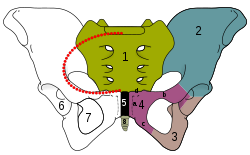
The black area marked by a "5" is the pubic symphysis, which is divided during the procedure
ICD-9-CM73.94

Symphysiotomy is a surgical procedure in which the cartilage of the pubic symphysis is divided to widen the pelvis allowing childbirth when the baby has difficulty fitting through the pelvis (obstructed labour). It is also known as pelviotomy[1] and synchondrotomy.[1] It has largely been supplanted by C-sections, with the exception of certain rare obstetric emergencies or in resource poor settings. It is different from pubiotomy, where the pelvic bone itself is cut in two places, rather than cutting through the symphysis pubis joint.[2]

Introduction

[edit]

Symphysiotomy was advocated in 1597 by Severin Pineau after his description of a diastasis of the pubis on a hanged pregnant woman.[3] Thus symphysiotomies became a routine surgical procedure for women experiencing an obstructed labour.[citation needed] They became less frequent in the late 20th century after the risk of maternal death from caesarean section decreased (due to improvement in techniques, hygiene, and clinical practice).[4]

Indications

[edit]

The most common indications are a trapped head of a breech baby,[5][6] shoulder dystocia which does not resolve with routine manoeuvres, and obstructed labor at full cervical dilation, especially with failed vacuum extraction.[5] Use for shoulder dystocia is controversial.[5]

Currently the procedure is rarely performed in developed countries, but is still performed in "rural areas and resource-poor settings of developing countries"[7] where caesarean sections are not available, or where obstetricians may not be available to deliver subsequent pregnancies.[8] Current practice guidelines in Canada recommend symphysiotomy for trapped head during vaginal delivery of a breech birth.[9]

A 2016 meta-analysis found that in low and middle income countries, there was no difference between maternal and perinatal mortality following either symphysiotomy or C-section.[10] There was a lower risk of infection following symphysiotomy, but a higher risk of fistula, compared to C-section.[10]

Procedure

[edit]
Patient in a symphysiotomy hammock after surgery, 1907

Symphysiotomy results in a temporary increase in pelvic diameter (up to 2 centimetres (0.79 in)) by surgically dividing the ligaments of the symphysis under local anaesthesia. This procedure should be carried out only in combination with vacuum extraction.[11] Symphysiotomy can be a life-saving procedure in areas of the world where caesarean section is not feasible or immediately available as it does not require an operating theatre or "advanced" surgical skills.[5] Since this procedure does not scar the uterus, the concern of future uterine rupture that exists with cesarean section is not a factor.[12]

The procedure carries the risks of urethral and bladder injury, fistulas,[10] infection, pain, and long-term walking difficulty.[11] Symphysiotomy should, therefore, be carried out only when there is no safe alternative.[11] It is advised that this procedure should not be repeated due to the risk of gait problems and continual pain.[11] Abduction of the thighs more than 45 degrees from the midline may cause tearing of the urethra and bladder. If long-term walking difficulties and pain are reported, the patient's condition generally improves with physical therapy.[11]

Controversial practices in Ireland

[edit]

In 2002 an advocacy group called Survivors of Symphysiotomy (SoS) was set up alleging religiously motivated symphysiotomies were performed without consent and against best medical practice in Ireland between 1944 and 1987.[13][14] In 2014 Ireland agreed to pay women who received the procedure compensation without admitting liability.[15]

References

[edit]
Revisions and contributorsEdit on WikipediaRead on Wikipedia
from Grokipedia

Symphysiotomy is an obstetric surgical procedure in which the fibrocartilaginous disc of the pubic symphysis is partially incised to enable separation of the pubic bones, thereby enlarging the pelvic outlet by about 2 cm to facilitate vaginal delivery during obstructed labor caused by feto-pelvic disproportion. The technique, which avoids the need for general anesthesia and can be performed rapidly by trained providers, has been utilized historically in resource-constrained settings where timely cesarean section is unavailable, potentially reducing maternal mortality risks associated with prolonged labor or destructive fetal procedures.
While symphysiotomy confers a permanent pelvic enlargement that may benefit subsequent deliveries, empirical data from cohort studies indicate higher rates of postpartum complications such as , , and issues compared to cesarean delivery, though vital maternal outcomes like or severe appear comparable or improved in select low-resource contexts. Long-term follow-up reveals risks of and abnormalities in some patients, contributing to its obsolescence in high-income countries with reliable surgical . Despite these drawbacks, meta-analyses of 20th-century cases, including over 5,000 procedures, support its cautious application in emergencies where cesarean access poses greater logistical hazards, emphasizing operator skill and immediate stabilization to mitigate morbidity. The procedure remains a subject of debate in global , with advocates highlighting its life-saving potential grounded in causal mechanisms of pelvic mechanics over ideological preferences for surgical alternatives.

Historical Development

Origins and Early Adoption

Symphysiotomy originated from observations of spontaneous separation in postmortem examinations. In 1597, French surgeon Séverin Pineau described a diastasis of the pubis in a hanged pregnant woman, advocating intentional division of the to enlarge the during obstructed labor, drawing on earlier anatomical insights from Ambroise Paré's work on pelvic fractures. This conceptual foundation preceded surgical experimentation, as the procedure was initially deemed too risky for living patients amid high maternal mortality from interventions like . The first documented symphysiotomy on a living patient occurred on October 1, 1777, in , performed by surgeon Jean-René Sigault with assistance from Alphonse Le Roy on Madame Souchot, who had severe . The operation successfully enabled of a living , with the mother surviving the immediate , marking an empirical breakthrough over destructive fetal procedures prevalent at the time. Shortly thereafter, around 1780–1785, Scottish doctors John Aitken and James Jeffray invented a prototype chainsaw to facilitate the procedure by cutting cartilage and bone. Early reports highlighted its potential for cases of fetal malposition or maternal pelvic contraction, where alternatives offered near-certain maternal endangerment. Initial adoption spread cautiously in following Sigault's success, with subsequent procedures in demonstrating viable maternal and fetal outcomes in select high-risk deliveries, though controversy arose due to complications like hemorrhage and instability. Prominent obstetricians, including Le Roy, refined indications to cephalic presentations with confirmed disproportion, reporting survival rates superior to era-specific craniotomies, which often exceeded 50% maternal mortality. Opposition from figures like Jean-Louis Baudelocque, who favored conservative maneuvers and external pelvimetry, limited broader uptake, emphasizing risks of and long-term disability absent modern antisepsis. Despite these debates, early 19th-century experimentation validated symphysiotomy's role in averting fatal obstructions prior to safer cesarean advancements.

Widespread Use in the 19th and 20th Centuries

Symphysiotomy saw significant adoption across in the late 19th and early 20th centuries as a response to obstructed labor in settings where cesarean sections posed substantial risks due to limited surgical capabilities and high infection rates. The procedure's appeal lay in its relative simplicity, requiring only basic instruments and often local or no , allowing without the abdominal incision and associated dangers of cesarean delivery in the pre-antibiotic era. By the early 1900s, it had been performed in various European contexts, including and Britain, where proponents highlighted its potential to enable future unassisted births, unlike repeat cesareans. A comprehensive review of 20th-century cases documented approximately 5,000 symphysiotomies worldwide, underscoring its scale during this period. In , usage peaked before the widespread availability of safer cesarean techniques post-1930s, with continued application in isolated instances into the mid-century, such as in where over 1,500 procedures occurred between 1944 and 1984 amid preferences for vaginal births in Catholic-influenced hospitals. The procedure's efficacy in resource-constrained environments was attributed to lower immediate operative demands, facilitating its integration into practices without specialized operating theaters. In , particularly sub-Saharan regions during the colonial and early eras, symphysiotomy expanded in and hospitals to address high rates of obstructed labor from , where cesarean access was scarce. Its adoption was propelled by the stark contrast in outcomes: cesarean sections in these areas carried maternal mortality risks often surpassing those of symphysiotomy due to inadequate sterilization and postoperative care, with historical data indicating infection-related deaths as a primary limiter. This minimal-invasiveness—dividing the externally without entering the —made it viable for peripheral facilities, contributing to its persistence where maternal mortality from prolonged labor threatened both mother and .

Decline and Persistence in Resource-Limited Settings

In developed nations, symphysiotomy declined sharply from the mid-20th century onward as cesarean sections became safer through advancements such as antibiotics, blood transfusions, and improved surgical techniques, which substantially reduced maternal perioperative risks like and hemorrhage. By the , the procedure was effectively obsolete in and , with the final documented cases in limited to in the 1980s. The procedure persists in resource-limited settings, particularly , where inadequate anesthesia, surgical facilities, and postoperative support elevate cesarean risks, including higher maternal mortality from complications. In , 1990s studies at hospitals in and found that over three-quarters of women post-symphysiotomy achieved subsequent uncomplicated vaginal deliveries, facilitated by a modest permanent increase in symphyseal width (average 9.2 mm versus 4.7 mm after normal vaginal birth). Tanzanian data from the similarly reported lower maternal mortality with symphysiotomy than with cesareans for feto-pelvic disproportion, alongside comparable complication rates. Usage continues in for cases of obstructed labor after failed assisted delivery, yielding perinatal and maternal outcomes akin to those of cesareans. A 2016 systematic review and meta-analysis of seven studies (1961–2006) from low- and middle-income countries, including , , , and (n=1,203 women), showed no significant difference in maternal mortality (RR 0.48, 95% CI 0.13–1.76) or (RR 1.12, 95% CI 0.64–1.96) between symphysiotomy and cesarean section for obstructed labor. These findings underscore symphysiotomy's utility as a resource-efficient option in contexts where cesarean-associated risks—exacerbated by limited blood banking and infection control—are pronounced, potentially averting higher overall maternal deaths in select feto-pelvic disproportion cases.

Procedure and Technique

Surgical Steps

Symphysiotomy involves the surgical division of the at the to permit separation of the pubic rami, thereby increasing the transverse diameter of the by 2 to 3 cm and facilitating during the second stage of labor. The procedure exploits the secondary cartilaginous nature of the pubis , which normally allows limited mobility, by partially transecting its fibers without . The patient is positioned in lithotomy with thighs abducted at less than 90 degrees, supported by assistants to minimize stress on the sacroiliac joints, urethra, and bladder. A Foley catheter is inserted to protect the bladder and urethra, and the suprapubic region is shaved, swabbed with 10% povidone-iodine, and draped sterilely. Local anesthesia, such as 10 ml of 1% lidocaine, is injected into the skin, subcutaneous tissues, and symphysis pubis. The operator inserts the index and middle fingers into the to laterally displace the and while palpating the midline. A vertical midline incision, 1.5 to 3 cm long, is made through the skin and immediately above the pubis using a (blade 21 or 22). Blunt exposes the symphyseal , which is then partially divided: the is introduced 1 cm below the upper edge, perpendicular to the skin, and advanced to transect the lower two-thirds of the with a back-and-forth sawing motion, using the upper third as a fulcrum; the blade is rotated to complete the upper division without entering bone or the . The pubic bones are manually separated by the operator or , creating a gap of 2 to 2.5 cm while maintaining thigh position; further widening risks sacroiliac strain. The is not closed or sutured, relying on natural fibrous healing, though the skin incision may receive 1 to 2 stitches post-delivery. This subcutaneous approach avoids , limits the procedure to 2 to 3 minutes, and enables performance by midwives in resource-limited emergency settings.

Anesthesia and Perioperative Care

Symphysiotomy is typically performed under local infiltration , with agents such as lidocaine or lignocaine injected into the suprapubic skin and surrounding tissues to achieve adequate analgesia without compromising the mother's expulsive efforts during labor. This approach avoids the respiratory depression and loss of uterine contractility associated with general , which could exacerbate complications in obstructed labor scenarios. The procedure's simplicity enables rapid execution, often within minutes, facilitating swift and reducing fetal exposure to hypoxia from prolonged . Perioperative measures emphasize infection prevention and pelvic stability, including insertion of a firm Foley or plastic prior to incision to displace and protect the and throughout the operation. application to the skin and prophylactic antibiotics, such as when resources permit, are recommended to minimize postoperative risks. Immediately post-procedure, drainage is maintained for 3-4 days, with maternal positioning—such as binding the legs together or using a pelvic binder—to approximate the pubic bones and promote initial healing, alongside 2-3 days of to avert excessive mobility-related instability.

Clinical Indications and Patient Selection

Primary Medical Indications

Symphysiotomy is primarily indicated for (CPD) in cephalic presentations during the second stage of labor, particularly following arrest of descent despite adequate or after failed attempts at instrumental vaginal delivery such as or . This condition arises when the fails to negotiate the maternal due to mechanical obstruction, as evidenced by clinical assessment including lack of progress for at least two hours in nulliparous women or one hour in multiparous women, with the high in the or not engaging the outlet. The procedure is considered in resource-limited settings where immediate cesarean section is unavailable or unsafe, targeting cases of mild to moderate disproportion with a live in longitudinal lie to enable . Additional indications include relief of after delivery of the head, where impaction prevents fetal shoulder descent, and entrapment of the aftercoming head in breech presentations during vaginal breech extraction. These scenarios involve acute mechanical blockade confirmed intra-partum, with symphysiotomy providing rapid pelvic outlet expansion to avert fetal or maternal exhaustion. Patient selection emphasizes borderline CPD, where the maternal demonstrates borderline adequacy on clinical pelvimetry—such as a transverse insufficient for fetal head passage—but without absolute contraction precluding any vaginal option. The underlying mechanism relies on partial division of the cartilage and fibers, permitting anterior separation of the pubic bones by 2 to 2.5 centimeters, which enlarges the transverse diameter of the sufficiently to accommodate the fetal presenting part in obstructed cases. This targeted widening addresses the causal bottleneck of feto-pelvic mismatch without incising the , thereby facilitating vaginal birth while avoiding the cumulative risks of repeated cesarean sections, such as uterine scarring and impaired future . Empirical outcomes in such indications show high rates of successful delivery when performed by trained providers, underscoring its role in averting maternal and fetal mortality from prolonged obstruction.

Contraindications and Exclusion Criteria

Absolute contraindications to symphysiotomy include existing , as the procedure fails to resolve the acute emergency and risks worsening hemorrhage or instability. The must be engaged in the , precluding performance if unengaged, since the intervention targets mechanical obstruction during . Brow constitutes an absolute exclusion due to incompatibility with safe vaginal progression post-division. Similarly, incomplete —typically less than 4 fingers or full dilation—prevents the procedure, as it is intended for near-second-stage labor where disproportion manifests. Fetal demise without a viable destructive delivery path warrants embryotomy instead, avoiding unnecessary maternal risk from symphysiotomy. Relative contraindications encompass exceeding 30 years, where ligament healing delays increase postoperative instability and . Prior pelvic trauma or orthopaedic disorders heighten separation risks and impair recovery, as evidenced by study exclusions for such conditions to minimize complications. Severe ( below 6 g/dL) qualifies as relative due to elevated bleeding potential during symphyseal division. Non-cephalic presentations like transverse exclude candidacy, as symphysiotomy addresses cephalic feto-pelvic disproportion exclusively and cannot facilitate delivery in such malpositions. In high-resource settings with access to timely cesarean section, symphysiotomy is routinely excluded, as empirical data demonstrate superior safety profiles for cesarean in managing disproportion without long-term pelvic sequelae. Patient selection further avoids cases unlikely to involve true disproportion, such as estimated fetal weights under 2.5 kg, where mechanical obstruction rarely occurs per obstetric assessments. Maternal height above 160 cm correlates with adequate pelvic dimensions, rendering symphysiotomy unnecessary based on comparative cohort analyses. Conditions like placenta previa, involving antepartum hemorrhage, contraindicate the procedure indirectly by necessitating abdominal delivery to control bleeding, independent of pelvic mechanics. Severe maternal amplifies hemorrhage risks from ligamentous disruption, tilting risk-benefit against performance absent emergent necessity.

Risks, Complications, and Empirical Outcomes

Immediate Postoperative Risks

Immediate postoperative risks of symphysiotomy primarily encompass hemorrhage, , and acute pelvic , though empirical data from clinical series indicate these are infrequent when performed by experienced practitioners. Hemorrhage occurs rarely, with rates below 5% in documented cases, often managed through vessel ligation during the procedure; one instance was reported among 11 total complications in a series involving paraurethral injuries and incontinence. is minimized due to the procedure's superficial, non-abdominal approach, with zero serious infections observed in a cohort of 34 Zimbabwean women undergoing symphysiotomy. Acute pelvic manifests as immediate and gait disturbances, affecting mobility in the early but typically resolving without intervention in low-resource settings. Fetal risks center on potential from procedural delays, yet remains low and comparable to cesarean section outcomes in systematic reviews, with no excess neonatal deaths attributed directly to the in analyzed trials. Management involves administration of uterotonics to promote and , alongside analgesics for control, which effectively mitigate most acute maternal symptoms without necessitating advanced resources. Overall maternal mortality from immediate complications is absent in large reviews exceeding 5,000 cases, underscoring the procedure's relative safety profile in obstructed labor scenarios.

Long-Term Maternal and Pelvic Effects

Symphysiotomy induces a permanent separation of the , resulting in a modest widening of the space, typically averaging 9.2 mm postpartum compared to 4.7 mm following normal . This enlargement facilitates subsequent vaginal deliveries, with rates reported as high as 87-93% in women with prior symphysiotomy for disproportion, contrasting with 44% vaginal birth rates after cesarean section for similar indications. Such outcomes reduce the need for repeat operative interventions in future pregnancies. Long-term pelvic effects include potential sacroiliac joint strain and altered , with 23.5% of women reporting pain during prolonged walking (e.g., 10-20 km) in a Zimbabwean cohort. , particularly , carries an elevated relative risk (RR 10.04) compared to cesarean section, though absolute incidences remain low in uncomplicated cases, with isolated reports of pelvic instability. Fecal incontinence rates are not distinctly elevated in available data. Chronic affects approximately 29.4% of cases. Empirical longitudinal assessments, such as a small Zimbabwean follow-up, indicate no significant difference in overall long-term morbidity between symphysiotomy and cesarean section recipients, with most women regaining functional mobility and low rates of chronic in settings without severe intraoperative complications. Systematic reviews confirm limited but consistent evidence of preserved metrics, emphasizing the procedure's role in enabling multiparous vaginal births without heightened burdens.

Fetal and Neonatal Outcomes

Symphysiotomy facilitates successful in over 95% of cases involving feto-pelvic disproportion or obstructed labor where the procedure is indicated, enabling rapid extraction of the following symphyseal division. Perinatal mortality rates associated with the intervention range from 5% to 10% in obstructed labor cohorts, reflecting the underlying high-risk nature of these presentations rather than procedure-specific harm. A 2016 systematic review and of studies comparing symphysiotomy to cesarean section reported no significant difference in (risk ratio 0.98, 95% CI 0.68-1.41), indicating equivalent fetal survival outcomes across the two methods in resource-variable settings. Neonatal morbidity risks include , arising from the mechanical relief of or persistent dystocia during delivery, though such injuries occur at rates lower than those in untreated obstructed labor, where fetal hypoxia and demise predominate. The immediacy of fetal delivery post-symphysiotomy minimizes exposure to prolonged intrapartum , preserving fetal oxygenation more effectively than extended labor manipulations or delayed surgical alternatives in austere environments. Observational data from large series confirm low overall rates of procedure-attributable neonatal trauma, with the intervention's efficacy in averting intrauterine fetal death outweighing isolated injury risks in viable cases. Long-term neonatal outcomes show no elevated incidence of or other neurodevelopmental sequelae attributable to symphysiotomy, as supported by aggregated evidence from historical and contemporary cohorts lacking signals of increased beyond baseline obstructed labor risks. This equivalence underscores the procedure's role in prioritizing through expeditious birth, independent of maternal pelvic sequelae.

Comparison to Alternative Interventions

Relative Advantages Over Cesarean Section

In resource-constrained environments, such as rural hospitals in developing countries lacking reliable , sterile operating theaters, or postoperative care infrastructure, symphysiotomy presents lower maternal mortality risks compared to cesarean section due to its minimally invasive nature, avoidance of abdominal incision, and reduced exposure to general complications. Historical and clinical data from indicate symphysiotomy-associated maternal mortality approaching 0%, contrasted with cesarean section rates of 1-2% or higher in district hospitals, where , hemorrhage, and failures contribute disproportionately. The procedure typically requires only 2-5 minutes and can be performed vaginally with local infiltration or no , minimizing operative time and enabling rapid delivery in emergencies without the 30-60 minute setup and recovery demands of . By dividing the externally, symphysiotomy circumvents the risks inherent to in infection-prone settings with limited access or hygiene standards, yielding morbidity profiles equivalent to or better than cesarean section in comparative trials from the to . In such contexts, the vaginal route avoids peritoneal and infections, which account for up to 20-30% of post-cesarean complications in low-resource areas. This aligns with causal mechanisms where external tissue disruption heals faster without intra-abdominal sequelae, supported by outcomes from African cohorts showing no procedure-related deaths in the era. A key long-term benefit is the permanent pelvic enlargement post-symphysiotomy, facilitating subsequent unassisted vaginal deliveries in multiparous women at rates of approximately 87%, versus 44% after cesarean section for , thereby reducing cumulative surgical risks and preserving in high-parity populations. This avoids the scarring and repeat interventions associated with uterine incisions, lowering lifetime maternal morbidity in settings where multiple cesareans exacerbate rupture and risks.

Limitations and Contexts of Inferiority

In settings with reliable access to modern obstetric facilities and orthopedic care, symphysiotomy is inferior to cesarean section owing to elevated risks of long-term pelvic instability and musculoskeletal morbidity, which can necessitate subsequent interventions absent in uncomplicated cesarean outcomes. Observational studies report transient in up to 32% of cases post-symphysiotomy, with emerging when symphyseal separation exceeds 2.5 cm, contrasting with cesarean section's lower incidence of persistent pelvic-specific pain, estimated at approximately 7% in reviews of long-term complications. This inferiority manifests prominently for obstructions unrelated to cephalopelvic disproportion, such as shoulder dystocia, where symphysiotomy offers no targeted advantage and heightens maternal pelvic trauma compared to maneuvers or timely cesarean delivery. In multiparous women, the procedure's disruption of symphyseal integrity may compound instability under repeated obstetric stress, amplifying morbidity risks not equivalently seen post-cesarean. Empirical evidence underscores these limitations: the procedure was abandoned in developed nations by the mid-20th century, following improvements in cesarean safety via refined and lower-segment techniques, rendering symphysiotomy obsolete where maternal recovery prioritizes pelvic structural preservation. Cochrane confirms insufficient randomized trial data for routine endorsement, deeming it a secondary option inferior to cesarean when the latter is feasible, with observational reliance highlighting unquantified long-term pelvic risks.

Evidence from Comparative Studies

A 2016 systematic review and of seven studies involving 1,175 women compared symphysiotomy to cesarean section for obstructed labor, finding no significant differences in maternal mortality (risk ratio 0.13, 95% CI 0.02-1.04), (risk ratio 1.82, 95% CI 0.78-4.24), or severe maternal morbidity such as formation or hemorrhage. The analysis indicated lower requirements for blood transfusion with symphysiotomy (risk ratio 0.20, 95% CI 0.07-0.52), though evidence quality was low due to small sample sizes and observational designs. Perinatal outcomes showed comparable Apgar scores and needs, supporting symphysiotomy's viability where cesarean is limited. The 2012 Cochrane review on symphysiotomy for feto-pelvic disproportion, drawing from randomized and non-randomized trials up to that date, similarly reported insufficient high-quality evidence to definitively favor or reject the procedure over alternatives, with no clear excess in maternal or fetal harm but highlighting the need for better trials. Included data from earlier comparative cohorts showed equivalent perinatal death rates but reduced operative time and hospital stay with symphysiotomy in resource-constrained settings. A Tanzanian cohort of 54 symphysiotomies performed between 1976 and 1983 in rural hospitals reported maternal mortality of 1.9% versus 7.7% for cesarean sections in similar cases, with faster maternal recovery and ambulation within days despite temporary pain. Fetal outcomes were comparable, with no increase in stillbirths attributable to the procedure. In a 2008 Zimbabwean study of 38 symphysiotomies versus matched cesarean controls, no severe maternal complications occurred, and postpartum pain resolved within two weeks, enabling quicker discharge; symphyseal gap widened by an average 2.4 mm permanently, correlating with reduced repeat cesarean needs in subsequent deliveries. These findings underscore symphysiotomy's advantages in high-cesarean-risk environments, where local limits safe repeat operations, though long-term pelvic stability requires monitoring. Overall, supports selective application over routine cesarean where access barriers elevate latter's risks, without superior perinatal metrics.

Controversies and Ethical Debates

Practices and Justifications in Ireland

Symphysiotomy was practiced in Ireland primarily between 1944 and 1984, predominantly in Catholic-affiliated hospitals such as Hospital in and the National Maternity Hospital in . The procedure was performed in approximately 1,500 cases, with over 1,100 documented at alone, often as a prophylactic measure in cases of anticipated to facilitate . Obstetricians justified symphysiotomy as a means to prioritize vaginal birth over cesarean section, citing the latter's potential to limit future due to risks of in subsequent labors and the occasional need for following classical incisions. This approach aligned with mid-20th-century Irish Catholic doctrines that emphasized preserving the integrity of for a living , viewing as potentially mutilating when alternatives existed. In a cultural context promoting pro-natalism, the procedure enabled high rates of subsequent vaginal births—reported at 87% after symphysiotomy compared to 44% after cesarean for disproportion—allowing women to achieve larger families without repeated abdominal interventions. Empirical data from the era indicated lower immediate maternal mortality with symphysiotomy than with contemporaneous cesarean sections performed for , with studies showing reduced transfusion needs and infection risks in the short term. However, long-term follow-up on pelvic stability and mobility was limited and underreported in , focusing instead on perinatal success in enabling delivery.

Criticisms and Survivor Testimonies

Survivors of symphysiotomy in Ireland have recounted experiences of the procedure being performed without their knowledge or consent, often during labor in Catholic-run maternity hospitals, resulting in immediate agony and enduring physical debilitations. In a , Rita McCann, who underwent the procedure in 1965, described her initial anticipation of transforming into terror as surgeons sawed through her pubic without explanation, leading to chronic , , and severe mobility limitations that persisted for decades. Similarly, accounts from 2014 and 2016 highlight women enduring lifelong , disturbances, and recurrent urinary issues, with one survivor in 2015 labeling the operation a "horror" that left her unable to walk unaided and dependent on painkillers. These testimonies underscore a pattern of non-disclosure, where patients were not informed of alternatives like cesarean section or the procedure's potential for permanent harm. Critics, including advocacy groups, have classified symphysiotomy as a form of obstetric , arguing it exemplified systemic disregard for women's in mid-20th-century , driven by institutional preferences for to align with religious doctrines limiting contraception and sterilization. In March 2014, survivors presented to the Committee against , asserting that the operations—deemed medically unnecessary and consent-free—amounted to mutilation and cruel treatment, with blades severing the pubis causing irreversible pelvic instability. Such framing emphasizes the procedure's role in enforcing fertility continuation amid 's prohibitive and laws, exacerbating survivors' isolation as they faced for reporting complications. Efforts to seek redress through international bodies included three applications to the —L.F. v. Ireland (application no. 60450/16), K. O.'S. v. Ireland (no. 53165/16), and W.M. v. Ireland (no. 55144/16)—filed by women who underwent symphysiotomies in the 1960s without consent, alleging breaches of Article 3 (prohibition of inhuman or degrading treatment), Article 8 (right to private life), and Article 14 (non-discrimination). The Court, in decisions issued December 10, 2020, declared the complaints inadmissible, primarily due to the applicants' failure to pursue timely domestic remedies or exhaustion of available national processes, though it acknowledged the procedure's historical context and potential for severe sequelae like and incontinence. Notwithstanding these documented individual adversities, empirical reviews of long-term outcomes reveal variability, with aggregate data indicating that a majority of women achieved functional over time. A 2015 retrospective study of Irish patients averaging 40 years post-symphysiotomy reported that, while subsets experienced ongoing urinary leakage or walking difficulties, most demonstrated bony union via and resumed normal activities, including subsequent pregnancies, without profound . Another analysis, with follow-up means of 41.6 years, confirmed symphyseal healing in examined cases, though pain resolution timelines varied from months to years. These findings, drawn from clinical cohorts rather than self-selected survivor reports, suggest that while severe complications occurred, they did not universally predominate, contrasting with narratives emphasizing pervasive harm. Symphysiotomy has historically involved variable consent practices, often relying on implied consent in life-threatening emergencies such as prolonged obstructed labor, where delays for explicit discussion could precipitate maternal hemorrhage, uterine rupture, or fetal demise. Critiques emphasize that such approaches undermine patient autonomy, framing the procedure as a breach of bodily integrity even when performed to avert immediate death, with ethical analyses highlighting the tension between individual rights and clinical urgency. From a causal perspective, empirical evidence indicates that in resource-limited settings without timely cesarean access, forgoing symphysiotomy for full prior consent risks higher overall mortality, as historical series document rapid intervention correlating with survival rates exceeding alternatives like craniotomy. Ethical debates juxtapose deontological protections of bodily inviolability—citing potential long-term pelvic instability and pain as non-consensual harms—against utilitarian assessments prioritizing net lives preserved. Population-level from twentieth-century reviews of over 5,000 cases reveal maternal mortality rates comparable to or lower than cesarean sections in comparable contexts (around 0.2-1%), with symphysiotomy enabling and averting repeat surgical scars that elevate future obstetric risks. Proponents, including WHO-aligned analyses, argue that trained application in low-access regions yields favorable perinatal outcomes—preventing brain damage in 50-80% of borderline disproportion cases—outweighing individual morbidity when cesarean infrastructure is absent, and reject absolute prohibitions as detached from pragmatic realities of global disparities. This utilitarian framing posits that ethical validity hinges on context-specific evidence rather than blanket imperatives, with advocates contending that ideological aversion to symphysiotomy in emergencies mirrors biases prioritizing abstract over verifiable reductions in and maternal exhaustion deaths. Conversely, absolutist critiques, often rooted in post-hoc survivor accounts, prioritize retrospective violations, yet overlook first-principles : in acute obstruction, inaction equates to passive lethality, rendering processes secondary to imperatives substantiated by outcome data. Balanced ethical discourse thus demands weighing empirical morbidity trade-offs—such as transient instability managed conservatively—against the procedure's documented role in salvaging otherwise doomed deliveries.

Modern Relevance and Global Impact

Applications in Developing Regions

Symphysiotomy remains in use in low-resource settings across for managing obstructed labor, particularly where cesarean section access is limited by distance, infrastructure, or personnel shortages, allowing in cases of . In rural , clinicians at a Roman Catholic reported performing the procedure with low complication rates, advocating its revival as a feasible intervention by midwives or general practitioners under when surgical facilities are unavailable. Similarly, in , symphysiotomy has been applied in district hospitals for , yielding maternal mortality rates comparable to or lower than those associated with cesarean sections, which exceed 1.6% in some facilities due to hemorrhage and risks. A 2016 systematic review and meta-analysis of studies primarily from African contexts, encompassing over 1,200 cases, found no statistically significant difference in maternal mortality between symphysiotomy and cesarean section (risk ratio 0.99, 95% CI 0.32-3.07), though symphysiotomy demonstrated advantages in resource-constrained environments by avoiding repeat surgical scars and enabling future vaginal births. Neonatal outcomes were also similar, with perinatal mortality rates around 10-15% in obstructed labor scenarios treated via symphysiotomy, reflecting the underlying fetal distress rather than the procedure itself. These findings underscore its role in settings where cesarean delays exceed 24 hours, as evidenced by cohort data from the 2000s and early 2010s showing reduced overall maternal deaths from prolonged labor. Training initiatives emphasize minimally invasive variants, such as partial symphysiotomy (e.g., the Zárate technique), which involve limited division under and can be taught to non-specialist providers via short workshops. In African programs, these approaches prioritize immediate availability at peripheral clinics, with post-procedure pelvic widths increasing by 1-2 cm to facilitate delivery and subsequent pregnancies without hysterectomy risks tied to repeated cesareans. Such adaptations have supported community-level interventions, potentially averting formation and maternal exhaustion in remote areas. Applications in appear more limited, confined to select rural obstetric units facing similar access barriers, though comparative efficacy data remain sparse.

Integration with Contemporary Obstetric Guidelines

The Cochrane review on symphysiotomy for feto-pelvic disproportion, updated in 2012, conditionally supports its use solely in scenarios where timely access to cesarean section is unavailable, emphasizing that it requires neither an nor advanced surgical expertise but should not supplant standard obstetric interventions. This aligns with evidence-based protocols prioritizing maternal and fetal outcomes in resource-constrained environments, where confirmed persists despite augmentation of labor. Guidelines from organizations like (MSF) incorporate symphysiotomy as a targeted procedure for such cases, to be performed alongside and instrumental delivery following failed or attempts. A 2016 systematic review and meta-analysis of studies comparing symphysiotomy to cesarean section reported no statistically significant differences in maternal mortality (RR 0.48, 95% CI 0.13-1.76) or (RR 1.12, 95% CI 0.64-1.96), positioning it as a viable alternative to resource-intensive or destructive fetal procedures in obstructed labor, though with persistent gaps in on long-term maternal morbidity. This analysis underscores symphysiotomy's lower infrastructural demands, potentially reducing delays in delivery, but stresses the need for further high-quality trials to resolve safety uncertainties. In contexts favoring over destructive operations—such as when the fetus remains alive—symphysiotomy offers a mechanically effective option without necessitating , provided skilled personnel confirm irreversible obstruction. Integration with monitoring tools like the WHO partograph positions symphysiotomy as a downstream intervention rather than a preventive measure; the partograph's alert and action lines detect deviations in cervical dilatation and fetal descent, prompting assessment for disproportion and escalation to symphysiotomy only if facility-based cesarean transfer proves infeasible. This sequential approach maintains causal focus on early labor surveillance to avert progression to emergency procedures, without substituting for comprehensive antenatal care or access to surgical facilities in higher-resource settings, where symphysiotomy remains absent from routine protocols due to superior alternatives. No major obstetric societies in developed nations advocate its revival, reflecting reliance on scalable cesarean capacity over historical maneuvers.

Long-Term Public Health Considerations

Symphysiotomy facilitates subsequent vaginal deliveries in 87% of cases compared to 44% following cesarean section for disproportion, preserving and enabling higher parity without uterine scarring in high-fertility settings. This permanent pelvic enlargement reduces the cumulative obstetric burden by minimizing repeat surgical interventions, which are associated with higher long-term costs and complications in resource-limited regions. In populations with limited access to advanced care, this aligns with demographic pressures for multiple births, potentially lowering lifetime healthcare expenditures on escalating cesarean rates. However, inadequate aftercare can lead to chronic disabilities, including pelvic , , and incontinence, with separations exceeding 2.5 cm often resulting in persistent issues. Empirical reviews of over 5,000 cases indicate rare severe complications but highlight the need for structured postoperative management to mitigate morbidity, such as prolonged walking difficulties without support. These risks underscore a population-level , where unmanaged outcomes impose burdens, particularly in under-resourced areas lacking rehabilitation. At scale, symphysiotomy demonstrates a net benefit by averting maternal deaths from untreated obstructed labor, with no reported procedure-related fatalities in systematic reviews, contrasting with high mortality in settings without alternatives. Historically, obstructed labor has contributed substantially to global maternal mortality, estimated at over 500,000 annual deaths in the early , many preventable in low-resource contexts through such interventions. This empirical advantage persists where cesarean access is disrupted, positioning symphysiotomy for niche roles in or climate-impacted zones with transient infrastructure failures.

References

Add your contribution
Related Hubs
User Avatar
No comments yet.