Hubbry Logo
Testate amoebaeTestate amoebaeMain
Open search
Testate amoebae
Community hub
Testate amoebae
logo
8 pages, 0 posts
0 subscribers
Be the first to start a discussion here.
Testate amoebae
Testate amoebae
from Wikipedia
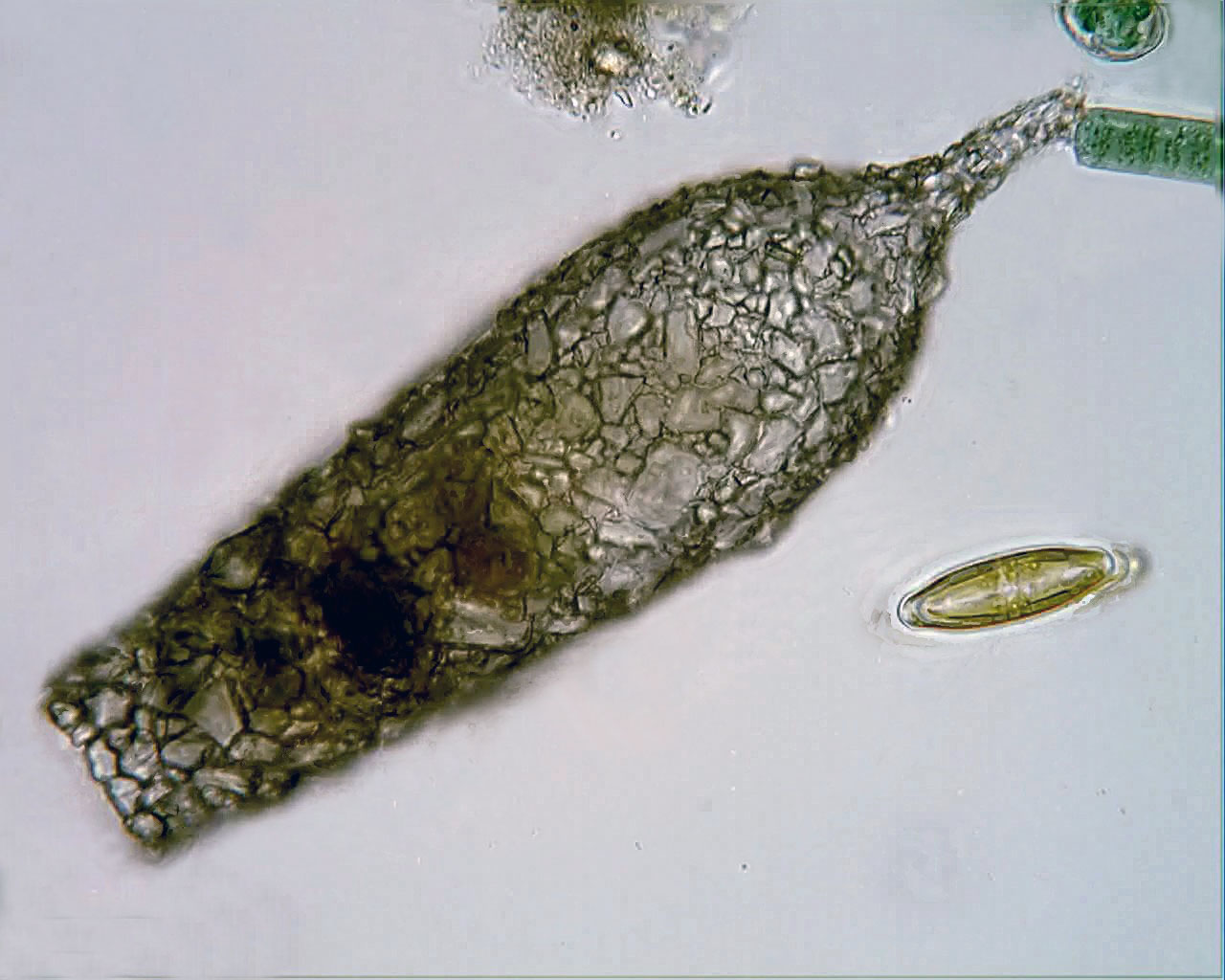
Shell of Cylindrifflugia acuminata: an agglutinated test made up of mineral particles glued together with secretions from within the cell

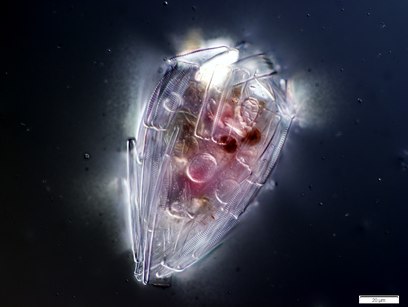
Testate amoebae (formerly thecamoebians, Testacea or Thecamoeba) are a polyphyletic group of unicellular amoeboid protists, which differ from naked amoebae in the presence of a test that partially encloses the cell, with an aperture from which the pseudopodia emerge, that provides the amoeba with shelter from predators and environmental conditions.

The test of some species is produced entirely by the amoeba and may be organic, siliceous or calcareous depending on the species (autogenic tests), whereas in other cases the test is made up of particles of sediment collected by the amoeba which are then agglutinated together by secretions from within the cell (xenogenic tests). A few taxa (Hyalospheniidae) can build either type, depending on the circumstances and availability of foreign material.[1]

The assemblage referred to as "testate amoebae" is actually composed of several, unrelated groups of organisms. However, some features they all share that have been used to group them together include the presence of a test (regardless of its composition) and pseudopodia that do not anastomose.[2]

Testate amoebae can be found in most freshwater environments, including lakes, rivers, cenotes,[3] as well as mires and soils.

The strong and resistant nature of the tests allows them to be preserved long after the amoeba has died. These characteristics, along with the sensitivity that some species display to changes in environmental conditions (such as temperature, pH, and conductivity), has sparked their use as bioindicators and paleoclimate proxies in recent years.[4]

[edit]

Taxonomy and classification

[edit]

Testate amoebae are a polyphyletic assemblage. The main testate amoebae groups are the lobose Tubulinea, which include Arcellinida, Difflugina and Phryganellina (within the Amoebozoa),[5] and the filose Euglyphida (within the SAR supergroup),[6] although there are smaller groups that also include other testate amoebae.[7]

Order Arcellinida

[edit]
Family Arcellidae
  • Arcella - Ehrenberg 1832
  • Antarcella - Deflandre 1928
Family Netzeliidae
  • Netzelia - Ogden 1979
Family Hyalospheniidae
  • Quadrulella - Cockerell 1909
  • Hyalosphenia - Stein 1859
  • Alocodera - Jung 1942
  • Apodera - Loeblich & Tappan 1961
  • Certesella - Loeblich & Tappan 1961
  • Porosia - Jung 1942
  • Nebela - Leidy 1874
  • Padaungiella - Lara & Todorov 2012
Family Microchlamyiidae
  • Microchlamys - Cockerell 1911
  • Spumochlamys - Kudryavtsev & Hausmann 2007
Family Plagiopyxidae
  • Bullinularia - Deflandre 1953
  • Geoplagiopyxis - Chardez 1961
  • Protoplagiopyxis - Bonnet 1962
  • Paracentropyxis - Bonnet 1960
  • Plagiopyxis - Penard 1910
  • Hoogenraadia - Gauthier-Lievre & Thomas 1958
  • Planhoogenraadia - Bonnet 1977
Family Cryptodifflugiidae
Family Microcoryciidae
  • Amphizonella - Greeff 1866
  • Diplochlamys - Greeff 1888
  • Microcorycia - Cockerell 1911
  • Penardochlamys - Deflandre 1953
  • Zonomyxa - Nusslin 1882
  • Parmulina - Penard 1902
Family Phryganellidae
  • Phryganella - Penard 1902
Family Lamtopyxidae
  • Lamtopyxis - Bonnet 1974
Family Distomatopyxidae
  • Distomatopyxis - Bonnet 1964
Family Paraquadrulidae
  • Paraquadrula - Deflandre 1932
  • Lamtoquadrula - Bonnet 1974
Family Centropyxidae
  • Centropyxis - Stein 1857
  • Proplagiopyxis - Schonborn 1964
Family Trigonopyxidae
  • Trigonopyxis - Penard 1912
  • Cyclopyxis - Deflandre 1929
  • Geopyxella - Bonnet & Thomas 1955
  • Cornuapyxis - Couteaux and Chardez 1981
Incertae sedis
  • Argynnia - Vucetich 1974
  • Awerintzewia - Schouteden 1906
  • Cucurbitella - Penard 1902
  • Difflugia - Leclerc 1815
  • Geamphorella - Bonnet 1959
  • Heleopera - Leidy 1879
  • Jungia - Loeblich and Tappan 1961
  • Lagenodifflugia - Medioli & Scott 1983
  • Leptochlamys - West 1901
  • Lesquereusia - Schlumberger 1845
  • Maghrebia - Gauthier-Lievre & Thomas 1960
  • Mediolus - Patterson 2014
  • Microquadrula - Golemansky 1968
  • Oopyxis - Jung 1942
  • Pentagonia - Gauthier-Lievre & Thomas 1960
  • Physochila - Jung 1942
  • Pomoriella - Golemansky 1970
  • Pontigulasia - Rhumbler 1896
  • Protocucurbitella - Gauthier-Lievre & Thomas 1960
  • Pseudawerintzewia - Bonnet 1959
  • Pseudonebela - Gauthier-Lievre 1953
  • Pyxidicula - Ehrenberg 1838
  • Schoenbornia - Decloitre 1964
  • Schwabia - Jung 1942
  • Sexangularia - Awerintzew 1906
  • Suiadifflugia - Green 1975
  • Zivkovicia - Ogden 1987
  • Ellipsopyxis - Bonnet 1965
  • Ellipsopyxella - Bonnet 1975

Order Euglyphida

[edit]

Other Cercozoa

[edit]

Order Stramenopila

[edit]

Unclassified testate amoebae

[edit]
  • Paramphitrema - Valkanov 1970

The following table includes a few examples of testate amoebae genera, and reflects their position within the classification by Adl et al. (2012),[7] where five supergroups (Amoebozoa, Opisthokonta, Excavata, SAR and Archaeplastida) were proposed to classify all eukaryotes. This classification purposefully avoids the use of Linnaean higher category names (phylum, class, order, family). While it has been noted that the names that Adl et al. provide for the clades may result confusing or uninformative regarding the relative degree of phenotypic distinctiveness amongst groups when used in isolation,[8] this system avoids creating superfluous ranks where unnecessary and provides stable group names that can be retained even when a group is moved to a different lineage, as is often the case with protists, as their classification remains in constant review.[7]

Amoebozoa Tubulinea Arcellinida Arcellina Amphizonella - Arcella - Microchlamys - Microcorycia - Spumochlamys
Difflugina Bullinularia - Centropyxis - Difflugia - Distomatopyxis - Heleopera - Hyalosphenia - Lesquereusia - Nebela - Paraquadrula - Pontigulasia -

Plagiopyxis - Quadrulella - Trigonopyxis

Phryganellina Cryptodifflugia - Phryganella - Wailesella
Discosea Himatismenida Cochliopodium
SAR Supergroup Stramenopila Labyrinthulomycetes Amphitremida Amphitrema - Archerella
Rhizaria Cercozoa Thecofilosea Cryomonadida Rhizaspididae Capsellina - Rhizaspis - Rhogostoma
Ventricleftida Ventrifissura - Verrucomonas
Imbricatea Silicofilosea Euglyphida Euglyphidae Euglypha - Scutiglypha
Assulinidae Assulina - Placocista - Valkanovia
Trinematidae Corythion - Playfairina - Puytoracia - Trinema
Cyphoderidae Campascus - Corythionella - Cyphoderia - Messemvriella - Pseudocorythion - Schaudinnula.
Paulinellidae Ovulinata - Paulinella

Traditionally, those species that form large networks of anastomosing pseudopodia, despite some of them having tests, are not counted amongst testate amoebae; this comprises genus Gromia and the Foraminifera (both in Rhizaria).[2]

Notes

[edit]
[edit]

References

[edit]

Bibliography

[edit]
Revisions and contributorsEdit on WikipediaRead on Wikipedia
from Grokipedia
Testate amoebae are a polyphyletic group of unicellular amoeboid protists distinguished from naked amoebae by their possession of a protective external shell, known as a test, which partially encloses the cell body and is typically composed of secreted organic material, silica, or agglutinated particles from the environment. These tests, ranging in size from 5 to 500 μm, exhibit diverse morphologies including ovoid, spherical, and elongated shapes, with an aperture through which extend for locomotion, feeding, and sensory functions. Classified primarily within the supergroups (order Arcellinida) and (order Euglyphida), testate amoebae encompass over 2,000 described species across numerous genera such as Difflugia, Nebela, and Hyalosphenia, though molecular analyses reveal cryptic diversity and paraphyletic groupings. Their tests are categorized as idiosomic (self-constructed from cellular secretions) or xenosomic (built by agglutinating exogenous particles like minerals or diatoms), adaptations that enhance protection and influence species-specific ecological niches. Ecologically, testate amoebae are ubiquitous in moist habitats worldwide, from tropical peatlands and lakes to forest s and freshwater wetlands, where they thrive in environments with water tables fluctuating between submerged and aerobic conditions. As bacterivores, omnivores, or mixotrophs, they play crucial roles in microbial food webs by grazing on , fungi, , and smaller protists, thereby contributing to nutrient cycling, , and dynamics. Their communities are highly sensitive to environmental variables such as (typically 3.5–5.5 in peatlands), , temperature, and pollutants, enabling rapid shifts in assemblage composition in response to disturbances. Due to the durability of their siliceous or agglutinated tests, which preserve well in sediments, testate amoebae serve as valuable bioindicators and paleoecological proxies, with records extending back to the era around 730 million years ago. In modern applications, they monitor , atmospheric , and trophic states in , while in , trait-based analyses of assemblages reconstruct past , , and changes through transfer functions. This dual utility underscores their significance in both contemporary environmental assessment and historical environmental inference.

Introduction

Definition and characteristics

Testate amoebae are a polyphyletic group of unicellular eukaryotic protists characterized by the presence of a protective external shell, known as a test, which encloses the cytoplasm and distinguishes them from naked amoebae that lack such a structure. The test is typically composed of secreted materials such as silica, chitin, or organic cement, or agglutinated exogenous particles like mineral grains or diatom frustules, providing mechanical protection and support. These organisms span multiple eukaryotic supergroups, including Amorphea (with the order Arcellinida in Amoebozoa) and Rhizaria (with the order Euglyphida in Cercozoa), reflecting convergent evolution of the test across distant lineages. Morphologically, testate amoebae range in size from approximately 20 to 500 μm, with the test often featuring an through which the granular protrudes to form for locomotion and feeding. They move by extending these temporary cytoplasmic projections, which also capture prey such as , small , fungi, and , exhibiting predatory or detritivorous habits within microbial communities. This pseudopodial movement and feeding strategy enable them to thrive in diverse microhabitats, though the test constrains their flexibility compared to naked forms. Ecologically, testate amoebae are abundant in and freshwater aquatic environments, serving as key predators in microbial webs that regulate bacterial and fungal populations. Their assemblages are sensitive to environmental variables like moisture and , making them valuable bioindicators for detecting changes in ecosystem conditions, such as hydrological shifts in wetlands.

Historical discovery

The earliest observations of testate amoebae occurred in the early amid the burgeoning field of , where these shelled protists were initially described but often misclassified. In 1815, Jean-Baptiste Leclerc (also known as Le Clerc) provided the first formal description of the genus Difflugia, the of the lobose testate amoebae, recognizing its distinctive agglutinated shell. Christian Gottfried Ehrenberg expanded on this in 1830 with the description of , a genus featuring proteinaceous tests, and in 1838 he documented additional genera such as Euglypha and Trinema, grouping them broadly under the "Infusoria" category of microscopic animals. Early microscopists like Ehrenberg frequently mistook testate amoebae for small due to their external shells or for heliozoans owing to the filose in certain filose forms, leading to initial taxonomic confusion between these amoeboid protists and other shelled or radiate protozoans. The term "testate amoebae" emerged in the early to specifically denote amoeboid protists enclosed in a protective test, distinguishing them from naked amoebae, with key advancements driven by detailed morphological studies in the and . Georges Deflandre played a pivotal role through his monographic revisions, including comprehensive works on in 1928 and Centropyxis in 1929, which clarified shell variability and established foundational species concepts for arcellinid genera. George H. Wailes contributed significantly by describing new species and demonstrating the resilience of testate amoebae in extreme environments, such as mosses, through his surveys in the . These efforts refined the understanding of test diversity, including proteinaceous, agglutinated, and siliceous types, and highlighted their global distribution in freshwater and terrestrial habitats. Early taxonomic debates revolved around their placement within the phylum Rhizopoda, a heterogeneous assemblage of amoeboid organisms encompassing both naked and test-bearing forms, as proposed by early classifiers like Félix Dujardin in the 1840s. By the mid-20th century, the development of protistology as a specialized discipline shifted focus toward their recognition as a polyphyletic group of eukaryotic protists, separate from animal-like classifications, emphasizing their diverse phylogenetic affinities within the kingdom Protista. Key milestones included William Saville Kent's establishment of the order Arcellinida in 1880 for lobose testate amoebae with chitinoid or agglutinated tests. The order Euglyphida, encompassing filose forms with siliceous plates, was established by Copeland in 1956, building on earlier work such as de Saedeleer's 1934 descriptions of families like Cyphoderiidae, and subsequently refined through morphological comparisons. The introduction of electron microscopy in the 1960s and 1970s marked a transformative era, unveiling the of testate amoebae and resolving longstanding ambiguities in shell composition and cytoplasmic . Pioneering studies, such as those on silica plate in euglyphids like Corythion dubium, demonstrated how these protists secrete idiosomes (self-produced scales) via specialized cytoplasmic vesicles, distinguishing biogenic from agglutinated tests. Transmission and scanning electron microscopy further clarified pseudopodial and test wall layering, influencing revisions in genera like Difflugia and supporting the separation of testate amoebae from related rhizopod groups. These insights laid the groundwork for integrating ultrastructural data into , enhancing accuracy in delineation. More recently, the International Society for Testate Amoeba Research (ISTAR) was established in 2024 to foster collaboration and advance studies in the field.

Morphology and biology

Test structure

The test of testate amoebae is a protective external shell that encases the cell, distinguishing them from naked amoebae and enabling survival in diverse environments. Composed of various materials, the test provides structural integrity and functional adaptations, with composition varying across lineages to reflect evolutionary and ecological pressures. Test materials include organic components such as proteins, mineral elements like silica plates or , and agglutinated particles from the environment. In Euglyphida, tests are typically mineralized with biosilica plates secreted by the , forming a rigid, scale-reinforced structure. Conversely, many Arcellinida species construct proteinaceous tests from self-secreted or agglutinate external particles such as grains and diatom frustules. Some tests incorporate for added durability in environments. Formation of the test involves distinct processes: of secreted elements in idiosomic tests or active collection of environmental particles in xenosomic tests. For instance, in species like Nebela, the test forms through the organized and assembly of proteinaceous or siliceous plates, creating a precisely structured shell. In contrast, Difflugia species gather and cement foreign particles, with test composition influenced by local substrate availability, such as levels affecting incorporation. These processes allow plasticity in test building, adapting to resource constraints. Morphological variations in test structure are diverse, encompassing shapes like ovoid, spherical, elongated, or vase-like forms, often correlated with species-specific sizes ranging from 5 to 500 μm. configurations further diversify function, including terminal, necked, or lateral openings that control pseudopod extrusion and environmental exchange. For example, wide axial in flattened tests facilitate rapid movement, while narrow slits enhance enclosure in compact forms. The serves adaptive roles, primarily protecting against predation and physical damage through robust construction or spines, while also conferring resistance to via sealed or small-aperture designs. In aquatic habitats, test shape and material density influence , aiding flotation or attachment to substrates. These functions underscore the test's centrality to survival strategies. Evolutionary patterns in test structure highlight transitions between siliceous and proteinaceous compositions across lineages, with siliceous tests predominant in Euglyphida for enhanced rigidity and silica cycling. In Arcellinida, proteinaceous tests evolved alongside agglutinated forms, as evidenced by fossils showing early vase-shaped protein-based structures dating to 730 Ma. Such diversification, including plate shape complexity in hyalospheniids, reflects responses to predation and habitat shifts.

Cellular organization and life cycle

Testate amoebae exhibit a typical amoeboid cellular , with the cytoplasm divided into two distinct layers: a clear, ectoplasm forming the outer region and a granular comprising the inner core. The houses essential organelles, including a central nucleus, mitochondria for production, and food vacuoles that process ingested material, while the ectoplasm facilitates pseudopodial extension through its gel-like consistency rich in filaments. This bipartite cytoplasmic structure supports the amoeba's confined mobility within the test, enabling efficient internal despite the protective shell. Locomotion in testate amoebae occurs via slow gliding, primarily through the extension of pseudopodia emerging from the test's aperture, with movement speeds typically ranging from 50 to 270 μm per minute. In Arcellinida species, such as Arcella, broad lobopodia propel the cell by cytoplasmic streaming, while in Euglyphida, like Euglypha, slender filopodia provide directional guidance and adhesion to substrates. This aperture-restricted motility limits overall velocity but allows precise navigation in microhabitats like soil pores or peat. Feeding is achieved through , where encircle and engulf prey such as , , or organic detritus, forming food vacuoles within the for via lysosomal enzymes. Most species are heterotrophic bacterivores, but some, notably Paulinella chromatophora in the Euglyphida, display mixotrophy by retaining functional chloroplasts derived from endosymbiotic , supplementing with . This dual nutrition enhances survival in nutrient-variable environments. Reproduction in testate amoebae is predominantly asexual, occurring via binary fission where the parent cell divides mitotically, with one daughter inheriting the original test and the other secreting a new shell from cytoplasmic materials. In species like Arcella vulgaris, the process involves cytoplasmic budding through the aperture, followed by nuclear division and test reformation, ensuring rapid population growth under favorable conditions. is rare and observed in select taxa, such as Corythion delamarei, involving isogamete fusion to form a that undergoes , though it remains exceptional across the group. The life cycle alternates between a trophic active phase, where the amoeba feeds and moves as a motile , and a dormant encystment stage triggered by environmental stress like or nutrient scarcity. During encystment, the amoeba retracts , secretes a protective wall within or around the test, and enters metabolic quiescence, allowing survival for months; excystment resumes the trophic phase upon favorable conditions. This biphasic cycle underscores their adaptability to fluctuating habitats.

Taxonomy and phylogeny

Higher classification

Testate amoebae represent a polyphyletic assemblage of shelled protists distributed across multiple eukaryotic supergroups, with their tests arising as convergent adaptations in unrelated lineages. The major groups include Arcellinida, which are placed within as part of the clade, closely related to ; Euglyphida, which belong to within the Cercozoa subclass; and other minor groups such as Amphitremida, positioned in Stramenopiles. Some agglutinated forms remain unresolved in their exact phylogenetic placement, often aligning with basal positions in or other clades based on limited molecular data. This underscores the independent of test-building in diverse amoeboid lineages, driven by similar selective pressures for and locomotion. Molecular phylogenetic analyses since the 1990s, primarily using small subunit ribosomal RNA () and genes, have firmly established this polyphyletic nature. Early studies in the late 1990s and early 2000s revealed that testate amoebae do not form a monophyletic group, with Arcellinida branching within and Euglyphida within . Key investigations, such as Nikolaev et al. (2005), confirmed Arcellinida's placement in using sequences from multiple taxa, resolving long-standing uncertainties from morphological classifications. Subsequent work by Lahr et al. (2011) integrated and gene data across 139 taxa, reinforcing the deep divergences and highlighting as a complementary marker for resolving intra-clade relationships. These analyses have identified at least four independent origins of tests, challenging traditional based on shell morphology. Recent phylogenomic studies (e.g., Lahr et al., 2021) have further refined Arcellinida into major clades such as Organoconcha, Glutinoconcha, and Phryganellina based on shell shape rather than composition. Emerging approaches using () and transcriptomics as of 2024–2025 are poised to resolve cryptic diversity and deep phylogenetic relationships through broader genomic sampling. A primary challenge in testate amoebae phylogeny lies in the morphological convergence of tests—secreted, agglutinated, or proteinaceous shells that obscure genetic divergences—leading to over-reliance on in early classifications. Globally, an estimated 1,000 to 2,000 species have been described, though molecular surveys suggest higher cryptic diversity due to these convergences. Evolutionary origins trace back over 800 million years, with fossils (ca. 730–800 Ma) linked to early Arcellinida-like forms, indicating ancient marine adaptations before transitions to freshwater habitats. Unresolved clades, particularly some agglutinated testate amoebae, continue to complicate reconstructions, as their positions vary across datasets and require broader phylogenomic sampling.

Arcellinida

Arcellinida are an order of lobose testate amoebae within the , characterized by a test that is either proteinaceous (organic) or agglutinated with environmental particles, enclosing the granular and serving as a protective shell. This group encompasses approximately 700 nominal , representing the largest diversity among testate amoebae, with estimates suggesting up to 2,000 morphospecies when accounting for cryptic variation revealed by molecular data. The order is divided into several families, with Arcellidae comprising species featuring spherical or discoid tests made of secreted protein, exemplified by the genus Arcella, which produces hemispherical, chitinoid shells often with a central aperture. Heleoperidae includes elongated forms with tests incorporating mineral grains and scales, as seen in Heleopera, which has a distinctive slit-like aperture and a more compressed, bag-like morphology. Prominent genera within Arcellinida include Difflugia, known for its agglutinated tests of variable shapes such as pyriform or elongated, constructed from sand grains or other particles, and Cucurbitella, which features quasi-spherical or barrel-shaped tests also agglutinated with mineral elements. Morphologically, Arcellinida exhibit broad, lobose for locomotion and feeding, extending from a single, simple aperture in the test, which is typically circular or linear. These amoebae show a strong bias toward freshwater habitats, such as lakes, ponds, and wetlands, though some occur in soils. Taxonomic revisions of Arcellinida have been driven by analyses of small subunit (SSU rDNA), which established the order as monophyletic within and justified its separation from the former paraphyletic "Thecamoebida," while revealing extensive convergence in test morphology across lineages. Recent phylogenomic studies using hundreds of genes have further refined subordinal divisions, confirming eight major clades and highlighting the ancient origins of this group around 730 million years ago.

Euglyphida

Euglyphida are an order of filose testate amoebae within the Cercozoa, characterized by tests composed of secreted siliceous scales or plates that overlap and are bound together by organic cement. These amoebae extend thin, non-anastomosing for locomotion and feeding, distinguishing them from lobose forms. With approximately 300 described , they are predominantly soil-dwellers and inhabitants of freshwater sediments, contributing to microbial communities in moist terrestrial and aquatic microhabitats. The of Euglyphida is organized into several based primarily on test morphology and scale arrangement. The Euglyphidae includes genera such as Euglypha, where like Euglypha rotunda feature discoid or oval scales arranged in imbricated rows to form a flask-shaped test. In contrast, the Trinematidae encompasses genera like Trinema, with such as Trinema lineare exhibiting elongated, cylindrical tests covered by smaller, elongated silica scales. Other , including Paulinellidae and Assulinidae, further diversify the order, with Paulinellidae notable for photosynthetic members. A key genus within Paulinellidae is Paulinella, which includes photosynthetic species such as Paulinella chromatophora that harbor chromatophores—organelles derived from engulfed , representing an independent instance of endosymbiosis in eukaryotes. These chromatophores enable autotrophy, supplementing heterotrophic feeding via . Morphologically, Euglyphida tests vary from ovoid to pyriform, with apertures often terminal or subterminal; scales are typically 2–10 μm in size, secreted individually and assembled extracellularly. occurs intracellularly in silica deposition vesicles, where soluble polymerizes into scales before extrusion and overlapping integration into the test, a process triggered prior to and silicon-dependent for completion. Recent taxonomic updates stem from molecular phylogenies using and other markers, which largely confirm the of Euglyphida within Cercozoa while revealing some discrepancies with traditional morphology-based classifications, such as polyphyletic groupings in certain genera. These studies underscore evolutionary stasis in scale morphology over geological timescales and infrequent transitions between marine and freshwater habitats. Euglyphida form part of the broader , linking them phylogenetically to radiolarians and foraminiferans through shared filose and silica traits.

Other groups

Beyond the primary lineages of Arcellinida and Euglyphida, testate amoebae encompass several minor groups within the Cercozoa supergroup, notably the order Gromiida, which belongs to the class Gromiidea in the phylum Endomyxa. Gromiida are characterized by filose and tests that are typically organic or agglutinated with foreign particles, often reaching large sizes compared to other testate amoebae. A representative example is Gromia sphaerica, a marine species with a spherical, agglutinated test up to 3 cm in diameter, commonly found in deep-sea sediments where it contributes to benthic microbial communities. These forms highlight extensions of test-bearing morphology within , distinct from the siliceous plates typical of Euglyphida. Within (phylum Cercozoa, class Thecofilosea), the order Ebriida (Ebriales) represents another distinct lineage of testate-like protists, featuring internal siliceous skeletons (endoskeletons) rather than external tests, though they are occasionally grouped with testate amoebae due to their shelled, amoeboid stages. Ebriids are primarily planktonic marine flagellates with two unequal flagella for motility and a phagotrophic feeding mode, their skeletons composed of interconnected silica rods forming a basket-like structure. Key species include Ebria tripartita, widespread in coastal waters from cold to temperate regions, and Hermesium adriaticum, restricted to warmer Mediterranean habitats; only two to four extant species are confirmed, underscoring their rarity. Several testate forms remain unclassified or pending molecular resolution, including certain agglutinated or proteinaceous-shelled taxa that do not align clearly with established orders. These include provisional groups like some hyalospheniid-like or quadrulellid-like morphotypes, whose phylogenetic positions are unresolved due to limited genomic data. Across these minor lineages, of test structures is evident, with similar agglutinated or siliceous shells arising independently in distantly related supergroups like Cercozoa and Stramenopila, likely driven by ecological pressures for protection and locomotion. Collectively, these other groups comprise an estimated 100–200 species, far fewer than the dominant Arcellinida and Euglyphida, reflecting their specialized niches. Classification challenges persist due to poor sampling in marine and tropical environments, where inaccessibility and low abundances lead to underdescription and potential cryptic diversity.

Ecology and distribution

Habitats and environmental preferences

Testate amoebae are predominantly found in freshwater and terrestrial habitats, with a strong preference for moist environments such as Sphagnum-dominated bogs, , wetlands, forest soils, and sediments in lakes and rivers. These protists thrive in the thin water films surrounding mosses and litter, where they feed on and organic detritus. While cosmopolitan in distribution, they exhibit hotspots in northern peatlands of the Holarctic region, where diverse assemblages are supported by stable hydrological conditions. In contrast, marine habitats are rarely occupied, though exceptions include large filosean species like Gromia sphaerica in deep-sea sediments.00100-9) Environmental tolerances of testate amoebae span a broad range of abiotic conditions, enabling their widespread occurrence. They endure levels from approximately 3 to 8, with many optimized for acidic waters ( 3–5) and others tolerating neutral to slightly alkaline conditions in nutrient-rich . is a critical factor, as these amoebae require high moisture but can adapt to varying depths through encystment during dry periods; their tests facilitate survival in fluctuating wetness. Temperature tolerances extend from subzero conditions in polar regions (down to -10°C via ) to subtropical maxima around 30°C, reflecting their ability to persist across latitudinal gradients. Diversity is comparable across tropical and temperate regions, with high reported in both, though tropical peatlands remain understudied due to variable and competition in humid forests. Abiotic drivers strongly influence testate amoeba community assembly, with water table depth being the dominant factor that shapes species composition by controlling and substrate stability. Shallow water tables favor wet-indicator species like Amphitrema wrightianum, while deeper levels support dry-tolerant taxa such as Assulina muscorum. Nutrient availability, particularly higher levels of and magnesium in minerotrophic sites, expands habitat suitability beyond ombrotrophic bogs. Oxygen levels, mediated by water saturation and decomposition, further modulate distributions, with aerophilic species dominating oxic surface layers. In peat profiles, testate amoebae display distinct zonation patterns along vertical hydrological gradients, serving as archives of past environmental conditions. Lower, waterlogged layers typically host hygrophilous species indicative of high , while upper, aerated zones are dominated by xerophilous forms reflecting drier phases. These patterns arise from species-specific optima for water table position, allowing reconstruction of long-term changes in over millennia. Their test structures enhance resilience to such gradients.

Functional traits and interactions

Testate amoebae exhibit a suite of functional traits that enable their to diverse environments, particularly in peatlands where they influence nutrient and microbial dynamics. Key morphological traits include body and test , which directly affect locomotion, feeding efficiency, and environmental tolerance. Body varies widely, from less than 60 μm in smaller adapted to drier conditions to over μm in larger forms that dominate in wetter habitats, allowing for differential resource exploitation within communities. Test , determined by the structure of the siliceous or organic shell, regulates water and ; for instance, highly porous tests in like Difflugia facilitate rapid responses to hydrological fluctuations, while less porous designs in arcellinids enhance resistance. These traits contribute to the organisms' roles as regulators of and processes, with smaller, more porous often dominating in aerobic surface layers. Certain testate amoebae display mixotrophy, combining heterotrophic feeding with autotrophy through symbiotic , which bolsters their resilience in nutrient-poor, acidic settings. In euglyphids like Paulinella species, chromatophores derived from enable photosynthetic carbon fixation, reducing reliance on external prey and enhancing survival under low-oxygen conditions. Similarly, arcellinids such as Hyalosphenia papilio host zoochlorellae , deriving up to 80% of their energy from , which supports in open, wet peatlands but declines under shading or drying. is achieved via encystment, where amoebae retract into dormant cysts within the test, allowing survival during seasonal in bogs; this trait is particularly pronounced in species with robust, compressed tests like Assulina and Cyclopyxis. In trophic ecology, testate amoebae span multiple levels within and food webs, primarily as bacterivores but also as algivores and predators. Many species, such as Euglypha and Trinema, function as bacterivores, grazing on bacterial biofilms and thereby controlling microbial populations and facilitating nutrient mineralization in organic-rich substrates. Algivory is evident in taxa like Hyalosphenia, which consume and , while predatory behavior occurs in larger forms like Difflugia tubersinifera, which capture smaller protists, rotifers, and even nematodes, positioning them as top predators in microbial loops. Stable isotope analyses confirm these roles, with δ¹⁵N enrichment indicating higher trophic positions for predators compared to primary consumers in peatlands. Overall, they exert grazing pressure that structures bacterial and algal communities, influencing decomposition rates and carbon flux in wetland ecosystems. Interactions among testate amoebae and other microbes involve , , and predation, shaping community assembly and function. Symbiotic associations with , as in Hyalosphenia papilio, provide mutual benefits through photosynthetic support, enhancing host fitness in light-limited layers while algae gain protection and nutrients. Competition arises between heterotrophic and mixotrophic species for shared bacterial or algal resources, with heterotrophs often dominating in nutrient-enriched, disturbed sites where mixotrophs falter. Their grazing exerts substantial pressure on microbial prey, reducing bacterial densities by up to 50% in experimental microcosms and promoting bacterial diversity through selective predation. Functional diversity in testate amoebae is assessed through trait-based approaches that link morphology to ecological roles, revealing how trait combinations drive processes. A 2024 dataset encompassing 372 species from the documents 18 traits, including shell dimensions (e.g., length 3–200 μm), configuration, and feeding modes like bacterivory, which correlate with nutrient cycling and habitat partitioning. For example, species with strip-like shells and bacterial feeding predominate in peatlands, contributing to , while mixotrophic traits enhance in open wetlands. These approaches highlight functional redundancy in stable communities but vulnerability to trait loss under stress, informing models of microbial resilience. Testate amoeba communities respond dynamically to disturbances, with trait shifts indicating restoration progress in degraded bogs. In blanket bog restorations, afforested sites initially lack mixotrophs, but hydrological recovery after tree removal promotes wet-adapted species like Sphagnum-associated bacterivores, shifting assemblages toward open-bog compositions within 17 years. Post-disturbance, smaller, drought-tolerant taxa increase during drying events, while functional diversity declines, reflecting reduced grazing efficiency and altered carbon dynamics; successful rewetting reverses these trends, enhancing mixotrophy and predation roles.

Applications and research

Bioindication and monitoring

Testate amoebae serve as effective bioindicators for hydrological conditions in wetlands, particularly through shifts in species assemblages that reflect water table depth. Certain taxa, such as those preferring wetter microhabitats (e.g., Assulina muscorum), dominate in high-water-table environments, while drought-tolerant species like Trinema lineare increase under drier conditions. This sensitivity allows communities to signal changes in hydrology over short timescales, making them valuable for assessing water regime alterations in peatlands. They also indicate pollution levels, especially heavy metal contamination, as these elements accumulate in their siliceous tests and influence community structure. For instance, elevated lead and concentrations correlate with reduced diversity and shifts toward metal-tolerant species like Euglypha rotunda. In and aquatic systems, testate amoebae assemblages respond to pollution by decreasing in abundance and richness, providing a proxy for contamination severity. Regarding , testate amoebae monitor drying by tracking assemblage changes linked to reduced and increased . In affected sites, functional shifts toward desiccation-resistant traits, such as smaller test sizes, signal ongoing stress and potential carbon loss from decomposition. These responses highlight their utility in detecting climate-driven hydrological shifts in vulnerable ecosystems. Methods for bioindication primarily involve community analysis, where samples from or are extracted and taxa identified microscopically to assess assemblage composition. Transfer functions, such as weighted averaging or weighted averaging partial , reconstruct environmental variables like depth to from relative abundance data, achieving reconstruction errors around 8–9 cm ( error of prediction, RMSEP) in calibrated models. These statistical approaches calibrate modern assemblages against measured conditions to infer ongoing environmental states. Applications include monitoring wetland restoration, particularly in blanket bogs where testate amoebae track hydrological recovery post-drainage blocking. In such efforts, increased abundance of wet-indicator post-restoration confirms raised tables and improvement. They also enable tracking in soils, with assemblage metrics used to map heavy metal gradients near industrial sites and evaluate remediation success. Advantages of using testate amoebae include their high abundance in target habitats, allowing reliable sampling from small volumes, and rapid community responses to perturbations within months to years. Their durable tests facilitate subfossil analysis alongside live counts, bridging contemporary and recent historical monitoring without additional sampling. Case studies in European peatlands demonstrate their role in complying with Habitat Directives, such as in northwest and , where assemblages monitored restoration of degraded bogs, showing partial recovery in and diversity after interventions like blocking. Recent 2024 studies incorporating (eDNA) metabarcoding have advanced monitoring by detecting Arcellinida testate amoebae haplotypes in water samples, enabling non-invasive, taxonomy-free bioindication of hydrological stress in freshwater systems.

Paleoecology and recent advances

Testate amoebae subfossils, preserved in and lake sediments, provide valuable records of past hydrological and climatic conditions spanning 1,000 to over 10,000 years, particularly in peatlands where their siliceous or tests resist under anaerobic conditions. These archives capture shifts in depth, , and moisture regimes, enabling reconstructions of local and regional environmental dynamics over the . For instance, in tropical peatlands, subfossil assemblages from 4-meter cores have revealed long-term hydrological stability interrupted by anthropogenic influences. Reconstruction techniques primarily rely on transfer functions that correlate modern testate amoebae distributions with environmental variables to infer past conditions from assemblages. These statistical models, often based on weighted averaging or modern analogue approaches, estimate former depths with errors around 13–19 cm in settings. Integration with other proxies, such as for changes or for events, enhances multi-proxy reconstructions of development and climate forcing. Trait-based transfer functions, incorporating morphological features like test size and position, have improved accuracy in diverse ecosystems, including high-latitude and tropical sites. Key paleoecological findings from testate amoebae include evidence of bog development driven by autogenic succession and climatic shifts, with assemblages indicating progressive ombrotrophication in northern peatlands. In , multi-proxy records spanning the full reveal hydrological fluctuations linked to regional climate variability, including wetter phases during the early . events, such as those during the (circa 950-1250 CE), are documented through drought-tolerant species dominance in profiles from the Mountains, showing a south-north pattern in hydroclimate responses compared to the subsequent . Recent advances in testate amoebae emphasize functional trait analyses, as outlined in a 2020 review that synthesizes traits like feeding mode and test to interpret responses to environmental stressors in records. (eDNA) approaches have advanced detection of Arcellinida diversity in modern freshwater systems, with a 2024 study proposing taxonomy-free bioindication methods using eDNA metabarcoding to track predators, with potential extensions to paleo-applications. Global datasets on , such as the 2024 compilation of 108 testate amoebae from Sphagnum-dominated bogs in the forest-steppe of Russia's Middle Territory, provide standardized occurrence data (1,236 records of 11,997 individuals) for modeling spatial patterns and enhancing robustness. Future directions include integrating testate amoebae reconstructions with climate models to forecast peatland carbon dynamics under global warming, particularly expanding applications to understudied tropical regions where hydrological sensitivity may amplify climate signals. A 2025 synthesis reviewing 30 years of research highlights opportunities for trait-based and molecular to address knowledge gaps in non-boreal systems and long-term trends.

References

Add your contribution
Related Hubs
User Avatar
No comments yet.