Hubbry Logo
RhizariaRhizariaMain
Open search
Rhizaria
Community hub
Rhizaria
logo
8 pages, 0 posts
0 subscribers
Be the first to start a discussion here.
Rhizaria
Rhizaria
from Wikipedia

Rhizaria
Temporal range: 650 Mya[1] (Neoproterozoic) - Present
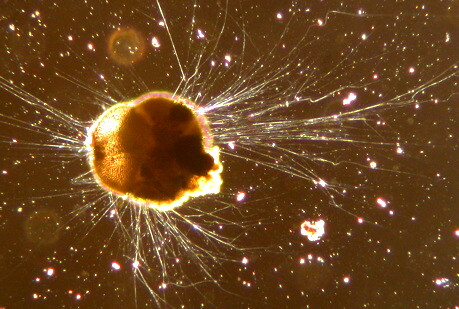
Ammonia tepida (Foraminifera)
Scientific classification Edit this classification
Domain: Eukaryota
Clade: Sar
Clade: Rhizaria
Cavalier-Smith, 2002
Phyla and orders[2]

The Rhizaria are a diverse and species-rich clade of mostly unicellular[3] eukaryotes.[4] Except for the chlorarachniophytes and three species in the genus Paulinella in the phylum Cercozoa, they are all non-photosynthetic, but many Foraminifera and Radiolaria have a symbiotic relationship with unicellular algae.[5] A multicellular form, Guttulinopsis vulgaris, a cellular slime mold, has been described.[6] This group was used by Cavalier-Smith in 2002, although the term "Rhizaria" had been long used for clades within the currently recognized taxon.

Being described mainly from rDNA sequences, they vary considerably in form, having no clear morphological distinctive characters (synapomorphies), but for the most part they are amoeboids with filose, reticulose, or microtubule-supported pseudopods. In the absence of an apomorphy, the group is ill-defined, and its composition has been very fluid. Some Rhizaria possess mineral exoskeletons (thecae or loricas), which are in different clades within Rhizaria made out of opal (SiO2), celestite (SrSO4), or calcite (CaCO3).

Certain species can attain sizes of more than a centimeter with some species being able to form cylindrical colonies approximately 1 cm in diameter and greater than 1 m in length. They feed by capturing and engulfing prey with the extensions of their pseudopodia; forms that are symbiotic with unicellular algae contribute significantly to the total primary production of the ocean.[7]

Groups

[edit]

The three main groups of Rhizaria are:[8]

A few other groups may be included in the Cercozoa, but some trees appear closer to the Foraminifera. These are the Phytomyxea and Ascetosporea, parasites of plants and animals, respectively, and the peculiar amoeba Gromia. The different groups of Rhizaria are considered close relatives based mainly on genetic similarities, and have been regarded as an extension of the Cercozoa. The name Rhizaria for the expanded group was introduced by Cavalier-Smith in 2002,[9] who also included the centrohelids and Apusozoa.

A noteworthy order that belongs to Ascetosporea is the Mikrocytida.[10] These are parasites of oysters. This includes the causative agent of Denman Island Disease, Mikrocytos mackini a small (2−3 μm diameter) amitochondriate protistan.[11]

History

[edit]

Similarities between various Rhizaria organisms have been noticed since the 19th century. In his 1861 classification of the Rhizopoda (amoebae), the zoologist William B. Carpenter proposed the order Reticularia, which consisted of Foraminifera and Gromiida on the basis of their very similar thin, reticulose pseudopodia with granules circulating inside.[12] However, the idea that these organisms and others such as Radiolaria were all related to one another emerged rather recently, with the help of molecular phylogenetics and advanced microscopy techniques in the late 20th century.[13]

Evolutionary relationships

[edit]

Rhizaria are part of the SAR supergroup (Stramenopiles, Alveolates, Rhizaria), a grouping that had been presaged in 1993 through a study of mitochondrial morphologies.[14] SAR is currently placed in the Diaphoretickes along with Archaeplastida, Cryptista, Haptista, and several minor clades.

Historically, many rhizarians were considered animals because of their motility and heterotrophy. However, when a simple animal-plant dichotomy was superseded by a recognition of additional kingdoms, taxonomists generally placed amoebae in the kingdom Protista. When scientists began examining the evolutionary relationships among eukaryotes in the 1970s, it became clear that the kingdom Protista was paraphyletic. Rhizaria appear to share a common ancestor with Stramenopiles and Alveolates forming part of the SAR super assemblage.[15] Rhizaria has been supported by molecular phylogenetic studies as a monophyletic group.[16] Biosynthesis of 24-isopropyl cholestane precursors in various rhizaria[17] suggests a relevant ecological role already during the Ediacaran.

Phylogeny

[edit]

Rhizaria is a monophyletic group composed of two sister phyla: Cercozoa and Retaria. Subsequently, Cercozoa and Retaria are also monophyletic.[18][19] The following cladogram depicts the evolutionary relationships between all rhizarian classes, and is made after the works of Cavalier-Smith et al. (2018),[1] and Irwin et al. (2019).[20]

SAR

Sexual cycle

[edit]

Complete sexual life cycles have been demonstrated for two lineages (Foraminifera and Gromia) and direct evidence for karyogamy or meiosis has been observed in five lineages (Euglyphida, Thecofilosea, Chlorarachniophyta, Plasmodiophorida and Phaeodarea).[21] In particular, the Foraminifera are marine amoebae that are defined by a dynamic network of pseudopodia, and the production of intricate shells.[21] These amoeba have complex sexual life cycles with meiosis and gamete production occurring at separate stages.[21]

References

[edit]
[edit]
Revisions and contributorsEdit on WikipediaRead on Wikipedia
from Grokipedia
Rhizaria is a diverse supergroup of mostly unicellular eukaryotic protists, characterized by thread-like or reticulose and often elaborate skeletal structures composed of silica, , or strontium sulfate. This group encompasses a wide array of free-living, parasitic, and sometimes photosynthetic organisms, with the record extending to the , over 700 million years ago, including abundant . Rhizaria forms part of the larger SAR (Stramenopiles, , Rhizaria) and is recognized as one of the major eukaryotic lineages based on molecular phylogenomic analyses. The supergroup is traditionally divided into three primary phyla: Cercozoa, Foraminifera, and Radiolaria, though additional parasitic lineages such as Phytomyxea and Haplosporidia are also included. Cercozoa represent the most morphologically and ecologically diverse clade, including filose amoebae like euglyphids with testate shells, flagellated forms, photosynthetic chlorarachniophytes that harbor acquired chloroplasts, and photosynthetic Paulinella species that possess chromatophores from cyanobacteria. Foraminifera, or forams, are test-bearing amoeboid protists renowned for their intricate, often chambered shells (tests) used in biomineralization; they dominate benthic marine environments and play a crucial role in the global carbon cycle by sequestering carbonate. Radiolaria comprise holoplanktonic marine protists with siliceous or celestite skeletons and axopodia for prey capture, subdivided into groups like Polycystinea and Acantharea. Ecologically, rhizarians are ubiquitous across marine, freshwater, and terrestrial habitats, from surface waters to deep-sea sediments, functioning as key grazers of and in microbial food webs. Their abundance and biogeochemical contributions—such as silica and deposition—make them vital to nutrient cycling and paleoceanographic reconstructions, with foraminiferal and radiolarian tests forming significant components of deep-sea oozes. Despite their importance, much of rhizarian diversity remains undescribed, revealed primarily through sequencing, highlighting thousands of novel lineages. Phylogenomic studies continue to refine their evolutionary relationships, supporting a close alliance between and certain radiolarians (Retaria) as a within the supergroup.

Characteristics

Morphology and Pseudopodia

Rhizaria are characterized by distinctive that facilitate locomotion, feeding, and environmental interaction, distinguishing them from other groups. These extensions include filose pseudopodia, which are slender, thread-like projections often supported by , enabling precise movement and prey capture in species like those in Cercozoa. Reticulose pseudopodia form intricate, net-like networks, typically reinforced by both microfilaments and , allowing for efficient surface area expansion in . Axopodia, prominent in , are long, rigid structures bolstered by axial bundles of , which provide structural integrity for passive prey entrapment. In some cases, such as granular filopodia observed in cercozoan granofiloseans, these contain cytoplasmic granules that may aid in or during feeding. Amoeboid movement in Rhizaria relies on the dynamic extension and retraction of these , driven by actin-myosin interactions and , which propel the cell across substrates or through water columns. Prey capture occurs through , where envelop , , or smaller protists, forming food vacuoles for ; this mechanism is particularly effective in the branching filose types of Cercozoa and the radiating axopodia of . Most Rhizaria are heterotrophic and non-photosynthetic, depending entirely on pseudopodial feeding for nutrition, though exceptions exist in chlorarachniophytes, which supplement predation with chloroplasts acquired via secondary endosymbiosis. The non-photosynthetic nature underscores the centrality of pseudopodia in their trophic strategy across diverse marine and terrestrial habitats. Ultrastructural adaptations enhance pseudopodial functionality, such as the extracapsular cytoplasm in , which surrounds the central capsule and extends into axopodia and , housing organelles and symbiotic while maintaining cellular compartmentalization. In , filopodial networks manifest as granuloreticulopodia, featuring bidirectional along to transport captured prey toward the cell body. These features, often lacking cross-bridges in phaeodarian axopodia, allow for rapid regeneration and flexibility. Some Rhizaria, particularly colonial , form multicellular aggregates connected by shared extracapsular cytoplasm, amplifying pseudopodial reach and contributing to their macroscopic size despite unicellular origins.

Exoskeletons and Size Variation

Rhizaria exhibit diverse exoskeletal structures, primarily serving as protective tests or skeletons composed of various minerals. In Radiolaria, Acantharia possess intracellular skeletons made of strontium sulfate (celestite, SrSO₄), while Polycystinea feature siliceous skeletons of opal (SiO₂). Foraminifera typically form calcareous tests of calcite (CaCO₃), though some produce agglutinated tests by cementing foreign particles such as sediment grains with organic or mineral cements. Xenophyophores, a subgroup of agglutinated Foraminifera, construct elaborate tests from aggregated materials like quartz grains and foraminiferal fragments, often forming complex, branching or plate-like architectures. Size variation among Rhizaria spans several orders of magnitude, from unicellular forms under 1 mm, such as small naked cercozoans, to individuals exceeding 1 cm and colonial aggregates over 1 m. Unicellular and commonly measure 0.1–1 mm, but xenophyophores can reach 20 cm in diameter, representing some of the largest single-celled organisms. Colonial , particularly in the Collodaria order, form gelatinous matrices housing multiple cells, with some colonies exceeding 1 m in length, facilitating broader distribution in pelagic environments. These exoskeletons fulfill critical functional roles, including mechanical protection against predation, regulation through density adjustments, and for controlled sinking in water columns. In deep-sea habitats, such as the abyssal plains where many Rhizaria reside, these structures enable survival by providing structural integrity against pressure and currents, while composition influences vertical migration and acquisition. For instance, the heavy celestite in Acantharia aids rapid descent post-bloom, contributing to carbon export. A notable recent advancement occurred in 2025 with the discovery of three new xenophyophore in the abyssal northwest Pacific (30–32.5° N, near the ), featuring unique agglutinated structures: Psammina yokosukae and Psammina contorta with curved or contorted mineral grain plates, and Laminarena variabilis (new genus) displaying large, sinuous plates with concentric zones and radial ridges. These findings highlight ongoing morphological diversity in deep-sea agglutinated tests, potentially linked to local availability.

Classification

Major Groups

Rhizaria is divided into two principal phyla: Cercozoa and Retaria, which together encompass a diverse array of amoeboid and protists characterized by thin, filose or reticulose . Cercozoa, the larger and more morphologically varied phylum, primarily consists of filose amoebae and includes testate forms like euglyphids, which construct siliceous shells from scales or plates, often inhabiting soils and freshwater environments. Within Cercozoa, chlorarachniophytes represent a photosynthetic subgroup of amoeboflagellates that acquired chloroplasts via secondary endosymbiosis with , enabling autotrophy in marine settings. Additionally, Cercozoa incorporates multicellular forms such as the cellular Guttulinopsis vulgaris, which exhibits aggregative multicellularity independent of other known rhizarian life cycles. Phaeodaria, once classified separately, are now recognized as a cercozoan with organic or siliceous skeletons, contributing to deep-sea planktonic diversity. Retaria forms the sister phylum to Cercozoa and is defined by its members' possession of elaborate skeletal tests, distinguishing it from the typically unshelled or lightly armored cercozoans. This phylum unites and , both predominantly marine groups with significant ecological roles in pelagic ecosystems. Foraminifera are granular amoebae featuring reticulose and tests composed of , agglutinated particles, or organic material, with many species hosting algal symbionts. Radiolaria, in contrast, produce intricate mineral skeletons and axopodia for prey capture; key subgroups include Acantharia, which form strontium sulfate spicules, and Polycystinea, encompassing orders like Spumellaria, Nassellaria, and Collodaria with siliceous lattices. Recent phylogenomic analyses confirm Retaria's , highlighting its divergence from Cercozoa in cell organization and skeletal . Within Cercozoa, parasitic lineages such as Ascetosporea represent a specialized adapted to infecting aquatic invertebrates, with 2024 genomic studies affirming its through analyses of 225 orthologous genes. Ascetosporea includes orders like Mikrocytida (e.g., Mikrocytos mackini, pathogens of bivalves), Paramyxida (e.g., Paramarteilia canceri), and Haplosporida (e.g., Bonamia ostreae), all sharing reduced genomes (12–36 Mb) and high non-coding content (70–90%). These parasites branch basally within Endomyxa, a cercozoan subclass, underscoring Rhizaria's evolutionary breadth from free-living forms to obligate parasitoids. The supergroup's total estimated species richness surpasses 10,000, driven largely by the hyperdiverse and .

Diversity and Subgroups

Within the Cercozoa, two primary subphyla are recognized: Filosa and Endomyxa. Filosa encompasses diverse filose amoebae and flagellates, including the euglyphids—testate amoebae with siliceous shells composed of scales or plates—and cercomonads, gliding biflagellate bacterivores common in and freshwater environments. Endomyxa, in contrast, includes reticulose amoebae such as the Gromiida, which are large, organic-walled monothalamid foraminiferans, and the class Ascetosporea, comprising intracellular parasites of aquatic . In the phylum Retaria, is divided into major classes, notably Globothalamea (encompassing multichambered calcareous forms like rotaliids and textulariids) and (single-chambered, often agglutinated or organic-walled species, including xenophyophores). , the other key retarian group, features subclasses such as Acantharia (with strontium sulfate skeletons and algal symbionts) and Polycystinea (siliceous-shelled forms divided into Spumellaria and Nassellaria). Several Rhizaria lineages remain understudied due to their rarity, fragility, or challenging cultivation. Taxopodida, a small group of radiolarians with axopodia-bearing skeletons, is sparsely sampled and often overlooked in plankton surveys despite its basal position in Retaria. Similarly, Ebriida—flagellated cercozoans with siliceous skeletons—has limited genomic data, with recent transcriptomic efforts highlighting their distinct physiological adaptations in marine environments. Recent integrative has expanded knowledge of xenophyophore diversity, a monothalamean subgroup notable for giant, sediment-agglutinating tests. In 2024, two new species of PsammophagaP. holzmannae and P. sinhai—were described from the west coast of (Rajapuri Creek, ), based on morphological and 18S rDNA analyses, revealing adaptations to intertidal sandy substrates. In November 2025, a global review identified 57 additional new living species of , further highlighting ongoing discoveries in their diversity. Rhizaria exhibit substantial , with approximately 9,000 described living foraminiferal across marine and freshwater habitats, and thousands of radiolarian morphospecies, many identified from siliceous microfossils. Ascetosporea, in particular, demonstrate specialized parasitic adaptations, including reduced genomes, mitosomes with altered metabolism for low-oxygen host environments, and effector proteins for host manipulation, as revealed by of like Paramikrocytos canceri. Classification challenges persist due to cryptic diversity, where morphologically similar lineages harbor genetically distinct uncovered by molecular methods like 18S rRNA metabarcoding and phylogenomics; for instance, environmental sequencing has revealed hidden Rhogostomidae clades in terrestrial soils, complicating traditional .

Evolutionary

Origins and Fossil Record

The origins of Rhizaria are traced to the late , particularly the period (approximately 600–541 million years ago), where evidence suggests their early ecological presence. Specifically, the 24-isopropylcholestane, preserved in sedimentary rocks from this era, has been identified as a product of unicellular rhizarian rather than sponges as previously thought, indicating that rhizarians contributed to marine ecosystems as early as around 650 million years ago. This , found in to strata, points to the emergence of rhizarian-like protists during a time of increasing eukaryotic complexity, predating the . The fossil record of Rhizaria becomes more tangible in the Era with the appearance of mineralized structures. Siliceous radiolarian skeletons, characterized by intricate lattice-like tests, are documented from the Early , dating to approximately 520 million years ago, in deposits from the Platform in , marking the earliest reliable evidence of polycystine radiolarians. Foraminiferal tests, initially agglutinated forms composed of sediment grains, appear slightly later in the Early (around 485 million years ago), with monothalamous species such as Amphitremoida preserved in deposits from the East European Platform. Agglutinated foraminifera, including tubular forms like Bathysiphon, are also recorded in shallow marine sediments from the onward, providing insights into benthic habitats. These early mineralized skeletons represent a key evolutionary innovation in the , enabling better preservation and adaptation to diverse marine environments. Rhizaria underwent significant diversification during the Era, particularly in oceanic settings. Radiolarians achieved their peak generic diversity in the and periods, with over 300 genera documented, reflecting adaptations to planktonic lifestyles and contributing to siliceous oozes on the seafloor. Similarly, planktonic diversified rapidly from the , evolving tests that facilitated global dispersal and biostratigraphic utility. This underscores the role of Rhizaria in shaping ancient marine . However, the fossil record reveals substantial gaps, especially for soft-bodied cercozoans, which lack durable tests and are rarely preserved. While some cercozoan relatives, such as , appear in sediments, the majority of cercozoan diversity—encompassing filose and granofilose forms—remains invisible in the geological record until the . To address these gaps, analyses integrate genetic data with fossil calibrations, estimating the crown-group age of major Rhizaria clades before 1200 million years ago, aligning with the broader diversification of eukaryotic supergroups in the period.

Phylogenetic Relationships

Rhizaria is a within the eukaryotic supergroup SAR, which encompasses Stramenopiles, , and Rhizaria, as established by analyses of small subunit () genes and multigene datasets. Early multigene phylogenies using 85 proteins across 37 eukaryotic taxa confirmed the monophyly of Rhizaria, uniting and Cercozoa with high bootstrap support (>90%) in maximum likelihood and Bayesian frameworks. Subsequent phylogenomic studies, incorporating 123 genes and 29,908 positions from 49 species, reinforced this placement, showing Rhizaria branching robustly within SAR with 100% bootstrap and support. Within Rhizaria, Cercozoa and Retaria form sister phyla, a relationship supported by multigene analyses of 187 genes (50,964 positions) across 162 taxa, using site-heterogeneous models that account for compositional heterogeneity. Cercozoa, characterized by filose and often biciliate stages, branches basally relative to Retaria, which includes reticulopodial forms like and radiolarians; this is corroborated by 229-protein trees (64,107 amino acids, 56 taxa) and 250-protein datasets (55,554 amino acids, 148–150 taxa), both yielding maximal support for the sister grouping. Recent in 2024 further refined internal structure, confirming Ascetosporea—a group of parasites—within Endomyxa (a of Retaria) via phylogenomic reconstruction using 225 single-copy orthologs across 56 taxa, with ultrafast bootstrap values exceeding 94% and Bayesian posterior probabilities of 1.0. Phylogenomic updates from 2024, incorporating data from under-sampled and uncultivated protists such as parasitic Ascetosporea, have resolved previously ambiguous deep nodes within Rhizaria using maximum likelihood trees derived from 225 orthologs, enhancing support for Endomyxa's relative to Retaria. These analyses indicate Rhizaria diverged from other SAR lineages approximately 1 billion years ago, based on calibrations integrated with constraints, placing the SAR crown radiation around 1.25 billion years ago. In broader eukaryotic trees, Rhizaria typically occupies a position sister to , with Stramenopiles branching basally in SAR (topology: Stramenopiles + ( + Rhizaria)), though alternative arrangements like Stramenopiles + (Rhizaria + ) receive comparable support in some datasets; this variability underscores ongoing refinements from expanded sampling of uncultivated diversity. Recent 2025 phylogenomic and transcriptomic studies have further elucidated the evolutionary framework and physiological adaptations of Rhizaria, including traits in uncultivated lineages.

Reproduction

Asexual Reproduction

predominates in most Rhizaria lineages, facilitating rapid population expansion through mitotic division without . This mode is particularly prevalent in unicellular and colonial forms, allowing to fluctuating environmental conditions via clonal . In cercozoans, such as members of the family Rhogostomidae, occurs via longitudinal binary fission, where the cell divides into two genetically identical daughter cells, often observed in soil and aquatic isolates. Foraminiferans exhibit multiple fission, or schizogony, as their primary asexual mechanism, in which the diploid agamont (schizont) utilizes its entire protoplasm to produce numerous haploid offspring through successive nuclear divisions followed by cytokinesis. This process yields juveniles enclosed in new tests, enabling high reproductive output; for instance, a single schizont can generate hundreds of progeny in larger benthic species. In planktonic foraminiferans like Globigerinella calida, multiple fission releases approximately 110 offspring per event, supporting continuous clonal reproduction under favorable conditions. Colonial radiolaria, such as certain collodarians, reproduce asexually through binary fission of the central capsule or fragmentation of the , where portions detach and develop into independent units. Parasitic ascetosporeans employ merogony, a form of multiple fission producing spore-like merozoites that propagate within host tissues. Environmental factors, including availability, modulate fission rates; for example, in testate filoseans like Gromia sphaerica, enhanced food supply correlates with increased binary fission frequency, promoting growth in organic-rich sediments. In many rhizarian groups, asexual phases alternate briefly with to restore .

Sexual Reproduction

Sexual reproduction in Rhizaria involves genetic exchange through and fusion, often alternating with asexual phases to produce diverse lineages. This process was first recognized in the through microscopic observations of , where William B. Carpenter and colleagues described formation and in like Nonionina. Demonstrated across multiple rhizarian groups, sexual cycles facilitate recombination and are evidenced in at least five lineages, including , Gromia, Euglyphida, Thecofilosea, and Phaeodarea. In , sexual reproduction features a classic alternation of haploid and diploid generations, with the haploid gamont producing numerous biflagellate gametes via that are released for syngamy. The resulting diploid develops into the agamont, which may encyst temporarily before initiating ; this cycle is particularly well-documented in benthic species exhibiting dimorphic stages, such as the megalospheric (haploid gamont, large initial chamber) and microspheric (diploid agamont, small initial chamber) forms. These dimorphic variants reflect the haploid/diploid distinction, with the megalospheric form often more abundant in natural populations due to its production via . Similar complex cycles occur in Gromia, where sexual reproduction involves gamete production and fusion in subtidal environments, leading to zygote encystment and alternation with asexual stages, as observed in Gromia oviformis. In Euglyphida, evidence includes direct observations of in species like Euglypha rotunda and in Corythion delamarei, indicating and syngamy within encysted stages across multiple families such as Trinematidae. Molecular studies further support these processes, identifying conserved genes (e.g., DMC1, SPO11) across Rhizaria, with up to 17 such genes present in foraminiferan genomes like Reticulomyxa filosa, suggesting an ancestral capacity for recombination. Sexual reproduction in Radiolaria remains rarely observed but is inferred through alternation of generations and molecular signatures, including gamete-related genes expressed in flagellated swarmers of polycystine and acantharian species, implying syngamy and meiosis during deep-water phases. In phaeodarean radiolarians, synaptonemal complexes confirm meiotic divisions, linking to gametogenesis and zygote formation in the sexual cycle.

Ecology

Distribution and Abundance

Rhizaria are ubiquitous across diverse aquatic and terrestrial habitats, including marine planktonic and benthic environments, as well as freshwater systems and . In marine settings, they span from coastal zones to open oceans, with monothalamous commonly found in benthic freshwater and soil microbial communities worldwide. Xenophyophores, a subgroup of , dominate the benthic in deep-sea environments exceeding 4,000 meters, where they contribute significantly to seafloor heterogeneity and can reach abundances that make them a key component of abyssal ecosystems, such as in the Clarion-Clipperton Zone of the eastern equatorial Pacific. Abundance patterns of Rhizaria vary markedly by oceanographic conditions, with elevated densities observed in oligotrophic regions. Monthly sampling from 2023 to 2024 in the revealed clear temporal and vertical variations in Rhizaria abundance, highlighting their persistence in nutrient-poor surface waters. A 2025 study in the northern reported some of the highest recorded Rhizaria abundances, up to 25 cells per liter, with increases noted along depth gradients and from inshore to offshore areas, underscoring their prominence in productive systems. Rhizaria exhibit broad vertical zonation from surface waters to the abyssal depths, adapting to stratified ocean layers. They are present throughout the , with global surveys from 2008 to 2021 confirming their distribution across all oceans and depths. Seasonal peaks occur in polar and subpolar regions, as evidenced by elevated radiolarian fluxes during specific periods in the , where assemblages reflect subsurface conditions between 100 and 400 meters. Distribution is strongly influenced by environmental factors, including and gradients that control vertical preferences, as well as oxygen minima zones that limit abundances in low-oxygen intermediate waters. Recent 2025 studies have described new xenophyophore species from Pacific abyssal depths and novel freshwater foraminiferal species from European caves, underscoring ongoing discoveries in benthic and inland distributions.

Biogeochemical Roles

Rhizaria play pivotal roles in , particularly and , through , grazing, and particle export mediated by their major subgroups: and siliceous forms like radiolarians and phaeodarians. Planktonic contribute to the by exporting organic and to the carbonate counter-pump via , while siliceous Rhizaria dominate biogenic silica production in certain layers, influencing availability and . Their tests and skeletons sink rapidly, facilitating vertical flux and long-term burial in sediments, which modulates atmospheric CO₂ and availability over geological timescales. Foraminifera, especially planktonic species, possess a global organic carbon of 0.0009–0.002 Gt C, representing a modest but influential fraction of oceanic heterotrophic . Their shells, produced at rates contributing 0.1–0.2 Gt C annually to export , account for 20–80% of particulate inorganic carbon (PIC) reaching the deep ocean (>1000 m), enhancing the efficiency of the by coupling organic matter remineralization with transport. Sinking velocities of 29–552 m day⁻¹ for these tests promote rapid carbon transfer from surface to deep waters, with non-reproductive mortality events potentially boosting particulate organic carbon (POC) by 5–11% under stress conditions like . Benthic foraminifera further influence carbon cycling in sediments by facilitating degradation and regeneration. Siliceous Rhizaria, including polycystine radiolarians and phaeodarians, are key players in the silicon cycle, contributing relatively small amounts to global biogenic silica (bSi) burial compared to diatoms and sponges. Phaeodaria, dominant in mesopelagic waters, hold a standing stock of 4.25 Tg bSi in the upper 1000 m (3.91 Tg in the mesopelagic), with annual production reaching 3.96 Tg Si in deeper layers, co-dominating silicon cycling alongside diatoms in subsurface ecosystems. Their carbon biomass, estimated at 0.012 Pg C globally for large forms (>0.6 mm), comprises up to 1.7% of mesozooplankton in the top 500 m, and their flux-feeding behavior attenuates 3.8–9.2% of gravitational POC flux (0.46 Pg C yr⁻¹ demand), with higher impacts (11.2–23.4%) in the . In oligotrophic regions like the Mediterranean, they contribute up to 6% of bSi biomass in the upper 500 m, underscoring their role in silica export to deeper waters. These contributions highlight the need to represent Rhizaria as distinct compartments in biogeochemical models, as their oversight may underestimate silica recycling, carbon export efficiency, and responses to , such as projected 5.7–15.1% declines in foraminiferal carbon by 2100 under warming scenarios.

References

Add your contribution
Related Hubs
User Avatar
No comments yet.