Hubbry Logo
ThermoregulationThermoregulationMain
Open search
Thermoregulation
Community hub
Thermoregulation
logo
8 pages, 0 posts
0 subscribers
Be the first to start a discussion here.
Thermoregulation
Thermoregulation
from Wikipedia

Thermoregulation is the ability of an organism to keep its body temperature within certain boundaries, even when the surrounding temperature is very different. A thermoconforming organism, by contrast, simply adopts the surrounding temperature as its own body temperature, thus avoiding the need for internal thermoregulation. The internal thermoregulation process is one aspect of homeostasis: a state of dynamic stability in an organism's internal conditions, maintained far from thermal equilibrium with its environment (the study of such processes in zoology has been called physiological ecology).

If the body is unable to maintain a normal temperature and it increases significantly above normal, a condition known as hyperthermia occurs. Humans may also experience lethal hyperthermia when the wet bulb temperature is sustained above 35 °C (95 °F) for six hours.[1] Work in 2022 established by experiment that a wet-bulb temperature exceeding 30.55 °C caused uncompensable heat stress in young, healthy adult humans. The opposite condition, when body temperature decreases below normal levels, is known as hypothermia. It results when the homeostatic control mechanisms of heat within the body malfunction, causing the body to lose heat faster than producing it. Normal body temperature is around 37 °C (98.6 °F), and hypothermia sets in when the core body temperature gets lower than 35 °C (95 °F).[2] Usually caused by prolonged exposure to cold temperatures, hypothermia is usually treated by methods that attempt to raise the body temperature back to a normal range.[3]

It was not until the introduction of thermometers that any exact data on the temperature of animals could be obtained. It was then found that local differences were present, since heat production and heat loss vary considerably in different parts of the body, although the circulation of the blood tends to bring about a mean temperature of the internal parts. Hence it is important to identify the parts of the body that most closely reflect the temperature of the internal organs. Also, for such results to be comparable, the measurements must be conducted under comparable conditions. The rectum has traditionally been considered to reflect most accurately the temperature of internal parts, or in some cases of sex or species, the vagina, uterus or bladder.[4] Some animals undergo one of various forms of dormancy where the thermoregulation process temporarily allows the body temperature to drop, thereby conserving energy. Examples include hibernating bears and torpor in bats.

Classification of animals by thermal characteristics

[edit]

Endothermy vs. ectothermy

[edit]

Thermoregulation in organisms runs along a spectrum from endothermy to ectothermy. Endotherms create most of their heat via metabolic processes and are colloquially referred to as warm-blooded. When the surrounding temperatures are cold, endotherms increase metabolic heat production to keep their body temperature constant, thus making the internal body temperature of an endotherm more or less independent of the temperature of the environment.[5] Endotherms possess a larger number of mitochondria per cell than ectotherms, enabling them to generate more heat by increasing the rate at which they metabolize fats and sugars.[6] Ectotherms use external sources of temperature to regulate their body temperatures. They are colloquially referred to as cold-blooded despite the fact that body temperatures often stay within the same temperature ranges as warm-blooded animals. Ectotherms are the opposite of endotherms when it comes to regulating internal temperatures. In ectotherms, the internal physiological sources of heat are of negligible importance; the biggest factor that enables them to maintain adequate body temperatures is due to environmental influences. Living in areas that maintain a constant temperature throughout the year, like the tropics or the ocean, has enabled ectotherms to develop behavioral mechanisms that respond to external temperatures, such as sun-bathing to increase body temperature, or seeking the cover of shade to lower body temperature.[6][5]

Ectotherms

[edit]
Seeking shade is one method of cooling. Here sooty tern chicks are using a black-footed albatross chick for shade.

Ectothermic cooling

[edit]
  • Vaporization:
  • Convection:
    • Increasing blood flow to body surfaces to maximize heat transfer across the advective gradient.
  • Conduction:
    • Losing heat by being in contact with a colder surface. For instance:
      • Lying on cool ground.
      • Staying wet in a river, lake or sea.
      • Covering in cool mud.
  • Radiation:
    • Releasing heat by radiating it away from the body.

Ectothermic heating (or minimizing heat loss)

[edit]
The red line represents the air temperature.
The purple line represents the body temperature of the lizard.
The green line represents the base temperature of the burrow.
Lizards are ectotherms and use behavioral adaptations to control their temperature. They regulate their behavior based on the temperature outside, if it is warm they will go outside up to a point and return to their burrow as necessary.
  • Convection:
    • Climbing to higher ground up trees, ridges, rocks.
    • Entering a warm water or air current.
    • Building an insulated nest or burrow.
  • Conduction:
    • Lying on a hot surface.
  • Radiation:
    • Lying in the sun (heating this way is affected by the body's angle in relation to the sun).
    • Folding skin to reduce exposure.
    • Concealing wing surfaces.
    • Exposing wing surfaces.
  • Insulation:
    • Changing shape to alter surface/volume ratio.
    • Inflating the body.
Thermographic image of a snake around an arm

To cope with low temperatures, some fish have developed the ability to remain functional even when the water temperature is below freezing; some use natural antifreeze or antifreeze proteins to resist ice crystal formation in their tissues.[7] Amphibians and reptiles cope with heat gain by evaporative cooling and behavioral adaptations. An example of behavioral adaptation is that of a lizard lying in the sun on a hot rock in order to heat through radiation and conduction.[citation needed]

Endothermy

[edit]

An endotherm is an animal that regulates its own body temperature, typically by keeping it at a constant level. To regulate body temperature, an organism may need to prevent heat gains in arid environments. Evaporation of water, either across respiratory surfaces or across the skin in those animals possessing sweat glands, helps in cooling body temperature to within the organism's tolerance range. Animals with a body covered by fur have limited ability to sweat, relying heavily on panting to increase evaporation of water across the moist surfaces of the lungs and the tongue and mouth. Mammals like cats, dogs and pigs, rely on panting or other means for thermal regulation and have sweat glands only in foot pads and snout. The sweat produced on pads of paws and on palms and soles mostly serves to increase friction and enhance grip. Birds also counteract overheating by gular fluttering, or rapid vibrations of the gular (throat) skin.[8] Down feathers trap warm air acting as excellent insulators just as hair in mammals acts as a good insulator. Mammalian skin is much thicker than that of birds and often has a continuous layer of insulating fat beneath the dermis. In marine mammals, such as whales, or animals that live in very cold regions, such as the polar bears, this is called blubber. Dense coats found in desert endotherms also aid in preventing heat gain such as in the case of the camels.[citation needed]

A cold weather strategy is to temporarily decrease metabolic rate, decreasing the temperature difference between the animal and the air and thereby minimizing heat loss. Furthermore, having a lower metabolic rate is less energetically expensive. Many animals survive cold frosty nights through torpor, a short-term temporary drop in body temperature. Organisms, when presented with the problem of regulating body temperature, have not only behavioural, physiological, and structural adaptations but also a feedback system to trigger these adaptations to regulate temperature accordingly. The main features of this system are stimulus, receptor, modulator, effector and then the feedback of the newly adjusted temperature to the stimulus. This cyclical process aids in homeostasis.[citation needed]

Homeothermy compared with poikilothermy

[edit]

Homeothermy and poikilothermy refer to how stable an organism's deep-body temperature is. Most endothermic organisms are homeothermic, like mammals. However, animals with facultative endothermy are often poikilothermic, meaning their temperature can vary considerably. Most fish are ectotherms, as most of their heat comes from the surrounding water. However, almost all fish are poikilothermic.[citation needed]

Vertebrates

[edit]

By numerous observations upon humans and other animals, John Hunter showed that the essential difference between the so-called warm-blooded and cold-blooded animals lies in observed constancy of the temperature of the former, and the observed variability of the temperature of the latter. Almost all birds and mammals have a high temperature almost constant and independent of that of the surrounding air (homeothermy). Almost all other animals display a variation of body temperature, dependent on their surroundings (poikilothermy).[9]

Brain control

[edit]

Thermoregulation in both ectotherms and endotherms is primarily controlled by the preoptic area (POA) of the anterior hypothalamus.[10][11][12] In rats, neurons in the POA that express the prostaglandin E receptor 3 (EP3) play a crucial role in thermoregulation by regulating body temperature in both directions.[13] EP3-expressing neurons in the POA provide continuous (tonic) inhibitory signals with the transmitter gamma-aminobutyric acid (GABA) to control sympathetic output neurons in the dorsomedial hypothalamus (DMH) and the rostral raphe pallidus nucleus of the medulla oblongata (rRPa).[13][14] In a hot environment, the tonic inhibitory signals from EP3-expressing POA neurons are augmented to suppress sympathetic output. This results in suppressed heat production and dilated skin blood vessels, the latter of which promote heat loss from the body surface. In a cold environment, the tonic inhibition from EP3-expressing POA neurons is attenuated to increase (disinhibit) sympathetic output. This results in increased heat production and constricted skin blood vessels to reduce heat loss.[13][15] The tonic inhibition from EP3-expressing POA neurons is also attenuated by an action of prostaglandin E2 (PGE2) to induce fever.[13] This tonic inhibitory control of body temperature was first proposed as a fever mechanism in 2002[14] and was demonstrated to be the fundamental principle of body temperature homeostasis in mammals in 2022.[13] Such homeostatic control is separate from the sensation of temperature.[16][17]

In birds and mammals

[edit]
Kangaroo licking its arms to cool down

In cold environments, birds and mammals employ the following adaptations and strategies to minimize heat loss:[citation needed]

  1. Using small smooth muscles (arrector pili in mammals), which are attached to feather or hair shafts; this distorts the surface of the skin making feather/hair shaft stand erect (called goose bumps or goose pimples) which slows the movement of air across the skin and minimizes heat loss.
  2. Increasing body size to more easily maintain core body temperature (warm-blooded animals in cold climates tend to be larger than similar species in warmer climates (see Bergmann's rule))
  3. Having the ability to store energy as fat for metabolism
  4. Have shortened extremities
  5. Have countercurrent blood flow in extremities – this is where the warm arterial blood travelling to the limb passes the cooler venous blood from the limb and heat is exchanged warming the venous blood and cooling the arterial (e.g., Arctic wolf[18] or penguins[19])

In warm environments, birds and mammals employ the following adaptations and strategies to maximize heat loss:

  1. Behavioural adaptations like living in burrows during the day and being nocturnal
  2. Evaporative cooling by perspiration and panting
  3. Storing fat reserves in one place (e.g., camel's hump) to avoid its insulating effect
  4. Elongated, often vascularized extremities to conduct body heat to the air

In humans

Simplified control circuit of human thermoregulation.[20]

As in other mammals, thermoregulation is an important aspect of human homeostasis. Most body heat is generated in the deep organs, especially the liver, brain, and heart, and in contraction of skeletal muscles.[21] Humans have been able to adapt to a great diversity of climates, including hot humid and hot arid. High temperatures pose serious stresses for the human body, placing it in great danger of injury or even death. For example, one of the most common reactions to hot temperatures is heat exhaustion, which is an illness that could happen if one is exposed to high temperatures, resulting in some symptoms such as dizziness, fainting, or a rapid heartbeat.[22][23] For humans, adaptation to varying climatic conditions includes both physiological mechanisms resulting from evolution and behavioural mechanisms resulting from conscious cultural adaptations.[24][25] The physiological control of the body's core temperature takes place primarily through the hypothalamus, which assumes the role as the body's "thermostat".[26] This organ possesses control mechanisms as well as key temperature sensors, which are connected to nerve cells called thermoreceptors.[27] Thermoreceptors come in two subcategories; ones that respond to cold temperatures and ones that respond to warm temperatures. Scattered throughout the body in both peripheral and central nervous systems, these nerve cells are sensitive to changes in temperature and are able to provide useful information to the hypothalamus through the process of negative feedback, thus maintaining a constant core temperature.[28][29]

A dog panting after exercise

There are four avenues of heat loss: evaporation, convection, conduction, and radiation. If skin temperature is greater than that of the surrounding air temperature, the body can lose heat by convection and conduction. However, if air temperature of the surroundings is greater than that of the skin, the body gains heat by convection and conduction. In such conditions, the only means by which the body can rid itself of heat is by evaporation. So, when the surrounding temperature is higher than the skin temperature, anything that prevents adequate evaporation will cause the internal body temperature to rise.[30] During intense physical activity (e.g. sports), evaporation becomes the main avenue of heat loss.[31] Humidity affects thermoregulation by limiting sweat evaporation and thus heat loss.[32]

In reptiles

[edit]

Thermoregulation is also an integral part of a reptile's life, specifically lizards such as Microlophus occipitalis and Ctenophorus decresii who must change microhabitats to keep a constant body temperature.[33][34] By moving to cooler areas when it is too hot and to warmer areas when it is cold, they can thermoregulate their temperature to stay within their necessary bounds.[citation needed]

In plants

[edit]

Thermogenesis occurs in the flowers of many plants in the family Araceae as well as in cycad cones.[35] In addition, the sacred lotus (Nelumbo nucifera) is able to thermoregulate itself,[36] remaining on average 20 °C (36 °F) above air temperature while flowering. Heat is produced by breaking down the starch that was stored in their roots,[37] which requires the consumption of oxygen at a rate approaching that of a flying hummingbird.[38]

One possible explanation for plant thermoregulation is to provide protection against cold temperature. For example, the skunk cabbage is not frost-resistant, yet it begins to grow and flower when there is still snow on the ground.[35] Another theory is that thermogenicity helps attract pollinators, which is borne out by observations that heat production is accompanied by the arrival of beetles or flies.[39]

Some plants are known to protect themselves against colder temperatures using antifreeze proteins. This occurs in wheat (Triticum aestivum), potatoes (Solanum tuberosum) and several other angiosperm species.[7]

Behavioral temperature regulation

[edit]

Animals other than humans regulate and maintain their body temperature with physiological adjustments and behavior. Desert lizards are ectotherms, and therefore are unable to regulate their internal temperature themselves. To regulate their internal temperature, many lizards relocate themselves to a more environmentally favorable location. They may do this in the morning only by raising their head from its burrow and then exposing their entire body. By basking in the sun, the lizard absorbs solar heat. It may also absorb heat by conduction from heated rocks that have stored radiant solar energy. To lower their temperature, lizards exhibit varied behaviors. Sand seas, or ergs, produce up to 57.7 °C (135.9 °F), and the sand lizard will hold its feet up in the air to cool down, seek cooler objects with which to contact, find shade, or return to its burrow. They also go to their burrows to avoid cooling when the temperature falls. Aquatic animals can also regulate their temperature behaviorally by changing their position in the thermal gradient.[40] Sprawling prone in a cool shady spot, "splooting," has been observed in squirrels on hot days.[41]

During cold weather, many animals increase their thermal inertia by huddling.

Animals also engage in kleptothermy in which they share or steal each other's body warmth. Kleptothermy is observed, particularly amongst juveniles, in endotherms such as bats[42] and birds (such as the mousebird[43] and emperor penguin[44]). This allows the individuals to increase their thermal inertia (as with gigantothermy) and so reduce heat loss.[45] Some ectotherms share burrows of ectotherms. Other animals exploit termite mounds.[46][47]

Some animals living in cold environments maintain their body temperature by preventing heat loss. Their fur grows more densely to increase the amount of insulation. Some animals are regionally heterothermic and are able to allow their less insulated extremities to cool to temperatures much lower than their core temperature—nearly to 0 °C (32 °F). This minimizes heat loss through less insulated body parts, like the legs, feet (or hooves), and nose.[citation needed]

Different species of Drosophila found in the Sonoran Desert will exploit different species of cacti based on the thermotolerance differences between species and hosts. For example, Drosophila mettleri is found in cacti like the saguaro and senita; these two cacti remain cool by storing water. Over time, the genes selecting for higher heat tolerance were reduced in the population due to the cooler host climate the fly is able to exploit.[citation needed]

Some flies, such as Lucilia sericata, lay their eggs en masse. The resulting group of larvae, depending on its size, is able to thermoregulate and keep itself at the optimum temperature for development.[citation needed]

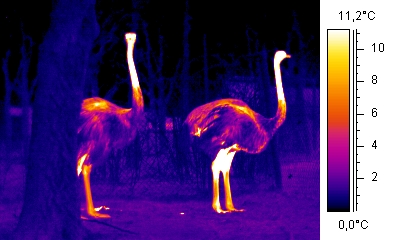
An ostrich can keep its body temperature relatively constant, even though the environment can be very hot during the day and cold at night.

Koalas also can behaviorally thermoregulate by seeking out cooler portions of trees on hot days. They preferentially wrap themselves around the coolest portions of trees, typically near the bottom, to increase their passive radiation of internal body heat.[48]

Hibernation, estivation and daily torpor

[edit]

To cope with limited food resources and low temperatures, some mammals hibernate during cold periods. To remain in "stasis" for long periods, these animals build up brown fat reserves and slow all body functions. True hibernators (e.g., groundhogs) keep their body temperatures low throughout hibernation whereas the core temperature of false hibernators (e.g., bears) varies; occasionally the animal may emerge from its den for brief periods. Some bats are true hibernators and rely upon a rapid, non-shivering thermogenesis of their brown fat deposit to bring them out of hibernation.[49]

Estivation is similar to hibernation, however, it usually occurs in hot periods to allow animals to avoid high temperatures and desiccation. Both terrestrial and aquatic invertebrate and vertebrates enter into estivation. Examples include lady beetles (Coccinellidae),[50] North American desert tortoises, crocodiles, salamanders, cane toads,[51] and the water-holding frog.[52]

Daily torpor occurs in small endotherms like bats and hummingbirds, which temporarily reduces their high metabolic rates to conserve energy.[53]

Variation in animals

[edit]
Chart showing diurnal variation in body temperature.

Normal human temperature

[edit]

Previously, average oral temperature for healthy adults had been considered 37.0 °C (98.6 °F), while normal ranges are 36.1 to 37.8 °C (97.0 to 100.0 °F). In China, Poland and Russia, the temperature had been measured axillarily (under the arm). 36.6 °C (97.9 °F) was considered "ideal" temperature in these countries, while normal ranges are 36.0 to 36.9 °C (96.8 to 98.4 °F).[54]

Recent studies suggest that the average temperature for healthy adults is 36.8 °C (98.2 °F) (same result in three different studies). Variations (one standard deviation) from three other studies are:

  • 36.4–37.1 °C (97.5–98.8 °F)
  • 36.3–37.1 °C (97.3–98.8 °F) for males,
    36.5–37.3 °C (97.7–99.1 °F) for females
  • 36.6–37.3 °C (97.9–99.1 °F)[55]

Measured temperature varies according to thermometer placement, with rectal temperature being 0.3–0.6 °C (0.5–1.1 °F) higher than oral temperature, while axillary temperature is 0.3–0.6 °C (0.5–1.1 °F) lower than oral temperature.[56] The average difference between oral and axillary temperatures of Indian children aged 6–12 was found to be only 0.1 °C (standard deviation 0.2 °C),[57] and the mean difference in Maltese children aged 4–14 between oral and axillary temperature was 0.56 °C, while the mean difference between rectal and axillary temperature for children under 4 years old was 0.38 °C.[58]

Variations due to circadian rhythms

[edit]

In humans, a diurnal variation has been observed dependent on the periods of rest and activity, lowest at 11 p.m. to 3 a.m. and peaking at 10 a.m. to 6 p.m. Monkeys also have a well-marked and regular diurnal variation of body temperature that follows periods of rest and activity, and is not dependent on the incidence of day and night; nocturnal monkeys reach their highest body temperature at night and lowest during the day. Sutherland Simpson and J.J. Galbraith observed that all nocturnal animals and birds – whose periods of rest and activity are naturally reversed through habit and not from outside interference – experience their highest temperature during the natural period of activity (night) and lowest during the period of rest (day).[9] Those diurnal temperatures can be reversed by reversing their daily routine.[59]

In essence, the temperature curve of diurnal birds is similar to that of humans and other homeothermic animals, except that the maximum occurs earlier in the afternoon and the minimum earlier in the morning. Also, the curves obtained from rabbits, guinea pigs, and dogs were quite similar to those from humans.[9] These observations indicate that body temperature is partially regulated by circadian rhythms.[citation needed]

Variations due to human menstrual cycles

[edit]

During the follicular phase (which lasts from the first day of menstruation until the day of ovulation), the average basal body temperature in women ranges from 36.45 to 36.7 °C (97.61 to 98.06 °F). Within 24 hours of ovulation, women experience an elevation of 0.15–0.45 °C (0.27–0.81 °F) due to the increased metabolic rate caused by sharply elevated levels of progesterone. The basal body temperature ranges between 36.7–37.3 °C (98.1–99.1 °F) throughout the luteal phase, and drops down to pre-ovulatory levels within a few days of menstruation.[60] Women can chart this phenomenon to determine whether and when they are ovulating, so as to aid conception or contraception.[citation needed]

Variations due to fever

[edit]

Fever is a regulated elevation of the set point of core temperature in the hypothalamus, caused by circulating pyrogens produced by the immune system.[61] To the subject, a rise in core temperature due to fever may result in feeling cold in an environment where people without fever do not.[citation needed]

Variations due to biofeedback

[edit]

Some monks are known to practice Tummo, biofeedback meditation techniques, that allow them to raise their body temperatures substantially.[62]

Effect on lifespan

[edit]

The effects of such a genetic change in body temperature on longevity is difficult to study in humans.[63]

Limits compatible with life

[edit]

There are limits both of heat and cold that an endothermic animal can bear and other far wider limits that an ectothermic animal may endure and yet live. The effect of too extreme a cold is to decrease metabolism, and hence to lessen the production of heat. Both catabolic and anabolic pathways share in this metabolic depression, and, though less energy is used up, still less energy is generated. The effects of this diminished metabolism become telling on the central nervous system first, especially the brain and those parts concerning consciousness;[64] both heart rate and respiration rate decrease; judgment becomes impaired as drowsiness supervenes, becoming steadily deeper until the individual loses consciousness; without medical intervention, death by hypothermia quickly follows. Occasionally, however, convulsions may set in towards the end, and death is caused by asphyxia.[65][64]

In experiments on cats performed by Sutherland Simpson and Percy T. Herring, the animals were unable to survive when rectal temperature fell below 16 °C (61 °F).[64] At this low temperature, respiration became increasingly feeble; heart-impulse usually continued after respiration had ceased, the beats becoming very irregular, appearing to cease, then beginning again. Death appeared to be mainly due to asphyxia, and the only certain sign that it had taken place was the loss of knee-jerks.[65]

However, too high a temperature speeds up the metabolism of different tissues to such a rate that their metabolic capital is soon exhausted. Blood that is too warm produces dyspnea by exhausting the metabolic capital of the respiratory centre;[66] heart rate is increased; the beats then become arrhythmic and eventually cease. The central nervous system is also profoundly affected by hyperthermia and delirium, and convulsions may set in. Consciousness may also be lost, propelling the person into a comatose condition. These changes can sometimes also be observed in patients experiencing an acute fever.[citation needed] Mammalian muscle becomes rigid with heat rigor at about 50 °C, with the sudden rigidity of the whole body rendering life impossible.[65]

H.M. Vernon performed work on the death temperature and paralysis temperature (temperature of heat rigor) of various animals. He found that species of the same class showed very similar temperature values, those from the Amphibia examined being 38.5 °C, fish 39 °C, reptiles 45 °C, and various molluscs 46 °C.[citation needed] Also, in the case of pelagic animals, he showed a relation between death temperature and the quantity of solid constituents of the body. In higher animals, however, his experiments tend to show that there is greater variation in both the chemical and physical characteristics of the protoplasm and, hence, greater variation in the extreme temperature compatible with life.[65]

A 2022 study on the effect of heat on young people found that the critical wet-bulb temperature at which heat stress can no longer be compensated, Twb,crit, in young, healthy adults performing tasks at modest metabolic rates mimicking basic activities of daily life was much lower than the 35 °C usually assumed, at about 30.55 °C in 36–40 °C humid environments, but progressively decreased in hotter, dry ambient environments.[67][68]

Arthropoda

[edit]

The maximum temperatures tolerated by certain thermophilic arthropods exceeds the lethal temperatures for most vertebrates.[69]

The most heat-resistant insects are three genera of desert ants recorded from three different parts of the world. The ants have developed a lifestyle of scavenging for short durations during the hottest hours of the day, in excess of 50 °C (122 °F), for the carcasses of insects and other forms of life which have died from heat stress.[70]

In April 2014, the South Californian mite Paratarsotomus macropalpis has been recorded as the world's fastest land animal relative to body length, at a speed of 322 body lengths per second. Besides the unusually great speed of the mites, the researchers were surprised to find the mites running at such speeds on concrete at temperatures up to 60 °C (140 °F), which is significant because this temperature is well above the lethal limit for the majority of animal species. In addition, the mites are able to stop and change direction very quickly.[69]

Spiders like Nephila pilipes exhibits active thermal regulation behavior.[71] During high temperature sunny days, it aligns its body with the direction of sunlight to reduce the body area under direct sunlight.[71]

See also

[edit]

References

[edit]

Further reading

[edit]
[edit]
Revisions and contributorsEdit on WikipediaRead on Wikipedia
from Grokipedia
Thermoregulation is the ability of an to keep its body within certain boundaries, even when the surrounding is very different, allowing it to maintain optimal metabolic function despite environmental fluctuations. This process is essential across diverse taxa, from endotherms that generate internal heat to sustain a relatively constant , to ectotherms that primarily rely on external sources and behavioral adjustments, and even plants that employ structural and physiological adaptations to manage heat. In humans and other mammals, it typically maintains core around 37°C (98.6°F), critical for activity and cellular processes, though the specific range varies by . Thermoregulation involves integrated physiological and behavioral mechanisms, often controlled by neural centers that detect changes via thermoreceptors and activate responses such as , sweating, or in animals to balance heat production and loss. These systems use to counteract deviations, adapting to factors like activity levels or . In , processes like and leaf orientation serve similar roles. Disruptions, such as fever or , underscore the precision required for survival. Evolutionarily, advanced thermoregulatory capabilities in endotherms enable activity in varied environments, contrasting with ectotherms' reliance on behavioral strategies, and have broad ecological implications.

Fundamentals

Definition and Importance

Thermoregulation is the maintenance of an organism's core body within narrow physiological limits, despite fluctuations in the external environment, through a balance of heat production, conservation, and dissipation. This homeostatic process ensures that internal conditions remain suitable for cellular and metabolic functions, acting as a critical feedback that responds to thermal challenges. The importance of thermoregulation lies in its direct influence on biochemical processes, where optimal body supports enzyme activity and metabolic rates, as enzymes operate most efficiently within specific thermal ranges and their kinetics accelerate with moderate temperature increases. Without effective thermoregulation, extreme heat can lead to protein denaturation, impairing cellular function and potentially causing above 40–45°C in mammalian cells. Conversely, low temperatures reduce , disrupting and membrane-bound processes, which thermoregulation counters to preserve structural integrity and physiological performance. Overall, this regulation is vital for , enabling organisms to sustain energy demands, support , and adapt to diverse habitats by preventing that could otherwise compromise fitness. Early scientific observations on thermoregulation trace back to the 18th and 19th centuries, with noting how environmental factors like temperature influenced animal development, behavior, and trait acquisition, laying groundwork for understanding thermal effects on physiology. These insights highlighted thermoregulation's role in evolutionary adaptation, though modern classifications distinguish strategies such as ectothermy and endothermy based on heat source reliance.

Classification of Thermoregulatory Strategies

Thermoregulatory strategies in organisms are classified along two primary axes: the source of and the degree of temperature stability. Endothermy refers to the generation of primarily through internal metabolic processes, enabling organisms to elevate and maintain temperatures above ambient levels. In contrast, ectothermy relies on external environmental sources for , with body temperature largely determined by passive exchange with the surroundings. These terms, while sometimes used interchangeably with others, focus specifically on heat production rather than regulation stability. Independently, describes the maintenance of a relatively constant internal body temperature despite fluctuations in the external environment, achieved through active physiological adjustments. Poikilothermy, on the other hand, involves body temperatures that vary substantially with ambient conditions, often requiring behavioral adaptations to optimize thermal exposure. Most endotherms are , such as birds and mammals, combining internal production with tight . Ectotherms are typically poikilothermic, like most reptiles and amphibians, though some ectotherms exhibit limited homeothermic behaviors in specific contexts, such as certain regulating thoracic temperatures during flight. A notable variation is regional heterothermy, where different body regions maintain distinct temperatures to optimize function and conserve energy. For instance, some , including tunas (family Thunnidae), display regional endothermy in the , eyes, and swimming muscles through vascular countercurrent heat exchangers that retain metabolic heat, while the rest of the body conforms more closely to water temperature. In endothermic mammals and birds, countercurrent heat exchange in the extremities, such as limbs and nasal passages, minimizes core heat loss to cold environments, allowing peripheral tissues to cool without compromising vital organ temperatures. Endothermy and homeothermy confer advantages like sustained high metabolic rates, enhanced enzymatic efficiency, and activity across a broader thermal range, but they impose high energetic costs, necessitating frequent and efficient insulation. Ectothermy and poikilothermy, conversely, offer energetic efficiency—requiring up to tenfold less food intake—and behavioral flexibility for thermoregulation, though they constrain performance in suboptimal temperatures and increase vulnerability to environmental extremes. These trade-offs have shaped evolutionary divergences, with endothermic strategies dominating in active, variable habitats and ectothermic ones in stable or resource-limited ones.

Thermoregulation in Animals

Ectothermy

Ectothermic animals, also known as poikilotherms, regulate their body temperature primarily by exchanging heat with the external environment rather than through internal metabolic heat production. This strategy allows them to maintain functional body temperatures that vary with ambient conditions, enabling efficient use of environmental resources for thermoregulation. Ectotherms include most reptiles, amphibians, fish, and invertebrates, and their body temperatures typically fluctuate within a range that supports physiological processes, often between 20°C and 40°C depending on habitat. Heat acquisition in ectotherms occurs mainly through behavioral adaptations that exploit environmental sources. Basking in solar radiation is a common strategy, where animals position themselves to maximize absorption of short-wave and visible , raising body via conduction from heated surfaces or from warm air. For instance, many perch on sun-exposed rocks or branches to elevate their core before , achieving optimal performance levels for locomotion and . Burrowing into warm or selecting microhabitats with radiant also facilitates passive heat gain through direct contact, minimizing energy expenditure. These behaviors are particularly crucial in diurnal ectotherms, as they allow rapid attainment of preferred body temperatures without relying on costly internal mechanisms. To prevent overheating, ectotherms employ behavioral strategies for heat dissipation that involve avoiding high-temperature environments. Seeking shade or retreating to cooler burrows reduces exposure to direct solar radiation, promoting convective and radiative heat loss to the surroundings. Nocturnal activity patterns, observed in species like some geckos and snakes, enable ectotherms to exploit milder nighttime temperatures while minimizing daytime heat stress, thereby conserving and . immersion, such as submerging in streams or ponds, further aids dissipation through enhanced conduction and , especially in aquatic or semi-aquatic species. Representative examples illustrate these strategies in reptiles and amphibians. , such as those in the genus Lacerta, frequently shuttle between sunlit basking sites and shaded retreats to precisely control body temperature, maintaining it within a narrow thermal preference range of about 30–35°C during active periods. This thigmothermy and heliothermy combination allows them to optimize enzymatic reactions for and escape responses. In amphibians, evaporative cooling via permeable serves as a key physiological mechanism for heat dissipation, particularly in humid environments; tree frogs like Litoria species lose heat through cutaneous water when ambient temperatures exceed their tolerance, preventing while regulating temperature. However, this process can lead to risks, prompting behavioral adjustments like seeking moist microhabitats. Metabolically, ectothermy is characterized by lower basal metabolic rates (BMR) compared to endothermy, typically 5–10 times lower for similarly sized animals, reflecting reduced demands for heat production. This efficiency supports longer fasting periods and lower food intake requirements. The Q10 effect, which quantifies sensitivity, governs metabolic rate changes in ectotherms; defined as the ratio of the rate at a T+10°C to the rate at T, Q10 values often range from 2 to 3, indicating that physiological processes like oxygen consumption double or triple with a 10°C rise. For example, in , Q10 for oxygen uptake can reach 5.1 over certain ranges, highlighting how fluctuations directly influence activity and . Unlike endothermy, which sustains stable temperatures through high metabolic output, ectothermy ties performance to environmental variability.

Endothermy

Endothermy is a thermoregulatory strategy in which animals generate and maintain elevated body temperatures primarily through internal metabolic production, allowing for precise control over core temperature independent of environmental fluctuations. This strategy is predominantly observed in birds and mammals, where it supports sustained high levels of activity and enables habitation in diverse environments. Unlike ectothermy, which relies on external sources for body temperature modulation, endothermy involves active physiological processes to produce endogenously, often at the cost of elevated energy expenditure. Heat production in endotherms occurs through two primary mechanisms: shivering thermogenesis and non-shivering thermogenesis (NST). thermogenesis involves rapid, involuntary muscle contractions that generate as a byproduct of , rapidly increasing metabolic rate by up to 5- to 10-fold in response to cold exposure. NST, in contrast, is a more efficient process mediated by specialized tissues, particularly (BAT) in mammals, where uncoupling protein 1 () in the mitochondrial inner membrane dissipates the proton gradient as rather than ATP synthesis, elevating metabolic rate without muscle activity. activation is triggered by norepinephrine from sympathetic nerves, facilitating rapid generation; for instance, in , NST can account for over 60% of thermoregulatory heat production at mild cold exposures. Birds primarily rely on but also exhibit NST-like mechanisms in via similar uncoupling proteins. To minimize heat loss, endotherms employ insulation and vascular adaptations. Fur in mammals and feathers in birds trap a layer of still air adjacent to the skin, reducing conductive and convective ; for example, dense pelage in mammals can lower thermal conductance by 50-70% compared to bare . Countercurrent heat exchange in peripheral limbs further conserves core heat by allowing warm to transfer heat to cooler returning to the body, preventing excessive loss in extremities; this is evident in species like , where leg temperatures remain near ambient while core stays elevated. Representative examples illustrate endothermy's physiological demands and benefits. Most mammals maintain a core body temperature around 37°C, supported by basal metabolic rates 5-10 times higher than those of ectotherms of similar size. Birds typically operate at slightly higher core temperatures of 39-42°C, with metabolic rates elevated further during flight—up to 20-30 times basal levels—to power sustained aerial activity in varying climates. Evolutionarily, endothermy confers advantages such as enhanced performance in cold environments but imposes significant trade-offs due to heightened energy requirements. The high metabolic costs—often necessitating frequent or large energy reserves—enable endotherms to remain active nocturnally or in winter, expanding ecological niches beyond those accessible to ectotherms. This strategy evolved independently in mammals and birds, likely driven by selection for sustained locomotion and in cooler habitats, though it limits survival in resource-scarce conditions.

Physiological Mechanisms

Neural and Hormonal Control

The neural control of thermoregulation is primarily orchestrated by the , particularly the (POA), which functions as the central by detecting deviations in core blood . Warm-sensitive and cold-sensitive neurons within the POA integrate thermal inputs from peripheral and central sensors to maintain a set point around 37°C in mammals, triggering appropriate responses to restore . This set point regulation ensures that even minor fluctuations, such as a 0.1–0.2°C change, elicit compensatory mechanisms to prevent physiological stress. Effector responses under neural command include autonomic adjustments such as cutaneous or to modulate heat loss via skin blood flow, sweating or panting for evaporative cooling, and piloerection to trap an insulating air layer against the skin during exposure. These effectors are activated through sympathetic and parasympathetic pathways originating from the and descending to preganglionic neurons, allowing rapid adjustments to environmental challenges. Hormonally, (T3 and T4) play a key role by elevating through increased expression of Na+/K+-ATPase in tissues, thereby enhancing obligatory and overall heat production. In hyperthyroid states, this leads to due to amplified metabolic heat, while impairs tolerance by reducing energy expenditure. Thermoregulation operates via loops, where deviations from the set point activate neurons to inhibit the initial stimulus and return to equilibrium, such as during cooling to conserve . These loops integrate with , as heat-induced sweating promotes water loss and , prompting antidiuretic hormone release to balance fluid alongside thermal recovery. At the molecular level, thermoreceptors rely on transient receptor potential (TRP) ion channels embedded in membranes and other tissues to detect changes. Heat-activated channels like (sensitive above 43°C) and TRPV3 (above 33°C) in afferents signal warmth to the , while cold-sensitive (below 25°C) and (below 17°C) mediate cooling detection; central TRP channels in the and provide core sensing for finer integration. These channels open in response to , allowing cation influx that depolarizes neurons and propagates signals for thermoregulatory orchestration.

Mechanisms in Vertebrates

In endothermic vertebrates, including mammals and birds, thermoregulation is primarily orchestrated by the , which detects deviations from the set point temperature via peripheral and central thermoreceptors and activates effector responses to restore . Sweating in mammals facilitates evaporative cooling by increasing loss from the skin, while panting in both mammals and birds promotes respiratory to dissipate excess during . thermogenesis, triggered by hypothalamic signals, generates through rapid contractions in response to cold exposure, elevating body temperature in these species. Heat conservation in endotherms is enhanced by anatomical adaptations such as the rete mirabile, a countercurrent vascular network that minimizes conductive heat loss by warming with before it reaches peripheral tissues. In birds, analogous structures like the rete tibiotarsale in the legs prevent excessive cooling during flight or exposure to cold environments. Reptiles, as ectothermic vertebrates, maintain body temperatures largely through behavioral means but possess physiological traits that influence heat exchange, including low-conductance skin that reduces passive heat loss to the environment. Their thermoregulatory set points vary diurnally, with higher preferred temperatures during active periods and lower ones at rest, allowing flexible adjustment to environmental cycles without sustained metabolic heat production. Certain exhibit regional endothermy, where metabolic is retained in specific tissues via vascular countercurrent exchangers; for instance, tunas maintain elevated temperatures in the , eyes, and swimming muscles through specialized retia mirabilia, enabling enhanced physiological in varying aquatic temperatures. Cardiovascular adjustments support thermoregulation across vertebrates; during stress, increases to promote skin blood flow and facilitate convective to the environment, as observed in birds and mammals. Respiratory mechanisms in endotherms contribute to cooling via , which increases over respiratory surfaces to enhance evaporative loss; panting exemplifies this in birds, where it can account for a significant portion of total dissipation without excessive metabolic cost.

Mechanisms in Invertebrates

, lacking the centralized neural control systems found in vertebrates, predominantly employ passive physical mechanisms, behavioral adjustments, and limited physiological responses to manage body temperature, as they are mostly ectothermic with body temperatures closely tracking ambient conditions. These strategies emphasize insulation, exchange, and molecular protections rather than active internal generation, allowing survival across diverse thermal environments without maintaining strict . In arthropods, the chitinous serves as a primary barrier for , minimizing conductive heat loss while permitting selective absorption of solar radiation. Some species exhibit variations in melanization that enhance solar absorption for thermoregulation, raising thoracic temperatures during activity. For instance, in honeybees (Apis mellifera), workers collectively warm hives by shivering flight muscle contractions, elevating cluster core temperatures to 35–36°C in winter, a form of social endothermy that distributes metabolic heat without individual overheating. Limited endothermy occurs in some large mollusks, such as the jumbo squid (Dosidicus gigas), where continuous mantle muscle contractions during swimming generate heat, retained via countercurrent vascular exchange to keep selected tissues 5–10°C above ambient . Invertebrates tolerate thermal extremes through molecular safeguards rather than regulatory . Freeze-avoiding , like the spruce budworm (Choristoneura fumiferana), produce proteins (AFPs) that bind surfaces, depressing the freezing point by 5–10°C and inhibiting recrystallization, thus preventing lethal intracellular formation during to -30°C or lower. For heat stress, heat shock proteins (HSPs), such as , are upregulated in response to temperatures exceeding 35–40°C in and , chaperoning denatured proteins to restore cellular function and enhance survival by 20–50% during acute exposure. These proteins are constitutively expressed at low levels in some , like , providing baseline protection against fluctuating polar conditions. Metabolic adjustments in accommodate temperature variability through adaptive , enabling function across wide thermal ranges without fixed set points. Enzymes in ectothermic exhibit Q10 values of 1.5–3.0, where activity doubles roughly every 10°C rise, supported by flexible conformational changes that optimize at prevailing temperatures, as seen in polychaete annelids where metabolic rates adjust linearly up to 30°C before thermal limits. This plasticity, including shifts in expression, allows species like the lugworm (Arenicola marina) to maintain aerobic scope despite 15–20°C fluctuations, prioritizing survival over precise thermal constancy.

Thermoregulation in Plants

Structural Adaptations

Plants exhibit a variety of structural adaptations that passively regulate by influencing absorption, retention, or dissipation without relying on metabolic processes. orientation plays a key role, with allowing leaves to track the sun's position to optimize thermal balance. Diaheliotropism positions leaves perpendicular to solar rays, maximizing gain in cooler conditions, while paraheliotropism aligns them parallel to rays, minimizing overheating during high s. For instance, in common bean (), heliotropic movements are modulated by air to maintain optimal temperatures. Pubescence, or dense leaf hairs, and thick cuticles further enhance insulation. Trichomes create a boundary layer of still air that reduces convective heat loss, thereby stabilizing leaf temperature against fluctuations; studies across species show this effect slows heat transfer by 2.4% to 39%. Thick cuticles reflect incident solar radiation, preventing excessive heating, particularly in xerophytic plants where they contribute to the cuticular transpiration barrier's efficacy under elevated temperatures. Vascular anatomy supports internal heat distribution through convective transfer via fluid movement in and . sap flow enables convective cooling by transporting heat alongside water during , while aids in distributing metabolic heat. In structures like inflorescences, vascular tissues channel heat longitudinally, maintaining thermal gradients essential for organ function. In cacti, modified leaves as spines reduce external by shading cladodes, lowering surface temperatures and preventing overheating in arid environments. Certain floral structures incorporate thermogenic capabilities tied to . In voodoo lilies (Sauromatum guttatum), the spadix appendix features specialized tissues that support cyanide-resistant respiration via the alternative oxidase pathway, generating up to approximately 20°C above ambient to volatilize attractants for pollinators during . This structural specialization correlates with peak alternative pathway capacity during maturation. Adaptations to environmental extremes highlight specialized surfaces. Desert plants often develop reflective waxes or epicuticular layers on leaves and stems to deflect solar radiation, reducing heat load and maintaining lower tissue temperatures. In alpine species, dense pubescence on leaves and stems forms an insulating barrier, minimizing radiative and convective heat loss in cold, windy conditions, as seen in plants like where hairs stabilize diurnal temperature variations.

Physiological Processes

Plants employ several physiological processes to manage temperature fluctuations, primarily through metabolic adjustments at the cellular and biochemical levels. These processes include evaporative cooling, modulation of metabolic rates, responses to heat stress, and acclimation to conditions, which collectively help maintain optimal enzymatic activities and prevent cellular damage. Unlike structural adaptations such as reflective surfaces, these dynamic mechanisms involve active of biochemical pathways. Evaporative cooling in plants occurs primarily through transpiration, where water vapor is released from leaf surfaces via stomata, absorbing heat and lowering leaf temperature. Stomatal conductance regulates transpiration rates, balancing water loss with cooling; under high temperatures, plants may increase stomatal aperture to enhance evaporative cooling, though this risks dehydration. This process can reduce leaf temperatures by several degrees below ambient air, forming a key component of the plant's energy balance. Additionally, photorespiration serves as an alternative electron sink under elevated temperatures and light, helping dissipate excess energy and mitigate photodamage, though it comes at the cost of reduced photosynthetic efficiency. Metabolic rates in are highly temperature-sensitive, with exhibiting an optimal range that influences overall thermoregulation. In C3 , the optimum for CO2 assimilation typically falls between 20°C and 30°C, aligning with the kinetics of the Rubisco, which catalyzes the first step of carbon fixation. Above this range, Rubisco's specificity for CO2 decreases relative to O2, favoring over , while below it, activity slows. These temperature-dependent shifts in Rubisco kinetics help avoid metabolic overheating by redirecting flows, though prolonged exposure can impair growth. Under heat stress, activate protective responses including the synthesis of heat shock proteins (HSPs), which act as molecular chaperones to refold denatured proteins and prevent aggregation. HSPs, such as and families, are upregulated by heat shock transcription factors and contribute to cellular during temperatures exceeding 35–40°C. Concurrently, enhance antioxidant defenses to counter from generated by heat, involving enzymes like and that scavenge free radicals. Membrane lipid adjustments, such as increased unsaturation of fatty acids, maintain fluidity and permeability, preventing leakage and supporting ion under thermal duress. Cold acclimation enables to enhance frost resistance through the accumulation of compatible solutes, which stabilize cellular structures without disrupting . Exposure to low, non-freezing temperatures (0–10°C) triggers the buildup of soluble s like and , which lower the freezing point of cell contents and protect membranes from damage. These osmolytes correlate strongly with improved freezing tolerance, allowing to survive temperatures as low as -10°C or lower after several days of acclimation. This process involves transcriptional changes that upregulate pathways, providing both osmotic adjustment and cryoprotection.

Behavioral and Ecological Strategies

Daily and Seasonal Behaviors

Animals employ a variety of behavioral strategies to manage body on daily and seasonal timescales, optimizing activity patterns and use to minimize while maximizing and . These behaviors allow both ectotherms and endotherms to exploit environmental gradients, avoiding extremes that could impair physiological function. For instance, shifting activity periods or locations enables organisms to align their metabolic demands with favorable thermal conditions, thereby conserving and reducing risks associated with overheating or chilling. Daily cycles of activity are critical for thermoregulation, particularly in environments with pronounced diurnal temperature fluctuations. In hot, arid climates, many small mammals, such as desert rodents, adopt nocturnal lifestyles to evade , remaining in cool burrows during the day and at night when temperatures drop. This behavior reduces evaporative water loss and the energetic costs of dissipation, allowing species like kangaroo rats to maintain with minimal physiological strain. Conversely, ectothermic reptiles often engage in diurnal basking to elevate body temperatures for optimal activity and locomotion; for example, and position themselves in sunlit areas during cooler mornings to achieve preferred ranges, enhancing before retreating to shade as temperatures rise. Seasonal behaviors extend these adaptations over longer periods, with migrations serving as a key mechanism for accessing thermally suitable habitats. Many bird species undertake latitudinal migrations to warmer regions during winter, tracking seasonal shifts that support breeding and ; Arctic-breeding waterfowl, for instance, relocate southward to avoid subfreezing conditions, thereby maintaining body temperatures conducive to metabolic processes. In mountainous terrains, exhibit altitudinal migrations, ascending to cooler elevations in summer to escape heat and descending in winter for milder conditions, which helps regulate developmental rates and prevent thermal overload during sensitive life stages. Social behaviors further enhance thermoregulation by leveraging group dynamics for heat conservation or dissipation. Emperor penguins in form dense huddles during breeding seasons, rotating positions to share and reduce individual exposure to and , which can lower metabolic rates by approximately 25% and prevent in temperatures as low as -40°C. Similarly, many mammals construct nests using insulating materials like , feathers, or fibers to buffer internal microclimates; rodents such as mice select high-insulating substrates to retain warmth at night, minimizing heat loss and energy expenditure in fluctuating ambient conditions. Foraging adjustments represent another flexible behavioral response, where animals time feeding activities to circumvent thermal extremes. In thermally variable habitats, species like and intertidal snails synchronize with cooler periods—such as dawn or dusk—to avoid and overheating, thereby sustaining activity durations without compromising hydration or metabolic balance. This temporal partitioning not only mitigates direct but also aligns resource acquisition with periods of peak physiological performance.

Torpor, Hibernation, and Estivation

Torpor, , and estivation represent specialized physiological states in which animals enter periods of controlled hypometabolism to conserve during environmental challenges such as , food scarcity, or heat and . These states involve a regulated decrease in metabolic rate and body temperature, allowing survival without or active thermoregulation for extended durations. Unlike typical behavioral adjustments, these dormant phases prioritize metabolic suppression over active heat production or dissipation, enabling adaptation to seasonal extremes. Daily is a short-term form of lasting less than 24 hours, commonly observed in small endothermic animals like bats and during periods of cold exposure or food limitation. In this state, body temperature drops to within a few degrees of ambient levels, often reducing (BMR) by up to 90% through suppression of and organ function. For instance, in little brown bats (Myotis lucifugus), daily torpor facilitates savings during nighttime roosting in cool caves, with heart and respiratory rates declining dramatically to minimize oxygen and fuel demands. This reversible process allows animals to resume normal activity and upon , typically triggered by dawn or improved conditions. Hibernation extends into prolonged winter dormancy, primarily in small mammals such as ground squirrels, where metabolic rate falls to 1-5% of normal levels and body temperature stabilizes at 3-5°C above ambient; larger hibernators like bears exhibit less pronounced reductions, maintaining metabolic rates around 25% of BMR and higher body temperatures. Hibernators undergo periodic arousals every few days to weeks, during which body temperature rapidly rises to normothermic levels (around 37°C) for maintenance activities like waste elimination, consuming significant energy reserves—up to 75% of the hibernation budget. In thirteen-lined ground squirrels (Ictidomys tridecemlineatus), for example, these cycles are orchestrated by neural mechanisms that balance with periodic , preventing issues like or immune suppression. This strategy enables survival through months of inactivity in burrows, relying on pre-hibernation fat accumulation for sustenance. Estivation, in contrast, is a summer to high temperatures and , prevalent in ectothermic animals like amphibians and , involving metabolic depression to minimize water loss and heat stress. During estivation, organisms such as the African lungfish (Protopterus spp.) encase themselves in a cocoon, reducing metabolic rate by 70-90% without a proportional drop in body temperature, which conserves limited water and oxygen. In amphibians like the spadefoot toad (Scaphiopus couchii), estivation entails burrowing into mud, where accumulation acts as an to retain body fluids amid arid conditions. This state can persist for months until rains restore suitable habitats, highlighting its role in arid ecosystems. These states are initiated by integrated triggers, including circadian clocks that synchronize internal rhythms with daily cycles and environmental cues like photoperiod length, , and resource availability. Shortening photoperiods in autumn, for instance, signal mammals to prepare for by altering levels, while prolonged and prompt estivation in ectotherms via sensory detection of deficits. Such mechanisms ensure timely entry into , optimizing survival across taxa.

Variations and Limits

Normal Physiological Variations

Normal physiological variations in body temperature occur within healthy organisms as adaptive responses to internal biological cycles and activities, maintaining without pathological implications. These fluctuations are typically small, ranging from 0.3°C to 2°C, and are regulated by neural and endocrine mechanisms to align with daily rhythms, reproductive states, developmental stages, and physical demands. Such variations ensure optimal metabolic function and across . Circadian rhythms impose daily oscillations in core body temperature, with humans experiencing a sinusoidal fluctuation of approximately 1°C, where temperatures dip by 0.5-1°C during nighttime compared to daytime peaks in the late afternoon. This rhythm is primarily controlled by the (SCN) in the , which synchronizes thermoregulatory outputs to environmental light-dark cycles via projections to the . In other mammals, similar patterns persist, aiding in the timing of rest-activity cycles and metabolic processes. Reproductive cycles introduce sex-specific variations; in women with ovulatory menstrual cycles, core body temperature rises by about 0.3-0.7°C in the post-ovulatory due to the thermogenic effects of progesterone on the hypothalamic set point. This elevation supports potential embryonic development and returns to baseline in the . Developmental and morphological factors also contribute to baseline differences. Neonates in humans maintain a normal core range of 36.5-37.5°C, often trending toward the higher end (e.g., around 37.5°C) due to elevated metabolic rates and limited thermoregulatory compared to adults. Across mammalian species, body size influences these patterns indirectly through (BMR) scaling, where larger animals exhibit lower mass-specific BMRs, with total BMR proportional to body ^{2/3}, resulting in shallower gradients and more stable temperatures despite environmental challenges. Physical activity induces transient elevations in core temperature as a byproduct of increased production from muscle . In humans, moderate to strenuous exercise can raise core temperature by 1-2°C, with the rise plateauing as heat dissipation mechanisms like sweating activate to balance production and loss. This adaptation enhances performance but resolves post-exercise through enhanced cooling.

Tolerance Limits and Pathologies

Tolerance limits in thermoregulation represent the extreme thermal boundaries beyond which physiological fails, leading to cellular and systemic damage. In humans, the upper limit is typically marked by , where core body temperatures exceeding 40°C trigger , characterized by dysfunction and multiorgan failure. This threshold arises from the inability of evaporative cooling mechanisms to dissipate under high environmental loads or intense exertion. Below this, milder induces , but progression to involves rapid protein denaturation and aggregation, disrupting cellular functions and promoting and cascades. Conversely, the lower tolerance limit is , defined as a core body temperature below 35°C, which impairs enzymatic reactions and , culminating in metabolic slowdown and cardiovascular instability. Severe , often below 32°C, predisposes individuals to ventricular arrhythmias and due to slowed conduction and imbalances. Pathologies associated with thermoregulatory failure extend to fever, a regulated of the hypothalamic set point triggered by pyrogenic cytokines like interleukin-1 (IL-1) in response to . This response, mediated by IL-1 binding to brain endothelial cells and subsequent synthesis, raises core temperature to inhibit replication and enhance immune cell activity, thereby conferring survival benefits during bacterial or viral invasions. While adaptive, uncontrolled fever can strain metabolic resources, particularly in vulnerable populations. Therapeutic interventions, such as techniques, enable voluntary modulation of peripheral thermoregulation to mitigate stress-related pathologies. By monitoring and providing real-time feedback on via sensors, individuals learn to increase peripheral , elevating finger temperatures by several degrees during relaxation training. Clinical evidence demonstrates that such sessions reduce sympathetic arousal, lowering and systemic while alleviating stress-induced or , offering a non-pharmacological tool for managing anxiety and related thermoregulatory imbalances.

Evolutionary and Broader Impacts

Evolutionary Origins

Thermoregulation traces its evolutionary roots to prokaryotes, where basic mechanisms for responding to emerged as essential survival strategies. In , the represents one of the earliest documented thermoregulatory adaptations, involving the rapid induction of heat shock proteins (HSPs) that act as molecular chaperones to refold denatured proteins and prevent aggregation under elevated temperatures. This response is conserved across bacterial lineages and is triggered by stressors like heat, which destabilize proteins, highlighting its role in maintaining cellular integrity in fluctuating environments. , another prokaryotic domain, have evolved more specialized thermoregulatory capabilities, particularly in extremophilic lineages such as thermophiles that thrive in high-temperature habitats up to 80°C or more, like hydrothermal vents. These organisms employ unique membrane (e.g., ether-linked lipids) and hyperstable enzymes that resist thermal denaturation, enabling adaptation to environments lethal to most life forms. Such adaptations underscore the divergence of archaeal thermoregulation from bacterial systems, driven by selective pressures in extreme niches. The transition from prokaryotes to eukaryotes marked a pivotal advancement in thermoregulatory complexity, largely facilitated by endosymbiosis—the incorporation of an alphaproteobacterium as the proto-mitochondrion into an archaeal host around 1.5–2 billion years ago. This event not only boosted energy production through but also enhanced metabolic flexibility, allowing eukaryotic cells to generate and dissipate heat more efficiently across varying environmental temperatures. The resulting mitochondrial integration enabled higher rates of ATP synthesis, which supported the of more intricate cellular processes, including those involved in thermal homeostasis, as eukaryotes colonized diverse thermal habitats. This endosymbiotic foundation laid the groundwork for advanced thermoregulatory strategies in multicellular organisms by increasing overall metabolic output and cellular resilience to temperature extremes. In evolution, thermoregulation initially relied on ectothermy, where early and amphibians regulated body temperature primarily through behavioral adjustments and environmental conformity, as seen in their reliance on external heat sources for metabolic optimization. A major innovation occurred in the synapsid lineage—ancestors of mammals—during the , approximately 233 million years ago, when endothermy first emerged, as evidenced by inner ear biomechanics indicating a sharp rise in body temperature. This adaptation likely evolved to support nocturnal and activity in cooler, variable climates, providing a competitive edge over ectothermic competitors. Endothermy's emergence in synapsids facilitated the diversification of therapsids, setting the stage for mammalian radiation. Endothermy evolved convergently in birds and mammals, arising independently in the sauropsid (reptile-bird) lineage during the , separate from the synapsid origin. In birds, this trait developed from ancestors, possibly linked to flight demands and sustained activity, resulting in high metabolic rates and insulation via feathers. Despite the independent origins, both avian and mammalian endothermy share physiological hallmarks, such as efficient oxygen transport and thermogenic tissues, reflecting parallel adaptations to similar ecological pressures like constant activity and in diverse environments. This convergence underscores thermoregulation's role as a key driver of diversification and ecological dominance.

Effects on Lifespan and Ecology

Thermoregulation significantly influences organismal lifespan, particularly through metabolic rate and associated . According to the , higher metabolic rates in endotherms, driven by their elevated body temperatures for precise thermoregulation, correlate with increased energy expenditure and faster aging, yet endotherms often exhibit longer lifespans when adjusted for body size compared to ectotherms due to protective mechanisms against oxidative damage. For instance, lower body temperatures in both endothermic and ectothermic have been shown to extend longevity by reducing metabolic stress and production. However, the high metabolic demands of endothermy can accelerate cellular damage from , potentially shortening lifespan in unable to mitigate these effects efficiently. In ecological contexts, thermoregulatory strategies shape and niche occupancy across biomes. Ectotherms, relying on environmental , dominate tropical regions where stable warm temperatures allow consistent activity and high metabolic efficiency, supporting greater in these areas. Conversely, endotherms thrive in polar and temperate regions by maintaining internal , enabling year-round and despite cold conditions that limit ectothermic activity. This thermal independence allows endotherms to exploit resources unavailable to ectotherms during seasonal extremes, structuring food webs and community dynamics. Climate change exacerbates thermoregulatory challenges, driving range shifts and disrupting ecosystems. Ectotherms, whose body temperatures track ambient conditions, exhibit stronger poleward range shifts in response to warming compared to endotherms, as their thermal tolerances are more directly tied to environmental temperatures. Ocean warming, for example, induces widespread coral bleaching by exceeding the thermal thresholds of symbiotic algae in corals, leading to ecosystem collapse and altered marine biodiversity. These shifts can cascade through habitats, forcing species migrations and altering community compositions. Thermoregulation also modulates interspecies interactions, particularly predation dynamics via activity windows. operate within narrow optimal ranges for locomotion and sensory function, creating windows of or advantage in predator-prey encounters; for instance, warmer conditions can impair endothermic predators' ability to capture faster-moving prey, potentially shifting ecological balances toward ectotherm dominance. Such mismatches influence success and rates, reinforcing niche partitioning in diverse ecosystems.

References

Add your contribution
Related Hubs
User Avatar
No comments yet.