Hubbry Logo
TrophoblastTrophoblastMain
Open search
Trophoblast
Community hub
Trophoblast
logo
8 pages, 0 posts
0 subscribers
Be the first to start a discussion here.
Trophoblast
Trophoblast
from Wikipedia
Trophoblast
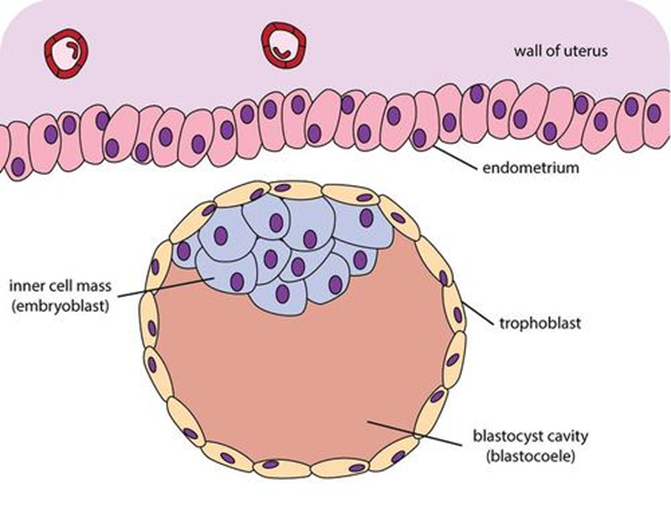
Blastocyst with an inner cell mass and trophoblast.
Details
Days6
Gives rise toCaul
Identifiers
Latintrophoblastus; massa cellularis externa
MeSHD014327
TEE6.0.1.1.2.0.2
FMA83029
Anatomical terminology

The trophoblast (from Greek trephein: to feed; and blastos: germinator) is the outer layer of cells of the blastocyst. Trophoblasts are present four days after fertilization in humans.[1] They provide nutrients to the embryo and develop into a large part of the placenta.[2][3] They form during the first stage of pregnancy and are the first cells to differentiate from the fertilized egg to become extraembryonic structures that do not directly contribute to the embryo. After blastulation, the trophoblast is contiguous with the ectoderm of the embryo and is referred to as the trophectoderm. [4] After the first differentiation, the cells in the human embryo lose their totipotency because they can no longer form a trophoblast. They become pluripotent stem cells.

Structure

[edit]
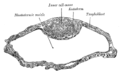
Image showing trophoblast differentiated into the two layers of cytotrophoblast and syncytiotrophoblast during implantation

The trophoblast proliferates and differentiates into two cell layers at approximately six days after fertilization for humans.

Layer Location Description
Cytotrophoblast The inner layer A single-celled inner layer of the trophoblast.
Syncytiotrophoblast The outer layer A thick layer that lacks cell boundaries and grows into the endometrial stroma. It secretes hCG in order to maintain progesterone secretion and sustain a pregnancy.
Intermediate trophoblast (IT) The implantation site, chorion, villi (dependent on subtype) An anchor placenta (implantation site IT).

Function

[edit]

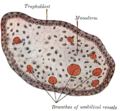
Trophoblasts are specialized cells of the placenta that play an important role in embryo implantation and interaction with the decidualized maternal uterus.[5] The core of placental villi contain mesenchymal cells and placental blood vessels that are directly connected to the fetus’ circulation via the umbilical cord. This core is surrounded by two layers of trophoblasts, the cytotrophoblast and the syncytiotrophoblast. The cytotrophoblast is a layer of mono-nucleated cells that resides underneath the syncytiotrophoblast.[6] The syncytiotrophoblast is composed of fused cytotrophoblasts which then form a layer that covers the placental surface.[6] The syncytiotrophoblast is in direct contact with the maternal blood that reaches the placental surface. It then facilitates the exchange of nutrients, wastes and gases between the maternal and fetal systems.

In addition, cytotrophoblasts in the tips of villi can differentiate into another type of trophoblast called the extravillous trophoblast. Extravillous trophoblasts grow out from the placenta and penetrate into the decidualized uterus. This process is essential not only for physically attaching the placenta to the mother, but also for altering the vasculature in the uterus. This alteration allows an adequate blood supply to the growing fetus as pregnancy progresses. Some of these trophoblasts even replace the endothelial cells in the uterine spiral arteries as they remodel these vessels into wide bore conduits that are independent of maternal vasoconstriction. This ensures that the fetus receives a steady supply of blood, and the placenta is not subjected to fluctuations in oxygen that could cause it damage.[7]

Clinical significance

[edit]

The invasion of a specific type of trophoblast (extravillous trophoblast) into the maternal uterus is a vital stage in the establishment of pregnancy. Failure of the trophoblast to invade sufficiently is important in the development of some cases of pre-eclampsia. Invasion of the trophoblast too deeply may cause conditions such as placenta accreta, placenta increta, or placenta percreta.

Gestational trophoblastic disease is a pregnancy-associated concept, forming from the villous and extravillous trophoblast cells in the placenta.[8]

Choriocarcinoma are trophoblastic tumors that form in the uterus from villous cells.[8]

Trophoblast stem cells (TSCs) are cells that can regenerate and they are similar to embryonic stem cells (ESCs) in the fact that they come from early on in the trophoblast lifetime.[9] In the placenta, these stem cells are able to differentiate into any trophoblast cell because they are pluripotent.[9]

Additional images

[edit]

See also

[edit]

References

[edit]
[edit]
Revisions and contributorsEdit on WikipediaRead on Wikipedia
from Grokipedia
The trophoblast is the outermost layer of cells in the , originating from the trophectoderm during early human embryogenesis around day 5 post-fertilization, and serves as the primary site of nutrient absorption and between the maternal and fetal compartments. Derived from words trephein (to feed) and blastos (germ or ), it plays a critical role in blastocyst implantation into the uterine and the subsequent development of the . These epithelial cells form the interface at the maternal-fetal boundary, secreting hormones such as (hCG) and facilitating to prevent rejection of the fetus. Trophoblast cells differentiate into distinct subtypes during the first trimester, including proliferative cytotrophoblasts that act as stem cells, multinucleated syncytiotrophoblasts that form the nutrient-transporting barrier, and invasive extravillous trophoblasts that remodel maternal spiral arteries for adequate blood flow. This differentiation is regulated by signaling pathways such as Hippo/YAP1 for initial specification and for invasion, with cytotrophoblasts giving rise to both villous structures for exchange and extravillous cells for anchoring the . Human first-trimester trophoblasts are uniquely identified by markers like KRT7 and GATA3, a HLA class I profile (null in villous cytotrophoblasts, expressing in extravillous), hypomethylated ELF5, and high expression of C19MC microRNAs. Beyond implantation and placental formation, trophoblasts are essential for fetal nourishment, production, and vascular adaptation, with aberrant differentiation implicated in disorders like and . Their roles extend to modulating maternal immune responses and providing a physical barrier against pathogens, underscoring their foundational importance in successful outcomes.

Overview and Development

Definition and Origin

The trophoblast constitutes the outer layer of cells in the mammalian , originating from the trophectoderm, which forms during the initial cell divisions following fertilization. As the embryo progresses to the stage around day 5 post-fertilization in humans, the trophectoderm emerges as a distinct epithelial monolayer that envelops the , the precursor to the proper. This early lineage commitment separates the trophoblast progenitors from the cells, establishing the extraembryonic tissues essential for placental development. The term "trophoblast," derived from the Greek words trephein (to nourish) and blastos (germ), was coined in 1889 by Dutch embryologist Ambrosius Arnold Willem Hubrecht to describe the nutritive epithelial cells observed in early postimplantation stages of rabbit embryos. Earlier 19th-century embryologists, including Wilhelm His, contributed foundational descriptions of human embryonic structures through serial sectioning and reconstructions, laying the groundwork for understanding the trophoblast's role in early development, though the specific term predates widespread histological confirmation. Evolutionarily, the trophoblast is a conserved feature across eutherian (placental) mammals, likely originating in the era as an adaptation for viviparous reproduction, enabling intimate maternal-fetal nutrient exchange via the . It is absent in non-placental mammals such as monotremes and marsupials, which rely on sac-based nourishment rather than trophoblast-mediated . At its origin in the , trophoblast cells exhibit key morphological features as polarized, epithelial-like structures with apical-basal asymmetry, forming tight junctions that maintain a sealed barrier around the while facilitating initial interactions with the uterine environment.

Stages of Differentiation

The differentiation of trophoblast begins during the pre-implantation phase with the specification of the trophectoderm (TE) lineage in the human , occurring around days 3-4 post-fertilization. This process involves the downregulation of the pluripotency factor OCT4 in outer morula cells, coupled with the upregulation of the TE-specific transcription factor CDX2, which drives the segregation of TE from the . These molecular transitions establish the TE as a polarized epithelial layer surrounding the cavity, setting the foundation for subsequent trophoblast development. The plays a pivotal role in this early fate commitment by regulating YAP/TAZ activity, where nuclear localization and activation of YAP/TAZ in outer cells promote TE specification through induction of CDX2 and other trophoblast genes. In human models, YAP/TAZ activation maintains stemness while inhibiting premature differentiation, ensuring balanced lineage allocation during formation. Following implantation around days 6-7, the TE differentiates into mononuclear (CTB) cells, entering a proliferation phase characterized by stem cell-like division. These CTB progenitors exhibit high self-renewal capacity, expanding rapidly to form a proliferative pool that supports placental growth, as demonstrated in human trophoblast (hTSC) cultures derived from induced pluripotent stem cells. This phase persists post-implantation, with CTBs acting as multipotent stem cells capable of symmetric division to maintain the progenitor population. By days 6-12 post-fertilization, during the peri-implantation period, CTBs diverge into two primary lineages: (STB) through and multinucleation, and (EVT) through migratory and invasive differentiation. Single-cell sequencing of embryos at days 8, 10, and 12 reveals distinct transcriptional profiles for these emerging subpopulations, with STB precursors upregulating genes for fusion (e.g., syncytin) and EVT cells expressing invasion markers (e.g., ). This timeline extends into the post-implantation phase, culminating in formation by the second week (around days 13-15 post-fertilization), where CTB columns organize into primary villi enveloped by , marking the transition to structured placental architecture. Throughout these stages, Hippo-YAP/TAZ signaling continues to modulate lineage decisions, with pathway dysregulation linked to impaired differentiation in placental models.

Cellular Structure and Types

Cytotrophoblast

The consists of mononuclear cells characterized by a high nucleus-to- ratio and distinct cell borders, forming a continuous inner layer beneath the in . These cells exhibit cuboidal or columnar morphology with a prominent nucleus containing one or two nucleoli and pale , resting on a . As the proliferative progenitor pool of the trophoblast lineage, cells possess stem-like properties, including self-renewal through proliferative division that maintains the progenitor population while generating daughter cells for differentiation. They express key markers such as Ki67 for active proliferation, (EGFR) for signaling in maintenance and differentiation, and cytokeratin-7 as a pan-trophoblast identifier. This proliferative capacity is evident in early , with mitotic indices ranging from 1.5% to 2.9% at 6–9 weeks. Cytotrophoblast cells are categorized into subtypes based on location and function: villous cytotrophoblast, which lines the and supports ongoing renewal, and basal cytotrophoblast, situated at the implantation site within the basal plate to contribute to placental anchoring structures. In the first trimester, trophoblasts constitute approximately 41% of placental cells (by number of nuclei), with the villous subtype being the most abundant among trophoblast subtypes and driving villous expansion. At the ultrastructural level, cells feature desmosomes that mediate adhesion to the overlying and underlying , ensuring structural integrity of the villous layer. Their contains abundant free ribosomes, supporting high rates of protein synthesis essential for cellular maintenance and precursor production. The metabolic profile of cells is dominated by high glycolytic activity, with elevated extracellular acidification rates reflecting robust glucose to fuel rapid proliferation and biosynthetic demands. This glycolytic preference exceeds that of differentiated trophoblast compartments, providing energy independence in the relatively hypoxic placental environment and aligning with their role as proliferating progenitors.

Syncytiotrophoblast

The syncytiotrophoblast forms through the cell-cell fusion of underlying progenitor cells, resulting in a multinucleated that serves as the outermost layer of placental villi and the primary interface between maternal and fetal circulations. This fusion process begins shortly after implantation and continues throughout , yielding a terminally differentiated structure containing hundreds to thousands of nuclei within a shared . The acts as the proliferative progenitor, providing new cells that differentiate and fuse to maintain the syncytium. Key markers of syncytiotrophoblast differentiation include the production of (hCG), which supports early maintenance, and (hPL), involved in maternal metabolic adaptations. Additionally, , a fusogenic protein encoded by the envelope gene of human W (HERV-W), is highly expressed and essential for mediating the membrane fusion events that generate and sustain the . These markers distinguish the from its mononuclear precursors and reflect its specialized endocrine and barrier roles. Ultrastructurally, the exhibits a of densely packed microvilli on its maternal-facing apical surface, which vastly increases the absorptive area for uptake from maternal . As a true lacking lateral cell borders, it has no tight junctions between individual cells, relying instead on its continuous cytoplasmic barrier and embedded transporters for selective permeability. Specialized domains, including fenestrations and invaginations, facilitate of gases, ions, and solutes across the layer. The undergoes continuous renewal to counteract localized and shedding into maternal circulation, with fresh cytotrophoblasts fusing into the to replenish its structure and function. This dynamic turnover ensures the integrity of the maternal-fetal barrier despite ongoing cellular stress. Thickness of the layer varies developmentally, averaging 10-20 μm in the first trimester when it comprises a thicker barrier, and thinning to 2-4 μm by term to optimize diffusive exchange.

Extravillous Trophoblast

Extravillous trophoblasts (EVTs) originate from cells within the cell columns located at the tips of anchoring villi, where they differentiate and begin their migratory journey into the maternal and during early . These cells detach from the villous structure and invade the uterine wall, facilitating deep trophoblast penetration essential for placental attachment. Morphologically, EVTs exhibit a polygonal shape with prominent , enabling their motile and invasive behavior, and they express key markers such as , a non-classical molecule that promotes by inhibiting maternal and T-cell activity, thus preventing rejection of the fetal allograft. Additionally, EVTs upregulate integrins like α1β1 (VLA-1), which mediate adhesion to components such as collagen IV, supporting their directed migration through decidual tissues. EVTs comprise distinct subpopulations based on their invasion pathways: interstitial EVTs, which penetrate the decidual stroma and interact with maternal immune cells, and endovascular EVTs, which enter the lumens of spiral arteries to remodel their walls by replacing endothelial cells and disrupting , thereby establishing low-resistance blood flow to the . This bifurcation allows interstitial EVTs to anchor the while endovascular EVTs ensure vascular adaptation. In normal pregnancy, the depth of EVT invasion extends throughout the and into the inner third of the , with temporal regulation peaking around 12 weeks , preventing excessive penetration that could compromise uterine integrity, and this process is tightly regulated by the balance between matrix metalloproteinases (MMPs), such as MMP-2 and MMP-9, which degrade to promote invasion, and their inhibitors (TIMPs), which curb proteolytic activity to confine trophoblast advance. Dysregulation of this MMP/TIMP equilibrium can lead to shallow invasion associated with pathologies like . To avoid uncontrolled invasion, EVTs express anti-apoptotic proteins like , which inhibits and maintains cell survival during their migratory phase, ensuring timely cessation of invasion as they reach appropriate depths in the . This Bcl-2-mediated regulation helps balance proliferative and differentiative signals, preventing both insufficient and excessive trophoblast activity.

Physiological Functions

Implantation and Invasion

The process of implantation begins with , where the comes into loose contact with the endometrial around day 6 post-fertilization, followed by and subsequent invasion. Initial adhesion is mediated by expressed on the trophoblast surface binding to carbohydrate ligands on the endometrial , facilitating the rolling and capture of the during the receptive window. This is followed by firm adhesion involving , such as α5β1 and αvβ3, which enable trophoblast attachment to components like and in the . Invasion is initiated by the , which penetrates the uterine epithelial layer by secreting proteases and migrating through the , reaching the stromal compartment. This is succeeded by cells, derived from progenitors, which further invade the endometrial stroma and remodel maternal spiral arteries to establish adequate blood flow. The and thus play complementary roles in this sequential breach of uterine barriers. Implantation is tightly regulated by maternal progesterone, which transforms the into a receptive state during the window of implantation (approximately days 20-24 of the ), promoting epithelial remodeling and suppressing immune rejection to facilitate trophoblast attachment. Concurrently, (hCG), secreted by the trophoblast shortly after adhesion, sustains function to maintain progesterone levels and directly enhances trophoblast invasiveness by modulating endometrial . Trophoblast invasion exhibits species-specific variations, with humans featuring deep interstitial characteristic of the hemochorial , where trophoblast penetrates up to 100-200 μm into the and remodels arterial walls. In contrast, many , such as mice, also possess hemochorial placentas but display more superficial trophoblast with limited arterial remodeling, differing in depth and extent from the human process. Key molecular drivers include (EGF) signaling, which promotes trophoblast motility and expression to enhance invasion. Conversely, transforming growth factor-β (TGF-β) acts as an inhibitor, limiting invasion depth by upregulating anti-invasive factors like growth factor; its downregulation allows controlled progression into the stroma.

Placental Barrier and Nutrient Exchange

The forms the primary barrier of the , serving as a continuous multinucleated epithelial layer that separates maternal and fetal circulations while enabling selective substance transfer. This barrier facilitates transepithelial transport through two main routes: paracellular pathways, which allow passive of small molecules such as ions and water-soluble solutes between syncytiotrophoblast cells, and transcellular pathways, which involve active or facilitated mechanisms including , , and ion channels for larger or charged molecules. The syncytiotrophoblast's microvillous apical membrane, facing maternal blood, and basal membrane, interfacing with fetal capillaries, express specialized transporters that regulate this exchange to support fetal nutrition without direct blood mixing. Nutrient uptake across the placental barrier is predominantly mediated by the , ensuring efficient delivery of essential substrates to the . Glucose, the primary fetal energy source, is transported via through transporters, which are highly abundant on both the microvillous and basal membranes of the and increase in expression toward term to match rising fetal demands. are actively accumulated using sodium-dependent (e.g., System A for non-essential types) and sodium-independent (e.g., System L exchangers like LAT1 for essential types such as ) transporters on the , enabling concentrative uptake against gradients via energy from fetal metabolism. , including fatty acids, are taken up through fatty acid-binding proteins (FABPs, such as FABP1 and FABPpm) and translocases in the , following by on the maternal-facing surface, with uptake regulated by nuclear receptors like PPARγ. Waste removal from the occurs primarily by passive across the barrier, reversing the nutrient uptake . , a byproduct of fetal , diffuses from fetal to maternal due to its small size and , with the exhibiting limited capacity for urea synthesis, thus relying on maternal clearance. (CO₂), produced in high volumes by fetal tissues, diffuses rapidly—approximately 20 times faster than oxygen—across the lipid-rich membrane in the third trimester, when the barrier is optimally thinned, driven by a concentration and facilitated by maternal . The placental barrier evolves significantly during to optimize exchange efficiency, transitioning from a thick, multi-layered structure in early to a thin syncytial layer by term. In the first trimester, the barrier comprises three to four layers—, multiple cells, , and fetal —measuring 20–30 µm thick, which limits permeability and protects the early . By the third trimester, regression and fusion reduce the barrier to a single 2–4 µm syncytial layer overlying fetal , increasing surface area (up to 12–14 m²) and shortening distances to enhance rates. This thinning correlates with the onset of around week 10, shifting from histiotrophic nutrition to hemotrophic exchange. Oxygen diffusion across the barrier relies on simple passive mechanisms, with dissolved oxygen equilibrating between maternal and fetal blood while hemoglobin-bound forms remain compartmentalized. The low of oxygen (pO₂) in the (around 20–30 mmHg in early , rising slightly later) promotes unloading from maternal via its dissociation curve and uptake by , which has higher oxygen affinity due to structural differences. This low pO₂ environment, maintained by the barrier's architecture, supports trophoblast proliferation early on while ensuring adequate fetal oxygenation through the thinned term barrier and increased maternal-fetal blood proximity in terminal villi.

Hormonal Secretion and Immune Modulation

The plays a central role in the endocrine functions of the placenta by secreting key hormones that support early pregnancy. (hCG), primarily produced by the , reaches peak serum levels between 8 and 10 weeks of , acting to sustain the and thereby ensuring continued progesterone production essential for endometrial maintenance. (hPL), also secreted by the , emerges around the sixth week and rises progressively, promoting maternal metabolic adaptations such as to facilitate fetal nutrient availability and growth. Additionally, relaxin, derived from the , contributes to reproductive tissue remodeling by inducing cervical softening and inhibiting myometrial contractions, which helps prepare for parturition while maintaining uterine quiescence. Progesterone production undergoes a critical transition during early , shifting from the to the trophoblast around the seventh gestational week, known as the luteal-placental shift. This handover ensures sustained progesterone levels necessary for and , with trophoblast-derived progesterone rising non-linearly thereafter to support ongoing viability. A key feedback mechanism involves hCG stimulating progesterone synthesis in the initially, and later directly influencing trophoblast progesterone output, which collectively prevents maternal immune rejection of the by suppressing pro-inflammatory responses. Trophoblast cells also mediate maternal immune tolerance through specialized mechanisms that inhibit cytotoxic responses at the maternal-fetal interface. Extravillous trophoblast expresses non-classical human leukocyte antigen G (HLA-G), which binds inhibitory receptors on natural killer (NK) cells and T cells, thereby suppressing their cytolytic activity and promoting regulatory T cell expansion to avert allograft rejection. Complementing this, Fas ligand (FasL) on extravillous and syncytiotrophoblast induces apoptosis in activated maternal lymphocytes, selectively eliminating potentially harmful immune effectors while sparing resting cells. Furthermore, trophoblast secretion of anti-inflammatory cytokines such as interleukin-10 (IL-10) and transforming growth factor-β (TGF-β) fosters a Th2-biased immune environment, enhancing humoral immunity and dampening Th1-mediated inflammation to sustain fetal tolerance.

Clinical and Pathological Aspects

Role in Normal Pregnancy

The trophoblast plays a pivotal role in the establishment and maintenance of normal pregnancy by facilitating implantation and subsequent placental development. In natural human conceptions, the implantation success rate is approximately 60-80%, with the blastocyst typically implanting 8-10 days post-ovulation, marking the onset of trophoblast invasion into the uterine endometrium. By week 12 of gestation, the basic structure of the placenta is established, with the trophoblast having differentiated into its key subtypes—cytotrophoblast, syncytiotrophoblast, and extravillous trophoblast—to support fetal nourishment and waste exchange. This timeline integration ensures the transition from embryonic to fetal stages occurs without interruption, as the trophoblast coordinates nutrient transfer and hormonal signaling essential for early gestation. Monitoring trophoblast function is critical for assessing viability, particularly through serum (hCG) levels, which are produced by the . In the first trimester, hCG typically doubles every 48 hours, serving as a key indicator of ongoing trophoblast activity and embryonic ; deviations from this pattern can signal potential issues, though normal ranges vary slightly. As progresses, the trophoblast adapts to increasing fetal demands via , or proliferation of trophoblast cells, stimulated by fetal growth factors such as (IGF)-I and IGF-II, which enhance division and placental expansion. Trophoblast-mediated maternal adaptations further ensure gestational success, notably through extravillous trophoblast invasion that remodels uterine spiral arteries. This remodeling transforms high-resistance vessels into low-resistance conduits, increasing uteroplacental blood flow to 600-800 mL/min by term, thereby meeting the fetus's escalating oxygen and requirements. Proper trophoblast function throughout is directly linked to uncomplicated term delivery, as it sustains placental integrity, , and fetal growth without disruptions.

Gestational Trophoblastic Diseases

Gestational trophoblastic diseases (GTD) represent a group of rare conditions characterized by abnormal proliferation of trophoblastic cells following , encompassing both premalignant hydatidiform moles and malignant gestational trophoblastic neoplasia (GTN). These disorders arise from the placental trophoblast and can lead to significant morbidity if not managed promptly, though they are highly curable with appropriate intervention. Hydatidiform moles, the most common form of GTD, result in exaggerated trophoblastic growth and are classified into complete and partial subtypes based on genetic composition and clinical features. Complete hydatidiform moles are diploid, with an androgenetic origin entirely from paternal chromosomes (46,XX or 46,XY), and lack any fetal tissue or normal embryonic development. In contrast, partial hydatidiform moles are triploid (69,XXX or 69,XXY), typically featuring two paternal and one maternal haploid sets, and may include rudimentary fetal or embryonic elements but no viable . Both types exhibit markedly elevated serum (hCG) levels, often exceeding those in normal pregnancies where hCG supports early . Complete moles carry a higher risk of progression to GTN (15-20%) compared to partial moles (0.5-5%). GTN comprises invasive mole, choriocarcinoma, placental site trophoblastic tumor (PSTT), and epithelioid trophoblastic tumor (ETT), all of which demonstrate malignant potential with potential for local invasion or . Invasive mole involves myometrial penetration by molar tissue, while is a highly with both and components; PSTT and ETT are rarer, originating from intermediate trophoblast and producing lower hCG levels. The International Federation of Gynecology and Obstetrics (FIGO) staging system classifies GTN from stage I (disease confined to the ) to stage IV (metastases to distant organs such as liver or ), combined with a prognostic scoring index to guide . Key risk factors for GTD include extremes of maternal age—greater than 35 years or less than 20 years—and a history of prior , which confers a recurrence risk of 1-2%. Diagnosis of GTD primarily involves transvaginal , which reveals a characteristic "snowstorm" appearance due to hydropic villi in molar pregnancies, often in the first trimester. Quantitative serum hCG measurement is essential, with levels typically surpassing 100,000 mIU/mL in complete moles, prompting further evaluation including after evacuation. Management of hydatidiform moles centers on suction to evacuate the , which is both diagnostic and therapeutic, followed by serial hCG monitoring to detect persistent disease. For GTN, treatment is risk-stratified: low-risk cases (FIGO score <7) receive single-agent with or actinomycin D, while high-risk cases require multi-agent regimens like EMA-CO (, , actinomycin D, , ). Overall cure rates for GTN exceed 90%, reflecting the chemosensitivity of these tumors, with fertility preservation possible in most patients.

Associations with Pregnancy Complications

Trophoblast dysfunction plays a central role in , a hypertensive disorder affecting 5–8% of pregnancies worldwide. In this condition, shallow invasion by extravillous trophoblasts fails to adequately remodel maternal spiral arteries, resulting in placental ischemia and hypoxia. This inadequate triggers the release of anti-angiogenic factors from the , notably an imbalance where (sFlt-1) levels rise while (PlGF) decreases, leading to systemic , , and maternal . Intrauterine growth restriction (IUGR) often stems from impaired trophoblast function, particularly reduced efficiency in syncytiotrophoblast-mediated nutrient and oxygen transport across the l barrier. This dysfunction is closely linked to in the , which damages trophoblast cells, diminishes their proliferative capacity, and exacerbates villous , ultimately restricting fetal growth. markers, such as elevated and reduced antioxidant defenses, are consistently observed in IUGR placentas, highlighting the trophoblast's vulnerability to hypoxic environments. Trophoblast contributes to by promoting an milieu that accelerates labor onset. Premature aging of the leads to , characterized by the (SASP), which secretes pro-inflammatory cytokines such as IL-6 and IL-8. These cytokines amplify decidual and , disrupting the maintenance of and increasing the risk of spontaneous preterm delivery. Placental senescence is evident in histological changes like syncytial knotting. Miscarriage, occurring in 15-20% of clinically recognized pregnancies, frequently involves trophoblast-related failures in early . Defective implantation due to insufficient extravillous trophoblast invasion or abnormal differentiation can prevent proper endometrial attachment, while immune rejection arises from inadequate maternal tolerance to trophoblast-expressed antigens, leading to cytotoxic T-cell activation and decidual inflammation. These mechanisms account for a significant portion of first-trimester losses, often before 12 weeks. Diagnostic biomarkers reflecting trophoblast dysfunction aid in identifying at-risk pregnancies. Low levels of (hCG), produced by , indicate impaired trophoblast proliferation and are associated with increased risks of and IUGR. Similarly, abnormal uterine artery Doppler findings, such as elevated pulsatility index, signal defective spiral artery remodeling by extravillous trophoblasts and predict complications like with sensitivities up to 80% in high-risk cohorts. These non-invasive tools enable early intervention to mitigate adverse outcomes.

Recent Advances in Research

Trophoblast Stem Cells and Organoids

Trophoblast stem cells (TSCs) represent a self-renewing population capable of differentiating into all major trophoblast lineages, providing a foundational tool for studying placental development . Human TSCs were first successfully derived in from first-trimester villous (CT) cells and trophectoderm of blastocysts, enabling long-term expansion while maintaining multilineage potential. These cells are isolated through enzymatic dissociation of placental villi or disaggregation of blastocyst-stage embryos, followed by plating on extracellular matrix-coated surfaces in specialized media that activate Wnt (via CHIR99021) and EGF signaling while inhibiting TGF-β (A83-01), HDAC, and ROCK pathways (Y-27632) to promote survival and proliferation. Maintenance occurs in serum-free hTS medium supplemented with these factors, supporting indefinite passaging without loss of stemness. Key markers of undifferentiated TSCs include transcription factors CDX2 and ELF5, which drive trophoblast identity and are consistently expressed alongside KRT7 and GATA3. Upon withdrawal of growth factors or addition of differentiation cues like BMP4, TSCs differentiate into , , and villous CT subtypes, recapitulating transcriptomes. Building on TSC technology, trophoblast organoids have emerged as advanced 3D models that mimic the architecture and function of early placental villi. These organoids are generated by embedding TSCs or primary CT cells in or synthetic matrices, where they self-organize into branched structures with an inner layer of proliferative CT cells surrounded by multinucleated , replicating the villous core and outer syncytial layer. Traditional s exhibit basal-out polarity, but recent 2025 innovations introduced apical-out variants by culturing TSCs on IV-coated beads in trophoblast organoid medium, resulting in syncytiotrophoblast formation on the external surface after 10 days, with hormone secretion profiles matching primary tissue. These apical-out models facilitate direct access to the maternal-facing syncytial interface, enhancing their utility for high-throughput assays. For drug testing, trophoblast organoids predict placental transporter activity, such as ABC efflux pumps, with improved accuracy over 2D cultures by simulating barrier permeability and fetal exposure. TSC-derived organoids have proven invaluable for modeling pathological processes in placental development. They enable simulation of implantation defects by co-culturing with endometrial organoids to study trophoblast-endometrium interactions, revealing disruptions in adhesion and invasion that mimic recurrent pregnancy loss. In viral infection studies, preferentially targets TSCs within organoids, inhibiting their fusion into and significantly reducing hCG production, thereby elucidating mechanisms of congenital Zika syndrome. These applications highlight organoids' role in dissecting early trophoblast dynamics without relying on animal models. Despite their promise, TSC and organoid models face notable limitations. Organoids lack integrated vascularization, restricting long-term culture beyond 4-6 weeks and preventing study of angiogenesis-dependent processes like late-gestation nutrient exchange. Ethical concerns arise from sourcing, as TSCs and organoids often derive from surplus IVF embryos or first-trimester tissues, raising issues of and moral status due to the presence of fetal genetic material. A significant 2025 advancement addressed some of these challenges through bioprinted trophoblast organoids, where first-trimester ACH-3P cells are printed in tunable or matrices to control differentiation. The (ECM) stiffness and composition direct lineage outcomes: soft PEG promotes extravillous trophoblast specification, while favors fusion, achieving high similarity to early placental transcriptomes. This high-throughput platform, reported in , enables precise manipulation of the placental microenvironment for disease modeling.

Molecular Regulatory Mechanisms

The plays a pivotal role in trophoblast specification during early embryonic development by regulating and fate decisions. In the preimplantation , the pathway's core kinases, such as LATS1/2, phosphorylate YAP/TAZ, promoting their cytoplasmic retention in (ICM) progenitors, whereas outer cells exhibit Hippo pathway inactivation, allowing YAP/TAZ nuclear translocation and co-activation of TEAD transcription factors to drive trophectoderm (TE) fate. This nuclear YAP/TAZ activity promotes expression of TE-specific genes like Cdx2 and Eomes, essential for trophoblast lineage commitment, and its disruption leads to impaired placental formation. Nodal/Cripto-1 signaling further governs trophoblast differentiation and invasive properties, with recent 2025 studies elucidating its context-dependent roles in placental development. As a TGF-β superfamily member, Nodal requires Cripto-1 as a co-receptor to activate ALK4/7-SMAD2/3 signaling, which promotes trophectoderm specification in the and subsequent extravillous trophoblast (EVT) invasion into the during implantation. In models, conditional of Nodal or Cripto-1 disrupts trophoblast maintenance and differentiation, resulting in defective placental formation and reduced invasive capacity, highlighting their non-redundant functions in regulating trophoblast motility and vascular remodeling. Syncytialization, the fusion of cytotrophoblasts into multinucleated syncytiotrophoblasts, is tightly controlled by transcription factors and microRNAs that orchestrate membrane dynamics and cell-cell adhesion. The GCM1 transcription factor is a master regulator, directly binding to promoters of fusogenic genes like Syncytin-1 (encoded by ERVW-1) and Syncytin-2 to induce their expression, thereby facilitating homotypic fusion essential for syncytiotrophoblast layer formation and hormone production. Concurrently, miR-210 promotes syncytialization by targeting repressors of HIF-1α signaling, establishing a positive feedback loop that enhances fusion efficiency in hypoxic placental environments, with dysregulation linked to impaired barrier function. Epigenetic mechanisms, including super-enhancers and ubiquitination, fine-tune trophoblast stem (TS) cell identity and epithelial-mesenchymal transition (EMT) during differentiation. A 2025 review highlights super-enhancers as clusters of enhancers enriched with at TS cell loci, such as those regulating ELF5 and TFAP2C, which sustain self-renewal and lineage priming while being dynamically remodeled upon differentiation to restrict multipotency. In parallel, ubiquitination pathways modulate EMT in invasive trophoblasts, with dysregulation implicated in placental disorders. Advances in have illuminated trophoblast heterogeneity, comparing models to native tissue. A 2025 PLOS Biology study employing swine trophoblast s alongside in situ sequencing mapped spatially restricted expression domains, revealing that organoids recapitulate core trophoblast signatures but exhibit reduced zonation compared to placental tissue, where EVT progenitors cluster near decidual interfaces with upregulated invasion genes like ITGA1. This approach underscores molecular gradients driving functional diversity, aiding in the dissection of regulatory networks .

References

Add your contribution
Related Hubs
User Avatar
No comments yet.