Hubbry Logo
Wonder BarWonder BarMain
Open search
Wonder Bar
Community hub
Wonder Bar
logo
8 pages, 0 posts
0 subscribers
Be the first to start a discussion here.
Wonder Bar
Wonder Bar
from Wikipedia

Wonder Bar
Film poster
Directed byLloyd Bacon
Busby Berkeley
Screenplay byEarl Baldwin
Produced byRobert Lord[1]
Hal Wallis[2]
StarringAl Jolson
Kay Francis
Dolores del Río
Ricardo Cortez
Dick Powell
Guy Kibbee
CinematographySol Polito
Edited byGeorge Amy
Music byHarry Warren
Al Dubin
Production
company
Distributed byWarner Bros.
Release date
  • February 28, 1934 (1934-02-28)[3]
Strand Theatre
Running time
84 minutes
CountryUnited States
LanguageEnglish
Budget$675,000[4]
Box office$2,035,000[4]

Wonder Bar is a 1934 American pre-code musical drama film directed by Lloyd Bacon, with musical numbers choreographed and directed by Busby Berkeley.[5] It is an adaptation of a Broadway musical of the same name that Al Jolson had starred in.[6]

It stars Jolson, Kay Francis, Dolores del Río, Ricardo Cortez, Dick Powell, Guy Kibbee, Ruth Donnelly, Hugh Herbert, Louise Fazenda, Fifi D'Orsay, Merna Kennedy, Henry O'Neill, Robert Barrat, Henry Kolker, and Spencer Charters in the main roles.

For its time, Wonder Bar was considered risqué, barely passing the censors at the Hays Office. One musical number in particular, "Goin' to Heaven on a Mule", in which heaven was depicted with hundreds of Blacks eating watermelon while they sang and danced, was considered in bad taste even in its day.[7]

Plot

[edit]

The film is set in a Paris nightclub, with the stars playing the 'regulars' at the club. The movie revolves around two main story points, a romance and a more serious conflict with death, and several minor plots. All of the stories are enlivened from time to time by extravagant musical numbers.

The more serious story revolves around Captain Von Ferring (Robert Barrat), a German military officer. Ferring has gambled on the stock market and lost, now broke after dozens of failed investments, he is at the Wonder Bar to try and pull a one-night stand before killing himself the following day. Al Wonder (Al Jolson) knows about Ferring's plan.

Meanwhile, an elaborate romance is unfolding. The bar's central attraction is the Latin lounge dancing group led by Inez. Al Wonder has a secret attraction to Inez, who has a burning passion for Harry.

However, Harry is two-timing her with Liane (Kay Francis), who is married to the famous French banker Renaud (Henry Kolker). The story comes to a climax when Inez finds out that Harry and Liane plan to run away together and head to the United States. Inez, in a haze of jealousy, kills Harry.

Subplots are much lighter in nature. They involve several drunken routines by two businessmen and Al Wonder's various narrations as emcee of the floor show and manager of the club.[8]

There are multiple songs and elaborate musical sequences performed by Al Wonder, Liane, Inez and Harry and Tommy, with the musical finale featuring a thirteen minute production with over 200 performers, and Al Jolson performing in blackface.

Cast

[edit]
Top billed cast clockwise: Al Jolson, Kay Francis, Dolores del Río and Ricardo Cortez

Background and production

[edit]

The film is based on a German play, Die Wunderbar, written by Géza Herczeg, Robert Katscher and Karl Farkas.[9] The American broadway play, which Jolson starred in, was originally owned by Joseph M. Schenck, who sold it to Jack Warner for the film adaptation.[10] Jolson said at the time that this movie would be his last, as he could make more money on the radio. He claimed that "playing in this picture" cost him a $100,000 radio contract.[11]

When Warner Bros. announced the film, some of the potential stars listed to appear in the project included Joan Blondell, Adolphe Menjou, Aline MacMahon, Bette Davis, Glenda Farrell, Pat O'Brien, Lyle Talbot, Claire Dodd, Warren William and Allen Jenkins, alongside Jolson, Davis, Powell and Kibbee.[12][2][13] Several of the cast members listed eventually "bowed out", because they felt like it was a "case of playing second fiddle to Al Jolson."[14] American film director Frank Borzage was originally scheduled to direct the film.[1] The movie was the feature film debut for seven-year-old Dick Jones, who had an uncredited role as "boy".[15][a]

Busby Berkeley atop a camera crane filming a musical number for the movie

A huge indoor set, that covered an area equal to two city blocks, had to be constructed to house Busby Berkeley's elaborate chorus scenes.[17] The construction crew included iron-workers, who built an iron track near the roof of the soundstage to carry the derricks, machinery, camera, and sound equipment, in order for Berkeley to make the "top shots."[18] The set also required a massive amount of lighting that would have lit up a city of 20,000 people.[17] The production required five weeks for shooting, and in addition, another five weeks were needed just for Berkeley's musical numbers.[17]

Berkeley recalls that for the musical number "Don't Say Goodnight", the construction crew had to build sixty tall white movable columns, that moved against a black background; the columns were on separate tracks, independent of each other and all controlled electrically.[19] That scene alone featured a hundred performers that danced with the columns, and then the columns would disappear, being replaced by a forest of silver trees with a white reindeer. In order to achieve this effect, he built an octagon of mirrors, each twenty-eight feet high and twelve feet wide, and inside this octagon was a revolving platform twenty-four feet in diameter.[19]

Berkeley said there was skepticism from the studio, because they thought with all the mirrors, the camera would be seen. He says he figured out how not for the cameras to be seen by using eight little makeup compacts, and discovered there was a way of moving at the center of the mirrors without being reflected.[19]

Berkeley experimented with a pencil that had a small strip of white tape on it. He moved the pencil around to the point where he could look at the tiny mirrors and not see the white tape. The camera would act like the white tape. Buzz had it placed on a piece of pipe, with the pipe acting as the pencil. Where the mirrors butted together stood a narrow white column. If the camera was placed in just the right position facing the column, its reflection wouldn’t be seen.[18]

Berekely said in order for the camera operator to film the sequence, they dug a hole in the stage floor and "put the camera on the piece of pipe; the operator then laid flat on his stomach underneath the stage and crawled and moved around slowly with the turning of the camera."[18]

In 1934, choreographer Larry Ceballos filed a $100,000 lawsuit against Warner Bros. and Berkeley with two claims. The second claim alleged that Berkeley "poached a dance idea" for the film Wonder Bar, which involved mirrors to create a mise-en-abyme effect. In response, the studio's contract lawyer said he was confident Ceballos's claim had "no basis." Ceballos eventually lost his lawsuit on both claims.[20][b]

Cast experiences

[edit]

Photoplay reported that some members of the cast were not happy with their parts, and that no one on the lot wanted to play in the picture and practically everybody in the cast was dragged in. With the exception of Dolores Del Rio, whom Jolson personally picked for her part, "every player in the picture came to work in handcuffs, so to speak."[21]

Kay Francis said she didn't like the part the first time it was suggested to her, and after she got the script, she liked it less. She said that there was really no part there for her at all; just a bit — nothing more. She went on to say that it was a part any one of twenty girls on the set could play just as well as her. She stated that she told them she didn't want to do it, and they insisted — and I had to play it even though it was not re-written into anything.[22]

Francis further stated that no actress likes to play an insignificant part — especially if it has no place in the script and could be cut out entirely without hurting the story — but it is not the mere playing of a small bit that I resent in this instance. If Wonder Bar were being made by an all-star cast from this studio, I wouldn't object to doing a minor part. Then I would feel that it was a matter of give and take between players on this lot. But this is different. Not only was I cast to a role in a picture I didn't want any part of but I was put in a picture in which the male lead is not recognized as a screen star and the girl with the only feminine part that can be called a part, is borrowed from another studio.[21]

Almost unanimously, the players in the cast felt that Francis had ample grounds for her feeling.[21] Author and film historian James Robert Parish says that one reason for her dissatisfaction is because Bacon had cut some of Francis's scenes to highlight more of Del Rio, and "the front office, annoyed by the demands and temperament of their top goddess, joyfully approved the changes."[23]

Dick Powell said when they talked to him about the project, he told them he didn't want to do it, because he knew Jolson would never let another singer do anything in it, but he didn't know how much Jolson wouldn't until he took the good song that was assigned to him, and in exchange, gave him the eight bars Jolson didn't like.[22] He stated that he went up to the office two or three times, in an attempt to be taken off the picture, but it didn't happen.[21][22] He remarked: "I've got to go through with it and take the crumbs that fall my way."[21]

Music composer Harry Warren

Harry Warren, the music composer for the film, recalled that writing for Jolson really wasn't a problem, and he never criticized his and Al Dubin's work, but Jolson was "dying to get his name on the sheet music." Warren said that Jolson had asked the pair if he could just write a verse or two, which he had done with other songwriters, but the pair was adamant that his name wouldn't appear on their material. Warren went on to say that "it was great to have Jolson do your songs — he really knew how to put them over — but he liked people to think they were all his."[24]

Censorship issues

[edit]

Film historian Mark Vieira says the film faced censorship issues with the Studio Relations Committee (SRC) of the Motion Picture Producers and Distributors of America (MPPDA), who applied the Hays Code to film production.[c] In October 1933, producer and story editor Robert Lord presented Earl Baldwin's script to the SRC. James Wingate, who was partially responsible for enforcing the code, recommended thirteen changes to the script, including removal of the "irregular sex relationship" between Dolores Del Rio and her partner, Ricardo Cortez, who whips her. After receiving the recommendations, Lord told producer Hal Wallis: "The changes demanded by the Hays Office seem to me even more idiotic than usual. I would earnestly recommend that we go ahead and make the picture as is." Wallis went ahead and made a few of the recommended changes, submitted those back to Wingate, and then just ignored him.[26]

In December 1933, the project was behind schedule and Lord was still busy working on two of the musical numbers, which included the finale, "Goin’ to Heaven on a Mule". Lord once again dropped a line to Wallis: "Granted, no intelligent person could object to it but the various boards of censorship throughout the country have never been distinguished for their intelligence." At this point, Lord had two options, he could discuss it with Jason Joy of the SRC, before moving forward with the number, or just go ahead and make it, and then show it to the SRC, hoping they would listen to their reasoning for including the number, if the SRC voiced any objections. Instead, Lord chose option three, which was to show the film to Joy and Geoffrey Shurlock, without including the two numbers, assuring them that "there was nothing to worry about in the two numbers."[26][1]

If ever there was a film that thumbed its nose at the Studio Relations Committee, it was Wonder Bar.[18]

After the film's release, Joseph Breen, was put in charge with enforcing the production code. When Hays Office counsel Vincent Hart viewed the film two months after it was already in theatres, he went to Breen and reported that there was "one item which the audience did not seem to relish." Hart told Breen that the scene in question was in the ballroom "where a man and a woman are shown dancing, and into the scene comes an effeminate-looking youth who taps the dancing man on the shoulder and asks 'May I cut in?' whereupon the man dancing with the girl smiles, leaves her, and the two men dance off together." Breen then proceeded to check the film's script they had on file, and he found it on page 25: "The man and the youth dance off together — the girl walks disgustedly off the floor."[26][1]

Breen was unhappy the scene had been overlooked, or simply ignored, by the previous SRC, so he fired off a letter to Jack Warner requesting that he be allowed to see a screening of the entire film. After a week had gone by with no response from Warner, or anyone else at the studio, he told members of his office staff that: "it is quite evident that this gentleman is giving me the run-around; he evidently thinks that this is the smart thing to do."[27] Nonetheless, even though Breen never received a response from Warner, he was pleased when the state censorship boards in Ohio and Pennsylvania cut the scene.[26]

Musical numbers

[edit]
Al Jolson on stage performing at the Wonder Bar

The music and lyrics for the production were written by Harry Warren and Al Dubin,[1] while Leo F. Forbstein directed the Vitaphone Orchestra.[24] At that time, the orchestra was still being recorded on the set with the singers.[24] Berkeley created and directed the sequences for "Don't Say Goodnight" and "Goin' to Heaven on a Mule".[19] American song lyricist Irving Kahal and composer Sammy Fain were initially set to write the music for the film.[1]

Film historian Tony Thomas said musically, the film is "exceptionally well scored, and although none of the compositions were to become lasting favorites, their quality is high and they are well integrated with the rather complicated plot lines."[24]

Songs and musical sequences

Critical analysis and themes

[edit]

Racial theme

[edit]

Film historian Richard Barrios highlights the musical number, "Goin' to Heaven on a Mule", choreographed and directed by Berkeley, which was the film's finale, as an example of the racial stereotype of using blackface, calling it the "blackface number to end 'em all."[28] The number was a minstrel show parody of the 1930 play, The Green Pastures, by Marc Connelly, and was the largest minstrel show ever produced with over 200 performers.[29] Professor Arthur Knight notes that Warner Bros. made the number the centerpiece of their advertising campaign, proudly stating: "'Goin' to Heaven on a Mule' is a musical creation so starlingly different that to show you one single flash of its forty-two unforgettable scenes would be to rob you of the greatest thrill you've ever had in the theatre."[30] According to academic Michael Alexander, Jolson was so impressed with the musical number, he considered it the "greatest film production to date."[31]

Berkeley biographer Jeffrey Spivak, said "it would be disingenuous to laud the number for its directorial wizardry without noting the inflammatory nature of its racist imagery and derogatory lyrics."[18] Spivak contends that the dreamlike set pieces, such as the tree of hanging pork chops and the life-size watermelons, were not created with malicious intent. Rather, Berkeley's enormous production budget "meant eschewed sensitivity to any one group; his true goal was to get the shot and make it pretty."[18] According to Berkeley, the number was meant as a tribute to the Harlem Renaissance.[32]

Author Willard Spiegelman argues the thirteen-minute sequence with Jolson in blackface has nothing to do with the plot of the film, and "contains virtually every black cliche and stereotype one can imagine." He points to the pork chops growing on the trees, Black women waving giant watermelon slices, Jolson eating fried chicken, and a framed picture of Abraham Lincoln smiling down on an all-blackface heaven, as evidence of "the most egregious" scene in the movie.[33] Film scholar Robert Jackson agrees, stating that the musical number "constitutes a strong contender for the most racially offensive Hollywood musical of all time," citing the pork chops and watermelon slices, with Jolson in blackface, in a "surreal visit from the barnyard to heaven."[34]

Gay theme

[edit]

In the 1930s, for the people striving toward self-knowledge, Hollywood stars became important models in the foundation of gay identity.

Another scene in the movie commented on involves a handsome man, asking a dancing couple if he could cut in. The female partner, expecting his attention, agrees, only to see him dance with her male partner. Jolson then flaps his wrist and says, "Boys will be boys! Woo!" Barrios argues that "in the intimate annals of early gay film history this scene holds a special place; like a few other emblematic moments from little-known films, the male-male dance resonates in a way that no one at the time could have realized. It sums up 1930s Hollywood's easy comfort with homosexuality. It evokes the end of the pansy craze, when films were moving away from cartoons toward more naturalistic images of gay men and women: these two are, in essence, a serious romantic couple. In its brevity and in the fact that we know nothing of these men and their lives besides this one dance, it conveys the fleeting quality of so many gay images on film."[28] Film historian David Lugowski stated that "however ridiculous the two men dancing arm in arm may have made closeted gay men in small towns feel, once Jolson made the requisite wisecrack, that scene suggested that such people did exist."[27]

Barrios also points to a less conspicuous gay character that is shown in the musical sequence "Goin' to Heaven on a Mule". When Jolson first arrives in heaven in full blown blackface, he is greeted by a "big sissy angel" prancing around, who measures him for his angel wings.[d]

Dance theme

[edit]

Film scholar Knut Hickethier says the film is an important example of framing and ornamentation in dance films. Hickethier argues that the film elevates the simple act of a dance by using advanced cinematic techniques (camera work, montage, production design) to transform the physical setting into an altered, and structured space, all while maintaining the focus on the physical performance.[35]

Hickethier cites the scene where Berkeley uses the octagon of mirrors for its camera work and evolving set design to transform a simple dance exhibition into a fantastic visual spectacle. It progresses from an intimate club setting where a couple is briefly joined by a chorus line to a grander stage. The camera movement shifts from tracking shots to an overhead perspective, capturing a multiplication of dancers, mirrors, and pillars. The sequence concludes with the physical space dissolving into an abstract, infinitely multiplied cinematic realm, acquiring a surreal and fantastic quality.[35] He opines that the "focus here is not on the dancers, but on the spectators. It is they, who are supposed to be drawn into the movements to experience the whirlwind of emotions."[35] In conclusion, he states that Berkeley sometimes "drove the producers mad with his choreographies and the staging of his dance pieces", but his films set a precedent worldwide and in the end inspired Siegfried Kracauer’s famous formula of the "ornament of the masses".[35]

Release

[edit]

The film had its premiere on February 28, 1934 at the Strand Theatre in Times Square, New York City.[3][6] The movie had its general release the following month. The film was one of Warner's biggest hits of the year. According to Warner Bros. records it earned $1,264,000 domestically and $771,000 internationally.[4] Jolson's contract with Warner Bros. stipulated that he would receive 10% of the film's gross receipts.[1]

Remake

[edit]

In 1952, Warner Bros. announced they were going to remake the film with Danny Thomas taking over the role played by Jolson. It was supposed to be released the following year, and be "filmed in color". The studio was also supposed to add new musical numbers to the original score.[36][37] Thomas appeared in the 1952 film The Jazz Singer, which was a remake of the 1927 "first talking picture", The Jazz Singer, which also starred Jolson.[36]

Home media

[edit]

In 1992, MGM/UA released a seven-disc boxed set on laser-disc titled "The Al Jolson Collection (1927-36)"; which included Wonder Bar.[38][39] The same year, a two disc compilation of musical numbers put together by George Feltenstein at MGM/UA for "The Busby Berkeley Disc", was released on laser disc, which featured two musical numbers from the film: "Don't Say Goodnight" and "Goin' To Heaven On A Mule"[40]

In March 2009, the film was released for online sale only by the Warner Archive as a DVD-R, which means that the disc was recorded on demand per orders received, commonly known as manufacturing on demand. It was a "bare-bones release", with no extra features.[41]

Reception

[edit]

British film critic Leslie Halliwell gave it two of four stars, writing: "curious musical drama with an interesting cast and fairly stunning numbers."[42] Leonard Maltin wrote it is "very strange, often tasteless musical drama with murder, romance, and Busby Berkley's incredible "Goin' to Heaven on a Mule" production number; full of outrageous racial stereotypes."[43]

Variety Magazine wrote the film "has got about everything; romance, flash, dash, class, color, songs, star-studded talent and almost every known requisite to assure sturdy attention; as an essential technical requisite the Forbstein batoning is full of verve and color."[44] Time Magazine noted that like other recent Warner Brothers productions. Wonder Bar contains more than its quota of obscenity.[45] Film critic Kevin Thomas opined that "Busby Berkeley's mind-boggling 'Goin' to Heaven on a Mule', is one of the most tasteless examples of Hollywood stereotyping of blacks."[46]

Edwin Schallert from the Los Angeles Times wrote it is "musically enticing, spectacular in its setting and dancing numbers, and with a plot that can be taken at one's leisure, and as it goes, the film assures a great sufficiency of entertainment; it is star-illumined as a picture can be."[47] Mae Tinée of the Chicago Tribune wrote "the story holds your interest and Jolson gives all he has; the nicest song and dance number is 'Don't Say Goodnight', and the acting throughout is splendid."[48]

Kate Cameron of the New York Daily News said "most of the comedy is furnished by Jolson and the fun and the wise cracks do not always come within the bounds of good taste, but for the most part the fooling is of a harmless variety that delights the audience. Dolores Del Rio and Ricardo Cortez dance beautifully together and their very good looks are the principal ornamental touches to the film."[49]

Accolades

[edit]

In April 1934, the film was selected by Photoplay as one of the "Best Pictures of the Month", and Dolores Del Rio and Ricardo Cortez, were both selected as one of the "Best Performances of the Month", for their roles in the film.[50]

See also

[edit]

Notes

[edit]

References

[edit]

Further reading

[edit]
[edit]
Revisions and contributorsEdit on WikipediaRead on Wikipedia
from Grokipedia
Wonder Bar is a 1934 American pre-Code musical film directed by Lloyd Bacon and produced by Warner Bros., adapting the 1929 Broadway play Die Wunderbar by Geza Herczeg and Karl Farkas with music by Robert Katscher.

The film stars Al Jolson as Al Wonder, the owner of a Montmartre nightclub where dramatic events unfold over a single evening, including romantic entanglements, infidelity, jealousy, a stabbing murder, and a subsequent cover-up disguised as an accident.
Featuring a cast that includes Dolores del Río as the dancer Inez, Ricardo Cortez as her philandering partner Harry, Kay Francis as the adulterous Liane, Dick Powell, and Ruby Keeler, it intersperses plot developments with elaborate Busby Berkeley-choreographed numbers such as "Goin' to Heaven on a Mule," in which Jolson performs in blackface.
Released on March 31, 1934, just before stricter enforcement of the Motion Picture Production Code, Wonder Bar pushed boundaries with depictions of marital infidelity, commodified sexuality, unpunished homicide, and a suggestive dance sequence between two men implying homosexual interest, capped by Jolson's line "Boys will be boys."
Despite Production Code violations, including the retention of the homosexual reference and unresolved crime, the film was approved for reissue in 1936.
Jolson insisted on performing "Vive la France" live with the studio orchestra, marking one of the last such instances in filmed musicals.

Background and Development

Origins in Broadway

Wonder Bar originated as an of the 1929 German-language play Die Wunder-Bar: Ein Spiel im Nachtleben, written by Géza Herczeg and Karl Farkas with music by Katscher. The Broadway production, adapted for English by and Aben Kandel, transformed the work into a continental novelty depicting European nightlife in a Parisian nightclub setting, emphasizing intertwined stories of romance, , and moral ambiguity amid revelry. The play premiered on March 17, 1931, at the Theatre in , with starring as Al Wonder, the nightclub proprietor and central performer whose role showcased his vaudeville-style entertainment amid the dramatic vignettes. It concluded its run on May 29, 1931, after 76 performances. Harry Warren contributed original music to version at Jolson's invitation, including songs integrated into the sequences that highlighted the production's blend of spoken drama and musical interludes. This musical foundation, though primarily by Katscher, provided elements that informed subsequent adaptations while establishing Jolson's strong personal tie to the property.

Adaptation for Film

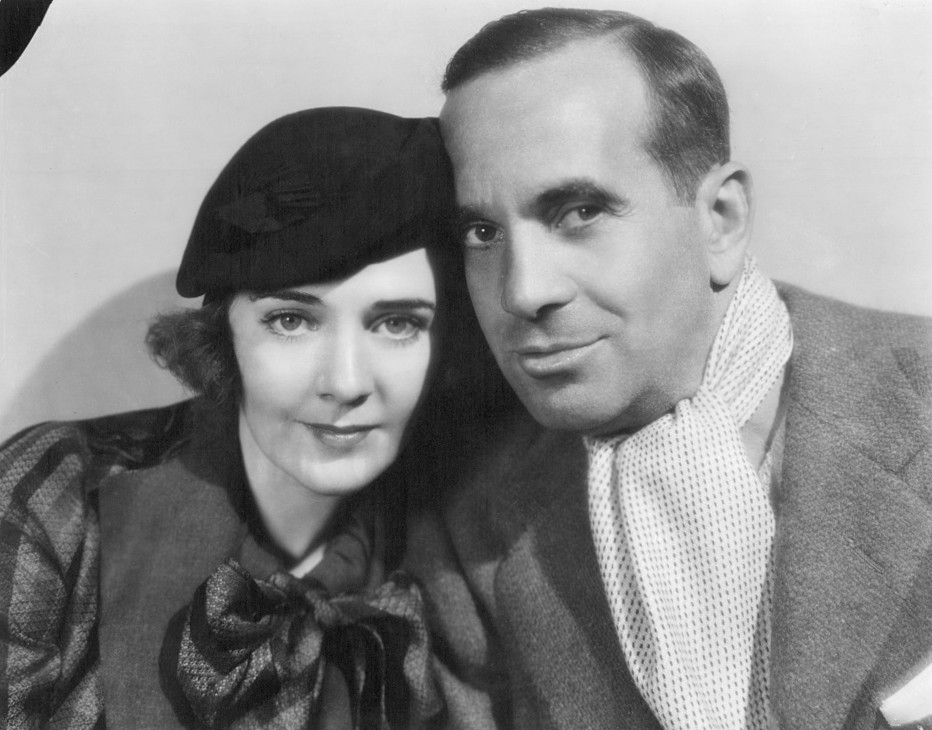
![Ruby Keeler Al Jolson 1934][float-right] Warner Bros. acquired the rights to the 1931 Broadway musical Wonder Bar in 1933, adapting it into a film to capitalize on the cinematic potential of its nightclub setting and serve as a comeback vehicle for Al Jolson, whose career had waned after the initial talkie success of The Jazz Singer in 1927. The studio's decision reflected Jolson's starring role in the original stage production and his push for a high-profile return amid the evolving sound era, where vaudeville performers faced adaptation hurdles to the silver screen's demands. Screenwriter Houston Branch, along with Robert Lord, modified to emphasize visual spectacle suited to film, expanding sequences under Busby Berkeley's direction to exploit camera techniques unattainable on , such as overhead shots and intricate formations that transformed static musical numbers into dynamic cinematic events. These alterations differentiated the from theatrical constraints, incorporating amplified performative elements like elaborate production numbers to heighten the film's allure in the competitive musical . Additionally, introduced risqué pre-Code content, including suggestive themes of , racial , and , which leveraged the nightclub's decadent atmosphere without moralistic resolution. The adaptation occurred against the backdrop of the impending strict enforcement of the Motion Picture Production Code on July 1, 1934, allowing Wonder Bar to retain unrestricted elements that would soon be curtailed. Released on , 1934, the film positioned itself as one of the final major pre-Code musicals, embracing moral ambiguity and titillation to draw audiences before industry self-censorship tightened. This timing amplified its transformative appeal, blending Broadway's intimate revue style with Hollywood's grandiose .

Production

Casting and Key Personnel

Al Jolson was selected to portray Al Wonder, the proprietor, reprising the role he originated in the Broadway production that premiered on March 17, 1931, at the Theatre in , where he also served as co-producer alongside Morris Gest and received a $5,000 weekly salary for 76 performances. His extensive career, including pioneering routines and dynamic stage presence honed in revues like La Belle Paree (1923), infused the character's emcee-style performances with an authentic energy drawn from real environments, grounding the film's depiction of Parisian nightlife in Jolson's firsthand showmanship expertise. Supporting roles featured Dolores del Río as Inez, leveraging her background in dramatic and dance-oriented films like Bird of Paradise (1932) to embody the tango partner's sensuality; Ricardo Cortez as the husband figure, capitalizing on his established screen persona for sophisticated antagonists seen in Warner Bros. vehicles; Kay Francis as Liane Renaud, her top-billed status and poise from hits like Trouble in Paradise (1932) adding dramatic weight to the ensemble; and Dick Powell as Tommy, whose fresh appeal from breakout musicals such as 42nd Street (1933) aligned with Warner Bros.' strategy to pair youthful energy with veteran stars for broad market draw. This casting emphasized star power within the studio's musical roster, fostering a tone of glamorous yet gritty interpersonal dynamics reflective of pre-Code era ensemble pieces. Lloyd Bacon directed, applying his Warner Bros. tenure directing hybrid musical-dramas like (1933) to orchestrate the film's blend of dialogue-driven tension and spectacle. Producer Robert Lord supervised the adaptation, ensuring fidelity to the source while adapting for cinematic scope. Songwriters (lyrics) and (music) crafted originals including "Why Do I Dream Those Dreams," building on their proven synergy from prior Warner hits to embed infectious, era-specific tunes that enhanced the nightclub's rhythmic authenticity without overshadowing narrative threads. Their contributions, rooted in conventions tailored for screen, helped sustain the film's musical cohesion amid its dramatic elements.

Filming Process

Principal photography for Wonder Bar took place entirely at studios in , beginning in late 1933 to capture the film's Parisian nightclub setting without any on-location shooting in . Elaborate studio sets were constructed to replicate the vibrant, decadent atmosphere of a 1930s cabaret, featuring multi-level interiors with tiered seating, ornate lighting, and bustling crowd scenes that simulated a single night's events in the fictional Wonder Bar. Director Lloyd Bacon focused on dynamic to translate the musical's stage-bound origins into cinematic fluidity, particularly in dance sequences choreographed by , who employed overhead crane shots via an iron track system installed on the soundstage roof to achieve innovative aerial perspectives of performers. This approach contrasted the static Broadway production by emphasizing movement and scale, with challenges arising in coordinating large ensembles and props to maintain the illusion of a lively, continuous venue. For dramatic interludes, such as the tango "cut-in" sequence, Bacon staged interjections with precise timing to heighten tension, relying on rehearsal precision to execute the scene's provocative staging amid the pre-Code era's loosening restrictions. Al Jolson performed vocals live on set for key numbers like "Vive la France," insisting this method preserved the spontaneous energy unattainable through post-dubbing, which influenced sound recording techniques to sync his improvisational style with the action. Filming wrapped in early 1934, allowing — including and —to conclude in time for the film's March 31 release, mere months before the Motion Picture Production Code's stricter enforcement on July 1.

Technical Aspects

The film employed black-and-white cinematography captured by Sol Polito on 35mm film in the Academy aspect ratio of 1.37:1. This standard for early sound-era Warner Bros. productions facilitated wide shots for ensemble chorus numbers, emphasizing spatial depth in cabaret settings, while closer framing supported dramatic intimacy in low-light nocturnal sequences. Audio was recorded in mono sound mix, with directed to foreground vocal performances and synchronized ensemble dances through balanced mixing that prioritized clarity over spatial effects typical of the period's Vitaphone-derived technology. Musical staging by incorporated geometric formations in finale sequences, achieved via overhead camera angles and multi-plane compositions without elaborate mechanical rigs, contributing to the film's rhythmic visual-musical integration. At 84 minutes in length and structured across approximately 10 reels, the production relied on seamless, unadorned cuts between spoken drama and song-dance interludes, leveraging pre-1934 enforcement laxity to maintain narrative flow without censorship delays. Absent processes, the monochromatic palette enhanced the era's aesthetic through high-contrast lighting that accentuated set elements and performer silhouettes.

Synopsis

Primary Narratives

The primary narrative arc of Wonder Bar revolves around the strained romantic entanglement between , a dancer at the Parisian played by , and her performing partner Harry Barrere, portrayed by . Inez professes unwavering love for Harry, yet he pursues an illicit affair with Liane, enacted by , who is married to the prosperous industrialist . This triangle of desire and unfolds amid the club's nocturnal revelry on a single evening in 1934, heightening tensions as Harry's plans to elope with Liane threaten to shatter Inez's world. Club proprietor and emcee Al Wonder, performed by , complicates the dynamic through his own unrequited affection for , positioning him as both observer and enabler of the venue's emotional undercurrents. Al's devotion manifests in subtle interventions, such as entertaining patrons and maintaining the club's facade of glamour, while he grapples with Inez's fixation on Harry. His role underscores the film's ensemble framework, where personal yearnings intersect with the nightclub's permissive atmosphere, fostering jealousy without immediate resolution. The arc culminates in a violent confrontation driven by Inez's , resulting in Harry's at her hands as he prepares to depart with Liane. Al, aware of the act, orchestrates a by placing Harry's body in 's vehicle; , despondent over his wife's betrayal, subsequently drives the car off a cliff in an apparent , leading authorities to conclude both men perished in an accident. This sequence concludes the core storyline on December 31, 1933, within the film's timeline, emphasizing raw human impulses over punitive consequences.

Interwoven Subplots

In addition to the central romantic entanglements, Wonder Bar weaves secondary narratives centered on the nightclub's diverse patrons, creating a tapestry of human desperation and frivolity within the confined Parisian setting. A key subplot involves Captain von Ferring, a German officer played by , who faces financial devastation from failed speculations and contemplates as an escape from his ruined life. His brooding presence amid the club's introduces stark realism, with interactions revealing opportunistic responses from staff and fellow patrons who dismiss rather than earnestly intervene in his plight, highlighting the film's casual treatment of mortality. Contrasting this gravity, comic threads emerge from middle-class American tourists seeking escapism through excess. Henpecked husbands, portrayed by and alongside their domineering wives ( and ), descend on the Wonder Bar from Schenectady to drown frustrations in , indulging in flirtations with hostesses and bumbling attempts at sophistication. These vignettes satirize the clash between provincial mundanity and the elite's moral laxity, as the couples' inebriated antics—marked by failed seductions and petty jealousies—underscore class-based absurdities without resolution. These interwoven elements eschew linear arcs in favor of serendipitous collisions, amplifying tension through patrons' misperceptions of the club's chaotic undercurrents, such as conflating staged theatrics with genuine peril. This structure fosters moral ambiguity, where opportunistic maneuvers and overlooked despair propel the ensemble toward an inconclusive finale, prioritizing episodic realism over didactic closure.

Musical Sequences

Key Numbers and Performances

The musical sequences in Wonder Bar prominently feature as the nightclub emcee Al Wonder, leveraging song and dance to reveal character dynamics and performer versatility within the film's framework. Jolson's opening performances, including "Vive La France," immediately assert his commanding stage presence and improvisational flair, framing the evening's entertainment and underscoring his role as the venue's charismatic anchor. A pivotal dance number involves and in a tense routine, marked by dramatic flourishes such as whipping motions that highlight their partnership's underlying volatility; Jolson interjects by cutting in on del Río, injecting humor and surprise while displaying his own agile footwork and ability to command attention mid-performance, thus advancing interpersonal rivalries through physical interplay. The production closes with the elaborate "Goin' to Heaven on a Mule," staged by , where Jolson—in —leads a large ensemble chorus in a high-energy homage, incorporating synchronized dances among diverse performers to deliver a visually opulent spectacle that caps the night's revelry and spotlights Jolson's vocal dynamism and crowd-mobilizing talent.

Pre-Code Characteristics

Depictions of Sexuality and Social Norms

The film Wonder Bar portrays adultery as a routine element of high-society nightlife, with Liane Renaud (played by Kay Francis), a married woman, openly engaging in an affair with the gigolo Harry (Ricardo Cortez), who exploits her affection while pursuing financial gain through her necklace. This infidelity escalates tensions, culminating in Harry's murder by his spurned dance partner Inez (Dolores del Río) during a jealous confrontation, yet neither the affair nor the killing prompts narrative condemnation or legal repercussions. Instead, club proprietor Al Wonder (Al Jolson) facilitates a cover-up by concealing the body in the vehicle of a despondent baron intent on suicide, framing the death as self-inflicted and allowing Inez to evade justice entirely. Such unpunished vice reflects pre-Code Hollywood's tendency to depict human impulses without enforcing didactic moral resolution, prioritizing the observation of desire-driven behavior over redemption. A notable sequence during the "Tango of the " number underscores the film's bold exploration of non-normative attractions, as interrupts the dance between Inez and Harry—already laced with sadomasochistic elements involving a —by cutting in with Harry, leading to a brief, stylized dance between the two men that evokes male-male intimacy or for comedic effect. This "boys will be boys" gag, delivered with Jolson's exaggerated mannerisms, shocked contemporary audiences for its overt implication of , contravening emerging standards that demanded such depictions be absent or punished. The scene's inclusion exemplifies pre-Code defiance, treating taboo attractions as fleeting entertainment within the nightclub's permissive milieu rather than subjects for moral outrage. The nightclub serves as a microcosm of relativized social norms, where polyamorous entanglements, predatory liaisons, and commodified sex unfold amid and revelry, with characters like and bored spouses navigating vice as an empirical reality of urban nightlife. Songs such as "" celebrate sexual license through lyrics extolling extended kisses and continental friskiness, satirizing marital fidelity without endorsing or critiquing it. This amoral lens—evident in the casual dismissal of and —aligns with the era's cinematic freedom, observing human frailties as natural occurrences unbound by conventional ethical frameworks.

Racial and Ethnic Elements

In the finale musical number "Goin' to Heaven on a Mule," performs in , portraying a character who ascends to heaven astride a amid a chorus of approximately 200 children dressed as black angels, a sequence that extended his longstanding tradition of such characterizations dating back to the early . This approach aligned with Jolson's career emphasis on emotive, audience-engaging spectacles, often employing as a performative for interpreting African American-derived musical styles, a convention shared among numerous Jewish performers of the era who drew from precedents to bridge stage traditions. The number incorporates dance routines featuring Jolson alongside white tap dancer Hal Le Roy, creating visual interplay between blackface figures and non-blackfaced performers against a heavenly backdrop, which echoed stage and norms where racial boundaries were maintained offstage but occasionally blurred in stylized, segregated productions for dramatic effect. Such elements reflected the commercial imperatives of musicals, prioritizing extravagant Busby Berkeley-choreographed visuals over narrative integration, with no documented production intent to advance or challenge ethnic hierarchies. Ethnic representations elsewhere in the film, including portrayals by non-white actors like as a , adhered to exoticized stereotypes typical of the period's international settings, serving atmospheric function without deeper exploration or subversion of social realities. These choices prioritized box-office spectacle amid prevailing entertainment customs, where and ethnic caricature functioned as inherited tropes from rather than vehicles for explicit commentary.

Reception

Contemporary Box Office and Reviews

Wonder Bar achieved moderate commercial success during its initial release, grossing approximately $2 million worldwide despite the economic constraints of the . Produced at a cost of $675,000, the film represented a profitable venture for , bolstered primarily by Al Jolson's star power following the box-office disappointment of his previous effort, Hallelujah, I'm a Bum (1933). Contemporary reviews highlighted Jolson's charismatic performance and the film's musical highlights as key strengths, with Variety describing it as his effective comeback vehicle, entitling him to 10% of the gross receipts. Critics appreciated the spectacle of Busby Berkeley's and Jolson's renditions, such as "Why Do I Dream Those Dreams," which drew audiences seeking escapist . However, feedback on the was more mixed, with some noting uneven dramatic contributions from supporting players like and amid the interwoven narratives. The film's pre-Code elements, including suggestive sexuality and racial stereotypes in sequences like the "Goin' to Heaven on a Mule" number, elicited thrill rather than widespread offense among 1934 audiences, contributing to its appeal without prompting notable bans or backlash prior to the enforcement of the Production Code in July of that year.

Later Critical Evaluations

In the decades following the enforcement of the Production Code, later critics valued Wonder Bar for exemplifying pre-Code Hollywood's uncensored realism, particularly its depiction of amoral Parisian without heavy moral judgment. A analysis in Senses of Cinema described the film as "a wonderfully prurient movie," obsessed with marital and commodified , yet refusing to moralize seriously, thereby serving as a "limit text" of studio-era creativity that affronted conventional standards of taste. This perspective highlights the film's role in capturing Depression-era through jazz-infused traditions, unburdened by post-1934 constraints. Evaluations of the film's racial elements, including Al Jolson's blackface performance in the finale "Goin' to Heaven on a Mule," have diverged, with some post-1960s scholarship contextualizing it as a product of conventions where functioned as emulation of admired black musical styles rather than explicit signaling of supremacy. Historical defenses, drawing on Jolson's documented support for African-American performers like and , frame his approach as a form of rooted in the era's theatrical norms, where the practice was widespread among white entertainers paying homage to traditions. In contrast, modern deconstructions emphasize its perpetuation of grotesque stereotypes, deeming the sequence appalling by contemporary standards and symptomatic of broader racial appropriation in 1930s cinema. The film's musical spectacle, particularly Busby Berkeley's choreography, has garnered praise for innovative visual techniques, such as the use of mirrors to create infinite reflections in dance sequences and the intimate in "Don't Say Goodnight," which blend Art Deco aesthetics with dreamlike extravagance. However, critics have identified structural flaws, including uneven pacing exacerbated by protracted musical numbers that disrupt momentum and render portions of the film slow and interminable. These assessments prioritize the film's artistic intents within its historical causality—such as Berkeley's boundary-pushing geometry—over anachronistic condemnations, though they acknowledge its uneven integration of subplots and performances.

Legacy

Cultural and Historical Significance

Wonder Bar, released on February 12, 1934, exemplifies the pre-Code era's fleeting tolerance for unfiltered cinematic portrayals of vice, infidelity, and moral laxity in a Parisian nightclub setting, where crimes like and cover-ups evade conventional retribution. This depiction of causal sequences—illicit affairs leading to unchecked tragedy without narrative punishment—mirrored real-world ambiguities but clashed with Progressive reformers' demands for didactic resolutions, intensifying pressures for regulatory intervention. The film's timing, mere months before the Motion Picture Production Code's strict enforcement on July 1, 1934, under , positioned it as a capstone to Hollywood's resistance against moral oversight, allowing raw human behaviors that subsequent decades systematically excised in favor of sanitized conformity. Al Jolson's central performance as the nightclub proprietor bridged vaudeville's improvisational vigor with sound-era musicals, leveraging his pioneering role in transitioning cinema from silence via (1927) to infuse Wonder Bar with revue-style dynamism. His blend of dramatic intrigue and performative spectacle advanced hybrid musical-dramas, rooting them in stage traditions while adapting to film's technical possibilities, thus sustaining vaudeville's influence amid evolving audience tastes. By foregrounding unpunished vice and social dissolution without redemptive arcs, Wonder Bar empirically underscored the pre-Code system's vulnerabilities, galvanizing industry to preempt external controls and align with era-specific ethical imperatives. Its European locale further liberated Warner Bros. from domestic constraints, enabling bolder explorations that highlighted the brief interlude of creative autonomy before institutionalized purification.

Preservation and Modern Availability

Wonder Bar (1934) remains under copyright held by Warner Bros., with no lapse into the , enabling controlled distribution through official channels rather than unrestricted free access. The film is available on manufactured-on-demand DVDs via the , preserving the original 84-minute runtime and pre-Code content without mandated alterations or cuts imposed after its March 31, 1934 release. periodically airs the film, offering broadcast viewings that maintain fidelity to the initial Technicolor-tinted black-and-white print. Streaming options include platforms such as Plex, where the full version can be accessed digitally, confirming the unaltered inclusion of its musical sequences and dramatic elements as originally produced. These distribution methods facilitate empirical verification of the film's historical depictions, bypassing interpretive filters by providing direct exposure to aesthetics, including Busby Berkeley's choreography in numbers like "Goin' to Heaven on a Mule." Archival screenings, such as those by the Harvard Film Archive in 2017, further support academic access for studying its production techniques. As of 2025, Wonder Bar holds value in as a preserved example of late , allowing analysis of its ensemble dynamics and Jolson's stage-to-screen transition without reliance on degraded or edited surrogates. No remakes or direct adaptations of the 1934 film have emerged, distinguishing it from more frequently revisited musicals of the era.

References

Add your contribution
Related Hubs
User Avatar
No comments yet.