



Community hub
Recent from talks
Contribute something
Nothing was collected or created yet.
World Passport
View on WikipediaThe World Passport is a fantasy travel document sold by the World Service Authority, a non-profit organization founded by Garry Davis in 1954.[1][2]
Appearance and price
[edit]
The World Passport is similar in appearance to a genuine national passport or other such authentic travel document. In 1979 the World Passport was a 42-page document, with a dark blue cover, and text in Arabic, Chinese, English, French, Russian, Spanish, and Esperanto. It contained a five-page section for medical history and a six-page section for listing organisational affiliation. The fee charged at that time was US$32 plus postage for a three-year World Passport that could be renewed for a further two years.[3]
The version of the World Passport current as of 2017[update] was produced in January 2007. It has an embedded "ghost" photo for security, covered with a plastic film. Its data page is in the format of a machine-readable passport, with an alphanumeric code bar in the machine-readable zone (MRZ) enabling it to be scanned by an optical reader. However, in place of a valid ISO 3166-1 alpha-3 code in the MRZ "issuer" and "nationality" fields, it uses the non-standard code "WSA".
According to the WSA website, the fee is $75 for a three-year World Passport, $100 for five years, and $125 for ten years. A "World Donor Passport" valid for fifteen years with a special cover is issued gratis to donors of at least $500 which, according to the WSA, is used to provide free documents to refugees and stateless persons.[4][5] In addition, the customer can choose between two World Passport covers: "World Passport" or "World Government Passport". The WSA recommends their customers purchase the second option.[6]
A potential customer must provide as proof of identity a notarized certification of the details on the form, a copy of their national identity papers, or a fingerprint from their right index finger.[4] People have been known to obtain World Passports in names other than their legal names; see the relevant section below.
-
 Renewals page.
 -
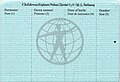 Children's information page.
 -
 Notes.
 -
 Affiliations page.
 -
 Visa page.
 -
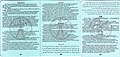 Attention.


As a travel document
[edit]The appearance is so similar to a genuine passport that in 1974 a criminal case was lodged against Garry Davis in France regarding his sale of World Passports.[7]
According to the WSA, the version of the document introduced in 2007 was filed as a Machine Readable Travel Document (MRTD) with the International Civil Aviation Organization (ICAO).[8] However, ICAO documents on MRTDs cite the World Service Authority and its World Passport as an example of "Fantasy Documents".[9][10]

Notable acceptances
[edit]Success in crossing a border using a World Passport is generally attributable to the whim or ignorance of individual immigration officers, not official recognition of the document.[11] The World Service Authority website has scans of letters dating from many decades ago from six countries (Burkina Faso, Ecuador, Mauritania, Tanzania, Togo, and Zambia) which the WSA claims is legal recognition of the World Passports. These letters of recognition are several decades old (1954 for Ecuador, 1972 for Burkina Faso, 1975 for Mauritania, 1995 for Tanzania, 1983 for Togo, 1973 for Zambia).[12][needs update]
According to the World Service Authority website, some World Passports have reportedly been accepted on a case-by-case basis by over 180 countries (i.e., they have been stamped with a national visa or entry or exit stamp), and according to the World Service Authority some countries in the past accorded the document legal recognition.[13][14][non-primary source needed]
The World Passport came under increased international scrutiny in 1996, after the hijacking of the MS Achille Lauro. In the aftermath of the incident, one of the captured hijackers, Youssef Majed al-Molqi, escaped imprisonment in Italy and used a World Passport which he had purchased in 1988 to leave the country and travel to Spain before he was recaptured.[15][16][17]
Notable rejections
[edit]Many countries and territories say they do not recognize the World Passport because it is not issued by a competent government authority, and thus does not meet the definition of a passport. By 1975, Garry Davis had already been detained twenty times for his attempts to cross international borders with a World Passport.[18]
Commonwealth of Independent States
[edit]The Russian government states that it does not recognise the World Passport. In a 1995 interview with Kommersant, a spokesman for the Russian Ministry of Foreign Affairs' Department of Consular Services stated that the World Passport is not an acceptable document for proving identity or citizenship status at Russian border crossings; only a diplomatic passport, official passport, seaman's passport, or general civil passport are accepted.[19] However, one Russian media report claims that some members of the House of Romanov, travelling to Saint Petersburg for the reburial of the remains of one of their ancestors, were permitted by Russian authorities to obtain visas in their World Passports, in light of the special situation.[20]
In December 2008, a man claiming to be a Russian citizen attempted to cross the border from Latvia into Belarus at the Urbany checkpoint using a World Passport; he stated he lost his Russian documents while in Sweden. He was arrested by the Belarusian border guards. A spokesman for Belarus' State Border Committee in an interview with a local newspaper stated that Belarus does not accept the World Passport at border crossings. He also claimed it was the first known case of its kind in the country.[21][22]
United States
[edit]
The United States Department of State's official position on the World Passport is that it is a booklet produced by a private organisation upon payment of a fee, and not a passport. As early as 1991, the US Air Transport Association specifically included the World Passport in a training film as an example of unacceptable travel papers.[23] In 2012, a Belizean man attempted to enter the U.S. through the Veterans International Bridge at Los Tomates using a World Passport. The man in question had prior felony convictions for drug trafficking and immigration offences, and had previously been deported from the United States multiple times. He claimed that he wanted to speak with President Obama about genocide in Belize. In a bench trial, Judge Andrew S. Hanen found the man guilty of felony attempted re-entry after deportation.[24]
Other countries
[edit]Activist Kenneth O'Keefe tried to travel to Iraq using a World Passport in 2003, but was rejected transit rights by Turkey, and had to apply for an American passport to continue his journey.[25][26]
In 2004, two men from China on board Cathay Pacific Flight 302 from Hong Kong to Guangzhou attempted to pass through immigration at Guangzhou Baiyun International Airport using World Passports. The officers at the airport arrested them for illegal entry.[27]
Also, though Garry Davis claims to have traveled to India using a World Passport and to have given one personally to Jawaharlal Nehru,[28][29] in May 2007 an Indian citizen was arrested for attempting to leave India at Begumpet Airport using a World Passport. The man, intending to travel to the United States, had purchased what he believed was a genuine passport and visa. His travel agency and Air India staff both accepted his World Passport, but Indian immigration did not. The Times of India called it a clear case of "internet fraud" and stated that the man had been "duped".[30]
The Council of the European Union has a table of travel documents entitling the holder to cross external borders of Schengen states and which may be endorsed with a visa; the World Passport is listed as a fantasy passport to which a visa may not be affixed.[2]
In February 2013, both Panama and Costa Rica rejected the use of the World Passport by Sage Million, a fugitive from Hawaii.[31]
Hip-hop artist and actor Yasiin Bey (Mos Def) was arrested in South Africa on January 15, 2016 for attempting to leave the country using a World Passport. He had entered the country using an American passport and had lived in Cape Town since May 2013. South Africa's Department of Home Affairs released a statement saying that Mr. Bey would be allowed to appeal the immigration action and possibly seek permanent residency.[32][33]
Use by refugees and stateless persons
[edit]The World Service Authority sells World Passports to refugees and other people who are unable to obtain valid, authentic travel documents. According to the WSA, refugees in camps are given free World Passports. WSA reports that it "has [given out] more than 10,000 free World Passports to refugees residing in camps throughout the world" and that it "has documentary evidence that the issuance of such passports may permit refugees to leave such camps to seek asylum elsewhere or to claim other rights often denied to refugees".[34] However, many of those refugees have found World Passports to be useless.[23] According to statements by Garry Davis in the mid-1970s, major users of World Passports at the time included persons in Southeast Asia fleeing from wars, as well as holders of Rhodesian passports who were otherwise unable to travel internationally as no other country accepted their documents besides South Africa.[35]
Many East African refugees arriving in Nordic countries in the early 1990s had World Passports.[36] In July 2011, a Georgian citizen attempted to pass through Latvian border control with a World Passport, though he also had a valid Georgian passport in his possession; after presenting his World Passport, he requested asylum in Latvia.[37]
Another category of users of World Passports are stowaways on ships. Vessel owners are legally responsible for the stowaways until they can find a country to let them ashore, but countries are often reluctant due to questions over the validity of the stowaways' documents. From 1992 to 2006 the WSA sold their document to such individuals on five occasions.[38]
As an identity document
[edit]The World Service Authority promotes the World Passport not just as a document for international travel, but a "neutral, apolitical document of identity".[39] Investor Doug Casey, himself a World Passport customer, has suggested that a World Passport is useful at hotels and other non-governmental institutions where security is uncertain; if one is asked to hand over one's real passport in such situations, one can provide the World Passport instead of a genuine national passport.[40] Governmental authorities do not share this assessment.
The Criminal Records Bureau of the United Kingdom Home Office states that registered bodies should not accept the World Passport as a proof of identity, warning that "a fake 'World Passport' can be purchased online by members of the public and should not be confused with a genuine passport".[41] The Isle of Man's Financial Supervision Commission, which regulates the isle's banks and company formation agents, states that the World Passport is not an acceptable document to prove either the nationality or identity of the bearer. Specifically, it classifies it as a spurious or fantasy passport, a term which it defines to mean as documents which "have the appearance of a passport, but are issued by organisations with no authority and to which no official recognition has been given".[42]
The United States Social Security Administration will also not accept any World Service Authority document (including the World Passport and World Donor Passport) as evidence of identity, age, citizenship, alien status, or marital status for either claims or enumeration purposes.[43] The Virginia Department of Social Services explicitly classifies all World Service Authority documents as "unacceptable documents" for verification of identity.[44] The United States Department of State instructs all U.S. embassies and consulates not to provide any notarial, apostille, or other authentication services in respect of World Passports, whether regarding the World Passport itself or documents relating to the purchase of a World Passport. They warn that such documents could be used for fraudulent or criminal purposes.[45][46] In 1996 a man was able to buy a World Passport in a name that was not his own, but was detected after repeated attempts to use it to prove his identity when opening accounts at various banks in Indiana, without providing a verifiable address or telephone number. He was convicted of fraud on a financial institution.[47]
As a political statement
[edit]Regardless of its almost universal lack of acceptance, an individual may also seek to obtain a World Passport as part of a political statement. A number of Russian citizens have obtained the World Passport as a form of protest against the "red tape" imposed by the Russian government on their own citizens aiming to travel abroad.[48] In 1977, two mayors of West Bank towns bought World Passports during a visit by Garry Davis.[49]
Sale by third parties
[edit].jpg)
Despite its limited acceptance, other entities have also sought to manufacture and sell the fantasy travel document, without the consent of the WSA. The Isle of Man's Financial Supervision Commission reports that they have identified counterfeit World Passports.[42] Also, the first cross-jurisdictional fake passport case ever found in Guangzhou, Guangdong, China, involved counterfeit World Passports. In February 1981, the local Public Security Bureau identified some Hong Kong criminals who were charging World Passport customers HK$18,000 plus CN¥50-100 (roughly US$3,300 at the official exchange rate at that time) in processing fees, and misrepresenting to them that World Passport customers could settle in any country in the world.[50]
As mentioned above, Russia does not accept World Passports, but in the 1990s, many company formation agents in Russia sold the World Passport together in a package-deal with the setup of an offshore company (international business company), and falsely claimed that all countries of the world accept it as an identity document.[19] In some cases, such companies charged up to US$1,000 for the document alone.[51]
In Malaysia in 1994, a Nigerian man was arrested at the Central Market, Kuala Lumpur by tourist police during an identity check, after he showed a World Passport. A search of his belongings showed that he carried a total of five World Passports, as well as a real Nigerian passport that had been used by another person to travel to Malaysia and Hong Kong. Authorities suspected he might have been trying to sell the fantasy travel documents to other foreign nationals lacking valid travel documents.[52]
Notable World Passport owners
[edit]Many notable people have owned World Passports. Although some may have purchased them, the WSA typically gives them to prominent people. Garry Davis, the WSA founder, owned World Passport No. 1, originally manufactured in 1954.[53][54]
Entertainers who have been given or purchased World Passports include violinist Yehudi Menuhin,[55] actor Patrick Stewart,[56][57][58] musician and actor Yasiin Bey (Mos Def) and actor LeVar Burton.[59][60][57] Other World Passport holders include activists such as whistleblower Edward Snowden[61][62] and Julian Assange.[63]
Criminals and terrorists who have owned World Passports include Triston Jay Amero, an American man charged with hotel bombings in Bolivia,[11] and Youssef Majed al-Molqi, one of the hijackers of the MS Achille Lauro in 1985.[16][64]
The WSA has awarded a number of "honorary World Passports", though these are without approval from those who received them. These honorary documents have been given to figures including Indian prime minister Jawaharlal Nehru,[28] 34th president of the United States Dwight D. Eisenhower,[65] and last president of Czechoslovakia and first president of the Czech Republic Václav Havel.[66]
See also
[edit]References
[edit]- ^ "What is the World Government of World Citizens?". World Service Authority. Archived from the original on 2013-06-29. Retrieved 2013-07-12.
- ^ a b Table of travel documents entitling the holder to cross the external borders and which may be endorsed with a visa - (Parts II and II) and Part V (documents to which visas cannot be affixed Archived 2011-07-19 at the Wayback Machine. Council of the European Union. 1 December 2008. The World Passport is placed in the latter category.
- ^ 'World' passport termed advisable, an article by John Brannon Albright in the Bangor Daily News, (26 October 1979)
- ^ a b "Application Form". Worldservice.org. Archived from the original on 2017-04-28. Retrieved 2017-05-17.
- ^ "World Service Authority FAQ". World Government of World Citizens. Archived from the original on 19 November 2017. Retrieved 9 November 2017.
- ^ "Passport Cover Choice". Archived from the original on 2018-01-28. Retrieved 2018-01-28.
- ^ World Citizen, by Mark Blackburn, The Leader-Post, Regina, 31 May 1974, p30
- ^ "THE WORLD PASSPORT". worldservice.org. Archived from the original on 2007-02-25. Retrieved 2007-02-25.
- ^ "International Civil Aviation Organization Regional Seminar on MRTDs, Biometrics and Border Security, 27-29 November 2012, p30" (PDF). Archived (PDF) from the original on 10 November 2017. Retrieved 9 November 2017.
- ^ "International Civil Aviation TECHNICAL ADVISORY GROUP ON MACHINE READABLE TRAVEL DOCUMENTS, TAG-MRTD/16, WP/5, 13/9/05, section 2.1.1" (PDF). Archived (PDF) from the original on 2017-11-10. Retrieved 2017-11-09.
- ^ a b What's a World Passport? Archived 2006-05-19 at the Wayback Machine article by Daniel Engber in slate.com (March 24, 2006)
- ^ "WSA Passport Acceptance - Visas on WSA Passports". www.worldservice.org. World Government of World Citizens. Archived from the original on 1 December 2014. Retrieved 4 December 2014.
- ^ "visas - World Government of World Citizen". World Service Authority. Archived from the original on 2013-07-16. Retrieved 2013-07-11.
- ^ "WSA Passport Acceptance - Visas on WSA Passports". worldgovernment.org. Archived from the original on 2011-05-12. Retrieved 2010-02-03.
- ^ Achille Lauro killer likely fled to Algeria: Furloughed terrorist used documents from U.S. to escape, Peggy Polk, The Washington Times (22 March 1996)
- ^ a b Private 'authority' issues passports: Escaped terrorist among recipients[permanent dead link], Paige Bowers, The Washington Times (22 March 1996)
- ^ "State Department Briefing, Friday, March 22". Archived from the original on 2011-07-25. Retrieved 2011-06-06.
- ^ Oddities in the news, article in The Calgary Herald (5 May 1975)
- ^ a b Лучший Способ Потерять Деньги Archived 2012-10-18 at the Wayback Machine, an article by Svetlana Branitskaya (18 June 1995) in Kommersant
- ^ Паспорт, который только в Африке паспорт Archived 2011-08-11 at the Wayback Machine, an article by Valeriya Mozganova on Travel.ru (22 January 1997)
- ^ Белорусские пограничники задержали гражданина мира Archived 2012-03-31 at the Wayback Machine, an article from Lenta.ru (23 December 2008)
- ^ Полоцкие пограничники поймали гражданина мира Archived 2012-03-27 at the Wayback Machine, an article from Naviny.by (23 December 2008)
- ^ a b Documents for Refugees Criticized as Passports to Heartbreak, article by Karlyn Barker in The Washington Post (10 December 1991)
- ^ 'World Passport' didn't work on bridge[permanent dead link], an article from The Brownsville Herald (February 21, 2012)
- ^ Electing to leave: A reader's guide to expatriating on November 3 Archived 2011-06-08 at the Wayback Machine, article by Bryant Urstadt in Harper's Magazine (October 2004)
- ^ Ken O'Keefe - On Being a World Citizen Archived 2011-05-17 at the Wayback Machine, article by Tim King in Salem News (10 May 2011)
- ^ "持"世界护照"入境?白云边检识破偷渡者_新闻中心_新浪网". News.sina.com.cn. Archived from the original on 2016-03-03. Retrieved 2017-05-17.
- ^ a b 'World Passport' Given to Nehru by Garry Davis Archived 2012-11-08 at the Wayback Machine, a Chicago Daily Tribune article (9 June 1956)
- ^ Excludable alien with world passport, a Times of India article (10 December 2002)
- ^ 'World passport' to nowhere, The Times of India article (24 May 2007)
- ^ American Fugitive Expat Sage Million Hiding in Volcan, Panama Guide article (4 April 2013)
- ^ "Rapper Mos Def ordered to leave South Africa in passport row". BBC News. 2016-01-15. Archived from the original on 2017-06-22. Retrieved 2017-05-17.
- ^ "Mos Def Was Arrested in South Africa for Using a 'World Passport.' Yes, That's a Real Thing". Foreign Policy. 2016-01-15. Archived from the original on 2017-03-27. Retrieved 2017-05-17.
- ^ "World Citizen News - Articles". worldcitnews.org. Archived from the original on 2017-04-23. Retrieved 2019-05-22.
- ^ U.S. Native advocates borderless world[permanent dead link], an article in The Southeast Missourian (27 August 1975)
- ^ 'People Smugglers' Send New Tide of Refugees Onto Nordic Shores Archived 2017-11-10 at the Wayback Machine, article by Henry Kamm in The New York Times (15 February 1993)
- ^ Georgian citizen presents World Passport to Latvian border guards Archived 2012-04-04 at the Wayback Machine, an article by Alla Petrova in The Baltic Course, 27 July 2011
- ^ Stowaway: A man with no country. From port to port, he is trapped on a ship. Archived 2012-09-15 at the Wayback Machine, article by Gaiutra Bahadur in The Philadelphia Inquirer (30 January 2006)
- ^ "World Government of World Citizens : The World Passport". Worldservice.org. Archived from the original on 2017-05-13. Retrieved 2017-05-17.
- ^ "Doug Casey on Second Passports". International Man. Archived from the original on 2013-01-14. Retrieved 2011-06-02.
- ^ "Archived copy" (PDF). Archived from the original (PDF) on 2011-08-07. Retrieved 2011-06-11.
{{cite web}}: CS1 maint: archived copy as title (link) - ^ a b "Financial Supervision Commission - PUBLIC WARNING - FALSE IDENTITY DOCUMENTS". Archived from the original on 2009-07-20. Retrieved 2009-05-27.
- ^ "SSA - POMS: RM 10210.720 - Other and Novelty Birth Records - 05/02/2011". Secure.ssa.gov. Archived from the original on 2017-03-20. Retrieved 2017-05-17.
- ^ Virginia Department of Social Services; Auxiliary Grant Program, NOn Financial REquirements, Volume II, Part III, Chapter C Archived 2011-10-01 at the Wayback Machine, page 6
- ^ 7 FAM 890 UNUSUAL NOTARIAL REQUESTS . See: "7 FAM 893 NOTARIZATION OF WORLD SERVICE AUTHORITY-RELATED DOCUMENTS" (28 December 2007).
- ^ Message re apostille issues, Department of State (8 July 2004)
- ^ "APPEAL FROM THE MARION SUPERIOR COURT - Cause No. 49G01-9611-CF-194134". www.in.gov. 3 September 1998. Archived from the original on 26 October 2017. Retrieved 2017-05-17.
- ^ Зачем россияне становятся Гражданами Мира? Archived 2011-09-03 at the Wayback Machine, an article in Abakan Gazeta (17 September 2009)
- ^ World Citizen Makes Offer To Arabs, an article in the Observer-Reporter (January 22, 1977)
- ^ 警界纵横 Archived 2011-07-20 at the Wayback Machine, on the website of the Guangzhou Public Security Bureau, gzjd.gov.cn
- ^ Осторожно: стантия лоховская. Не пытайтесь стать "гражданином мира" Archived 2012-03-30 at the Wayback Machine, article by Sergey Zatsepin in Argumenty i Fakty (5 February 1997)
- ^ Nigerian with 'World Passports' detained, an article in the New Straits Times (20 May 1994)
- ^ A Talk With the Holder Of World Passport No. 1: "Passports Are a Joke" Archived 2018-07-23 at the Wayback Machine, article by Harry Benson in The New York Times (October 18, 1970)
- ^ "Garry Davis - History". garrydavis.org. Archived from the original on 2012-06-26. Retrieved 2013-07-24.
- ^ Davis, Garry (1984). World Government, Ready Or Not!. World Government House. ISBN 9780931545009. Retrieved 2016-10-09.
- ^ "Archived copy" (PDF). Archived (PDF) from the original on 2018-02-16. Retrieved 2018-02-16.
{{cite web}}: CS1 maint: archived copy as title (link) - ^ a b Davis, Garry (3 October 2000). Dear World, A Global Odyssey. Xlibris Corporation. ISBN 9781453550625. Archived from the original on 2018-02-16. Retrieved 2018-02-16.
- ^ Davis, Hilda Emery; Davis, Garry (30 January 2004). Letters to World Citizens. World Government House. ISBN 9780970648372. Archived from the original on 2018-02-16. Retrieved 2018-02-16.
- ^ "Archived copy" (PDF). Archived (PDF) from the original on 2018-02-16. Retrieved 2018-02-16.
{{cite web}}: CS1 maint: archived copy as title (link) - ^ Davis, Hilda Emery; Davis, Garry (30 January 2004). Letters to World Citizens. World Government House. ISBN 9780970648372. Archived from the original on 2018-02-16. Retrieved 2018-02-16.
- ^ World Service [@worldcitizengov] (8 July 2013). "World Service Authority issues World Passport to Edward Snowden based on Universal Declaration of Human Rights" (Tweet) – via Twitter.
- ^ "Release Details". ExpertClick. Archived from the original on 2017-11-09. Retrieved 2017-05-17.
- ^ "Release Details". ExpertClick. Archived from the original on 2016-11-10. Retrieved 2017-05-17.
- ^ We issue passports so people can escape injustice, not elude justice.[permanent dead link], The Washington Times, (March 27, 1996)
- ^ "'Wolrld Citizen' Calls on Nehru" (PDF). Onefilms.com. Archived from the original (PDF) on 2016-07-14. Retrieved 2017-05-17.
- ^ Hilda Emery Davis; Garry Davis (2004-01-30). Letters to World Citizens. World Government House. p. 100. ISBN 9780970648372. Retrieved 2017-05-17 – via Google Books.
External links
[edit]- Asylum seekers try their luck with 'world passport', article by Matthew Vella in Malta Today (7 February 2010)
- The World Passport on the World Service Authority website
- UNHCR document written by the Refugee and Immigration Board of Canada
- Mark Charles Thomas' case: "99-1334 -- U.S. v. Thomas". Rominger Legal. 2000-07-07. Archived from the original on 2010-02-06.
- April Carter (4 July 2013). The Political Theory of Global Citizenship. Routledge. ISBN 978-1-134-70108-7.
| |||||||||||||||||||||||
| |||||||||||||||||||||||
| |||||||||||||||||||||||
| |||||||||||||||||||||||


Global governance and identity | |
|---|---|
| Proposals | |
| Theories | |
| Organisations | |
| Provisional government | |

World Passport
View on GrokipediaHistory and Origins
Garry Davis and the World Citizenship Movement
Garry Davis, born Sol Gareth Davis on July 27, 1921, served as a bomber pilot in the United States Army Air Forces during World War II, participating in missions over Europe that contributed to the Allied bombing campaign.[8] Following the war's end in 1945, Davis experienced a profound shift toward pacifism, attributing his transformation to remorse over the destruction caused by aerial bombings and a broader rejection of militarism in favor of global unity to prevent future conflicts.[9] This ideological pivot, rooted in his firsthand exposure to warfare's human cost, led him to advocate for supranational identity, arguing that national allegiances perpetuated division and war.[10] On May 25, 1948, Davis formally renounced his U.S. citizenship at the American Embassy in Paris, declaring himself a "citizen of the world" as a symbolic act to promote one-world government ideals and challenge exclusive national sovereignty.[8] Influenced by post-war movements for federal world governance, Davis viewed citizenship renunciation as a personal affirmation of humanity's shared allegiance over state boundaries, drawing from principles outlined in documents like the preamble to the United Nations Charter, which he interpreted as implying universal human rights transcending nations.[11] In November 1948, Davis and supporters disrupted a session of the United Nations General Assembly in Paris by entering the chamber uninvited and demanding recognition for world citizenship, an action that briefly halted proceedings and garnered international media attention.[8] This protest catalyzed the formation of the World Government of World Citizens, a movement Davis founded to lobby for a world constitutional convention and supranational governance as antidotes to nationalism-driven conflicts.[12] The initiative positioned world citizenship as a practical ethic derived from Davis's veteran experiences, emphasizing causal prevention of war through eroded national barriers rather than reformed diplomacy alone.[13]Establishment of the World Service Authority
The World Service Authority (WSA) was founded on January 1, 1954, by Garry Davis in New York City as the administrative organ of the self-proclaimed World Government of World Citizens, which Davis had declared in 1953 following registrations of over 750,000 individuals as world citizens.[3] [14] This entity emerged from Davis's post-World War II activism, including his 1948 renunciation of U.S. citizenship to protest nationalism and advocate for global governance under universal human rights principles.[3] Structured as a private non-profit organization—later incorporated in the District of Columbia—WSA lacks any formal endorsement, treaty, or authority from sovereign governments or international bodies like the United Nations.[15] WSA's establishment addressed practical demands for documentation arising from the world citizenship registrations initiated in 1949, positioning itself to issue identity and travel papers enforceable under what it terms "world law."[3] The organization's inaugural activity included the first issuance of World Passports in June 1954, with early distributions aimed at stateless persons, refugees displaced by conflicts, and dissidents facing national restrictions on movement.[16] These documents were produced without reliance on state infrastructure, relying instead on Davis's interpretation of foundational texts such as the Universal Declaration of Human Rights as granting supranational citizenship rights.[3] From inception, WSA operated independently of governmental oversight, self-funding through application fees and donations while asserting administrative functions like registration and certification to promote a borderless global polity.[15] Its claims to issue valid travel instruments stem from a unilateral declaration of world government authority, unratified by any interstate agreement and routinely rejected by border authorities as lacking legal force under municipal immigration laws.[3]Development and Iterations of the Document
The World Passport was first issued in 1954 by the World Service Authority (WSA) as a rudimentary booklet designed to symbolize world citizenship, lacking the standardized security or formatting of national passports.[1] Early versions featured basic personal data pages and visa spaces but omitted machine-readable elements or advanced anti-forgery measures, reflecting the document's origins as a symbolic assertion rather than a technically compliant travel instrument.[17] Subsequent iterations in the 1980s incorporated a machine-readable zone (MRZ) to approximate International Civil Aviation Organization (ICAO) standards outlined in Doc 9303 for machine-readable travel documents (MRTD), enabling potential scanning by automated systems despite the absence of sovereign endorsement.[1] This update aimed to enhance usability amid global shifts toward digitized border controls, though the WSA's version remained uncertified by ICAO or member states. By the 2000s, further adaptations included "ghost" security paper with embedded logos and images visible under specific lighting, laminated data pages with scanned photographs simulating biometric verification, and a 30-page format printed in seven languages, all intended to deter counterfeiting without integrating electronic chips or holographic overlays found in official e-passports.[2] These modifications, while improving mimicry of legitimate documents, did not secure formal recognition, as evidenced by consistent rejections from bodies like the U.S. State Department.[18] The WSA reports issuing over 500,000 such passports since 1954, primarily during peaks like the late 1980s to mid-1990s amid geopolitical upheavals, though independent verification of issuance volumes is unavailable.[19] No substantive design changes have occurred in the 2020s, underscoring the document's stasis in the face of negligible governmental uptake and evolving international standards for secure travel credentials.[1]Document Features and Issuance
Physical Design and Security Elements
The World Passport is issued as a 30-page booklet designed to resemble conventional national passports in format.[1] It features a dark blue cover embossed with the title "World Passport" printed in seven languages: English, French, Spanish, Arabic, Russian, Chinese, and Esperanto, accompanied by symbolic emblems such as a globe representing universal citizenship.[15] The interior includes dedicated pages for personal data, visas, affiliations, and notes, with the biodata page incorporating a scanned photograph of the holder and an alphanumeric machine-readable zone (MRZ) code line compliant with basic Machine Readable Travel Document (MRTD) standards.[1][2] Security elements in the World Passport are limited compared to those in sovereign-issued passports adhering to International Civil Aviation Organization (ICAO) Doc 9303 specifications. The document employs "ghost" security paper, which embeds faint watermark-like images visible under transmitted light, along with the scanned photo serving as a basic anti-tampering measure.[1][2] However, it lacks advanced features standard in official passports, such as embedded electronic chips for biometric data storage, holographic overlays, optically variable inks, or ultraviolet-reactive elements for covert verification.[6] These omissions render it susceptible to replication without specialized forensic equipment, distinguishing it from state-issued documents fortified against counterfeiting through multi-layered overt, covert, and forensic protections.[20] Unlike camouflage passports or fraudulent forgeries intended for deception, the World Passport is openly marketed and distributed by the World Service Authority (WSA) as a self-proclaimed universal travel instrument, with its design transparently promoted on WSA platforms without claims of mimicking specific national issuances.[1] This overt presentation, including the WSA-issued serial numbers and explicit world citizenship branding, positions it as a novelty or ideological artifact rather than a covert substitute, though its rudimentary security has led to routine identification and rejection at border controls equipped with standard document scanners.[21]Application Requirements and Pricing
Applications for the World Passport are processed by the World Service Authority through online forms or mailed submissions, requiring applicants to furnish basic personal details such as full name, date and place of birth, address, email, phone number, height, eye color, and any distinguishing marks, along with two color passport-sized photographs (approximately 1.5 by 1.5 inches) bearing the applicant's name on the back of one.[22] Identity verification is mandatory via a photocopy of a valid ID, a notarized signature, or a right index fingerprint, but no formal background investigations or criminal record checks are performed.[22] Applicants must also sign an attestation of understanding and data consent form, affirming world citizenship principles and acknowledging that the issuer assumes no responsibility for border authorities' recognition of the document.[22] The application emphasizes accessibility for those renouncing primary national allegiances in favor of universal citizenship, with payments accepted via certified check, international money order, PayPal, or major credit cards; all fees are explicitly non-refundable regardless of processing outcome or document usability.[22] Standard processing requires 4 months, though expedited options are available for additional charges.[23] World Passports are issued with selectable validity periods and corresponding fees, as outlined below:| Validity Period | Cost (USD) |
|---|---|
| 3 years | 75 |
| 5 years | 100 |
| 10 years | 125 |
| 15 years (Donor Passport, via $500 donation to World Refugee Fund) | 500 |