Hubbry Logo
Zoom townZoom townMain
Open search
Zoom town
Community hub
Zoom town
logo
8 pages, 0 posts
0 subscribers
Be the first to start a discussion here.
Zoom town
Zoom town
from Wikipedia
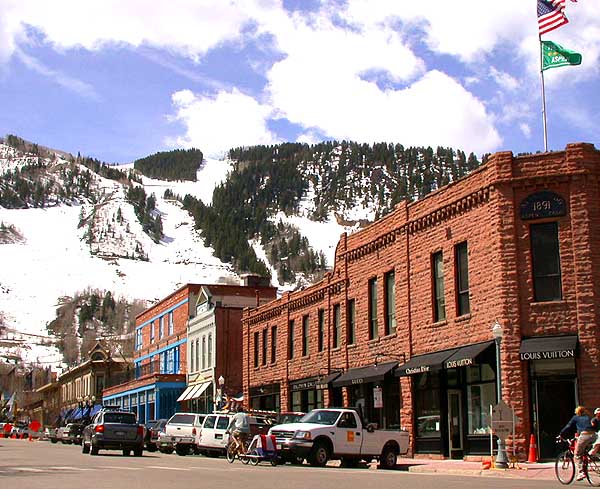
Downtown Aspen, Colorado, an example of a "Zoom town" which has a high number of remote workers that take advantage of outdoor activities such as skiing.

A Zoom town is a community that experiences a significant population increase as due to an influx of remote workers. The term became popular during the COVID-19 pandemic.[1] The population growth of Zoom towns has had significant economic implications.[2][3] The name is a play on "boomtown", a community that undergoes sudden and rapid growth, and Zoom, the videoconferencing software.[4][5]

Definition

[edit]

In 2020, the COVID-19 pandemic led to a significant migration to previous “getaway communities” and small towns near attractions such as ski resorts in conjunction with the increase in popularity of remote work.[6] In March 2020, the pandemic forced many workers to transfer to remote work, and a September Gallup poll showed that nearly 60% of workers remained working remotely full or part time, and two-thirds of employees wanted to stay that way, giving them more flexibility in where to live.[6][7] Before the pandemic, only 10% or fewer of workers in the United States worked remotely full-time.[2]

People working remotely found they could attain some "normalcy" by hiking, biking, skiing, snowshoeing, and other outdoor activities while cities were locked down, and they did not need to commute to work.[8][9] A November study by the Pew Research center found that as a result of the pandemic, around 5% of Americans had moved in the several months prior to the study.[2]

Impact

[edit]
U.S. representative from Alaska Don Young talks to a woman over Zoom.

In the United States, locations such as The Hamptons, New York; Cape Cod, Massachusetts; Aspen, Colorado; Bethel, Maine; and Truckee, California — which are usually considered vacation destinations — saw large spikes in people moving there. Truckee for instance saw a 23% increase.[1][10] On the other hand, cities such as San Francisco, Seattle, and New York City, saw rent levels plunge.[11] This put strain on towns which were not used to handling so many people, with problems such as a lack of affordable housing, availability of public transit, congestion, and income inequality, which have been traditionally thought of as larger city problems.[6]

In the United States, many small western mountain towns have seen significant numbers of very wealthy migrants, leading some observers to call the wealthy zoom towns a "Billionaire Wilderness," taken from the name of a book by Yale University sociologist Justin Farrell.[12] Although the trend was already underway, the sudden rapid migration accelerated it, and led to calls to carefully manage the situation to avoid the places being "loved to death".[13] Many of the areas have tight housing regulations which prevent construction booms, driving up prices for houses already built, as in the Hamptons, which saw a rise in housing prices of up to 25%, and Truckee, which is up 50%.[11] Not all areas experiencing booms see it as a problem, however, and some have even launched initiatives specifically designed to appeal to remote workers.[2] It is expected that remote workers will bring significant tax revenue and will want to give back to their new communities.[5] West Virginia has offered $12,000 to people who move to the state and work remotely.[14] The Zoom town relocation phenomenon peaked in the pandemic's initial years; states like Montana saw extreme net-positive migration flows in 2021. This trend started to shift in later years from initially popular mountain towns to lower-cost, mid-sized cities in the Southeast.[15]

According to the Canadian magazine Maclean's, population-related statistical data in Canada "shows that from July 1, 2019 to July 1, 2020, Toronto and Montreal posted record population losses, while Halifax grew the second-fastest of any major urban area, and Moncton also grew faster than average. Housing prices have soared as people across Canada buy property in the Maritimes sight unseen through virtual tours, with Fredericton’s U-Haul dealer struggling to keep up with all the people renting moving trucks in Ontario and Quebec and trying to drop them off at its lot."[16]

In Europe, some countries such as Italy, Romania, Poland, Latvia, and Bulgaria, which had experienced "brain-drain" in preceding years, found young professionals return home as they began working remotely ,a trend which was further encouraged by some governments in the form of tax breaks for returning citizens.[17] Other places have set up working visa programs specifically for remote workers, such as Anguilla, Barbados, Georgia, Estonia, and Croatia.[18] Following the same trend, Italy began paying people to move to its more remote villages in order to revitalize them.[19] One study early in the pandemic of 30 countries around the world showed that countries in the so-called "developed world" had the easiest shift to working remotely, with Luxembourg coming in at the top, while Nigeria was at the bottom.[20]

Richard Florida and Adam Ozimek wrote in an article in The Wall Street Journal that the shift is expected to have significant economic implications.[2] Before the pandemic, very few companies allowed their employees to do work entirely remotely, and many had a negative perception of remote work, but the pandemic changed that.[5] The "work-from-home experiment" was considered a "resounding – and somewhat unexpected – success" by management experts,[4] and working remotely is expected to remain a significant part of the American workforce, and no longer be seen as a workplace "perk" for a handful of employees in a few more modern companies.[21] Companies that have already announced that remote work will become permanent within their corporation include Twitter, Siemens, Shopify, Facebook, and State Bank of India.[needs update] 74% of venture capitalists and venture-backed entrepreneurs [where?] expect their companies to remain remote for the majority of employees, if not all of them.[4] Other possible effects of people moving to smaller towns include changes in transportation habits, as people drive cars less and feel it less of a necessity to own them, they may opt for ridesharing options if available, and may even increase the demand for self-driving cars.[5]

Examples of Zoom towns and regions

[edit]

See also

[edit]

References

[edit]
Revisions and contributorsEdit on WikipediaRead on Wikipedia
from Grokipedia
A Zoom town is a small or rural that experiences accelerated and market growth driven by an influx of remote workers, a trend that gained prominence during the as video conferencing tools like Zoom enabled location-independent . These areas, often featuring natural amenities such as proximity to mountains, lakes, or , attracted urban professionals seeking lower costs of living, space, and lifestyle improvements over dense metropolitan environments. The term evokes historical boomtowns tied to resource discoveries but substitutes digital connectivity for physical extraction, with early examples including —where remote work fueled explosive expansion—and , alongside gateway communities near ski resorts that saw some of the highest per capita COVID case rates amid the arrivals. This migration boosted local economies through increased demand for housing and services, yet it also sparked tensions over overload, risks in amenity-rich zones, and affordability pressures that sidelined original residents. By 2025, while persistence sustains growth in select metros with high remote worker shares—exemplified by young adults reviving rural demographics—the initial pandemic-fueled surges have moderated in many spots, yielding higher housing inventory and seller challenges amid stabilized patterns and economic shifts.

Origins and Historical Context

Emergence in the COVID-19 Era

The , beginning with widespread lockdowns in March 2020, accelerated the shift to across the , decoupling professional obligations from urban office proximity and enabling mass relocation to less densely populated areas with adequate high-speed infrastructure. This migration targeted "gateway communities"—small towns adjacent to national parks, ski resorts, or natural amenities—where housing demand surged as city dwellers sought space, affordability, and lifestyle improvements amid urban density concerns and health risks. By mid-2020, markets in these locales showed marked appreciation; for instance, , near , recorded a 23% year-over-year increase in home values as of September 2020, driven by remote professionals purchasing second homes or permanent residences. The term "zoom town" emerged in popular discourse around September 2020 to describe these booming housing markets fueled by video conferencing-enabled remote work, as coined in reporting by NPR's Planet Money and subsequent analyses. Western states, particularly those with recreational appeal, experienced the most pronounced effects; Park City, Utah, and Sun Valley, Idaho, registered among the nation's highest per capita population inflows during the initial pandemic year, with newcomers often from coastal tech hubs like San Francisco. A Pew Research Center survey indicated that approximately 5% of U.S. adults—disproportionately younger workers—had relocated due to the pandemic by June 2021, citing remote work flexibility as a primary enabler. This phenomenon represented a rapid amplification of pre-existing telecommuting trends, but the scale was unprecedented: U.S. Census data later confirmed net domestic migration gains in non-metropolitan counties exceeding 1 million residents from April 2020 to July 2021, with many inflows concentrated in amenity-rich rural enclaves. Challenges arose concurrently, including strained local infrastructure and housing shortages, as seen in Utah's gateway towns where pandemic-era arrivals exacerbated planning pressures on water, schools, and services. While initial growth was pandemic-induced, it highlighted access as a causal prerequisite, with towns lacking robust connectivity seeing muted effects despite natural attractions.

Pre-Pandemic Precursors and Analogues

The term "telecommuting" was coined in 1973 by aerospace engineer Jack Nilles during a NASA-funded study aimed at reducing urban through decentralized work arrangements. Early implementations in the , such as IBM's program allowing select employees to work from satellite offices or homes, demonstrated feasibility for knowledge-based roles, but widespread adoption lagged due to technological limitations, employer skepticism, and inadequate infrastructure like high-speed . By the , federal initiatives, including a U.S. Office of Personnel Management experiment involving thousands of government workers, promoted telecommuting to cut commuting costs and emissions, yet only about 7% of the U.S. workforce engaged in it by 1999, primarily in professional sectors. Pre-2020 , hovering at 5.6% of full-time U.S. employees in 2018, did not trigger mass migrations akin to pandemic-era zoom towns, as most arrangements were part-time or hybrid, tethering workers to urban job hubs. However, incremental expansion in rural areas during the facilitated niche influxes of independent professionals, freelancers, and early digital nomads to amenity-rich locales, foreshadowing larger shifts. These movements paralleled "amenity migration," where affluent individuals relocated for natural beauty, lower costs, and lifestyle benefits, often funding stays through portable income sources like consulting or investments rather than local employment. Towns in regions like Colorado's Rockies experienced modest growth from such patterns, building on earlier transitions from extractive economies to service-oriented appeal. Historical analogues to zoom towns lie in resource-driven boomtowns, where sudden economic opportunities decoupled residence from traditional urban or agrarian ties, spurring rapid population surges. The 19th-century mining rushes exemplify this: Colorado's silver boom (1879–1893) swelled Leadville's population from under 500 in 1877 to over 40,000 by 1880, fueled by ore discoveries attracting prospectors and service providers. Similarly, the 1901 Spindletop oil gusher near Beaumont, Texas, transformed a sleepy town into a hub of 50,000 within months, drawing engineers, laborers, and entrepreneurs via rail and telegraph networks that enabled remote coordination. These cases mirror zoom towns' causal dynamics—technological enablers (e.g., drilling tech or video calls) amplifying access to dispersed opportunities—though pre-digital eras lacked the scalability for knowledge work, limiting booms to physical resource proximity. Unlike extractive rushes, which often led to busts upon resource depletion, telecommuting precursors hinted at sustainable, skill-based relocations untied to finite assets.

Definition and Key Characteristics

Core Definition

A zoom town is a small city, town, or rural community that experiences accelerated population growth and economic expansion due to the influx of knowledge workers relocating for remote employment, made feasible by broadband internet and video conferencing platforms such as Zoom. This phenomenon gained prominence following the widespread shift to remote work during the COVID-19 pandemic in 2020, when lockdowns and employer policies decoupled professional obligations from urban office proximity. Unlike transient vacation spots, zoom towns attract permanent or semi-permanent residents seeking sustained lifestyle improvements, with migration patterns evidenced by U.S. Census data showing net domestic inflows to non-metropolitan areas rising by 13% in 2020-2021 compared to pre-pandemic levels. Core attributes include geographic isolation from major hubs, yet accessibility via high-speed , enabling workers from high-cost coastal cities to maintain salaries while benefiting from reduced housing expenses—often 30-50% lower than in origin metros—and proximity to . These locales typically feature populations under 50,000, scenic natural surroundings like national forests or mountains, and pre-existing appeal as seasonal retreats, which transitioned to year-round habitability as normalized; for instance, towns within 10 miles of federal public lands saw remote job postings increase by over 200% in 2020. The term evokes historical "boomtowns" but substitutes resource extraction with digital infrastructure as the causal driver, emphasizing voluntary individual choice over industry-led development. Empirical indicators of zoom town status include surging home prices (e.g., median values rising 20-40% annually in select Western U.S. examples from 2020-2022), expanded commercial for home offices, and demographic shifts toward higher-income, college-educated inflows, as tracked by analytics firms. However, sustained viability depends on reliable gigabit coverage, which covers only about 40% of rural U.S. areas as of 2023, underscoring technological prerequisites over mere desirability. This definition excludes urban suburbs or established exurbs, focusing on locales where remote migration constitutes the dominant growth vector, distinct from organic local employment gains.

Distinguishing Features from Traditional Boomtowns

Zoom towns fundamentally differ from traditional boomtowns in their underlying economic catalysts. Traditional boomtowns, such as those spurred by rushes in the or discoveries in the 20th, relied on the extraction of finite resources, drawing transient laborers to exploit localized opportunities until depletion occurred. In contrast, zoom towns owe their growth to the decoupling of work from physical office locations via broadband internet and remote technologies, enabling knowledge workers to relocate without severing ties to urban or global employers. This shift, accelerated by the starting in 2020, emphasizes lifestyle preferences like access to natural amenities over resource proximity. The sustainability of expansion represents another key divergence. Resource-driven boomtowns typically followed boom-bust trajectories, with populations plummeting post-extraction—evident in abandoned mining camps after the of 1848–1855 or oil busts in places like , during the 1980s downturn. Zoom towns, however, leverage enduring digital infrastructure and stable remote job markets, reducing vulnerability to local resource exhaustion; U.S. Census data from 2020–2021 showed sustained migration to such areas, with potential for diversification into sectors like or tech services if infrastructure scales appropriately. Yet, this stability introduces unique pressures, such as rapid housing price surges—e.g., Bozeman, Montana's median home price reaching $905,000 by 2022—exacerbating local displacement without the outright abandonment seen in historical busts. Demographic profiles further set zoom towns apart. Traditional boomtowns attracted predominantly male, unskilled migrants, often leading to social volatility including and makeshift communities. Zoom towns, by comparison, draw higher-income, educated professionals—typically younger adults under 30 with families—from , injecting and skills that can revitalize local economies but also fuel ; for instance, programs like West Virginia's Ascend initiative targeted 1,000 remote workers by 2026 to harness this talent influx. This professional cohort prioritizes quality-of-life factors like space for home offices and , contrasting the utilitarian, work-centric ethos of resource booms.

Causal Drivers

Technological and Infrastructure Enablers

The proliferation of accessible video conferencing platforms constituted a primary technological enabler for zoom towns, as they decoupled work from physical office proximity. Zoom's daily meeting participants expanded from 10 million in December 2019 to 300 million by mid-2020, reflecting a 2,900% increase driven by pandemic-induced mandates. The platform's mobile and desktop applications were downloaded over 485 million times globally in 2020, enabling seamless virtual collaboration for knowledge workers. Complementary tools, including and Slack integrations, further supported asynchronous communication, reducing reliance on in-person interactions. High-speed broadband infrastructure underpinned this shift, particularly in non-urban areas targeted by zoom town migrations. Prior to the , rural U.S. broadband access stood at 51.6% for speeds of at least 250/25 Mbps in 2018, compared to 94% in urban regions, limiting feasibility in many prospective zoom towns. The crisis accelerated federal and private investments, including the USDA's Community Connect program, which has deployed fiber-optic networks to thousands of rural households since 2002, with evaluations showing sustained speed improvements post-deployment. By 2021, expanded and options, such as early deployments, began bridging gaps in remote locales, allowing upload/download rates sufficient for video calls and cloud-based productivity suites. Emerging mobile technologies, notably networks, have enhanced infrastructure resilience for transient or nomadic remote workers in zoom towns. Initial U.S. rollouts from 2019 onward provided latencies under 10 milliseconds and speeds exceeding 100 Mbps in select rural corridors by 2022, facilitating real-time data syncing and for professional use. These advancements, combined with scalability from providers like , enabled secure access to enterprise resources without local data centers, a prerequisite for sustaining urban-level productivity in dispersed settings.

Economic and Lifestyle Incentives

Remote workers relocating to zoom towns are primarily motivated by substantial reductions in housing and overall living costs relative to large urban centers, allowing them to maintain high-paying remote jobs while enjoying increased purchasing power. For instance, in many emerging zoom towns, median home prices and cost-of-living indices remain lower than in coastal metros like San Francisco or New York, where pre-pandemic averages exceeded $1 million for single-family homes, compared to under $400,000 in places like Boise, Idaho, or Bentonville, Arkansas, as of 2021 data. This economic arbitrage—earning urban salaries in lower-cost locales—has driven net migration gains, with rural and small-town populations increasing by up to 2-3% annually in select areas from 2020 to 2022, per U.S. Census Bureau estimates of remote-enabled inflows. Certain municipalities have amplified these economic pulls through targeted relocation incentives, including cash payments, tax credits, or housing stipends aimed at skilled remote professionals to stimulate local economies. Examples include programs in , offering up to $10,000 in grants for movers committing to two years of residency, and similar initiatives in and that provided $5,000-$10,000 relocation bonuses starting in 2020, resulting in hundreds of acceptances and measurable population upticks by 2022. These policies capitalize on the decoupling of work from geography, enabling towns to compete directly with cities for talent without traditional industrial development. Lifestyle factors further incentivize the shift, as zoom towns often provide superior access to natural amenities, spacious living, and reduced urban stressors, appealing to families and outdoor enthusiasts seeking work-life balance. Residents cite benefits such as proximity to , , and water recreation—evident in destinations like , or —alongside lower crime rates and shorter commutes limited to high-speed setups, fostering a perceived higher than dense city environments. Post-2020 surveys indicate that over 40% of remote migrants prioritized "more space and " over proximity to offices, contributing to a reversal of prior urban flight trends among young adults aged 25-34.

Geographic Distribution and Examples

Prominent U.S. Zoom Towns

Boise, Idaho, exemplifies a prominent Zoom town, experiencing rapid population growth amid the shift to remote work. Between April 2020 and July 2022, Ada County, encompassing Boise, saw a 4.8% population increase, outpacing pre-pandemic rates and driven partly by migrants from high-cost coastal areas seeking affordability and outdoor recreation. The city's median home price surged during this period, reflecting demand from remote professionals, though it later moderated as interest rates rose and some return-to-office mandates took effect by 2022. Bozeman, Montana, underwent a pronounced "Zoom town boom," with home prices rising nearly 50% by early 2021 due to an influx of remote workers from urban centers, attracted to its proximity to and lower living costs relative to or New York. Previously identified as the fastest-growing micropolitan area by numeric population gains in 2015, Bozeman's growth accelerated post-2020, with the population expanding amid a shortage that predated but intensified with the . By 2022, the city was highlighted nationally for its transformation from a quiet to a hub, though local concerns over affordability persisted. Bend, Oregon, emerged as a Pacific Northwest Zoom town, where average residential home prices increased 17% year-over-year by October 2020, fueled by remote workers relocating for its outdoor amenities like skiing and hiking. The influx contributed to a housing crisis, with median home values reaching $733,000 by 2025, though prices dipped 3.6% from the prior year amid broader market cooling. Deschutes County's growth reflected broader trends in amenity-rich areas, where remote work enabled lifestyle-driven migration but strained local resources. South Jordan, Utah, ranked as the top U.S. Zoom town in a 2023 analysis, with approximately 29% of its workforce engaged in remote roles by that year, surpassing national averages and supporting suburban appeal near Salt Lake City. The city's population grew steadily, with employment rising 3.3% from 2022 to 2023, bolstered by Utah's overall remote work participation rate of 37.3% in 2024. This positioned South Jordan as a model for family-oriented, tech-enabled suburbs attracting professionals from pricier metros. Other notable examples include , and , where resort-town dynamics amplified remote worker migrations, leading to housing demand spikes of 20-30% in peak pandemic years, though sustainability debates arose over infrastructure capacity. These towns collectively illustrate how catalyzed demographic shifts toward mid-sized, scenic locales with reliable , though growth tapered by 2023-2025 as hybrid models stabilized.

International and Non-U.S. Examples

In , towns such as , have experienced rapid growth as zoom towns, with remote workers from larger cities like and relocating for proximity to the and opportunities. Canmore's population increased by approximately 5% annually post-2020, driven by high-speed internet expansions and a shift toward hybrid work models that allow professionals in tech and to maintain urban salaries while enjoying lower living costs and natural amenities. Similarly, , in the Kootenay region, has drawn digital nomads and remote employees due to its arts scene, relative to , and reliable , resulting in a 7% rise in home sales to out-of-province buyers between 2021 and 2023. Other examples include , benefiting from its cultural festivals and proximity to , and Tofino, British Columbia, where and coastal isolation appeal to wellness-focused remote professionals, though seasonal complicates year-round . In , depopulated rural areas have leveraged incentives to attract remote workers, fostering zoom town dynamics in regions historically reliant on or . Italy's , a southern village with fewer than 300 residents as of 2020, offers up to €2,000 in grants plus tax exemptions to full-time remote workers earning at least €7,500 annually who commit to five years of residency, aiming to reverse trends exacerbated by economic stagnation. In , provides CHF 25,000 per adult and CHF 10,000 per child to newcomers under 45 who buy or build a home worth at least CHF 200,000 and reside there for 10 years, drawing tech professionals from Zurich and seeking alpine lifestyles amid improved fiber-optic coverage. Greece's island has similarly incentivized relocations with free housing, land grants, and €500 monthly stipends for three years, attracting a handful of remote families and establishing a research outpost that supports hybrid work setups. Beyond North America and Europe, Pucón in Chile's Lake District emerged as a zoom town following the 2020 exodus of over 380,000 residents from Santiago, with remote workers citing the area's volcanic landscapes, lakes, and lower costs—about 30% below urban levels—as key draws, despite challenges like intermittent internet during peak tourist seasons. In Australia, regional centers like Orange, New South Wales, have seen a 15% increase in remote worker inflows since 2021, fueled by viticulture, cooler climates, and government-backed NBN high-speed internet rollout, enabling professionals from Sydney to commute virtually while accessing urban-equivalent amenities. These international cases often involve policy interventions, such as Japan's ¥1 million relocation subsidies for rural moves or Ireland's €2.7 billion rural broadband initiative, which have amplified natural migration drivers but raised concerns over straining local resources in low-density areas.

Economic Impacts

Growth and Revitalization Effects

The influx of remote workers into Zoom towns precipitated notable population growth and economic stimulation, particularly in previously stagnant rural and small-town locales. From 2020 to 2022, these areas experienced heightened net migration, with young adults aged 25-44 reversing prior outmigration patterns at rates unseen in decades, thereby bolstering local labor pools and consumer bases. This demographic shift directly enhanced economic activity by increasing demand for goods and services, leading to expansions in retail, hospitality, and construction sectors that had languished amid chronic depopulation. Specific metrics underscore these revitalization effects; for instance, in —a prototypical Zoom town—home prices escalated by 54% during the height of pandemic-era adoption, fueling a construction surge and ancillary business growth that elevated the metro area's GDP contributions. Mountain communities like , similarly benefited from affluent remote professionals relocating for lifestyle amenities, amplifying year-round spending on recreational and luxury services beyond traditional seasonal . revenues in such locales rose correspondingly, funding public improvements that sustained the influx's momentum. These developments illustrate causal pathways from remote work-enabled mobility to localized , with from migration data and fiscal indicators affirming broader economic multipliers in underserved regions. However, the depth of revitalization varied, with stronger outcomes in areas leveraging assets to retain newcomers long-term.

Drawbacks Including Market Strain

The rapid influx of remote workers into Zoom towns has imposed significant strain on local housing markets, primarily through escalated that outpaces supply, leading to sharp increases and diminished affordability for preexisting . In many such communities, median home prices surged during the early years, with migration accounting for over half of overall U.S. house growth between 2020 and 2022 according to analysis. This dynamic has frequently resulted in locals being priced out, as higher-income newcomers from urban areas compete for limited , fostering and economic displacement. In , a prominent Zoom town, the housing market exemplifies this pressure; home prices in mountain resort counties more than doubled over the 13 years leading to 2025, with single-family median sold prices reaching $18.1 million in the first half of 2025, severely limiting access for year-round working residents and exacerbating a crisis attributed partly to remote worker relocations. , faced similar challenges, where population-driven demand necessitated an estimated 2,770 new housing units annually through 2035 to alleviate shortages, yet rapid price escalation during the boom hindered first-time buyers and locals reliant on moderate wages. These trends have contributed to broader economic drawbacks, including heightened rental costs and reduced homeownership rates among native populations, as supply constraints persist despite subsequent market cooling. Beyond housing, the economic influx has strained municipal budgets and service provision in underprepared towns, with increased demand for infrastructure upgrades often lagging behind , leading to inefficiencies and higher local taxes that disproportionately burden fixed-income households. Reports from affected areas highlight how this uneven growth favors luxury developments catering to affluent remote professionals, sidelining affordable options and perpetuating cycles of without commensurate job creation for unskilled labor. While some communities have seen temporary revenue boosts from sales taxes, the net effect includes vulnerability to out-migration if policies revert, underscoring the fragility of such boom-driven economies.

Social and Demographic Impacts

Population Inflows and Community Changes

Between April and July 2022, high-growth regions in the U.S., often characterized as zoom towns or exurban areas, collectively added over 4.3 million residents, driven primarily by domestic migration from larger metropolitan centers enabled by . U.S. Census Bureau data indicate that nonmetropolitan counties experienced net domestic migration gains, with migration contributing 974,379 people to nonmetro populations between the and 2024 estimates, of which 69% originated from . This influx reversed prior trends of population stagnation or decline in many small towns, particularly in the West and , where states like and recorded the nation's highest growth rates, with Idaho's population increasing by approximately 1.8% annually during the period. Demographic shifts in these communities included a notable influx of working-age adults, especially those aged 25-44, who fueled positive net migration to small towns and rural areas at rates not seen in over a decade. Remote workers, comprising up to 21.6% of the labor force in select zoom towns by 2021—a sharp rise from pre-pandemic levels—tended to be higher-income professionals from urban hubs, leading to elevated median household incomes and increased shares of residents with bachelor's degrees or higher in places like , and . This migration pattern also boosted the proportion of families with children, as evidenced by enrollment surges in local schools; for instance, some gateway communities near national parks saw student populations rise by over 3,000 since 2020. Community fabric evolved with the arrival of these newcomers, manifesting in expanded local economies oriented toward remote professionals, such as enhanced broadband infrastructure and the emergence of co-working spaces tailored to digital nomads. Socially, towns reported heightened among transplants, including volunteerism in and environmental initiatives, though integration varied by locale, with some areas noting cultural adjustments as urban escapees adapted to rural norms. Overall, these changes marked a partial demographic , countering aging populations in many nonmetro areas, as young adults' inflows exceeded outflows to metros for the first time since the .

Criticisms of Gentrification and Local Displacement

Critics contend that the arrival of affluent remote workers in Zoom towns has intensified , driving up housing costs and forcing out lower-income locals who form the backbone of service and manual labor sectors. In , median home prices surged nearly 50% since 2020, plunging the area into an era of worker displacement where service employees, unable to afford local rents averaging over $2,000 monthly by 2023, commute from distant towns or relocate entirely. Local reports highlight cases of teachers and workers facing rent increases of 30-50% post-2020, prompting outflows that strain community ties. Similar patterns emerged in , where the remote worker boom pushed average rents up 74.69% from $1,651 in October 2020 to $2,885 the following year, rendering housing unaffordable for many native residents in and retail. This influx, drawing professionals from high-cost coastal cities, bid up median home prices to around $540,000 by mid-2025, critics argue, sidelining first-time buyers and long-term renters without equivalent salary gains. filings in comparable and Mountain West boom towns rose 35% above pre-pandemic levels by 2024, linked directly to these rent escalations and the conversion of properties to short-term rentals favored by newcomers. Beyond direct displacement, observers note a "spillover " where ousted locals settle in cheaper exurbs, resulting in prolonged commutes—often exceeding 50 miles daily—and elevated transportation expenses that further erode household budgets. advocates, such as those in Montana's gateway towns near Yellowstone, decry the erosion of cultural homogeneity, with influxes altering school demographics and local governance priorities toward amenities like high-speed over . While some studies question the net scale of displacement relative to economic gains for sellers, these criticisms emphasize causal links between remote migration and intensified inequality in formerly affordable rural enclaves.

Challenges and Controversies

Infrastructure and Resource Pressures

The influx of remote workers into Zoom towns has overburdened local infrastructure originally scaled for smaller populations, leading to strains on utilities, transportation, and public services. Rapid growth has increased demand for water, sewage treatment, and roadways, often outpacing municipal capacity and funding. For instance, small-town systems have faced challenges with exploding populations, resulting in overburdened facilities and the need for expedited expansions. Water resources in arid Western Zoom towns have been particularly stressed, compounding existing conditions. In —a region with high telecommuter concentrations that saw the largest U.S. population gain in 2021—severe over the past decade has intensified supply pressures from new residents. Similarly, the Basin, serving Zoom towns in , , and , reached critically low levels by 2022, with at 27% capacity and at 26%, prompting federal cuts for and in August 2022. In , a attracting remote workers, consumption rose significantly during 2017–2020 stay-at-home periods, signaling risks from permanent shifts to . Transportation networks and educational facilities have also experienced heightened pressure. Increased vehicle miles traveled and population booms have degraded roads and elevated congestion in growing areas like , where the city's population expanded 43% over the decade ending in 2025, contributing to the state's overall infrastructure rating of 'C-' due to aging assets and growth demands. School systems in these towns have been overwhelmed by sudden enrollments from incoming families, straining teacher staffing and facilities. Sewage and other utilities face similar overloads, with basic services like proximity to schools and falling short of resident expectations amid unchecked expansion.

Debates on Sustainability and Equity

Critics argue that the rapid in zoom towns exacerbates environmental strains, particularly in water-scarce regions. In Southwest U.S. communities like , and , influxes of remote workers have intensified pressures, with water use rising amid limited supplies; for instance, Boise's population grew by over 3% annually post-2020, contributing to depletion debates. Proponents counter that such migration diversifies local economies away from dependency, potentially funding conservation via higher property taxes, though empirical data on long-term resource remains sparse. Economic sustainability faces scrutiny over reliance on volatile remote work trends. As corporate return-to-office mandates increased after 2022— with companies like Amazon and Google requiring hybrid models for many employees—some analysts predict zoom town booms may reverse, risking overbuilt infrastructure and population outflows similar to past boom-bust cycles in resource-dependent areas. Others highlight stabilizing remote work adoption, noting that by 2024, about 12.7% of full-time U.S. workers remained fully remote, suggesting partial viability if towns invest in broadband and amenities to retain residents. However, studies indicate that pre-existing rural vulnerabilities, such as limited job diversity, amplify risks if tech sector layoffs— as seen in 2022-2023—prompt exits. Equity debates center on housing market distortions favoring affluent newcomers. In towns like , median home prices surged 50% from 2019 to 2022, pricing out service workers and long-term residents, a pattern described as "rural gentrification" where high-earning urban migrants—often earning over $100,000 annually—bid up properties, reducing inventory for locals. Local backlash has emerged over cultural shifts and strained services, with residents in places like , reporting increased traffic and school overcrowding without proportional benefits for lower-income groups. While economic injections—such as a 20-30% rise in taxable sales in some zoom towns—bolster public revenues, critics contend these gains accrue unevenly, exacerbating income disparities without policies like to mandate affordable units.

Post-2022 Developments and Cooling Trends

Following the peak of remote work-driven migration in 2020–2022, many Zoom towns experienced a marked slowdown in inflows and economic momentum starting in late 2022. U.S. data indicated that while interstate migration rates among remote workers remained somewhat elevated through 2023 compared to pre-pandemic levels, the overall share of remote workers declined, reducing the primary driver of these towns' growth. For instance, metros like —which saw a surge of 120,000 residents from 2020 to 2022—registered lower net migration gains in 2023, with approximately 70% of U.S. metro areas posting reduced growth rates relative to prior years. This deceleration stemmed partly from broader economic pressures, including persistent and a cooling job market in tech sectors that had fueled initial relocations. Housing markets in prominent Zoom towns reflected this cooling, with price appreciation stalling or reversing after pandemic-era spikes of 30–40%. In Austin, home values peaked in summer 2022 before dropping over 23% by mid-2025, bringing the average price to $497,815 amid higher mortgage rates and reduced buyer activity. Similar trends hit other hotspots: Redfin analysis showed Austin, Phoenix, and Boise among the fastest-cooling markets in early 2023, driven by elevated interest rates above 6% and a surge in inventory from sellers seeking to capitalize on prior gains. Transaction volumes plummeted, with many former boom areas like Bend, Oregon, and Bozeman, Montana, seeing modest price declines or plateaus by 2024, as demand from remote workers waned. These shifts highlight how Zoom town booms were tied to low-rate financing and flexible work policies, both of which tightened post-2022. Corporate return-to-office (RTO) mandates accelerated the cooling by prompting relocations or sales among tech-dependent newcomers. Major firms like , Amazon, and Apple enforced stricter in-office requirements starting in 2023, affecting up to 64% of remote workers who reported willingness to quit over full RTO but faced layoffs amid sector downsizing. In vulnerable Zoom towns, this led to increased listings from "desperate sellers" unable to commute or unwilling to uproot families, per analyses, though outright busts remained rare due to lingering hybrid work options and lifestyle appeal. By 2024–2025, migration reports forecasted further slowdowns in move interest, with Sunbelt secondary cities retaining some inflows but at rates far below highs, signaling a partial reversion toward urban centers.

Long-Term Viability Amid Return-to-Office Shifts

As major corporations intensified return-to-office (RTO) mandates starting in 2022, with policies requiring 3-5 days onsite weekly from firms like Amazon and , zoom towns faced scrutiny over their sustained appeal for remote workers. By early 2025, U.S. office occupancy averaged 55% nationally, up from pandemic lows but below pre-2020 levels, reflecting partial rebounds in urban cores alongside hybrid arrangements comprising 26% of full-time roles. This shift prompted outflows from some pandemic-boomed locales, as evidenced by surging inventory and price softening in and Mountain West metros like , and Boise-adjacent areas, where net migration gains slowed from 2021 peaks of over 10,000 annually to near-zero by 2024. Despite these pressures, long-term viability hinges on remote work's persistence, with 13% of employees fully remote in 2025 and surveys indicating 64% willing to resign over full-time RTO enforcement, bolstering demand in amenity-rich towns. Hybrid models, favored for higher engagement (35% vs. 33% for fully remote), have stabilized migration patterns, enabling "Zoom towns 2.0" in places like , where smaller-footprint developments cater to ongoing inflows despite moderated growth rates of 1-2% annually post-2023. Economic analyses project mixed outcomes: prime cities rebounded with 0.5-1% population upticks in 2023-2024, drawing back young professionals, yet rural and mid-sized zoom towns retained net gains from the 25-44 cohort, comprising two-thirds of post-2020 rural growth. Challenges persist in over-reliant communities, where speculative surges led to 20-30% spikes and desperate sellers by mid-2025, underscoring vulnerabilities to RTO volatility absent diversified local economies. Overall, viability favors towns with robust and lifestyle draws, as hybrid permanence—projected at 20-30% of by 2030—mitigates full reversal, though unchecked RTO escalation could exacerbate "gloom town" reversals in fringe markets.

References

Add your contribution
Related Hubs
User Avatar
No comments yet.