Hubbry Logo
search
logo
3-MCPD
3-MCPD
current hub
1202681

3-MCPD

logo
Community Hub0 Subscribers
Read side by side
from Wikipedia
3-MCPD
Skeletal formula
Skeletal formula
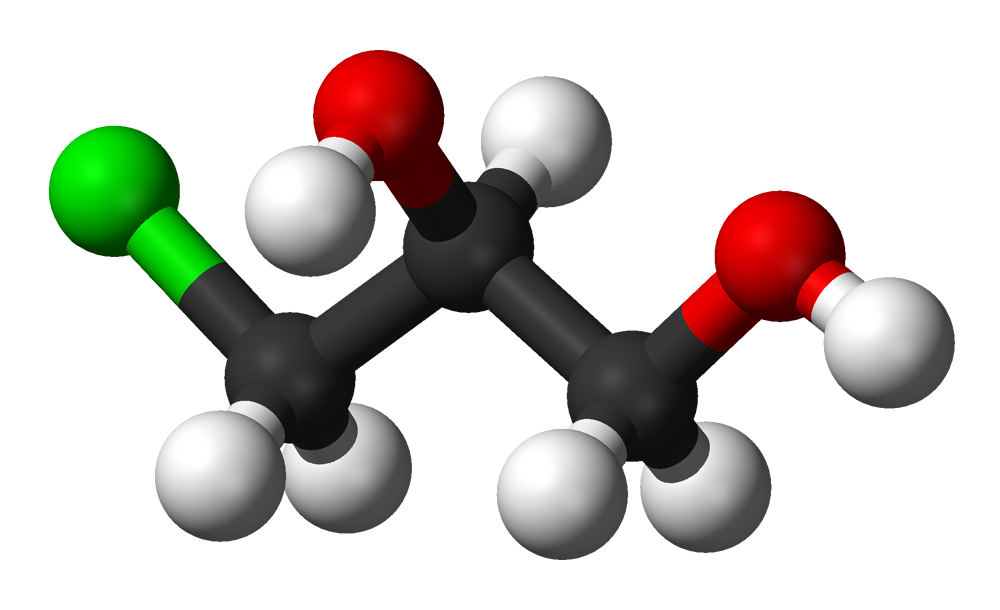
Ball-and-stick model
Names
Preferred IUPAC name
3-Chloropropane-1,2-diol
Other names
3-Monochloropropane-1,2-diol; α-Chlorohydrin; Glycerol α-monochlorohydrin; Chlorodeoxyglycerol; 3-Chloro-1,2-propanediol
Identifiers
3D model (JSmol)
635684
ChEBI
ChEMBL
ChemSpider
ECHA InfoCard 100.002.267 Edit this at Wikidata
EC Number
  • 202-492-4
68752
KEGG
UNII
  • InChI=1S/C3H7ClO2/c4-1-3(6)2-5/h3,5-6H,1-2H2 checkY
    Key: SSZWWUDQMAHNAQ-UHFFFAOYSA-N checkY
  • InChI=1/C3H7ClO2/c4-1-3(6)2-5/h3,5-6H,1-2H2
    Key: SSZWWUDQMAHNAQ-UHFFFAOYAR
  • ClCC(O)CO
Properties
C3H7ClO2
Molar mass 110.54 g·mol−1
Appearance Viscous, colorless liquid
Density 1.32 g·cm−3
Melting point −40 °C (−40 °F; 233 K)
Boiling point 213 °C (415 °F; 486 K)
Hazards
GHS labelling:
GHS05: CorrosiveGHS06: ToxicGHS08: Health hazard
Danger
H300, H312, H315, H318, H330, H351, H360, H370, H372
P201, P202, P260, P261, P264, P270, P271, P280, P281, P284, P301+P310, P302+P352, P304+P340, P305+P351+P338, P307+P311, P308+P313, P310, P311, P312, P314, P320, P321, P322, P330, P332+P313, P362, P363, P403+P233, P405, P501
Safety data sheet (SDS) External MSDS
Except where otherwise noted, data are given for materials in their standard state (at 25 °C [77 °F], 100 kPa).
☒N verify (what is checkY☒N ?)

3-MCPD (3-monochloropropane-1,2-diol or 3-chloropropane-1,2-diol) is an organic chemical compound with the formula HOCH2CH(OH)CH2Cl. It is a colorless liquid. The compound has attracted notoreity as the most common member of chemical food contaminants known as chloropropanols.[1] It is suspected to be carcinogenic in humans.[2]

Accidental and intentional production

[edit]

3-MCPD, together with its isomer 2-MCPD, is thought to be produced when fat-containing foods are treated at high temperatures with hydrochloric acid. Such treatments are sometimes used to accelerate protein hydrolysis, making food more digestable. In such a treatment chloride is thought to react with the glycerol backbone of lipids to produce 3-MCPD and 2-MCPD. Chlorination of glycerol gives the 3-MCPD:

HOCH(CH2OH)2 + HCl → HOCH(CH2Cl)(CH2OH) + H2O

The same compound can be produced by hydrolysis of epichlorohydrin.[3]

Occurrence

[edit]

In 2009, 3-MCPD was found in some East Asian and Southeast Asian sauces such as oyster sauce, Hoisin sauce, and soy sauce.[4] Using hydrochloric acid is far faster than traditional slow fermentation. A 2013 European Food Safety Authority report indicated margarine, vegetable oils (excluding walnut oil), preserved meats, bread, and fine bakery wares as major sources in Europe.[5]

3-MCPD can also be found in many paper products treated with polyamidoamine-epichlorohydrin wet-strength resins.[6]

Absorption and toxicity

[edit]

The International Agency for Research on Cancer has classified 3-MCPD as Group 2B, "possibly carcinogenic to humans".[7] 3-MCPD is carcinogenic in rodents via a non-genotoxic mechanism.[8] It is able to cross the blood-testis barrier and blood–brain barrier.[9] The oral LD50 of 3-chloro-1,2-propanediol is 152 mg/kg bodyweight in rats.[10]

3-MCPD also has male antifertility effects [10][11] and can be used as a rat chemosterilant.[12]

[edit]

The joint Food Standards Australia New Zealand (FSANZ) set a limit for 3-MCPD in soy sauce of 0.02 mg/kg, in line with European Commission standards which came into force in the EU in April 2002.

History

[edit]

In 2000, a survey of soy sauces and similar products available in the UK was carried out by the Joint Ministry of Agriculture, Fisheries and Food/Department of Health Food Safety and Standards Group (JFSSG) and reported more than half of the samples collected from retail outlets contained various levels of 3-MCPD.[13]

In 2001, the United Kingdom Food Standards Agency (FSA) found in tests of various oyster sauces and soy sauces that 22% of samples contained 3-MCPD at levels considerably higher than those deemed safe by the European Union. About two-thirds of these samples also contained a second chloropropanol called 1,3-dichloropropane-2-ol (1,3-DCP) which experts advise should not be present at any levels in food. Both chemicals have the potential to cause cancer and the Agency recommended that the affected products be withdrawn from shelves and avoided.[14][15]

In 2001, the FSA and Food Standards Australia New Zealand (FSANZ) singled out brands and products imported from Thailand, China, Hong Kong, and Taiwan. Brands named in the British warning include Golden Mountain, King Imperial, Pearl River Bridge, Golden Mark, Kimlan, Golden Swan, Sinsin, Tung Chun, and Wanjasham soy sauce. Knorr soy sauce was also implicated, as well as Uni-President Enterprises Corporation creamy soy sauce from Taiwan, Silver Swan soy sauce from the Philippines, Ta Tun soy bean sauce from Taiwan, Tau Vi Yeu seasoning sauce and Soya bean sauce from Vietnam, Zu Miao Fo Shan soy superior sauce and Mushroom soy sauce from China and Golden Mountain and Lee Kum Kee chicken marinade.[16][17][18] Between 2002 and 2004, relatively high levels of 3-MCPD and other chloropropanols were found in soy sauce and other foods in China.[19]

In 2007, in Vietnam, 3-MCPD was found in toxic levels. In 2004, the HCM City Institute of Hygiene and Public Health found 33 of 41 sample of soy sauce with high rates of 3-MCPD, including six samples with up to 11,000 to 18,000 times more 3-MPCD than permitted, an increase over 23 to 5,644 times in 2001.[20] The newspaper Thanh Nien Daily commented, "Health agencies have known that Vietnamese soy sauce, the country's second most popular sauce after fish sauce, has been chock full of cancer agents since at least 2001."[21]

In March 2008, in Australia, "carcinogens" were found in soy sauces, and Australians were advised to avoid soy sauce.[22]

In November 2008, Britain's Food Standards Agency reported a wide range of household name food products from sliced bread to crackers, beefburgers and cheese with 3-MCPD above safe limits. Relatively high levels of the chemical were found in popular brands such as Mother's Pride, Jacobs crackers, John West, Kraft Dairylea and McVitie's Krackawheat. The same study also found relatively high levels in a range of supermarket own-brands, including Tesco char-grilled beefburgers, Sainsbury's Hot 'n Spicy Chicken Drumsticks and digestive biscuits from Asda. The highest levels of 3-MCPD found in a non- soy sauce product, crackers, was 134μg/kg. The highest level of 3-MCPD found in soy sauce was 93,000μg/kg, 700 times higher.

In 2006 the legal limit for 3-MCPD contained in acid-hydrolysed vegetable protein (HVP) and soy sauce was set at 20μg/kg, the legislation was revised further in 2020 to limit the amount of 3-MCPD across all vegetable oils and fats as well as oils made from marine life which are either produced and made available for consumers or added as an ingredient to other foods.[23]

In 2016, the occurrence of 3-MCPD in selected paper products (coffee filters, tea bags, disposable paper hot beverage cups, milk paperboard containers, paper towels) sold on the Canadian and German market was reported and the transfer of 3-MCPD from those products to beverages was investigated.[24] Exposure to 3-MCPD from packaging material would likely constitute only a small percentage of overall dietary exposure when compared to the intake of processed oils/fats containing 3-MCPD equivalent (in form of fatty acid esters) which are often present at levels of about 0.2-2μg/g.

Further reading

[edit]

References

[edit]
[edit]
Revisions and contributorsEdit on WikipediaRead on Wikipedia
from Grokipedia
3-Monochloropropane-1,2-diol (3-MCPD) is an organic chloropropanol compound classified chemically as a glycerol chlorohydrin, in which one hydroxyl group of glycerol is substituted by a chlorine atom.[1] It arises primarily as a process contaminant during high-temperature food processing, such as the deodorization step in edible oil refining and acid hydrolysis of vegetable proteins, through reactions involving chloride sources, glycerol, and lipids under acidic or hydrothermal conditions.[2][3] In foods, 3-MCPD occurs both in free form and as fatty acid esters (3-MCPD esters), with notable presence in refined vegetable oils (e.g., palm and soy oils), infant formula, bread, and hydrolyzed proteins like those in soy sauce.[4][5] Toxicity studies in rodents demonstrate that 3-MCPD induces nephrotoxicity, male reproductive toxicity (including impaired fertility and testicular damage), and secondary carcinogenic effects, primarily in the kidneys and testes, though long-term carcinogenicity assays have yielded mixed results with no clear evidence of genotoxicity in some evaluations.[2][6][7] The International Agency for Research on Cancer (IARC) classifies free 3-MCPD as possibly carcinogenic to humans (Group 2B), based on limited evidence from animal studies.[8] Regulatory bodies, including the European Food Safety Authority (EFSA), have established a group tolerable daily intake (TDI) of 2 μg/kg body weight for 3-MCPD (including esters, combined with glycidol equivalents) to account for potential health risks, particularly for high consumers such as infants and young children exposed via edible oils and processed foods.[9][10] Mitigation strategies focus on optimizing refining processes—such as acid degumming, stripping under reduced temperatures, and post-refining treatments—to minimize formation, achieving reductions of up to 50-70% in 3-MCPD ester levels without compromising oil quality.[11][12] Ongoing research emphasizes monitoring exposure and refining risk assessments, given the ubiquity of contaminants in modern processed diets.[13]

Chemical Properties

Molecular Structure and Properties

3-Monochloropropane-1,2-diol (3-MCPD), also known as 3-chloropropane-1,2-diol or α-chlorohydrin, is an organic compound with the molecular formula C₃H₇ClO₂ and a molecular weight of 110.54 g/mol.[14][15] The molecule features a three-carbon propane backbone bearing hydroxyl groups (-OH) on carbons 1 and 2 and a chlorine atom (-Cl) substituted on carbon 3, yielding the structural formula HOCH₂CH(OH)CH₂Cl.[14][16] Physically, 3-MCPD manifests as a colorless, viscous liquid with a melting point of -40 °C and a boiling point of 213 °C, beyond which it decomposes.[15][16] It possesses a density of 1.322 g/mL at 25 °C and exhibits high solubility in water (≥10 g/100 g at 21 °C), ethanol, diethyl ether, and various organic solvents, reflecting its polar nature due to the multiple hydroxyl groups.[15][17][16] Under neutral conditions, the compound remains relatively stable, though its halohydrin functionality renders it reactive toward acids and bases, potentially leading to substitution or elimination reactions.[14] In laboratory settings, 3-MCPD is commonly synthesized via the controlled chlorination of glycerol, where one hydroxyl group is selectively replaced by chlorine.[1] Historically, the compound has served as a chemosterilant for rodents, exploiting its capacity to induce male antifertility effects without immediate lethality.[18][19]

Formation Mechanisms

Pathways in High-Temperature Processing

The formation of 3-MCPD during high-temperature processing primarily proceeds via an SN2 nucleophilic substitution mechanism, in which chloride ions directly attack the sn-2 carbon of glycerol or partial acylglycerols (such as mono- and diacylglycerols), displacing a hydroxyl group to yield the chlorohydrin structure.[20] This pathway requires the presence of chloride precursors and is activated at temperatures exceeding 180°C, where the thermal energy overcomes the activation barrier for substitution.[21] Reaction kinetics are highly sensitive to environmental conditions, with low moisture levels (<1%) minimizing competitive hydrolysis reactions and thereby enhancing yields, while acidic conditions protonate the hydroxyl leaving group to facilitate departure.[22] Empirical studies in model systems reveal exponential increases in formation rates above 200°C, following Arrhenius temperature dependence, with zero-order kinetics observed in some thermal simulations due to saturated precursor availability.[20] Free fatty acids contribute indirectly by liberating additional chloride or modulating pH, while partial glycerols serve as direct substrates, showing peak reactivity in monoacylglycerol models under these constraints.[22] An alternative route involves intramolecular dehydration of diacylglycerols to form cyclic acyloxonium ions at temperatures over 200°C, followed by nucleophilic ring-opening with chloride ions, potentially via radical intermediates under oxidative stress.[20] This mechanism predominates in low-moisture, high-heat scenarios like deodorization, where water elimination drives cyclization, though it competes with the direct SN2 pathway depending on precursor composition and processing duration.[22] Kinetic data from such systems confirm that rates plateau or decline beyond optimal temperatures (e.g., 220–240°C) due to thermal decomposition of intermediates.[20]

Role of Precursors like Chlorides and Glycerol

Chloride ions, primarily sourced from agricultural inputs such as fertilizers, irrigation water, and soil minerals, are absorbed by oil-bearing plants like palm, resulting in their accumulation in crude palm oil at levels that can exceed 1 mg/kg in untreated fractions.[23] These chlorides exist in inorganic forms (e.g., NaCl, MgCl2, CaCl2) or bound in organic compounds like sphingolipids, providing the essential chlorine atom for 3-MCPD formation through nucleophilic substitution during subsequent processing.[1] Elevated chloride concentrations in palm fruit, often linked to chloride-based processing aids or environmental contamination, directly correlate with higher 3-MCPD ester yields, as demonstrated in model refining experiments where chloride addition increased ester levels by up to 10-fold.[24] The glycerol backbone required for 3-MCPD originates from the partial hydrolysis of triglycerides into monoacylglycerols (MAG) and diacylglycerols (DAG) during oil refining, particularly under high-temperature deodorization conditions above 200°C.[22] In palm oil, which naturally contains higher DAG levels (up to 10% in crude form), these partial glycerides react with chloride sources to yield 3-MCPD esters, with quantitative studies showing that DAG concentrations above 5% can double ester formation rates compared to triacylglycerol-dominant oils.[25] This precursor dependency explains why oils with elevated free fatty acids or hydrolysis-prone lipids exhibit stronger correlations between initial glycerol derivative content and final contaminant levels.[26] Formation of 3-MCPD esters from these precursors is markedly enhanced under acidic conditions (pH below 4) and low water activity (less than 0.1%), which minimize hydrolysis of intermediates and favor intramolecular esterification pathways.[24] Experimental data indicate that reducing pH via phosphoric or citric acid addition during refining can increase ester yields by 20-50%, while dehydration steps that lower water content promote chloride-glycerol interactions over competing aqueous reactions.[27] These factors underscore the causal role of microenvironmental conditions in amplifying precursor reactivity without altering the core chloride-glycerol substitution mechanism.[28]

Production Sources

Intentional Production in Hydrolyzed Proteins

Hydrolyzed vegetable protein (HVP), a seasoning ingredient used in products like non-brewed soy sauce, is intentionally produced through acid hydrolysis of defatted vegetable proteins such as soy flour or wheat gluten, involving treatment with hydrochloric acid (HCl) at temperatures around 100–110°C for several hours to several days. This process cleaves peptide bonds to yield free amino acids and peptides, enhancing umami flavor, but simultaneously generates 3-MCPD as an unintended byproduct via the reaction of chloride ions from HCl with glycerol moieties from residual lipids, phospholipids, or partial glycerides present in the protein sources.[1][29] The formation pathway involves nucleophilic substitution where chloride attacks the primary carbon of glycerol under acidic, heated conditions, producing free 3-MCPD that remains in the neutralized and refined hydrolysate.[1] This production method was prevalent among Asian and European manufacturers prior to 2001, particularly for cost-effective alternatives to traditionally fermented soy sauce, with 3-MCPD levels in acid-HVP-based products often reaching 0.1–1 mg/kg or higher, contrasting sharply with levels below 0.02 mg/kg in fermented soy sauces derived from natural microbial processes without added HCl.[18][30] In 2001, routine testing in the United Kingdom revealed elevated 3-MCPD concentrations exceeding 1 mg/kg in several supermarket own-brand soy sauces made via acid hydrolysis, prompting widespread recalls and heightened scrutiny.[31] Subsequent regulatory responses, including European Commission limits of 0.02 mg/kg for 3-MCPD in HVP and soy sauce (adjusted for dry matter content), drove a shift toward enzymatic hydrolysis or fermentation methods that avoid chloride addition and high-temperature acid exposure, effectively reducing or eliminating 3-MCPD formation in compliant products.[30][32] Nonetheless, acid hydrolysis persists in some low-cost production from regions with laxer oversight, leading to occasional detections of 3-MCPD above 0.02 mg/kg in imported seasonings, as reported in post-2001 surveys of global markets.[18][32]

Accidental Formation in Oil Refining

3-MCPD esters form unintentionally during the high-temperature deodorization phase of edible oil refining, where temperatures typically range from 220°C to 260°C under vacuum and steam stripping conditions. This process primarily affects physically refined vegetable oils such as palm, soybean, and sunflower oils, as chloride impurities present in crude oils react with glycerol derived from partial hydrolysis of triglycerides or diacylglycerols.[33][11] The reaction yields predominantly esterified forms (3-MCPDEs), including monoesters and diesters bound to fatty acids, rather than free 3-MCPD, due to the lipophilic environment of the oil matrix favoring acyloxonium ion intermediates that promote esterification.[34][35] In unoptimized physical refining of palm oil, post-deodorization levels of 3-MCPDEs can reach 2–4 mg/kg, with higher concentrations observed in crude palm oils processed without precursor controls, sometimes exceeding 10 mg/kg prior to any mitigation efforts.[36][37] Physical refining routes, which omit alkaline neutralization, retain more chloride contaminants from harvesting or extraction, amplifying formation during deodorization compared to chemical refining, where acid or alkali treatments can partially remove precursors but may introduce variability if chloride-laden reagents are used.[12][38] Soybean and sunflower oils exhibit similar patterns, though typically at lower baseline levels than palm oil due to differences in initial chloride content and fatty acid profiles.[39][11]

Occurrence in Foods

Prevalence in Edible Oils and Fats

Refined palm oils exhibit the highest concentrations of 3-MCPD esters (3-MCPDEs), with levels typically ranging from 2 to 4 mg/kg prior to advanced mitigation techniques, though variations occur based on refining conditions and regional sourcing.[39] In comparison, olive oils generally contain lower amounts, such as 0.075 mg/kg in extra virgin olive oil and up to 1.464 mg/kg in refined olive oil, while rapeseed oils range from 0.3 to 1.5 mg/kg.[40][41] High-oleic variants and less refined oils like virgin olive oil show reduced prevalence due to minimal high-temperature processing.[42] European Food Safety Authority (EFSA) compilations of occurrence data from multiple surveys indicate that palm fats and oils consistently report the highest 3-MCPDE levels among vegetable fats, with substantial detections across most refined types; pre-mitigation samples often exceeded proposed limits of 1.25 mg/kg for non-palm oils and higher thresholds for palm.[42] Global analyses confirm elevated readings in palm oils from Southeast Asia, where mean 3-MCPDE concentrations in refined products can reach 2.49–6.61 mg/kg across regions, reflecting baseline differences in crude oil quality.[10] These esters transfer via carryover into derived products, including margarines, infant formula oils, and fried goods, where blending with contaminated base oils elevates overall levels proportional to the palm content.[42] Seasonal fluctuations in 3-MCPDE prevalence correlate with harvest-time chloride content in palm fruits, influenced by soil types, growth conditions, and genotype variations, leading to higher baselines in Southeast Asian supplies during peak chloride-accumulation periods.[43] Post-2020 mitigation efforts, including optimized deodorization and precursor reduction, have lowered averages in monitored EU and global samples, though residual exceedances persist in non-compliant refining.[39]

Levels in Soy Sauce and Other Processed Foods

Acid-hydrolyzed soy sauces, produced using hydrochloric acid to break down proteins, contain elevated levels of free 3-MCPD, often ranging from 0.5 to 1 mg/kg, due to the reaction of chloride ions with glycerol precursors during hydrolysis.[44] In contrast, traditionally fermented soy sauces exhibit negligible or undetectable 3-MCPD concentrations, as the natural enzymatic process avoids the harsh acidic conditions that promote chloropropanol formation.[45] A 2001 survey by the UK Food Standards Agency analyzed 100 soy sauce samples and found 3-MCPD in 22% at levels exceeding 0.02 mg/kg, primarily in acid-hydrolyzed varieties, prompting recalls and regulatory scrutiny. Hydrolyzed vegetable protein (HVP)-based seasonings, which rely on similar acid hydrolysis, also show comparable 3-MCPD contamination, with European Union regulations capping levels at 0.02 mg/kg in liquid products standardized to 40% dry matter.[32] In smoked meats and fish, 3-MCPD arises from chloride interactions during smoking or curing processes, independent of lipid precursors, with detections reported in cold-smoked products like sausages at trace to low microgram-per-kilogram levels.[46] Coffee extracts and roasted coffee beans contain 3-MCPD from thermal degradation pathways akin to roasting, though levels remain low, typically below detectable thresholds in brewed beverages.[47] Cereals and bakery products exhibit lower 3-MCPD concentrations, primarily formed via Maillard reactions involving chloride and glycerol in dough or during baking, with averages under 0.1 mg/kg in recent analyses.[48] For instance, bread crusts may reach up to 0.4 mg/kg under intense toasting, but overall occurrence in these categories is minimal compared to hydrolyzed protein sources, reflecting milder processing conditions.[18]

Toxicology

Absorption, Metabolism, and Bioavailability

3-MCPD is rapidly absorbed from the gastrointestinal tract after oral administration, with absorption exceeding 80% of the dose in rodents and humans.[49] Fatty acid esters of 3-MCPD, prevalent in refined oils, are hydrolyzed in the small intestine by pancreatic lipases, releasing free 3-MCPD for absorption; this process is nearly complete within hours, as demonstrated in in vitro and in vivo studies.[50] [51] Peak plasma concentrations of free 3-MCPD occur within 2-3 hours post-ingestion in rat models, reflecting efficient uptake.[52] The bioavailability of ester-bound 3-MCPD equates to that of the free form following hydrolysis, with no evidence of reduced systemic exposure from the esterified state.[20] [50] Absorbed 3-MCPD distributes rapidly to target organs including the kidneys, testes, liver, and brain, as detected through metabolite profiling in rodent tissues at early time points (2-6 hours post-dose).[53] [52] Primary metabolism involves glutathione conjugation in the liver and kidneys, yielding mercapturic acid derivatives such as dihydroxypropyl mercapturic acid; minor pathways may include epoxide formation leading to glycidol.[49] This phase II conjugation facilitates detoxification, with up to 17 metabolites identified from diesters in rats, predominantly chlorine-containing conjugates.[52] Excretion occurs mainly via urine as conjugated metabolites, accounting for the bulk of the dose within 24-48 hours in pharmacokinetic studies; minor routes include feces and exhaled air as unchanged compound or CO₂.[53] [49] The elimination half-life in rats is approximately 4-10 hours, supporting no substantial bioaccumulation across repeated low-level exposures typical of dietary intake.[52] [54]

Evidence of Toxicity from Animal Studies

Animal studies have consistently identified the kidney as a primary target organ for 3-MCPD toxicity, with dose-dependent renal tubular cell hyperplasia observed in long-term exposures. In a 2-year drinking water study in Sprague-Dawley rats, male rats administered doses of 2.0, 8.3, or 29.5 mg/kg body weight (bw) per day exhibited incidences of kidney tubular cell hyperplasia of 11/50, 21/50, and 36/50, respectively, compared to 1/50 in controls, yielding a benchmark dose lower confidence limit (BMDL10) of 0.20 mg/kg bw per day.[55] Acute or short-term high-dose exposures, such as 30–45 mg/kg bw in rats, induce renal injury characterized by elevated serum creatinine and urea nitrogen, tubular epithelial cell detachment, glomerular atrophy, inflammation, and increased kidney index, alongside disruptions in glycerophospholipid and sphingolipid metabolism.[56] Reproductive toxicity manifests prominently in male rats, with reduced sperm motility and count as sensitive endpoints. A 9-day gavage study reported decreased sperm curvilinear velocity with a BMDL05 of 0.44–0.51 mg/kg bw per day, while a 90-day gavage study showed sperm count reductions with a BMDL23 of 1.34 mg/kg bw per day.[55] Histopathological changes, including seminiferous tubule atrophy and epididymal epithelium vacuolization, occur at doses ≥1.84 mg/kg bw per day in subchronic exposures, with effects partially reversible within 2–4 weeks post-exposure.[55] Short-term exposures exceeding 1 mg/kg bw per day consistently impair fertility parameters in rats.[55] Mechanistic investigations link 3-MCPD toxicity to oxidative stress, with metabolism to β-chlorolactaldehyde inhibiting glycolysis and promoting reactive oxygen species accumulation. In male mice dosed up to 100 mg/kg bw per day for 28 days, oxidative stress was evident in the renal cortex, seminiferous tubules of the testes, and brain regions like the cerebellum, marked by irreversible oxidation of the redox sensor protein DJ-1.[55][57] Similar dose-dependent oxidative markers, including elevated malondialdehyde and altered glutathione levels, accompany renal damage in rats at 30–45 mg/kg bw.[56] Across studies, no-observed-adverse-effect levels (NOAELs) for combined renal and reproductive endpoints range from 0.2 to 1 mg/kg bw per day, underscoring low-dose sensitivity in rodent models.[55]

Health Risks and Carcinogenicity

Renal and Reproductive Toxicity

In male Fischer 344 rats, chronic oral exposure to 3-MCPD at doses as low as 1.1 mg/kg body weight per day induced renal tubule hyperplasia, indicative of nephrotoxicity targeting the proximal tubules.[58] Higher subacute doses, such as 10 mg/kg body weight per day, resulted in histopathological changes including tubular degeneration and increased kidney weights, with mechanisms involving oxidative stress and disruption of cellular metabolism in renal tissues.[59] [57] Male reproductive toxicity manifests primarily through testicular atrophy and impaired spermatogenesis in rats, observed at chronic doses exceeding 1 mg/kg body weight per day, leading to reduced sperm motility, fertility indices, and live fetuses.[60] [55] At doses around 2 mg/kg body weight per day in long-term studies, effects include decreased testicular weights and Leydig cell alterations, with in vitro evidence of inhibited progesterone and testosterone production in rat Leydig cells via glycolysis disruption and hormonal signaling interference in Sertoli cells.[57] [46] [61] These toxicities exhibit species specificity, being more severe in rats than in mice, where renal and testicular effects require higher exposures and lack equivalent proximal tubule or Leydig cell hyperplasia at comparable doses.[20] Human relevance remains uncertain, as rat-specific mechanisms—absent genotoxic activity—predominate without direct evidence of alpha-2u-globulin involvement or equivalent endocrine disruption in non-rodent models.[62] [63]

Human Risk Assessments and IARC Classification

The International Agency for Research on Cancer (IARC) classifies 3-monochloropropane-1,2-diol (3-MCPD) as Group 2B, "possibly carcinogenic to humans," based on sufficient evidence of carcinogenicity in experimental animals, particularly renal tubule tumors observed in male rats administered doses exceeding 5 mg/kg body weight per day via drinking water or gavage, but inadequate evidence in humans.[64][10] This classification reflects limited genotoxicity data, with negative results in standard in vitro and in vivo assays, indicating a non-genotoxic mode of action for tumor induction.[65] Epidemiological studies in humans are scarce, with no direct evidence linking dietary 3-MCPD exposure to cancer incidence; available data, including cohort and case-control investigations, have not identified clear associations, underscoring the reliance on animal models for risk evaluation.[46] In rodents, renal tumors appear hormone-mediated, involving species-specific mechanisms such as alpha-2u-globulin accumulation in male rats, which lacks equivalence in human physiology, thereby reducing extrapolative relevance at low environmental doses.[65] Human risk assessments by the Joint FAO/WHO Expert Committee on Food Additives (JECFA) and the European Food Safety Authority (EFSA) establish a tolerable daily intake (TDI) of 2 µg/kg body weight per day for free 3-MCPD, derived from a no-observed-adverse-effect level (NOAEL) of 0.18 mg/kg bw/day in rat studies for renal effects, applying uncertainty factors while accounting for the non-genotoxic profile and threshold-based carcinogenesis.[66][65] EFSA's 2018 re-evaluation similarly integrates ester-bound forms, affirming the TDI's protectiveness against potential carcinogenic risks given the absence of genotoxic potency and the supralinear dose-response in animals.[55] These assessments prioritize empirical thresholds over linear low-dose extrapolation, contrasting with precautionary interpretations that may amplify perceived hazards absent confirmatory human data.[65]

Dietary Exposure and Risk Evaluation

Population Exposure Data

Dietary exposure to 3-monochloropropane-1,2-diol (3-MCPD) and its fatty acid esters primarily occurs through consumption of refined vegetable oils, fats, infant formulas, and processed foods like soy sauce, with estimates varying by region, age group, and dietary patterns. Global mean chronic dietary intakes for the general population typically range from 0.1 to 1.5 µg/kg body weight per day, based on occurrence data and consumption surveys across multiple countries.[67][68] In regions with heavy reliance on palm oil and its derivatives, such as parts of Asia, exposures tend to be at the higher end of this range due to elevated levels in refined oils used in cooking and infant products.[10] In Europe, monitoring data from 2009 onward indicate mean exposures of 0.5 to 1.5 µg/kg bw/day for infants, toddlers, and children, with upper percentile (e.g., 95th) intakes reaching 2 to 2.6 µg/kg bw/day in younger demographics consuming higher amounts of affected fats and formulas.[8][69] Surveys incorporating data up to 2023 show that 10-20% of children in certain member states exhibit elevated exposures at high consumption percentiles, driven by vegetable oils and bakery products.[8] Adult mean exposures are lower, generally 0.2 to 1 µg/kg bw/day, reflecting diverse fat sources beyond heavily refined oils.[69] United States data, primarily from infant formula surveys, suggest lower general population exposures compared to Europe, attributed to broader use of diverse oil types and reduced reliance on high-palm-oil products; however, specific infant estimates from earlier analyses reached 1 to 14 µg/kg bw/day across brands, though recent FDA testing indicates declines following industry adjustments.[70][2] Exposures vary significantly by consumption habits: higher among frequent users of refined oils and processed fats (e.g., 1-2 µg/kg bw/day or more in high consumers), and negligible in diets emphasizing unprocessed or cold-pressed alternatives.[67] Infants in palm oil-inclusive formulas, common in Asia and some EU products, show exposures up to 2-3 µg/kg bw/day in monitoring from palm-heavy regions.[10]

Comparison to Tolerable Daily Intake Levels

The European Food Safety Authority (EFSA) established a group tolerable daily intake (TDI) of 2 μg/kg body weight per day for 3-MCPD and its fatty acid esters in 2018, derived from a benchmark dose lower confidence limit for renal tubule effects in rats, applying an uncertainty factor of 100 for inter- and intraspecies extrapolation.[55] The Joint FAO/WHO Expert Committee on Food Additives (JECFA) set a provisional maximum tolerable daily intake (PMTDI) of 4 μg/kg body weight per day specifically for 3-MCPD fatty acid esters, based on similar rodent data but with adjustments reflecting lower bioavailability of esters compared to free 3-MCPD.[2] Dietary exposure assessments using probabilistic modeling, which account for variability in consumption patterns and contaminant levels, indicate that mean exposures for general adult populations typically range from 0.1 to 1 μg/kg body weight per day, remaining well below both thresholds and yielding margins of exposure (MOE) exceeding 100 for non-cancer endpoints like renal toxicity.[10] In contrast, high-percentile exposures (e.g., P95) among infants and young children, particularly those reliant on formula reconstituted from palm oil-derived fats, can approach 2-5 μg/kg body weight per day, narrowing MOEs to 10-50 relative to the EFSA TDI and prompting targeted monitoring, though still prioritizing threshold-based non-genotoxic risks over linear cancer extrapolation.[71] Lifetime cancer risk modeling, employing conservative potency estimates from rodent studies (e.g., T25 values for renal tumors), projects negligible probabilities below 1 in 10^6 for typical human intakes, as 3-MCPD exhibits threshold genotoxicity and effects manifest only at doses orders of magnitude above environmental levels.[72] These TDIs incorporate conservative assumptions from rodent models, where renal and reproductive sensitivities (e.g., tubule hyperplasia at 0.18 mg/kg body weight per day in chronic rat studies) exceed observed human thresholds due to metabolic differences and lack of direct human dosimetry data, potentially overestimating risks by factors of 10-100 for chronic low-dose scenarios.[20] Empirical pharmacokinetic modeling further supports realism, showing ester hydrolysis yields free 3-MCPD at <20% efficiency in humans versus rodents, reducing effective bioavailability and reinforcing that population-level risks remain low absent high-fat diet extremes.[67]

Regulations

European Union Limits and Updates

Commission Regulation (EU) 2023/915, adopted on 25 April 2023, establishes maximum levels for the sum of 3-monochloropropanediol (3-MCPD) and 3-MCPD fatty acid esters (expressed as 3-MCPD equivalents) in various foods, including 1.25 mg/kg in refined vegetable oils and fats, reflecting lower-bound concentrations achievable through good manufacturing practices informed by European Food Safety Authority (EFSA) exposure assessments and the tolerable daily intake of 2 μg/kg body weight. These levels superseded earlier provisions under Regulation (EC) No 1881/2006 and were set to minimize dietary exposure while accounting for hydrolysis of esters to free 3-MCPD in vivo, based on empirical data from occurrence monitoring and toxicological studies indicating renal and reproductive risks.[73] For acid-hydrolyzed vegetable proteins and soy sauce, a maximum level of 0.02 mg/kg applies specifically to free 3-MCPD, unchanged since its establishment in Commission Regulation (EC) No 1881/2006 on 19 December 2006, following the 2001 acid-HVP contamination incident that prompted occurrence surveys showing elevated levels; this strict limit derives from precautionary application of available exposure data and absence of a firm tolerable intake at the time, prioritizing reduction to as low as reasonably achievable.[73] In April 2024, Commission Regulation (EU) 2024/1003 amended Regulation (EU) 2023/915 to tighten maximum levels for the sum of 3-MCPD and its esters in infant formulae, follow-on formulae, and similar products for young children, reducing them from 125 μg/kg to 80 μg/kg (powders) and from 15 μg/kg to 12 μg/kg (ready-to-feed liquids), effective 1 January 2025, to enhance protection for high-consumption vulnerable groups based on updated EFSA risk evaluations of ester hydrolysis and cumulative exposure exceeding prior margins of safety. Products placed on the market before this date may be sold until their durability expiry. The Rapid Alert System for Food and Feed (RASFF) facilitates compliance monitoring, with notifications for exceedances—such as in imported confectionery and oils from non-EU sources—prompting withdrawals and informing enforcement; post-2020 implementation of ester-specific limits under Regulation (EU) 2020/1322 has correlated with industry-reported reductions in average 3-MCPD levels through process optimizations, as evidenced by fewer high-occurrence alerts and alignment with EFSA monitoring data.

International and National Standards

The Codex Alimentarius Commission, through its 2019 Code of Practice (CXC 79-2019), provides non-binding guidance for mitigating 3-MCPD esters (3-MCPDEs) in refined oils and derived products, emphasizing strategies like good manufacturing practices without establishing maximum levels (MLs) for oils.[74] This aligns with the Joint FAO/WHO Expert Committee on Food Additives (JECFA) provisional maximum tolerable daily intake (PMTDI) of 4 μg/kg body weight per day for 3-MCPD and its esters, derived from rat studies on renal toxicity and lack of genotoxicity in vivo.[2] For specific foods like liquid condiments containing acid-hydrolyzed vegetable protein (HVP), Codex sets an ML of 0.4 mg/kg for free 3-MCPD.[75] In the United States, the Food and Drug Administration (FDA) does not impose MLs for 3-MCPDEs in refined oils, instead promoting voluntary industry mitigation informed by Codex guidance and monitoring occurrence data.[2] For acid-HVP and Asian-style sauces like soy sauce, FDA's Compliance Policy Guide establishes a guidance level of 1 mg/kg (1 ppm) for free 3-MCPD, below which enforcement action is unlikely, based on early contamination surveys.[76] Several nations have implemented stricter limits for high-risk products like soy sauce following 2001 scandals revealing elevated free 3-MCPD from acid hydrolysis. Singapore prohibits import, sale, or manufacture of soy sauce or oyster sauce exceeding 0.02 mg/kg 3-MCPD (adjusted for 40% dry matter), aligning with precautionary assessments of dietary exposure.[77] China similarly enforces a 0.02 mg/kg limit for free 3-MCPD in soy sauce, prompted by surveys showing widespread exceedances in traditionally brewed and hydrolyzed products prior to regulatory tightening.[78] In palm oil-producing countries, standards remain emergent and less prescriptive. Brazil conducts occurrence monitoring in refined oils and infant formulas but lacks codified MLs, relying on industry self-regulation amid exports to regulated markets. India has no dedicated regulations for 3-MCPDEs in refined oils, with experts recommending voluntary adherence to international benchmarks like JECFA's PMTDI due to high palm oil consumption and refining prevalence.[79] These disparities—tighter controls in consumer-heavy regions versus looser frameworks in exporters—have fueled trade frictions, as importing nations apply border testing to enforce their standards on foreign supplies.[39]

Mitigation and Control Measures

Upstream Prevention Strategies

One primary upstream strategy involves optimizing fertilizer use in palm plantations to limit chloride accumulation in soil and subsequent uptake by oil palm trees (Elaeis guineensis). Chloride ions, often introduced via fertilizers containing ammonium chloride or potassium chloride salts, contribute to higher precursor levels in fresh fruit bunches (FFBs); substituting these with chloride-free alternatives, such as potassium sulfate or other potassium-based formulations, reduces chloride content in FFBs by minimizing soil salinity and plant absorption.[80][81] This approach targets the root cause of inorganic chloride precursors, which react with glycerol during high-temperature refining to form 3-MCPD esters.[1] Washing FFBs or crude palm oil (CPO) with water or water-ethanol mixtures prior to sterilization or extraction represents another effective intervention to remove water-soluble chlorides. For instance, water washing of CPO at elevated temperatures (e.g., 90°C) with 5% water addition per oil mass can eliminate up to 76% of inorganic chlorides, while water-alcohol mixtures achieve reductions of 74-95% in chloride precursors, directly correlating to lower 3-MCPD ester formation downstream.[82] These methods leverage the polarity of chlorides for partitioning into the aqueous phase, preventing their carryover into refining without altering oil yield significantly.[39] Sourcing palm fruits from regions or cultivars with naturally low soil chloride levels or reduced chloride uptake further mitigates precursor introduction. Empirical analyses of supply chain variations show that FFBs from low-chloride soils (e.g., in certain Southeast Asian plantations with controlled irrigation) yield CPO with 20-50% lower organochlorine precursors compared to high-chloride areas, leading to proportionally reduced 3-MCPD in refined products.[23][83] Selecting varieties with lower sphingolipid profiles, which bind chlorines, enhances this effect, as demonstrated in field trials linking regional sourcing to final ester levels below 1 ppm.[84]

Downstream Refining Optimizations

Optimizations in the downstream refining of vegetable oils, particularly palm oil, focus on modifying deodorization and bleaching parameters to curb the thermal and catalytic formation of 3-MCPD esters without compromising oil quality. Deodorization at reduced temperatures of 200–230 °C, often paired with enhanced vacuum conditions (e.g., 1–3 mbar) or prolonged stripping times, limits the activation of chloride and partial glyceride precursors, achieving reductions in 3-MCPD ester concentrations by 20–50% compared to conventional high-temperature processes (240–270 °C).[1][39] Such adjustments maintain sufficient volatile removal while minimizing esterification, as validated in pilot-scale trials where ester levels dropped below 1 mg/kg in refined palm olein.[11] Bleaching step enhancements involve increasing the dosage of activated or natural bleaching earth to 1–3% of oil weight, which adsorbs precursor compounds like diacylglycerols and residual chlorides, thereby preventing downstream ester formation during deodorization. Synthetic magnesium silicates or neutral clays have demonstrated up to 67% reduction in incoming 3-MCPD esters when applied at elevated doses, with adsorption efficiency tied to the earth's surface area and minimal residual acidity to avoid introducing new chloride sources.[11][85] Double refining sequences, such as a high-temperature initial deodorization followed by a low-temperature secondary pass, further mitigate ester carryover by stripping volatiles in stages and reducing cumulative thermal exposure; industry implementations have lowered 3-MCPD ester levels to under 0.5 mg/kg in palm oil products, albeit at higher operational costs due to extended processing.[86] Post-refining adsorption treatments, including calcined zeolite applications, provide an additional 15–20% reduction by targeting residual esters, as confirmed in controlled refinery simulations.[87] These methods, tested in 2023 Indonesian palm oil trials, collectively enable compliance with stringent ester thresholds through iterative process validation rather than raw material alterations.[88]

Historical Context

Discovery and Early Detection

3-Monochloropropane-1,2-diol (3-MCPD) was first identified as a contaminant in foods in 1978 by Jan Velíšek and colleagues at the Institute of Chemical Technology in Prague, who detected it in acid-hydrolyzed vegetable protein (HVP) used as a flavoring agent.[5] The discovery occurred during routine screening of HVP samples produced via hydrochloric acid hydrolysis, employing gas chromatography-mass spectrometry (GC-MS) to identify chlorinated compounds at parts-per-million levels.[89] This initial finding linked 3-MCPD formation to the high-temperature, acidic conditions of HVP processing, marking the earliest recognition of chloropropanols as processing-induced contaminants in savory seasonings.[68] Throughout the 1990s, analytical methodologies advanced to address limitations in sensitivity and specificity for trace 3-MCPD residues beyond HVP. Early GC-MS approaches evolved to include derivatization steps, such as treatment with heptafluorobutyryl chloride or phenylboronic acid, which converted polar 3-MCPD into more volatile, detectable derivatives, achieving quantification limits below 10 µg/kg in complex matrices like seasonings and hydrolyzed proteins.[90] These refinements, validated in studies from institutions including the UK Ministry of Agriculture, Fisheries and Food, facilitated broader screening and confirmed sporadic occurrence in non-HVP foods, though levels remained low outside acid-processed ingredients.[91] A pivotal early detection effort came in 2001 with the UK Food Standards Agency (FSA) survey of 100 soy and oyster sauce samples, which quantified 3-MCPD in 22% of products exceeding the provisional upper limit of 0.02 mg/kg (on a 40% dry matter basis), with some reaching over 1 mg/kg.[92] Conducted amid growing concerns over HVP-derived soy sauces, the analysis used GC-MS with internal standards for accuracy, revealing contamination primarily in acid-hydrolyzed formulations imported from Asia and prompting immediate advisories, product withdrawals, and the establishment of EU-wide monitoring protocols by 2002.[93] This survey elevated global awareness, shifting focus from isolated HVP incidents to systematic evaluation in fermented condiments and spurring method harmonization efforts under organizations like Codex Alimentarius.

Key Incidents and Scandals

In 2001, the United Kingdom's Food Standards Agency conducted a survey of 100 soy sauce samples, identifying 22 brands with 3-MCPD levels exceeding the temporary safety benchmark of 0.02 mg/kg, some reaching over 20 mg/kg in acid-hydrolyzed products.[93][94] This prompted immediate consumer warnings and recalls of affected brands, including those from Hong Kong producers like Lee Kum Kee and Tung Chun, amid concerns over the chemical's potential carcinogenicity in animal studies.[95] The scandal extended to Asia-Pacific markets, with Australia and New Zealand initiating recalls of 12 imported soy sauces and Malaysia imposing a ban on acid-hydrolyzed soy sauce production to curb contamination risks.[96] Similar issues surfaced in Southeast Asia from 2001 to 2007, particularly with imports from China and Taiwan. In Vietnam, health inspectors detected excessive 3-MCPD in soy sauces as early as 2001, but recalls escalated in 2007, fueling public outrage over regulatory delays and inadequate border testing of contaminated imports.[97] The Philippines faced parallel recalls during this period, revealing vulnerabilities in supply chains reliant on acid-hydrolyzed vegetable proteins from the same regions, where levels often surpassed 1 mg/kg in non-compliant products compared to negligible amounts in traditionally fermented alternatives.[98] These events highlighted processing flaws in acid-hydrolysis methods, which inadvertently generate 3-MCPD under high-temperature, hydrochloric acid conditions, rather than posing inherent risks to fermented foods.[99] No documented epidemics or acute health outbreaks ensued, as exposure required chronic, high consumption, but the controversies accelerated industry adoption of natural fermentation processes and enhanced global scrutiny of soy sauce manufacturing, reducing incidence without evidence of overstated toxicity claims.[92][100]

Recent Developments

Advances in Detection and Research

Recent advancements in analytical techniques have enhanced the detection of 3-monochloropropane-1,2-diol (3-MCPD) and related compounds, including simultaneous quantification of 2/3-MCPD esters (MCPDEs) and glycidyl esters (GEs). A direct liquid chromatography-tandem mass spectrometry (LC-MS/MS) method developed in 2023 enables the quantification of 24 congeners of 2- and 3-MCPDEs alongside seven GE congeners in various edible oils, offering improved sensitivity and reduced sample preparation time compared to traditional gas chromatography-mass spectrometry (GC-MS) approaches.[101] Similarly, a 2025 GC-MS/MS protocol with simplified derivatization has been introduced for esterified 2-/3-MCPD and glycidol, achieving lower limits of detection (e.g., 0.1 μg/kg for key analytes) and applicability to diverse food matrices like refined oils and emulsifiers.[102] These methods facilitate routine monitoring during refining processes, with validation showing recoveries of 90-110% across spiked samples.[103] Post-2020 studies have clarified the minimal impact of domestic cooking on 3-MCPD transfer and formation. A 2023 analysis of Singaporean foods demonstrated that common methods like deep-frying, stir-frying, and baking induce negligible increases in 3-MCPDEs and GEs (less than 5% elevation from baseline oil levels), attributing this to limited precursor activation at typical household temperatures below 200°C.[69] This contrasts with industrial high-temperature refining, underscoring that consumer preparation does not significantly amplify exposure risks from mitigated oils. Refined exposure models incorporating bioavailability data indicate lower human health risks following mitigation implementation. Integrating hydrolysis rates (where MCPDEs release free 3-MCPD at 10-30% efficiency in vivo), probabilistic models from 2023-2024 assessments show mean dietary exposures dropping to 0.5-1.5 μg/kg body weight/day in populations using refined vegetable oils, well below provisional tolerable daily intakes (TDI) when mitigation reduces levels by over 80%.[67] Recent rodent studies highlight distinctions in 2-MCPD versus 3-MCPD toxicity, with 2-MCPD targeting cardiac tissue rather than renal effects dominant in 3-MCPD, prompting reevaluations of unified TDIs for potential conservatism in aggregate risk assessments.[104] Emerging research links agricultural factors to 3-MCPD precursors, with field trials validating substantial reductions. Variations in soil chloride from fertilizers and climate-driven humidity influence sphingolipid-based organochlorines in palm fruits, precursors to MCPDEs during processing.[23] Supply chain interventions, including optimized fertilization and harvesting, have achieved up to 90% precursor reductions in pilot trials on palm oil plantations, confirmed by downstream refining yields.[105] Combined mitigation strategies, such as alcohol stripping and adsorbents, further yield 95-99% overall decreases in final products.[106]

Evolving Regulatory Responses Post-2020

In response to updated exposure assessments highlighting risks to infants from 3-MCPD and its esters in formulae, the European Commission amended Regulation (EU) 2023/915 via Commission Regulation (EU) 2024/1003 on April 4, 2024, reducing maximum levels for the sum of 3-monochloropropanediol (3-MCPD) and 3-MCPD fatty acid esters. For infant formula and follow-on formula powders, the limit was lowered from 125 μg/kg to 80 μg/kg; for liquid variants, from 15 μg/kg to 12 μg/kg, with these changes applying from January 1, 2025.[107][108] These adjustments prioritize vulnerable populations, reflecting empirical data on higher relative intake in early life stages without mandating process overhauls beyond existing mitigation.[109] In the United States, the Food and Drug Administration (FDA) issued no binding limits but advanced voluntary measures in 2024, updating analytical methods for 3-MCPD esters (3-MCPDE) and glycidyl esters (GE) in foods like vegetable oils while referencing Joint FAO/WHO Expert Committee on Food Additives (JECFA) provisional tolerable daily intakes of 4 μg/kg body weight per day for 3-MCPD equivalents.[2] Industry responses aligned with EU standards, including enhanced refining techniques such as increased bleaching earth usage, which post-2021 implementation surveys indicated reduced 3-MCPDE levels by approximately 48% in high-oleic sunflower oil without disproportionate economic impacts.[86] The EU further proposed in 2025 expansions to maximum levels encompassing combined 3-MCPD forms and GEs across more categories, promoting harmonized compliance.[110] Globally, Codex Alimentarius efforts emphasized harmonization through its 2019 Code of Practice for reducing 3-MCPDE and GE formation in refined oils, influencing exporters of palm and other vegetable oils to adopt preventive strategies ahead of potential future maximum levels discussed in 2024-2025 committee sessions.[111] Empirical monitoring post-regulation, including EU-aligned industry data, demonstrated 50% or greater declines in contaminant levels in compliant products, validating causal links between targeted refining optimizations and exposure reductions while avoiding unsubstantiated claims of regulatory excess.[39][80]

References

User Avatar
No comments yet.