Hubbry Logo
search
logo
2054479

Adoxaceae

logo
Community Hub0 Subscribers
Read side by side
from Wikipedia

Adoxaceae
Adoxa moschatellina
Scientific classification Edit this classification
Kingdom: Plantae
Clade: Embryophytes
Clade: Tracheophytes
Clade: Spermatophytes
Clade: Angiosperms
Clade: Eudicots
Clade: Asterids
Order: Dipsacales
Family: Adoxaceae
E.Mey.[1]
Type genus
Adoxa
L.
Genera[2]

Adoxaceae or Viburnaceae, commonly known as the moschatel family,[3] is a small family of flowering plants in the order Dipsacales, which includes three genera – Adoxa, Sambucus, and Viburnum[2] – and 150–200 species. They are characterised by opposite toothed leaves, small five- or, more rarely, four-petalled flowers in cymose inflorescences, and the fruit being a drupe. They are thus similar to many Cornaceae.

In older classifications, this entire family was part of Caprifoliaceae, the honeysuckle family. Adoxa (moschatel) was the first plant to be moved to this new group. Much later, the genera Sambucus (elders) and Viburnum were added after careful morphological analysis and biochemical tests by the Angiosperm Phylogeny Group.

Usage of the name Viburnaceae is gradually becoming more common. As of March 2021, the Angiosperm Phylogeny website and Plants of the World Online by Royal Botanic Gardens, Kew refer to this family as Viburnaceae Raf., nom. cons, as do sources from November 2025.[4][5][6][7]

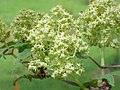
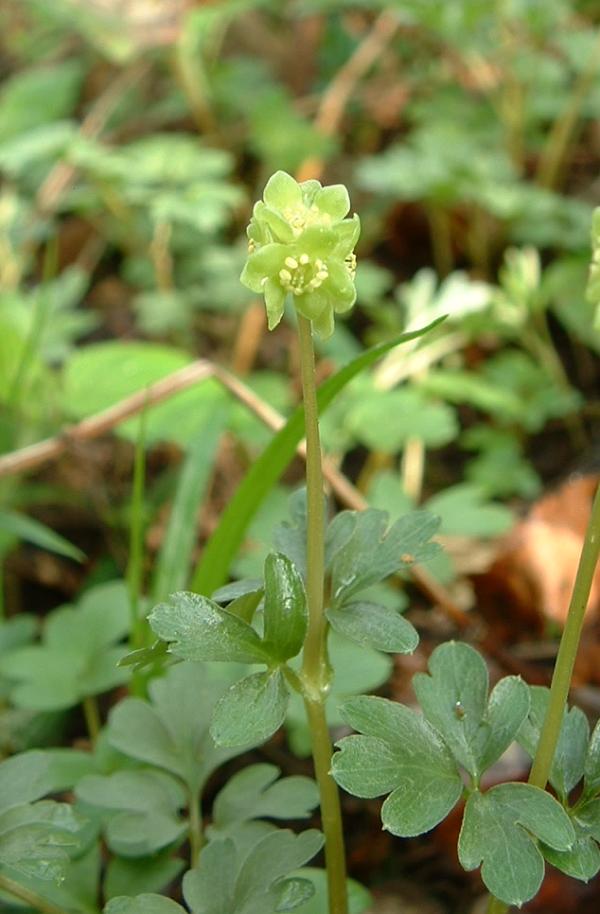
Adoxa moschatellina is a small perennial herbaceous plant, flowering early in the spring and dying down to ground level in summer immediately after the berries are mature; the leaves are compound.

The elders are mostly shrubs, but two species are large herbaceous plants; all have compound leaves. The viburnums are all shrubs, with simple leaves.

[edit]

References

[edit]
[edit]
Revisions and contributorsEdit on WikipediaRead on Wikipedia
from Grokipedia
Adoxaceae, commonly known as the moschatel family, is a family of flowering plants in the order Dipsacales, consisting of five genera and approximately 200 species of mostly shrubs, small trees, and perennial herbs.[1] The family is characterized by opposite leaves that are simple or pinnately compound, small bisexual actinomorphic flowers arranged in terminal cymes, umbels, or panicles with four to five petals and five stamens, and fruits that are drupes containing one to five pyrenes.[2][3] Prominent genera include Sambucus (elderberries), valued for their berries used in food, beverages, and traditional medicine due to bioactive compounds like anthocyanins, and Viburnum (viburnums), widely cultivated as ornamentals for their attractive flowers and foliage.[4][5] Adoxaceae species are primarily distributed in temperate and subtropical regions of the Northern Hemisphere, with some extending to montane tropics in the Southern Hemisphere, and exhibit indumentum of simple, stellate, or peltate hairs on glabrous to glandular plants.[2][3]

Description

Morphology

Plants in the Adoxaceae family display diverse growth forms, ranging from low herbaceous perennials to woody shrubs and small trees. The stems reflect this variation, being herbaceous in genera like Adoxa, Sinadoxa, and Tetradoxa, while species in Sambucus and Viburnum form woody shrubs or reach heights of up to 10 meters as small trees.[6][7] Leaves are characteristically opposite, with pinnate venation and petioles; they are simple, ternate, biternate, pinnatisect, or pinnate, featuring entire or serrate (toothed) margins, and stipules are typically absent or represented by small pseudostipules.[6] Inflorescences take the form of monotelic cymes, corymbs, pseudo-umbels, heads, racemes, or panicles, often terminal or axillary. Flowers are small, bisexual, and epigynous, usually 5-merous (rarely 4-merous), with 5 connate sepals that are small and persistent, 5 imbricate or valvate petals forming a rotate to campanulate corolla, 5 antesepalous stamens adnate to the corolla, and a syncarpous inferior ovary of 2–5 carpels containing one fertile ovule per locule.[6] Fruits develop as indehiscent drupes, typically with 1–5 hard pyrenes (one in Viburnum, multiple in Adoxa and Sambucus), and they mature to colorful hues such as black, red, or blue.[6] A distinctive feature occurs in Adoxa moschatellina, where the musk-scented inflorescence forms a unique cube-shaped head with five flowers: one apical flower facing upward and four lateral flowers facing outward, simulating the faces of a cube.[8] These morphological traits, including the structure of flowers and fruits, support the taxonomic separation of Adoxaceae from the sister family Caprifoliaceae.[6]

Reproduction

Members of the Adoxaceae family typically flower from spring to summer, producing hermaphroditic flowers.[9] In the genus Adoxa, such as Adoxa moschatellina, blooming occurs in early spring from March to May, with the plant senescing shortly after fruit maturation.[8] Pollination in Adoxaceae is primarily entomophilous, facilitated by insects attracted to nectar and floral scents.[10] Flies and bees are key pollinators, drawn particularly by the musky odor emitted by flowers in Adoxa moschatellina.[8] Inflorescences in genera like Sambucus and Viburnum are often showy, enhancing pollinator attraction, in contrast to the inconspicuous clusters of Adoxa.[11][12] Following pollination, fruits develop as fleshy drupes adapted for animal dispersal through ornithochory and mammal-mediated processes.[13] These drupes contain pyrenes that protect the seeds, with Viburnum featuring a single pyrene per fruit and Sambucus and Adoxa having up to five.[14] In temperate Adoxaceae species, seed germination generally requires cold stratification to break dormancy.[15] For example, Sambucus nigra ssp. canadensis seeds achieve high germination rates after acid scarification followed by 60 days of stratification at 2–4°C.[15] Apomixis is rare within the family but has been documented in Sambucus, involving apospory and adventitious embryony that produce clonal seeds.[16]

Taxonomy

History of classification

In the 18th and 19th centuries, genera such as Sambucus, Viburnum, and Adoxa were classified within the family Caprifoliaceae by botanists including Carl Linnaeus, primarily due to similarities in floral structure, such as sympetalous corollas and epipetalous stamens. Adoxa moschatellina, the type species of the genus Adoxa, was initially placed in Caprifoliaceae but distinguished by its herbaceous habit and unique inflorescence, leading Ernst Heinrich Friedrich Meyer to propose the family Adoxaceae in 1839 to accommodate it separately. By the early 20th century, botanists began proposing separations for Viburnum and Sambucus from Caprifoliaceae based on morphological distinctions, including the absence of interpetiolar sclereids—specialized idioblasts present in Caprifoliaceae sensu stricto but lacking in these genera—and differences in wood anatomy and fruit structure. These proposals often elevated Viburnum to its own subfamily or family (Viburnaceae) and Sambucus to Sambucaceae, reflecting ongoing debates over shared traits like opposite leaves and cymose inflorescences versus autapomorphic features.[17] The discovery of additional herbaceous genera in China further expanded the scope of Adoxaceae. Sinadoxa corydalifolia was described in 1981 from the Tibetan Plateau, characterized by its alpine habit and dissected leaves, while Tetradoxa omeiensis (initially as Adoxa omeiensis) was also described that year from Mount Emei, noted for its tetradynamous stamens. These findings prompted inclusion in Adoxaceae pending phylogenetic confirmation. Molecular evidence revolutionized the classification. A 2001 study using chloroplast genes rbcL and ndhF demonstrated that Adoxaceae, encompassing Adoxa, Sambucus, Viburnum, Sinadoxa, and Tetradoxa, forms a monophyletic basal clade sister to the remaining Dipsacales, with Dipsacaceae positioned as sister to Caprifoliaceae sensu stricto. This supported the family's distinction from Caprifoliaceae. The Angiosperm Phylogeny Group (APG) formally recognized Adoxaceae in its 1998 classification (APG I), initially unplaced within euasterids II due to limited data, but incorporating Adoxa, Sambucus, and Viburnum.[18] APG II in 2003 confirmed its placement in Dipsacales and allowed optional merger options while maintaining the family. APG III in 2009 solidified the current circumscription, explicitly including Sinadoxa and Tetradoxa based on accumulated molecular and morphological evidence.

Current classification

The Adoxaceae family is currently classified within the order Dipsacales according to the Angiosperm Phylogeny Group IV (APG IV) system of 2016, where it forms part of the euasterids II clade and is positioned as sister to the core Dipsacales (encompassing Caprifoliaceae sensu lato, which includes Dipsacaceae). This placement reflects molecular phylogenetic evidence supporting the family's distinct evolutionary lineage within the asterids. The family includes five genera: Adoxa (1 species), Sambucus (approximately 30 species), Sinadoxa (1 species), Tetradoxa (1 species), and Viburnum (approximately 150–170 species), totaling about 180–200 species worldwide. Species counts are subject to ongoing revisions, particularly through DNA barcoding studies that reveal low interspecies discrimination in genera like Viburnum and Sambucus, prompting re-evaluations of boundaries.[19] Internally, Adoxaceae is often divided into two subfamilies: Adoxoideae, encompassing the herbaceous genera Adoxa, Sinadoxa, and Tetradoxa; and Viburnoideae, including the woody genera Sambucus and Viburnum. This subdivision, based on habit and reproductive traits, is not universally adopted due to varying interpretations of phylogenetic data. Although some classifications incorporate Adoxaceae into an expanded Caprifoliaceae, the APG IV system upholds its separation to reflect robust molecular support for the distinction.

Distribution and ecology

Geographic distribution

The Adoxaceae family is predominantly distributed across the Northern Hemisphere, with the highest species diversity occurring in temperate regions of Asia and North America.[2][20] This circumboreal and pantemperate pattern extends into subtropical and montane tropical areas, encompassing parts of Europe, Asia, North America, and Middle America.[21] The genus Viburnum, comprising the majority of Adoxaceae species, is widespread in Eurasia and North and Central America, with additional occurrences in tropical montane regions such as the Andes and Himalayas.[22][23] In contrast, Sambucus exhibits a nearly cosmopolitan distribution, native to temperate and subtropical zones throughout the Northern Hemisphere and extending into the Southern Hemisphere through native species in Australia and South America, as well as some introductions elsewhere.[24][25] The herbaceous genera within Adoxaceae have more restricted ranges: Adoxa is primarily found in Europe, Asia, and North America with a circumboreal distribution.[26] Sinadoxa and Tetradoxa are limited to high-altitude areas in the Hengduan Mountains and southeastern margin of the Qinghai-Tibet Plateau in China, corresponding to the eastern Himalayas.[27][28] In Australia, two native species of Adoxaceae occur, both in the genus Sambucus and concentrated in the temperate southeast.[2][29]

Habitat and ecological interactions

Members of the Adoxaceae family primarily inhabit temperate forests, woodlands, montane shrublands, and riparian zones, where they occupy understory positions in moist, shaded environments. Woody genera such as Sambucus and Viburnum thrive in these settings, often along forest edges, stream banks, and floodplains with base-rich, nitrogen-enriched soils. Herbaceous genera like Adoxa prefer damp, mossy soils in alpine meadows, cliff bases, and mesic hardwood forest understories, favoring cool, shaded conditions that retain moisture.[30][31][32][33] Ecologically, Adoxaceae species serve as keystone components in certain ecosystems by providing berries that support bird and mammal populations, including migratory birds reliant on Sambucus fruits for nutrition during seasonal movements. These plants enhance biodiversity through habitat provision, such as nesting sites for songbirds in Sambucus hedgerows, and contribute to food webs as forage for wildlife. Sambucus nigra, for instance, forms dense thickets in disturbed areas, promoting soil stabilization and facilitating wildlife corridors by creating protective cover and connectivity in fragmented landscapes.[34][35][36][37] Adoxaceae plants engage in various biotic interactions, including hosting herbivorous insects like aphids and the viburnum leaf beetle (Pyrrhalta viburni), which feeds exclusively on Viburnum species and induces defensive responses such as wound-induced egg-crushing in European lineages. Woody genera commonly form mycorrhizal associations that improve nutrient and water uptake in nutrient-poor soils, enhancing plant resilience. Adaptations to temperate zones include deciduous habits in Sambucus and Viburnum, allowing resource conservation during dormancy, while Adoxa moschatellina exhibits early spring flowering to minimize competition in shaded understories.[38][39][40][41][42][43]

Genera

Overview of genera

The Adoxaceae family, placed within the order Dipsacales, encompasses five genera that exhibit a clear phylogenetic division into a herbaceous clade (Adoxa, Sinadoxa, and Tetradoxa) and a woody clade (Sambucus and Viburnum).[44] This split reflects distinct evolutionary trajectories, with the herbaceous genera generally featuring smaller, more specialized forms adapted to high-altitude or cool environments, while the woody genera display greater diversity in size and habit.[45] Overall, the family includes three herbaceous and two woody genera, totaling approximately 230 species.[46] Adoxa is a monotypic genus represented by the herbaceous perennial Adoxa moschatellina, which occurs in circumboreal distributions across cool temperate regions of the Northern Hemisphere, including parts of North America, Europe, and Asia. Sambucus comprises approximately 20–30 species, predominantly as shrubs or small trees with opposite, pinnately compound leaves and prominent cymose inflorescences; it also includes herbaceous species such as Sambucus ebulus.[47] These plants are mainly distributed in the temperate zones of the Northern Hemisphere.[47] Sinadoxa is monotypic, consisting of the herbaceous Sinadoxa helianthemoides, which is endemic to the high-altitude regions of southeastern Tibet.[48] Similarly, Tetradoxa is monotypic with Tetradoxa omeiensis (noted for its unique tetramerous flowers, contrasting the family's typical pentamerous structure), an herbaceous species restricted to the Himalayan region, particularly Mount Emei in Sichuan, China.[49][28] Viburnum is the largest genus in the family, with approximately 200 species of woody shrubs or small trees bearing simple, opposite leaves; it exhibits high diversity in temperate regions of the Northern Hemisphere and extends into tropical mountain areas of Central and South America, as well as eastern Asia.[50]

Diversity and notable species

The Adoxaceae family encompasses approximately 230 species distributed across five genera, predominantly in the Northern Hemisphere.[51] The genus Viburnum dominates the family's diversity, comprising about 200 species that represent roughly 85% of the total.[50] Notable species within Viburnum include V. opulus (guelder rose), valued for its ornamental berries and widespread temperate distribution, and V. tinus (laurustinus), an evergreen shrub native to the Mediterranean region.[52][53] The genus Sambucus contributes around 22 species globally, with regional diversity typically ranging from 5 to 10 species per temperate or subtropical area.[54] Prominent examples are S. nigra (European elder), a widespread deciduous shrub in Europe and western Asia known for its medicinal berries, and S. canadensis (American elderberry), common in eastern North America and valued ecologically for wildlife support.[55][56] Monotypic genera like Adoxa, Sinadoxa, and Tetradoxa add minimal numerical diversity but unique herbaceous forms; Adoxa moschatellina (townhall clock or muskroot), the only species in its genus, is a delicate perennial and a key indicator of ancient woodlands in Europe and North America due to its slow colonization rate.[51][57] Conservation challenges affect certain Adoxaceae species, particularly through habitat loss; for instance, Viburnum obovatum (Walter's viburnum) is rare in southeastern Florida, where development and wetland conversion threaten its persistence in hydric hammocks and flatwoods.[58] Hybridization is prevalent in Sambucus and Viburnum, facilitating natural variation and human-selected cultivars; S. racemosa (red elderberry), for example, exhibits red-berried ornamental forms derived from interspecific crosses, enhancing its horticultural appeal while complicating wild taxonomy.[59][35]

Uses and cultivation

Ornamental and horticultural uses

Members of the Adoxaceae family, particularly genera Viburnum and Sambucus, are popular in ornamental horticulture for their diverse aesthetic qualities, including showy flowers, colorful foliage, and ornamental fruits. Viburnum dentatum, known as arrowwood viburnum, is valued for its reliable fall color, displaying shades of yellow, orange, and red that enhance autumn landscapes. Similarly, Viburnum plicatum f. tomentosum, or doublefile viburnum, features distinctive horizontal layered branching that supports clusters of white lacecap flowers, creating a striking tiered effect in garden settings. Sambucus nigra 'Black Lace', a cultivar of European elder, is prized for its finely dissected dark purple-black foliage and clusters of pinkish-white flowers, providing bold textural contrast in borders and focal points.[60][61][62] Cultivation of these plants requires well-drained, organically rich loamy soil with a neutral to slightly acidic pH (5.5-7.0) to prevent root rot and promote healthy growth. They perform best in full sun to partial shade, with full sun encouraging more prolific flowering and fruiting, though afternoon shade benefits species in warmer climates to avoid leaf scorch. Most Viburnum and Sambucus species are hardy across USDA zones 3-9, tolerating a wide range of conditions while exhibiting good adaptability to urban environments.[60][63][64] Propagation methods for Adoxaceae ornamentals include sowing stratified seeds, which require a period of cold moist treatment (typically 90-120 days at 34-41°F) to break dormancy, especially for Viburnum species; taking softwood cuttings in late spring or hardwood cuttings in winter for both genera; and employing layering techniques where low branches are bent to the ground to root naturally. Grafting onto disease-resistant rootstocks is commonly used for Viburnum to improve tolerance to pathogens like powdery mildew and bacterial leaf spot, ensuring vigorous, long-lived specimens. Sambucus cuttings root readily in moist media, often producing well-established plants within 6-8 weeks.[65][66][67][68] In landscape design, Adoxaceae shrubs serve as versatile elements for hedges and privacy screens due to their dense growth habit, while also fitting into wildlife gardens where their berries provide food for birds and nectar attracts pollinators like bees and butterflies. Since the 1800s, numerous Viburnum cultivars—estimated in the hundreds—have been bred by institutions such as the U.S. National Arboretum for compact forms, enhanced flowering, and resistance to diseases including powdery mildew, exemplified by selections like 'Mohawk' and 'Eskimo'. These developments have expanded their utility in modern horticulture, supporting sustainable and low-maintenance plantings.[60][67][69]

Culinary and medicinal applications

Plants in the Adoxaceae family, particularly species of Sambucus and Viburnum, have been utilized for culinary purposes, though preparation is essential to mitigate toxicity risks. The berries of Sambucus nigra (European elderberry) and Sambucus canadensis (American elderberry) are commonly cooked into jams, wines, syrups, pies, and jellies due to their rich flavor and nutritional content, including antioxidants and vitamins.[70][71][42] Raw berries, however, contain cyanogenic glycosides that can release cyanide upon ingestion, potentially causing nausea, vomiting, or more severe symptoms, necessitating thorough cooking to neutralize these compounds.[72][73] Flowers from Sambucus species are steeped to make teas, often valued for their mild, floral taste and inclusion in herbal infusions.[74] For Viburnum species, culinary applications are more limited but include the berries of Viburnum trilobum (highbush cranberry), which can be consumed in small quantities after cooking for sauces or jellies, providing a tart, cranberry-like flavor.[75] The fruits of Viburnum opulus (cramp bark) are not typically eaten but have been used sparingly in traditional preparations.[76] Medicinally, Sambucus extracts, especially from elderberries, are widely employed for immune support and alleviating flu symptoms, with elderberry syrups and lozenges commonly recommended to shorten the duration and severity of upper respiratory infections.[77][78] A 2016 randomized study on air travelers found that elderberry supplementation reduced cold duration by about two days compared to placebo.[79] For Viburnum opulus, the bark serves as an antispasmodic in herbal medicine, particularly for relieving uterine cramps and menstrual pain, with its use documented in pharmacopeias and traditional remedies since the 19th century.[80][81] Active compounds like scopoletin contribute to its muscle-relaxant effects.[82] Precautions are critical when using Adoxaceae plants, as uncooked berries, leaves, stems, and seeds of Sambucus can cause gastrointestinal distress or cyanide poisoning.[83] Allergies to Sambucus or Viburnum may manifest as skin reactions or respiratory issues, particularly from pollen in Viburnum species.[84] Sustainable harvesting is emphasized to preserve wild populations, recommending leaving significant amounts of berries for wildlife and plant regeneration.[85] Commercial elderberry products have seen significant growth since the early 2000s, driven by increasing demand for natural immune supplements, with U.S. production acreage expanding to over 1,000 acres as of 2025, with goals to reach 2,250 acres by the end of the year, and global market projections estimating an additional $350 million in value by 2029.[86][87][88]

References

User Avatar
No comments yet.