


Community hub
Recent from talks
Contribute something
Nothing was collected or created yet.
Healthy diet
View on Wikipedia

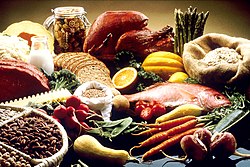
A healthy diet is a diet that maintains or improves overall health. A healthful diet provides the body with essential nutrition: water, macronutrients such as protein, micronutrients such as vitamins, and adequate fibre and food energy.[2][3]
A healthy diet may contain fruits, vegetables, and whole grains, and may include little to no ultra-processed foods or sweetened beverages.[4][5] The requirements for a healthy diet can be met from a variety of plant-based and animal-based foods, although additional sources of vitamin B12 are needed for those following a vegan diet.[6] Various nutrition guides are published by medical and governmental institutions to educate individuals on what they should be eating to be healthy. Not only advertising may drive preferences towards unhealthy foods.[7][8][9][10] To reverse this trend, consumers should be informed, motivated and empowered to choose healthy diets.[11] Nutrition facts labels are also mandatory in some countries to allow consumers to choose between foods based on the components relevant to health.[12][13][14]
It is estimated that in 2023 40% of the world population could not afford a healthy diet.[15] This is often a political issue.[16][17] The Food and Agriculture Organization and the World Health Organization have formulated four core principles of what constitutes healthy diets. According to these two organizations, health diets are:
- Adequate, as they meet, without exceeding, our body's energy and essential nutrient requirements in support of all the many body functions.
- Diverse, as they include various nutritious foods within and across food groups to help secure the sufficient nutrients needed by our bodies.
- Balanced, as they include energy from the three primary sources (protein, fats, and carbohydrates) in a balanced way and foster healthy weight, growth and activity, and to prevent disease.
- Moderate, as they include only small quantities (or none) of foods that may have a negative impact on health, such as highly salty and sugary foods.[11][18]
Recommendations
[edit]World Health Organization
[edit]The World Health Organization (WHO) makes the following five recommendations with respect to both populations and individuals:[19]
- Maintain a healthy weight by eating roughly the same number of calories that your body is using.
- Limit intake of fats to no more than 30% of total caloric intake, preferring unsaturated fats to saturated fats. Avoid trans fats.
- Eat at least 400 grams of fruits and vegetables per day (not counting potatoes, sweet potatoes, cassava, and other starchy roots). A healthy diet also contains legumes (e.g. lentils, beans), whole grains, and nuts.[20]
- Limit the intake of simple sugars to less than 10% of caloric intake (below 5% of calories or 25 grams may be even better).[21]
- Limit salt/sodium from all sources and ensure that salt is iodized. Less than 5 grams of salt per day can reduce the risk of cardiovascular disease.[22]
The WHO has stated that insufficient vegetables and fruit is the cause of 2.8% of deaths worldwide.[22][failed verification]
Other WHO recommendations include:
- ensuring that the foods chosen have sufficient vitamins and certain minerals;
- avoiding directly poisonous (e.g. heavy metals) and carcinogenic (e.g. benzene) substances;
- avoiding foods contaminated by human pathogens (e.g. E. coli, tapeworm eggs);
- and replacing saturated fats with polyunsaturated fats in the diet, which can reduce the risk of coronary artery disease and diabetes.[22][failed verification]
United States Department of Agriculture
[edit]The Dietary Guidelines for Americans by the United States Department of Agriculture (USDA) recommends three healthy patterns of diet, summarized in the table below, for a 2000 kcal diet.[23][24][25] These guidelines are increasingly adopted by various groups and institutions for recipe and meal plan development.[26]
The guidelines emphasize both health and environmental sustainability and a flexible approach. The committee that drafted it wrote: "The major findings regarding sustainable diets were that a diet higher in plant-based foods, such as vegetables, fruits, whole grains, legumes, nuts, and seeds, and lower in calories and animal-based foods is more health promoting and is associated with less environmental impact than is the current U.S. diet. This pattern of eating can be achieved through a variety of dietary patterns, including the "Healthy U.S.-style Pattern", the "Healthy Vegetarian Pattern" and the "Healthy Mediterranean-style Pattern".[27] Food group amounts are per day, unless noted per week.
| Food group/subgroup (units) | U.S. style | Vegetarian | Med-style |
|---|---|---|---|
| Fruits (cup eq) | 2 | 2 | 2.5 |
| Vegetables (cup eq) | 2.5 | 2.5 | 2.5 |
| Dark green | 1.5/wk | 1.5/wk | 1.5/wk |
| Red/orange | 5.5/wk | 5.5/wk | 5.5/wk |
| Starchy | 5/wk | 5/wk | 5/wk |
| Legumes | 1.5/wk | 3/wk | 1.5/wk |
| Others | 4/wk | 4/wk | 4/wk |
| Grains (oz eq) | 6 | 6.5 | 6 |
| Whole | 3 | 3.5 | 3 |
| Refined | 3 | 3 | 3 |
| Dairy (cup eq) | 3 | 3 | 2 |
| Protein Foods (oz eq) | 5.5 | 3.5 | 6.5 |
| Meat (red and processed) | 12.5/wk | – | 12.5/wk |
| Poultry | 10.5/wk | – | 10.5/wk |
| Seafood | 8/wk | – | 15/wk |
| Eggs | 3/wk | 3/wk | 3/wk |
| Nuts/seeds | 4/wk | 7/wk | 4/wk |
| Processed Soy (including tofu) | 0.5/wk | 8/wk | 0.5/wk |
| Oils (grams) | 27 | 27 | 27 |
| Solid fats limit (grams) | 18 | 21 | 17 |
| Added sugars limit (grams) | 30 | 36 | 29 |
American Heart Association / World Cancer Research Fund / American Institute for Cancer Research
[edit]The American Heart Association, World Cancer Research Fund, and American Institute for Cancer Research recommend a diet that consists mostly of unprocessed plant foods, with emphasis on a wide range of whole grains, legumes, and non-starchy vegetables and fruits. This healthy diet includes a wide range of non-starchy vegetables and fruits which provide different colors including red, green, yellow, white, purple, and orange. The recommendations note that tomato cooked with oil, allium vegetables like garlic, and cruciferous vegetables like cauliflower, provide some protection against cancer. This healthy diet is low in energy density, which may protect against weight gain and associated diseases. Finally, limiting consumption of sugary drinks, limiting energy-rich foods, including "fast foods" and red meat, and avoiding processed meats improves health and longevity. Overall, researchers and medical policymakers conclude that this healthy diet can reduce the risk of chronic disease and cancer.[28][29]
It is recommended that children consume 25 grams or less of added sugar (100 calories) per day.[30] Other recommendations include no extra sugars in those under two years old and less than one soft drink per week.[30] As of 2017, decreasing total fat is no longer recommended, but instead, the recommendation to lower risk of cardiovascular disease is to increase consumption of monounsaturated fats and polyunsaturated fats, while decreasing consumption of saturated fats.[31]
Harvard School of Public Health
[edit]The Nutrition Source of Harvard School of Public Health (HSPH) makes the following dietary recommendations:[32]
- Eat healthy fats: healthy fats are necessary and beneficial for health.[33] HSPH "recommends the opposite of the low-fat message promoted for decades by the USDA" and "does not set a maximum on the percentage of calories people should get each day from healthy sources of fat."[32] Healthy fats include polyunsaturated and monounsaturated fats, found in vegetable oils, nuts, seeds, and fish. Foods containing trans fats are to be avoided, while foods high in saturated fats like red meat, butter, cheese, ice cream, coconut and palm oil negatively impact health and should be limited.[33][34]
- Eat healthy protein: the majority of protein should come from plant sources when possible: lentils, beans, nuts, seeds, whole grains; avoid processed meats like bacon.[35]
- Eat mostly vegetables, fruit, and whole grains.[32]
- Drink water. Consume sugary beverages, juices, and milk only in moderation. Artificially sweetened beverages contribute to weight gain because sweet drinks cause cravings. 100% fruit juice is high in calories. The ideal amount of milk and calcium is not known today.[36]
- Pay attention to salt intake from commercially prepared foods: most of the dietary salt comes from processed foods, "not from salt added to cooking at home or even from salt added at the table before eating."[37]
- Vitamins and minerals: must be obtained from food because they are not produced in our body. They are provided by a diet containing healthy fats, healthy protein, vegetables, fruit, milk and whole grains.[38][36]
- Pay attention to the carbohydrates package: the type of carbohydrates in the diet is more important than the amount of carbohydrates. Good sources for carbohydrates are vegetables, fruits, beans, and whole grains. Avoid sugared sodas, 100% fruit juice, artificially sweetened drinks, and other highly processed food.[36][32]
Other than nutrition, the guide recommends staying active and maintaining a healthy body weight.[32]
Others
[edit]David L. Katz, who reviewed the most prevalent popular diets in 2014, noted:
The weight of evidence strongly supports a theme of healthful eating while allowing for variations on that theme. A diet of minimally processed foods close to nature, predominantly plants, is decisively associated with health promotion and disease prevention and is consistent with the salient components of seemingly distinct dietary approaches. Efforts to improve public health through diet are forestalled not for want of knowledge about the optimal feeding of Homo sapiens but for distractions associated with exaggerated claims, and our failure to convert what we reliably know into what we routinely do. Knowledge in this case is not, as of yet, power; would that it were so.[39]
Marion Nestle expresses the mainstream view among scientists who study nutrition:[40]: 10
The basic principles of good diets are so simple that I can summarize them in just ten words: eat less, move more, eat lots of fruits and vegetables. For additional clarification, a five-word modifier helps: go easy on junk foods. Follow these precepts and you will go a long way toward preventing the major diseases of our overfed society—coronary heart disease, certain cancers, diabetes, stroke, osteoporosis, and a host of others.... These precepts constitute the bottom line of what seem to be the far more complicated dietary recommendations of many health organizations and national and international governments—the forty-one "key recommendations" of the 2005 Dietary Guidelines, for example. ... Although you may feel as though advice about nutrition is constantly changing, the basic ideas behind my four precepts have not changed in half a century. And they leave plenty of room for enjoying the pleasures of food.[41]: 22
Historically, a healthy diet was defined as a diet comprising more than 55% of carbohydrates, less than 30% of fat and about 15% of proteins.[42] This view is currently shifting towards a more comprehensive framing of dietary needs as a global need of various nutrients with complex interactions, instead of per nutrient type needs.[43]
In 2022, the American Society for Preventive Cardiology defined a healthful dietary pattern as a diet consisting predominantly of fruits, vegetables, legumes, nuts, seeds, plant protein and fatty fish with reduced consumption of saturated fat, salt and ultra-processed food.[44] The National Heart Foundation of Australia's "Healthy Eating Principles" include plenty of fruit, vegetables and whole grains with a variety of protein sources such as fish and seafood, lean poultry with a restriction on red meat.[45]
Specific conditions
[edit]Diabetes
[edit]A healthy diet in combination with being active can help those with diabetes keep their blood sugar in check.[46] The US CDC advises individuals with diabetes to plan for regular, balanced meals and to include more nonstarchy vegetables, reduce added sugars and refined grains, and focus on whole foods instead of highly processed foods.[47] Generally, people with diabetes and those at risk are encouraged to increase their fiber intake.[48]
Hypertension
[edit]A low-sodium diet is beneficial for people with high blood pressure. A 2008 Cochrane review concluded that a long-term (more than four weeks) low-sodium diet lowers blood pressure, both in people with hypertension (high blood pressure) and in those with normal blood pressure.[49]
The DASH diet (Dietary Approaches to Stop Hypertension) is a diet promoted by the National Heart, Lung, and Blood Institute (part of the NIH, a United States government organization) to control hypertension. A major feature of the plan is limiting intake of sodium,[50] and the diet also generally encourages the consumption of nuts, whole grains, fish, poultry, fruits, and vegetables while lowering the consumption of red meats, sweets, and sugar. It is also "rich in potassium, magnesium, and calcium, as well as protein".
The Mediterranean diet, which includes limiting consumption of red meat and using olive oil in cooking, has also been shown to improve cardiovascular outcomes.[51]
Obesity
[edit]It is estimated that more than 675 million adults are obese.[11] Healthy diets in combination with physical exercise can be used by people who are overweight or obese to lose weight, although this approach is not by itself an effective long-term treatment for obesity and is primarily effective for only a short period (up to one year), after which some of the weight is typically regained.[52][53] A meta-analysis found no difference between diet types (low-fat, low-carbohydrate, and low-calorie), with a 2–4 kilograms (4.4–8.8 lb) weight loss.[54] This level of weight loss is by itself insufficient to move a person from an 'obese' body mass index (BMI) category to a 'normal' BMI.
Gluten-related disorders
[edit]Gluten, a mixture of proteins found in wheat and related grains including barley, rye, oat, and all their species and hybrids (such as spelt, kamut, and triticale),[55] causes health problems for those with gluten-related disorders, including celiac disease, non-celiac gluten sensitivity, gluten ataxia, dermatitis herpetiformis, and wheat allergy.[56] In these people, the gluten-free diet is the only available treatment.[57][58][59]
Epilepsy
[edit]The ketogenic diet is a treatment to reduce epileptic seizures for adults and children when managed by a health care team.[60]
Research
[edit]Preliminary research indicated that a diet high in fruit and vegetables may decrease the risk of cardiovascular disease and death, but not cancer.[61] Eating a healthy diet and getting enough exercise can maintain body weight within the normal range and reduce the risk of obesity in most people.[62] A 2021 scientific review of evidence on diets for lowering the risk of atherosclerosis found that:[63]
low consumption of salt and foods of animal origin, and increased intake of plant-based foods—whole grains, fruits, vegetables, legumes, and nuts—are linked with reduced atherosclerosis risk. The same applies for the replacement of butter and other animal/tropical fats with olive oil and other unsaturated-fat-rich oil. [...] With regard to meat, new evidence differentiates processed and red meat—both associated with increased CVD risk—from poultry, showing a neutral relationship with CVD for moderate intakes. [...] New data endorse the replacement of most high glycemic index (GI) foods with both whole grain and low GI cereal foods.
Scientific research is also investigating impacts of nutrition on health- and lifespans beyond any specific range of diseases.
Research suggests that increasing adherence to Mediterranean diet patterns is associated with a reduction in total and cause-specific mortality, extending health- and lifespan.[64][65][66][67] Research is identifying the key beneficial components of the Mediterranean diet.[68][69] Studies suggest dietary changes are a factor of national relative rises in life-span.[70] Moreover, not only do the components of diets matter but the total caloric content and eating patterns may also impact health – dietary restriction such as caloric restriction is considered to be potentially healthy to include in eating patterns in various ways in terms of health- and lifespan.[71][72]
Affordability
[edit]The UN Food and Agriculture Organization estimates that in 2023 40% of the world population, 2.8 billion couldn't afford a healthy diet. 35.5% of people in the world (2.83 billion) were unable to afford a healthy diet in 2022, compared with 36.5% (2.88 billion) in 2021.[73] Low-income countries having the largest percentage of the population that is unable to afford a healthy diet (71.5 percent) compared with lower-middle-income countries (52.6 percent), upper-middle-income countries (21.5 percent).[73][15]
Unhealthy diets
[edit]
An unhealthy diet is a major risk factor for a number of chronic diseases including: high blood pressure, high cholesterol, diabetes, abnormal blood lipids, overweight/obesity, cardiovascular diseases, and cancer.[74] Estimates indicate that, each year, non-communicable diseases (NCDs) such as diabetes and cardiovascular disease are responsible for 41 million deaths – almost two-thirds of all deaths globally.[11] The World Health Organization has estimated that 2.7 million deaths each year are attributable to a diet low in fruit and vegetables during the 21st century.[75] At least 1.2 billion women are low of vitamins and minerals, which increases the risk of being exposed to chronic fatigue, low resistance to infections and birth defects in their offspring.[11]
Globally, such diets are estimated to cause about 19% of gastrointestinal cancer, 31% of ischaemic heart disease, and 11% of strokes,[13] thus making it one of the leading preventable causes of death worldwide,[76] and the 4th leading risk factor for any disease.[77] As an example, the Western pattern diet is "rich in red meat, dairy products, processed and artificially sweetened foods, and salt, with minimal intake of fruits, vegetables, fish, legumes, and whole grains," contrasted by the Mediterranean diet which is associated with less morbidity and mortality.[78]
Dietary patterns that lead to non-communicable diseases generate productivity losses. A true cost accounting (TCA) assessment on the hidden impacts of agrifood systems estimated that unhealthy dietary patterns generate more than USD 9 trillion in health-related hidden costs in 2020, which is 73 percent of the total quantified hidden costs of global agrifood systems (USD 12.7 trillion). Globally, the average productivity losses per person from dietary intake is equivalent to 7 percent of GDP purchasing power parity (PPP) in 2020; low-income countries report the lowest value (4 percent), while other income categories report 7 percent or higher.[79]
Fad diet
[edit]Some publicized diets, often referred to as fad diets, make exaggerated claims of fast weight loss or other health advantages, such as longer life or detoxification without clinical evidence; many fad diets are based on highly restrictive or unusual food choices.[80][81][82] Celebrity endorsements (including celebrity doctors) are frequently associated with such diets, and the individuals who develop and promote these programs often profit considerably.[40]: 11–12 [83]
Public health
[edit]
Consumers are generally aware of the elements of a healthy diet, but find nutrition labels and diet advice in popular media confusing.[84]
Vending machines are criticized for being avenues of entry into schools for junk food promoters, but there is little in the way of regulation and it is difficult for most people to properly analyze the real merits of a company referring to itself as "healthy." The Committee of Advertising Practice in the United Kingdom launched a proposal to limit media advertising for food and soft drink products high in fat, salt, or sugar.[85] The British Heart Foundation released its own government-funded advertisements, labeled "Food4Thought", which were targeted at children and adults to discourage unhealthy habits of consuming junk food.[86]
From a psychological and cultural perspective, a healthier diet may be difficult to achieve for people with poor eating habits.[87] This may be due to tastes acquired in childhood and preferences for sugary, salty, and fatty foods.[88] In 2018, the UK chief medical officer recommended that sugar and salt be taxed to discourage consumption.[89] The UK government 2020 Obesity Strategy encourages healthier choices by restricting point-of-sale promotions of less-healthy foods and drinks.[90]
The effectiveness of population-level health interventions has included food pricing strategies, mass media campaigns and worksite wellness programs.[91] One peso per liter of sugar-sweetened beverages (SSB) price intervention implemented in Mexico produced a 12% reduction in SSB purchasing.[92] Mass media campaigns in Pakistan and the USA aimed at increasing vegetable and fruit consumption found positive changes in dietary behavior.[92] Reviews of the effectiveness of worksite wellness interventions found evidence linking the programs to weight loss and increased fruit and vegetable consumption.[93]
Other animals
[edit]Animals that are kept by humans also benefit from a healthy diet, but the requirements of such diets may be very different from the ideal human diet.[94]
See also
[edit]
Sources
[edit] This article incorporates text from a free content work. Licensed under CC BY 4.0. Text taken from The State of Food Security and Nutrition in the World 2024, FAO, IFAD, UNICEF, WFP and WHO, FAO.
References
[edit]- ^ "Healthy Food Display: Image Details". NCI Visuals Online. National Cancer Institute. 1 January 2001. Archived from the original on 6 May 2021. Retrieved 3 October 2021.
- ^ Lean, Michael E.J. (2015). "Principles of Human Nutrition". Medicine. 43 (2): 61–65. doi:10.1016/j.mpmed.2014.11.009. S2CID 220865321.
- ^ World Health Organization, Food and Agricultural Organization of the United Nations (2004). Vitamin and mineral requirements in human nutrition (PDF) (2. ed.). Geneva: World Health Organization. ISBN 978-92-4-154612-6.
- ^ Harlan, Timothy S.; Gow, Rachel V.; Kornstädt, Andreas; Alderson, P. Wolfram; Lustig, Robert H. (2023). "The Metabolic Matrix: Re-engineering ultraprocessed foods to feed the gut, protect the liver, and support the brain". Frontiers in Nutrition. 10 1098453. doi:10.3389/fnut.2023.1098453. ISSN 2296-861X. PMC 10097968. PMID 37063330.
- ^ Lustig, Robert H. (5 November 2020). "Ultraprocessed Food: Addictive, Toxic, and Ready for Regulation". Nutrients. 12 (11): 3401. doi:10.3390/nu12113401. ISSN 2072-6643. PMC 7694501. PMID 33167515.
- ^ Melina, Vesanto; Craig, Winston; Levin, Susan (December 2016). "Position of the Academy of Nutrition and Dietetics: Vegetarian Diets". Journal of the Academy of Nutrition and Dietetics. 116 (12): 1970–1980. doi:10.1016/j.jand.2016.09.025. PMID 27886704. S2CID 4984228. Archived from the original on 2 December 2016.
- ^ Lustig, Robert H. (2010). "Fructose: metabolic, hedonic, and societal parallels with ethanol". Journal of the American Dietetic Association. 110 (9): 1307–1321. doi:10.1016/j.jada.2010.06.008. ISSN 1878-3570. PMID 20800122.
- ^ Daubenmier, Jennifer; Lustig, Robert H.; Hecht, Frederick M.; Kristeller, Jean; Woolley, Josh; Adam, Tanja; Dallman, Mary; Epel, Elissa (1 March 2014). "A new biomarker of hedonic eating? A preliminary investigation of cortisol and nausea responses to acute opioid blockade". Appetite. 74: 92–100. doi:10.1016/j.appet.2013.11.014. ISSN 1095-8304. PMC 4125886. PMID 24291355.
- ^ Moszak, Małgorzata; Marcickiewicz, Justyna; Pelczyńska, Marta; Bogdański, Paweł (13 May 2025). "The Interplay Between Psychological and Neurobiological Predictors of Weight Regain: A Narrative Review". Nutrients. 17 (10): 1662. doi:10.3390/nu17101662. ISSN 2072-6643. PMC 12114007. PMID 40431402.
- ^ Gheonea, Theodora Claudia; Oancea, Carmen-Nicoleta; Mititelu, Magdalena; Lupu, Elena Carmen; Ioniță-Mîndrican, Corina-Bianca; Rogoveanu, Ion (20 November 2023). "Nutrition and Mental Well-Being: Exploring Connections and Holistic Approaches". Journal of Clinical Medicine. 12 (22): 7180. doi:10.3390/jcm12227180. ISSN 2077-0383. PMC 10672474. PMID 38002792.
- ^ a b c d e FAO (2024). The quest for healthy diets. FAO. doi:10.4060/cd1587en. ISBN 978-92-5-139116-7.
- ^ "Food information to consumers – legislation". EU. Retrieved 24 November 2017.
- ^ a b "WHO | Promoting fruit and vegetable consumption around the world" (PDF). WHO.
- ^ Vlassopoulos, Antonis; Katidi, Alexandra; Savvidou, Tereza; Kapsokefalou, Maria (1 December 2022). "Alignment of Nutri-Score with Mediterranean Diet Pyramid: A Food Level Analysis". Nutrients. 14 (23): 5097. doi:10.3390/nu14235097. ISSN 2072-6643. PMC 9741127. PMID 36501126.
- ^ a b The State of World Fisheries and Aquaculture 2024. FAO. 7 June 2024. doi:10.4060/cd0683en. ISBN 978-92-5-138763-4.
- ^ Sisa, Ivan; Mena, María Belen (12 May 2025). "A legal battle between Ecuadorian citizens and corporate power". Journal of Global Health. 15 03017. doi:10.7189/jogh.15.03017. ISSN 2047-2986. PMC 12068418. PMID 40354115.
- ^ Springmann, Marco; Dinivitzer, Eugenia; Freund, Florian; Jensen, Jørgen Dejgård; Bouyssou, Clara G. (9 January 2025). "A reform of value-added taxes on foods can have health, environmental and economic benefits in Europe". Nature Food. 6 (2): 161–169. doi:10.1038/s43016-024-01097-5. ISSN 2662-1355. PMC 11850278. PMID 39789160.
- ^ What are healthy diets?. WHO; FAO. 25 October 2024. doi:10.4060/cd2223en. ISBN 978-92-5-139083-2.
- ^ "WHO | Diet". WHO.
- ^ "Healthy Diet – WHO".
- ^ "WHO guideline: sugar consumption recommendation". World Health Organization. Retrieved 6 January 2018.
- ^ a b c "WHO – Unhealthy diet". who.int.
- ^ Dietary Guidelines Advisory Committee. "Scientific Report of the 2015 Dietary Guidelines Advisory Committee Archived 2018-08-27 at the Wayback Machine." Washington (DC): USDA and US Department of Health and Human Services (2015).
- ^ Jensen, MD; Ryan, DH; Apovian, CM; Ard, JD; Comuzzie, AG; Donato, KA; Hu, FB; Hubbard, VS; Jakicic, JM; Kushner, RF; Loria, CM; Millen, BE; Nonas, CA; Pi-Sunyer, FX; Stevens, J; Stevens, VJ; Wadden, TA; Wolfe, BM; Yanovski, SZ; Jordan, HS; Kendall, KA; Lux, LJ; Mentor-Marcel, R; Morgan, LC; Trisolini, MG; Wnek, J; Anderson, JL; Halperin, JL; Albert, NM; Bozkurt, B; Brindis, RG; Curtis, LH; DeMets, D; Hochman, JS; Kovacs, RJ; Ohman, EM; Pressler, SJ; Sellke, FW; Shen, WK; Smith SC, Jr; Tomaselli, GF; American College of Cardiology/American Heart Association Task Force on Practice, Guidelines.; Obesity, Society. (24 June 2014). "2013 AHA/ACC/TOS guideline for the management of overweight and obesity in adults: a report of the American College of Cardiology/American Heart Association Task Force on Practice Guidelines and The Obesity Society". Circulation (Professional society guideline). 129 (25 Suppl 2): S102-38. doi:10.1161/01.cir.0000437739.71477.ee. PMC 5819889. PMID 24222017.
- ^ "Dietary Guidelines for Americans, 2020-2025 and Online Materials | Dietary Guidelines for Americans". www.dietaryguidelines.gov. Archived from the original on 21 July 2023. Retrieved 13 May 2023.
- ^ "Our Nutrition Guidelines And Food Philosophy Healthy Recipes 101". Healthy Recipes 101. 17 April 2019. Retrieved 13 May 2023.
- ^ "App. E-3.7: Developing Vegetarian and Mediterranean-style Food Patterns - 2015 Advisory Report - health.gov". health.gov. Retrieved 30 September 2015.
- ^ World Cancer Research Fund (1 January 2007). Food, Nutrition, Physical Activity, and the Prevention of Cancer: a Global Perspective (PDF). American Institute for Cancer Research. ISBN 978-0-9722522-2-5. Archived from the original (PDF) on 7 May 2016.
- ^ "American Cancer Society Guidelines on Nutrition and Physical Activity for Cancer Prevention" (PDF). Last Revised: 1 November 2012.
- ^ a b Vos, Miriam B.; Kaar, Jill L.; Welsh, Jean A.; Van Horn, Linda V.; Feig, Daniel I.; Anderson, Cheryl A.M.; Patel, Mahesh J.; Cruz Munos, Jessica; Krebs, Nancy F.; Xanthakos, Stavra A.; Johnson, Rachel K. (22 August 2016). "Added Sugars and Cardiovascular Disease Risk in Children". Circulation. 135 (19): e1017 – e1034. doi:10.1161/CIR.0000000000000439. PMC 5365373. PMID 27550974.
- ^ Sacks, Frank M.; Lichtenstein, Alice H.; Wu, Jason H.Y.; Appel, Lawrence J.; Creager, Mark A.; Kris-Etherton, Penny M.; Miller, Michael; Rimm, Eric B.; Rudel, Lawrence L.; Robinson, Jennifer G.; Stone, Neil J.; Van Horn, Linda V. (15 June 2017). "Dietary Fats and Cardiovascular Disease: A Presidential Advisory From the American Heart Association". Circulation. 136 (3): e1 – e23. doi:10.1161/CIR.0000000000000510. PMID 28620111. S2CID 367602.
- ^ a b c d e "What Should I Eat?". The Nutrition Source. Harvard School of Public Health. 18 September 2012. Retrieved 8 August 2022.
- ^ a b "Fats and Cholesterol". The Nutrition Source. The President and Fellows of Harvard College. 18 September 2012. Retrieved 8 August 2022.
- ^ "Coconut Oil". The Nutrition Source. The President and Fellows of Harvard College. 24 July 2018. Retrieved 8 August 2022.
- ^ "Protein". The Nutrition Source. The President and Fellows of Harvard College. 18 September 2012. Retrieved 8 August 2022.
- ^ a b c "Drinks to Consume in Moderation". The Nutrition Source. The President and Fellows of Harvard College. 4 September 2013. Retrieved 8 August 2022.
- ^ "Salt and Sodium". The Nutrition Source. The President and Fellows of Harvard College. 18 July 2013. Retrieved 8 August 2022.
- ^ "Vitamins and Minerals". The Nutrition Source. The President and Fellows of Harvard College. 18 September 2012. Retrieved 8 August 2022.
- ^ Katz DL, Meller S (2014). "Can we say what diet is best for health?". Annu Rev Public Health. 35: 83–103. doi:10.1146/annurev-publhealth-032013-182351. PMID 24641555.
- ^ a b Fitzgerald M (2014). Diet Cults: The Surprising Fallacy at the Core of Nutrition Fads and a Guide to Healthy Eating for the Rest of US. Pegasus Books. ISBN 978-1-60598-560-2.
- ^ Nestle, Marion (2006). What to Eat. New York: North Point Press (Farrar, Straus and Giroux). pp. 611. ISBN 978-0-86547-738-4.
- ^ Matarese, LE; Pories, WJ (December 2014). "Adult weight loss diets: metabolic effects and outcomes". Nutrition in Clinical Practice (Review). 29 (6): 759–67. doi:10.1177/0884533614550251. PMID 25293593.
- ^ U.S. Department of Health and Human Services and U.S. Department of Agriculture. (2017). "2015–2020 Dietary Guidelines for Americans - health.gov". health.gov (National guideline). USDA and HHS. Archived from the original on 6 November 2019. Retrieved 30 September 2019.
- ^ Belardo D, Michos ED, Blankstein R, Blumenthal RS, Ferdinand KC, Hall K, Klatt K, Natajaran P, Ostfeld RJ, Reddy K, Rodriguez R, Sriram U, Tobias DK, Gulati M. (2022). "Practical, Evidence-Based Approaches to Nutritional Modifications to Reduce Atherosclerotic Cardiovascular Disease: An American Society For Preventive Cardiology Clinical Practice Statement". Am J Prev Cardiol. 10 100323. doi:10.1016/j.ajpc.2022.100323. PMC 8914096. PMID 35284849.
{{cite journal}}: CS1 maint: multiple names: authors list (link) - ^ "Heart-healthy eating patterns" (PDF). Heart Foundation. Archived (PDF) from the original on 28 March 2023.
- ^ "Diabetes Diet, Eating, & Physical Activity - NIDDK". National Institute of Diabetes and Digestive and Kidney Diseases. Retrieved 13 May 2023.
- ^ CDC (19 April 2023). "Meal Planning". Centers for Disease Control and Prevention. Retrieved 13 May 2023.
- ^ Evert, Alison B.; Dennison, Michelle; Gardner, Christopher D.; et al. (May 2019). "Nutrition Therapy for Adults With Diabetes or Prediabetes: A Consensus Report". Diabetes Care. 42 (5): 731–754. doi:10.2337/dci19-0014. ISSN 1935-5548. PMC 7011201. PMID 31000505.
- ^ He, FJ; MacGregor, GA (2004). MacGregor, Graham A (ed.). "Effect of longer-term modest salt reduction on blood pressure". Cochrane Database of Systematic Reviews. 1 (3) CD004937. doi:10.1002/14651858.CD004937. PMID 15266549.
- ^ "Your Guide To Lowering Your Blood Pressure With DASH" (PDF). Archived from the original (PDF) on 26 November 2001. Retrieved 8 June 2009.
- ^ Walker C, Reamy BV (April 2009). "Diets for cardiovascular disease prevention: what is the evidence?". Am Fam Physician. 79 (7): 571–7. PMID 19378874.
- ^ Thom, G; Lean, M (May 2017). "Is There an Optimal Diet for Weight Management and Metabolic Health?" (PDF). Gastroenterology (Review). 152 (7): 1739–1751. doi:10.1053/j.gastro.2017.01.056. PMID 28214525.
- ^ Clinical Guidelines on the Identification, Evaluation, and Treatment of Overweight and Obesity in Adults. Bethesda: US National Institutes of Health. 1998.
- ^ Strychar I (January 2006). "Diet in the management of weight loss". CMAJ. 174 (1): 56–63. doi:10.1503/cmaj.045037. PMC 1319349. PMID 16389240.
- ^ Biesiekierski, JR (2017). "What is gluten?". J Gastroenterol Hepatol (Review). 32 (Suppl 1): 78–81. doi:10.1111/jgh.13703. PMID 28244676.
Similar proteins to the gliadin found in wheat exist as secalin in rye, hordein in barley, and avenins in oats and are collectively referred to as "gluten." Derivatives of these grains such as triticale and malt and other ancient wheat varieties such as spelt and kamut also contain gluten. The gluten found in all of these grains has been identified as the component capable of triggering the immune-mediated disorder, coeliac disease.

- ^ Ludvigsson JF, Leffler DA, Bai JC, et al. (January 2013). "The Oslo definitions for coeliac disease and related terms". Gut. 62 (1): 43–52. doi:10.1136/gutjnl-2011-301346. PMC 3440559. PMID 22345659.
- ^ Mulder CJ, van Wanrooij RL, Bakker SF, Wierdsma N, Bouma G (2013). "Gluten-free diet in gluten-related disorders". Dig. Dis. (Review). 31 (1): 57–62. doi:10.1159/000347180. PMID 23797124. S2CID 14124370.
The only treatment for CD, dermatitis herpetiformis (DH) and gluten ataxia is lifelong adherence to a GFD.
- ^ Hischenhuber C, Crevel R, Jarry B, et al. (1 March 2006). "Review article: safe amounts of gluten for patients with wheat allergy or coeliac disease". Aliment Pharmacol Ther. 23 (5): 559–75. doi:10.1111/j.1365-2036.2006.02768.x. PMID 16480395. S2CID 9970042.
For both wheat allergy and coeliac disease the dietary avoidance of wheat and other gluten-containing cereals is the only effective treatment.
- ^ Volta U, Caio G, De Giorgio R, Henriksen C, Skodje G, Lundin KE (June 2015). "Non-celiac gluten sensitivity: a work-in-progress entity in the spectrum of wheat-related disorders". Best Pract Res Clin Gastroenterol. 29 (3): 477–91. doi:10.1016/j.bpg.2015.04.006. PMID 26060112.
A recently proposed approach to NCGS diagnosis is an objective improvement of gastrointestinal symptoms and extra-intestinal manifestations assessed through a rating scale before and after GFD. Although a standardized symptom rating scale is not yet applied worldwide, a recent study indicated that a decrease of the global symptom score higher than 50% after GFD can be regarded as confirmatory of NCGS (Table 1) [53]. (…) After the confirmation of NCGS diagnosis, according to the previously mentioned work-up, patients are advized to start with a GFD [49].
- ^ "What is the Ketogenic Diet". www.eatright.org. Academy of Nutrition and Dietetics. April 2019. Archived from the original on 28 April 2021. Retrieved 28 October 2019.
- ^ Wang, X; Ouyang, Y; Liu, J; et al. (29 July 2014). "Fruit and vegetable consumption and mortality from all causes, cardiovascular disease, and cancer: systematic review and dose-response meta-analysis of prospective cohort studies". BMJ (Clinical Research Ed.). 349 g4490. doi:10.1136/bmj.g4490. PMC 4115152. PMID 25073782.
- ^ Afshin, A; Forouzanfar, MH; Reitsma, MB; et al. (6 July 2017). "Health Effects of Overweight and Obesity in 195 Countries over 25 Years". The New England Journal of Medicine. 377 (1): 13–27. doi:10.1056/NEJMoa1614362. PMC 5477817. PMID 28604169.
- ^ Riccardi, Gabriele; Giosuè, Annalisa; Calabrese, Ilaria; Vaccaro, Olga (6 July 2021). "Dietary recommendations for prevention of atherosclerosis". Cardiovascular Research. 118 (5): 1188–1204. doi:10.1093/cvr/cvab173. PMID 34229346.
- ^ Dominguez LJ, Di Bella G, Veronese N, Barbagallo M (June 2021). "Impact of Mediterranean Diet on Chronic Non-Communicable Diseases and Longevity". Nutrients. 13 (6): 2028. doi:10.3390/nu13062028. PMC 8231595. PMID 34204683.
- ^ Eleftheriou D, Benetou V, Trichopoulou A, La Vecchia C, Bamia C (November 2018). "Mediterranean diet and its components in relation to all-cause mortality: meta-analysis". The British Journal of Nutrition. 120 (10): 1081–1097. doi:10.1017/S0007114518002593. hdl:2434/612956. PMID 30401007. S2CID 53226475.
- ^ Ekmekcioglu C (2020). "Nutrition and longevity - From mechanisms to uncertainties". Critical Reviews in Food Science and Nutrition. 60 (18): 3063–3082. doi:10.1080/10408398.2019.1676698. PMID 31631676. S2CID 204815279.
- ^ "What Do We Know About Healthy Aging?". National Institute on Aging. 23 February 2022. Archived from the original on 23 July 2018. Retrieved 1 June 2022.
- ^ Hidalgo-Mora JJ, García-Vigara A, Sánchez-Sánchez ML, García-Pérez MÁ, Tarín J, Cano A (February 2020). "The Mediterranean diet: A historical perspective on food for health". Maturitas. 132: 65–69. doi:10.1016/j.maturitas.2019.12.002. PMID 31883665. S2CID 209510802.
- ^ Vasto S, Barera A, Rizzo C, Di Carlo M, Caruso C, Panotopoulos G (2014). "Mediterranean diet and longevity: an example of nutraceuticals?". Current Vascular Pharmacology. 12 (5): 735–738. doi:10.2174/1570161111666131219111818. PMID 24350926.
- ^ Tsugane S (June 2021). "Why has Japan become the world's most long-lived country: insights from a food and nutrition perspective". European Journal of Clinical Nutrition. 75 (6): 921–928. doi:10.1038/s41430-020-0677-5. PMC 8189904. PMID 32661353.
- ^ Green, Cara L.; Lamming, Dudley W.; Fontana, Luigi (13 September 2021). "Molecular mechanisms of dietary restriction promoting health and longevity". Nature Reviews Molecular Cell Biology. 23 (1): 56–73. doi:10.1038/s41580-021-00411-4. ISSN 1471-0080. PMC 8692439. PMID 34518687. S2CID 237505615.
- ^ Wilson, Kenneth A.; Chamoli, Manish; Hilsabeck, Tyler A.; et al. (22 September 2021). "Evaluating the beneficial effects of dietary restrictions: A framework for precision nutrigeroscience". Cell Metabolism. 33 (11): 2142–2173. doi:10.1016/j.cmet.2021.08.018. ISSN 1550-4131. PMC 8845500. PMID 34555343.
- ^ a b FAO; IFAD; UNICEF; WFP; WHO (2024). The State of Food Security and Nutrition in the World 2024. FAO; IFAD; UNICEF; WFP; WHO. doi:10.4060/cd1254en. ISBN 978-92-5-138882-2.
- ^ "Diet and physical activity: a public health priority". World Health Organization. 2021. Archived from the original on 27 March 2014. Retrieved 25 March 2021.
- ^ "WHO and FAO announce global initiative to promote consumption of fruit and vegetables". World Health Organization. 2003. Archived from the original on 25 August 2004. Retrieved 19 March 2021.
- ^ Lopez AD, Mathers CD, Ezzati M, Jamison DT, Murray CJ (May 2006). "Global and regional burden of disease and risk factors, 2001: systematic analysis of population health data". Lancet. 367 (9524): 1747–57. doi:10.1016/S0140-6736(06)68770-9. PMID 16731270. S2CID 22609505.
- ^ Hebden, L; O'Leary, F; Rangan, A; Singgih Lie, E; Hirani, V; Allman-Farinelli, M (13 August 2017). "Fruit consumption and adiposity status in adults: A systematic review of current evidence". Critical Reviews in Food Science and Nutrition. 57 (12): 2526–2540. doi:10.1080/10408398.2015.1012290. PMID 26115001. S2CID 28000503.
- ^ Bloomfield, HE; Kane, R; Koeller, E; Greer, N; MacDonald, R; Wilt, T (November 2015). "Benefits and Harms of the Mediterranean Diet Compared to Other Diets" (PDF). VA Evidence-based Synthesis Program Reports. PMID 27559560.
- ^ In Brief to The State of Food and Agriculture 2023 (Report). FAO. 6 November 2023. doi:10.4060/cc7937en.
- ^ Hart, Katherine (2018). "4.6 Fad diets and fasting for weight loss in obesity.". In Hankey, Catherine (ed.). Advanced nutrition and dietetics in obesity. Wiley. pp. 177–182. ISBN 978-0-470-67076-7.
- ^ Hankey, Catherine (23 November 2017). Advanced Nutrition and Dietetics in Obesity. John Wiley & Sons. pp. 179–181. ISBN 978-1-118-85797-7.
- ^ Williams, William F. (2 December 2013). Encyclopedia of Pseudoscience: From Alien Abductions to Zone Therapy. Routledge. pp. 107–108. ISBN 978-1-135-95522-9.
- ^ Tina Gianoulis, "Dieting" in the St. James Encyclopedia of Popular Culture Ed. Thomas Riggs. Vol. 2. 2nd ed. Detroit: St. James Press, 2013. p106-108. ISBN 978-1-55862-847-2
- ^ de Ridder, D; Kroese, F; Evers, C; Adriaanse, M; Gillebaart, M (August 2017). "Healthy diet: Health impact, prevalence, correlates, and interventions". Psychology & Health. 32 (8): 907–941. doi:10.1080/08870446.2017.1316849. hdl:1874/356507. PMID 28447854.
- ^ "Launch of public consultation on new food ad rules". Committee of Advertising Practice. 2016. Archived from the original on 19 September 2016. Retrieved 16 August 2016.
- ^ "British Heart Foundation launches Food4Thought campaign". British Cardiovascular Society. 22 September 2006. Archived from the original on 8 November 2017. Retrieved 16 August 2016.
- ^ "Told to Eat Its Vegetables, America Orders Fries" article by Kim Severson in The New York Times 24 September 2010, accessed 25 September 2010
- ^ James WP (2008). "The fundamental drivers of the obesity epidemic". Obesity Research. 9 Suppl 1 (Mar, 9 Suppl 1:6–13): 6–13. doi:10.1111/j.1467-789X.2007.00432.x. PMID 18307693. S2CID 19894128.
- ^ Sarah Boseley (21 December 2018). "Chief medic calls for food taxes to cut salt and sugar intake". The Guardian. Retrieved 21 December 2018.
- ^ Jenneson, V.; Greenwood, D.; Clarke, G.; Hancock, N.; Cade, J.; Morris, M. (27 October 2020). "Restricting Retail Food Promotions: implementation challenges could limit policy success". eprints.whiterose.ac.uk. doi:10.5518/100/52. Retrieved 27 October 2020.
- ^ Afshin, Ashkan; Sur, Patrick John; Fay, Kairsten A.; et al. (11 May 2019). "Health effects of dietary risks in 195 countries, 1990–2017: a systematic analysis for the Global Burden of Disease Study 2017". The Lancet. 393 (10184): 1958–1972. doi:10.1016/S0140-6736(19)30041-8. ISSN 0140-6736. PMC 6899507. PMID 30954305.
- ^ a b Afshin, Ashkan; Penalvo, Jose; Del Gobbo, Liana; et al. (14 September 2015). "CVD Prevention Through Policy: a Review of Mass Media, Food/Menu Labeling, Taxation/Subsidies, Built Environment, School Procurement, Worksite Wellness, and Marketing Standards to Improve Diet". Current Cardiology Reports. 17 (11): 98. doi:10.1007/s11886-015-0658-9. ISSN 1534-3170. PMC 4569662. PMID 26370554.
- ^ Gudzune, Kimberly; Hutfless, Susan; Maruthur, Nisa; Wilson, Renee; Segal, Jodi (1 October 2013). "Strategies to prevent weight gain in workplace and college settings: A systematic review". Preventive Medicine. 57 (4): 268–277. doi:10.1016/j.ypmed.2013.03.004. ISSN 0091-7435. PMID 23523689.
- ^ "Heathlthy and Balanced Diet for Dogs". RSPCA. 2017. Retrieved 8 December 2017.

External links
[edit]- WHO fact sheet on healthy diet
- Diet, Nutrition, and the Prevention of Chronic Diseases, by a Joint WHO/FAO Expert consultation (2003)
- Hu, Frank; Cheung, Lilian; Otis, Brett; Oliveira, Nancy; Musicus, Aviva, eds. (19 January 2021). "The Nutrition Source – Healthy Living Guide 2020/2021: A Digest on Healthy Eating and Healthy Living". www.hsph.harvard.edu. Boston: Department of Nutrition at the Harvard T.H. Chan School of Public Health. Archived from the original on 5 October 2021. Retrieved 11 October 2021.
| Dieting |
| ||||||||||||||||||||||||
|---|---|---|---|---|---|---|---|---|---|---|---|---|---|---|---|---|---|---|---|---|---|---|---|---|---|
| Nutrition |
| ||||||||||||||||||||||||
| Nutritional advice | |||||||||||||||||||||||||


Healthy diet
View on GrokipediaDefinition and Principles
Fundamental Components
The fundamental components of a healthy diet comprise six essential classes of nutrients: carbohydrates, proteins, lipids (fats), vitamins, minerals, and water, which collectively provide energy, structural materials, and regulatory functions necessary for cellular maintenance, growth, and metabolic homeostasis.[10] Dietary fiber, though not a nutrient yielding calories, is also indispensable for gastrointestinal integrity and microbial ecology. These elements must be sourced primarily from minimally processed whole foods to ensure bioavailability and avoid contaminants or antinutrients prevalent in refined products.[11] Carbohydrates serve as the primary energy substrate, supplying approximately 4 kcal per gram through glycolysis, with complex polysaccharides from whole grains, vegetables, and legumes preferred over simple sugars to mitigate glycemic volatility and insulin resistance risks documented in longitudinal cohort studies.[8] Essential for brain function, which relies on glucose, carbohydrates should constitute 45-65% of total caloric intake in adults, per evidence-based dietary reference intakes derived from balance studies and metabolic trials.[12] Proteins deliver indispensable amino acids—nine of which humans cannot endogenously synthesize—for tissue repair, enzymatic catalysis, and hormone production, yielding 4 kcal per gram and comprising 10-35% of energy needs based on nitrogen balance experiments.[10] Animal-derived proteins offer complete profiles with high digestibility (e.g., 90-100% for eggs and meat versus 70-80% for many plant sources), reducing deficiency risks for leucine and other branched-chain variants critical for muscle protein synthesis, as evidenced by randomized controlled trials on elderly populations.[13] Lipids, providing 9 kcal per gram, include essential polyunsaturated fatty acids like linoleic (omega-6) and alpha-linolenic (omega-3), which cannot be produced de novo and support membrane fluidity, eicosanoid signaling, and neural development; saturated and monounsaturated fats from sources like avocados and fatty fish aid absorption of fat-soluble vitamins without the inflammatory excesses linked to trans fats in epidemiological data.[2] Total fat intake should remain under 30% of calories, with emphasis on unsaturated variants to align with cardiovascular outcomes from meta-analyses of over 1 million participants.[11] Micronutrients encompass vitamins and minerals required in milligram or microgram quantities: fat-soluble vitamins (A, D, E, K) for vision, bone health, antioxidation, and coagulation, respectively, and water-soluble ones (B-complex, C) for energy metabolism and collagen synthesis; deficiencies, such as vitamin D below 20 ng/mL serum levels, correlate with immune dysregulation in observational studies spanning diverse cohorts. Minerals like calcium (1,000-1,200 mg/day for adults), iron (8-18 mg/day), and magnesium facilitate skeletal integrity, oxygen transport, and enzymatic reactions, with bioavailability enhanced by animal heme forms over plant non-heme.[14][10] Water, constituting 55-60% of body mass in lean adults, is vital for thermoregulation, nutrient transport, and waste elimination, with daily requirements of 2.7 liters for women and 3.7 liters for men from all sources to prevent dehydration-linked cognitive and renal impairments observed in controlled hydration trials.[15] Dietary fiber, targeting 14 g per 1,000 kcal (e.g., 25-38 g daily), includes insoluble types for fecal bulk and soluble for cholesterol modulation and glycemic control, with meta-analyses confirming 10-20% reductions in cardiovascular events and type 2 diabetes incidence from high-fiber intakes exceeding typical Western diets of under 15 g.[12][8]First-Principles Reasoning
A healthy diet fundamentally sustains human physiology by providing essential substrates for energy production, cellular repair, and metabolic regulation, derived from the body's biochemical imperatives rather than cultural or institutional dietary guidelines. At the core, humans require macronutrients—proteins for amino acid synthesis in enzymes and tissues, fats for membrane integrity and hormone precursors, and carbohydrates for glycogen storage—along with micronutrients like vitamins and minerals to prevent deficiencies that impair enzymatic functions. Proteins must supply all nine essential amino acids, as the body cannot synthesize them, with minimal daily needs around 0.8 grams per kilogram of body weight for adults to maintain nitrogen balance, though higher intakes support muscle maintenance in active individuals.[14] Fats, particularly polyunsaturated ones like omega-3 and omega-6, are indispensable for eicosanoid production and inflammation control, with the body lacking de novo synthesis pathways for these. Carbohydrates, while providing rapid glucose for brain and red blood cells, are not strictly essential, as gluconeogenesis from proteins and fats can meet basal glucose demands of about 120-160 grams daily.[16] Causally, dietary composition influences hormonal signaling, particularly insulin, which partitions glucose into storage as fat when elevated chronically, as seen in high-glycemic load meals that spike postprandial insulin and promote lipogenesis over oxidation. Excess carbohydrate intake, exceeding immediate energy needs, drives de novo lipogenesis in the liver, contributing to hepatic fat accumulation and insulin resistance via mechanisms like diacylglycerol-mediated inhibition of insulin receptor kinase. In contrast, fat and protein promote satiety through glucagon-like peptide-1 and cholecystokinin release, reducing overall caloric intake and favoring fat mobilization via beta-oxidation in mitochondria, which efficiently yields ATP without the oxidative stress from glucose glycolysis. This aligns with metabolic flexibility, where the body shifts between fuel sources based on availability, a trait honed over evolution to handle feast-famine cycles rather than constant abundance.[17][18] From an evolutionary standpoint, human dietary adaptations reflect omnivory, with evidence of meat consumption dating back over 3 million years enabling brain expansion through dense nutrients like heme iron and B12, unavailable in sufficient quantities from plants alone. Ancestral diets featured variable macronutrient ratios—often 20-40% protein, moderate fats from animals and nuts, and seasonal carbohydrates from tubers and fruits—contrasting sharply with modern processed foods that introduce refined sugars and trans fats, disrupting these equilibria and contributing to metabolic diseases via evolutionary mismatch. Micronutrient density from whole foods ensures cofactors for pathways like the electron transport chain, where deficiencies (e.g., thiamine for pyruvate dehydrogenase) halt energy production, underscoring the primacy of unprocessed sources over fortified isolates.[19][20] Thus, a first-principles approach prioritizes caloric sufficiency without surplus, nutrient completeness, and hormonal balance to mimic physiological optima rather than exogenous prescriptions.[21]Historical Context
Pre-20th Century Insights
In ancient Greece, Hippocrates (c. 460–370 BCE) advocated for diet as a primary means of maintaining health, famously stating that food should serve as medicine and medicine as food, emphasizing moderation, balance, and the therapeutic role of specific foods to regulate bodily humors.[22] He recommended a diet centered on cereals, legumes, fruits, milk, honey, and fish, with thorough chewing and avoidance of excess to prevent digestive strain and disease.[23] These principles derived from observational links between dietary habits and outcomes like vitality or illness, predating formal experimentation but aligning with causal observations of overindulgence leading to ailments.[24] Galen (129–c. 216 CE), building on Hippocratic foundations in the Roman Empire, classified over 150 foods by digestibility and humoral effects, prioritizing easily digestible options like poultry and fish over tougher meats to support bodily equilibrium and recovery.[25] His recommendations stressed variety and proportionality to counteract imbalances, such as using lentils for their purported detoxifying properties, reflecting empirical patterns from clinical practice where immoderate diets correlated with chronic conditions.[26] The typical classical diet for common people—dominated by cereals, pulses, vegetables, fruits, olive oil, and modest dairy or fish—supported longevity in populations, as evidenced by archaeological and textual records of lower obesity rates compared to later eras.[27] In medieval Islamic scholarship, Avicenna (Ibn Sina, 980–1037 CE) extended humoral theory by advising controlled food intake, favoring low-calorie, high-volume foods during appetite surges to avoid excess accumulation and promote digestion, based on observed metabolic responses in patients.[28] He integrated Greek principles with practical hygiene, linking dietary restraint to disease prevention, such as reducing heavy meats to mitigate inflammation.[29] Parallel traditions in ancient India via Ayurveda emphasized dosha balance through plant-heavy diets of grains, vegetables, and spices, with historical patterns showing frequent, moderate meals correlating with metabolic stability in agrarian societies.[30] By the 18th century, European thinkers like Antoine Lavoisier advanced chemical understandings of food combustion in the body, recommending cooked over raw foods for better assimilation, informed by early calorimetry linking nutrient breakdown to energy output.[31] In the 19th century, American reformer Sylvester Graham (1794–1851) promoted whole-grain breads, reduced meat, and increased fruits and vegetables to curb indigestion and moral decay, drawing from observed health declines amid industrialization and processed food rise; his "Graham flour" avoided refinement to retain nutrients.[32] Wilbur Olin Atwater's late-19th-century work quantified caloric needs and stressed dietary variety for adequacy, using respiration studies to demonstrate proportionality's role in preventing deficiencies, laying groundwork for evidence-based intake without vitamins' discovery.[33] These insights, rooted in direct physiological observations, highlighted causal ties between unrefined, balanced intake and resilience against scarcity-induced or excess-related disorders.[34]Mid-20th Century Shifts
Following World War II, the termination of food rationing in the United States prompted a rebound in consumption of calorie-dense animal products, including meat and butter, as households sought to offset wartime deprivations and capitalize on agricultural surpluses.[35] This era also witnessed accelerated industrialization of food production, with processed and convenience items—such as canned goods, frozen meals, and early formulations of margarine—proliferating due to advances in preservation techniques, packaging, and household appliances like refrigerators and electric ovens.[36][37] These shifts prioritized palatability and shelf life over nutritional density, contributing to gradual increases in refined carbohydrate intake and reductions in whole food reliance, even as total caloric availability rose.[38] In parallel, nutritional research pivoted from combating micronutrient deficiencies—prevalent in the early 20th century—to addressing excesses linked to emerging chronic conditions like coronary heart disease.[39] A pivotal influence emerged in 1953 when physiologist Ancel Keys articulated the diet-heart hypothesis, positing that elevated dietary saturated fats and cholesterol raised serum cholesterol levels, thereby promoting atherosclerosis and cardiovascular mortality; this drew from cross-national correlations between fat consumption patterns and heart disease prevalence.[40][41] Keys' 1950s analysis of data from 22 countries selectively emphasized six that aligned with his thesis while disregarding 16 others where high-fat diets did not correlate with elevated disease rates, a methodological choice later critiqued for confirmation bias in peer-reviewed re-evaluations.[40] The hypothesis propelled broader adoption of polyunsaturated vegetable oils over animal fats, exemplified by the promotion of margarines and shortenings derived from soybean and corn oils, which displaced traditional sources like lard and butter in household and commercial use by the late 1950s.[38] Keys' subsequent Seven Countries Study, initiated in 1958 and spanning Finland, Italy, Greece, the Netherlands, Japan, Yugoslavia, and the United States, tracked over 12,000 men and reported dose-response relationships between saturated fat intake, serum cholesterol, and coronary events over 25 years, solidifying the push for fat moderation in public discourse.[42] Despite these findings' reliance on observational associations rather than causation, they informed early anti-fat campaigns by organizations like the American Heart Association, which in 1961 first endorsed reducing saturated fat intake to below 30% of calories.[40][43] By the 1960s, these developments coalesced into a paradigm emphasizing dietary restraint on fats—particularly saturated variants—over prior focuses on caloric sufficiency or balanced macronutrients, influencing food formulation and consumer habits amid rising obesity and heart disease incidences that confounded simple causal attributions.[44] Concurrent trends included declining per capita butter consumption from 18 pounds annually in 1945 to 11 pounds by 1965, offset by vegetable oil surges, reflecting both industrial incentives and emerging health advisories.[38] This era's recommendations, while rooted in epidemiological patterns, overlooked confounding variables like sugar consumption and physical inactivity, as later meta-analyses would highlight inconsistencies in the fat-heart disease link when accounting for refined carbohydrate substitutions.[40]Late 20th to Early 21st Century Developments
In 1980, the United States Department of Agriculture (USDA) and Department of Health and Human Services (HHS) issued the first edition of the Dietary Guidelines for Americans, advising reduced intake of fat, saturated fat, cholesterol, and sodium while promoting carbohydrates, fruits, vegetables, and fiber as staples of a healthy diet.[45] These guidelines, influenced by epidemiological associations between dietary fat and coronary heart disease, prioritized nutrient-focused restrictions over whole-food patterns and were updated periodically through the 1980s and 1990s with similar emphases.[46] Following the withdrawal of an initial 1991 draft due to lobbying by meat and dairy industries objecting to the portrayal of their products, the 1992 introduction of the USDA Food Guide Pyramid further entrenched carbohydrate-heavy recommendations, suggesting 6-11 daily servings of bread, cereal, rice, and pasta at its base, alongside limited fats and oils.[45][47] This period saw widespread adoption of low-fat processed foods, correlating with rising obesity rates; by 2001, approximately one-third of American adults were obese, despite increased low-fat product consumption and declining overall fat intake.[48] Critics later attributed this to compensatory increases in refined carbohydrates and sugars, which observational data linked to insulin resistance and weight gain, challenging the paradigm's causal assumptions.[49][50] The 1990s and early 2000s witnessed a resurgence of low-carbohydrate diets, exemplified by the Atkins plan's popularity following updated editions of Robert Atkins' 1972 book, which emphasized protein and fat over carbs for metabolic health and satiety.[51] Short-term randomized controlled trials during this era showed low-carb approaches yielding greater initial weight loss than low-fat diets, with improvements in triglycerides and HDL cholesterol, though long-term adherence remained debated.[52] Concurrently, the Lyon Diet Heart Study in 1999 demonstrated that a Mediterranean-style diet rich in olive oil, vegetables, and fish reduced recurrent coronary events by 50-70% compared to a standard low-fat diet in high-risk patients, highlighting benefits of monounsaturated fats and anti-inflammatory foods over strict fat reduction.[53] By the 2000s, accumulating meta-analyses began questioning saturated fat's isolated role in heart disease, with evidence suggesting no direct causal link when not replaced by refined carbs, prompting shifts in guidelines toward whole-food quality over macronutrient quantity.[46] The 2010 Dietary Guidelines emphasized nutrient-dense foods and energy balance to combat obesity, reflecting empirical data on processed food harms and the limitations of prior fat-phobic models.[54] These developments underscored a transition from ideology-driven restrictions to evidence integrating metabolic effects and dietary patterns.Nutritional Building Blocks
Macronutrients
Macronutrients—carbohydrates, proteins, and fats—provide the primary sources of dietary energy, with carbohydrates and proteins yielding 4 kilocalories per gram and fats yielding 9 kilocalories per gram.[55] These nutrients play distinct physiological roles: carbohydrates fuel rapid energy needs, particularly for the central nervous system and anaerobic exercise; proteins support structural integrity, enzymatic functions, and muscle maintenance; and fats enable long-term energy storage, hormone production, and absorption of fat-soluble vitamins.[55] Imbalances in intake can disrupt metabolic homeostasis, with chronic excess linked to obesity, insulin dysregulation, and cardiovascular strain in systematic reviews.[55] Carbohydrates, comprising starches, sugars, and fibers, are the body's preferred short-term fuel but contribute to glycemic variability when sourced from refined or high-glycemic foods. Meta-analyses of randomized controlled trials (RCTs) indicate that carbohydrate-restricted diets (typically <130 g/day or <26% of energy) improve body weight, triglycerides, and HDL cholesterol more effectively than higher-carbohydrate regimens over 6–12 months, with moderate certainty evidence for cardiovascular benefits.[56] Substituting carbohydrates with fats or proteins reduces all-cause mortality risk in cohort analyses, particularly when replacing refined carbs with unsaturated fats or high-quality proteins.[57] Fiber-rich carbohydrates from whole plants mitigate these risks by stabilizing blood glucose, though total intake exceeding 50–60% of energy correlates with adverse metabolic outcomes in insulin-resistant populations.[58] Proteins, composed of amino acids, are indispensable for anabolism and repair, with incomplete profiles from plant sources necessitating dietary variety for essential amino acid adequacy. The recommended dietary allowance is 0.8 g/kg body weight daily for sedentary adults, but RCTs and meta-analyses support 1.2–2.0 g/kg for enhancing satiety, preserving lean mass during weight loss, and reducing cardiovascular disease incidence, especially in aging populations.[59] Higher protein intake (20–30% of energy) within balanced diets outperforms lower levels in improving body composition and cardiometabolic markers, without elevating mortality when sourced from lean meats, fish, eggs, or dairy.[60] Excess beyond 2.5 g/kg offers no additional benefits and may strain renal function in those with pre-existing kidney issues.[55] Fats facilitate cellular signaling and energy density, with polyunsaturated fats (e.g., omega-3s) demonstrating anti-inflammatory effects in RCTs, while saturated fats show neutral or context-dependent impacts on heart disease when total calories are controlled.[61] Guidelines recommend total fat at 20–35% of energy, with saturated fat limited to <10%, but network meta-analyses reveal low-fat diets (<30% energy from fat) inferior to moderate-fat or low-carbohydrate approaches for sustained weight management and lipid profiles.[62][63] Trans fats, largely from industrial processing, elevate cardiovascular risk independently of total fat intake and should be minimized.[55]| Macronutrient | Acceptable Distribution Range (% of total energy) | Key Health Considerations |
|---|---|---|
| Carbohydrates | 45–65% | Prioritize low-glycemic sources; restriction benefits metabolic syndrome.[55][56] |
| Proteins | 10–35% | Higher intake (1.2–1.6 g/kg) supports muscle and satiety; animal sources often more bioavailable.[55][59] |
| Fats | 20–35% | Emphasize unsaturated; saturated fats not inherently atherogenic in whole-food contexts.[62][61] |
Micronutrients
Micronutrients encompass vitamins and minerals required in trace amounts for essential physiological processes, including enzyme function, immune response, and cellular repair. Vitamins are organic compounds classified as fat-soluble (A, D, E, K) or water-soluble (thiamine/B1, riboflavin/B2, niacin/B3, pantothenic acid/B5, pyridoxine/B6, biotin/B7, folate/B9, cobalamin/B12, and ascorbic acid/C), while minerals include macrominerals (calcium, phosphorus, magnesium, sodium, potassium, chloride, sulfur) and trace minerals (iron, zinc, copper, manganese, iodine, selenium, molybdenum, chromium, fluoride).[66][67] These nutrients cannot be synthesized by the body in sufficient quantities and must be obtained through diet, with deficiencies impairing metabolism and increasing disease risk.[68] Deficiencies in micronutrients remain prevalent even in affluent populations, often subclinical and linked to suboptimal diets emphasizing processed foods over nutrient-dense whole foods. For instance, vitamin D inadequacy affects up to 40% of U.S. adults, magnesium shortfalls occur in approximately 50% of the population, and iron deficiency anemia impacts 1.2 billion people globally, particularly women and children.[69][70] Such inadequacies correlate with elevated risks of fatigue, impaired immunity, cognitive deficits, and chronic conditions like osteoporosis (from low calcium and vitamin D) or goiter (from iodine shortfall).[71] Epidemiological data indicate that modern dietary patterns, including high intake of ultra-processed foods, exacerbate these gaps by displacing micronutrient-rich sources, with over two billion individuals worldwide experiencing "hidden hunger."[70] In a healthy diet, micronutrients are optimally sourced from whole foods, where bioavailability exceeds that of isolated supplements due to synergistic interactions within the food matrix—such as vitamin C enhancing non-heme iron absorption from plants or fats aiding fat-soluble vitamin uptake.[72] Key dietary contributors include leafy greens and cruciferous vegetables for folate and vitamin K; fatty fish and fortified dairy for vitamin D; organ meats, shellfish, and nuts for iron, zinc, and selenium; and citrus fruits for vitamin C. Randomized trials demonstrate that whole-food interventions improve micronutrient status more effectively than supplements alone, with the latter showing limited benefits for non-deficient individuals and potential harms from excess, such as oxidative stress from high-dose antioxidants.[73][74] Prioritizing diverse, unprocessed animal and plant foods ensures adequate intake without routine supplementation, barring specific clinical needs like pregnancy or malabsorption.[75]Role of Whole Foods vs. Processed
Whole foods, defined as minimally processed or unprocessed items such as fruits, vegetables, whole grains, legumes, nuts, seeds, and fresh meats, provide essential nutrients in their natural matrix, preserving fiber, vitamins, minerals, and bioactive compounds that support metabolic health.[76] In contrast, processed foods, particularly ultra-processed foods (UPFs) under the NOVA classification—formulations of ingredients like sugars, fats, salts, and additives manufactured industrially—often displace nutrient-dense options and promote overconsumption due to hyper-palatability.[7] Systematic reviews indicate that higher UPF intake is associated with increased risks of obesity, type 2 diabetes, hypertension, dyslipidemia, cardiovascular disease, and all-cause mortality, with meta-analyses showing dose-response relationships where each 10% increase in UPF consumption correlates to elevated mortality risk.[77][78] Randomized controlled trials (RCTs) demonstrate causal links between food processing levels and health outcomes. In a 2019 NIH study, participants on an ultra-processed diet consumed 500 more calories daily and gained 2 pounds over two weeks compared to an unprocessed diet matched for macronutrients, calories, sugar, fat, and fiber, attributing differences to rapid eating rates and reduced satiety from processed forms.[79] A 2025 RCT further found that minimally processed diets yielded greater weight loss and improved appetite control than ultra-processed versions, even when both adhered to the same nutritional guidelines, suggesting processing alters energy balance beyond compositional factors.[80] Mechanisms include UPFs' breakdown of food matrices, leading to faster digestion, blood sugar spikes, and insulin responses that impair hunger regulation, alongside additives like emulsifiers potentially disrupting gut microbiota.[81] Observational data reinforce these findings, with cohort studies linking high UPF exposure to 25-58% higher cardiometabolic risks and 21-66% elevated mortality, independent of socioeconomic confounders after adjustment.[81] Conversely, emphasizing whole foods correlates with lower chronic disease incidence, as their intact structures enhance nutrient bioavailability and provide satiety signals via fiber and polyphenols, reducing overall energy intake.[82] While some processed foods offer convenience and fortification, evidence prioritizes whole food-dominant patterns for longevity, with minimal processing preserving causal benefits like anti-inflammatory effects from unadulterated plant compounds.[83] Long-term adherence to whole foods thus appears pivotal for preventing diet-related morbidity, though individual responses may vary by genetics and lifestyle.[84]Scientific Evidence Base
Observational and Epidemiological Data
Observational and epidemiological studies, which track dietary habits in large populations over extended periods using tools like food frequency questionnaires, have identified consistent associations between certain dietary patterns and health outcomes, though these cannot establish causation due to potential confounding factors such as lifestyle, socioeconomic status, and measurement errors in self-reported data.[85][86] In a 2023 analysis of three U.S. cohorts totaling over 100,000 participants followed for up to 36 years, greater adherence to healthy eating patterns—characterized by higher intakes of fruits, vegetables, whole grains, nuts, and legumes, and lower intakes of red/processed meats, refined grains, and sugary beverages—was linked to a 20-23% lower risk of all-cause mortality, with similar reductions in cardiovascular disease (CVD) and cancer deaths.[85] These patterns emphasize nutrient-dense, minimally processed foods over isolated nutrients.[87] The Prospective Urban Rural Epidemiology (PURE) study, involving 135,335 participants from 18 countries across income levels followed for a median of 7.4 years, challenged prevailing low-fat recommendations by associating higher carbohydrate intake (above 60% of energy) with increased total mortality (hazard ratio [HR] 1.28 for highest vs. lowest quintile) and non-CVD mortality, while total fat intake showed an inverse relationship (HR 0.77 for highest quintile).[88] Saturated fat consumption in PURE was linked to lower stroke risk, and the PURE healthy diet score—prioritizing fruits, vegetables, nuts, legumes, fish, and whole-fat dairy over refined grains, processed meats, and sweetened beverages—correlated with 19% lower CVD risk and 18% lower mortality in updated analyses from 2023 across 80 countries.[89][90] Conversely, meta-analyses of cohort studies indicate that diets high in ultraprocessed foods elevate all-cause mortality risk by 10-20%, independent of total energy intake.[91] For specific food groups, systematic reviews of prospective cohorts report that higher consumption of whole grains (HR 0.83 per daily serving for mortality), fruits (HR 0.90), vegetables (HR 0.92), nuts (HR 0.76), and fish (HR 0.93) is associated with reduced all-cause and CVD mortality, while red and processed meats show positive associations (HR 1.10-1.23).[92] The Mediterranean dietary pattern, observed in cohorts like the Spanish SUN study (21,000+ participants, 14 years follow-up), demonstrated a 23% lower all-cause mortality risk for high adherers, attributed to olive oil, nuts, and seafood emphasis.[93] Plant-based indices in meta-analyses of Asian and Western cohorts link healthful plant foods (e.g., whole plants over refined) to 14-20% CVD risk reduction, though unhealthful plant patterns (e.g., sweets, refined grains) show null or adverse effects.[94] A prospective cohort study found that adherence to healthy dietary patterns, including the Alternate Healthy Eating Index (AHEI), Alternate Mediterranean Diet (AMED), healthful Plant-based Diet Index (hPDI), DASH, and Diabetes Risk Reduction Diet (DRRD), is associated with extended life expectancy by up to 4.3 years, independent of genetic predisposition for longevity.[95] Despite these associations, nutritional epidemiology faces inherent limitations, including residual confounding from unmeasured variables like physical activity or genetics, healthy user bias where adherent individuals adopt multiple healthy behaviors, and dietary assessment errors—food frequency questionnaires often misclassify intake by 20-30% due to recall bias and portion inaccuracies.[86][96] Reverse causation may occur in late-life data, where illness alters diet, and many studies derive from Western populations, limiting generalizability; for instance, PURE's inclusion of low- and middle-income countries highlighted how high-carb staples in poorer regions correlate with worse outcomes, potentially conflating diet with poverty-related factors.[97][98] High heterogeneity (I² >50%) in meta-analyses underscores variability in scoring methods and adjustments, necessitating caution in interpreting observational data as causal evidence for policy.[99]Interventional Studies and RCTs
Interventional studies, including randomized controlled trials (RCTs), offer the strongest evidence for causal relationships between dietary interventions and health outcomes by randomly assigning participants to specific diets, minimizing confounding factors inherent in observational data. These trials typically measure endpoints such as weight loss, glycemic control, lipid profiles, and cardiovascular events, often over periods ranging from months to years. However, challenges include participant adherence, difficulties in blinding due to distinct dietary palates, and high costs, which limit sample sizes and durations.[100] In weight management, the DIETFITS trial, a 12-month RCT involving 609 overweight or obese adults, compared a healthy low-fat diet (emphasizing whole grains, fruits, and vegetables with reduced fat) to a healthy low-carbohydrate diet (focusing on vegetables, nuts, and lean proteins with minimal sugars and starches). Both groups achieved similar mean weight loss of approximately 5.3 kg, with no significant difference between arms, underscoring that individual metabolic responses and adherence, rather than macronutrient composition alone, drive outcomes.[101] Meta-analyses of multiple RCTs corroborate this, finding low-carbohydrate diets (≤40% carbs) yield modestly greater short-term weight loss (about 1-2 kg more than low-fat diets at 6-12 months) and improvements in HDL cholesterol and triglycerides, but equivalence in long-term results when energy intake is comparable.[102][103] For cardiovascular disease prevention, the PREDIMED trial, an RCT with 7,447 high-risk participants without prior CVD, assigned Mediterranean-style diets supplemented with extra-virgin olive oil or nuts versus a control low-fat diet. After a median 4.8 years, the Mediterranean arms reduced major cardiovascular events by about 30% (hazard ratio 0.70), attributed to higher adherence and anti-inflammatory components like polyphenols, though initial randomization flaws necessitated reanalysis excluding non-randomized cases.[104] This contrasts with broader meta-analyses indicating that while dietary patterns rich in plants and unsaturated fats show promise, effects on hard endpoints like myocardial infarction remain inconsistent across trials due to heterogeneity in interventions and populations.[105] In type 2 diabetes management, the LOOK AHEAD trial randomized 5,145 overweight or obese adults to an intensive lifestyle intervention (calorie-restricted diet aiming for 8-10% weight loss plus exercise) or diabetes support and education. Participants in the intervention group lost 8.6% body weight at year 1, sustaining 4.7% at year 8, with improvements in HbA1c and fitness, yet no reduction in primary cardiovascular events after 9.6 years (hazard ratio 0.95).[106] Subgroup analyses revealed that achieving ≥10% weight loss correlated with lower all-cause mortality, highlighting sustained caloric deficit as key despite neutral CVD impact.[107] Overall, RCTs demonstrate that dietary interventions can elicit metabolic benefits proportional to adherence and energy balance, but translating short-term gains to durable health outcomes requires addressing behavioral and physiological barriers.[108]Meta-Analyses and Long-Term Cohort Findings
Meta-analyses of prospective cohort studies have consistently demonstrated that adherence to nutrient-dense dietary patterns, characterized by higher intakes of fruits, vegetables, whole grains, nuts, and fish, is associated with a 20-56% reduction in all-cause mortality risk compared to lower-adherence patterns dominated by processed foods and refined carbohydrates.[87][109] Optimal consumption of risk-decreasing foods such as these yields up to a 56% lower mortality hazard, while risk-increasing foods like red/processed meats and sugary beverages elevate it by similar margins.[109] These findings hold across diverse populations, though effect sizes vary by pattern specificity and adjustment for confounders like smoking and physical activity.[110] For cardiovascular disease (CVD), meta-analyses of randomized and observational data indicate that the Mediterranean diet reduces composite CVD events by 24-30%, including lower risks of coronary heart disease and ischemic stroke, with benefits persisting in long-term follow-up beyond initial trials.[111][112] In women specifically, higher Mediterranean diet adherence correlates with 23-24% lower total mortality and CVD incidence, independent of baseline risk factors.[112] Plant-based indices emphasizing healthful plants (e.g., legumes, nuts) further show 12-22% reductions in CVD mortality, whereas unhealthy plant-based patterns (e.g., refined grains, sweets) do not confer protection and may increase risks.[113] Long-term cohort studies, such as the Nurses' Health Study (NHS) and Health Professionals Follow-up Study (HPFS) spanning up to 36 years, reveal that sustained adherence to patterns rich in fruits, vegetables, whole grains, and moderate animal products lowers all-cause mortality by 15-23%, with stronger effects for CVD and cancer endpoints.[114][93] In the European Prospective Investigation into Cancer and Nutrition (EPIC) cohorts, higher EAT-Lancet or planetary health diet scores—prioritizing plant foods with limited red meat—are linked to 28% lower ischemic heart disease and 59% lower diabetes incidence, though vegan extremes show neutral or elevated fracture risks without overall mortality benefits.[115][116] These cohorts underscore dose-response relationships, where lifelong shifts toward whole-food patterns from age 20 can extend life expectancy by up to 10 years, diminishing with later adoption.[117] Despite robust associations, cohort findings are prone to residual confounding from socioeconomic and lifestyle factors, and meta-analyses often highlight heterogeneity from dietary assessment methods like food frequency questionnaires, which may introduce measurement error.[118] U-shaped risks emerge for extremes, such as very low-carbohydrate (<40% energy) or high-carbohydrate (>70%) intakes, associating with 20-30% higher mortality versus moderate levels around 50-55%.[97] Ultra-processed food exposure, quantified in cohorts like NHS, independently raises all-cause mortality by 10-20% per 10% dietary increase, amplifying risks beyond pattern adherence alone.[7]Key Dietary Patterns
Low-Carbohydrate Approaches
Low-carbohydrate diets restrict daily carbohydrate intake to typically less than 130 grams, often emphasizing higher proportions of proteins, fats, and non-starchy vegetables to promote satiety and metabolic shifts such as reduced insulin secretion and increased fat utilization.[119] Variants include moderate low-carb regimens (50-130 grams per day) and very low-carbohydrate ketogenic diets (under 50 grams per day), which induce nutritional ketosis by depleting glycogen stores and prompting ketone body production from fats as an alternative energy source.[120] These approaches contrast with high-carbohydrate diets by prioritizing whole-food sources like meats, eggs, nuts, and leafy greens while minimizing grains, sugars, and starchy vegetables.[121] Randomized controlled trials and meta-analyses indicate superior short-term weight loss with low-carbohydrate diets compared to low-fat or balanced diets, with reductions averaging 1-2 kilograms more at 6-12 months, attributed to greater initial diuresis, appetite suppression via elevated protein and fat, and lower glycemic load.[122] [123] For type 2 diabetes management, low-carbohydrate interventions yield significant improvements in glycemic control, including reductions in HbA1c by 0.5-1.0% and fasting glucose, outperforming higher-carbohydrate diets in systematic reviews due to minimized postprandial glucose excursions and insulin demand.[124] [121] Cardiovascular risk factors show mixed but often favorable shifts: triglycerides and HDL cholesterol typically improve, while LDL cholesterol may rise modestly, with net effects on overall risk appearing neutral or beneficial in obese populations per meta-analyses of RCTs.[120] [125] [123] Long-term adherence remains challenging, with dropout rates in trials exceeding 20-30% due to social and sensory restrictions, though sustained use in motivated individuals correlates with maintained weight loss and metabolic benefits in cohort data up to two years.[126] [122] Emerging evidence from animal models raises concerns about prolonged very low-carbohydrate intake, including potential hepatic lipid accumulation and impaired insulin secretion, but human long-term RCTs are limited and do not conclusively demonstrate elevated risks beyond short-term adaptations like transient ketoacidosis in susceptible individuals.[127] [128] Umbrella reviews of meta-analyses affirm moderate-to-high-quality evidence for benefits in seizure control and cardiometabolic parameters like body weight and triglycerides, while noting insufficient data for broader mortality outcomes.[129] Individual responses vary by factors such as baseline insulin sensitivity and genetic predispositions, underscoring the need for personalized application under medical supervision.[119]High-Plant, Low-Fat Diets
High-plant, low-fat diets emphasize consumption of whole plant foods such as fruits, vegetables, whole grains, and legumes while severely restricting total fat intake, often to less than 10% of daily calories, and minimizing or eliminating animal products.[130] These diets, exemplified by the Ornish Program and Pritikin approach, typically limit oils, nuts, avocados, and high-fat plant foods alongside saturated fats from meats and dairy.[131] Proponents argue that reducing dietary fat lowers serum cholesterol and promotes endothelial health through mechanisms like decreased low-density lipoprotein oxidation and inflammation.[132] Key evidence includes the Lifestyle Heart Trial, a randomized controlled study of 48 patients with coronary artery disease, where an intensive program featuring a 10% fat vegan diet, exercise, stress management, and smoking cessation led to measurable regression of coronary atherosclerosis after one year, as assessed by angiography, compared to progression in the control group receiving usual care.[132] Follow-up at five years in 194 participants showed sustained regression in the intervention group, with 7.9% diameter reduction versus 27.7% narrowing in controls, alongside fewer cardiac events (0.89 vs. 2.25 per patient).[133] Similarly, short-term Pritikin program adherence in 67 participants with metabolic syndrome yielded a 3% BMI reduction, lowered systolic and diastolic blood pressure by 11% and 8%, and decreased fasting glucose and triglycerides.[134] Meta-analyses of plant-based diets, often low in fat, indicate associations with reduced total cholesterol, low-density lipoprotein cholesterol, and apolipoprotein B levels, potentially lowering cardiovascular risk.[135] Systematic reviews also report modest weight loss and BMI improvements in intervention trials of plant-based diets, attributed to higher fiber content and lower energy density.[136] However, comparisons with low-carbohydrate diets reveal mixed outcomes; while low-fat plant-based regimens may reduce short-term energy intake by 550-700 kcal/day versus animal-based low-carb approaches, low-carb diets often show superior weight loss and metabolic improvements in randomized trials.[137][138] Potential drawbacks include risks of nutrient deficiencies, such as vitamin B12, zinc, calcium, selenium, and long-chain omega-3 fatty acids, due to exclusion of animal sources and limited high-fat plants, necessitating supplementation or fortification.[139] Adherence remains challenging long-term, with small sample sizes in reversal studies limiting generalizability, and large-scale trials like the Women's Health Initiative finding no significant reductions in heart disease or cancer incidence from fat restriction, though not exclusively high-plant.[133] Empirical data thus support targeted benefits for lipid management and possible atherosclerosis modulation in motivated individuals but do not establish superiority over balanced or low-carbohydrate patterns for broad health outcomes.[140]Balanced Omnivorous Models
Balanced omnivorous models emphasize the inclusion of nutrient-dense animal products such as lean meats, fish, poultry, eggs, and dairy alongside substantial portions of plant-based foods like fruits, vegetables, whole grains, legumes, and nuts, aiming to meet macronutrient and micronutrient needs while minimizing processed foods and refined sugars.[3] These patterns prioritize moderate consumption of animal-sourced proteins and fats to support muscle maintenance, bone health, and bioavailability of nutrients like vitamin B12, heme iron, and complete amino acids, which are often less efficiently absorbed from plant sources alone.[141] Empirical evidence from cohort studies and randomized controlled trials indicates that such diets correlate with lower risks of chronic diseases when animal foods are unprocessed and paired with high plant intake, contrasting with patterns overly restrictive in animal products that may risk deficiencies without supplementation.[93] The Mediterranean diet exemplifies a balanced omnivorous approach, featuring daily consumption of vegetables, fruits, olive oil, and moderate fish and dairy, with weekly poultry and limited red meat.[142] A 2024 meta-analysis of randomized controlled trials found that adherence reduces fatal cardiovascular disease risk by 10-67% and non-fatal events similarly, attributing benefits to anti-inflammatory effects from monounsaturated fats and omega-3s in fish, alongside fiber-rich plants.[143] Long-term cohort data from over 25,000 participants showed 23% lower all-cause mortality with higher adherence, independent of calorie restriction.[93] Interventional studies confirm improvements in blood pressure, glycemic control, and weight management, with effects persisting beyond initial trials.[144] Similarly, the Dietary Approaches to Stop Hypertension (DASH) diet incorporates low-fat dairy, lean meats, fish, and poultry within a framework of fruits, vegetables, and whole grains, limiting sodium to under 2,300 mg daily.[145] Controlled feeding trials demonstrated systolic blood pressure reductions of 5-6 mmHg in hypertensives and 2-3 mmHg in normotensives after eight weeks, effects amplified by further sodium restriction.[146] Meta-analyses of dietary pattern interventions rank DASH highly for blood pressure lowering, comparable to or exceeding single-nutrient changes, due to potassium, magnesium, and calcium from dairy and plants synergistically countering vascular stiffness.[147] Long-term adherence links to 20% reduced cardiovascular risk in observational data, supporting its role in metabolic health without eliminating animal products.[148] Dietary patterns observed in Blue Zones—regions with exceptional longevity such as Okinawa, Sardinia, and Nicoya—predominantly feature vegetables, fruits, legumes, nuts, and whole grains, often cooked, with limited animal products including fish, dairy, and occasional meat, and are associated with extended lifespan, reduced chronic disease risk, and improved nutrient status.[149] Emerging evidence from twin studies and protein synthesis trials suggests that balanced omnivorous diets maintain muscle protein synthesis rates equivalently to plant-only patterns in older adults when total protein intake is adequate (1.2-1.6 g/kg body weight), with animal sources providing higher leucine content for anabolic signaling.[150] A 2025 analysis of healthy aging patterns advocates moderate animal food inclusion—such as fermented dairy and seafood—for optimizing telomere length, cognitive function, and inflammation markers, outperforming strict vegan models in multi-outcome indices.[3] These models underscore causal links between bioavailable nutrients from diverse sources and physiological resilience, though benefits hinge on minimizing ultra-processed items across food groups.[151]Controversies and Alternative Views
Saturated Fat and Cholesterol Debates
The lipid hypothesis, popularized by Ancel Keys' Seven Countries Study in the 1950s and 1960s, posited that dietary saturated fats and cholesterol elevate serum cholesterol levels, thereby increasing coronary heart disease (CHD) risk, influencing decades of low-fat dietary guidelines.[40] However, the study faced criticisms for selective inclusion of data from 16 of 22 countries, excluding outliers like France (high saturated fat intake but low CHD rates), which weakened its causal claims.[152] Meta-analyses of prospective cohort studies, such as Siri-Tarino et al. (2010) involving 347,747 participants across 21 studies, found no significant association between saturated fat intake and risk of CHD (relative risk 1.07, 95% CI 0.96-1.19) or stroke.[153] Similarly, randomized controlled trials (RCTs) reanalyses, including the Sydney Diet Heart Study (1966-1973, n=458 men post-myocardial infarction), showed that replacing saturated fats with linoleic acid-rich polyunsaturated fats (PUFAs) from vegetable oils increased all-cause mortality (HR 1.62, 95% CI 1.00-2.64), CHD mortality (HR 1.70, 95% CI 1.03-2.80), and cardiovascular disease (CVD) mortality.[154] This suggests potential harm from oxidized omega-6 PUFAs rather than inherent saturated fat toxicity.[155] The Prospective Urban Rural Epidemiology (PURE) study (2017), tracking 135,335 individuals across 18 countries over 7.4 years, reported that higher total fat intake (including saturated fats) correlated with lower CVD mortality (HR 0.77 per 5% energy increase, 95% CI 0.71-0.84), while high carbohydrate intake (>60% energy) raised risk (HR 1.28, 95% CI 1.12-1.47).32252-3/fulltext) Critics of saturated fat restrictions argue that observational data often fail to account for confounders like refined carbohydrate replacement, which elevates triglycerides and small dense LDL particles more than saturated fats.01920-2/fulltext) Regarding dietary cholesterol, meta-analyses indicate minimal impact on blood lipids for most individuals due to homeostatic regulation via reduced hepatic synthesis; a 2018 review found average LDL increases of 6-8 mg/dL per 100 mg/day cholesterol but no consistent CVD risk elevation.[156] Exceptions occur in "hyper-responders" (about 15-25% of population), yet guidelines like the American Heart Association's (2019) de-emphasized strict limits, shifting focus to overall dietary patterns over isolated nutrients.[157] Ongoing debates highlight that institutional biases, including vegetable oil industry funding, may have overstated saturated fat dangers while underplaying carbohydrate roles in insulin resistance and endothelial dysfunction.[158]Carbohydrate Restriction vs. Reduction
Carbohydrate restriction refers to dietary approaches limiting intake to below 130 grams per day or less than 26% of total energy, often inducing nutritional ketosis at levels under 50 grams daily, primarily by minimizing insulin excursions and promoting fat metabolism as the primary fuel source.[159] In contrast, carbohydrate reduction involves moderate lowering, typically to 40-50% of calories or 100-200 grams daily, without necessarily achieving ketosis, as seen in balanced or plant-emphasized patterns that retain substantial whole grains and fruits.[160] This distinction matters because restriction targets hyperinsulinemia and glycemic volatility more aggressively through near-elimination of digestible carbs, whereas reduction relies on partial substitution with fats or proteins alongside calorie moderation.[161] Interventional trials demonstrate that restriction yields superior short-term outcomes for weight loss and metabolic markers compared to moderate reduction. A 2023 dose-response meta-analysis of 41 randomized controlled trials (RCTs) involving over 2,000 participants found that each 10% reduction in carbohydrate proportion decreased body weight by 0.64 kg at six months, with steeper benefits at lower intakes; very low-carb arms (<10% energy from carbs) achieved 1-2 kg greater losses than moderate reductions (20-40% carbs).[162] For type 2 diabetes, a 2021 BMJ meta-analysis of 23 RCTs showed low-carb restriction (<130 g/day) increased diabetes remission rates by 32% at six months versus higher-carb controls, outperforming moderate reductions that yielded only modest HbA1c drops of 0.2-0.5%.[163] Triglycerides often fall more with restriction (by 0.2-0.5 mmol/L) due to depleted glycogen stores and enhanced lipolysis, while HDL rises; moderate reduction shows blunted effects without ketosis.[124] Longer-term data reveal diminishing advantages for restriction, primarily from adherence challenges. A 2017 RCT of 262 adults with elevated HbA1c compared moderate low-carb (20-40 g/day, ketogenic) to higher-carb reduction (100-150 g/day): the restricted group lost 5.7 kg versus 3.2 kg at 12 months, with greater HbA1c reductions (0.9% vs. 0.4%), but dropout rates were similar, suggesting feasibility issues stem less from restriction per se than from social and sensory factors.[164] A 2022 head-to-head trial of ketogenic (<50 g/day) versus Mediterranean-style moderate reduction (≈150 g/day) in diabetes patients found equivalent glycemic control (HbA1c -1.0% both) but greater initial weight loss (6% vs. 4% body weight) with keto, fading by 12 months due to rebound carb intake.[165] Observational cohorts link very low-carb patterns to neutral or adverse mortality if animal-sourced fats predominate, unlike moderate reductions emphasizing plants.30135-X/fulltext)| Outcome | Restriction (<130 g/day carbs) | Moderate Reduction (100-200 g/day) | Key Evidence |
|---|---|---|---|
| Short-term Weight Loss (6-12 mo) | 4-8 kg greater | Baseline comparator | Dose-response meta-analysis (2023)[162]; Keto vs. Med RCT (2022)[165] |
| HbA1c Reduction in T2D | 0.5-1.5% | 0.2-0.8% | BMJ meta-analysis (2021)[163]; 12-mo RCT (2017)[164] |
| Adherence/Long-term Sustainability | Lower due to restrictiveness | Higher, integrates variety | Cochrane review (2022)[166]; Multiple RCTs[160] |