


Community hub
Recent from talks
Contribute something
Nothing was collected or created yet.

A bean is the seed of plants in many genera of the legume family (Fabaceae) used as a vegetable for human consumption or animal feed. The seeds are sold fresh or preserved through drying (a pulse). Beans have been cultivated since the seventh millennium BCE in Thailand, and since the second millennium BCE in Europe and in Peru. Most beans, with the exception of peas, are summer crops. As legumes, the plants fix nitrogen and form seeds with a high protein content. They are produced on a scale of millions of tons annually in many countries; India is the largest producer.
Dried beans are traditionally soaked and boiled, and used in traditional dishes throughout the world including salads, soups, and stews such as chili con carne. Some are processed into tofu; others are fermented to form tempeh. Guar beans are used for their gum. The unripe seedpods of some varieties are also eaten whole as green beans or edamame (immature soybean). Some types are sprouted to form beansprouts.
Many fully ripened beans contain toxins like phytohaemagglutinin and require cooking to make them safe to eat. Many species contain indigestible oligosaccharides that produce flatulence. Beans have traditionally been seen as a food of the poor.
Etymology and naming
[edit]The word "bean" and its Germanic cognates (e.g. German Bohne) have existed in common use in West Germanic languages since before the 12th century,[1] referring to broad beans, chickpeas, and other pod-borne seeds. This was long before the New World genus Phaseolus was known in Europe. With the Columbian exchange of domestic plants between Europe and the Americas, use of the word was extended to pod-borne seeds of Phaseolus, such as the common bean and the runner bean, and the related genus Vigna. The term has long been applied generally to seeds of similar form, such as Old World soybeans and lupins, and to the fruits or seeds of unrelated plants such as coffee beans and vanilla beans.[2] This article discusses only legumes.
History
[edit]Beans in an early cultivated form were grown in Thailand from the early seventh millennium BCE, predating ceramics.[3] Beans were deposited with the dead in ancient Egypt. Not until the second millennium BCE did cultivated, large-seeded broad beans appear in the Aegean region, Iberia, and transalpine Europe.[4] In the Iliad (8th century BCE), there is a passing mention of beans and chickpeas cast on the threshing floor.[5]
The oldest-known domesticated beans in the Americas were found in Guitarrero Cave, Peru, dated to around the second millennium BCE.[6] Genetic analyses of the common bean Phaseolus show that it originated in Mesoamerica, and subsequently spread southward.[7]
Most of the kinds of beans commonly eaten today are part of the genus Phaseolus, which originated in the Americas. The first European to encounter them was Christopher Columbus, while exploring what may have been the Bahamas, and saw them growing in fields. Five kinds of Phaseolus beans were domesticated by pre-Columbian peoples, selecting pods that did not open and scatter their seeds when ripe: common beans (P. vulgaris) grown from Chile to the northern part of the United States; lima and sieva beans (P. lunatus); and the less widely distributed teparies (P. acutifolius), scarlet runner beans (P. coccineus), and polyanthus beans.[8]
Pre-Columbian peoples as far north as the Atlantic seaboard grew beans in the "Three Sisters" method of companion planting. The beans were interplanted with maize and squash.[9] Beans were cultivated across Chile in Pre-Hispanic times, likely as far south as the Chiloé Archipelago.[10]
Diversity
[edit]Taxonomic range
[edit]Beans are legumes, but from many different genera, native to different regions.[11]
| Genus | Species and common varieties | Probable home region | Distribution, climate | Notes |
|---|---|---|---|---|
| Phaseolus |
|
The Americas | Tropical, subtropical, warm temperate | Some contain high levels of toxic phytohemagglutinin.[12][13][14] |
| Vigna |
|
Mostly South Asia | Equatorial, pantropical, warm subtropical, hot temperate | |
| Cajanus | C. cajan: pigeon pea | Indian Subcontinent | Pantropical, equatorial | |
| Lens | L. culinaris: red, green, and Puy lentils | Near East/Levant | Temperate, subtropical, cool tropical | |
| Cicer | C. arietinum: garbanzo beans | Turkey/Levant/Near East | Temperate, subtropical, cool tropical | |
| Vicia |
|
Near East | Subtropical, temperate | Causes favism in susceptible people.[15][16] |
| Glycine | G. max: soybean | East Asia | Hot temperate, Subtropical, cool tropical | |
| Macrotyloma | M. uniflorum: horsegram | South Asia | Tropical, subtropical | |
| Mucuna | M. pruriens: velvet bean | Tropical Asia and Africa | Tropical, warm subtropical | Contains L-DOPA,[17] and smaller amounts of other psychoactive compounds. Can cause itching and rashes on contact.[18] |
| Lupinus |
|
The Mediterranean, Balkans, Levant (albus), The Andes (mutabilis) | Subtropical, temperate | Requires soaking to remove toxins.[19] |
| Ceratonia | C. siliqua: carob bean | Mediterranean, Middle East | Subtropical, arid subtropical, hot temperate | |
| Canavalia |
|
South Asia or Africa (C. gladiata), Brazil and South America (C. ensiformis) | Tropical | |
| Cyamopsis | C. tetragonoloba: guar bean | Africa or South Asia | Tropical, semi-arid | Source of Guar gum |
| Lablab | L. purpureus: hyacinth/lablab bean | South Asia, Indian Subcontinent or Africa | Tropical | |
| Psophocarpus | P. tetranoglobulus: winged bean | New Guinea | Tropical, equatorial |
Conservation of cultivars
[edit]The biodiversity of bean cultivars is threatened by modern plant breeding, which selects a small number of the most productive varieties. Efforts are being made to conserve the germplasm of older varieties in different countries.[20][21] As of 2023, the Norwegian Svalbard Global Seed Vault holds more than 40,000 accessions of Phaseolus bean species.[22]
Cultivation
[edit]Agronomy
[edit]Many beans are summer crops that need warm temperatures to grow, with peas as an exception. Legumes are capable of nitrogen fixation and hence need less fertiliser than most plants. Maturity is typically 55–60 days from planting to harvest.[23] As the pods mature, they turn yellow and dry up, and the beans inside change from green to their mature colour. Many beans are vines needing external support, such as "bean cages" or poles. Native Americans customarily grew them along with corn and squash, the tall stalks acting as support for the beans.[24]
More recently, the commercial "bush bean" which does not require support and produces all its pods simultaneously has been developed.[25]
-
 Flower with pollinator
 -
 Lablab flowers and fruits
 -
 Broad beans ready for harvest


Production
[edit]
The production data for legumes are published by FAO in three categories:
- Pulses dry: all mature and dry seeds of leguminous plants except soybeans and groundnuts.
- Oil crops: soybeans and groundnuts.
- Fresh vegetable: immature green fresh fruits of leguminous plants.
The following is a summary of FAO data.[26]
| Crops [FAO code][27] |
1961 | 1981 | 2001 | 2015 | 2016 | Ratio 2016 /1961 |
Remarks |
|---|---|---|---|---|---|---|---|
| Total pulses (dry) [1726] | 40.78 | 41.63 | 56.23 | 77.57 | 81.80 | 2.01 | Per capita production decreased. (Population grew 2.4×) |
| Oil crops (dry) | |||||||
| Soybeans [236] | 26.88 | 88.53 | 177.02 | 323.20 | 334.89 | 12.46 | Increase driven by animal feeds and oil. |
| Groundnuts, with shell [242] | 14.13 | 20.58 | 35.82 | 45.08 | 43.98 | 3.11 | |
| Fresh vegetables (80–90% water) | |||||||
| Beans, green [414] | 2.63 | 4.09 | 10.92 | 23.12 | 23.60 | 8.96 | |
| Peas, green [417] | 3.79 | 5.66 | 12.41 | 19.44 | 19.88 | 5.25 | |
| Country | 2016 | Share | |
|---|---|---|---|
| Total | 81.80 | 100% | |
| 1 | India | 17.56 | 21.47% |
| 2 | Canada | 8.20 | 10.03% |
| 3 | Myanmar | 6.57 | 8.03% |
| 4 | China | 4.23 | 5.17% |
| 5 | Nigeria | 3.09 | 3.78% |
| 6 | Russia | 2.94 | 3.60% |
| 7 | Ethiopia | 2.73 | 3.34% |
| 8 | Brazil | 2.62 | 3.21% |
| 9 | Australia | 2.52 | 3.09% |
| 10 | United States | 2.44 | 2.98% |
| 11 | Niger | 2.06 | 2.51% |
| 12 | Tanzania | 2.00 | 2.45% |
| Others | 24.82 | 30.34% |
The world leader in production of dry beans (Phaseolus spp),[b] is India, followed by Myanmar (Burma) and Brazil. In Africa, the most important producer is Tanzania.[28]
| Rank | Country | Production (tonnes) |
Footnote |
|---|---|---|---|
| 1. |  India India |
5,460,000 | FAO figure |
| 2. |  Myanmar Myanmar |
3,053,012 | Official figure |
| 3. |  Brazil Brazil |
3,035,290 | Aggregated data |
| 4. |  United States United States |
1,495,180 | Semi-official data |
| 5. |  China China |
1,281,586 | Official figure |
| 6. |  Tanzania Tanzania |
1,267,648 | FAO figure |
| 7. |  Mexico Mexico |
1,056,071 | Official figure |
| 8. |  Kenya Kenya |
774,366 | FAO figure |
| 9. |  Argentina Argentina |
633,823 | Semi-official data |
| 10 |  Uganda Uganda |
603,980 | Official figure |
| Total | World | 27,545,942 | Aggregated data |
Source: UN Food and Agriculture Organization (FAO)[29]
Uses
[edit]Culinary
[edit]Beans can be cooked in a wide variety of casseroles, curries, salads, soups, and stews. They can be served whole or mashed alongside meat or toast, or included in an omelette or a flatbread wrap.[30] Other options are to include them in a bake with a cheese sauce, a Mexican-style chili con carne, or to use them as a meat substitute in a burger or in falafels.[31] The French cassoulet is a slow-cooked stew with haricot beans, sausage, pork, mutton, and preserved goose.[32] Soybeans can be processed into bean curd (tofu)[33] or fermented into a cake (tempeh);[34] these can be eaten fried or roasted like meat, or included in stir-fries, curries, and soups.[35][36][37] Most dry beans contain 21–25% protein by weight;[38] dry soybeans are 36.5% protein by weight.[39]
-
 Bean salad
 -
 Beans on toast, Greece
 -
 Bean soup
 -
 Cassoulet, France
 -
 Chili con carne with meat, beans, and red peppers
 -
 Bean burger
 -
 Bean curd curry
 -
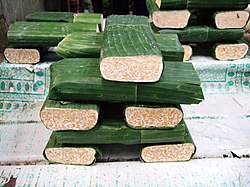 Tempeh cakes ready to cook, Indonesia


.jpg)

Other
[edit]
Guar beans are used for their gum, a galactomannan polysaccharide. It is used to thicken and stabilise foods and other products.[40]
Health concerns
[edit]Toxins
[edit]Some kinds of raw beans contain a harmful, flavourless toxin: the lectin phytohaemagglutinin, which must be destroyed by cooking. Red kidney beans are particularly toxic, but other types also pose risks of food poisoning. Even small quantities (4 or 5 raw beans) may cause severe stomachache, vomiting, and diarrhea. This risk does not apply to canned beans because they have already been cooked.[41] A recommended method is to boil the beans for at least ten minutes; under-cooked beans may be more toxic than raw beans.[42]
Beans need to be cooked thoroughly to destroy toxins; slow cooking is unsafe as it makes the beans soft without necessarily destroying the toxins.[42] A case of poisoning by butter beans used to make falafel was reported; the beans were used instead of traditional broad beans or chickpeas, soaked and ground without boiling, made into patties, and shallow fried.[43]
Bean poisoning is not well known in the medical community, and many cases may be misdiagnosed or never reported; figures appear not to be available. In the case of the United Kingdom National Poisons Information Service, available only to health professionals, the dangers of beans other than red beans were not flagged as of 2008[update].[43]
Fermentation is used in some parts of Africa to make beans more digestible by removing toxins.[44]
Other hazards
[edit]It is common to make beansprouts by letting some types of bean, often mung beans, germinate in moist and warm conditions; beansprouts may be used as ingredients in cooked dishes, or eaten raw or lightly cooked. There have been many outbreaks of disease from bacterial contamination, often by salmonella, listeria, and Escherichia coli, of beansprouts not thoroughly cooked,[45] some causing significant mortality.[46]
Many types of bean, such as kidney beans, contain significant amounts of antinutrients that inhibit some enzyme processes in the body. Phytic acid, present in beans, interferes with bone growth and interrupts vitamin D metabolism.[47][48]
Many beans, including broad beans, navy beans, kidney beans and soybeans, contain large sugar molecules, oligosaccharides (particularly raffinose and stachyose). A suitable oligosaccharide-cleaving enzyme is necessary to digest these. As the human digestive tract does not contain such enzymes, consumed oligosaccharides are digested by bacteria in the large intestine, producing gases such as methane, released as flatulence.[49][50][51][52]
In human society
[edit]
Beans have traditionally been considered a food of the poor, as farmers ate grains and vegetables, and obtained their protein from beans, whereas the wealthier classes could afford meat.[53] European society has what Ken Albala calls "a class-based antagonism" to beans.[53]
Different cultures agree in disliking the flatulence that beans cause, and possess their own seasonings to attempt to remedy it: Mexico uses the herb epazote; India the aromatic resin asafoetida; Germany applies the herb savory; in the Middle East, cumin; and Japan the seaweed kombu.[53] A substance for which there is evidence of effectiveness in reducing flatulence is the enzyme alpha-galactosidase;[53] extracted from the mould fungus Aspergillus niger, it breaks down glycolipids and glycoproteins.[54][55] The reputation of beans for flatulence is the theme of a children's song "Beans, Beans, the Musical Fruit".[56]
The Mexican jumping bean is a segment of a seed pod occupied by the larva of the moth Cydia saltitans, and sold as a novelty. The pods start to jump when warmed in the palm of the hand. Scientists have suggested that the random walk that results may help the larva to find shade and so to survive on hot days.[57]
See also
[edit]- Baked beans
- List of bean soups
- Fassoulada – a bean soup
- List of legume dishes
Notes
[edit]References
[edit]- ^ "bean (n.)". Online Etymology Dictionary. Retrieved 27 November 2024.
- ^ The American Heritage Dictionary of the English Language. Houghton Mifflin Harcourt. Archived from the original on 25 September 2015. Retrieved 3 May 2016.
- ^ Gorman, C.F. (1969). "Hoabinhian: A pebble-tool complex with early plant associations in southeast Asia". Science. 163 (3868): 671–673. Bibcode:1969Sci...163..671G. doi:10.1126/science.163.3868.671. PMID 17742735. S2CID 34052655.
- ^ Zohary, Daniel; Hopf, Maria; Weiss, Ehud (2012). Domestication of Plants in the Old World. Oxford: Oxford University Press. p. 114. ISBN 978-0-19-954906-1.
- ^ "And as in some great threshing-floor go leaping From a broad pan the black-skinned beans or peas." (Iliad xiii, 589).
- ^ Chazan, Michael (2008). World Prehistory and Archaeology: Pathways through Time. Pearson Education. ISBN 978-0-205-40621-0.
- ^ Bitocchi, Elena; Nanni, Laura; Bellucci, Elisa; Rossi, Monica; Giardini, Alessandro; et al. (3 April 2012). "Mesoamerican origin of the common bean (Phaseolus vulgaris L.) is revealed by sequence data". Proceedings of the National Academy of Sciences. 109 (14): E788 – E796. doi:10.1073/pnas.1108973109. PMC 3325731. PMID 22393017.
- ^ Kaplan 2008, p. 30.
- ^ Mt. Pleasant, Jane (2006). "The science behind the Three Sisters mound system: An agronomic assessment of an indigenous agricultural system in the northeast". In Staller, John E.; Tykot, Robert H.; Benz, Bruce F. (eds.). Histories of Maize: Multidisciplinary Approaches to the Prehistory, Linguistics, Biogeography, Domestication, and Evolution of Maize. Amsterdam: Academic Press. pp. 529–537. ISBN 978-0-1236-9364-8.
- ^ Pardo B., Oriana; Pizarro, José Luis (2014). Chile: Plantas alimentarias Prehispánicas (in Spanish) (2015 ed.). Arica, Chile: Ediciones Parina. p. 162. ISBN 978-9569120022.
- ^ "Legumes and Pulses". The Nutrition Source. 28 October 2019. Retrieved 7 April 2022.
- ^ Nyombaire, G.; Siddiq, M.; Dolan, K. (2007). "Effect of soaking and cooking on the oligosaccharides and lectins of red kidney beans (Phaseolus vulgaris L.)". Annual Report. Archived from the original on 23 July 2021.
- ^ Nciri, Nader; Cho, Namjun (15 December 2017). "New research highlights: Impact of chronic ingestion of white kidney beans (Phaseolus vulgaris L. var. Beldia) on small-intestinal disaccharidase activity in Wistar rats". Toxicology Reports. 5: 46–55. doi:10.1016/j.toxrep.2017.12.016. ISSN 2214-7500. PMC 5735304. PMID 29270365.
- ^ Sun, Yufeng; Liu, Jiameng; Huang, Yatao; Li, Minmin; Lu, Jia; et al. (1 January 2019). "Phytohemagglutinin content in fresh kidney bean in China". International Journal of Food Properties. 22 (1): 405–413. doi:10.1080/10942912.2019.1590399. ISSN 1094-2912.
- ^ Belsey, Mark A. (1973). "The epidemiology of favism". Bulletin of the World Health Organization. 48 (1): 1–13. ISSN 0042-9686. PMC 2481045. PMID 4541143.
- ^ Tarhani, Fariba; Nezami, Alireza; Heidari, Ghobad; Abdolkarimi, Babak (18 August 2020). "Clinical Manifestations and Therapeutic Findings of the Children with Glucose-6-Phosphate Dehydrogenase Deficiency Presenting Favism". Endocrine, Metabolic & Immune Disorders Drug Targets. 21 (6): 1125–1129. doi:10.2174/1871530320999200818182905. PMID 32811422. S2CID 221182334.
- ^ Raina, Archana P.; Khatri, Renu (2011). "Quantitative Determination of L-DOPA in Seeds of Mucuna Pruriens Germplasm by High Performance Thin Layer Chromatography". Indian Journal of Pharmaceutical Sciences. 73 (4): 459–462. doi:10.4103/0250-474X.95651 (inactive 11 July 2025). PMC 3374567. PMID 22707835.
{{cite journal}}: CS1 maint: DOI inactive as of July 2025 (link) - ^ Andersen HH, Elberling J, Arendt-Nielsen L (September 2015). "Human surrogate models of histaminergic and non-histaminergic itch" (PDF). Acta Dermato-Venereologica. 95 (7): 771–77. doi:10.2340/00015555-2146. PMID 26015312.
- ^ Schrenk, Dieter; Bodin, Laurent; Chipman, James Kevin; del Mazo, Jesús; Grasl-Kraupp, Bettina; Hogstrand, Christer; Hoogenboom, Laurentius (Ron); Leblanc, Jean-Charles; Nebbia, Carlo Stefano; Nielsen, Elsa; Ntzani, Evangelia (5 November 2019). "Scientific opinion on the risks for animal and human health related to the presence of quinolizidine alkaloids in feed and food, in particular in lupins and lupin-derived products". EFSA Journal. 17 (11): e05860. doi:10.2903/j.efsa.2019.5860. ISSN 1831-4732. PMC 7008800. PMID 32626161.
- ^ Fiore, Maria Carola; et al. (2020). "Preserving biodiversity in marginal rural areas: Assessment of morphological and genetic variability of a Sicilian common bean germplasm collection". Plants. 9 (8): 989. Bibcode:2020Plnts...9..989F. doi:10.3390/plants9080989. PMC 7463873. PMID 32759817.
- ^ Debouck, D. G. (2014). "Conservation of Phaseolus beans genetic resources: A strategy" (PDF). Rome, Italy: Global Crop Diversity Trust.
- ^ "The seeds". Svalbard Global Seed Vault, Norwegian Ministry of Agriculture and Food. 2023. Retrieved 5 November 2023.
- ^ Shurtleff, William; Aoyagi, Akiko (1 October 2013). Early Named Soybean Varieties in the United States and Canada: Extensively Annotated Bibliography and Sourcebook. Soyinfo Center. ISBN 9781928914600. Retrieved 18 November 2017 – via Google Books.
- ^ Schneider, Meg. New York Yesterday & Today. Voyageur Press. p. 114. ISBN 9781616731267. Retrieved 18 November 2017 – via Google Books.
- ^ "The Germination Of a Bean" (PDF). Microscopy-uk.org.uk. Archived (PDF) from the original on 9 October 2022. Retrieved 18 November 2017.
- ^ FAO STAT Production/Crops.
- ^ See Legume § Classification.
- ^ FAO Pulses and Derived Products Archived 7 December 2015 at the Wayback Machine.
- ^ "Major Food And Agricultural Commodities And Producers – Countries By Commodity". Fao.org. Archived from the original on 6 September 2015. Retrieved 2 February 2015.
- ^ "Healthy bean recipes". BBC Good Food. Retrieved 2 January 2025.
- ^ "Our best bean recipes". BBC Food. Retrieved 2 January 2025.
- ^ David, Elizabeth (2008) [1960]. French Provincial Cooking. London: Folio Society. p. 39. OCLC 809349711.
- ^ "What is tofu?". Soya.be. Retrieved 2 January 2025.
- ^ "What is tempeh?". Soya.be. Retrieved 2 January 2025.
- ^ Powell, Lori; Jibrin, Janis (7 December 2017). "Simple Roasted Tofu and Tempeh Recipe". Good Housekeeping. Retrieved 2 January 2025.
- ^ "54 tofu recipes". BBC Good Food. Retrieved 2 January 2025.
- ^ "Tempeh". BBC Good Food. Retrieved 2 January 2025.
- ^ "Foundation Foods: Legumes and Legume Products". FoodData Central. Retrieved 24 February 2025.
- ^ "Foundation Foods: Legumes and Legume Products". FoodData Central. Retrieved 24 February 2025.[dead link]
- ^ Thombare, Nandkishore; Jha, Usha; Mishra, Sumit; Siddiqui, M.Z. (July 2016). "Guar gum as a promising starting material for diverse applications: A review". International Journal of Biological Macromolecules. 88: 361–372. doi:10.1016/j.ijbiomac.2016.04.001. PMID 27044346.
- ^ "Natural toxins in food". www.who.int. Retrieved 7 April 2022.
- ^ a b "Foodborne Pathogenic Microorganisms and Natural Toxins Handbook: Phytohaemagglutinin". Bad Bug Book. United States Food and Drug Administration. Archived from the original on 9 July 2009. Retrieved 11 July 2009.
- ^ a b Vicky Jones (15 September 2008). "Beware of the beans: How beans can be a surprising source of food poisoning". The Independent. Retrieved 23 January 2016.
- ^ Shimelis, Emire Admassu; Rakshit, Sudip Kumar (2008). "Influence of natural and controlled fermentations on α-galactosides, antinutrients and protein digestibility of beans (Phaseolus vulgaris L.)". International Journal of Food Science & Technology. 43 (4): 658–665. doi:10.1111/j.1365-2621.2006.01506.x. ISSN 1365-2621.
- ^ "Sprouts: What You Should Know". Foodsafety.gov. Retrieved 23 January 2016.
- ^ "Shiga toxin-producing E. coli (STEC): Update on outbreak in the EU (27 July 2011, 11:00)". European Centre for Disease Prevention and Control. 27 July 2011. Archived from the original on 15 March 2017.
- ^ Harrison, D.C.; Mellanby, E (October 1939). "Phytic acid and the rickets-producing action of cereals". Biochemical Journal. 33 (10): 1660–1680.1. doi:10.1042/bj0331660. PMC 1264631. PMID 16747083.
- ^ Nagel, Ramiel (26 March 2010). "Living With Phytic Acid". The Weston A Price Foundation. Retrieved 23 January 2016.
- ^ "Health: Experts make flatulence-free bean". BBC News. 25 April 2006. Archived from the original on 31 March 2009. Retrieved 25 February 2009.
- ^ "Flatulence – Overview – Introduction". Nhs.uk. Archived from the original on 21 February 2009. Retrieved 25 February 2009.
- ^ McGee, Harold (2003). Food and Cooking. Simon & Schuster. p. 486. ISBN 978-0684843285.
Many legumes, especially soy, navy and lima beans, cause a sudden increase in bacterial activity and gas production a few hours after they're consumed. This is because they contain large amounts of carbohydrates that human digestive enzymes can't convert into absorbable sugars. These carbohydrates therefore leave the upper intestine unchanged and enter the lower reaches, where our resident bacterial population does the job we are unable to do.
- ^ Barham, Peter (2001). The Science of Cooking. Springer. p. 14. ISBN 978-3-540-67466-5.
we do not possess any enzymes that are capable of breaking down larger sugars, such as raffinose etc. These 3, 4 and 5 ring sugars are made by plants especially as part of the energy storage system in seeds and beans. If these sugars are ingested, they can't be broken down in the intestines; rather, they travel into the colon, where various bacteria digest them
- ^ a b c d Albala, Ken (15 August 2007). Beans. Oxford: Berg. pp. x, xiv, 1, 12. ISBN 978-1-84520-430-3.
- ^ Di Stefano, Michele; Miceli, Emanuela; Gotti, Samantha; Missanelli, Antonio; Mazzocchi, Samanta; Corazza, Gino Roberto (2007). "The Effect of Oral α-Galactosidase on Intestinal Gas Production and Gas-Related Symptoms". Digestive Diseases and Sciences. 52 (1): 78–83. doi:10.1007/s10620-006-9296-9. PMID 17151807.
- ^ Ganiats, T. G.; Norcross, W. A.; Halverson, A. L.; Burford, P. A.; Palinkas, L. A. (1994). "Does Beano prevent gas? A double-blind crossover study of oral alpha-galactosidase to treat dietary oligosaccharide intolerance". The Journal of Family Practice. 39 (5): 441–445. PMID 7964541.
- ^ Carey, Bjorn (25 April 2006). "Scientists take the 'toot' out of beans". NBC News. Archived from the original on 5 December 2013.
- ^ Ouellette, Jennifer (9 February 2023). "Study: Mexican jumping beans use random walk strategy to find shade". Ars Technica. Archived from the original on 10 February 2023. Retrieved 10 February 2023.
Bibliography
[edit]- Kaplan, Lawrence (2008). "Legumes in the History of Human Nutrition". In DuBois, Christine; Tan, Chee-Beng; Mintz, Sidney (eds.). The World of Soy. NUS Press. pp. 27–. ISBN 978-9971-69-413-5. Retrieved 18 December 2012.
External links
[edit]

- Everett H. Bickley Collection, 1919–1980 Archives Center, National Museum of American History, Smithsonian Institution.
- Discovery Online: The Skinny On Why Beans Give You Gas
- Fermentation improves nutritional value of beans
- Cook's Thesaurus on Beans
| International | |
|---|---|
| National | |
| Other | |

Etymology and Naming
Origins of the Term
The word "bean" in English originates from Old English bēan, a term denoting a legume or pea, which evolved from Proto-Germanic baunō. This Germanic root is attested in related forms across West Germanic languages, such as Old High German bōna and Dutch boon. Linguists trace it further to the Proto-Indo-European root bhabhā-, suggestive of something swollen or pod-like, reflecting the plant's characteristic seed pods.[6][7] In parallel, Latin faba, specifically referring to the broad bean (Vicia faba), represents an independent but possibly connected branch of terminology, with roots in Proto-Italic fabā. This word underwent historical shifts, giving rise to terms in Romance languages like Italian fava (broad bean) and French fève, which retained the focus on pod-bearing legumes while adapting phonetically over centuries. The divergence from the Germanic "bean" highlights regional linguistic evolutions, though both may stem from a shared European substratum word like bab-.[8][9] The generic vernacular "bean" contrasts with scientific nomenclature, where terms like Phaseolus—introduced by Carl Linnaeus in 1753—distinguish specific genera of legumes, particularly New World species. Derived from Latin phaseolus, a diminutive of Greek phāsēlos (a type of bean or cowpea), this binomial naming underscores the precision required in taxonomy to differentiate from the broader cultural usage of "bean."[10]Common Names and Classifications
Beans, particularly those belonging to the species Phaseolus vulgaris, are known by a variety of regional names reflecting their widespread cultivation and cultural significance. In Spanish-speaking countries, they are commonly referred to as "frijol" or "frijol común," while in French-speaking regions, "haricot" is a standard term for both the mature seeds and immature pods.[11][12] In Portuguese, the name "feijão" is used, and in Italian, "fagiolo" denotes the common bean.[11] Additional regional synonyms include "fasole" in Romanian and "fasoulia" in Arabic, all applying to Phaseolus vulgaris.[11] For specific Asian varieties, the mung bean (Vigna radiata) is often called "mung" or "moong" in English and various South Asian languages, highlighting its distinct identity from common beans.[13][14] Beans are broadly categorized by their botanical genera within the Fabaceae family, with Phaseolus encompassing common beans such as kidney, pinto, and navy varieties, all under Phaseolus vulgaris. The genus Vigna includes cowpeas (Vigna unguiculata), also known as black-eyed peas, and mung beans (Vigna radiata), which are smaller and often used in sprouts or Asian cuisine. Soybeans fall under the genus Glycine, specifically Glycine max, distinguishing them from New World beans while sharing similar nutritional profiles as legumes.[15][13][16][17] This basic categorization aids in understanding their agricultural and culinary applications, though "bean" is a vernacular term applied loosely across these groups.[12] Confusion frequently arises between common and scientific names due to the diversity of varieties within a single species and overlapping vernacular uses. For instance, the "kidney bean" is a cultivar of Phaseolus vulgaris, yet it shares the species name with seemingly distinct types like pinto or navy beans, leading to misconceptions about their botanical relatedness.[15][18] Similarly, the term "bean" can ambiguously refer to Phaseolus vulgaris or unrelated legumes like adzuki beans (Vigna angularis), exacerbating identification challenges in trade and cooking.[19] This nomenclature overlap underscores the importance of scientific classification to avoid errors in cultivation or consumption.[20]History
Domestication and Early Cultivation
The common bean, Phaseolus vulgaris, was independently domesticated in two regions: Mesoamerica approximately 8,000 years ago and the Andes around 8,000–10,000 years ago.[21] Genetic and archaeological studies indicate that the Mesoamerican domestication occurred primarily in the Lerma-Santiago River Basin of west-central Mexico, with wild progenitors transitioning to cultivated forms through human selection.[22] Key evidence comes from the Tehuacán Valley in Mexico, where carbonized bean remains dated to around 7,000–8,000 years before present reveal early domesticated traits.[23] Archaeological findings from sites like Coxcatlán Cave in the Tehuacán Valley highlight morphological changes indicative of domestication, including larger seed size (gigantism), reduced pod shattering, and loss of seed dormancy for easier germination.[24] These adaptations, driven by selective pressures from early farmers, distinguish domesticated beans from their wild ancestors, which exhibited fibrous pods and smaller, dispersal-adapted seeds.[25] Such evidence underscores a gradual domestication process spanning millennia, with initial cultivation likely supplementing hunter-gatherer diets before becoming a dietary staple.[26] Independently, the cowpea (Vigna unguiculata) was domesticated in sub-Saharan Africa, with origins traced to West African savannas around 4,000–5,000 years ago based on archaeological and genetic data.[27] The earliest confirmed remains of domesticated cowpea come from sites in central Ghana, dated to approximately 3,410 years before present, showing selected traits like non-shattering pods and enlarged seeds. This domestication likely occurred alongside other African crops such as pearl millet, enhancing food security in arid environments.[28] Early cultivation practices for Phaseolus vulgaris in Mesoamerica involved intercropping with maize (Zea mays) and squash (Cucurbita spp.), known as the "Three Sisters" method, dating back over 1,000 years with archaeological evidence from around 1070 AD.[29] In this symbiotic system, maize provides structural support for climbing beans, beans fix atmospheric nitrogen to enrich the soil for maize and squash, and squash's broad leaves suppress weeds while retaining moisture. This polyculture approach, evident in archaeological contexts from the Tehuacán Valley and Oaxaca, optimized land use and resource efficiency in early agricultural communities.[24]Global Spread and Historical Uses
The common bean (Phaseolus vulgaris), domesticated in the Americas, was introduced to Europe during the 16th century by Spanish and Portuguese explorers following Christopher Columbus's voyages in 1492.[30] One early record is from 1532, when the humanist Pietro Valeriano received bean seeds as a gift from Pope Clement VII and introduced them for cultivation in Italy.[31] This transfer was part of the broader Columbian Exchange, which facilitated the movement of New World crops like beans eastward, transforming Old World agriculture and diets despite initial limited adoption due to unfamiliarity. In Asia, bean varieties such as soybeans (Glycine max) spread westward along the Silk Road trade routes from China to Central Asia starting around the first millennium BCE, influencing regional cuisines and farming practices.[32] Archaeological and genomic evidence indicates soybeans originated in East Asia and were exchanged alongside other crops like rice and mulberry, reaching the Indian subcontinent by approximately 1000 CE through these overland networks.[32] Similarly, mung beans (Vigna radiata) dispersed from South Asia to Central Asia via Silk Road pathways, adapting to new environments and contributing to diverse legume-based diets in intermediate regions. In ancient civilizations, beans played key dietary and cultural roles. Fava beans (Vicia faba), an Old World legume domesticated in the Near East around 10,000 years ago, were consumed in ancient Egypt as a protein source, with archaeological remains indicating their integration into meals alongside grains and vegetables from at least the Neolithic period.[18] In Roman cuisine, legumes including broad beans, lentils, and chickpeas formed a staple for rural and lower-class populations, often prepared as porridges or mixed with cereals; historical texts like those of Pliny the Elder describe their use in bread-making and rituals, underscoring their nutritional and symbolic importance.[33] The Columbian Exchange further amplified this legacy by introducing American beans to these Eurasian traditions, enabling hybrid culinary practices in the post-16th century era.Diversity
Taxonomic Classification
Beans, commonly referring to edible legumes, are classified within the family Fabaceae (also known as Leguminosae), a large and diverse group of flowering plants in the order Fabales. This family encompasses approximately 750 genera and 19,000 species worldwide, characterized by their compound leaves, irregular flowers, and fruits in the form of pods (legumes). The subfamily Faboideae, formerly Papilionoideae, represents the largest subgroup within Fabaceae, comprising about 503 genera and 14,000 species, and includes the majority of economically important bean species.[34][35] Key genera associated with beans include Phaseolus, which contains around 70 species primarily native to the Americas, encompassing the common bean (Phaseolus vulgaris) and other cultivated species like the lima bean (Phaseolus lunatus); Vicia, with over 140 species of vetches often used as forage or cover crops; and Pisum, featuring the garden pea (Pisum sativum). These genera fall under the tribe Phaseoleae for Phaseolus and Fabeae for Vicia and Pisum, highlighting the taxonomic diversity within Faboideae. The classification is based on morphological traits such as papilionaceous flowers (butterfly-like) and dehiscent pods, supported by molecular phylogenetic studies that confirm the monophyly of Faboideae.[36][37][38] A defining biological feature of Fabaceae, particularly in Faboideae, is the ability to form symbiotic associations with nitrogen-fixing bacteria of the genus Rhizobia (and related groups like Bradyrhizobium), leading to the development of root nodules where atmospheric nitrogen is converted into ammonia usable by the plant. This symbiosis enhances soil fertility and is a key adaptation enabling legumes to thrive in nitrogen-poor environments, with nearly all species in this subfamily capable of nodulation. The process involves bacterial infection threads penetrating root hairs, culminating in bacteroid formation within nodules, which provides a controlled environment for nitrogenase activity.[39][40] Botanically, the term "pulses" denotes the dry, mature seeds of Fabaceae species harvested for human or animal consumption, distinguished by their low moisture content and storage stability, as defined by international standards excluding oilseeds and fresh vegetables. In contrast, "green beans" refer to the immature pods of certain species, such as Phaseolus vulgaris, harvested while the seeds inside are still developing and the pod tissue remains tender and edible. This distinction underscores the dual harvest stages in many bean crops, where the same plant can yield either product depending on maturity at harvest.[41][42]Varieties and Cultivars
Beans encompass a wide array of cultivated varieties within the genus Phaseolus, particularly Phaseolus vulgaris (common bean), selected for diverse growth habits, pod and seed characteristics, and end uses. Varieties are broadly classified by plant architecture into bush beans, which grow on compact, non-vining plants reaching 1-2 feet tall, and pole beans, which are vining and require support, often climbing 6-10 feet. Bush types mature faster and are suited for dense planting, while pole varieties yield over longer periods but demand more space.[42][43] Common beans are further categorized by harvest stage and purpose: snap beans (also called green or string beans) are harvested immature for edible pods, shell beans for fresh seeds within tender pods, and dry beans for mature, fully dried seeds. Snap beans include both bush and pole forms, with popular cultivars like 'Provider' (bush) and 'Kentucky Wonder' (pole) featuring round or flat pods in green, yellow, or purple hues. Dry bean varieties of P. vulgaris dominate global production and include pinto beans, characterized by beige seeds with reddish-brown mottling and used in refried preparations; black beans (turtle beans), with glossy black seeds valued for their creamy texture in soups and salads; and navy beans, small oval white seeds prized for baked dishes due to their uniform size and quick cooking time.[2][44][45] Breeding programs for common beans emphasize traits like disease resistance and yield to enhance adaptability and productivity. Resistance to bean common mosaic virus (BCMV), a major potyvirus causing mosaic symptoms and yield losses up to 50%, is standard in North American cultivars through the dominant I gene, which hypersensitively blocks viral replication, often combined with strain-specific genes like bc-1 or bc-3 via marker-assisted selection. Yield improvements have focused on upright architecture and pod placement for mechanical harvest, with modern varieties like 'Sierra' pinto achieving 2,000-3,000 kg/ha under optimal conditions.[46][47][48] Regional specialties highlight human selection for local climates and cuisines. In East Asia, adzuki bean (Vigna angularis) cultivars like 'Erimo' are favored for their small, red seeds used in sweet bean pastes, thriving in temperate regions with yields of 1,500-2,000 kg/ha. In Europe, runner beans (Phaseolus coccineus), introduced post-Columbian era, feature vining plants with crimson flowers and flattened pods; varieties such as 'Scarlet Emperor' are grown for both ornamental and culinary purposes, particularly in the UK and Italy, where they are harvested as snap or shell beans.[49][50]Conservation Efforts
Conservation efforts for beans, particularly species in the Phaseolus genus, focus on preserving genetic diversity in the face of threats such as climate change, habitat loss, and the expansion of monoculture farming, which contribute to genetic erosion by reducing landrace variability.[51] Genetic erosion has been documented in regions like Mexico and Spain, where up to 70% of bean landraces were lost between 1950 and 1980 due to agricultural intensification and land-use changes.[51] These efforts emphasize both ex situ and in situ strategies to safeguard wild relatives and cultivated varieties, ensuring resilience against environmental pressures projected to include temperature rises of 1-2°C and reduced moisture by 2050 in key growing areas.[51] Ex situ conservation plays a central role through seed banks, with the International Center for Tropical Agriculture (CIAT) in Colombia maintaining over 37,000 accessions of Phaseolus beans, including landraces and wild forms, as part of a global strategy to secure genetic resources in perpetuity.[51] This collection, which represents about 81% of the global bean holdings backed up in the Svalbard Global Seed Vault, supports research into traits like disease resistance and drought tolerance, addressing underrepresentation of wild species that comprise less than 5% of holdings.[51] CIAT's genebank collaborates internationally to regenerate and distribute seeds, preventing further losses from genetic erosion in centers of origin.[52] In situ conservation complements these efforts by protecting bean populations in their natural habitats and farmer-managed fields, particularly in the Andes, the primary center of origin for common bean (Phaseolus vulgaris), where wild relatives and landraces are maintained through traditional agriculture.[51] Initiatives in protected areas, such as Sierra de Manantlán in Mexico and Andean rural communities in Ecuador and Peru, document and monitor interbreeding complexes of wild, weedy, and cultivated beans to foster ongoing evolution and adaptation.[51] For instance, collections from 10 Andean communities in Ecuador identified 47 landraces, highlighting the role of local farmers in preserving diversity amid climate variability.[53] Addressing genetic erosion requires targeted projects like the Crop Wild Relatives (CWR) initiative, led by the Crop Trust and partners, which prioritizes collecting and conserving wild Phaseolus species to enhance crop adaptation to climate change through pre-breeding and information systems.[54] This project conducts gap analyses for species like P. vulgaris and P. lunatus, focusing on underrepresented regions in the Andes and Central America, where habitat fragmentation threatens populations.[51] Such efforts also support the recovery of at-risk landraces, like those in Mexico's Aniene Valley, by integrating in situ protection with ex situ backups.[55]Cultivation
Agronomic Practices
Beans are primarily grown in well-drained soils to prevent waterlogging and root rot, with optimal performance in loamy or sandy loam textures that allow for good aeration and root development.[56] The ideal soil pH ranges from 6.0 to 7.5, as this facilitates nutrient availability, particularly phosphorus and micronutrients essential for growth.[57] Crop rotation with non-leguminous crops, such as cereals or grasses, every 3-4 years is a standard practice to suppress soil-borne diseases like Fusarium wilt and to maintain soil health by breaking pest and pathogen cycles. Planting methods for beans emphasize direct seeding into prepared fields once soil temperatures reach at least 15-18°C (60-65°F) to ensure uniform germination and avoid stand losses from cold stress.[42] Seeds are sown 2-4 inches apart within rows spaced 18-36 inches apart, depending on the variety—bush types requiring narrower spacing for higher density, while pole varieties need wider rows to accommodate trellising.[58] Irrigation is critical during establishment and pod-filling stages, with seasonal water needs typically ranging from 300-500 mm, adjusted based on climate and soil type to maintain consistent moisture without excess that could promote foliar diseases.[59] Pest management in bean cultivation relies on integrated approaches that combine cultural, biological, and targeted chemical controls to minimize economic and environmental impacts. Common pests include aphids, which transmit viruses and reduce photosynthesis through sap-feeding, and root-knot nematodes, which damage roots and impair nutrient uptake; monitoring via sticky traps for aphids and soil sampling for nematodes is recommended to apply interventions only when thresholds are exceeded.[60] For aphids, encouraging natural enemies like lady beetles and using insecticidal soaps or neem oil provides effective, low-residue control, while nematodes are best managed through resistant cultivars and rotation with non-host crops to limit population buildup.[60] Additionally, beans' symbiotic nitrogen fixation with Rhizobia bacteria can typically supply 20–70 kg N/ha, depending on conditions and variety, significantly reducing reliance on synthetic fertilizers and enhancing soil fertility for subsequent crops in rotation.[61]Global Production and Economics
Global dry bean production reached approximately 28.4 million metric tons as of 2023, reflecting steady growth driven by expanding cultivation in key regions.[62] The leading producers are Myanmar, with 6.59 million metric tons, followed closely by India at 6.15 million metric tons and Brazil at 2.86 million metric tons, accounting for a significant portion of the world's output.[63] These countries dominate due to favorable climates and extensive agricultural systems, with production primarily concentrated in Asia and Latin America. Economically, dry beans play a crucial role in food security, particularly in developing countries where they provide an affordable, nutrient-dense protein source for millions.[64] The global market for dry beans was valued at USD 8.9 billion in 2025, projected to grow to USD 11.3 billion by 2030 at a compound annual growth rate of 4.9%, underscoring their importance in both domestic consumption and international trade.[65] Export dynamics are led by Myanmar, Argentina, the United States, and Canada, with major markets including Mexico, the European Union, and India, where shipments of over 1.2 million tons from top exporters support global supply chains.[66][67] Recent trends highlight rising demand for organic dry beans, fueled by consumer preferences for sustainable and health-focused products— with U.S. organic sales accelerating in 2024—alongside challenges from climate variability that can reduce yields by up to 20% in vulnerable regions, prompting efforts in breeding climate-resilient varieties as of 2025.[68][69] Such environmental factors exacerbate agronomic challenges in production, influencing overall economic stability.[70]Uses
Culinary Applications
Beans are typically prepared for culinary use through soaking and boiling to soften their texture and improve digestibility. Dry beans are often soaked overnight in water, which rehydrates them and significantly reduces subsequent cooking time compared to unsoaked beans, while also helping to remove some indigestible sugars that cause gas. [71] After soaking, the beans are drained and simmered in fresh water at a gentle boil until tender, a process that can take 60 to 120 minutes depending on the variety, with additions like oil to prevent foaming. [71] Fermentation represents another key method, particularly in Southeast Asian traditions, where cooked soybeans are inoculated with a mold such as Rhizopus oligosporus to produce tempeh, a firm, nutty cake that enhances flavor and nutritional availability through the breakdown of complex compounds. [72] In global cuisines, beans feature prominently in iconic dishes that highlight their versatility. Mexican cuisine employs pinto or black beans in refried beans (frijoles refritos), where boiled beans are mashed and fried with onions, garlic, and lard or oil to create a creamy side dish often served with tortillas or as a filling in burritos and enchiladas, a practice rooted in indigenous Mesoamerican cooking traditions. [73] French regional fare includes cassoulet, a slow-cooked stew from Languedoc originating in medieval times, combining white beans like cannellini with preserved meats such as duck confit, sausage, and pork in a rich, gelatinous broth topped with a breadcrumb crust for added texture. [74] Indian cooking centers on dal, a spiced stew made from split lentils or whole beans such as red lentils (masoor dal), simmered with turmeric, cumin, onions, and chilies, then tempered with ghee and served over rice as a daily staple in Bengali and broader South Asian meals. [75] As a plant-based protein source, beans play a vital role in balanced meals, offering essential amino acids that complement those found in grains; for instance, pairing beans with rice or corn creates a complete protein profile equivalent to animal sources, supporting vegetarian diets worldwide. [76] This combination is evident in dishes like Mexican rice and beans or Indian dal with roti, where the synergy enhances nutritional value without relying on meat. [76]Industrial and Medicinal Uses
Beans, particularly soybeans, serve as key feedstocks in various industrial applications due to their high oil and protein content. As of 2023, soybean oil accounted for nearly 40% of the feedstock consumed for biomass-based diesel production in the United States, with annual inputs exceeding 12 billion pounds.[77] This renewable fuel alternative is derived from transesterification of soybean oil with methanol, producing fatty acid methyl esters that can be blended with petroleum diesel.[78] Additionally, soybeans contribute to bioplastics development, where soy proteins and oils are processed into biodegradable polymers for packaging, automotive parts, and consumer products, offering an environmentally friendly substitute for petroleum-based plastics.[79] Common beans (Phaseolus vulgaris) provide starch that is extracted for use in adhesives, particularly in labeling compositions, where leguminous starches with 25-60% amylose content enhance viscosity and bonding strength in water-based formulations.[80] After oil extraction, the remaining soybean meal is a high-protein byproduct widely used as animal feed, constituting 20-30% of protein in many poultry and swine diets to support growth and milk production in livestock.[81] In the U.S., approximately 97% of soybean meal is directed toward animal nutrition, with poultry consuming the largest share at around 66% of domestic usage.[82] This meal's balanced amino acid profile makes it a staple in formulated feeds, improving feed efficiency across global livestock operations.[83] In medicinal contexts, lectins isolated from beans, such as those in tepary beans (Phaseolus acutifolius) and runner beans (Phaseolus coccineus), exhibit antiproliferative effects on cancer cells in vitro, inducing apoptosis and inhibiting tumor growth, which has spurred research into their therapeutic potential.[84][85] These carbohydrate-binding proteins from legume seeds target cell surface glycoproteins, offering promise as adjuncts in cancer treatments without the toxicity of some chemotherapeutic agents.[86] Traditionally, fava beans (Vicia faba) have been used to alleviate Parkinson's disease symptoms due to their natural L-DOPA content, a precursor to dopamine that crosses the blood-brain barrier to replenish depleted levels in affected patients.[87] Historical and clinical observations indicate that consuming fava beans or their extracts can improve motor function in mild to moderate cases, predating synthetic L-DOPA therapies developed in the 20th century.[88]Nutrition and Health
Nutritional Composition
Beans, particularly dry mature seeds of common varieties such as pinto, black, and kidney, are nutrient-dense legumes with a macronutrient profile dominated by carbohydrates and protein. On a dry weight basis, they typically contain 20–25% protein, providing a complete amino acid profile when combined with grains, though beans alone offer high levels of essential amino acids like lysine. Carbohydrates make up 50–60% of the dry weight, primarily in the form of complex polysaccharides and resistant starch, which contribute to their low glycemic index. Fat content is minimal at 1–2%, consisting mostly of unsaturated fatty acids.[89]| Nutrient | Amount per 100g Dry Weight (Representative Values) | Example Varieties |
|---|---|---|
| Protein | 21–24g | Pinto: 21.4g; Black: 21.6g; Kidney: 23.6g[90] |
| Carbohydrates | 60–63g | Pinto: 62.6g; Black: 62.4g; Kidney: 60.0g[90] |
| Fat | 0.8–1.4g | Pinto: 1.2g; Black: 1.4g; Kidney: 0.8g[90] |
| Dietary Fiber | 15–25g | Pinto: 15.5g; Black: 15.5g; Kidney: 24.9g[90] |
Health Benefits
Beans are a rich source of soluble fiber, which plays a key role in cardiovascular health by binding to bile acids in the intestine and promoting their excretion, thereby reducing circulating low-density lipoprotein (LDL) cholesterol levels. A meta-analysis of 10 randomized controlled trials involving non-soy legumes, including various beans, found that their consumption led to a pooled mean net reduction in LDL cholesterol of 8.0 mg/dL (95% CI: -11.4 to -4.6 mg/dL). According to guidelines from the National Cholesterol Education Program, daily intake of 5–10 grams of soluble fiber from sources like beans can lower LDL cholesterol by approximately 5%. One-half cup of cooked dry beans typically provides 1–3.5 grams of viscous soluble fiber, contributing 10–35% toward this daily target and supporting overall reductions in total cholesterol as well.[94][95] The low glycemic index (GI) of beans, typically ranging from 20 to 40, contributes to better glycemic control, particularly in individuals managing type 2 diabetes. This low GI reflects the slow digestion and absorption of carbohydrates in beans, leading to gradual rises in blood glucose and insulin levels compared to high-GI foods. In a randomized trial with adults with type 2 diabetes, a low-GI diet emphasizing one cup of cooked legumes daily improved hemoglobin A1c levels and reduced the need for glucose-lowering medications more effectively than a high-cereal fiber diet. Legumes like beans also enhance insulin sensitivity through their fiber and protein content, aiding long-term diabetes management.[1][96] Beans contain prebiotic fibers, such as resistant starch and oligosaccharides, that serve as substrates for beneficial gut bacteria, promoting microbiota diversity and short-chain fatty acid production. These prebiotics foster the growth of fiber-degrading microbes like Bifidobacterium and Lactobacillus, which enhance gut barrier function and reduce inflammation. Beans are also associated with reduced systemic inflammation owing to their high content of fiber, antioxidants, and polyphenols, with meta-analyses of randomized controlled trials demonstrating inverse associations between legume consumption and inflammatory biomarkers such as C-reactive protein, interleukin-6, and tumor necrosis factor-alpha. A meta-analysis of six studies indicated that higher intake of fiber from legumes, including beans, was associated with a 16% decreased risk of colorectal cancer, likely due to improved microbial metabolism and reduced carcinogenic compounds in the colon.[97][98] Regular bean consumption thus supports gut health and may lower colon cancer risk through these microbiota-mediated mechanisms.[99] Furthermore, meta-analyses of clinical trials have found that soy bean isoflavones have no significant effect on testosterone levels in men, with evidence for other types of beans being limited or neutral. This indicates that properly prepared beans do not adversely affect male reproductive hormone levels.[100][101] Additionally, the combination of high protein and fiber in beans promotes satiety and may aid in weight management. Observational studies and dietary guidelines as of 2025 highlight beans as a valuable component in plant-based diets for preventing obesity and related metabolic disorders.[1]Potential Risks and Toxins
Beans, particularly certain varieties like kidney beans, contain phytohaemagglutinin, a lectin that is highly toxic when consumed in raw or undercooked form. Ingestion of as few as five raw kidney beans can lead to severe gastrointestinal distress in humans, including nausea, vomiting, abdominal pain, and diarrhea, with symptoms appearing within 1 to 3 hours. In animal studies, such as those conducted on rats, diets incorporating raw kidney beans or purified phytohaemagglutinin have resulted in malabsorption of nutrients, intestinal dysfunction, and significant body weight loss, sometimes exceeding 5% of initial body weight due to reduced feed intake and metabolic interference; these effects can include increased intestinal permeability in animal models. However, there is limited direct scientific evidence in humans linking properly cooked beans to increased intestinal permeability (commonly referred to as "leaky gut") or related adverse effects, as proper cooking inactivates the lectins and eliminates this risk.[102][103] Proper preparation is essential to neutralize these lectins, as boiling beans for at least 10 minutes or pressure cooking can reduce phytohaemagglutinin activity by 94-99%, rendering them safe for consumption. Some wild bean species, such as jack beans (Canavalia ensiformis) and sword beans (Canavalia gladiata), contain L-canavanine, a non-protein amino acid that acts as an anti-nutritional factor by mimicking arginine and disrupting protein synthesis, potentially leading to reduced growth and feed efficiency in animals. Cooking methods like boiling or soaking followed by decanting can decrease L-canavanine levels by 50-60%, mitigating its effects, though complete elimination may require additional processing.[104][105][106] Beyond toxins, beans are rich in oligosaccharides like raffinose and stachyose, indigestible carbohydrates that ferment in the large intestine, producing gas and causing flatulence in many individuals. This digestive discomfort is generally mild and can be alleviated by gradual dietary introduction, soaking, or using enzyme supplements like alpha-galactosidase. Additionally, fava beans (Vicia faba) pose a specific risk to individuals with glucose-6-phosphate dehydrogenase (G6PD) deficiency, where consumption can trigger favism, an acute hemolytic anemia characterized by red blood cell destruction, jaundice, and potentially life-threatening complications due to oxidative stress from compounds like vicine and convicine. Those with G6PD deficiency should avoid fava beans entirely.[107][108][109]Cultural and Social Role
Symbolism and Folklore
In ancient Greek mythology, beans held symbolic significance in the Eleusinian Mysteries, the secretive rites honoring Demeter and Persephone that celebrated agricultural renewal and the cycle of life and death. The hero Cyamites, associated with bean cultivation, emerged in legends tied to these mysteries, where beans represented the earth's fertility and the regenerative power of vegetation emerging from the soil, mirroring Persephone's return from the underworld. Initiates often abstained from beans during rituals, viewing them as embodiments of souls or life force, underscoring their role in symbolizing rebirth and abundance.[110][111] Across East Asian traditions, particularly in China, beans serve as auspicious symbols during Lunar New Year celebrations, embodying prosperity, good fortune, and communal harmony. Adzuki beans, with their vibrant red hue evoking joy and warding off misfortune, are incorporated into festive dishes like sweet rice cakes or tangyuan, believed to attract positive energy and ensure a bountiful year ahead. This practice reflects broader cultural associations of beans with growth and sustenance, positioning them as charms for luck in familial and economic endeavors.[112] In Native American folklore, beans feature centrally in creation myths, such as the Haudenosaunee (Iroquois) Three Sisters legend, where they emerge alongside corn and squash as divine gifts from Sky Woman or her daughter, symbolizing interdependence, sustenance, and the harmony of nature. These stories portray beans as the supportive sister who climbs the corn stalk to thrive, illustrating themes of cooperation and the earth's nurturing provision in the origin of agriculture. Similarly, in European tales like "Jack and the Beanstalk," an English folktale dating back to at least the 18th century, magic beans represent latent potential and transformative growth, sprouting into a colossal stalk that bridges the mundane world to realms of opportunity and peril, embodying ambition and the rewards of risk.[113][114] Beans also play roles in rituals across diverse cultures, invoking spiritual connections and ancestral remembrance. In Mexican Day of the Dead observances, beans form part of ofrendas—elaborate altars adorned with foods like tamales or refried beans, offered to guide and nourish returning souls, symbolizing continuity between the living and the dead through shared sustenance. In certain African traditions, such as among the Efik of Nigeria, the toxic Calabar bean was employed in ordeal divinations, where its ingestion tested innocence or summoned ancestral judgment, highlighting beans' perceived link to supernatural truth and communal justice.[115][116][117]Economic and Societal Impact
Beans play a crucial role in global food security, particularly in low-income regions where they serve as an affordable and accessible protein source. In the 1990s, common beans were the primary dietary protein for over 70 million people in sub-Saharan Africa, contributing up to two-thirds of daily protein intake in countries like Rwanda, where they also supplied about one-third of caloric needs; recent data (as of 2021) indicate beans provide approximately 64% of protein and 32% of calories in Rwandan diets, with reliance remaining high amid population growth. In Latin America, beans ranked as the fourth most important protein source in tropical areas during the 1990s, with per capita consumption reaching 22.5 kg annually in Nicaragua—figures that have likely increased with ongoing dietary staples. These contributions are especially vital in low-income households, where beans help bridge nutritional gaps without relying on more expensive animal proteins.[118][119] The cultivation of beans also drives societal impacts through sustainable agriculture practices that reduce poverty and influence gender dynamics in farming communities. As nitrogen-fixing legumes, beans enhance soil fertility and require fewer synthetic inputs, enabling smallholder farmers to adopt eco-friendly methods that lower production costs and boost yields; in the 1990s, improved varieties in Rwanda generated an estimated $15 million in additional annual household income. In the 1990s, women managed the majority of bean production on over 3.5 million hectares in sub-Saharan Africa, handling tasks like planting, weeding, and harvesting; recent efforts (as of 2023) continue to address gender gaps in access to land, credit, and markets through training and linkages, empowering women and fostering equitable social structures. This economic uplift contributes to poverty alleviation in rural areas, where bean farming supports livelihoods for millions and promotes resilience against environmental stresses.[118][120] Despite these benefits, economic challenges from price volatility significantly affect smallholder bean farmers in the 2020s. Global disruptions, including the COVID-19 pandemic, led to sharp fluctuations in bean markets, with cross-border trade declining in Eastern and Southern Africa and reduced farmgate prices due to low demand and supply chain issues. More recently, climate events and input cost surges in 2022–2024 exacerbated volatility, with bean prices in Latin American markets like Brazil experiencing notable fluctuations. These swings heighten financial risks for resource-poor farmers, underscoring the need for stabilized markets and insurance mechanisms to protect their livelihoods.[121][122]References
- https://en.wiktionary.org/wiki/faba#Latin