


Community hub
Recent from talks
Contribute something
Nothing was collected or created yet.
Billy Sunday
View on Wikipedia
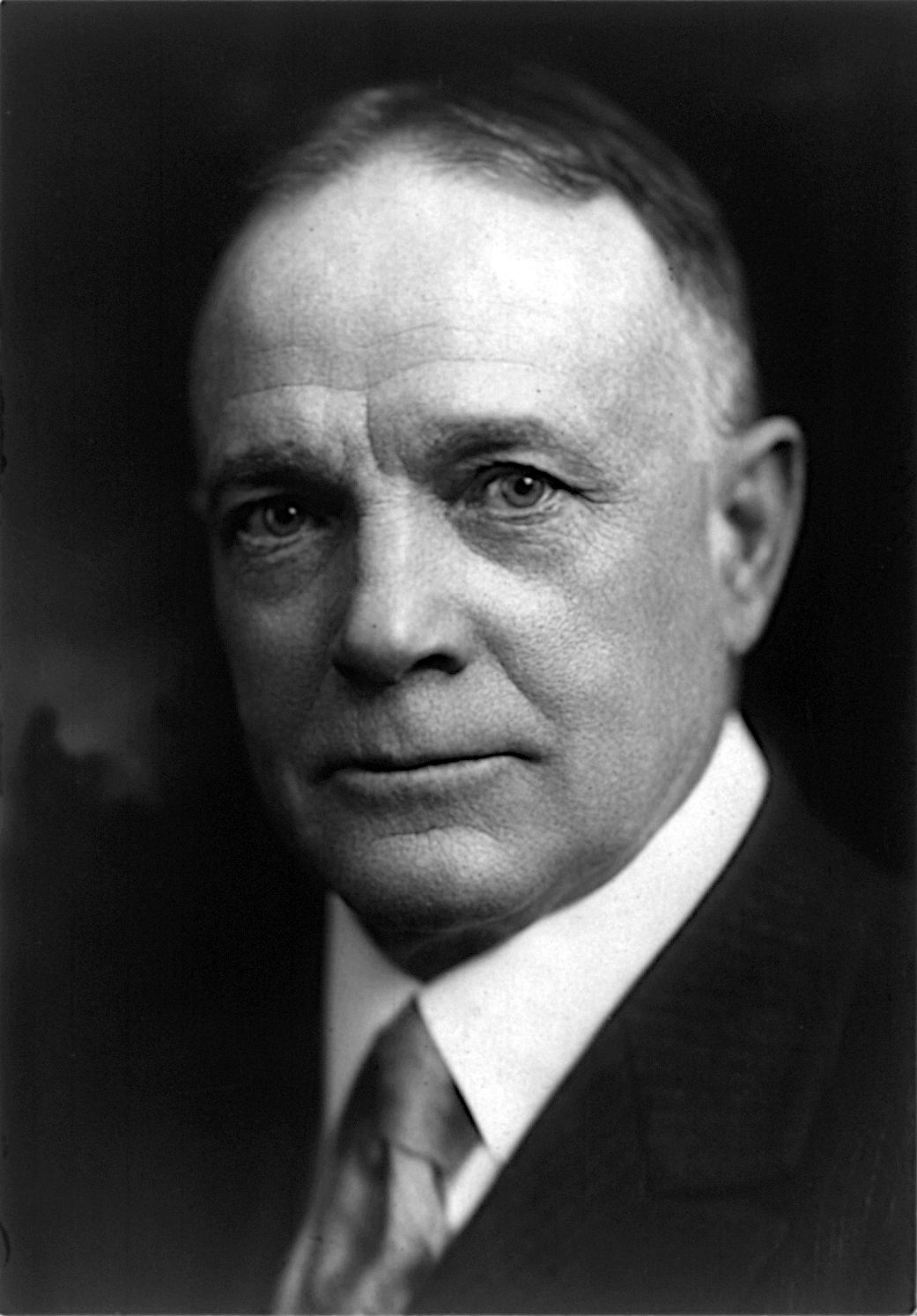
William Ashley Sunday (November 19, 1862[1] – November 6, 1935) was an American evangelist and professional baseball outfielder. He played for eight seasons in the National League before becoming the most influential American preacher during the first two decades of the 20th century.
Key Information


Born into poverty near Ames, Iowa, Sunday spent some years at the Iowa Soldiers' Orphans' Home before working at odd jobs and playing for local running and baseball teams. His speed and agility provided him the opportunity to play baseball in the major leagues for eight years.
Converting to evangelical Christianity in the 1880s, Sunday left baseball for the Christian ministry. During the early 20th century, he became the nation's most famous evangelist with his colloquial sermons and frenetic delivery. Sunday held widely reported campaigns in America's largest cities, and he attracted the largest crowds of any evangelist before the advent of electronic sound systems. Sunday was a strong supporter of Prohibition, and his preaching likely played a significant role in the adoption of the Eighteenth Amendment in 1919. Though his audiences grew smaller during the 1920s, Sunday continued to preach and promote conservative Christianity until his death.
Early life
[edit]Billy Sunday was born near Ames, Iowa. His father, William Sunday, was the son of a German Americans named Sonntag, who had anglicized their name to "Sunday" when they settled in Chambersburg, Pennsylvania. William Sunday was a bricklayer who worked his way to Iowa, where he married Mary Jane Corey, daughter of "Squire" Martin Corey, a local farmer, miller, blacksmith, and wheelwright.[2] William Sunday enlisted in the Iowa Twenty-Third Volunteer Infantry on August 14, 1862. He died four months later of pneumonia at an army camp in Patterson, Missouri, five weeks after the birth of his youngest son, William Ashley. Mary Jane Sunday and her children moved in with her parents for a few years, and young Billy became close to his grandparents and especially his grandmother. Mary Jane Sunday later remarried, but her second husband soon deserted the family.[3]
When Billy Sunday was ten years old, his impoverished mother sent him and an older brother to the Soldiers' Orphans Home in Glenwood, Iowa, and later to the Iowa Soldiers' Orphans' Home in Davenport, Iowa. At the orphanage, Sunday gained orderly habits, a decent primary education, and the realization that he was a good athlete.[4]
By fourteen, Sunday was shifting for himself. In Nevada, Iowa, he worked for Colonel John Scott, a former lieutenant governor, tending Shetland ponies and doing other farm chores. The Scotts provided Sunday a good home and the opportunity to attend Nevada High School.[5] Although Sunday never received a high school diploma, by 1880 he was better educated than many of his contemporaries.[6]
In 1880, Sunday relocated to Marshalltown, Iowa, where, because of his athleticism, he had been recruited for a fire brigade team. In Marshalltown, Sunday worked at odd jobs, competed in fire brigade tournaments, and played for the town baseball team.[7]
Professional baseball player
[edit]Sunday's professional baseball career was launched by Cap Anson, a Marshalltown native and future Hall of Famer, after his aunt, an avid fan of the Marshalltown team, gave him an enthusiastic account of Sunday's prowess. In 1883, on Anson's recommendation, A.G. Spalding, president of the Chicago White Stockings, signed Sunday to the defending National League champions.[8]
Sunday struck out four times in his first game, and there were seven more strikeouts and three more games before he got a hit. During his first four seasons with Chicago, he was a part-time player, taking Mike "King" Kelly's place in right field when Kelly served as catcher.[9]
Sunday's speed was his greatest asset, and he displayed it both on the basepaths and in the outfield. In 1885, the White Stockings arranged a race between Sunday and Arlie Latham, the fastest runner in the American Association. Sunday won the hundred-yard dash by about ten feet.[10]
Sunday's personality, demeanor, and athleticism made him popular with the fans, as well as with his teammates. Manager Cap Anson considered Sunday reliable enough to make him the team's business manager, which included such duties as handling the ticket receipts and paying the team's travel expenses.[11]
In 1887, when Kelly was sold to another team, Sunday became Chicago's regular right fielder, but an injury limited his playing time to fifty games. During the following winter Sunday was sold to the Pittsburgh Alleghenys for the 1888 season. He was their starting center fielder, playing a full season for the first time in his career. The crowds in Pittsburgh took to Sunday immediately; one reporter wrote that "the whole town is wild over Sunday." Although Pittsburgh had a losing team during the 1888 and 1889 seasons, Sunday performed well in center field and was among the league leaders in stolen bases.[12]
.jpg)
In 1890, a labor dispute led to the formation of a new league, composed of most of the better players from the National League. Although he was invited to join the competing league, Sunday's conscience would not allow him to break the reserve clause, which allowed Pittsburgh to retain the rights to Sunday after his contract expired. Sunday was named team captain, and he was their star player, but the team suffered one of the worst seasons in baseball history. By August the team had no money to meet its payroll, and Sunday was traded to the Philadelphia Phillies for two players and $1,000 in cash.[13]
The Philadelphia team had an opportunity to win the National League pennant, and the owners hoped that adding Sunday to the roster would improve their chances. Although Sunday played well in his thirty-one games with Philadelphia, the team finished in third place.[14]
In March 1891, Sunday requested and was granted a release from his contract with the Philadelphia ball club. Over his career, Sunday was never much of a hitter: his batting average was .248 over 499 games, about the median for the 1880s. In his best season, in 1887, Sunday hit .291, ranking 17th in the league. He was an exciting but inconsistent fielder. In the days before outfielders wore gloves, Sunday was noted for thrilling catches featuring long sprints and athletic dives, but he also committed a great many errors. Sunday was best known as an exciting base-runner, regarded by his peers as one of the fastest in the game, even though he never placed better than third in the National League in stolen bases.[15]
Sunday remained a prominent baseball fan throughout his life. He gave interviews and opinions about baseball to the popular press;[16] he frequently umpired minor league and amateur games in the cities where he held revivals; and he attended baseball games whenever he could, including a 1935 World Series game two months before he died.[17]
Conversion
[edit]On a Sunday afternoon in Chicago, during either the 1886 or 1887 baseball season, Sunday and several of his teammates were out on the town on their day off. At one street corner, they stopped to listen to a gospel preaching team from the Pacific Garden Mission. Attracted by the hymns he had heard his mother sing, Sunday began attending services at the mission. After talking with a former society matron who worked there, Sunday – after some struggle on his part – decided to become a Christian. He began attending the fashionable Jefferson Park Presbyterian Church, a congregation close to both the ball park and his rented room.[18]
Although he socialized with his teammates and sometimes gambled, Sunday was never a heavy drinker. In his autobiography, he said, "I was never drunk but four times in my life. ... I used to go to the saloons with the baseball players, and while they would drink highballs and gin fizzes and beer, I would take lemonade."[19] Following his conversion, Sunday renounced drinking, swearing, and gambling, and he changed his behavior, which was recognized by both teammates and fans. Shortly thereafter, Sunday began speaking in churches and at YMCAs.[20]
Marriage
[edit]In 1886, Sunday was introduced at Jefferson Park Presbyterian Church to Helen Amelia "Nell" Thompson, daughter of the owner of one of Chicago's largest dairy products businesses. Although Sunday was immediately smitten with her, both had serious on-going relationships that bordered on engagements.[21] Furthermore, Nell Thompson had grown to maturity in a much more privileged environment than had Sunday, and her father strongly discouraged the courtship, viewing all professional baseball players as "transient ne'er-do-wells who were unstable and destined to be misfits once they were too old to play."[22] Nevertheless, Sunday pursued and eventually married her. On several occasions, Sunday said, "She was a Presbyterian, so I am a Presbyterian. Had she been a Catholic, I would have been a Catholic – because I was hot on the trail of Nell." Her mother liked Sunday from the start and weighed in on his side, and her father finally relented. The couple was married on September 5, 1888.[23]
Apprenticeship for evangelism
[edit]In the spring of 1891, Sunday turned down a baseball contract for $3,500 a year to accept a position with the Chicago YMCA at $83 per month. Sunday's job title at the YMCA was Assistant Secretary, yet the position involved a great deal of ministerial work. It proved to be good preparation for his later evangelistic career. For three years Sunday visited the sick, prayed with the troubled, counseled the suicidal, and visited saloons to invite patrons to evangelistic meetings.[24]
In 1893, Sunday became the full-time assistant to J. Wilbur Chapman, one of the best known evangelists in the United States at the time. Chapman was well educated and was a meticulous dresser, "suave and urbane."[25] Personally shy, like Sunday, Chapman commanded respect in the pulpit both because of his strong voice and his sophisticated demeanor. Sunday's job as Chapman's advance man was to precede the evangelist to cities in which he was scheduled to preach, organize prayer meetings and choirs, and in general take care of necessary details. When tents were used, Sunday would often help erect them.[26]
By listening to Chapman preach night after night, Sunday received a valuable course in homiletics. Chapman also critiqued Sunday's own attempts at evangelistic preaching and showed him how to put a good sermon together. Further, Chapman encouraged Sunday's theological development, especially by emphasizing the importance of prayer and by helping to "reinforce Billy's commitment to conservative biblical Christianity."[27]
Popular evangelist
[edit]
Kerosene circuit
[edit]When Chapman unexpectedly returned to the pastorate in 1896, Sunday struck out on his own, beginning with meetings in tiny Garner, Iowa. For the next twelve years Sunday preached in approximately seventy communities, most of them in Iowa and Illinois. Sunday referred to these towns as the "kerosene circuit" because, unlike Chicago, most were not yet electrified. Towns often booked Sunday meetings informally, sometimes by sending a delegation to hear him preach and then telegraphing him while he was holding services somewhere else.[28]
Sunday also took advantage of his reputation as a baseball player to generate advertising for his meetings. In 1907 in Fairfield, Iowa, Sunday organized local businesses into two baseball teams and scheduled a game between them. Sunday came dressed in his professional uniform and played on both sides. Although baseball was his primary means of publicity, Sunday also once hired a circus giant to serve as an usher.[29]
When Sunday began to attract crowds larger than could be accommodated in rural churches or town halls, he pitched rented canvas tents. Again, Sunday did much of the physical work of putting them up, manipulating ropes during storms, and seeing to their security by sleeping in them at night. Not until 1905 was he well-off enough to hire his own advance man.[30]
In 1906, an October snowstorm in Salida, Colorado, destroyed Sunday's tent – a special disaster because revivalists were typically paid with a freewill offering at the end of their meetings. Thereafter he insisted that towns build him temporary wooden tabernacles at their expense. The tabernacles were comparatively costly to build (although most of the lumber could be salvaged and resold at the end of the meetings), and locals had to put up the money for them in advance. This change in Sunday's operation began to push the finances of the campaign to the fore. At least at first, raising tabernacles provided good public relations for the coming meetings as townspeople joined in what was effectively a giant barnraising. Sunday built rapport by participating in the process, and the tabernacles were also a status symbol, because they had previously been built only for major evangelists such as Chapman.[31]
Under the administration of Nell
[edit]Eleven years into Sunday's evangelistic career, both he and his wife had been pushed to their emotional limits. Long separations had exacerbated his natural feelings of inadequacy and insecurity.[32] Sunday depended on his wife's love and encouragement. For her part, Nell found it increasingly difficult to handle household responsibilities, the needs of four children (including a newborn), and the long-distance emotional welfare of her husband. His ministry was also expanding, and he needed an administrator. In 1908, the Sundays decided to entrust their children to a nanny so that Nell could manage the revival campaigns.[33]
Nell Sunday transformed her husband's out-of-the-back-pocket organization into a "nationally renowned phenomenon."[34] New personnel were hired, and by the New York campaign of 1917, the Sundays had a paid staff of twenty-six. There were musicians, custodians, and advance men; but the Sundays also hired Bible teachers of both genders, who among other responsibilities, held daytime meetings at schools and shops and encouraged their audiences to attend the main tabernacle services in the evenings. The most significant of these new staff members were Homer Rodeheaver, an exceptional song leader and music director who worked with the Sundays for almost twenty years beginning in 1910,[35] and Virginia Healey Asher, who (besides regularly singing duets with Rodeheaver) directed the women's ministries, especially the evangelization of young working women.[36]
Campaign platform
[edit]
With his wife administering the campaign organization, Sunday was free to compose and deliver colloquial sermons. Typically, Homer Rodeheaver would first warm up the crowd with congregational singing that alternated with numbers from gigantic choirs and music performed by the staff. When Sunday felt the moment right, he would launch into his message. Sunday gyrated, stood on the pulpit, ran from one end of the platform to the other, and dove across the stage, pretending to slide into home plate. Sometimes he even smashed chairs to emphasize his points. His sermon notes had to be printed in large letters so that he could catch a glimpse of them as he raced by the pulpit. In messages attacking sexual sin to groups of men only, Sunday could be graphic for the era.
A theological opponent, Universalist minister Frederick William Betts, wrote:
Many of the things said and done bordered upon things prohibited in decent society. The sermon on amusements was preached three times, to mixed audience of men and women, boys and girls. If the sermons to women had been preached to married women, if the sermons to men had been preached to mature men, if the sermon on amusements had been preached to grown folks, there might have been an excuse for them, and perhaps good from them. But an experienced newspaper reporter told me that the sermon on amusements was "the rawest thing ever put over in Syracuse." I can not, must not, quote from this sermon....[a friend] says that Mr. Sunday's sermon on the sex question was raw and disgusting. He also heard the famous sermons on amusements and booze. [He] says that all in all they were the ugliest, nastiest, most disgusting addresses he ever listened to from a religious platform or a preacher of religion. He saw people carried out who had fainted under that awful definition of sensuality and depravity.[39]
![Billy Sunday, Evangelist and Baseball Player, [ca. 1910]. Michael T. "Nuf Ced" McGreevy Collection, Boston Public Library](https://en.wikipedia.org/wiki/File:Billy_Sunday,_Evangelist_and_Baseball_Player_-_DPLA_-_46457e43c5620df1ef179fc621fd1c81.jpg)
Homer Rodeheaver said that "One of these sermons, until he tempered it down a little, had one ten-minute period in it where from two to twelve men fainted and had to be carried out every time I heard him preach it."[40] Some religious and social leaders criticized Sunday's exaggerated gestures as well as the slang and colloquialisms that filled his sermons, but audiences clearly enjoyed them.[41]
In 1907, journalist Lindsay Denison complained that Sunday preached "the old, old doctrine of damnation". Denison wrote, "In spite of his conviction that the truly religious man should take his religion joyfully, he gets his results by inspiring fear and gloom in the hearts of sinners. The fear of death, with torment beyond it—intensified by examples of the frightful deathbeds of those who have carelessly or obdurately put off salvation until it is too late—it is with this mighty menace that he drives sinners into the fold."[42] But Sunday himself told reporters "with ill-concealed annoyance" that his revivals had "no emotionalism."[43] Caricatures compared him to the extravagances of mid-nineteenth-century camp meetings, as in the famous drawing "Billy Sunday" by George Bellows.[44] Sunday told one reporter that he believed that people could "be converted without any fuss,"[45] and, at Sunday's meetings, "instances of spasm, shakes, or fainting fits caused by hysteria were few and far between."[43]
Crowd noise, especially coughing and crying babies, was a significant impediment to Sunday's preaching because the wooden tabernacles were so acoustically live. During his preliminaries, Rodeheaver often instructed audiences about how to muffle their coughs. Nurseries were always provided, infants forbidden, and Sunday sometimes appeared rude in his haste to rid the hall of noisy children who had slipped through the ushers.
Tabernacle floors were covered with sawdust to dampen the noise of shuffling feet (as well as for its pleasant smell and its ability to hold down the dust of dirt floors), and walking to the front at the preacher's invitation became known as "hitting the sawdust trail."[46] The term was first used in a Sunday campaign in Bellingham, Washington, in 1910. Apparently, "hitting the sawdust trail" had first been used by loggers in the Pacific Northwest to describe following home a trail of previously dropped sawdust through an uncut forest — described by Nell Sunday as a metaphor for coming from "a lost condition to a saved condition."
.jpg)

By 1910, Sunday began to conduct meetings (usually longer than a month) in small cities like Youngstown, Wilkes-Barre, South Bend, and Denver, and then finally, between 1915 and 1917, the major cities of Philadelphia, Syracuse, Kansas City, Detroit, Boston, Buffalo, and New York City.[47] During the 1910s, Sunday was front-page news in the cities where he held campaigns. Newspapers often printed his sermons in full, and during World War I, local coverage of his campaigns often surpassed that of the war. Sunday was the subject of over sixty articles in major periodicals, and he was a staple of the religious press regardless of denomination.[48]
Over the course of his career, Sunday probably preached to more than one hundred million people face-to-face—and, to the great majority, without electronic amplification. Vast numbers "hit the sawdust trail." Although the usual total given for those who came forward at invitations is an even million, one modern historian estimates the true figure to be closer to 1,250,000.[49] Sunday did not preach to a hundred million different individuals but to many of the same people repeatedly over the course of a campaign. Before his death, Sunday estimated that he had preached nearly 20,000 sermons, an average of 42 per month from 1896 to 1935. During his heyday, when he was preaching more than twenty times each week, his crowds were often huge. Even in 1923, well into the period of his decline, 479,300 people attended the 79 meetings of the six-week 1923 Columbia, South Carolina, campaign – 23 times the white population of Columbia. Nevertheless,"trail hitters" were not necessarily conversions (or even "reconsecrations") to Christianity. Sometimes whole groups of club members came forward en masse at Sunday's prodding. By 1927, Rodeheaver was complaining that Sunday's invitations had become so general that they were meaningless.[50]
Wages of success
[edit]
Large crowds and an efficient organization meant that Sunday was soon netting hefty offerings. The first questions about Sunday's income were apparently raised during the Columbus, Ohio, campaign at the turn of 1912–13. During the Pittsburgh campaign a year later, Sunday spoke four times per day and effectively made $217 per sermon or $870 a day at a time when the average gainfully employed worker made $836 per year. The major cities of Chicago, Philadelphia, Baltimore, Boston, and New York City gave Sunday even larger offerings. Sunday donated Chicago's offering of $58,000 to Pacific Garden Mission and the $120,500 New York offering to war charities. Nevertheless, between 1908 and 1920, the Sundays earned over a million dollars; an average worker during the same period earned less than $14,000.[51]

Sunday was welcomed into the circle of the social, economic, and political elite. He counted among his neighbors and acquaintances several prominent businessmen. Sunday dined with numerous politicians, including Presidents Theodore Roosevelt and Woodrow Wilson, and counted both Herbert Hoover and John D. Rockefeller Jr. as friends.[52] During and after the 1917 Los Angeles campaign, the Sundays visited with Hollywood stars, and members of Sunday's organization played a charity baseball game against a team of show business personalities that included Douglas Fairbanks, Sr.[53]
The Sundays enjoyed dressing well and dressing their children well; the family sported expensive but tasteful coats, boots, and jewelry. Nell Sunday also bought land as an investment. In 1909, the Sundays bought an apple orchard in Hood River, Oregon, where they vacationed for several years. Although the property sported only a rustic cabin, reporters called it a "ranch." Sunday was a soft touch with money and gave away much of his earnings.[54] Neither of the Sundays were extravagant spenders. Although Sunday enjoyed driving, the couple never owned a car. In 1911, the Sundays moved to Winona Lake, Indiana, and built an American Craftsman-style bungalow, which they called "Mount Hood", probably as a reminder of their Oregon vacation cabin. The bungalow, furnished in the popular Arts and Crafts style, had two porches and a terraced garden but only nine rooms, 2,500 square feet (230 m2) of living space, and no garage.[55]
Religious views
[edit]Sunday was a conservative evangelical who accepted fundamentalist doctrines. He affirmed and preached the biblical inerrancy, the virgin birth of Jesus, the doctrine of substitutionary atonement, the bodily resurrection of Jesus, a literal devil and hell, and the imminent return of Jesus Christ. At the turn of the 20th century, most Protestant church members, regardless of denomination, gave assent to these doctrines. Sunday refused to hold meetings in cities where he was not welcomed by the vast majority of the Protestant churches and their clergy.[56]
Sunday was not a separationist as were many Protestants of his era. He went out of his way to avoid criticizing the Roman Catholic Church and even met with Cardinal Gibbons during his 1916 Baltimore campaign. Also, cards filled out by "trail hitters" were faithfully returned to the church or denomination that the writers had indicated as their choice, including Catholic and Unitarian.[57]
Although Sunday was ordained by the Presbyterian Church in 1903, his ministry was nondenominational and he was not a strict Calvinist. He preached that individuals were, at least in part, responsible for their own salvation. "Trail hitters" were given a four-page tract that stated, "if you have done your part (i.e. believe that Christ died in your place, and receive Him as your Saviour and Master) God has done HIS part and imparted to you His own nature."[58]
Sunday never attended seminary and made no pretense of being a theologian or an intellectual, but he had a thorough knowledge of the Bible and was well read on religious and social issues of his day. His surviving Winona Lake library of six hundred books gives evidence of heavy use, including underscoring and reader's notes in his characteristic all-caps printing. Some of Sunday's books were even those of religious opponents. He was once charged with plagiarizing a Decoration Day speech given by the noted agnostic Robert Ingersoll.[59]
Sunday's homespun preaching had a wide appeal to his audiences, who were "entertained, reproached, exhorted, and astonished."[60] Sunday claimed to be "an old-fashioned preacher of the old-time religion"[61] and his uncomplicated sermons spoke of a personal God, salvation through Jesus Christ, and following the moral lessons of the Bible. Sunday's theology, although sometimes denigrated as simplistic, was situated within the mainstream Protestantism of his time.[62]
Social and political views
[edit]

Sunday was a lifelong Republican, and he espoused the mainstream political and social views of his native Midwest: individualism, competitiveness, personal discipline, and opposition to government regulation.[63] Writers such as Sinclair Lewis,[64] Henry M. Tichenor,[65] and John Reed attacked Sunday as a tool of big business, and poet Carl Sandburg called him a "four-flusher" and a "bunkshooter."[66] Nevertheless, Sunday sided with Progressives on some issues. For example, he denounced child labor[67] and supported urban reform and women's suffrage.[68] Sunday condemned capitalists "whose private lives are good, but whose public lives are very bad", as well as those "who would not pick the pockets of one man with the fingers of their hand" but who would "without hesitation pick the pockets of eighty million people with fingers of their monopoly or commercial advantage."[69] Sunday expressed sympathy for the poor and tried to bridge the gulf between the races during the zenith of the Jim Crow era.[70] However, Sunday regularly received contributions from members of the Second Ku Klux Klan during the 1920s.[71] In another instance, in 1927, in Bangor, Maine, Sunday's partner and music director, Homer Rodeheaver, told Klansmen who briefly interrupted the service that "he did not believe that any organization that marched behind the Cross of Christ and the American Flag could be anything but a power for good."[72][73] Sunday himself praised Klansmen who assisted the police in vice raids.[74]
Sunday was a passionate supporter of America entering World War I. In 1918 he said, "I tell you it is [Kaiser] Bill against Woodrow, Germany against America, Hell against Heaven." Sunday raised large amounts of money for the troops, sold war bonds, and stumped for recruitment.[75]
Sunday had been an ardent champion of temperance from his earliest days as an evangelist, and his ministry at the Chicago YMCA had given him first-hand experience with the destructive potential of alcohol. Sunday's most famous sermon was "Get on the Water Wagon", which he preached on countless occasions with both histrionic emotion and a "mountain of economic and moral evidence." Sunday said, "I am the sworn, eternal and uncompromising enemy of the Liquor Traffic. I have been, and will go on, fighting that damnable, dirty, rotten business with all the power at my command."[76] Sunday played a significant role in arousing public interest in Prohibition and in the passage of the Eighteenth Amendment in 1919. When the tide of public opinion turned against Prohibition, he continued to support it. After its repeal in 1933, Sunday called for its reintroduction.[77]
Sunday also opposed eugenics, recent immigration from southern and eastern Europe,[78] and the teaching of evolution.[79] Further, he criticized such popular middle-class amusements as dancing,[80] playing cards, attending the theater, and reading novels.[81] However, he believed baseball was a healthy and even patriotic form of recreation, so long as it was not played on Sundays.[82]
Decline and death
[edit]Sunday's popularity waned after World War I, when many people in his revival audiences were attracted to radio broadcasts and moving pictures instead.[83] The Sundays' health also declined even as they continued to drive themselves through rounds of revivals—smaller but also with fewer staff members to assist them.
Tragedy marred Sunday's final years. His three sons engaged in many of the activities he preached against, and the Sundays paid blackmail to several women to keep the scandals relatively quiet.[84] In 1930, Nora Lynn, their housekeeper and nanny, who had become a virtual member of the family, died. Then the Sundays' daughter, the only child actually raised by Nell, died in 1932 of what seems to have been multiple sclerosis.[85] Their oldest son George, rescued from financial ruin by his parents, committed suicide in 1933.[86]
Nevertheless, even as the crowds declined during the last 15 years of his life, Sunday continued accepting preaching invitations and speaking with effect. In early 1935, he had a mild heart attack, and his doctor advised him to stay out of the pulpit. Sunday ignored the advice. He died on November 6, a week after preaching his last sermon on the text "What must I do to be saved?"[87]
References
[edit]Notes
[edit]- ^ Career statistics from Baseball Reference · Retrosheet · Baseball Almanac
- ^ McLoughlin, 1–2. Martin, 2.
- ^ McLoughlin, 1–3. Martin, 4–5.
- ^ Dorsett, 8–10, 13.
- ^ The 4-H baseball field in Nevada is named Billy Sunday Field.
- ^ "He had almost completed a high school education, which many young Americans of his generation lacked." Martin, 8. According to Lyle Dorsett, Sunday was "much better educated than the typical American." Dorsett, 14.
- ^ Firstenberger, William Andrew (2005). In rare form: a pictorial history of baseball evangelist Billy Sunday. University of Iowa Press. p. 12. ISBN 0-87745-959-2. Archived from the original on January 31, 2021. Retrieved December 17, 2010.
- ^ Anson's aunt, Emily Haviland attended Marshalltown games with her husband Marshall, who was the official team scorer in 1871. In 1916, Anson recalled that his aunt "finally induced me to give Billy a chance in Chicago. She was what you call a dyed-in-the-wool fan and never missed a game the Marshalltown club ever played." In 1921, Sunday told veteran writer William Phelon Jr., "It was owing to the fact that Capt. Anson of the Chicago team had an aunt in Marshalltown that I became a big leaguer." Cap "had Aunt Emma there and she was greatly interested in seeing me progress in baseball. She praised my playing to Anson, told him I was about the fastest fielder on earth and insisted that he give me a chance with Chicago and he agreed." Rosenberg, 132.
- ^ Cap Anson, Sunday's captain-manager, said in his 1900 autobiography that Sunday struck out his first thirteen times at bat. However, contemporary newspaper accounts report eleven strikeouts at most, with two of his other at-bats reported simply as outs, probably not made by striking out. Sunday's verifiable strikeouts-in-a-row are four. Knickerbocker, 31–32.
- ^ Knickerbocker, 45–47; Firstenberger, 18. Sunday had been uncomfortable with this race and tried to withdraw. Anson persuaded Sunday to run because a great deal of money had been bet on the outcome, some of it put up by Sunday's teammates. In later years he regretted having been involved in a gambling event. The win was noted by contemporary newspapers, including the Chicago Tribune (November 9, 1885, quoted in Knickerbocker, 47), as "by three yards", or about ten feet.
- ^ Sunday later said, "That was my first experience at bookkeeping and I was never shy a dollar." Bruns, 39–40; Knickerbocker, 37.
- ^ Knickerbocker, 73–75, 97, 109, 120; Bruns, 51; Dorsett, 36–39.
- ^ Knickerbocker, 125–131.
- ^ Knickerbocker,131–133; Bruns, 51; Dorsett, 36–39.
- ^ Fans reportedly said, "Billy is fast enough, but he can't steal first base." Knickerbocker, 135–137, 2–3.
- ^ For example, in 1917 Baseball Magazine published his opinions on baseball's patriotic value and the game's importance to the nation in wartime.
- ^ Sunday obituary in Sporting News, November 14, 1935, 2, quoted in Knickerbocker, 156. Sunday "attended one game of the 1935 World series, but declared himself so disgusted with the umpiring that he stayed away from the remaining contests."
- ^ Knickerbocker, 80–89; Dorsett, 24–28. Sunday could never remember the date of this experience, although he made repeated reference to it. The oft-told conversion story poses a number of chronological difficulties. The best explication of the problems and their partial solutions is Knickerbocker, 59–63, 79–89.
- ^ Billy Sunday, The Sawdust Trail, 67.
- ^ Dorsett, 29; Knickerbocker, 61–62.
- ^ Firstenberger, 7.
- ^ Dorsett, 34.
- ^ Dorsett, 32–34; Frankenberg, 62; Martin, 34.
- ^ Dorsett, 39–43, 48. Sunday's father-in-law was unhappy that Sunday had exchanged the promise of $3,000 for seven months of work for a six-day-a-week job that paid $1,000 per year.
- ^ Dorsett, 51.
- ^ Dorsett, 49–57.
- ^ Dorsett, 53–54, 57.
- ^ Dorsett, 58–59, 62–63.
- ^ Knickerbocker, 145–146; McLaughlin, 11. One newspaper reporting on the Garner revival "to be conducted by W.A. Sunday" noted that "this must be 'Billy' Sunday who used to play ball for Anson with the Chicago White Stockings. 'Billy' is as true a Christian gentleman as he was a rattling ball player, and that is saying a good deal."
- ^ Dorsett, 61–64.
- ^ Dorsett, 64–65; Firstenberger, 46.
- ^ Dorsett, 81–83.
- ^ Dorsett, 81–84; Firstenberger, 45, 98–100. In 1911, Nell Sunday met Nora Lynn at the Erie, Pennsylvania campaign and persuaded her to become the Sundays' live-in housekeeper. Lynn was employed by the Sundays for twenty years; she effectively became a member of the Sunday family and died in their house.
- ^ Dorsett, 86.
- ^ "Homer Rodeheaver Dies At Warsaw, Indiana, Home" (PDF). The Diapason. 47 (2): 23. January 1, 1956.
- ^ Dorsett, 86, 100–104; Firstenberger, 124–126. Firstenberger has documented more than seventy individuals who were members of the Sunday evangelistic team through the years of Billy Sunday's ministry. Virginia Asher and her husband William had known the Sundays since the 1890s and had previously worked for Dwight L. Moody and other evangelists. Asher organized permanent, post-campaign "Virginia Asher Councils" to continue work among those who, during that period, were called "businesswomen." Pulitzer Prize-winning journalist A. B. MacDonald was also an assistant in 1917.
- ^ Metropolitan Magazine Archived 2021-01-31 at the Wayback Machine, May 1915, pp 9-12. Accessed 6 March 2020.
- ^ Mazow, Leo (2016). "George Bellows and Religious Art". In Wolfe, Melissa (ed.). George Bellows Revisited: New Considerations of the Painter's Oeuvre. Newcastle upon Tyne, UK: Cambridge Scholars Publishing. p. 121. ISBN 978-1443861441.
- ^ Betts, Frederick William (1916). Billy Sunday, the Man and Method. Murray Press. p. 30, "rawest thing;" p. 43, "fainted under that awful definition;" p. 36. A liberal Congregationalist minister in Oak Park, Illinois, William E. Barton (1861-1930), likewise attacked Sunday's pulpit manner, "We wish he would stop his profanity....damned stinking something-or-other, 'To hell with' something or somebody.... We wish he were a gentleman....He is a harsh, unjust, bad-tempered man...a very defective Christian."Barton, Rev. William E. (February 4, 1915). "If Mr. Sunday Comes to Chicago". The Advance. 67 (2569): 593. Archived from the original on January 31, 2021. Retrieved May 24, 2019.
- ^ Martin, Robert Francis (2002). Hero of the Heartland: Billy Sunday and the Transformation of American Society, 1862–1935. Indiana University Press. ISBN 0-253-34129-9., p. 87
- ^ Firstenberger, 36–39. Fundamentalist leader Bob Jones Jr., who knew Sunday as a teenager, admitted in his memoirs that he was "repelled by the roughness" of Sunday's performance and noted that Sunday's messages seemed "studied and stage-managed" — which of course, they were. Bob Jones [Jr.], Cornbread and Caviar: Reminiscences and Reflections (Greenville, South Carolina: Bob Jones University Press, 1985), 89.
- ^ Denison, Lindsay (1907), "The Rev. Billy Sunday and His War On the Devil", The American Magazine, September, 1907, 64(5), p. 461 Archived 2012-11-11 at the Wayback Machine
- ^ a b McLoughlin, 128.
- ^ McLoughlin, 127.
- ^ Rocky Mountain News, September 7, 1914, 1, in McLoughlin, 128.
- ^ Firstenberger, 37; McLoughlin, 97; Dorsett, 91–92.
- ^ "BGEA New York Crusade". Archived from the original on April 26, 2012. Retrieved October 25, 2011.
- ^ Dorsett, 92–93. "Scores of newborn boys were named 'Billy Sunday' in his honor, and in Fulton County, Illinois, a recipe for 'Billy Sunday Pudding' was formulated by local residents. The pudding was designed to bake in the oven during his sermon and be ready when the family came home from the meeting." Firstenberger, 39.
- ^ Dorsett, 93; Firstenberger, 39, 120–123; Lyle W. Dorsett, "Billy Sunday", American National Biography, 21: 150–52; Bernard A. Weisberger, They Gathered at the River: The Story of the Great Revivalists and Their Impact upon Religion in America (Boston: Little, Brown and Company, 1958), 254.
- ^ McLoughlin, 98–105, 199–203; Dorsett, 136.
- ^ Dorsett, 90–91.
- ^ Dorsett, 93–94, 134, 149–50.
- ^ Dorsett, 93, 95; Knickerbocker, 156. The movie stars won, 1–0, and Sunday jokingly complained that his team could not get a break from the umpires, Mary Pickford and Charlie Chaplin.
- ^ In 1913, Sunday's mentor, J. Wilbur Chapman, wrote that he could not think of a time that Sunday had "had opportunity for conversation" that he had not asked, "Do you need any money?" Frankenburg, "Forward."
- ^ Dorsett,95–96. A good description of the house and its furnishings is in Firstenberger, 80–92. In her will, Nell Sunday donated the house and its collection of artifacts as a museum.
- ^ Firstenberger, 26–29. Although preached in colloquialisms, Sunday's theology was fairly sophisticated and "orthodox in its basic ingredients". See Daniel LaRoy Anderson, "The Gospel According to Sunday", Th.D. dissertation, Dallas Theological Seminary, 199.
- ^ Dorsett, 80–81; Firstenberger, 30. A short but striking first-person account of Sunday's 1915 Syracuse campaign by a Universalist clergyman is Frederick W. Betts, Billy Sunday: The Man and the Method (Boston: Murray Press, 1916.) Betts was clearly disgusted by Sunday but awestruck by the power of his personality and sermons over even his educated acquaintances.
- ^ Weisberger, 253.
- ^ Dorsett, 77; Firstenberger, 32, 63. Sunday's library included a copy of Thomas W. Hanford, Ingersollia: Gems of Thought from the Lectures, Speeches and Conversations of the Late Col. Robert G. Ingersoll(1899) with underlined text and marginal notes.
- ^ Martin, 138.
- ^ Ellis, 146.
- ^ Dorsett, 155–157. Martin, 138–140.
- ^ Martin, 126–127.
- ^ Sinclair Lewis' novel Babbitt includes a character named Mike Monday, "the distinguished evangelist, the best-known Protestant pontiff in America...As a prize-fighter he gained nothing but his crooked nose, his celebrated vocabulary, and his stage-presence. The service of the Lord had been more profitable." In his novel, a visit by Monday is opposed by "certain Episcopalian and Congregationalist ministers", whom Monday calls "a bunch of gospel-pushers with dish-water instead of blood, a gang of squealers that need more dust on the knees of their pants and more hair on their skinny old chests." Lewis's Elmer Gantry is a novel about an evangelist with more than a passing resemblance to Sunday. (Sunday in turn referred to Lewis as a member of "Satan's cohort.") Elmer Gantry study guide Archived 2007-10-15 at the Wayback Machine, bookrags.com.
- ^ R. A. Bruns, Preacher: Billy Sunday and Big-Time American Evangelism (Champaign: University of Illinois Press, 2002), 194–195.
- ^ McLoughlin, 223. John Reed, "Back of Sunday", Metropolitan Magazine (May 1915), 10. Carl Sandburg, "To Billy Sunday" Archived August 31, 2006, at the Wayback Machine, 1915. Sandburg wrote, "You come along squirting words at us, shaking your fist and calling us all dam fools so fierce the froth slobbers over your lips...always blabbing we're all going to hell straight off and you know all about it...Go ahead and bust all the chairs you want to. Smash a whole wagon load of furniture at every performance. Turn sixty somersaults and stand on your nutty head. If it wasn't for the way you scare the women and kids I'd feel sorry for you and pass the hat. I like to watch a good four-flusher work, but not when he starts people puking and calling for the doctors." Sunday also appears in some modern fiction, both as an historical touchstone and as a metaphorical figure. For example, John Jakes inserts a mention of Sunday in Homeland Archived 2021-01-31 at the Wayback Machine, his historical novel about Chicago; and Sunday's life is employed metaphorically in Rod Jones' novel Billy Sunday. Jerry Garcia also referred to Billy Sunday in the Grateful Dead song, "Ramble On Rose." Archived 2013-06-04 at the Wayback Machine
- ^ "Men who will gladly draw their check for $10,000 and give it a child's hospital see nothing ridiculous in the fact that the $10,000 for the child's hospital came of out of $200,000 made from a system of child labor which crushes more children in one year than the hospital will heal in ten." Quoted in McLoughlin, 145.
- ^ Firstenberger, 66–68; McLoughlin, 140–143.
- ^ Quoted in McLoughlin, 144–45.
- ^ Dorsett, 96–97, 152–154.
- ^ Firstenberger, 29–30; McLoughlin, 274–275. According to Larson, Sunday's Memphis campaign of February 1925 featured both a special night for African Americans as well as an "unofficial Klan night." (Larson 1997, p. 55).
- ^ "Klan Visitors At Auditorium". The Bangor Daily News. July 1, 1927. p. 15. Archived from the original on January 13, 2021. Retrieved January 12, 2021.
- ^ It was official Klan policy to enter religious services late and (after first calling the newspaper) publicly present gifts before disappearing. Kevin Mungons and Douglas Yeo, Homer Rodeheaver and the Rise of the Gospel Music Industry (Urbana: University of Illinois Press, 2021), 194.
- ^ Stephens, Randall J. "The Klan, White Christianity, and the Past and Present | a response to Kelly J. Baker by Randall J. Stephens | Religion & Culture Forum". voices.uchicago.edu.
- ^ McLoughlin, 257–259; Firstenberger, 60–62; Dorsett, 113–114. Sunday said, "If you turn hell upside down, you will find 'Made in Germany' stamped on the bottom." Ray H. Abrams, Preachers Present Arms (Scottdale, Pennsylvania: Herald Press, 1933), 79.
- ^ Dorsett, 112–113; Firstenberger, 69; McLaughlin, 180–184. Sunday preached that "whiskey and beer are all right in their place, but their place is in hell."(Compare Christian views on alcohol.)
- ^ McLoughlin, 232–234; Firstenberger, 72. During Prohibition, Sunday's revival theme song, "Brighten the Corner Where You Are", is said to have become a drinking song in the blind pigs. A line in the popular Frank Sinatra song "Chicago", written by Fred Fisher in the 1920s, refers to Chicago as "the town that Billy Sunday couldn't shut down."
- ^ McLoughlin, 146–48.
- ^ Although Sunday was a firm creationist, he believed that the seven days of creation were indeterminate periods and not literal 24-hour days. As proof Sunday quoted 2 Peter 3:8 that "one day is with the Lord as a thousand years, and a thousand years as one day." "Nuts for Skeptics to Crack", (sermon) May 24, 1917, Papers of William and Helen Sunday, Reel 11. William Jennings Bryan asked Sunday to participate in the Scopes Trial. Although Sunday assured Bryan that "all the believing world is back of you in your defense of Christ and the Bible", Sunday declined to come to Dayton. Sunday to Bryan, July 4, 1925, William Jennings Bryan Papers, Library of Congress, Box 47.
- ^ "Sunday said that 'three-fourths of all the fallen women fell as a result of the dance.'" Quoted in McLoughlin, 132. Sunday's views were caricatured in P. G. Wodehouse's short story, "The Aunt and the Sluggard" (My Man Jeeves) in which the fictional revival preacher Jimmy Mundy says that "the tango and the fox-trot were devices of the devil to drag people down into the Bottomless Pit. He said that there was more sin in ten minutes with a negro banjo orchestra than in all the ancient revels of Nineveh and Babylon."
- ^ McLoughlin, 132–135; Firstenberger, 65–66.
- ^ Knickerbocker, 156–157.
- ^ Dorsett, 148."Sabbath church attendance was not greatly affected by the rapid rise of the entertainment industry, but revivals conducted in big tents and tabernacles night after night for several weeks running were definitely undercut when the public found new competitors for their time."
- ^ Dorsett, 129. In a 1929 letter to his wife, Sunday wrote that "all we have earned in the last 5 years has gone to Millie", Billy, Jr.'s ex-wife. BS to HTS, Box 4, Folder 32, The Papers of William and Helen Sunday [microfilm] (Wheaton, Illinois: Billy Graham Center, 1978).
- ^ Dorsett, 129–130.
- ^ All three of Sunday's sons died violently: George from a "fall" from a hotel window; Billy Jr. in an automobile crash after a night of partying; and Paul in an airplane crash. Although Sunday's four children contracted nine marriages, Billy and Nell Sunday had only three grandchildren. The grandchildren, in turn, contracted five marriages that resulted in only one great-grandchild, who apparently died childless. The great-grandchild, Marquis Ashley Sunday, was killed by his lover in San Francisco on March 22, 1982. Therefore, fifty years after his death, Sunday had no known living descendants. Dorsett, 126–130. Firstenberger, 136–137, gives the genealogical details.
- ^ Dorsett, 141–143. Sunday was buried at Forest Home Cemetery, in Forest Park, outside Chicago. According to The New York Times "Billy Sunday Dies; Evangelist Was 71; Former Ball Player Induced Thousands To 'hit Sawdust Trail' To Conversion". The New York Times. November 7, 1935. Archived from the original on November 3, 2012. Retrieved July 9, 2010. Actually, after resting in the afternoon, Sunday had helped his wife and brother-in-law repot some plants. Afterward, he again went upstairs to rest. Nell brought him his supper, and when she went downstairs to get her own, Sunday cried, "Nell! Oh, come quick! I've got an awful pain." Sunday had severe chest pain that spread to both arms. A doctor was called, and he prescribed an ice pack for Sunday's chest. Sunday's pain subsided, and his pulse improved. The doctor left to keep evening appointments with other patients, promising to return. As Nell sat by his side answering letters, Sunday said, "I'm getting dizzy, Ma!" Those were his last words. Nell Sunday, 35–38.
Bibliography
[edit]- Anderson, Daniel LeRoy. "The Gospel According to Sunday", Th.D. dissertation, Dallas Theological Seminary, 1979.
- Bales, Jack. Before They Were the Cubs: The Early Years of Chicago's First Professional Baseball Team. Jefferson, NC: McFarland, 2019.
- Bruns, Roger. Preacher: Billy Sunday and Big-Time American Evangelism. New York: W.W. Norton, 1992.
- Dorsett, Lyle W. Billy Sunday and the Redemption of Urban America. Grand Rapids, Michigan: W.B. Eerdmans, 1991.
- Ellis, William T. Billy Sunday: His Life and Message. Philadelphia: John C. Winston Co., 1914.
- Firstenberger, William A. In Rare Form: A Pictorial History of Baseball Evangelist Billy Sunday. Iowa City: University of Iowa Press, 2005.
- Frankenberg, Theodore Thomas. Billy Sunday: His Tabernacles and Sawdust Trails. Columbus, Ohio: F.J. Heer Printing Company, 1917.
- Giffin, Frederick C. "Billy Sunday: The Evangelist as 'Patriot.'" Social Science, vol. 48, no. 4 (Autumn 1973), pp. 216–221. in JSTOR
- Hayat, A. Cyrus. Billy Sunday and the Masculinization of American Protestantism, 1896–1935. MA thesis, Indiana University, 2008.
- Knickerbocker, Wendy. Sunday at the Ballpark: Billy Sunday's Professional Baseball Career 1883–1890. Lanham, Maryland: Scarecrow Press, 2000.
- Larson, Edward J. (1997). Summer for the Gods: The Scopes Trial and America's Continuing Debate over Science and Religion. New York, NY: Basic Books. ISBN 9780465075102.
- Larson, Edward J. Evolution. New York: Modern Library, 2004.
- Martin, Robert F. Hero of the Heartland: Billy Sunday and the Transformation of American Society, 1862–1935. Bloomington: Indiana University Press, 2002.
- McLoughlin, William G. Billy Sunday Was His Real Name. Chicago: University of Chicago Press, 1955.
- Mungons, Kevin and Douglas Yeo. Homer Rodeheaver and the Rise of the Gospel Music Industry. Urbana: University of Illinois Press, 2021.
- Nevada Community Historical Society Inc. (2003). Voices from the Past: The Story of Nevada, Iowa, Its Community and Families. Unknown press (Nevada Community Historical Society, Inc., PO Box 213, Nevada, Iowa 50201-0213; 515-382-6684)
- Rodeheaver, Homer A. Twenty Years with Billy Sunday. Nashville: Cokesbury Press, 1936.
- Rosenberg, Howard W. Cap Anson 4: Bigger Than Babe Ruth: Captain Anson of Chicago. Arlington, Virginia: Tile Books, 2006.
- Sunday, Billy. The Sawdust Trail: Billy Sunday in His Own Words. Iowa City: University of Iowa Press, 2005.
- Sunday, Nell. "Ma" Sunday Still Speaks. Winona Lake, Indiana: Winona Lake Christian Assembly, 1957.
External links
[edit]

- A comprehensive site related to Billy Sunday with lots of original postcards and contemporary essays.
- Billy Sunday On-line Compiled by the pastor of King's Valley Chapel in Kingfield, Maine, this website contains Sunday sermons, images, audio, a biographical timeline, and an online bookstore.
- Billy Sunday Home Museum The Sunday family home, known as "Mount Hood", is located in Winona Lake, Indiana. The home is maintained as a museum by the Winona History Center at Grace College.
- Birthplace of Billy Sunday The Ames (Iowa) Historical Society has compiled a biography of Sunday with pictures, including one of a Sunday plaque designating his birthplace.
- Morgan Library — Grace College holds the complete Sunday papers, and a near exhaustive collection of Sunday print materials including biographies, collected sermons, published campaign pieces, and over twenty five Sunday dissertations and theses.
- The Archives of the Billy Graham Center has a large collection of Sunday images and content, including part of the Sunday papers on microfilm (Collection 61), Sunday ephemera (Collection 29), and campaign music (Collection 41).
- Selected Sermons
- Billy Sunday's grave
- Billy Sunday at Flickr Commons
- Career statistics from Baseball Reference · Retrosheet · Baseball Almanac
- [1] Career statistics from MLB.
- Billy Sunday's New York Campaign: from The Literary Digest, 1917
- Billy Sunday's Greatest Campaign: from The Literary Digest, 1913
| International | |
|---|---|
| National | |
| Academics | |
| People | |
| Other | |
Billy Sunday
View on GrokipediaEarly Life
Childhood and Family Background
William Ashley Sunday was born on November 19, 1862, on his maternal grandparents' farm just south of Ames, Iowa, to William Sunday and Mary Jane Cory.[6][1] The farm had been settled by his grandparents, Martin Cory and Mary Ann Cory, in 1852.[6] His father, a farmer and bricklayer of Pennsylvania German descent, traced his lineage to German immigrants who had anglicized their surname from Sonntag to Sunday upon settling in America.[1] Billy was the youngest of three sons born to the Sundays, with the family residing in modest circumstances reflective of rural Midwestern pioneer life in the early 1860s.[7] His father enlisted as a private in Company E of the 23rd Iowa Volunteer Infantry Regiment shortly before Billy's birth, serving in the Union Army during the American Civil War.[8] William Sunday contracted pneumonia while encamped at Camp Pope, Iowa, and died on December 22, 1862—approximately one month after his son's birth—leaving Mary Jane to raise the children amid financial hardship.[1][9] The early loss of the family breadwinner plunged the Sundays into poverty, with Mary Jane relying on support from relatives and odd jobs to sustain the household in Story County.[10] This background of agrarian toil and Civil War-era instability shaped the initial years of Billy's childhood, marked by the absence of paternal influence and the economic precarity common to widowed frontier families.[6]Orphanhood and Formative Years
William Ashley Sunday Jr., known as Billy, was born on November 19, 1862, near Ames, Iowa, to William Ashley Sunday Sr., a Union Army soldier, and Mary Jane Cory Sunday.[11] His father enlisted in the 23rd Iowa Volunteer Infantry Regiment and died of pneumonia on December 22, 1862, approximately five weeks after Billy's birth, leaving the family in dire poverty.[11] [12] Mary Sunday, unable to support her three sons amid financial hardship, placed Billy, then about ten years old, and his older brother Edward in the Iowa Soldiers' Orphans' Home in Glenwood, Iowa, around 1872.[2] [13] The brothers spent roughly two years there, followed by a brief period at a similar facility in Davenport, Iowa, where Billy acquired basic education, discipline, and habits of order amid regimented orphanage life.[10] These institutions, established for children of Civil War veterans, provided shelter but emphasized labor and routine, shaping his early resilience.[14] By age fourteen, around 1876, Billy left the orphanages and briefly reunited with his mother before striking out independently, taking odd jobs such as farm labor and hotel work in Nevada, Iowa.[15] [16] These formative experiences of self-reliance and manual toil, amid ongoing family instability—including his mother's remarriage and further relocations—instilled a strong work ethic that later influenced his athletic and ministerial pursuits.[14] [15]Baseball Career
Professional Debut and Teams
Billy Sunday transitioned to professional baseball after playing semi-pro ball in Iowa, where he caught the attention of Chicago White Stockings manager Cap Anson in 1882 by defeating second baseman Fred Pfeffer in a footrace, demonstrating exceptional speed. Anson signed him to a contract for the 1883 season.[17][18] Sunday made his Major League debut on May 22, 1883, with the Chicago White Stockings, primarily playing as a center fielder and right fielder during his tenure there from 1883 to 1887.[19][3] In 1888, the White Stockings sold Sunday to the Pittsburgh Alleghenys, for whom he played through the 1889 season and into 1890. That year, he concluded his career with the Philadelphia Phillies after departing Pittsburgh.[17][20] His final Major League game occurred on October 4, 1890.[17]On-Field Performance and Style
Billy Sunday played eight seasons in Major League Baseball as an outfielder, primarily in center field, from 1883 to 1890, compiling a career batting average of .248 with 498 hits, 12 home runs, 137 runs batted in, and 339 runs scored across 499 games.[3] His offensive output was modest, reflecting average hitting ability for the era, though he demonstrated versatility by occasionally pitching in one game.[3] Defensively, Sunday appeared in 499 outfield positions, contributing to teams like the Chicago White Stockings, Pittsburgh Alleghenys, and Philadelphia Phillies.[21] Sunday's playing style emphasized speed and athleticism, earning him popularity among fans despite not being a star performer. He was renowned for his swift base running, reportedly capable of circling the bases from a standing start in 14 seconds, and daring advances on the base paths.[1] In the outfield, he employed an acrobatic approach, making spectacular catches without the benefit of gloves, which were uncommon for outfielders in the 1880s.[1] This dramatic fielding, combined with his buoyant personality, positioned him as an exciting, if not elite, player who thrilled spectators through effort and flair rather than raw power or consistency.[1]Transition from Athletics
In 1891, at the height of his baseball career following a 1890 season in which he stole 84 bases for the Pittsburgh Alleghenys, Billy Sunday declined a contract renewal offer from the Chicago White Stockings valued between $3,500 and $5,000 annually.[1][22][2] Instead, he accepted a position as assistant secretary at the Chicago YMCA, earning roughly $83 per month or $996 yearly, marking his full departure from professional athletics at age 28.[2] This decision stemmed from his prior religious conversion and growing commitment to evangelistic work, which he had pursued part-time alongside baseball since 1887, including abstaining from alcohol, gambling, and Sunday games.[1][23] Sunday's YMCA tenure involved organizing prayer meetings, visiting hospitals and prisons to counsel individuals, and delivering informal addresses that drew crowds, such as his first public sermon at Farwell Hall in 1889, where his athletic fame amplified attendance.[1][10] By 1893, he transitioned to supporting evangelist J. Wilbur Chapman as an advance agent, handling logistics for revival campaigns across the Midwest, which honed his organizational skills and exposed him to large-scale preaching.[10][23] These experiences solidified his shift toward full-time ministry, though he retained baseball as a thematic staple in sermons, likening salvation to "chasing flies" on the field to pursue spiritual goals.[1][24] This pivot from athletics reflected a deliberate prioritization of religious vocation over financial gain and fame, as Sunday later expressed no regrets about forgoing baseball's material rewards for evangelistic impact.[25][1]Religious Awakening
Conversion to Christianity
In 1886, while employed as an outfielder for the Chicago White Stockings, Billy Sunday experienced a religious conversion at the Pacific Garden Mission in Chicago. Accompanied by teammates after a period of drinking on a Sunday afternoon, he encountered gospel hymns drifting from the mission near State and Madison streets, which reminded him of songs sung by his pious mother in his youth.[26] This stirred profound emotional and spiritual unrest, prompting him to separate from his companions—including Mike Kelly—and enter the mission.[26] There, Sunday heard street preaching by Harry Monroe, a mission worker, and attended multiple services that convicted him of personal sin. Kneeling in prayer, he professed faith in Christ, later describing the moment as staggering "out of sin into Jesus' arms."[2] [26] The conversion aligned with evangelical emphases of the era, emphasizing personal repentance and commitment amid urban vice.[23] Immediately after, Sunday abstained from alcohol, gambling, profanity, and theater visits, and declined Sunday baseball games despite professional pressures. He joined Jefferson Park Presbyterian Church, began delivering testimonies at YMCA gatherings and local churches, and in 1888 married Nell Thompson, a committed Presbyterian whose influence reinforced his new path.[2] These steps transitioned him from athletics toward ministry, though he continued playing until 1891.[27]Initial Ministry Involvement
Following his conversion to Christianity in 1886 at the Pacific Garden Mission in Chicago, Sunday initially balanced his professional baseball commitments with informal ministry efforts, including speaking at Young Men's Christian Association (YMCA) gatherings and youth groups, where he shared testimonies of moral transformation and abstinence from vices such as alcohol and gambling.[2][27] In March 1891, at age 28, Sunday permanently left Major League Baseball, rejecting contracts valued between $3,500 and $5,000 annually to join the Chicago YMCA as an assistant secretary with a starting salary of $83 per month; in this role, he organized religious services, led street preaching, and conducted outreach to urban youth and working men, emphasizing evangelical conversion and ethical living.[2][10][27] By 1893, Sunday transitioned to supporting the evangelistic campaigns of Presbyterian minister J. Wilbur Chapman, serving as an advance agent who scouted venues, arranged logistics, and assisted in sermon delivery during revivals in cities including Chicago and Minneapolis; this two-to-three-year apprenticeship exposed him to large-scale urban evangelism, where he preached on themes of sin, repentance, and salvation, reportedly leading to hundreds of conversions per meeting.[5][10][23] These early positions provided Sunday with practical training in public speaking and organizational tactics, though his dynamic, athletic preaching style—marked by physical gestures and colloquial language—differentiated him from Chapman's more reserved approach, setting the foundation for his independent ministry beginning in 1896.[28][5]Personal Life
Marriage and Partnership with Nell
Billy Sunday met Helen Amelia Thompson, known as Nell, in the spring of 1886 at Jefferson Park Presbyterian Church in Chicago, shortly after his conversion to Christianity.[1] Thompson, then 18, came from a prosperous middle-class family; her father owned one of Chicago's largest furniture stores.[1] Sunday proposed to her on January 1, 1888, overcoming initial opposition from her father by gaining the approval of her mother.[2] The couple married on September 5, 1888, in Chicago, with Sunday briefly leaving his baseball team to attend the ceremony before rejoining them in Philadelphia.[1] Nell Sunday provided steadfast support during Billy's remaining years in professional baseball, frequently traveling with him and managing household affairs amid his demanding schedule.[1] Their union produced four children—three sons and one daughter—whom Nell oversaw with the aid of a hired governess to accommodate the family's itinerant lifestyle.[1] As Sunday transitioned to full-time evangelism in 1891, Nell emerged as his indispensable business partner, handling finances, logistics, and organizational aspects of his growing revival campaigns.[2] In their evangelistic partnership, Nell organized tabernacles, coordinated local committees, and implemented follow-up programs for converts, including Bible studies and moral reform initiatives, which helped sustain the ministry's momentum and prevent financial shortfalls.[2] Her business acumen complemented Sunday's preaching focus, enabling large-scale urban revivals that drew millions; she negotiated contracts, managed expenditures, and ensured operational efficiency, often salvaging campaigns from potential collapse.[1] Nell's outgoing personality contrasted with Billy's shyness, as she engaged communities, hosted visitors at their Hood River Valley farm retreat (purchased in 1909), and spoke publicly alongside him to local groups, fostering alliances and public support.[29] This division of roles allowed the Sundays to maintain a comfortable lifestyle, including first-class travel, while expanding their influence through temperance advocacy and urban redemption efforts.[29]Family Dynamics and Challenges
Billy Sunday and his wife Nell had four children: daughter Helen Edith, born in 1890; sons George Marquis, born in 1892; William Ashley Jr., born in 1901; and Paul Thompson, born in 1907.[1] Early in Sunday's evangelistic career, frequent separations strained family life, as Nell and the children often remained at home while he traveled for revivals, with a governess providing care for the young ones.[30] By around 1907, Nell began accompanying Sunday on campaigns, handling logistics, finances, and women's meetings, which allowed for greater family involvement in his work, though the couple grew closest to their daughter Helen.[1][30] The Sundays' sons presented significant challenges, engaging in behaviors antithetical to their father's anti-alcohol, anti-vice preaching, including drinking and womanizing that led to public scandals.[29] George, the eldest son, faced multiple arrests for drunkenness and auto theft, endured financial ruin requiring parental bailouts, and married three times amid divorces; he died in 1933 after falling from a hotel window, widely regarded as suicide.[31] William Jr. also divorced and remarried, while Paul struggled with personal instability.[1] These issues brought ongoing heartache to the Sundays, culminating in all four children predeceasing Nell in 1957, with Helen dying in 1932, William in a 1938 automobile accident, and Paul in 1944.[1] Despite such family trials, Sunday maintained his evangelistic commitment without public wavering.[14]Evangelistic Ministry
Early Revival Circuits
Billy Sunday launched his independent evangelistic career with his inaugural revival in Garner, Iowa, in January 1896, following prior assistance to evangelist J. Wilbur Chapman.[1] [10] This small-town meeting, held shortly after resigning from YMCA work, attracted local interest partly due to his baseball notoriety and resulted in approximately 100 conversions during a week-long series.[32] Subsequent invitations propelled him into circuits across rural Midwest communities, often termed the "kerosene circuit" for their reliance on non-electrified venues like tents and opera houses in towns without urban infrastructure.[2] From 1896 to roughly 1908, Sunday and his wife Nell traveled by train, conducting one- to two-week revivals in modest locales across Iowa, Nebraska, and adjacent states, emphasizing personal salvation, temperance, and moral reform.[1] [33] Early sermons frequently recycled themes such as "Earnestness in Christian Life," delivered with athletic vigor and baseball analogies to engage audiences unfamiliar with formal preaching.[1] In Burlington, Iowa, he introduced his signature temperance message, "Booze, or Get on the Water Wagon," which influenced local ordinances restricting saloon operations soon after.[1] Promotional tactics evolved to draw crowds, as seen in Fairfield, Iowa, in 1907, where Sunday organized an exhibition baseball game between local business teams and pitched in his vintage uniform to heighten visibility.[1] These efforts yielded incremental successes, with reported conversions in the dozens to low hundreds per campaign, fostering church follow-up and community pledges against vice.[33] Ordained by the Presbyterian Church in 1903 despite his non-traditional approach, Sunday maintained operational independence, refining organizational methods like advance committees for venue preparation and publicity.[6] [1] By the late 1900s, these foundational circuits transitioned toward larger venues, exemplified by the 1908 Bloomington, Illinois, campaign, which drew thousands and signaled his shift from regional obscurity to broader acclaim.[1] Throughout, Sunday's emphasis on high-energy delivery and anti-vice rhetoric resonated in agrarian settings, where economic and social challenges amplified appeals for personal redemption.[34]Major Urban Campaigns
, and $10,214 in Columbus, Ohio (1912), including lumber and labor.[89] Total campaign expenses could reach $70,000 in large cities like Boston (1916), encompassing $6,000 in staff salaries for ten weeks, while the 1915 Paterson, New Jersey, revival incurred $31,482 in running costs before allocating $25,000 to Sunday and $6,000 to charities.[91][89] Surpluses after expenses frequently supported local benevolences, such as debt relief for churches or hospital aid, with Sunday tithing 10% of his income and directing additional funds to charitable causes.[89] By the mid-1910s, Sunday's annual income approached $200,000 from multiple campaigns, funding a staff of associates (whose salaries were about 10% of gross offerings), travel between cities, and personal assets including a $5,000 Winona Lake home, an Oregon fruit farm, and Chicago rental property, accumulating to a net worth of roughly $500,000.[89] Critics questioned the scale of offerings amid rising prosperity, but supporters noted campaigns were self-sustaining without fixed fees, with voluntary contributions reflecting public appreciation for results like reported sobriety gains among attendees.[89]Management Under Nell Sunday
Nell Sunday, born Helen Amelia Thompson, assumed primary responsibility for the operational and financial management of her husband Billy Sunday's evangelistic campaigns beginning in 1908, after the couple hired a nanny to care for their children, allowing her to travel full-time with him.[1] In this capacity, she served as business manager, overseeing planning, correspondence, and coordination with local committees to secure accommodations and resources devoid of influences like nearby bars that could undermine the campaigns' moral focus.[92] Her administrative efforts included handling personnel matters, such as hiring and firing staff, and making key business decisions to ensure campaign efficiency, while Billy Sunday concentrated on preaching.[33] Financially, Nell managed expenditures by paying bills directly—ranging from minor costs like 70 cents for home repairs to larger operational outlays for laundry and campaign logistics—and she played a critical role in salvaging the ministry from early financial instability following Billy's transition to full-time evangelism after leaving professional baseball in 1891.[92][2] Under Nell's direction, the campaigns evolved from regional efforts into a structured enterprise capable of sustaining large-scale revivals, exemplified by the Columbus, Ohio, series where organizational support contributed to 18,000 reported conversions and $21,000 in funds raised.[92] Her comprehensive programming of spiritual activities and logistical innovations buffered Billy from administrative burdens, enabling nationwide expansion and financial viability amid growing demands.[2][1]Responses to Wealth Accusations
Sunday's critics, including some journalists and theological opponents, accused him of greed and profiteering, citing the substantial free-will offerings collected at the conclusion of his revival campaigns, which sometimes exceeded $100,000 per event after covering tabernacle construction and operational expenses.[93][94] In response, Sunday maintained that he received no guaranteed salary and relied entirely on voluntary post-campaign donations decided by local committees, emphasizing that these were not solicited through begging or fixed fees. In an August 13, 1909, interview with The Canton Press-News, he countered accusations of graft by comparing his situation to prizefighters such as James J. Jeffries and Benny Leonard (referred to as "Bat Nelson" in contemporary accounts), who amassed fortunes from public purses without similar condemnation, stating, "But these fellows can get the money and nobody accuses them of graft. But let a preacher get together a few dollars and he is immediately called a grafter."[95] He further highlighted personal sacrifices, noting that he had abandoned professional baseball offers worth $12,000 annually to pursue lower-paid Young Men's Christian Association work and evangelism, and had recently declined $20,000 in Chautauqua circuit engagements to prioritize revival preaching.[95] Sunday also pointed to his pattern of redirecting significant portions of offerings to charitable causes as evidence against personal enrichment, including tithing at least ten percent of income to church and benevolence work while making additional anonymous gifts to missionaries, orphans, and relief efforts.[89] For instance, he donated the full Chicago campaign offering of $58,000 to the Pacific Garden Mission, where he had experienced his own conversion, and allocated the $120,500 New York offering to World War I war charities.[89] Supporters corroborated this by noting his family's relatively modest lifestyle despite earnings peaks, with no verified financial scandals emerging over his career.[93]Controversies and Criticisms
Theological and Methodological Disputes
Billy Sunday's preaching methods provoked disputes among contemporaries for their sensationalism and departure from conventional ecclesiastical decorum. He incorporated athletic flair from his baseball background, including vigorous physical demonstrations like sliding across stages and emphatic gestures, which critics viewed as vaudevillian entertainment rather than solemn proclamation.[28] Sermons featured slang, colloquialisms, and breaches of grammatical norms, offending traditionalists who argued such informality undermined reverence and fostered superficial emotionalism over reflective piety.[47] Conservative clergy specifically condemned his "scandalously frank" language, which veered into crude depictions of vice, as undignified and potentially alienating serious seekers.[55] Rabbi Stephen S. Wise, in a 1917 address, branded Sunday a detriment to organized religion, asserting his tactics inflicted greater damage than outright atheism by vulgarizing divine concepts and prioritizing spectacle.[96] Theological critiques centered on Sunday's perceived doctrinal shallowness and aversion to formal theology, despite his adherence to core fundamentalist tenets such as biblical inerrancy, the virgin birth, and substitutionary atonement.[97] He dismissed intricate theological discourse as irrelevant to salvation, declaring "it isn't theology that saves, but Christ" and likening his own grasp of it to a jack-rabbit's comprehension of ping-pong, while faulting creed-focused ministers for neglecting soul-winning urgency.[97] Detractors, including some evangelicals, argued this anti-intellectual bent eroded biblical foundations, emphasizing decisionistic conversions—often tallied in the hundreds of thousands per campaign—over discipleship or creedal orthodoxy, potentially yielding insincere or short-lived commitments.[93] His vehement antimodernism, including attacks on evolution and higher criticism, aligned him with fundamentalism's culture wars but drew charges of populism that pandered to prejudices rather than advancing rigorous exegesis or ecumenical unity.[87][86]Family and Personal Scandals
Billy Sunday's three sons—George, William Jr., and Paul—frequently engaged in behaviors directly opposing their father's vehement denunciations of alcohol, gambling, and sexual immorality, leading to well-publicized scandals that tarnished the family's reputation in his later years. Despite Sunday's role in converting over two million people and his advocacy for temperance, his sons were known for heavy drinking and womanizing, which drew sharp criticism from observers who questioned the authenticity of his evangelistic influence within his own household.[29] These moral lapses extended to financial troubles and personal failures, with the sons mocking Sunday's ministry and maintaining dysfunctional family lives amid their alcoholism. Sunday himself lamented this disconnect, reportedly stating that leading thousands to Christ while failing to reach his own children represented the deepest tragedy of his life.[93][98] Two of the sons ultimately succumbed to alcoholism, compounding the family's grief shortly before Sunday's death in 1935.[55] The scandals intensified scrutiny of Sunday's household, where his wife Nell managed much of the operational side of his campaigns but could not shield the family from public fallout. Critics highlighted these issues as evidence of superficial conversions in Sunday's revivals, though he attributed his sons' rebellions to personal choices rather than flaws in his preaching. His daughter Helen's death in 1932 from illness further darkened the family's final years, though it was not tied to scandal.[10][29]Racial and Social Policies
Billy Sunday conducted segregated revival meetings, allocating separate sessions for African Americans in accordance with prevailing Jim Crow laws and customs in the South, such as during his 1917 Atlanta campaign where blacks attended designated "Jim Crow" gatherings.[99] In these addresses to black audiences, he promoted paternalistic racial hierarchies, claiming Southern whites were "Negroes' best friends" and urging them to remain in the South rather than migrate northward, where he implied conditions were worse for them.[100] Black leaders, including Atlanta journalist John Hope, criticized these policies as reinforcing inequality rather than advocating gospel-based racial equality.[99] Sunday explicitly rejected integrated worship in his campaigns, as evidenced in his 1917 New York tabernacle services where, despite employing an all-black choir, he declared his preaching targeted white audiences and disavowed appeals to convert African Americans en masse.[53] His association with Ku Klux Klan sympathizers was indirect but notable; while distancing himself publicly in the 1920s, his musical director Homer Rodeheaver co-authored "The Bright Fiery Cross," a hymn celebrating the Klan's cross-burning rituals, which aligned with Sunday's broader fundamentalist circles.[101] [102] On broader social issues, Sunday espoused nativist positions, decrying immigration from southern and eastern Europe as a source of cultural and moral erosion, consistent with his opposition to urban cosmopolitanism and labor unions.[103] He viewed such influxes—peaking around 1.2 million arrivals annually in the early 1900s—as threats to Protestant American values, linking them to vice like alcohol and gambling that his campaigns targeted.[102] These stances reflected early 20th-century Protestant anxieties over demographic shifts, prioritizing assimilation to Anglo-Saxon norms over multicultural inclusion.Decline and Final Years
Post-Prohibition Shifts
Following the repeal of the Eighteenth Amendment on December 5, 1933, which ended national Prohibition, Billy Sunday maintained his vehement opposition to alcohol, publicly calling for the law's reintroduction and denouncing the legalization as a moral defeat. In a 1933 address, he energetically attacked the "wet" campaign, reaffirming his lifelong crusade against liquor with characteristic vigor despite his advancing age of 71.[77][73] However, the repeal eroded the urgency of Sunday's core anti-booze message, contributing to a perceptible shift in his preaching tone toward greater pessimism about America's spiritual state. Sermons increasingly emphasized apocalyptic themes, such as the end of the world, reflecting his view that societal backsliding into alcohol consumption signaled divine judgment rather than focusing solely on temperance reform.[73] Revival attendance and overall impact diminished in this period, as cultural attitudes liberalized and Sunday's physical stamina waned, though he persisted in smaller-scale campaigns until 1935. His final sermon, delivered against medical advice just days before his death on November 6, 1935, centered on personal salvation with the biblical query, "What must I do to be saved?"[2][73]Health Decline and Death
Billy Sunday's health declined markedly in the early 1930s, exacerbated by the Great Depression's impact on his revival campaigns and personal exhaustion from decades of intense preaching. Physicians advised him to cease pulpit activities due to worsening cardiac issues, yet he persisted with smaller-scale revivals alongside his wife Nell.[104][9] On October 30, 1935, Sunday delivered his final sermon in Chicago, defying medical counsel, with the biblical text "What must I do to be saved?" from Acts 16:30.[2] He suffered an angina pectoris episode early on November 5 but rallied temporarily, engaging in light activities the following day.[105] Sunday died suddenly on November 6, 1935, at approximately 9:15 p.m., from a heart attack at the Chicago home of his brother-in-law, florist William J. Thompson; he was 72 years old, just weeks shy of his 73rd birthday.[104][29] His body was interred at Forest Home Cemetery in Forest Park, Illinois.[29]Legacy
Impact on Evangelicalism
Billy Sunday's evangelistic ministry profoundly influenced evangelicalism by exemplifying and advancing fundamentalist theology during a period of theological upheaval. As a self-identified fundamentalist, Sunday affirmed core doctrines including biblical inerrancy, the virgin birth of Christ, and substitutionary atonement, positioning his campaigns as bulwarks against modernist liberalism infiltrating mainline denominations.[106] His sermons frequently lambasted higher criticism and evolutionary theory, aligning with the emerging fundamentalist movement's defense of orthodox Christianity.[14] This stance resonated with conservative Protestants, reinforcing evangelical commitment to scriptural authority amid cultural shifts toward secularism and scientific rationalism.[107] Sunday's methods revolutionized mass evangelism, introducing theatrical, high-energy preaching that drew from his baseball background to engage urban audiences. He preached to an estimated 80 to 100 million people across nearly 300 campaigns from 1896 to 1935, with approximately 1 million individuals publicly committing to faith via the "sawdust trail"—a sawdust-strewn aisle symbolizing the path to conversion.[10] [108] This technique, originating around 1910, emphasized immediate, visible decisions and follow-up through inquiry rooms staffed by trained teams, setting a template for organized revivalism that prioritized quantifiable results and personal accountability.[109] His campaigns featured custom tabernacles seating up to 20,000, blending gospel proclamation with cultural critique, which demonstrated evangelicalism's adaptability to modern America's entertainment-driven sensibilities without compromising doctrinal rigor.[110] By integrating revivalism with social reform—particularly anti-alcohol advocacy tied to personal piety—Sunday modeled an evangelicalism that linked spiritual renewal to moral transformation, influencing the movement's public witness.[28] His success in cities like New York (1917, claiming 68,000 converts) and Boston validated large-scale urban outreach, paving the way for later figures in mass evangelism while embedding fundamentalism within broader evangelical practice.[1] However, scholarly assessments note that while immediate attendance surged and local moral climates shifted, long-term church growth from conversions varied, underscoring the challenges of sustaining revivalist fervor.[93]Societal and Cultural Influence
Billy Sunday's campaigns significantly bolstered the temperance movement, portraying alcohol as the primary cause of societal ills such as poverty, crime, and family breakdown, which resonated amid rapid urbanization and industrial change.[33] His vivid sermons, often depicting saloons as demonic strongholds, mobilized public support for Prohibition, contributing to the ratification of the Eighteenth Amendment on January 16, 1919.[18] During his 1917 New York City revival, which drew over 1.5 million attendees across multiple campaigns, Sunday's anti-alcohol rhetoric helped sway opinion toward national dry laws, with local business leaders funding tabernacles and prayer meetings to sustain momentum.[93] [55] Sunday's revival style fused athletic vigor from his baseball background with theatrical elements, including dramatic reenactments and crowd participation, transforming evangelism into mass entertainment that appealed to working-class audiences transitioning from rural to urban life.[111] Revivals in cities like Chicago (over 650,000 attendees in 1918) and Boston (1.5 million total visitors in 1917, with 65,000 reported conversions) fostered communal moral renewal, encouraging habits of sobriety and church attendance that business elites credited with improving workplace productivity and social order.[112] [55] [113] This approach normalized high-energy, populist preaching, influencing subsequent cultural depictions of revivalism in American media, such as Frank Sinatra's 1957 song "Chicago (That Toddlin' Town)," which references Sunday as a symbol of the city's moral crusades against vice.[114] Culturally, Sunday reinforced traditional Protestant values against modernism, emphasizing personal responsibility and vice eradication over intellectual critique, which some historians argue embedded anti-elitist sentiments in evangelical discourse.[86] His emphasis on experiential conversion over doctrinal subtlety broadened religion's reach into popular spheres, paving the way for later mass-media evangelism while critiquing urban decay and immigrant influences on American morality.[111] By 1920, his efforts had indirectly shaped national policy and cultural norms, though post-Prohibition repeal in 1933 highlighted limits to enforced moralism.[18]Historical Evaluations
Historians have evaluated Billy Sunday as a transitional figure in American evangelicalism, bridging 19th-century rural revivalism with 20th-century urban mass evangelism through theatrical methods adapted from his baseball and vaudeville influences.[111] His campaigns, peaking between 1910 and 1920, drew crowds exceeding 100 million attendees across major cities, emphasizing personal conversion amid industrialization and moral upheaval.[115] Scholars like Lyle Dorsett highlight Sunday's sincerity and role in fostering individual moral reform in urban settings, arguing that testimonies of life changes—such as quitting alcohol or reforming family dynamics—demonstrate tangible, if unquantifiable, impacts beyond mere attendance figures.[116] Dorsett's assessment counters simplistic metrics by focusing on qualitative shifts in converts' behaviors, supported by archival accounts of sustained church involvement post-revivals.[117] Critics, including William G. McLoughlin, portray Sunday's approach as emblematic of populist spectacle over doctrinal depth, with sermons relying heavily on emotional appeals and slang-filled rhetoric that prioritized immediate crowd response over theological rigor.[118] McLoughlin's analysis, drawing extensively from Sunday's own sermons (comprising about 80% of his source material), underscores a message critiqued for superficiality, linking personal sin directly to societal ills like alcohol without addressing structural causes.[88] Evaluations of conversion permanence remain mixed; while some studies note short-term enthusiasm akin to historical "enthusiasm" waves since the 1700s, others question long-term efficacy, citing low follow-through rates in church records and attributing sustained influence more to preparatory committees than Sunday's preaching alone.[40][45] Contemporary historians also assess Sunday's alliances with business leaders and affluent backers as compromising his populist image, fostering perceptions of commercialism in revivalism—evident in high campaign costs funded by elite pledges and his personal wealth accumulation, which drew charges of exploiting faith for profit.[119] Despite these, his advocacy for Prohibition, culminating in the 18th Amendment's ratification on January 16, 1919, is credited with mobilizing public sentiment against alcohol, though post-Repeal analyses (1933) reveal limited enduring temperance gains.[10] Overall, scholarly consensus positions Sunday as culturally influential in popularizing evangelicalism via entertainment, yet limited by methodological flaws that prioritized spectacle over verifiable spiritual depth.[54]References
- https://www.[cambridge](/page/Cambridge).org/core/journals/journal-of-the-gilded-age-and-progressive-era/article/transformation-in-the-tabernacle-billy-sundays-converts-and-emotional-experience-in-the-progressive-era/35B7C9853CF3AFD1A6BACE37433ECB39