Hubbry Logo
AlkekengiAlkekengiMain
Open search
Alkekengi
Community hub
Alkekengi
logo
8 pages, 0 posts
0 subscribers
Be the first to start a discussion here.
Alkekengi
Alkekengi
from Wikipedia

Alkekengi
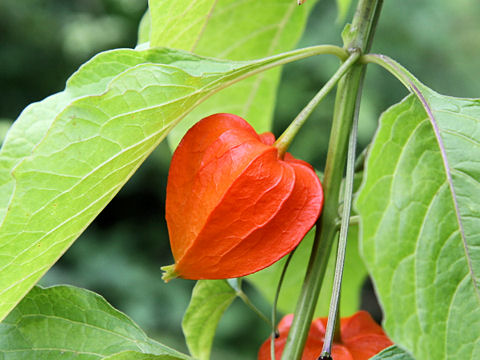
Alkekengi officinarum fruit with the red husk
Scientific classification Edit this classification
Kingdom: Plantae
Clade: Tracheophytes
Clade: Angiosperms
Clade: Eudicots
Clade: Asterids
Order: Solanales
Family: Solanaceae
Subfamily: Solanoideae
Tribe: Physaleae
Genus: Alkekengi
Mill.
Species:
A. officinarum
Binomial name
Alkekengi officinarum
Synonyms[1]
  • Physalis alkekengi L.
  • Boberella alkekengi (L.) E.H.L.Krause
  • Physalis alkekengi var. anthoxantha H. Lév.
  • Physalis alkekengi var. orientalis Pamp.
  • Physalis ciliata Siebold & Zucc.
  • Physalis halicacabum Crantz
  • Physalis hyemalis Salisb.
  • Physalis kansuensis Pojark.

Alkekengi is a monotypic genus of flowering plants in the nightshade family Solanaceae with a single species Alkekengi officinarum. This species is native to the regions covering Southern Europe to South Asia and Northeast Asia.

It is commonly known as the bladder cherry,[2] Chinese lantern,[3] Japanese-lantern,[4] strawberry groundcherry,[5] winter cherry,[3] alchechengi berry, or Klabuster cherry.

It is a close relative of the new world Calliphysalis carpenteri (Carpenter's groundcherry) and a somewhat more distant relative to the members of the Physalis genus.[6]

Description

[edit]

It is easily identifiable by the large, bright orange to red papery calyx covering over its fruit, which resembles paper lanterns. It is a perennial herbaceous plant growing to 40–60 cm (16–24 in) tall, with spirally arranged leaves 6–12 cm (2+124+12 in) long and 4–9 cm (1+123+12 in) broad. The flowers are white, with a five-lobed corolla 10–15 mm (3858 in) across, with an inflated basal calyx which matures into the papery orange fruit covering, 4–5 cm (1+12–2 in) long and broad. And it has one variety, Alkekengi officinarum var. franchetii.

Research has shown Calliphysalis carpenteri (formerly classified as Physalis carpenteri) to be among the most closely related species to Physalis alkekengi.[6]

Cultivation

[edit]
Mature plant
The orange "lanterns" (fruiting calyces) of Alkekengi officinarum lose their bright colour and papery appearance during the winter, and by the spring become delicately beautiful, skeletal networks of beige veins revealing the orange-red berries within.

It is a popular ornamental plant, widely cultivated in temperate regions of the world, and very hardy to below −20 °C (−4 °F).[7] It can be invasive with its wide-spreading root system sending up new shoots some distance from where it was originally planted. In various places around the world, it has escaped from cultivation.[8]

In the United Kingdom it has been given the Royal Horticultural Society's Award of Garden Merit.[7][9]

History

[edit]

Physalis alkekengi has been used for a wide range of purposes in traditional medicine for around two millennia. It was used, purportedly to heal fever, induce mental serenity, and assist in childbirth, according to ancient Chinese books including the Erya and Shen Nong Ben Cao Jing. Its usage in reducing heat, boosting energy, and aiding in diuresis was also mentioned in Li Shizhen's Ming dynasty Compendium of Materia Medica. The plant's juice was thought to be useful in treating jaundice.[10]

The English herbalist John Gerard describes a plant known as red winter cherries in his late 16th-century herbal, which may refers to Alkekengi officinarum.[11] He says that the plant is also called red nightshade and alkakengie in English. It is kept in gardens and the berries are used as traditional medicine.

Traditional uses

[edit]

The dried fruit is called the golden flower in the Unani system of medicine, and used as a diuretic, antiseptic, liver corrective, and sedative.[12]

In Chinese medicine, Alkekengi is used to treat such conditions as abscesses, coughs, fevers, and sore throat.[13] The extinct Dacian language has left few traces, but in De Materia Medica by Pedanius Dioscorides, a plant called Strychnos alikakabos (Στρύχνος άλικακάβος) is discussed, which was called kykolis (or cycolis) by the Dacians.[citation needed] Some[who?] have considered this plant to be Alkekengi officinarum, but the name more likely refers to ashwagandha (Withania somnifera).[14]

Chemical constituents

[edit]

Alkekengi officinarum contains a wide variety of physalins.[15][16][17] When isolated from the plant, these have antibacterial[18] and leishmanicidal[19][20] activities in vitro.

It also contains caffeic acid ethyl ester, 25,27-dehydro-physalin L, physalin D, and cuneataside E.[21]

More than 530 different chemicals, including steroids, flavonoids, alkaloids, phenylpropanoids, sucrose esters, piperazines, volatile oils, polysaccharides, amino acids, and trace elements, are present in Physalis alkekengi.[10]

Cultural significance

[edit]
Hozuki Market in Japan

In Japan, its bright and lantern-like fruiting calyces form a traditional part of the Bon Festival as offerings intended to help guide the souls of the dead. A market devoted to it – hōzuki-ichi – is held every year on 9–10 July near the ancient Buddhist temple of Sensō-ji in Asakusa.

Fossil record

[edit]

Alkekengi seed fossils are known from Miocene of Siberia, Pliocene of Europe and Pleistocene of Germany.[22] Pollen grains of Alkekengi officinarum have been found in early Pleistocene sediments in Ludham east of Wroxham, East Anglia.[23]

Taxonomic history

[edit]

Alkekengi officinarum was previously included in the genus Physalis until molecular and genetic evidence placed it as the type species of a new genus.[24][25]

References

[edit]
[edit]
Revisions and contributorsEdit on WikipediaRead on Wikipedia
from Grokipedia
Alkekengi is a monotypic genus of rhizomatous perennial herbaceous plants in the nightshade family Solanaceae, containing the single species Alkekengi officinarum (syn. Physalis alkekengi), commonly known as the Chinese lantern plant, bladder cherry, winter cherry, or strawberry groundcherry. Native to and temperate , Alkekengi officinarum grows in upright clumps typically reaching 1–2 feet (30–60 cm) in height and width, with slender, simple stems bearing alternate ovate to rhombic medium green leaves up to 3 inches (7.6 cm) long. The plant produces small, nodding white flowers with a pale green throat in summer, followed by globose red berries enclosed within inflated, accrescent orange-red calyces that persist into winter and give the plant its characteristic lantern-like appearance. Alkekengi officinarum has been introduced to regions such as North America and Australia, where it spreads aggressively through rhizomes and self-seeding, potentially becoming invasive in disturbed areas or gardens. It thrives in full sun to partial shade and average, well-drained soils, making it hardy in USDA zones 3–9. The plant is primarily valued as an ornamental for its colorful, persistent calyces, which are often dried for winter decorations and floral arrangements. In , it has been used in European herbalism to treat , fevers, and urinary complaints, while in Chinese medicine, extracts serve as heat-clearing and detoxifying agents. The ripe fruits are , offering a bland, tomato-like flavor, but all other parts, including unripe fruits, are toxic and can cause symptoms such as , , and circulatory issues if ingested.

Taxonomy

Classification and Synonyms

Alkekengi officinarum Moench is the accepted name for the single species in the monotypic genus Alkekengi within the family Solanaceae, the nightshade family, and specifically belongs to the subfamily Solanoideae and tribe Physaleae. The genus Physalis (to which it was formerly assigned) encompasses approximately 75–90 species of herbaceous plants, most native to the Americas, with A. officinarum notable as an Old World representative now segregated into its own genus. The Physalis alkekengi was established by in his seminal work (volume 1, page 183) published in 1753, marking the formal description of the species under the Linnaean system. The currently accepted name Alkekengi officinarum Moench (1794) reflects the taxonomic revision recognizing the monotypic genus Alkekengi, based on molecular phylogenetic analyses that placed it outside the core . Phylogenetically, A. officinarum is closely allied with Physalis species, including various groundcherries (e.g., P. peruviana), forming part of the diverse physaloid group within the Physalinae subtribe as resolved in molecular analyses. Common names for the plant include Chinese lantern plant, Japanese lantern, winter cherry, and bladder cherry, reflecting its distinctive inflated calyx that resembles a lantern.

Etymology

The genus name Alkekengi derives from the term al-kākanj, meaning "the ground-cherry" or "bladder cherry," which refers to the 's fruit enclosed in an inflated calyx resembling a lantern-like structure. This itself traces back to kākanag, and it entered European nomenclature through alkekengi by the 15th century. Earlier influences may include ancient Greek halikakabon, a term for a bladder-like used in medicine, potentially linking to the same morphological feature. The specific officinarum is derived from Latin officina, meaning "workshop" or " shop," indicating the plant's historical use in medicinal preparations. Previously, under the Physalis alkekengi, the alkekengi reinforced the Arabic-derived reference to the "bladder cherry." The genus name (from the former classification) originates from the Greek word physa (or physalis), meaning "bladder" or "bubble," alluding to the distinctive inflated calyx that encloses the . Common names for the plant reflect its ornamental and seasonal traits. "Chinese lantern" stems from the bright orange-red, papery calyces that evoke traditional Asian lanterns, tied to the species' native range in , southern Asia, and . Similarly, "Japanese lantern" arises from cultural associations in , where the persistent calyces are used in festivals. "Winter cherry" derives from the enduring red calyces that persist through winter, highlighting the berry-like fruit within. Historical naming variations were shaped by medieval European herbals, which documented it as "winter-cherry" for its properties, and Asian pharmacopeias, where it appeared in ancient Chinese texts like the Erya for medicinal uses. These influences spread through Greco-Islamic botanical traditions, adapting the Persian and terms into Latin and vernacular languages.

Description

Morphological Features

Alkekengi officinarum is a that typically grows 40–60 cm (16–24 inches) tall, forming colonies via its creeping rhizomes. The is fibrous with extensive rhizomatous spread, which facilitates vegetative propagation and allows the to colonize areas rapidly. Stems are erect, slightly branched, and pubescent with short, appressed hairs, often reaching a woody texture at the base. Leaves are alternate, ovate to broadly ovate, measuring 5–12 cm long and 4–8 cm wide, with entire to wavy or irregularly dentate margins; they are borne on petioles up to 4 cm long and are glabrescent to pubescent. Flowers are white, with a five-lobed corolla 10–20 mm in diameter, solitary in the leaf axils on short pedicels, and blooming from to August; the calyx is campanulate, about 6 mm long, densely pubescent, and consists of five fused sepals. The fruit is a small, globose, shiny red berry 8–15 mm in diameter, enclosed by the enlarged, inflated, papery orange-red calyx that forms a lantern-like structure 25–50 mm long with 10 ribs and persists into winter.

Life Cycle and Reproduction

Alkekengi officinarum is a herbaceous that completes its life cycle over multiple years, typically living more than two years in natural settings and longer under cultivation conditions. The plant dies back to the ground during winter but regrows from underground rhizomes in spring, forming upright stems that reach heights of 16–24 inches. This rhizomatous growth allows it to persist through seasonal and establish colonies over time. Flowering occurs in summer, primarily in , with small, white, hermaphroditic flowers that are self-fertile and pollinated by such as bees and hoverflies. takes place under warm conditions, leading to fertilization that initiates fruit development. Following , the calyx inflates around the developing , providing protection for as described in morphological studies. Fruiting follows in late summer, with berries ripening from to and containing numerous small s. The inflated, orange-red calyx encloses the red berry, aiding in protection and facilitating dispersal primarily through or activity, though consumption also plays a role. Reproduction occurs mainly via sexual means through these dispersed s, supplemented by asexual via fragmentation, which produces clonal colonies and contributes to the plant's invasive potential in suitable habitats. Seeds exhibit high viability, with typically broken by cold stratification at temperatures around 5°C for several weeks to mimic winter conditions. Once stratified, occurs in 2–4 weeks under moist, warm conditions (30–35°C optimal), achieving rates up to 100% in controlled settings. This process ensures effective establishment in spring.

Distribution and Ecology

Geographic Distribution

Alkekengi officinarum is native to a broad region spanning southeastern Europe, Central Asia, and northeastern Asia, including Albania, Bulgaria, Greece, Iran, Iraq, Korea, Lebanon-Syria, Pakistan, Romania, Turkey, and various provinces of China such as North-Central, South-Central, Southeast, Hainan, Inner Mongolia, Manchuria, Qinghai. This native distribution covers latitudes approximately from 30° to 60° N, encompassing temperate zones from the Mediterranean Basin through the Balkans and steppe regions to East Asia. The has been introduced widely outside its native range, particularly through ornamental , and is now naturalized in over 50 countries across , , , and parts of and . In , it occurs in multiple states including , , , New York, , and , as well as in , , where it has spread via and rhizomes. Introductions to , such as in Victoria, and stem from 19th- and 20th-century ornamental trade, leading to establishment in disturbed areas. Historically, A. officinarum has been documented in since Roman times, appearing in ancient herbal texts and from the second millennium BCE onward, indicating early medicinal and cultural use. Its spread eastward likely occurred along ancient trade routes such as the , facilitating distribution from to Central and over millennia. Modern expansions post-1800s, driven by global horticultural exchange, have accelerated its presence in temperate regions worldwide. Currently, A. officinarum is naturalized and invasive in several introduced areas, particularly temperate wetlands and disturbed sites in the United States and , where it forms dense colonies and is listed on watch lists such as the New York Flora Atlas. In , it is recognized as an environmental with moderate invasive potential. The species exhibits distribution patterns favoring temperate climates, with an altitudinal range from sea level in its native and introduced habitats.

Habitat Preferences and Ecology

Alkekengi officinarum thrives in sunny, open habitats such as meadows, riverbanks, thickets, and disturbed areas including roadsides, fence rows, vacant lots, and stream banks. While it can tolerate partial shade, the plant performs best in full sun, where it establishes vigorous rhizomatous growth. This perennial geophyte is well-adapted to temperate biomes, often colonizing edges of woodlands and lower mountain slopes up to elevations of 600 m. The species prefers well-drained, loamy soils with a neutral pH range of 6 to 7, demonstrating adaptability to both moist and relatively dry conditions. It exhibits frost hardiness down to -20°C but is sensitive to waterlogging, which can lead to in poorly drained sites. Flowering occurs from to , supporting its role in seasonal ecosystems. Ecologically, A. officinarum attracts insect pollinators such as bees, facilitating cross-pollination in its native and introduced ranges. The persistent, bright orange-red berries serve as a winter food source for birds, which aid in seed dispersal through endozoochory. As a pioneer species, it rapidly colonizes disturbed soils via rhizomes, contributing to soil stabilization and habitat recovery, though its aggressive spread can render it potentially invasive, outcompeting native vegetation in wetlands and other sensitive areas. Conservation-wise, A. officinarum is not globally threatened and is assessed as least concern due to its wide distribution across and successful naturalization elsewhere, with no major declines reported in native ranges. However, it is monitored as an in regions like parts of and , where management efforts focus on preventing ecological disruption.

Cultivation

Environmental Requirements

Alkekengi officinarum thrives in temperate climates, suitable for USDA hardiness zones 3 to 9, where it can withstand winter temperatures down to -20°C and summer highs up to 30°C. It requires at least 6 hours of direct daily to produce vibrant calyces, though it tolerates light shade, which may reduce flowering intensity. The prefers fertile, well-drained loamy or sandy soils with moderate and a range of 5.5 to 7.5, avoiding heavy clay or waterlogged conditions that can lead to . Watering should provide moderate moisture during the active growth period, but established plants are drought-tolerant and benefit from mulching during dry spells to conserve soil moisture. For optimal growth, space 30 to 45 cm apart in borders or containers to allow for their spreading habit and ensure good air circulation. Powdery mildew can affect foliage in humid conditions; the species has earned the Royal Horticultural Society's for its reliable performance in suitable environments.

Propagation and Maintenance

Propagation of Alkekengi officinarum is most reliably achieved through division of rhizomes in early spring, where established clumps are lifted, separated into sections with roots and shoots using pruners, and replanted immediately at the same depth in prepared , yielding clones with high success rates as the method leverages the plant's vigorous rhizomatous growth. Alternatively, can be sown indoors from February to March, following a period of cold stratification to enhance ; place in moist medium in the at approximately 4°C for 2-4 weeks, then germinate at 18-20°C under conditions, expecting emergence in 14-21 days. After last frost, transplant seedlings or divisions outdoors, spacing them 30 cm apart in well-drained , with no need for staking as the upright habit remains stable, though applying a layer of organic mulch helps suppress weeds and retain moisture. For ongoing maintenance, prune away dead stems in early spring to encourage fresh growth, apply a light dose of balanced NPK once in spring if nutrients are low, and divide clumps every 3 years to manage spread and rejuvenate vigor. Calyces for ornamental or medicinal use are harvested after the first frost when they turn bright orange-red, then dried by hanging upside down in a cool, dark, airy space. To address challenges, monitor and remove stray rhizomes regularly to control potential invasiveness, particularly in garden borders, and consider growing in containers to limit underground spread. In colder climates within USDA zones 3-9, protect potted over winter by mulching heavily or storing indoors in a cool, dry location to safeguard the roots. Established from year 2 onward typically yield dozens of lanterns per mature specimen under suitable conditions.

Uses

Ornamental Uses

Alkekengi officinarum, commonly known as Chinese lantern, is prized in ornamental for its distinctive orange-red, lantern-like calyces that emerge in late summer and persist through winter, providing striking seasonal interest. These structures are frequently incorporated into garden designs such as herbaceous borders, cottage gardens, rock gardens, and containers, where they add vibrant color contrast against fading perennials and evergreens in mixed plantings. The variety Alkekengi officinarum var. franchetii is especially favored for its larger, brighter lanterns, which enhance visual impact in mass plantings that form low-growing groundcovers with a luminous glow in shaded or low-light conditions. Due to its vigorous rhizomatous growth, A. officinarum spreads readily and can form dense colonies, making it suitable for naturalizing in informal areas but generally unsuitable for tidy borders or small spaces without containment. Gardeners often recommend growing it in pots or raised beds with barriers to manage its expansion while enjoying its ornamental benefits. The plant's low-maintenance nature—requiring only average soil, full sun to partial shade, and occasional division—contributes to its appeal as a sustainable choice for temperate landscapes. However, in regions like parts of and , caution is advised as it can naturalize aggressively and become invasive if not controlled. Beyond the garden, the papery calyces are harvested for decorative applications, including fresh or dried stems in wreaths, bouquets, and holiday crafts, where their natural hue endures for several months indoors when protected from direct . To prepare for drying, stems are cut as calyces transition to orange-red and suspended upside down in a warm, dry, shaded area for 2–3 weeks, after which they maintain shape and color for extended use. This versatility has sustained its popularity in temperate gardens since the , when novelty fruits like these were celebrated in ornamental displays. In 1993, A. officinarum earned the Royal Horticultural Society's for its reliable performance and aesthetic value.

Medicinal Uses

In traditional Chinese medicine, Alkekengi officinarum has been utilized for over 2,000 years as a heat-clearing and detoxifying agent to address conditions such as fever, , , , and , often through decoctions prepared from the calyces, fruits, or roots to promote and alleviate . In , the dried fruit, known as Kaknaj or golden flower, serves as an for treatment and urinary tract issues, functioning as a and liver corrective to support renal health and reduce . These traditional applications typically involve dosages of 3-9 g of dried calyx per day, administered as decoctions or extracts to enhance therapeutic effects without exceeding safe limits. Modern pharmacological research has validated and expanded these uses, demonstrating A. officinarum extracts and compounds exhibit , , , hypoglycemic, , and anti-tumor activities, primarily through and animal studies. For instance, ethanol extracts have shown efficacy against like Mycobacterium tuberculosis (MIC 32 µg/mL) and leishmanicidal effects against Leishmania major and L. tropica promastigotes, with isolated physalins contributing to parasite inhibition. Recent studies from 2023 highlight how physalins in A. officinarum aqueous extracts modulate in mice, enriching beneficial like Duncaniella spp. and fungi such as Aspergillus ochraceus while reducing pro-inflammatory species, potentially supporting outcomes in models. Further advancements in 2023-2025 research underscore hypoglycemic potential, with from A. officinarum significantly lowering fasting blood glucose and improving insulin sensitivity in mouse models fed high-fat diets, addressing gaps in traditional overviews by linking these effects to enhanced glucose tolerance. Anti-tumor investigations in 2025 isolated three new physalins from the calyces, exhibiting potent activity against lines through induction, warranting further exploration for applications beyond historical uses. Preparations like extracts of roots and fruits continue to be tested for and analgesia, often at 50-100 mg/kg in rodent models, mirroring traditional methods. Regarding safety, the ripe berries are edible in moderation and provide nutritional benefits, but the calyces contain , a toxic in excess that can cause gastrointestinal distress, , and cardiac issues if overconsumed. A. officinarum is contraindicated during due to demonstrated anti-fertility effects in studies, where alcoholic extracts reduced implantation sites and numbers when administered early in . Overall, while promising, human clinical trials remain limited, emphasizing the need for cautious use under professional guidance to mitigate risks from unstandardized preparations.

Culinary Uses

The ripe berries of Alkekengi officinarum, also known as Chinese lantern or bladder cherry, are the primary edible part of the plant, offering a tangy, sweet-sour flavor reminiscent of a small or when fully mature and orange-red in color. These berries can be consumed fresh, raw, or cooked, and are commonly incorporated into jams, sauces, or pies after removing the surrounding papery calyx, which is non-edible and often discarded. The calyx serves as a protective but must be peeled away prior to eating to avoid any potential irritation. In traditional culinary practices across parts of and , the berries are used to make preserves, compotes, or herbal teas, leveraging their natural acidity for tart flavor profiles. Modern applications include incorporating the fruits into fresh salsas with ingredients like onions, chilies, and lime, or adding them to salads and desserts for a burst of citrus-like tang. Each mature plant typically yields dozens of berries, making it suitable for small-scale or home rather than commercial production. Nutritionally, the ripe berries are low in calories at approximately 43 kcal per 100 g and provide a rich source of vitamin C (around 47-52 mg per 100 g) along with phenolic antioxidants that contribute to their vibrant color and potential health-supporting properties. They also contain withanolides, steroidal lactones that may offer supplementary benefits when consumed as part of a varied diet. The berries' high antioxidant content, including vitamins A and C, positions them as a functional food option, though detailed therapeutic effects are explored elsewhere. Consumption requires precautions, as unripe green fruits contain and other alkaloids that render them toxic, potentially causing , , or more severe symptoms if ingested. Even ripe berries should be eaten in moderation to prevent digestive upset, and the plant is best regarded as a niche wild or ornamental food rather than a dietary staple. In Japanese cuisine, the berries are occasionally candied or used sparingly in sweets for their exotic appeal, a practice that gained traction in Western cooking after the early as the plant spread through ornamental trade.

Chemical Composition

Key Chemical Constituents

The primary bioactive compounds in Alkekengi officinarum are steroidal lactones, particularly the physalins, with over 50 variants (including physalins A–K and neophysalins) identified across the , many isolated from this species and its varieties. Note: Much of the refers to this species as Physalis alkekengi, a former classification. These physalins belong to the class of C28 ergostane-type steroids, characterized by a 13,14-seco featuring δ-lactone rings at C-22/C-26 and often additional or functionalities that contribute to their structural complexity. Structural variations include unique derivatives such as those with methoxy substitutions at C-25, reported in A. officinarum var. franchetii. Flavonoids represent another major class, including glycosides of (e.g., kaempferol-3-O-rutinoside) and (e.g., quercetin-3-O-glucoside and ), which are prevalent in the leaves, calyces, and fruits. Alkaloids, such as , are present primarily in unripe fruits and other green parts, consistent with the family's profile. , including homogeneous fractions like PPSB, are abundant in the fruits, comprising neutral and acidic components with potential regulatory roles. Physalins are predominantly distributed in the calyces and fruits, where they can reach concentrations of up to 0.8–1% dry weight (e.g., physalin D at 0.788% in immature calyces), while and show higher abundance in fruits. The isolation of physalins began in the late , with physalin A first reported from A. officinarum var. franchetii in 1969. Recent metabolic profiling using HPLC-MS and related techniques has identified over 530 compounds across plant parts, encompassing physalins, , phenylpropanoids, and others, enhancing understanding of the species' chemical diversity. Analytical methods for extraction emphasize ethanol-based protocols, optimized at low temperatures (e.g., 40–60°C) to achieve yields of 15–20% for polyphenols while minimizing degradation of heat-sensitive and lactones.

Biological and Pharmacological Activities

Physalins isolated from Alkekengi officinarum exhibit potent anti-inflammatory effects primarily through inhibition of the signaling pathway, which reduces the production of pro-inflammatory cytokines such as TNF-α and IL-6 in activated macrophages. In vitro studies have demonstrated that physalin A blocks nuclear translocation and DNA binding, thereby suppressing inflammatory responses without significantly affecting the MAPK pathway. These mechanisms highlight the potential of physalins as modulators of immune-mediated inflammation. The antimicrobial properties of physalins involve disruption of bacterial cell membranes, leading to leakage and cell death in pathogens such as Staphylococcus aureus and Escherichia coli. In antitumor applications, physalins induce apoptosis in cancer cells via caspase activation and mitochondrial dysfunction; for instance, physalin F triggers p53-dependent cell death in non-small cell lung cancer lines with IC50 values around 5-10 μM. Similarly, physalin B promotes apoptosis in leukemia cell lines like HL-60 and K562, inhibiting proliferation at low micromolar concentrations. Additional pharmacological activities include hypoglycemic effects mediated by modulation of the , where A. officinarum extracts increase beneficial such as Lactobacillus and Bifidobacterium while reducing pathogenic Firmicutes, thereby improving glucose in diabetic models. Antioxidant activity is evidenced by effective DPPH radical scavenging, with calyx extracts achieving IC50 values of 20-50 μg/mL, attributed to polyphenolic constituents that neutralize . Leishmanicidal effects target Leishmania major and L. tropica promastigotes, where physalins like physalin D inhibit parasite growth by altering membrane integrity and inducing , with IC50 below 10 μM. The toxicity profile of A. officinarum extracts indicates low acute risk. Recent molecular studies have identified key genes such as P450s and acyltransferases involved in physalin in Alkekengi species, providing insights into regulatory pathways via transcriptomic analyses.

History and Cultural Aspects

Historical and Traditional Uses

Alkekengi officinarum, known historically as winter cherry or bladder cherry, has been documented in ancient Chinese medical texts for its therapeutic properties. The plant first appears in the Shennong Bencao Jing, an early herbal compendium attributed to the legendary emperor , where it is described as a agent effective for urinary issues and detoxification. By the , Li Shizhen's (1596) elaborated on these uses, recommending the calyces and fruits for clearing heat, reducing swelling, and treating conditions such as , , and , establishing its role in (TCM) for over 2,000 years. In Greek and Roman medicine, the plant was recognized as early as the CE by Pedanius Dioscorides in his , where it was praised for its diuretic effects and ability to alleviate and urinary ailments, though the fruit was noted as inedible in large quantities. This knowledge spread through medieval via translations of Dioscorides' work by Arab physicians, who incorporated it into —also known as Greco-Arabic medicine—as Kaknaj, primarily for renal disorders and as a mild purgative. European herbalists in the medieval period continued these applications, building on the ancient descriptions to treat urinary and liver-related complaints. In East Asian traditions beyond China, Alkekengi officinarum found a place in Japanese Kampo medicine, derived from TCM, where it was employed similarly for detoxification and cooling properties, aligning with Kampo's emphasis on balancing bodily humors. During the 17th to 20th centuries, the plant entered Western herbalism, as evidenced by Nicholas Culpeper's The English Physitian (1653), which extolled its virtues for kidney stones, urinary gravel, and as a diuretic when prepared as green berries infused in beer. It appeared in the Pharmacopoeia Londinensis (1618) under the name aikakengi and was later included in 19th- and early 20th-century Western pharmacopeias for its mild laxative and diuretic actions, though its use waned with the rise of synthetic pharmaceuticals; interest revived in the late 20th century through ethnobotanical studies documenting its traditional applications.

Cultural Significance

In , the Alkekengi, known locally as hōzuki, holds profound ritual importance during the annual Obon Festival, where its lantern-like calyces are offered to guide ancestral spirits back to the world of the living and ensure their safe return to the . This symbolism ties into Buddhist traditions, evoking themes of enlightenment and the transient nature of existence, with the glowing pods likened in to fireflies or ethereal lanterns illuminating the path for the deceased. The plant's seeds, in particular, are placed on family altars as symbolic offerings to honor and direct these spirits. The hōzuki-ichi market at Temple in , held every July 9 and 10, exemplifies this cultural role, with over 100 stalls selling the plants to festival-goers who purchase them for home decorations and rituals. This event, dating back over 200 years, draws hundreds of thousands of visitors annually, fostering community ties and preserving Obon customs amid urban life. Beyond , Alkekengi features in as a protective , believed to ward off spirits and negative energies through its vibrant husks, often incorporated into festival displays for auspiciousness and . In , since the , dried calyces have been used in wreaths and winter arrangements, symbolizing warmth and seasonal renewal in holiday traditions. In contemporary Western pop culture, the plant inspires Halloween crafts, such as garlands mimicking ghostly lanterns, blending its eerie aesthetic with festive creativity. The festival trade at events like hōzuki-ichi bolsters local economies by generating revenue for vendors and related tourism in , while global ornamental exports of Alkekengi from to Western markets support horticultural industries valued for their decorative appeal. In modern and literature, hōzuki appears as a motif of summer's ephemerality and life's impermanence, notably in poetry evoking seasonal change.

Evolutionary History

Taxonomic History

The taxonomic history of Alkekengi begins with its initial description by Carl Linnaeus as Physalis alkekengi in Species Plantarum in 1753, where it was placed within the genus Physalis based on morphological similarities such as the berry fruit and herbaceous habit. Shortly after, in 1794, Conrad Moench proposed the monotypic genus Alkekengi with the combination Alkekengi officinarum, highlighting its distinctive inflated, lantern-like calyx as a key differentiating feature from other Physalis species. During the , botanists debated the generic placement of the due to its atypical calyx morphology, which contrasted with the more subdued fruiting structures in core taxa; some supported Moench's segregation into Alkekengi, while others retained it in Physalis. This uncertainty was addressed in and Joseph Dalton Hooker's Genera Plantarum (1876), where the species was firmly reclassified under Physalis within the tribe Physaleae, emphasizing shared floral and fruit characters over the calyx variation. In the , early molecular studies in the , such as Olmstead et al.'s chloroplast DNA analysis (1999), confirmed its position within the subtribe Physalinae of but highlighted potential in Physalis due to the inclusion of morphologically divergent species like P. alkekengi. Varietal distinctions emerged during this period, including Physalis alkekengi var. franchetii (Mast.) , recognized for its more robust growth and ornamental calyces in East Asian populations. A 2005 two-gene phylogeny (waxy and nrDNA ITS sequences) by Whitson and Manos resolved aspects of the debate by placing A. officinarum basal to core Physalis species (including P. peruviana), rendering Physalis paraphyletic and supporting recognition of Alkekengi as a distinct genus. A 2024 review in Frontiers in Plant Science summarizes progress in Physalis molecular research, including authentication and phylogenetics, reinforcing prior findings on genetic diversity and the atypical position of P. alkekengi. Nomenclatural issues, including over 10 synonyms such as Bocceria franchetii Mast. and Physalis orientalis Pamp., have been stabilized under the International Code of Nomenclature for algae, fungi, and plants (ICN), with Alkekengi officinarum Moench accepted as the name in major databases like GRIN and POWO.

Fossil Record

The fossil record of Alkekengi ( alkekengi) is relatively sparse, primarily consisting of , fruits, and grains preserved in sedimentary deposits across , reflecting its native range in temperate regions. The earliest confirmed records date to the (approximately 23–5 million years ago), with and attributed to species closely resembling modern P. alkekengi reported from European sites such as Nochten-Ost in the brown coal deposits of , (late , Tortonian-Serravallian, 13.7–7.3 Ma), and Stare Gliwice in (Miocene, Tortonian, 11.6–7.3 Ma, as P. pliocenica). These fossils, including obovate to circular measuring 1.7–2.5 mm with digitate testa cells and sub-lateral hilum, indicate early diversification within the Physalinae subtribe in subtropical to temperate woodlands. During the and Pleistocene (5.3 Ma–11.7 ka), evidence becomes more abundant, featuring well-preserved seeds and potential calyx remains in Eurasian sediments. Notable occurrences include P. alkekengi seeds from the stage (3.6–2.6 Ma) in Halle, , and Kroscienko, , as well as Messinian-Zanclean (7.3–3.6 Ma) deposits in Saugbagger Flora, , and Nochten-Ost, (P. aff. alkekengi). In eastern , seeds from Siberian localities (approximately 5–2.6 Ma) further document the species' presence in lake and fluvial environments, suggesting to seasonal temperate habitats with mixed deciduous-coniferous . Key preservation sites, such as the lignite-bearing lake beds of Province, China (), have yielded related remains, though direct Alkekengi calyces are rarer due to the fragile, papery nature of inflated structures. These fossils imply an Eurasian origin for P. alkekengi, with diversification and dispersal patterns mirroring its current distribution across Europe, Siberia, and East Asia, facilitated by Miocene climate cooling and Pleistocene glacial cycles. No pre-human introduction fossils have been identified in the Americas, consistent with its Old World nativity distinct from the primarily Neotropical core of the Physalis genus. Recent studies have confirmed the Tertiary radiation of Solanaceae, with Physalinae ancestors traceable to Eocene fruits in South America (~52 Ma, as Physalis infinemundi from Patagonia), though Alkekengi-specific records remain limited by the poor preservation of delicate pollen and calyces in Tertiary sediments.

References

Add your contribution
Related Hubs
User Avatar
No comments yet.