Hubbry Logo
C418C418Main
Open search
C418
Community hub
C418
logo
8 pages, 0 posts
0 subscribers
Be the first to start a discussion here.
C418
C418
from Wikipedia

Key Information

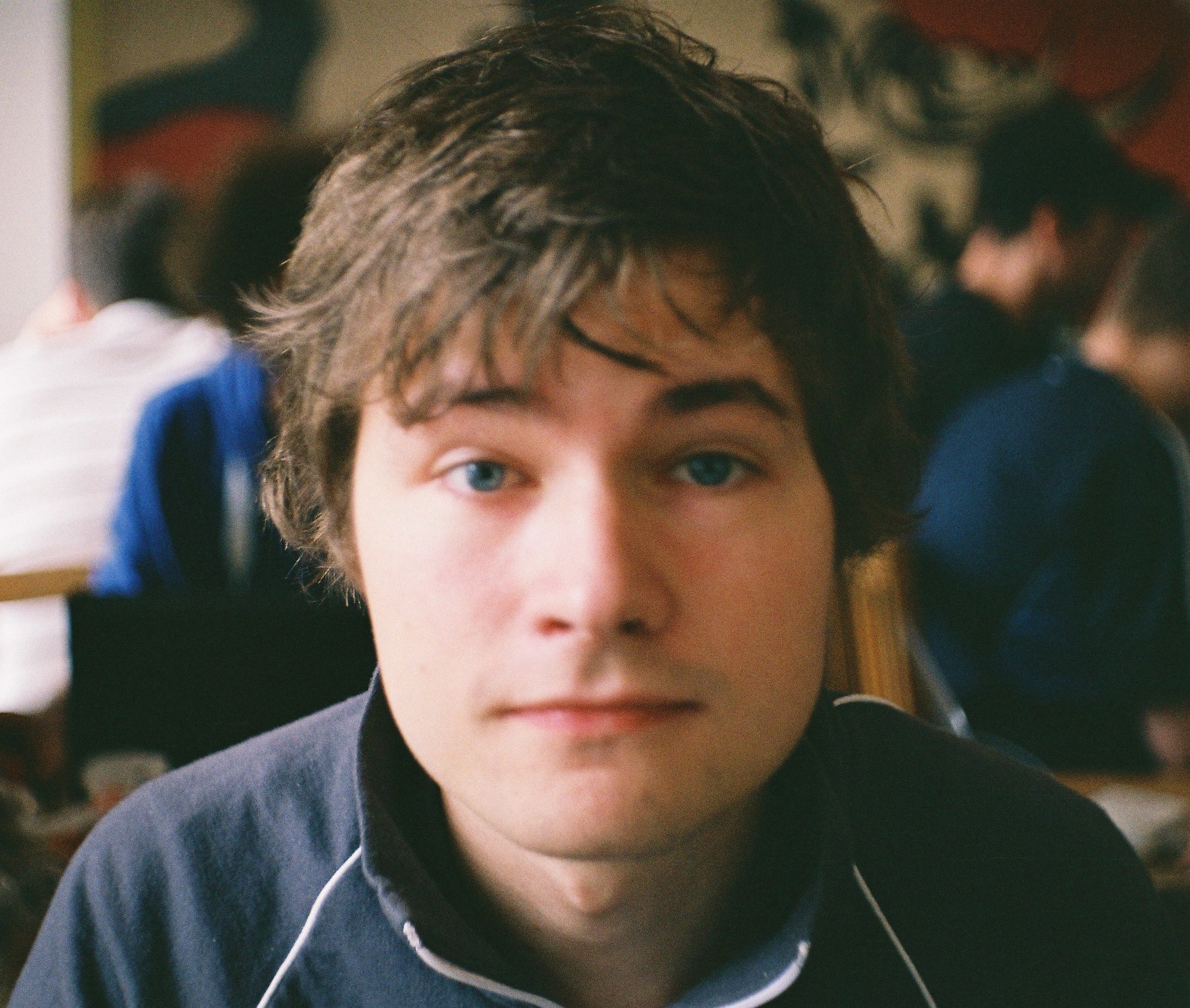
Daniel Rosenfeld (born 9 May 1989), known professionally as C418 (pronounced "See-Four-Eighteen"),[4][5] is a German musician, composer, and producer, and sound designer. Known for his minimalistic ambient work, he rose to fame as the original composer and sound designer for the 2011 sandbox video game Minecraft. Acclaimed for its nostalgic value and relaxing quality, his music for the game is considered one of the greatest video game soundtracks ever composed.

Rosenfeld was first introduced to music production by his brother Harry, and took it up as a hobby. He met game developer Markus Persson on the online forum TIGSource, and became the sound designer and composer for Persson's project Minecraft. Rosenfeld released the soundtrack albums Volume Alpha (2011) and Volume Beta (2013) for the game, and scored the documentary Minecraft: The Story of Mojang with the album One (2012). He released the album 148 (2015), wrote and produced the theme for Beyond Stranger Things, and released Dief (both 2017).

While a third Minecraft album has not emerged, Rosenfeld released the studio album Excursions (2018) and scored the Steam release of Cookie Clicker (2021). Rosenfeld co-founded the independent video game studio Ivy Road with developers Davey Wreden and Karla Zimonja. He composed the soundtrack for their first game, Wanderstop (2025). In August 2023, he was ranked at #1 on Billboard magazine's emerging artists chart.[6]

Biography

[edit]

Rosenfeld was born in East Germany in 1989.[7][8] His father was a goldsmith, and his family had a musical background before they pursued other careers.[9] He learned to create music on early versions of Schism Tracker (a popular clone of Impulse Tracker) and Ableton Live in the early 2000s, both rudimentary tools at the time.[10] It was his brother, Harry Rosenfeld, who introduced him to music composition through Impulse Tracker, commenting that "even an idiot" can successfully create music with it.[7][4] His brother was also known as C818, from which he chose the name C418, claiming that the name is "really cryptic and doesn't actually mean anything."[11] Rosenfeld has also stated that he was "mediocre at school," but learning basic music theory and English came easy to him.[7]

Music career

[edit]

2002–2008: Career beginnings

[edit]

Rosenfeld started releasing music on Bandcamp after Danny Baranowsky suggested releasing his music on the site.[12] In 2007, Rosenfeld started a blog known as "Blödsinn am Mittwoch" (English: "Silliness on Wednesday"),[13] where he posted a new song every week. This was around the same time when he became interested in game development and audio, which resulted in him joining the indie game development forum TIGSource, where he became involved with numerous smaller games and game developers.[7] Among them, Rosenfeld unofficially released the soundtracks of Zombie Dog in Crazyland and Mubbly Tower on an old blog.[14] Later, Rosenfeld started making albums and releasing them on his blog and Bandcamp, as a hobby.[7]

His first release was the 2007 EP BPS, and shortly thereafter, in 2008, he challenged himself to make a studio album as quickly as possible, for fun, prioritizing quantity over quality. The Whatever Director's Cut was released on his blog as BAM #30 and on his Bandcamp,[15] where it was available until it was removed in 2013, due to Rosenfeld's dislike of the album.[16]

Also in 2008, Rosenfeld released Mixes, a 25-minute medley containing remixes of songs previously posted on the blog. Also released were the EP Sine and his second studio album, Zweitonegoismus, which expressed his discontent with working in an assembly line factory. Rosenfeld showed the album to his co-worker prior to releasing it, prompting them to ask "why the hell [he was] still working there".[17]

2009–2013: Minecraft, becoming a freelance composer, and One

[edit]

In early 2009, Rosenfeld began collaborating with Minecraft creator Markus "Notch" Persson through TIGSource.[7] Rosenfeld was responsible for the sound effects and music in Persson's work-in-progress video game Minecraft. The sound engine in the still early Java game was not very powerful, so Rosenfeld had to be creative in his approach to creating sound effects and music.[10]

The sixth soundtrack from circle named depado

In January 2010, Rosenfeld's fourth studio album A Cobblers Tee Thug, a collaborative work with his friend Sohnemann was released.[18] The album was the result of a challenge the two musicians had set themselves to make a full-length LP in the short time they spent together over the New Year.[19] In March 2010, Rosenfeld released the album circle, originally created in 2008 and intended as the soundtrack for an unpublished indie game bearing the same name, created by an unknown developer.[20] In August of that same year, Rosenfeld released Life Changing Moments Seem Minor in Pictures. The album was recorded while Rosenfeld was still residing within Germany,[21] and at the time of releasing the album he had been requested to work for military services after quitting his job, which he managed to avoid by performing other labour.[22] The album also contains parts of the original soundtrack to Ezo, a game Rosenfeld independently developed for Ludum Dare.[23]

In 2011, two compilation albums, Little Things[24] and Seven Years of Server Data,[25] were released on Bandcamp for free. Both albums contained various unused or unfinished tracks, some made for game projects that had never come to fruition.

In 2011 a series of compilation albums with songs from various projects were released on Bandcamp for free, including Little Things, I Forgot Something, Didn't I.[26] (a B-side to 72 Minutes of Fame), and Seven Years of Server Data.///

While still working on Minecraft as a freelance artist, Rosenfeld was not on staff at Mojang,[27] the company behind Minecraft. Rosenfeld still owns the rights to all his music in the game,[28] and has released two albums featuring songs from the Minecraft soundtrack.[27] The first soundtrack, Minecraft – Volume Alpha, was digitally released on 4 March 2011 on his Bandcamp page. The Guardian has compared his compositions to those of Brian Eno and Erik Satie because of their minimalistic, ambient quality.[10]

Later that year, when Minecraft became available to the general public as an early access title, it rapidly became popular. Rosenfeld, who up until that point had worked at an assembly line for a company in Stollberg, could now pursue music as his primary source of income.[7][29] This inspired his 2011 studio album, 72 Minutes of Fame, the content of which mostly revolves around this lifestyle-defining moment in Rosenfeld's life.[30] This album was the first of Rosenfeld's works to have a physical release, and was released on Bandcamp on 19 July 2011, preceded by one day by its B-side, I forgot something, didn't I.

Almost half a year later, 2 Player Productions began production on a documentary of the development of Minecraft, titled Minecraft: The Story of Mojang. Rosenfeld was requested to create the soundtrack for this documentary, which was ultimately released as his 2012 album, One.[31] Vice called it a "gleeful and unobtrusive collection of short melodic instrumentals that skip around daintily like cute little bashful kittens, but with a dark self-deprecating humour lurking beneath".[32]

2013–2016: Minecraft - Volume Beta, 0x10c, and 148

[edit]

On 9 November 2013, Rosenfeld released the second album of the official soundtrack for Minecraft, titled Minecraft – Volume Beta. Many of the new songs were made for features of the game that were not present when the first volume was produced; i.e. the Nether or the End.[33] In 2020, the soundtrack was released in physical format with Ghostly International[34] and reprints of the Minecraft - Volume Alpha physical releases were also released. The Volume Beta releases consisted of a double CD edition of the album, a vinyl record which came in black and a red "fire" splatter color, and a limited edition of the vinyl pressed on a magenta translucent material[35] which was at first exclusive to Europe but was later re-pressed internationally. Additionally, on 13 June 2025 Ghostly International released both Minecraft – Volume Alpha and Minecraft – Volume Beta on cassette tape, separately and as a bundle.[36]

After the success of Minecraft, Persson began work on a new game, titled 0x10c, for which Rosenfeld had intended to compose the soundtrack. The game was never released, however, with Persson halting production indefinitely in August 2013. In 2014, Rosenfeld released an EP containing the music made for 0x10c. It was released digitally with little publicity; Rosenfeld only sent out a tweet stating that it was available.[37]

In 2015, Rosenfeld released 148, which, much like 72 Minutes of Fame, carried a significant amount of personal content, albeit slightly more hidden under lyrics and effects.[38] Later that year, Minecraft - Volume Alpha soundtrack was released in physical form by Ghostly International.[39] This release consisted of a regular CD edition of the album, a vinyl edition which came with a code for a digital copy of the album, and a limited edition of the album pressed on green translucent vinyl.[40]

2016–2021: Dief, unreleased third Minecraft album, and Excursions

[edit]

In a 2011 Reddit AmA, Rosenfeld stated his plans to create a third, unnamed soundtrack album to Minecraft, after the release of Minecraft – Volume Beta.[41][42] Rosenfeld first revealed development of the album in a 2015 interview with Fact Magazine, commenting, "I'll still work on Minecraft, so there'll probably be another album. In fact, it's gonna be more ambient than the others, just as an experiment." He also noted listeners' own applications of his previous works, remarking, "I'm interested in seeing how people use music as a sleep aid, so I think on the next album I might put a bonus track on there that's just 15 minutes of complete ambience and see what people think."[43] Rosenfeld again expressed interest in composing an ambient bonus track for his third album in a tweet posted in December of that year.[44]

Rosenfeld released 2 Years of Failure in 2016, a Bandcamp exclusive compilation album of music made for failed projects or songs that could not fit anywhere else.[45] Several songs in this album were made for an abandoned game Rosenfeld described as having a "...Japanese puzzle exchange..." vibe. This album also contains the original soundtrack for Crayon Physics.[45] Most notably, this album contains C418's remix of the Stranger Things theme song, which had staggering popularity in 2018. It was the most played song on Rosenfeld's personal SoundCloud page until it was removed[46] along with several other tracks due to a lapsed SoundCloud Pro subscription.[47] Netflix would go on to use his version as the theme music for Beyond Stranger Things.[48]

On 13 March 2017, the EP Dief was released to Rosenfeld's Bandcamp.[49] The EP was created and used as a soundtrack for an informative talk given at the Game Developers Conference 2017 by Teddy Dief, and was created in less than two weeks.[50]

In a 2017 tweet, the musician confirmed the existence of a third Minecraft album, and said that it was set for future release, but that work on it at that point was "still far from done". Rosenfeld additionally stated that the record would be longer than the previous two albums combined, which in total clocks in at over 3 hours and 18 minutes.[51] Rosenfeld additionally reiterated on Twitter that the third album would not be called "Minecraft – Volume Gamma", deviating from the Greek Alphabet naming convention used in the previous two Minecraft albums he composed.[52] Of the work Rosenfeld did on the third volume, he commented, "When I started making a third minecraft album, I didn't expect it to have this much work involved. I think I'm seeing the end of the tunnel?"[53]

On 16 July 2018, three new songs from C418 were added to the game for "Update Aquatic".[54] It marked the first new contributions from Rosenfeld since Minecraft - Volume Beta in 2013. The three tracks were released digitally from August – "Dragon Fish" on 9 August, "Shuniji" on 10 November, and "Axolotl" on 12 December 2018. Rosenfeld was asked by Mojang to create music with "slow beats" for the aquatic music, in a style similar to the music of Donkey Kong, though after he first wrote the songs, Mojang wanted more of the "Donkey Kong" aspect. Rosenfeld slowed the music down and added hi-hats, and Mojang were satisfied.[55]: 39:17 

On 20 July 2018, Rosenfeld announced a studio album, Excursions, with the release of its lead single, "Beton".[56] Its second single, "Thunderbird", was released on 20 August 2018.[57] The album was released on 7 September 2018.[58] Excursions was released on CD and a limited vinyl LP by Driftless Recordings in January 2019[59] and reprinted in 2021 for CD and Vinyl.[60]

In 2020, after the announcement of the addition of Steve to the game, Rosenfeld's work was not included in Super Smash Bros. Ultimate for various undisclosed reasons, though one explanation given was it being too calm for fighting.[61] Tracks other composers made for Minecraft Legacy Console Edition, Minecraft Dungeons, and Minecraft Earth were added instead.[citation needed]

In May 2021, Rosenfeld released Branching Out.[62] The EP, exclusive to SoundCloud, is the soundtrack to Branch, a video conferencing software by Dayton Mills.[63] On 8 January 2021, Rosenfeld was asked in an interview with Anthony Fantano whether or not the third volume of the Minecraft soundtrack was still in production. Rosenfeld responded, saying, "I have something—I consider it finished—but things have become complicated, especially as Minecraft is now a big property, so I don't know."[55]: 31:40  Later that year, he would elaborate on his Discord server, saying:[64]

"I still want to do stuff for Minecraft, but I've never managed to get to an agreement with the big guys. I have a lot of music but only time will tell how we will get it out. It will involve at least 20 lawyers."[64]

[edit]

On 16 June 2021, Rosenfeld announced on Twitter that his album from 11 years prior, Life Changing Moments Seem Minor in Pictures, would be remastered and released onto major streaming platforms. The album prior to the re-release was only available on Bandcamp.[65][19] In July 2021, Rosenfeld, along with Davey Wreden, Karla Zimonja and Annapurna Interactive announced the launch of Ivy Road, a game studio founded by the trio. The studio revealed they were working on a then-untitled game, which Rosenfeld composed the music for.[66][67] Following the announcement of the launch of Ivy Road, in August 2021 Rosenfeld announced that he had worked on a soundtrack for the Steam release of the 2013 game Cookie Clicker.[68][69] In September 2021, Rosenfeld released the soundtrack as an EP.[70] On 13 March 2022, Rosenfeld performed a DJ set with Anamanaguchi for their Scott Pilgrim vs. The World: The Game Soundtrack tour.[71][72] In August 2022, Northway Games released I Was a Teenage Exocolonist. Rosenfeld and other fellow musical artists collaborated in composing the soundtrack to the game. His contribution was the piece "Quiet."[73]

In June 2024, Annapurna and Ivy Road announced their game Wanderstop, a tea brewing simulator.[74][75] It released on 11 March 2025.[76] On 11 December 2024, Rosenfeld released the game's title track, "Wanderstop."[77] A second track, "Endless Velocity," was released on 19 February 2025.[78] One week before the expected release of the game, on 4 March 2025, Rosenfeld released a third song from the soundtrack, "Pumpkin."[79] On 11 March 2025, Rosenfeld published the soundtrack to Wanderstop. He was involved with "anything that had to do with audio". He then confessed in an interview to suffering burnout from the creation of the album, saying that "putting the pen down is really, really hard, and stopping to smell the roses can be extremely difficult for me, especially as a person with ADHD". Rosenfeld recognized the irony of his working without taking breaks, considering that the central narrative of the game concerned the subject of overworking.[80] In 2025, the United States Library of Congress added Rosenfeld's Minecraft – Volume Alpha soundtrack album to the National Recording Registry, listing it as "culturally, historically, or aesthetically significant".[81]

Personal life and views

[edit]

Rosenfeld lives in Austin, Texas[82] and has a Pembroke Welsh Corgi named Finneas.[83] He is married to Aviva Pinchas.[84] He is a supporter of transgender rights, Black rights, and LGBTQ+ representation.[85] Rosenfeld has ADHD, which he says contributes to overworking.[80]

Discography

[edit]
  • BAM (2007–2009)
  • bps (2007)
  • The Whatever Director's Cut (2008)
  • Mixes (2008)
  • Sine (2008)
  • Zweitonegoismus (2008)
  • Bushes and Marshmallows (2009)
  • A Cobblers Tee Thug (2010) [with Sohnemann]
  • Circle (2010)
  • Life Changing Moments Seem Minor in Pictures (2010)
  • Little Things (2011)
  • Minecraft – Volume Alpha (2011)[86]
  • I forgot something, didn't I. (2011)
  • 72 Minutes of Fame (2011)
  • Seven Years of Server Data (2011)
  • Catacomb Snatch Original Soundtrack (2012) [with Anosou]
  • The Driver - Savlonic (C418 Remix) (2012)
  • One (2012)
  • Minecraft – Volume Beta (2013)[87]
  • 0x10c (2014)
  • 148 (2015)
  • 2 years of failure (2015)
  • Dief (2017)
  • Excursions (2018)
  • Branching Out (2021)
  • Cookie Clicker (2021)
  • Wanderstop (2025)[88]
  • Wanderstop FM (2025)

Filmography

[edit]
Year Title Director Type
2012 Minecraft: The Story of Mojang Paul Owens Documentary[89]
2017 Beyond Stranger Things Michael Dempsey Television series[48]
2025 A Minecraft Movie Jared Hess Incorporates original Minecraft music; film score by Mark Mothersbaugh[90]

References

[edit]
[edit]
Revisions and contributorsEdit on WikipediaRead on Wikipedia
from Grokipedia
Daniel Rosenfeld (born 9 May 1989), known professionally as C418, is a German electronic musician, composer, and producer best recognized for creating the ambient soundtrack for the video game Minecraft. Born in Chemnitz, East Germany, shortly before the fall of the Berlin Wall, Rosenfeld grew up in a post-reunification environment and began producing music using digital workstations like Ableton Live in his youth. He adopted the pseudonym C418—derived from a nickname given by his brother—and started releasing chiptune and ambient tracks online in the late 2000s, gaining a modest following before his breakthrough. In 2010, Rosenfeld collaborated with Minecraft developer Markus Persson, composing minimalist background music designed to evoke calm exploration without distracting from gameplay, which became integral to the game's identity. His contributions include the majority of the game's ambient tracks and early music discs, later compiled into albums such as Minecraft – Volume Alpha (2011) and Minecraft – Volume Beta (2013), which have achieved significant commercial success, with Volume Alpha reaching number one on the Billboard Emerging Artists chart in 2023 and receiving a nomination for Top Dance/Electronic Album at the Billboard Music Awards. Beyond Minecraft, Rosenfeld has released independent albums like Excursions (2013) and Dief (2015), composed for projects including the idle game Cookie Clicker, and developed the emotional narrative game Wanderstop (2024), demonstrating his versatility in electronic and ambient genres.

Early life

Childhood and family background

Daniel Rosenfeld was born in 1989 in , mere months before the fall of the on November 9 of that year. His parents, originating from Soviet Russia, had immigrated to in the state of seeking improved business prospects compared to their prior circumstances near . This relocation positioned the family in a region undergoing significant economic and social transitions following in 1990, amid the shift from a to market structures in former . Raised in a self-sustaining household, Rosenfeld experienced an upbringing emphasizing independence and resourcefulness, as his family consistently provided for itself without reliance on external support. The modest, working environment of , a industrial city in with roots in and , contributed to this ethos, reflecting broader patterns of familial resilience in post-communist eastern where many households adapted to newfound opportunities and challenges. Early exposure to affordable personal computing hardware, common in the 1990s reunified , fostered his initial interest in technology, aligning with the era's rapid digitization in household settings.

Introduction to music and technology

Daniel Rosenfeld, professionally known as C418, first encountered digital production in childhood through his older brother, who introduced him to tracker software during the DOS era. Around age four or five in the early , Rosenfeld observed his brother's experiments with personal computers, including creation tools that demonstrated how humans could generate sounds algorithmically on machines. This familial influence, rather than institutional , sparked his initial fascination, as his brother routinely shared creative processes like tracker-based composition and , embedding the idea that computer-generated was accessible. In his adolescence during the early 2000s in post-reunification , Rosenfeld advanced these sparks through self-directed hobbyist experiments, focusing on tracker programs that enabled modular without reliance on conventional instruments or notation. He avoided formal pathways, instead independently acquiring basic knowledge alongside English proficiency to navigate technical documentation and software interfaces. This autonomous approach, rooted in trial-and-error with early tools, laid the groundwork for his compositional path, prioritizing technological intuition over structured .

Musical style and influences

Core elements of ambient and electronic composition

C418 employs minimalist arrangements in his ambient works, featuring sparse melodic lines and subtle harmonic structures primarily built around piano and string timbres to convey tranquility and subtle emotional depth. These elements draw from influences like and , prioritizing atmospheric restraint over dense to create unobtrusive soundscapes. Reverb serves as a foundational technique, applied with extended decay to pads and textures, generating spatial immersion and an ethereal resonance that envelops the listener without overt direction. Non-intrusive loops form the rhythmic backbone, repeating experimental motifs in a manner that fosters continuity and environmental blending rather than rhythmic propulsion, enabling tracks to evoke vast, introspective spaces. Slow builds characterize his dynamic approach, layering sparse elements gradually from foundational chords to refined , which are then pared back to essentials for emotional subtlety. This sparsity in melody—balancing minimal foreground content with evocative backgrounds—avoids melodic saturation, instead promoting a of environmental presence through acoustic-organic hybrids that suggest expanses or inner reflection. Such restraint stems causally from compositional constraints akin to limited looping durations and channel capacities, which necessitated simplicity and avoidance of bombastic climaxes, yielding ambient forms that prioritize player-like creative freedom in auditory over imposition. The resulting electronic-ambient fusion achieves immersion via psychological subtlety, where tracks activate associatively during moments of focus, enhancing perceptual without algorithmic cueing.

Technical tools and creative processes

C418 primarily employs as his for composing and arranging tracks, leveraging its capabilities for real-time synthesis, sampling, and effects processing through an extensive array of third-party plugins and virtual instruments. This setup is augmented by hardware synthesizers including the Moog Voyager for bass tones, Dave Smith Prophet-08, and Access Virus TI, which provide analog warmth and tactile control absent in software emulations. Additional VSTs such as u-he Diva, Omnisphere 2, and Native Instruments Komplete facilitate layered sound design, while tools like FabFilter and Audioease Altiverb handle precise mixing and spatial effects. His creative workflow emphasizes self-directed experimentation and iterative refinement, often starting with ad-hoc sound capture—such as recording unconventional Foley elements through trial-and-error methods like —before integrating them into dense arrangements exceeding 50 channels per track. This solo approach prioritizes unstructured fun over rigid planning, combining freely available resources and plugins in a "smash them together" manner to foster innovation without dependence on collaborative teams or predefined structures. Production remains streamlined on high-spec systems like a 16-core or RTX 3090-equipped PC, enabling rapid prototyping while avoiding gear acquisition as a creativity crutch. When addressing technical constraints, such as those in game audio engines with limited (e.g., channels) and no support for overlapping loops, C418 adapts by crafting sparse, minimalistic compositions that align with dynamic playback systems, ensuring tracks trigger intermittently—typically after 15-20 minutes of silence—to amplify immersion without causing overload or glitches. This involves deliberate restraint in arrangement complexity, favoring generic motifs over event-specific cues to accommodate erratic in-game variables like player movement, thereby innovating through constraint-driven simplicity rather than expansive resources.

Key inspirations from games and chiptune traditions

Rosenfeld's early engagement with tracker software, such as Schism Tracker, rooted his compositional techniques in the modular, sample-based traditions of production, where sounds are sequenced in patterns reminiscent of 1980s and 1990s practices, though he adapted these tools beyond retro aesthetics. This foundation emphasized efficient, loop-driven structures that prioritized procedural emergence over linear narratives, influencing his shift toward ambient minimalism. From video games, Rosenfeld drew atmospheric cues from , whose flamenco guitar tracks contrasted the game's austere, text-based interface, inspiring him to craft unobtrusive scores that amplified a world's inherent solitude rather than dictate player actions. He explicitly rejected prevailing expectations for in blocky, pixelated environments, opting instead for experimental acoustic elements like sparse piano to evoke unexpected emotional depth amid . This approach tailored music to non-linear , where tracks trigger sporadically after extended play—typically 15-20 minutes—to foster immersion without interruption, mirroring the emergent causality of open-world exploration. Technical constraints of early engines further shaped this adaptation, limiting him to 20 sound channels and basic looping without reverb, which compelled reliance on raw, block-aligned timbres that echoed the voxel-based visuals while prioritizing causal realism in auditory feedback over ornamental complexity.

Career beginnings

Initial releases and online presence (2002–2009)

Rosenfeld adopted the alias C418 and initiated his online music dissemination around 2006, primarily through personal blogs and digital platforms where he shared experimental electronic tracks for free. By 2007, he formalized this with the BAM blog, posting original compositions on a roughly weekly basis to engage early listeners in niche online communities focused on ambient and IDM genres. These free shares, often short-form pieces, allowed him to experiment publicly and gradually build a modest audience without commercial distribution. The BPS EP, released on December 23, 2007, via the BAM blog as entry #27, represented one of his initial structured outputs, featuring four tracks: "aeiouw," "flu," "det," and "yeh." Originally available as free downloads, it was later reissued on , highlighting his reliance on direct-to-fan digital sharing over traditional labels. Throughout 2008, Rosenfeld continued BAM releases, including challenges like rapid album production for creative exercise, such as the quick assembly of tracks that evolved into fuller works, fostering connections in German and international electronic forums through shared files and feedback loops. By 2009, this online presence had yielded a small but dedicated following, with cumulative BAM entries numbering over 50, emphasizing ambient textures and influences derived from self-taught production. No verifiable sales figures exist for these pre-professional efforts, as distribution remained non-monetized and forum-centric, prioritizing audience growth over revenue.

Transition to professional freelancing

In the late , Daniel Rosenfeld, known as C418, maintained a day job as a quality control tester inspecting dialysis machines for distribution, which he characterized as monotonous and repetitive, involving tasks like tightening screws on an every 15 minutes. This role provided financial stability while he pursued music as a hobby, uploading ambient and electronic tracks to starting around 2007 to share experimental compositions and build listener feedback. The platform served as a primary tool for self-promotion, allowing direct distribution of early works without traditional industry gatekeepers, fostering a niche audience through organic shares in online communities focused on and indie electronic music. By approximately , Rosenfeld quit his job to transition to full-time freelancing, driven by the desire for creative and the potential for sustainable income from composition, despite the risks of forgoing steady employment. This shift relied on empirical gains from digital sales of independent releases and exploratory gigs in , though pre-breakthrough earnings remained modest and tied to online visibility rather than major contracts. The move reflected a calculated bet on the growing indie media landscape, where platforms like enabled direct monetization via downloads and commissions, prioritizing long-term viability over immediate security.

Breakthrough and Minecraft era

Collaboration with Minecraft (2009–2011)

In early 2009, Daniel Rosenfeld, known professionally as C418, initiated collaboration with , the Swedish developer behind , after Persson contacted him through the TIGSource online forum for independent game developers. Persson specifically requested ambient compositions to provide subtle atmospheric enhancement to the game's open-world exploration, emphasizing tracks that would not overpower core mechanics like block placement and survival. This partnership began during 's pre-alpha phase, when the game consisted of rudimentary elements such as a handful of block types and basic terrain generation. Rosenfeld's initial contributions included minimalist electronic pieces designed for low intrusion, drawing on , synths, and ambient drones to evoke and discovery. Tracks like "" and "" were among the first produced, reflecting the game's nascent, procedural environments. By late 2010, as entered beta testing, select compositions such as ""—a serene, -led —were integrated into gameplay, triggering during extended peaceful periods in the to reinforce the title's themes of quiet amid infinite possibility. These elements played randomly after specific time thresholds, ensuring rarity to maintain their impact. The agreement with Persson and nascent positioned Rosenfeld as a freelance , with Mojang securing a perpetual for in-game use in exchange for compensation, while Rosenfeld retained full ownership of the masters and . This structure preserved his ability to monetize the works externally, contrasting typical work-for-hire models in game audio where developers often claim full IP transfer. No equity or royalties from game sales were involved, aligning with Persson's informal approach.

Volume Alpha and early recognition (2011–2013)

Minecraft – Volume Alpha, C418's debut commercial album, was released digitally on March 4, 2011, via Bandcamp, compiling 14 tracks from Minecraft's alpha and beta phases alongside two unreleased bonus tracks. The collection emphasized ambient electronic compositions designed to underscore the game's open-world exploration, with pieces such as "Sweden" and "Subwoofer Lullaby" utilizing synthesized sounds and minimalistic structures to evoke solitude and discovery. This independent rollout marked Rosenfeld's transition from hobbyist uploads to structured releases, coinciding with Minecraft's beta testing and impending full launch. The album's rollout benefited from Minecraft's accelerating commercial success, as the game surpassed 1 million by 2011 and expanded to over 11 million PC and Mac units by 2013. Tracks from Volume Alpha had been embedded in the game's since its alpha version, integrating seamlessly with to create emergent auditory experiences that amplified the sandbox's atmospheric depth. and streaming metrics for the album itself during this period remain undisclosed in primary records, though its digital format enabled direct fan purchases amid the game's word-of-mouth proliferation through forums and . Early recognition materialized through Minecraft's community-driven acclaim rather than institutional accolades, with the album's credited for enhancing the game's replayability and emotional resonance. Rosenfeld later attributed Volume Alpha's impact to kickstarting his career, as its exposure via the game's rising player base—fueled by scenes and multiplayer servers—differentiated it from prior non-commercial works. Commentators highlighted parallels to ambient pioneers like and , praising the tracks' restraint in avoiding overwrought orchestration to mirror Minecraft's emergent creativity. No major awards or nominations were conferred in 2011–2013, but the album's bundling with game assets solidified C418's association with soundscapes.

Volume Beta and expanding scope (2013)

Minecraft – Volume Beta, the second official soundtrack album for Minecraft, was released by Daniel Rosenfeld (C418) on November 9, 2013, via Bandcamp, comprising 30 tracks totaling approximately 140 minutes. The album expanded on the ambient electronic style of its predecessor, Volume Alpha, by incorporating longer compositions—such as the 15-minute "The End" and 10-minute "Alpha"—with a less minimalistic approach, including occasional percussion elements and tonal shifts toward both more positive moods in creative mode tracks and darker atmospheres evoking the Nether's horrors and the End's deceptive serenity. Specific tracks like "Dead Cities" and "Ki" underscored the Nether's infernal ambiance, while "The End" provided an extended, eerie backdrop for the dimension's void-like exploration, reflecting upgrades in production for deeper immersion in Minecraft's evolving biomes. This release coincided with Minecraft's commercial ascent, as the game's PC version alone surpassed 12 million sales by September 2013, contributing to Mojang's revenues climbing 38% to over 2 billion Swedish kronor and profits reaching 816 million kronor ($129 million). The soundtrack's integration of menu tunes, missing record discs, and biome-specific music amplified the game's atmospheric appeal amid its viral growth, with Volume Beta filling gaps in in-game audio while offering bonus tracks absent from the title. Beyond , Rosenfeld began broadening his freelance portfolio in 2013 by composing for Markus Persson's independent project—a space simulation game announced in December 2012—with an EP featuring the theme song, intro sound, and a variant theme, signaling initial diversification from Mojang-exclusive work. Operating as a freelance artist rather than Mojang staff, this marked an early step toward independent commissions, leveraging 's success for varied electronic and orchestral experiments.

Post-Minecraft projects

Independent albums and game works (2013–2016)

In 2014, Rosenfeld composed the soundtrack for , an unfinished space simulation game developed by , the creator of . The EP consists of three tracks: a main theme, an intro sound, and a variant of the theme, emphasizing orchestral and ambient elements suited to the game's retro-futuristic setting. Released via , the soundtrack reflects Rosenfeld's freelance expansion into space-themed projects, leveraging his prior collaboration with Persson. This period marked Rosenfeld's growing independence from Minecraft-exclusive work, with freelance opportunities in electronic and simulation genres. The 0x10c project highlighted his ability to adapt ambient sound design to narrative-driven sci-fi environments, though the game's cancellation limited its distribution. Rosenfeld's 2015 album 148, self-released on December 18, introduced a shift toward high-energy electronic styles, including house, drum and bass, and IDM. Spanning 19 tracks and nearly two hours, it features collaborations and remixes of prior material, described by the artist as a "ballad made of house music" collecting pieces that "never fit anywhere." Tracks like "Semantic Satiation" and "Septic Shock" emphasize rhythmic intensity over the subdued ambiences of his game scores, signaling a deliberate broadening of sonic palette. The album's experimental structure, blending live edits and genre fusions, underscores Rosenfeld's evolution as a solo producer, prioritizing personal expression amid freelance commitments. While not tied to a specific game, 148 bridged his soundtrack expertise with standalone electronic releases, attracting listeners beyond gaming audiences.

Dief and experimental phase (2016–2017)

In 2017, Daniel Rosenfeld, under his C418 moniker, released Dief, a compact produced in under two weeks to support a live performance at the Game Developers Conference (GDC). Created for game designer Teddy Dief's presentation "Still Grooving: Game Dev Life Set to Live Music," the album synchronizes with visuals depicting the rhythms of game development, maintaining a fixed of 90 beats per minute across its seven tracks to evoke a steady, relaxing pulse amid thematic explorations of professional imbalance and routine. Tracks such as "Texture Prayers," "Work Life Imbalance," and "Blank Cubicle" incorporate and vocal elements, diverging from C418's prior ambient style rooted in Minecraft's minimalist soundscapes by introducing narrative-driven song structures and introspective commentary on creative labor. This release exemplified C418's willingness to experiment with vocal risks, blending spoken-word inflections and melodic phrasing to convey emotional textures absent in his earlier purely synthetic compositions, while the rapid production timeline underscored a shift toward performative, context-specific scoring over expansive ambient loops. The album's focus on game industry motifs—such as iterative workflows and existential drudgery—added thematic depth, challenging listeners to engage with content beyond abstract evocation. Concurrent with Dief, C418 ventured into television scoring by composing the theme for Beyond Stranger Things, the Netflix aftershow accompanying the second season of Stranger Things, which premiered on October 27, 2017. This piece adapts his signature ethereal synth layers to a narrative framework, underscoring discussions of the series' production, cast insights, and supernatural themes with subtle, tension-building motifs that enhance the documentary's reflective tone without overpowering dialogue. The work tested experimental approaches to narrative integration, prioritizing atmospheric cues that mirror the show's retro-futuristic aesthetic while constraining overt melody to serve episodic pacing.

Excursions and diversification (2018–2021)

In 2018, Rosenfeld released Excursions, a self-produced electronic album comprising 16 tracks spanning over 100 minutes, emphasizing experimental layering and diverse sonic moods as a creative diversion from prior ambient works. Originally conceived as a concise 30-minute EP to affirm his continued output, the project expanded iteratively during production on a 2014 MacBook Pro, incorporating dense arrangements that demanded high computational resources, such as the 13-minute track "Thunderbird" requiring approximately 18 GB of RAM. The album's production highlighted a shift toward modular-inspired complexity, with most tracks utilizing over 50 individual channels to blend tranquil nature recordings, chords, and grimy, intense elements evoking , such as New York City's overlooked textures. Techniques included capturing speaker outputs for room acoustics and integrating 8-bit samples in pieces like "Nest," which nods to tracker music traditions, while collaborations such as "Tingle" with Jukio Kallio added rhythmic interplay. The title track originated as a prototype for an audio experiment, underscoring Rosenfeld's exploratory forays into game-adjacent beyond established projects. Physical editions followed digitally via on September 7, 2018, with CD and limited vinyl pressings issued by Driftless Recordings in January 2019 and reprinted in 2021 to meet demand. This period also saw Rosenfeld contribute three new ambient tracks—"Dragonfish," "Axolotl," and "Shuniji"—to Minecraft's Update Aquatic on July 16, 2018, representing selective diversification within familiar game scoring while prioritizing independent experimentation. Prior to the , Rosenfeld expressed interest in adapting his modular-heavy setups for potential live performances, drawing from earlier electronic shows, though no major tours materialized amid shifting priorities toward studio-based releases.

Recent works and developments

In 2021, Daniel Rosenfeld, known as C418, composed the official soundtrack for the Steam port of , an incremental idle game originally released in 2013 by developer Julien Thiennot (Orteil). The music features ambient electronic loops tailored to the game's mechanics of perpetual resource accumulation and progression, with extended tracks designed for seamless repetition during extended play sessions that can last hours or days. Tracks such as "click" (8:32) and "grandmapocalypse" (5:04) employ minimalist, evolving synth patterns that evoke a sense of infinite escalation without resolution, aligning with the game's theme of exponential cookie production and upgrades. The EP, comprising five tracks totaling approximately 22 minutes, was released digitally on September 1, 2021, through C418's page and major streaming platforms, coinciding with the launch of the game's remastered version on September 2, 2021. A dedicated DLC followed on on September 4, 2021, priced at $2.99, which players could purchase separately or as part of a bundle. The composition process involved creating adaptive audio that integrates with the game's procedural elements, such as escalating intensity during events like the "Grandmapocalypse," where in-game grandmothers mutate into hostile entities, reflected in the track's dissonant builds. Reception among players highlighted the soundtrack's suitability for idle gameplay, with Steam reviews averaging 4.0 out of 5 stars from 43 users as of late 2021, praising its hypnotic quality for maintaining focus during repetitive clicking. On , the EP holds a 3.46 out of 5 rating from 469 aggregated user scores, with commenters noting its ambient style as more mature and layered than C418's earlier work, though some critiqued it for lacking melodic hooks. Community discussions on platforms like emphasized tracks like "ascend" for their ethereal transitions mirroring the game's prestige mechanics, where players reset progress for bonuses, underscoring the music's role in reinforcing psychological loops of and achievement. No major updates or expansions to the soundtrack occurred through 2023, positioning it as a concise bridge in C418's portfolio toward more narrative-driven scores.

Wanderstop and 2025 releases (2024–2025)

In December 2024, C418 released the title track "Wanderstop" as the first single from the soundtrack to the game Wanderstop, a cozy simulation developed by Ivy Road and published by . The game, centered on a retired fighter managing a tea shop amid themes of personal reflection and burnout, launched on March 11, 2025, for PC and , accompanied by the full original soundtrack of 89 tracks spanning roughly 3 hours and 45 minutes. The soundtrack features a procedural music system designed by C418, enabling dynamic adaptation to in-game events and player actions within the cozy sim framework, incorporating ambient piano, strings, flutes, and warm instrumentation reminiscent of his earlier works. C418, who contributed to the project over seven years, highlighted its personal significance in official announcements, noting the extended development allowed for deep integration of the score with the narrative. Subsequent releases included the related album Wanderstop FM in April 2025, comprising 36 additional tracks totaling over two hours, expanding on the game's ambient and exploratory motifs. Other 2025 singles from C418 encompassed "Endless Velocity" and "," maintaining his signature electronic and ambient style. On April 9, 2025, C418's (2011) was inducted into the U.S. Library of Congress's , preserving it for its cultural, historical, and aesthetic importance in influencing ambient scores. The induction underscored the enduring legacy of his procedural and minimalist compositions, tracing their proliferation in modern game audio design.

Business aspects and ownership decisions

Daniel Rosenfeld, known as C418, has maintained full ownership of the rights to his Minecraft soundtrack compositions, despite Mojang's 2014 acquisition by for $2.5 billion. This arrangement stems from his original freelance commission by in 2010, under which Rosenfeld retained while granting Mojang a perpetual for in-game use. In 2025, Rosenfeld reportedly declined a offer from an unnamed tech giant seeking to acquire the , prioritizing long-term control over his IP amid the soundtrack's enduring popularity. This decision reflects a strategy of economic realism, avoiding of rights that could limit future monetization in a streaming-dominated market where -related tracks continue to generate substantial . Post-acquisition revenue from streaming platforms has proven significant, with alone surpassing 1.2 billion streams by May 2024 and contributing to C418's overall lead streams exceeding 4.8 billion as of October 2025. Monthly streaming revenue for C418 reached approximately $365,900 in recent estimates, underscoring the financial viability of retaining ownership even after the game's developer sale. Rosenfeld's freelance model, established since , has demonstrated sustainability through diversified income from album sales, licensing, and streaming royalties, allowing independence without reliance on salaried game studio . This approach has enabled ongoing projects while leveraging the evergreen demand for his ambient electronic works, with no reported financial distress tied to IP retention.

Relationship with Mojang and controversies

Unreleased third Minecraft album

Rosenfeld began developing a third soundtrack album after Volume Beta's 2013 release, with work progressing into the mid-2010s. In a February 9, 2017, post, he revealed that the project was ongoing and projected to surpass the combined runtime of Volumes Alpha and Beta, totaling over three hours. The album incorporated experimental elements intended for game integration, including tracks tailored to evolving biomes and dimensions, though specific compositional details remain limited due to its non-public status. The project stalled amid contractual negotiations with , Mojang's owner since , over rights. Microsoft reportedly insisted on outright ownership of the music rather than continued licensing, a model Rosenfeld had used previously, leading to impasse. By October 20, 2021, Rosenfeld publicly stated he would no longer contribute to , citing prolonged exhaustion alongside these unresolved disputes as factors halting further development and release. Despite indications of substantial completion by this point, the album—unofficially dubbed Volume 3 or Volume Final—has not materialized commercially or in-game. Fan speculation persists regarding tracklists, with purported titles like "Dragon Fish," "Shuniji," and "" circulating based on partial leaks and Rosenfeld's isolated releases of related singles between 2018 and 2020. No comprehensive leaks have surfaced, fueling debates on ethical access versus contractual obligations; some propose hybrid solutions, such as releasing non-game-specific versions independently while granting in-game usage rights. These discussions highlight tensions between artistic and corporate control, though Rosenfeld has not commented further on potential future paths.

Departure and contract disputes

Following 's acquisition of on September 15, 2014, for $2.5 billion, Daniel Rosenfeld (C418) faced negotiations over the rights to his soundtrack, which he had retained full ownership of under his original 2009 freelance agreement with Mojang. sought to purchase these rights outright, but Rosenfeld declined the offer, citing a desire to preserve his creative and avoid long-term entanglement with a single project. He later described the outcome as akin to "a messy divorce" with , stating, "I chose not to sell it, and now, I get the different sadness of... but in return, I get my and my freedom." The failure to reach mutually agreeable terms ended Rosenfeld's contributions to Minecraft's music, with no further compositions added after he prioritized over renewal. Rosenfeld emphasized his aversion to indefinite commitment, noting, "I don’t want to be stuck with the same thing for the next 50 years." This decision severed formal ties with Mojang under its new , shifting subsequent work to other composers while allowing Rosenfeld to retain royalties and control, except for specific tracks like "Dragonfish" where holds rights. Legal and licensing frictions, particularly surrounding a planned third album teased in 2015 and confirmed in 2017, further underscored the impasse, as unresolved conflicts prevented its integration or standalone release tied to . These issues stemmed from post-acquisition shifts in control and differing expectations on usage rights, with no public evidence of litigation but clear breakdowns in .

Fan debates on music legacy and successors

Fans within the community have expressed a strong preference for C418's original ambient compositions, characterized by their minimalistic, exploratory tone that complemented the game's early sandbox ethos, over subsequent tracks introduced in updates like the Nether Update (June 2020). Many argue that newer music, while technically proficient, shifts toward more structured, epic arrangements that disrupt the serene immersion of legacy tracks such as "" or "Mice on ." This polarization is evident in community forums, where users describe C418's work as integral to the game's "soul," evoking nostalgia for pre-1.16 eras, whereas modern additions are critiqued for prioritizing adventure-like intensity over subtlety. Debates on successors, including composers like and , center on whether they adequately extend C418's legacy or dilute it through stylistic divergence. Proponents of new music acknowledge its standalone appeal, noting tracks like "Pigstep" (added in 1.16) for their innovation, yet a vocal faction insists no successor replicates the organic, piano-driven ambiguity that defined early soundscapes. Resource packs restoring unused C418 compositions reflect this sentiment, allowing players to prioritize originals amid ongoing updates. Critics of the shift argue it reflects Mojang's evolution toward broader appeal, but fans maintain that ambient restraint, not bombast, sustains long-term replay value. Narratives framing C418's departure as a "" by —post-2014 acquisition—allege reduced in-game playback frequencies or exclusion from updates as punitive measures. These claims overlook contractual realities: C418's agreement covered Volumes Alpha (2011) and Beta (2013), after which he retained significant rights and pursued independent projects, attempting but failing to negotiate further inclusions due to licensing disagreements. C418 himself has affirmed progression, stating in a 2025 that "it's OK for me to move on," underscoring a mutual endpoint rather than acrimony. Empirical indicators affirm C418's enduring dominance: seven tracks from Volume Alpha rank among Spotify's most-streamed compositions as of 2025, outpacing many newer entries in sustained listener engagement. The album's induction into the on April 10, 2025, further validates its cultural persistence, with community data showing original discs retaining higher anecdotal play preference in compared to post-1.16 additions.

Reception and legacy

Critical and commercial reception

C418's (2011) received widespread praise from critics for its ambient electronic compositions that enhance immersion in the game's open-world environment, with reviewers noting tracks like "" and "" for evoking tranquility and epic scale through minimalist piano and synthesized layers. highlighted its ability to alternate between peaceful quietude and louder, mood-setting intensity, aligning seamlessly with gameplay dynamics. User aggregated scores on platforms like Album of the Year and averaged around 80-85 out of 100, often citing nostalgic emotional resonance tied to 's exploration mechanics, though some isolated critiques pointed to repetitive structures and impressionistic simplicity limiting broader standalone appeal beyond game context. Subsequent releases like Volume Beta (2013) garnered similar acclaim for maintaining atmospheric depth, but faced minor critiques for accessibility issues, such as overly subdued dynamics that demand focused listening to appreciate fully outside the Minecraft ecosystem. Independent albums such as Excursions (2018) earned positive notices for experimental electronic elements, though reception emphasized their niche appeal in ambient and chiptune genres rather than mainstream crossover. Commercially, Volume Alpha achieved significant chart success, debuting at No. 1 on Billboard's Emerging Artists chart in August 2023 and reaching top 5 on the Dance/Electronic Albums chart, driven by streaming resurgence from 's enduring 300 million-plus unit sales. In May 2025, it topped the UK's Official Soundtrack Albums chart amid hype for the film adaptation, marking a delayed commercial peak over a decade post-release. Rosenfeld's catalog has generated substantial business value, with reports indicating he rejected acquisition offers from major tech firms valuing the score's licensing potential in media tie-ins. Overall sales data remains opaque due to and models, but streaming metrics on place Volume Alpha among top electronic soundtracks, with billions of plays attributed to game integration.

Cultural impact and recognitions

Minecraft – Volume Alpha, the primary soundtrack album composed by C418 for the video game , was inducted into the Library of Congress's on April 9, 2025, as part of the class recognizing recordings of enduring cultural, historic, or aesthetic significance in American audio history. This selection highlights the album's role in shaping digital-age soundscapes, with over 300 million copies of sold worldwide amplifying its reach. In gaming communities, C418's tracks have inspired extensive fan engagement, including parodies, note-block recreations, and genre-spanning covers that integrate the music into broader humor and creative expression. These adaptations, often shared on platforms like and , embed motifs from pieces such as "" and "Subwoofer Lullaby" within memes evoking and exploration, sustaining Minecraft's cultural footprint among players who associate the scores with formative experiences. The minimalist, ambient electronic style of C418's compositions has correlated with a noticeable uptick in similar understated, procedural in post-2011 video games, prioritizing atmospheric immersion over overt to complement open-world . This trend underscores the scores' validation as a benchmark for evoking and wonder in procedural environments, distinct from prior orchestral-heavy game audio paradigms. Commercially, propelled C418 to the top of Billboard's Emerging Artists chart on August 3, 2023, marking his first chart-topping position and reflecting sustained streaming popularity driven by the game's legacy.

Influence on game audio and electronic music

C418's soundtrack for , released incrementally from 2011 onward, exemplified a toward non-intrusive, ambient electronic compositions in audio design, where music activates sporadically in response to player exploration rather than looping continuously. This player-driven approach, leveraging subtle piano, synth, and elements to evoke solitude and discovery without overwhelming procedural gameplay, contrasted with more assertive scores in titles like The Legend of Zelda series and influenced developers to prioritize environmental immersion over narrative-driven orchestration. For instance, the randomized disc system ensured tracks like "" surfaced infrequently during serene moments, reinforcing causal links between audio cues and emergent player experiences in open-world sandboxes. The DIY ethos embodied in Rosenfeld's workflow—utilizing free or low-cost workstations and synthesizers in a home environment—democratized access to game soundtrack production for electronic musicians, inspiring a generation of bedroom producers to experiment with minimalist ambient and IDM styles for indie releases. By 2011, when compiled these tracks, Rosenfeld's method of layering simple loops and field recordings had already demonstrated that professional-grade results could emerge from solo, resource-constrained setups, paving the way for composers in like Celeste (2018) and Hades (2020) to adopt similar self-reliant electronic palettes. This causal chain extended to broader electronic music scenes, where platforms like saw increased uploads of lo-fi ambient works emulating C418's restraint, as evidenced by surges in chiptune-adjacent releases post-2011. Critiques of this influence highlight an over-romanticization fueled by 's nostalgic cultural footprint, with some observers noting that the music's perceived innovation often stems from associative memories of childhood rather than inherent structural novelty in electronic composition. Analyses from onward argue that while the ambient sparsity advanced player-agency audio models, its legacy risks conflating game-specific evocation with timeless electronic artistry, as and covers predominantly trade on retro block-building sentiment rather than sonic experimentation. This perspective underscores how institutional acclaim in gaming media, potentially biased toward era-defining IPs, amplifies C418's role while undervaluing contemporaneous ambient pioneers like whose non-game works prefigured similar .

Personal life

Residence and daily life

Rosenfeld relocated from Berlin, Germany, to , around 2020 to take on the role of lead audio designer at a game development studio founded by , seeking a collaborative environment conducive to his sound design and composition work. This move followed his established career in electronic music and game audio, providing access to Austin's vibrant tech and creative scenes while allowing greater focus on independent projects away from Europe's electronic hubs. His daily routine centers on music production and sound design in a home or studio setup, emphasizing self-directed creative processes without rigid schedules, as he has sustained himself independently through album sales, commissions, and licensing since 2011. Rosenfeld maintains a low public profile, limiting personal disclosures and avoiding frequent media engagements to preserve and concentrate on output, such as ongoing game audio contributions and personal releases. This approach reflects a deliberate choice for sustainable, introspective work amid fame from Minecraft's global success, prioritizing artistic autonomy over visibility.

Health and creative burnout

In a February 2025 interview, Daniel Rosenfeld, known as C418, described ongoing struggles with creative exhaustion, stating, "I can’t stop working," even as his project Wanderstop neared its March 11 launch. He attributed difficulty in taking breaks to attention-deficit/hyperactivity disorder (ADHD), which compounded his challenges in "putting the pen down" amid the demands of multitasking as both and sound engineer on independent game projects. Rosenfeld linked his experiences to broader patterns of trauma in , noting that his contributions to Wanderstop drew from "trauma more than anything," including emotional strain from sustained output similar to past efforts. Freelance pressures in indie development, such as avoiding crunch while maintaining high , exacerbated this, though he emphasized selective choices post-Minecraft to mitigate grueling schedules. The game's thematic focus on burnout recovery mirrored his personal sustainability efforts, fostering a shift toward collaborative structures that humbled him and supported gradual detachment from hyper-individual output. By March 2025, Rosenfeld reported emerging from this phase with acceptance of moving beyond iconic past works, viewing Wanderstop's process as a grounding mechanism for long-term creative health rather than a full resolution.

Views and public statements

Perspectives on and

Rosenfeld advocates for accessible music production tools, emphasizing and hardware as sufficient for beginners and professionals alike. He recommends starting with readily available resources rather than investing in expensive gear, stating, "Get all the free things you can find, just smash them into each other and have fun!" This approach prioritizes experimentation and enjoyment over commercial barriers, with Rosenfeld asserting that "It’s WAY MORE IMPORTANT that you know your stuff rather than how big your library is." He has employed tools like alongside hardware synthesizers such as the Moog Voyager, valuing their inherent limitations for fostering creative constraints rather than relying on perfect digital emulations. In his creative philosophy, Rosenfeld views as an emergent process driven by persistence and playfulness, not deliberate force. He advises aspiring creators to "Embrace the suck, keep making garbage and annoy your friends and family with the horrendous nightmare you're creating. And keep doing it, don't stop," highlighting iterative trial-and-error as key to development. For game soundtracks like Minecraft's, he designed minimalist, non-intrusive tracks that arise contextually from player actions, such as during serene building moments, rather than dictating narrative progression. Technological constraints, including Minecraft's limited 20-channel sound engine prone to crashes, compelled this subtlety, turning potential flaws into assets for unobtrusive . Rosenfeld reinforces this by urging, "Don’t force yourself. Have fun making ! Ignore what everyone says!" Rosenfeld critiques aspects of modern music technology ecosystems, particularly the exploitative use of by large tech entities. He describes current trends as "Silicon Valley ass hats making as much money as they can by... stealing everyone's music," viewing such practices as depressing and detrimental to original creators. While acknowledging AI's potential merits, he notes a lack of compelling examples, preferring human-driven tools that impose beneficial imperfections, like the warm-up delays of analog synths. Regarding sustainability, Rosenfeld has reflected on burnout as a hazard of relentless creative output, exacerbated by conditions like ADHD that make pausing difficult: "Putting the pen down is really, really hard, and stopping to smell the roses can be extremely difficult for me." He contrasts this with indie collaborations that avoid crunch time, praising their multitalented over corporate pressures, and links to deeper emotional processing in projects like Wanderstop. This perspective underscores his preference for self-directed, constraint-embracing workflows that mitigate grind while preserving intrinsic motivation.

Social and political positions

In October 2024, Rosenfeld publicly affirmed support for rights on X (formerly Twitter), declaring "trans lives matter" and urging individuals opposed to people to "leave trans people alone," in response to ongoing online harassment. Later that year, he posted a query on X questioning the Republican Party's legislative priorities, observing their control of the , , , and executive branch following the 2024 elections, yet expressing confusion over their inability or unwillingness to enact a prohibiting women from participating in competitions. The post framed this as a point of genuine perplexity regarding political efficacy rather than explicit . Rosenfeld's public commentary on such topics remains limited, distinguishing him from Minecraft creator Markus Persson (Notch), whose frequent statements on feminism, race, and transgender issues from 2016 onward drew widespread criticism and professional repercussions. Rosenfeld has otherwise maintained a focus on his musical output, avoiding the sustained political engagements that characterized Persson's online presence.

Discography and contributions

Studio albums

C418's consist primarily of self-released electronic and ambient works independent of his game soundtracks, often exploring themes of , daily , and experimental sound design. These releases, distributed via platforms like , demonstrate his versatility beyond commissioned projects, blending influences with and ambient elements. Unlike licensed soundtracks, they were produced without external ties, allowing for personal creative expression. One, released on December 23, 2012, marks an early full-length effort comprising approximately 20 tracks across roughly 95 minutes, featuring ambient and electronic compositions with chiptune and IDM influences. While associated with the Minecraft: The Story of Mojang documentary, it functions as a standalone album of original material, emphasizing subtle textures and evolving soundscapes. Self-released digitally, it highlights Rosenfeld's independent production approach prior to broader commercial licensing. Dief, issued on March 13, 2017, is a concise seven-track album totaling about 28 minutes, crafted in under two weeks specifically for a Game Developers Conference performance. All tracks maintain a consistent 90 BPM tempo, fostering a relaxing downtempo atmosphere suited to themes of work-life balance and mundane routines, as evoked in titles like "Work Life Imbalance" and "Blank Cubicle." Released independently on Bandcamp, it prioritizes live-groove compatibility over complex arrangements, reflecting a deliberate minimalist ethos. Excursions, self-released on , 2018, expands to 16 tracks spanning over 100 minutes in its digital edition, incorporating , ambient, and collaborative elements such as the track "Tingle" with Kuabee. Themes revolve around transience and urban introspection, with pieces evoking travel and subtle emotional shifts, as in "Cold Summer" and "." Produced independently to affirm ongoing activity outside game work, it received physical editions on CD and vinyl, underscoring its role as a pivotal non-tied release in his catalog.

Soundtracks and collaborations

C418 composed the ambient soundtrack for the video game Minecraft, which he released independently in two volumes while retaining full ownership of the compositions. Minecraft – Volume Alpha, issued in 2011 as his first commercial release, compiles 14 tracks originally integrated into the game during its alpha development phase, including "Sweden," "Mice on Venus," and "Subwoofer Lullaby." These pieces, created between 2009 and 2011, emphasize minimalist electronic and ambient styles suited to the game's exploratory environment. Minecraft – Volume Beta, released in late 2013, features 18 tracks such as "The End" and "Chirp," drawing from the game's beta updates, creative mode, and end-game dimensions like the . Both volumes were distributed digitally via and streaming services, with no licensing transfer to . In September 2021, C418 produced the official soundtrack for the port of , an idle game originally released in 2013. The five-track EP, comprising ambient electronic pieces titled "hover," "click," "grandmapocalypse," "ascend," and "click forever," was made available on on September 1 and on September 4. These compositions align with the game's incremental progression mechanics, extending C418's style of subtle, looping soundscapes. For television, C418 wrote and produced the theme for Beyond , a 2017 Netflix aftershow accompanying the second season of . The track, an original electronic composition evoking synthwave influences, premiered with the series on October 27, 2017, and has been extended in fan versions but not officially re-released as a standalone single. This marked one of his few non-game media contributions, distinct from his primary focus on interactive audio.

References

Add your contribution
Related Hubs
User Avatar
No comments yet.