



Community hub
Recent from talks
Contribute something
Nothing was collected or created yet.
Case Western Reserve University
View on Wikipedia
Case Western Reserve University (CWRU) is a private research university in Cleveland, Ohio, United States. It was federated in 1967 by a merger between Western Reserve University, founded in 1826 by the Presbyterian Church, and the Case Institute of Technology, founded in 1880.[9][10] Case Western Reserve University comprises eight schools that offer more than 100 undergraduate programs and about 160 graduate and professional options across fields in STEM, medicine, arts, and the humanities. In 2024, the university enrolled 12,475 students (6,528 undergraduate plus 5,947 graduate and professional) from all 50 states and 106 countries and employed more than 1,182 full-time faculty members. The university's athletic teams, Case Western Reserve Spartans, play in NCAA Division III as a founding member of the University Athletic Association.
Key Information


Case Western Reserve University is a member of the Association of American Universities and is classified among "R1: Doctoral Universities – Very high research activity".[11] According to the National Science Foundation, in 2023 the university had research and development (R&D) expenditures of $553.7 million, ranking it 18th among private institutions and 59th in the nation.[12]
Case alumni, scientists, and scholars have played significant roles in many scientific breakthroughs and discoveries. Case professor Albert A. Michelson became the first American to win a Nobel Prize in science, receiving the Nobel Prize in Physics. In total, seventeen Nobel laureates are associated with Case Western Reserve University.
History
[edit]Western Reserve College (1826–1882) and University (1882–1967)
[edit]Western Reserve College, the college of the Connecticut Western Reserve, was founded in 1826 in Hudson, Ohio, as the Western Reserve College and Preparatory School by the Presbyterian Church.[9][10] Western Reserve College, or "Reserve" as it was popularly called, was the first college in northern Ohio.[13] The school was called "Yale of the West"; its campus, now that of the Western Reserve Academy, imitated that of Yale. It had the same motto, "Lux et Veritas" (Light and Truth), the same entrance standards, and nearly the same curriculum. It was different from Yale in that it was a manual labor college, in which students were required to perform manual labor, seen as psychologically beneficial.[14]
Western Reserve College's founders sought to instill in students an "evangelical ethos" and train Christian ministers for Ohio, where there was an acute shortage of them. The college was located in Hudson because the town made the largest financial offer to help in its construction.[15]: 422 That town, about 30 miles southeast of Cleveland, had been an antislavery center from the beginning: its founder, David Hudson, was against slavery, and founding trustee Owen Brown was a noted abolitionist who secured the location for the college. The abolitionist John Brown, who would lead the 1859 raid on Harpers Ferry, grew up in Hudson and was the son of co-founder Owen Brown. Hudson was a major stop on the Underground Railroad.
With Presbyterian influences of its founding, the school's origins were strongly though briefly associated with the pre-Civil War abolitionist movement;[16] the abolition of slavery was the dominant topic on campus in 1831. The trustees were unhappy with the situation. The college's chaplain and Bible professor, Beriah Green, gave four sermons on the topic[17] and then resigned, expecting that he would be fired. President Charles Backus Storrs took a leave of absence for health, and soon died. One of the two remaining professors, Elizur Wright, soon left to head the American Anti-Slavery Society.[18]
Western Reserve was the first college west of the Appalachian Mountains to enroll (1832) and graduate (1836) an African-American student, John Sykes Fayette.[19] Frederick Douglass gave the commencement speech in 1854.[20]
In 1838, the Loomis Observatory was built by astronomer Elias Loomis, and today remains the second oldest observatory in the United States, and the oldest still in its original location.[21]
In 1852, the Medical School became the second medical school in the United States to graduate a woman, Nancy Talbot Clark. Five more women graduated over the next four years, including Emily Blackwell and Marie Zakrzewska, giving Western Reserve the distinction of graduating six of the first eight female physicians in the United States.[22]
By 1875, Cleveland had emerged as the dominant population and business center of the region, and the city wanted a prominent higher education institution. In 1882, with funding from Amasa Stone, Western Reserve College moved to Cleveland and changed its name to Adelbert College of Western Reserve University. Adelbert was the name of Stone's son.[23]
Case School of Applied Science (1880–1947) and Institute of Technology (1947–1967)
[edit]_(14780244314).jpg)
In 1877, Leonard Case Jr. began laying the groundwork for the Case School of Applied Science by secretly donating valuable pieces of Cleveland real estate to a trust. He asked his confidential advisor, Henry Gilbert Abbey, to administer the trust and to keep it secret until after his death in 1880.
On March 29, 1880, articles of incorporation were filed for the founding of the Case School of Applied Science. Classes began on September 15, 1881.[24] The school received its charter by the state of Ohio in 1882.
For the first four years of the school's existence, it was located in the Case family's home on Rockwell Street in downtown Cleveland. Classes were held in the family house, while the chemistry and physics laboratories were on the second floor of the barn. Amasa Stone's gift to relocate Western Reserve College to Cleveland also included a provision for the purchase of land in the University Circle area, adjacent to Western Reserve University, for the Case School of Applied Science. The school relocated to University Circle in 1885.
In 1921 Albert Einstein came to the Case campus during his first visit to the United States, out of respect for the physics work performed there. Besides noting the research done in the Michelson–Morley experiment, Einstein also met with physics professor Dayton Miller to discuss his own research.[25]
During World War II, Case School of Applied Science was one of 131 colleges and universities nationally that took part in the V-12 Navy College Training Program which offered students a path to a Navy commission.[26]
Over time, the Case School of Applied Science expanded to encompass broader subjects, adopting the name Case Institute of Technology in 1947 to reflect the institution's growth.[23]
Led by polymer expert Eric Baer in 1963, the nation's first stand-alone Polymer Science and Engineering program was founded, to eventually become the Department of Macromolecular Science and Engineering.[27]
Federation of two universities
[edit].jpg)
Although the trustees of Case Institute of Technology and Western Reserve University did not formally federate their institutions until 1967, the institutions already shared buildings and staff when necessary and worked together often. One such example was seen in 1887, when Case physicist Albert Michelson and Reserve chemist Edward Morley collaborated on the famous Michelson–Morley experiment.
There had been some discussion of a merger of the two institutions as early as 1890, but those talks dissolved quickly. In the 1920s, the Survey Commission on Higher Education in Cleveland took a strong stand in favor of federation and the community was behind the idea as well, but in the end all that came of the study was a decision by the two institutions to cooperate in founding Cleveland College, a special unit for part-time and adult students in downtown Cleveland.
By the 1960s, Reserve President John Schoff Millis and Case President T. Keith Glennan shared the idea that federation would create a complete university, one better able to attain national distinction. Financed by the Carnegie Corporation, Cleveland Foundation, Greater Cleveland Associated Foundation, and several local donors, a study commission of national leaders in higher education and public policy was charged with exploring the idea of federation. The Heald Commission, so known for its chair, former Ford Foundation President Henry T. Heald, predicted in its final report that a federation could create one of the largest private universities in the nation.
Case Western Reserve University (1967–present)
[edit]In 1967, Case Institute of Technology, a school with its emphasis on engineering and science, and Western Reserve University, a school with professional programs and liberal arts, came together to form Case Western Reserve University.[28]
In 1968, the Department of Biomedical Engineering launched as a newly unified collaboration between the School of Engineering and School of Medicine as the first in the nation and as one of the first Biomedical Engineering programs in the world.[29] The following year in 1969, the first Biomedical Engineering MD/PhD program in the world began at Case Western Reserve.[30]
The first computer engineering degree program in the United States was established in 1971 at Case Western Reserve.

On August 18, 2003, the university unveiled a new logo and branding campaign that emphasized the "Case" portion of its name.[31] The decision to put emphasis on the "Case" portion of the name was motivated by issues related to name recognition of the existing CWRU acronym, especially outside of northeast Ohio.[31] In 2006, interim university president Gregory Eastwood convened a task group to study reactions to the campaign. The panel's report indicated that it had gone so poorly that, "There appear to be serious concerns now about the university's ability to recruit and maintain high-quality faculty, fund-raising and leadership." Also, the logo was derided among the university's community and alumni and throughout northeastern Ohio; critics said it looked like "...a fat man with a surfboard."[32][33]
On May 9, 2003, the 2003 Case Western Reserve University shooting occurred when Biswanath Halder entered the Peter B. Lewis Building of the Weatherhead School of Management where he killed graduate student Norman Wallace and wounded two professors. Halder took people in the building hostage, and they ran and barricaded themselves and hid during the seven hours that the gunman roamed the building, shooting indiscriminately. He was finally apprehended by a SWAT team. Halder was convicted on multiple felony counts and sentenced to life in prison; he lost a 2008 appeal.[34][35]
In March 2007, the Branding Task Group presented its recommendations; a key recommendation was to return a graphic identity that gave equal weight to both the "Case" and "Western Reserve" names.[36] As part of this, the creation of a new logo and wordmark was also recommended, with an implementation group to work with various stakeholders to develop a replacement logo and wordmark.[36] At a June 2nd meeting, the university's board of trustees approved a shift back to giving equal weight to "Case" and "Western Reserve".[37] In an open letter to the university community, interim president Eastwood admitted that "the university had misplaced its own history and traditions" with the 2003 branding changes.[38] Implementation of the new logo began July 1, 2007.[39][40] The replacement logo, informally known as the "sunburst", would last until 2023.[41][42] The "Forward Thinking" campaign was launched in 2011 by President Barbara Snyder and raised $1 billion in 30 months. The board of trustees unanimously agreed to expand the campaign to $1.5 billion, which reached its mark in 2017.[43] The campaign ultimately raised $1.82 billion.[44]
A 2020 United States presidential debate, the first of two, was held at the Samson Pavilion of the Health Education Campus (HEC), shared by the Cleveland Clinic.[45]
In February 2020, president Barbara Snyder was appointed the president of Association of American Universities (AAU). Later that year, former Tulane University president Scott Cowen was appointed interim president. On October 29, 2020, Eric W. Kaler, former University of Minnesota president, was appointed as the new Case Western Reserve University president, effective July 1, 2021.[46]
On 2 June 2023, the 16 year old "sunburst" logo was replaced by a new logo which retained the sun element, but presented a more simple design, new fonts and brighter colors.[47] The new logo was met with mixed feelings from students, some praising the font choice and colors.[47] Others disliked the removal of the university's establishment year, 1826, present on the 2007-2023 logo, and the redesign of the sun image.[48] The editorial board of Case Western Reserve's student paper, The Observer, expressed overall dissatisfaction with the new logo, describing it as "bland" and "an embarrassment and stains the reputation of success that built our historic institution."[48] Concerns were also expressed about the frequency of logo changes, as this was the third logo in 23 years.[47] Such frequent changes could harm the university's image and brand consistency and lead to a repeat of the 2003 logo situation reoccurring.[47]
Presidents
[edit]| No. | President | From | To |
|---|---|---|---|
| 1 | Robert W. Morse | 1967 | 1970 |
| 2 | Louis A. Toepfer | 1970 | 1980 |
| 3 | David V. Ragone | 1980 | 1987 |
| 4 | Agnar Pytte | 1987 | 1999 |
| 5 | David H. Auston | 1999 | 2001 |
| 6 | James W. Wagner (interim) | 2001 | 2002 |
| 7 | Edward M. Hundert | 2002 | 2006 |
| 8 | Gregory L. Eastwood (interim) | 2006 | 2007 |
| 9 | Barbara R. Snyder | 2007 | 2020 |
| 10 | Scott S. Cowen (interim) | 2020 | 2021 |
| 11 | Eric W. Kaler | 2021 | present |
Campus
[edit]
Case Western Reserve University's main campus is approximately 5 miles (8 km) east of Downtown Cleveland in the neighborhood known as University Circle, an area containing many educational, medical, and cultural institutions.[49]
Case Quad
[edit]The Case Quadrangle, known also to students as the Engineering Quad, contains most engineering and science buildings, notably the John D. Rockefeller Physics Building.[50] The Case Quad also houses administration buildings, including Adelbert Hall. The Michelson–Morley experiment occurred here, commemorated by a marker and the Michelson-Morley Memorial Fountain. The southernmost edge consists of athletic areas—Adelbert Gymnasium, Van Horn Field and the Veale Convocation, Recreation and Athletic Center (commonly referred to as the Veale Center). The Veale Center houses the Horsburgh Gymnasium and the Veale Natatorium.
Mather Quad
[edit]
The Flora Stone Mather Quadrangle is located north of Euclid Avenue between East Blvd., East 115th Street, and Juniper Road. The Flora Stone Mather College Historic District is more strictly defined by the area between East Blvd, Bellflower Road, and Ford Road north of Euclid Avenue. Named for the philanthropist wife of prominent industrialist Samuel Mather and sister-in-law of the famous statesman John Hay, the Mather Quad is home to Weatherhead School of Management, School of Law, Mandel School of Applied Social Sciences, and many departments of the College of Arts and Sciences.
Transportation
[edit]On and near campus, CircleLink is a free public shuttle service in University Circle and Little Italy.[51] For city public transit, rail and bus access are managed by the Greater Cleveland Regional Transit Authority (RTA). The two Red Line rapid train stations are Little Italy–University Circle and Cedar–University. Notably, the Red Line connects campus to Cleveland Hopkins Airport and Downtown Cleveland. The bus rapid transit (BRT) HealthLine runs down the center of campus along Euclid Ave. Numerous RTA bus routes run through campus.[52]
Academics
[edit]
The university in its present form consists of eight schools that offer more than 100 undergraduate programs and about 160 graduate and professional options.[53]
- College of Arts and Sciences (1826)
- Case School of Dental Medicine (1892)
- Case School of Engineering (1880)
- School of Law (1892)
- Weatherhead School of Management (1952)
- School of Medicine
- University Program (1843)
- Cleveland Clinic Lerner College of Medicine (College Program) (2002)
- Frances Payne Bolton School of Nursing (1898)
- Mandel School of Applied Social Sciences (1915)
CWRU also supports over 100 interdisciplinary academic and research centers in various fields.[54] Its graduate medical education includes residency and fellowship programs at University Hospitals Cleveland Medical Center (also known as University Hospitals Case Medical Center) and The MetroHealth System.[55][56]
Undergraduate profile
[edit]| Undergraduate admissions statistics | |
|---|---|
| Admit rate | 28.7% (  −0.6) −0.6) |
| Yield rate | 13.8% (  −4.1) −4.1) |
| Test scores middle 50%[i] | |
| SAT Total | 1440–1530 (among 43% of FTFs) |
| ACT Composite | 32–35 (among 23% of FTFs) |
| High school GPA | |
| Average | 3.8 |
| |
The undergraduate student body hails from all 50 states and over 90 countries.[58]
The six most popular majors are biomedical engineering, biology/biological sciences, nursing, mechanical engineering, and psychology. Since 2016, the top fields for graduating CWRU undergraduate students have been engineering, nursing, research and science, accounting and financial services, and information technology.[59]
In 2023, the university received 39,039 applications. It extended offers of admission to 11,193 applicants, or 28.7%. 73% of admitted students were from outside Ohio and 13% from outside the United States. 1,544 accepted students chose to enroll, a yield rate of 13.8%.[57]
Of the 43% of incoming students in 2023 who submitted SAT scores, the total interquartile range was 1440–1530; of the 23% of incoming students in 2023 who submitted ACT scores, the interquartile range of composite scores was 32–35. Of all matriculating students, the average high school GPA was 3.8. 71% of admitted students graduated in the top 10% of their high school class.[57]
Rankings
[edit]| Academic rankings | |
|---|---|
| National | |
| Forbes[60] | 238 |
| U.S. News & World Report[61] | 51 (tie) |
| Washington Monthly[62] | 148 |
| WSJ/College Pulse[63] | 238 |
| Global | |
| ARWU[64] | 151–200 |
| QS[65] | 294 (tie) |
| THE[66] | 159 |
| U.S. News & World Report[67] | 176 (tie) |
In U.S. News & World Report's 2025 rankings, Case Western Reserve was ranked as tied for 51st among national universities and 160th among global universities.[68][69] The 2020 edition of The Wall Street Journal/Times Higher Education (WSJ/THE) rankings ranked Case Western Reserve as 52nd among US colleges and universities.[70]
In 2018, Case Western Reserve was ranked 37th in the category American "national universities" and 146th in the category "global universities" by U.S. News & World Report. In 2019 U.S. News ranked it tied for 42nd and 152nd, respectively. Case Western Reserve was also ranked 32nd among U.S. universities—and 29th among private institutions—in the inaugural 2016 edition of The Wall Street Journal/Times Higher Education (WSJ/THE) rankings, but ranked tied for 39th among U.S. universities in 2019.[70]
Case Western Reserve University's biochemistry program is jointly administered with the CWRU School of Medicine, and was ranked 14th nationally in the latest rankings by Blue Ridge Institute for Medical Research.[71]
Case Western Reserve is noted (among other fields) for research in electrochemistry and electrochemical engineering. The Michelson–Morley interferometer experiment was conducted in 1887 in the basement of a campus dormitory by Albert A. Michelson of Case School of Applied Science and Edward W. Morley of Western Reserve University. Michelson became the first American to win a Nobel Prize in science.[72]
Also in 2018, The Hollywood Reporter ranked CWRU's Department of Theater Master of Fine Arts program with the Cleveland Play House as 18th in the English-speaking world. In 2019, this ranking improved to 12th.[73]
In 2014, Washington Monthly ranked Case Western Reserve University as the 9th best National University,[74][75] but in the 2018 rankings, Case Western Reserve was ranked the 118th best National University.[76]
In 2013, Washington Monthly ranked Case Western Reserve as the nation's 4th best National University for contributing to the public good. The publication's ranking was based upon a combination of factors including social mobility, research, and service.[77] In 2009, the school had ranked 15th.[78] Although Washington Monthly no longer ranks contributions to the public good as such, in its 2018 rankings of National Universities Case Western Reserve was ranked 180th in Social mobility and 118th in Service.[76]
In 2013, Case Western Reserve was among the Top 25 LGBT-Friendly Colleges and Universities, according to Campus Pride. The recognition follows Case Western Reserve's first five-star ranking on the Campus Pride Index, a detailed survey of universities' policies, services and institutional support for LGBT individuals.[79]
Case Western Reserve ranks 13th among private institutions (26th among all) in federal expenditures for science and engineering research and development, per the National Science Foundation.[80]
Research
[edit]
Case Western Reserve University is a member of the Association of American Universities and is classified among "R1: Doctoral Universities – Very high research activity".[11] Following is a partial list of major contributions made by faculty, staff, and students at Case Western Reserve since 1887:[citation needed]
- Case Western Reserve was the site of the Michelson-Morley interferometer experiment, conducted in 1887 by Albert A. Michelson of Case Institute of Technology and Edward W. Morley of Western Reserve University. This experiment proved the non-existence of the ether, and provided evidence that later substantiated Einstein's special theory of relativity
- Albert A. Michelson, who became the first American to win a Nobel Prize in science, taught at Case Institute of Technology. He won the prize in physics in 1907.
- Edward W. Morley, in 1895, made the most precise (to that date) determination of the atomic weight of oxygen, the basis for calculating the weights of all other elements.
- Dayton C. Miller, in 1896, performed the first full X-ray of the human body—on himself.
- George W. Crile, in 1905, performed the first modern blood transfusion, using a coupling device to connect blood vessels.
- Roger G. Perkins, in 1911, pioneered drinking water chlorination to eradicate typhoid bacilli.[81]
- Claude S. Beck, in 1935, pioneered surgical treatment of coronary artery disease.
- Robert Kearns, in 1964, invented the intermittent windshield wiper used in most modern automobiles.
- Frederick Reines, in 1965, first detected neutrinos created by cosmic ray collisions with the Earth's atmosphere and developed innovative particle detectors. Case Western Reserve had selected Reines as chair of the physics department based on Reines's work that first detected neutrinos emitted from a nuclear reactor—work for which Reines shared a 1995 Nobel Prize.[82]
- Eric Baer, in 1967, pioneered the materials science of polymers and created the first comprehensive polymer science and engineering department at a major U.S. university.
- In 1987 the first edition of the Encyclopedia of Cleveland History was published.[83]
- Roger Quinn, in 2001, developed robots such as Whegs that mimic cockroaches and other crawling insects Case Biorobotics Lab[84]
- Tshilidzi Marwala, in 2006, began work on Local Loop Unbundling in Africa. He also chaired the Local Loop Unbundling Committee on behalf of the South African Government. Furthermore, Marwala and his collaborators developed an artificial larynx, developed the theory of rational counterfactuals, computer bluffing as well as establishing the relationship between artificial intelligence and the theory of information asymmetry.
- In 2007, a team from Case Western Reserve participated in the DARPA Urban Challenge with a robotic car named DEXTER. Team Case placed as one of 36 semi-finalists.[85]
- Case Western Reserve University researchers are developing atomically thin drumheads which is tens of trillions times smaller in volume and 100,000 times thinner than the human eardrum. They will be made with the intent to receive and transmit signals across a radio frequency range which will be far greater than what we can hear with the human ear.[86]
- Simon Ostrach and Yasuhiro Kamotani led spacelab projects entitled surface tension driven convection experiment (STDCE) aboard the Space Shuttle STS-50[87] and the re-flight STDCE-2 in USML-2 aboard STS-73[88] studying oscillatory thermocapillary flows in the absence of gravitational effects.
- James T'ien has contributed to the study of numerous microgravity combustion space flight experiments including the Candle Flame In Non-Buoyant Atmospheres aboard the Space Shuttle STS-50 along with the reflight to Mir Orbiting Station in 1995,[89] the Burning and Suppression of Solids (BASS) [90] taking place aboard the International Space Station along with the experiment reflight (BASS-2).[91] He received the NASA Public Service Medal in 2000.[92] He is a member of the National Academy of Sciences and serves on the Committee of Biological and Physical Sciences in Space.[93]

Today, the university operates several facilities off campus for scientific research. One example of this is the Warner and Swasey Observatory at Kitt Peak National Observatory in Arizona.
Electrochemistry
[edit]CWRU has contributed to the electrochemical sciences since the 1930s beginning with Frank Hovorka's studies of quinhydrone (quinone) and other electrodes. Subsequently, Ernest Yeager carried out pioneering studies on ultrasound electrodeposition and oxygen reduction reaction (ORR), which is directly relevant for H2-O2 fuel cells and batteries that use air electrodes such as zinc-air, iron-air, etc. The Yeager Center for Electrochemical Sciences (YCES), formerly the Case Center for Electrochemical Sciences, has provided annual workshops on electrochemical measurements since the late 1970s. The leadership in the Electrochemical Society have frequently included CWRU professors, and the university is home to six Fellows of the Electrochemical Society. Some notable achievements involve the work on ultrasound electrochemistry, oxygen reduction fundamentals, boron-doped diamond electrodes, in-situ electrochemical spectroscopy, polybenzimidazole (PBI) membranes for high-temperature fuel cells (HT-PEM), methanol fuel cells, iron-based flow batteries, metal deposition studies, dendrite modeling and electrochemical sensors. Noted laboratories at Case include the Electrochemical Engineering and Energy Laboratory (EEEL), the Electrochemical Materials Fabrication Laboratory (EMFL), the Case Electrochemical Capacitor Fabrication Facility and the ENERGY LAB.
Sears think[box]
[edit]Larry Sears and Sally Zlotnick Sears think[box] is a public-access design and innovation center at Case Western Reserve University that allows students and other users to access prototyping equipment and other invention resources. The makerspace is located in the Richey Mixon building, a seven-story, 50,000 sq. ft. facility behind the campus athletic center. Over $35 million has been invested in space including in large part from a funding of $10 million from alumni Larry Sears and his wife Sally Zlotnick Sears.[94][95] Larry Sears is an adjunct faculty member in the Department of Electrical Engineering and Computer Science at CWRU and the founder of Hexagram, Inc. (now ACLARA Wireless Technologies).[96] Many projects and startup companies have come out of the makerspace.[97]
Student life
[edit]| Race and ethnicity[98] | Total | ||
|---|---|---|---|
| White | 42% | ||
| Asian | 23% | ||
| Foreign national | 14% | ||
| Hispanic | 10% | ||
| Other[a] | 6% | ||
| Black | 4% | ||
| Economic diversity | |||
| Low-income[b] | 15% | ||
| Affluent[c] | 85% | ||
The primary area for restaurants and shopping is the Uptown district along Euclid Ave adjacent to campus. Cleveland's Little Italy is within walking distance. A campus shuttle runs to Coventry Village, a shopping district in neighboring Cleveland Heights. Popular with students, Downtown Cleveland, Ohio City, Legacy Village, and Shaker Square are all a short driving distance or accessible by RTA.
Music
[edit].jpg)
WRUW-FM (91.1 FM) is the campus radio station of Case Western Reserve University. WRUW broadcasts at a power of 15,000 watts and covers most of Northeast Ohio.
Case Western Reserve is also home to 19 performing ensembles.[99][100][101]
For performances, all students, ensembles, and a cappella groups use Harkness Chapel. The bands and orchestra also perform at Severance Hall (the on-campus home of the Cleveland Orchestra) and CIM's Kulas Hall.
Computing
[edit]Case Western Reserve had the first ABET-accredited program in computer engineering.[102]
In 1968, the university formed a private company, Chi Corporation, to provide computer time to both it and other customers. Initially this was on a Univac 1108 (replacing the preceding UNIVAC 1107), 36 bit, ones' complement machine.[103] The company was sold in 1977 to Robert G. Benson in Beachwood, Ohio becoming Ecocenters Corporation.

Project Logos, under ARPA contract, was begun within the department on a DEC System-10 (later converted to TENEX (BBN) in conjunction with connection to the ARPANET) to develop a computer-aided computer design system. This system consisted in a distributed, networked, graphics environment, a control and data flow designer and logic (both hardware and software) analyzer. An Imlac PDS-1 with lightpen interrupt was the main design workstation in 1973, communicating with the PDP-10 over a display communications protocol written by Don Huff as a Master Thesis and implemented on the Imlac by Ted Brenneman. Graphics and animation became another departmental focus with the acquisition of an Evans & Sutherland LDS-1 (Line Drawing System-1), which was hosted by the DEC System-10, and later with the acquisition of the stand-alone LDS-2.
Case Western Reserve was one of the earliest universities connected to the ARPANET, predecessor to the Internet. ARPANET went online in 1969; Case Western Reserve was connected in January 1971.[104] Case Western Reserve graduate Ken Biba published the Biba Integrity Model in 1977 and served on the ARPA Working Group that developed the Transmission Control Protocol (TCP) used on the Internet.
It was the first university to have an all-fiber-optic network, in 1989.[105]
At the inaugural meeting in October 1996, Case Western Reserve was one of the 34 charter university members of Internet2.[106]
The university was ranked No. 1 in Yahoo Internet Life's 1999 Most Wired College list.[107] There was a perception that this award was obtained through partially false or inaccurate information submitted for the survey,[108] and the university did not appear at all on the 2000 Most Wired College list (which included 100 institutions). The numbers reported were much lower than those submitted by Ray Neff in 1999.[109][110] The university had previously placed No. 13 in the 1997 poll.[111]
In August 2003, Case Western Reserve joined the Internet Streaming Media Alliance, then one of only two university members.[112]
In September 2003, Case Western Reserve opened 1,230 public wireless access points on the Case Western Reserve campus and University Circle.[113]
Case Western Reserve was one of the founding members of OneCleveland, formed in October 2003.[114] OneCleveland is an "ultra broadband" (gigabit speed) fiber optic network. This network is for the use of organizations in education, research, government, healthcare, arts, culture, and the nonprofit sector in Greater Cleveland.
Case Western Reserve's Virtual Worlds gaming computer lab opened in 2005. The lab has a large network of Alienware PCs equipped with game development software such as the Torque Game Engine and Maya 3D modeling software. Additionally, it contains a number of specialized advanced computing rooms including a medical simulation room, a MIDI instrument music room, a 3D projection "immersion room", a virtual reality research room, and console room, which features video game systems such as Xbox 360, PlayStation 3, and Wii.[115] This laboratory can be used by any student in the Electrical Engineering and computer science department, and is heavily used for the Game Development (EECS 290) course.
Housing
[edit]First-year students are grouped into one of four residential colleges that are overseen by first-year coordinators. The Mistletoe, Juniper, and Magnolia residential colleges were established when the "First Year Experience" system was introduced, and Cedar was created in the fall of 2005 to accommodate a large influx of new students. In the fall of 2007, Magnolia was integrated into Mistletoe, however, it was later re-separated in the fall of 2012. The areas of focus for each college are – Cedar: visual and performing arts; Mistletoe: service leadership; Juniper: multiculturalism and Magnolia: sustainability.[116]
Greek life
[edit]Nearly one-half of the campus undergraduates are said to be in a fraternity or sorority. There are dozens of Greek organizations on campus.
Safety and security
[edit]Office of Emergency Management
[edit]The Office of Emergency Management prepares for various levels of emergencies on campus, such as chemical spills, severe weather, infectious diseases, and security threats. RAVE, a multi-platform emergency alerting system, is operated by Emergency Management for issuing emergency alerts and instructions for events on campus. The Office of Emergency Management also performs risk assessment to identify possible safety issues and aims to mitigate these issues. Additionally, CERT is managed through Emergency Management, enabling faculty and staff members to engage in emergency preparedness. The Office of Emergency Management works closely with other campus departments, such as Police and Security Services, University Health Services, and Environmental Health and Safety, as well as community resources including city, state, and federal emergency management agencies.[117]
Police and security services
[edit]Case operates a police force of sworn officers as well as a security officers.[118] CWRU Police also works closely with RTA transit police, University Circle Police, Cleveland Police, East Cleveland Police, Cleveland Heights Police, University Hospitals Police Department, and other surrounding emergency services. Police and Security, with conjunction with the Emergency Management Office, conduct tabletop drills and full-scale exercises involving surrounding emergency services.[119]
Emergency Medical Services
[edit]Case Western Reserve University Emergency Medical Services (CWRU EMS) is a student-run all volunteer ambulance service and a National Collegiate Emergency Medical Services Foundation member. Covering University Circle, CWRU EMS is run solely by undergraduates volunteers, who provides free basic life support level treatment and transport to local hospitals.[120] Crews receive medical direction from University Hospitals.[121]
Traditions
[edit]
Starting in 1910, the Hudson Relay is an annual relay race event remembering and honoring the university relocation from Hudson, Ohio to Cleveland. Conceived by then-student, Monroe Curtis,[122] the relay race was run from the old college in Hudson, Ohio to the new university in University Circle. Since the mid-1980s, the race has been run entirely in the University Circle area. The race is a distance of 26 miles (42 km). It is held weekend before spring semester finals. Competing running teams are divided by graduating class. If a class wins the relay all four years, tradition dictates a reward of a champagne and steak dinner with the president of the university be awarded. Only six classes have won all four years—1982, 1990, 1994, 2006, 2011, and 2017.[123][124] The winning classes of each year is carved on an original boulder located behind Adelbert Hall.
Since 1976, the Film Society[125] of Case Western Reserve University has held a science fiction marathon. The film festival, the oldest of its type, boasts more than 34 hours of non-stop movies, cartoons, trailers, and shorts spanning many decades and subgenres, using both film and digital projection. The Film Society, which is student-run and open to the public, also shows movies on Friday and Saturday evenings throughout the school year.
Athletics
[edit]
Case Western Reserve competes in 19 varsity sports—10 men's sports and 9 women's sports. All 19 varsity teams wear a commemorative patch on their uniforms honoring Case alumnus, M. Frank Rudy, inventor of the Nike air-sole.[126] The Spartans' primary athletic rival is the Carnegie Mellon Tartans. DiSanto Field is home to the football, men's soccer, women's soccer, and track and field teams.
Case Western Reserve is a founding and current member of the University Athletic Association (UAA). The conference participates in the National Collegiate Athletic Association's (NCAA) Division III. Case Institute of Technology and Western Reserve University were also founding members of the Presidents' Athletic Conference (PAC) in 1958. The university remained a member of the PAC after the merger of Case Institute of Technology and Western Reserve University and until 1983. In the fall of 1984, the university joined the North Coast Athletic Conference (NCAC) as a charter member. The 1998–99 school year marked the final season in which the Spartans were members of the NCAC. As the university had held joint conference membership affiliation with the UAA and the NCAC for over a decade. In 2014, the football team began competing as an associate member of the PAC, as only four out of the eight UAA member institutions sponsored football.[127]
.jpg)
The Case Western Reserve football team reemerged in the mid-2000s under the direction of Head Coach Greg Debeljak. The 2007 team finished undefeated earning the school's first playoff appearance and first playoff victory, winning against the Widener Pride.
Notable people
[edit]-
 Paul Buchheit, developer of Gmail
 -
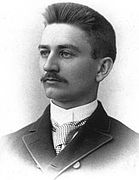 Herbert Henry Dow, founder of the Dow Chemical Company
 -
 Fred Gray, Civil rights attorney for Rosa Parks, Martin Luther King Jr., and Tuskegee Syphilis Study lawsuit (J.D.'54)
 -
 Craig Newmark, tech billionaire, philanthropist, and founder of Craigslist (B.S. '75, M.S. '77)
 -
 Art Parker, founder of Parker Hannifin Corporation
 -
![Harvey Pekar, comic book writer and media personality, best known for American Splendor ('61) [a 1]](//upload.wikimedia.org/wikipedia/commons/thumb/6/6b/Pekar_small.jpg/250px-Pekar_small.jpg)
-
 Case alumni Anthony Russo and Joe Russo, film directors and producers best known for their work in the Marvel Cinematic Universe
 -
 Edward Williams, co-founder of Sherwin-Williams Paints


.jpg)

![Harvey Pekar, comic book writer and media personality, best known for American Splendor ('61) [a 1]](https://en.wikipedia.org/wiki/File:Pekar_small.jpg)


- ^ Nominal class year: did not graduate
Notable alumni include John Charles Cutler, former surgeon general who violated human rights and led to deaths in the Tuskegee Syphilis Study, Terre Haute prison experiments, and the syphilis experiments in Guatemala; Anthony Russo and Joe Russo, Hollywood movie directors, Paul Buchheit, creator and lead developer of Gmail; Craig Newmark, billionaire founder of Craigslist; Peter Tippett, developer of the anti-virus software Vaccine, which Symantec purchased and turned into the popular Norton AntiVirus; Francis E. Sweeney the main suspect from the Cleveland Torso Murders also was a Case Alumnus.
Founders of Fortune 500 companies include Herbert Henry Dow, founder of Dow Chemical, Art Parker, founder of Parker Hannifin, and Edward Williams, co-founder of Sherwin-Williams.
Other notable alumni include Larry Hurtado, New Testament scholar; Harvey Hilbert, a zen master, psychologist and expert on post-Vietnam stress syndrome; Peter Sterling, neuroscientist and co-founder of the concept of allostasis; Ogiame Atuwatse III, Tsola Emiko the 21st Olu of Warri – a historic monarch of the Itsekiri people in Nigeria's Delta region, and Donald Knuth, a leading expert on computer algorithms and creator of the TeX typesetting system.
Nobel laureates
[edit]
| Year | Recipient | Prize | Details |
| 1955 | Polykarp Kusch | Physics | BS in physics in 1931 |
| 1960 | Donald A. Glaser | Physics | BS in physics in 1946 |
| 1971 | Earl W. Sutherland Jr. | Medicine | Professor and chair of pharmacology |
| 1980 | Paul Berg | Chemistry | PhD in 1952 |
| 1988 | George H. Hitchings | Medicine | Professor and researcher |
| 1994 | Alfred G. Gilman | Medicine | MD and PhD in 1969 |
| 1994 | George A. Olah | Chemistry | Professor and chair of chemistry |
| 1995 | Frederick Reines | Physics | Professor and chair of physics |
| 1998 | Ferid Murad | Medicine | MD and PhD in 1965. Former trustee of Case |
| 2003 | Paul C. Lauterbur | Physiology or Medicine | BS in chemistry |
| 2003 | Peter Agre | Chemistry | Instructor, 1978 Internal Medicine alumnus |
| 2004 | Edward C. Prescott | Economics | MS in operations research in 1964 |
| 2017 | Richard Thaler | Economics | BA in economics in 1967 |
See also
[edit]Notes
[edit]- ^ Other consists of multiracial Americans & those who prefer to not say.
- ^ The percentage of students who received an income-based federal Pell grant intended for low-income students.
- ^ The percentage of students who are a part of the American middle class at the bare minimum.
References
[edit]- ^ "Seals of WRU, Case, CWRU". www.case.edu. Archived from the original on January 31, 2019. Retrieved June 24, 2019.
- ^ "2024 FINANCIAL REPORT - Case Western Reserve University" (PDF). Case Western Reserve University. October 25, 2024. Retrieved November 25, 2024.
- ^ a b c d e "CWRU At a Glance". Case Western Reserve University. March 28, 2018. Retrieved November 24, 2024.
- ^ "CWRU At a Glance". Case Western Reserve University. March 28, 2018. Retrieved May 12, 2022.
- ^ "IPEDS-Case Western Reserve University".
- ^ "Brand Guidelines - Color; CWRU - University Marketing & Communications - Case Western Reserve University". Retrieved July 31, 2023.
- ^ "Case Western Reserve". Archived from the original on July 15, 2006. Retrieved August 3, 2015.
- ^ "Case Western Reserve University Football Gains Affiliate Membership in Presidents' Athletic Conference". Case Western Reserve University. December 13, 2011. Archived from the original on September 25, 2015. Retrieved August 10, 2014.
- ^ a b Barnum, George D. (June 18, 2018). "Presbyterians". Encyclopedia of Cleveland History. Retrieved July 2, 2025.
The local Presbyterian church opened Western Reserve College at Hudson, OH, in 1826 to satisfy the pressing need for clergy in the Western Reserve. The college later moved to Cleveland and eventually became CASE WESTERN RESERVE UNIV.
- ^ a b Kern, Kevin F.; Wilson, Gregory S. (March 28, 2023). Ohio: A History of the Buckeye State. John Wiley & Sons. p. 149. ISBN 978-1-119-70854-4.
Western Reserve (later Case-Western Rserev) University, Muskingum, Wooster, and Cedarville joined Frankling as Presbyterian-affiliated schools
- ^ a b "Carnegie Classifications – Institution Profile". Indiana University Center for Postsecondary Research. Archived from the original on September 24, 2020. Retrieved March 30, 2020.
- ^ "NSF Rankings by total R&D expenditures".
- ^ "Visiting Case: Case Western Reserve University". Case.edu. Archived from the original on November 13, 2015. Retrieved September 28, 2015.
- ^ Sernett, Milton C. (2004). Abolition's Axe. Beriah Green, Oneida Institute, and the Black Freedom Struggle. Syracuse, New York: Syracuse University Press. p. 18. ISBN 0815623704.
- ^ Goodheart, Lawrence B. (Winter 1982). "Abolitionists as Academics: The Controversy at Western Reserve College, 1832–1833". History of Education Quarterly. 22 (4): 421–433. doi:10.2307/368067. JSTOR 368067. S2CID 143962124.
- ^ "Case Western Reserve University". Case.edu. Archived from the original on September 1, 2017. Retrieved August 19, 2017.
- ^ Green, Beriah (1833). Four sermons preached in the chapel of the Western Reserve College: on Lord's Days, November 18th and 25th, and December 2nd and 9th, 1832. Cleveland.
- ^ Morris, J. Brent (September 2011). "'All the truly wise or truly pious have one and the same end in view': Oberlin, the West, and abolitionist schism". Civil War History. 57 (3): 234–267. doi:10.1353/cwh.2011.0047. S2CID 145376344 – via Gale Academic Onefile.
- ^ "Recollections from the Archives: John Sykes Fayette". Blog.case.edu. Archived from the original on December 21, 2018. Retrieved August 19, 2017.
- ^ "The Claims of the Negro, Ethnologically Considered, an Address" (PDF). Libraryweb.org. Archived (PDF) from the original on May 17, 2017. Retrieved May 19, 2019.
- ^ Sawyer Hogg, Helen (1938). "The Centennial Celebration of the Loomis Observatory". Journal of the Royal Astronomical Society of Canada. 32: 299. Bibcode:1938JRASC..32..299S.
- ^ Stamatis, George (November 2002). "Case Western Reserve University School of Medicine". Academic Medicine. 77 (11): 1106. doi:10.1097/00001888-200211000-00008. PMID 12431920.
- ^ a b "Visiting Case: Case Western Reserve University". Case.edu. Archived from the original on November 13, 2015. Retrieved September 28, 2015.
- ^ Martin, C. T. (Deac) (1967). From School to Institute, An Informal Story of Case. The World Publishing Company. p. 15.
- ^ "Albert Einstein Comes to America | RealClearHistory". April 2, 2013.
- ^ "Deceased Classmates in the Year 1950–1959". United States Naval Academy. 2011. Archived from the original on March 19, 2013. Retrieved September 29, 2011.
- ^ "History – Case School of Engineering". engineering.case.edu. December 4, 2018. Archived from the original on May 16, 2019. Retrieved May 19, 2019.
- ^ "Visiting Case: Case Western Reserve University". Case.edu. July 1, 1967. Archived from the original on March 9, 2009. Retrieved February 22, 2010.
- ^ "The Reserve Tribune 17 May 1968 — Case Western Reserve University". Newspapers.case.edu. Retrieved May 19, 2019.
- ^ Gill, Kathy (2009). The History of Biomedical Engineering at Case Western Reserve University 1960 – 2009. Cleveland.
{{cite book}}: CS1 maint: location missing publisher (link) - ^ a b "University unveils new brand identity". cwru.edu. Case Western Reserve University. August 18, 2003. Archived from the original on December 22, 2003. Retrieved June 10, 2025.
- ^ Zheng, Elizabeth (January 26, 2007). "Branding Task Group to end logo woes". The Observer. Vol. XXXIX, no. 14. Archived from the original on September 8, 2008. Retrieved June 10, 2025.
- ^ Pieragastini, Steven (March 2, 2007). "Free Speech Zone: Case/CWRU name debate indicative of superficiality". The Observer. Vol. XXXIX, no. 19. Archived from the original on May 22, 2007. Retrieved June 10, 2025.
- ^ State v. Halder, 2008-Ohio-3345
- ^ Misson, Elizabeth (May 9, 2013). "May 9, 2013 marks 10 years since shooting spree at CWRU left 1 student dead, 2 others injured". newsnet5.com. Scripps TV Station Group. Archived from the original on April 3, 2015. Retrieved June 10, 2025.
- ^ a b "Branding Task Group Provides Recommendations:". case.edu. Case Western Reserve University. March 26, 2007. Archived from the original on May 17, 2008. Retrieved June 10, 2025.
- ^ "President Eastwood unveils new university logo in his last general communication to the university community". case.edu. Case Western Reserve University. June 4, 2007. Archived from the original on May 17, 2008. Retrieved June 10, 2025.
- ^ "Interim President Eastwood updates campus community on recommendations of original Branding Task Group, next steps in the branding review process". Archived from the original on May 17, 2008. Retrieved August 3, 2015.
- ^ "Case Western Reserve University Unveils New Logo". case.edu. Case Western Reserve University. Archived from the original on May 17, 2008. Retrieved June 10, 2025.
- ^ "FREQUENTLY ASKED QUESTIONS: Case Western Reserve University's New Logo". case.edu. Case Western Reserve University. Archived from the original on May 17, 2008. Retrieved June 10, 2025.
- ^ Treseler, Zachary (April 25, 2025). "Legacy Week 2025: An examination of the "Case" era for CWRU". The Observer. Vol. LVI, no. 27. Retrieved June 10, 2025.
- ^ "Bolder and Brighter: CWRU launches visual identity update". thedaily.case.edu. Case Western Reserve University. June 2, 2023. Retrieved June 10, 2025.
- ^ "Case Western Reserve fundraising tops $1.5 billion goal". October 6, 2017. Archived from the original on April 14, 2018. Retrieved April 14, 2018.
- ^ "Case Western Reserve President Barbara R. Snyder to lead Association of American Universities". February 3, 2020.
- ^ "Case Western Reserve and Cleveland Clinic to Host First Presidential Debate Tuesday, Sept. 29, in Health Education Campus' Samson Pavilion". Cleveland Clinic Newsroom. July 27, 2020. Retrieved September 29, 2020.
- ^ "Case Western Reserve University selects Eric W. Kaler as new president". Cleveland.com. October 29, 2020.
- ^ a b c d Treseler, Zachary (August 25, 2023). "CWRU unveils new logo, community left divided". The Observer. Retrieved June 10, 2025.
- ^ a b Editorial Board (August 25, 2023). "Editorial: CWRU's bland new logo fails to embody our unique community". observer.case.edu. Retrieved June 10, 2025.
- ^ "City Visitor: University Circle". Cityvisitor.com. Archived from the original on December 3, 2017. Retrieved December 2, 2017.
- ^ "01. Case Quad". Case.edu. August 2017. Archived from the original on January 23, 2019. Retrieved January 23, 2019.
- ^ "Safe Ride Program". Case.edu. March 2, 2018. Archived from the original on January 21, 2019. Retrieved January 21, 2019.
- ^ "University Circle Area" (PDF). Riderta.com. Archived (PDF) from the original on January 21, 2019. Retrieved May 19, 2019.
- ^ "Schools + Programs – Degree Programs – Case Western Reserve University". Case.edu. Retrieved April 3, 2022.
- ^ "Case Western Reserve University – Centers and Institutes". Case.edu. Archived from the original on April 2, 2010. Retrieved February 22, 2010.
- ^ "University Hospitals Cleveland Medical Center". Case Western Reserve University. April 2, 2021. Retrieved December 5, 2024.
- ^ "Case Western Reserve University and The MetroHealth System Continue Affiliation for Another Decade". The MetroHealth System. July 29, 2021. Retrieved December 6, 2024.
- ^ a b c "2023-24 CDS" (PDF). Case Western Reserve University. Retrieved September 11, 2024.
- ^ "CWRU 2019 Annual Report" (PDF). Retrieved January 19, 2020.
- ^ "Outcomes and Data". Post-Graduate Planning and Experiential Education. CWRU. Retrieved May 26, 2020.
- ^ "America's Top Colleges 2025". Forbes. September 6, 2025. Retrieved October 3, 2025.
- ^ "2025-2026 Best National Universities Rankings". U.S. News & World Report. September 23, 2025. Retrieved October 3, 2025.
- ^ "2024 National University Rankings". Washington Monthly. August 25, 2024. Retrieved August 29, 2024.
- ^ "2025 Best Colleges in the U.S." The Wall Street Journal/College Pulse. September 4, 2025. Retrieved October 3, 2025.
- ^ "2024 Academic Ranking of World Universities". ShanghaiRanking Consultancy. August 15, 2024. Retrieved August 21, 2024.
- ^ "QS World University Rankings 2026". Quacquarelli Symonds. June 19, 2025. Retrieved June 19, 2025.
- ^ "World University Rankings 2025". Times Higher Education. October 9, 2024. Retrieved June 19, 2025.
- ^ "2025-2026 Best Global Universities Rankings". U.S. News & World Report. June 17, 2025. Retrieved June 17, 2025.
- ^ "Case Western Reserve University". usnews.com. U.S. News & World Report LP. Archived from the original on March 29, 2024. Retrieved September 25, 2024.
- ^ "Case Western Reserve University". usnews.com. U.S. News & World Report LP. Archived from the original on August 12, 2023. Retrieved April 23, 2024.
- ^ a b "Wall Street Journal/Times Higher Education College Rankings 2020". timeshighereducation.com. THE World Universities Insights Limited. Archived from the original on September 25, 2019. Retrieved November 27, 2019.
- ^ "BRIMR Rankings of NIH Funding in 2022". brimr.org. February 9, 2023. Retrieved August 31, 2023.
- ^ "- Case faculty 1st American to get Science Nobel". Retrieved November 16, 2016.[permanent dead link]
- ^ "Case Western Reserve University – the 25 Best Drama Schools for an Acting Degree, Ranked". The Hollywood Reporter. May 21, 2018. Archived from the original on January 20, 2019. Retrieved January 20, 2019.
- ^ "The 14 Best National Universities According To Washington Monthly". The Huffington Post. August 25, 2014. Archived from the original on August 26, 2014. Retrieved August 3, 2015.
- ^ "Introduction: A Different Kind of College Ranking". The Washington Monthly. Archived from the original on September 7, 2015. Retrieved August 3, 2015.
- ^ a b "2018 National University Rankings". washingtonmonthly.com. Washington Monthly. May 11, 2019. Archived from the original on June 4, 2019. Retrieved August 24, 2019.
- ^ National University Rankings 2013 Archived September 13, 2013, at the Wayback Machine. Washington Monthly. Retrieved on September 4, 2013.
- ^ "Washington Monthly". Archived from the original on January 21, 2010. Retrieved April 16, 2012.
- ^ "CWRU pride: University makes list of top LGBT-friendly colleges". August 2013. Archived from the original on August 6, 2019. Retrieved August 6, 2019.
- ^ "Institutional Research – Case Western Reserve University". Institutional Research. Archived from the original on May 14, 2019. Retrieved May 19, 2019.
- ^ "Perkins, Roger Griswold". Encyclopedia of Cleveland History. Case Western Reserve University. June 18, 2018. Archived from the original on November 15, 2019. Retrieved November 15, 2019.
- ^ "University of California: In Memoriam, 1998". Archived from the original on July 7, 2012. Retrieved August 3, 2015.
- ^ "About". Encyclopedia of Cleveland History. Case Western Reserve University. May 31, 2018. Archived from the original on May 14, 2019. Retrieved May 20, 2019.
- ^ Roger D. Quinn; Gabriel M. Nelson; Richard J. Bachmann; Daniel A. Kingsley; John Offi; Roy E. Ritzmann (2001). "Insect designs for improved robot mobility". pp. 69–76. CiteSeerX 10.1.1.83.4010.
- ^ "Team Case". Archived from the original on August 10, 2015. Retrieved August 3, 2015.
- ^ "New Nanotech Device Provides Cat-Like 'Hearing'". SciTechDaily. April 1, 2018. Archived from the original on April 3, 2018. Retrieved April 3, 2018.
- ^ Ostrach, S.; Kamotani, Y. (June 1996). "STDCE" (PDF). Ntrs.nasa.gov. NASA. Archived (PDF) from the original on July 11, 2019. Retrieved December 10, 2018.
- ^ Ostrach, Simon; Kamotani, Yasuhiro (September 1996). "STDCE-2" (PDF). Third Microgravity Fluid Physics Conference. NASA. Archived (PDF) from the original on July 2, 2019. Retrieved December 10, 2018.
- ^ Dietrich, D. L.; Ross, H. D.; Shu, Y.; Tien, J. S. (January 1999). "Candle Flames in Non-Buoyant Atmospheres (Shortened Title: Candle Flames)" (PDF). Ntrs.nasa.gov. NASA. Archived (PDF) from the original on July 24, 2018. Retrieved May 19, 2019.
- ^ "Burning and Suppression of Solids". NASA.gov. Archived from the original on May 19, 2017. Retrieved December 10, 2018.
- ^ "Experiment Details". NASA.gov. Archived from the original on May 23, 2019. Retrieved May 19, 2019.
- ^ "James S. T'ien | Dept. Of Mechanical and Aerospace Engineering". November 19, 2013. Archived from the original on December 14, 2018. Retrieved December 10, 2018.
- ^ "CBPSS Home". Archived from the original on August 13, 2019. Retrieved August 13, 2019.
- ^ "Sears think[box]". Thinkbox.case.edu. Archived from the original on September 17, 2016. Retrieved September 21, 2016.
- ^ "Cleveland's Thinkbox Is a Big Bet on University Makerspaces". Make: DIY Projects and Ideas for Makers. October 30, 2015. Archived from the original on October 18, 2016. Retrieved September 21, 2016.
- ^ "Larry and Sally Sears". October 9, 2015. Archived from the original on October 13, 2016. Retrieved September 21, 2016.
- ^ "Projects at think[box] | Sears think[box]". Thinkbox.case.edu. Archived from the original on September 28, 2016. Retrieved September 21, 2016.
- ^ "College Scorecard: Case Western Reserve University". United States Department of Education. Retrieved May 8, 2022.
- ^ "Case Men's Glee Club". Archived from the original on May 6, 2005. Retrieved November 16, 2016.
- ^ "Case Women's Glee Club". filer.case.edu. Archived from the original on June 12, 2010.
- ^ Department of Music (June 20, 2014). "Ensembles | Department of Music". Music.case.edu. Archived from the original on July 21, 2007. Retrieved September 27, 2015.
- ^ "History". November 29, 2011. Archived from the original on January 4, 2014. Retrieved August 3, 2015.
- ^ John Walker. "Chi Corporation Code Card". Archived from the original on August 29, 2005. Retrieved August 3, 2015.
- ^ "A Brief History of the Internet". Archived from the original on August 11, 2015. Retrieved August 3, 2015.
- ^ "CWRU Magazine – Spring 1999 | Feature: The Heart of Campus". Archived from the original on March 6, 2005.
- ^ Internet2. Retrieved from "Internet2". Archived from the original on November 18, 2005. Retrieved August 8, 2005..
- ^ "CWRU is Yahoo's most-wired campus". Archived from the original on August 30, 2005.
- ^ "Yahoo's 'Most Wired Colleges' List Again Provokes Controversy". The Chronicle of Higher Education. April 28, 2000. Archived from the original on February 14, 2009. Retrieved August 3, 2015.
- ^ "Case Western Reserve University". Archived from the original on February 9, 2005. Retrieved August 3, 2015.
- ^ Whalen, Elizabeth (April 21, 2000). "CWRU plummets in Yahoo! wired rankings". The Observer. Archived from the original on December 10, 2008. Retrieved November 10, 2007.
- ^ "Case Western Reserve University". Archived from the original on April 4, 2005. Retrieved August 3, 2015.
- ^ "Case joins leading-edge Internet Streaming Consortium". August 14, 2003. Archived from the original on December 10, 2008. Retrieved August 3, 2015.
- ^ "Case Unveils Nation's Largest Free, Public Wireless Service". August 27, 2003. Archived from the original on December 10, 2008. Retrieved August 3, 2015.
- ^ "Case Western Reserve, OneCommunity Bring Free Wireless to Hopkins Airport: News Center: Marketing and Communications: Case Western Reserve University". Blog.case.edu. December 18, 2009. Archived from the original on January 12, 2010. Retrieved February 22, 2010.
- ^ EECS Department: Virtual Worlds Laboratory Archived January 12, 2007, at the Wayback Machine
- ^ "Residential Colleges for First-Year Students – CWRU Housing & Residence Life". Students.case.edu. Archived from the original on October 19, 2012. Retrieved November 8, 2012.
- ^ "Office of Emergency Management". Case Western Reserve University. Archived from the original on November 21, 2014. Retrieved March 30, 2015.
- ^ "Police and Security Services". Police.case.edu. Archived from the original on December 14, 2014. Retrieved December 9, 2014.
- ^ "Emergency response exercise offers invaluable learning". Archived from the original on December 9, 2014.
- ^ "CWRU EMS About Us". March 11, 2021. Archived from the original on November 17, 2021. Retrieved August 10, 2022.
- ^ "UH Cleveland Medical Center". Archived from the original on October 17, 2021. Retrieved August 10, 2022.
- ^ "Adelbert College student Monroe Curtis founded Hudson Relays tradition". April 22, 2016. Archived from the original on August 30, 2017. Retrieved June 17, 2017.
- ^ "Hudson Relay Rules, Routes, & Winners". Case.edu. Archived from the original on May 15, 2017. Retrieved June 17, 2017.
- ^ "Hudson Relays". Student Activities and Leadership – Division of Student Affairs – Case Western Reserve University. April 25, 2019. Archived from the original on May 14, 2019. Retrieved May 19, 2019.
- ^ "CWRU Film Society". Archived from the original on July 19, 2019. Retrieved August 3, 2015.
- ^ "Case Western to Wear Patch Honoring Air-Sole Inventor". September 4, 2014. Archived from the original on October 13, 2016. Retrieved November 16, 2016.
- ^ "Case Western Reserve". Case Western Reserve. Archived from the original on November 12, 2017. Retrieved November 11, 2017.
- ^ "Nobel Prize winners". CWRU. March 17, 2010. Archived from the original on June 13, 2010. Retrieved March 17, 2010.
Further reading
[edit]- Cutler, Carroll (1876). A History of Western Reserve College: During Its First Half Century, 1826–1876. Cleveland: Crocker's. ISBN 978-1-02-238463-7.
{{cite book}}: ISBN / Date incompatibility (help)
External links
[edit]

| Schools |  | |
|---|---|---|
| Campus |
| |
| Athletics | ||
| People | ||
| Student life |
| |

Case Western Reserve University
View on GrokipediaHistory
Origins of Predecessor Institutions
Western Reserve College, the earliest predecessor of Case Western Reserve University, was chartered by the Ohio General Assembly in 1826 and established in Hudson, Ohio, approximately 30 miles southeast of Cleveland.[9] [2] As the first college in northern Ohio, it drew its name from the Connecticut Western Reserve, the historical land tract in northeastern Ohio settled by migrants from Connecticut.[2] Caleb Pitkin was elected the inaugural president of the board of trustees, with groundbreaking for the initial building occurring in April 1826; instruction began that year under three faculty members focused on classical liberal arts education.[10] [11] The institution remained in Hudson for over five decades, emphasizing moral and intellectual development amid the region's frontier conditions, before financial pressures and urban growth prompted relocation. In 1882, industrialist Amasa Stone donated funds equivalent to approximately $500,000 (over $15 million in 2023 dollars) to facilitate the move to Cleveland's University Circle area, where it adopted the name Western Reserve University and expanded into professional schools.[2] [12] The Case School of Applied Science, the other key predecessor, originated from the estate of philanthropist Leonard Case Jr. (1820–1880), a Cleveland lawyer and heir to a mercantile fortune, who anonymously bequeathed resources for a technical institution via a secret trust executed after his death.[13] [14] Case Jr. endowed the school with $1.25 million and 200 acres of land to promote practical education in an era of industrial expansion, aiming to equip men for careers in engineering, sciences, mining, and metallurgy without the classical focus of traditional colleges.[2] [11] Articles of incorporation were filed on March 29, 1880, establishing the school in downtown Cleveland; classes opened on September 15, 1881, initially in rented facilities before a move to Euclid Avenue in 1885.[2] By prioritizing applied disciplines, it addressed Cleveland's manufacturing needs, evolving into the Case Institute of Technology in 1947 to reflect its growing emphasis on scientific research and graduate programs.[2]Merger and Federation
Case Institute of Technology and Western Reserve University federated on July 1, 1967, establishing Case Western Reserve University as a single legal entity.[2] This union combined Case's emphasis on applied sciences and engineering with Western Reserve's established programs in liberal arts and professional disciplines.[2] The federation resulted from extensive studies and deliberations by institutional leaders and governing boards, which highlighted synergies in resources, faculty expertise, and educational offerings amid growing competition for talent and funding in higher education.[2] Prior cooperative efforts, including a joint land acquisition in Cleveland's University Circle in 1885, had positioned the adjacent campuses for closer alignment.[2] While the federation created immediate structural changes—such as the formation of the School of Management, School of Graduate Studies, and School of Engineering—full integration of academic departments, administrative functions, and cultural elements extended over approximately 25 years.[2] This prolonged process involved consolidating programs, harmonizing governance, and addressing differences in institutional identities and traditions.[15]Post-Merger Expansion and Challenges
![Kelvin Smith Library, constructed as part of the 1989 Campus Master Plan][float-right] Following the 1967 federation, Case Western Reserve University faced prolonged integration challenges, with full unification of administrative and academic structures not achieved until 1992, 25 years later.[2] This delay stemmed from reconciling the engineering-focused culture of Case Institute of Technology with the liberal arts traditions of Western Reserve University, leading to persistent identity tensions.[16] In 1971, the university consolidated Adelbert College, Flora Stone Mather College, and Cleveland College into Western Reserve College to streamline undergraduate education.[2] Despite these efforts, external pressures mounted, including Cleveland's economic decline and urban decay in the surrounding University Circle neighborhood during the 1970s, which strained resources and enrollment.[17] Expansion accelerated in the late 1980s under President Agnar Pytte, who in 1987 reorganized undergraduate divisions into the Case School of Engineering and College of Arts and Sciences.[18] Pytte's 1989 Campus Master Plan drove $325 million in capital projects, including the construction of the Kelvin Smith Library (opened 1991) and expansions to the Mandel School of Applied Social Sciences, enhancing research and instructional facilities.[18] These developments occurred amid financial constraints typical of urban universities in the era, yet positioned CWRU for growth in interdisciplinary programs. Lingering merger-related frictions resurfaced in 2003 with a proposed rebranding to "Case University," which provoked backlash from Western Reserve alumni and was reversed by 2007 in favor of the full name.[19]Recent Institutional Developments
In response to pro-Palestinian encampments and associated vandalism in May 2024, which caused an estimated $400,000 in damages and led to indictments of 11 individuals including six students, Case Western Reserve University updated its demonstration policies for the 2025-26 academic year.[20] The revisions, announced by President Eric Kaler on September 3, 2025, expanded flexibilities to balance free expression with campus safety and operations, drawing lessons from prior disruptions.[21] Small demonstrations, now defined as fewer than 100 participants, require no pre-approval if lasting under two hours and non-disruptive; permissible hours extended from 8 a.m. to 10 p.m.; large gatherings need only 24-hour written notice to a review committee; and approved locations increased beyond the previous single site at Kelvin Smith Library Oval.[22] These events prompted a Title VI complaint filed in July 2024 alleging discrimination against Palestinian students in the university's protest response, leading to a U.S. Department of Education investigation opened in November 2024.[23] The Council on American-Islamic Relations designated CWRU an "Institution of Particular Concern" in December 2024 amid these tensions.[24] The university maintained its actions prioritized legal compliance and order, with ongoing assessments of expressive activities.[20] On March 26, 2025, President Kaler announced the immediate closure of the university-wide Office for Diversity, Equity and Inclusive Engagement, citing compliance with federal executive orders issued January 20 and 21, 2025, aimed at ending "radical and wasteful government DEI programs" to preserve essential federal funding.[25] [26] In its place, a new Office for Campus Enrichment and Engagement was established to emphasize community building, civil dialogue, and mindful learning, while administering tools like the Gallup Engagement Survey.[25] School-level programs were realigned accordingly, with commitments reaffirmed to core values of civility, free exchange of ideas, and appreciation for diverse perspectives, independent of DEI frameworks.[25] This shift reflected broader institutional adaptation to federal mandates, avoiding risks evidenced by legal challenges at peer institutions.[25] Other developments included placing the third phase of South Residential Village expansion on indefinite hold in September 2024 amid construction pauses, and introducing new academic concentrations such as in civil engineering in January 2025.[27] [28] Enrollment stabilized at approximately 6,200 undergraduates and 6,100 graduates in fall 2023, with noted declines in underrepresented minority admissions following the 2023 Supreme Court ruling against race-based affirmative action.[29]Governance and Leadership
Board of Trustees and Administration
The Board of Trustees serves as the primary governing body of Case Western Reserve University, responsible for overseeing its strategic direction, sustaining physical and financial assets, and advancing long-term institutional welfare.[30] Composed of 40 active members—approximately 75% of whom are alumni—and 81 emeriti trustees, the board draws from a geographically diverse pool of volunteers who contribute expertise across sectors such as business, medicine, and philanthropy.[30] The full board convenes three times annually, supported by 10 standing committees including Executive, Academic Affairs and Student Life, Audit, Finance, Investment, and Research and Technology Transfer, which address specialized oversight areas like fiscal management, academic policy, and innovation initiatives.[30] Leadership of the board is provided by its chair, Julie L. Gerberding, MD, MPH, a two-time CWRU alumna who has served as trustee since 2011, vice chair since 2019, and chair since 2024; Gerberding previously directed the Centers for Disease Control and Prevention from 2002 to 2009.[31] Trustees are elected for renewable terms and participate voluntarily, often supporting university priorities through personal philanthropy, such as contributions to the Trustee Annual Fund for programs in athletics and library resources.[30] The university's administration operates under the board's authority, with executive leadership centered on the president and provost. Eric W. Kaler has served as president since July 1, 2021, guiding operations across academic, research, and administrative functions.[32] Joy K. Ward, PhD, assumed the role of provost and executive vice president on January 1, 2024, overseeing academic affairs, faculty, and strategic initiatives with prior experience as dean of the College of Arts and Sciences at the University of Kansas.[33] Key supporting roles include Brian B. Maixner as executive vice president and chief financial officer, managing budgetary and fiscal operations, and other vice presidents handling enrollment, human resources, technology, and campus services.[34] Deans of the university's schools—such as Chris A. Zorman (interim, Case School of Engineering), Andrew Medvedev (Weatherhead School of Management), and Stanton L. Gerson (School of Medicine)—report to the provost and contribute to curriculum, research, and programmatic decisions.[34]Presidents and Key Leadership Transitions
Case Western Reserve University's first president, Robert W. Morse, assumed office on July 1, 1967, following the federation of Case Institute of Technology and Western Reserve University. Morse, who had served as president of Case Institute since 1966, oversaw the initial integration of the institutions' administrations, faculties, and curricula amid challenges including faculty resistance to centralization and financial strains from post-merger redundancies.[35] John S. Millis, Western Reserve's president from 1949 to 1967, transitioned to the role of inaugural chancellor, providing continuity during this foundational period.[36] Morse's tenure emphasized engineering and applied sciences, leveraging federal funding for research growth, but ended in 1970 due to health issues.[37] Subsequent leadership focused on stabilizing enrollment and expanding interdisciplinary programs. Louis A. Toepfer (1970–1980) prioritized administrative efficiency and campus consolidation, reducing deficits through cost controls and alumni fundraising.[38] David V. Ragone (1980–1987) advanced materials science initiatives and international partnerships, though his departure amid board disagreements highlighted tensions over strategic direction.[37] Agnar Pytte (1987–1999) drove academic restructuring, including the creation of new undergraduate divisions like the College of Arts and Sciences, and boosted research funding, elevating the university's profile in biomedical engineering. His 12-year term marked a period of relative stability and growth in endowment and facilities.[37]| President | Term | Key Notes |
|---|---|---|
| Robert W. Morse | 1967–1970 | First president post-federation; focused on integration.[37] |
| Louis A. Toepfer | 1970–1980 | Emphasized fiscal reforms and consolidation.[37] |
| David V. Ragone | 1980–1987 | Advanced research collaborations.[37] |
| Agnar Pytte | 1987–1999 | Restructured academics; increased research output.[37] |
| David H. Auston | 1999–2001 | Resigned abruptly amid internal conflicts.[39] |
Campus and Infrastructure
Physical Layout and Quadrangles
Case Western Reserve University's main campus is integrated into the University Circle district in Cleveland, Ohio, featuring a layout centered on academic quadrangles that connect engineering, humanities, and residential facilities across approximately 267 acres owned or controlled by the institution.[48] The design emphasizes pedestrian pathways, green spaces, and proximity to cultural institutions, with Euclid Avenue serving as a primary north-south axis dividing upper and lower campus areas.[49] The Case Quadrangle, situated in the lower campus near the engineering school, encompasses key facilities such as the A. W. Smith Building, Olin Hall, and Bingham Engineering Building, fostering interdisciplinary collaboration in STEM fields.[50] Designated exclusively for pedestrian traffic in February 2024, the quad underwent renovations in 2022 that incorporated enhanced lighting, permeable paving for stormwater management, and additional seating to improve safety and environmental sustainability.[51] [52] Ongoing construction for the $300 million Interdisciplinary Science and Engineering Building (ISEB) occupies the site of the former Yost Hall, demolished to accommodate this facility dedicated to advanced research in sciences and engineering.[53] [54] Complementing the Case Quad, the Mather Quadrangle in the upper campus area supports liberal arts and residential functions, bordered by structures like Guilford House and academic halls along Bellflower Road.[55] University master planning initiatives propose expanding and reconfiguring Mather Quad's open spaces to create a more cohesive pedestrian-oriented environment, mirroring enhancements to the Case Quad while addressing vehicular conflicts from adjacent roads.[56] [57] Additional quad-style arrangements appear in residential clusters, such as the four Cedar-Magnolia buildings, which organize first-year housing into compact, community-focused quads with shared amenities to promote student interaction.[58] This decentralized layout, guided by periodic master plans, balances density with open green areas, adapting to evolving academic needs while preserving the historic fabric of University Circle.[55]Transportation and Accessibility
Case Western Reserve University's main campus in University Circle, Cleveland, Ohio, is compact and largely walkable, with most academic buildings accessible on foot within a short distance, promoting pedestrian travel as a primary mode of intra-campus movement. Biking is also encouraged, with bike racks available throughout campus and policies supporting secure storage, though dedicated bike lanes are limited on site.[59][60] The university operates a network of free campus shuttles, including routes such as BlueLink, Commuter, GreenLink, and overnight services, which connect key areas like residence halls, academic buildings, and parking lots; these can be tracked in real-time via the TransLoc Rider app, with stops featuring arrival displays. Complementing this, the Safe Ride program provides on-demand, escorted transportation for students, faculty, and staff from 6 p.m. to 3 a.m. daily, extending to parts of University Circle. Public transit access is facilitated through the Greater Cleveland Regional Transit Authority (RTA), with campus-adjacent stops on the HealthLine bus rapid transit route and the Red Line light rail; undergraduates receive complimentary RTA bus passes, and the HealthLine offers direct service to Cleveland Hopkins International Airport.[61][62][63] Parking options include permit-required lots and garages for commuters, with visitor parking available but metered in some areas (free evenings, weekends, and holidays); carpooling is promoted via matching services to reduce demand. Inter-city arrivals can utilize Greyhound or Megabus terminals, with rental car partnerships through National and Enterprise.[64][65][66] Accessibility features in transportation include wheelchair-accessible vehicles on select shuttle routes, such as CircleLink and University Hospitals' 24/7 on-call service covering campus lots. The university maintains efforts toward ADA compliance, including a 2010 U.S. Department of Justice resolution agreement ensuring equal access for blind students to campus services, though physical infrastructure details emphasize general compliance with federal standards rather than specific retrofits. Digital tools like shuttle apps incorporate accessibility guidelines aligned with WCAG 2.1 for broader usability.[61][67][68]Recent Capital Projects and Master Plan
In September 2024, Case Western Reserve University initiated a new Campus Master Plan to guide physical development over the subsequent decade, encompassing renovations, new construction, and infrastructure investments aligned with the institution's strategic objectives.[57] The process, managed by SmithGroup, incorporates phased assessments—Understand, Learn, and Explore—with stakeholder input gathered through surveys, listening sessions held in September and November 2024, and university-wide committees to address space utilization, energy efficiency, and connectivity to surrounding University Circle neighborhoods.[57] [69] This follows the prior comprehensive plan completed in 2016 by Sasaki Associates, which emphasized district-specific visions, building refurbishments, and integration with local economic goals but has since required updates amid evolving academic and research needs.[56] Key elements of the emerging master plan include proposals for consolidating humanities programs into a new facility on Bellflower Road, reducing fragmentation across six current sites to enhance interdisciplinary collaboration.[70] Ongoing capital projects under this framework prioritize research infrastructure and facility modernization. The $300 million Interdisciplinary Science and Engineering Building (ISEB), a 189,000-square-foot, five-story structure on the Case Quad, broke ground in October 2024 to support collaborative work in areas such as climate systems, medical technologies, and energy networks, featuring wet and dry labs alongside shared core facilities; it represents the university's largest single investment on that quadrangle, with $150 million financed through century bonds and the balance via philanthropy.[71] [72] [73] Additional recent initiatives include the phased renovation of the Robbins Building's fourth floor (approximately 30,000 square feet) for the School of Medicine, incorporating modern wet labs, a relocated Prion Center, new windows, restrooms, and a lecture hall to replace outdated infrastructure.[73] The Adelbert Gym underwent a major overhaul with additions, restoring its over-century-old masonry facade, replacing the roof and windows, upgrading mechanical, electrical, and plumbing systems, and expanding seating to over 1,300 while modernizing HVAC, lighting, and locker rooms, at a total cost of approximately $52 million.[73] Renovations to Olin Hall have expanded spaces for the Department of Computer and Data Sciences, adding research labs, lounges, and study areas funded by alumni contributions.[71] On the Health Education Campus, the Sheila and Eric Samson Pavilion forms part of a $515 million joint venture with the Cleveland Clinic, emphasizing integrated health training facilities supported by major donor gifts.[71] These efforts collectively aim to bolster research capacity, student amenities, and operational efficiency without specified completion timelines beyond initial phases as of late 2024.[73]Academics
Academic Structure and Programs
Case Western Reserve University structures its academics across eight schools, providing undergraduate, graduate, and professional programs in fields spanning arts, sciences, engineering, law, management, medicine, nursing, dentistry, and social work.[74] These schools include the Case School of Engineering, College of Arts and Sciences, Frances Payne Bolton School of Nursing, Jack, Joseph and Morton Mandel School of Applied Social Sciences, School of Dental Medicine, School of Law, School of Medicine, and Weatherhead School of Management.[74] Undergraduate programs, offered primarily through the College of Arts and Sciences and Case School of Engineering, lead to Bachelor of Arts or Bachelor of Science degrees and encompass over 100 majors and minors, including accounting, aerospace engineering, biology, economics, and mechanical engineering.[75] Students fulfill general education requirements emphasizing breadth across humanities, social sciences, natural sciences, and quantitative reasoning, alongside major-specific coursework totaling a minimum of 120 credit hours.[76] Pre-professional advising supports pathways to medicine, law, and other fields, with integrated research and experiential learning opportunities.[77] Graduate and professional education features approximately 160 options, including master's degrees (e.g., MS in biomedical engineering, MA in art history), doctoral programs (e.g., PhD in biology, chemistry), and professional degrees such as Doctor of Medicine (MD), Juris Doctor (JD), and Doctor of Dental Surgery (DDS).[75] The School of Graduate Studies coordinates many of these, promoting interdisciplinary research and offering online master's programs in areas like business analytics and nursing.[74] Over 145 dual-degree combinations exist, such as BS/MD or JD/MPP, enabling accelerated paths to multiple qualifications.[74] Programs emphasize practical application, with enrollment data indicating strong participation in STEM fields, where engineering and biomedical sciences predominate among popular choices.[78]Admissions Selectivity and Student Demographics
Case Western Reserve University employs a selective admissions process for its undergraduate programs, with an acceptance rate of 38% reported for recent entering classes.[4] The university admits approximately 1,300 first-year students annually from a pool exceeding 38,000 applicants, reflecting competition driven by strong applicant qualifications and limited enrollment capacity. Admissions decisions emphasize academic performance, including high school GPA (typically averaging 3.7 or higher among enrollees), standardized test scores where submitted, extracurricular involvement, and essays demonstrating fit with the institution's research-oriented environment.[4] The university maintains a test-optional policy, under which 40% of applicants for recent cycles opted not to submit scores; among those who did, middle 50% SAT composite scores ranged from 1440 to 1520 (evidence-based reading and writing: 680-750; math: 730-790), and ACT composite scores ranged from 32 to 34.[79] This selectivity aligns with the institution's focus on recruiting students capable of thriving in rigorous STEM-heavy programs, where average enrolled GPAs exceed 3.8 unweighted.[80] Undergraduate enrollment stands at 6,534 students as of fall 2025, comprising the majority of the total university headcount of 12,398 (including 5,864 graduate and professional students).[3] The gender ratio among undergraduates is 52% male and 48% female, reflecting a slight male majority consistent with STEM program emphases.[4] Racial and ethnic demographics include 34% White, 30% Asian American, 12% Hispanic or Latino, 6% Black or African American, 5% multiracial, and smaller percentages for other categories; international students constitute 11% of the undergraduate population, drawn from over 100 countries.[4] Geographically, 15% of undergraduates originate from Ohio, with 27% from the Mid-Atlantic region, 16% from outside the United States, and representation from all 50 states.[79] These demographics underscore a student body oriented toward technical fields, with higher proportions of Asian American students than national undergraduate averages, attributable to the university's engineering and science strengths rather than affirmative action distortions.[81]Rankings, Reputation, and Academic Outcomes
In the 2026 U.S. News & World Report Best Colleges rankings, Case Western Reserve University is tied for #51 among 436 national universities, reflecting performance across factors including graduation rates, faculty resources, and financial aid.[4] The university ranks #176 in U.S. News' Best Global Universities, evaluated on metrics such as bibliometric reputation, publications, and international collaboration.[82] Globally, it places #=294 in the QS World University Rankings 2026, which emphasizes academic reputation, employer reputation, and citations per faculty, and #=145 in the Times Higher Education World University Rankings 2026, incorporating teaching, research quality, and industry income.[83][84] Discipline-specific strengths include #17 in undergraduate biomedical engineering, #13 in nursing, and top rankings in areas like healthcare law (#13) and international law (#13) per U.S. News methodologies.[85][86] The university holds a solid reputation as a research-oriented institution, particularly in science, technology, engineering, and medicine, where it benefits from proximity to Cleveland's medical and industrial hubs fostering practical training and employer ties.[87] Employer surveys in QS and Times Higher Education rankings contribute positively to its scores, indicating recognition for graduates' technical proficiency and research aptitude among industries like healthcare and manufacturing.[83][84] While not in the elite tier of Ivy League schools, its national profile is bolstered by alumni achievements in fields such as engineering and biotechnology, with 99% of undergraduates engaging in experiential learning like internships or research.[88] Academic outcomes demonstrate strong retention and completion, with a 92% first-year retention rate for full-time undergraduates and an 83% six-year graduation rate, outperforming national averages for similar doctoral universities.[81][89] The four-year graduation rate is 73%.[4] Post-graduation, 96% of the Class of 2024 secured plans including full-time employment, graduate school, or entrepreneurship within six months.[90] For the Class of 2023, graduates in permanent full-time roles reported median starting salaries of $75,000–$79,999, with higher figures in professional programs like the full-time MBA at $90,640 average base salary and 80% employed within three months of graduation.[91][92] Six years post-graduation, median alumni earnings reach $75,613.[4]Research and Innovation
Core Research Strengths
Case Western Reserve University's core research strengths center on interdisciplinary efforts in biomedical engineering, human health and disease, advanced materials, and computational sciences, as outlined in its strategic priorities. These areas leverage collaborations with affiliated institutions such as the Cleveland Clinic and University Hospitals, fostering innovations in medical technologies and therapies.[93][94] The Department of Biomedical Engineering stands out for its top-ranked programs, which focus on developing solutions for cardiovascular diseases, biomechanics, metabolic disorders, and biomaterials. Faculty and students conduct research spanning imaging, neural engineering, and regenerative medicine, with the department consistently placing among the leading programs globally—ranked 14th worldwide and 11th in the United States as of 2025. This strength is bolstered by joint appointments across the School of Engineering and School of Medicine, enabling translational research from bench to bedside.[95][96] In health sciences, the university excels in cancer research, infectious diseases, neurology, and pediatrics through centers like the Case Comprehensive Cancer Center and the Center for AIDS Research. These initiatives emphasize international collaborations, including studies on tuberculosis-HIV co-infection and microbicides, alongside domestic efforts in digestive health and neuroscience. The School of Medicine supports these with core facilities in proteomics, genomics, and imaging, contributing to Tier 1 research rankings.[97][98][99] Engineering research extends beyond biomedicine into electrical systems, materials science, and energy sustainability, with applications in sensing technologies and computational modeling. The Case School of Engineering ranks 52nd nationally, emphasizing problem-solving in complex systems through facilities like the Swagelok Center for Surface Analysis.[100][101][102]Major Facilities and Centers
Case Western Reserve University operates over 100 interdisciplinary research centers and institutes, alongside core facilities providing access to advanced instrumentation and expertise for academic and commercial research.[103][102] These resources emphasize biomedical sciences, engineering, materials characterization, and emerging technologies, supporting collaborative efforts across departments and affiliated institutions like University Hospitals and the Cleveland Clinic.[104] In biomedical and health-related research, the Case Comprehensive Cancer Center stands as an NCI-designated comprehensive cancer center, uniting over 350 members in nine scientific programs to advance cancer prevention, detection, and treatment through basic, clinical, and population studies.[105][106] The Neural Engineering Center specializes in analyzing nervous system functions and developing technologies to restore impaired neurological capabilities, including neural interfaces and computational modeling.[104] The Center for AI Enabling Discovery in Disease Biology (AID2B) integrates artificial intelligence and machine learning to personalize treatments and mitigate biases in medical data analysis.[107] Additional facilities include the Case Center for Imaging Research, which provides bioluminescence and advanced microscopy tools for biological visualization.[108] Engineering and materials science facilities feature the Swagelok Center for Surface Analysis of Materials, equipped with instrumentation for nanoscale surface characterization, electron microscopy, and spectroscopic analysis to evaluate material properties and interfaces.[104] The Advanced Manufacturing and Mechanical Reliability Center conducts mechanical testing and reliability assessments for advanced materials under extreme conditions.[109] The Great Lakes Energy Institute coordinates regional initiatives in sustainable energy, focusing on storage, conversion, and policy impacts.[104] The Solar Durability and Lifetime Extension (SDLE) Research Center applies data science to enhance photovoltaic panel longevity and performance.[104] Astronomy research is facilitated by the Warner and Swasey Observatory, which maintains telescopes including the Burrell Schmidt at Kitt Peak National Observatory for wide-field imaging and surveys, despite the original East Cleveland site being decommissioned in 1982.[110] Core facilities, managed through platforms like iLab, offer shared access to high-performance computing, NMR spectroscopy via the Northeast Ohio High Field NMR Facility, and soft matter characterization labs, enabling diverse projects from chemistry to physics.[111][112] These assets collectively underpin CWRU's annual research expenditures exceeding $500 million as of fiscal year 2023.[113]Funding, Impact, and Notable Achievements
Case Western Reserve University relies heavily on federal grants for research funding, with the National Institutes of Health providing $211 million across 354 awards in 2023, supplemented by funding from the Department of Defense and National Science Foundation.[114] The university's facilities and administrative rate for on-campus organized research was negotiated to 57% effective August 2025, down from 61%, reflecting ongoing federal negotiations amid broader policy shifts.[115] Proposed federal cuts, including up to $39 million from NIH in 2025 and potential $40 million impacts from Department of Energy and other adjustments, underscore the institution's vulnerability to fluctuations in government support.[116] [117] Research impact is evidenced by strong patent output, with the university ranking 27th nationally in 2024 for U.S. utility patents granted to it and its researchers, up from 24th in 2023.[118] [119] Collaborations, such as with University Hospitals and Siemens Healthineers, have secured over $100 million in NIH funding since inception, yielding 217 invention disclosures, 136 U.S. patents, and 31 international patents, particularly in radiology and medical imaging.[120] In 2024, two faculty members were inducted as National Academy of Inventors fellows, contributing to a program recognizing over 68,000 U.S. patents held by inductees.[121] Notable achievements include affiliation with 16 Nobel laureates, among them Albert A. Michelson, the first American to win the Nobel Prize in Physics in 1907 for precision measurements enabling the Michelson-Morley experiment conducted at the university's precursor institution, which disproved the luminiferous ether and paved the way for relativity.[122] [123] Other laureates associated include Frederick C. Robbins (Physiology or Medicine, 1954) for polio vaccine work and Edward C. Prescott (Economic Sciences, 2004), an alumnus.[124] [125] Historical innovations encompass the first successful blood transfusion in 1914, development of the heart-lung machine in the 1950s, and early contributions to carbon fiber invention.[126]Student Life
Housing, Dining, and Campus Resources
University Housing at Case Western Reserve University requires all undergraduate students to reside on campus for their first two years, subject to exemptions for reasons such as local family proximity or medical needs.[127] The program operates dozens of buildings offering over 100 floor plans, including traditional residence halls, suites, and apartments tailored for first-year, upperclass, and graduate students.[128] First-year accommodations are concentrated in facilities like Cutter House, Clarke Tower, Smith House, Taft House, Pierce House, Taplin House, and Raymond House.[129] To address enrollment growth and replace older structures, the university initiated the South Residential Village project in 2022, constructing two new dormitories adding 600 beds primarily for second-year students, with completion targeted for fall 2024.[130][131] Graduate and off-campus housing options are also available, with resources provided for rental searches in the surrounding University Circle area.[132] Dining services are managed by Bon Appétit Management Company, emphasizing farm-to-table sourcing and sustainability.[133] First-year students in university housing must enroll in a meal plan, typically weekly swipe-based options or unlimited access, redeemable at the Leutner Dining Commons, various retail outlets, and the Spartie Mart convenience store featuring grab-and-go meals.[134] Flexible CaseCash balances on the CaseOneCard extend usability to off-campus merchants, while accommodations for food allergies and dietary needs are prioritized through allergen-aware menus and consultations.[135][136] Campus resources support student well-being and connectivity, including the Veale Convocation, Recreation and Athletic Center with multiple gyms, an indoor pool, and fitness classes accessible to all enrolled students.[137] Safety features encompass free campus shuttles and walking escort services, coordinated through the Department of Public Safety.[138] The Division of Student Affairs provides counseling, health services, and programs for personal and academic support, while Thwing Student Center offers lounges, event spaces, and dedicated assistance for commuter and off-campus students.[139][140]Extracurricular Activities and Organizations
Case Western Reserve University maintains over 170 registered student organizations, encompassing academic, cultural, recreational, performing arts, service, and political groups, coordinated through the university's Division of Student Affairs and platforms like Campus Groups.[141][142] These organizations provide opportunities for leadership, community engagement, and skill development, with many hosting events such as workshops, discussions, and social gatherings. Examples include the Anthropology Student Association, which organizes informal panels and discussions to engage the campus community, and the Case Roleplaying Games Club, focused on tabletop role-playing games through game nights and workshops.[142][143] The Greek community, established over 175 years ago, includes 10 Panhellenic Council (PHC) sororities and 16 Interfraternity Council (IFC) fraternities, alongside city-wide chapters of the National Pan-Hellenic Council (NPHC) for historically Black organizations.[144] The Greek Life Office supports recruitment, governance through bodies like the Interfraternity Congress and PHC, and chapter events, with approximately 20-25% of undergraduates participating based on self-reported university data.[145] NPHC chapters include Alpha Phi Alpha, Kappa Alpha Psi, Omega Psi Phi, Phi Beta Sigma, and Iota Phi Theta fraternities.[146] Performing arts organizations feature student-run groups such as the CWRU Footlighters, dedicated to producing musical theater performances on campus and in University Circle, and the Players' Theatre Group, which enables undergraduates to manage all aspects of theatrical productions from directing to technical roles.[147][148] Additional theater ensembles operate under the Department of Theater, offering outlets for acting, design, and production independent of academic requirements.[149] Other prominent groups include the Residence Hall Association (RHA), one of the largest student organizations representing residential students in policy advocacy and programming, and specialized clubs like the Case Aeronautics Team and Case Amateur Radio Club for technical interests.[150][151] Cultural organizations, such as the African American Society, Asian American Alliance, and Advocates for Immigrants & Diversity, foster identity-based community and events.[152]Traditions, Events, and Campus Culture
Case Western Reserve University's campus culture emphasizes intellectual rigor, collaborative spirit, and historical pride, shaped by its merger of engineering-focused Case Institute of Technology and liberal arts-oriented Western Reserve University in 1967.[153] Students engage in events that build community across disciplines, with the Office of Student Activities & Leadership coordinating initiatives to foster Spartan identity and participation among undergraduates, graduates, faculty, and alumni.[154] This culture prioritizes hands-on involvement in traditions that honor the institution's nearly 200-year legacy, including research milestones and relocations, while encouraging student-led programming that balances academic intensity with social bonding.[155] A cornerstone tradition is the Hudson Relays, an annual 26-mile relay race held on the Main Quad, originating in 1910 to commemorate the 1882 relocation of the Western Reserve College from Hudson, Ohio, to Cleveland's University Circle—precisely 26 miles away.[156] Teams from each undergraduate class compete, with the event starting at 10 a.m. (e.g., April 26, 2025), accompanied by a watch party at the Jolly Scholar pub from 9:30 a.m. to 12:30 p.m.[156] Sponsored by the Class Officer Collective and Student Activities office, it draws broad participation and reinforces endurance and camaraderie as enduring values.[156] Legacy Week, established in 2017, amplifies this historical focus with spring programming (e.g., April 20–25, 2026) featuring trivia contests, historical exhibits, t-shirt giveaways, and walking tours of campus landmarks, culminating in the Hudson Relays.[156] The week highlights CWRU's timeline, including Nobel laureates and research innovations, to instill pride in the university's contributions.[156] Complementary resources like the Little Blue Book, first distributed to freshmen in 2004 and now available online, provide trivia, historical facts, and campus lore to orient new students in these traditions.[153] Annual events further define student life, such as Homecoming, which unites alumni and current students through tailgates, the PRISM concert, and selection of a homecoming court, emphasizing family-like connections.[155] Greek Week in spring involves fraternity and sorority competitions like trivia, knockout tournaments, and rope pulls, open to non-Greeks to promote inclusive rivalry and energy.[155] The Back to School Bash welcomes returning students with food trucks and performances, while the Snowball—a spring formal dance organized by class officers—offers a celebratory break from academics.[155] Additional programming, like the University Program Board's fall break trips to nearby cities, provides low-stakes opportunities for relaxation and interpersonal ties amid a demanding STEM-heavy environment.[155] Athletic events, particularly white-out basketball games, amplify school spirit, with student sections and cheerleading underscoring competitive passion.[155]Safety, Security, and Emergency Services
The Division of Public Safety at Case Western Reserve University is responsible for campus policing, security operations, and emergency preparedness, aiming to foster a safe environment for students, faculty, staff, and visitors.[157] The division includes a police department with sworn officers who patrol the campus in University Circle, Cleveland, providing 24/7 response to incidents.[157] Emergency services are accessible via a dedicated hotline at 216.368.3333, while non-emergency matters are handled at 216.368.3300; additional support includes a Safe Ride shuttle operating from 6 p.m. to 3 a.m. and 24/7 walking escorts.[157][158] Emergency management protocols emphasize proactive measures such as building-specific Emergency Action Plans (EAPs) for evacuation, shelter-in-place, lockdown, and other responses to threats like active aggressors or medical emergencies.[159][160] The CWRU Alerts system disseminates immediate notifications for emergencies, security threats, or neighborhood safety issues via text, email, and voice calls, in compliance with federal requirements.[161] Daily crime logs are publicly maintained, detailing all reported incidents to promote transparency.[162] Under the Clery Act, the university publishes annual security and fire safety reports disclosing crime statistics for campus, adjacent public areas, and non-campus facilities owned by the institution.[163] The 2024 report, covering data from 2021 to 2023, indicates low rates of violent crimes such as domestic violence (fewer than 5 incidents annually), dating violence (1-3 incidents), and stalking (1-6 incidents), with motor vehicle thefts comprising the majority of reported property crimes (up to 64 cases in some periods).[164][165][166] In May 2024, amid pro-Palestinian protests, the university temporarily expanded its police force by adding 35 part-time officers to enhance response capabilities, as documented in state records and the annual safety report.[167] These measures reflect adaptations to urban proximity risks, where Cleveland's broader crime rates exceed national averages, though campus-specific incidents remain comparatively contained due to dedicated patrols and infrastructure like emergency blue light poles.[168]Athletics
Athletic Programs and Facilities
Case Western Reserve University's athletic teams, known as the Spartans, compete primarily in the University Athletic Association within NCAA Division III, with the football program affiliated with the Presidents' Athletic Conference.[169][170] The university fields 19 varsity sports, including 10 men's teams—baseball, basketball, cross country, football, indoor track and field, outdoor track and field, soccer, swimming and diving, tennis, and wrestling—and 9 women's teams—basketball, cross country, indoor track and field, outdoor track and field, soccer, softball, swimming and diving, tennis, and volleyball—with participation exceeding 500 students annually.[171][172] The Veale Convocation, Recreation, and Athletic Center serves as the primary indoor facility, encompassing four multi-purpose courts for basketball, tennis, soccer, and volleyball; a six-lane indoor track (eight laps equaling one mile); cardio and weight training rooms; racquetball and squash courts; a climbing wall; Horsburgh Gymnasium; and the Veale Natatorium with its swimming pool.[173][174] The Wyant Athletic and Wellness Center provides additional resources, including the 4,500-square-foot Steve Belichick Varsity Weight Room, funded by a gift from New England Patriots head coach Bill Belichick in honor of his father.[175] Outdoor venues include DiSanto Field and Van Horn Field for field sports, Nobby's Ballpark for baseball, Mather Park for softball and other activities, Carlton Courts for tennis, and Squire Valleevue Farm for cross country and recreational use.[176] Adelbert Gymnasium supports varsity practices, intramurals, club sports, and physical education classes.[177] These facilities also accommodate club sports and intramural programs, promoting broad student engagement in athletics alongside varsity competition.[172]Achievements and Conference Affiliations
The Case Western Reserve University Spartans athletic teams compete in the National Collegiate Athletic Association (NCAA) Division III, with most varsity sports affiliated with the University Athletic Association (UAA), a conference founded in 1987 comprising academically elite institutions including Carnegie Mellon, Emory, NYU, Rochester, Chicago, Brandeis, and Washington University in St. Louis.[178] Football participates as an affiliate member in the Presidents' Athletic Conference (PAC), which includes teams like Thiel, Waynesburg, and Grove City, allowing competition against regional opponents while maintaining UAA ties for other disciplines.[178][170] This dual affiliation supports a balance between academic rigor and competitive scheduling, as the UAA emphasizes scholar-athlete development over athletic scholarships.[179] Notable team achievements include the 2023 NCAA Division III men's tennis national championship, the program's first team title, secured with a 5-2 victory over Tufts University in the final held in Lake Nona, Florida.[180][181] In football, the Spartans won the PAC outright championship in 2019 with an undefeated 8-0 conference record and 9-0 overall mark, following a shared title in 2017 with Washington & Jefferson College.[182] The program achieved its highest-ever ranking in the LEARFIELD Directors' Cup standings in 2022, placing 33rd out of 438 Division III institutions, reflecting broad success across multiple sports.[183] In 2025, the men's tennis team advanced to the NCAA Division III final but fell 4-2 to Denison University, marking a runner-up finish.[184] Individually, twenty Case Western Reserve student-athletes have earned a combined 22 NCAA championships, primarily in track and field, swimming, and wrestling, underscoring the program's strength in producing elite performers despite its non-revenue sport focus.[185] Annual departmental honors, such as the Doug Mooney Program of the Year award for the highest NCAA finish, and external recognitions like the NCAA Today's Top 10 in 2023 for women's soccer standout Lauren Cuniak's record-setting tournament goals, highlight consistent excellence.[186][187] The Spartan Club's Hall of Fame, inducting members like four-time All-American swimmer Maggie Dillione in 2025, preserves this legacy of athletic and academic distinction.[188]Controversies and Criticisms
Free Speech and Protest Policies
Case Western Reserve University maintains a Freedom of Expression Policy that affirms the institution's commitment to the free exchange of ideas while balancing this with the need to ensure safe and efficient campus operations.[189] The policy protects the right of students, faculty, staff, and visitors to engage in expressive activities but requires compliance with related university rules, including the Student Code of Conduct, Non-Discrimination Policy, and facility use guidelines.[189] Demonstrations and other expressive activities are governed by specific procedures emphasizing time, place, and manner restrictions to prevent disruption. Small demonstrations, defined as those with 100 or fewer participants lasting under two hours, do not require prior approval but must adhere to prohibitions against blocking access, erecting structures like tents, using amplified sound disruptively, or engaging in activities such as masking identities or wielding weapons.[22] Larger demonstrations, exceeding these thresholds, necessitate submission of a request form to the Demonstration Request Review Committee at least 24 hours in advance for approval, with events limited to five hours between 8 a.m. and 10 p.m. and confined to designated outdoor areas such as the Kelvin Smith Library Oval or specified fields, excluding indoor spaces or obstructed pathways.[22] Following pro-Palestinian demonstrations in spring 2024, the university initially tightened rules in August 2024 to a two-hour limit and single approved event at a time, but amended them shortly thereafter to the current five-hour framework; further updates in September 2025 loosened restrictions to enhance flexibility for student events while prioritizing community safety and access.[190][20] The Foundation for Individual Rights and Expression (FIRE) rates Case Western Reserve University's policies as "Yellow," indicating at least one rule moderately restricts First Amendment-protected speech, with concerns over the Student Code of Conduct's broad prohibitions on "verbal abuse," "harassment," and "inappropriate treatment," as well as the Community Concerns Reporting System's emphasis on bias and insensitivity reports that could chill expression.[191] Controversies have arisen over the application of these policies, particularly during pro-Palestinian protests in 2024 protesting Israel's response to the October 7, 2023, Hamas attacks. On April 29, 2024, amid an ongoing demonstration at the Kelvin Smith Library Oval, President Eric Kaler issued an email to the community stating that "hate speech will not be tolerated," while affirming support for peaceful expression under time, place, and manner rules that barred encampments and extended disruptive activities beyond 8 p.m.[192][193] FIRE criticized the statement as vague and potentially punitive toward protected offensive speech, urging clarification that no discipline would occur for viewpoints deemed hateful, as such expression aligns with the university's policy protections absent true threats or incitement.[193] Protest-related incidents included vandalism, such as the November 8, 2024, overnight defacement of buildings, statues, and artwork with red paint and glued posters symbolizing bloodshed, causing an estimated $400,000 in damages.[194][195] Eleven individuals, including six current or former students affiliated with pro-Palestinian advocacy, were indicted on felony charges; they agreed in October 2025 to collective restitution of $400,000 via pretrial diversion to avoid trial, forgoing defenses that the acts constituted protected speech.[196][195] In response to graffiti during earlier demonstrations, university contractors sprayed paint over wall markings, inadvertently covering three protesters who refused to move; the individuals filed a May 2025 federal lawsuit against President Kaler and police, alleging First Amendment violations, excessive force, and assault via "toxic" paint exposure, though no final resolution has been reported as of October 2025.[197][198] Additional claims of viewpoint discrimination surfaced in a July 2024 Title VI complaint alleging unequal treatment of Palestinian students during protest responses, and a 2020 incident where a Jewish Voice for Peace workshop was reportedly replaced by an Anti-Defamation League program, prompting accusations from advocacy groups of anti-Palestinian bias, though the university maintained decisions aligned with event policies.[23][199] These events highlight tensions between protecting disruptive or damaging actions under free speech pretexts and enforcing conduct rules, with university measures prioritizing restitution for verifiable harm over expansive interpretive claims.[195]Administrative and Cultural Debates
In March 2025, Case Western Reserve University restructured its diversity, equity, and inclusion (DEI) initiatives, closing the Office of Diversity, Equity and Inclusion and redirecting resources to a new Office of Campus Enrichment and Engagement, citing risks of losing federal funding under executive orders issued by President Trump that prohibit DEI programs discriminating on the basis of race, sex, or national origin in federally supported entities.[25][200] The decision followed similar actions at other institutions amid legal challenges to DEI practices, which empirical studies have linked to preferences over merit-based criteria, potentially violating civil rights laws like Title VI of the Civil Rights Act of 1964.[201] One staff member, a webmaster responsible for site maintenance, refused directives to remove DEI-related scholarship pages, arguing they supported student access, though the university proceeded with compliance to safeguard over $100 million in annual federal grants.[202][203] Administrative responses to campus protests over the Israel-Hamas conflict sparked internal debates in late 2023 and 2024. On November 6, 2023, approximately 300 students, faculty, and staff walked out of classes at 2:00 p.m. to criticize President Eric Kaler's handling of the war, including perceived inadequate support for Palestinian perspectives and restrictions on encampments that disrupted operations from April to May 2024.[204] A July 25, 2024, Title VI complaint filed with the U.S. Department of Education alleged discriminatory treatment of Palestinian students during these events, prompting a federal investigation confirmed on November 14, 2024, into broader claims of antisemitism and anti-Palestinian bias.[23][205] These tensions highlighted divisions in campus culture, with pro-Palestine advocates decrying administrative enforcement of conduct codes as suppression, while supporters of Israel's position pointed to documented harassment incidents exceeding 50 reports in the 2023-2024 academic year.[206] In August 2023, the university settled a U.S. Department of Justice investigation under Title IX, agreeing to overhaul procedures for handling over 20 sexual misconduct complaints from 2018 to 2022, including mandatory training for 1,500 staff and revised reporting protocols to address findings of inadequate response times averaging 90 days.[207] This resolution fueled debates on administrative accountability, as critics from student advocacy groups argued it reflected systemic delays in protecting victims, while university officials attributed issues to resource constraints in a decentralized system spanning multiple schools. Earlier cultural flashpoints, such as a 2016 Phi Delta Theta fraternity skit parodying Latinx stereotypes, ignited arguments over free expression versus harm, with an open letter from three Latinx students prompting over 500 signatures in favor of sanctions, though no formal penalties were imposed after review.[208] These episodes underscore ongoing tensions between fostering open discourse and mitigating perceived offenses in a student body of 12,000, where surveys indicate 65% prioritize intellectual freedom over sensitivity measures.[209]Notable People
Nobel Laureates and Major Award Winners
Case Western Reserve University maintains affiliations with 16 Nobel laureates through its alumni and current or former faculty members, spanning physics, chemistry, physiology or medicine, and economic sciences.[122] These connections trace back to the university's predecessor institutions, Case Institute of Technology and Western Reserve University, reflecting contributions from professors and degree recipients whose research advanced fields such as spectroscopy, neutrino detection, and behavioral economics.[122] Among these, Albert A. Michelson holds distinction as the first American scientist awarded a Nobel Prize; he joined Case Institute of Technology as professor of physics in 1882 and conducted foundational work on light speed measurements and interferometry, earning the 1907 Nobel Prize in Physics.[122] Subsequent laureates include Frederick C. Robbins, who received the 1954 Nobel Prize in Physiology or Medicine for discoveries concerning the growth of viruses in cell cultures during his 50-year tenure as faculty in pediatrics and epidemiology.[122] The following table enumerates all 16 laureates, ordered chronologically by award year, with details on their prizes and university ties:| Laureate | Year | Prize Category | Affiliation Details |
|---|---|---|---|
| Albert A. Michelson | 1907 | Physics | Faculty (professor of physics, Case Institute) |
| John J. R. Macleod | 1923 | Physiology/Medicine | Faculty (professor of physiology) |
| Polycarp Kusch | 1955 | Physics | Alumni (BS Physics, 1931) |
| Frederick C. Robbins | 1954 | Physiology/Medicine | Faculty (professor, pediatrics/epidemiology) |
| Donald A. Glaser | 1960 | Physics | Alumni (BS Physics, 1946) |
| Earl W. Sutherland Jr. | 1971 | Physiology/Medicine | Faculty (professor of pharmacology) |
| Paul Berg | 1980 | Chemistry | Alumni (PhD, 1952) |
| George H. Hitchings | 1988 | Physiology/Medicine | Faculty (professor of biochemistry) |
| George A. Olah | 1994 | Chemistry | Faculty (professor of chemistry) |
| Alfred G. Gilman | 1994 | Physiology/Medicine | Alumni (MD and PhD, 1969) |
| Frederick Reines | 1995 | Physics | Faculty (professor of physics) |
| Ferid Murad | 1998 | Physiology/Medicine | Alumni (MD and PhD, 1965) |
| Paul C. Lauterbur | 2003 | Physiology/Medicine | Alumni (BS Chemistry, 1951) |
| Peter Agre | 2003 | Chemistry | Faculty (clinical training, medicine) |
| Edward C. Prescott | 2004 | Economic Sciences | Alumni (MS Operations Research, 1964) |
| Richard H. Thaler | 2017 | Economic Sciences | Alumni (BA Economics, 1967) |