Hubbry Logo
Celestial EyeCelestial EyeMain
Open search
Celestial Eye
Community hub
Celestial Eye
logo
8 pages, 0 posts
0 subscribers
Be the first to start a discussion here.
Celestial Eye
Celestial Eye
from Wikipedia
Celestial eye goldfish
Country of originChina or Korea
TypeFantailed
Classification
AGA[1]
BAS[2]

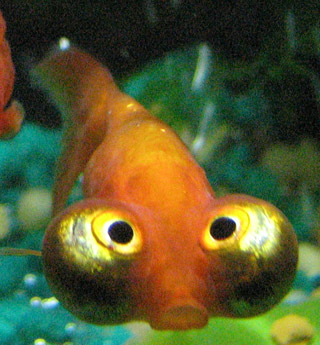
The celestial eye goldfish or Choutengan[1] is a double-tailed breed of fancy goldfish that possesses a distinctive pair of telescope eyes, in which the eyeballs are turned vertically and the pupils appear to be gazing skyward.[2]

Upon hatching of celestial fry, the young fishes' eyes are positioned normally but gradually enlarge, such as with the telescope eye goldfish. However, the telescope-eye still gazes laterally; the celestial goldfish's pupils will shift to a near-vertical (at times, "cross-eyed") gaze within a six-month period after hatching, as the eyeballs are repositioned and the pupils are centered on the top of the head.[3]

This process is entirely governed by genetics; early sources perpetuated the myth that the fish were bred in and contained within narrow-necked clay jars, with the eyes mutating upwards in search of what limited light they could receive.[4]

Origins

[edit]

Celestials first appeared as a direct mutation of the telescope goldfish in the 18th century. It is still unclear as to where, exactly, this occurred first—in Korea or China. The earliest known documentation of a celestial existing appears on a Chinese scroll dated to 1772, in which a goldfish lacking a dorsal fin and possessing protuberant, upturned eyes is described.

Celestials did not arrive in Japan until 1903, at which time 30 specimens arrived from China and became the founding stock for Japanese breeders. Japan quickly became the leading producer of celestials for export, and remained so until the outbreak of WWII. The breed first arrived in the United States from Japan in the 1900s and 1910s, and were included in the first edition of Goldfish Varieties and Tropical Aquarium Fishes (1917) by William T. Innes. American fanciers successfully bred the fish and, in turn, exported foundational stock to Great Britain. After WWII, and ever since, the majority of celestial goldfish exported from Asia are of Chinese origin. A celestial is depicted on a postage stamp, issued in 1960, by the People's Republic of China.

Group of celestial goldfish

Description and physical traits

[edit]

The celestial has an elongate, egg-shaped body similar to the bubble-eye. Similarly, the celestial does not have a dorsal fin. Their paired fins are of the fantail or ryukin type. The caudal fin may measure half as long to equally as long as the fish's body. They are most commonly seen with metallic scales, colored shades of orange (or 'red', to fanciers) and white, or red and white. Celestials with nacreous or shiny scales are known, but rarely seen.

Despite their visual and ocular differences, and lacking of a dorsal fin, celestials are as active and agile of swimmers as any goldfish. However, due to this vertically focused field of vision, celestials are unable to compete with more vigorous breeds of goldfish for food—including telescope-eye goldfish—thus are best kept in their own setup or with bubble-eye breeds.[2][5]

Additionally, as their eyeballs are extremely large and vulnerable to injury—thus affecting their ability to navigate perfectly while swimming—care must be taken to protect celestials from sharp rocks, gravel, driftwood, artificial plants with sharp edges, or other such decor. Smooth-bottomed aquariums with silk decorative plants are best; live plants are also beneficial, provided their foliage is not sharp or hard in any way, though may become problematic for many keepers of goldfish; as a whole, goldfish are known to be curious to the point of being destructive, even eating any plant they come across. However, live plants may be successfully grown when kept with smaller or juvenile goldfish, and have the added benefit of neutralizing ammonia, nitrates and other substances brought about by fish waste. Appropriate species may include epiphytic, soft-leaved genera such as Anubias, Bolbitis ('African water ferns'), Bucephalandra or Leptochilus ('Java ferns', formerly Microsorum), as they may be attached to smooth rocks or non-jagged pieces of driftwood, minimizing the need for excessive decor or a rich substrate. Some larger specimens of Cryptocoryne or Echinodorus (the 'Amazon swords') may be safe from damage by smaller goldfish, but are not epiphytes, thus requiring a richer, more organic substrate to thrive. Although many enthusiasts consider goldfish to be "cold-water" fishes, celestials are also somewhat more sensitive to temperature fluctuations, preferring their water to remain in the lower to mid-70s °F (i.e., between 21 °C and 23.89 °C).

Variants

[edit]

The original Celestial breed, described above, is still bred and exported by Chinese and Japanese breeders and is commercially available to fanciers, though they are not as commonly stocked by aquarium shops and dealers as some other goldfish varieties. It is this 240+ year old form that is described in the American standard adopted by the American Goldfish Association and the Goldfish Society of America. British fanciers prefer their Celestials to have deeper bodies and shorter fins, and have selectively bred for these features as required by the British standard. Chinese breeders have crossed Celestials with several other breeds, most commonly Lionheads, Ranchus and Pompoms, producing much larger fish with short ranchu-like fins and very deep, blocky bodies, often with nasal 'bouquets' (pompoms) and rudimentary head growths.

Some of these crosses tend to be less animated swimmers, especially those that possess a short, sharply downturned, ranchu-like caudal peduncle with flared and short caudal fins, traits which are otherwise uncharacteristic for the breed. Such fish can be quite sedentary, spending most of their time at or near the bottom of the aquarium; however, a more expansive color range can be found among these hybrids, with metallic specimens appearing in chocolate, black and various bi-colors in addition to the standard metallic colors, and nacreous fish seen in bi-color, tri-color and calico. These hybrids are not generally available commercially outside Asia but can be acquired through specialist dealers and importers. The Deme-ranchu is identical to the Celestial in conformation save for its telescopic eyes which do not turn upward. In any spawning of Celestials, many fry will be found to mature with telescopic eyes that never turn upwards. These fish are identical to deme-ranchu. The Toadhead or Hama-tou in Japanese, is similar to the Celestial in having upward-turned eyes, though they are not protuberant, each supporting a small bubble-like growth sacs beneath it. It is believed to be the ancestor to both the celestial eye and bubble eye goldfish.[2]

See also

[edit]

References

[edit]
[edit]
Revisions and contributorsEdit on WikipediaRead on Wikipedia
from Grokipedia
The Celestial Eye, also known as Chōten gan in Japanese, is a fancy breed of ( auratus) distinguished by its prominent telescope eyes that protrude and rotate upward, giving the fish a characteristic "stargazing" appearance, along with the absence of a and a divided, double tail. This breed originated as a from the telescope eye goldfish in the 18th century, likely in or Korea, through of domesticated lineages from the River region, with modern populations primarily tracing back to Chinese stock following post-World War II exports. The Celestial Eye has been selectively bred for over a century, gaining popularity in the last 80 years for its unique , though it exhibits significant anatomical abnormalities that impair vision and mobility from a young age. Physically, the fish typically reaches a maximum length of 150 mm (6 inches) with a deep body comprising at least 65% of its length; its eyes begin as normal but rotate 90 degrees upward within 6–7 weeks after , fully developing by around 6 months, often leading to progressive degeneration and eventual blindness in all individuals. The lack of a dorsal fin, present from birth, results in reduced stability and slower, more labored swimming, while scale varieties include metallic (most common), matte (), and nacreous ( with mottled patterns). Due to these traits, Celestial Eyes require specialized care, including spacious aquariums of at least 70 liters for one (plus 45 liters per additional), gentle filtration to avoid strong currents, and barren or minimally planted environments to prevent injuries from their poor vision and maneuverability; they thrive in water temperatures of 16–24°C (60–75°F), 6.5–7.4, and with levels below 30 ppm. Feeding should consist of varied, high-quality diets like gel foods, live or frozen (e.g., , larvae), limited to 1–2% of body weight daily in small portions to avoid disorders. Breeding is challenging and not recommended due to inherent genetic defects causing uniform welfare issues, though it can occur with multiple males per female in uncluttered setups during spawning seasons, where males develop white tubercles on their gill plates and pectoral fins. Common health concerns include eye injuries, parasitic infections (e.g., ich, flukes), bacterial or fungal diseases, and problems, with proper husbandry enabling a lifespan of over 10 years. Despite their striking appearance, animal welfare organizations highlight the breed's disabilities, advocating cautious ownership to minimize suffering.

History and Development

Origins in

The Celestial Eye likely developed in or Korea during the late 18th century as part of the extensive of fancy varieties from the wild ancestor auratus, a process that began much earlier with color s in ornamental ponds during the Tang and dynasties. This breed emerged specifically as a of the telescope eye , with early specimens featuring the characteristic upward-turned eyes and lack of a dorsal fin. One of the earliest known depictions appears in a Chinese scroll from 1772, illustrating a with these traits, marking the onset of its recognition in ornamental fish cultivation around the 1800s. In Chinese aquaculture traditions, the Celestial Eye, known as Wang Tian Yan (望天眼), symbolized a gaze toward the heavens, reflecting cultural admiration for its skyward-oriented eyes that evoked celestial observation and harmony with the natural order. The name derives from this poetic imagery, with the Japanese rendering Choutengan similarly translating to "stargazing eye," underscoring its aesthetic and symbolic value in East Asian fishkeeping. During the (1644–1912), fancy varieties were cultivated for royal and elite appreciation. Initial breeding efforts concentrated on stabilizing double-tailed fin mutations, common in fancy lines, alongside the progressive protrusion and upward rotation of the eyes inherited from telescope eye progenitors. These traits were refined over generations, likely through isolation in breeding vessels that encouraged light-seeking behaviors, resulting in the breed's signature morphology by the early . This development contributed to the diversification of over 200 varieties documented in Chinese texts by the Qing era, positioning the Celestial Eye as a pinnacle of artistic .

Breeding and Selective Traits

The of Celestial Eye goldfish prioritizes aesthetic enhancements to create a visually striking ornamental , including prominent eye protrusion directed upward at approximately 90 degrees, a gently arched back, double anal fins for symmetry, and an overall egg-shaped body form. Breeders utilize line breeding—mating closely related individuals—to stabilize and fix these mutations, drawing from historical artificial selection practices that began in during the (960–1279 AD) to emphasize ornamental traits over functionality. This approach combines genetic elements from telescope eye and fan-tail lineages, resulting in a double-tailed variety without a , where the focus remains on proportional elegance rather than swimming efficiency. Genetically, the upward eye direction and protrusion in Celestial Eye goldfish stem from independent s in the gene, distinct from those causing standard telescope eyes; a key feature is a premature in 38, which produces a truncated LRP2 protein (2204 versus 4529 in wild-type), inherited as an autosomal recessive trait. When bred with fan-tail goldfish, which contribute divided caudal and anal fins, this yields the characteristic 90-degree upward gaze, with high enabling breeders to predict and select for consistent expression across generations. Genome-wide association studies further confirm loci on linked to these eye traits, underscoring the role of accumulated mutations in the allotetraploid . Breeding standards, as defined in established guidelines like the UK's Nationwide Goldfish Standards, require an egg-shaped body with a depth-to-length of approximately 2:1 (body depth ~50% of length), smooth contours, and no to maintain the arched profile. The eyes must be well-matched in size and protrusion, directed strictly upward from the head surface, while fins include paired pectoral and pelvic sets, double anal fins, and a divided, forked caudal fin held above horizontal for optimal spread and balance. These criteria, adopted by organizations such as the American Goldfish Association, emphasize symmetry and development, with judging points allocated to eye direction (7 points), development (6 points), and matching (7 points) out of 20 for special characteristics. A primary challenge in Celestial Eye breeding is the high variability in juvenile offspring, where eye positioning may deviate from the ideal upward orientation, resulting in asymmetrical or insufficiently protruded eyes that fail to meet standards. This genetic inconsistency necessitates rigorous selection and of non-conforming fry to preserve trait purity, as the recessive nature of the can produce unpredictable phenotypes even in targeted pairings. Such practices, while essential for maintaining breed quality, highlight the intensive effort required to overcome developmental variability inherent to the strain.

Introduction to Western Aquaria

The Celestial Eye , originating in during the as a of the eye variety, reached in 1903 when thirty specimens were imported from , forming the basis for extensive Japanese breeding efforts that refined its traits. This export marked the beginning of its dissemination beyond , with the variety arriving in via maritime trade routes in the late , where it joined other fancy breeds already popular among hobbyists by the . In the United States, the Celestial Eye gained traction in the first decade of the 20th century and was included in William T. Innes's Goldfish Varieties and Tropical Aquarium Fishes (1917). Cultural adaptation in Western contexts saw the Celestial Eye featured prominently in early 20th-century aquaria exhibitions, where its upward-gazing eyes captivated audiences and influenced breeding practices inspired by Japanese techniques emphasizing body symmetry and fin development. The variety's integration into non-Asian hobbyist communities was bolstered by its aesthetic appeal, aligning with the era's fascination with exotic ornamental . Today, commercial breeding of Celestial Eye goldfish occurs widely in the United States, , and , with high-quality specimens available through specialized suppliers and supporting diverse color varieties. Standards for the breed have been adopted by organizations such as the American Goldfish Association and the Goldfish Society of America, emphasizing the characteristic eye orientation and lack of . The Celestial Eye's popularity surged during the aquarium boom , a period marked by expanded home aquaria setups and large-scale domestic production, leading to the standardization of its varieties for hobbyist and exhibition use. This era solidified its role in Western aquatics, transitioning it from a novelty import to a staple of ornamental .

Physical Characteristics

Body Structure and Fins

The Celestial Eye goldfish possesses a compact, egg-shaped body that is notably deep and rounded, with a body depth measuring at least 65% of its overall , distinguishing it from more streamlined varieties. This morphology results in a short, robust form, where adults typically attain a of up to 6 inches (150 mm), with the maximum recorded approximately 6 inches under standard aquarium conditions. The arched back enhances the breed's fancy appearance, contributing to a hunched posture that emphasizes its for ornamental traits. Fin configuration in the Celestial Eye is adapted for a , featuring the absence of a , which reduces hydrodynamic efficiency compared to wild-type but aligns with its role as an aquarium display . The caudal is doubled and divided, often forming a fan-shaped or forked tail that can extend from half to the full length of the body, providing gentle propulsion. Pectoral fins are elongated and paired, assisting in balance and slow turns, while the anal fin is symmetrically split into a double structure, mirroring the caudal fin's paired design for aesthetic symmetry. The deep influences the swim bladder's function, making Celestial Eye susceptible to buoyancy disorders that manifest as an upright yet sluggish swimming posture, often requiring careful environmental management to maintain stability. Growth is rapid during the juvenile phase, with significant size increases in the first year supported by ample , after which development slows markedly as the approaches maturity. With optimal care, including spacious habitats and balanced feeding, these achieve a maximum lifespan of 10 to 15 years.

Distinctive Eye Morphology

The Celestial Eye goldfish (Carassius auratus) features a unique telescope eye morphology characterized by prominent protrusion and a 90-degree upward rotation of the eyeballs, resulting in pupils that face skyward rather than laterally like in typical . This structure arises from the of mutations that enlarge the , a gelatinous, fluid-filled chamber comprising approximately 80% of the eye's volume and consisting of 98% water along with , , and proteoglycans. The expansion of this stretches the thin , creating a that imparts a hemispherical or globular shape to the eyes, distinguishing them from the more flattened profile of standard eyes. This rotated and protruding configuration severely restricts the , obstructing forward-facing vision essential for and predator detection while compelling reliance on upward and peripheral sight for environmental awareness. is notably diminished due to the altered eye positioning, and the progressive degeneration of the —marked by reduced photoreceptor cells, infiltration, and damage to the —further impairs light sensitivity and overall acuity, often leading to partial or complete blindness in the swimming direction. At , the eyes develop normally with lateral orientation and a functional , but anomalies emerge as the matures: protrusion initiates around 6-7 weeks post-spawning, with outward movement followed by upward rotation that completes over the first six months, potentially resulting in asymmetrical development or varying degrees of blindness across individuals due to the inconsistent progression of . Anatomically, the exposed, protuberant eyes exhibit a fragile prone to stretching and injury from environmental hazards, heightening vulnerability compared to recessed eyes in other varieties; this morphology also correlates with broader physiological adaptations, such as enhanced reliance on the for and spatial orientation to compensate for visual deficits.

Coloration and Patterns

Celestial Eye goldfish display a range of primary colors primarily through metallic scales, which include vibrant red, orange, white, black (often termed mocha or chocolate), and rarer blue hues. These metallic scales result from deposits that create a reflective, shiny appearance, enhancing the fish's coloration under light. Nacreous varieties, characterized by partial presence, exhibit a translucent, pearlescent sheen that allows subtle underlying pigments to show through, often in combinations of red, orange, and white. Matte or varieties feature raised, pearl-like scales that give a textured, non-reflective appearance, which can occur in metallic or nacreous forms. Common pattern types among Celestial Eye goldfish include self-colored specimens with uniform pigmentation, such as solid or orange bodies, providing a clean, consistent look. Calico patterns feature a speckled mix of , , and spots over a nacreous base, creating a mottled, multi-hued effect that is less frequent in this variety compared to other fancy goldfish. Panda patterns stand out with high-contrast and markings, often resembling bold, designs on a metallic or nacreous background. The coloration and patterns in Celestial Eye goldfish are genetically controlled by factors such as production for black pigments via melanophores and layers for metallic or nacreous effects via iridophores. In metallic varieties, color intensity can vary seasonally or with light exposure, as chromatophores respond to environmental lighting by expanding or contracting pigments, leading to brighter reds and deeper blacks in well-lit conditions. and variants are less common due to their reliance on recessive traits that suppress dominant red or orange pigments, making them prized but harder to breed consistently.

Varieties and Hybrids

Recognized Variants

The standard Celestial Eye, recognized as the classic form by international fancy fish associations such as the American Goldfish Association and the Goldfish Society of America, features an elongated egg-shaped body with a depth of about one-third to one-half its length, no , prominent upward-gazing eyes that protrude slightly outward, and long, flowing double caudal fins divided into well-spread lobes. This traditional subtype, originating from early 20th-century Chinese breeding, emphasizes smooth body contours and paired fins, with the eyes ideally matched in size and directed skyward at a 90-degree for optimal breed conformation. The British variant of the Celestial Eye adheres to United Kingdom breed standards, exhibiting a deeper body exceeding 50% of its length, a shorter rounded resembling a fantail, and the signature upward eye morphology, while still lacking a . Developed through in the mid-20th century to suit show preferences, this subtype prioritizes a more compact profile with the held above the horizontal in a forked, slightly rounded shape to enhance stability and visual appeal. The Celestial variant combines the Celestial Eye's distinctive upward gaze with the characteristic overlapping, domed scales of the Pearlscale breed, creating a textured, spherical body appearance that adds luster and depth. Recognized in breeding communities as a specialized subtype, it maintains the absence of a and double tail but incorporates pearlscale conformation for a more rounded, gem-like aesthetic, though it requires careful husbandry to prevent scale deformities. Classification systems established by organizations like the British Society and the Nationwide Goldfish Standards differentiate Celestial Eye variants primarily through tail morphology, such as divided and forked tails versus less preferred fringed or undivided types, alongside scoring for (up to 6 points), direction (7 points), and (7 points). These criteria ensure adherence to purity in competitions, with minimum body lengths of 55 mm required for exhibition. Color options, including metallic self-colors like red or black and patterns with blue backgrounds and patches, remain consistent across variants.

Crossbreeding with Other Goldfish

Crossbreeding Celestial Eye goldfish with other varieties, such as the , has been explored to combine distinctive traits like enhanced finnage and head growth with the unique eye morphology. In experimental crosses, a female Celestial Eye bred with a male produced first-generation offspring numbering 19 individuals, which displayed slight upward-directed eyes and diminished head nodules compared to the pure Celestial Eye, resulting in partial eye protrusion rather than the full upward gaze. These hybrids often inherit double caudal tails from both parents, though subsequent generations may exhibit trait variability, including single-tailed forms resembling characteristics. Other documented crosses include those with Pearlscale goldfish, yielding hybrids that incorporate the metallic, domed scales of the alongside celestial eyes, often referred to as Pearlscale Celestials; these forms feature a fuller body conformation while retaining the upward eye orientation to varying degrees. Similarly, hybridizations with or Lionhead varieties produce offspring with broader heads, narial pom-poms, and shorter caudals, blending the Celestial Eye's visual appeal with rounded body shapes prevalent in Chinese breeding programs. Such intentional crosses leverage hybridization techniques historically used to establish strains, where offspring may exceed parental trait ranges through transgressive segregation. Hybrid vigor in these crosses frequently manifests as increased overall hardiness and growth rates, potentially enhancing survival in varied aquarium conditions, though this is offset by trait dilution, such as reduced eye protrusion intensity or inconsistent fin development. is typically retained across generations, enabling breeders to select for desired combinations in further breeding efforts. In the early , following the Celestial Eye's introduction to U.S. aquaria around 1900–1910, American fanciers conducted breeding experiments with other varieties to refine traits and adapt the breed locally, as noted in early publications like Innes's Goldfish Varieties and Tropical Aquarium Fishes (1917). Ethically, while these hybrids raise concerns about perpetuating aesthetic-driven breeding that may compromise welfare, they are ineligible for competitions due to failure to meet specific variety standards, which disqualify fish exhibiting mixed characteristics. Commercially, however, such crosses are employed to produce novelty varieties for the ornamental pet trade, capitalizing on unique appearances to meet consumer demand for diverse forms.

Aquarium Care

Habitat Requirements

Celestial Eye goldfish require a minimum tank size of 20 gallons for a single adult specimen to accommodate their deep-bodied structure and provide ample swimming space, with an additional 10-15 gallons recommended per additional fish to prevent overcrowding. Due to their slow, deliberate swimming style and poor vision, these fish benefit from wide, shallow aquariums that prioritize horizontal space over height, allowing easier navigation without excessive vertical effort. Effective is essential to manage the high bioload produced by Celestial Eye , with systems rated to turn over the volume at least four times per hour while maintaining low water flow to avoid stressing their delicate fins and eyes. The aquarium substrate should consist of smooth, rounded to minimize risk to their protruding eyes, complemented by hardy, low-light such as Java fern or attached to decor rather than rooted in the substrate, as these fish may uproot vegetation. All decorations must be free of sharp edges or small crevices to prevent physical damage or entrapment. Water temperature should be maintained between 65°F and 75°F (18-24°C) to support their metabolic needs without inducing stress, using a reliable heater if ambient conditions fluctuate. Dim, indirect lighting is preferable to reduce glare on their upward-facing eyes and minimize stress, with tanks positioned away from direct or intense artificial sources to prevent overgrowth and discomfort. These exhibit slow, meandering swimming patterns influenced by their eye morphology, necessitating uncluttered open space in the to facilitate natural movement without collisions. They thrive in small schools of 3 to 5 individuals, which promotes social stability and reduces isolation stress, as they are gregarious by nature. Celestial Eye goldfish are compatible with other slow-moving fancy varieties, such as orandas or ranchus, but should not be housed with fast-swimming or aggressive species that could outcompete them for resources or cause injury.

Feeding and Nutrition

The Celestial Eye goldfish, a fancy variety of Carassius auratus, thrives on an omnivorous diet that includes high-quality flakes or pellets formulated with 30-40% protein to support growth and energy needs. These base foods should be supplemented with live or frozen options such as , , bloodworms, and mosquito larvae to provide essential nutrients and mimic natural foraging. Vegetable matter, including blanched or peas, must also be incorporated to ensure fiber intake and digestive health. Feeding should occur twice daily, offering small portions equivalent to 1-2% of the fish's body weight that can be consumed within 2-3 minutes to prevent and related complications. Dietary variety is crucial to avoid nutritional deficiencies; for instance, insufficient can lead to spinal deformities known as "broken back disease," underscoring the need for vitamin-enriched commercial foods or supplements. Due to their distinctive upward-gazing eyes, which impair forward vision and efficiency, Celestial Eye goldfish are slower eaters and benefit from floating foods that remain visible at the surface. Overfeeding must be strictly avoided, as their deeper body shape predisposes them to issues if excess intake disrupts . A balanced nutritional profile is essential for overall development, including adequate calcium levels to promote scale integrity, especially in metallic-scaled variants where deficiencies can hinder structural health.

Water Quality Management

Maintaining optimal water quality is essential for the health of Celestial Eye goldfish, as their protruded eyes make them particularly susceptible to infections and stress from environmental fluctuations. Key parameters include a pH range of 6.5-7.4, which supports their physiological processes without causing acidosis or alkalosis. Ammonia and nitrite levels must be maintained at 0 ppm to prevent toxic buildup that can damage gills and eyes, while nitrate should remain below 20 ppm to avoid long-term stress. Water hardness should be kept between 7-11 dGH (approximately 130-200 ppm) to mimic their natural habitat and prevent osmotic imbalances. Regular testing is crucial for monitoring these parameters, with weekly use of reliable test kits recommended to detect any deviations early. Prior to introducing , the aquarium must undergo a process to establish a biological filter, where beneficial convert to and then to ; this typically takes 4-6 weeks and should be verified by stable readings of 0 ppm and . Maintenance involves bi-weekly water changes of 25-50% to dilute nitrates and replenish minerals, always using dechlorinated water matched to the tank's temperature to minimize shock. Appropriate equipment enhances water stability, including submersible heaters to maintain a consistent of 65-75°F (18-24°C), which aids metabolic function, and aerators or air stones to ensure adequate oxygenation without excessive current that could injure delicate fins or eyes. Celestial Eye goldfish are highly sensitive to , so copper-based medications or treatments must be strictly avoided, as even low concentrations can lead to and exacerbate eye vulnerabilities. Stable water conditions directly benefit the Celestial Eye's distinctive eye morphology by reducing the risk of bacterial infections and swelling in the protruded eyes, which are prone to irritation from spikes or swings. Consistent management of these factors promotes overall vitality and longevity in this variety.

Reproduction and Breeding

Mating Behaviors

Celestial Eye goldfish exhibit courtship behaviors typical of fancy goldfish varieties, though their distinctive upturned eyes complicate male-female interactions during mating. Males actively pursue females, chasing them around the breeding tank and nudging their abdominal area with their snouts to stimulate egg release. This aggressive pursuit can last several hours and often culminates in spawning when the female is ready. Due to the Celestial Eye's protruding eyes, which limit forward vision, males may struggle to locate and effectively court females, necessitating the use of multiple males (typically two or more per female) to improve fertilization success. Spawning typically occurs in spring under rising water temperatures between 20–23°C (68–74°F), where females scatter eggs—up to around 1,000 per spawn—randomly onto vegetation, fine-leaved plants, or artificial spawning mops provided in the tank. The eggs are broadcast externally, with males immediately releasing to fertilize them as they are expelled. To facilitate this process, the breeding environment should remain uncluttered, allowing females easier escape and positioning during the chase. Sexual dimorphism becomes evident during the breeding season, aiding in sex determination. Mature males develop small white breeding tubercles on their gill covers (opercula), pectoral fins, and sometimes the head, which are absent in females; these keratinized nodules signal readiness to breed. Additionally, males often display stiffer, more elongated pectoral fins compared to the softer, rounder fins of females. Environmental cues such as increasing photoperiod (longer daylight hours simulating spring) and gradual water temperature rises, combined with frequent partial water changes to mimic natural conditions, trigger gonadal maturation and initiate these behaviors in both sexes.

Egg Development and Hatching

Following spawning, Celestial Eye goldfish eggs undergo an of approximately 4 to 7 days at water temperatures around 70°F (21°C), during which the develop within transparent, adhesive chorions that attach to spawning media such as or mops. These eggs initially appear pale cream and translucent, allowing visibility of the developing , including the blastodisc and perivitelline ; however, unfertilized or infected eggs turn opaque white, often due to fungal growth from opportunistic water molds like , which can spread rapidly if dead eggs are not removed. Temperature fluctuations during this phase significantly impact development, with higher temperatures (e.g., 75–80°F or 24–27°C) accelerating to 2–4 days but increasing the risk of deformities or mortality. Hatching begins when the embryo secretes enzymes from hatching glands to dissolve the chorion, typically resulting in fry emerging tail-first with a prominent yolk sac that provides initial nourishment. The newly hatched fry, measuring about 4.5 in length, exhibit limited mobility and often lie horizontally on the tank bottom or substrate, displaying positive thigmotaxis (attraction to surfaces) while absorbing their yolk sac over 2 to 3 days. During this time, no external feeding is required, as the yolk sac supplies essential nutrients until it is fully resorbed, after which the fry transition to active and . Celestial Eye goldfish exhibit no parental care, with adults readily consuming eggs and fry if not separated immediately after spawning, necessitating isolation in a dedicated incubation tank with gentle aeration and methylene blue (1–3 ppm) to prevent fungal outbreaks. Under controlled aquarium conditions, hatching success rates range from 50% to 70%, influenced by stable water parameters and removal of infertile eggs, though laboratory studies on Celestial Eye variants report up to 95% hatching when using fresh or short-term preserved sperm at room temperature. Sensitivity to temperature shifts remains critical, as deviations can reduce survival by stressing embryos and promoting infections.

Juvenile Eye Formation

Upon , the eyes of Celestial Eye goldfish (Carassius auratus) fry are positioned normally, resembling those of , with no immediate signs of the breed's characteristic upward orientation. This initial normalcy allows the fry to develop basic visual function during their early vulnerable stages. The transformation begins approximately 6-7 weeks after spawning, or roughly 5-6 weeks post-hatching, when the eyes start to protrude laterally in an outward shift. This initial protrusion, observed around 90 days from fertilization in systematic rearing studies, marks the onset of retinal changes, including irregular distribution of melanin granules in the pigment epithelial layer and disorientation of photoreceptor outer segments. By about 12 weeks post-hatching, the eyes rotate antero-dorsally, achieving the full upward turn that defines the celestial phenotype, though the process extends up to 120 days from fertilization for completion in some individuals. These growth stages—involving first an outward shift followed by progressive rotation—are primarily driven by genetic factors, with recent genomic analyses identifying mutations in the LRP2 gene as key mediators of the protuberant and upward eye orientation through artificial selection. Nutrition also plays a supportive role, as adequate protein and nutrient intake during this period promotes healthy tissue development and minimizes developmental irregularities. Rearing conditions for Celestial Eye fry emphasize isolation in separate tanks to prevent competition and injury, with gentle water flow to accommodate their emerging visual impairments. Initial feeding consists of infusoria for the first 1-2 weeks, transitioning to newly hatched baby brine shrimp (Artemia nauplii) as the fry grow, providing essential high-protein nutrition at 2-4 feedings per day in amounts consumed within 10-15 minutes. Breeders routinely monitor for eye asymmetry or uneven protrusion during this phase, culling affected individuals to maintain breed standards, as such deformities can impact welfare and aesthetics. By 6 months post-hatching, the eyes typically stabilize in their upward position, coinciding with the onset of progressive degeneration that leads to partial or full blindness, a process correlated with the fish's overall body growth and maturation. This timeline underscores the breed's reliance on non-visual senses for navigation in adulthood.

Health and Welfare

Common Health Issues

Celestial Eye goldfish, characterized by their distinctly protruding and upward-turned eyes, are particularly susceptible to eye-related health issues due to the anatomical vulnerability of their exposed ocular structures. Bacterial infections, such as those caused by or species, can lead to exophthalmia (commonly known as pop-eye), where fluid accumulates behind the eye, causing further protrusion, swelling, and potential cloudiness of the . Injuries from tank decorations or aggressive tank mates exacerbate these risks, often resulting in corneal abrasions or secondary infections that impair vision. Additionally, the breed's eyes naturally rotate upward over the first six months of life, leading to progressive retinal degeneration and eventual blindness in all individuals. Swim bladder disorders represent another prevalent concern for Celestial Eye goldfish, stemming from their deep, rounded that compresses internal organs and alters control. These issues manifest as listing to one side, inability to maintain upright orientation, or floating at the surface, often linked to the absence of a , which contributes to overall instability in movement. The curved spine common in fancy varieties like the Celestial Eye can further displace the , compounding these problems from an early age. Fin rot and parasitic infections are also common in Celestial Eye goldfish, particularly under conditions of stress or suboptimal . Fin rot, a bacterial condition typically initiated by or Flexibacter species, causes fraying and discoloration of the fins, progressing to tissue erosion if untreated. Parasites such as (causing ich or white spot disease) frequently affect these fish, appearing as small white cysts on the body, fins, and gills, and thriving in environments where the fish's impaired vision hinders evasion. As Celestial Eye goldfish age, they experience exacerbated declines in , with degeneration accelerating to complete blindness and increased susceptibility to secondary infections. Spinal curvature may develop or worsen in older specimens, typically after several years, leading to further mobility impairments and organ compression. These age-related vulnerabilities underscore the importance of monitoring for early signs of distress to support overall welfare.

Disease Prevention

Preventing diseases in Celestial Eye goldfish requires implementing strict protocols for new additions to the aquarium. New should be isolated in a separate for 2-4 weeks to monitor for signs of illness and prevent the introduction of pathogens to the main population. During this period, maintaining a 0.3% with aquarium salt in the quarantine helps reduce stress and acts as a preventive measure against external parasites. Additionally, short salt baths at 0.3% concentration for 10-30 minutes can be administered upon arrival to further deter parasitic infestations without harming the . For treatment of emerging health issues, particularly those affecting the prominent eyes of Celestial Eye goldfish, antibiotics such as kanamycin are effective against bacterial eye infections like popeye or cloudy eyes. For example, products like Seachem Kanaplex (kanamycin) can be dosed at 1 measure per 5 gallons every 48 hours for up to 3 doses, with partial water changes between treatments to maintain efficacy and water quality. To combat water-borne pathogens overall, incorporating a UV sterilizer in the filtration system irradiates free-floating , viruses, and parasites, significantly reducing disease transmission risks in the tank. These measures are especially crucial for eye-related conditions briefly referenced in common health issues, where early intervention prevents complications. Routine health checks form the foundation of ongoing disease prevention by allowing early detection of subtle symptoms. Owners should daily observe for indicators such as , where the fish exhibits reduced activity or hangs near the bottom, or fin clamping, in which fins are held tightly against the body, both signaling potential stress or . Vaccinations are not applicable to ornamental like Celestial Eye varieties, but supplementing the diet with supports gut health and enhances overall immunity against bacterial challenges. Probiotic-enriched foods promote beneficial intestinal , improving digestion and disease resistance. Environmental adjustments play a key role in averting hypoxia-related problems, which can exacerbate other health vulnerabilities in Celestial Eye goldfish due to their limiting efficient swimming. Increasing through air stones or enhanced ensures adequate dissolved oxygen levels above 5 mg/L, preventing symptoms like gasping at the surface or from low-oxygen conditions. Regular monitoring of oxygen via test kits and prompt adjustments maintain optimal conditions, supporting long-term welfare.

Ethical Breeding Concerns

The breeding of Celestial Eye goldfish raises significant ethical concerns due to the breed's distinctive upward-rotating eyes, which result from for aesthetic traits and compromise natural behaviors. These eyes, which develop progressively over the first six months of life, lead to degeneration and eventual blindness, impairing the fish's ability to effectively for food and evade predators in environments mimicking their natural habitat. Studies classify this condition as a significant welfare compromise, equivalent to a that affects all individuals of the breed and increases vulnerability to stress and injury. Selective breeding prioritizes visual appeal over functional health, perpetuating traits that cause chronic welfare issues such as disrupted swimming stability from the absent and heightened energy demands. organizations, including the , have opposed such practices since the early 2010s, discouraging the keeping and breeding of with exaggerated physical features due to their negative impact on welfare, and calling for legislative measures to curb irresponsible . The Universities Federation for Animal Welfare (UFAW) recommends that the Celestial Eye breed not be perpetuated, urging prospective owners to avoid purchasing these to prevent further propagation of welfare-compromising traits. As alternatives, welfare groups promote the adoption of naturally shaped breeds, such as common or varieties, which exhibit robust vision, swimming ability, and longevity without the deformities associated with fancy breeds. Hobbyist overbreeding exacerbates these issues, often resulting in cull rates exceeding 95% of offspring to select for desired aesthetics, leading to high mortality and ethical dilemmas in managing surplus . While the impact on wild populations remains negligible due to the breed's domesticated status, such practices contribute to broader concerns over in the ornamental . Regulatory status varies globally; breeding and sale of Celestial Eye goldfish remain legal in most countries, including the and much of , where they originated. In , reports as of 2023 have recommended including ornamental fish with extreme traits, such as the Bubble-eye goldfish, in positive lists or bans under frameworks to mitigate welfare harms, though specific restrictions for breeds like the Celestial Eye remain limited.

References

Add your contribution
Related Hubs
User Avatar
No comments yet.