


Community hub
Recent from talks
Contribute something
Nothing was collected or created yet.
Noise (electronics)
View on Wikipedia

In electronics, noise is an unwanted disturbance in an electrical signal.[1]: 5
Noise generated by electronic devices varies greatly as it is produced by several different effects.
In particular, noise is inherent in physics and central to thermodynamics. Any conductor with electrical resistance will generate thermal noise inherently. The final elimination of thermal noise in electronics can only be achieved cryogenically, and even then quantum noise would remain inherent.
Electronic noise is a common component of noise in signal processing.
In communication systems, noise is an error or undesired random disturbance of a useful information signal in a communication channel. The noise is a summation of unwanted or disturbing energy from natural and sometimes man-made sources. Noise is, however, typically distinguished from interference,[a] for example in the signal-to-noise ratio (SNR), signal-to-interference ratio (SIR) and signal-to-noise plus interference ratio (SNIR) measures. Noise is also typically distinguished from distortion, which is an unwanted systematic alteration of the signal waveform by the communication equipment, for example in signal-to-noise and distortion ratio (SINAD) and total harmonic distortion plus noise (THD+N) measures.
While noise is generally unwanted, it can serve a useful purpose in some applications, such as random number generation or dither.
Uncorrelated noise sources add according to the sum of their powers.[2]
Noise types
[edit]Different types of noise are generated by different devices and different processes. Thermal noise is unavoidable at non-zero temperature (see fluctuation-dissipation theorem), while other types depend mostly on device type (such as shot noise,[1][3] which needs a steep potential barrier) or manufacturing quality and semiconductor defects, such as conductance fluctuations, including 1/f noise.
Thermal noise
[edit]Johnson–Nyquist noise[1] (more often thermal noise) is unavoidable, and generated by the random thermal motion of charge carriers (usually electrons), inside an electrical conductor, which happens regardless of any applied voltage.
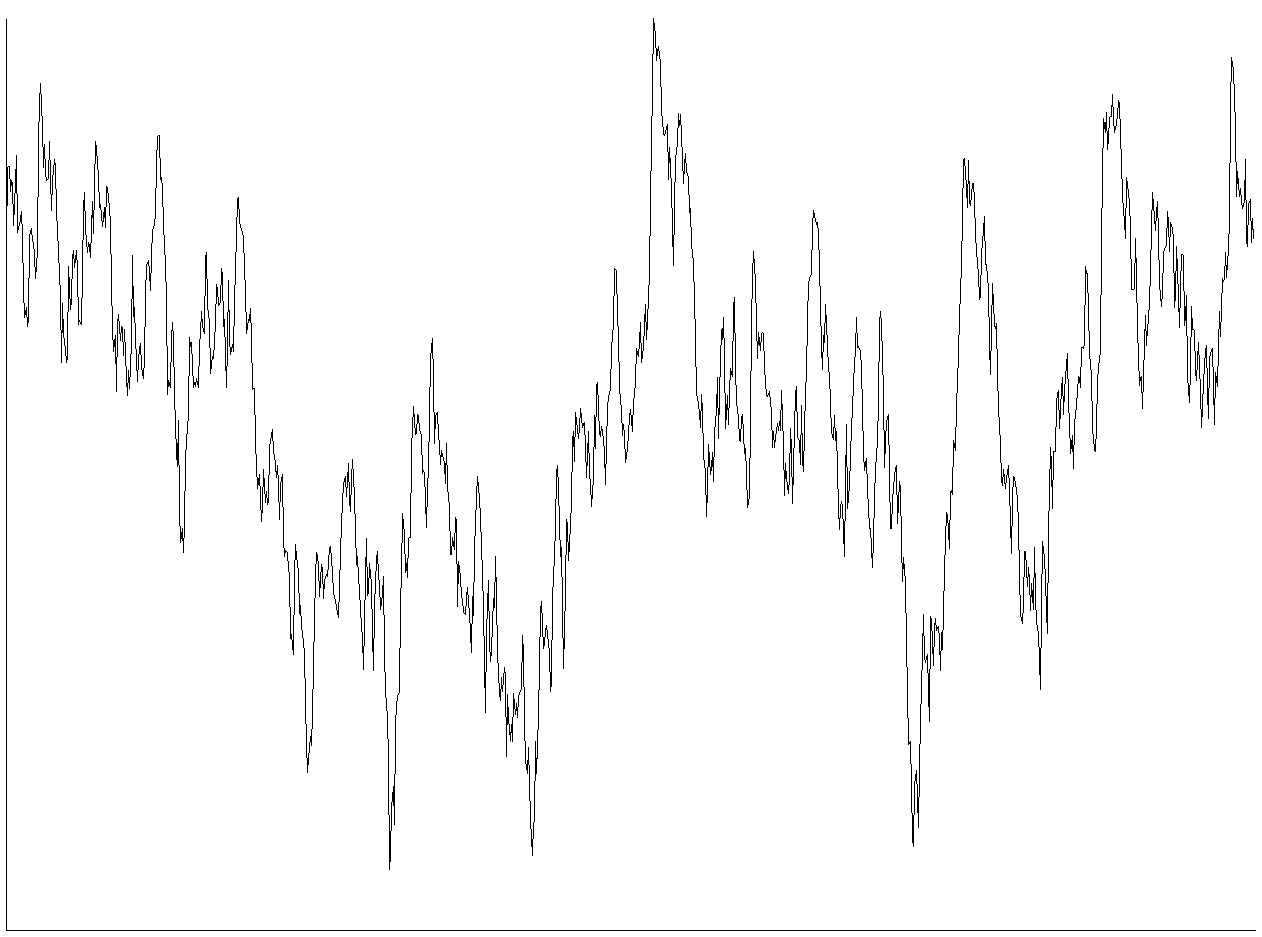
Thermal noise is approximately white, meaning that its power spectral density is nearly equal throughout the frequency spectrum. The amplitude of the signal has very nearly a Gaussian probability density function. A communication system affected by thermal noise is often modelled as an additive white Gaussian noise (AWGN) channel.
Shot noise
[edit]Shot noise in electronic devices results from unavoidable random statistical fluctuations of the electric current when the charge carriers (such as electrons) traverse a gap. If electrons flow across a barrier, then they have discrete arrival times. Those discrete arrivals exhibit shot noise. Typically, the barrier in a diode is used.[4] Shot noise is similar to the noise created by rain falling on a tin roof. The flow of rain may be relatively constant, but the individual raindrops arrive discretely.[5]
The root-mean-square value of the shot noise current in is given by the Schottky formula.
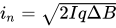
where I is the DC current, q is the charge of an electron, and ΔB is the bandwidth in hertz. The Schottky formula assumes independent arrivals.
Vacuum tubes exhibit shot noise because the electrons randomly leave the cathode and arrive at the anode (plate). A tube may not exhibit the full shot noise effect: the presence of a space charge tends to smooth out the arrival times (and thus reduce the randomness of the current). Pentodes and screen-grid tetrodes exhibit more noise than triodes because the cathode current splits randomly between the screen grid and the anode.
Conductors and resistors typically do not exhibit shot noise because the electrons thermalize and move diffusively within the material; the electrons do not have discrete arrival times. Shot noise has been demonstrated in mesoscopic resistors when the size of the resistive element becomes shorter than the electron–phonon scattering length.[6]
Partition noise
[edit]Where current divides between two (or more) paths,[7] noise occurs as a result of random fluctuations that occur during this division.
For this reason, a transistor will have more noise than the combined shot noise from its two PN junctions.
Flicker noise
[edit]Flicker noise, also known as 1/f noise, is a signal or process with a frequency spectrum that falls off steadily into the higher frequencies, with a pink spectrum. It occurs in almost all electronic devices and results from a variety of effects.
Burst noise
[edit]Burst noise consists of sudden step-like transitions between two or more discrete voltage or current levels, as high as several hundred microvolts, at random and unpredictable times. Each shift in offset voltage or current lasts for several milliseconds to seconds. It is also known as popcorn noise for the popping or crackling sounds it produces in audio circuits.
Transit-time noise
[edit]If the time taken by the electrons to travel from emitter to collector in a transistor becomes comparable to the period of the signal being amplified, that is, at frequencies above VHF and beyond, the transit-time effect takes place and the noise input impedance of the transistor decreases. From the frequency at which this effect becomes significant, it increases with frequency and quickly dominates other sources of noise.[8]
Coupled noise
[edit]While noise may be generated in the electronic circuit itself, additional noise energy can be coupled into a circuit from the external environment, by inductive coupling or capacitive coupling, or through the antenna of a radio receiver.
Sources
[edit]- Intermodulation noise
- Caused when signals of different frequencies share the same non-linear medium.
- Crosstalk
- Phenomenon in which a signal transmitted in one circuit or channel of a transmission system creates undesired interference onto a signal in another channel.
- Interference
- Modification or disruption of a signal travelling along a medium
- Atmospheric noise
- Also called static noise, it is caused by lightning discharges in thunderstorms and other electrical disturbances occurring in nature, such as corona discharge.
- Industrial noise
- Sources such as automobiles, aircraft, ignition electric motors and switching gear, High voltage wires and fluorescent lamps cause industrial noise. These noises are produced by the discharge present in all these operations.
- Solar noise
- Noise that originates from the Sun is called solar noise. Under normal conditions, there is approximately constant radiation from the Sun due to its high temperature, but solar storms can cause a variety of electrical disturbances. The intensity of solar noise varies over time in a solar cycle.
- Cosmic noise
- Distant stars generate noise called cosmic noise. While these stars are too far away to individually affect terrestrial communications systems, their large number leads to appreciable collective effects. Cosmic noise has been observed in a range from 8 MHz to 1.43 GHz, the latter frequency corresponding to the 21-cm hydrogen line. Apart from man-made noise, it is the strongest component over the range of about 20 to 120 MHz. Little cosmic noise below 20MHz penetrates the ionosphere, while its eventual disappearance at frequencies in excess of 1.5 GHz is probably governed by the mechanisms generating it and its absorption by hydrogen in interstellar space.[citation needed]
Mitigation
[edit]In many cases noise found on a signal in a circuit is unwanted. There are many different noise reduction techniques that can reduce the noise picked up by a circuit.
- Faraday cage – A Faraday cage enclosing a circuit can be used to isolate the circuit from external noise sources. A Faraday cage cannot address noise sources that originate in the circuit itself or those carried in on its inputs, including the power supply.
- Capacitive coupling – Capacitive coupling allows an AC signal from one part of the circuit to be picked up in another part through the interaction of electric fields. Where coupling is unintended, the effects can be addressed through improved circuit layout and grounding.
- Ground loops – When grounding a circuit, it is important to avoid ground loops. Ground loops occur when there is a voltage difference between two ground connections. A good way to fix this is to bring all the ground wires to the same potential in a ground bus.
- Shielding cables – A shielded cable can be thought of as a Faraday cage for wiring and can protect the wires from unwanted noise in a sensitive circuit. The shield must be grounded to be effective. Grounding the shield at only one end can avoid a ground loop on the shield.
- Twisted pair wiring – Twisting wires in a circuit will reduce electromagnetic noise. Twisting the wires decreases the loop size in which a magnetic field can run through to produce a current between the wires. Small loops may exist between wires twisted together, but the magnetic field going through these loops induces a current flowing in opposite directions in alternate loops on each wire and so there is no net noise current.
- Notch filters – Notch filters or band-rejection filters are useful for eliminating a specific noise frequency. For example, power lines within a building run at 50 or 60 Hz line frequency. A sensitive circuit will pick up this frequency as noise. A notch filter tuned to the line frequency can remove the noise.
Thermal noise can be reduced by cooling of circuits - this is typically only employed in high accuracy high-value applications such as radio telescopes.
Quantification
[edit]The noise level in an electronic system is typically measured as an electrical power N in watts or dBm, a root mean square (RMS) voltage (identical to the noise standard deviation) in volts, dBμV or a mean squared error (MSE) in volts squared. Examples of electrical noise-level measurement units are dBu, dBm0, dBrn, dBrnC, and dBrn(f1 − f2), dBrn(144-line). Noise may also be characterized by its probability distribution and noise spectral density N0(f) in watts per hertz.
A noise signal is typically considered as a linear addition to a useful information signal. Typical signal quality measures involving noise are signal-to-noise ratio (SNR or S/N), signal-to-quantization noise ratio (SQNR) in analog-to-digital conversion and compression, peak signal-to-noise ratio (PSNR) in image and video coding and noise figure in cascaded amplifiers. In a carrier-modulated passband analogue communication system, a certain carrier-to-noise ratio (CNR) at the radio receiver input would result in a certain signal-to-noise ratio in the detected message signal. In a digital communications system, a certain Eb/N0 (normalized signal-to-noise ratio) would result in a certain bit error rate. Telecommunication systems strive to increase the ratio of signal level to noise level in order to effectively transfer data. Noise in telecommunication systems is a product of both internal and external sources to the system.
Noise is a random process, characterized by stochastic properties such as its variance, distribution, and spectral density. The spectral distribution of noise can vary with frequency, so its power density is measured in watts per hertz (W/Hz). Since the power in a resistive element is proportional to the square of the voltage across it, noise voltage (density) can be described by taking the square root of the noise power density, resulting in volts per root hertz (). Integrated circuit devices, such as operational amplifiers commonly quote equivalent input noise level in these terms (at room temperature).

Dither
[edit]If the noise source is correlated with the signal, such as in the case of quantisation error, the intentional introduction of additional noise, called dither, can reduce overall noise in the bandwidth of interest. This technique allows retrieval of signals below the nominal detection threshold of an instrument. This is an example of stochastic resonance.
See also
[edit]- Active noise control for noise reduction through cancellation
- Colors of noise
- Discovery of cosmic microwave background radiation
- Error detection and correction for digital signals subject to noise
- Generation–recombination noise
- Matched filter for noise reduction in modems
- Noise (signal processing)
- Noise reduction and for audio and images
- Phonon noise
Notes
[edit]- ^ E.g. crosstalk, deliberate jamming or other unwanted electromagnetic interference from specific transmitters
References
[edit]- ^ a b c Motchenbacher, C. D.; Connelly, J. A. (1993). Low-noise electronic system design. Wiley Interscience. ISBN 0-471-57742-1.
- ^ Sobering, Tim J. (1999). "Noise in Electronic Systems" (PDF). Archived (PDF) from the original on 2023-05-20. Retrieved 2024-04-07.
- ^ Kish, L. B.; Granqvist, C. G. (November 2000). "Noise in nanotechnology". Microelectronics Reliability. 40 (11). Elsevier: 1833–1837. doi:10.1016/S0026-2714(00)00063-9.
- ^ Ott, Henry W. (1976), Noise Reduction Techniques in Electronic Systems, John Wiley, pp. 208, 218, ISBN 0-471-65726-3
- ^ MacDonald, D. K. C. (2006), Noise and Fluctuations: An Introduction, Dover Publications Inc, p. 2, ISBN 0-486-45029-5
- ^ Steinbach, Andrew; Martinis, John; Devoret, Michel (1996-05-13). "Observation of Hot-Electron Shot Noise in a Metallic Resistor". Phys. Rev. Lett. 76 (20): 38.6 – 38.9. Bibcode:1996PhRvL..76...38M. doi:10.1103/PhysRevLett.76.38. PMID 10060428.
- ^ "Partition noise". Retrieved 2021-11-05.
- ^ Communication Theory. Technical Publications. 1991. pp. 3–6. ISBN 9788184314472.
 This article incorporates public domain material from Federal Standard 1037C. General Services Administration. Archived from the original on 2022-01-22. (in support of MIL-STD-188).

Further reading
[edit]- Sh. Kogan (1996). Electronic Noise and Fluctuations in Solids. Cambridge University Press. ISBN 0-521-46034-4.
- Scherz, Paul. (2006, Nov 14) Practical Electronics for Inventors. ed. McGraw-Hill.
External links
[edit]
Noise (electronics)
View on GrokipediaFundamentals
Definition and Characteristics
In electronics, noise refers to unwanted random fluctuations in voltage, current, or charge carriers within electronic circuits and devices, originating from inherent physical processes at the microscopic level.[2] These fluctuations are typically of low amplitude and disrupt the intended signal, making noise a fundamental limitation in circuit performance.[1] Key characteristics of electronic noise include its stochastic nature, where the fluctuations are unpredictable and arise from random events such as the thermal motion of charge carriers.[4] Noise is often statistically described using probability distributions, with many types exhibiting a Gaussian distribution due to the central limit theorem applied to numerous independent random processes, resulting in a zero-mean process with a non-zero variance.[2] Independent noise sources are additive in power, meaning their total power is the sum of individual powers, rather than amplitudes.[4] Additionally, noise exhibits frequency dependence: white noise has a flat power spectral density across frequencies, while colored noise varies, such as with a 1/f dependence that increases power at lower frequencies.[2] Electronic noise is generally classified as intrinsic, generated internally within the device due to its physical mechanisms, or extrinsic, resulting from external coupling or interference.[2] Within this, white noise maintains a constant spectrum, as exemplified by thermal noise in resistors, whereas non-white noise shows spectral shaping, like the 1/f form in certain semiconductors.[4] The power spectral density (PSD), denoted as , quantifies noise as the Fourier transform of its autocorrelation function and describes the power distribution per unit frequency.[2] The total noise power within a bandwidth is obtained by integrating the PSD over the relevant frequency range: for single-sided spectra, providing a measure of the noise energy in that bandwidth.[4]Importance in Electronic Systems
Noise fundamentally degrades signal integrity in electronic systems by introducing random fluctuations that obscure the desired signal, leading to reduced fidelity and increased uncertainty in data processing. This degradation manifests as a limitation on the sensitivity of amplifiers and receivers, where the noise floor establishes the minimum detectable signal level, preventing the reliable amplification of weak inputs without significant distortion. In digital circuits, noise induces bit flips and timing errors, particularly under low signal-to-noise ratio (SNR) conditions, which directly elevate the bit error rate (BER) and compromise system reliability. Additionally, noise compresses the dynamic range, narrowing the operable span between the weakest discernible signals and the strongest inputs before saturation or clipping occurs, thereby constraining overall performance margins. These effects profoundly influence key applications in electronics. In communication systems, noise-limited SNR directly governs BER, imposing theoretical bounds on data throughput and necessitating sophisticated modulation and coding schemes to maintain acceptable error rates. For sensors, the noise floor dictates detection limits, as thermal and other intrinsic fluctuations set the threshold for resolving faint physical phenomena, such as in precision instrumentation for scientific or industrial use. In audio and analog circuits, noise generates perceptible artifacts like hiss in amplifiers, arising primarily from thermal agitation in resistive elements, which diminishes audio clarity even during quiet passages and demands careful component selection for high-fidelity reproduction. The pivotal recognition of noise as an irreducible limit emerged in the 1920s through John B. Johnson's experiments at Bell Laboratories, which identified thermal noise as an inherent property of conductors due to charge carrier agitation, establishing it as a baseline challenge in all electronic designs. This foundational insight has shaped contemporary low-noise engineering in RF systems, where minimizing noise figure is critical for extending range and sensitivity in wireless technologies, and in quantum computing, where noise threatens qubit coherence and readout precision, driving innovations in cryogenic amplification. Technologically, the pursuit of low-noise components spurs advancements in semiconductors, such as high-mobility transistors, and photonics, enabling compact, efficient devices for next-generation networks. Economically, this demand fuels a burgeoning market for low-noise amplifiers, valued at over USD 2 billion in 2024 and projected to exceed USD 4 billion by 2034, reflecting noise mitigation's role in sustaining growth across telecommunications and computing sectors.[5]Types of Noise
Thermal Noise
Thermal noise, also known as Johnson-Nyquist noise, arises from the random thermal motion of charge carriers, such as electrons, in resistive conductors or components. This agitation, driven by temperature, produces fluctuating voltages or currents that are independent of any applied external bias, making it an intrinsic equilibrium phenomenon present in all materials with resistance at temperatures above absolute zero. The effect was first experimentally observed by John B. Johnson in 1926 and theoretically explained by Harry Nyquist in 1928 using thermodynamic principles. The noise exhibits a white spectrum, with its power spectral density (PSD) remaining constant across frequencies up to extremely high values, limited only by quantum effects at very high frequencies. The voltage noise PSD is given by where J/K is Boltzmann's constant, is the absolute temperature in Kelvin, and is the resistance in ohms; this yields the mean-square voltage noise over a bandwidth as . The corresponding current noise PSD is . For non-ohmic components, such as those with reactive elements, Nyquist generalized the formula using an equivalent noise resistance , the real part of the impedance at frequency , allowing the same expression to apply: . This concept of equivalent noise temperature extends the model to characterize the thermal noise contribution of arbitrary passive networks in terms of an effective temperature. Nyquist's derivation relies on the equipartition theorem from statistical mechanics, which assigns an average energy of per degree of freedom to each mode in thermal equilibrium. Modeling the resistor as an infinite transmission line of inductors and capacitors, the theorem implies that the average energy stored in the electric and magnetic fields of each frequency mode is total ( each). At equilibrium, the power radiated into the line from a matched resistor equals the absorbed power, leading to the noise PSD of per unit frequency to satisfy energy balance. A simpler microscopic view considers the random velocities of charge carriers: their thermal kinetic energy follows per dimension, and through the Drude model of conductivity, the resulting current fluctuations yield the same PSD formula.[6] In practical electronics, thermal noise sets the fundamental limit in low-frequency analog circuits, such as amplifiers and sensors, where it often dominates over other sources in the absence of bias-dependent effects. For instance, in a room-temperature (300 K) 1 kΩ resistor over a 1 Hz bandwidth, the rms voltage noise is approximately 4 nV, illustrating its impact on precision measurements. Unlike shot noise, which emerges from discrete charge flow in biased devices, thermal noise persists in passive, unbiased elements.[7]Shot Noise
Shot noise arises from the discrete nature of charge carriers, manifesting as random fluctuations in current due to the Poisson statistics governing the independent arrival of electrons crossing potential barriers in devices such as diodes and transistors under bias conditions.[8][9] This statistical variability leads to unpredictable variations in the flow of charge, where each electron's transit contributes to the overall current in a manner akin to discrete "shots" or particles impacting a detector.[8] The noise is characterized by its proportionality to the square root of the average current, resulting in a root-mean-square fluctuation that scales as , where is the DC current.[10] It exhibits a white spectrum, meaning its power spectral density remains constant across frequencies up to the inverse of the carrier transit time, making it particularly prominent in photocurrents, PN junctions, and high-speed electronic devices where current flows across barriers.[10][11] The quantitative description is given by the Schottky formula for the current noise power spectral density: , where is the elementary charge of an electron and is the average current.[8][11] In non-ideal cases, such as those involving correlations or incomplete Poisson statistics, this is modified by the Fano factor , yielding , where accounts for noise suppression due to factors like Pauli exclusion in semiconductors.[12] In practical applications, shot noise sets the fundamental limit on sensitivity in photodetectors, where it arises from the random generation of charge carriers by incident photons, often dominating over other noise sources at high currents.[10] However, in degenerate semiconductors, where the Fermi level lies within the conduction or valence band, the noise can be reduced due to the exclusion principle limiting available states for carrier injection.[11] Historically, shot noise was first identified by Walter Schottky in 1918 while investigating current fluctuations in vacuum tubes, providing an explanation for the observed "shot effect" in early electronic amplifiers.[13] A related phenomenon, partition noise, occurs as a variant when charge flow divides into multiple channels, but it shares the same Poisson underpinnings.[8]Flicker Noise
Flicker noise, also known as 1/f noise or pink noise, arises from fluctuations in the number or mobility of charge carriers in electronic materials and devices. These fluctuations are primarily caused by the trapping and detrapping of carriers at defect sites within the material, leading to random variations in conductivity.[14] This mechanism results in an excess noise component that dominates over thermal and shot noise at low frequencies, typically below 1 kHz in semiconductor devices.[15] The power spectral density of flicker noise follows a form , where is approximately 1, giving it a steeper slope than the flat spectrum of white noise.[16] This noise is an excess phenomenon superimposed on other intrinsic noises and inversely scales with device area, as larger areas incorporate more carriers and average out local fluctuations.[16] Observed since the 1920s in early vacuum tubes and semiconductors, flicker noise was first systematically described by Walter Schottky in studies of cathode emission irregularities.[17] Hooge's empirical formula provides a quantitative description of the voltage noise power spectral density for homogeneous samples: where is the dimensionless Hooge parameter (typically to depending on material purity), is the bias voltage, is the frequency, and is the total number of free carriers.[16] This relation highlights the noise's dependence on carrier density and bias, emphasizing its fundamental link to bulk transport processes. In metal-oxide-semiconductor field-effect transistors (MOSFETs), flicker noise becomes dominant at low frequencies, degrading transconductance stability through threshold voltage shifts induced by oxide trap fluctuations.[15] It significantly impacts precision analog integrated circuits, where low-frequency signal integrity is critical, and oscillators, where it upconverts to phase noise sidebands close to the carrier frequency, limiting close-in spectral purity.[18][19] The origins of flicker noise remain debated, with evidence supporting bulk mechanisms like mobility fluctuations from lattice scattering variations versus contact-related effects at interfaces or electrodes.[16] Hooge's work argued against surface dominance, favoring a volume effect proportional to 1/N, though some studies suggest contact contributions in non-homogeneous samples.[16] This ongoing discussion underscores the noise's complex interplay with material defects and device geometry.Other Intrinsic Noises
Partition noise arises from the random branching of charge carriers into parallel paths within semiconductor devices, such as the base-collector junction in bipolar junction transistors (BJTs). This mechanism introduces fluctuations due to the probabilistic nature of carrier transmission, following binomial statistics. The power spectral density (PSD) for partition noise is given by , where is the elementary charge, is the average current, and is the transmission probability of carriers through the path. Often, partition noise is grouped with shot noise because both stem from discrete carrier motion, though partition specifically accounts for splitting processes. Burst noise, also known as popcorn noise due to its audible crackling in audio circuits, manifests as random telegraph signals caused by defects or traps in semiconductor materials. These defects lead to sudden, discrete jumps in current or voltage between two or more levels, resulting from charge trapping and detrapping at recombination-generation centers near the defect sites. The noise spectrum features Lorentzian peaks, representing a random superposition of pulses with varying widths and amplitudes determined by the defect's properties.[20] Burst noise is relatively rare but can be erratic, particularly in integrated circuits with contaminated fabrication processes, and it predominantly affects low-frequency performance.[20] Transit-time noise becomes significant at high frequencies when the time for carriers to traverse a device approaches the signal period, causing current modulation due to delays in carrier travel. This effect is prominent in devices like Gunn diodes and avalanche transit-time (IMPATT) diodes, where carrier transit across the active region introduces phase variations and suppresses noise compared to low-frequency shot noise. The PSD for transit-time noise incorporates the transit time , typically showing a frequency-dependent reduction that limits microwave device performance. All these noises are intrinsic to the device physics, originating from carrier dynamics within the material, and contrast with thermal noise by depending on bias conditions rather than temperature alone.External and Coupled Noise
Sources of Coupled Noise
Coupled noise in electronic circuits refers to the transfer of unwanted signals from a source to a victim circuit through various coupling mechanisms, distinguishing it from intrinsic noise generated within a single device. These extrinsic noise sources often originate from deterministic signals, such as switching transients or periodic waveforms, but manifest as random perturbations in the affected circuit due to varying coupling paths and timing.[22] The primary mechanisms of coupled noise include capacitive, inductive, conductive, and radiative coupling. Capacitive coupling occurs via electric fields between adjacent conductors, where voltage fluctuations on one line induce noise currents on another through mutual capacitance , particularly pronounced in high-density integrated circuits (ICs) with closely spaced traces.[23][24] Inductive coupling arises from magnetic fields linking current-carrying loops, generating voltage spikes in nearby loops according to Faraday's law, often in parallel wiring or on-chip inductances.[25][24] Conductive coupling involves direct electrical paths, such as shared ground returns or leakage currents, leading to noise propagation through common impedances like ground loops, which can introduce low-frequency hum or offsets.[26][27] Radiative coupling transmits noise via electromagnetic waves, where high-frequency components from a source antenna-like structure radiate and induce currents in victim antennas, typically over longer distances within a system.[28][24] Coupled noise is amplified in high-impedance circuits or poorly designed printed circuit boards (PCBs), where small induced currents produce large voltage swings due to elevated node impedances, exacerbating signal degradation in sensitive analog sections.[29][30] The strength of coupling is often quantified using transfer functions that model noise voltage at the victim as a function of the source, such as where incorporates parameters like for capacitive paths or mutual inductance for inductive ones.[31][32] Representative examples illustrate these effects in modern electronics. In ICs, crosstalk from adjacent traces induces noise peaks up to 20-30% of the aggressor signal amplitude, potentially causing logic errors in high-speed digital lines.[33][32] Power supply ripple coupling occurs when AC components from switching regulators, often at 100 kHz to MHz frequencies, inject noise into signal paths via shared power/ground planes, degrading dynamic range in mixed-signal systems.[34] Clock harmonics from digital oscillators generate spurious tones that couple inductively or radiatively, injecting broadband noise into analog blocks and increasing phase jitter by factors of 10-100 in GHz designs.[35] In very-large-scale integration (VLSI), simultaneous switching noise (SSN)—also known as ground bounce—arises when multiple outputs switch concurrently, causing inductive voltage drops up to 200 mV on power rails and timing skews exceeding 50 ps in sub-100 nm processes.[36][37] These intra-system couplings differ from broader environmental electromagnetic interference by focusing on internal circuit interactions.[38]Electromagnetic Interference
Electromagnetic interference (EMI) in electronics refers to the disruption of desired signals by external electromagnetic fields or surges from environmental sources, distinct from internal noise mechanisms. These interferences can degrade system performance, leading to errors in data transmission or device malfunction. EMI primarily arises through radiated propagation via electromagnetic waves or conducted paths along interconnects, both fundamentally described by Maxwell's equations, which govern the interaction of electric and magnetic fields with conductive structures.[39] Sources of EMI include both natural and man-made origins. Natural sources encompass atmospheric phenomena like lightning strikes, solar flares, and cosmic radiation, which generate broadband electromagnetic pulses. Man-made sources involve radio frequency interference (RFI) from broadcast radios and cellular networks, as well as unintentional emissions from electric motors and switching power supplies in industrial equipment. EMI can propagate as conducted interference, traveling through power lines or signal cables, or as radiated interference, coupling wirelessly through space to nearby devices.[40][41] EMI signals are characterized as either broadband or narrowband based on their spectral distribution. Broadband EMI spreads energy across a wide frequency range, often from impulsive events like lightning, while narrowband EMI concentrates energy in specific frequencies, such as harmonics from power electronics. Electronic systems exhibit susceptibility to EMI through unintended antennas, such as PCB traces or enclosure slots that resonate at interfering frequencies, and via cables that act as efficient receptors for conducted noise.[42][43][44] Common examples of EMI include the 50/60 Hz hum induced in audio equipment from nearby AC power lines, where conducted noise couples into ground paths, producing an audible buzz at the mains frequency. Cell phone transmissions can also interfere with audio systems, injecting narrowband RF signals that demodulate into audible artifacts via nonlinear components in amplifiers. In automotive environments, EMI arises from ignition systems and electric vehicle powertrains, causing disruptions in infotainment or sensor signals, as evidenced by compliance failures in electric vehicle subsystems.[45][46] Regulatory frameworks limit EMI to ensure compatibility, with the U.S. Federal Communications Commission (FCC) Part 15 establishing radiated and conducted emission limits for unintentional radiators, such as Class B devices restricted to 40-50 dBμV/m in the 30-230 MHz range for residential use. Post-2020 developments in 5G and emerging 6G technologies have intensified interference challenges, as denser spectrum usage and higher frequencies increase receiver susceptibility to out-of-band emissions, prompting recommendations for updated interference immunity policies.[47][48] Coupling mechanisms for EMI include common-mode and differential-mode paths. Common-mode coupling occurs when noise currents flow in the same direction on all conductors relative to ground, often from radiated fields inducing uniform voltages, whereas differential-mode coupling involves opposite-phase currents between signal lines, typically from conducted imbalances. Electrostatic discharge (ESD) serves as a prominent impulsive noise source, generating high-voltage transients up to 15 kV that couple as broadband EMI spikes, affecting sensitive electronics in access control systems.[49][50][51]Quantification and Measurement
Noise Spectral Density
Noise spectral density, often referred to as the power spectral density (PSD) of noise, represents the distribution of noise power per unit bandwidth as a function of frequency. It is denoted as and typically measured in units of volts squared per hertz (V²/Hz) for voltage noise or amperes squared per hertz (A²/Hz) for current noise. This quantity provides a frequency-domain characterization of stochastic noise processes in electronic systems, enabling the analysis of how noise power varies across different frequencies.[52] In electronics, noise PSD follows two primary conventions: single-sided and double-sided. The single-sided PSD integrates over positive frequencies from 0 to infinity and is commonly used in practical engineering applications, as it directly relates to measurable power in real systems. The double-sided PSD, extending from negative infinity to positive infinity, is more theoretical and suited for mathematical Fourier analysis; for real-valued noise signals, the single-sided PSD equals twice the double-sided PSD for positive frequencies. The total mean-square noise value is obtained by integrating the PSD over the relevant frequency range: for the double-sided case, or the integral from 0 to infinity of the single-sided PSD (which equals twice the double-sided PSD for positive frequencies). For white noise, characterized by a constant PSD , the total noise power within a finite bandwidth simplifies to .[52][53] Measurement of noise spectral density relies on specialized instruments to capture and quantify the random nature of noise. Spectrum analyzers are widely used, employing resolution bandwidth (RBW) filters to estimate PSD in dBm/Hz after normalizing to a 1 Hz bandwidth, with corrections applied for the equivalent noise bandwidth of the filter (typically about 1.056 times the 3 dB bandwidth). Noise figure meters facilitate direct measurement of device noise contributions by comparing output noise to a known reference. For low-level noise where amplifier contributions dominate, cross-correlation techniques between dual measurement channels suppress uncorrelated amplifier noise, yielding accurate PSD estimates down to femtovolt levels. Since random noise signals exhibit statistical variability, averaging over multiple sweeps or traces is critical; for instance, power averaging on spectrum analyzers reduces the standard deviation of the measurement by a factor proportional to the square root of the number of averages.[54][55] Advancements in the 2010s have introduced vector signal analyzers (VSAs) as powerful tools for wideband noise PSD measurement, offering high-resolution capture of complex signals up to several GHz with integrated digital signal processing for precise PSD computation. Plotting the PSD on a log-log scale reveals characteristic signatures of noise types; thermal noise appears as a flat line due to its frequency-independent nature, while flicker noise manifests as a slope of -1 (1/f dependence), aiding in noise source identification. For example, the PSD of thermal noise in a resistor follows , where is Boltzmann's constant, is temperature, and is resistance, providing a constant baseline in PSD plots.[56][57][58]Signal-to-Noise Ratio and Noise Figure
The signal-to-noise ratio (SNR) is a key performance metric in electronic systems, defined as the ratio of the average signal power to the average noise power , typically expressed in decibels as . This measure quantifies how much the desired signal dominates over unwanted noise, with higher values indicating better signal quality and fidelity. SNR is inherently bandwidth-dependent, as the noise power arises from integrating the noise power spectral density over the relevant frequency band.[59][60] In analog-to-digital converters (ADCs), SNR establishes the fundamental limit on resolution; for an ideal -bit ADC with a full-scale sinusoidal input, the maximum SNR is approximately dB, where each additional bit enhances SNR by roughly 6 dB due to the doubling of quantization levels that halves the relative quantization noise. This relationship underscores how noise constrains effective bit depth in digital signal processing applications.[59] The noise figure (NF) assesses the noise contribution of active devices or subsystems, defined as the degradation in SNR through the component: , where and are the input and output signal-to-noise ratios, respectively. NF is referenced to a standard noise temperature of 290 K and can be specified as a spot value at a single frequency or integrated across a bandwidth to capture broadband performance. Lower NF values are critical for preserving signal integrity, particularly in the initial stages of receiver chains.[60][61] For cascaded systems, such as multi-stage amplifiers, the overall noise figure is calculated using the Friis formula for the total noise factor (where ): , with as the noise factor and as the available power gain of the -th stage. This equation highlights that the first stage dominates the total NF, emphasizing the need for low-NF designs early in the chain; the theoretical minimum NF for a single-stage amplifier approaches 0 dB but is practically limited by device physics.[61][62] In low-noise amplifiers (LNAs) for radio receivers, achieving NF below 1 dB is a primary design goal to minimize system noise, as demonstrated in implementations yielding NF as low as 0.416 dB at 2.4 GHz while maintaining gains over 19 dB.[63] Such performance is essential for weak-signal detection in wireless systems. In communication systems, SNR fundamentally links to bit error rate (BER) through the Shannon capacity formula , where is the maximum achievable data rate in bits per second and is the bandwidth; higher SNR enables lower BER at given rates by approaching the theoretical capacity limit. This connection guides system design to ensure reliable data transmission amid noise.[64]Mitigation Techniques
Design and Shielding Methods
In electronic circuit design, strategies to minimize noise focus on optimizing layout, selecting appropriate materials, and implementing circuit topologies that reduce both intrinsic and coupled noise sources. Proper grounding is essential, with star grounding preferred for low-frequency applications to avoid ground loops that can induce noise voltages, while ground planes are used in high-frequency designs to provide low-impedance return paths and shield sensitive signals.[65] Decoupling capacitors, typically 0.1 µF ceramic types placed close to IC power pins, bypass high-frequency noise by providing a low-impedance path to ground, forming PI filters when combined with ferrite beads to attenuate ripple on power lines.[65] These techniques collectively lower the noise floor by minimizing loop areas and inductive coupling in the layout. For signal transmission, twisted pairs enable differential signaling, where two complementary signals are transmitted over intertwined conductors to cancel common-mode noise through field symmetry and rejection at the receiver.[65] In low-noise amplifiers (LNAs), feedback mechanisms such as resistive or reactive networks improve stability and achieve broadband simultaneous noise and impedance matching, reducing the noise figure by optimizing input matching while suppressing unwanted gain peaks.[66] On printed circuit boards (PCBs), guard traces—grounded conductive paths adjacent to sensitive signals—interrupt crosstalk by providing shielding and reducing capacitive coupling between traces.[65] Shielding methods employ specialized materials to isolate circuits from external fields: Faraday cages, formed by conductive enclosures like metal sheets or meshes, block electric fields and electromagnetic interference (EMI) by redistributing charges on the surface.[67] Mu-metal, a nickel-iron alloy with high permeability, effectively shields low-frequency magnetic noise in sensitive applications such as quantum magnetometers, achieving shielding factors exceeding 10^6 through multi-layer configurations. RF absorbers, often foam or epoxy-based composites loaded with magnetic particles, dissipate microwave energy as heat to minimize reflections and standing waves in enclosures, complementing reflective shields for broadband attenuation.[68] In mixed-signal integrated circuits (ICs), partitioning separates analog and digital sections with dedicated ground planes and isolation barriers to prevent digital switching noise from coupling into analog paths, often using deep trenches or guard rings for enhanced isolation.[69] Impedance matching via series resistors (e.g., 50 Ω) and transmission line control reduces reflections that amplify coupled noise, while physical isolation like spacing or moats further limits inductive and capacitive crosstalk.[65] These methods trade off against increased design complexity and cost, such as additional layers in PCBs or specialized materials, but are critical for high-performance systems. For extreme low-noise environments, cryogenic cooling reduces thermal noise in quantum sensors by lowering electron temperatures near absolute zero, extending coherence times and minimizing Johnson-Nyquist contributions in superconducting devices.[70] In advanced nodes like 5 nm, AI-driven optimization tools automate PCB and IC layouts to minimize noise coupling, using machine learning frameworks for placement and routing that achieve superior isolation compared to manual designs.[71]Dithering and Noise Shaping
Dithering is a technique in which low-level noise is intentionally added to an analog or high-resolution digital signal prior to quantization in an analog-to-digital converter (ADC) or digital-to-analog converter (DAC), serving to linearize the overall transfer function and suppress harmonic distortion arising from quantization nonlinearity. This addition decorrelates the quantization error from the input signal, transforming potential signal-dependent distortions—such as limit cycles or idle tones—into a more benign, uncorrelated noise spectrum. Common types include rectangular probability density function (RPDF) dither, which uses uniform noise distribution, and triangular probability density function (TPDF) dither, generated by convolving two independent RPDF signals, offering smoother spectral whitening particularly suited for audio applications.[72] In non-subtractive dithering, common in practical audio systems, the noise remains in the output to achieve randomization without requiring post-quantization subtraction; subtractive dithering, by contrast, removes the added noise afterward but demands precise matching, making it more suitable for certain measurement systems.[73] The mechanism of dithering spreads the quantization error spectrum across a wide bandwidth, approximating additive white noise independent of the signal amplitude, which masks low-level distortions and enhances perceived resolution. For a uniform quantizer, undithered operation yields signal-correlated error with prominent harmonics, but proper dithering—such as TPDF at one least significant bit (LSB) amplitude—ensures the error power spectral density becomes flat, maintaining the signal-to-quantization-noise ratio (SQNR) while eliminating nonlinear artifacts. This can increase the effective number of bits (ENOB) by approximately 0.5 to 1 bit, depending on the dither type and signal conditions, by improving linearity for low-amplitude signals.[72] In audio, TPDF dither applied during 24-bit to 16-bit reduction enables effective resolution equivalent to 20 bits for signals below -60 dBFS, extending the usable dynamic range beyond the nominal 96 dB of 16-bit quantization by decorrelating noise and reducing audibility of truncation artifacts.[74] Dithering originated in the 1950s for video quantization to mitigate contouring in early imaging systems and gained prominence in digital audio during the 1980s with the adoption of compact disc standards, where it addressed truncation errors in 16-bit PCM encoding.[75] Noise shaping complements dithering by employing feedback in oversampled modulators, such as delta-sigma architectures, to redistribute quantization noise away from the signal band of interest toward higher frequencies, where it can be more easily filtered. In a first-order delta-sigma modulator, the noise transfer function (NTF) is given by , resulting in a noise power spectral density for low frequencies normalized to the sampling rate , or more precisely in the baseband.[76] This high-pass characteristic pushes noise out of the Nyquist band, achieving SQNR improvements of 9 dB per octave of oversampling for first-order designs, far surpassing the 3 dB gain from plain oversampling alone. Higher-order modulators amplify this effect but risk instability, often requiring stable NTF designs with out-of-band gain limited to 1.5–2.5. Noise shaping is integral to modern ADCs and DACs, enabling 16–24 effective bits from 1-bit quantizers via oversampling ratios (OSR) of 64 to 256, as seen in audio codecs where OSR=64 yields over 100 dB SNR in a 20 kHz band. First proposed in 1962 for telemetry systems, delta-sigma noise shaping has become foundational for high-resolution conversion in electronics.[77][76]References
- https://www.sciencedirect.com/topics/[engineering](/page/Engineering)/electronic-noise