


Community hub
Recent from talks
Contribute something
Nothing was collected or created yet.
Chinese cabbage
View on Wikipedia | This article needs additional citations for verification. (April 2013) |
| Chinese cabbage | |
|---|---|
 Brassica rapa, subsp. pekinensis | |
| Species | Brassica rapa |
| Cultivar group | Chinensis Group, Pekinensis Group |
| Origin | China, before the 15th century |
| Cultivar group members | Many; see text |
Chinese cabbage (Brassica rapa, subspecies pekinensis and chinensis) is either of two cultivar groups of leaf vegetables often used in Chinese cuisine: the Pekinensis Group (napa cabbage) and the Chinensis Group (bok choy).
These vegetables are both variant cultivars or subspecies of B. rapa and belong to the same genus as Brassica oleracea, whose cultivars include Western staples such as cabbage, broccoli, and cauliflower. Both B. rapa cultivars have many variations in name, spelling, and scientific classification, especially bok choy cultivars.
History
[edit]The Chinese cabbage was principally grown in the Yangtze River Delta region, but the Ming dynasty naturalist Li Shizhen popularized it by bringing attention to its medicinal qualities. The variant cultivated in Zhejiang around the 14th century was brought north, and the northern harvest of napa cabbage soon exceeded the southern one. These were then exported back south along the Grand Canal to Hangzhou and traded by sea as far south as Guangdong.[citation needed]
Napa cabbage became a staple in Northeastern Chinese cuisine for making suan cai, Chinese sauerkraut. In Korea, napa cabbage was used for baek-kimchi, which developed into kimchi.[1] Chinese cabbage is now commonly found in markets throughout the world, catering both to the Chinese diaspora and to northern markets that appreciate its resistance to cold.
In 2017, aboard the International Space Station, a crop of Chinese cabbage from a plant growth device included an allotment for crew consumption, while the rest was saved for scientific study.[2]
Cultivar groups
[edit]There are two distinct groups of Brassica rapa used as leaf vegetables in China, and a wide range of cultivars within these two groups. The binomial name B. campestris is also used.
Pekinensis Group
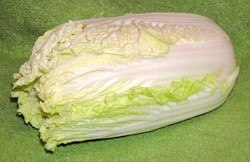
[edit]This group is the more common of the two, especially outside Asia; names such as napa cabbage, dà báicài (Chinese: 大白菜, "large white vegetable"); Baguio petsay or petsay wombok (Tagalog); Chinese white cabbage; "wong a pak" (Hokkien, Fujianese); baechu (Korean: 배추), wongbok; hakusai (Japanese: 白菜 or ハクサイ) and "suann-tang-pe̍h-á" (Taiwanese)[3] usually refer to members of this group. Pekinensis Group cabbages have broad green leaves with white petioles, tightly wrapped in a cylindrical formation and usually forming a compact head. As the group name indicates, this is particularly popular in northern China around Beijing (Peking).
Chinensis Group
[edit].jpg)
Chinensis Group cultivars do not form heads; instead, they have smooth, dark green leaf blades forming a cluster reminiscent of mustard or celery. These cultivars are popular in southern China and Southeast Asia. Being winter-hardy, they are increasingly grown in Northern Europe. This group was originally classified as its own species under the name B. chinensis by Linnaeus.[citation needed]
See also
[edit]- Cabbage, the related European vegetable B. oleracea Capitata Group
- Gai lan (芥兰, p jièlán), the Chinese vegetable B. oleracea Alboglabra Group
- Choy sum (菜心, p càixīn) aka yu choy (油菜, p yóucài), the Chinese vegetable B. rapa var. parachinensis
- Turnip, the same species B. rapa cultivated in Europe for its roots
 Food portal

References
[edit]- ^ Surya, Reggie; Nugroho, David (April 3, 2023). "Kimchi throughout millennia: a narrative review on the early and modern history of kimchi". Journal of Ethnic Foods. 10 (1): 5. doi:10.1186/s42779-023-00171-w. PMC 10068239.
- ^ Heiney, Anna (2017-02-17). "Cabbage Patch: Fifth Crop Harvested Aboard Space Station". NASA. Archived from the original on 2019-04-23. Retrieved 2018-05-11.
- ^ "山東白仔-詞目-教育部臺灣閩南語常用詞辭典". sutian.moe.edu.tw. Retrieved 2023-09-04.
External links
[edit]| Species | |
|---|---|
| Cultivars | |

Chinese cabbage
View on GrokipediaTaxonomy and Etymology
Botanical Classification
Chinese cabbage is classified within the genus Brassica of the mustard family, Brassicaceae, which comprises approximately 370 genera and over 4,000 species of mostly herbaceous plants known for their cruciform flowers and pungent compounds.[4] The primary forms of Chinese cabbage fall under the species Brassica rapa L., a diploid species with 20 chromosomes (2n=20), encompassing two key subspecies: B. rapa subsp. pekinensis (Lour.) Hanelt, representing the Pekinensis Group (also known as heading Chinese cabbage or napa cabbage), and B. rapa subsp. chinensis (L.) Hanelt, representing the Chinensis Group (including bok choy and similar non-heading types).[5][6] These subspecies are distinguished by their growth habits and morphological traits, though both share the genetic foundation of B. rapa.[1] Taxonomic nomenclature for these forms has seen some debate, with historical and regional variations using varietal designations such as B. rapa var. pekinensis (Lour.) Kitam. or B. rapa var. glabra Regel instead of the subspecies rank.[7] Modern botanical consensus, guided by the International Code of Nomenclature for algae, fungi, and plants, favors the subspecies classification (subsp. pekinensis and subsp. chinensis) due to their distinct evolutionary divergence within B. rapa, supported by morphological, cytogenetic, and molecular evidence.[8] This ranking reflects the significant genetic differentiation from other B. rapa subspecies, such as subsp. rapa (turnip) or subsp. oleifera (oilseed types), while acknowledging ongoing refinements based on genomic studies.[5] Both subspecies derive from the wild progenitor Brassica rapa, a weedy species native to the Mediterranean Basin and the Fertile Crescent, with no extant wild populations of the cultivated Chinese cabbage forms identified.[9] Evolutionary links trace back to ancient Mediterranean origins, where wild B. rapa was likely domesticated into leafy and root forms before spreading eastward via trade routes, with imports to China occurring around the 5th century AD, as evidenced by early textual references in Chinese herbals like the Bencao Jing Jizhu.[10] This dispersal facilitated adaptation to Asian climates, resulting in the specialized heading and loose-leaf cultivars without direct wild intermediaries in East Asia.[11] Chinese cabbage exhibits potential for hybridization with other Brassica species, such as B. oleracea (cabbage) or B. juncea (mustard), producing interspecific hybrids that are often used in breeding programs to transfer traits like disease resistance.[12] These crosses, facilitated by the close genomic relatedness within the Brassicaceae (AA genome of B. rapa aligning with parts of amphidiploid genomes), can yield fertile progeny, though barriers like chromosome pairing issues sometimes arise.[13] Such hybridization underscores the taxonomic fluidity in Brassica, contributing to debates on species boundaries and the evolutionary dynamics of crop-wild interactions.[14]Common Names and Terminology
Chinese cabbage, known in English as an adaptation of its Asian origins, encompasses several cultivar groups under Brassica rapa subsp. pekinensis and subsp. chinensis. The term "Chinese cabbage" broadly refers to these leafy vegetables in Western contexts, distinguishing them from European cabbage (Brassica oleracea var. capitata).[2] The name "napa cabbage" derives from the colloquial Japanese term nappa (菜っ葉), meaning "vegetable leaves" or "greens," which was adopted in English during the vegetable's introduction to the West via Japanese markets in the early 20th century.[15] In contrast, "bok choy" originates from the Cantonese phrase pak choi (白菜), literally translating to "white vegetable," reflecting its pale stalks and common use in southern Chinese cuisine; the Mandarin equivalent is bái cài (白菜), also meaning "white vegetable."[2] These English terms often overlap but typically align with specific cultivar groups: "napa cabbage" for heading types and "bok choy" for non-heading varieties. Regionally, nomenclature varies significantly, influenced by local languages and culinary traditions. In Mandarin Chinese, the vegetable is commonly called dà bái cài (大白菜) for the larger heading varieties, meaning "big white vegetable," while smaller types may simply be bái cài.[2] In the Philippines, Tagalog speakers refer to it as pechay or pechay Baguio (for highland-grown heading types), derived from Hokkien Chinese influences during historical trade.[15] Thai terminology includes wongbok for napa cabbage, a transliteration reflecting its adoption in Southeast Asian markets.[16] Variations like suān cài (酸菜), meaning "sour vegetable," specifically denote pickled forms of Chinese cabbage, often made from heading types fermented with salt for preservation in northern Chinese diets.[17] In agricultural and culinary terminology, distinctions emphasize growth habits tied to the two main cultivar groups. The Pekinensis Group produces "heading" types that form dense, elongated heads similar to romaine lettuce, used in wrappers for dishes like dumplings, whereas the Chinensis Group yields "non-heading" or loose-leaved types like bok choy, harvested as clusters of spoon-shaped leaves for stir-fries.[2] These terms guide cultivation practices, with heading varieties requiring cooler temperatures to bolt properly, and non-heading ones offering faster maturity in warmer conditions.[18] Such nomenclature aids in precise seed selection and recipe applications across global farming and cooking.[19]History and Domestication
Origins and Early Cultivation
Chinese cabbage, encompassing the Brassica rapa subspecies pekinensis and chinensis, was domesticated from wild Brassica rapa, a species native to regions spanning Europe and Central Asia. Genetic and historical evidence suggests that wild forms were likely introduced to China via trade routes such as the Silk Road, with no native wild populations identified in East Asia. Domestication occurred primarily in the Yangtze River Delta region around the 5th century AD, where local farmers selectively bred the plant for improved leaf quality and growth habits, marking the transition from wild mustard relatives to cultivated leafy vegetables. Genomic studies indicate that Chinese cabbage likely originated through admixture of turnip-like forms and other B. rapa lineages around 200 BC to 800 AD.[10][20][21] Early historical records of related Brassica rapa (such as turnip) appear in Chinese texts dating back to the Han Dynasty (206 BC–220 AD), referenced under names like "song" or "wujing." The first specific references to leafy Chinese cabbage appear around the 3rd–4th century AD, such as in the Nanfang Caomu Zhuang (304 AD). These mentions align with increased cultural exchanges along the Silk Road during the Han era, facilitating the plant's entry and adaptation. By the 6th century AD, agricultural treatises such as the Qimin Yaoshu documented cultivation techniques, reflecting its integration into Chinese farming practices. Its medicinal value was further popularized in the 16th century by Li Shizhen in his Compendium of Materia Medica (Bencao Gangmu), where he detailed its properties for treating ailments like digestive issues and described its resilience in cooler climates.[10][22][22] Initial cultivation focused on the plant as a cool-season crop, particularly in northern China, where it thrived in temperate conditions with moderate rainfall. Farmers practiced early selection for diverse forms, including heading varieties (pekinensis group) that form compact heads and non-heading types (chinensis group) with loose leaf clusters, enhancing adaptability to regional climates. This selective breeding in ancient China laid the foundation for its role as a staple vegetable, emphasizing traits like bolt resistance and palatability over wild progenitors.[22][20]Global Spread and Modern Development
Chinese cabbage, originally domesticated in southern China, saw significant internal dissemination during the Ming Dynasty (14th–17th centuries), with cultivation expanding northward and northern production eventually surpassing southern yields.[22] By the late 19th century, the vegetable had been introduced to Korea, where napa cabbage (subsp. pekinensis) became integral to local cuisine, particularly for fermentation into kimchi.[23] The 19th century marked the beginning of Chinese cabbage's global spread, driven by Chinese diaspora communities who cultivated it in Europe and the Americas, integrating it into diverse agricultural systems. In North America, both heading and non-heading types gained traction among immigrant populations and entered mainstream markets by the mid-1800s. This dissemination continued into the 20th century, with cultivation expanding in Southeast Asia and India amid rising demand for Asian-inspired dishes like stir-fries, supported by post-colonial agricultural exchanges and urbanization.[24] In 2017, astronauts on the International Space Station harvested Tokyo Bekana Chinese cabbage as part of NASA's Veggie experiment, evaluating its viability for space nutrition and closed-loop farming systems.[25] Modern breeding efforts in the 20th century focused on developing bolt-resistant hybrids to extend growing seasons and improve yields, addressing the plant's tendency to prematurely flower under stress.[26] These hybrids, often F1 varieties, incorporated traits for heat tolerance and disease resistance, enabling broader commercial adoption.[27] Today, China dominates global production of Chinese cabbage, accounting for over 40 million metric tons annually as of 2022.[28]Cultivar Groups
Pekinensis Group
The Pekinensis Group encompasses heading-type cultivars of Brassica rapa subsp. pekinensis, commonly known as napa cabbage or celery cabbage, distinguished by their dense, elongated heads that typically measure 25-30 cm in length and 15-25 cm in width. These plants form compact, barrel-shaped or cylindrical heads with pale green, crinkled leaves featuring prominent thick white ribs and midveins, providing a crisp texture and mild, slightly sweet flavor. Maturing as cool-season annuals or biennials, they generally reach harvest readiness in 60-80 days from transplanting, thriving in temperatures between 15-21°C during the day and cooler nights to promote optimal head formation and prevent bolting.[29][30][2] Notable varieties within the Pekinensis Group include hybrids bred for specific traits such as early maturity, disease resistance, and suitability for fermentation. For instance, 'Minuet' is an F1 hybrid that produces 23 cm dark green heads with a yellow interior and light sweet taste, maturing in approximately 48 days while exhibiting slow bolting tendencies, making it ideal for spring or fall plantings. Similarly, 'Blues' is a 52-day F1 hybrid with blue-tinged leaves, strong resistance to bolting and common diseases like downy mildew, and a pungent flavor profile that enhances fermented products; its tight head structure facilitates uniform fermentation and storage. These varieties exemplify the group's adaptability to diverse climates, with many selected for their ability to form solid heads that resist splitting under varying moisture conditions.[31][32] The Pekinensis Group is predominantly cultivated in northern China, its region of origin near Beijing, and has become a staple in Korea, where it is known as baechu and extensively used in traditional fermentation processes. In Korea, these cultivars dominate kimchi production, with their tight, layered heads providing an ideal matrix for lactic acid fermentation, resulting in the probiotic-rich baechu-kimchi that constitutes the majority of kimchi consumption. Regional adaptations emphasize cool-temperate zones, where the group's tolerance to light frosts and preference for well-drained, fertile soils support high yields, often exceeding 40 tons per hectare in optimized systems.[33][23][34][2]Chinensis Group
The Chinensis Group encompasses non-heading cultivars of Brassica rapa subsp. chinensis, characterized by a loose rosette of dark green, glossy leaves with thick, white petioles that form clusters rather than compact heads.[35] These leaves are typically spoon-shaped or obovate, providing a tender texture and mild, cabbage-like flavor when harvested.[36] Plants grow to 0.5–2 feet tall, with a rapid growth cycle maturing in 45–60 days from transplant, making them suitable for successive plantings.[37] Unlike the heading Pekinensis Group, the Chinensis Group exhibits greater heat tolerance, thriving in warmer conditions with adequate moisture and showing resistance to bolting under stress.[37][38] Subgroups within the Chinensis Group include pak choi, which features smaller, upright plants with crisp white stalks and dark green leaves ideal for baby greens, and tatsoi, a low-growing rosette type with rounded, spoon-like leaves that form a dense basal cluster.[4][39] Representative varieties highlight adaptations for specific growing conditions; for instance, 'Mei Qing Choi' is a compact, hybrid baby pak choi reaching 8–10 inches tall, valued for its uniform maturity, bolt resistance, and tolerance to both heat and cold.[38][40] Similarly, 'Joi Cho' (also known as Joi Choi) offers vigorous growth and enhanced resistance to common brassica diseases, supporting reliable yields in diverse climates.[41] These cultivars are particularly adapted to southern China and Southeast Asia, where they are widely cultivated in tropical and subtropical regions for their ability to perform in higher temperatures and humid environments.[42] In these areas, Chinensis Group varieties like bok choy are harvested young for fresh use in quick-cooking applications such as stir-fries, emphasizing their versatility and nutritional accessibility.[4]Physical Description
Morphology and Growth Habit
Chinese cabbage (Brassica rapa subsp. pekinensis and subsp. chinensis) is a biennial herbaceous plant typically cultivated as an annual for its edible leaves. The vegetative plant forms an erect rosette of leaves, reaching a height of 20-50 cm and a width of 15-25 cm, depending on environmental conditions. The leaves are oblong to ovate, with crinkled or wavy margins, pale green blades, and prominent white midribs; they are arranged in dense, upright clusters that form either a compact, barrel-shaped head or a loose bunch.[1][2] In the second year, under vernalization, the plant produces a flowering stem (bolting) that elongates to approximately 0.9-1 m tall, bearing small yellow, four-petaled flowers less than 2.5 cm in diameter clustered in racemes. This reproductive phase marks the end of edible leaf production, as leaves become bitter.[30][1] Growth begins with seed germination, which occurs in 4-10 days under optimal moist conditions at 18-24°C. Vegetative development proceeds through seedling, rosette, and heading stages, favoring cool temperatures of 15-20°C for robust leaf expansion; warmer conditions (above 24°C) or extended daylight (over 14 hours) can induce premature bolting.[43][2][18] The root system is shallow and fibrous, consisting of a short taproot with extensive lateral roots and root hairs concentrated in the top 20-30 cm of soil, enabling efficient nutrient uptake but rendering the plant vulnerable to soil-borne pathogens like clubroot (Plasmodiophora brassicae) in acidic or poorly drained conditions.[44][45]Variations Across Cultivars
Chinese cabbage cultivars exhibit notable morphological variations, particularly between the two primary groups: the heading Pekinensis group and the non-heading Chinensis group. In the Pekinensis group, leaves are typically wrinkled or crinkled, lighter green in color, and arranged to form compact, overlapping heads, contributing to a dense structure.[46] In contrast, the Chinensis group features smoother, glossy leaves that are darker green, growing in loose, open clusters without forming a tight head.[47] These leaf differences influence overall plant architecture, with Pekinensis types developing a more enclosed form for storage and transport, while Chinensis types maintain an upright, accessible rosette.[4] Size and growth habit also vary significantly across cultivars. Heading types from the Pekinensis group often form barrel-shaped or cylindrical heads weighing 1 to 3 kg, providing substantial yield per plant.[4] Non-heading Chinensis cultivars, such as those resembling bok choy, produce compact rosettes typically weighing 0.5 to 1 kg, with individual plants harvested as clusters of stalks and leaves.[48] Color variations extend beyond standard greens, as modern hybrids incorporate purple pigmentation in leaves and stems, resulting from anthocyanin accumulation and offering enhanced visual appeal and potential nutritional benefits.[49] Seasonal adaptations further diversify cultivar traits to suit environmental conditions. Winter-hardy forms, often selected for cooler climates, develop thicker petioles that provide structural support and frost resistance, enabling overwintering in temperate regions.[2] Summer-adapted types prioritize faster growth cycles for quick maturation in warmer weather but carry a higher risk of bolting under heat or prolonged day length, necessitating careful timing in cultivation.[50] These adaptations allow Chinese cabbage to thrive across diverse growing seasons while maintaining productivity.[18]Cultivation
Growing Conditions and Practices
Chinese cabbage thrives in cool climates with daytime temperatures ranging from 10 to 25°C (50 to 77°F), ideally around 15 to 21°C (60 to 70°F) for optimal growth and head formation, though it tolerates light frosts down to -2 to -7°C (28 to 20°F) once mature.[51][2][52] Prolonged exposure to temperatures above 24°C (75°F) can cause tip burn, while temperatures below 10°C (50°F) for extended periods may induce bolting, particularly in spring plantings; fall cultivation is thus preferred in many regions to avoid these stresses.[51][52][53] The crop requires fertile, well-drained soils with good moisture retention, preferably loamy or sandy loam textures high in organic matter, and a pH between 6.0 and 7.5 to support nutrient availability and prevent issues like clubroot.[18][51][53] Full sun exposure is essential for vigorous growth, but partial shade is beneficial in hotter regions to mitigate heat stress and reduce bolting risk.[18][51] Planting typically involves direct seeding or transplanting, with seeds sown 0.6 to 1.3 cm (0.25 to 0.5 inch) deep in rows spaced 30 to 90 cm (12 to 36 inches) apart, thinning or spacing seedlings 25 to 45 cm (10 to 18 inches) within rows depending on cultivar—closer for elongated upright types like Michihili and wider for barrel-shaped heading varieties like napa.[53][51][2] For transplants, start seeds indoors 4 to 6 weeks before the last frost and set out seedlings when they have 4 to 6 true leaves, using a starter fertilizer solution to promote root establishment; direct sowing in fall occurs 6 to 8 weeks before the first frost for harvest in 45 to 80 days.[53][51][2] Consistent irrigation is crucial during establishment and head development to maintain even soil moisture without waterlogging.[18][51] As a moderate to heavy nitrogen feeder, Chinese cabbage benefits from pre-plant applications of 100 to 150 kg/ha (90 to 135 lb/acre) of nitrogen, alongside balanced phosphorus (60 to 80 kg/ha or 50 to 70 lb/acre) and potassium (80 to 100 kg/ha or 70 to 90 lb/acre) based on soil tests, with half the nitrogen applied at planting and the remainder sidedressed when plants are half-grown.[2][52] Incorporating compost or organic matter before planting enhances soil fertility and supplies micronutrients like boron and calcium, reducing deficiency risks that can lead to tip burn or hollow stems; avoid excessive nitrogen late in the cycle to prevent loose heads.[18][52][51]Pests, Diseases, and Management
Chinese cabbage is susceptible to several major pests, including aphids (Myzus persicae and others), which feed on plant sap and transmit viruses, leading to curled leaves and stunted growth.[1] Cabbage loopers (Trichoplusia ni), caterpillars that chew irregular holes in foliage, and flea beetles (Phyllotreta spp.), which create small shot-hole damage on leaves, are also common threats during early growth stages.[1] Management strategies emphasize integrated pest management (IPM); physical barriers like floating row covers prevent insect access without chemicals, while neem oil applications disrupt aphid and looper feeding and reproduction.[54] Biological controls, such as releasing ladybugs (Coccinella septempunctata) that prey on aphids, provide natural suppression in home and small-scale gardens.[55] Diseases pose significant risks to Chinese cabbage yields, with clubroot caused by the soilborne protist Plasmodiophora brassicae producing galls on roots that impair water and nutrient uptake, often resulting in wilting and plant death.[56] Downy mildew, incited by Hyaloperonospora brassicae, manifests as yellowing upper leaves with purplish-gray sporulation underneath, thriving in cool, moist conditions.[57] Prevention relies on cultural practices like crop rotation, avoiding brassica plantings in the same field for at least 5–6 years to reduce pathogen inoculum.[56] Planting resistant varieties, such as those with intermediate resistance to downy mildew, minimizes infection rates, while targeted fungicides like cyazofamid or phosphites offer effective control when applied preventively during high-risk periods.[57][58] Non-infectious disorders can also affect Chinese cabbage, including tip burn, a physiological issue from calcium deficiency that causes necrotic edges on inner leaves due to uneven transpiration and poor calcium mobility within the plant.[59] Bolting, premature flowering triggered by heat stress or prolonged high temperatures above 75°F (24°C), renders heads bitter and unmarketable by diverting energy to seed production.[60] Cultural remedies include maintaining consistent soil moisture through mulching with organic materials to stabilize temperatures and prevent calcium leaching, alongside timely planting in cooler seasons (late summer to fall) to avoid heat exposure.[59] Ensuring soil pH above 6.5 enhances calcium availability and reduces tip burn incidence without supplemental sprays.[61]Culinary Uses
Preparation Methods and Dishes
Chinese cabbage is versatile in culinary applications, commonly prepared through stir-frying, steaming, fermenting, and raw consumption to highlight its tender texture and mild flavor. Stir-frying involves quick high-heat cooking with aromatics like garlic to preserve crunchiness, while steaming maintains its natural moisture, and fermentation develops tangy profiles essential for preserved dishes. Raw preparations emphasize freshness in salads, and techniques often account for cultivar differences, such as separating thicker stems in bok choy (Chinensis group) from softer leaves in napa cabbage (Pekinensis group) for even cooking.[62][63][64] Stir-frying is a prevalent method, where the cabbage is cut into bite-sized pieces and cooked rapidly in a wok with oil, garlic, and seasonings like soy sauce or vinegar to achieve a tender-crisp texture. For instance, a basic Chinese cabbage stir-fry starts by heating oil and garlic, adding the cabbage, and tossing with Shaoxing wine, soy sauce, sugar, and a splash of water for 1-2 minutes under high heat to soften without wilting. In bok choy preparations, stems are added first to cook through before incorporating leaves, often finished with oyster sauce for a savory glaze; a standard recipe includes blanching or direct stir-frying 1.5 pounds of baby bok choy with garlic, then coating in a mixture of oyster sauce, soy sauce, and sesame oil. This method suits both cultivar groups, enhancing the vegetable's subtle sweetness.[62][65][66] Steaming offers a gentle approach, typically involving whole leaves or rolls to retain nutrients and tenderness, often served with dipping sauces. Napa cabbage leaves are blanched briefly, filled with ground meat or mushrooms, rolled, and steamed for 15-20 minutes until succulent, then drizzled with a soy-based sauce incorporating ginger and sesame oil. Simpler versions steam sliced napa cabbage for 5-7 minutes and dress with light soy sauce and chili oil, preserving its juicy layers without added fats. This technique is ideal for lighter dishes, complementing richer mains.[64][67] Fermentation transforms Chinese cabbage into tangy staples, beginning with salting to draw out moisture and inhibit spoilage, followed by packing with spices in an anaerobic environment for days to weeks. For baechu kimchi, a Korean fermented napa cabbage dish, whole heads are quartered, salted with coarse sea salt for 2 hours to wilt leaves, rinsed, and coated in a paste of gochugaru (Korean chili flakes), garlic, ginger, fish sauce, and glutinous rice porridge before fermenting at room temperature for 1-5 days. Salting draws out moisture, creating brine that fosters lactic acid bacteria for the characteristic sourness. Similarly, suan cai, a northern Chinese pickled cabbage, uses napa cabbage salted and sun-dried briefly, then layered with ginger and chili in jars to ferment for 1-2 months, yielding a sour ingredient for soups. In suan cai yu, the pickled cabbage is simmered with fish slices, Sichuan peppercorns, and chilies for a hot-and-sour broth. These processes require monitoring temperature to achieve optimal flavor development.[68][69][70][71][72][73] Raw preparations showcase the cabbage's crispness in salads, often dressed lightly to avoid sogginess. Napa cabbage is thinly sliced or torn, tossed with sesame oil, rice vinegar, and scallions for a simple side, or mixed with mung bean sprouts and smoked tofu for added protein. Fresh baechu geotjeori, a non-fermented Korean salad, involves salting napa briefly, then combining with gochugaru, garlic, and fish sauce for a spicy, vibrant dish served immediately. These methods highlight the vegetable's fresh, watery bite without cooking.[74][75][76]Cultural and Regional Significance
In Chinese culture, Chinese cabbage (Brassica rapa subsp. pekinensis) holds deep symbolic significance, particularly during Lunar New Year celebrations, The Mandarin term "bai cai" phonetically resembles "bai kuai," meaning "hundred times wealth," reinforcing its association with abundance and good fortune in traditional customs.[77][78] In Korea, Chinese cabbage serves as the primary ingredient in baechu kimchi, a fermented staple that embodies communal solidarity and seasonal preservation, integral to daily meals across social classes. The practice of kimjang, the communal making and sharing of kimchi, was inscribed on UNESCO's Representative List of the Intangible Cultural Heritage of Humanity in 2013, highlighting its role in fostering social bonds and cultural identity.[79][80] Regionally, Chinese cabbage plays a vital role in Northeastern China's winter sustenance traditions, where its cold-hardiness allows for large-scale storage in cellars or outdoor pits to endure harsh, prolonged winters, a practice deeply embedded in northern agrarian life. In Southeast Asia, particularly in markets across Thailand and Vietnam, it is a ubiquitous fresh vegetable, valued for its versatility in local stir-fries and salads, with expanding distribution networks supporting its availability in urban centers. Since the 20th century, global migration and culinary exchange have led to its adoption in fusion dishes, such as American Chinese egg rolls and Japanese-inspired salads, reflecting broader integration into international foodways.[81][82] In modern contexts, Chinese cabbage's cultivation in space environments, such as NASA's Veggie system on the International Space Station, underscores its potential for sustainable food production in extraterrestrial habitats, with successful harvests of varieties like Tokyo Bekana demonstrating viability for long-duration missions.[83]Nutritional Value
Nutrient Composition
Chinese cabbage, encompassing varieties such as Brassica rapa subsp. pekinensis (pe-tsai or napa cabbage) and subsp. chinensis (pak-choi or bok choy), is characterized by a low-calorie profile and high water content. Per 100 g of raw product, it typically provides 13–16 kcal, with approximately 94–95% water, 1.2–1.5 g protein, 2.2–3.3 g carbohydrates (including 1–1.2 g dietary fiber), and negligible fat (0.2 g). These macronutrients contribute to its role as a low-energy-density vegetable suitable for volume-rich diets. In terms of micronutrients, Chinese cabbage is notably rich in certain vitamins and minerals. It supplies 27–45 mg of vitamin C, 43–46 μg of vitamin K, and 66–79 μg of folate per 100 g, supporting daily requirements for these water-soluble and fat-soluble vitamins. Mineral levels include 238–252 mg potassium and 77–105 mg calcium, with the higher values observed in the chinensis subspecies. Other minerals present in moderate amounts are magnesium (10–19 mg) and iron (0.5–0.8 mg).| Nutrient | Amount per 100 g (raw, pak-choi) | Amount per 100 g (raw, pe-tsai) |
|---|---|---|
| Calories | 13 kcal | 16 kcal |
| Protein | 1.5 g | 1.2 g |
| Carbohydrates | 2.2 g | 3.3 g |
| Dietary Fiber | 1.0 g | 1.2 g |
| Fat | 0.2 g | 0.2 g |
| Vitamin C | 45 mg | 27 mg |
| Vitamin K | 46 μg | 43 μg |
| Folate | 66 μg | 79 μg |
| Potassium | 252 mg | 238 mg |
| Calcium | 105 mg | 77 mg |