Hubbry Logo
Cleome gynandraCleome gynandraMain
Open search
Cleome gynandra
Community hub
Cleome gynandra
logo
8 pages, 0 posts
0 subscribers
Be the first to start a discussion here.
Cleome gynandra
Cleome gynandra
from Wikipedia

Cleome gynandra
Scientific classification Edit this classification
Kingdom: Plantae
Clade: Tracheophytes
Clade: Angiosperms
Clade: Eudicots
Clade: Rosids
Order: Brassicales
Family: Cleomaceae
Genus: Cleome
Species:
C. gynandra
Binomial name
Cleome gynandra
  world range[1]
Synonyms[2]
List
    • Cleome acuta Schumach. & Thonn.
    • Cleome affinis (Blume) Spreng. nom. illeg.
    • Cleome alliacea Blanco
    • Cleome alliodora Blanco
    • Cleome blumeana D.Dietr.
    • Cleome bungei Steud.
    • Cleome candelabrum Sims
    • Cleome denticulata Schult. & Schult.f.
    • Cleome eckloniana Schrad.
    • Cleome flexuosa F.Dietr. ex Schult. & Schult.f.
    • Cleome heterotricha Burch.
    • Cleome muricata (Schrad.) Schult. & Schult.f.
    • Cleome oleracea Welw.
    • Cleome pentaphylla L.
    • Cleome pubescens Sieber ex Steud.
    • Cleome rosea Eckl. ex Steud. nom. inval.
    • Cleome triphylla L.
    • Gymnogonia pentaphylla (L.) R. Br. ex Steud.
    • Gynandropsis affinis Blume
    • Gynandropsis candelabrum (Sims) Sweet
    • Gynandropsis denticulata DC.
    • Gynandropsis glandulosa C.Presl
    • Gynandropsis gynandra (L.) Briq.
    • Gynandropsis heterotricha DC.
    • Gynandropsis muricata Schrad.
    • Gynandropsis ophitocarpa DC.
    • Gynandropsis palmipes DC.
    • Gynandropsis pentaphylla (L.) DC.
    • Gynandropsis pentaphylla Blanco
    • Gynandropsis sinica Miq.
    • Gynandropsis triphylla DC.
    • Gynandropsis viscida Bunge
    • Pedicellaria pentaphylla (L.) Schrank
    • Pedicellaria triphylla (L.) Pax
    • Podogyne pentaphylla (L.) Hoffmanns.
    • Sinapistrum pentaphyllum (L.) Medik.

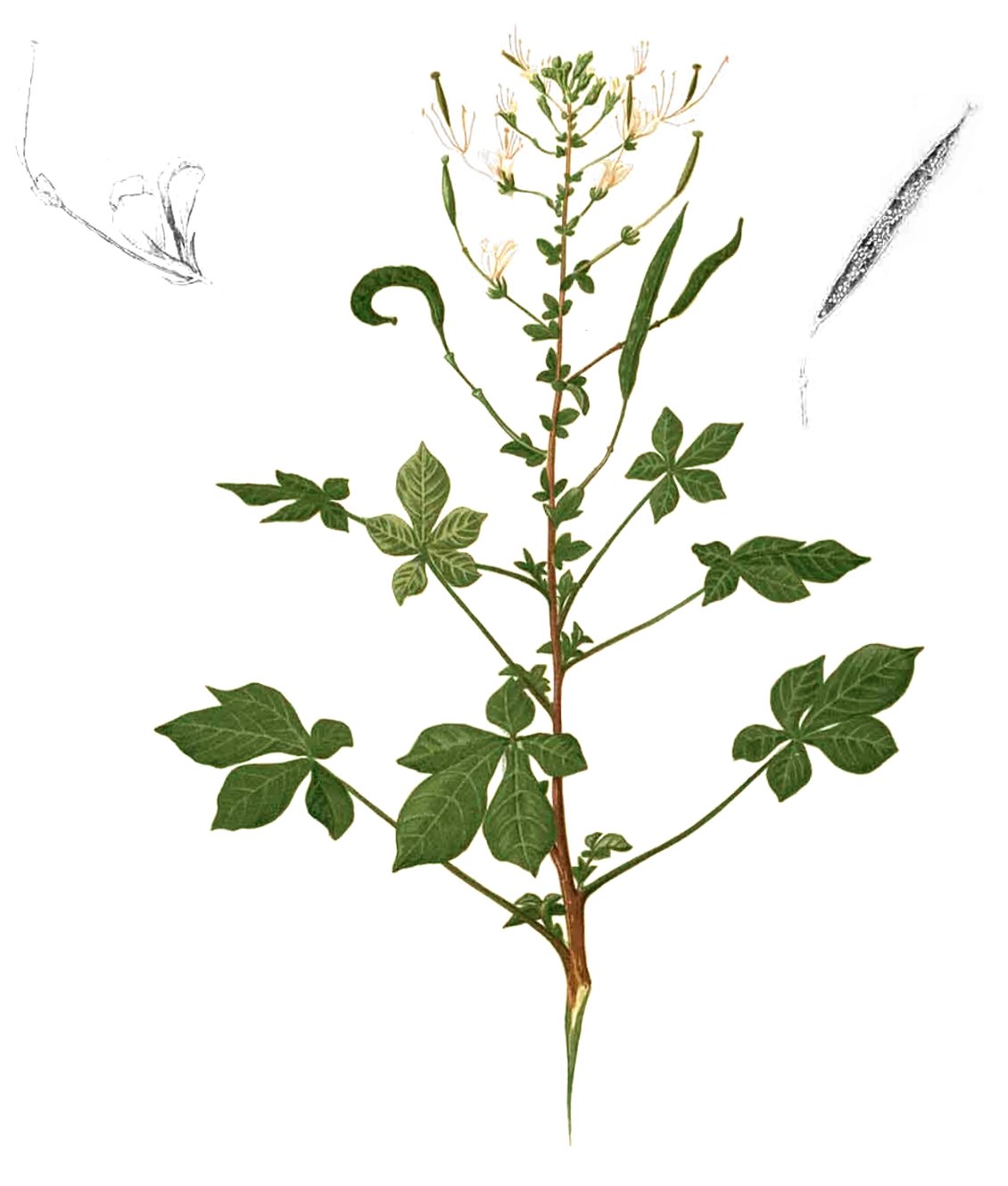
Cleome gynandra is a species of Cleome that is used as a leaf vegetable. It is known by many common names including Shona cabbage,[3] African cabbage, spiderwisp, cat's whiskers,[4] and stinkweed.[5] It is an annual wildflower native to Africa but has become widespread in many tropical and sub-tropical parts of the world.[6]

Description

[edit]

Cleome gynandra is an erect, branching plant generally between 25 cm and 60 cm tall. Depending on environmental conditions, it can reach up to 150 cm of height.[7] Its sparse leaves are each made up of 3–7 oval-shaped leaflets. The flowers are white, sometimes changing to rose pink as they age.[8] The leaves and flowers are both edible. The leaves have a strong bitter, sometimes peppery flavor similar to mustard greens.

The fruit is a dehiscent silique, a slender and spindle-shaped capsule, and measures 12 cm in length and 8–10 mm in width. During the ripening process, the color of the pods turns from green to yellow to brown when dry. In the dry state, they dehisce longitudinally and release their seeds. Each silique can contain as many as 100-150 seeds. The seeds are round, black and with a rough surface and measure 1.0-1.5 mm in diameter.[7]: 4  Seeds of C. gynandra contain 17-19% oil.[9]

Cleome gynandra has a long tap root with root hairs and has few secondary roots.[10]

Uses

[edit]
Gynandra
Gynandra

Typically, the leaves and shoots are eaten boiled or in stews. The leaves are often eaten in Sub-Saharan Africa, where they are often dried for storage, then cooked with milk or butter to reduce its bitter taste.[11] In Kenya, Uganda and Tanzania, the leaves are cooked with groundnut paste.

In Northern Uganda it is known as Dek Akeo, or Akeyo.[12] It is prepared by boiling it in hot water mixed with groundnut paste. It is served with Kalo, posho, sweet potatoes. The vegetable is sun-dried and preserved for a longer shelf-life and future medicinal consumption. The vegetable is served in local restaurants and hotels but predominantly consumed in greater Northern Uganda.[12][13][14]

The plant is useful for intercropping due to its insect repellent and anti-tick properties.[15][16] Leaves exhibit repellent, destructive and antifeedant properties to some ticks species in all their life stages (larvae, nymphs, and adults).[17]

In Thailand and Malaysia, the leaves are a popular food item fermented with rice water as a pickle known as phak sian dong.[18] The same pickle is also eaten in the northern states of Malaysia, and is known as jeruk maman. The state of Negeri Sembilan specializes in rendang maman,[19] where the leaves are braised in spiced coconut milk for a long period of time to achieve the desirable crisp and texture.

The leaves also have antioxidative properties that can help with inflammatory diseases.[6] Because of its anti-inflammatory properties, it is sometimes used as a medicinal herb.[20] The leaves and flowers of C. gynandra have been used in traditional medicine to treat conditions including  food poisoning, rheumatism, inflammation, bacterial infections,[10][21][22] and especially pain-related conditions such as headache toothache, headache, neuralgia, stomach pain, ear-ache, rheumatoid arthritis, skeletal fractures, colic pain and chest pain.[23][24][25] In Saudi Arabia, C. gynandra extracts are used to treat the severe pain and anti-inflammatory reactions caused by scorpion stings.[26]

Special compounds and nutritional value

[edit]

Cleome gynandra is high in beta-carotene, folic acid, ascorbic acid and calcium. It also contains vitamin E, iron, and oxalic acid. Generally, the leaves are about 4.0% protein. 100 g of C. gynandra contain around 1.4 g crude fibre, 127–484 mg vitamin C and 0.76 mg zinc, 3.1-7.7 g crude protein. The contents of iron and calcium vary by zone from 1–11 mg, and 213–434 mg respectively.[10]

The seeds of C. gynandra contain fatty acids such as palmitic acid, stearic acid, oleic acid, and linoleic acid and essential amino acids including glutamic acid, arginine, leucine, valine, glycine, and proline.[27][28]

Cultivation

[edit]

Cleome gynandra is normally not a cultivated crop. Leaves are in most cases harvested from the plant found as naturally growing weed. However, some studies on the most suitable cultivation techniques have been conducted.[7][29]

Soil requirements

[edit]

Cleome gynandra requires deep, well drained fertile soils. It grows well on loose soils, with high humus content and with pH ranging from 5.5 to 7.[29]

Sowing

[edit]

In cultivation, propagation of the plant is done by seed sowing. Given the small seed size, the depth of sowing and the preparation of the seedbed are important factors. The seedbed requires shallow ploughing (around 15 cm deep), weed removal and harrowing to have a fine loose soil. Seeds can be dispersed unevenly by broadcasting or shallowly drilled in rows spaced around 30 cm apart and around 1 cm deep.[7]

Weeding

[edit]

Weeding is needed in the early stages of development, when the canopy coverage by C. gynandra leaves is still reduced. It can be done by hands or with suitable machinery, ensuring  shallow cultivation.[7]

Fertilization

[edit]

Generous and frequent nitrogen based fertilizers can be applied to delay flowering, prolong vegetative growth and increase number and dimensions of the leaves.[30] Yield increase is more significant when nitrogen is provided in its organic form, although also inorganic nitrogen fertilizers ensure an increase in yield. Recommended fertilizers application depend on soil properties but can reach up to 30 t/ha of farm yard of compost manure or up to 120 kg/ha of inorganic fertilizers.[31]

Watering

[edit]

To result in a good yield, C. gynandra needs adequate soil water content throughout the whole vegetative growing period. Frequent and controlled irrigation is desirable and must be determined depending on soil water retention properties. Over-watering can lead to yield loss due to the scarce resistance to flooding.[7]

Harvesting

[edit]

Harvesting can be done in two distinct ways. The first one consists in complete uprooting of the whole plant and successive separation of the leaves from the stem. Alternatively, multiple harvesting can be done by cutting the higher part of the plant and collecting the upper leaves. This second strategy helps to increase lateral leaves growth and to delay flowering, extending the vegetative period.[7][29]

Yield

[edit]

When fertilizers and water are supplied appropriately, it has been reported that cumulative foliar yield can reach up to 30 t/ha.[29]

Pest and disease control

[edit]

Cleome gynandra has developed through natural selection and not man-made selection for the highest yield. This makes it particularly resistant against diseases.[7] However, the following pests were found on the weed: pentatomids (Agonoselis nubilis), locustus (Schitocera gregaria), flea beetles (Phyllotreta mashonana), cabbage sawfly (Athalia spp.), bugs (Nezara spp. and Bagrada spp.), cotton jassids (Empoasca spp.), nematodes (Meloidogyne spp.).[10][32]

Pesticide attacks are generally stronger during dry periods than during the rainy season. These can, however, be controlled by firing the correct pesticides, such as Ambush, Ripcord and Rogor.[7][10] Pest and diseases can also be controlled by breeding programmes. Thanks to this method, the use of fertilizers, which are expensive and cause damage to the environment, gets reduced.[32][33]

Weaver birds eating the seeds during the vegetative stage and mildew fungus can also cause problems during Cleome gynandra’s growth.[10]

Breeding program

[edit]

Despite the great potential of C. gynandra, there is a lack of information, awareness, promotion and available technologies in its cultivation.Therefore, not many studies have been done on the plant yet.[32] Research has tried to make this weed more resistant to dry weather, salt stress tolerance and the lengthening of its vegetative period, thus delaying flowering.[7][33]

Moreover, since the leaves have a particularly bitter taste caused by condensed tannins, breeding programmes have also tried to change this plant trait, in order to attract more potential consumers.[33][34]

Since C. gynandra is self-pollinating, inbreeding and interspecific crossing with its relatives are possible.[7] Studies on the potential number of plant chromosomes have been carried out, although the results are not yet clearly confirmed.[35] Genetic variability is wide and so are the possibilities to increase the biomass of the plant through cross-breeding. In areas where consumption is high, farmers have easily been able to select the most productive traits of the plant. Thus has confirmed good possibilities in its genetic improvement, especially within plants from different geographical origins.[32][33][36]

Socioeconomic potential

[edit]

African Indigenous Vegetables (AIV) such as Cleome gynandra, which have no international trading record, play a crucial role in regional food security due to their suitability and adaptability to the local environment. In South Africa, C. gynandra was identified as the most income generating local vegetable, followed by crops like amaranth, black jack and wild jute. Producers with established recognition in Sub-Saharan African countries like Botswana, Malawi, South Africa, Zambia, and Zimbabwe secure contracts with supermarkets, restaurants, lodges, and hotels, which highlights the economic potential of this crop in regional agriculture.[37]

By enhancing the methods of conducting and sharing research on C. gynandra and employing strategies like value chain development and technology transfer programs, the establishment of sustainable collaboration frameworks for industry stakeholders are fostered. This could allow innovations to spread quickly and gain popularity. Addressing the challenges and opportunities for this crop requires the active involvement of multiple sectors, including farmer organisations, researchers, seed companies, traders, policy makers and consumers. To support AIV in sub-Saharan Africa, it is essential to support efforts through breeding, value chain development and the establishment of national frameworks.[37] Additionally, enhancing the utilization and popularity of orphan crops like C. gynandra requires diversifying products, fostering innovation, and value addition. As example, the urban younger generation showed a positive response to canned vegetable products. The strategic assumption behind is that introducing new product varieties will not only improve the acceptance of AIV but also increase consumption and demand from citizens of both the rural and urban context.[38]

Ecology and distribution

[edit]

It is an annual wildflower native to Africa but has naturalized across tropic and sub-tropical regions across Africa, Asia and America.[6] In those regions it grows at altitudes from 0 to 2400 m above sea level.[6] It grows well in disturbed, well-drained soils, but is also drought-tolerant. It does not tolerate cold temperatures well, and is frost-tender. optimal growth conditions include temperatures between 18 °C and 25 °C, with high light intensity.[7]

Cleome gynandra is considered an invasive weed in many places in the U.S.[39] and elsewhere in the Pacific.[40]

Biochemistry

[edit]

Cleome gynandra uses NAD-malic enzyme type C4 photosynthesis and has the characteristic traits associated with this, including changes in leaf biochemistry, cell biology and development. The family Cleomaceae is relatively close to Brassicaceae with Arabidopsis thaliana (a C3 photosynthetic plant) and therefore offers comparison with this well studied model organism.[41] The C4 pathway in this species evolved independently from two other C4 Cleome species, C. angustifolia and C. oxalidea.[42]

See also

[edit]

References

[edit]
[edit]
Revisions and contributorsEdit on WikipediaRead on Wikipedia
from Grokipedia
Cleome gynandra is an annual in the Cleomaceae, native to tropical and subtropical regions of the , growing erect to heights of 0.5–1.5 m with a branched, sticky stem covered in glandular hairs. It features palmately compound leaves usually with five oblong to lanceolate leaflets, and produces showy white flowers in terminal racemes, followed by slender, muricate capsules containing numerous subglobose seeds. Native to tropical and subtropical and , and widely introduced to , , parts of , and , C. gynandra thrives in disturbed soils, agricultural fields, and roadsides within seasonally dry tropical biomes, often behaving as a fast-growing or semi-cultivated . The plant is prized for its , with leaves providing high levels of vitamins A (6.7–18.9 mg/100 g) and C (127–484 mg/100 g), protein (2.6–6.0%), calcium (189–300 mg/100 g), and iron (2.6–10 mg/100 g), exceeding recommended daily allowances for several essential nutrients and supporting in semi-arid communities. As a climate-smart species, it employs C4 for efficient growth in hot, dry conditions (optimal at 18–25°C) and tolerates marginal soils with pH 5.5–7.0, enhancing its resilience to environmental stresses. Traditionally, it serves as a leafy , , and medicinal for treating , , , and infections due to its , , and compounds, while also offering potential as a natural pest repellent.

Taxonomy and Description

Taxonomy

Cleome gynandra is classified in the family Cleomaceae, subfamily Cleomoideae, which was previously included in the family. Recent phylogenetic and genomic studies have debated the generic boundaries, with some authorities, such as the Flora of North America, placing it in the genus Gynandropsis. The genus encompasses approximately 200 species of annual or perennial herbs and shrubs, with numerous species native to . The specific epithet "gynandra" derives from Greek roots meaning "female-male," referring to the plant's stamens that resemble pistils. The genus name originates from the Greek "kleos," meaning glory or fame, likely alluding to the plant's showy flowers. Common names for C. gynandra include African spiderflower and cat's whiskers. This species has numerous synonyms, including Gynandropsis gynandra (a commonly used synonym in some floras), Cleome pentaphylla, and Cleome heterotricha, among over 30 others documented in botanical literature. The chromosome number of Cleome gynandra varies, reported as 2n = 30, 32, 34, or 36 across different populations.

Morphological Characteristics

Cleome gynandra is an erect annual herb in the family Cleomaceae, typically growing 60–150 cm tall with strong branching from the base. It develops a long system with few secondary , supporting its upright growth form. The stems are densely glandular and often pubescent, exhibiting longitudinal and varying in color from green to reddish-purple, becoming woody toward the base with age. These glands secrete substances that produce a pungent, insect-repellent scent, a distinctive trait aiding in pest deterrence. The leaves are alternate and palmately , usually with 3–7 obovate to elliptic or lanceolate leaflets measuring 2–10 cm long by 1–4 cm wide. Each leaf has a petiole 2–10 cm long, also glandular, with leaflets featuring cuneate bases, rounded to acute apices, and finely toothed margins that are sparsely to distinctly hairy. color ranges from light to dark , contributing to the plant's overall herbaceous appearance. Flowers are bisexual and arranged in terminal racemes up to 30 cm long, giving the an elongating, showy structure as fruits develop. Individual flowers are white or -tinged, with pedicels 1.5–2.5 cm long; they feature four ovate to lanceolate sepals up to 8 mm long, four clawed elliptic to obovate petals up to 1.5 cm long, and six stamens on a 1–1.5 cm androgynophore that imparts a spider-like appearance due to the prominent, elongated filaments. The fruit is a long, narrow, cylindrical capsule up to 12 cm long by 1 cm wide, stalked and beaked, dehiscing via two valves to release numerous seeds. Seeds are subglobose, 1–1.5 mm in diameter, grey to black, and irregularly ribbed, with approximately 1250 seeds per gram.

Ecology and Distribution

Habitat Preferences

Cleome gynandra thrives in warm tropical and subtropical climates, with optimal growth temperatures ranging from 18 to 25°C. It exhibits tolerance to a broader temperature range of approximately 10 to 35°C, facilitated by its C4 photosynthetic pathway, which enhances efficiency in high-light and high-temperature conditions while providing inherent drought resistance. Growth is significantly hampered below 15°C, leading to stunted development and reduced photosynthetic activity, and the plant performs poorly in environments with prolonged high humidity or flooding due to its preference for well-drained conditions. The species prefers well-drained soils, ranging from sandy to clayey loams, with a of 5.5 to 7.0 and elevated content to support robust leaf production. It demonstrates adaptability to marginal and nutrient-poor soils, allowing persistence in less fertile environments typical of disturbed or semi-arid landscapes. Poorly drained heavy clay soils are unsuitable, as they promote waterlogging and inhibit root development. Cleome gynandra occurs naturally from sea level up to altitudes of 2400 meters, enabling its colonization across diverse elevational gradients in tropical regions. Ecologically, Cleome gynandra functions primarily as a in open disturbed areas, roadsides, and agricultural fields such as paddies, where it rapidly colonizes bare ground. Its glandular trichomes on stems and leaves secrete compounds that repel , offering a natural deterrent against pests like the in nearby crops. This trait contributes to its potential invasiveness in anthropogenically disturbed sites, where it can outcompete native due to prolific seeding and fast establishment. As a climate-smart species, Cleome gynandra features a short growth cycle, reaching flowering in 4 to 6 weeks, which allows quick maturation in seasonal environments. Its resilience to semi-arid conditions, bolstered by C4 metabolism and , positions it as a hardy pioneer plant in variable climates.

Global Distribution

The origin of Cleome gynandra remains uncertain, with evidence pointing to tropical and/or southeastern as likely native regions; it is particularly widespread across , where it occurs in over 60 countries including , , , , , , and . In its native range, the plant thrives in seasonally dry tropical biomes, extending from southern and eastern (e.g., , , , ) to parts of such as and . As an , C. gynandra has achieved a and subtropical distribution, appearing in all tropical African countries beyond its core native areas, southern and southeastern , the , Central and (e.g., , , ), and even isolated spots in like and the (e.g., , , ). It frequently establishes near human settlements, such as roadsides, crop fields, and urban edges, reflecting its adaptability to disturbed environments. The species spreads primarily through anthropogenic means, including trade, , and intentional cultivation as a leafy , with seeds broadcast or transported via human activities across continents. dispersal occurs via , as mature pods dehisce septicidally to release lightweight seeds that travel short distances in breezy conditions. Currently, C. gynandra is a common weed in disturbed areas worldwide, often naturalized and invasive in agricultural settings, while also being cultivated on a small scale in eastern and southern Africa (e.g., , , ), , and parts of the for its edible leaves. Its dual status as both a problematic invader and a valued underscores its successful global proliferation.

Uses

Culinary Applications

_Cleome gynandra, commonly known as , is widely utilized as a leafy in various cultures, particularly in and , where young leaves, shoots, and occasionally flowers are harvested for consumption. The tender parts are typically boiled to prepare potherbs, stews, relishes, or side dishes, often for 6-20 minutes with salt, and the cooking water may be discarded to reduce bitterness. In some regions, the leaves are eaten raw in salads or pickled with salt for flavoring in sauces and dishes, enhancing their tangy profile. To mitigate the inherent bitterness, preparations frequently involve cooking with , , , or mixing with other vegetables such as , leaves, or nightshades; pounded groundnut paste is also added for taste in several African countries. These methods not only improve but also contribute to the plant's value as a nutrient-rich food source. The seeds of Cleome gynandra serve culinary purposes as a ground or mustard substitute, providing a pungent flavor similar to traditional spices. Additionally, the seeds yield an polyunsaturated oil extracted through simple pressing, which requires no and is suitable for cooking due to its high content of omega-6 and omega-9 fatty acids. After oil extraction, the remaining seed cake is utilized as , offering a balanced profile for livestock. Preservation techniques for Cleome gynandra leaves focus on to extend , with blanched leaves often formed into balls and sun-dried for storage lasting up to two years, though nutritional quality may decline over time. In , such as and , these dried balls, known as "omuvanda" cakes, are boiled with salt for two hours before and ; alternatively, leaves are ground into for use in foods or soups after soaking. is another method employed in places like to reduce bitterness and create preserved products. Regional culinary practices highlight the plant's versatility, with boiled leaves commonly featured in East African stews served alongside or in and , where coconut milk or groundnuts may be incorporated. In , it forms mashes or relishes for post-childbirth meals among communities like the Kisii in , regarded as restorative. Asian uses include jungle salads in native regions and fermented preparations, underscoring its role in diverse traditional diets.

Medicinal Properties

_Cleome gynandra has been utilized in across various regions, particularly in and , for treating a range of ailments. The leaves are commonly employed to address , often administered to individuals recovering from blood loss such as postpartum mothers or warriors, due to their perceived restorative properties. Decoctions or infusions of leaves and roots are used to alleviate fevers, headaches, and , while root preparations specifically target malaria-like symptoms through fever reduction. Additionally, leaves serve as a and vesicant when applied externally to relieve , lumbago, and , with poultices or direct rubs on affected areas; they are also used for wounds, earaches, and eye inflammations. Seeds function as an to expel intestinal worms like roundworms, and the plant overall aids in managing and scorpion stings. Scientific studies have provided evidence supporting some traditional applications of Cleome gynandra. Extracts exhibit antibacterial activity against both Gram-positive and , validating its use in wound treatment and infection control. The plant's high mineral content, including iron, contributes to its efficacy against by aiding production, as observed in nutritional analyses. Furthermore, essential oils from the plant, rich in , show strong and tick repellent effects against species like Rhipicephalus appendiculatus and Amblyomma variegatum, as well as acaricidal activity on mites, supporting its role in pest management. Preparations of Cleome gynandra for medicinal purposes typically involve simple extractions to preserve bioactive components. Leaf decoctions are boiled for internal use against fevers and , while poultices—made by crushing fresh leaves—are applied topically for and skin issues, though caution is advised to avoid blistering. Root infusions serve for and treatment, and seed oils or extracts act as vermifuges when ingested or applied. These methods, rooted in traditional practices, highlight the plant's versatility, though further clinical trials are needed to standardize dosages and confirm safety.

Other Practical Uses

Cleome gynandra serves as an effective due to volatile oils produced by glandular trichomes on its stems and leaves, which deter pests such as ticks (Rhipicephalus appendiculatus), mosquitoes, larvae (Plutella xylostella), and red spider mites (). These properties make the plant valuable in systems, where it is planted alongside crops like , French beans, and cut-flower roses to reduce pest damage without affecting host plant yield or quality. In , Cleome gynandra functions as a companion to enhance and as a to improve and suppress soilborne pathogens like and Pythium ultimum. When incorporated into soil, its biomass acts as a bio-pesticide, contributing to in semi-arid regions. Additionally, extracts from the are used as a , with crushed seeds or oil dispersed in water to stun or kill for easy harvesting in traditional fishing practices. The seeds provide bird feed, particularly for like weaver birds, and the resulting oilseed meal serves as a supplementary feed after oil extraction. oil is also utilized in production and as a hairdressing agent, where its pediculicidal properties help eliminate lice. Furthermore, the plant's tall stature and showy flowers contribute to its ornamental value in gardens, where it is cultivated for aesthetic purposes.

Nutritional Value and Biochemistry

Nutritional Composition

Cleome gynandra leaves exhibit a high of 86.6 g per 100 g fresh portion, with ranges from 83.3 to 89.6 g, contributing to their succulent texture. The energy value is 142 kJ, derived primarily from macronutrients including protein at 4.8 g (ranging 2.6–6.0 g), at 0.4 g, and variable carbohydrates. The leaves are a rich source of vitamins, particularly at 6.7–18.9 mg per 100 g fresh weight and at 127–484 mg per 100 g, the latter largely due to elevated ascorbic acid levels. These concentrations support visual health and immune function, respectively, in nutrient-limited diets. A 2025 analysis reaffirms its high content of provitamin A and minerals like calcium and iron. Mineral content is notably high, with calcium up to 2209.8 mg per 100 g fresh leaves, iron up to 35.7 mg, and at 8.4 mg. Aluminum is present at unusually elevated levels of 1390 ppm (dry basis), alongside iron at up to 470 ppm (dry basis). Compared to some species like (), Cleome gynandra shows superior levels of calcium, iron, phosphorus, potassium, and . In semi-arid regions, a 100 g serving can meet or exceed recommended daily allowances (RDAs), providing 670–2363% for , 212–807% for , 221% for calcium, 238% for iron, and 56–70% for , enhancing dietary when incorporated into meals.

Bioactive Compounds

Cleome gynandra seeds are rich in glucosinolates, particularly cleomin and glucocapparin, which upon yield bioactive isothiocyanates responsible for the plant's characteristic mustard-like aroma and acrid volatile oil. These sulfur-containing secondary metabolites are typical of the Cleomaceae family (formerly classified under ), where screenings have identified similar profiles across genera, contributing to the plant's defensive roles against herbivores and pathogens. The essential oils extracted from Cleome gynandra, especially from seeds and leaves, contain volatile compounds such as , which exhibits strong insect-repellent properties by disrupting pest sensory receptors. These oils also demonstrate antibacterial activity against pathogens like and , attributed to the membrane-disrupting effects of phenolic components in the extracts. In addition to these, Cleome gynandra harbors antioxidants such as , phenolics, and tocopherols, which scavenge free radicals and mitigate in biological systems. These bioactive compounds collectively underpin the plant's medicinal applications, including and effects observed in ethnopharmacological studies.

Cultivation

Environmental Requirements

Cleome gynandra thrives in warm climates with optimal temperatures ranging from 18°C to 25°C, though it can tolerate a broader range of 10°C to 35°C. It is sensitive to temperatures below 15°C and performs poorly in cold or freezing conditions, requiring minimum temperatures above 15°C for successful growth. As a drought-tolerant , it adapts well to semi-arid, sub-humid, and humid environments but benefits from adequate during vegetative stages to prevent hastened flowering. The exhibits sensitivity to short-day photoperiods, which promote flowering and can limit vegetative growth if not managed. For soil, Cleome gynandra prefers well-drained loams, including sandy to clay loams, that are fertile and enriched with such as composted to enhance leaf production. The optimal ranges from 5.5 to 7.0, allowing growth on a variety of textures as long as drainage is good; it does not tolerate waterlogged or heavy clay soils. This adaptability enables cultivation on marginal or degraded soils, making it suitable for low-input farming systems. Site conditions for Cleome gynandra require full sun exposure with high light intensity, as partial shade reduces growth and yield. It can be grown at altitudes up to 2400 meters above , performing well from to high elevations in tropical and subtropical regions. Row spacing of 30 to 60 cm is recommended to accommodate its erect growth habit and facilitate access for harvesting.

Propagation Methods

Cleome gynandra is primarily propagated through , as vegetative methods are less common in field cultivation due to its system. The are small, with approximately per gram, necessitating careful handling to ensure even distribution during . For , can be mixed with sand to achieve uniform coverage and prevent clumping. Seeds of C. gynandra often exhibit physiological , with fresh seeds showing low rates that improve after 3–6 months of storage under dry conditions; pre-treatments such as , pre-washing for 60 minutes, or pre-chilling can help break dormancy and enhance viability. typically occurs in 5–14 days under optimal conditions of 20–30°C in darkness, as the seeds are negatively photoblastic and prolonged exposure inhibits . depth should be shallow, around 0.5–1 cm, to facilitate rapid seedling establishment. Direct sowing is the preferred method, with rows spaced 30–50 apart and plants thinned to 10–20 within rows, achieving densities of around 100,000–444,000 plants per depending on desired yield. Transplanting is generally avoided beyond the very early stage, as the long with limited lateral roots leads to poor recovery and stunted growth. Sowing is best timed at the onset of the rainy season or under to ensure adequate moisture for establishment, aligning with the plant's preference for warm, humid conditions.

Crop Management Practices

Effective crop management of Cleome gynandra begins with weeding during the early growth stages, particularly in the first after emergence, to minimize competition from weeds that can significantly reduce yields. Shallow hand-pulling or cultivation is recommended to avoid damaging the shallow of the plants. is typically performed three to four weeks after emergence to achieve uniform spacing of 10–15 cm or 20–30 cm between plants, promoting optimal growth and allowing thinnings to be used as early harvests. Fertilization plays a key role in enhancing leaf production, with applications at 120 kg/ha—split between and post-defoliation stages—delaying flowering and increasing yields up to 24.3 t/ha in the rainy season. The crop responds well to organic amendments such as farmyard at 20 kg/m² or cow at 0.4 kg/m² (equivalent to about 50 kg N/ha), which improve and availability more effectively than inorganic fertilizers alone. Cleome gynandra requires adequate for optimal growth but exhibits moderate in certain accessions, with water stress reducing leaf yields by 25–74% depending on severity. should supplement rainfall during dry periods to maintain near 100%, as prolonged accelerates and lowers productivity, while the crop cannot tolerate waterlogging or flooding. Intercropping C. gynandra with companion like sunn hemp () or (Allium sativum) is feasible and can enhance land use efficiency, suppress weeds, and aid in pest management without compromising yields. Ongoing monitoring for pests and diseases during these practices helps maintain health.

Harvesting and Yield Potential

Harvesting of Cleome gynandra typically begins when plants reach a height of 15 cm, which occurs 4–6 weeks after emergence, coinciding with the onset of flowering. Multiple harvests can then be conducted at intervals of 7–10 days, allowing for repeated picking over a period of up to 5 weeks to maximize vegetative growth before bolting. The primary harvestable parts are the tender leaves and young shoots, which can be collected either by piecemeal selection of individual leaves or by cutting the tops of the plants at a height of 10–15 cm to promote regrowth. Whole-plant harvesting, involving the removal of the entire shoot, may yield higher biomass in some cases but can reduce the number of subsequent picks compared to selective cutting. For seed production, mature pods are harvested after 8–10 weeks, typically by cutting the inflorescences when seeds turn brown. Under optimal conditions, yields can reach up to 30 tonnes per per through multiple pickings, while yields may attain 500 kg per following 2–3 vegetative harvests. These yields are significantly influenced by fertilization, with applications of 80–150 kg N/ha enhancing leaf production, and plant spacing, where densities of around 444,000 /ha optimize . Crop management practices such as timely pinching and deflowering further boost potential outputs by delaying bolting. Fresh harvested material is preferred for immediate consumption due to its nutritional quality, but for off-season use, leaves can be sun-dried or oven-dried at low temperatures (around 70°C) and stored for 3–12 months in cool, dry conditions to retain bioactive compounds.

Pests and Diseases

Key Insect Pests

Cleome gynandra, commonly known as , is susceptible to several pests that can significantly impact its growth, yield, and quality as a leafy . These pests primarily target leaves, stems, roots, and seeds, leading to reduced vigor and economic losses in cultivation across tropical and subtropical regions. Among the most notable are and various beetles, which can cause direct feeding damage and indirect effects through transmission. The cabbage aphid (Brevicoryne brassicae) is a major pest, colonizing the undersides of leaves and growing tips, resulting in stunted growth, leaf wrinkling, and distortion. This feeds by piercing tissues and extracting , which weakens the plant and promotes growth from honeydew excretion. Additionally, it serves as a vector for diseases, potentially leading to total failure in severe infestations, as observed in Tanzanian fields. Beetles represent another critical group of pests. Flea beetles (Chrysomelidae spp., such as Phyllotreta spp.) chew small holes in leaves, particularly affecting young seedlings and causing shot-hole damage that reduces photosynthetic capacity. The hurricane bug (Bagrada hilaris, also known as the painted bug) aggregates on foliage during dry periods, feeding voraciously and rendering stand establishment nearly impossible in and other regions. The American bollworm (Helicoverpa armigera) larvae bore into stems and pods, causing wilting and seed loss, with prevalence noted in Kenyan agro-ecological zones 6-8 weeks after planting. Other pests include pentatomid bugs (Acrosternum gramineum and Agonoselis nubilis), which suck sap from stems and pods, leading to malformed growth and reduced seed viability. Management of these pests often leverages the plant's inherent defenses, as C. gynandra possesses glandular trichomes on stems and leaves that secrete volatile compounds acting as natural repellents against insects like and flea beetles. These properties make with crops effective for reducing pest pressure on companions. Integrated pest management () strategies are recommended, combining cultural practices (e.g., and timely planting to avoid peak pest periods), biological controls (e.g., natural enemies like parasitoids), and targeted chemical applications only when thresholds are exceeded, to minimize environmental impact while sustaining yields. For nematodes, biofumigation using C. gynandra residues has shown promise in reducing populations by up to 34% and by 83%.

Major Diseases

Cleome gynandra is susceptible to several major diseases that can significantly impact its growth and yield, primarily fungal, viral, and pathogens. These diseases often manifest under conditions of high humidity, poor air circulation, or stressed plants, leading to reduced photosynthetic capacity and overall plant vigor. Fungal diseases represent a primary threat, with powdery mildew caused by Sphaerotheca fuliginea (synonym Podosphaera xanthii) and Oidiopsis taurica being prevalent in tropical and subtropical regions. Symptoms include white powdery fungal growth on the upper and lower leaf surfaces, which can lead to leaf yellowing, , and premature defoliation if unmanaged. Another key fungal issue is disease induced by Cercospora uramensis, characterized by circular to irregular brown spots with yellow halos on leaves, potentially coalescing to cause extensive blighting. Viral infections pose additional challenges, with Ageratum enation virus (AgEV), a whitefly-transmitted , being a notable example reported in regions like . Infected plants exhibit patterns on leaves, upward curling, crinkling, shortened internodes, and overall stunting, reducing marketable yield by altering leaf quality and plant architecture. Root-knot nematodes (Meloidogyne spp.) affect the underground parts, forming on roots that impair nutrient and water uptake, resulting in above-ground stunting and wilting. These pathogens exacerbate disease severity when combined with viral vectors like , amplifying transmission risks. Management strategies emphasize cultural and genetic approaches to mitigate these diseases. Crop rotation with non-host plants disrupts and life cycles, while planting resistant varieties—such as those identified in Kenyan studies—enhances tolerance to root-knot nematodes and reduces infection rates.

Breeding and Genetics

Breeding Programs

Breeding programs for Cleome gynandra, commonly known as , have historically relied on farmer-led selections to adapt the crop to local conditions in . In , farmers have developed and commercialized the 'Saget' , which is available through shops and rural markets, emphasizing traits suited to smallholder production such as reliable and . Similarly, in , selections have focused on stem color variations, with green-stemmed and purple-stemmed varieties maintained by the World Vegetable Center in to enhance visual appeal and marketability among local consumers. These traditional efforts underscore the crop's through informal breeding, prioritizing resilience in rainfed systems and integration into existing farming practices. Modern breeding initiatives have shifted toward formal programs aimed at improving agronomic performance, with key targets including higher leaf yield, plant uniformity, delayed flowering to extend harvest periods, and enhanced . Studies indicate low narrow-sense for certain yield components, such as fresh leaf weight, complicating direct selection but highlighting the potential for multi-trait improvement through recurrent selection. For instance, Munene et al. (2018) reported high broad-sense (over 90%) for traits like height, number of leaves, and days to flowering, yet emphasized the need for targeted breeding to address variability in uniformity and stress responses under field conditions. These efforts build on phenotypic to select for larger leaf size, increased branching, and late maturity, as identified in farmer preference surveys across , including recent priorities in such as improved taste and more branches. Institutional involvement has accelerated progress, with the World Vegetable Center maintaining a germplasm collection of 471 C. gynandra accessions, primarily from Eastern and , to support evaluation and release of improved lines through mass selection and single seed descent methods. The African Orphan Crops Consortium has advanced resources, including a draft and sequencing of diverse varieties, enabling the development of tools for precision breeding. Breeding goals increasingly incorporate to enhance nutritional profiles, such as elevated and content, alongside pest and disease resistance, aiming to position C. gynandra as a climate-resilient crop for . Recent genetic mapping has identified QTLs for agronomic traits like plant height and leaf yield, nutritional content such as iron and zinc, and leaf vein density related to C4 efficiency, facilitating targeted breeding for multiple traits.

Genetic Diversity and Improvement

Cleome gynandra exhibits significant across its accessions, particularly in African collections, with molecular markers such as SSRs revealing higher variability in local varieties compared to exotic ones. Studies using SSR markers on 18 accessions detected 46 alleles, with local accessions showing greater allelic richness (44 alleles) and heterozygosity (0.74), indicating a broad genetic base influenced by regional . This diversity is promoted by the plant's partial , which facilitates cross-fertilization and natural genetic mixing, leading to pronounced variation in traits like leaf morphology and . Environmental factors further modulate phenotypic traits in C. gynandra, with studies emphasizing the need for molecular approaches to assess true beyond environmental noise. For instance, morphological characterizations under field conditions show inconsistencies due to and influences, but genomic tools confirm underlying . The of C. gynandra (syn. Gynandropsis gynandra) has been sequenced, yielding a high-quality assembly of 740 Mb anchored to 17 pseudomolecules, providing insights into whole-genome duplications and C4 evolution, which supports ongoing efforts in genetic resource conservation. Heritability estimates for key yield traits are notably high, ranging from 87% for single area to 99% for number of leaves and plant height, suggesting strong genetic control and potential for direct selection in breeding. This high , coupled with the plant's rich nutritional profile in vitamins and minerals, positions C. gynandra as a candidate for to enhance content, such as iron and , addressing in vulnerable populations. Improvement strategies leverage this through hybridization, which demonstrates significant for mineral accumulation, with F1 hybrids outperforming parents by up to 74.7% in and 30.5% in due to predominant non-additive gene effects. Efforts focus on enhancing , capitalizing on its C4 photosynthetic pathway and for adaptation to semi-arid conditions. However, the breeding system poses challenges, complicating the achievement of genetic uniformity and stable varieties for commercial cultivation.

Socioeconomic Potential

Economic Value

Cleome gynandra, commonly known as , is harvested from the wild or cultivated by smallholder farmers, particularly in semi-arid regions of , where it supports rural livelihoods through low-cost production and local consumption. This enhances nutritional security for resource-poor communities by providing accessible, nutrient-dense leaves during periods of food scarcity. Smallholders benefit from its adaptability to marginal lands, requiring minimal such as and fertilizers, which aligns with sustainable farming practices in drought-prone areas. As a low-input , Cleome gynandra contributes to by diversifying income sources for smallholder households, with potential yields reaching up to 20-30 tons per under improved conditions. Its value addition lies in the development of processed products, such as dried leaves or extracts for and pharmaceuticals, fostering commercialization opportunities as a nutrient-rich high in vitamins A and C, iron, and . This positions it as an economically viable option for women and youth farmers, who can sell it in local markets, supermarkets, and hotels, thereby improving household economic resilience. The plant addresses malnutrition challenges, including prevalent in , by supplying essential micronutrients that combat hidden hunger in vulnerable populations. Its climate-smart attributes, such as and rapid growth in poor soils, make it ideal for resilient farming systems amid climate variability, supporting for millions in semi-arid zones. Recent studies have highlighted Cleome gynandra as a "wonder plant" for its multifaceted role in nutritional and , advocating for increased investment in its cultivation and breeding.

Market Dynamics and Food Security

In East and Southern , Cleome gynandra, commonly known as , is primarily sold through informal markets, with fresh leaves and shoots traded by smallholder farmers and street vendors during the rainy season when the plant is most abundant. Urban demand for this vegetable has been growing steadily in cities across countries like , , and , driven by increasing awareness of its nutritional benefits. Limited cross-border trade occurs, such as the export of dried produce from to , reflecting its regional cultural and dietary significance. Formal trade statistics for C. gynandra are unavailable due to its underutilized status and reliance on informal channels, though it reaches supermarkets, restaurants, and hotels in nations including , , and . Its high nutrient density—rich in vitamins A and C, iron, calcium, and protein—positions it as a candidate for expanded export markets as a nutrient-rich leafy , potentially through value-added products like dried leaves or powders to extend . However, production remains limited, mostly under rain-fed conditions with only small quantities cultivated under , constraining . As an indigenous leafy vegetable, C. gynandra plays a key role in by bridging nutrient gaps in rural and urban diets, particularly during the rainy season when other vegetables may be scarce, providing essential micronutrients to combat malnutrition in . It supports smallholder farmer incomes through sales that rank among the highest for local in regions like , offering a low-input for resource-poor households. Yet, its underutilized nature, characterized by minimal and breeding efforts, limits widespread adoption and larger-scale contributions to nutritional security. Key challenges include seasonal availability tied to rainfall patterns, which restricts year-round supply and consumption, alongside the need for robust value chains to improve seed quality, reduce post-harvest losses, and integrate it into formal markets. Sensitivity to prolonged droughts and poor infrastructure further hinder potential, though promotional efforts could enhance its role in sustainable food systems.

References

Add your contribution
Related Hubs
User Avatar
No comments yet.