



Community hub
Recent from talks
Contribute something
Nothing was collected or created yet.
Collusion
View on Wikipedia
Collusion is a deceitful agreement or secret cooperation between two or more parties to limit open competition by deceiving, misleading or defrauding others of their legal right. Collusion is not always considered illegal. It can be used to attain objectives forbidden by law; for example, by defrauding or gaining an unfair market advantage. It is an agreement among firms or individuals to divide a market, set prices, limit production or limit opportunities.[1] It can involve "unions, wage fixing, kickbacks, or misrepresenting the independence of the relationship between the colluding parties".[2] In legal terms, all acts effected by collusion are considered void.[3]
Definition
[edit]In the study of economics and market competition, collusion takes place within an industry when rival companies cooperate for their mutual benefit. Conspiracy usually involves an agreement between two or more sellers to take action to suppress competition between sellers in the market. Because competition among sellers can provide consumers with low prices, conspiracy agreements increase the price consumers pay for the goods. Because of this harm to consumers, it is against antitrust laws to fix prices by agreement between producers, so participants must keep it a secret. Collusion often takes place within an oligopoly market structure, where there are few firms and agreements that have significant impacts on the entire market or industry. To differentiate from a cartel, collusive agreements between parties may not be explicit; however, the implications of cartels and collusion are the same.[4]
Under competition law, there is an important distinction between direct and covert collusion. Direct collusion generally refers to a group of companies communicating directly with each other to coordinate and monitor their actions, such as cooperating through pricing, market allocation, sales quotas, etc. On the other hand, tacit collusion is where companies coordinate and monitor their behavior without direct communication. This type of collusion is generally not considered illegal, so companies guilty of tacit conspiracy should face no penalties even though their actions would have a similar economic impact as explicit conspiracy.
Collusion results from less competition through mutual understanding, where competitors can independently set prices and market share.[5] A core principle of antitrust policy is that companies must not communicate with each other. Even if conversations between multiple companies are illegal but not enforceable, the incentives to comply with collusive agreements are the same with and without communication. It is against competition law for companies to have explicit conversations in private. If evidence of conversations is accidentally left behind, it will become the most critical and conclusive evidence in antitrust litigation. Even without communication, businesses can coordinate prices by observation, but from a legal standpoint, this tacit handling leaves no evidence. Most companies cooperate through invisible collusion, so whether companies communicate is at the core of antitrust policy.[6]
Collusion is illegal in the United States, Canada, Australia and most of the EU due to antitrust laws, but implicit collusion in the form of price leadership and tacit understandings still takes place.
Tacit collusion
[edit]Covert collusion is known as tacit collusion and is considered legal. Adam Smith in The Wealth of Nations explains that since the masters (business owners) are fewer in number, it is easier to collude to serve common interests among those involved, such as maintaining low wages, whilst it is difficult for the labour to coordinate to protect their interests due to their vast numbers. Hence, business owners have a bigger advantage over the working class. Nevertheless, according to Adam Smith, the public rarely hears about coordination and collaborations that occur between business owners as it takes place in informal settings.[7] Some forms of explicit collusion are not considered impactful enough on an individual basis to be considered illegal, such as that which occurred by the social media group WallStreetBets in the GameStop short squeeze.[8] There are many ways that implicit collusion tends to develop:
- The practice of stock analyst conference calls and meetings of industry participants almost necessarily results in tremendous amounts of strategic and price transparency. This allows each firm to see how and why every other firm is pricing their products.
- If the practice of the industry causes more complicated pricing, which is hard for the consumer to understand (such as risk-based pricing, hidden taxes and fees in the wireless industry, negotiable pricing), this can cause competition based on price to be meaningless (because it would be too complicated to explain to the customer in a short advertisement). This causes industries to have essentially the same prices and compete on advertising and image, something theoretically as damaging to consumers as normal price fixing.[9]
Base model of (price) collusion
[edit]For a cartel to work successfully, it must:
- Co-ordinate on the conspiracy agreement (bargaining, explicit or implicit communication).
- Monitor compliance.
- Punish non-compliance.
- Control the expansion of non-cartel supply.
- Avoid inspection by customers and competition authorities.
Regarding stability within the cartel:
- Collusion on high prices means that members have an incentive to deviate.
- In a one-off situation, high prices are not sustainable.
- Requires long-term vision and repeated interactions.
- Companies need to choose between two approaches:
- Insist on collusion agreements (now) and promote cooperation (future).
- Turn away from the alliance (now) and face punishment (future).
- Two factors influence this choice: (1) deviations must be detectable (2) penalties for deviations must have a significant effect.
- Collusion is illegal, contracts between cartels establishing collusion are not protected by law, cannot be enforced by courts, and must have other forms of punishment[10]
Variations
[edit]
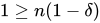


Suppose this market has firms. At the collusive price, the firms are symmetric, so they divide the profits equally between the whole industry, represented as . If and only if the profit of choosing to deviate is greater than that of sticking to collude, i.e.


- (Companies have no incentive to deviate unilaterally)
- Therefore, the cartel alliance will be stable when is the case, i.e. the firm has no incentive to deviate unilaterally. So as the number of firms increases, the more difficult it is for The Cartel to maintain stability.
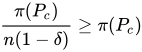
As the number of firms in the market increases, so does the factor of the minimum discount required for collusion to succeed.[11]
According to neoclassical price-determination theory and game theory, the independence of suppliers forces prices to their minimum, increasing efficiency and decreasing the price-determining ability of each firm.[12] However if all firms collude to increase prices, loss of sales will be minimized, as consumers lack choices at lower prices and must decide between what is available. This benefits the colluding firms, as they generate more sales at the cost of efficiency to society.[4] However, depending on the assumptions made in the theoretical model on the information available to all firms, there are some outcomes, based on Cooperative Game Theory, where collusion may have higher efficiency than if firms did not collude.[13]
One variation of this traditional theory is the theory of kinked demand. Firms face a kinked demand curve if, when one firm decreases its price, other firms are expected to follow suit to maintain sales. When one firm increases its price, its rivals are unlikely to follow, as they would lose the sales gains they would otherwise receive by holding prices at the previous level. Kinked demand potentially fosters supra-competitive prices because any one firm would receive a reduced benefit from cutting price, as opposed to the benefits accruing under neoclassical theory and certain game-theoretic models such as Bertrand competition.[12]
Collusion may also occur in auction markets[14] and in procurement[15] when independent bidders coordinate their bids (bid rigging).
Deviation
[edit]
Actions that generate sufficient returns in the future are important to every company, and the probability of continued interaction and the company discount factor must be high enough. The sustainability of cooperation between companies also depends on the threat of punishment, which is also a matter of credibility. Firms that deviate from cooperative pricing will use MMC in each market. MMC increases the loss of deviation, and incremental loss is more important than incremental gain when the firm's objective function is concave. Therefore, the purpose of MMC is to strengthen corporate compliance or inhibit deviant collusion.[16]
The principle of collusion: firms give up deviation gains in the short term in exchange for continued collusion in the future.
- Collusion occurs when companies place more emphasis on future profits
- Collusion is easier to sustain when the choice deviates from the maximum profit to be gained is lower (i.e. the penalty profit is lower) and the penalty is greater.
- Future collusive profits − future punishment profits ≥ current deviation profits − current collusive profits-collusion can sustain.[16]
Scholars in economics and management have tried to identify factors explaining why some firms are more or less likely to be involved in collusion. Some have noted the role of the regulatory environment[17] and the existence of leniency programs.[18]
Indicators
[edit]Some actions that may indicate collusion among competitors are:
- Charging uniform prices or setting prices that are either too high or too low without justification
- Paying or receiving kickbacks and agreeing to refer customers only to each other
- Dividing territories and horizontal territorial allocation of markets among themselves
- Tying agreements and anticompetitive Product bundling (although, not all product bundling is anticompetitive)
- Refusal to deal with certain customers or suppliers and exclusive dealing with certain customers or suppliers
- Selling products below cost in order to drive out competitors (also known as dumping)
- Restricting the distribution or supply of products along the supply chain through vertical restraints
- Bid rigging by fixing bids or agreeing not to bid for certain contracts[15]
Examples
[edit]
- In the example in the picture, the dots in Pc and Q represent competitive industry prices. If firms collude, they can limit production to Q2 and raise the price to P2. Collusion usually involves some form of agreement to seek a higher price.
- When companies discriminate, price collusion is less likely, so the discount factor needed to ensure stability must be increased. In such price competition, competitors use delivered pricing to discriminate in space, but this does not mean that firms using delivered pricing to discriminate cannot collude.[19]
United States
[edit]- Market division and price-fixing among manufacturers of heavy electrical equipment in the 1960s, including General Electric.[20]
- An attempt by Major League Baseball owners to restrict players' salaries in the mid-1980s.
- The sharing of potential contract terms by NBA free agents in an effort to help a targeted franchise circumvent the salary cap.
- Price fixing within food manufacturers providing cafeteria food to schools and the military in 1993.
- Market division and output determination of livestock feed additive, called lysine, by companies in the US, Japan and South Korea in 1996, Archer Daniels Midland being the most notable of these.[21]
- Chip dumping in poker[22] or any other card game played for money.
- Ben and Jerry's and Häagen-Dazs collusion of products in 2013: Ben and Jerry's makes chunkier flavors with more treats in them, while Häagen-Dazs sticks to smoother flavors.[23]
- Google and Apple against employee poaching, a collusion case in 2015 wherein it was revealed that both companies agreed not to hire employees from one another in order to halt the rise in wages.[24]
- Google has been hit with a series of antitrust lawsuits. In October 2020, the US Department of Justice filed a landmark lawsuit alleging that Google unlawfully boxed out competitors by reaching deals with phone makers, including Apple and Samsung, to be the default search engine on their devices.[25] Another lawsuit filed by nearly 40 attorneys general on Dec. 17, 2020 alleges that Google's search results favored its own services over those of more-specialized rivals, a tactic that harmed competitors.[25]
Europe
[edit]- The illegal collusion between the giant German automakers BMW, Daimler and Volkswagen, discovered by the European Commission in 2019, to hinder technological progress in improving the quality of vehicle emissions in order to reduce the cost of production and maximize profits.[26]
Australia
[edit]- Japanese shipping company Kawasaki Kisen Kaisha Ltd (K-Line) were fined $34.5 million by the Federal Court for engaging in criminal cartel conduct. The court found that K-Line participated in a cartel with other shipping companies to fix prices on the transportation of cars, trucks, and buses to Australia between 2009 and 2012. K-Line pleaded guilty in April 2018 and the fine is the largest ever imposed under the Competition and Consumer Act. The court noted that the penalty should serve as a strong warning to businesses that cartel conduct will not be tolerated and will result in serious consequences.[27]
- Between 2004 and 2013, Dr Esra Ogru, the former CEO of an Australian biotech company called Phosphagenics, colluded with two colleagues by using false invoicing and credit card reimbursements to defraud her employer of more than $6.1 million.[28][29]
Barriers
[edit]There can be significant barriers to collusion. In any given industry, these may include:
- The number of firms: As the number of firms in an industry increases, it is more difficult to successfully organize, collude and communicate.
- Cost and demand differences between firms: If costs vary significantly between firms, it may be impossible to establish a price at which to fix output. Firms generally prefer to produce at a level where marginal cost meets marginal revenue, if one firm can produce at a lower cost, it will prefer to produce more units, and would receive a larger share of profits than its partner in the agreement.[13]
- Asymmetry of information: Colluding firms may not have all the correct information about all other firms, from a quantitative perspective (firms may not know all other firms' cost and demand conditions) or a qualitative perspective (moral hazard). In either situation, firms may not know each others' preferences or actions, and any discrepancy would incentive at least one actor to renege.[13]
- Cheating: There is considerable incentive to cheat on collusion agreements; although lowering prices might trigger price wars, in the short term the defecting firm may gain considerably. This phenomenon is frequently referred to as "chiseling".
- Potential entry: New firms may enter the industry, establishing a new baseline price and eliminating collusion (though anti-dumping laws and tariffs can prevent foreign companies from entering the market).
- Economic recession: An increase in average total cost or a decrease in revenue provides the incentive to compete with rival firms in order to secure a larger market share and increased demand.
- Anti-collusion legal framework and collusive lawsuit. Many countries with anti-collusion laws outlaw side-payments, which are an indication of collusion as firms pay each other to incentivize the continuation of the collusive relationship, may see less collusion as firms will likely prefer situations where profits are distributed towards themselves rather than the combined venture.[13]
- Leniency Programs: Leniency programs are policies that reduce sanctions against collusion if a participant voluntarily confesses their behavior or cooperates with the public authority's investigation.[30] One example of a leniency program is offering immunity to the first firm who comes clean and gives the government information about collusion.[31] These programs are designed to destabilize collusion and increase deterrence by encouraging firms to report illegal behavior.
Conditions conducive to collusion
[edit]There are several industry traits that are thought to be conducive to collusion or empirically associated with collusion. These traits include:
- High market concentration: High market concentration refers to a market with few firms, which makes it easier for these firms to collude and coordinate their actions.[32]
- Homogeneous products: Homogeneous products refer to products that are similar in nature, which makes it easier for firms to agree on prices and reduces the incentive for firms to compete on product differentiation[32]
- Stable demand and/or excess capacity: Stable demand and capacity implies predictability and therefore demand and capacity does not fluctuate significantly, which makes it easier for firms to coordinate their actions and maintain a collusive agreement.[33] This can also refer to a situation where firms have more production capacity than is needed to meet demand.[34]
Government intervention
[edit]Collusion often occurs within an oligopoly market structure, which is a type of market failure. Therefore, natural market forces alone may be insufficient to prevent or deter collusion, and government intervention is often necessary.
Fortunately, various forms of government intervention can be taken to reduce collusion among firms and promote natural market competition.
- Fines and imprisonment to companies that collude and their executives who are personally liable.
- Detect collusion by screening markets for suspicious pricing activity and high profitability.
- Provide immunity (leniency) to the first company to confess and provide the government with information about the collusion.[35]
See also
[edit]Further reading
[edit]- Chassang, Sylvain; Ortner, Juan (2023). "Regulating Collusion". Annual Review of Economics 15 (1)
References
[edit]General references
[edit]- Vives, X. (1999) Oligopoly pricing, MIT Press, Cambridge MA (readable; suitable for advanced undergraduates.)
- Tirole, J. (1988) The Theory of Industrial Organization, MIT Press, Cambridge MA (An organized introduction to industrial organization)
- Tirole, J. (1986), "Hierarchies and Bureaucracies", Journal of Law Economics and Organization, vol. 2, pp. 181–214.
- Tirole, J. (1992), "Collusion and the Theory of Organizations", Advances in Economic Theory: Proceedings of the Sixth World Congress of the Econometric Society, ed by J.-J. Laffont. Cambridge: Cambridge University Press, vol.2:151-206.
References
[edit]- ^ O'Sullivan, Arthur; Sheffrin, Steven M. (2003). Economics: Principles in Action. Upper Saddle River, New Jersey: Pearson Prentice Hall. pp. 171. ISBN 0-13-063085-3.
- ^ Collusion Law & Legal Definition
- ^ Collusion [1]. Archived 2008-01-09 at the Wayback Machine.
- ^ a b "OECD Glossary of Statistical Terms - Collusion Definition". stats.oecd.org. Retrieved 2020-11-01.
- ^ Garrod, & Olczak, M. (2018). Explicit vs tacit collusion: The effects of firm numbers and asymmetries. International Journal of Industrial Organization, 56, 1–25. https://doi.org/10.1016/j.ijindorg.2017.10.006
- ^ Fonseca, Miguel A.; Normann, Hans-Theo (2012-11-01). "Explicit vs. tacit collusion—The impact of communication in oligopoly experiments". European Economic Review. 56 (8): 1759–1772. doi:10.1016/j.euroecorev.2012.09.002. hdl:10871/14991. ISSN 0014-2921.
- ^ "A Critique of Political Economy" (PDF).
- ^ McConnell, Doug. "Ethics of the GameStop Short Squeeze". University of Oxford.
- ^ PricewaterhouseCoopers. "The telecom price wars continue to rage in the global wireless industry". PwC. Retrieved 2023-04-19.
- ^ Levenstein, & Suslow, V. Y. (2006). What Determines Cartel Success? Journal of Economic Literature, 44(1), 43–95. https://doi.org/10.1257/002205106776162681
- ^ Compte et al., 2002. Olivier Compte, Frederic Jenny, Patrick Rey Capacity, constraints, mergers and collusion European Economic Review, 46 (2002), pp. 1-29
- ^ a b Kalai, Ehud; Satterthwaite, Mark A. (1994), Gilles, Robert P.; Ruys, Pieter H. M. (eds.), "The Kinked Demand Curve, Facilitating Practices, and Oligopolistic Coordination", Imperfections and Behavior in Economic Organizations, Theory and Decision Library, Dordrecht: Springer Netherlands, pp. 15–38, doi:10.1007/978-94-011-1370-0_2, ISBN 978-94-011-1370-0
- ^ a b c d Roberts, Kevin (1987). "Collusion". The New Palgrave Dictionary of Economics. pp. 1–5. doi:10.1057/978-1-349-95121-5_22-1. ISBN 978-1-349-95121-5.
- ^ Conley, Timothy; Decarolis, Francesco (2016). "Detecting Bidders Groups in Collusive Auctions". American Economic Journal: Microeconomics. 8 (2): 1–38. doi:10.1257/mic.20130254.
- ^ a b Carbone, Carlotta; Calderoni, Francesco; Jofre, Maria (2024). "Bid-rigging in public procurement: cartel strategies and bidding patterns" (PDF). Crime, Law and Social Change. 82 (2): 249–281. doi:10.1007/s10611-024-10142-0. ISSN 0925-4994. Retrieved 17 June 2025.
- ^ a b Sorenson. (2007). Credible collusion in multimarket oligopoly. Managerial and Decision Economics, 28(2), 115–128. https://doi.org/10.1002/mde.1314
- ^ Morgan, Eleanor J. (2009). "Controlling cartels – Implications of the EU policy reforms". European Management Journal. 27 (1): 1–12. doi:10.1016/j.emj.2008.04.006. ISSN 0263-2373.
- ^ Brenner, Steffen (2009). "An empirical study of the European corporate leniency program". International Journal of Industrial Organization. 27 (6): 639–645. doi:10.1016/j.ijindorg.2009.02.007. ISSN 0167-7187.
- ^ Heywood, Li, D., & Ye, G. (2020). Does price discrimination make collusion less likely? a delivered pricing model. Journal of Economics (Vienna, Austria), 131(1), 39–60. https://doi.org/10.1007/s00712-020-00699-4
- ^ Salinger, Lawrence M. (2005). Encyclopedia of white-collar & corporate crime. ISBN 978-0-7619-3004-4.
- ^ Hunter-Gault, Charlayne (October 15, 1996). "ADM: Who's Next?". MacNeil/Lehrer Newshour (PBS). [2] Archived 2007-09-30 at the Wayback Machine. Retrieved on 2007-10-17.
- ^ "Collusion Strategy and Analysis for Texas Hold'em by T. Hayes". Lybrary.com. Retrieved 2022-12-27.
- ^ Sullivan, Christopher John. Three Essays on Product Collusion. Diss. University of Michigan, 2016. https://deepblue.lib.umich.edu/bitstream/handle/2027.42/138544/sullivcj_1.pdf?sequence=1&isAllowed=y
- ^ "A Critique of Political Economy". TheGuardian.com. 24 April 2014.
- ^ a b "Google's three antitrust battles: Here's what you need to know". CNET. Retrieved 2023-04-04.
- ^ "European Commission finds German automakers illegally colluded on emissions technology". Deutsche Welle.
- ^ Commission, Australian Competition and Consumer (2019-08-02). "K-Line convicted of criminal cartel conduct and fined $34.5 million". www.accc.gov.au. Retrieved 2023-04-19.
- ^ "14-296MR Former CEO and two Melbourne men jailed following theft of millions from Phosphagenics Limited". asic.gov.au. Retrieved 2023-04-19.
- ^ "Combating collusion - Cartels, Monopolies - Australia". www.mondaq.com. Retrieved 2023-04-19.
- ^ Park, Sangwon (2014). "The effect of leniency programs on endogenous collusion". Economics Letters. 122 (2): 326–330. doi:10.1016/j.econlet.2013.12.014.
- ^ Emons, Winand (2020-05-01). "The effectiveness of leniency programs when firms choose the degree of collusion". International Journal of Industrial Organization. 70 102619. doi:10.1016/j.ijindorg.2020.102619. hdl:10419/204916. ISSN 0167-7187.
- ^ a b Asch, Peter; Seneca, Joseph J. (1975). "Characteristics of Collusive Firms". The Journal of Industrial Economics. 23 (3): 223–237. doi:10.2307/2097944. ISSN 0022-1821. JSTOR 2097944.
- ^ Harrington, J. (2015). Some Thoughts on Why Certain Markets are More Susceptible to Collusion.
- ^ Phlips, Louis, ed. (1995), "Excess capacity and collusion", Competition Policy: A Game-Theoretic Perspective, Cambridge: Cambridge University Press, pp. 151–172, doi:10.1017/CBO9780511522055.010, hdl:10419/221034, ISBN 978-0-521-49871-5, retrieved 2023-04-04
- ^ Pettinger, Tejvan (July 2020). "Government policies to reduce collusion".


Collusion
View on GrokipediaConceptual Foundations
General Definition
Collusion denotes a secret agreement or cooperation between two or more parties, especially for an illegal or deceitful purpose.[10] This arrangement typically involves deceitful compact to defraud a third party of their rights or to pursue an unlawful objective, distinguishing it from open collaboration by its clandestine nature and intent to mislead or harm others.[1] [11] In legal contexts, collusion manifests as an illicit pact where participants feign adversity while coordinating for mutual gain, such as in fraudulent lawsuits or market manipulations, often rendering it prosecutable under antitrust or fraud statutes.[12] While not all secretive agreements qualify—requiring elements of fraud or illegality—collusion inherently undermines transparency and fairness, as evidenced by its prohibition in jurisdictions like the United States, where it can lead to civil or criminal penalties.[13] Beyond economics, it appears in diverse settings, including political conspiracies or personal deceptions, but always centers on coordinated deception for advantage.[14]Economic vs. Non-Economic Collusion
Economic collusion refers to secretive agreements among competing firms to manipulate market conditions, such as fixing prices, limiting production, or allocating territories, in order to achieve supracompetitive profits akin to those of a monopoly.[15][16] This behavior undermines the competitive process by reducing output and elevating prices, resulting in deadweight loss to consumers and society.[17] Empirical evidence from antitrust cases, such as the 1990s vitamins cartel involving firms like BASF and Hoffman-La Roche, demonstrates how such arrangements can sustain elevated prices for years until detected, with fines exceeding $1 billion imposed by the European Commission in 2001.[17] In contrast, non-economic collusion involves covert cooperation among non-commercial entities, such as political actors, government officials, or institutions, to pursue deceitful, fraudulent, or unlawful ends unrelated to direct market gains.[18][1] For instance, in political contexts, it may manifest as agreements between parties or officials to subvert electoral integrity or conceal improprieties, as seen in investigations into arrangements achieving improper purposes, such as those examined in the UK Stevens Inquiry into Northern Ireland security matters from 1999 to 2003.[19] These forms prioritize objectives like power retention, ideological alignment, or reputational protection over profit extraction. The primary distinctions lie in motivations and dynamics: economic collusion is profit-driven and inherently unstable due to incentives for individual deviation—where a firm can secretly undercut the agreement to capture larger market share—modeled in repeated game theory where sustainability requires a sufficiently high discount factor for firms, reflecting the trade-off between future collusive gains and immediate defection profits. Non-economic collusion, however, often relies on non-monetary bonds like shared ideology or coercive enforcement, rendering it potentially more resilient in opaque environments but vulnerable to external scrutiny or internal betrayal motivated by moral hazard rather than economic gain. Legally, economic variants face stringent antitrust prohibitions, such as those under the U.S. Sherman Act of 1890, emphasizing market harm, whereas non-economic instances are prosecuted under broader conspiracy or fraud statutes, with accountability hinging on evidence of deceitful purpose rather than quantifiable welfare losses.[1][18]Explicit and Tacit Forms
Explicit collusion refers to direct and overt agreements among competing firms to coordinate actions such as fixing prices, allocating markets, or limiting output, typically involving explicit communication like meetings, emails, or contracts.[20] This form is considered a per se violation of antitrust laws in jurisdictions like the United States under Section 1 of the Sherman Act, as it inherently restrains trade without requiring proof of market effects.[5] Historical examples include the vitamins cartel of the 1990s, where companies such as BASF and Hoffman-La Roche coordinated global price increases and market shares through regular meetings, leading to U.S. Department of Justice fines exceeding $500 million in 1999.[21] Similarly, the lysine cartel involving Archer Daniels Midland and others fixed feed additive prices from 1992 to 1995, resulting in over $100 million in penalties after whistleblower evidence revealed explicit discussions.[22] In contrast, tacit collusion arises when firms achieve supracompetitive outcomes without direct communication or formal agreements, relying instead on mutual understandings inferred from observable actions, repeated market interactions, and implicit threats of retaliation such as price wars.[23] This coordination often manifests in oligopolistic markets through mechanisms like price leadership, where one firm sets prices and rivals follow to avoid disruptive competition, or parallel pricing patterns sustained by the fear of deviation triggering punishment.[24] Unlike explicit collusion, tacit forms are not per se illegal under U.S. law, requiring plaintiffs to demonstrate an actual agreement or additional conduct amounting to an unreasonable restraint of trade, as mere conscious parallelism—firms mirroring each other's prices without collusion—does not suffice for liability.[5] Empirical evidence includes U.S. ready-to-drink tea markets post-merger, where reduced firm numbers led to softened price competition consistent with tacit coordination rather than unilateral effects.[25] The distinction hinges on the presence of communicative evidence, which serves as a "smoking gun" for explicit cases, facilitating easier detection and prosecution by authorities like the DOJ and FTC, whereas tacit collusion demands econometric analysis of pricing anomalies, market shares, and entry barriers to infer coordination.[26] Explicit agreements enable more stable and higher profits by reducing uncertainty but heighten legal risks due to traceability, while tacit strategies persist in concentrated markets with transparent pricing and infrequent disruptions, though they are prone to breakdowns from cheating incentives absent enforcement mechanisms.[24] Antitrust enforcement thus prioritizes dismantling explicit cartels through leniency programs that incentivize self-reporting, as seen in over 100 cartel convictions by the DOJ since 1999, while monitoring tacit risks primarily in merger reviews to prevent market structures conducive to implicit coordination.[22]Theoretical Models
Basic Economic Model of Price Collusion
The basic economic model of price collusion is framed within an infinitely repeated oligopoly game featuring n symmetric firms producing homogeneous goods under Bertrand competition. In the static, one-shot game, firms set prices equal to marginal cost, yielding zero economic profits due to intense price rivalry. Collusion emerges in the repeated setting, where firms coordinate to set a common price Pc at the monopoly level, maximizing joint profits πc, with each firm receiving an equal share πc/n per period.[27][28] Sustainability relies on credible threats of punishment for deviation, typically via a grim trigger strategy: firms collude as long as no deviation occurs, but revert to competitive pricing (zero profits) indefinitely upon detecting a defection. The present value of collusive profits for a firm is (πc/n) / (1 - δ), where δ (0 < δ < 1) is the discount factor reflecting the value of future payoffs. Deviation yields a one-period gain approximating the full monopoly profit πc (by undercutting Pc slightly to capture the entire market while others charge Pc), followed by perpetual punishment profits of zero. Thus, the incentive compatibility condition requires the discounted collusive stream to exceed the deviation payoff: (πc/n) / (1 - δ) ≥ πc.[27][24] Simplifying the inequality (dividing by πc > 0) yields 1 / [n (1 - δ)] ≥ 1, or equivalently δ ≥ (n - 1)/n. This critical discount factor threshold increases with the number of firms, making collusion harder to sustain in larger markets, as the per-firm collusive share diminishes while the deviation temptation remains high. The model assumes perfect monitoring, common discount factors, and stationary strategies, highlighting how patience (high δ)—often proxied by low interest rates or stable market conditions—facilitates cartel stability through the shadow of future losses outweighing short-term gains.[27][29]Incentives for Deviation and Instability
In collusive agreements among oligopolistic firms, each participant confronts a unilateral incentive to deviate by secretly undercutting the agreed price or expanding output beyond the quota, thereby capturing a larger market share at rivals' expense while they maintain the supracompetitive terms. This temptation arises because the collusive price exceeds marginal cost, allowing the deviator to profitably sell additional units that would otherwise go unsold under strict compliance; the deviator's short-term gain often approximates the full industry monopoly profit if the cheat remains undetected, far exceeding the per-firm collusive share.[30][31] Such deviations destabilize cartels, as the structure embodies a prisoner's dilemma: mutual cooperation yields shared monopoly rents, but non-cooperative Nash equilibrium reverts to competitive outcomes with lower profits for all.[32] In non-cooperative game-theoretic models, cartel stability hinges on repeated interactions where future punishments deter cheating; under grim-trigger strategies in infinitely repeated Bertrand competition with homogeneous goods, collusion sustains only if the common discount factor —reflecting firms' valuation of future payoffs—satisfies , with denoting the number of symmetric firms.[24] Below this threshold, the one-period deviation gain outweighs the discounted losses from permanent reversion to zero-profit competition, rendering agreements fragile.[33] Empirical cartel breakdowns, such as those documented in antitrust cases, frequently trace to undetected deviations amplifying over time, eroding trust and prompting retaliatory price wars that collapse the arrangement.[31] Factors exacerbating instability include asymmetric firm costs or capacities, which heighten deviation gains for low-cost members, and market shocks like demand fluctuations that alter relative incentives mid-agreement.[34] Without binding enforcement mechanisms—rare in private cartels due to legal prohibitions—the inherent free-rider problem ensures most explicit agreements dissolve absent external coercion or perfect monitoring.[35]Variations and Extensions
In repeated games frameworks, collusion extends beyond static one-shot interactions by incorporating infinite horizons and strategic punishments. Firms adopt grim trigger strategies, cooperating via joint profit maximization (e.g., Cournot quantities summing to monopoly output) until a deviation triggers permanent reversion to non-cooperative Nash play. This sustains collusion when the discount factor δ meets or exceeds the deviation incentive threshold, such as δ ≥ (n-1)/n in symmetric Cournot oligopolies with n firms and equal profit shares.[36] For Bertrand competition with homogeneous goods, the condition relaxes to δ ≥ 1/2 in duopolies but tightens with more firms, reflecting greater deviation gains from undercutting.[37] The Folk Theorem generalizes this by proving that, under perfect monitoring and patience (δ approaching 1), any feasible payoff vector individually rational relative to the static Nash equilibrium—including full collusion—can form a subgame perfect equilibrium via appropriately designed strategies.[38] In oligopoly applications, this implies tacit coordination on supracompetitive outcomes without communication, as long as punishments deter defection across histories.[39] Multimarket extensions enhance sustainability: firms active in multiple arenas pool incentive constraints, using punishments in one market to enforce cooperation elsewhere, reducing the minimum δ (e.g., to 0.62 across linked markets versus isolated ones).[37] Asymmetric costs or capacities complicate sharing rules, often requiring side payments or quantity allocations to prevent low-cost firms from underproducing. Private monitoring variants, with noisy signals of rivals' actions, preserve Folk Theorem outcomes generically if signal supports span actions, though detection lags raise δ thresholds.[38] Free entry dynamics further erode stability, as profits attracting entrants undermine long-run collusive pricing unless barriers persist.[40]Enabling and Inhibiting Factors
Market Conditions Conducive to Collusion
High market concentration, characterized by a small number of firms, facilitates collusion by simplifying coordination and agreement enforcement among participants, as fewer actors reduce negotiation complexity and enhance monitoring capabilities.[41] [42] In such oligopolistic structures, the risk of deviation diminishes because rivals can more readily observe and punish non-compliance, as evidenced in antitrust analyses where Herfindahl-Hirschman Index values exceeding 1,800 often signal heightened coordination risks.[43] Homogeneity of products promotes collusive outcomes by minimizing differentiation, allowing firms to align on uniform pricing without disputes over quality or features driving competition.[41] Symmetric cost structures and market shares among competitors further enable this, as aligned incentives reduce internal conflicts and stabilize cartel allocations, a pattern observed in industries like chemicals and metals where standardized goods prevail.[44] Conversely, product variety or cost asymmetries can disrupt coordination by creating opportunities for undercutting via tailored offerings. Barriers to entry, such as regulatory hurdles, economies of scale, or patents, shield colluders from external pressure by limiting new entrants who might erode supra-competitive prices.[45] High entry costs ensure sustained market power, as seen in sectors like telecommunications prior to deregulation, where incumbents maintained elevated rates through implicit coordination.[46] Stable, predictable demand further bolsters sustainability, as fluctuations in buyer needs or economic shocks can tempt deviations or unravel agreements by altering profit-sharing dynamics.[47] Transparent pricing mechanisms and frequent transactions aid detection of cheating, enabling rapid retaliation and reinforcing discipline.[44] Markets with regular, observable bids—such as public procurement—exemplify this, where bid data visibility heightens collusion risks unless countered by design features like randomized specifications.[41] Declining industry growth also incentivizes collusion, as shrinking demand pressures firms toward output restrictions to preserve revenues, contrasting with expanding markets where organic sales growth discourages restraint.[48]Barriers to Successful Collusion
Incentives for individual deviation represent a primary economic barrier to sustaining collusion, as each firm can enhance its short-term profits by secretly undercutting agreed prices or increasing output while rivals comply, thereby capturing greater market share.[49] This dynamic stems from the prisoner's dilemma inherent in oligopolistic interdependence, where mutual cooperation yields joint gains but unilateral defection dominates unless offset by credible threats of retaliation.[50] Theoretical models of infinitely repeated games quantify this instability: collusion requires a sufficiently high discount factor (reflecting firms' valuation of future payoffs) satisfying , where denotes the number of firms; deviations become more tempting as falls below this threshold due to impatience or uncertainty.[50] Market characteristics exacerbate these incentives. A larger number of firms hinders coordination and monitoring, amplifying the per-firm gain from cheating relative to collective punishment, as each member's deviation has a smaller impact on detected rivals but yields substantial private benefits.[51] Low entry barriers permit outsiders to infiltrate the market and price aggressively, diluting collusive profits and prompting incumbents to defect preemptively; empirical analyses of industries like ocean shipping show entrants eroding cartels within years when regulatory hurdles are minimal.[52] Heterogeneities in firm costs, capacities, or product qualities further complicate equitable agreements, as asymmetric players disagree on output quotas or price floors, fostering disputes and breakdowns.[53] Information frictions and external variability compound enforcement challenges. Imperfect observability of rivals' prices or sales—due to secretive contracting or noisy data—delays detection of deviations, weakening punishment credibility; Stigler estimated detection lags of months in opaque markets, allowing cheaters to profit before retaliation.[50] Demand uncertainty or cyclical fluctuations prompts independent quantity adjustments, as firms hedge shocks differently, triggering price wars; studies of gasoline markets reveal collusion unravels during demand dips, with prices falling 10-20% below collusive levels.[53] Strategic buyers, wielding countervailing power through bulk procurement or pitting suppliers against each other, exploit these gaps to demand concessions, further destabilizing agreements.[53] Institutional factors, including antitrust scrutiny, impose additional hurdles. Explicit cartels face severe penalties under laws like the U.S. Sherman Act, with fines exceeding billions in cases such as the lysine conspiracy (1990s), deterring formation and encouraging secrecy that invites internal mistrust.[54] Even tacit collusion risks prosecution if patterns suggest coordination, as evidenced by EU fines totaling €1.4 billion against truck manufacturers in 2016 for price signaling.[52] Non-price competition, such as quality improvements or rebates, evades price monitoring but erodes collusive rents unless explicitly suppressed, often requiring unsustainable communication.[53] Collectively, these barriers explain why historical cartels endure briefly—averaging 5-10 years per Levenstein and Suslow's dataset of 19th-20th century cases—before internal erosion or external pressures prevail.[50]Detection and Empirical Analysis
Indicators of Collusive Behavior
Indicators of collusive behavior refer to empirical patterns in pricing, bidding, market shares, or other data that deviate from expectations under competitive conditions and suggest coordinated restraint of rivalry. Antitrust enforcers and economists use these as "screens"—statistical or qualitative flags—to prioritize investigations, often applying them to historical datasets for anomalies like unexplained stability or synchronization. While not definitive proof, as common cost shocks or market structures can mimic them, multiple converging indicators increase suspicion of collusion.[55][56] Key pricing indicators include reduced variance in prices or spreads. Competitive markets exhibit fluctuating price dispersion due to heterogeneous costs and strategies; collusion homogenizes pricing to sustain supra-competitive levels, lowering standard deviations or cross-sectional spreads. Screens test for statistically significant drops in these metrics post-alleged cartel onset, as in variance-based tests where collusion predicts convergence toward a common high price.[57][55] Parallel price movements without corresponding input cost changes signal potential coordination. Firms in collusion adjust prices simultaneously and symmetrically, detectable via high correlations in price change series or Granger causality tests showing leadership-follower patterns beyond competitive norms.[58] In procurement auctions, bid-rigging manifests through rotation of winners among a fixed set of bidders, where the same firms alternate low bids while others submit token high bids. Complementary or conditional bidding—losers pricing just above the winner or phasing submissions to avoid overlap—also flags collusion, as does low dispersion in losing bids relative to competitive variance. The OECD identifies these in guidelines, noting repetition in winning firms or identical bid values as red flags, often analyzed via distribution skew or winning bid predictability.[59][60] Market share stability over prolonged periods, with minimal shifts absent entry threats or demand fluctuations, indicates possible allocation agreements. Regression analyses link low Herfindahl-Hirschman Index volatility to collusion risk, contrasting competitive churn from rivalry.[61] Structural breaks in time series, such as abrupt stabilization in prices or bids coinciding with suspected cartel periods, provide temporal screens. Tests for regime shifts detect transitions from competitive volatility to collusive rigidity, aiding in dating infringement starts.[62] These indicators gain power when combined with market traits like oligopoly or product homogeneity, prompting deeper probes via leniency programs or dawn raids, though false positives necessitate causal verification.[41][60]Modern Econometric and Data-Driven Methods
Modern econometric methods for detecting collusion rely on statistical tests applied to market data, such as prices, quantities, or bids, to identify deviations from competitive benchmarks. These approaches often screen for reduced price variance, structural breaks in time series, or anomalous patterns in bidding behavior, which are theoretically expected under collusion compared to competition. For instance, variance screens examine whether price fluctuations decrease during suspected collusive periods, as cartels stabilize prices above competitive levels, leading to lower volatility; empirical applications to lysine pricing data during the 1990s cartel confirmed this marker's utility in distinguishing collusion from competition.[63] Structural break tests detect abrupt changes in price series parameters, such as a shift in mean or variance, to date cartel onset or breakdown; a 2015 study developed such a screen using univariate time series models, successfully identifying the start of known conspiracies in industries like vitamins.[64] Cointegration-based screens model long-run equilibrium relationships among firms' prices, hypothesizing that colluding firms maintain parallel pricing to enforce agreements, unlike independent competitors; a 2022 method applied this to suspect markets, finding evidence of collusion when prices cointegrate despite cost differences.[65] In public procurement, econometric tools analyze bid distributions for signs of rotation or complementarity, where losing bidders submit inflated bids to allow winners to alternate; evaluations of five such methods on European datasets in 2024 showed high detection rates for bid-rigging cartels when combined with indicators like bid roundness or conditional independence tests.[66] Difference-in-differences frameworks assess price-fixing impacts by comparing affected markets to controls pre- and post-cartel, estimating overcharge effects; this reduced-form approach has been applied to merger simulations and cartel cases to quantify collusion's causal effects on prices.[67] Data-driven methods increasingly incorporate machine learning (ML) to handle large datasets from auctions or online markets, training algorithms on labeled collusive episodes to classify suspicious patterns. Supervised ML models, tested on procurement data from Brazil, Italy, and Japan, achieved up to 90% accuracy in distinguishing collusive from competitive bids using features like bid levels and bidder networks; random forests and gradient boosting outperformed simpler classifiers.[68] Unsupervised ML, such as clustering or anomaly detection, identifies resale price maintenance without labels by flagging rigid retail pricing inconsistent with cost variations; a 2024 application to e-commerce data detected potential violations through price rigidity metrics.[69] Systematic reviews of real-world antitrust cases highlight ML's role in screening vast transaction logs for collusion signals, though false positives necessitate integration with economic theory to avoid overreach.[70] OECD guidelines endorse these tools for initial screening, combining econometric filters with ML for scalable enforcement in data-rich environments like digital platforms.[60]Historical and Contemporary Examples
Early Industrial Era Cases
One of the earliest prominent examples of industrial collusion occurred in the United States railroad industry during the 1870s and 1880s, where competing trunk lines between Chicago and the Atlantic seaboard formed traffic pools to stabilize freight rates and allocate market shares. The Joint Executive Committee (JEC), established in 1879 as a successor to earlier pooling arrangements like the 1874 Joint Tariff Association, coordinated rate-setting and traffic division among major carriers such as the New York Central, Pennsylvania Railroad, and Erie Railroad, aiming to prevent destructive price wars amid overcapacity and competition.[71] These agreements temporarily raised rates above competitive levels—for instance, maintaining grain freight rates at approximately 20-25 cents per hundredweight from Chicago to New York during cartel periods—but were plagued by secret rate cuts and deviations, leading to frequent breakdowns and reformation attempts until the pools' general collapse by the mid-1890s.[72] Empirical analysis of rate data from this era indicates that collusion increased prices by about 5-10% on average during stable phases, though instability reduced long-term efficacy, contributing to the push for regulatory intervention via the Interstate Commerce Act of 1887.[72] In the oil refining sector, John D. Rockefeller's Standard Oil engaged in collusive practices starting in the early 1870s, including the short-lived South Improvement Company scheme of 1872, which sought to cartelize producers and railroads through preferential rebates and volume-based rate discrimination to exclude rivals.[73] Exposed by independent producers in Pennsylvania, the plan collapsed amid public backlash but exemplified early attempts to enforce output restrictions and price uniformity via secret agreements with transporters, enabling Standard to capture over 90% of U.S. refining capacity by the late 1870s through such tactics rather than solely efficiency gains.[73] The subsequent formation of the Standard Oil Trust in 1882 formalized control by consolidating shares under trustees, effectively circumventing state anti-cartel laws while sustaining elevated kerosene prices—averaging 10-15 cents per gallon in cartel-influenced markets versus lower competitive benchmarks—until antitrust scrutiny intensified.[73] The Distillers' and Cattle Feeders' Trust, known as the Whiskey Trust, emerged in 1887 as a horizontal cartel among Midwestern distillers to fix whiskey prices, limit production, and consolidate distilleries, controlling roughly 80% of U.S. output by purchasing competitors and enforcing exclusive dealing contracts with wholesalers.[74] Facing competition from smaller rye producers and illicit distillers, the trust raised prices from about $0.20 to $0.30 per gallon in the late 1880s, but internal cheating and aggressive tactics like below-cost sales to deter entrants led to its destabilization by the mid-1890s, culminating in legal challenges under emerging antitrust doctrines.[75] These cases illustrate the prevalence of informal pools and trusts in nascent heavy industries, where high fixed costs and homogeneous products facilitated initial collusion, yet frequent defections—driven by incentives to capture larger shares—highlighted inherent fragility absent coercive mechanisms.Post-WWII Cartels and International Examples
One prominent post-World War II cartel operated in the heavy electrical equipment industry during the late 1950s and early 1960s, involving major U.S. firms such as General Electric and Westinghouse, along with international participants. Executives from these companies met periodically to fix prices, rig bids, and allocate markets for products like transformers and circuit breakers, affecting billions in commerce. The conspiracy, uncovered through investigations, led to guilty pleas from 29 corporations and 45 individuals in 1960, resulting in fines totaling $1.721 million for companies and $136,000 for executives.[76][77] Later documents revealed extensions to global operations, with European and Japanese firms coordinating to penetrate U.S. markets while maintaining supracompetitive pricing.[78] In the 1990s, the lysine cartel exemplified international collusion in the biochemical sector, targeting the animal feed additive lysine. U.S.-based Archer Daniels Midland (ADM) conspired with Japanese firm Ajinomoto and South Korean producers from 1992 to 1995 to fix prices and allocate sales volumes, driving U.S. lysine prices from about $1.40 per kilogram in 1991 to peaks near $3.00 by 1994 before collapsing upon detection.[79][80] The U.S. Department of Justice fined ADM $100 million in 1996—the largest antitrust criminal penalty at the time—for this and a parallel citric acid cartel, while the European Commission imposed fines totaling nearly 110 million euros on the participants in 2000.[81][82] Overcharges to U.S. buyers were estimated in the tens of millions, with ADM's internal market share reaching 50-55 percent, sustained through secret meetings and tolerance of limited cheating.[83] The global vitamins cartels of the late 1980s to 1990s represented one of the largest and most extensive international conspiracies, involving 21 firms from seven countries rigging prices and shares for bulk vitamins used in supplements and animal feed. Operating from 1988 to 1999 across markets like vitamins A, C, and E, participants such as Switzerland's F. Hoffmann-La Roche and Germany's BASF coordinated via meetings in Europe and Asia, inflating global prices by 30-100 percent in affected segments.[84][85] U.S. authorities secured a record $500 million fine from La Roche in 1999, with total criminal penalties exceeding $1 billion worldwide, while the EU levied over 450 million euros in 2001.[86][87] Econometric analysis confirmed sustained overcharges, with cartel stability aided by market opacity and few entrants, though breakdowns occurred due to whistleblowers and leniency programs.[88] The Organization of the Petroleum Exporting Countries (OPEC), founded in 1960, functions as a sovereign international cartel coordinating oil production quotas among member states to influence global prices. Post-WWII decolonization enabled its formation, leading to production cuts that quadrupled crude oil prices during the 1973-1974 embargo against oil-importing nations supporting Israel, causing U.S. gasoline prices to rise from 39 cents to 53 cents per gallon and contributing to stagflation.[89][90] While OPEC has extracted rents estimated in trillions for members, internal cheating—such as Saudi Arabia's production surges—and non-OPEC supply growth have repeatedly eroded discipline, with prices falling 50 percent or more in bust cycles like 1986 and 2014.[91][92] Unlike private cartels, OPEC's governmental structure shields it from antitrust prosecution, though its price-elevating effects mirror classic collusive outcomes, reducing output and transferring wealth from consumers to producers.[93]Recent Developments in Digital and Global Markets
In digital markets, algorithmic pricing tools have facilitated tacit collusion by enabling competitors to align prices dynamically without explicit communication, raising antitrust concerns. For instance, the U.S. Department of Justice pursued claims in 2025 against health insurers for using MultiPlan's algorithm, which allegedly collected sensitive data to suppress reimbursements and coordinate lower payments to out-of-network providers, effectively functioning as a collusive mechanism.[94] Courts have dismissed some algorithmic collusion suits, such as those involving Las Vegas and Atlantic City casino hotels in 2024, where plaintiffs failed to prove intent or agreement beyond parallel pricing, though appeals highlight unresolved evidentiary challenges.[95] Legislative responses include the U.S. Preventing Algorithmic Collusion Act of 2024, which presumes illegality when rivals share pricing algorithms, and state-level clarifications like California's 2025 pleading standard easing proof of coercive algorithmic use.[96][97] In ridesharing and two-sided platforms, dynamic pricing algorithms have been modeled to sustain collusion during surges, as competitors implicitly match hikes to maximize joint profits, per economic analyses of platforms like Uber and Lyft.[98] European regulators, including Italy and Germany, enacted 2024-2025 provisions targeting algorithmic price coordination outside traditional cartels, reflecting fears of AI-driven tacit agreements evading detection.[99] These developments underscore causal risks: algorithms reduce search costs and stabilize high prices, but enforcement hinges on distinguishing efficiency gains from collusive outcomes, with empirical data showing parallel pricing in 70-80% of tested algorithmic scenarios without human intervention.[100] Globally, traditional cartel enforcement persisted amid declining fines, which dropped to historic lows in 2024 due to fewer mega-cases and prosecutorial focus on legacy probes, totaling under $1 billion across jurisdictions.[101] The U.S. DOJ launched a July 8, 2025, whistleblower reward program offering up to $1 million for tips on criminal antitrust violations, aiming to uncover hidden global schemes in sectors like freight and commodities.[102] Notable 2024-2025 actions included charges against six individuals for bid-rigging and bribery in IT procurement sales exceeding $100 million, illustrating cross-border collusion in public contracts.[103] Forecasts predict modest 2025 activity, with enforcers prioritizing digital interfaces over standalone cartels, as global data exchanges enable subtler coordination in supply chains.[104] Empirical indicators, such as synchronized bidding patterns in 15% of international tenders, support heightened scrutiny, though causal attribution remains contested absent direct evidence.[105]Legal Frameworks and Enforcement
Antitrust Laws Targeting Collusion
Antitrust laws targeting collusion focus on prohibiting explicit agreements among competitors that restrict output, fix prices, rig bids, or allocate markets, as these practices harm consumers by elevating prices above competitive levels. In the United States, Section 1 of the Sherman Antitrust Act, signed into law on July 2, 1890, declares illegal "every contract, combination in the form of trust or otherwise, or conspiracy, in restraint of trade or commerce among the several States, or with foreign nations." This provision treats horizontal agreements like price-fixing and market division as per se violations, meaning they are inherently unlawful without requiring evidence of market effects or consumer harm.[106] The Department of Justice (DOJ) pursues criminal enforcement against such cartels, while the Federal Trade Commission (FTC) addresses civil violations under Section 5 of the FTC Act of 1914, which bans "unfair methods of competition."[107] Criminal penalties under the Sherman Act, enhanced by the Antitrust Criminal Penalty Enhancement and Reform Act of 2004, include fines up to $100 million for corporations and $1 million for individuals, plus imprisonment for up to 10 years per violation; fines can reach twice the gain derived from or twice the loss caused by the conduct.[106] Civil remedies allow for treble damages in private lawsuits and injunctive relief to restore competition.[107] These laws distinguish explicit collusion requiring communication or agreement from tacit parallelism, which does not violate Section 1 absent an enforceable commitment mechanism.[5] In the European Union, Article 101(1) of the Treaty on the Functioning of the European Union (TFEU) prohibits "agreements between undertakings, decisions by associations of undertakings and concerted practices which may affect trade between Member States and which have as their object or effect the prevention, restriction or distortion of competition." Cartels involving price coordination or quota restrictions are deemed "by object" infringements, presumptively illegal, with the European Commission imposing administrative fines up to 10% of the firm's total annual worldwide turnover in the preceding business year.[108] Concerted practices extend liability to forms of coordination falling short of full agreements but involving mutual understanding.[109] Over 80 countries enforce similar anti-cartel provisions, often modeled on US and EU frameworks, with increasing criminalization of hardcore collusion; for instance, the DOJ has extraterritorial jurisdiction over conduct affecting US commerce, leading to prosecutions of international cartels.[110] Leniency programs in both jurisdictions incentivize self-reporting by reducing penalties for cooperating participants, contributing to higher detection rates since their adoption in the late 1990s.[111] These laws prioritize deterrence through severe sanctions, grounded in empirical evidence that cartels impose deadweight losses equivalent to 10-20% of affected sales volumes.[112]Government Interventions and Their Effects
In the United States, the Department of Justice's Antitrust Division and the Federal Trade Commission enforce statutes like Section 1 of the Sherman Antitrust Act of July 2, 1890, which criminalizes collusive agreements such as price-fixing, bid-rigging, and market allocation, with penalties including corporate fines up to $100 million and individual imprisonment up to 10 years. Similar frameworks operate internationally, including Article 101 of the Treaty on the Functioning of the European Union, under which the European Commission imposes fines up to 10% of a firm's global annual turnover for cartel participation. These interventions emphasize criminal prosecution for horizontal collusion, supplemented by civil remedies and structural divestitures in severe cases, aiming to disrupt ongoing schemes and deter future ones through heightened expected costs. Leniency programs, pioneered by the U.S. Department of Justice in its 1993 Corporate Leniency Policy, grant immunity from prosecution to the first self-reporting participant in exchange for evidence, with reduced penalties for subsequent cooperators. This mechanism has facilitated detection, contributing to over 200 criminal cartel cases filed by the Division from fiscal year 1990 through 2024, alongside billions in fines; for instance, global cartel fines totaled approximately $1.9 billion in 2023 alone.[113][114] Empirical analyses confirm leniency's role in accelerating cartel breakdowns, with OECD jurisdictions seeing heightened detection rates post-implementation, though applications declined 58% from 2015 to 2021 amid procedural complexities and amnesty withdrawals in some markets.[115][116] Prosecution effects include cartel dissolution and price reductions approximating pre-collusion levels; studies estimate median cartel overcharges at 25% (18.8% for domestic U.S. cases, 31% for international), with enforcement yielding comparable post-bust declines through restored competition.[117] In Mexico, Federal Economic Competition Commission sanctions from 2006 onward reduced sanctioned firms' profit margins by 2-5 percentage points while boosting industry employment and output, indicating enhanced rivalry without broad efficiency losses.[118] Experimental evidence shows enforcement risks elevate collusion costs, deterring formation in low-detection environments, yet persistent cartels suggest incomplete deterrence, as fines often recover only a fraction of harms and recidivism occurs in 10-20% of cases.[119][120] Overall, interventions correlate with shorter cartel durations—averaging 5-10 years versus indefinite tacit equilibria—but require sustained vigilance, as lax enforcement correlates with resurgence, per longitudinal DOJ data.[113]Critiques and Alternative Perspectives
Free Market Critiques of Antitrust Approaches
Free market economists contend that antitrust interventions frequently distort competitive processes rather than enhance them, as government enforcement introduces uncertainty and penalizes efficiency gains mistaken for anticompetitive behavior.[121] Advocates such as those from the Austrian and Chicago schools argue that true monopolies sustained by collusion are inherently unstable in unregulated markets, undermined by participants' incentives to defect for short-term gains, thereby rendering aggressive antitrust action unnecessary and counterproductive.[50] George Stigler's 1964 analysis of oligopoly emphasized the "policing" challenges in maintaining cartels, where detection lags and secret price cuts erode collusive profits, suggesting that market forces naturally limit harmful coordination without legal prohibitions.[122] A core critique, articulated by Robert Bork in his 1978 book The Antitrust Paradox, posits that antitrust laws, originally aimed at curbing monopoly power, paradoxically stifle consumer welfare by blocking mergers and practices that lower costs or expand output.[123] Bork and fellow Chicago School scholars advocated narrowing enforcement to explicit price-fixing and demonstrable harm to consumers, dismissing structural presumptions against concentration as economically unsound, since firm size often reflects superior efficiency rather than predation.[124] Empirical reexaminations of historical cases, such as John S. McGee's 1958 study of the Standard Oil Trust, found no evidence of predatory pricing in its rise to dominance; instead, Standard achieved market share through innovation and cost reductions, with kerosene prices declining steadily from $0.30 per gallon in 1869 to $0.08 by 1897—before the 1911 breakup—indicating that dissolution fragmented efficient operations without benefiting consumers.[125][126] Critics further highlight antitrust's vulnerability to political misuse and regulatory capture, where enforcement serves incumbent firms or ideological goals over market discipline, eroding property rights by subjecting private business decisions to bureaucratic oversight.[127] In a 2024 analysis, free market proponents noted that antitrust's subjective standards for "fair" pricing or firm counts lack objective grounding, often leading to interventions that raise barriers to entry and entrench government-favored entities.[128] This perspective prioritizes empirical outcomes, observing that deregulated sectors exhibit robust entry and innovation, whereas antitrust-heavy regimes correlate with persistent oligopolies sustained by compliance costs prohibitive to newcomers.[129] Overall, such critiques advocate repealing or severely limiting antitrust statutes to restore reliance on voluntary exchange and consumer choice as the primary checks on collusion.[121]Debates on Economic Impacts and Policy Overreach
Proponents of robust antitrust enforcement against collusion argue that it generates substantial net economic benefits by mitigating consumer harm from elevated prices and reduced output. Empirical analyses of detected cartels indicate median overcharges of approximately 20-25% relative to competitive benchmarks, with means often exceeding 40% for successful international agreements, leading to significant deadweight losses in affected markets.[130][131] Studies leveraging U.S. Department of Justice actions further demonstrate that enforcement episodes correlate with long-term increases in employment by 5.4%, business formation by 4.1%, and average wages, suggesting broader positive spillovers to economic activity through restored competition.[132] These findings underscore a causal link where dismantling explicit collusive agreements reallocates resources more efficiently, though estimates vary by cartel duration and industry characteristics, with shorter-lived schemes yielding lower overcharges.[133] Critics, including economists associated with the Chicago School, contend that antitrust interventions risk policy overreach by presuming collusion's prevalence and stability, potentially imposing higher enforcement costs than the harms addressed. They emphasize that many apparent collusive outcomes arise from independent parallel conduct rather than enforceable agreements, and that aggressive prosecution of borderline cases—like tacit coordination or merger reviews fearing future collusion—deters efficient firm behaviors and investments without verifiable welfare gains.[124][123] Empirical critiques highlight Type I errors in enforcement, where false positives stifle innovation and raise compliance burdens, as seen in cases where blocked transactions reduced firm value and global competitiveness without clear evidence of collusive intent.[134] Moreover, government policies such as subsidies or regulations can inadvertently facilitate collusion more than market forces sustain it, questioning the net efficacy of expansive enforcement regimes that extend beyond hard-core price-fixing to ambiguous "no-poach" pacts or industry benchmarking.[127] Debates intensify over the optimal scope of enforcement, with evidence indicating that while targeted actions against detected cartels yield high returns—often recouping fines multiples of overcharge damages—broader doctrinal expansions risk regulatory capture or politicization, undermining the consumer welfare standard central to antitrust since the late 20th century.[135] Chicago School analyses argue for prioritizing verifiable harm over structural presumptions, noting historical overreach in pre-1980s cases where courts condemned practices later deemed pro-competitive, leading to inefficient market fragmentation.[123] Recent critiques of heightened scrutiny in digital and labor markets echo this, positing that over-enforcement correlates with reduced M&A activity and strategic caution, potentially offsetting antitrust's intended efficiencies in dynamic sectors.[136][137]Broader Implications
Effects on Market Efficiency and Consumers
Collusion distorts allocative efficiency by allowing firms to restrict output and raise prices above marginal costs, preventing price signals from directing resources to their highest-valued uses. This deviation from competitive equilibrium generates a deadweight loss, representing the net welfare reduction from forgone transactions where consumer valuation exceeds production costs but falls short of collusive prices.[138][139] In standard oligopoly models, such as those analyzed in cartel stability conditions, the incentive to collude persists when discount factors exceed for firms, sustaining supra-competitive pricing that amplifies this inefficiency.[140] Empirical analyses of detected cartels reveal consistent price elevations harming consumers, with overcharges averaging 20-30% across industries. A comprehensive review of 674 cartel observations from private hard-core price-fixing cases estimated long-run overcharges at 28%, directly eroding consumer surplus through elevated costs for goods ranging from vitamins to construction services.[130][135] U.S. Sentencing Guidelines incorporate a baseline 10% markup assumption for antitrust penalties, though scholarly estimates often exceed this, underscoring the scale of consumer detriment in affected markets.[141] These hikes reduce purchasing power, particularly for inelastic demands like pharmaceuticals, and limit access for price-sensitive buyers.[120] Beyond allocative harms, collusion impairs productive efficiency as firms, shielded from rivalry, forgo cost-minimizing innovations and operations, fostering X-inefficiency where average costs exceed minimum feasible levels.[54] Dynamic efficiency suffers similarly, with reduced incentives for R&D; studies of fined cartels show subsequent innovation drops, compounding long-term consumer losses via stagnant product quality and variety.[142] Overall, these effects manifest as higher effective prices and suboptimal resource use, with antitrust enforcement aiming to restore competitive outcomes despite enforcement challenges in secretive agreements.[143]