


Cucumber
View on Wikipedia
| Cucumber | |
|---|---|

| |
| Cucumbers growing on vines | |

| |
| A single cucumber fruit | |
Scientific classification 
| |
| Kingdom: | Plantae |
| Clade: | Tracheophytes |
| Clade: | Angiosperms |
| Clade: | Eudicots |
| Clade: | Rosids |
| Order: | Cucurbitales |
| Family: | Cucurbitaceae |
| Genus: | Cucumis |
| Species: | C. sativus
|
| Binomial name | |
| Cucumis sativus | |

The cucumber (Cucumis sativus) is a widely-cultivated creeping vine plant in the family Cucurbitaceae that bears cylindrical to spherical fruits, which are used as culinary vegetables.[1] Considered an annual plant,[2] there are three main types of cucumber—slicing, pickling, and seedless—within which several cultivars have been created. The cucumber originates in Asia extending from India, Nepal, Bangladesh, China (Yunnan, Guizhou, Guangxi), and Northern Thailand,[3][4][5][6] but now grows on most continents, and many different types of cucumber are grown commercially and traded on the global market. In North America, the term wild cucumber refers to plants in the genera Echinocystis and Marah, though the two are not closely related.
Description
[edit]The cucumber is a creeping vine that roots in the ground and grows up trellises or other supporting frames, wrapping around supports with thin, spiraling tendrils.[7] The plant may also root in a soilless medium, whereby it will sprawl along the ground in lieu of a supporting structure. The vine has large leaves that form a canopy over the fruits.[8]
The fruit of typical cultivars of cucumber is roughly cylindrical, but elongated with tapered ends, and may be as large as 62 centimeters (24 in) long and 10 centimeters (4 in) in diameter.[9]
Cucumber fruits consist of 95% water (see nutrition table). In botanical terms, the cucumber is classified as a pepo, a type of botanical berry with seeds and an outer rind.[10] In a culinary context, it is considered a vegetable.[10]
Flowering and pollination
[edit]
| NCBI ID | 3659 |
|---|---|
| Ploidy | diploid |
| Genome size | 323.99 Mb |
| Sequenced organelle | mitochondrion |
| Organelle size | 244.82 Mb |
| Year of completion | 2011 |
Most cucumber cultivars are seeded and require pollination. For this purpose, thousands of honey beehives are annually carried to cucumber fields just before bloom. Cucumbers may also be pollinated via bumblebees and several other bee species. Most cucumbers that require pollination are self-incompatible, thus requiring the pollen of another plant in order to form seeds and fruit.[11] Some self-compatible cultivars exist that are related to the 'Lemon cucumber' cultivar.[11]
A few cultivars of cucumber are parthenocarpic, the blossoms of which create seedless fruit without pollination, which degrades the eating quality of these cultivar. In the United States, these are usually grown in greenhouses, where bees are excluded. In Europe, they are grown outdoors in some regions, where bees are likewise excluded.[citation needed]
Traditional cultivars produce male blossoms first, then female, in about equivalent numbers. Newer gynoecious hybrid cultivars produce almost all female blossoms. They may have a pollenizer cultivar interplanted, and the number of beehives per unit area is increased, but temperature changes induce male flowers even on these plants, which may be sufficient for pollination to occur.[11]
In 2009, an international team of researchers announced they had sequenced the cucumber genome.[12]
A study of genetic recombination during meiosis in cucumber provided a high resolution landscape of meiotic DNA double strand-breaks and genetic crossovers.[13]
Herbivore defense
[edit]Phytochemicals in cucumbers may discourage natural foraging by herbivores, such as insects, nematodes or wildlife.[14] As a possible defense mechanism, cucumbers produce cucurbitacin C,[15] which causes a bitter taste in some cucumber varieties. This potential mechanism is under preliminary research to identify whether cucumbers are able to deter herbivores and environmental stresses by using an intrinsic chemical defense, particularly in the leaves, cotyledons, pedicel, carpopodium, and fruit.[15][16]
Nutrition
[edit]| Nutritional value per 100 g (3.5 oz) | |||||||||||||||||||||||||||||||||||||||||||||
|---|---|---|---|---|---|---|---|---|---|---|---|---|---|---|---|---|---|---|---|---|---|---|---|---|---|---|---|---|---|---|---|---|---|---|---|---|---|---|---|---|---|---|---|---|---|
| Energy | 65 kJ (16 kcal) | ||||||||||||||||||||||||||||||||||||||||||||
3.63 g | |||||||||||||||||||||||||||||||||||||||||||||
| Sugars | 1.67 | ||||||||||||||||||||||||||||||||||||||||||||
| Dietary fiber | 0.5 g | ||||||||||||||||||||||||||||||||||||||||||||
0.11 g | |||||||||||||||||||||||||||||||||||||||||||||
0.65 g | |||||||||||||||||||||||||||||||||||||||||||||
| |||||||||||||||||||||||||||||||||||||||||||||
| Other constituents | Quantity | ||||||||||||||||||||||||||||||||||||||||||||
| Water | 95.23 g | ||||||||||||||||||||||||||||||||||||||||||||
| †Percentages estimated using US recommendations for adults,[17] except for potassium, which is estimated based on expert recommendation from the National Academies.[18] | |||||||||||||||||||||||||||||||||||||||||||||
Raw cucumber (with peel) is 95% water, 4% carbohydrates, 1% protein, and contains negligible fat (table). In a reference amount of 100 grams (3.5 oz), raw cucumber provides 16 calories of food energy, and has a low content of micronutrients notable only for vitamin K at 14% of the Daily Value (table).
Aroma and taste
[edit]Depending on variety, cucumbers may have a mild melon aroma and flavor, in part resulting from unsaturated aldehydes, such as (E,Z)-nona-2,6-dienal, and the cis- and trans- isomers of 2-nonenal.[19] The slightly bitter taste of cucumber rind results from cucurbitacins.[20]
Research from 2018 found that polyphenol content was higher in unpeeled cucumbers.[21]
Varieties
[edit]
In general cultivation, cucumbers are classified into three main cultivar groups: slicing, pickling, and seedless/burpless.
Culinary uses
[edit]
Fruit
[edit]Slicing
[edit]Cucumbers grown to eat fresh are called slicing cucumbers. The main varieties of slicers mature on vines with large leaves that provide shading.[8][22]
Slicers grown commercially for the North American market are generally longer, smoother, more uniform in color, and have much tougher skin. In contrast, those in other countries, often called European cucumbers, are smaller and have thinner, more delicate skin, often with fewer seeds, thus are often sold in plastic skin for protection. This variety may also be called a telegraph cucumber, particularly in Australasia.[23]
Pickling
[edit]
Pickling with brine, sugar, vinegar, and spices creates various flavored products from cucumbers and other foods.[24] Although any cucumber can be pickled, commercial pickles are made from cucumbers specially bred for uniformity of length-to-diameter ratio and lack of voids in the flesh. Those cucumbers intended for pickling, called picklers, grow to about 7 to 10 cm (3 to 4 in) long and 2.5 cm (1 in) wide. Compared to slicers, picklers tend to be shorter, thicker, less-regularly shaped, and have bumpy skin with tiny white or black-dotted spines. Color can vary from creamy yellow to pale or dark green.[citation needed]
Gherkin
[edit]Gherkins, also called cornichons,[25] or baby pickles, are small cucumbers, typically those 2.5 to 12.5 centimetres (1 to 5 in) in length, often with bumpy skin, which are typically used for pickling.[26][27][28] The word gherkin comes from the early modern Dutch gurken or augurken ('small pickled cucumber').[29] The term is also used in the name for Cucumis anguria, the West Indian gherkin, a closely related species.[30]
Burpless
[edit]Burpless cucumbers are sweeter and have a thinner skin than other varieties of cucumber. They are reputed to be easy to digest and to have a pleasant taste. They can grow as long as 60 centimeters (2 ft), are nearly seedless, and have a delicate skin. Most commonly grown in greenhouses, these parthenocarpic cucumbers are often found in grocery markets, shrink-wrapped in plastic. They are marketed as either burpless or seedless, as the seeds and skin of other varieties of cucumbers are said to give some people gas.[31]
Shoots
[edit]Cucumber shoots are regularly consumed as a vegetable, especially in rural areas. In Thailand they are often served with a crab meat sauce. They can also be stir fried or used in soups.[32]
Production
[edit] China China |
80.2 |
 Turkey Turkey |
1.9 |
 Russia Russia |
1.7 |
 Mexico Mexico |
1.0 |
| World | 97.8 |
| Source: FAOSTAT of the United Nations[33] | |
In 2023, world production of cucumbers and gherkins was 98 million tonnes, led by China with 82% of the total.[33]
Cultivation history
[edit]Cultivated for at least 3,000 years, the cultivated cucumbers "Cucumis sativus" were domesticated in India from wild "C. sativus var. hardwickii".[3][4][6] where a great many varieties have been observed, along with its closest living relative, Cucumis hystrix.[34] The three main cultivar groups of cucumber are Eurasian cucumbers (slicing cucumbers eaten raw and immature), East Asian cucumbers (pickling cucumbers), and Xishuangbanna cucumbers. Based on demographic modelling, the East Asian C. sativus cultivars diverged from the Indian cultivars about 2,500 years ago.[35] It was probably introduced to Europe by the Greeks or Romans. Records of cucumber cultivation appear in France in the 9th century, England in the 14th century, and in North America by the mid-16th century.[1][36][37][38]
Roman Empire
[edit]According to Pliny the Elder, the Emperor Tiberius had the cucumber on his table daily during summer and winter. In order to have it available for his table every day of the year, the Romans reportedly used artificial growing methods (similar to the greenhouse system) using mirrorstone, Pliny's lapis specularis, believed to have been sheet mica:[39][40]
Indeed, he was never without it; for he had raised beds made in frames upon wheels, by means of which the cucumbers were moved and exposed to the full heat of the sun; while, in winter, they were withdrawn, and placed under the protection of frames glazed with mirrorstone.
— Pliny the Elder, Natural History XIX.xxiii, "Vegetables of a Cartilaginous Nature—Cucumbers. Pepones"
Reportedly, they were also cultivated in specularia, cucumber houses glazed with oiled cloth.[39] Pliny describes the Italian fruit as very small, probably like a gherkin. He also describes the preparation of a medication known as elaterium. However, some scholars[who?] believe that he was instead referring to Ecballium elaterium, known in pre-Linnean times as Cucumis silvestris or Cucumis asininus ('wild cucumber' or 'donkey cucumber'), a species different from the common cucumber.[41] Pliny also writes about several other varieties of cucumber, including the cultivated cucumber,[42] and remedies from the different types (9 from the cultivated; 5 from the "anguine;" and 26 from the "wild").
Middle Ages
[edit]Charlemagne had cucumbers grown in his gardens in the 8th/9th century. They were reportedly introduced into England in the early 14th century, lost, then reintroduced approximately 250 years later. The Spaniards (through the Italian Christopher Columbus) brought cucumbers to Haiti in 1494. In 1535, Jacques Cartier, a French explorer, found "very great cucumbers" grown on the site of what is now Montreal.[43]
Early-modern age
[edit]
Throughout the 16th century, European trappers, traders, bison hunters, and explorers bartered for the products of American Indian agriculture. The tribes of the Great Plains and the Rocky Mountains learned from the Spanish how to grow European crops. The farmers on the Great Plains included the Mandan and Abenaki. They obtained cucumbers and watermelons from the Spanish, and added them to the crops they were already growing, including several varieties of corn and beans, pumpkins, squash, and gourd plants.[44] The Iroquois were also growing them when the first Europeans visited them.[45]
In 1630, the Reverend Francis Higginson produced a book called New-Englands Plantation in which, describing a garden on Conant's Island in Boston Harbor known as The Governor's Garden, he states:[46]
The countrie aboundeth naturally with store of roots of great varietie [sic] and good to eat. Our turnips, parsnips, and carrots are here both bigger and sweeter than is ordinary to be found in England. Here are store of pompions, cowcumbers, and other things of that nature which I know not...
In New England Prospect (1633, England), William Wood published observations he made in 1629 in America:[47]
The ground affords very good kitchin gardens, for Turneps, Parsnips, Carrots, Radishes, and Pompions, Muskmillons, Isquoter-squashes, coucumbars, Onyons, and whatever grows well in England grows as well there, many things being better and larger. [sic]
Age of Enlightenment and later
[edit]
In the later 17th century, a prejudice developed against uncooked vegetables and fruits. A number of articles in contemporary health publications stated that uncooked plants brought on summer diseases and should be forbidden to children. The cucumber kept this reputation for an inordinate period of time, "fit only for consumption by cows," which some believe is why it gained the name, cowcumber.[citation needed]
Samuel Pepys wrote in his diary on 22 August 1663:[48]
[T]his day Sir W. Batten tells me that Mr. Newburne is dead of eating cowcumbers, of which the other day I heard of another, I think.
John Evelyn in 1699 wrote that the cucumber, 'however dress'd, was thought fit to be thrown away, being accounted little better than poyson (poison)'.[49][50]
According to 18th-century British writer Samuel Johnson, it was commonly said among English physicians that a cucumber "should be well sliced, and dressed with pepper and vinegar, and then thrown out, as good for nothing."[51]
A copper etching made by Maddalena Bouchard between 1772 and 1793 shows this plant to have smaller, almost bean-shaped fruits, and small yellow flowers. The small form of the cucumber is figured in Herbals of the 16th century, however stating that "[i]f hung in a tube while in blossom, the Cucumber will grow to a most surprising length."[citation needed]
Gallery
[edit]-
 Salad cucumber
 -
 An Indian yellow cucumber
 -
 A Scandinavian cucumber in slices
 -
 Grated cucumber
 -
 Komkommer (Cucumis sativus 'Gele Tros')
 -
 A varietal grown by the Hmong people with textured skin and large seeds
 -
 Lemon cucumber
 -
 Dish with cucumber cut pieces (mizeria)
 -
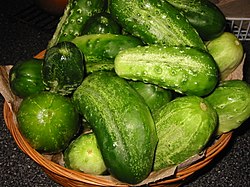 Pickling cucumbers
 -
 Gherkins
 -
 Leaves
 -
 A tendril facilitates climbing
 -
 A string lattice supports vine growth
 -

-
 Seeds
Seeds


.jpg)


.jpg)


See also
[edit]- Armenian cucumber, a variety of melon that resembles a cucumber
- Cucumber blessing
- Cucumber cake
- Cucumber juice
- Cucumber raita
- Cucumber sandwich
- Cucumber soda
- Cucumber soup
- Sea cucumber, named for its resemblance to the fruit
References
[edit]- ^ a b "Cucumber." Encyclopædia Britannica. [1998] 2019.
- ^ Silvertown J (1985). "Survival, Fecundity and Growth of Wild Cucumber, Echinocystis Lobata". Journal of Ecology. 73 (3): 841–849. Bibcode:1985JEcol..73..841S. doi:10.2307/2260151. JSTOR 2260151.
- ^ a b Chomicki G, Schaefer H, Renner SS (June 2020). "Origin and domestication of Cucurbitaceae crops: insights from phylogenies, genomics and archaeology". New Phytologist. 226 (5): 1240–1255. Bibcode:2020NewPh.226.1240C. doi:10.1111/nph.16015. PMID 31230355.
- ^ a b Weng Y (7 January 2021). "Cucumis sativus Chromosome Evolution, Domestication, and Genetic Diversity: Implications for Cucumber Breeding". Plant Breeding Reviews. Wiley. pp. 79–111. doi:10.1002/9781119717003.ch4. ISBN 978-1-119-71700-3.
- ^ "Cucumis sativus L." Plants of the World Online. Royal Botanic Gardens, Kew. Retrieved 23 February 2023.
- ^ a b Bisht IS, Bhat K, Tanwar SP, et al. (January 2004). "Distribution and genetic diversity of Cucumis sativus var. hardwickii (Royle) Alef in India". The Journal of Horticultural Science and Biotechnology. 79 (5): 783–791. Bibcode:2004JHSB...79..783B. doi:10.1080/14620316.2004.11511843. ISSN 1462-0316.
- ^ Mariod AA, Mirghani ME, Hussein IH (14 April 2017). Cucumis sativus, Cucumber; Chapter 16 in: Unconventional Oilseeds and Oil Sources. Academic Press. ISBN 9780128134337.
- ^ a b "Cucumis sativus". North Carolina State University, Extension Gardener. 2025. Retrieved 12 October 2025.
- ^ Zhang T, Li X, Yang Y, et al. (2019). "Genetic analysis and QTL mapping of fruit length and diameter in a cucumber (Cucumber sativus L.) recombinant inbred line (RIL) population". Scientia Horticulturae. 250: 214–222. Bibcode:2019ScHor.250..214Z. doi:10.1016/j.scienta.2019.01.062. S2CID 92837522.
- ^ a b "Is a Cucumber a Fruit or a Vegetable and Why?". European Food Information Council. 4 March 2020. Retrieved 12 October 2025.
- ^ a b c Nonnecke, I.L. (1989). Vegetable Production. Springer. ISBN 9780442267216.
- ^ Huang S, Li R, Zhang Z, et al. (2009). "The genome of the cucumber, Cucumis sativus L". Nature Genetics. 41 (12): 1275–81. doi:10.1038/ng.475. PMID 19881527.
- ^ Wang Y, Dong Z, Ma Y, et al. (October 2023). "Comprehensive dissection of meiotic DNA double-strand breaks and crossovers in cucumber". Plant Physiol. 193 (3): 1913–1932. doi:10.1093/plphys/kiad432. PMC 10602612. PMID 37530486.
- ^ Shang Y, Ma Y, Zhou Y, et al. (November 2014). "Plant science. Biosynthesis, regulation, and domestication of bitterness in cucumber". Science. 346 (6213): 1084–8. Bibcode:2014Sci...346.1084S. doi:10.1126/science.1259215. PMID 25430763. S2CID 206561241.
- ^ a b Liu Z, Li Y, Cao C, et al. (February 2019). "The role of H2S in low temperature-induced cucurbitacin C increases in cucumber". Plant Molecular Biology. 99 (6): 535–544. Bibcode:2019PMolB..99..535L. doi:10.1007/s11103-019-00834-w. PMID 30707394. S2CID 73431225.
- ^ He J (2022). "Terpene Synthases in Cucumber (Cucumis sativus) and Their Contribution to Herbivore-induced Volatile Terpenoid Emission". New Phytologist. 233 (2): 862–877. Bibcode:2022NewPh.233..862H. doi:10.1111/nph.17814. hdl:11245.1/e4b87361-6747-409a-a897-0e3939f560c0. PMC 9299122. PMID 34668204. S2CID 239035917.
- ^ United States Food and Drug Administration (2024). "Daily Value on the Nutrition and Supplement Facts Labels". FDA. Archived from the original on 27 March 2024. Retrieved 28 March 2024.
- ^ "TABLE 4-7 Comparison of Potassium Adequate Intakes Established in This Report to Potassium Adequate Intakes Established in the 2005 DRI Report". p. 120. In: Stallings VA, Harrison M, Oria M, eds. (2019). "Potassium: Dietary Reference Intakes for Adequacy". Dietary Reference Intakes for Sodium and Potassium. pp. 101–124. doi:10.17226/25353. ISBN 978-0-309-48834-1. PMID 30844154. NCBI NBK545428.
- ^ Schieberle P, Ofner S, Grosch W (1990). "Evaluation of Potent Odorants in Cucumbers (Cucumis sativus) and Muskmelons (Cucumis melo) by Aroma Extract Dilution Analysis". Journal of Food Science. 55: 193–195. doi:10.1111/j.1365-2621.1990.tb06050.x.
- ^ Shang Y, Ma Y, Zhou Y, et al. (2014). "Plant science. Biosynthesis, regulation, and domestication of bitterness in cucumber". Science. 346 (6213): 1084–8. Bibcode:2014Sci...346.1084S. doi:10.1126/science.1259215. PMID 25430763. S2CID 206561241.
- ^ Yunusa, Alkasim & Dandago, Munir Abba & Ibrahim, Sa’adatu & Abdullahi, Nura & Tsoho, Adamu Usman & Barde, Aminu. (2018). Total Phenolic Content and Antioxidant Capacity of Different Parts of Cucumber (Cucumis sativus L.). Acta Universitatis Cibiniensis. Series E: Food Technology. 22. 13-20. 10.2478/aucft-2018-0008.
- ^ "Cucumbers: Planting, growing, and harvesting cucumbers". Old Farmer's Almanac, Yankee Publishing, Inc., Dublin, NH. 2016. Retrieved 11 August 2016.
- ^ "Telegraph cucumber, unpeeled, raw". Australian Food Composition Database, Food Standards Australia New Zealand. 2025. Retrieved 12 October 2025.
- ^ Avi, Torey (3 September 2014). "History in a jar: The story of pickles". Public Broadcasting Service. Retrieved 13 November 2017.
- ^ "What's The Deal With Cornichons?". Kitchn. The Kitchn. 2017. Retrieved 13 November 2017.
- ^ "Gherkins". Venlo, Netherlands: Zon. 2017. Archived from the original on 14 November 2017. Retrieved 13 November 2017.
- ^ "Cucumbers" (PDF). University of California-Davis: Western Institute for Food Safety and Security, US Department of Agriculture. May 2016. Retrieved 13 November 2017.
- ^ "Cucumbers and gherkins". Agricultural and Processed Food Products Export Development Authority, Government of India. 2015. Retrieved 13 November 2017.
- ^ "Word origin and history for gherkin". Dictionary.com. 2017. Retrieved 13 November 2017.
- ^ "West Indian gherkin, Cucumis anguria L." Plants for a Future. 2012. Retrieved 13 November 2017.
- ^ Jordan-Reilly M (15 September 2013). "Why do cucumbers upset my digestion?". LiveStrong.com.
- ^ Hutton W (2004). A Cook's Guide to Asian Vegetables. Singapore: Periplus Editions. pp. 42–43. ISBN 0794600786.
- ^ a b "Cucumber and gherkin production in 2023, Crops/Regions/World list/Production Quantity/Year (pick lists)". UN Food and Agriculture Organization, Corporate Statistical Database (FAOSTAT). 2025. Retrieved 12 October 2025.
- ^ Asian News International. 21 July 2010. "Cucumber, melon's common ancestor originated in Asia." NewsTrack India. Retrieved on 4 June 2020.
- ^ Chomicki G, Schaefer H, Renner SS (June 2020). "Origin and domestication of Cucurbitaceae crops: insights from phylogenies, genomics and archaeology". New Phytologist. 226 (5): 1240–1255. Bibcode:2020NewPh.226.1240C. doi:10.1111/nph.16015. ISSN 0028-646X. PMID 31230355.
- ^ Renner SS, Schaefer H, Kocyan A (2007). "Phylogenetics of Cucumis (Cucurbitaceae): Cucumber (C. sativus) belongs in an Asian/Australian clade far from melon (C. melo)". BMC Evolutionary Biology. 7 (1): 58. Bibcode:2007BMCEE...7...58R. doi:10.1186/1471-2148-7-58. PMC 3225884. PMID 17425784.
- ^ Doijode, S. D. 2001. Seed storage of horticultural crops. Haworth Press. ISBN 1-56022-901-2. p. 281.
- ^ Zhuang FY, Chen JF, Staub JE, et al. (2006). "Taxonomic Relationships of A Rare Cucumis Species (C. hystrix Chakr.) and Its Interspecific Hybrid with Cucumber". HortScience. 41 (3): 571–574. doi:10.21273/HORTSCI.41.3.571.
- ^ a b James, Peter J., Thorpe, Nick, Thorpe, I. J. (1995). "Ch. 12, Sport and Leusure: Roman Gardening Technology". Ancient Inventions. Ballantine Books. p. 563. ISBN 978-0-345-40102-1.
- ^ Pliny the Elder. [77–79 AD] 1855. "Vegetables of a Cartilaginous Nature—Cucumbers. Pepones Archived 5 June 2020 at the Wayback Machine." Ch. 23 in The Natural History XIX, translated by J. Bostock and H. T. Riley. London: Taylor & Francis. – via Perseus under PhiloLogic, also available via Perseus Project.
- ^ Pliny the Elder, Natural History XX.iii Archived 5 June 2020 at the Wayback Machine.
- ^ Pliny the Elder, Natural History XX.iv Archived 5 June 2020 at the Wayback Machine–v Archived 5 June 2020 at the Wayback Machine.
- ^ "A Brief History of Cucumbers, From Producing Vegetable Crops by Swiader et al; and A History of Horticulture in America to 1860 by U.P. Hedrick". B's Cucumber Pages. Archived from the original on 1 October 2007.
- ^ Buchanan D (2012). Taste, Memory: Forgotten Foods, Lost Flavors, and why They Matter. VT, USA: Chelsea Green Publishing. p. 109. ISBN 9781603584401.
- ^ Kuhnlein HV, Turner NJ (1996). Traditional Plant Foods of Canadian Indigenous Peoples: Nutrition, Botany and Use. Amsterdam, Netherlands: Gordon and Breach. p. 159. ISBN 9782881244650.
- ^ Higginson, Francis. [1630] 1906. New-Englands Plantation. Salem, MA: Essex Book and Print Club. OCLC 1049892552. p. 5.
- ^ Wood, William. (1634). "Of the Hearbes, Fruites, Woods, Waters and Mineralls", pp. 13–18 in New England Prospect. London.
- ^ Saturday 22 August 1663 (Pepys' Diary). Pepysdiary.com. Retrieved on 25 November 2012.
- ^ Evelyn J (2009). Acetaria: A Discourse of Sallets (original 1699). Prospect Books. ISBN 0907325122.
- ^ Davidson J (15 July 2018). Pickles: A Global History (Edible). Reaktion Books. ISBN 9781780239194.
- ^ Boswell J (1832). The Life of Samuel Johnson: Including A Journal of a Tour to the Hebrides, Volumen 1. Carter, Hendee and Company. p. 423. Retrieved 29 March 2024.
| International | |
|---|---|
| National | |
| Other | |

Cucumber
View on GrokipediaBotanical Description
Plant structure and growth habits
The cucumber plant, Cucumis sativus, is an annual creeping vine belonging to the Cucurbitaceae family, featuring rough, angular, pubescent stems that can extend 3 to 5 meters in length when sprawling or climbing. These stems are supported by coiling tendrils that enable the plant to grasp supports and exhibit thigmotropism for vertical growth. The leaves are simple, alternate, cordate to orbicular in shape, measuring 7 to 20 cm in length and width, with lobed margins, serrate edges, and a rough, prickly texture due to trichomes. The root system consists of a taproot and extensive shallow fibrous roots, primarily concentrated in the top 60 cm of soil (though the taproot can extend deeper), contributing to the plant's high sensitivity to soil moisture fluctuations.[8] Cucumber plants exhibit two primary growth habits: vining types that spread horizontally or climb via tendrils, and compact bush varieties bred for smaller spaces, with the former typically reaching greater overall spread of 1 to 2.5 meters in width if unsupported. Fruits develop parthenocarpically or from fertilized ovaries as pepos—fleshy berries with a cylindrical to spherical form, ranging 10 to 60 cm in length depending on cultivar, featuring a green exocarp often covered in spines or tubercles in wild or immature types. The fruit's high water content, approximately 95%, underscores the plant's adaptation to environments with ample moisture, supporting rapid expansion during maturation. The life cycle begins with seed germination, which occurs in 3 to 10 days under optimal soil temperatures of 20 to 30°C (68 to 86°F), though viability persists from 15 to 40°C. Vegetative growth follows, lasting 4 to 6 weeks as the vine establishes leaves and tendrils, leading to fruiting initiation around 50 to 70 days after planting. As a frost-sensitive species, the plant experiences chilling injury or death below 10°C (50°F), with active growth ceasing below 15°C and irreversible damage from temperatures near freezing.Reproduction and defenses
Cucumbers (Cucumis sativus) exhibit diverse reproductive strategies, primarily as monoecious plants that produce separate male and female flowers on the same individual. Male flowers feature five stamens that produce sticky pollen, while female flowers possess an inferior ovary topped by a pistil, which develops into the fruit if fertilized. These flowers are typically yellow, measuring 1-2 cm in diameter, and emerge from the leaf axils along the vine. Gynoecious varieties, common in modern hybrids, predominantly produce female flowers to enhance fruit yield, though they often require interplanting with monoecious types for pollen supply.[9][10][11][12] Pollination in cucumbers is predominantly insect-mediated, with bees serving as the primary vectors that transfer pollen from male to female flowers. The pollen's sticky nature prevents wind dispersal, necessitating animal pollinators for effective cross-pollination. Cucumber varieties are self-compatible, but the spatial separation of unisexual flowers on monoecious plants requires external transfer for fertilization. This has been bred into modern parthenocarpic cultivars that set seedless fruit without pollination, improving yield stability in enclosed environments like greenhouses. In seeded varieties, successful fruit set depends on pollination, as each ovule requires pollen deposition for development.[13][9][14][15] Reproductive success in cucumbers is heavily influenced by pollination efficiency, with unpollinated female flowers often aborting at high rates, leading to reduced yields. Abortion occurs when insufficient pollen reaches the ovules, preventing embryo formation and causing the young fruit to drop. Following successful fertilization, seed development proceeds rapidly within the maturing fruit, where each fertilized ovule forms a viable seed containing the embryo and nutrient reserves from the endosperm. This process ensures genetic diversity through cross-pollination while supporting propagation in wild and cultivated populations.[16][17][18] Cucumbers employ multiple defense mechanisms to deter herbivores and pathogens, enhancing survival in natural settings. The production of cucurbitacins, a class of bitter triterpenoid compounds, serves as a primary chemical deterrent against feeding insects and mammals; these toxins are highly concentrated in wild fruits and leaves but reduced in domesticated varieties to improve palatability. Physical defenses include spines or trichomes on leaves, stems, and young fruits, which physically impede pest access and reduce damage from chewing insects. Additionally, cucumbers release volatile organic compounds, such as terpenes, in response to herbivore attack; these attract natural enemies like predatory wasps, indirectly protecting the plant through biological control.[19][20]Taxonomy and Varieties
Classification
The cucumber (Cucumis sativus L.) belongs to the kingdom Plantae, phylum Tracheophyta, class Magnoliopsida, order Cucurbitales, family Cucurbitaceae, genus Cucumis (subgenus Cucumis), and species C. sativus, with the domesticated form derived from the wild progenitor C. sativus var. hardwickii.[21][22][23] This species was first formally described by Carl Linnaeus in Species Plantarum in 1753, establishing its binomial nomenclature; historical synonyms for the wild form include Cucumis hardwickii Royle, while related gherkin species such as Cucumis anguria L. represent distinct but phylogenetically close taxa within the genus.[24][24][25] Evolutionarily, C. sativus emerged from wild Asian progenitors in an Asian/Australian clade of the genus Cucumis, with domestication occurring approximately 3,000 years ago in the Himalayan foothills of southern Asia; it is diploid with a chromosome number of 2n=14, and its closest relatives include the melon (C. melo) as a sister group within the genus and the watermelon (Citrullus lanatus) in the broader Cucurbitaceae family.[22][26][27] Domestication imposed a severe genetic bottleneck, significantly reducing variation in cultivated lines relative to wild populations, which has prompted modern breeding efforts to incorporate traits like disease resistance from wild relatives such as C. sativus var. hardwickii and C. hystrix.[23][28][29] The species lacks formally recognized subspecies, with intraspecific varieties primarily differentiated by fruit morphology, such as size, shape, and bitterness levels.[23] Modern cultivars derive from this foundational classification, enabling targeted selection for diverse fruit traits.Cultivar types
Cucumber cultivars are broadly categorized into three main types: slicing, pickling, and burpless (also known as seedless or English cucumbers), each bred for specific market and culinary purposes. Slicing cucumbers, intended for fresh consumption, feature long fruits (typically 6-9 inches) with smooth, thin skins and crisp flesh, exemplified by American varieties like 'Marketmore' that are often waxed for preservation and transport. Pickling cucumbers, conversely, are shorter (3-5 inches) and have bumpy, thicker skins suited for brining, with classic examples including gherkins such as 'Boston Pickling', which maintain texture and flavor during processing. Burpless cultivars, developed to minimize bitterness from cucurbitacin compounds, produce slender, seedless fruits that are mild and digestible, often grown in greenhouses for year-round production.[30][31][32] Breeding efforts have focused on key traits to enhance yield, quality, and resilience, with hybridization techniques prominent since the mid-20th century to create uniform F1 hybrids. Parthenocarpic varieties, which develop seedless fruits without pollination, are particularly valued for greenhouse cultivation, often combined with gynoecious traits that promote predominantly female flowers for higher fruit set per plant. Disease-resistant hybrids, targeting pathogens like downy mildew and cucumber mosaic virus, have been developed through conventional selection, with over 1,200 accessions in global germplasm collections supporting ongoing improvements. Modern advancements include CRISPR/Cas9 editing for broad virus resistance by targeting genes like eIF4E, enabling non-transgenic cultivars resilient to multiple viruses such as zucchini yellow mosaic virus and papaya ringspot virus, with initial demonstrations in the 2010s leading to practical applications in the 2020s.[33][34][32] Worldwide, thousands of cucumber varieties exist, reflecting diverse regional adaptations beyond the primary types. In Europe, greenhouse cultivars like 'Telegraph' are parthenocarpic and seedless, typically plastic-wrapped to maintain freshness. American slicing types emphasize uniformity and shelf life, often waxed and straight. Asian varieties include elongated Chinese types such as 'Suyo Long' for stir-fries and Japanese burpless hybrids with thin skins. Other regional forms encompass round yellow lemon cucumbers popular in India, and snake-like or dosakayi types from southern India used in curries.[35][31][36]Cultivation and Production
Growing requirements
Cucumbers (Cucumis sativus) are a warm-season crop that thrives in temperatures between 20–30°C (68–86°F) during the day and 15–20°C (59–68°F) at night, with growth slowing significantly below 13°C (55°F) or above 35°C (95°F).[37] Soil temperatures must reach at least 16°C (60°F) for seed germination or transplanting to avoid poor establishment.[30] The plant requires full sun exposure of at least 6–8 hours daily and benefits from high relative humidity levels around 60–70% to promote fruit set, particularly in greenhouse or humid environments.[38] Ideal soils are well-drained sandy loams or silt loams with good water-holding capacity and a pH range of 6.0–7.0; compacted or heavy clay soils should be amended with organic matter to improve drainage and aeration.[37] A soil pH below 5.8 may require liming to optimize nutrient availability.[30] Planting can be achieved by direct seeding at a depth of 1–2 cm (½–¾ inch) or using transplants started indoors 18–24 days prior to the last frost.[37] Seeds should be sown after all danger of frost has passed, typically when soil warms to 21–29°C (70–85°F).[39] In tropical regions of South India, such as Andhra Pradesh, where frost is absent and the mild climate permits multiple cropping cycles, sowing typically occurs during June–July (rainy season), September–October (post-rainy season), and December–January (winter), with year-round cultivation possible in some areas using appropriate varieties.[40] Spacing varies by variety and system: vining types are planted 30–60 cm (12–24 inches) apart in rows 1–2 m (3–6 feet) apart, while bush varieties can be closer at 20–30 cm (8–12 inches); trellising or staking is recommended for vining cultivars to enhance air circulation, reduce disease, and increase yields by 20–50%.[41] Irrigation is critical, providing 2.5–5 cm (1–2 inches) of water per week through drip systems to maintain consistent soil moisture without waterlogging, as irregular watering can lead to bitter fruit or blossom-end rot.[30] Fertilization involves a balanced N-P-K program based on soil tests, such as 100–50–100 kg/ha (90–45–90 lbs/acre) applied pre-plant with sidedressings of nitrogen at 50–75 kg/ha (45–65 lbs/acre) during vegetative growth; excess nitrogen should be avoided to prevent excessive foliage at the expense of fruit.[39] Effective pest and disease management relies on integrated pest management (IPM) strategies to minimize chemical inputs. Common pests include cucumber beetles (Acalymma vittatum and Diabrotica undecimpunctata), which vector bacterial wilt and feed on foliage, as well as aphids, squash bugs, and spider mites; control measures encompass crop rotation with non-host crops every 2–3 years, use of resistant varieties, row covers during early growth, and organic options like neem oil applications.[42] Major diseases such as powdery mildew (Podosphaera xanthii), downy mildew (Pseudoperonospora cubensis), and bacterial wilt (Erwinia tracheiphila) are managed through resistant cultivars, avoiding overhead irrigation to reduce foliar wetness, sanitation practices like removing infected debris, and targeted fungicides when thresholds are met.[39] Monitoring and early intervention are key, with thresholds for cucumber beetles at 1 per plant for feeding damage or 20% defoliation.[43] Harvesting occurs 45–60 days after planting, depending on variety and conditions, when fruits reach marketable size—typically 15–20 cm (6–8 inches) for slicing types and 5–15 cm (2–6 inches) for pickling.[30] Fruits should be hand-picked every 1–2 days using shears to prevent overripening, which inhibits further production and can cause bitterness; uniform, dark green color indicates optimal quality.[39] Post-harvest, cucumbers store best at 10–13°C (50–55°F) with 95% relative humidity for 10–14 days to maintain firmness.[37]Tropical and Greenhouse Cultivation
Cucumbers are widely cultivated in tropical climates, including the Philippines, where they can be grown year-round due to consistently warm temperatures. In regions such as Aklan, greenhouse production from April to July leverages the transition from drier hot conditions (April, lower rainfall) to the wet monsoon season (increasing from May), with daytime temperatures typically 28–30°C+ and high humidity. Greenhouses help manage excess rain, improve ventilation to reduce diseases like downy mildew, and support trellising for vertical growth. Recommended Philippine varieties include:- Pilmaria (UPL Cu-6): A highly gynoecious, open-pollinated pickling variety with blocky, dark green fruits, tolerant to watermelon mosaic virus, downy mildew, and fusarium wilt; matures in 40–42 days with yields of 26–27.5 t/ha.
- Bituin (UPL Cu-11): A high-yielding slicing variety, strongly gynoecious, with medium-long uniform dark green fruits; potential yields 25–35 t/ha, moderately tolerant to downy mildew, cucumber mosaic virus, and powdery mildew.
Intercropping Practices
In tropical greenhouse systems, cucumbers are often trellised vertically, allowing intercropping underneath or between rows with shorter, faster-growing, shade-tolerant herbs and leafy vegetables. These intercrops utilize space efficiently, provide living mulch for weed suppression and moisture retention, and offer pest management benefits without heavy competition. Suitable intercrops include:- Lettuce (loose-leaf or heat-tolerant varieties): Benefits from dappled shade to prevent bolting in hot months; acts as living mulch and may deter aphids.
- Malabar spinach (alugbati): Highly heat- and humidity-tolerant, provides ground cover and repeated harvests.
- Kangkong (water spinach): Resilient in wet humid conditions, fast-growing, suitable for partial shade.
- Basil (sweet or Thai): Repels aphids, flies, and beetles; attracts beneficial insects.
- Other herbs like parsley, cilantro, dill, or oregano: Offer pest repulsion and can serve as ground cover.
Companion planting
Companion planting involves growing certain plants near cucumbers to enhance growth, repel pests, attract beneficial insects, or improve soil conditions. These practices are widely recommended in home and organic gardening.Beneficial companions
- Nasturtiums: Serve as a trap crop, attracting aphids and cucumber beetles away from cucumber plants.
- Marigolds: Repel nematodes, aphids, whiteflies, and other pests with their pungent roots and foliage.
- Dill: Attracts predatory insects like ladybugs, hoverflies, and parasitic wasps that control cucumber pests such as aphids and spider mites.
- Borage: Draws pollinators to improve fruit set and is said to increase cucumber vigor and disease resistance.
- Beans and peas: As legumes, they fix nitrogen in the soil, providing a natural fertilizer for heavy-feeding cucumbers.
- Corn: Offers structural support for vining cucumbers (the "Three Sisters" method with beans) and provides partial shade to reduce heat stress.
- Radishes: Deter cucumber beetles when planted nearby; they can be harvested early without competing long-term.
- Sunflowers: Attract pollinators and can serve as windbreaks or living trellises.
- Alliums (onions, garlic, chives): Repel a wide range of pests with their strong sulfur compounds.
- Lettuce and other leafy greens: Act as living mulch, suppressing weeds, retaining soil moisture, and providing ground cover.
Plants to avoid
- Other cucurbits (squash, pumpkins, melons): Share pests (e.g., cucumber beetles, squash bugs) and diseases (e.g., powdery mildew, downy mildew), increasing cross-infection risk.
- Potatoes: Compete for nutrients and can attract similar soil pests.
- Strong aromatic herbs (sage, mint, fennel): May inhibit cucumber growth through allelopathy or excessive competition for resources; their strong scents can also interfere with pollination.
- Tomatoes: Occasionally problematic due to nutrient competition and shared susceptibility to diseases like bacterial wilt or blight, though some gardeners succeed with careful spacing.
Texas-specific tips
In Texas's hot, often humid climate, cucumbers are prone to heat stress, which can lead to bitter fruits due to elevated cucurbitacin levels. Prioritize companions that provide afternoon shade and moisture retention, such as tall corn or pole beans for vertical support and partial shading, and leafy greens like lettuce as living mulch to cool the soil and conserve water. Marketmore 76 is a particularly reliable slicing variety for Texas gardens, known for its excellent disease tolerance (including resistance to cucumber mosaic virus, scab, and downy mildew) and consistent production of crisp, non-bitter fruits when grown with these supportive companions and provided with consistent moisture and mulch. These recommendations are based on established organic gardening practices from sources such as Cornell University Extension, the Old Farmer's Almanac, and various horticultural guides.Global production and economics
In 2023, global cucumber production reached 98 million tonnes, up approximately 3.5% from 94.7 million tonnes in 2022, according to FAO data.[44] China dominates the market, accounting for over 80% of total output with around 80 million tonnes, driven by extensive open-field and protected cultivation systems. Other major producers include Turkey at 1.9 million tonnes, Russia at 1.7 million tonnes, Mexico at 1.1 million tonnes, and the United States at 0.7 million tonnes, reflecting diverse regional adaptations to local climates and market demands.[45] Yield trends have shown significant improvement over recent decades, with the global average reaching 43,562 kg per hectare in 2022, a 108% rise since 2000, attributed to advancements in hybrid varieties and irrigation techniques. In high-tech greenhouse settings, yields have achieved remarkable highs, such as 244 kg per square meter annually in Finland during 2024, highlighting the potential of controlled environments to boost productivity. The overall economic value of the global cucumber market stood at approximately $6 billion in 2024, supporting rural livelihoods and food security in producing regions.[46][47] International trade patterns are led by exporters like Spain and the Netherlands, which leverage advanced greenhouse technologies to supply high-value fresh cucumbers to Europe and beyond, with Spain alone accounting for about $1.06 billion in exports. However, climate change poses challenges, potentially reducing yields in open-field systems by 10-20% in vulnerable regions due to erratic weather and elevated temperatures. To counter these issues, there is a growing shift toward sustainable practices, including vertical farming and hydroponics, which optimize water and land use while minimizing environmental impact. Organic cucumber production is expanding at an annual rate of around 5%, driven by consumer demand for pesticide-free options and supported by policy incentives in key markets.[48][49][50]| Top Cucumber Producing Countries (2023, million tonnes) |
|---|
| China: 80.2 |
| Turkey: 1.9 |
| Russia: 1.7 |
| Mexico: 1.1 |
| Iran: 0.8 |
| United States: 0.7 |
| Spain: 0.7 |
| Uzbekistan: 0.6 |
| Ukraine: 0.5 |
| Egypt: 0.5 |
History
Origins and early history
The cucumber (Cucumis sativus) originated in southern Asia, with its domestication occurring approximately 3,000 years ago in the Himalayan foothills of India from the wild progenitor C. sativus var. hardwickii, a small-fruited, bitter variety containing high levels of cucurbitacins that deterred herbivores.[26][27] This wild form, native to regions including northern India and parts of Nepal, produced fruits no larger than olives, which were initially unpalatable for direct consumption but valued for their medicinal properties.[51] Archaeological and genetic evidence indicates that early human selection in India focused on reducing bitterness and increasing fruit size, marking the transition to cultivated forms around 1000 BCE.[52] Ancient texts provide some of the earliest records of cucumber cultivation in India, with references appearing in the Rig Veda, dated to around 1500–1000 BCE, where the plant is described as urvaruka and associated with rituals symbolizing detachment and purity.[53] Eastward, the crop arrived in China around 200 BCE during the Han dynasty, as recorded in early agronomic texts, where it was adopted for both culinary and medicinal uses.[3] Recent scholarship indicates that Cucumis sativus did not spread westward significantly until much later; ancient references in the Near East, Egypt, Greece, and Rome to "cucumbers" or similar plants (e.g., biblical qishu'im, Theophrastus' sikya, Roman cucumis) likely refer to snake melons (Cucumis melo subsp. melo Flexuosus Group) or other cucurbits, not the true cucumber.[54][3] No unequivocal archaeological or textual evidence supports its presence in Mesopotamia, Egypt, or the Mediterranean before the Common Era.[54]Historical cultivation in Europe
Cucumis sativus reached the Mediterranean region via two main routes starting around the 6th–7th century CE: overland from Persia and maritime from the Indian subcontinent, arriving in Spain by the mid-9th century and Italy by the mid-11th century.[3] Arabic influences, introduced via the Iberian Peninsula after the Islamic conquests, enhanced preservation techniques such as pickling in vinegar, as described in 9th- and 10th-century texts from Andalusia.[3] By the 12th century, improved varieties and irrigation methods allowed broader adaptation in southern regions like Spain and Italy.[3] During the Middle Ages, cucumber cultivation was established in monastic gardens across Europe as the crop spread northward.[3] In the early modern period from the 16th to 18th centuries, French and English horticulturists began selective breeding to develop sweeter, less bitter varieties by reducing cucurbitacin compounds, making cucumbers more palatable for fresh consumption.[5] Gherkins, small pickling cucumbers, gained popularity, with the term first recorded in French in 1549 by lexicographer Robert Estienne.[55] European colonial expansion facilitated the crop's spread to the Americas, where Christopher Columbus introduced seeds to Haiti in 1494, and by the mid-16th century, it reached North American settlements via explorers and settlers.[56] From the 19th century onward, during the Age of Enlightenment and into the 20th century, cucumber breeding advanced with the development of hybrids, including burpless varieties in the mid-1900s that minimized digestive discomfort through lower cucurbitacin levels.[5] Greenhouse cultivation expanded significantly in the Netherlands, where protected structures grew from rudimentary designs in the 19th century to large-scale operations by the early 20th, enabling consistent production despite the climate.[57] Post-World War II mechanization, including automated irrigation and harvesting aids, boosted yields across Europe by integrating intensive farming practices and mineral fertilizers.[58]Uses
Culinary uses
Cucumbers are prominently featured in fresh preparations across global cuisines, where their crisp texture and mild flavor complement salads, dips, and raw dishes. In Greek cuisine, grated cucumbers are mixed with yogurt, garlic, and herbs to create tzatziki, a cooling sauce often served with grilled meats or as a dip. In Indian cooking, finely chopped or grated cucumbers are incorporated into raita, a yogurt-based condiment that balances spicy curries.[59] Additional regional examples include Korean oi muchim, a spicy-sesame seasoned cucumber salad, and Japanese sunomono, a lightly vinegared cucumber dish typically including seaweed or sesame seeds. Cucumbers are also commonly sliced raw for sandwiches and wraps in Western diets, adding hydration and crunch without overpowering other ingredients.[60] In processed forms, cucumbers undergo pickling, fermentation, or brief cooking to extend shelf life and enhance flavor profiles. Dill pickles, fermented in a saltwater brine with dill and spices, and sweet bread-and-butter pickles, sliced and preserved in a vinegar-sugar mixture, are staples in American and European cuisines. Gherkins refer to small, immature cucumbers pickled whole, often in vinegar for a tangy bite, popular in French and British dishes.[61] Fermentation appears in Korean kimchi, where sliced cucumbers are lacto-fermented with chili, garlic, and fish sauce for a probiotic-rich side. In some Asian cuisines, young cucumber shoots or greens are stir-fried with garlic and soy sauce, providing a tender, leafy alternative to mature fruit.[59] Culinary varieties are selected based on intended use, with burpless types—such as English or Persian cucumbers—bred to be seedless and low in cucurbitacin, allowing consumption whole without peeling or digestive discomfort.[62] Slicing cucumbers, longer and smoother-skinned, are often peeled and seeded to reduce bitterness in fresh preparations like salads.[63] Global production reached 97.81 million metric tons in 2023, reflecting their popularity in uncooked forms.[64] Preparation involves washing under running water to remove any wax coating applied to commercial cucumbers for preservation, which can harbor residues.[65] For storage, maintain cucumbers at around 10°C in a humid environment to avoid chilling injury, which causes pitting and wateriness below 7°C; wrap in paper towels inside a perforated bag to absorb excess moisture.[66]Medicinal and cosmetic uses
Cucumbers contribute to internal health primarily through their high water content, which constitutes approximately 95% of the fruit, aiding hydration and providing electrolytes like potassium to support fluid balance and prevent dehydration during physical activity or in hot climates. Cucumbers do not cause water retention; instead, they act as natural diuretics that help reduce water retention and swelling due to their high water content (approximately 95%), potassium, and compounds like caffeic acid and silica, which promote fluid elimination.[67] The domesticated varieties contain reduced levels of cucurbitacins compared to wild types, allowing for beneficial antioxidant effects without excessive bitterness, as these compounds help neutralize free radicals and reduce oxidative stress.[68] Additionally, cucumbers supply vitamin K, with about 16.4 mcg per serving meeting 14% of the daily value, which promotes bone health by enhancing calcium absorption and lowering fracture risk.[69] Their low glycemic index and minimal carbohydrate content support diabetes management by helping to regulate blood sugar levels, with early clinical trials indicating reduced hypoglycemia risk.[70] Recent animal studies from 2023 demonstrate that cucumber extract attenuates blood pressure elevation in hypertensive models, achieving dose-dependent reductions of up to 28.8 mmHg systolic and 18.3 mmHg diastolic, suggesting potential cardiovascular benefits with regular intake.[71] In traditional Eastern medicine, particularly Ayurveda, cucumbers are valued for their cooling properties to alleviate fevers and promote detoxification by removing accumulated waste from the body.[68] They are also employed for anti-inflammatory purposes, with extracts showing efficacy in managing osteoarthritis symptoms such as knee pain and stiffness; a 2018 randomized controlled trial found that 10 mg of cucumber extract twice daily reduced Western Ontario and McMaster Universities Osteoarthritis Index scores by 70.29% over 180 days, outperforming glucosamine-chondroitin.[72] Furthermore, flavonoids in cucumbers provide liver-protective effects by aiding in toxin elimination and supporting hepatoprotective activity.[68] Cosmetically, chilled thin slices of cucumber applied to the eye area for about 15 minutes reduce puffiness and dark circles due to their hydrating and moisturizing effects, as well as the content of caffeic acid, which minimizes water retention around the delicate eye area and provides natural de-swelling benefits.[73][74] Face masks incorporating cucumber address acne and sunburn through high water content for soothing hydration and silica for skin strengthening and elasticity; topical application cools irritated skin and alleviates inflammation from UV exposure.[73] By 2025, cucumber extracts remain integral to commercial skincare formulations, including moisturizers and gels, for their anti-wrinkle and brightening properties.[67] Clinical evidence supports these uses, with the fruit's fiber content promoting gut health by aiding digestion and preventing constipation, as confirmed in nutritional analyses.[67] However, individuals should exercise caution due to rare allergies manifesting as skin rashes or digestive upset, and potential pesticide residues in conventionally grown cucumbers, which can exceed maximum residue limits and pose risks like nausea or liver toxicity unless mitigated by washing or peeling.[67][75]Nutrition and Sensory Qualities
Nutritional content
Cucumbers are primarily composed of water, making up approximately 95% of their content by weight, which contributes to their low calorie density of 15 kcal per 100 grams. The macronutrient profile includes 0.65 grams of protein, 3.63 grams of carbohydrates (of which 1.67 grams are sugars and 0.5 grams is dietary fiber), and 0.11 grams of total fat, with sodium levels remaining low at 2 mg per 100 grams.[76] The vitamin and mineral content of raw cucumbers with peel provides modest contributions to daily requirements. Key nutrients include vitamin K at 16.4 µg per 100 grams (14% of the Daily Value), vitamin C at 2.8 mg per 100 grams (3% DV), potassium at 147 mg per 100 grams (3% DV), and magnesium at 13 mg per 100 grams (3% DV).[76]| Nutrient | Amount per 100 g | % Daily Value* |
|---|---|---|
| Water | 95.23 g | - |
| Energy | 15 kcal | 1% |
| Protein | 0.65 g | 1% |
| Total Fat | 0.11 g | 0% |
| Carbohydrates | 3.63 g | 1% |
| - Sugars | 1.67 g | - |
| - Dietary Fiber | 0.5 g | 2% |
| Sodium | 2 mg | 0% |
| Potassium | 147 mg | 3% |
| Magnesium | 13 mg | 3% |
| Vitamin C | 2.8 mg | 3% |
| Vitamin K | 16.4 µg | 14% |
- ½ cup slices (≈52–75 g): ≈76–80 mg
- 1 cup slices or chopped (≈104–150 g): ≈150–180 mg
- One medium cucumber (≈200–300 g): ≈300–440 mg