


Community hub
Recent from talks
Contribute something
Nothing was collected or created yet.
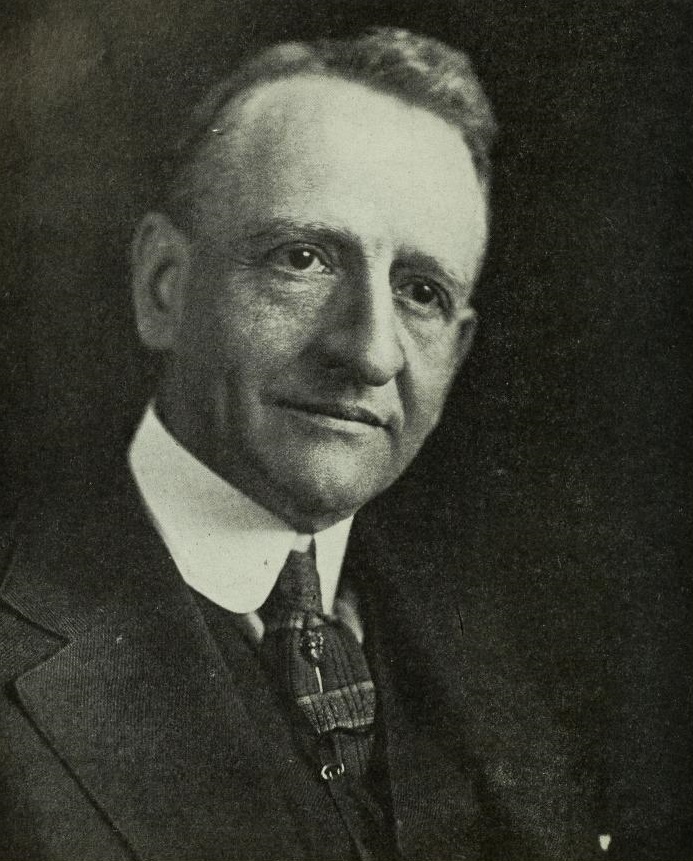
Carter Glass
View on Wikipedia
Carter Glass (January 4, 1858 – May 28, 1946) was an American newspaper publisher and Democratic politician from Lynchburg, Virginia. He represented Virginia in both houses of Congress and served as the United States secretary of the treasury under President Woodrow Wilson. He played a major role in the establishment of the U.S. financial regulatory system, helping to establish the Federal Reserve System and the Federal Deposit Insurance Corporation.
Key Information


After working as a newspaper editor and publisher, Glass won election to the Senate of Virginia in 1899. He was a delegate to the Virginia Constitutional Convention of 1902, where he was an influential advocate for segregationist policies. Historian J. Douglas Smith described him as “the architect of disenfranchisement in the Old Dominion.”[1] He also promoted progressive fiscal and regulatory reform but these contributions were often superficial since Glass generally opposed the most reformist aspects of federal legislation and was a New Deal critic.[2] Glass won election to the United States House of Representatives in 1902 and became Chairman of the House Committee on Banking and Currency in 1913. Working with President Wilson, he passed the Federal Reserve Act, which established a central banking system for the United States. Glass served as Secretary of the Treasury from 1918 until 1920, when he accepted an appointment to represent Virginia in the United States Senate. Glass was a favorite son candidate for the presidential nomination at the 1920 Democratic National Convention.
Glass was appointed to the Senate in 1920 and served until his death in 1946, becoming Chairman of the Senate Appropriations Committee in 1933. He also served as president pro tempore of the Senate from 1941 to 1945. He co-sponsored the 1933 Banking Act, also known as the Glass–Steagall Act, which created the Federal Deposit Insurance Corporation and enforced the separation of investment banking firms and commercial banks. An ardent supporter of states' rights, Glass opposed much of the New Deal and clashed with President Franklin D. Roosevelt over the control of federal appointments in Virginia.
Early life and education
[edit]Carter Glass was born on January 4, 1858, in Lynchburg, Virginia, the last child born to Robert Henry Glass and his first wife, the former Augusta Elizabeth Christian. His mother died on January 15, 1860, when Carter was only two years old, so his sister Nannie, ten years older (and Elizabeth's only daughter), became his surrogate mother. Carter, a slight boy, got his nickname, "Pluck", for his pugnacious willingness to stand up to bullies.[3]
His father, Robert Henry Glass, was Lynchburg's postmaster beginning in 1853, and in 1858 bought the Lynchburg Daily Republican newspaper (where he had worked since 1846). The city's other newspaper was the Lynchburg Daily Virginian, then published by Joseph Button, who on June 23, 1860, (while R. H. Glass was out of town) died in a duel with Glass's editor at the time, George W. Hardwicke, over accusations that Glass used his postal office to disadvantage the rival paper.[4]
When the American Civil War (1861–1865) broke out, Lynchburg was pro-Union but also pro-slavery, since its economy depended on the manufacture of tobacco as well as slave-trading and the new railroads. R. H. Glass volunteered and joined the Virginia forces in 1861, and then joined the Confederate Army, where he became a major on the staff of Brigadier General John B. Floyd, a former Governor of Virginia. Major Glass ultimately remarried and had seven more children, including Meta Glass (president of Sweet Briar College) and Edward Christian Glass (Lynchburg's school superintendent for five decades).
In poverty-stricken Virginia during the post-War period, Glass received only a basic education at a private school run by one-legged former Confederate Henry L. Daviess.[5] However, his father kept an extensive library. He became an apprentice printer to his father (and Hardwicke) when he was 13 years old, and continued his education through reading Plato, Edmund Burke and William Shakespeare, among others who stimulated his lifelong intellectual interest. He thought that Shakespeare's works were not written by William Shakespeare, refusing to accept that their author could have risen from humble origins.[6] In 1876, Major Glass accepted an offer to edit the Petersburg News, and Carter joined him as a journeyman printer. Not long afterward, Major Glass accepted the editorship of the Danville Post, but Carter did not join him, instead returning to Lynchburg.[7]
Early career
[edit]When Glass was 19 years old, he moved with his father to Petersburg. However, when young Glass could not find a job as a newspaper reporter in Petersburg, he returned to Lynchburg, and went to work for former Confederate General (and future U.S. Senator) William Mahone's Atlantic, Mississippi and Ohio Railroad (AM&O), which was in receivership from 1877 to 1880. Glass was a clerk in the auditor's office at the railroad's headquarters. Several years later, under new owners and with headquarters relocated to Roanoke, the railroad became the Norfolk and Western (N&W). However, by then Glass had found the newspaper job he had initially wanted. His formative years as Virginia struggled to resolve a large pre-War debt (Mahone being a leading figure in the Readjuster Party) and dealing with boom-and-bust economic cycles (some linked with stock speculation), helped mold Glass' conservative fiscal thinking, much as it did many other Virginia political leaders of his era.

At the age of 22, Glass finally became a reporter, a job he had long sought, for the Lynchburg News. He rose to become the morning newspaper's editor by 1887. The following year, the publisher retired and offered Glass an option to purchase the business. Desperate to find financial backing, Glass received the unexpected assistance from a relative who loaned him enough for a $100 down payment on the $13,000 deal.[8] Free to write and publish whatever he wished, Glass wrote bold editorials and encouraged tougher reporting in the morning paper, which increased sales. Soon, Glass was able to acquire the afternoon Daily Advance, then to buy out the competing Daily Republican. Thus he became Lynchburg's sole newspaper publisher; the modern-day Lynchburg News and Advance is the successor publication to his newspapers.
Entry into politics
[edit]As a prominent and respected newspaper editor, Glass often supported candidates who ran against Virginia's Democrats of the post-Reconstruction period, who he felt were promoting bad fiscal policy. In 1896, the same year his father died, Glass attended the Democratic National Convention as a delegate, and heard William Jennings Bryan speak.[9] Glass was elected to the Senate of Virginia in 1899, and was a delegate to the Virginia constitutional convention of 1901–1902. He was one of the most influential members of the convention, which instituted measures associated with the Progressive movement, such as the establishment of the State Corporation Commission to regulate railroads and other corporations, replacing the former Virginia Board of Public Works.[10]
Advocacy of segregation and disenfranchisement
[edit]The 1902 Constitution required that to be eligible to vote a man prove that he had paid a poll tax of US$1.50 (equivalent to about $52 in 2024) in each of the past three years,[11] making voting a luxury. The Constitution also required that voters pass a literacy test with their performance graded by the registrar. When questioned as to whether these measures were potentially discriminatory, Glass exclaimed, "Discrimination! Why that is exactly what we propose. To remove every negro voter who can be gotten rid of, legally, without materially impairing the numerical strength of the white electorate."[12] Indeed, the number of African-Americans qualified to vote dropped from 147,000 to 21,000 immediately.[13] Carter Glass remained one of the strongest advocates of segregation and continued to dedicate much of his political career to the perpetuation of Jim Crow laws in the South.[14]
Congress, Secretary of the Treasury
[edit]

Glass was elected to the United States House of Representatives as a Democrat in 1902, to fill a vacancy. In 1913, he became Chairman of the House Committee on Banking and Currency, where he worked with President Woodrow Wilson to pass the Glass-Owen Federal Reserve Act. In 1918, Wilson appointed him Secretary of the Treasury, succeeding William Gibbs McAdoo. His signature as Secretary of the Treasury can be found on series 1914 Federal Reserve Notes, issued while he was in office. At the 1920 Democratic National Convention Glass was nominated for President as a favorite son candidate from Virginia.
Glass served at the Treasury until 1920, when he was appointed to the United States Senate to fill the vacancy caused by the death of Virginia's senior senator, Thomas Staples Martin. Martin had been widely regarded as the head of Virginia's Democratic Party, a role filled during the 1920s by Harry Flood Byrd of Winchester, another Virginia newspaperman who shared many of Glass's political views and who headed the political machine of Conservative Democrats known as the Byrd Organization, which dominated Virginia's politics until the 1960s. In 1933, Byrd became Virginia's junior Senator, joining Glass in the Senate after former Governor and then-senior U.S. Senator Claude A. Swanson was appointed as U.S. Secretary of the Navy by President Franklin Roosevelt. Both Glass and Byrd were opposed to Roosevelt's New Deal policies. Each was a strong supporter of fiscal conservatism and states' rights. Glass and Byrd invoked senatorial courtesy to defeat Roosevelt's nomination of Floyd H. Roberts to a federal judgeship, as part of a broader conflict over control of federal patronage in Virginia.
Glass served in the U.S. Senate for the remainder of his life, turning down the offer of a new appointment as Secretary of the Treasury from President Roosevelt in 1933. When the Democrats regained control of the Senate that year, Glass became Chairman of the Appropriations Committee. He was President pro tempore from 1941 to 1945, being succeeded as such by Kenneth McKellar at the start of the custom of giving that post to the senior senator of the majority party. As a Senator, Glass's most notable achievement was passage of the Glass–Steagall Act, which separated the activities of banks and securities brokers and created the Federal Deposit Insurance Corporation. Glass, however, opposed the concept of bank deposit insurance and was “very unhappy” about this reform.[15] A less successful minor legislative initiative from Glass was a 1930 resolution to ban dial telephones[16] from the Senate, a measure that was successfully resisted by younger senators who favored dial telephony.
Electoral history
[edit]- 1902; Glass was elected to the U.S. House of Representatives with 79.41% of the vote, defeating Republican Aaron Graham, Independent James S. Cowdon, and Socialist Labor H.D. McTier.
- 1904; Glass was re-elected with 69.07% of the vote, defeating Republican Samuel H. Hoge and Socialist Elory R. Spencer.
- 1906; Glass was re-elected unopposed.
- 1908; Glass was re-elected with 65.92% of the vote, defeating Republicans M. Hartman and John M. Parsons and Independent Jacob Harvey.
- 1910; Glass was re-elected with 87.64% of the vote, defeating Republican William F. Allison.
- 1912; Glass was re-elected with 72.84% of the vote, defeating Populist James S. Browning and Independents Adon A. Yoder and Jacob Harvey.
- 1914; Glass was re-elected with 90.72% of the vote, defeating Socialist B.F. Ginther.
- 1916; Glass was re-elected unopposed.
- 1918; Glass was re-elected unopposed.
- 1924; Glass was elected to the Senate.
- 1930; Glass was re-elected to the Senate.
- 1936; Glass was re-elected to the Senate.
- 1942; Glass was re-elected to the Senate.[17]
Family, decline, death
[edit]

Carter Glass was a Methodist.[18] When he was twenty-eight, Glass married Aurelia McDearmon Caldwell, a school teacher. They had four children. She died of a heart ailment in 1937.[19] Glass remarried in 1940 at the age of 82. His second wife, Mary Scott, was his constant companion as his health began to fail over the next few years. They lived at the Mayflower Hotel Apartments in Washington, D.C. Starting in 1942, Glass began suffering from various age-related illnesses and could not attend Senate meetings after that time. However, he refused to resign from the Senate, despite many requests that he do so, and even kept his committee chairmanship. Many visitors were also kept away from him by his wife.[20]
A confidential 1943 analysis of the Senate Foreign Relations Committee by Isaiah Berlin for the British Foreign Office stated that Glass[21]
"...is very old and frail and something of a legend in the South. The fruit-growing interests of his State make him an opponent of the reciprocal trade pacts, but on all other questions he has loyally supported the President's anti-Isolationist policy. He cannot have many years of active service before him."
Glass died of congestive heart failure in Washington, D.C., on May 28, 1946. He is interred at Spring Hill Cemetery in Lynchburg. His fellow sponsor of the Glass-Owen Act, Senator Robert Latham Owen, lies nearby.
Legacy
[edit]"Montview", also known as the "Carter Glass Mansion", was built in 1923 on his farm outside of the-then boundaries of Lynchburg in Campbell County. It is listed on the National Register of Historic Places and now serves as a museum on the grounds of Liberty University. It lies within the expanded city limits of Lynchburg. The front lawn of "Montview" is the burial site of Dr. Jerry Falwell, founder of Liberty University.[22]
The Virginia Department of Transportation's Carter Glass Memorial Bridge was named in his honor in 1949. It carries the Lynchburg bypass of U.S. Route 29, the major north–south highway in the region, across the James River between Lynchburg and Amherst County.[23]
A chair in the Department of Government was created in Glass's honor at Sweet Briar College. It has been held by notable faculty including Dr. Barbara A. Perry.
An administrative building at Harvard Business School was named for Glass in the late 1920s. In 2020, the name Glass was removed from this building due to the efforts by Glass to "strip Black citizens of their voting rights through means such as a poll tax and literacy test — efforts that intentionally disenfranchised Blacks and promulgated segregation, with pernicious and long-lasting effects." In a letter to the Harvard community, Dean Nitin Nohria said, "We therefore cannot allow the Glass name to remain at the School." The building was renamed as Cash House, in honor of James Cash Jr., a distinguished Professor who served at Harvard for 36 years beginning in 1976.
Glass is one of the few Americans to appear on a U.S. coin during his lifetime. As a very prominent citizen of the city of Lynchburg, the 1936 Lynchburg Sesquicentennial commemorative half dollar has his image and name on the obverse. Only 20,000 were minted as they were not intended for regular circulation.[24]
See also
[edit]Works
[edit]- Glass, Carter (1927). An Adventure in Constructive Finance. Doubleday, Page & Co. p. 448.
References
[edit]- ^ Smith, J. Douglas (2002). Managing White Supremacy: Race, Politics, and Citizenship in Jim Crow Virginia. Chapel Hill: University of North Carolina Press. p. 67.
- ^ Shaw 2020.
- ^ Palmer 1938, pp. 15–20.
- ^ Palmer 1938, pp. 14–15.
- ^ Palmer 1938, p. 20.
- ^ Shaw 2020, p. 313.
- ^ Palmer 1938, pp. 22–24.
- ^ Current Biography 1941, pp. 321–23.
- ^ "Carter Glass – The Region – Publications & Papers | Federal Reserve Bank of Minneapolis". Minneapolisfed.org. Archived from the original on May 16, 2008. Retrieved October 17, 2010.
- ^ Shannon, Preston C. (March 1973). "The Evolution of Virginia's State Corporation Commission". William & Mary Law Review. 14 (3): 533.
- ^ Tarter, Brent. "Early History of the Poll Tax". Encyclopedia Virginia. Retrieved June 8, 2022.
- ^ Damon W. Root, When bigots become reformers: the Progressive Era's shameful record on race, May 2006.
- ^ Wilkinson III 1968, p. 38.
- ^ "Editorial: Is it time to reappraise Carter Glass?". The Roanoke Times. November 23, 2019. Retrieved June 29, 2020.
- ^ Shaw 2019, p. 194.
- ^ "U.S. Senate: Senate Considers Banning Dial Phones". www.senate.gov. Retrieved November 27, 2019.
- ^ ""Glass, Carter"". Biographical Directory of the United States Congress. United States Congress. Retrieved May 6, 2023.
- ^ Woodrow Wilson: A Medical and Psychological Biography. Supplementary Volume to the Papers of Woodrow Wilson. Princeton University Press. July 14, 2014. ISBN 9781400857494.
- ^ "Milestones, Jun. 14, 1937". Time. June 14, 1937. Archived from the original on March 7, 2008. Retrieved October 17, 2010.
- ^ "Elder Statesman". Time. February 19, 1945. Archived from the original on September 30, 2007. Retrieved October 17, 2010.
- ^ Hachey, Thomas E. (Winter 1973–1974). "American Profiles on Capitol Hill: A Confidential Study for the British Foreign Office in 1943" (PDF). Wisconsin Magazine of History. 57 (2): 141–153. JSTOR 4634869. Archived from the original (PDF) on October 21, 2013.
- ^ "National Register of Historical Places – VIRGINIA (VA), Lynchburg County". Nationalregisterofhistoricplaces.com. Retrieved October 17, 2010.
- ^ "Designated Interstate and Primary Route Numbers, Named Highways, Named Bridges and Designated Virginia Byways" (PDF). Virginia Department of Transportation. Archived from the original (PDF) on July 1, 2015. Retrieved October 17, 2010.
- ^ Silver Commemoratives 1936 LYNCHBURG 50C MS
Bibliography
[edit]- Palmer, James E. (1938). Carter Glass: Unreconstructed Rebel. Roanoke, Va.: Institute of American Biography. p. 370.
- Shaw, Christopher W. (2020). "The Politics of Elite Anxiety: Carter Glass and American Financial Policy". The Historian. 82 (3): 308–327. doi:10.1080/00182370.2020.1773753. S2CID 225353965.
- Shaw, Christopher W. (2019). Money, Power, and the People: The American Struggle to Make Banking Democratic. Chicago: University of Chicago Press.
- Wilkinson III, J. Harvie (1968). Harry Byrd and the Changing Face of Virginia Politics, 1945–66. Charlottesville: University Press of Virginia.
Further reading
[edit]- Katz, Bernard S.; Vencill, C. Daniel, eds. (1996). Biographical Dictionary of the United States Secretaries of the Treasury, 1789-1995. Greenwood Press. ISBN 9780313280122.
- Smith, Rixey (1939). Carter Glass: A Biography. Longman, Greens & Co. ISBN 0836954467.
{{cite book}}: ISBN / Date incompatibility (help), by Glass's former aide
External links
[edit]
- United States Congress. "Carter Glass (id: G000232)". Biographical Directory of the United States Congress.
- Statements and Speeches of Carter Glass
- A collection of works by Carter Glass

| Class 1 |  | |
|---|---|---|
| Class 2 | ||
|  | |


 | ||
| ||
| Vice President |
|  |
|---|---|---|
| Secretary of State |
| |
| Secretary of the Treasury |
| |
| Secretary of War |
| |
| Attorney General |
| |
| Postmaster General |
| |
| Secretary of the Navy |
| |
| Secretary of the Interior |
| |
| Secretary of Agriculture |
| |
| Secretary of Commerce |
| |
| Secretary of Labor |
| |
| International | |
|---|---|
| National | |
| People | |
| Other | |

Carter Glass
View on GrokipediaCarter Glass (January 4, 1858 – May 28, 1946) was an American Democratic politician, newspaper publisher, and banker from Virginia who served as a U.S. Representative (1902–1919), 48th Secretary of the Treasury (1918–1920), and U.S. Senator (1920–1946), including as President pro tempore of the Senate from 1941 until his death.[1][2][3] Born in Lynchburg to a newspaper family, Glass entered politics after working as a journalist and bank examiner, rising to chair the House Committee on Banking and Currency.[1][4] Glass is best known for his instrumental role in establishing the Federal Reserve System, earning him the moniker "Father of the Federal Reserve" for authoring and steering the Federal Reserve Act of 1913 through Congress, which created a decentralized network of regional banks to provide elastic currency and prevent financial panics.[4][5] As Treasury Secretary under President Woodrow Wilson during World War I, he managed war financing and debt consolidation, while ex officio chairing the Federal Reserve Board.[2] In the Senate, he co-authored the Glass–Steagall Act of 1933, which separated commercial and investment banking to curb speculation and introduced federal deposit insurance, though he fiercely opposed President Franklin D. Roosevelt's broader New Deal expansions as fiscally irresponsible.[3][4] A conservative Southern Democrat committed to limited government and states' rights, Glass's legacy includes significant banking reforms but also controversies, such as his advocacy for the 1902 Virginia Constitution, which imposed poll taxes and literacy tests that systematically disenfranchised African American voters, reflecting the era's Jim Crow policies he supported as a defender of white supremacy in the South.[6] His long tenure exemplified resistance to centralized federal power, prioritizing fiscal orthodoxy and regional autonomy in monetary policy over progressive interventions.[7][2]
Early Life and Formative Influences
Childhood and Family Background
Carter Glass was born on January 4, 1858, in Lynchburg, Virginia, as the fourth of five children to Robert Henry Glass and Augusta Elizabeth Christian Glass.[7] His father, a newspaper editor who rose to the rank of major in the Confederate army during the Civil War, owned a local paper that immersed the family in the printing trade.[7] [8] Glass's mother died when he was two years old, after which his father remarried and fathered seven additional children, resulting in Glass having four full siblings and seven half-siblings.[7] The family belonged to Lynchburg's white privileged class amid the economic hardships following the Civil War and Reconstruction era, which limited formal educational opportunities.[6] Glass left school in his early teens, with his education curtailed by postwar conditions in Virginia.[7] [8] By age thirteen, he worked full-time as a printer's apprentice and assistant at his father's newspaper, gaining early exposure to journalism and the printing press.[6] [8] As a child, Glass witnessed significant historical events, including Robert E. Lee's surrender at Appomattox in 1865, when he was seven years old, an experience that marked the end of the Confederacy and shaped the local environment of his upbringing in Lynchburg.[7] Known for his small stature but feisty temperament, he earned the nickname "Pluck" for defending himself against larger bullies using stones.[6] These early years in a newspaper-centric household laid the foundation for his lifelong career in publishing and politics.[7]Education and Early Influences
Carter Glass attended private and public schools in Lynchburg, Virginia, during his early years.[1] Born on January 4, 1858, into a family affected by the economic hardships following the Civil War, he received only a basic formal education before circumstances necessitated his departure from schooling.[6] At approximately age thirteen, Glass apprenticed at his father's newspaper, the Lynchburg Daily Republican, to contribute to family support amid post-war poverty in Virginia.[6] [7] This early immersion in journalism profoundly shaped Glass's worldview and career trajectory. His father, Robert Henry Glass, a newspaper publisher with Southern Democratic leanings, provided direct exposure to printing, reporting, and editorial practices, fostering Glass's lifelong commitment to the press as a tool for public discourse.[2] The turbulent Reconstruction era in Virginia, marked by political upheaval and economic devastation, instilled in him a deep-seated adherence to states' rights, fiscal conservatism, and skepticism toward centralized federal authority—principles that would later inform his legislative priorities.[6] Largely self-taught thereafter, Glass supplemented his rudimentary schooling through voracious reading and practical experience in the newspaper trade, which honed his analytical skills in economics and politics despite the absence of higher education.[7] These formative experiences in a resource-scarce Southern environment emphasized self-reliance and empirical observation over abstract theory, influencing his pragmatic approach to governance and banking reform in subsequent years.[4]Journalism and Pre-Political Career
Entry into Newspaper Publishing
Carter Glass entered the newspaper industry in Lynchburg, Virginia, following his father's profession as an editor, though formal education ended early due to family financial difficulties around age 13.[7] He began as a printer's apprentice at that young age, performing menial tasks in local print shops while aspiring to journalism.[6] After brief stints in other employment, including railroad work, Glass secured his first reporting position with the Lynchburg News in 1880 at age 22, a role he had long pursued.[7][8] Demonstrating quick aptitude, Glass advanced to city editor shortly thereafter and assumed full editorial responsibilities by 1887.[9] In 1888, when the publisher retired, Glass purchased the Lynchburg News, marking his transition to ownership and establishing a foundation for his publishing career.[7][4] This acquisition allowed him to consolidate influence in local media, later expanding by acquiring the competing Daily Advance in 1895, which he merged with the News to form the Lynchburg News and Advance.[10] Through these steps, Glass built a reputation for incisive commentary, leveraging self-education and practical experience in an era when formal journalistic training was rare.[7]Editorial Stance and Professional Achievements
Carter Glass commenced his journalism career as a reporter for the Lynchburg News in 1880 at age 22. He ascended to editor by 1887 and, in 1888, purchased the paper with assistance from a relative, assuming the role of publisher.[7] Through aggressive expansion, Glass acquired his father's Lynchburg Advance and the rival Daily Republican, merging them under the Lynchburg Daily News banner and establishing a local publishing monopoly by the early 1890s. His professional achievements included transforming the papers into financially successful operations that dominated Lynchburg's media landscape, leveraging his position to endorse political candidates and shape public opinion.[4][7] Glass's editorial stance embodied conservative Southern Democratic values, emphasizing fiscal conservatism, states' rights, and support for racial segregation, including advocacy for measures to restrict Black voting rights amid concerns over universal manhood suffrage. He critiqued corruption in Virginia's Democratic machine politics through provocative columns that challenged opponents, occasionally inciting personal threats such as an attempted shooting by a critic's wife. This reform-oriented independence distinguished his journalism, fostering influence that propelled his transition to elective office.[7][4][11]Rise in Virginia Politics
Initial Electoral Successes
Carter Glass achieved his first elective office in 1898, when he was elected as a Democrat to represent Lynchburg in the Senate of Virginia.[7] He assumed the seat in 1899 and served until 1902, challenging the entrenched Democratic organization led by U.S. Senator Thomas Staples Martin by aligning with the party's reformist and independent faction.[7][12] This victory stemmed from Glass's established reputation as editor of the Lynchburg Daily News and Daily Advance, where his outspoken criticism of political corruption and individualistic approach resonated with voters seeking alternatives to machine politics.[7] Prior to this, his public service had been appointive, including a role as clerk of the Lynchburg city council beginning in 1881.[7] The election propelled him into prominence within Virginia's conservative Democratic circles, setting the stage for further involvement in state governance.[4]Role in State Constitutional Reform
Carter Glass served as a delegate representing Lynchburg at the Virginia Constitutional Convention, which convened on June 12, 1901, and adjourned on June 29, 1902, to revise the state's 1868-1870 constitution amid demands for governmental efficiency, fiscal reforms, and voter qualification changes.[7][4] As an influential newspaper editor and sitting member of the Virginia State Senate, Glass advocated for suffrage restrictions designed to exclude most African American voters from participation while preserving white electoral dominance.[7] He supported the committee-drafted Article II, which imposed a $1.50 annual poll tax (payable two months before elections), literacy and property understanding tests administered by registrars, and a grandfather clause exempting voters whose ancestors had suffrage rights before January 1, 1867, thereby shielding many illiterate or impoverished whites.[7][6] In convention proceedings, Glass defended these measures explicitly, stating: "Discrimination! Why that is precisely what we propose... to eliminate every negro voter who can be gotten rid of, legally, without materially impairing the numerical strength of the white electorate."[7][6] His advocacy aligned with broader delegate goals to reverse Reconstruction-era expansions of the franchise, reflecting prevailing views on racial hierarchy and electoral control in post-Reconstruction Virginia.[7] The ratified constitution, effective January 1, 1903, after voter approval on September 3, 1902 (by a margin of 98,863 to 45,955), drastically reduced eligible voters: African American registration fell from approximately 147,000 in 1902 to about 21,000 by 1904, while overall white participation declined by roughly 50 percent due to the poll tax and tests, though the grandfather clause mitigated losses among eligible whites.[6][7] These changes entrenched one-party Democratic rule in Virginia for decades, fulfilling the convention's primary suffrage objective as articulated by Glass and allies.[4]Congressional Service in the House
Election to Congress and Committee Work
Carter Glass entered federal politics through a special election to the United States House of Representatives for Virginia's 6th congressional district, following the death of incumbent Democrat Peter J. Otey on May 13, 1902.[7] As the Democratic nominee, Glass secured victory in the November 4, 1902, general election with 79.4 percent of the vote, defeating Republican Aaron P. Graham (17.7 percent), Independent James S. Cowden (2.6 percent), and Socialist J.W. Jennings (0.3 percent).[13] The district, encompassing Lynchburg and surrounding areas, was a Democratic stronghold, bolstered by Glass's prominence as editor of the Lynchburg Daily News and his recent involvement in Virginia's 1902 constitutional convention.[7] Glass was sworn in on November 4, 1902, and reelected to eight succeeding Congresses (58th through 65th), serving continuously until resigning on December 16, 1918, to accept appointment as Secretary of the Treasury.[1] His electoral successes reflected consistent Democratic dominance in the district, with margins often exceeding 90 percent in later cycles, though specific vote totals varied by election.[14] During his tenure, spanning the 57th Congress (remainder) through the 65th, Glass focused on fiscal and monetary policy, leveraging his self-taught knowledge of economics gained from journalistic work.[4] Upon entering the House, Glass was assigned to the Committee on Banking and Currency, where he immersed himself in studying national banking laws and currency issues, compensating for his lack of formal financial training through rigorous self-education.[7] This committee became the centerpiece of his legislative efforts, as he advocated for reforms addressing banking inelasticity and rural credit shortages exposed by events like the Panic of 1907.[4] With the Democratic majority following the 1912 elections, Glass ascended to chairmanship of the committee in the 63rd Congress (1913–1915), a position he used to steer investigations into monetary reform and draft key legislation.[2] His committee leadership emphasized decentralized banking structures and gold-backed currency, aligning with his conservative fiscal views that prioritized stability over expansive government intervention.[4]Advocacy for Banking and Currency Reform
Upon his election to the United States House of Representatives in November 1902, Carter Glass was assigned to the Committee on Banking and Currency, where he quickly immersed himself in the study of monetary and banking issues despite lacking prior expertise in the field.[4] He identified key deficiencies in the National Banking System established by acts of 1863 and 1864, particularly its rigid linkage of currency issuance to United States government bonds, which resulted in an inelastic money supply unable to expand or contract with seasonal agricultural demands or economic fluctuations.[4] This inelasticity exacerbated liquidity crises, as evidenced by recurrent panics including the severe Panic of 1907, when bank runs depleted reserves and credit availability plummeted nationwide.[15] Glass advocated for reforms to achieve greater currency elasticity through the rediscounting of short-term commercial paper—such as agricultural and business notes—at discount facilities, enabling banks to obtain liquidity against real economic assets rather than solely government securities.[4] He championed a decentralized structure of regional reserve associations to mitigate the dominance of New York-based financial elites, arguing that concentrated power in a single national institution would perpetuate Wall Street's undue influence over national credit policy.[2] This stance positioned him against the Aldrich Plan of 1911–1912, a Republican proposal for a central reserve association under banker control, which Glass and fellow Democrats viewed as insufficiently accountable to public interests and prone to private monopoly.[16] By 1912, following Democratic gains in the 1910 midterm elections, Glass, as ranking minority member of the Banking Committee, directed a subcommittee to investigate banking reform proposals, incorporating expert testimony from economists and bankers to refine alternatives emphasizing mixed public-private governance and regional autonomy.[16] His advocacy stressed supervisory mechanisms independent of banker dominance, aiming to foster a system where credit allocation reflected broader national needs rather than sectional or speculative interests, laying groundwork for subsequent legislative efforts. Glass hired Henry Parker Willis, a banking scholar, as a technical advisor to assist in drafting reform outlines that balanced elasticity with safeguards against over-centralization.[18]Sponsorship of the Federal Reserve Act
As chairman of the House Committee on Banking and Currency in 1913, Carter Glass played a pivotal role in drafting and sponsoring legislation to reform the U.S. banking system in response to recurring financial panics, notably the Panic of 1907.[4] Following President Woodrow Wilson's inauguration on March 4, 1913, Glass led a subcommittee tasked with developing a Democratic alternative to the Republican-backed Aldrich Plan, which proposed a centralized national reserve association controlled primarily by bankers.[7] Glass enlisted Henry Parker Willis, an economics professor at Washington University, as the subcommittee's expert secretary to assist in crafting the bill, emphasizing a decentralized structure to mitigate risks of concentrated power while enabling elastic currency and regional responsiveness.[7] Glass introduced H.R. 7837, the core of what became known as the Glass bill, in the House on June 26, 1913, advocating for a system of twelve regional Federal Reserve Banks owned by member banks but supervised by a Federal Reserve Board appointed by the president.[19] This design incorporated private ownership at the regional level to preserve banking initiative and competition, while the Board provided government oversight to ensure public interest, a compromise forged through extensive subcommittee hearings that reconciled demands from urban bankers, Progressives seeking stricter controls, and agrarian interests pushing for agricultural credits.[7] Glass staunchly opposed full government ownership or a singular central bank, arguing that decentralization would prevent monopolistic tendencies and foster stability through distributed reserves, drawing on empirical lessons from prior panics where localized liquidity failures amplified national crises.[4] The House passed the Glass bill on September 18, 1913, by a vote of 298 to 60, after which it moved to the Senate Banking Committee chaired by Robert L. Owen.[5] Senate amendments prompted a conference committee that reconciled differences, resulting in the Glass-Owen bill, which passed both chambers on December 22-23, 1913. President Wilson signed the Federal Reserve Act into law on December 23, 1913, at 6:00 p.m., establishing the Federal Reserve System with its twelve regional banks operational by November 1914.[5] Glass's sponsorship ensured the Act's focus on practical mechanisms for note issuance backed by commercial paper and government bonds, aiming to provide liquidity without undermining sound banking principles.[16]Executive Role as Treasury Secretary
Appointment and World War I Financing
President Woodrow Wilson nominated Carter Glass to serve as Secretary of the Treasury on December 16, 1918, following the resignation of William G. McAdoo, with the Senate confirming the appointment on December 23, 1918.[2][12] Glass assumed office shortly thereafter, becoming the first Virginian to hold the position, leveraging his congressional experience in banking reform and close relationship with Wilson.[7] His tenure lasted until February 1, 1920, amid the immediate postwar economic transition.[20] Although the Armistice ending World War I had been signed on November 11, 1918, Glass's primary focus as Treasury Secretary involved managing the lingering financial burdens of the conflict, including debt consolidation and funding for residual obligations.[7] The U.S. government debt had surged from approximately 2.5% to 32.5% of GDP between 1916 and 1919 due to wartime expenditures, necessitating structured repayment strategies.[21] Glass oversaw the issuance of foreign loans and adjustments to taxation to address these costs, strengthening his commitment to fiscal discipline.[7] Glass's most prominent accomplishment was the successful flotation of the $5 billion Victory Loan in 1919, a consolidation of prior Liberty Loans that funded World War I debts and postwar reconstruction needs.[2] This bond drive, marketed aggressively as Victory Liberty Loans, helped stabilize federal finances by refinancing short-term obligations into longer-term securities, averting potential fiscal strain.[6] Through these measures, Glass contributed to the orderly winding down of war-related borrowing, emphasizing conservative monetary practices amid economic uncertainty.[4]Interactions with the Federal Reserve System
Upon his appointment as Secretary of the Treasury on December 16, 1918, Carter Glass assumed an ex officio position as chairman of the Federal Reserve Board, a role that positioned him at the intersection of fiscal policy and central banking during the immediate post-World War I transition.[4] In this capacity, Glass coordinated Federal Reserve operations to support Treasury efforts in refinancing war debts, including the issuance of Victory Liberty Loans to cover outstanding obligations estimated at over $25 billion.[2] The Federal Reserve System, which Glass had helped architect five years earlier, provided essential liquidity through low discount rates—maintained around 4 to 4.5 percent initially—to facilitate bond sales and stabilize government borrowing amid lingering wartime demands.[22] This alignment prioritized fiscal imperatives, such as consolidating national debt that had surged from 2.5 percent to 32.5 percent of GDP between 1916 and 1919, over immediate inflationary pressures.[21] Tensions emerged in 1919 as postwar inflation accelerated, with wholesale prices rising approximately 20 percent that year, prompting debates within the Federal Reserve Board over discount rate adjustments.[23] Glass, advocating for the decentralized structure he had embedded in the Federal Reserve Act—where individual reserve banks held primary authority over rates—resisted unilateral central interventions but supported selective increases to curb speculation while safeguarding Treasury refinancing needs.[24] For instance, in response to New York Federal Reserve Bank Governor Benjamin Strong's push for higher rates, Glass engaged in direct consultations, emphasizing the Board's regulatory oversight without overriding bank autonomy, as evidenced by correspondence affirming the Board's powers under the Act.[23] By late 1919, under Glass's chairmanship, the Board approved initial rate hikes—New York reaching 4.75 percent in November—marking the onset of postwar monetary tightening, though full implementation accelerated after his departure.[25] Glass's tenure underscored his commitment to insulating the Federal Reserve from political dominance, a principle he reiterated in defending the system's regional autonomy against calls for greater centralization.[2] He resigned on February 1, 1920, to pursue a Senate seat, leaving the Board amid ongoing adjustments that contributed to the sharp 1920-1921 contraction, during which industrial production fell by about 30 percent.[7] His interactions reinforced the Fed's role as a partner in debt management rather than a subordinate tool, balancing short-term fiscal stability with longer-term credit discipline, though critics later argued Treasury influence delayed necessary deflationary measures.[26]Senate Career and Legislative Battles
Transition to the Senate
Following the death of longtime Virginia Senator Thomas S. Martin on November 12, 1919, Governor Westmoreland Davis appointed Glass to fill the vacancy on November 18, 1919.[3][7] Glass's appointment required him to resign as Secretary of the Treasury, a position he had held since December 16, 1918, but his duties during the ongoing economic adjustments post-World War I delayed this until February 1, 1920.[12][2] He assumed the Senate seat on February 2, 1920, resolving a brief Democratic leadership deadlock in the chamber, where his vote proved decisive for organizing the majority amid a 49-seat tie (including two disputed seats).[27][3] The interim appointment covered the remainder of Martin's term ending March 4, 1925, but Virginia's special election on November 2, 1920, confirmed Glass's tenure, as he secured victory with approximately 91 percent of the vote against Republican J. R. Pollard.[14] This overwhelming margin reflected Glass's established Democratic machine support in Virginia and his national prominence from Federal Reserve legislation and Treasury service.[7] Glass retained the seat through subsequent reelections in 1924, 1930, and 1936, serving until his death in 1946.[28] His Senate role shifted focus from executive administration to legislative oversight, particularly on banking and fiscal matters, aligning with his prior House experience.[4]Banking Legislation and the Glass-Steagall Acts
Upon assuming his Senate seat in 1920, Carter Glass quickly established himself as a leading authority on banking matters, drawing on his prior experience as chairman of the House Banking and Currency Committee and architect of the Federal Reserve Act.[4] As a member of the Senate Committee on Banking and Currency, he advocated for reforms to address systemic vulnerabilities exposed by the post-World War I economic instability and later the Great Depression's bank runs, which saw over 9,000 banks fail between 1930 and 1933.[4] [29] Glass consistently emphasized the need to confine commercial banks to deposit-taking and short-term lending functions, arguing that entanglement with speculative investment activities eroded public confidence and invited reckless behavior.[7] In response to the banking crisis, Glass co-sponsored the Banking Act of 1932, which authorized the Reconstruction Finance Corporation to provide emergency loans to banks and expanded [Federal Reserve](/page/Federal Reserve) lending powers to member banks on improved collateral terms, aiming to stem immediate failures without altering core structures.[30] The following year, as chairman of the Senate Banking Committee amid the Pecora Commission's revelations of investment banking abuses—such as insider trading and conflicts of interest—Glass introduced the Banking Act of 1933, commonly known as the Glass-Steagall Act after its House counterpart sponsored by Representative Henry B. Steagall.[31] [29] Signed into law by President Franklin D. Roosevelt on June 16, 1933, the act's Sections 16, 20, and 21 strictly separated commercial and investment banking by prohibiting national banks from underwriting or dealing in most securities, barring affiliations between commercial banks and securities firms, and limiting loans for securities purchases to prevent deposit-funded speculation.[29] It also established the Federal Deposit Insurance Corporation (FDIC) on a temporary basis, insuring deposits up to $2,500 to restore depositor trust, a provision Glass supported reluctantly as a safeguard against panics but viewed as secondary to structural separations.[29] Glass's insistence on these separations stemmed from first-hand observations of pre-Depression practices, where he contended that investment banking's high-risk profile had contaminated commercial operations, contributing to the 1929 crash and subsequent failures; he rejected arguments for integrated banking as inherently unstable, prioritizing causal links between mixed functions and systemic fragility over industry lobbying for flexibility.[4] [24] The act faced opposition from Wall Street interests but passed with bipartisan support, reflecting Glass's leverage as committee chair and his alignment with conservative reformers who saw decentralization and functional purity as antidotes to centralized speculation.[29] Building on this, Glass chaired hearings for the Banking Act of 1935, which further refined Federal Reserve governance by consolidating some powers in the Federal Reserve Board while preserving regional autonomy—a balance Glass fought to maintain against administration pushes for greater Washington control over discount rates and open market operations.[32] [33] Signed on August 23, 1935, the legislation enhanced the Board's supervisory role but retained input from the regional banks' governors, aligning partially with Glass's decentralized vision despite compromises; he critiqued excessive centralization as risking politicized monetary policy, a concern rooted in his advocacy for independent regional structures since the Federal Reserve's founding.[2] [34] These acts collectively fortified the banking system's stability, with Glass's contributions credited for curbing moral hazard and speculation, though later repeals in 1999 underscored ongoing debates over their efficacy.[4][3]Fiscal Opposition to the New Deal
Glass, a staunch fiscal conservative committed to balanced budgets and limited federal intervention, emerged as one of the New Deal's most vocal Senate critics, decrying its programs as fiscally irresponsible expansions of government power that threatened national credit and individual liberty.[35] He argued that deficit-financed relief and recovery efforts, such as those under the Public Works Administration, constituted a "delusion" that deferred inevitable tax increases and undermined state sovereignty, insisting in a July 29, 1934, address that "cash is not plucked from the air" and federal grants would necessitate higher burdens on taxpayers.[36][35] Glass's opposition stemmed from Jeffersonian principles emphasizing decentralized authority, viewing New Deal spending as a departure from sound money and fiscal restraint that risked inflation and bureaucratic overreach.[35] In 1933, Glass voted against the Agricultural Adjustment Act (AAA), which authorized federal subsidies and production controls to boost farm prices, contending it improperly usurped state jurisdiction over agriculture and exemplified unconstitutional federal overreach; the measure passed the Senate 64 to 20 on May 12.[35][8] He similarly opposed the Thomas Amendment to the AAA, which empowered the president to inflate the currency by devaluing the dollar, labeling it "national repudiation" and "immoral" in an April 27 speech titled "Shall We Go Over the Precipice?," warning it would erode the Federal Reserve's stability and public confidence in government credit.[35] Glass extended his critique to monetary policy, denouncing the Gold Reserve Act of January 30, 1934, which nationalized gold holdings, as "dishonor" that abrogated contracts and invited currency debasement.[37][35] Glass's resistance persisted into 1935, where he voted against the Social Security Act, viewing its old-age pensions and unemployment insurance as perpetual federal entitlements that violated states' rights and fiscal prudence by committing future generations to unchecked spending.[8][7] Overall, from 1933 to 1939, he opposed New Deal legislation approximately 81 percent of the time, though he selectively supported banking reforms like the Glass-Steagall Act of 1933 while amending the Banking Act of 1935 to excise inflationary provisions favored by the administration.[35] His consistent stance reflected a broader philosophy prioritizing balanced budgets over experimental deficits, even as Roosevelt's programs gained traction amid the Depression.[35]Political Philosophy and Key Positions
Commitment to Fiscal Conservatism and Decentralization
Glass consistently advocated for strict fiscal restraint, emphasizing balanced budgets and minimal federal expenditures as essential to sound governance. Throughout his Senate tenure from 1920 to 1946, he prioritized reducing government spending and maintaining fiscal solvency, viewing deficit financing as a pathway to economic instability and moral hazard. In the early 1930s, amid the onset of the Great Depression, Glass called for immediate cuts in federal outlays to achieve an annually balanced budget, arguing that unchecked borrowing would erode public confidence and invite inflation.[35] His opposition crystallized during the New Deal era, where he decried President Franklin D. Roosevelt's expansive programs as fiscally reckless; for instance, he voted against the Agricultural Adjustment Act of 1933 and the Social Security Act of 1935, contending that such measures bloated the budget without addressing root causes of economic distress.[8] [35] This fiscal philosophy intertwined with Glass's preference for decentralization, rooted in a Jeffersonian commitment to states' rights and limited central authority. He championed federalism as a bulwark against overconcentration of power in Washington, wary that expansive national programs undermined local self-governance and individual liberty. In designing the Federal Reserve Act of 1913, Glass insisted on a regionally decentralized structure featuring twelve autonomous district banks to diffuse control away from a monolithic federal entity, reflecting his belief that banking oversight should respect geographic and economic diversity rather than impose uniform directives.[4] His resistance to [New Deal](/page/New Deal) centralization extended to critiques of bureaucratic proliferation, which he saw as eroding state sovereignty and fostering dependency; in congressional debates, he warned that federal relief and regulatory schemes supplanted local initiative with Washington mandates, contravening constitutional balances.[6] [35] Glass's positions drew from an individualistic ethic that rejected governmental interference in free markets and social orders, prioritizing causal links between fiscal discipline and long-term prosperity over short-term interventions. He maintained that decentralization preserved competitive incentives and accountability, as evidenced by his lifelong defense of gold-backed currency and resistance to inflationary policies that could distort regional economies. These principles not only shaped his legislative record but also positioned him as a Southern Democratic counterweight to progressive expansions, sustaining his influence despite party shifts toward centralized authority.[7][6]Perspectives on Federalism, States' Rights, and Social Order
Glass championed states' rights as a cornerstone of American federalism, viewing excessive federal authority as a threat to local self-governance and individual liberty. Influenced by his Southern heritage and Jeffersonian principles, he described himself as "unreconstructed" in defending these rights against centralizing tendencies, particularly during the New Deal era when he criticized federal bureaucracy and heavy spending as encroachments on state sovereignty.[38][35] In a 1937 radio address, Glass decried President Roosevelt's judicial reorganization plan as dictatorial overreach that undermined constitutional balances between federal and state powers.[39] His federalist outlook extended to economic policy, where he advocated decentralized structures to preserve regional autonomy, as seen in his design for the Federal Reserve System with regional banks under mixed public-private control rather than full federal dominance.[7] Glass opposed New Deal programs like expansive public works and welfare initiatives, arguing they eroded states' responsibilities for local welfare and fiscal discipline, favoring instead limited federal roles confined to national necessities such as monetary stability.[6] This stance reflected a broader philosophy prioritizing competitive dual federalism, where states and the federal government checked each other to prevent monopolistic power concentration.[40] On social order, Glass endorsed state-level racial hierarchies as essential to Southern stability, supporting segregation and measures to curtail black political participation. As a delegate to Virginia's 1902 constitutional convention, he defended poll taxes, literacy tests, and residency requirements that effectively disenfranchised most African American voters, framing them as safeguards against corruption and unfit suffrage rather than explicit racial exclusion—though their impact was predominantly racial.[7][11] He viewed federal intervention in state racial policies as an assault on local customs and order, aligning with his resistance to national civil rights expansions that might disrupt established social structures.[6] Glass's individualism rejected governmental interference in personal and communal affairs, extending to a belief that states alone could maintain the ethnic and cultural equilibria he deemed vital for societal harmony.[7]Electoral Record and Political Longevity
Key Elections and Voter Support
Carter Glass entered federal politics through a special election on November 4, 1901, to fill the vacancy in Virginia's 6th congressional district caused by the death of Representative Peter J. Otey, winning unopposed.[14] He secured full-term election the following year on November 4, 1902, defeating three opponents with 79% of the vote, reflecting his strong local backing in Lynchburg as a newspaper publisher and Democratic organizer.[14] Glass maintained robust support in subsequent House reelections, often facing minimal opposition in the solidly Democratic 6th district, which encompassed Lynchburg and surrounding rural counties. Notable margins included 91% in 1914 against one opponent, and unopposed victories in 1916 and 1918, underscoring the one-party dominance in Virginia politics following the 1902 state constitution's restrictions on Black suffrage and the enduring appeal of his fiscal conservatism and states' rights advocacy among white Democratic voters.[14] Lower margins, such as 66% in 1908 against three opponents, still ensured decisive wins, with his totals bolstered by personal influence via the Lynchburg News.[14] Transitioning to the Senate, Glass was appointed on February 2, 1920, to complete the term of the deceased Thomas S. Martin, then won the special general election on March 4, 1920, with 91% against independent Joseph R. Pollard.[41] He achieved reelection in 1924 with 73% against three opponents, in 1930 with 77% against two, in 1936 with 92% against two amid national Democratic sweeps, and in 1942 with 91% against Socialist Lawrence S. Wilkes (7%) and another minor candidate, demonstrating sustained statewide loyalty despite his advanced age and vocal resistance to New Deal expansions.[14][42] Glass's voter base derived from Virginia's entrenched Democratic machine, his reputation as a banking reformer, and alignment with Southern conservative priorities, enabling margins typically exceeding 70% even as national politics shifted; his 1936 triumph, for instance, exceeded President Roosevelt's Virginia share, highlighting independence from federal patronage appeals.[14] This longevity in a low-turnout electorate shaped by poll taxes and literacy tests favored established figures like Glass, who avoided primary challenges in the non-competitive Virginia Democratic structure.[14]Factors in Sustained Representation
Carter Glass's long tenure in the U.S. Senate from 1920 until his death in 1946 was facilitated by the entrenched dominance of the Democratic Party in Virginia, where Republican challengers posed negligible threats in general elections due to the state's one-party political structure rooted in post-Reconstruction alignments.[7] This system, solidified by the 1902 Virginia Constitution—which Glass helped draft and which restricted suffrage to maintain white Democratic control—ensured that intraparty primaries were the primary contests, and Glass's alignment with conservative state interests minimized serious opposition after his early career.[7] He faced and defeated a notable primary challenge from Claude A. Swanson in 1911 during his House tenure, after which party backing, including later cooperation with the Byrd Organization, shielded him from significant rivals.[7] Ownership and editorial control of the Lynchburg News and Daily Advance provided Glass with a powerful platform to shape public opinion in his home base and across Virginia, allowing him to promote his reformist image and counter critics through provocative editorials that challenged opponents.[7] This media influence, combined with his reputation as a defender of states' rights, fiscal restraint, and Southern traditions like the Lost Cause narrative, resonated deeply with Virginia's conservative electorate, fostering enduring local loyalty in Lynchburg and beyond.[7] Even as Glass vocally opposed key New Deal measures—such as excessive federal spending and encroachments on state authority—his positions aligned with the skepticism of Virginia Democrats toward centralized power, enabling his reelection in 1942 at age 84 despite national Democratic schisms.[7] His iconic status as a principled Jeffersonian Democrat, earned through decades of service and economic expertise, further insulated him from backlash, as state political machines prioritized experienced incumbents who delivered on parochial concerns over ideological conformity to Washington agendas.[7]Personal Life, Decline, and Death
Family Dynamics and Personal Relationships
Glass married Aurelia McDearmon Caldwell, a Lynchburg schoolteacher, on January 12, 1886, establishing a household in Lynchburg, Virginia, that endured for over five decades.[43][44] The couple had four children, including sons Powell Glass Sr. (1886–1945), who pursued journalism, and George Carter Glass Jr. (1893–1955), as well as two daughters, one named Augusta.[45][46] Aurelia provided stability amid Glass's rising political career, though specific accounts of their interpersonal dynamics remain sparse in historical records; the longevity of their union suggests a partnership aligned with Glass's demanding public life and Methodist faith.[7] Aurelia Glass died on June 5, 1937, at age 77 after a prolonged illness at their Lynchburg home.[47][48] Her death was followed soon after by that of their daughter Augusta, compounding Glass's personal losses during a period of intense Senate opposition to New Deal policies.[8] Glass's sons, including Powell and Carter Jr., maintained involvement in family and local affairs, with references in congressional proceedings noting their proximity to the senator's professional circle alongside nephew Robert Glass.[49] At age 82, Glass remarried on June 22, 1940, to Mary Scott Meade, a 52-year-old widow, in a union that offered late-life companionship amid his declining health and continued Senate service.[7][44] The couple honeymooned in Hot Springs, Virginia, reflecting a deliberate step toward personal renewal following bereavement.[50] This second marriage, while brief—ending with Glass's death in 1946—contrasted the familial continuity of his first, underscoring his reliance on close relationships for support in later years.[7] Glass's early family environment shaped his self-reliant character; born the fourth of five children to newspaper publisher Robert Henry Glass and Augusta Elizabeth Christian, he left school around age 12 after his father's Confederate enlistment during the Civil War strained finances, apprenticing as a printer to aid the household.[7][6] He sustained bonds with siblings, notably brother Edward Christian "E.C." Glass, Lynchburg's schools superintendent for 52 years, reflecting a network of mutual professional reinforcement within the Glass family of Lynchburg.[51]Health Decline and Final Years
Glass maintained a lifelong pattern of physical frailty, including chronic indigestion that prompted him to walk on his tiptoes in an effort to alleviate symptoms.[6] This weak constitution intensified in his advanced age, culminating in a severe decline that prevented regular Senate attendance after June 1942, when he was 84 years old.[52] Despite these infirmities, Glass was elected President pro tempore of the Senate on July 30, 1941, a position he held nominally until his death, underscoring his determination to retain influence amid deteriorating health.[7] From mid-1942 onward, Glass remained absent from the Senate for nearly four years, relying on proxies for proxy voting while refusing entreaties to resign, thereby blocking a special election to fill his Virginia seat.[52] [45] His prolonged incapacity highlighted the absence of formal mechanisms for addressing senatorial disability at the time, as no constitutional provision allowed removal for health reasons short of impeachment.[53] Glass died in office on May 28, 1946, at age 88, in his Washington, D.C., apartment, marking the end of a congressional tenure spanning over five decades.[7]Enduring Legacy and Assessments
Contributions to American Financial Architecture
Carter Glass played a pivotal role in establishing the Federal Reserve System through his authorship and sponsorship of the Federal Reserve Act of 1913, which created a network of twelve regional Federal Reserve Banks to provide elastic currency, facilitate check clearing, and serve as a lender of last resort to prevent banking panics.[4][2] As chairman of the House Committee on Banking and Currency, Glass advocated for a decentralized structure emphasizing regional autonomy over a fully centralized bank, drawing from pre-existing clearinghouse systems and state banking practices to address the inelasticity of currency that exacerbated financial crises like the Panic of 1907.[4][7] During his tenure as Secretary of the Treasury from December 16, 1918, to February 1, 1920, Glass oversaw the refinancing of World War I debt, which had increased U.S. public debt from approximately 2.5% of GDP in 1916 to 32.5% by 1919, by issuing consolidated long-term bonds and promoting Victory Liberty Loans to stabilize fiscal conditions amid postwar inflation and foreign exchange pressures.[21][2] In this capacity, he also served ex officio as chairman of the Federal Reserve Board, influencing early implementation of the system by prioritizing agricultural and commercial paper discounting to support real economic activity over speculative lending.[4][54] In the Senate, Glass co-authored the Glass-Steagall Act of 1932, which provided temporary federal loans to banks to avert collapse during the Great Depression, and championed the Banking Act of 1933—commonly known as the Glass-Steagall Act—which established the Federal Deposit Insurance Corporation to insure deposits up to $2,500 (later expanded) and mandated separation of commercial and investment banking to mitigate conflicts of interest and speculative risks that contributed to the 1929 crash.[7][55] These measures aimed to restore public confidence in banking by curbing unit banking abuses and branch banking restrictions, reflecting Glass's long-held view that localized control preserved competition while federal oversight prevented systemic failures without excessive centralization.[24][12]Evaluations of Policy Impacts and Personal Views
Glass's contributions to the Federal Reserve Act of 1913 created a regionally decentralized central banking system with mixed public-private control, which provided elastic currency and lender-of-last-resort functions that mitigated banking panics, as demonstrated by its role in stabilizing credit during World War I and subsequent downturns.[4] This structure reflected his preference for fragmenting financial power to avoid centralized dominance, a design credited with enabling the system's adaptability without immediate inflationary excesses.[56] The Banking Act of 1933, known as Glass-Steagall, prohibited commercial banks from engaging in investment banking and established the Federal Deposit Insurance Corporation, which insured deposits up to $2,500 initially and correlated with a sharp decline in bank failures from over 4,000 in 1933 to fewer than 1,000 by 1935, by curbing speculative activities that exacerbated the Great Depression.[29] Empirical assessments affirm its short-term stabilizing effects through risk separation, though long-term data post-repeal in 1999 show no causal link to the 2008 crisis, as non-bank entities drove much of the subprime exposure unaffected by the act's provisions.[57] Glass viewed economic policy through a lens of fiscal conservatism and limited government, decrying deficit financing as morally corrosive and antithetical to sound money principles, as articulated in his opposition to New Deal expansions that he argued inflated debt without addressing root causes of unemployment.[7] He advocated federalism and states' rights to preserve local autonomy, opposing federal overreach in areas like agriculture and labor, which he saw as distorting market signals and eroding individual responsibility.[6] On social order, Glass endorsed racial segregation and white supremacy norms of his era, supporting Virginia's 1902 constitutional convention that imposed poll taxes and literacy tests, effectively disenfranchising over 90% of Black voters by 1904 while claiming to target corruption, a stance aligned with his defense of Southern traditions against federal intervention.[6] Historians evaluate this as perpetuating inequality, contrasting his financial innovations that dispersed power economically but not socially, revealing a selective application of decentralization favoring established hierarchies.[7]References
- https://smallnotes.library.[virginia](/page/Virginia).edu/2021/09/01/senator-carter-glass-1858-1946-the-good-and-the-bad/