Hubbry Logo
Lingual papillaeLingual papillaeMain
Open search
Lingual papillae
Community hub
Lingual papillae
logo
8 pages, 0 posts
0 subscribers
Be the first to start a discussion here.
Lingual papillae
Lingual papillae
from Wikipedia
Lingual papillae
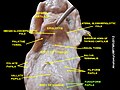
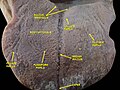
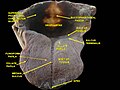
Anatomic landmarks of the tongue. Filiform papillae cover most of the dorsal surface of the anterior 2/3 of the tongue, with fungiform interspaced. Just in front of the sulcus terminalis lies a V-shaped line of circumvallate papillae, and on the posterior aspects of the lateral margins of the tongue lie the foliate papillae.
Semidiagrammatic view of a portion of the mucous membrane of the tongue. Two fungiform papillae are shown. On some of the filiform papillae the epithelial prolongations stand erect, in one they are spread out, and in three they are folded in.
Details
Part ofTongue
Identifiers
Latinpapillae linguales
NeuroLex IDbirnlex_4102
TA98A05.1.04.013
TA22837
THH3.04.01.0.03006
FMA54819
Anatomical terminology

Lingual papillae (sg.: papilla, from Latin lingua 'tongue' and papilla 'nipple, teat') are small structures on the upper surface of the tongue that give it its characteristic rough texture. The four types of papillae on the human tongue have different structures and are accordingly classified as circumvallate (or vallate), fungiform, filiform, and foliate. All except the filiform papillae are associated with taste buds.[1]

Structure

[edit]

In living subjects, lingual papillae are more readily seen when the tongue is dry.[2] There are four types of papillae present on the tongue in humans:

Filiform papillae

[edit]
Filiform papilla, magnified.

Filiform papillae (from Latin filum 'thread' and fōrmis 'having the form of') are the most numerous of the lingual papillae.[1] They are fine, small, cone-shaped papillae found on the anterior surface of the tongue.[3] They are responsible for giving the tongue its texture and are responsible for the sensation of touch. Unlike the other kinds of papillae, filiform papillae do not contain taste buds.[1] They cover most of the front two-thirds of the tongue's surface.[2]

They appear as very small, conical or cylindrical surface projections,[2] and are arranged in rows which lie parallel to the sulcus terminalis. At the tip of the tongue, these rows become more transverse.[2]

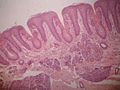
Histologically, they are made up of irregular connective tissue cores with a keratin–containing epithelium which has fine secondary threads.[2] Heavy keratinization of filiform papillae, occurring for instance in cats, gives the tongue a roughness that is characteristic of these animals.

These papillae have a whitish tint, owing to the thickness and density of their epithelium. This epithelium has undergone a peculiar modification as the cells have become cone–like and elongated into dense, overlapping, brush-like threads. They also contain a number of elastic fibers, which render them firmer and more elastic than the other types of papillae. The larger and longer papillae of this group are sometimes termed papillae conicae.

Fungiform papillae

[edit]
Fungiform papillae, magnified and sectional diagram.

The fungiform papillae (from Latin fungī 'mushroom' and fōrmis 'having the form of') are club shaped projections on the tongue, generally red in color. They are found on the tip of the tongue, scattered amongst the filiform papillae but are mostly present on the tip and sides of the tongue. They have taste buds on their upper surface which can distinguish the five tastes: sweet, sour, bitter, salty, and umami. They have a core of connective tissue. The fungiform papillae are innervated by the seventh cranial nerve, more specifically via the submandibular ganglion, chorda tympani, and geniculate ganglion ascending to the solitary nucleus in the brainstem.

Foliate papillae

[edit]
Magnified diagram of a vertical section through some foliate papillae in a rabbit.

Foliate papillae (from Latin foliātus 'leafy') are short vertical folds and are present on each side of the tongue.[2] They are located on the sides at the back of the tongue, just in front of the palatoglossal arch of the fauces.[4][2] There are four or five vertical folds,[2] and their size and shape is variable.[4] The foliate papillae appear as a series of red colored, leaf–like ridges of mucosa.[2] They are covered with epithelium, lack keratin and so are softer, and bear many taste buds.[2] They are usually bilaterally symmetrical. Sometimes they appear small and inconspicuous, and at other times they are prominent. Because their location is a high risk site for oral cancer, and their tendency to occasionally swell, they may be mistaken as tumors or inflammatory disease. Taste buds, the receptors of the gustatory sense, are scattered over the mucous membrane of their surface. Serous glands drain into the folds and clean the taste buds. Lingual tonsils are found immediately behind the foliate papillae and, when hyperplastic, cause a prominence of the papillae.

Circumvallate papillae

[edit]
Circumvallate papilla in vertical section, showing arrangement of the taste-buds and nerves

The circumvallate papillae (or vallate papillae, from Latin vallum 'wall') are dome-shaped structures on the human tongue that vary in number from 8 to 12. They are situated on the surface of the tongue immediately in front of the foramen cecum and sulcus terminalis, forming a row on either side; the two rows run backward and medially, and meet in the midline. Each papillae consists of a projection of mucous membrane from 1 to 2 mm. wide, attached to the bottom of a circular depression of the mucous membrane; the margin of the depression is elevated to form a wall (vallum), and between this and the papilla is a circular sulcus termed the fossa. The papilla is shaped like a truncated cone, the smaller end being directed downward and attached to the tongue, the broader part or base projecting a little above the surface of the tongue and being studded with numerous small secondary papillae and covered by stratified squamous epithelium. Ducts of lingual salivary glands, known as Von Ebner's glands empty a serous secretion into the base of the circular depression, which acts like a moat. The function of the secretion is presumed to flush materials from the base of circular depression to ensure that taste buds can respond to changing stimuli rapidly.[5] The circumvallate papillae get special afferent taste innervation from cranial nerve IX, the glossopharyngeal nerve, even though they are anterior to the sulcus terminalis. The rest of the anterior two-thirds of the tongue gets taste innervation from the chorda tympani of cranial nerve VII, distributed with the lingual nerve of cranial nerve V.

Function

[edit]

Lingual papillae, particularly filiform papillae, are thought to increase the surface area of the tongue and to increase the area of contact and friction between the tongue and food.[2] This may increase the tongue's ability to manipulate a bolus of food, and also to position food between the teeth during mastication (chewing) and swallowing.

Clinical significance

[edit]

Depapillation

[edit]

In some diseases, there can be depapillation of the tongue, where the lingual papillae are lost, leaving a smooth, red and possibly sore area. Examples of depapillating oral conditions include geographic tongue, median rhomboid glossitis and other types of glossitis. The term glossitis, particularly atrophic glossitis is often used synonymously with depapillation. Where the entire dorsal surface of the tongue has lost its papillae, this is sometimes termed "bald tongue".[4] Nutritional deficiencies of iron, folic acid, and B vitamins may cause depapillation of the tongue.[4]

Papillitis/hypertrophy

[edit]

Papillitis refers to inflammation of the papillae, and sometimes the term hypertrophy is used interchangeably.[citation needed]

In foliate papillitis the foliate papillae appear swollen. This may occur due to mechanical irritation, or as a reaction to an upper respiratory tract infection.[4] Other sources state that foliate papilitis refers to inflammation of the lingual tonsil, which is lymphoid tissue.[6]

Other animals

[edit]

Seven types of papillae are described in domestic mammals, with their presence and distribution being species-specific:[7] -Mechanical papillae: filiform, conical, lentiform, marginal; -Taste papillae: fungiform, circumvallate, foliate

Foliate papillae are fairly rudimentary structures in humans,[1] representing evolutionary vestiges of similar structures in many other mammals.[2]

Additional images

[edit]

References

[edit]
Revisions and contributorsEdit on WikipediaRead on Wikipedia
from Grokipedia
Lingual papillae are small, epithelial projections on the dorsal surface of the that contribute to its texture, mechanical manipulation of , and sensory functions, particularly taste perception. In humans, there are four primary types: filiform, fungiform, foliate, and circumvallate papillae, each with distinct structures and roles. Filiform papillae, the most abundant and lacking , provide a rough, friction-enhancing surface for gripping and moving during mastication. The remaining types—fungiform, foliate, and circumvallate—contain embedded within their , enabling the detection of the five basic tastes: sweet, sour, salty, bitter, and . Filiform papillae are conical or thread-like structures distributed across the anterior two-thirds of the 's dorsal surface, from the tip to the sulcus terminalis, numbering in the thousands and oriented backward to aid in propulsion of food toward the . Fungiform papillae, resembling mushrooms, are scattered among the filiform papillae on the anterior , with each containing up to five on their superior aspect. Foliate papillae appear as parallel folds on the lateral borders of the posterior , housing numerous within their vertical grooves. Circumvallate papillae, also known as vallate, form an inverted V-shaped row of 8 to 12 large, dome-shaped mounds anterior to the sulcus terminalis on the posterior , surrounded by deep trenches that concentrate tastants and each bearing hundreds of on their lateral walls. These papillae not only facilitate gustatory sensation by housing approximately 2,000 to 8,000 in total but also support somatosensory functions such as touch and through associated mechanoreceptors. Their development begins , with taste-bearing papillae (foliate and vallate) appearing around the 8th week, followed by fungiform and filiform papillae in subsequent weeks to integrate with neural innervation from the VII, IX, and X. Variations in papillae density and size can occur due to age, genetics, or pathology, influencing taste sensitivity, as seen in conditions like or .

Anatomy

Location and distribution

Lingual papillae are small, backward-facing projections on the dorsum (superior surface) of the that contribute to its characteristic rough texture. These structures vary in type and are primarily responsible for housing and aiding in mechanical functions such as food manipulation. The general distribution of lingual papillae divides the into distinct regions: the anterior two-thirds, known as the oral tongue, is predominantly covered by numerous filiform papillae with fungiform papillae scattered throughout, particularly concentrated at the tip and lateral edges; the posterior one-third, or pharyngeal tongue, features foliate papillae along the bilateral posterolateral margins and circumvallate papillae arranged in an inverted V-shape just anterior to the sulcus terminalis. This arrangement demarcates the boundary between the oral and pharyngeal portions of the , with the sulcus terminalis serving as a key divider. Lingual papillae are absent on the smooth ventral (inferior) surface of the and are sparse or absent along the midline of the dorsum. In humans, the approximate numbers of certain papillae types provide insight into their scale: there are roughly 200 to 400 fungiform papillae distributed across the anterior , while 8 to 12 circumvallate papillae form the posterior row. These quantities can vary individually but establish the foundational density for sensory coverage on the tongue's surface.

Filiform papillae

Filiform papillae represent the most abundant type of lingual papillae on the human tongue, appearing as slender, conical projections that are heavily keratinized and lack , thereby distinguishing them from gustatory papillae such as the fungiform type. These structures are covered by a thick layer of ortho- or para-keratinized , which imparts a rigid, thread-like extension to each papilla, contributing to the overall velvety texture of the tongue's dorsal surface. They are predominantly located on the anterior two-thirds of the tongue's dorsum, where they form a dense, brush-like mat oriented with their apices pointing posteriorly to facilitate mechanical interactions during oral activities. This distribution avoids the posterior region, which is instead occupied by other papillae types, and the papillae intersperse with fewer gustatory forms across their coverage area. At the microscopic level, filiform papillae feature a central core of vascular elevated into secondary dermal papillae that interdigitate with the overlying , enhancing structural integrity without the presence of taste pores or embedded sensory end organs. The exhibits prominent keratinization, with elongated filiform processes formed by differential maturation, resulting in a non-glandular, mechanically robust surface. The density of filiform papillae varies slightly by region but averages approximately 86 per square millimeter on the lingual apex, decreasing toward the posterior body to around 50-60 per square millimeter, reflecting adaptations to regional functional demands.

Fungiform papillae

Fungiform papillae are mushroom-shaped projections on the , characterized by a broad, rounded apex and a short, slender peduncle that elevates them above the surrounding surface. Their non-keratinized and rich vascular supply give them a distinctive or appearance in living tissue, distinguishing them from the more numerous, thread-like filiform papillae. are primarily located on the superior surface of the apex, where small pores allow direct exposure to oral contents. These papillae are distributed across the anterior two-thirds of the dorsal tongue surface, interspersed among filiform papillae, with the highest concentration at the tip and along the lateral margins. In humans, the total number typically ranges from 200 to 300, though individual variation is common and is often measured per square centimeter in the anterior . Their positioning facilitates interaction with and stimuli during and speech. Structurally, each fungiform papilla features a core covered by , with the branch of the providing sensory innervation to both the and surrounding mechanoreceptors. The apex is slightly flattened, accommodating 3 to 5 on average, each with microscopic pores for gustatory stimuli access. In terms of variations, fungiform papillae are generally more prominent and rounded in children, with higher densities observed during early development that stabilize around 9-10 years of age. With advancing age in adults, there is a gradual decline in papilla density, approximately 2.8 papillae per square centimeter every five years, and the structures may appear less elevated or more flattened due to epithelial changes.

Foliate papillae

Foliate papillae are specialized structures on the characterized by their leaf-like arrangement of vertical folds or ridges along the posterolateral borders. These papillae appear as parallel, longitudinal slits or pleats in the mucosa, typically numbering four to five per side, and are situated near the sulcus terminalis, just anterior to the palatoglossal arch. The folds create grooves that house numerous , primarily embedded in the lateral walls of these furrows, contributing significantly to gustatory function in the posterior region of the tongue. The covering foliate papillae is non-keratinized stratified squamous, which facilitates sensory by maintaining a moist, sensitive surface conducive to activity. Unlike the anterior tongue's filiform papillae, which are keratinized and mechanosensory, the foliate region's non-keratinized nature supports its role in taste detection. Adjacent to these papillae are serous glands known as von Ebner's glands, whose ducts open into the grooves between the folds, secreting a watery that rinses the and enhances stimulus delivery. In terms of distribution, foliate papillae are confined to the posterior lateral margins of the , distinguishing them from the more centrally located circumvallate papillae, which occupy the midline posterior area. While present throughout life, these papillae are generally less prominent in adults compared to their relative development in infants, where they may exhibit higher density or visibility before maturation alters lingual proportions. Each side of the may contain up to 20 ridges within the foliate area collectively, accommodating hundreds of overall.

Circumvallate papillae

Circumvallate papillae, also known as vallate papillae, represent the largest and most posteriorly located gustatory papillae on the human . Typically numbering 8 to 12, they are arranged in an inverted V-shaped row at the junction of the anterior two-thirds and posterior one-third of the , positioned immediately anterior to the sulcus terminalis. These papillae serve as prominent landmarks, marking the boundary between the oral and pharyngeal portions of the . Morphologically, circumvallate papillae appear as broad, dome-shaped mounds, each with a of approximately 1 to 2 mm, embedded within the tongue's dorsal surface. Each papilla is encircled by a deep, circumferential or , which creates a flask-like depression filled with , enhancing their distinctive appearance. This structure is unique among lingual papillae and facilitates their sensory functions. , numbering up to 250 per papilla, are primarily concentrated on the lateral walls of the rather than the summit, optimizing exposure to dissolved tastants. Closely associated with these papillae are the von Ebner's glands, purely serous minor salivary glands located beneath the tongue's posterior dorsum. These glands open directly into the base of the circumvallate trenches via numerous ducts, secreting a watery saliva that rinses the taste buds, clearing residual chemicals to prepare for new taste stimuli. This secretory mechanism supports efficient gustatory perception by maintaining a clean sensory interface within the moats.

Histology and development

Microscopic structure

The lingual papillae are projections of the tongue's mucosa composed of a core of () covered by , which varies in keratinization depending on the papilla type. Filiform papillae feature a heavily keratinized epithelium that provides mechanical support and texture, while fungiform, foliate, and circumvallate papillae exhibit non-keratinized or lightly keratinized to facilitate sensory functions. The core consists of loose collagenous fibers, fibroblasts, and small blood vessels, forming elongated or branched patterns that correspond to the surface morphology of each papilla type. The of lingual papillae is primarily formed by , which proliferate from the basal layer and differentiate through spinous and granular layers toward the surface. In pigmented regions, such as certain fungiform papillae, melanocytes reside in the basal epithelial layer and produce granules that contribute to localized . Langerhans cells, dendritic antigen-presenting cells, are distributed in the suprabasal and spinous layers across the oral , including the , where they play a role in immune surveillance against pathogens and antigens. These non-keratinocyte cells, along with occasional Merkel cells in the basal layer, integrate into the epithelial architecture without altering its stratified organization. Gustatory papillae (fungiform, foliate, and circumvallate) contain , which are ovoid or barrel-shaped intramucosal sensory structures embedded within the and extending into the core. Each comprises approximately 50-100 neuroepithelial cells, categorized into three main types: type I (supporting) cells that envelop and insulate other cells; type II (receptor) cells that express G-protein-coupled receptors and signaling molecules like α-gustducin for bitter, sweet, and transduction; and type III (presynaptic) cells that form synapses with afferent nerves. These open to the surface via a taste pore, allowing direct interaction with stimuli, and are absent in filiform papillae, which serve primarily mechanical roles. Circumvallate papillae exhibit the highest density of , often numbering in the hundreds per papilla, with intricate innervation enhancing sensory acuity.

Embryonic development

The lingual papillae originate from the epithelial lining of the developing , which derives from both ectodermal and endodermal sources depending on the region. The anterior two-thirds of the , including sites for fungiform and filiform papillae, is covered by ectoderm-derived , while the posterior one-third, housing circumvallate and foliate papillae, arises from . Papillary buds first emerge around weeks 8-9 of as localized thickenings or placodes in this , initiating the patterning of and mechanosensory structures. The formation process follows a sequential timeline, with circumvallate and foliate papillae appearing around the 8th week in the posterior regions, characterized by deeper epithelial invaginations and associated serous glands. Fungiform papillae develop subsequently around the 9th week as small protrusions on the anterior dorsum, serving as precursors for . Filiform papillae, the non-gustatory type, form around weeks 10-11 as slender projections across the surface. begin forming around the 11th week and are generally complete by the 13th week. This progression ensures the establishment of both gustatory and mechanical functions before birth. Molecular signaling pathways orchestrate this patterning and differentiation. Sonic hedgehog (Shh) signaling plays a critical role in initiating and spacing papillary placodes, expressed in the epithelial cores to regulate proliferation and inhibit adjacent bud formation. Bone morphogenetic protein 4 (BMP4) cooperates with Shh in placodal regions to promote differentiation, particularly in fungiform and circumvallate papillae. Taste buds within these papillae develop from specialized placodes, where ectodermal or endodermal thickenings invaginate and recruit neural crest-derived mesenchyme, leading to the formation of sensory cell clusters by the 13th-15th week of gestation. Congenital anomalies, such as or absence of lingual papillae, can arise from genetic mutations disrupting these pathways. For instance, , caused by mutations in the IKBKAP gene, results in the complete absence of fungiform papillae and reduced vallate papillae, leading to impaired taste perception from birth. These conditions highlight the genetic vulnerabilities in embryonic papillae formation.

Postnatal maturation

Following birth, the lingual papillae undergo significant maturation as the grows and functional demands increase. In infants, fungiform and foliate papillae appear prominent relative to the smaller size, contributing to early sensitivity, while filiform papillae, which begin forming , rapidly elongate and keratinize in the early postnatal period to establish the 's textured surface. During childhood and , papillae density and morphology continue to evolve with growth; the anterior , rich in fungiform papillae, attains adult proportions by 8–10 years of age, after which papillae number stabilizes, though shape and size refinements persist until 11–12 years, resulting in more irregular forms in adults. Peak density of fungiform papillae occurs in young adults, providing optimal distribution for . In adulthood and aging, gradual changes include flattening of fungiform papillae and a decline in density of approximately 1.8 to 5.6 papillae per cm² per after maturity. After age 60, gustatory papillae such as fungiform and circumvallate exhibit , accompanied by reduced renewal of cells, which normally turn over every 10–15 days in younger individuals but slow due to diminished activity. Postnatal maturation of lingual papillae is influenced by external and internal factors, including nutritional status, where deficiencies in vitamins like B12 can impair epithelial integrity and papillae maintenance, and hormonal shifts during , which promote increased keratinization of filiform papillae through elevated and progesterone levels affecting oral mucosal responses.

Function

Taste perception

Taste buds embedded within the fungiform, foliate, and circumvallate papillae of the are the primary structures responsible for gustation, or taste perception, by housing receptor cells that detect chemical stimuli dissolved in . These taste buds contain approximately 50–150 receptor cells each, enabling the identification of the five basic tastes: sweet, sour, salty, bitter, and . Unlike filiform papillae, which lack taste buds, the gustatory papillae (fungiform, foliate, and circumvallate) are specialized for this sensory function, with fungiform papillae numbering around 200–400 on the anterior tongue surface and containing 3–5 taste buds per papilla, foliate papillae featuring ridges with hundreds of buds on the posterolateral edges, and circumvallate papillae (8–12 in number) each harboring over 100 buds in their surrounding trenches. The detection mechanisms involve specific receptors expressed in distinct taste cell types. Sweet taste is mediated by the T1R2/T1R3 heterodimeric G-protein-coupled receptors (GPCRs) in type II cells, which respond to sugars like glucose and . Umami, evoked by such as glutamate, is detected by T1R1/T1R3 GPCRs, also in type II cells. Bitter compounds, including plant toxins and alkaloids, activate a diverse family of about 25–30 T2R GPCRs in type II cells, providing broad sensitivity to potentially harmful substances. Sour taste, resulting from acids, is transduced via PKD2L1 proton-gated channels in type III cells, which detect ions. Salty taste, primarily from sodium ions, is sensed through epithelial sodium channels (ENaC) in type II or presumptive type I cells, though amiloride-sensitive pathways predominate in humans. These receptors ensure selective coding, with non-overlapping expression patterns in receptor cells to avoid cross-talk between tastes. Transduction begins when tastants in saliva bind to receptors on the microvilli of taste cells protruding into the taste pore. For GPCR-mediated tastes (sweet, umami, bitter), ligand binding activates gustducin, a G-protein that stimulates , generating (IP3) and diacylglycerol; IP3 triggers calcium release from intracellular stores, leading to via transient receptor potential channel M5 (TRPM5) and subsequent ATP release through pannexin-1 channels, which activates afferent nerve fibers. Sour and salty tastes involve direct ionotropic mechanisms: protons block channels or activate PKD2L1 to depolarize type III cells, releasing serotonin, while sodium influx through ENaC depolarizes cells to trigger signaling. These processes generate action potentials in conveying taste information centrally. Umami and sweet share downstream pathways, enhancing palatability of nutrient-rich foods. Taste sensitivity varies regionally: fungiform papillae on the anterior , innervated by cranial VII, are enriched for and salty detection, while foliate and circumvallate papillae posteriorly, via cranial IX, predominate in bitter and sour sensing; receptors are distributed across both areas. This topographic organization, though not strictly segregated, optimizes detection of diverse stimuli during . A key feature of taste perception is rapid adaptation, where prolonged exposure to a tastant causes desensitization, diminishing perceived intensity within seconds to minutes. This involves peripheral mechanisms like GPCR , β-arrestin recruitment leading to internalization, or TRPM5 rundown, alongside central adjustments, preventing and enabling detection of changing stimuli. For instance, sustained sweet exposure reduces T1R signaling efficacy, restoring sensitivity upon stimulus removal.

Mechanosensory role

The filiform papillae, the most numerous type of lingual papillae covering the anterior two-thirds of the 's dorsal surface, primarily function as mechanoreceptors responsible for tactile sensation. These cone-shaped structures detect mechanical stimuli, including texture, pressure, and vibration, which are essential for food manipulation, bolus formation, and articulation during speech. Innervated predominantly by branches of the (cranial nerve V), filiform papillae enable the tongue to sense subtle surface irregularities and forces applied during oral processing, contributing to precise in feeding and verbal communication. Within the cores of filiform papillae, specialized sensory endings facilitate fine touch discrimination. Merkel cells, located at the base of the epithelium, serve as slowly adapting mechanoreceptors that provide sustained information about pressure and shape. End bulbs of Krause, encapsulated nerve endings found intraepithelially and subepithelially, respond to light touch and low-frequency vibrations, enhancing the detection of dynamic textures. These endings, along with subepithelial neurofilament-heavy-positive afferents, form a dense network that amplifies mechanical strain, allowing the papillae to act as strain-sensitive amplifiers for oral somatosensation. In the context of mastication, filiform papillae contribute to bolus formation by providing frictional grip on particles, enabling the to position, compress, and shear them against the . This mechanosensory feedback helps assess consistency and particle size, ensuring effective breakdown and preparation for without overloading the oropharyngeal phase. The rough, keratinized surface of these papillae increases surface traction, preventing slippage of semi-solid boluses during intraoral transport. Filiform papillae also interact with to optimize mechanosensory performance. Their textured morphology promotes the even distribution of salivary secretions, which lubricate the and reduce friction during movements. This lubrication layer modulates shear forces on the papillae, facilitating smooth bolus propulsion and initiation of the while preserving tactile acuity for texture discrimination.

Other physiological roles

The surfaces of lingual papillae, especially the numerous filiform papillae covering the anterior dorsum, create a rough that traps , debris, and other microorganisms, contributing to the formation of coating—a thin layer. This structure enhances initial microbial adhesion but is counterbalanced by the rapid desquamation of the overlying , which sheds attached pathogens and restricts excessive colonization on the mucosal surfaces, thereby supporting innate antimicrobial defense in the oral cavity. Lingual papillae are in close proximity to minor salivary glands, notably the serous von Ebner's glands embedded in the underlying the circumvallate and foliate papillae. These glands secrete a thin, enzyme-rich fluid that lubricates the papillary moats and crevices, preventing , facilitating debris removal, and maintaining mucosal integrity during oral activities like . This localized secretion provides essential hydration to the papillae, complementing the broader protective functions of . Fungiform papillae, characterized by their rich vascular supply and core, contribute to sensation through their innervation, detecting changes in the oral cavity.

Innervation and vascular supply

Sensory innervation

The sensory innervation of the lingual papillae involves multiple that provide both gustatory () and general somatic sensation (touch, , and pain). Taste sensation is mediated by special visceral afferent (SVA) fibers, which detect chemical stimuli from embedded within the papillae, while general sensation is carried by general somatic afferent (GSA) fibers responsible for mechanosensory and nociceptive input. These fibers originate from primary sensory neurons in ganglia and converge centrally in the . For the anterior two-thirds of the tongue, where fungiform papillae are present, taste innervation arises from the nerve, a of the (cranial nerve VII), which carries SVA fibers to the . General somatic sensation in this region is supplied by the , a of the mandibular division of the (CN V3), providing GSA fibers for touch and around the papillae. These nerves join near the to form the lingual nerve trunk before distributing to the anterior mucosa. The posterior one-third of the tongue, including the circumvallate and foliate papillae, receives both and general sensation primarily from the (CN IX), with SVA fibers innervating the and GSA fibers handling touch and other somatosensory inputs. The lingual branch of CN IX specifically targets the posterior lingual mucosa and papillae, ensuring integrated sensory processing in this area. The (CN X) plays a minor role in lingual papillae innervation, primarily supplying SVA fibers to scattered in the epiglottal region and the extreme posterior base of the via its superior laryngeal branch. This contribution is limited compared to CN VII and IX but supports taste detection in the pharyngeal transition zone. All gustatory SVA fibers from these project centrally to the rostral subdivision of the nucleus tractus solitarius (NTS) in the , where first-order synapses occur and initial processing of taste quality and intensity begins. Mechanosensory GSA fibers from the lingual and glossopharyngeal nerves project to the for somatotopic integration, though some overlap with NTS for multimodal sensation.

Blood supply

The blood supply to the lingual papillae is derived primarily from the , a major branch of the that provides oxygenated blood to the 's dorsal surface and associated structures. Key arterial branches include the deep lingual artery, which extends along the dorsum to perfuse the papillary region and intrinsic tongue musculature, and the sublingual artery, which supplies the anterior and ventral aspects while contributing to the overall vascular network of the papillae. Additionally, the dorsal lingual branches arise near the 's origin to vascularize the posterior third of the dorsum, forming anastomoses with contralateral vessels for comprehensive coverage. Venous drainage from the lingual papillae parallels the arterial supply, occurring through the deep and dorsal lingual veins, which converge into the lingual vein and ultimately empty into the , ensuring efficient removal of deoxygenated blood and metabolic byproducts. At the microvascular level, the papillae feature extensive networks, with particularly dense plexuses in the fungiform papillae that lie beneath the thin to facilitate nutrient delivery and oxygenation directly to the . Lymphatic vessels within the lingual papillae form a rich submucosal network that supports immune surveillance, draining primarily to the , with additional pathways to submental and deep cervical nodes depending on the papillary location.

Clinical significance

Depapillation

A normal tongue features numerous small papillae on the upper surface and sides, providing a textured surface essential for sensation and mechanosensation. Depapillation refers to the loss or of the lingual papillae on the dorsal surface of the , leading to a smooth, shiny appearance often described as "bald tongue" or atrophic glossitis, which presents with a uniformly smooth, red or pale tongue surface. This condition disrupts the normal textured surface provided by filiform and fungiform papillae, which are essential for and mechanosensation. Common causes include nutritional deficiencies, particularly of , iron, folic acid, , niacin, and , which impair epithelial regeneration and lead to papillary . Autoimmune conditions such as Sjögren's syndrome can also contribute through (dry mouth), resulting in atrophic changes to the papillae. Aging is another factor, as atrophic becomes more prevalent in elderly individuals due to cumulative nutritional inadequacies and reduced tissue turnover. acts as an irritant, contributing to and subsequent depapillation through chronic and mucosal damage. Additionally, , a benign inflammatory condition, presents with irregular patches of depapillation featuring smooth red areas surrounded by white borders, resembling map-like areas on the surface. Symptoms typically involve altered taste perception, such as diminished or metallic taste, alongside characterized by redness, burning sensation, and tenderness. In cases linked to nutritional deficiencies or autoimmune causes, the condition is often reversible upon supplementation, dietary correction, or management of underlying disease, restoring papillary structure over time. Diagnosis begins with a visual examination of the tongue to identify the smooth, erythematous surface and absence of papillae. Blood tests are essential to detect underlying deficiencies, such as low serum B12 or iron levels, or autoantibodies for autoimmune etiologies. If neoplastic processes are suspected based on atypical features or persistence, a biopsy may be performed to rule out malignancy.

Papillitis and hypertrophy

Lingual papillitis refers to the acute inflammation of the lingual papillae, often presenting as painful, red or white bumps on the tongue surface. This condition primarily affects the fungiform papillae and is commonly known as transient lingual papillitis (TLP), characterized by sudden onset of enlarged, inflamed papillae due to local irritation, trauma, or triggers such as spicy foods, acidic substances, or stress. Symptoms include localized pain, tenderness, and sensitivity during eating or speaking, with lesions typically resolving within 1 to 3 days without intervention. In some cases, viral or bacterial infections contribute to the inflammation, exacerbating redness and swelling. Median rhomboid glossitis represents a specific form of papillitis involving the central posterior , where leads to a smooth, red, depapillated patch due to chronic irritation or candidal overgrowth. This condition arises from factors like , ill-fitting , or fungal infections, resulting in symptoms of mild discomfort or burning sensation in affected areas. Foliate papillitis, affecting the foliate papillae along the lateral borders, often stems from mechanical trauma, allergic reactions, or upper respiratory infections, manifesting as unilateral swelling and sharp pain in the posterolateral folds. Treatment for these inflammatory forms focuses on symptom relief, including topical anesthetics or anti-inflammatory agents, alongside addressing underlying irritants. Hypertrophy of lingual papillae involves abnormal enlargement, most notably of the filiform papillae, leading to elongated projections that trap debris and alter appearance. , a classic example, results from bacterial overgrowth on hypertrophied filiform papillae, often triggered by poor , , use, or consumption. This benign condition presents with a dark, furry coating on the dorsal , potential halitosis, and gagging sensations, but rarely pain. Management includes gentle tongue brushing, hydration, and cessation of contributing factors; in persistent cases, topical or systemic s may reduce bacterial load. Most cases of papillitis and are self-limiting, with transient forms resolving spontaneously within days to weeks. Chronic variants, such as those linked to in , may require therapy to prevent recurrence and ensure favorable . Unlike depapillation, which involves loss of papillae, these conditions feature inflammatory swelling or overgrowth that typically reverses with targeted care.

Associated conditions

Circumvallate papillae, normal large dome-shaped structures arranged in an inverted V-shape at the back of the tongue, may sometimes be mistaken for abnormal lumps, especially in children, leading to parental concern. While these are typically benign anatomical features, any persistent or unusual symptoms should prompt consultation with a healthcare professional. Neoplasms involving the lingual papillae primarily manifest as (SCC), which often originates at the bases of the papillae on the 's dorsal surface, presenting as reddish, depressed lesions where papillae may disappear early in development. This malignancy accounts for the majority of cancers, with SCC comprising approximately 90% of oral cavity neoplasms. Key risk factors include use, which increases the likelihood of tongue SCC by up to fivefold compared to non-smokers, and heavy alcohol consumption, which synergistically elevates risk when combined with smoking. Neurological conditions like , or complete loss of , can involve lingual papillae through disruption of their sensory innervation following ischemic strokes, particularly those affecting the or pathways. Post-stroke impacts embedded in the fungiform, foliate, and circumvallate papillae, innervated by the (cranial nerve VII) and (cranial nerve IX), leading to impaired gustatory function without visible papillary changes. This deficit may present bilaterally despite unilateral stroke due to crossed neural projections. Diagnostic evaluation of associated conditions often employs for direct visualization of papillary lesions and surface irregularities, allowing real-time assessment of , , or neoplastic growth. For deeper or submucosal involvement, (MRI) provides superior soft-tissue contrast to delineate tumor extent, invasion into papillary bases, or neurological impacts on innervation. These tools facilitate early detection and differentiation from primary inflammatory states.

Comparative anatomy

Variations in mammals

Lingual papillae exhibit significant morphological variations across mammalian species, reflecting adaptations to dietary habits and behaviors. In humans, filiform papillae are relatively short and conical, providing a textured surface for food manipulation without specialized mechanical functions, while fungiform, foliate, and vallate papillae primarily serve gustatory roles. In contrast, herbivores such as cows display more prominent and elongated filiform papillae that are caudally directed and robust, aiding in the grinding and positioning of fibrous material against the dental pad during mastication. These papillae in grazers like often feature secondary projections and a high on the tongue's apex and body, enhancing friction for processing tough and preventing slippage of roughage. Carnivores, particularly felids like domestic cats, possess highly specialized filiform papillae that are elongated, conical, and covered in backward-facing spines, functioning as grooming tools to comb through and distribute while also rasping from bones during feeding. These spines, which can number in the hundreds and vary in height across , allow deeper penetration into layers for efficient cleaning, with pronounced keratinization distinguishing them from the softer papillae in omnivores. Some carnivores show reduced numbers of gustatory papillae, such as fewer fungiform papillae, correlating with a lower reliance on discrimination for prey selection compared to plant-based diets. In , such as rats, foliate papillae are prominently developed along the posterolateral borders of the , forming leaf-like folds that enhance tactile and gustatory sensitivity during gnawing and food manipulation. These papillae, often multifilamentary and richly innervated, contribute to the detection of texture and in and hard materials, supporting the rodent's specialized incisor-driven feeding strategy. Evolutionary trends in mammalian lingual papillae demonstrate increasing structural complexity tied to dietary specialization, with herbivores evolving denser, mechanically robust filiform arrays for plant processing, carnivores developing spine-like extensions for predation and , and omnivorous or granivorous lineages like emphasizing lateral foliate expansions for versatile sensory input. These adaptations arise from selective pressures favoring efficient handling, as evidenced by interspecies variations in papillae distribution and keratinization that align with ecological niches.

Differences in other vertebrates

In birds, lingual papillae are predominantly mechanical structures adapted for capture, , and manipulation rather than gustation, with the tongue surface often keratinized at the tip and lacking the specialized taste-bearing papillae seen in mammals. , when present on the avian , are sparse and not clustered within papillae; instead, they are primarily distributed on the and pharyngeal epithelium, reflecting a reduced reliance on lingual sensation. Birds compensate for this through heightened tactile sensitivity in the and bill, which serves as the primary organ for exploring texture and quality during . Among reptiles, lingual papillae exhibit greater diversity but are generally simpler than in mammals, with taste buds embedded directly in the lingual rather than organized into distinct papillae types. In many and crocodilians, filiform-like papillae and scattered gustatory structures support both mechanical handling and basic detection, though the tongue's role varies with diet and . Snakes represent a specialized case, where the elongated, bifid lacks taste buds or true lingual papillae; instead, it functions as a chemosensory carrier, flicking to collect airborne and substrate chemicals that are then delivered to the for detailed analysis, emphasizing olfaction over gustation. In fish, homologs of lingual papillae are rudimentary or absent, with taste buds distributed widely across the body surface—including the lips, barbels, fins, and flanks—rather than being concentrated on the tongue. The fish tongue, often a muscular flap aiding in food manipulation within the oral cavity, may bear some taste buds in certain species like seabream or , but these are scattered and not elevated into papillae, aligning with an aquatic environment where chemosensation occurs broadly to detect dissolved substances in . This diffuse distribution enhances survival in detecting prey or toxins over large surface areas, differing markedly from the tongue-centric organization in terrestrial vertebrates. The evolutionary origins of lingual papillae trace back to the pharyngeal arches of early s, where primordial emerged in the endodermal lining to support aquatic chemoreception. As vertebrates transitioned from aquatic to terrestrial habitats, selective pressures favored protrusion and specialization, leading to keratinized epithelia and structured papillae in amniotes for enhanced manipulation and localized in air-borne environments. This shift underscores how environmental adaptations—such as the need for precise handling on land—drove the diversification of lingual structures across vertebrate clades.

References

Add your contribution
Related Hubs
User Avatar
No comments yet.