


Community hub
Recent from talks
Contribute something
Nothing was collected or created yet.
Produce
View on Wikipedia
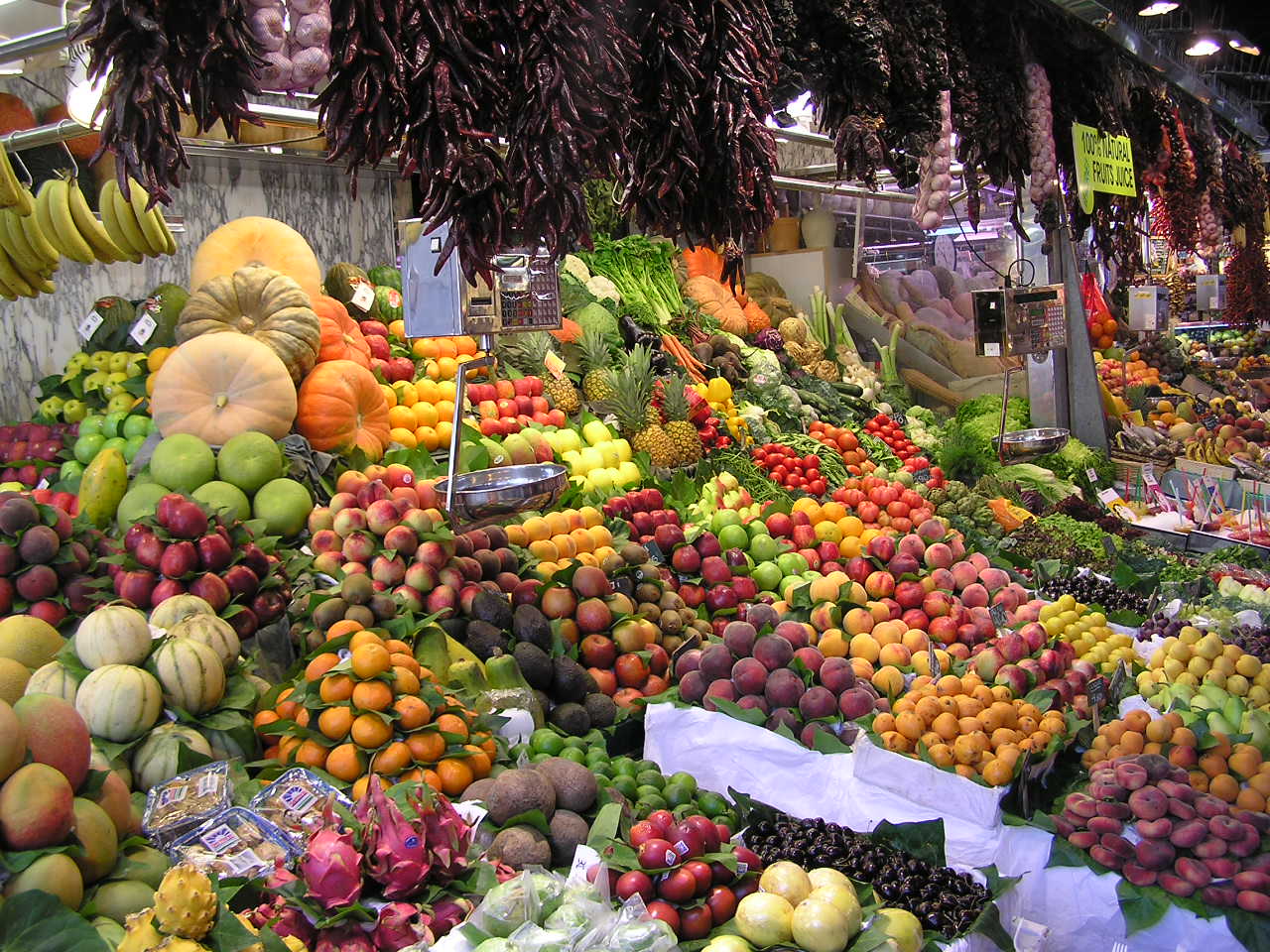
In American English, produce generally refers to fresh fruits and vegetables intended to be eaten by humans, although other food products such as dairy products or nuts are sometimes included.[1][2][3][4]
In supermarkets, the term is also used to refer to the section of the store where fruit and vegetables are kept. Produce is the main product sold by greengrocers (UK, Australia) and farmers' markets. The term is widely and commonly used in the U.S. and Canada, but is not typically used outside the agricultural sector in other English-speaking countries.
Packaging
[edit]
Produce may be packaged for transport or sale.
In parts of the world, including the U.S. and Europe, loose pieces of produce, such as apples, may be individually marked with small stickers bearing price look-up codes. These four- or five-digit codes are a standardized system intended to aid checkout and inventory control at places where produce is sold.
-
 Produce may be bagged in the field during harvest.
 -
 Produce may be packaged for transport in a plastic crate.
 -
 Cardboard boxes for bulk produce
 -
 Mesh bag used for retail sales
 -
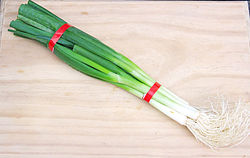 Small amounts may be banded together.
 -
 Bulk produce may be identified by stickers


Bacterial contamination
[edit]Raw sprouts are among the produce most at risk of bacterial infection.[5]
Rinsing is an effective way to reduce the bacteria count on produce, reducing it to about 10 percent of its previous level.[6]
Wastewater used on vegetables can be a source of contamination, due to contamination with fecal matter, salmonella or other bacteria.[7] After Denmark eliminated salmonella in its chickens, attention has turned to vegetables as a source of illness due to feces contamination from other animal sources, such as pigs.[7]
See also
[edit]

Notable people
[edit]References
[edit]- ^ "produce, noun". Merriam-Webster Dictionary. 2024-09-02. Retrieved 2024-09-08.
2: agricultural products and especially fresh fruits and vegetables as distinguished from grain and other staple crops
- ^ "Standards for the Growing, Harvesting, Packing, and Holding of Produce for Human Consumption". Federal Register. 2015-11-27. Retrieved 2024-09-08.
the Food and Drug Administration...is establishing science-based minimum standards for the safe growing, harvesting, packing, and holding of produce, meaning fruits and vegetables grown for human consumption.
- ^ "produce". Longman Dictionary of Contemporary English. Retrieved 2024-09-08.
food or other things that have been grown or produced on a farm to be sold
- ^ "produce, noun". Oxford English Dictionary.
4. Agricultural and natural products collectively, as opposed to manufactured goods.
- ^ "Hold the Raw Sprouts, Please". www.medscape.com. Retrieved 2016-09-18.
- ^ DeRusha, Jason (9 November 2010). "Good Question: Does Washing Fruit Do Anything?". Retrieved 2016-09-18.
- ^ a b "No more salmonella in Danish poultry". 3 July 2012. Retrieved 2016-09-18.
Further reading
[edit]- Doyle, Martin (1857). Farm & Garden Produce: A Treasury of Information. G. Routledge & Co. OCLC Number: 39049007
- Microbial Safety of Fresh Produce - Google Books
- The Produce Contamination Problem: Causes and Solutions - Google Books
- Produce Degradation: Pathways and Prevention - Google Books
- Decontamination of Fresh and Minimally Processed Produce - Google Books
- Microbiology of Fresh Produce - Google Books
- Slow food: A Passion for Produce - Google Books
- Melissa's Everyday Cooking with Organic Produce - Google Books
- Procurement and Marketing of Minor Forest Produce in Tribal Areas - Google Books
- Public Produce: The New Urban Agriculture - Google Books
- Global standard for food safety: guideline for category 5 fresh produce (North American version) - Google Books
External links
[edit] The dictionary definition of produce at Wiktionary
| National | |
|---|---|
| Other | |

Produce
View on GrokipediaOverview
Definition and Scope
Produce refers to fresh, perishable plant-based foods primarily consisting of fruits and vegetables grown for human consumption, excluding processed, frozen, or cooked items.[10] In agricultural contexts, produce encompasses raw agricultural commodities harvested from fields, orchards, and gardens, emphasizing their role as essential field crops that contribute to global food supplies.[11] The classification of produce distinguishes between botanical and culinary definitions. Botanically, fruits are the mature ovaries of flowering plants containing seeds, such as tomatoes and cucumbers, while vegetables include edible parts like leaves, roots, stems, or flowers from non-fruit structures.[12] Culinarily, however, fruits are typically sweet or tart items eaten raw as desserts or snacks, whereas vegetables are savory foods used in main dishes, leading to overlaps like peppers classified as fruits botanically but vegetables in cooking.[12] This dual classification affects handling, marketing, and regulatory standards in commerce and agriculture. The scope of produce extends across agriculture, commerce, and consumption, with fresh produce aisles in grocery retail dedicated to these items for direct consumer access. In global trade, produce involves seasonal availability that influences import/export patterns, requiring rapid transportation to maintain quality due to high perishability.[11] Key terminology includes "perishable goods," denoting items needing constant cooling during storage and transit to prevent spoilage; "whole produce," referring to intact items like uncut apples; and "cut produce," such as pre-sliced melons prepared for convenience.[11] Organic labeling standards, regulated by the USDA, require at least 95% organically produced ingredients without synthetic pesticides for the "organic" seal, contrasting with conventional produce grown using approved synthetic inputs.[13] Common produce categories illustrate this diversity: leafy greens like spinach and lettuce; root vegetables such as carrots and beets; berries including strawberries and blueberries; and citrus fruits like oranges and lemons.[14] These categories highlight produce's role in balanced diets, though detailed nutritional aspects vary by type.[14]Historical Development
The cultivation of produce traces its roots to ancient civilizations, where early domestication efforts laid the foundation for agriculture. In the Near East, peas (Pisum sativum) were among the first legumes domesticated around 10,000 BCE, as evidenced by archaeological finds in regions including modern-day Syria, Iraq, and Jordan, marking a shift from foraging to intentional planting for food security.[15] Similarly, fruits like apples originated from the wild crabapple (Malus sieversii) domesticated in Central Asia's Tien Shan mountains between 4,000 and 10,000 years ago, with cultivation spreading to Mesopotamia by the second millennium BCE, where apple groves contributed to diverse orchards alongside figs and pomegranates.[16][17] These developments in the Fertile Crescent and adjacent areas enabled surplus production, supporting the growth of early urban societies through staple vegetable and fruit crops. During the Medieval and Renaissance periods, the Columbian Exchange profoundly expanded Europe's produce palette with New World introductions following Christopher Columbus's 1492 voyage. Tomatoes, native to the Andes and domesticated by indigenous South American cultures, reached Europe via Spanish explorers in the early 16th century, initially viewed as ornamental before integrating into cuisines, particularly in Italy and Spain.[18] Potatoes, also Andean in origin and cultivated there since around 8,000 BCE, were brought to Europe by the Spanish in the mid-1500s, transforming diets despite initial resistance due to associations with toxicity; by the 17th century, they became a key staple, enhancing caloric availability across the continent.[19] These exchanges not only diversified produce varieties but also spurred advancements in horticultural techniques, such as grafting and selective breeding, during the Renaissance. The 19th and 20th centuries marked the industrialization of produce through transportation and agricultural innovations. Refrigerated railcars, pioneered in the 1870s by figures like Gustavus Swift and Andrew Chase, revolutionized distribution by allowing perishable fruits and vegetables to travel long distances without spoilage, enabling year-round market access and expanding trade from rural farms to urban centers in the United States and beyond.[20] The Green Revolution, accelerating after the 1940s, further boosted yields through high-yielding varieties, synthetic fertilizers, and improved irrigation, particularly for staple grains in developing regions like Mexico, achieving self-sufficiency in wheat production by the 1960s, though it emphasized grains more than horticulture.[21] In modern times, produce cultivation has grappled with biotechnological and sustainability debates. Genetic modification emerged prominently in the 1990s with the commercial release of engineered crops like virus-resistant squash and herbicide-tolerant soybeans, sparking global discussions on safety, environmental impacts, and labeling, as regulatory bodies like the FDA assessed their integration into food systems.[22] Concurrently, the organic farming movement gained momentum in the 1970s amid rising environmental concerns, with the founding of the International Federation of Organic Agriculture Movements (IFOAM) in 1972 promoting chemical-free practices; this led to widespread adoption, driven by consumer demand for pesticide-free produce and policies supporting sustainable alternatives.[23]Classification
Fruits
In botanical terms, fruits are defined as the ripened ovaries of flowering plants (angiosperms), along with any associated structures that develop from the flower, serving primarily to protect and disperse seeds.[24] This definition encompasses a wide array of plant parts, including many items commonly classified differently in everyday use, such as tomatoes or cucumbers. In contrast, the culinary definition of fruits focuses on those that are typically sweet or tart, often consumed raw or in desserts, emphasizing flavor profiles suited for direct eating rather than the reproductive function.[25] Fruits as produce are categorized into several major groups based on structure, flavor, and growth habits, which influence their handling and market appeal. Berries, for instance, include small, juicy examples like strawberries and blueberries, characterized by high water content—often exceeding 85%—that contributes to their tenderness but also results in a short shelf life of just a few days under refrigeration due to rapid microbial growth and softening.[26] Stone fruits, or drupes, such as peaches and cherries, feature a fleshy exterior surrounding a single hard pit (endocarp) that encases the seed, providing structural protection while allowing the edible mesocarp to develop juiciness during ripening.[27] Citrus fruits, like oranges and lemons, are distinguished by their leathery rind and segmented interior filled with acidic juice, primarily due to high levels of citric acid that impart a tart profile with pH values typically ranging from 2 to 4.[28] Tropical fruits, including bananas and mangoes, thrive in warm, humid climates near the equator, requiring consistent temperatures above 20°C (68°F) for optimal growth and fruit set, which limits their cultivation to specific regions without controlled environments.[29] Many fruits exhibit seasonality tied to pollination cycles and environmental cues, with peak availability varying by hemisphere—for example, temperate berries like blueberries ripening in summer months in the Northern Hemisphere.[30] Ripening processes differ significantly: climacteric fruits, such as bananas, continue to mature post-harvest through ethylene gas production, leading to softening and flavor enhancement, whereas non-climacteric fruits like strawberries halt ripening once picked and must be harvested at peak maturity to avoid quality loss.[31] Breeding has introduced notable varieties and hybrids, including seedless grapes, which emerged in the late 19th century through selection of naturally occurring mutations, with varieties like Thompson Seedless promoted in California by the 1870s for easier consumption and table use.[32]Vegetables
Vegetables are defined as the edible parts of plants excluding fruits, typically encompassing roots, stems, leaves, flowers, and sometimes other structures like bulbs or pods.[33] In botanical terms, these parts serve vegetative functions rather than reproductive ones, though culinary classifications often treat certain botanical fruits—such as tomatoes—as vegetables due to their savory use in meals.[34] This distinction highlights vegetables' role in providing nutrient-dense, non-sweet components to diets, often harvested for their foliage, underground storage organs, or protective structures. Major categories of vegetables include leafy greens, root and tuber vegetables, cruciferous vegetables, and legumes, each characterized by distinct plant parts and growth habits. Leafy greens, such as spinach and lettuce, consist of edible leaves and are quick-growing, cool-season crops that thrive in shallow, moist soils; they are nutrient-dense, rich in vitamins A, C, and K.[35] Root and tuber vegetables, exemplified by carrots and potatoes, develop from underground storage organs that store starches and nutrients for plant survival; roots like carrots are true root structures, while tubers like potatoes form from modified stems.[36] Cruciferous vegetables, including broccoli and cabbage, belong to the Brassicaceae family and feature flower buds or heads; they contain sulfur compounds known as glucosinolates, which contribute to their pungent flavor and potential health benefits.[37] Legumes, such as peas and beans, are defined by their pod structures that enclose seeds; these pods develop from the plant's ovary and serve as protective fruit-like containers, though the immature pods or seeds are consumed as vegetables.[38] Vegetables exhibit unique traits in growth cycles, soil needs, and varietal variations that influence cultivation. Most vegetables are annuals, completing their life cycle in one growing season, while some like carrots are biennials, focusing on vegetative growth in the first year and flowering in the second if not harvested.[39] They generally require well-drained, loamy soils with a pH of 6.0 to 7.0 and ample organic matter to support root development and nutrient uptake.[40] Varietal differences are prominent, as seen in tomatoes—a culinary vegetable—where heirloom varieties offer diverse flavors and colors but lower uniformity and disease resistance, compared to hybrids bred for higher yields, consistent size, and pest tolerance.[41] These traits allow vegetables to adapt to various climates while maintaining their value as staple produce.Production
Cultivation Practices
Cultivation practices for produce encompass a range of agronomic techniques tailored to the needs of fruits and vegetables, emphasizing sustainable soil management, efficient water delivery, and proactive pest mitigation to optimize growth and yield. These methods vary by crop type but generally aim to create favorable environmental conditions that support plant health from planting through maturity. For vegetables, practices often focus on annual cycles in field settings, while fruits, particularly tree crops, require long-term orchard establishment and maintenance.[42] Soil preparation is a foundational step in produce cultivation, involving testing and amending the ground to ensure optimal nutrient availability and structure. Most vegetables thrive in soils with a pH between 6.0 and 7.0, as this range facilitates the uptake of essential macronutrients like nitrogen, phosphorus, and potassium; levels below 5.8 may require liming to neutralize acidity, while overly alkaline soils might need sulfur adjustments.[40] Incorporating organic amendments such as compost or well-rotted manure at rates of 2-4 inches per season improves soil tilth, enhances water retention, and supplies slow-release nutrients, reducing the need for synthetic fertilizers by up to 20-30% in amended plots.[43] Tilling to a depth of 8-12 inches before planting disrupts weed seeds and incorporates amendments evenly, promoting root development in crops like tomatoes and leafy greens.[44] Irrigation systems are critical for produce, delivering water precisely to minimize waste and support consistent growth, especially in regions with variable rainfall. Drip irrigation, which applies water directly to the root zone via emitters, is preferred for many vegetables and fruits as it reduces evaporation and runoff compared to overhead sprinklers, using 50-75% less water while maintaining yields.[42][45] Overhead systems, though simpler for large orchards, can promote foliar diseases due to wet leaves and are less efficient in arid areas. Globally, agriculture accounts for approximately 70% of freshwater withdrawals, underscoring the importance of efficient irrigation to sustain produce production amid growing water scarcity.[46] Pest and disease control in produce cultivation relies heavily on integrated pest management (IPM), a holistic approach that combines monitoring, cultural practices, and targeted interventions to minimize chemical use. Crop rotation, rotating plant families every 3-4 years, disrupts pest life cycles by denying hosts to soil-borne pathogens and nematodes, reducing disease incidence by up to 50% in vegetables like potatoes and brassicas.[47][48] IPM also incorporates biological controls, such as releasing beneficial insects, and mechanical methods like mulching to suppress weeds, with scouting thresholds guiding any pesticide applications to maintain ecological balance. For fruits, similar rotations in intercropping systems help manage fungal issues in orchards.[49] Specialized methods address the unique requirements of certain produce types, enhancing efficiency in controlled environments. Hydroponics, a soilless system ideal for leafy greens like lettuce and spinach, uses recirculating nutrient solutions containing balanced macronutrients (e.g., 150-200 ppm nitrogen) and micronutrients, with a pH maintained at 5.5-6.0 to ensure bioavailability and prevent deficiencies.[50][51] This technique allows year-round production with 90% less water than traditional farming and higher yields per square foot. For fruit orchards, management includes annual pruning schedules during the dormant season—typically late winter to early spring—to shape trees, improve light penetration, and stimulate fruiting wood; for instance, apples require removing 20-30% of last year's growth to balance vigor and production.[52][53] These practices, when combined, support resilient produce systems adapted to diverse climates.Global Production and Trade
Global production of fruits and vegetables reached 2.1 billion tonnes in 2023, marking a 1% increase from the previous year and reflecting steady growth driven by expanding cultivation in major producing regions.[54] China dominates as the world's largest producer, accounting for approximately 39% of total fruit and vegetable output, with vegetable production exceeding 594 million metric tons and fresh fruit production leading globally at around 242 million metric tons in recent years.[55][56] Other key producers include India for fruits (over 105 million metric tons) and the United States for specific fruits like apples, where it ranks among the top global contributors.[57] Overall fruit production stood at 952 million metric tons in 2023, while vegetables contributed the remainder to the combined total, with tomatoes as the leading vegetable at 192 million metric tons.[58][55] International trade in fresh fruits and vegetables has expanded significantly, with global exports reaching 148 million tonnes in 2024, up 2% from 2023. China leads as the top exporter with 13.4 million tonnes, followed by the Netherlands (13.4 million tonnes, largely re-exports), Spain (12 million tonnes), and Mexico (11.3 million tonnes).[59] Major importers include the United States (around $20.2 billion in horticultural imports from Mexico alone in 2023, representing 61% of its total), the European Union (55 million tonnes annually), China, and emerging markets like Vietnam.[60][61] Key trade routes encompass intra-NAFTA flows, such as Mexican avocados and winter tomatoes to the U.S. (93% of U.S. tomato imports from Mexico), and EU imports from Africa and the Mediterranean region, where African countries supplied €5.3 billion in fruits and nuts and €2.7 billion in vegetables in 2024.[62][63] These patterns are shaped by seasonal imbalances, with off-season imports addressing domestic shortages, as seen in U.S. reliance on Mexican produce during winter months.[64] Post-1995 World Trade Organization (WTO) agreements, stemming from the Uruguay Round, have facilitated this trade by reducing tariffs and quotas on agricultural products, including fruits and vegetables, thereby lowering barriers that previously distorted global flows.[65] Economic factors like these, combined with preferential trade arrangements, have boosted export volumes, though recent tariffs—such as the U.S. 17% duty on Mexican tomatoes in 2025—highlight ongoing tensions.[66] Emerging trends include rising demand in Asia, where fresh fruit volumes are projected to reach 194 billion kilograms by 2030 amid urbanization and income growth, potentially expanding regional imports by over 20% in value terms.[67] Climate change poses risks, with studies indicating potential yield reductions of up to 24% for certain crops by late century due to rising temperatures and water stress, disproportionately affecting tropical fruits and vegetables in vulnerable regions.[68][69]| Top Global Producers of Fruits and Vegetables (2023, million metric tons) | Fruits | Vegetables |
|---|---|---|
| China | ~242 | 594 |
| India | 106 | N/A |
| United States | N/A | N/A |
| Brazil | 40 | N/A |
| Turkey | 24 | 32 |
Post-Harvest Handling
Harvesting Techniques
Harvesting techniques for produce aim to collect crops at optimal maturity to maximize quality, yield, and shelf life while minimizing damage. Timing is determined by physiological indicators such as color changes in fruits like apples and tomatoes, where the shift from green to full coloration signals ripeness, or size thresholds for root vegetables like carrots, harvested when roots reach at least 0.5-1 inch in diameter to ensure tenderness.[70] For many fruits, the Brix scale measures soluble solids content to assess sweetness, with harvest typically occurring at 16-22° Brix for table grapes and 8-14° Brix for berries like strawberries to balance flavor and firmness.[71][72] These criteria help growers decide when plants have reached peak maturity, often verified through field sampling to avoid overripening that could lead to spoilage. Manual harvesting remains prevalent for delicate produce, particularly on small farms where hand-picking preserves quality for fresh-market items like strawberries and blueberries, accounting for the majority of labor in these operations due to the need for selective picking.[73] This method is labor-intensive, often requiring workers to bend or climb for extended periods, but it allows for sorting in the field to remove immature or damaged items. In contrast, mechanical harvesting dominates for sturdy crops destined for processing, such as tomatoes and potatoes, using machines that achieve higher throughput; for instance, early mechanical tomato harvesters reduced labor from 5.3 hours per ton manually to 2.9 hours per ton.[74] Potato harvesters, equipped with diggers and shakers, can process fields efficiently, separating tubers from soil while minimizing bruising through adjustable speeds and conveyor systems.[75] Type-specific methods adapt to crop architecture and fragility. For tree fruits and nuts like apples and almonds, trunk shakers vibrate the tree to dislodge produce onto catching frames, enabling rapid collection of up to 100% of nuts mechanically while reducing manual effort.[73] Tomatoes for processing are often harvested via vine-cutting machines that sever plants at the base, lift them, and shake off fruits in a single pass, suitable for uniform fields.[76] Recent advances as of 2025 include AI-powered robotic harvesters for delicate fruits like strawberries, using computer vision to selectively pick ripe produce with minimal damage, improving efficiency and reducing labor needs by up to 30% in some operations.[77] These approaches prioritize efficiency for high-volume crops but may incorporate hand labor for cleanup or quality control. Labor in produce harvesting frequently involves seasonal migrant workers, who comprise a significant portion of the U.S. agricultural workforce, facing challenges like repetitive strain from prolonged stooping.[78] To mitigate injuries, ergonomic tools such as baskets with rotational handles and padded grips are employed, reducing musculoskeletal stress by promoting neutral postures and distributing weight more evenly during picking and carrying.[79][80] Such interventions, combined with training on proper lifting techniques, help sustain worker health in this physically demanding phase.Packaging Methods
Packaging methods for produce are designed to minimize physical damage, control respiration rates, and maintain optimal environmental conditions during handling and initial transport. Common materials include waxed cartons, which are applied to citrus fruits to create a moisture barrier; these cartons, typically made from corrugated fiberboard coated with wax comprising about 20% of the fiber weight, prevent water absorption or loss that could lead to spoilage during hydrocooling or icing processes.[81] Mesh bags, often used for potatoes, provide essential ventilation to facilitate airflow and reduce decay risk; their open weave structure allows uninhibited air circulation, which is particularly beneficial for high-respiration items like tubers, while keeping costs low.[81] Another key material is modified atmosphere packaging (MAP), which adjusts gas composition by reducing oxygen levels and increasing carbon dioxide to slow metabolic processes; this technique can extend the shelf life of various produce by 50% to 400%, depending on the commodity.[82] Packaging methods vary by produce type to address specific vulnerabilities. For hardy root vegetables like carrots and beets, bulk bins constructed from wood, plastic, or corrugated fiberboard are employed; these large containers, often standardized to 40 x 48 x 24-36 inches for compatibility with grocery pallets, support high stacking loads and include ventilation openings comprising 5-7% of the surface area to promote cooling and prevent heat buildup.[81] Fragile fruits such as peaches require individual wrapping, typically with shrink film, to cushion against bruising and inhibit disease transmission; this method protects the soft flesh during jostling, though it raises packaging costs by approximately 50% compared to bulk options.[81] Recent innovations focus on sustainability and monitoring capabilities. Biodegradable plastics, such as polylactic acid (PLA) derived from corn starch, are increasingly used for films and trays in produce packaging; these materials offer similar barrier properties to conventional plastics while breaking down under composting conditions, making them suitable for fresh items like leafy greens and berries.[83] Smart labels that indicate ripeness through color changes, often triggered by pH shifts or ethylene exposure, provide real-time quality assessment; for instance, indicators may transition from blue to green as fruits overripen, helping handlers and consumers identify optimal consumption windows.[84] As of 2025, further developments include plant-based and edible packaging films for produce, such as seaweed-derived wraps that reduce plastic use and extend shelf life, alongside AI-optimized designs for minimal material waste.[85] Standards ensure consistency and compliance in packaging. The United States Department of Agriculture (USDA) establishes grade-specific tolerances for fill weights, using sampling procedures like subgroups of five units to verify net contents against minimum limits, with allowances for variations such as double tolerances in individual samples to account for minor discrepancies.[86] Labeling requirements include country of origin under the Country of Origin Labeling (COOL) program, mandatory for fresh and frozen produce sold at supermarkets since 2009, to inform consumers of sourcing.[87] Additionally, packages often feature handling instructions, such as refrigeration advisories, to guide safe storage and prevent quality degradation during transit.[88]Distribution and Storage
Transportation Logistics
The transportation of produce from farms to markets relies on a combination of modes tailored to distance, perishability, and value, with trucks dominating domestic short-haul routes in the United States, accounting for 83% of agricultural freight movements by tonnage, including fresh fruits and vegetables.[89] For international shipments, refrigerated (reefer) containers on ships are commonly used to maintain temperatures between 0°C and 4°C for many temperate fruits and vegetables, such as apples, ensuring quality over long distances.[90] Air freight is reserved for high-value, highly perishable items like asparagus, which require rapid delivery to preserve freshness, typically within 2-8 days from regions like Peru to major markets.[91] In the supply chain, produce is typically consolidated at packing houses after harvest, where multiple loads from farms are aggregated into full truckloads or containers to optimize efficiency and reduce costs before onward shipment.[92] Maintaining the cold chain during transit is critical, with Internet of Things (IoT) sensors enabling real-time temperature and humidity monitoring to prevent spoilage and ensure compliance with quality standards.[93] Key challenges include extended transit times, such as 10-20 days for reefer shipments crossing the Atlantic, which can accelerate ripening in sensitive items like bananas and increase waste if not managed precisely.[94] Border inspections further complicate logistics, often delaying perishable deliveries by hours or days due to phytosanitary checks, potentially leading to quality degradation and economic losses.[95] Efficiency in produce transportation is measured by metrics like fuel use, highlighting the energy-intensive nature of maintaining cold chains over distances. Implementing just-in-time delivery strategies can reduce produce waste by synchronizing shipments with demand, minimizing overstock and spoilage in the range of 20-30% in optimized supply chains.[96] These approaches also enhance compatibility with packaging methods that support rapid loading and unloading, while aligning with endpoint storage conditions to extend shelf life.[97]Storage Conditions
Proper storage conditions for produce are essential to minimize physiological deterioration, extend shelf life, and maintain nutritional quality after transportation, by controlling factors such as temperature, humidity, and atmospheric composition. These conditions vary by commodity to prevent issues like chilling injury in tropical fruits or wilting in leafy greens, ensuring that produce reaches consumers in optimal condition.[98][99] Temperature management is critical, with most temperate fruits and vegetables requiring near-freezing conditions to slow respiration and ethylene production. For apples, storage at 0°C (32°F) under controlled conditions can preserve quality for up to 10 months, depending on variety and initial maturity. In contrast, tropical produce like bananas must be kept at 13°C (56°F) or higher to avoid chilling injury, which manifests as peel pitting and uneven ripening if exposed to lower temperatures even briefly.[100][98] Humidity levels should be maintained high to reduce transpiration and prevent dehydration, particularly for perishable items. Leafy greens, such as lettuce, benefit from 95-98% relative humidity (RH) to inhibit wilting and maintain crispness during storage. Ethylene-sensitive produce like lettuce can also be protected by using absorbers, such as potassium permanganate-based materials, to remove the gas that accelerates senescence and browning.[101][102] Advanced facilities enhance these controls through specialized environments. Controlled atmosphere (CA) storage rooms reduce oxygen (O₂) to 1-3% and elevate carbon dioxide (CO₂) to 3-5% for commodities like apples, suppressing respiration and decay while extending viability. In retail settings, misting systems deliver fine water sprays to produce displays, sustaining 85-95% RH and preventing moisture loss in greens and herbs without promoting bacterial growth when properly maintained.[103][104] Techniques like vacuum cooling rapidly remove field heat from leafy produce by evaporating water from leaf surfaces under reduced pressure, achieving a 10°C (18°F) temperature drop in as little as 10-20 minutes and thereby doubling shelf life compared to slower methods. This is particularly effective for packaged salads, where uniform cooling minimizes hotspots and quality loss.[105]Safety and Quality
Bacterial Contamination Risks
Bacterial contamination poses significant food safety risks to fresh produce, as pathogens can adhere to surfaces or penetrate plant tissues, leading to foodborne illnesses upon consumption. Common bacterial pathogens associated with produce include Escherichia coli O157:H7, Salmonella species, and Listeria monocytogenes. These bacteria can cause severe symptoms such as diarrhea, vomiting, kidney failure, and in vulnerable populations, death. For instance, a 2018 multistate outbreak of E. coli O157:H7 linked to romaine lettuce from the Yuma, Arizona growing region sickened 210 people across 36 states, resulting in 96 hospitalizations and 27 cases of hemolytic uremic syndrome. Similarly, a 2006 outbreak of E. coli O157:H7 traced to bagged spinach affected 199 individuals in 26 states, with 3 deaths reported. Salmonella outbreaks have also been notable, such as the 2018 outbreak of Salmonella Adelaide involving pre-cut melons that sickened 77 people in 9 states, leading to 36 hospitalizations. A more recent example is the June 2024 multistate outbreak of Salmonella Africana and Salmonella Braenderup linked to cucumbers, which sickened 551 people across 34 states, with 128 hospitalizations. Listeria monocytogenes contamination is particularly concerning in sprouts due to their warm, moist growing conditions that favor bacterial proliferation, though specific large-scale outbreaks in sprouts are less frequently documented compared to other produce types.[106][107][108][109][110] Sources of bacterial contamination in produce primarily stem from environmental and human factors during cultivation and handling. Irrigation water contaminated with fecal matter from animal or human sources is a major vector, as pathogens like E. coli and Salmonella can be introduced directly onto edible plant parts. Animal manure used as fertilizer, if not properly composted, can harbor these bacteria and transfer them to crops through soil contact or runoff. Additionally, poor hygiene practices during harvesting and post-harvest handling, such as inadequate worker sanitation or contaminated equipment, facilitate cross-contamination. Wildlife and livestock near fields can also contribute fecal pathogens to water sources or soil.[111][112][111] Prevention strategies focus on minimizing pathogen introduction and reducing their viability through targeted interventions. Effective washing protocols, including immersion or spray applications with chlorine-based sanitizers at concentrations of 50-200 ppm free chlorine, can significantly reduce bacterial loads on produce surfaces by oxidizing microbial cells. For more robust decontamination, irradiation using gamma rays, electron beams, or X-rays at doses of 1-4 kGy targets DNA to inactivate pathogens without substantially altering produce quality, though it is approved for specific uses and requires regulatory oversight. Good agricultural practices, such as treating irrigation water to meet microbial standards (e.g., less than 126 CFU/100 mL generic E. coli) and ensuring proper composting of manure, are foundational to prevention.[111][113][111][114] Regulatory frameworks in the United States emphasize stringent controls and rapid response to bacterial risks in produce. The U.S. Food and Drug Administration (FDA) enforces a zero-tolerance policy for pathogens like Listeria monocytogenes, Salmonella, and E. coli O157:H7 in ready-to-eat fresh produce, mandating recalls and cessation of distribution upon detection. Following the 2006 spinach outbreak, the FDA enhanced traceback systems under the Food Safety Modernization Act, enabling quicker identification of contamination sources through lot codes, distribution records, and farm-level investigations to prevent further illnesses. These guidelines also require producers to implement hazard analysis and risk-based preventive controls for microbial hazards.[115][116][117]Pesticide Residues and Regulations
Pesticides are widely used in produce cultivation to control pests and diseases, with insecticides such as neonicotinoids commonly applied to fruits like apples and citrus to target insects by disrupting their nervous systems.[118] Fungicides, including copper-based compounds permitted in organic production, are employed on vegetables and fruits to prevent fungal infections, such as those affecting grapes and tomatoes.[119] These chemicals can leave residues on harvested produce, raising concerns about consumer exposure through dietary intake. Residue levels in produce are regulated through maximum residue limits (MRLs), which represent the highest permissible concentrations of a pesticide in or on food commodities. In the United States, the Environmental Protection Agency (EPA) establishes these tolerances, often ranging from a default of 0.01 parts per million (ppm) for undetected residues to higher levels up to 50 ppm for specific pesticides on crops like leafy greens or stone fruits, based on toxicological data and application rates.[120] Internationally, the Codex Alimentarius Commission sets harmonized MRLs for fruits and vegetables to facilitate trade, such as 0.3 mg/kg for certain insecticides on citrus fruits.[121] A key concern is the bioaccumulation of lipophilic pesticides, like organochlorines, in fatty fruits such as avocados, where residues may concentrate in lipid-rich tissues and persist longer in the food chain.[122] Regulatory frameworks aim to minimize health risks from these residues. The U.S. Food Quality Protection Act (FQPA) of 1996 amended pesticide laws to require a "reasonable certainty of no harm" standard for tolerances, leading to the reassessment and reduction of thousands of existing limits, particularly for organophosphate insecticides, and enhanced protections for children.[123] Organic certification under the U.S. Department of Agriculture (USDA) prohibits synthetic pesticides entirely, allowing only nonsynthetic alternatives like copper fungicides unless explicitly listed as permitted exceptions on the National List.[124] Globally, Codex standards provide a baseline for MRLs, influencing national policies to ensure residues do not exceed safe thresholds.[121] Enforcement involves advanced testing methods, such as gas chromatography-mass spectrometry (GC-MS), which enable multi-residue analysis capable of detecting over 500 pesticide compounds simultaneously in produce samples.[125] For instance, in 2019, European monitoring programs identified elevated residues in strawberry samples, prompting alerts and increased scrutiny under MRL guidelines, though most levels remained below limits.[126] These protocols help identify violations and trigger recalls when necessary to protect public health.Nutritional and Health Aspects
Nutritional Composition
Produce, encompassing fruits and vegetables, is characterized by its high water content, typically ranging from 80% to 95% by weight, which contributes to their low caloric density. Most varieties provide 20 to 50 kcal per 100 g serving, making them suitable for energy-restricted diets. For instance, raw apples contain 52 kcal and 85.6 g water per 100 g, while raw carrots offer 41 kcal and 88.3 g water per 100 g.[127][128] Dietary fiber is another key macronutrient, averaging 2 to 5 g per 100 g across categories; raw apples provide 2.4 g, and raw broccoli supplies 2.6 g per 100 g. Fruits like bananas are somewhat denser at 89 kcal and 75 g water per 100 g but still align with this profile, with 2.6 g fiber.[127][129][130] Micronutrients in produce vary by category, with fruits often excelling in vitamins and vegetables in minerals. Citrus fruits are rich in vitamin C, with raw oranges containing 53.2 mg per 100 g. Vegetables like carrots are prominent sources of vitamin A, primarily as beta-carotene, providing 16,706 IU (or 8,285 mcg beta-carotene) per 100 g. Bananas stand out for potassium, offering 358 mg per 100 g. Other examples include raw broccoli with 89.2 mg vitamin C per 100 g, highlighting the diversity within vegetable subgroups.[131][128][130][129] Antioxidants and phytochemicals further define produce's nutritional profile, particularly in berries and cruciferous vegetables. Berries are high in polyphenols, such as anthocyanins; blackberries contain approximately 260 mg polyphenols per 100 g. In vegetables, broccoli features sulforaphane, a phytochemical derived from glucoraphanin, with mature broccoli providing 0.5 to 18 mg sulforaphane per 100 g depending on variety and growing conditions.[132][133] These compounds contribute to the overall bioactive content, with berries often reaching 200 to 500 mg total polyphenols per 100 g across types. Nutritional composition can vary due to seasonal and processing factors. Summer fruits often exhibit higher sugar levels compared to other seasons, as seen in elevated reducing sugars in dry-season samples like pawpaw at 13.3%.[134] Cooking methods impact micronutrients, with boiling leading to a 22% to 50% loss of vitamin C in vegetables like broccoli and spinach due to leaching into water.[135][136]| Nutrient | Example (per 100 g raw) | Fruit/Vegetable | Source |
|---|---|---|---|
| Water | 85.6 g | Apple | [127] |
| Calories | 41 kcal | Carrot | [128] |
| Fiber | 2.6 g | Banana | [130] |
| Vitamin C | 53.2 mg | Orange | [131] |
| Vitamin A (IU) | 16,706 | Carrot | [128] |
| Potassium | 358 mg | Banana | [130] |
| Polyphenols | 260 mg | Blackberry | [132] |
| Sulforaphane | 0.5-18 mg | Broccoli | [133] |