Hubbry Logo
search
logo
2312930

Galvanometer

logo
Community Hub0 Subscribers
Read side by side
from Wikipedia

An early D'Arsonval galvanometer showing magnet and rotating coil

A galvanometer is an electromechanical measuring instrument for electric current. Early galvanometers were uncalibrated, but improved versions, called ammeters, were calibrated and could measure the flow of current more precisely. Galvanometers work by deflecting a pointer in response to an electric current flowing through a coil in a constant magnetic field. The mechanism is also used as an actuator in applications such as hard disks.

Galvanometers came from the observation, first noted by Hans Christian Ørsted in 1820, that a magnetic compass's needle deflects when near a wire having electric current. They were the first instruments used to detect and measure small amounts of current. André-Marie Ampère, who gave mathematical expression to Ørsted's discovery, named the instrument after[1] the Italian electricity researcher Luigi Galvani, who in 1791 discovered the principle of the frog galvanoscope – that electric current would make the legs of a dead frog jerk.

Galvanometers have been essential for the development of science and technology in many fields. For example, in the 1800s they enabled long-range communication through submarine cables, such as the earliest transatlantic telegraph cables, and were essential to discovering the electrical activity of the heart and brain, by their fine measurements of current.

Galvanometers have also been used as the display components of other kinds of analog meters (e.g., light meters and VU meters), capturing the outputs of these meters' sensors. Today, the main type of galvanometer still in use is the D'Arsonval/Weston type.

Operation

[edit]
Diagram of D'Arsonval/Weston type galvanometer.
Diagram of D'Arsonval/Weston type galvanometer. As the current flows from + through the coil (the orange part) to , a magnetic field is generated in the coil. This field is counteracted by the permanent magnet and forces the coil to twist, moving the pointer, in relation to the field's strength caused by the flow of current.

Modern galvanometers, of the D'Arsonval/Weston type, are constructed with a small pivoting coil of wire, called a spindle, in the field of a permanent magnet. The coil is attached to a thin pointer that traverses a calibrated scale. A tiny torsion spring pulls the coil and pointer to the zero position.

Close-up view (rear) of a permanent magnet type moving coil meter

When a direct current (DC) flows through the coil, the coil generates a magnetic field. This field acts against the permanent magnet. The coil twists, pushing against the spring, and moves the pointer. The hand points at a scale indicating the electric current. Careful design of the pole pieces ensures that the magnetic field is uniform so that the angular deflection of the pointer is proportional to the current. A useful meter generally contains a provision for damping the mechanical resonance of the moving coil and pointer, so that the pointer settles quickly to its position without oscillation.

The basic sensitivity of a meter might be, for instance, 100 microamperes full scale (with a voltage drop of, say, 50 millivolts at full current). Such meters are often calibrated to read some other quantity that can be converted to a current of that magnitude. The use of current dividers, often called shunts, allows a meter to be calibrated to measure larger currents. A meter can be calibrated as a DC voltmeter if the resistance of the coil is known by calculating the voltage required to generate a full-scale current. A meter can be configured to read other voltages by putting it in a voltage divider circuit. This is generally done by placing a resistor in series with the meter coil. A meter can be used to read resistance by placing it in series with a known voltage (a battery) and an adjustable resistor. In a preparatory step, the circuit is completed and the resistor adjusted to produce full-scale deflection. When an unknown resistor is placed in series in the circuit the current will be less than full scale and an appropriately calibrated scale can display the value of the previously unknown resistor.

These capabilities to translate different kinds of electric quantities into pointer movements make the galvanometer ideal for turning the output of other sensors that output electricity (in some form or another), into something that can be read by a human.

Because the pointer of the meter is usually a small distance above the scale of the meter, parallax error can occur when the operator attempts to read the scale line that "lines up" with the pointer. To counter this, some meters include a mirror along with the markings of the principal scale. The accuracy of the reading from a mirrored scale is improved by positioning one's head while reading the scale so that the pointer and the reflection of the pointer are aligned; at this point, the operator's eye must be directly above the pointer and any parallax error has been minimized.

Uses

[edit]
Closed-loop galvanometer-driven laser scanning mirror

Probably the largest use of galvanometers was of the D'Arsonval/Weston type used in analog meters in electronic equipment. Since the 1980s, galvanometer-type analog meter movements have been displaced by analog-to-digital converters (ADCs) for many uses. A digital panel meter (DPM) contains an ADC and numeric display. The advantages of a digital instrument are higher precision and accuracy, but factors such as power consumption or cost may still favor the application of analog meter movements.

Modern uses

[edit]

Most modern uses for the galvanometer mechanism are in positioning and control systems. Galvanometer mechanisms are divided into moving magnet and moving coil galvanometers; in addition, they are divided into closed-loop and open-loop - or resonant - types.

Mirror galvanometer systems are used as beam positioning or beam steering elements in laser scanning systems. For example, for material processing with high-power lasers, closed loop mirror galvanometer mechanisms are used with servo control systems. These are typically high power galvanometers and the newest galvanometers designed for beam steering applications can have frequency responses over 10 kHz with appropriate servo technology. Closed-loop mirror galvanometers are also used in similar ways in stereolithography, laser sintering, laser engraving, laser beam welding, laser TVs, laser displays and in imaging applications such as retinal scanning with Optical Coherence Tomography (OCT) and Scanning Laser Ophthalmoscopy (SLO). Almost all of these galvanometers are of the moving magnet type. The closed loop is obtained measuring the position of the rotating axis with an infrared emitter and 2 photodiodes. This feedback is an analog signal.

Open loop, or resonant mirror galvanometers, are mainly used in some types of laser-based bar-code scanners, printing machines, imaging applications, military applications and space systems. Their non-lubricated bearings are especially of interest in applications that require functioning in a high vacuum.

A galvanometer mechanism (center part), used in an automatic exposure unit of an 8 mm film camera, together with a photoresistor (seen in the hole on top of the leftpart).

Moving coil type galvanometer mechanisms (called 'voice coils' by hard disk manufacturers) are used for controlling the head positioning servos in hard disk drives and CD/DVD players, in order to keep mass (and thus access times), as low as possible.

Past uses

[edit]

A major early use for galvanometers was for finding faults in telecommunications cables. They were superseded in this application late in the 20th century by time-domain reflectometers.

Galvanometer mechanisms were also used to get readings from photoresistors in the metering mechanisms of film cameras (as seen in the adjacent image).

In analog strip chart recorders such as used in electrocardiographs, electroencephalographs and polygraphs, galvanometer mechanisms were used to position the pen. Strip chart recorders with galvanometer driven pens may have a full-scale frequency response of 100 Hz and several centimeters of deflection.

History

[edit]

Hans Christian Ørsted

[edit]

The deflection of a magnetic compass needle by the current in a wire was first described by Hans Christian Ørsted in 1820. The phenomenon was studied both for its own sake and as a means of measuring electric current.

Schweigger and Ampère

[edit]

The earliest galvanometer was reported by Johann Schweigger at the University of Halle on 16 September 1820. André-Marie Ampère also contributed to its development. Early designs increased the effect of the magnetic field generated by the current by using multiple turns of wire. The instruments were at first called "multipliers" due to this common design feature.[2] The term "galvanometer," in common use by 1836, was derived from the surname of Italian electricity researcher Luigi Galvani, who in 1791 discovered that electric current would make a dead frog's leg jerk.

Poggendorff and Thomson

[edit]
Thomson mirror galvanometer, patented in 1858.

Originally, the instruments relied on the Earth's magnetic field to provide the restoring force for the compass needle. These were called "tangent" galvanometers and had to be oriented before use. Later instruments of the "astatic" type used opposing magnets to become independent of the Earth's field and would operate in any orientation.

An early mirror galvanometer was invented in 1826 by Johann Christian Poggendorff.[3] An astatic galvanometer was invented by Hermann von Helmholtz in 1849; a more sensitive version of that device, the Thomson mirror galvanometer, was patented in 1858 by William Thomson (Lord Kelvin).[4] Thomson's design was able to detect very rapid current changes by using small magnets attached to a lightweight mirror, suspended by a thread, instead of a compass needle. The deflection of a light beam on the mirror greatly magnified the deflection induced by small currents. Alternatively, the deflection of the suspended magnets could be observed directly through a microscope.

Georg Ohm

[edit]

The ability to measure voltage and current quantitatively allowed Georg Ohm, in 1827, to formulate Ohm's law – that the voltage across a conductor is directly proportional to the current through it.

D'Arsonval and Deprez

[edit]
An early d'Arsonval moving coil galvanometer

The early moving-magnet form of galvanometer had the disadvantage that it was affected by any magnets or iron masses near it, and its deflection was not linearly proportional to the current. In 1882 Jacques-Arsène d'Arsonval and Marcel Deprez developed a form with a stationary permanent magnet and a moving coil of wire, suspended by fine wires which provided both an electrical connection to the coil and the restoring torque to return to the zero position. An iron tube between the magnet's pole pieces defined a circular gap through which the coil rotated. This gap produced a consistent, radial magnetic field across the coil, giving a linear response throughout the instrument's range. A mirror attached to the coil deflected a beam of light to indicate the coil position. The concentrated magnetic field and delicate suspension made these instruments sensitive; d'Arsonval's initial instrument could detect ten microamperes.[5]

Edward Weston

[edit]
D'Arsonval/Weston galvanometer (ca. 1900). Part of the magnet's left pole piece is broken out to show the coil.
Weston galvanometer in portable case

Edward Weston extensively improved the design of the galvanometer. He substituted the fine wire suspension with a pivot and provided restoring torque and electrical connections[further explanation needed] through spiral springs rather than through the traditional wristwatch balance wheel hairspring. He developed a method of stabilizing the magnetic field of the permanent magnet, so the instrument would have consistent accuracy over time. He replaced the light beam and mirror with a knife-edge pointer that could be read directly. A mirror under the pointer, in the same plane as the scale, eliminated parallax observation error. To maintain the field strength, Weston's design used a very narrow circumferential slot through which the coil moved, with a minimal air-gap. This improved linearity of pointer deflection with respect to coil current. Finally, the coil was wound on a light-weight form made of conductive metal, which acted as a damper. By 1888, Edward Weston had patented and brought out a commercial form of this instrument, which became a standard electrical equipment component. It was known as a "portable" instrument because it was affected very little by mounting position or by transporting it from place to place. This design is almost universally used in moving-coil meters today.[citation needed]

Initially, laboratory instruments relying on the Earth's own magnetic field to provide restoring force for the pointer, galvanometers were developed into compact, rugged, sensitive portable instruments essential to the development of electro-technology.

Taut-band movement

[edit]

The taut-band movement is a modern development of the D'Arsonval-Weston movement. The jewel pivots and hairsprings are replaced by tiny strips of metal under tension. Such a meter is more rugged for field use.[6][7]

Types

[edit]

There are broadly two types of galvanometers. Some galvanometers use a solid pointer on a scale to show measurements; other very sensitive types use a miniature mirror and a beam of light to provide mechanical amplification of low-level signals.

Tangent galvanometer

[edit]

A tangent galvanometer is an early measuring instrument used for the measurement of electric current. It works by using a compass needle to compare a magnetic field generated by the unknown current to the magnetic field of the Earth. It gets its name from its operating principle, the tangent law of magnetism, which states that the tangent of the angle a compass needle makes is proportional to the ratio of the strengths of the two perpendicular magnetic fields. It was first described by Johan Jakob Nervander in 1834.[8][9][10][11]

A tangent galvanometer consists of a coil of insulated copper wire wound on a circular non-magnetic frame. The frame is mounted vertically on a horizontal base provided with levelling screws. The coil can be rotated on a vertical axis passing through its centre. A compass box is mounted horizontally at the centre of a circular scale. It consists of a tiny, powerful magnetic needle pivoted at the centre of the coil. The magnetic needle is free to rotate in the horizontal plane. The circular scale is divided into four quadrants. Each quadrant is graduated from 0° to 90°. A long thin aluminium pointer is attached to the needle at its centre and at right angle to it. To avoid errors due to parallax, a plane mirror is mounted below the compass needle.

In operation, the instrument is first rotated until the magnetic field of the Earth, indicated by the compass needle, is parallel with the plane of the coil. Then the unknown current is applied to the coil. This creates a second magnetic field on the axis of the coil, perpendicular to the Earth's magnetic field. The compass needle responds to the vector sum of the two fields and deflects to an angle equal to the tangent of the ratio of the two fields. From the angle read from the compass's scale, the current could be found from a table.[12] The current supply wires have to be wound in a small helix, like a pig's tail, otherwise the field due to the wire will affect the compass needle and an incorrect reading will be obtained.

Theory

[edit]

The galvanometer is oriented so that the plane of the coil is vertical and aligned along parallel to the horizontal component BH of the Earth's magnetic field (i.e. parallel to the local "magnetic meridian"). When an electric current flows through the galvanometer coil, a second magnetic field B is created. At the center of the coil, where the compass needle is located, the coil's field is perpendicular to the plane of the coil. The magnitude of the coil's field is:

where I is the current in amperes, n is the number of turns of the coil and r is the radius of the coil. These two perpendicular magnetic fields add vectorially, and the compass needle points along the direction of their resultant BH+B. The current in the coil causes the compass needle to rotate by an angle θ:
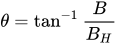
From tangent law, B = BH tan θ, i.e.
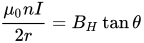
or
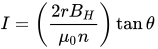
or I = K tan θ, where K is called the Reduction Factor of the tangent galvanometer.

One problem with the tangent galvanometer is that its resolution degrades at both high currents and low currents. The maximum resolution is obtained when the value of θ is 45°. When the value of θ is close to 0° or 90°, a large percentage change in the current will only move the needle a few degrees.[13]

Geomagnetic field measurement

[edit]

A tangent galvanometer can also be used to measure the magnitude of the horizontal component of the geomagnetic field. When used in this way, a low-voltage power source, such as a battery, is connected in series with a rheostat, the galvanometer, and an ammeter. The galvanometer is first aligned so that the coil is parallel to the geomagnetic field, whose direction is indicated by the compass when there is no current through the coils. The battery is then connected and the rheostat is adjusted until the compass needle deflects 45 degrees from the geomagnetic field, indicating that the magnitude of the magnetic field at the center of the coil is the same as that of the horizontal component of the geomagnetic field. This field strength can be calculated from the current as measured by the ammeter, the number of turns of the coil, and the radius of the coils.

Astatic galvanometer

[edit]

Unlike the tangent galvanometer, the astatic galvanometer does not use the Earth's magnetic field for measurement, so it does not need to be oriented with respect to the Earth's field, making it easier to use. Developed by Leopoldo Nobili in 1825,[14] it consists of two magnetized needles parallel to each other but with the magnetic poles reversed. These needles are suspended by a single silk thread.[15] The lower needle is inside a vertical current sensing coil of wire and is deflected by the magnetic field created by the passing current, as in the tangent galvanometer above. The purpose of the second needle is to cancel the dipole moment of the first needle, so the suspended armature has no net magnetic dipole moment, and thus is not affected by the earth's magnetic field. The needle's rotation is opposed by the torsional elasticity of the suspension thread, which is proportional to the angle.

Mirror galvanometer

[edit]

To achieve higher sensitivity to detect extremely small currents, the mirror galvanometer substitutes a lightweight mirror for the pointer. It consists of horizontal magnets suspended from a fine fiber, inside a vertical coil of wire, with a mirror attached to the magnets. A beam of light reflected from the mirror falls on a graduated scale across the room, acting as a long mass-less pointer. The mirror galvanometer was used as the receiver in the first trans-Atlantic submarine telegraph cables in the 1850s, to detect the extremely faint pulses of current after their thousand-mile journey under the Atlantic. In a device called an oscillograph, the moving beam of light is used, to produce graphs of current versus time, by recording measurements on photographic film. The string galvanometer is a type of mirror galvanometer so sensitive that it was used to make the first electrocardiogram of the electrical activity of the human heart.

Ballistic galvanometer

[edit]

A ballistic galvanometer is a type of sensitive galvanometer for measuring the quantity of charge discharged through it. It is an integrator, by virtue of the long time constant of its response, unlike a current-measuring galvanometer. The moving part has a large moment of inertia that gives it an oscillation period long enough to make the integrated measurement. It can be either of the moving coil or moving magnet type; commonly it is a mirror galvanometer.

See also

[edit]

References

[edit]
[edit]
Revisions and contributorsEdit on WikipediaRead on Wikipedia
from Grokipedia
A galvanometer is an electromechanical instrument designed to detect and measure small electric currents by leveraging the interaction between a current-carrying coil and a magnetic field, which produces a measurable deflection proportional to the current's magnitude.[1][2] The device traces its origins to 1820, when Danish physicist Hans Christian Ørsted demonstrated that an electric current deflects a magnetic needle, inspiring German physicist Johann Schweigger to invent the first practical galvanometer later that year by coiling wire around the needle to amplify the effect.[1][3] Named after Luigi Galvani's earlier work on bioelectricity, early versions like Schweigger's "multiplier" consisted of a pivoting needle within a coiled wire and permanent magnets, enabling quantitative current detection.[3] Over time, galvanometers evolved into various types, including the tangent galvanometer for absolute measurements, the astatic design by Leopoldo Nobili in 1825 to minimize Earth's magnetic interference, and the highly sensitive mirror galvanometer patented by William Thomson (Lord Kelvin) in 1858, which used a light beam reflected from a mirror for precise readings.[3][4] The moving-coil galvanometer, developed by Jacques-Arsène d'Arsonval in 1882, features a rectangular coil suspended in a radial magnetic field with a soft iron core for uniformity, providing linear deflection and serving as the basis for modern analog ammeters and voltmeters.[3][5] Historically pivotal in telegraphy—such as monitoring the 1858 transatlantic cable—and scientific experiments, galvanometers have largely been supplanted by digital instruments but remain relevant in specialized applications like laser beam steering and high-precision scanning systems.[6][7] Their sensitivity, defined by factors like the number of coil turns and magnetic field strength, allows detection of currents as low as microamperes, underscoring their enduring role in electrical measurement.[5]

Principles of Operation

Basic Electromagnetic Principle

A galvanometer is an electromechanical instrument designed to detect and measure small electric currents by producing a mechanical deflection proportional to the current strength.[8] This deflection arises from the interaction between the current and a magnetic field, converting electrical signals into observable motion.[9] The foundational principle stems from Hans Christian Ørsted's 1820 discovery that an electric current generates a magnetic field around the conductor, which can interact with an existing magnetic field to cause deflection.[10] In Ørsted's experiment, a current from a voltaic pile passing through a wire deflected a nearby compass needle, revealing that the current's magnetic field exerts a torque on the needle aligned with Earth's magnetic field.[10] This interaction enables galvanometers to function, either by the current's field deflecting a magnetic needle in Earth's field or, in later designs, by placing a current-carrying coil in a stronger permanent magnet's field to produce the necessary torque.[8] At the microscopic level, the effect originates from the Lorentz force acting on charged particles in the conductor. When a current II flows through a wire in a magnetic field B\mathbf{B}, the moving charges (electrons) experience a force F=q(v×B)\mathbf{F} = q (\mathbf{v} \times \mathbf{B}), where qq is the charge and v\mathbf{v} is its velocity.[11] For a wire segment of length L\mathbf{L}, this aggregates to the net force F=I(L×B)\mathbf{F} = I (\mathbf{L} \times \mathbf{B}), derived from Ampère's force law, which describes the magnetic force between current elements but applies here to the interaction with an external field.[11] For a current-carrying coil, these forces produce a torque that tends to align the coil's magnetic moment with the field. Consider a rectangular coil with NN turns, area AA, in a uniform magnetic field BB. The forces on opposite sides cancel in translation but create a couple. On the sides perpendicular to B\mathbf{B}, each experiences F=NILBsinθF = N I L B \sin\theta, where LL is the length, θ\theta is the angle between the field and the normal to the coil plane, and the lever arm is wcosθw \cos\theta (width ww). The torque from each pair is τ=NILBsinθwcosθ\tau = N I L B \sin\theta \cdot w \cos\theta, but simplifying with A=LwA = L w, the net torque is:
τ=NIABsinθ \tau = N I A B \sin\theta
This equation results from integrating the cross product over the loop, valid for any shape, and shows the torque's dependence on current II, confirming the device's sensitivity to small currents.[11] The external field BB is typically provided by permanent magnets in precision galvanometers for stronger, controlled interaction, though early versions relied on Earth's weaker field.[8]

Torque and Deflection Mechanism

In a galvanometer, the electromagnetic torque arising from the current in a coil or magnetic needle interacts with the magnetic field, causing the element to pivot on its suspension and produce an angular deflection of the indicator. The suspension system, often a fine torsion wire such as a phosphor-bronze strip or jeweled bearings to reduce friction, allows the coil (in moving-coil designs) or needle (in tangent types) to rotate freely while providing mechanical support.[12][2] The suspension exerts a restoring torque that opposes the deflection and increases with the angle of twist. This restoring torque is expressed as
τr=kθ, \tau_r = k \theta,
where kk is the torsional constant of the suspension (in N·m/rad) and θ\theta is the angular deflection in radians.[2] Equilibrium occurs when the deflecting torque balances the restoring torque, halting further rotation. The deflecting torque on the coil is
τd=NIABsinϕ, \tau_d = N I A B \sin \phi,
where NN is the number of coil turns, II is the current, AA is the coil area, BB is the magnetic field strength, and ϕ\phi is the angle between the field and the normal to the coil plane. At equilibrium, τd=τr\tau_d = \tau_r, so
NIABsinϕ=kθ. N I A B \sin \phi = k \theta.
[2] In many galvanometers, a radial magnetic field—achieved via concave pole faces and a cylindrical soft-iron core—ensures sinϕ=1\sin \phi = 1 across the deflection range, yielding τd=NIAB\tau_d = N I A B independent of θ\theta. Substituting into the equilibrium equation gives the exact relation
θ=NIABk. \theta = \frac{N I A B}{k}.
For designs without a perfectly radial field, small deflections approximate sinϕ1\sin \phi \approx 1 (or ϕ90\phi \approx 90^\circ), leading to the same linear form θ(NIAB)/k\theta \approx (N I A B)/k, assuming the linearity holds under this condition.[12][2] The magnitude of the deflection depends on coil geometry (larger NN or AA increases torque for greater θ\theta), magnetic field uniformity and strength (higher BB amplifies deflection), and the suspension's torsional constant (smaller kk yields larger θ\theta).[12][2] For practical readability, especially with sensitive instruments showing small deflections, a lightweight pointer attached to the moving element indicates directly on a calibrated scale, or a small mirror reflects a light beam onto a remote screen, magnifying the deflection optically by factors of 10 or more.[12]

Damping and Sensitivity

In the absence of damping, a galvanometer's moving coil exhibits oscillatory motion around its equilibrium position after the application of a deflecting torque, similar to a simple harmonic oscillator, which prolongs the time to reach a steady reading.[13] To ensure rapid and stable deflection for accurate measurements, critical damping is essential, as it allows the coil to approach the final position in the minimum time without overshooting or prolonged oscillations.[14] Several damping mechanisms are employed in galvanometers to achieve this control. Magnetic damping arises from eddy currents induced in a conductive frame, such as an aluminum former attached to the coil, which generates an opposing magnetic field proportional to the velocity of motion.[15] Pneumatic damping utilizes an air vane or lightweight piston attached to the moving system, which moves within an enclosed chamber to create viscous drag from air compression and rarefaction, providing velocity-dependent opposition without introducing electromagnetic interference.[16] Electromagnetic damping occurs through induced currents in the coil circuit as it moves in the magnetic field, producing a torque that opposes the motion; this can be adjusted via external circuit resistance and is particularly effective in closed-loop systems.[14] The dynamics of a damped galvanometer are described by the differential equation for angular motion:
Jd2θdt2+Ddθdt+kθ=0 J \frac{d^2 \theta}{dt^2} + D \frac{d \theta}{dt} + k \theta = 0
where $ J $ is the moment of inertia of the moving system, $ D $ is the damping coefficient, $ k $ is the torsional restoring constant, and $ \theta $ is the angular deflection.[14] The damping ratio is defined as $ \zeta = \frac{D}{2 \sqrt{J k}} ,whichcharacterizesthenatureoftheresponse:underdamped(, which characterizes the nature of the response: underdamped ( \zeta < 1 )leadstooscillations,overdamped() leads to oscillations, overdamped ( \zeta > 1 $) results in sluggish return, and critical damping occurs precisely when $ \zeta = 1 $, or $ D = 2 \sqrt{J k} $, yielding the fastest non-oscillatory settling to equilibrium.[13] The sensitivity of a galvanometer quantifies its precision in detecting small currents and is defined as the angular deflection per unit current, $ S = \frac{\theta}{I} $, typically expressed in radians per ampere.[14] A related metric, the figure of merit, is the reciprocal of this sensitivity, representing the current required to produce a deflection of 1 radian, $ I_{1 \ rad} = \frac{k}{N A B} $, where $ N $ is the number of coil turns, $ A $ is the coil area, and $ B $ is the magnetic field strength.[14] Sensitivity can be enhanced by increasing $ N $ or $ A $ to amplify the deflecting torque, strengthening $ B $ for greater interaction, or reducing $ k $ via softer suspension materials, though these adjustments must balance against increased inertia or fragility.[14] Galvanometers face limitations from overload conditions, which can damage the delicate suspension or coil through excessive deflection or heating; protection is often provided by incorporating shunts to divert excess current or mechanical stops to limit pointer travel.[17] Temperature variations also impact sensitivity by altering the coil's resistance, which modifies the effective damping and deflection characteristics, potentially requiring compensation circuits for stable performance.[18]

History

Hans Christian Ørsted

Hans Christian Ørsted, a Danish physicist and chemist, made a groundbreaking observation during a lecture demonstration at the University of Copenhagen on April 21, 1820.[10] He arranged a simple setup consisting of a voltaic pile (an early battery), a straight conducting wire, and a magnetic compass placed beneath the wire.[19] When Ørsted connected the battery to send an electric current through the wire, he noticed that the compass needle, which normally aligned with Earth's magnetic field, deflected sharply and consistently to one side, with the direction of deflection reversing when the current was reversed.[20] This unexpected effect demonstrated that an electric current produces a magnetic field surrounding the wire, providing the first experimental evidence of a direct connection between electricity and magnetism.[10] Ørsted's careful follow-up experiments confirmed that the magnetic influence acted circularly around the wire, perpendicular to the current's direction, and was independent of the wire's material or the battery's chemical composition, as long as a steady current flowed.[19] The discovery overturned prevailing views that electricity and magnetism were unrelated forces, laying the empirical foundation for the field of electromagnetism.[21] Ørsted promptly documented his results in a concise Latin pamphlet titled Experimenta circa effectum conflictus electrici in acum magneticam, published in Copenhagen on July 21, 1820.[22] The four-page work described the setup, observations, and preliminary conclusions, and was initially circulated privately to leading European scientists and academies.[10] Within weeks, translations into French, German, and English appeared in major journals, such as the Annales de Chimie et de Physique and the Annals of Philosophy, sparking widespread interest and replication across the continent.[19] The immediate impact of Ørsted's work was profound, unifying two seemingly distinct natural phenomena and prompting rapid advancements in electromagnetic theory, though at the time, no instruments existed for quantitatively measuring current strength through magnetic deflection.[21] This qualitative insight inspired subsequent inventors to develop detection devices, marking the inception of electrometry.[10]

Schweigger and Ampère

In 1820, André-Marie Ampère, a French physicist, proposed the term "galvanometer" for an instrument designed to detect the presence, intensity, and direction of electric currents, distinguishing it from simpler detection devices like compasses.[23] This naming occurred amid Ampère's rapid development of electrodynamics, where he established fundamental laws describing the magnetic effects produced by electric currents, including the attraction between parallel currents in the same direction and repulsion when in opposite directions.[23] These laws, presented in his September 1820 memoir to the Académie des Sciences, provided a theoretical framework that quantified how currents generate magnetic fields, influencing subsequent instrument designs.[23] Concurrently, in September 1820, Johann Salomo Christoph Schweigger, a German chemist and physicist at the University of Halle, invented the first practical electromagnetic measuring device, known as the "multiplier."[24] Presented on September 16 to the Natural Philosophy Society of Halle, this instrument consisted of a suspended magnetic needle—similar to a compass—enclosed within a rectangular frame of multiple coils of insulated wire, typically silk-coated copper or silver.[25] When an electric current passed through the coil, it produced a magnetic field that deflected the needle; the deflection angle was proportional to the current strength and directly amplified by the number of wire turns, allowing detection of weaker currents than possible with a single wire loop.[25] Schweigger's design, built in the wake of Ørsted's earlier observation of current-magnet interactions, marked the multiplier as the galvanometer's precursor, later adopting Ampère's terminology.[24] Despite its innovation, the Schweigger multiplier had notable limitations that restricted its precision in early applications. The device's reliance on a single magnetic needle made it highly sensitive to the Earth's ambient magnetic field, which could cause baseline deflections and require careful orientation for accurate readings.[26] Additionally, proximity to external magnets or ferrous materials easily disturbed the needle, introducing errors and necessitating isolated setups for reliable measurements.[26] These issues highlighted the need for further refinements in subsequent designs.

Poggendorff and Thomson

In the mid-1820s, significant advancements in galvanometer design addressed the sensitivity limitations of early multipliers, particularly their susceptibility to interference from the Earth's magnetic field. Johann Poggendorff contributed to this evolution with his 1821 elliptical-coil magnetic multiplier, an improved version of Schweigger's design that amplified needle deflection through multiple wire loops, allowing for more precise detection of weak currents. However, these instruments remained influenced by external uniform fields, prompting further innovations in configuration to enhance stability. The key improvement came with the introduction of the astatic galvanometer by Leopoldo Nobili in 1825, which incorporated two magnetized needles mounted parallel but with reversed polarities—one inside a coil and the other outside—to create equal and opposite magnetic moments. This astatic principle neutralized the effects of uniform external fields, such as the Earth's magnetism, by ensuring that both needles experienced identical torques from the field, resulting in no net deflection without current.[27][28] The design, suspended by a fine fiber for free rotation, significantly increased sensitivity for small currents while maintaining directional independence, though the delicate suspension made the instrument fragile and prone to mechanical disturbances. William Thomson, later Lord Kelvin, further refined these concepts in 1858 with his patented mirror galvanometer, tailored for transatlantic telegraphy to detect extremely faint signals over long distances. By attaching a small mirror to a suspended magnet and coil assembly, Thomson amplified deflections optically via a light beam reflected onto a scale, achieving stability and precision in noisy environments like shipboard use.[29] Subsequent versions of Thomson's design incorporated astatic pairs to further mitigate external field interference, enabling reliable measurements in applications such as cable fault detection and early electrical research.[3] Despite their fragility, these astatic configurations proved essential for quantitative electrical measurements in laboratories and field settings during the 19th century, paving the way for more robust instruments.

Georg Ohm

Georg Simon Ohm advanced the application of galvanometers in electrical research through his experimental work in 1826, which culminated in the 1827 publication of Die galvanische Kette, mathematisch bearbeitet. In this treatise, Ohm employed sensitive galvanometric instruments to verify the fundamental relationship between voltage, current, and resistance, expressed as V=IRV = IR, where VV denotes the electromotive force, II the current, and RR the resistance of the conductor.[30] His experiments involved measuring deflections in a torsion balance setup, an early form of galvanometer, to quantify current variations across circuits powered by thermocouples or batteries, confirming the proportionality of current to applied voltage while accounting for material and geometric factors in conductors.[31] This verification shifted electrical studies from qualitative observations to precise, law-based predictions, directly attributing the linear dependence to galvanometer readings of magnetic deflections induced by the current.[32] To enable accurate resistance measurements, Ohm designed and utilized sensitive galvanometers incorporating tangent principles, such as a magnetized needle positioned over current-carrying wires to detect small deflections proportional to current strength. These instruments, often enhanced with astatic needle pairs for reduced external magnetic interference, allowed him to test wires of varying lengths and compositions, demonstrating that current diminishes inversely with wire length—a key insight into resistance as a material property.[31] By integrating a copper-bismuth thermocouple for generating stable electromotive forces, Ohm's setups provided consistent currents over extended periods, facilitating measurements that isolated resistance effects from source variability.[33] This approach not only confirmed Ohm's law experimentally but also introduced the concept of "reduced length" as a standardized measure of a conductor's resistance, calibrated against galvanometer deflections.[31] Ohm's analysis of galvanometer current sensitivity emphasized its critical role in circuit evaluation, revealing that sensitivity—defined as deflection per unit current—decreases with additional coil turns due to the increased internal resistance of the instrument. In Die galvanische Kette, he derived that the effective current through the galvanometer is modulated by its own "reduced length," necessitating careful calibration to avoid underestimating weak signals in resistance assays.[31] This theoretical framework accounted for the galvanometer's integration into broader circuits, where its sensitivity influences overall measurement accuracy, paving the way for quantitative electrical engineering.[32] The impact of Ohm's galvanometer-centric methodology was profound, establishing foundational standards for electrical measurements that enabled reproducible circuit analysis and the comparison of conductivities across materials. By linking galvanometer performance to universal laws, his work transformed galvanometers from mere detectors into essential tools for scientific quantification, influencing subsequent developments in precision instrumentation.[31]

D'Arsonval and Deprez

In 1881, French physicists Jacques-Arsène d'Arsonval and Marcel Deprez patented a groundbreaking moving-coil galvanometer design that significantly advanced the instrument's precision and utility for measuring weak electric currents. Their innovation centered on a rectangular coil of many turns of fine wire, suspended within a radial magnetic field generated by a permanent magnet with soft iron poles. This configuration allowed the coil to rotate in a narrow air gap between concave, cylindrical pole pieces, ensuring a uniform magnetic field where the product of magnetic flux density $ B $ and sinθ\sin \theta remained constant across the coil's deflection range.[34] The key to the design's effectiveness was the placement of a cylindrical soft iron core within the air gap, which concentrated the magnetic field lines radially around the coil, producing a torque proportional to the current while minimizing external perturbations like Earth's magnetic field. Suspended by fine metallic ribbons that also served as electrical leads and provided restoring torque, the coil achieved linear deflection directly proportional to the input current, enabling a uniform scale for readings. This addressed limitations in earlier tangent galvanometers, which suffered from non-linear responses and lower sensitivity due to reliance on Earth's field.[12][34] The d'Arsonval-Deprez galvanometer demonstrated up to 100 times greater sensitivity than contemporary tangent types, capable of detecting currents as low as a few microamperes with high accuracy, revolutionizing laboratory measurements in electrophysiology and precision instrumentation. Early adoption was rapid in scientific institutions across Europe, where it facilitated quantitative studies of bioelectric phenomena and electrical circuits, establishing the moving-coil principle as the foundation for modern analog meters.[34][34]

Edward Weston

Edward Weston (1850–1936), an English-born American inventor and entrepreneur, played a pivotal role in standardizing the d'Arsonval moving-coil galvanometer for robust industrial applications in the late 19th century. Building on the sensitive prototype developed by d'Arsonval and Deprez, Weston's innovations emphasized durability and practicality for widespread commercial deployment. In 1888, he secured several key U.S. patents, including Nos. 392,386 and 392,387, which detailed electrical measuring instruments with pivoted coil movements suspended by fine phosphor-bronze ribbons.[35] These designs featured lightweight coils rotating in the field of a permanent magnet, supported by torsion from the non-magnetic phosphor-bronze strips, which provided consistent restoring torque while minimizing electrical resistance and magnetic interference. To enhance precision and longevity, Weston incorporated jeweled pivots—typically sapphire or ruby bearings—for the coil's axis, drastically reducing friction and wear compared to earlier fiber or metallic suspensions.[36] This allowed for finer sensitivity without excessive damping, enabling the instruments to achieve deflections proportional to current with minimal hysteresis. Furthermore, his use of low-temperature-coefficient alloys, such as Manganin for shunt resistors, ensured stable performance across varying environmental conditions, facilitating uniform scaling for conversion into ammeters and voltmeters. These improvements transformed the galvanometer from a laboratory curiosity into a reliable, portable tool capable of direct readings up to several amperes or volts, with full-scale deflections calibrated via adjustable shunts and series resistances. Weston's contributions extended to electrical metrology through the development of the Weston standard cell, patented in 1893 under U.S. Patent No. 494,827. This saturated cadmium-mercury sulfate cell delivered a highly stable electromotive force of about 1.0183 volts at 20°C, serving as a primary voltage reference for calibrating galvanometers and other instruments. Adopted internationally from 1911, it became the basis for precise electrical standards until the advent of solid-state references in the late 20th century, underscoring Weston's influence on accurate measurement practices.[37] Commercially, Weston's patented designs, produced by the Weston Electrical Instrument Company founded in 1888, achieved rapid adoption in telegraphy for monitoring line currents and signals, as well as in nascent electrical industries for testing dynamos and circuits. Exhibited at events like the 1891 Frankfurt Electro-Technical Exposition, these instruments set de facto standards for portability and accuracy, powering advancements in communication networks and early power systems until the mid-20th century.[38]

Taut-band Movement

The taut-band movement emerged in the mid-20th century as a significant advancement in moving-coil galvanometer design, particularly during the 1950s, when thin metal bands were stretched taut to suspend the coil, replacing traditional wire torsion hairsprings and pivot mechanisms. Introduced by a European manufacturer in 1954, this suspension system was quickly refined by Westinghouse Electric in the United States, which produced circular-scale DC meters featuring 250-degree deflection arcs by 1958. These innovations addressed the need for more reliable instruments in demanding environments, evolving from earlier pivoted designs to enhance portability and durability.[39] In the taut-band mechanism, the moving coil is supported by two narrow strips of high-strength alloy, such as phosphor bronze, typically 0.005 inches wide and 0.0005 inches thick, tensioned between fixed supports at each end of the coil assembly. These bands serve dual purposes: conducting current to the coil and providing mechanical suspension. Upon application of current, the coil experiences electromagnetic torque in the presence of a permanent magnet's field, causing rotation; the restoring torque arises from the elastic tension and slight bending of the bands, rather than torsional twisting of hairsprings. This configuration eliminates pivot friction and jewel bearings, allowing the coil to self-center and align naturally, even under the influence of the Earth's magnetic field, which minimizes external disturbances.[39][40] The primary advantages of the taut-band movement include exceptional shock resistance due to the flexible, frictionless support, making it well-suited for aviation instruments, field measurements, and portable devices subjected to vibration or impact. Without bearing contacts, it achieves higher accuracy and repeatability, with reduced power consumption—often as low as 0.013 milliwatts at full scale—and greater overload capacity, such as sustaining 150 milliamperes continuously without damage. Additionally, the design exhibits lower sensitivity to temperature variations and enables rapid response through minimized inertia, while offering sensitivities comparable to or exceeding those of pivoted types, with full-scale currents as low as 2 microamperes in optimized configurations. Building briefly on Edward Weston's earlier pivoted innovations, the taut-band approach prioritized ruggedness for practical applications over laboratory delicacy.[39][41] Despite its strengths, the taut-band suspension has limitations, including the need for specialized manufacturing precision to maintain band tension and alignment, which can increase production complexity and cost compared to simpler pivoted systems. While highly sensitive for most uses, it may exhibit slightly lower sensitivity than finely tuned pivoted galvanometers in ultra-precise, stationary laboratory settings where shock resistance is less critical.[39]

Types

Tangent Galvanometer

The tangent galvanometer is an early instrument for measuring small electric currents by comparing the magnetic field produced by the current in a coil to the horizontal component of the Earth's magnetic field, denoted as H. It features a vertical circular coil with a pivoted magnetic needle positioned at its center, allowing the needle to rotate freely in the horizontal plane. The design relies on the needle's deflection from the magnetic meridian due to the interaction of these fields, enabling absolute current measurement without prior calibration if H is known.[42][43] Construction typically involves a single-layer coil of insulated copper wire wound on a non-magnetic frame, such as brass or wood, mounted on a rotatable turntable equipped with leveling screws for precise alignment. The compass box at the center houses the lightweight magnetic needle attached to a non-magnetic aluminum pointer, which moves over a circular scale graduated in degrees across four quadrants for reading deflections. Coils often include multiple winding options (e.g., 2, 5, or 50 turns) connected via terminals to suit varying current magnitudes, with the radius r measured accurately for calculations. For improved field uniformity over a larger volume around the needle, Helmholtz-like configurations employ two identical coaxial circular coils separated by a distance equal to their radius, producing a more constant magnetic field than a single coil.[44][42][45] The theory stems from the equilibrium of torques on the magnetic needle, which has magnetic moment m, in the two perpendicular fields: the coil's horizontal field B at the center and H along the meridian. The torque due to H, which seeks to align the needle, is m H \sin \theta, where \theta is the deflection angle from the meridian. The opposing torque from B, perpendicular to H, acts at an angle of 90^\circ - \theta to the needle, yielding m B \cos \theta. At static equilibrium, these balance:
mHsinθ=mBcosθ m H \sin \theta = m B \cos \theta
Dividing both sides by m \cos \theta gives:
Htanθ=B H \tan \theta = B
or
tanθ=BH. \tan \theta = \frac{B}{H}.
The field B at the coil's center for a circular loop with N turns carrying current I is derived from the Biot-Savart law as:
B=μ0NI2r, B = \frac{\mu_0 N I}{2 r},
where \mu_0 is the permeability of free space (4\pi \times 10^{-7} T \cdot m/A) and r is the coil radius. Substituting this into the tangent law produces the key relation:
tanθ=μ0NI2rH. \tan \theta = \frac{\mu_0 N I}{2 r H}.
Solving for I enables direct computation of the current:
I=2rHtanθμ0N. I = \frac{2 r H \tan \theta}{\mu_0 N}.
This provides absolute measurement, as the instrument's scale depends only on geometric factors (r, N) and the known local H, typically around 20-50 \mu T depending on location. Sensitivity peaks near \theta = 45^\circ, where \tan \theta = 1 and small changes in I produce larger \theta variations.[44][43][46] For geomagnetic applications, the tangent galvanometer measures H by passing a known I through the coil and observing \theta, then rearranging the formula:
H=μ0NI2rtanθ. H = \frac{\mu_0 N I}{2 r \tan \theta}.
Deflections are often set at multiple angles (e.g., 20^\circ, 30^\circ, 40^\circ, 50^\circ) with corresponding I values plotted as B versus \tan \theta to yield a straight line whose slope equals H. Current reversal is employed during measurements to average deflections on both sides of the null position, minimizing errors from needle friction or residual magnetism and ensuring balanced readings around zero deflection. This method, combined with a dip needle for the inclination angle, allows computation of the total Earth's field strength.[42][46][47]

Astatic Galvanometer

The astatic galvanometer is a specialized type of moving-magnet instrument designed for exceptional sensitivity to weak magnetic fields by neutralizing the effects of uniform external fields, such as the Earth's magnetism.[48] Its core design features two identical magnetic needles or bars mounted parallel to each other on a common suspension, but with their poles oriented in opposite directions—typically north-south for one and south-north for the other.[49] This antiparallel configuration ensures that the net magnetic moment of the system is zero in a uniform field, resulting in no net torque from ambient influences like geomagnetism.[50] The assembly is suspended by a fine fiber or torsion wire within the field of a stationary coil, allowing the magnets to rotate freely when a current passes through the coil.[48] The operating principle relies on the differential response of the paired magnets to the magnetic field generated by the current in the coil. In a uniform field produced by the coil (assuming a sufficiently large coil for near-uniformity across the short distance between magnets), each magnet experiences a torque in the same rotational direction, yielding a net torque approximately twice that of a single-magnet system without the opposing uniform field interference.[48] This enhancement makes the device particularly responsive to local field gradients or weak, non-uniform fields from nearby sources, such as small samples or distant currents, as the cancellation of uniform components amplifies relative sensitivity.[51] Variants may employ two identical coils instead of magnets, with the moving system (often a soft iron core) experiencing similar differential effects to achieve the same insensitivity to uniform fields.[52] Applications of the astatic galvanometer include precise detection in environments with weak signals, such as infrared radiation measurement using thermopiles, where its high sensitivity allows detection of minute thermoelectric currents induced by absorbed radiation.[53] It has also been employed in early vacuum pressure sensing setups akin to Pirani gauges, where small resistance changes in heated filaments produce detectable currents in low-pressure conditions. Additionally, the design's suspension system facilitates vibration isolation in laboratory settings for stable, low-disturbance measurements of subtle magnetic variations.[54] Despite its advantages, the astatic galvanometer suffers from drawbacks including significant bulkiness due to the dual-magnet or dual-coil arrangement, which increases the overall size and weight compared to simpler designs.[51] It is also highly susceptible to mechanical shock and vibrations, as the delicate fiber suspension can be easily disrupted, leading to misalignment or damage during transport or operation.[55]

Mirror Galvanometer

A mirror galvanometer is an electromechanical device that detects and measures electric currents by amplifying small mechanical deflections through optical means. It features a lightweight mirror attached to a moving coil or magnet suspended in a magnetic field, where the passage of current causes the coil to rotate proportionally to the current strength. A beam of light, typically from a lamp or laser pointer in modern setups, strikes the mirror and reflects onto a distant graduated scale, creating a spot whose position indicates the deflection. This optical lever principle multiplies the apparent deflection by a factor that can reach 100 or more, depending on the distance to the scale—for instance, a 1 cm mechanical movement can produce a 1 m optical displacement—enabling detection of currents as faint as 1/100,000th of that in a standard light bulb.[56][57] The mechanism relies on the interaction between the current-carrying coil and the permanent magnet, producing torque that twists the suspension fibers and tilts the mirror. The reflected light beam acts as a virtual pointer, extending the effective length far beyond mechanical limits and avoiding friction or inertia issues associated with physical pointers. This design achieves high sensitivity, often combining the robust d'Arsonval moving-coil framework with optical leverage to measure microampere-level currents suitable for precise null detection. Historically, Johann Christian Poggendorff devised the first mirror galvanometer in 1826 as a sensitive current indicator, while William Thomson (Lord Kelvin) patented an improved version in 1858, incorporating a small mirror backed by a magnet within a coil for enhanced stability.[58][59][60] These instruments found extensive use in long-distance electrical signaling, particularly in 19th-century submarine telegraphy, where Kelvin's version detected signals up to 1,000 times fainter than conventional receivers, allowing Morse code transmission at ten times the prior speed across the Atlantic cable. In laboratory settings, mirror galvanometers served as null detectors in Wheatstone bridges for accurate resistance measurements, leveraging their sensitivity to balance circuit potentials without drawing significant current. Modern variants persist as spot-reflecting galvanometers or light pointers in educational and calibration labs, where a simple lamp illuminates the mirror for visible beam deflection on a wall-mounted scale, maintaining the optical amplification for demonstrating electromagnetic principles.[57][61][62]

Ballistic Galvanometer

A ballistic galvanometer is a variant of the moving-coil galvanometer adapted to measure the total quantity of electric charge passing through it during a brief impulse, rather than a steady current. It achieves this by employing a coil with a high moment of inertia and light damping, allowing the system to execute a pronounced first swing whose amplitude is proportional to the charge delivered. This design ensures that the transient current produces an angular impulse that initiates oscillation, with the maximum deflection observed before significant energy dissipation occurs.[63][64] The core design elements include a rectangular or circular coil of fine wire wound on a lightweight, non-metallic frame to minimize eddy currents, suspended by phosphor bronze strips or a quartz fiber in a strong, uniform magnetic field provided by permanent magnets or electromagnets. The high moment of inertia is achieved by attaching massive arms or a heavy bob to the coil assembly, resulting in a long natural period of oscillation, typically several seconds. Damping is intentionally kept low, often electromagnetic via eddy currents in nearby metal or air resistance, to permit the coil to complete approximately one-half swing to its maximum deflection θ before returning, avoiding multiple oscillations that could complicate measurement. A scale or optical lever reads the deflection, and the system is calibrated such that the first swing corresponds directly to the charge impulse.[63][64] The underlying theory relies on the conservation of angular momentum imparted by the short-duration current pulse. The torque acting on the coil is given by τ=NBAisinϕ\tau = N B A i \sin\phi, where NN is the number of turns, BB the magnetic flux density, AA the coil area, ii the instantaneous current, and ϕ\phi the angle between the coil plane and the field (approximately 1 for small deflections). Integrating over the brief pulse duration yields the angular impulse J=τdt=NBAidt=NBAQJ = \int \tau \, dt = N B A \int i \, dt = N B A Q, where QQ is the total charge. This impulse equals the change in angular momentum of the coil, J=IωJ = I \omega, with II the moment of inertia about the suspension axis and ω\omega the initial angular velocity immediately after the pulse. Thus, Q=IωNBAQ = \frac{I \omega}{N B A}. Following the pulse, the coil undergoes nearly simple harmonic motion under the restoring torque from the suspension, τr=kθ\tau_r = -k \theta, where kk is the torsional constant. The natural angular frequency is ω0=k/I\omega_0 = \sqrt{k / I}, and the oscillation period is T=2πI/kT = 2\pi \sqrt{I / k}. For light damping, the first maximum deflection θ\theta (the "throw") occurs near t=T/4t = T/4, where the relation between initial velocity and amplitude approximates θωT2π\theta \approx \frac{\omega T}{2\pi} in the undamped limit, but with light damping during the swing, a correction factor accounts for the exponential decay, leading to the practical formula Q=TθG2πQ = \frac{T \theta}{G} \cdot \frac{2}{\pi}. Here, G=NBAkG = \frac{N B A}{k} is the galvanometer constant (steady-state deflection per unit current). Substituting the expressions for II and kk confirms the proportionality, with the 2π\frac{2}{\pi} factor arising from the damped oscillator dynamics where the maximum deflection is θ=ωω0f(β)\theta = \frac{\omega}{\omega_0} \cdot f(\beta), and f(β)π2f(\beta) \approx \frac{\pi}{2} for typical light damping parameter β=b/(2I)\beta = b / (2I) (viscous damping coefficient bb). This ensures accurate charge measurement for pulses much shorter than TT.[64][65] Applications of the ballistic galvanometer center on quantifying transient charge flows. In capacitor discharge experiments, a charged capacitor of known capacitance CC and voltage VV (yielding Q=CVQ = C V) is discharged through the galvanometer, allowing verification of the charge magnitude via the observed deflection. This method is foundational for calibrating other charge-sensitive devices and studying transient phenomena in circuits. In radiation dosimetry, the instrument measures the total charge liberated by ionizing radiation in an air-filled ionization chamber; the ballistic galvanometer integrates the pulse from ionized electrons and ions, providing a direct readout of the radiation dose proportional to the energy deposited, as used in early quantitative assessments of beta or gamma radiation exposure.[63][66][67] Calibration of a ballistic galvanometer involves determining the constant relating θ\theta to QQ, typically by discharging a standard capacitor through it and solving K=Q/θK = Q / \theta from the formula, where K=2TπGK = \frac{2 T}{\pi G} incorporates the period TT (measured by free oscillation) and GG (from steady-current tests). Known charge sources, such as a calibrated electrostatic generator or a mutual inductance with sudden flux change inducing emf, provide reference values; repeat measurements average out variations in damping or field strength for precision up to 0.1% in controlled setups.[64][65]

Moving Magnet Galvanometer

The moving magnet galvanometer employs a design in which a permanent magnet, typically a lightweight cylindrical or ring-shaped component, is suspended—often by fine fibers, torsion wires, or jeweled bearings—within the magnetic field generated by stationary coils. This configuration reverses the mechanics of the d'Arsonval moving-coil galvanometer, where the coil moves instead of the magnet, allowing for a more compact assembly with fixed electrical connections to the coils. The magnet's deflection is observed via an attached pointer, mirror, or optical sensor, and the system is often enclosed in a shielded housing to minimize external magnetic interference.[68][13] The principle of operation is based on the torque exerted on the permanent magnet's dipole moment by the magnetic field produced when current flows through the fixed coils. This deflecting torque aligns the magnet with the field, balanced by a restoring torque from the suspension. The torque equation is given by
τ=mBsinθ,\tau = m B \sin \theta,
where τ\tau is the torque, mm is the magnetic moment of the permanent magnet, BB is the magnetic field strength from the coils (proportional to the current), and θ\theta is the angle between the magnet's magnetic axis and the field direction. At equilibrium, this torque equals the restoring torque kθk \theta, where kk is the torsional constant of the suspension, yielding a deflection proportional to the current. Damping, often electromagnetic via additional coils or mechanical from the suspension, controls oscillations for accurate readings.[68] Key advantages of the moving magnet design include a significantly lighter moving element—the magnet alone weighs far less than a wound coil—resulting in reduced moment of inertia and faster dynamic response times, often achieving settling periods under 100 ms for small deflections. This low inertia also enables higher resonant frequencies and better performance in high-speed or oscillatory measurements, outperforming moving-coil types in scenarios with minimal air damping, such as vacuum-enclosed systems. These traits make it particularly suitable for vibration galvanometers, where rapid detection of alternating currents at specific frequencies is required.[69][68] In modern applications, moving magnet galvanometers are employed in seismic detectors for long-period ground motion recording, leveraging their ability to operate at periods exceeding 100 seconds without excessive damping that plagues moving-coil alternatives. They also find use in precision instrumentation needing quick response, such as certain analog audio level indicators, though detailed implementations are covered in broader applications sections.[68]

Laser Galvanometer

A laser galvanometer is a high-speed electromechanical device that positions a laser beam by deflecting a mirror attached to a galvanometer motor, enabling precise angular control in applications such as scanning and beam steering. The core design features a lightweight mirror mounted on a rotor driven by either a moving coil or moving magnet servo mechanism, where an electromagnetic torque generated by current in a coil within a magnetic field rotates the mirror proportionally to the input signal. In moving coil configurations, the coil is attached to the rotor with fixed magnets, providing high torque but increased inertia that limits speed; conversely, moving magnet designs affix the magnet to the rotor with stationary coils, reducing inertia for faster response times and higher resonance frequencies, making them prevalent in modern systems.[70][71] These systems operate in closed-loop or open-loop modes to balance accuracy and speed. Closed-loop setups incorporate position feedback via encoders or optical sensors, such as digital gratings, which continuously monitor and correct the mirror's angular position to achieve resolutions as fine as 15 µrad, ensuring minimal deviation during operation. Open-loop systems, lacking such feedback, rely on pre-calibrated signals for rapid deflection but offer lower precision, suiting high-velocity tasks where exact positioning is less critical. Since the 1980s, advancements have shifted toward digital control architectures, including DSP-based firmware and predictive feedforward algorithms, which mitigate tracking errors and enable field re-tuning without hardware adjustments; integration with MEMS technology has further enhanced compactness and precision, supporting scanning rates up to 3,000 points per second in galvanometer-based configurations.[70][72][73][74] In the 2025 market, laser galvanometers encompass variants such as circle types for uniform rotational scanning, impact models for abrupt directional changes, and photoelectric magnification versions that amplify deflection signals via light-sensitive feedback for enhanced sensitivity. Unlike classical galvanometers, which measure electric current through proportional needle deflection, laser galvanometers prioritize angular beam control without direct current sensing, evolving the mechanism into a servo-driven positioning tool optimized for dynamic optical tasks.[75][70][71]

Applications

Historical Applications

In the 19th century, mirror galvanometers played a pivotal role in telegraphy, particularly for transmitting Morse code signals over long-distance wires and submarine cables from the 1830s to the early 1900s. Invented by William Thomson (later Lord Kelvin) in 1858, this sensitive device used a lightweight mirror attached to a coil to reflect a light beam, amplifying tiny deflections caused by weak electrical pulses and enabling operators to read Morse code at speeds of 8-10 words per minute across the Atlantic.[76] Its adoption during the 1865-1866 transatlantic cable expeditions marked a breakthrough in reliable submarine communication, replacing less sensitive receivers that required high-voltage batteries prone to damaging the cables.[57] Tangent and astatic galvanometers were essential for early electrical measurements, including resistance determinations aligned with Ohm's law and battery performance testing. The tangent galvanometer, developed by Claude-Servais-Mathias Pouillet in 1837, measured current strength by observing the deflection angle of a magnetic needle within a circular coil, allowing scientists to calculate resistance via the relationship V = I × R in voltaic circuit experiments. Meanwhile, the astatic galvanometer, refined by Leopoldo Nobili in the 1820s and advanced by Joseph Henry in the 1840s, employed paired oppositely magnetized needles to neutralize Earth's magnetic field, providing high sensitivity for detecting small currents in high-resistance setups, such as evaluating battery output and internal resistance during electrochemical studies.[4] In scientific instrumentation, ballistic galvanometers facilitated precise charge measurements in radioactivity research, integrating transient currents from ionization chambers to quantify radioactive emissions proportional to decay events. Complementing this, astatic and tangent galvanometers supported geomagnetic surveys throughout the 19th century, with Carl Friedrich Gauss introducing astatic designs in the 1830s to measure absolute magnetic intensity and declination at global observatories, aiding in mapping Earth's field variations.[77] By the late 19th century, galvanometers were routinely converted into ammeters and voltmeters in laboratory settings using shunts and series multipliers to extend their measurement ranges. A low-resistance shunt connected in parallel diverted excess current around the galvanometer coil, enabling ammeter configurations for higher currents while preserving sensitivity, as seen in 19th-century setups for power system testing.[78] Similarly, a high-resistance multiplier in series increased the instrument's total resistance for voltmeter use, allowing voltage drops to be measured across circuits without overloading the core mechanism, a technique integral to early electrical engineering labs.[79]

Modern Applications

In modern industrial processes, galvanometers play a crucial role in laser scanning systems for applications such as marking, engraving, and 3D printing, where they enable high-speed and precise beam positioning to achieve micron-level accuracy on various materials.[72][80] For instance, in laser additive manufacturing, galvanometer scanners direct the laser beam to build complex structures layer by layer, supporting rapid prototyping and production in aerospace and automotive sectors.[81] In medical imaging, particularly ophthalmology, galvanometer-based systems facilitate laser delivery in procedures like retinal photocoagulation and optical coherence tomography (OCT), allowing non-invasive visualization of eye structures with sub-millimeter resolution.[82][83] Galvanometers also contribute to data storage technologies through optical scanners that position laser beams for reading and writing in high-density systems, such as holographic or multi-layer optical discs. In instrumentation, taut-band galvanometers are integrated into analog multimeters for reliable current and voltage measurements in field testing, offering shock resistance and low friction for durable performance in harsh environments.[39] These movements are further employed in vibration analysis tools within manufacturing quality control, where they detect mechanical oscillations in machinery to prevent failures.[84] Emerging advancements as of 2025 highlight micro-electro-mechanical systems (MEMS) galvanometers in telecommunications for fiber-optic beam steering, enabling compact switches that route signals in 5G networks with switching times under 1 ms.[85] In healthcare diagnostics, MEMS variants support portable OCT devices for real-time tissue imaging, improving early detection in endoscopy and dermatology.[86] For robotics, these systems provide precise laser guidance in autonomous navigation and surgical arms, with angular resolutions better than 0.01 degrees.[87] The global market for closed-loop galvanometer systems, which incorporate feedback for enhanced stability, is projected to grow from USD 120 million in 2024 to USD 250 million by 2033, driven by demand in precision automation.[88] Many contemporary galvanometers are converted to digital formats using analog-to-digital converters (ADCs) for automated data logging, allowing integration with software for real-time monitoring and analysis in industrial IoT setups, with sampling rates exceeding 1 kHz.[89][90]

References

User Avatar
No comments yet.